
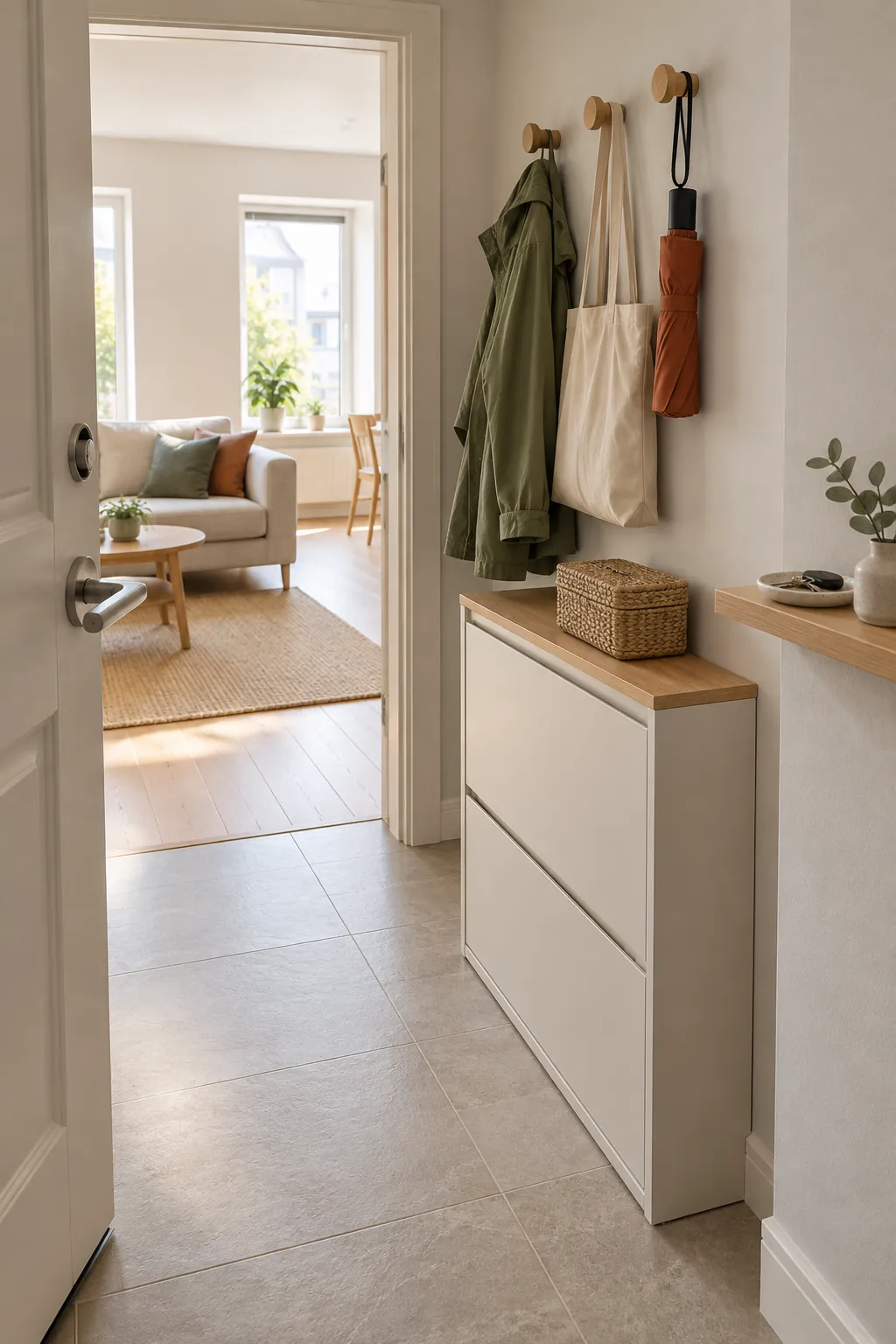
A tight entrance becomes stressful when every arriving object lands on the floor or the nearest flat surface. The real goal is not to fit more furniture into the space. It is to give shoes, coats, keys, mail, and bags a clear home without narrowing the path to the door.
Start by watching what people actually carry through the entrance for several days. A useful small entryway supports that routine with shallow storage, easy reach, and enough open space to turn, greet a guest, or bring in groceries.
Clear the walking path first
Open the door fully and mark the area that the door, your feet, and your bags use. Keep that zone free of baskets, shoes, and furniture legs. A clear path makes even a narrow foyer feel calmer, and it prevents storage from becoming a daily obstacle.
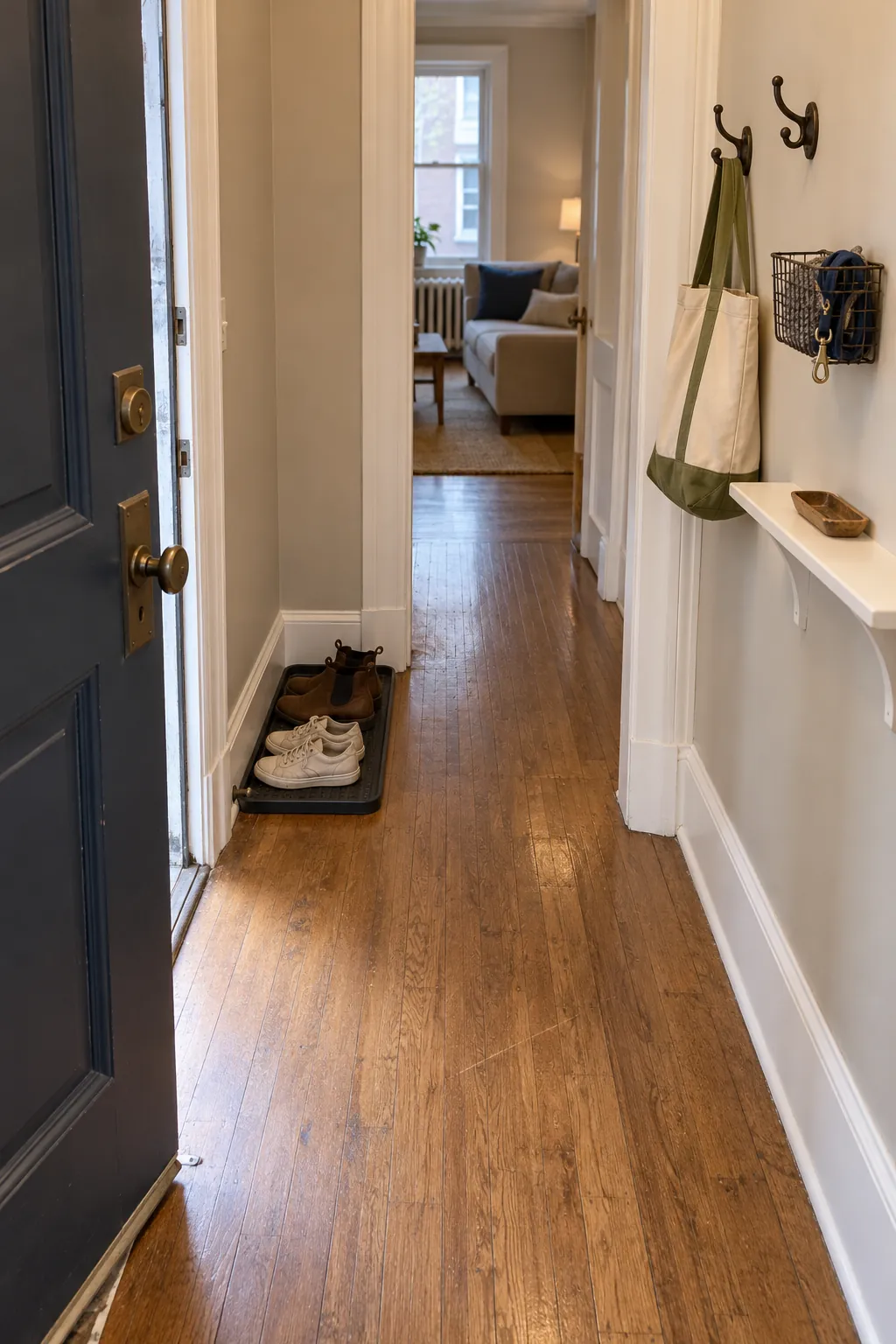
Keep only current shoes by the door
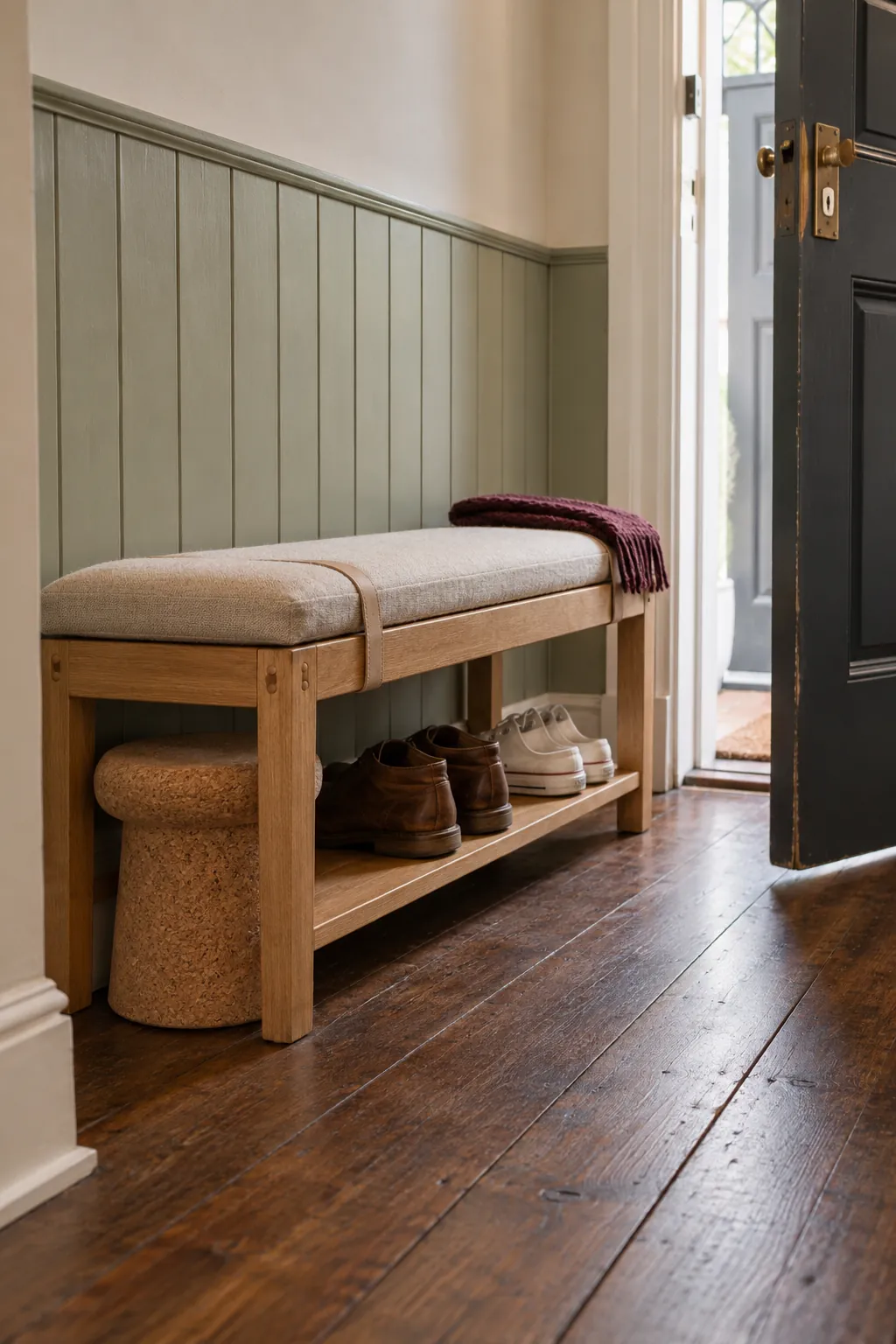
Shoes spread quickly because the entrance often becomes storage for every season. Limit this area to the pairs worn during the current week, then move occasion and off season footwear to a bedroom closet. A slim shoe cabinet, a low tray, or one shelf beneath a bench can hold the active pairs while keeping the floor easy to clean.
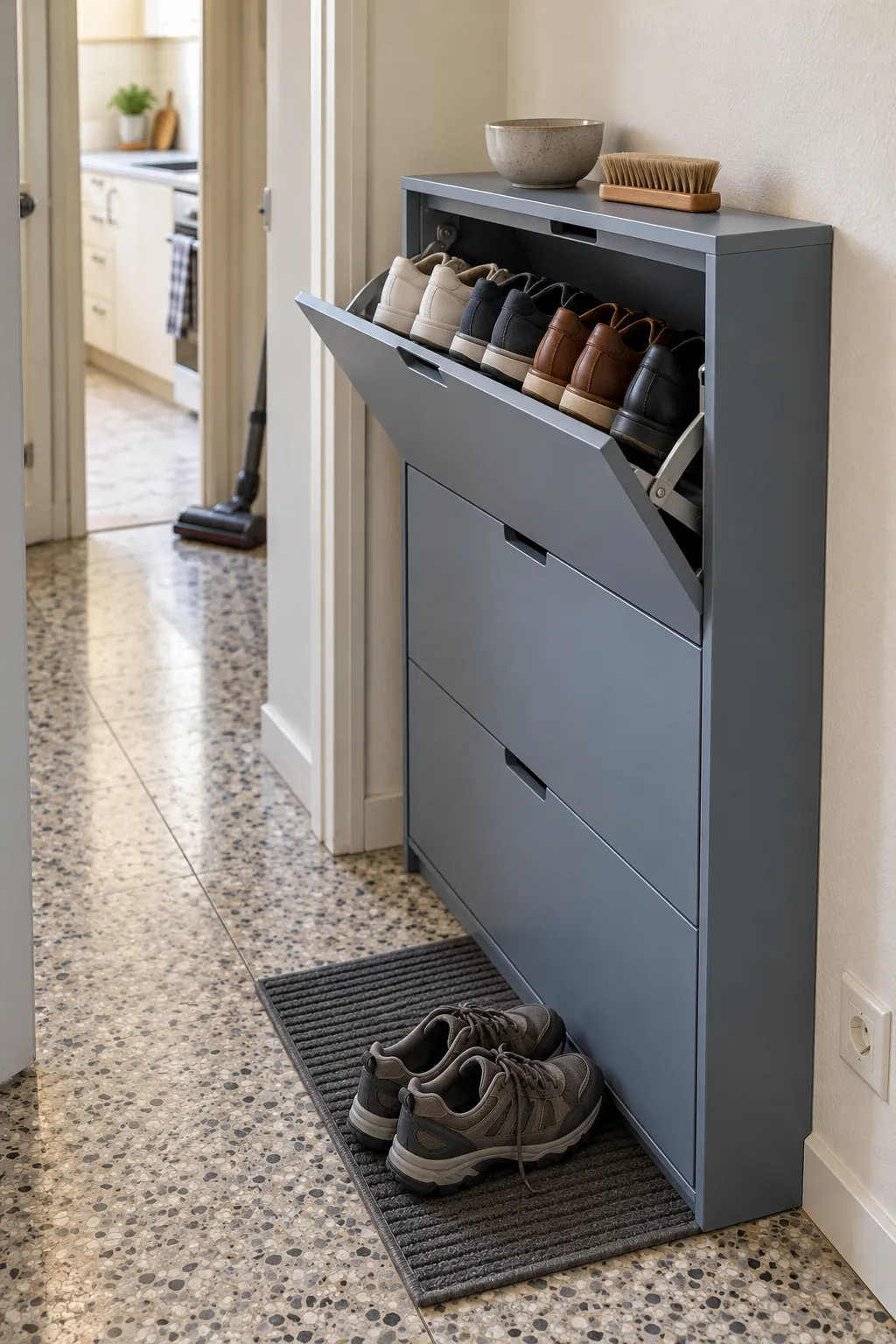
Use the wall for coats and bags
Vertical entryway storage frees the floor, but it works only when each hook has a purpose. Place adult coat hooks at a comfortable shoulder height and lower hooks where children can return their own bags. Leave a little space between items so wet coats can dry and straps do not tangle.
Renters can choose removable systems rated for the correct wall surface, while homeowners can fasten a rail into studs. Check the rated load before hanging a heavy backpack. A narrow shelf above the hooks can hold light seasonal items in one labeled basket.
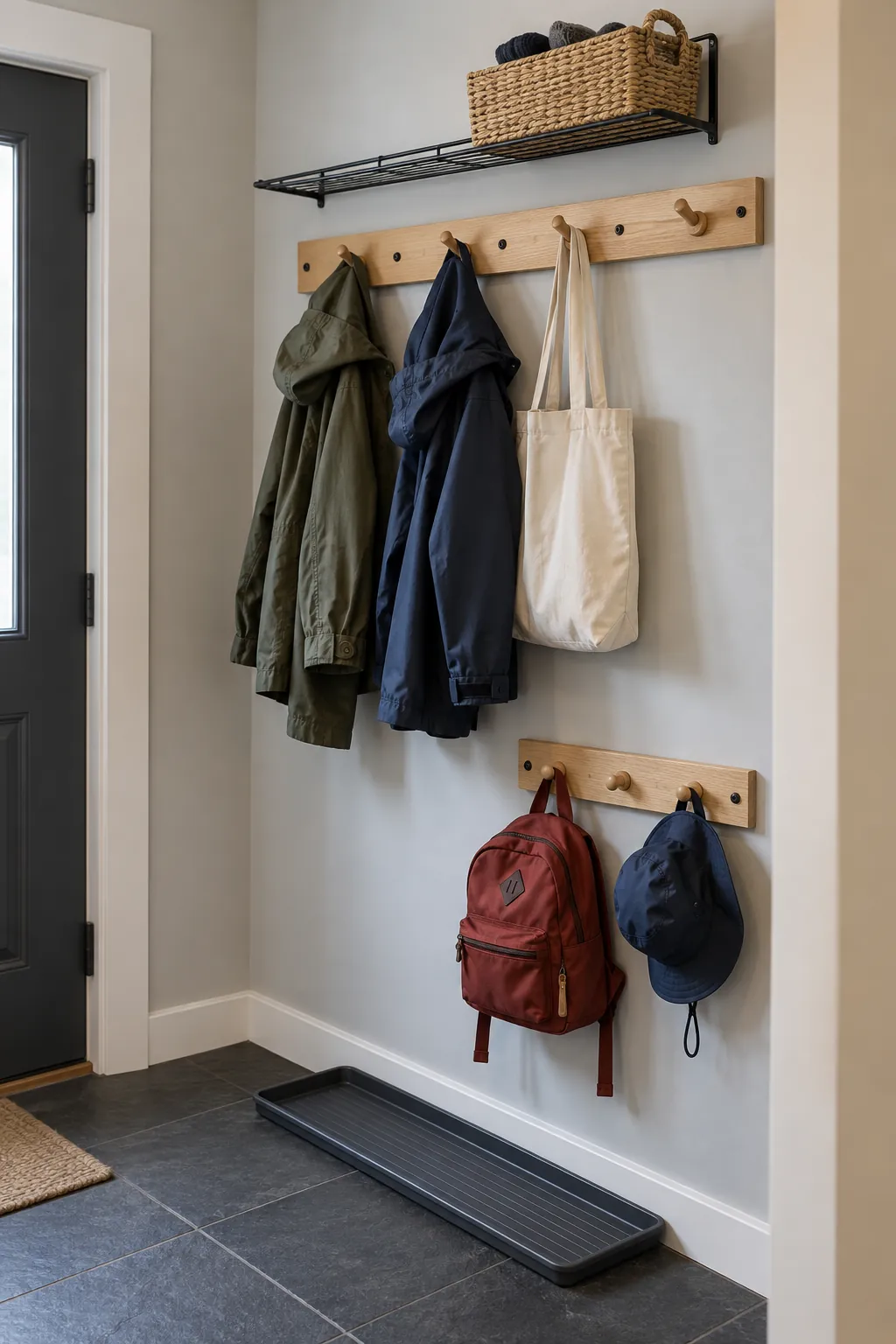
Create one landing place for keys and mail
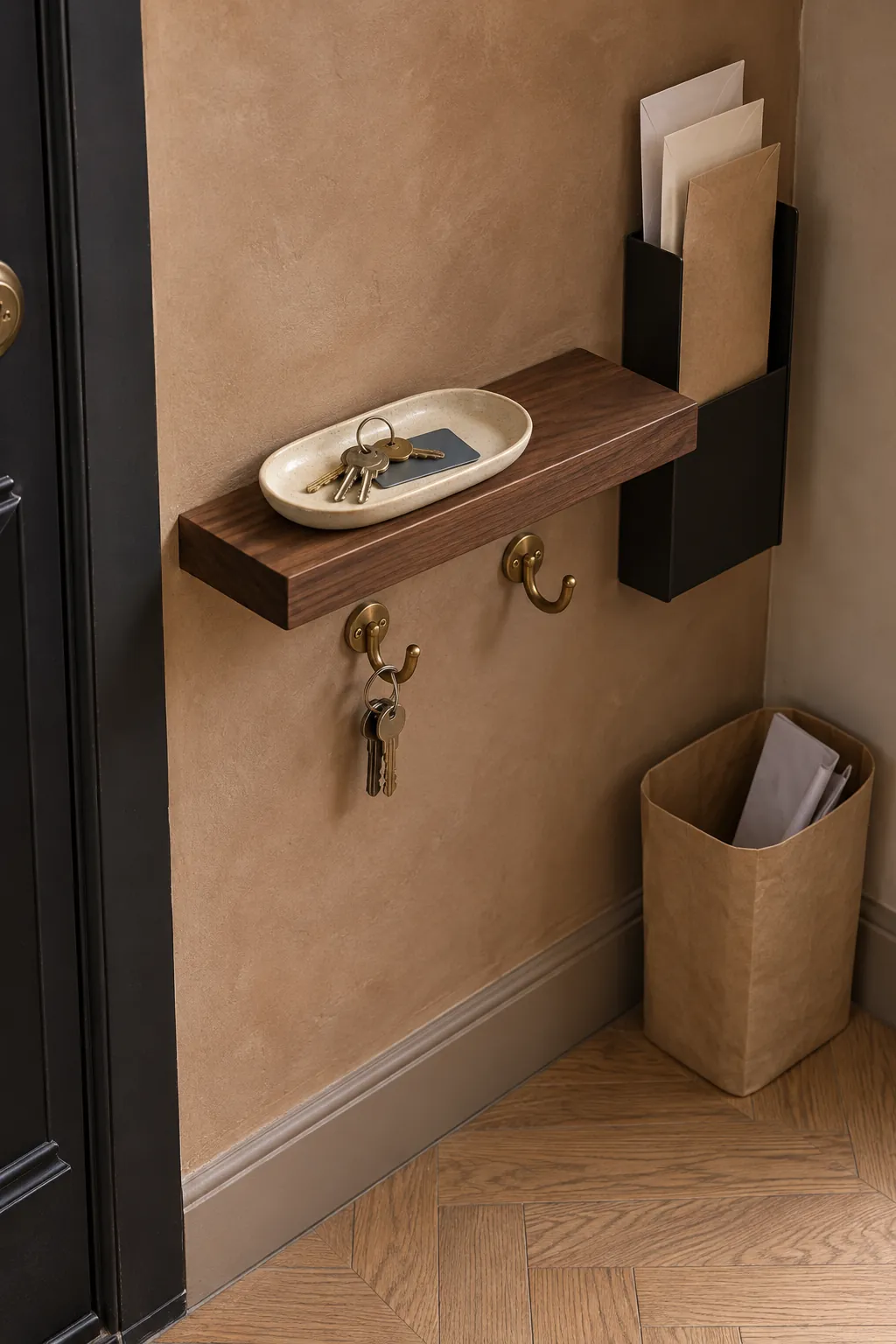
Keys and paper need a destination that takes one motion to use. A wall mounted entryway shelf with a small tray, two hooks, and one upright mail slot is often enough. Place recycling nearby so unwanted paper leaves the area before it forms a pile.
Keep this landing place intentionally small. A large console invites unrelated objects to settle there, while a shallow ledge makes the limit visible. Review the mail slot on a fixed day each week so it remains a short holding point rather than permanent storage.
Choose seating that earns its space
A small foyer bench is useful when someone needs to sit while putting on shoes, but it should not block the route or become a dumping surface. Select a narrow seat with open space below, or use a compact stool that can tuck beneath a shelf. Measure the depth with the door open before buying anything.
Use a mirror to support the routine
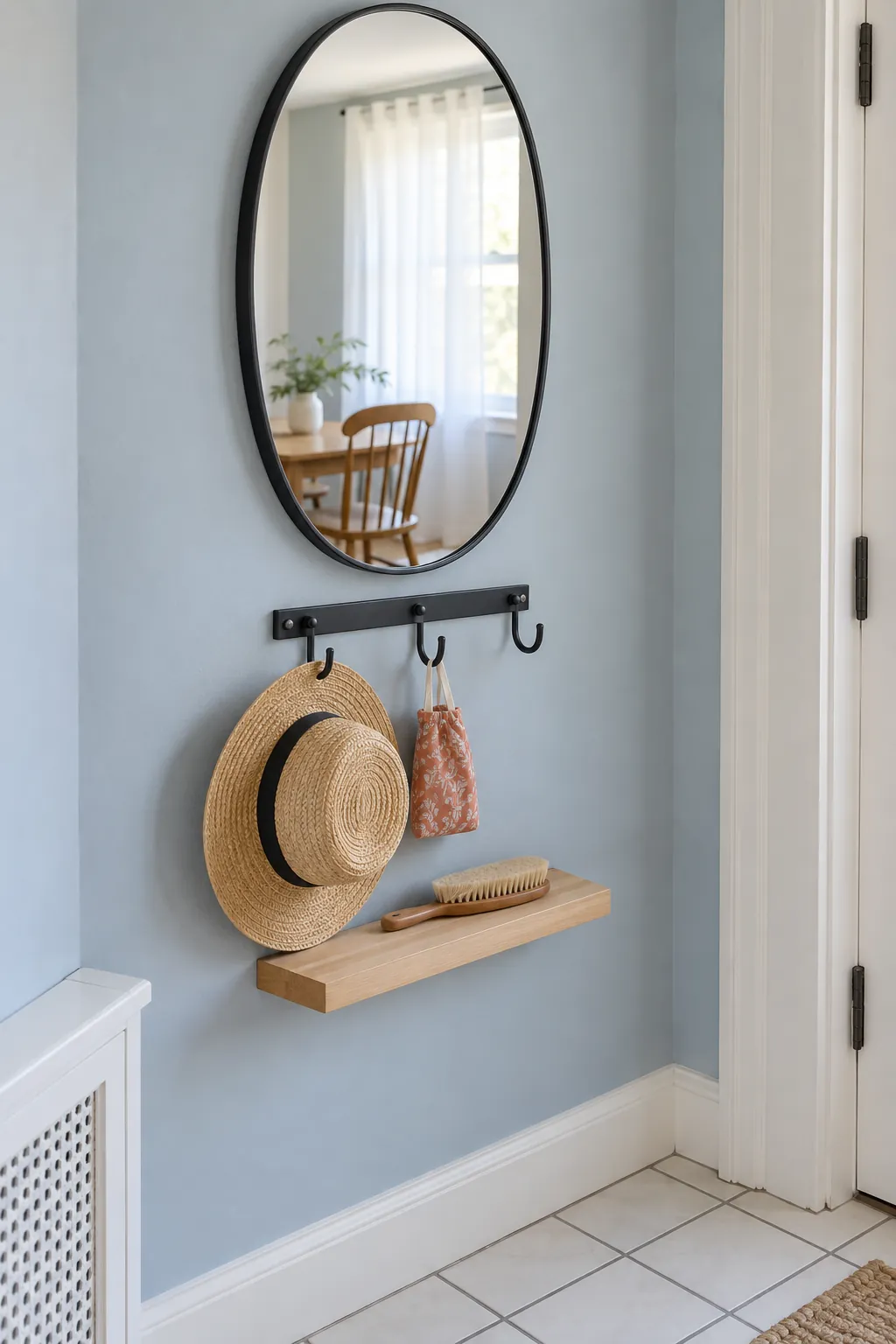
An entryway mirror with hooks can combine a final appearance check with storage, but the reflection should not replace practical organization. Hang the mirror where it catches light without facing a distracting pile. Keep only light items on attached hooks unless the product and wall fixing are rated for more weight.
Reset the space in two simple rounds
Do a quick return round each evening by putting shoes, bags, keys, and paper in their assigned places. Once a week, remove anything that belongs elsewhere and wipe the exposed floor and shelf. If one category keeps overflowing, reduce what stays by the door before adding another container.
The best apartment entryway organization feels almost invisible because each action is easy to repeat. Protect the walking path, keep daily items within reach, and store the rest in the rooms where they are used. That small discipline creates more usable space than another bulky organizer.