
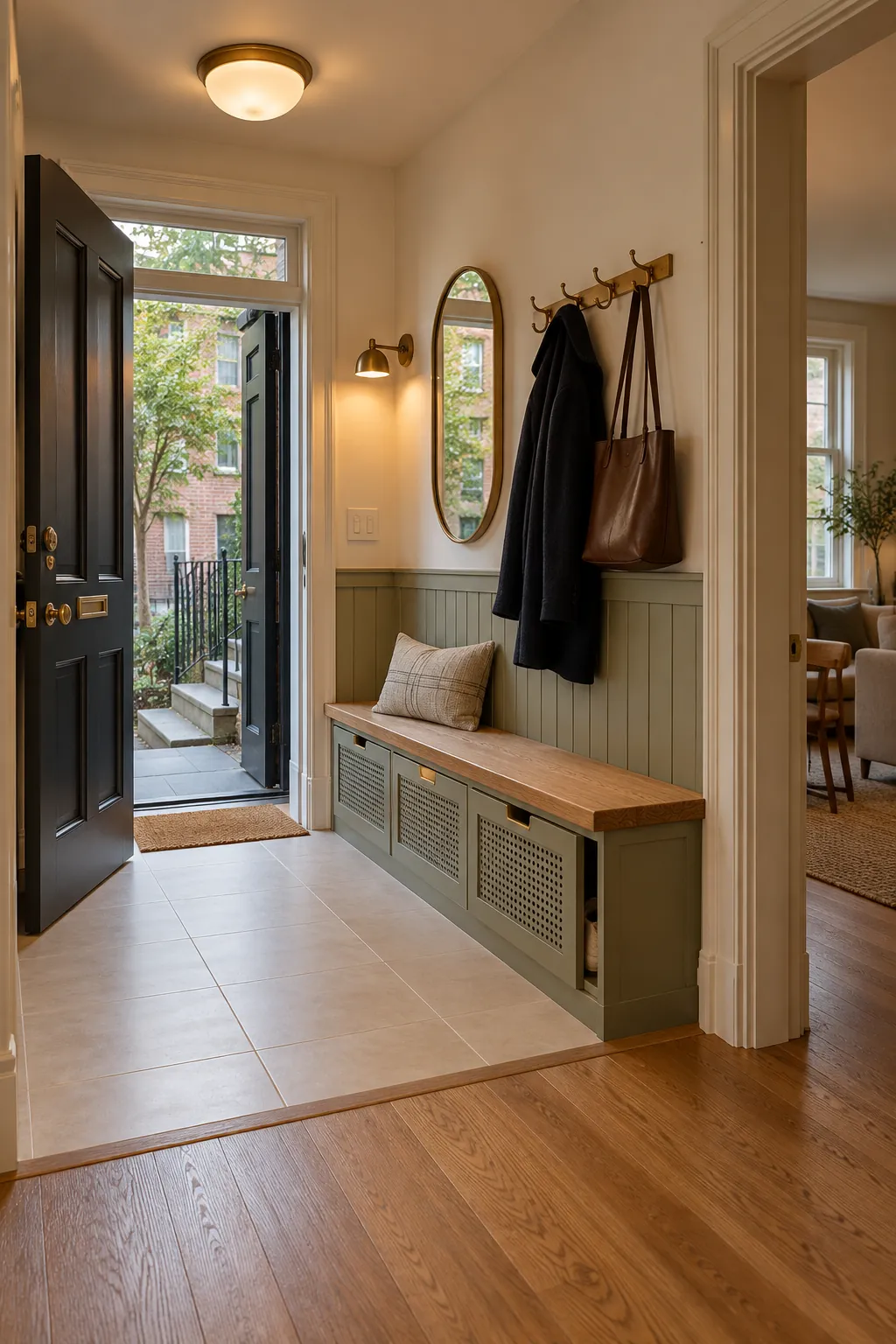
A small foyer renovation succeeds when it removes friction at the door. New finishes may look fresh, but the space will still fail if the door hits storage, wet shoes damage the floor, or the light leaves locks and steps in shadow. Plan the work around movement and maintenance before choosing a style.
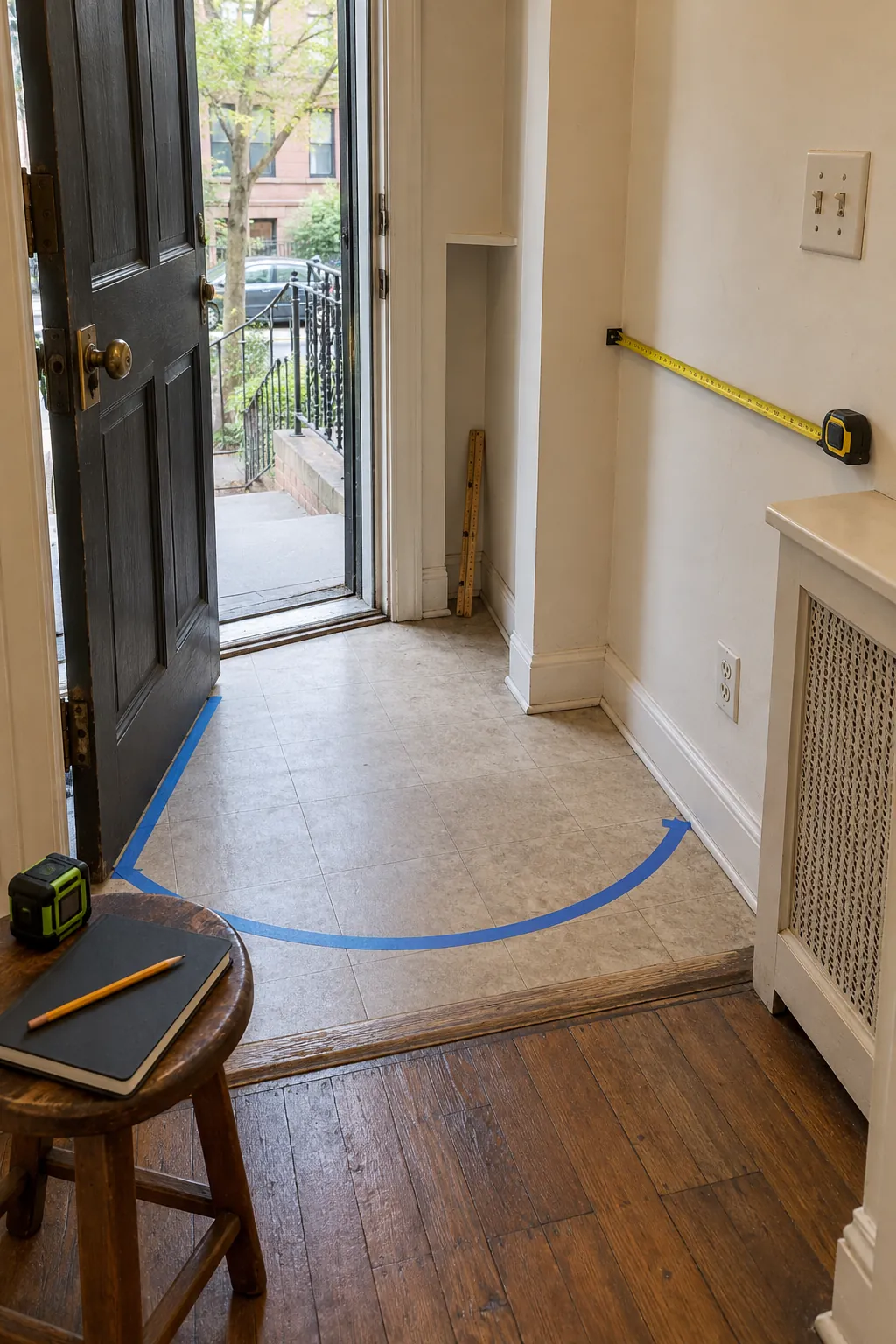
Record the door swing, clear walkway, wall depth, outlets, switches, and any floor level changes. Photograph the entrance with the door open and closed, then list the problems that occur during a normal arrival. Those facts set the limits for every later decision.
Measure the working space
Mark the full door arc on the floor with removable tape and include the space used by handles, bags, and people turning. Check whether trim or a radiator reduces the usable wall. Keep the final route comfortable before assigning space to a built in entryway bench or cabinet.
Plan the work in the right order
Resolve water damage, loose wiring, damaged plaster, and uneven subfloor conditions before decorative work. Complete electrical changes before closing walls or adding paneling. Install the floor before final storage pieces when the cabinet or bench must sit on the finished surface.
Confirm local requirements and use qualified trades for work that needs them. Protect the route to the rest of the home during construction, because a narrow entrance can quickly become a bottleneck. Keep removed hardware and paint details labeled if anything will be reused.
Choose a floor for water and grit
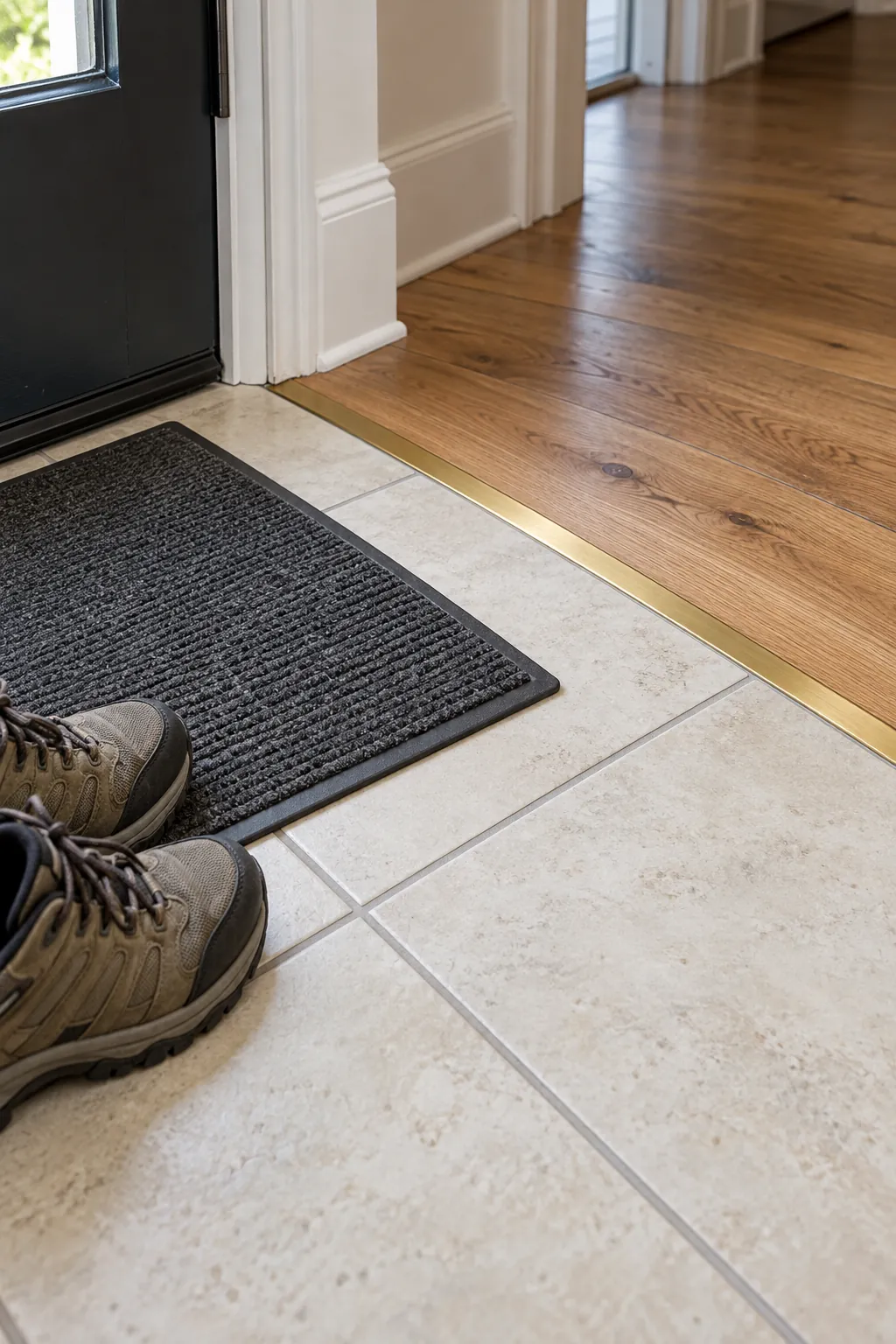
Entryway tile ideas should begin with slip resistance, cleanability, and a sound transition to the next room. Choose grout and tile that can tolerate repeated wet cleaning, then use a mat that does not catch the door. A clear floor boundary can visually define the foyer without adding a wall.
Layer light without crowding the ceiling
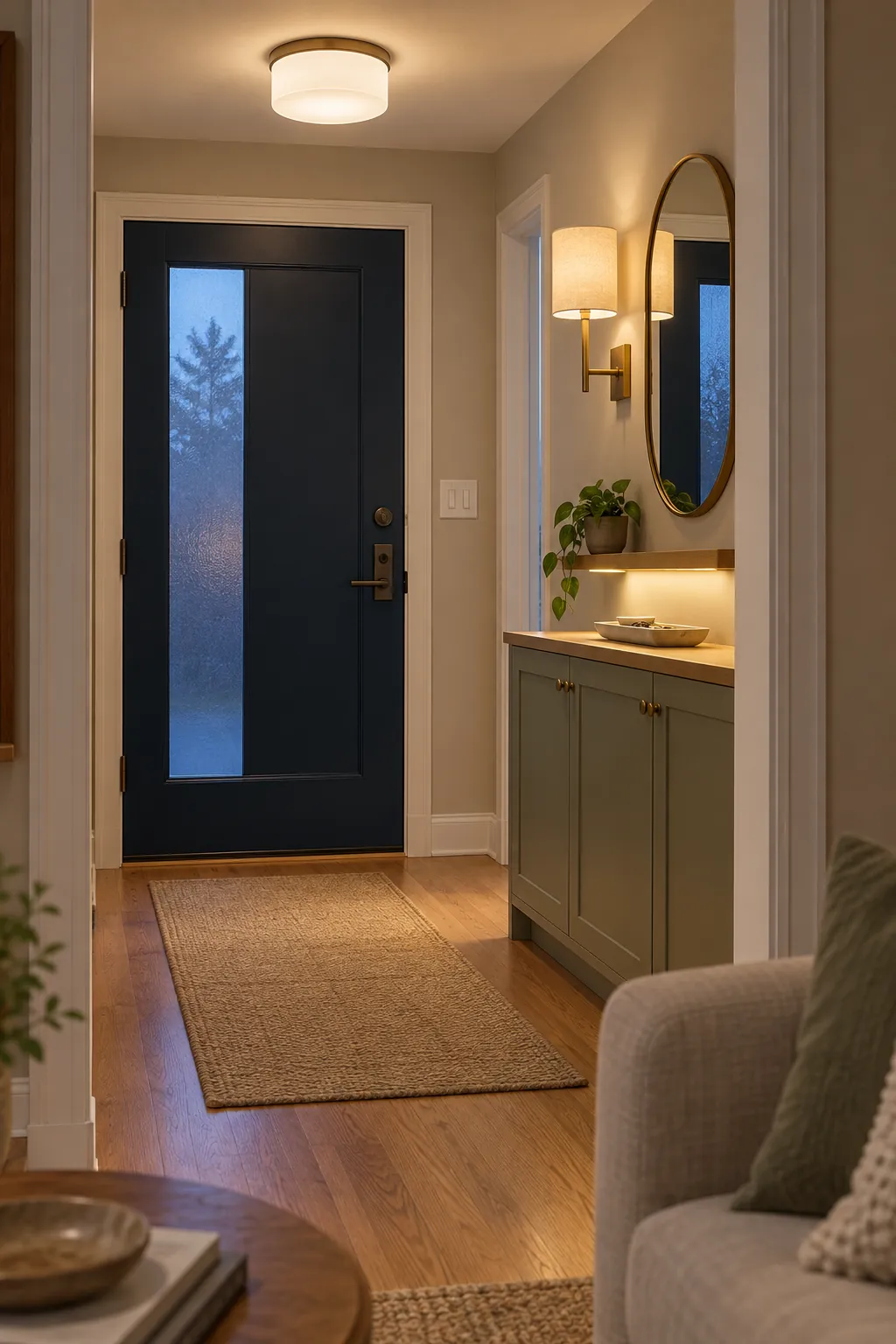
Small foyer lighting needs even general light and useful illumination near the lock, mirror, and storage. A compact ceiling fixture can provide the base layer, while a discreet wall light or concealed shelf light can remove deep shadows. Check door and cabinet clearances before selecting any projecting fixture.
Choose a comfortable color temperature that works with the adjoining room. Put controls where they are easy to reach on arrival, and consider a suitable occupancy sensor when the household often enters with full hands. Avoid a single exposed source that creates glare in a small reflective space.
Protect the busiest wall surfaces
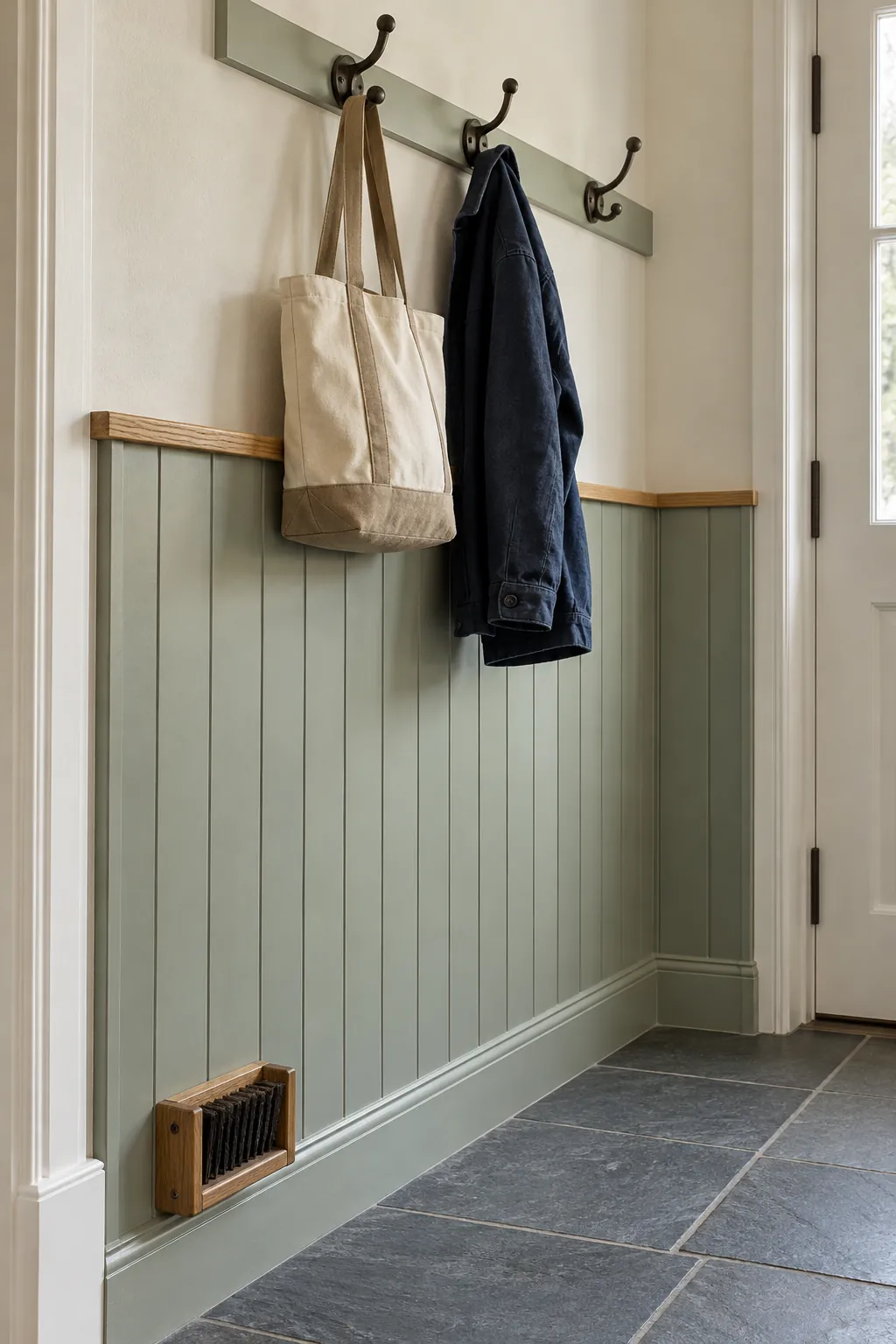
Entryway wall paneling can protect plaster from bags, coats, and cleaning equipment when it is detailed for the actual contact zone. Keep ledges slim, seal edges carefully, and use a washable finish. Continue the panel height around corners only when the change looks intentional from the adjoining room.
Fit storage to the shallowest useful depth
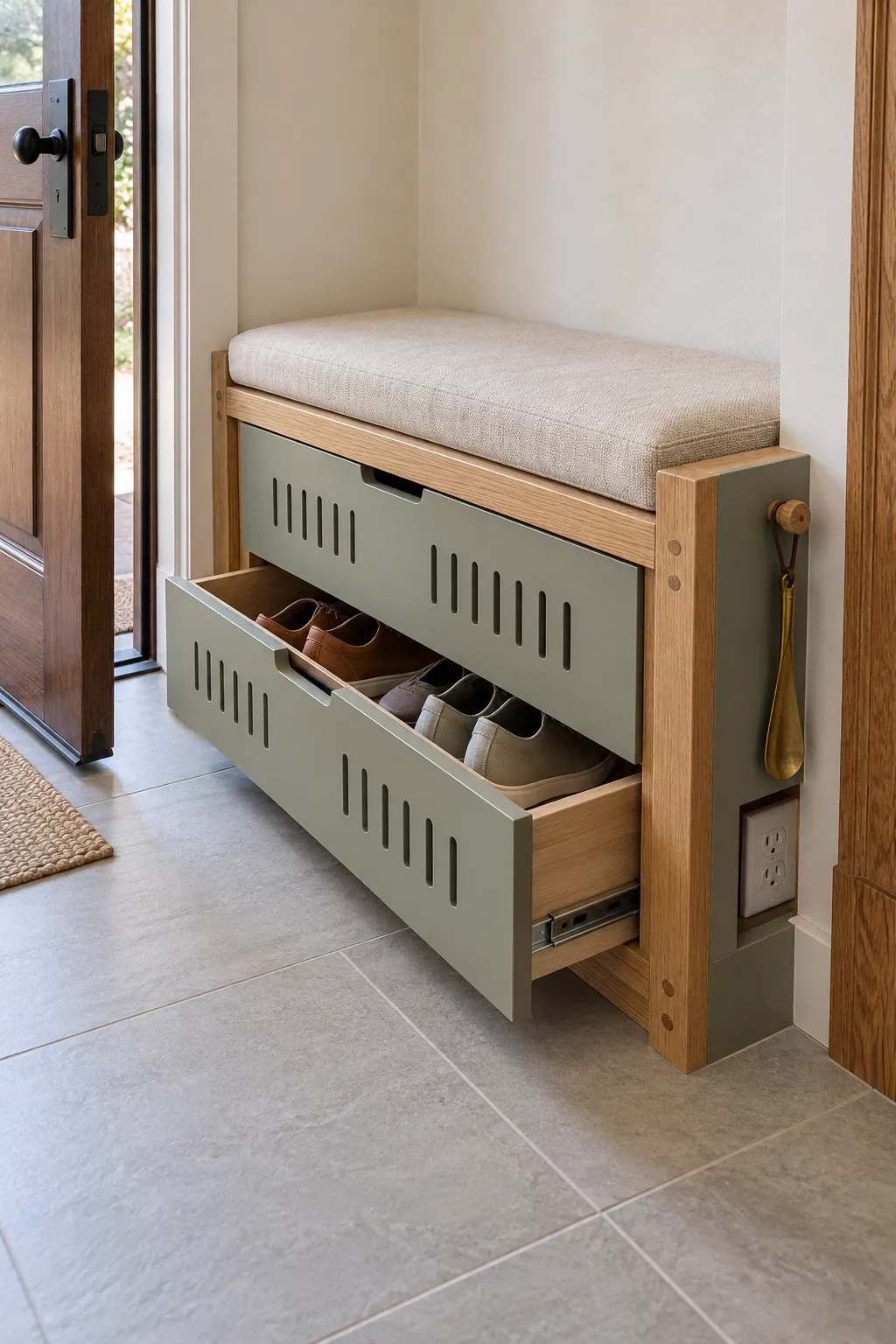
A slim shoe cabinet can hold daily footwear without consuming the passage. If seating is necessary, build only enough bench width for one person and keep shoe toes behind the front line. Vent enclosed storage and leave service access to outlets, heating valves, or inspection points.
Finish details around daily contact
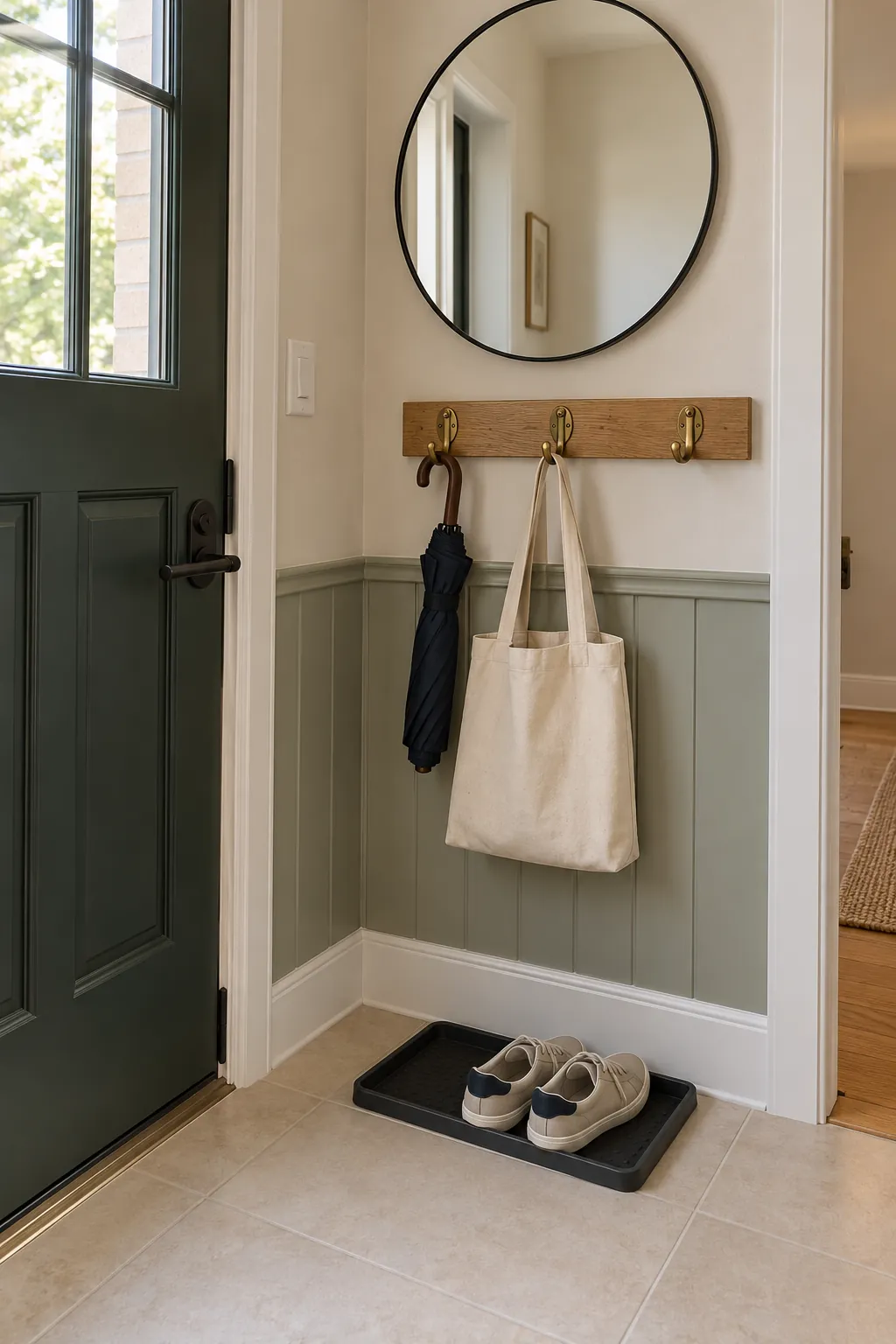
Select durable hooks, a secure mirror fixing, an easy to grip handle, and paint that can be cleaned. Place hooks so hanging items do not cover switches or strike the door. Use a threshold and baseboard detail that keeps water away from vulnerable wall edges.
Test the finished entrance
Open every door and storage front at the same time, then carry a bag through the space. Sit, remove shoes, reach the light, clean the floor edge, and check that wet items can dry. Correct a collision or awkward reach before treating the renovation as complete.
A strong small entryway makeover does not depend on making the area look larger in a photograph. It gives the household a durable floor, clear light, protected walls, measured storage, and a route that works every day.