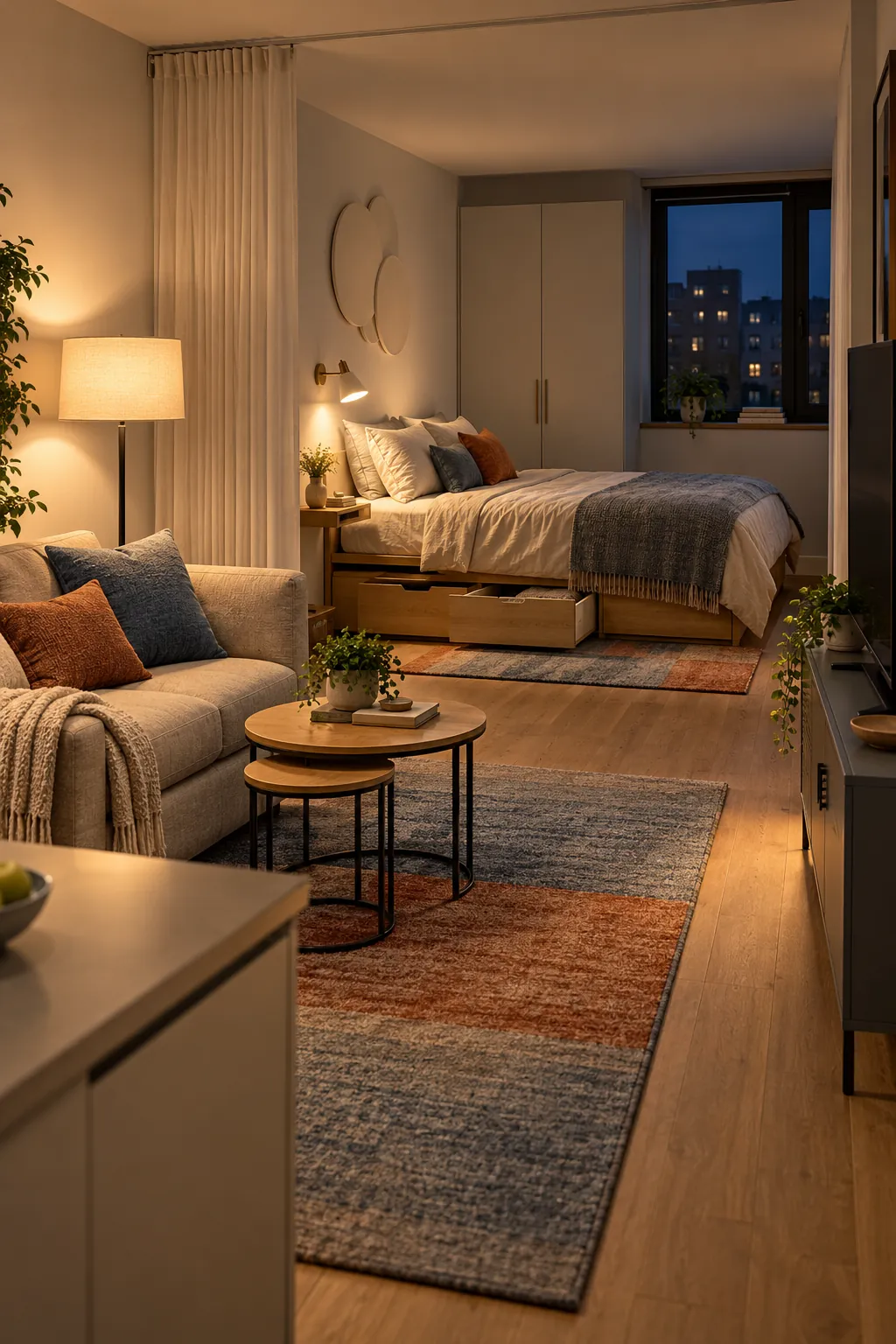
A sleeping area inside a living room needs more than a visual screen. It needs safe access, ventilation, useful darkness, storage, and a boundary that does not trap the rest of the household. The best arrangement protects privacy while allowing the shared room to keep working during the day.
Check safety and rental rules first
Confirm what the lease, building rules, and local requirements allow before adding a fixed wall or ceiling track. Do not block an exit, heater, sprinkler, electrical panel, or required window. A screened sleeping zone may not qualify as a legal bedroom, so describe it accurately when making housing decisions.
Keep a direct route from the bed to the main exit. The divider should open quickly and should not create a narrow passage around furniture. Test smoke alarms from both sides of the planned boundary and maintain normal airflow through the full room.
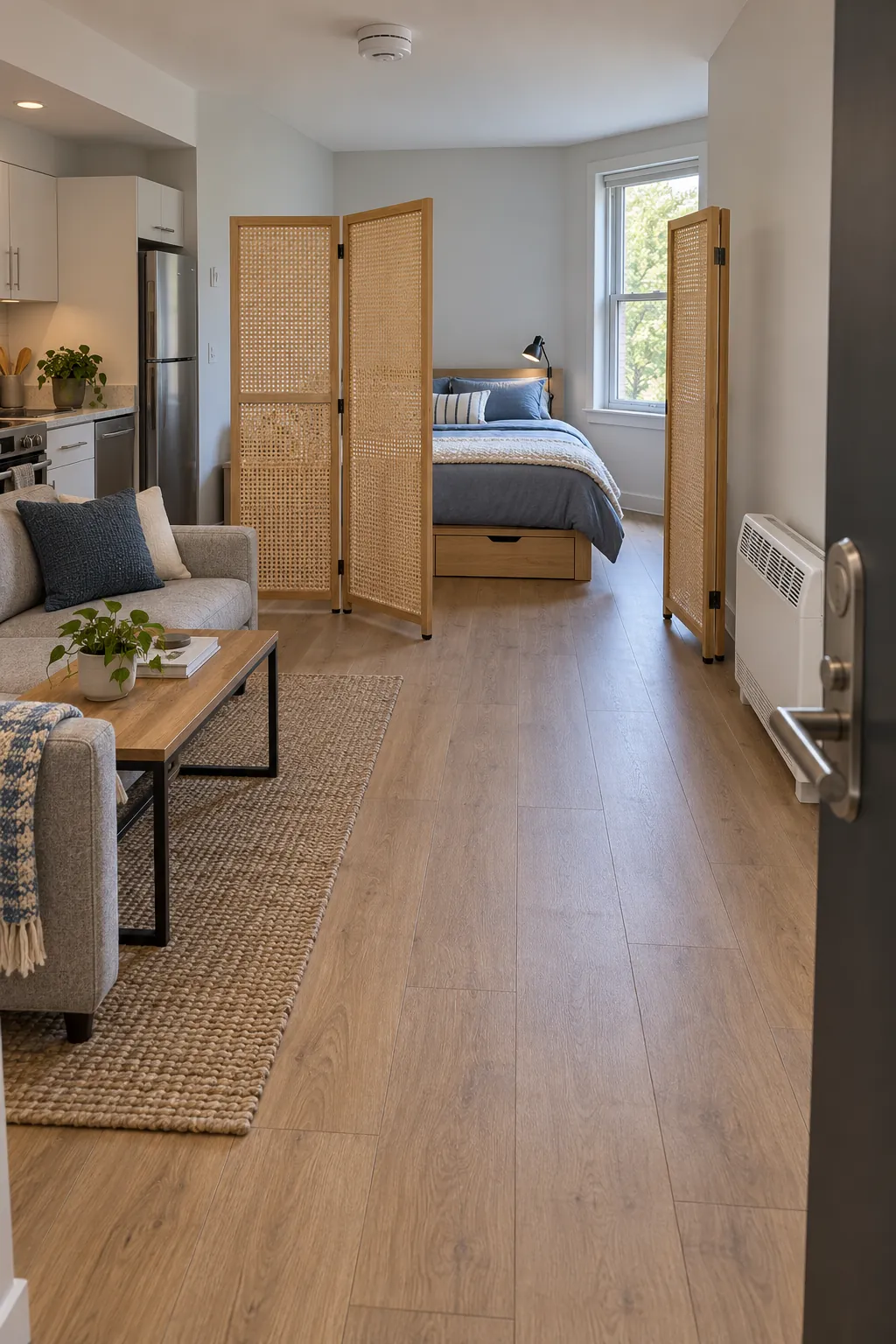
Place the bed in the quietest usable zone
Choose the end of the room with the least traffic and the best access to fresh air. Keep the bed away from the kitchen route and the direct view from the entry when possible. A solid wall at the head creates stability and gives the divider a clear line to follow.
Leave enough space to make the bed and reach daily storage. A full walkway on one side is more useful than two unusable slivers. Use rugs or lighting to distinguish the studio sleeping area from the seating zone before adding any physical divider.
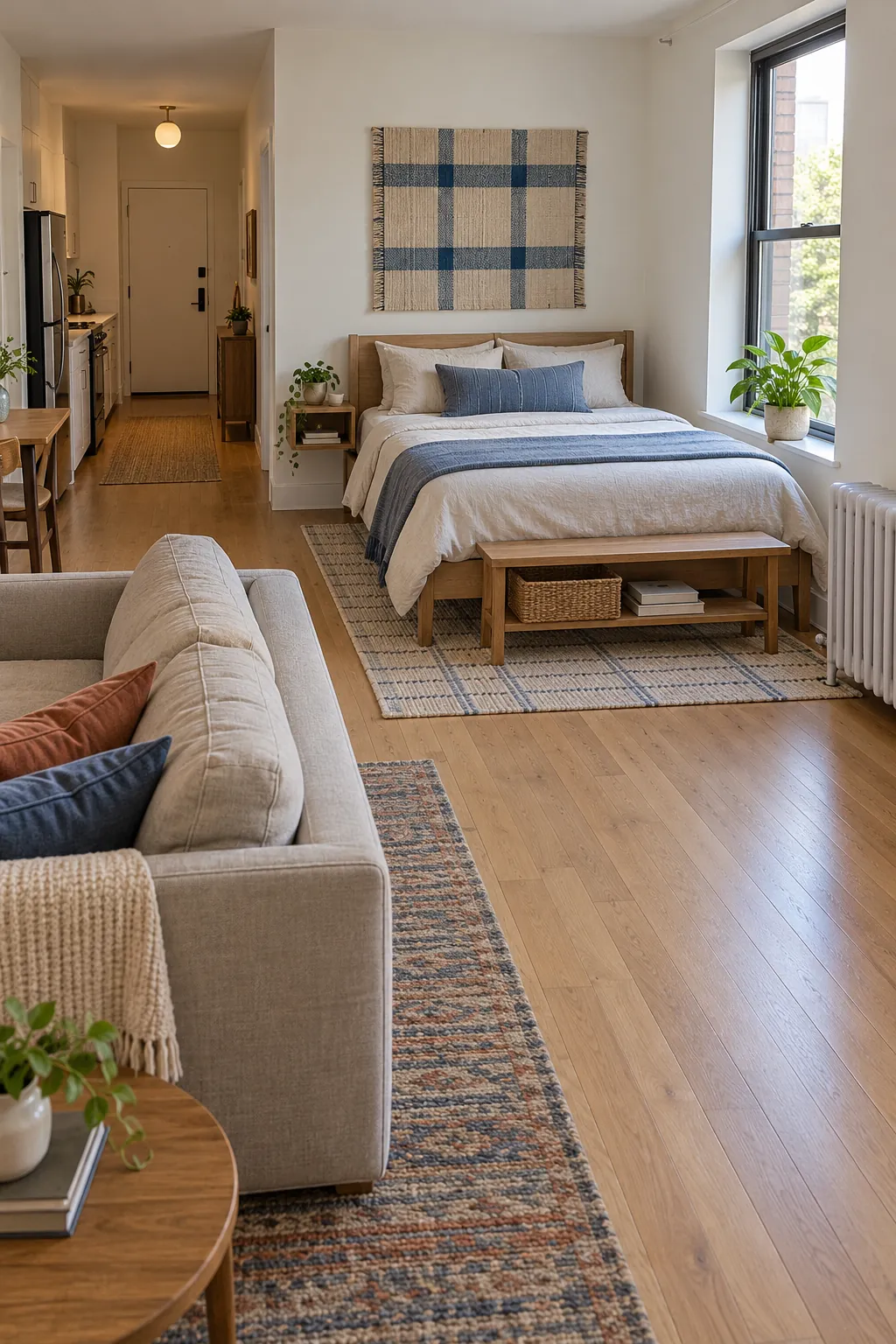
Use curtains for flexible privacy
A curtain bedroom divider can close at night and disappear during the day. Choose a ceiling track or tension system that is allowed in the space, then use enough fabric to hang with gentle fullness. An opaque curtain improves visual privacy, while a lighter outer layer can soften the boundary when full privacy is not needed.
Leave an opening wide enough for safe movement and keep fabric away from heaters, cooking areas, and lamps. Curtains reduce sight lines but do little for sound. Use a fan, soft surfaces, and household quiet hours rather than expecting fabric to create an acoustic wall.

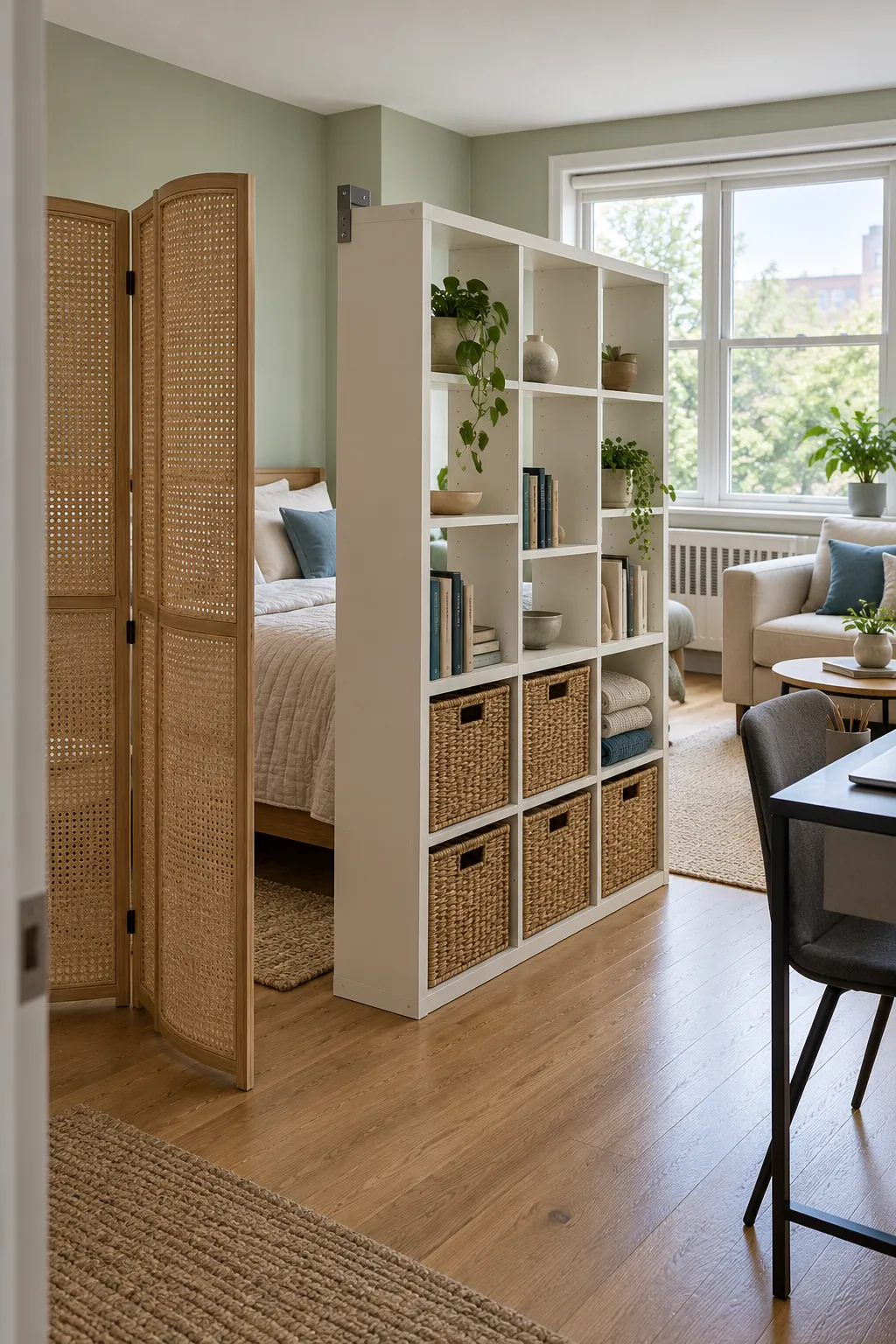
Divide with storage or a folding screen
A room divider for a bed can also provide storage when an open bookcase stands perpendicular to the wall. Keep open sections above eye level so daylight and air can pass, and use closed boxes below for clothing. Secure tall furniture properly and avoid loading the upper shelves with heavy objects.
A folding privacy screen is lighter and easier to change. Choose a stable model with enough panels to stand in a shallow curve. It works best for blocking the entry view or the side of the bed, not for enclosing the entire sleeping area.
Choose a bed that matches the daily routine
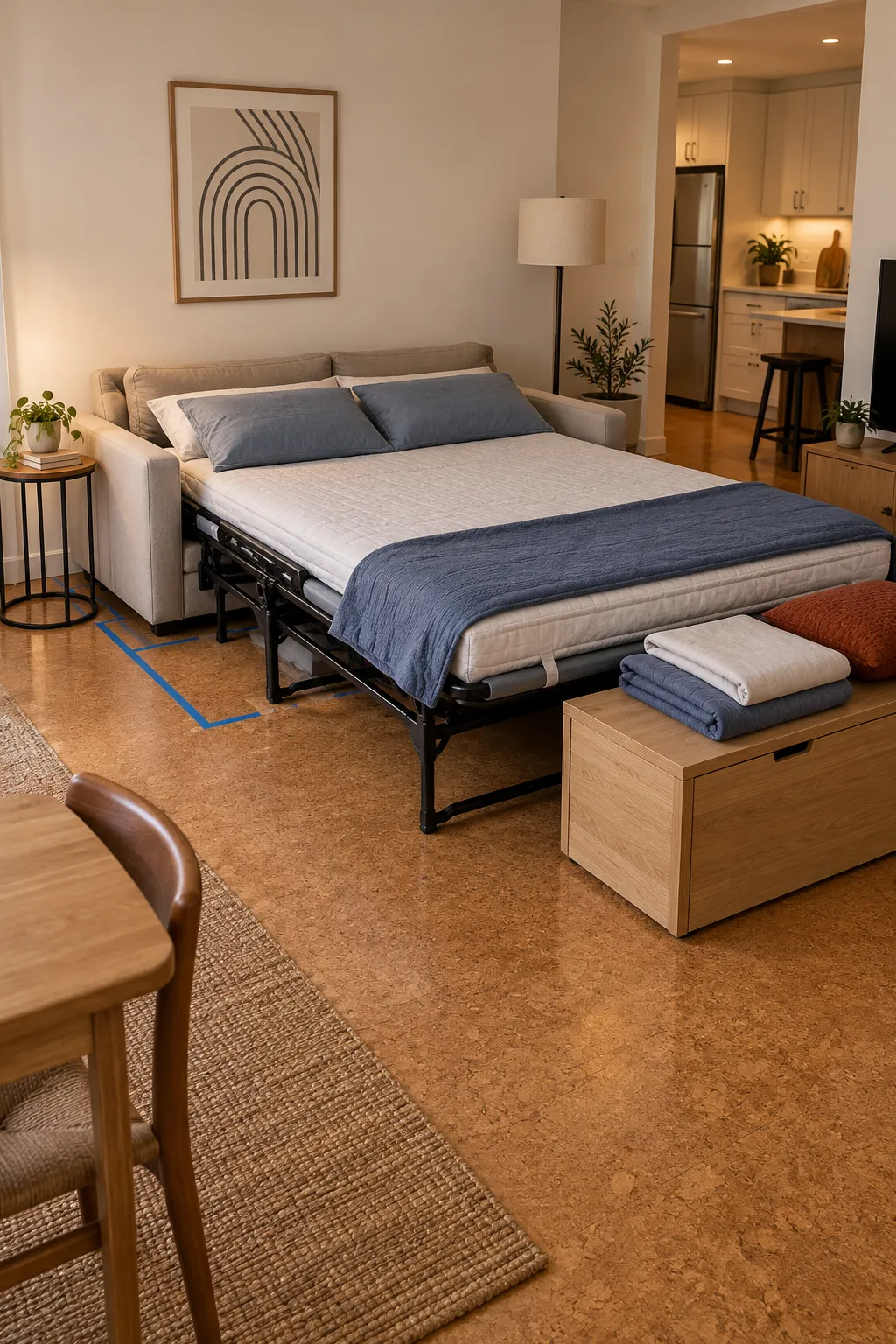
A sofa bed layout suits a room that must return to full living use each morning, but it requires clear floor space for opening and a place to store bedding. Test the mattress comfort and opening motion before buying. A model that is difficult to convert will often remain open.
A Murphy bed can free more floor, yet it needs professional installation into a suitable structure and clear space for movement. A regular bed may be the best choice when sleep quality matters more than daytime floor area. Select the option that can be maintained every day, not the one with the most dramatic transformation.
Give each zone its own light and storage
The sleeping zone needs a reachable reading light, a place for a phone and water, and storage for clothes. Wall mounted or clip lights can save surface space when installed safely. Closed under bed containers keep personal items from spreading into the living room.
The living zone should keep its own lamp, table, and media storage so housemates do not need to enter the sleeping area. Use different rugs or related accent colors to make the zones distinct without building a wall. When each side can function independently, the boundary feels more private and daily resets become easier.