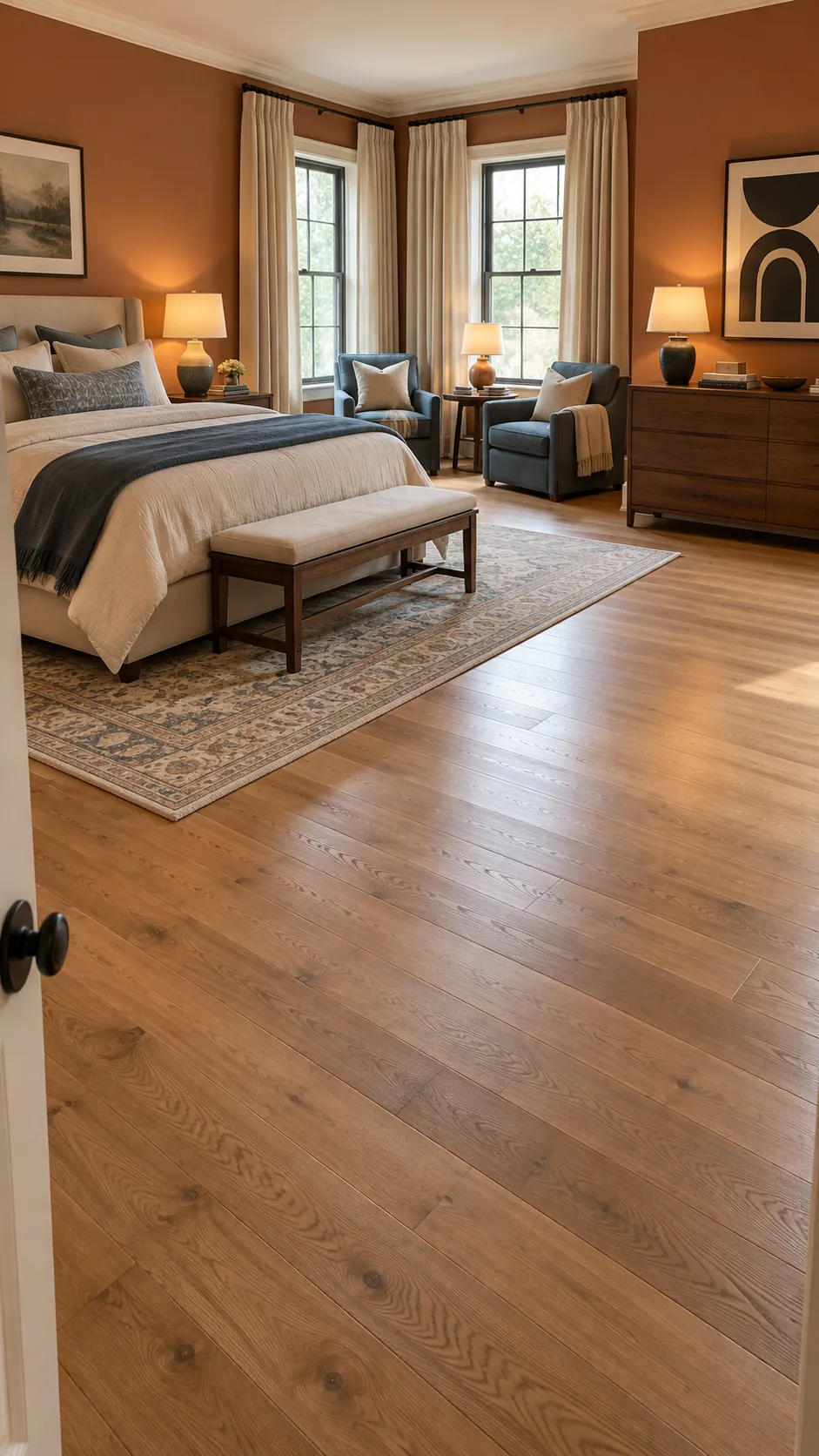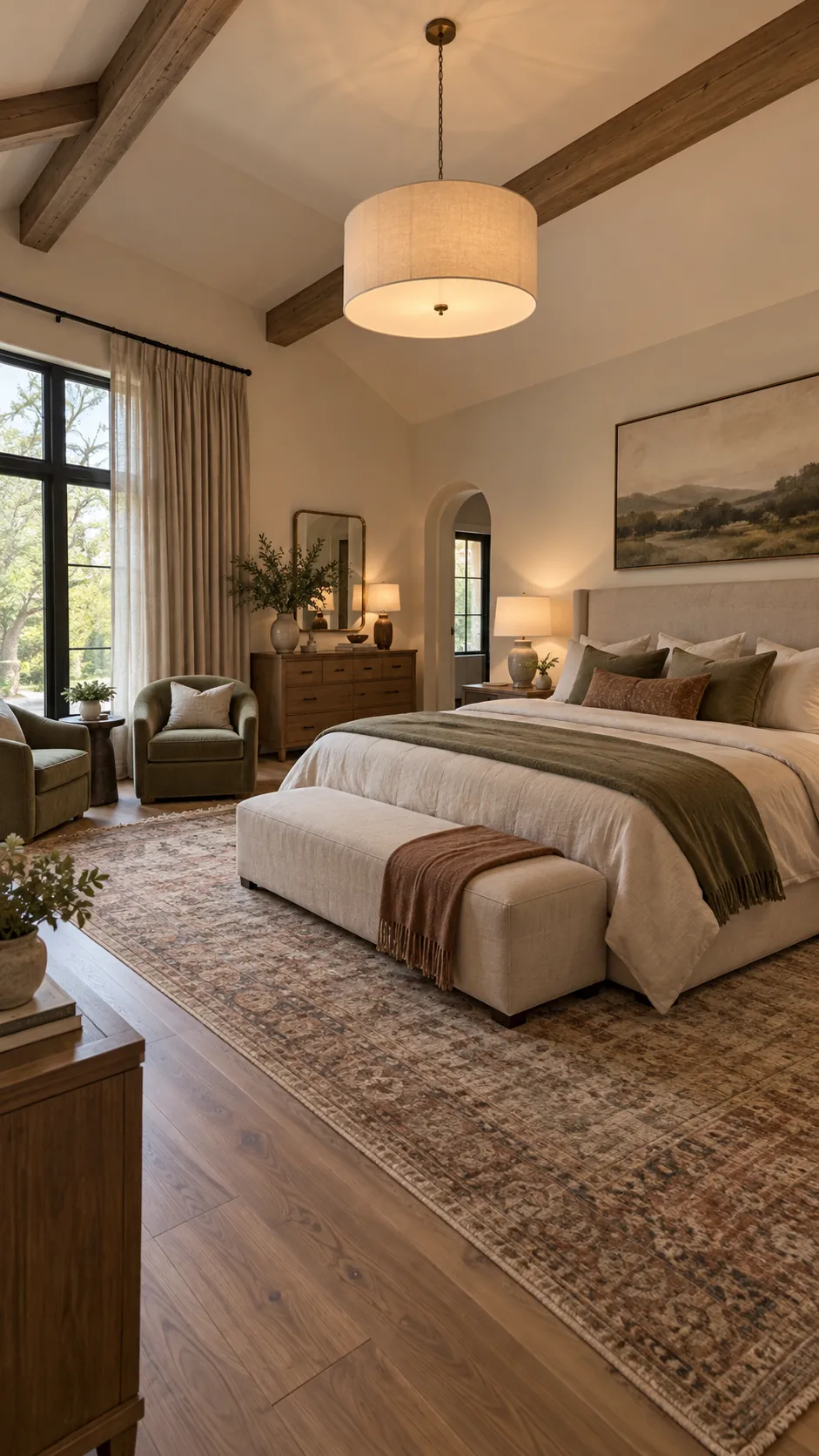
A large bedroom can feel less comfortable than a small one when every piece sits against a distant wall. The problem is usually not a lack of objects. It is a lack of connection between the bed, the open floor, the corners, and the way the room is actually used.
Begin with scale and useful zones before buying more decoration. A generous rug, layered light, substantial textiles, and one purposeful seating area can make a spacious room feel settled. Leave some open space so the final result remains calm rather than crowded.
Anchor the bed with a generous rug
A small rug makes a large bedroom feel even more disconnected. Choose one that extends well beyond both sides and the foot of the bed so your feet land on a soft surface. The broad textile creates a visual island and gives the sleeping zone a convincing boundary.
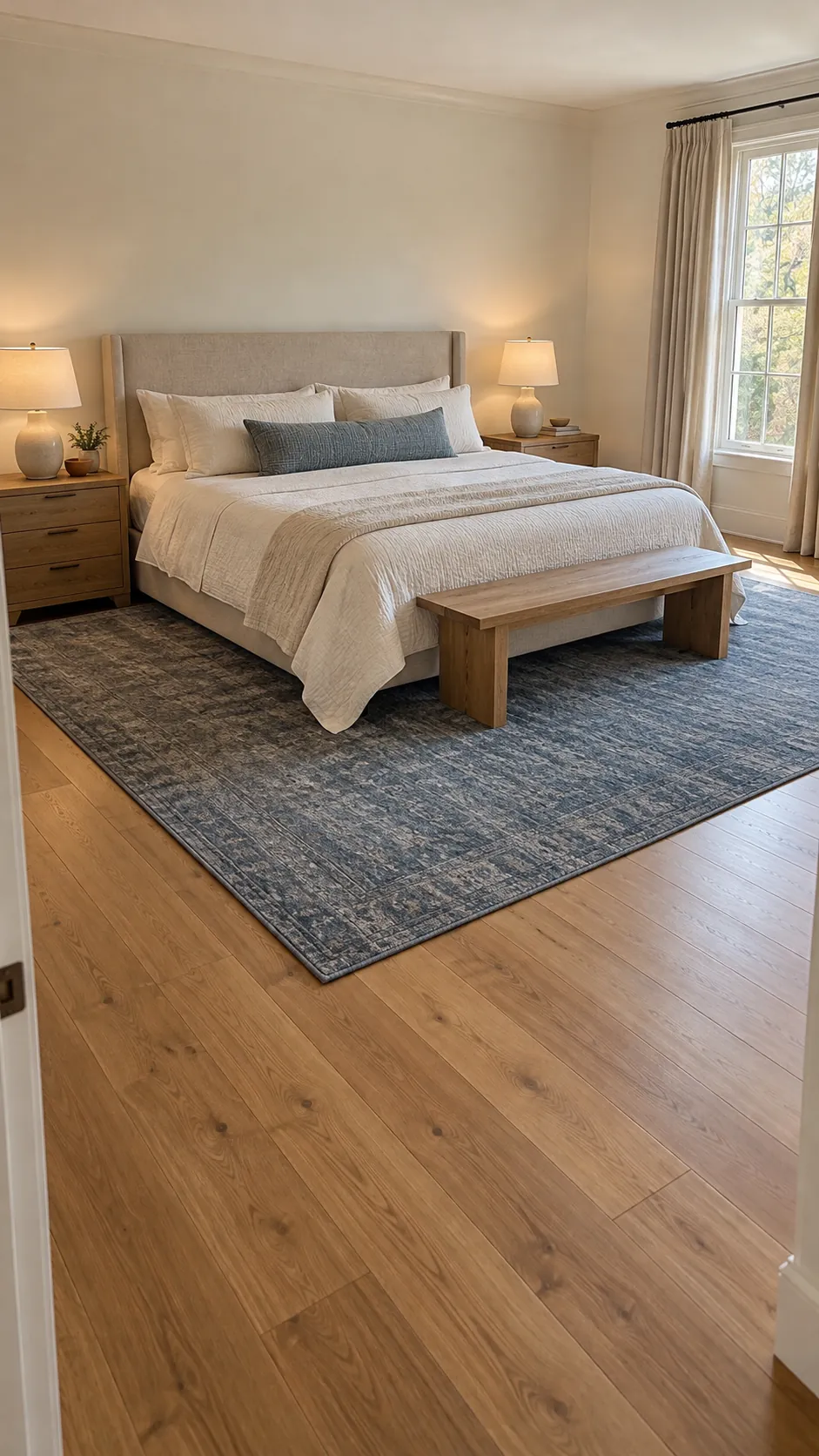
Pull the bed away from a lonely wall
A bed pushed into a vast corner can look accidental. Center it on the wall that offers the clearest view from the doorway, then balance the open space on both sides. This move creates a strong focal point before any new furniture enters the room.
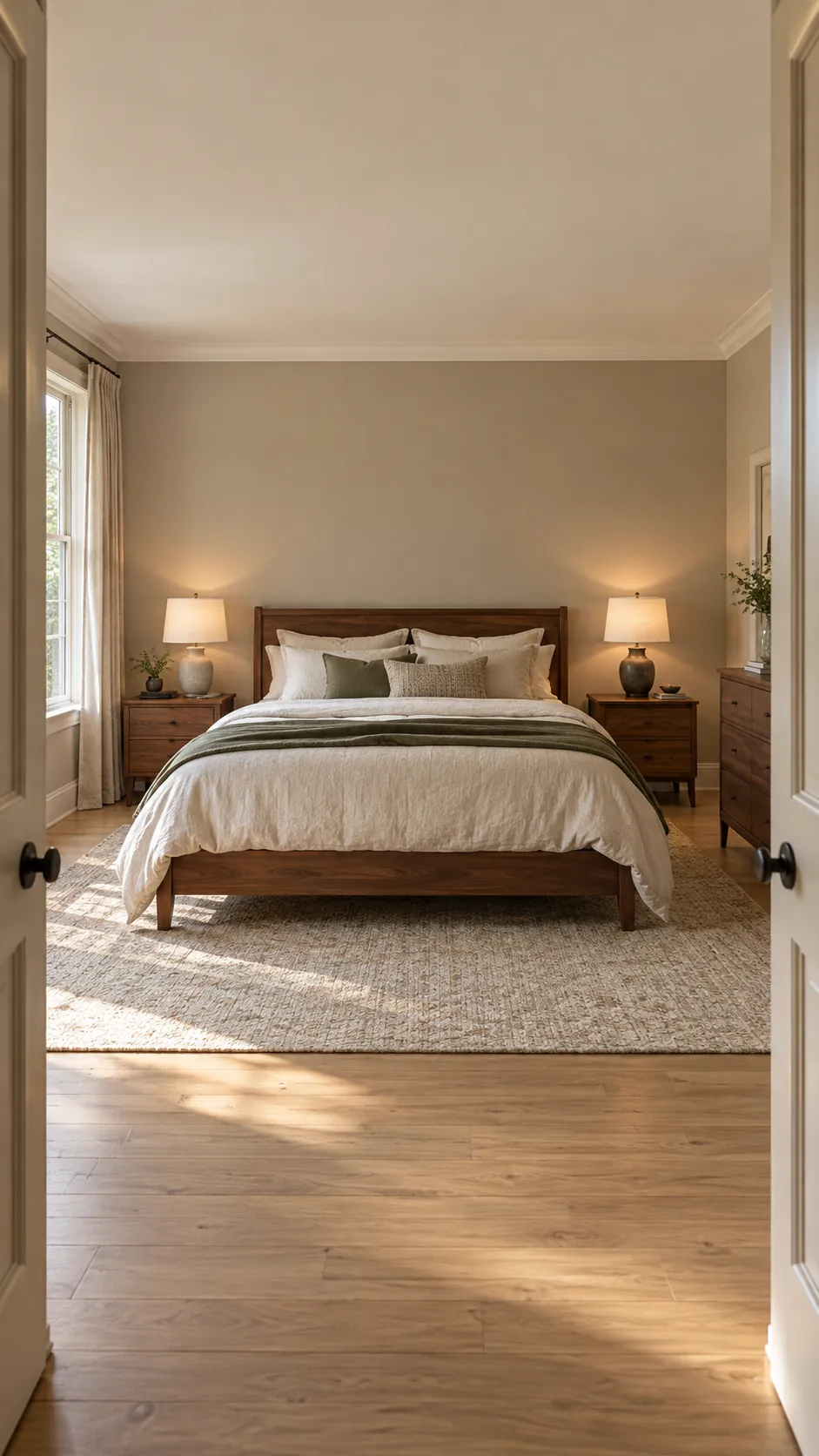
Create a pair of bedside zones
Tiny tables can disappear beside a wide bed and long wall. Use two bedside pieces with enough width for a lamp, book, and water glass without becoming bulky dressers. Matching visual weight on each side makes an oversized bedroom layout feel composed.
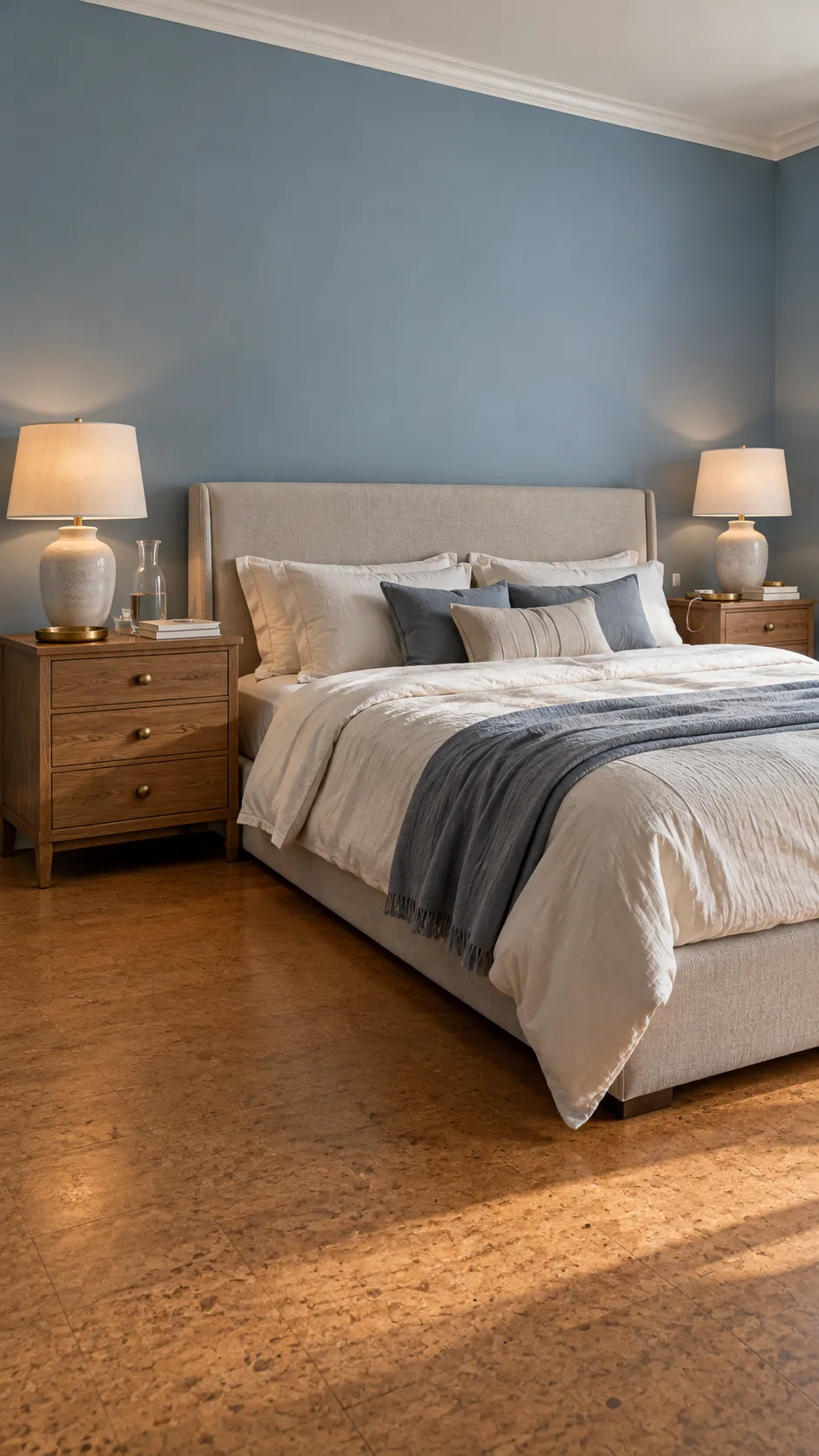
Add a bench at the foot of the bed
A bench shortens the visual distance between the bed and the rest of the room. Select a piece that is narrower than the mattress and leave enough room to walk around it. It provides a useful place to sit, fold a blanket, or set down clothes without filling a whole new zone.
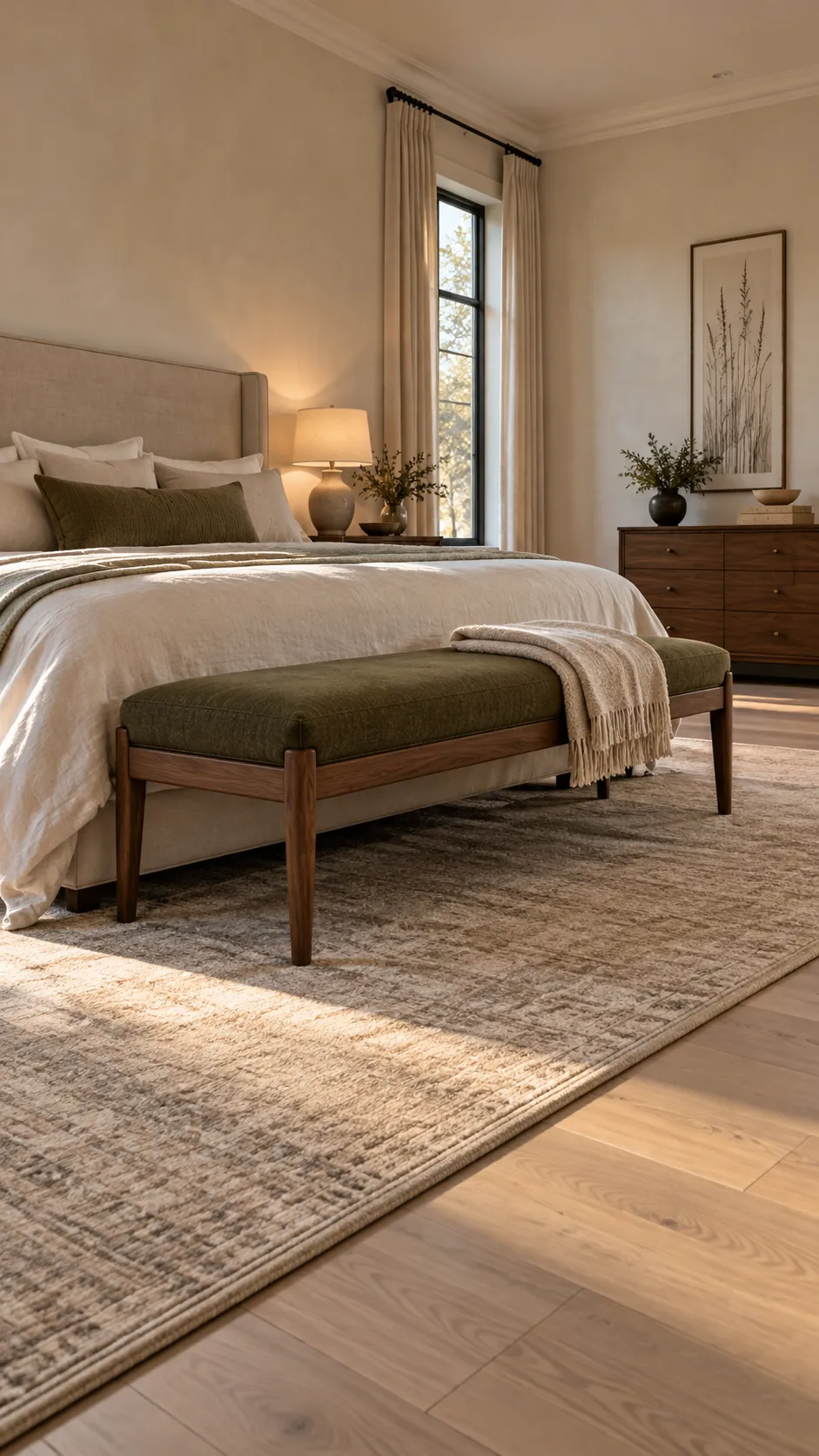
Build a real bedroom seating area
Two chairs and a small table can turn unused floor area into a reason to enjoy the room. Angle the chairs toward each other rather than lining them along a wall. Keep the arrangement close enough for conversation and far enough from the bed to preserve a clear path.
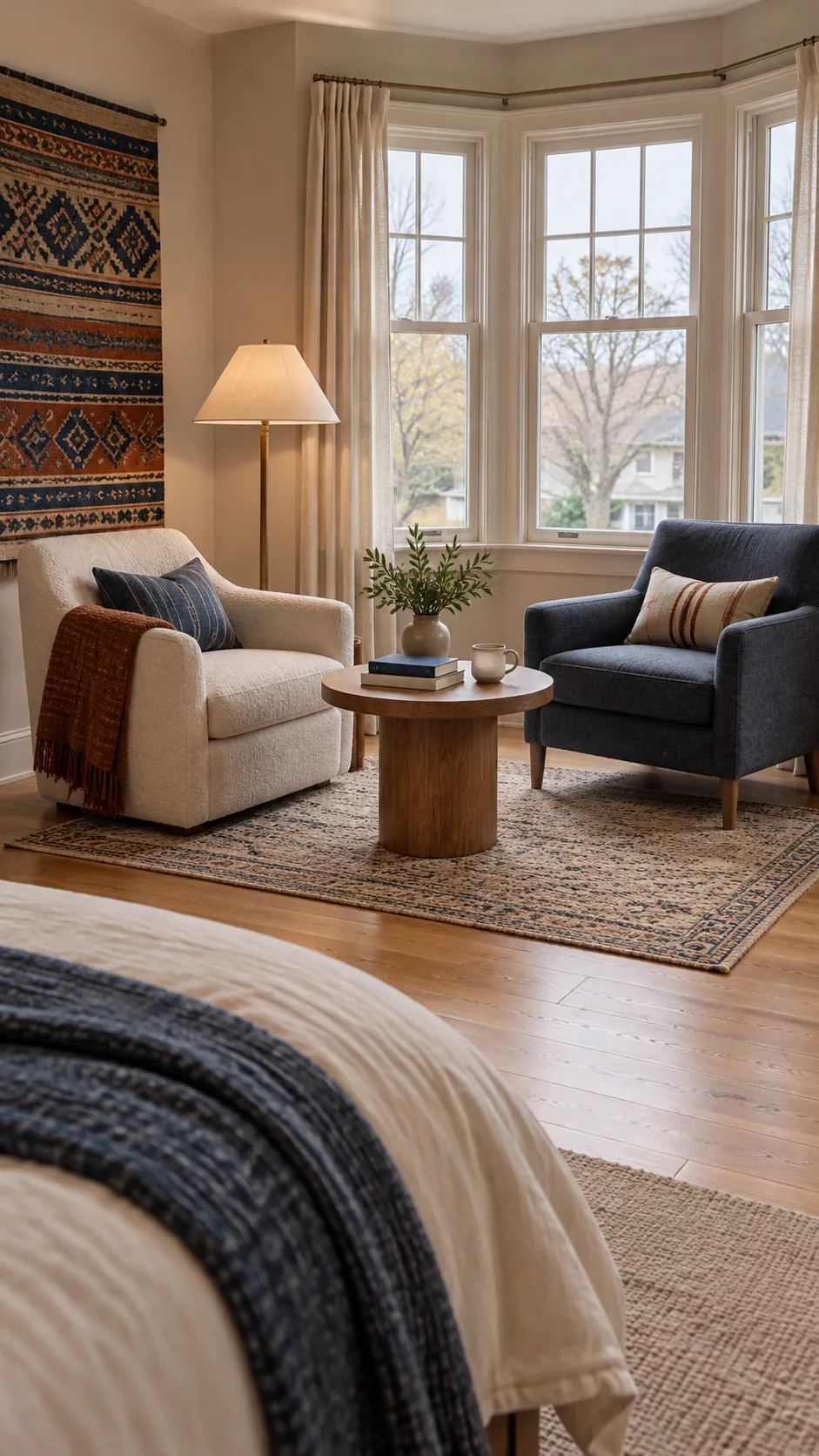
Place a chaise near the window
A chaise gives a bright corner a quiet purpose without requiring a full sitting group. Position it where daylight supports reading but does not block curtains or a radiator. A floor lamp and small table complete the zone while keeping the open feeling of the room.
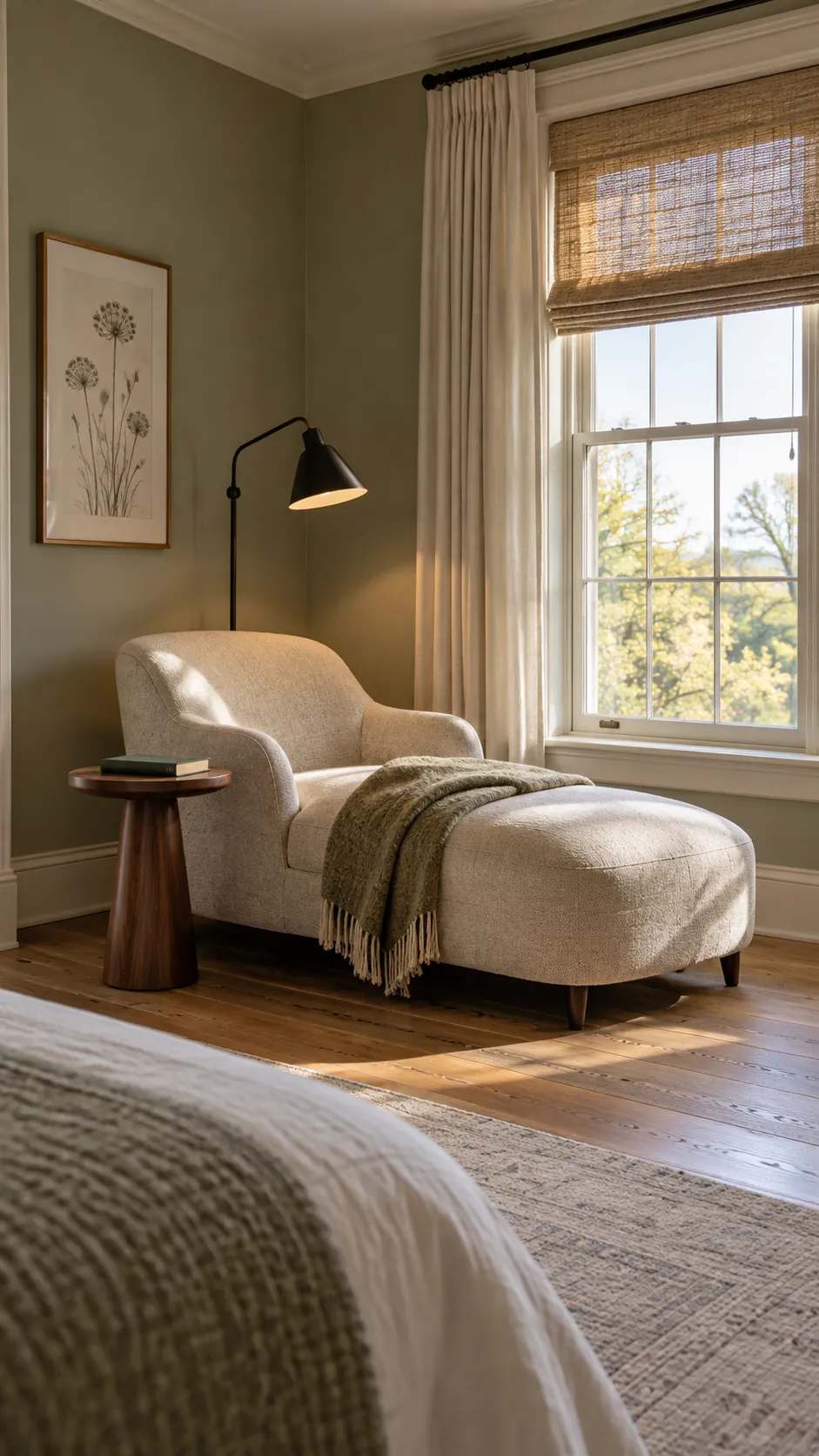
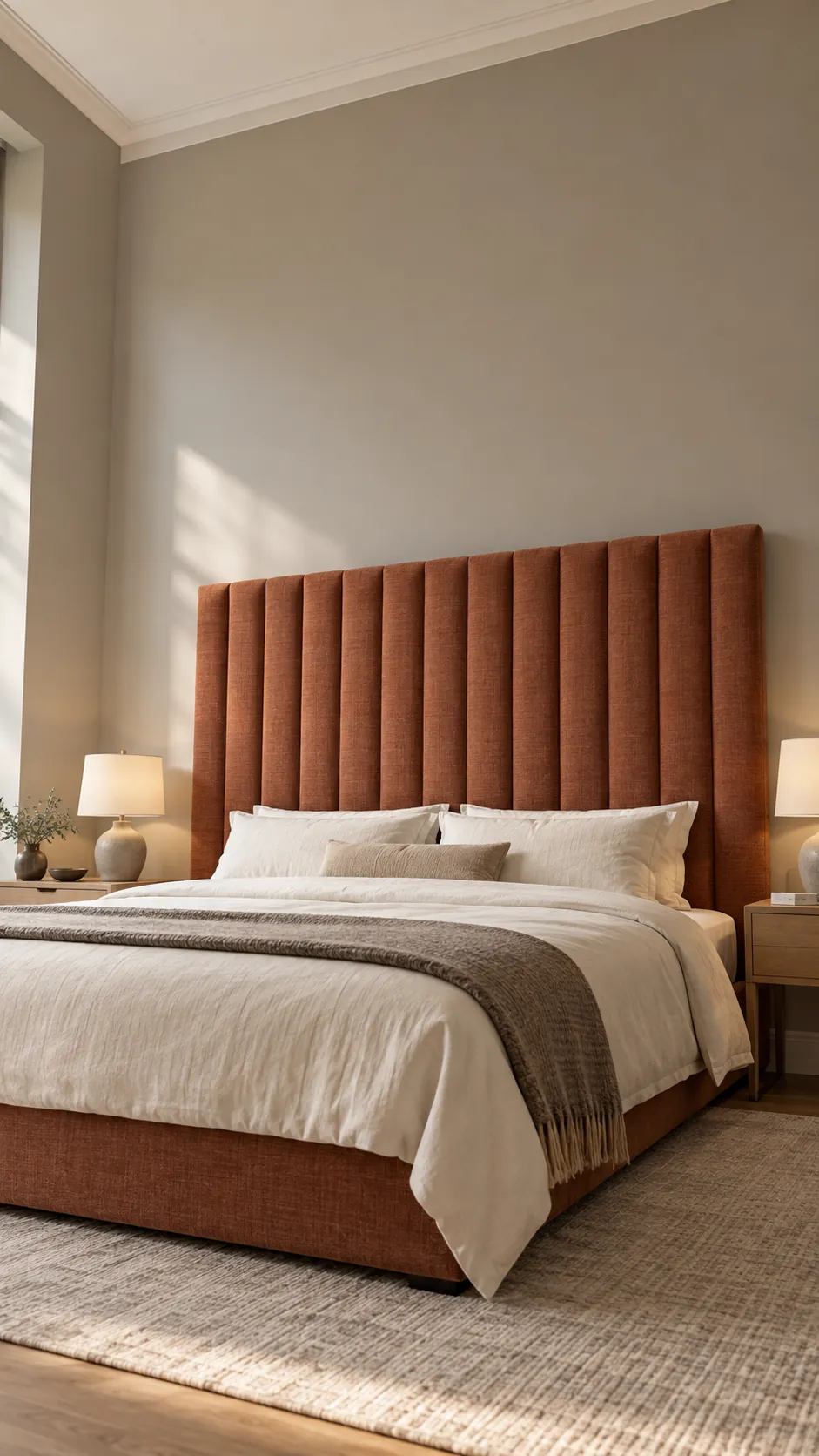
Use a tall upholstered headboard
A low headboard can look lost beneath a high ceiling. A taller upholstered design introduces softness and gives the bed enough presence to hold the main wall. Keep its shape simple so the extra scale feels calm rather than theatrical.
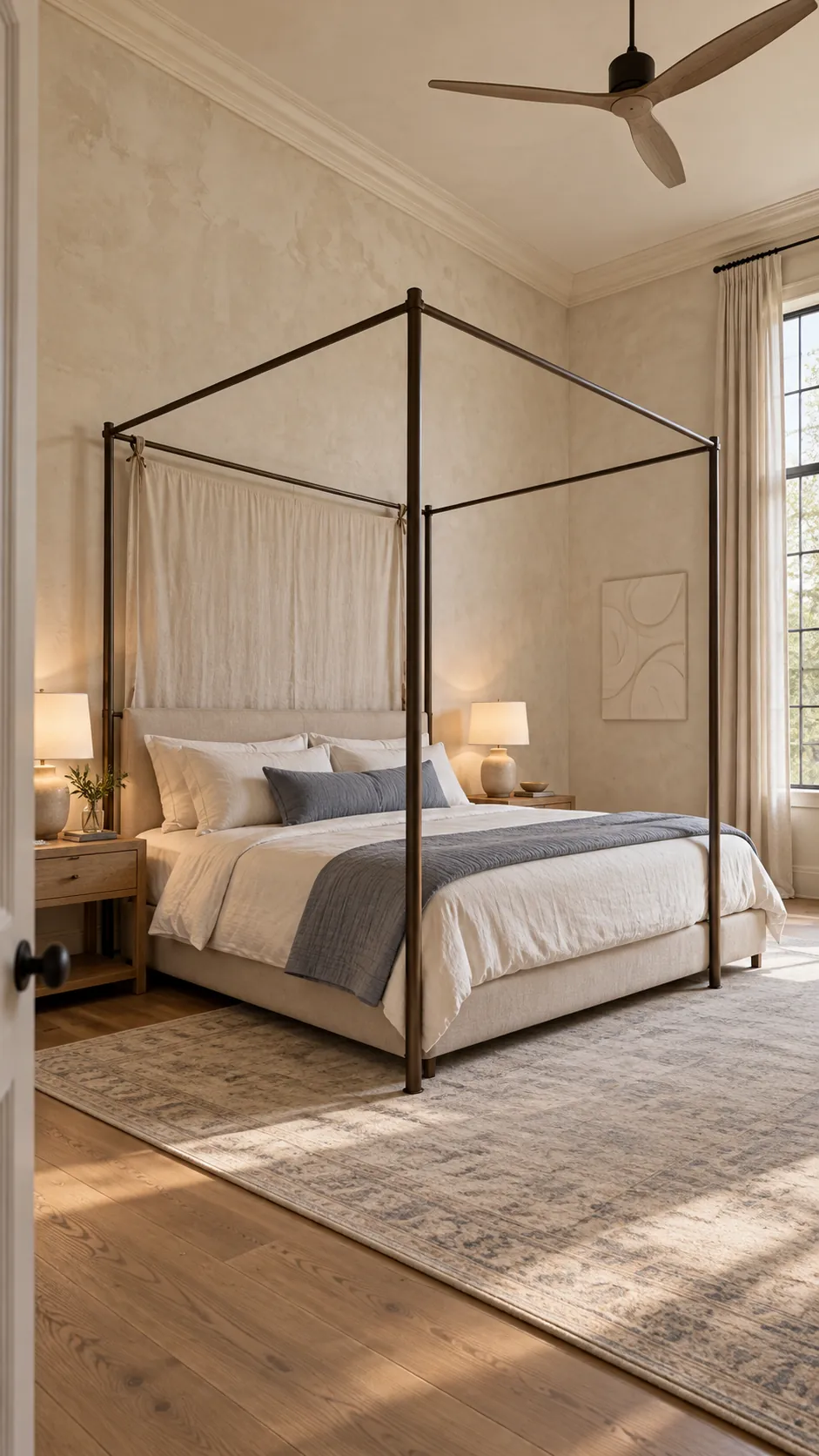
Frame the bed with a simple canopy
A slim canopy bed uses vertical space and makes the sleeping area feel like a room within the room. Choose clean posts that do not block the view or crowd the ceiling. Leave the frame bare or add only light fabric so the structure remains restful.
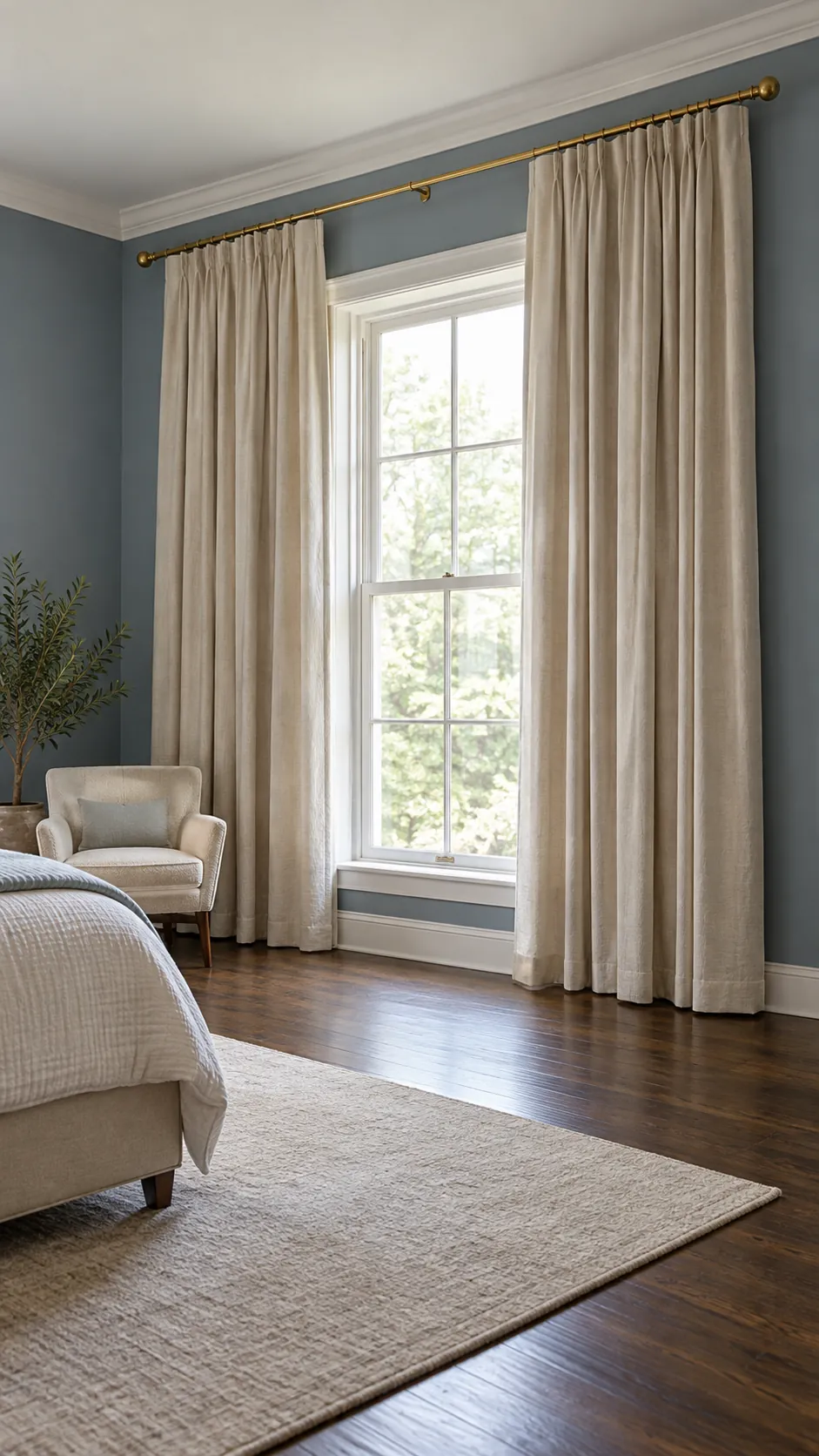
Hang curtains wider than the window
Narrow curtain panels exaggerate the blank wall around a window. Extend the rod beyond the frame and hang fabric close to the ceiling to create a fuller vertical gesture. The added textile softens echo and makes the window feel appropriate to the room scale.
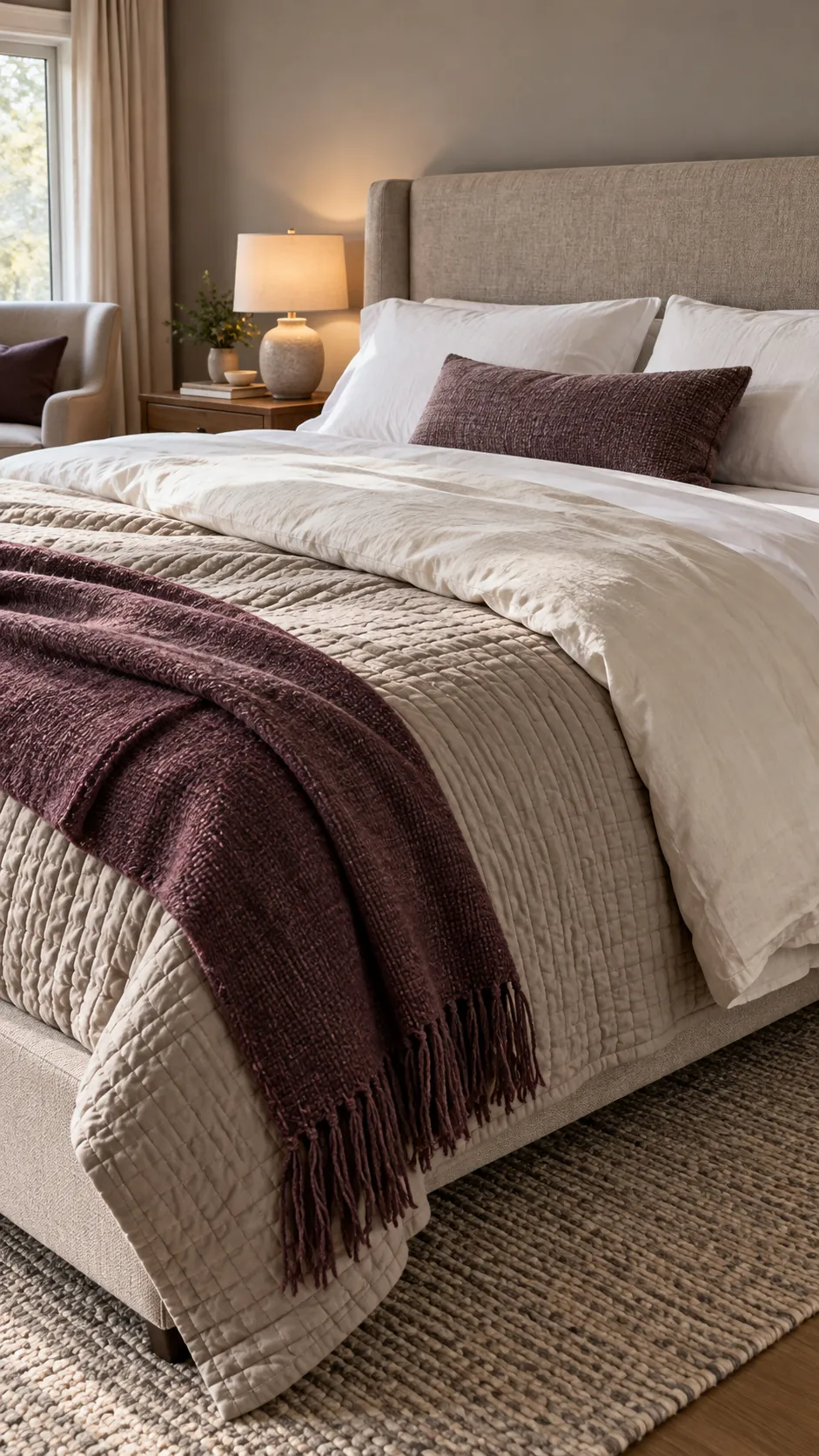
Layer the bedding with quiet texture
Warm bedroom interiors depend on depth more than a pile of decorative pillows. Combine smooth sheets, a quilt, a softly folded duvet, and one tactile throw in related tones. The varied surfaces make the bed inviting while preserving enough open space for comfortable sleep.
Choose lamps with enough visual weight
Small lamps can make broad bedside tables look unfinished. Select bases and shades that relate to the width of the furniture and the height of the headboard. The light should remain gentle, but the fixtures need enough presence to connect the lower and upper parts of the wall.
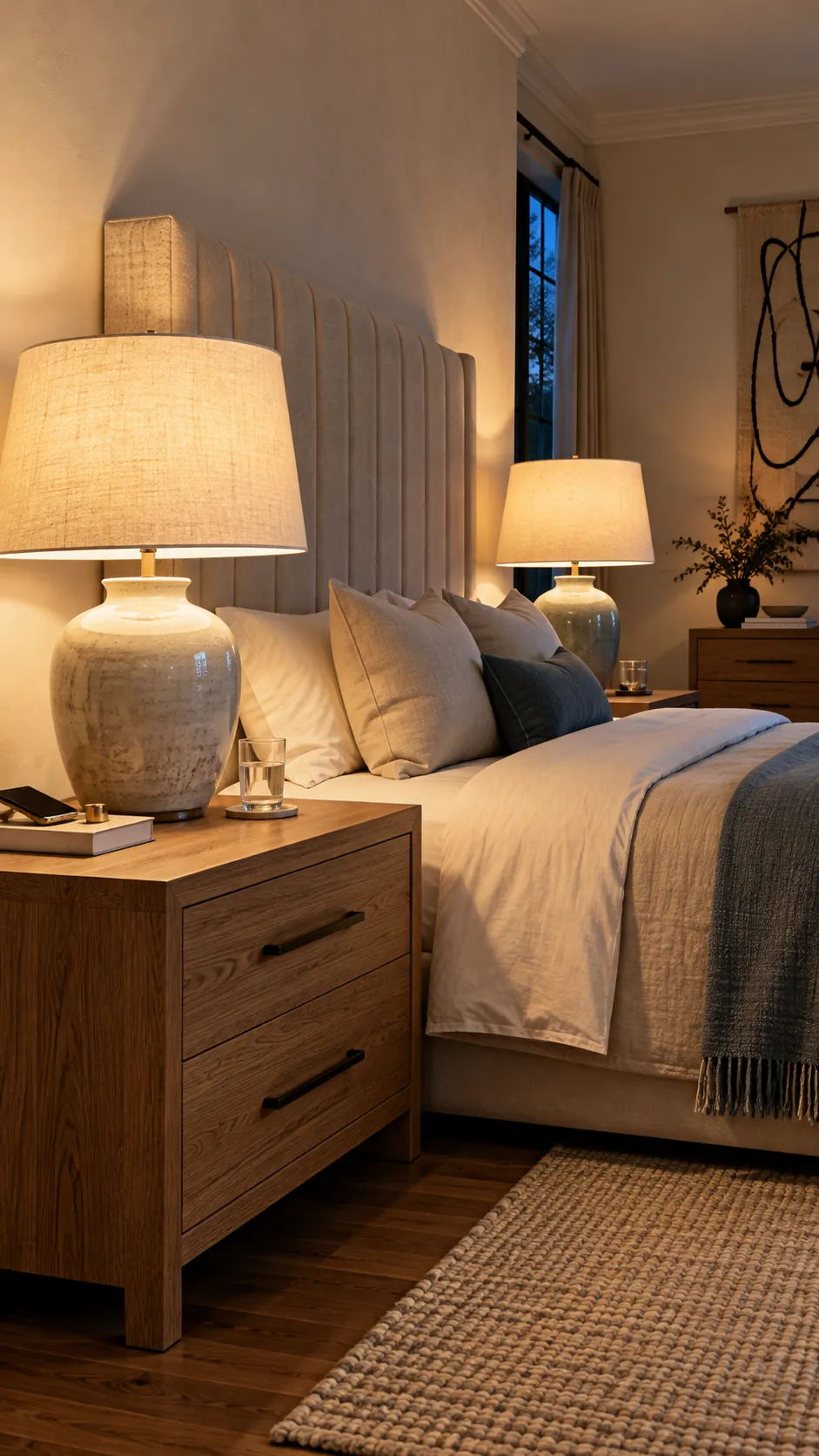
Install a pendant over an empty corner
A pendant can define an empty bedroom corner without adding a bulky object to the floor. Hang it above a small table, plant, or reading chair so the light belongs to a useful activity. Check the drop from standing height and keep it outside the main walking route.
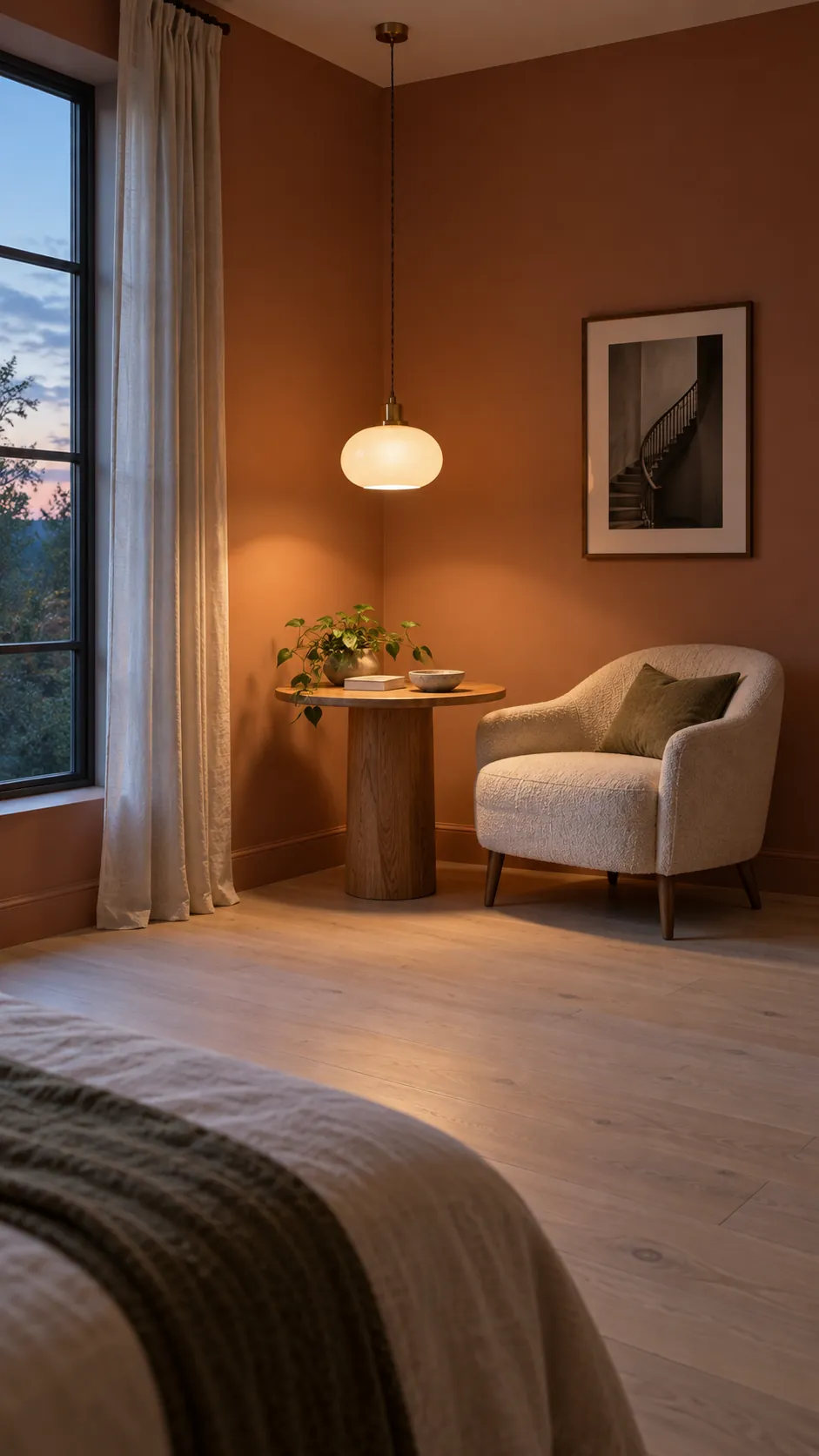
Use wall sconces to widen the bed zone
Sconces draw attention across the full width of the sleeping area and free the tables for daily essentials. Mount them at a comfortable reading height and choose arms that direct light without glare. Their repetition helps a long wall feel intentional rather than empty.
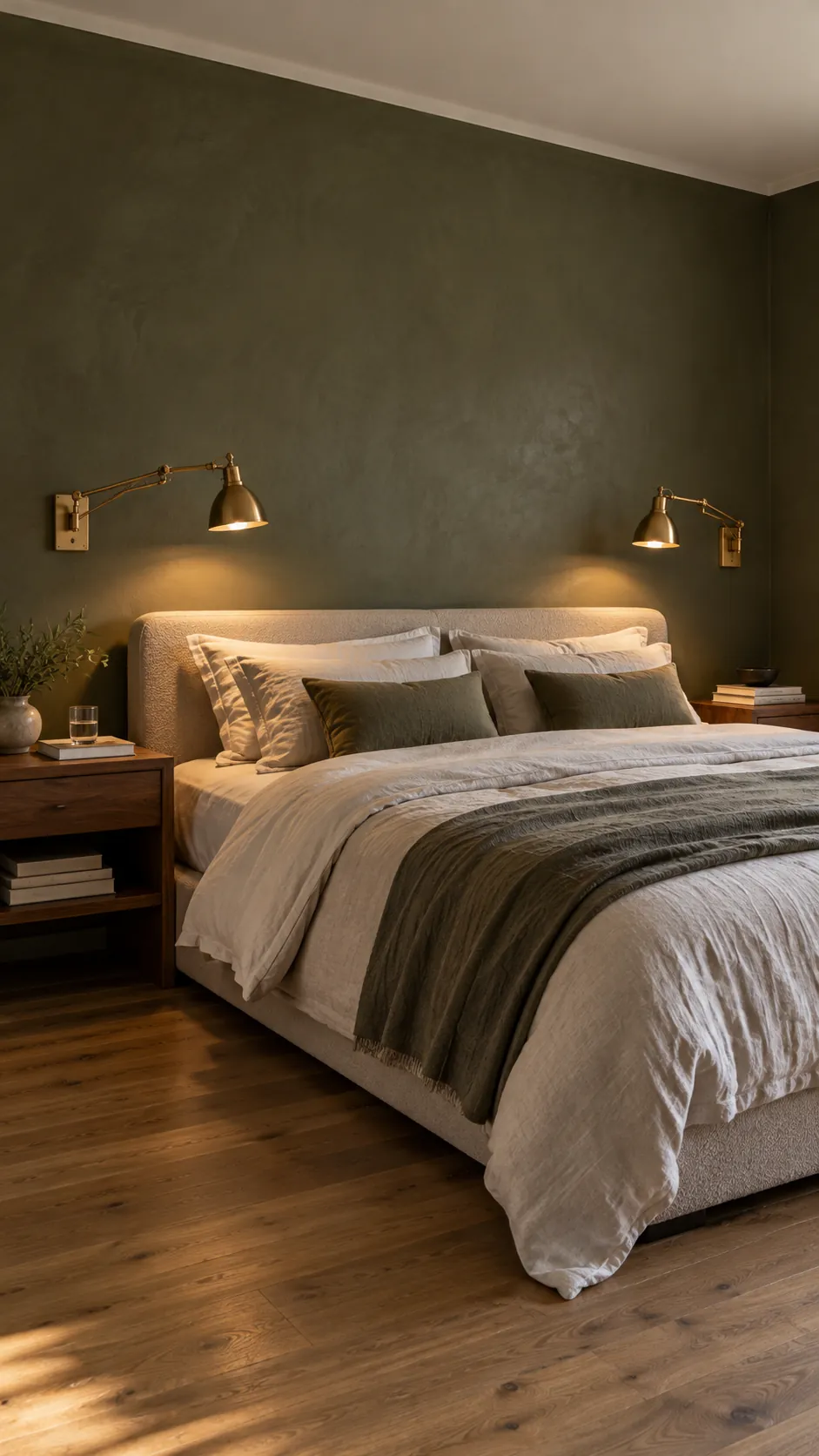
Paint the walls a warmer mid tone
Bright white can make distant walls recede and leave a large primary bedroom feeling exposed. A muted clay, olive, mushroom, or soft blue brings the boundaries visually closer. Test the color throughout the day because a broad wall amplifies every change in natural light.
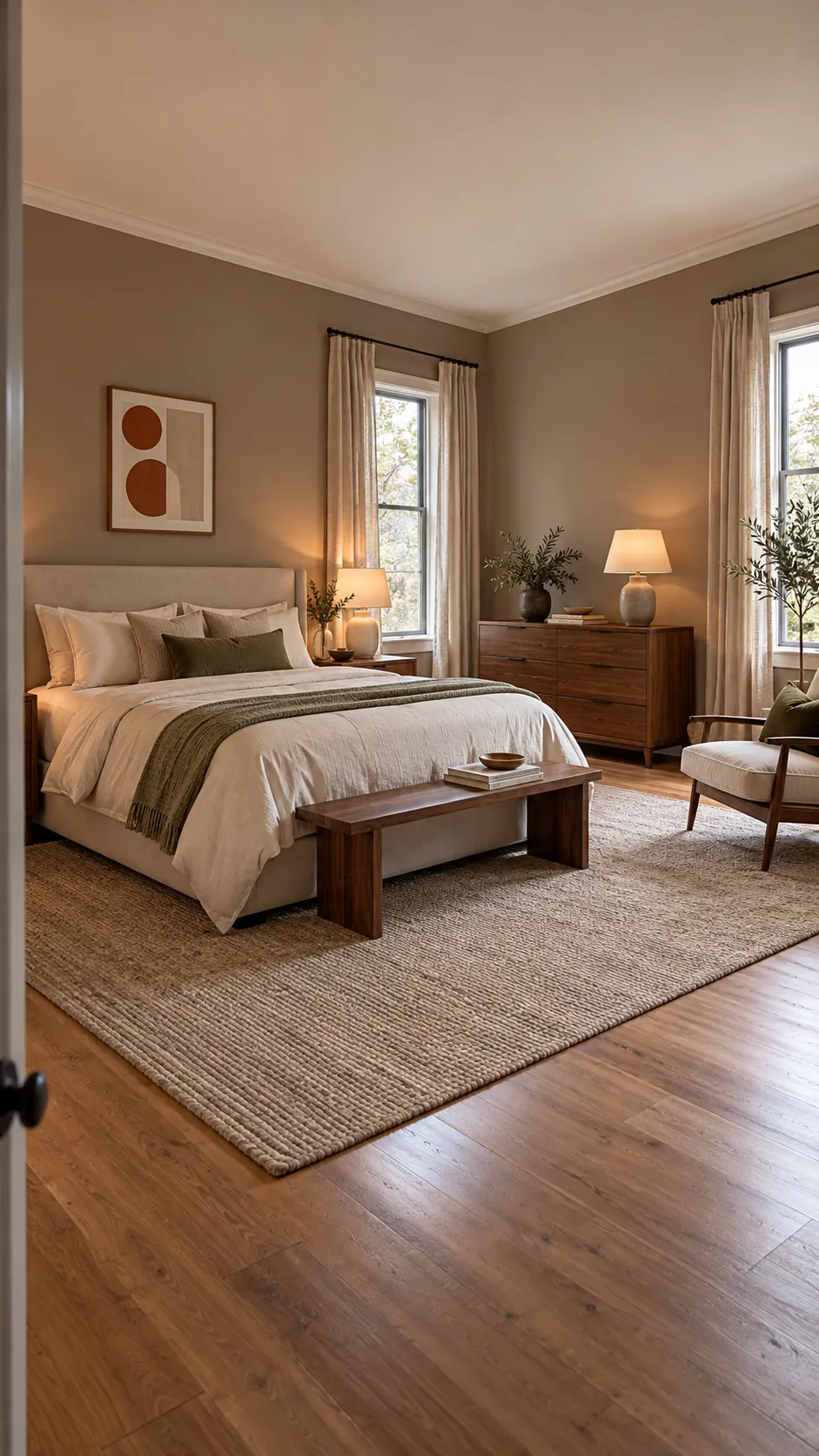
Give the ceiling a softer finish
A high pale ceiling can feel detached from the room below. Use a lighter version of the wall color or a warm neutral that reduces the sharp contrast at the corners. The subtle envelope makes the room feel more intimate without lowering it physically.
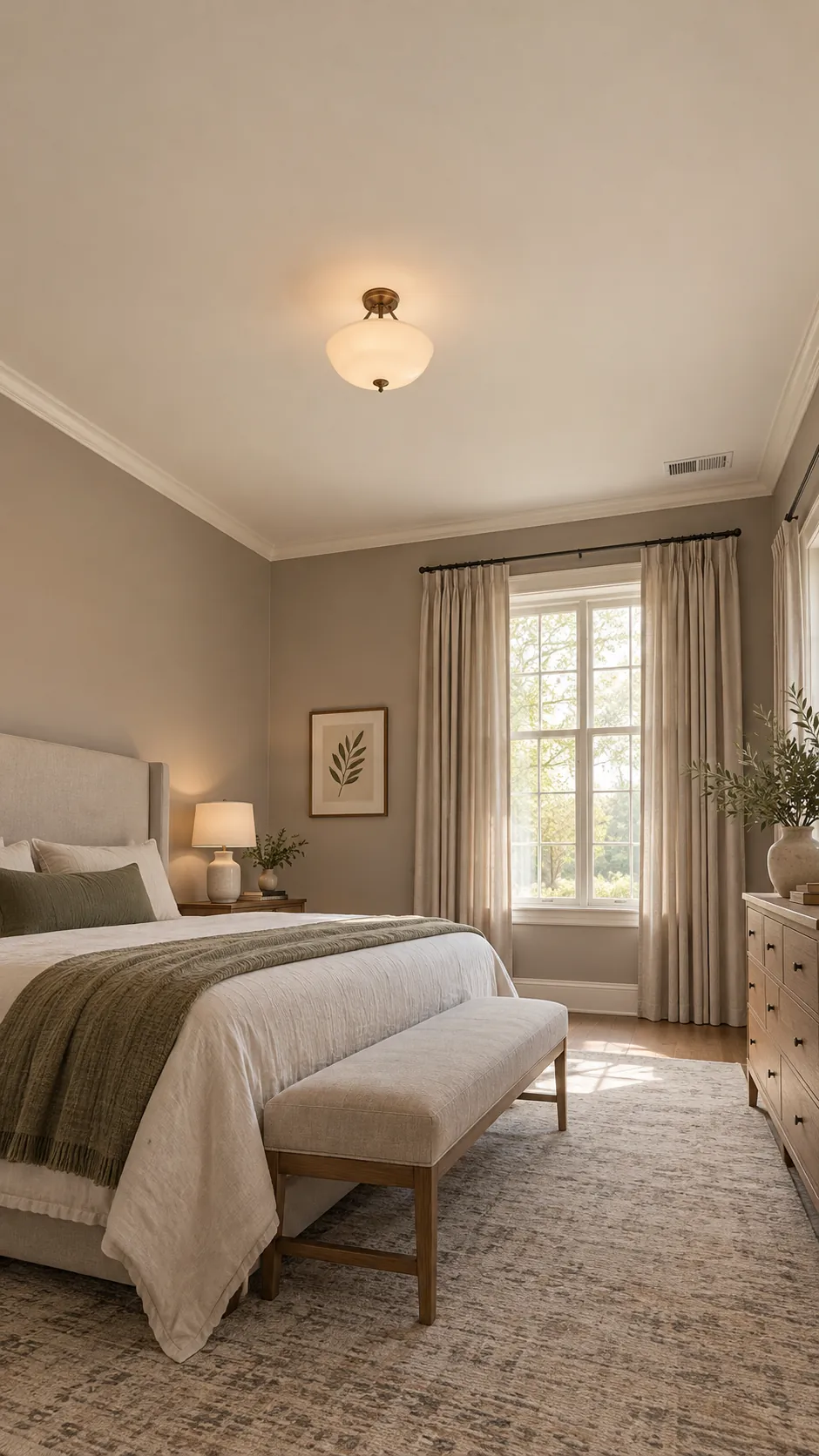
Use one large piece of art
A tiny print leaves too much unrelated wall around it. Choose one substantial work with clear shapes and colors that connect to the bedding, then hang it at a comfortable relationship to the furniture below. One confident piece often feels calmer than many unrelated frames.
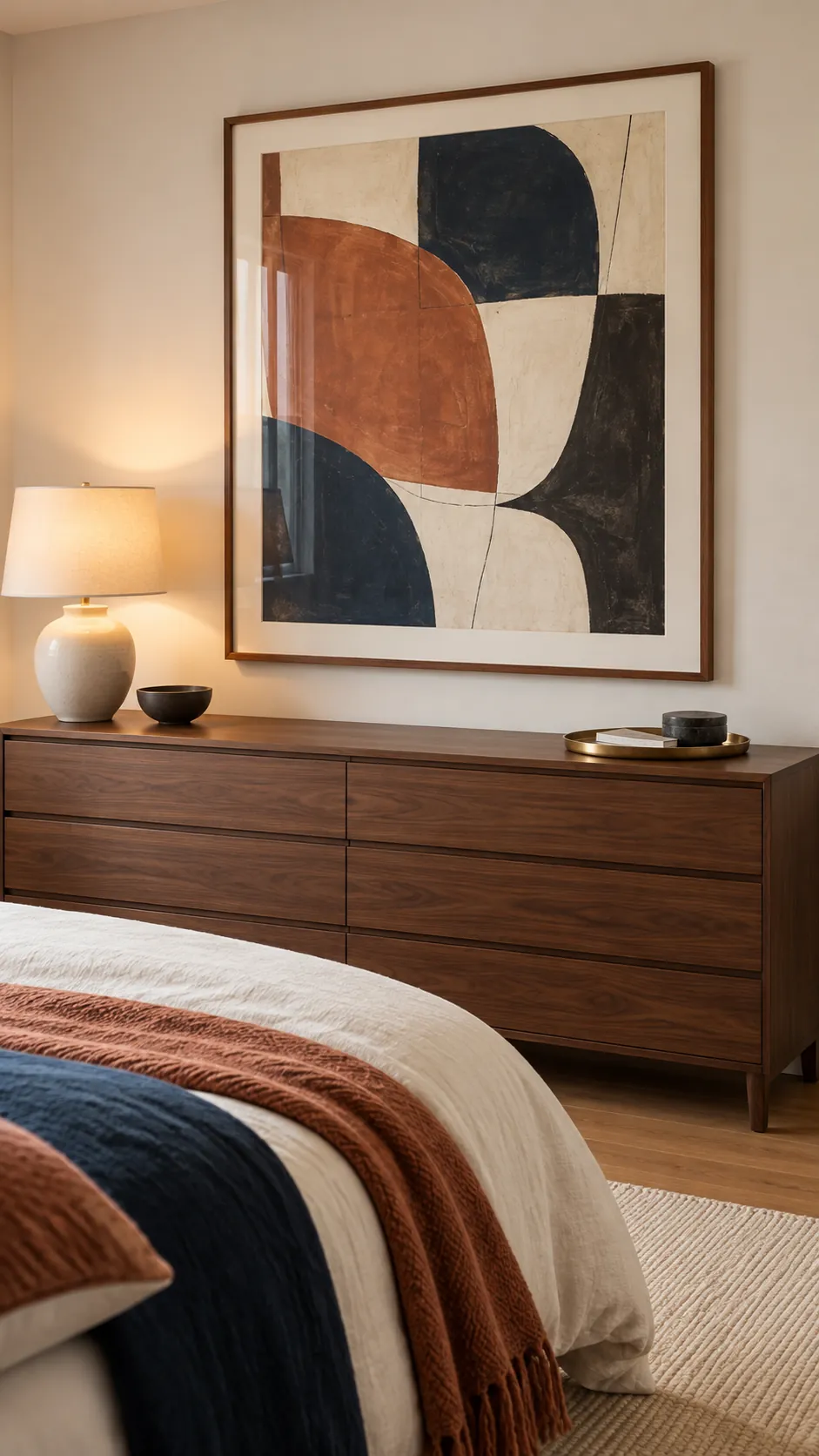
Balance a long wall with paired art
Two related pieces can span a long wall without creating the busyness of a full gallery. Keep the frames, scale, and spacing consistent while allowing the subjects to differ slightly. Align the pair with the dresser or seating zone so the art strengthens an existing furniture group.
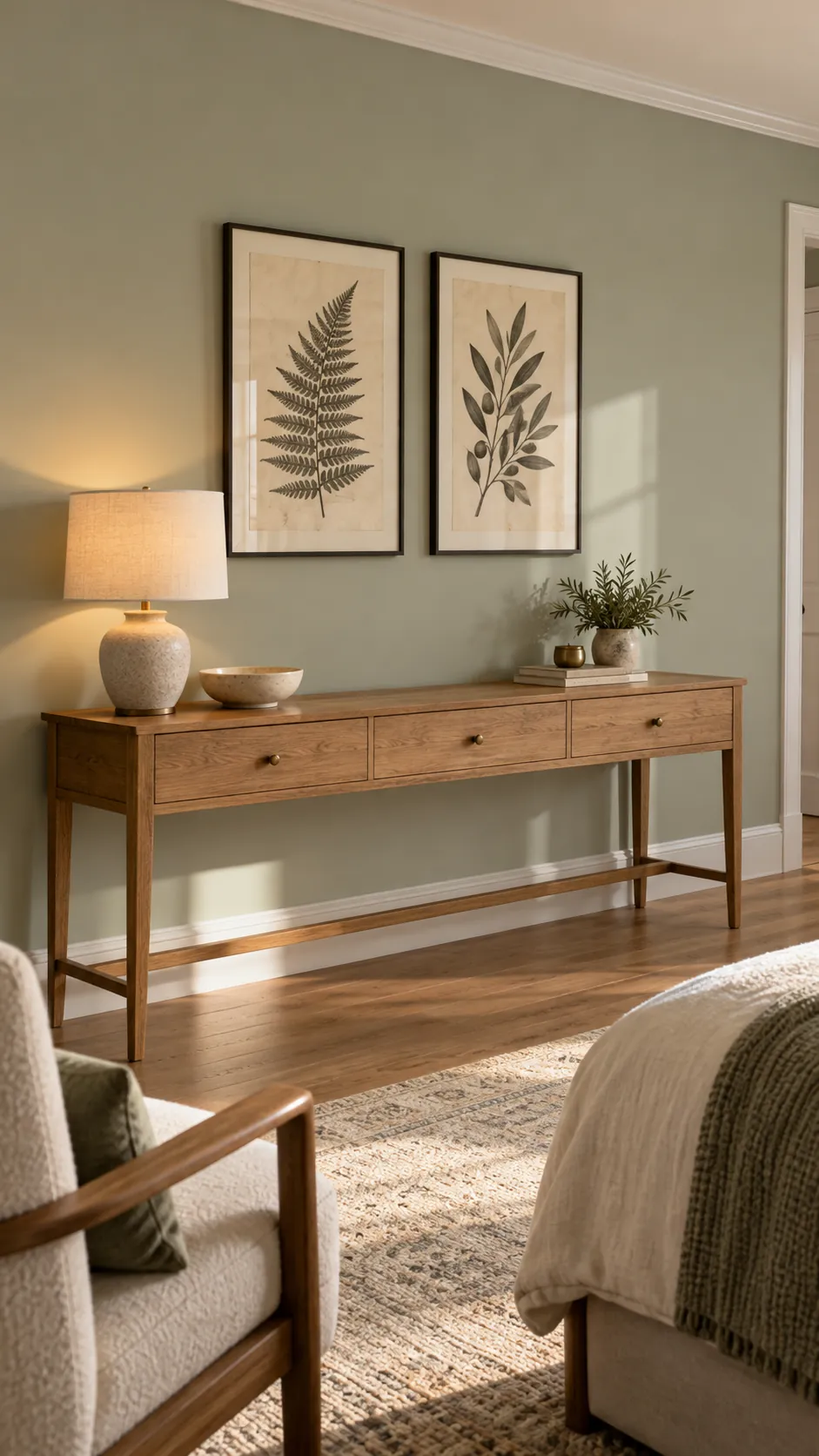
Turn the dresser into a complete vignette
A wide dresser needs more than a few small objects scattered across it. Ground the surface with a mirror or art, then add a lamp and one useful tray at different heights. Leave part of the top clear so the arrangement feels practical and not like display storage.
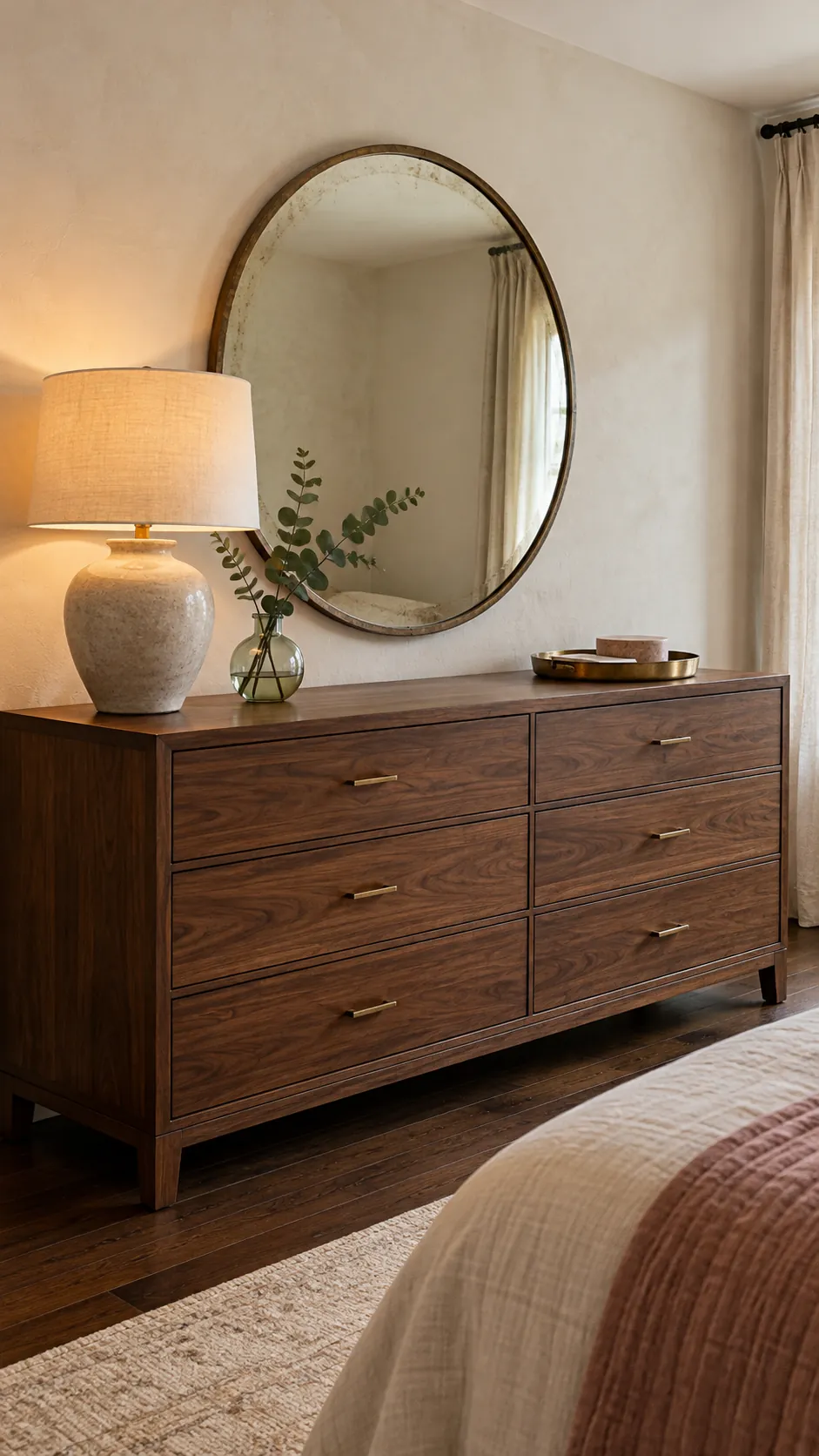
Lean a floor mirror where light can travel
A floor mirror gives a tall empty corner purpose and reflects light into the room. Angle it toward a window or a calm furniture grouping rather than the bed or a cluttered doorway. Secure the frame properly so the relaxed leaning look remains safe.
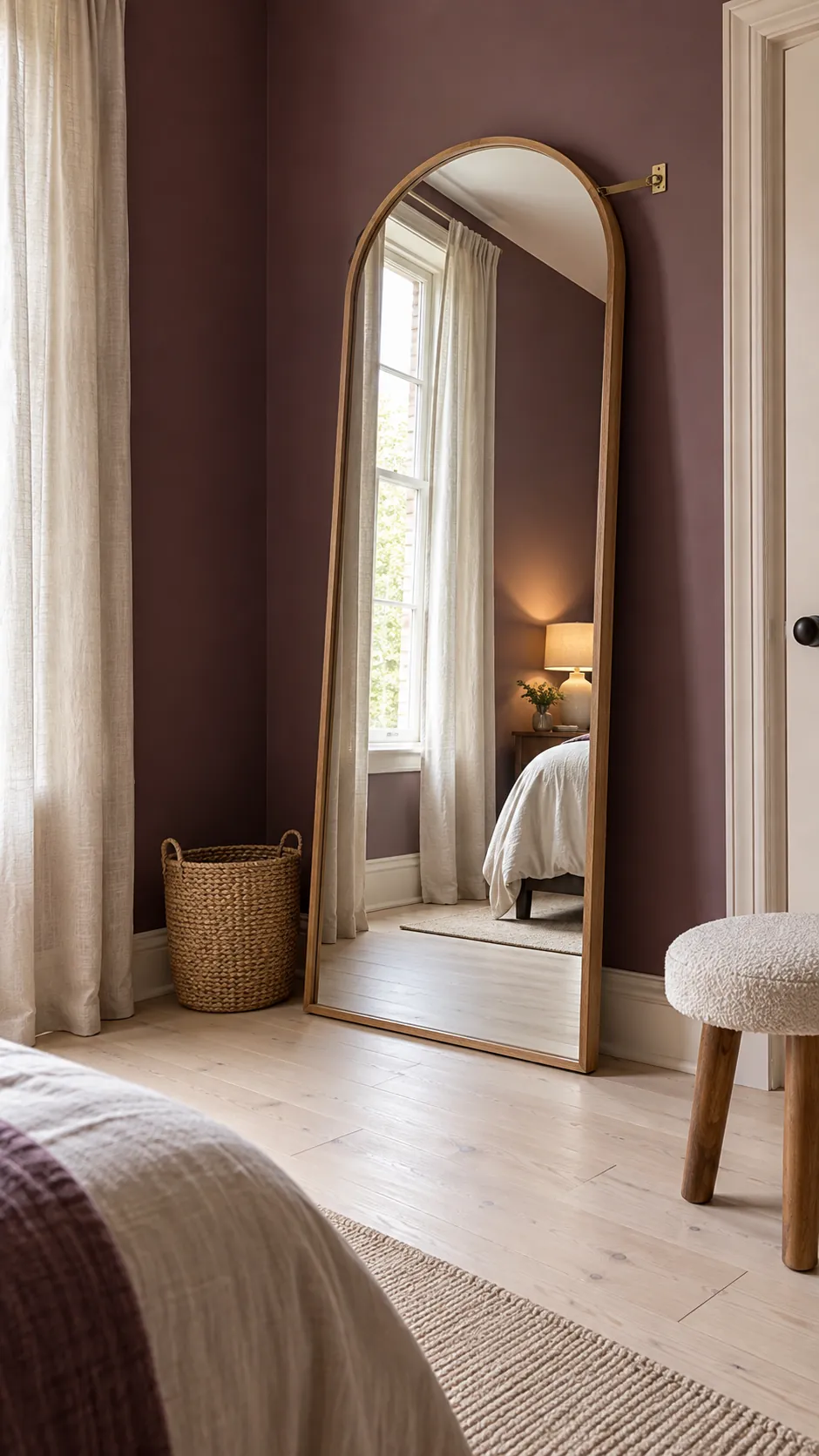
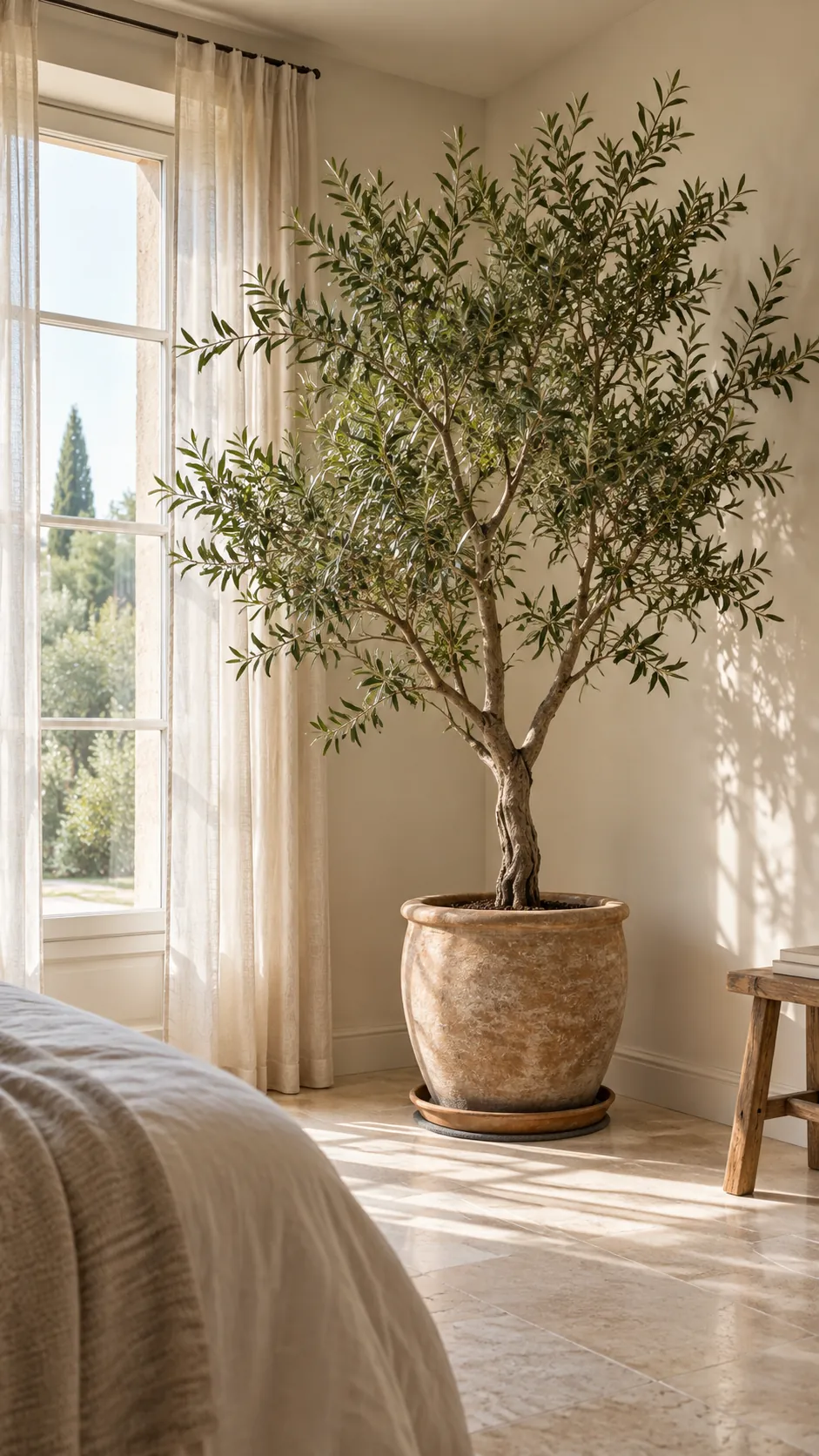
Fill one corner with a substantial plant
A healthy tree can soften a difficult corner more naturally than several small accessories. Choose a species that suits the available light and place it in a stable pot with a protected floor surface. Its height connects the furniture to the ceiling while the irregular leaves break up straight lines.
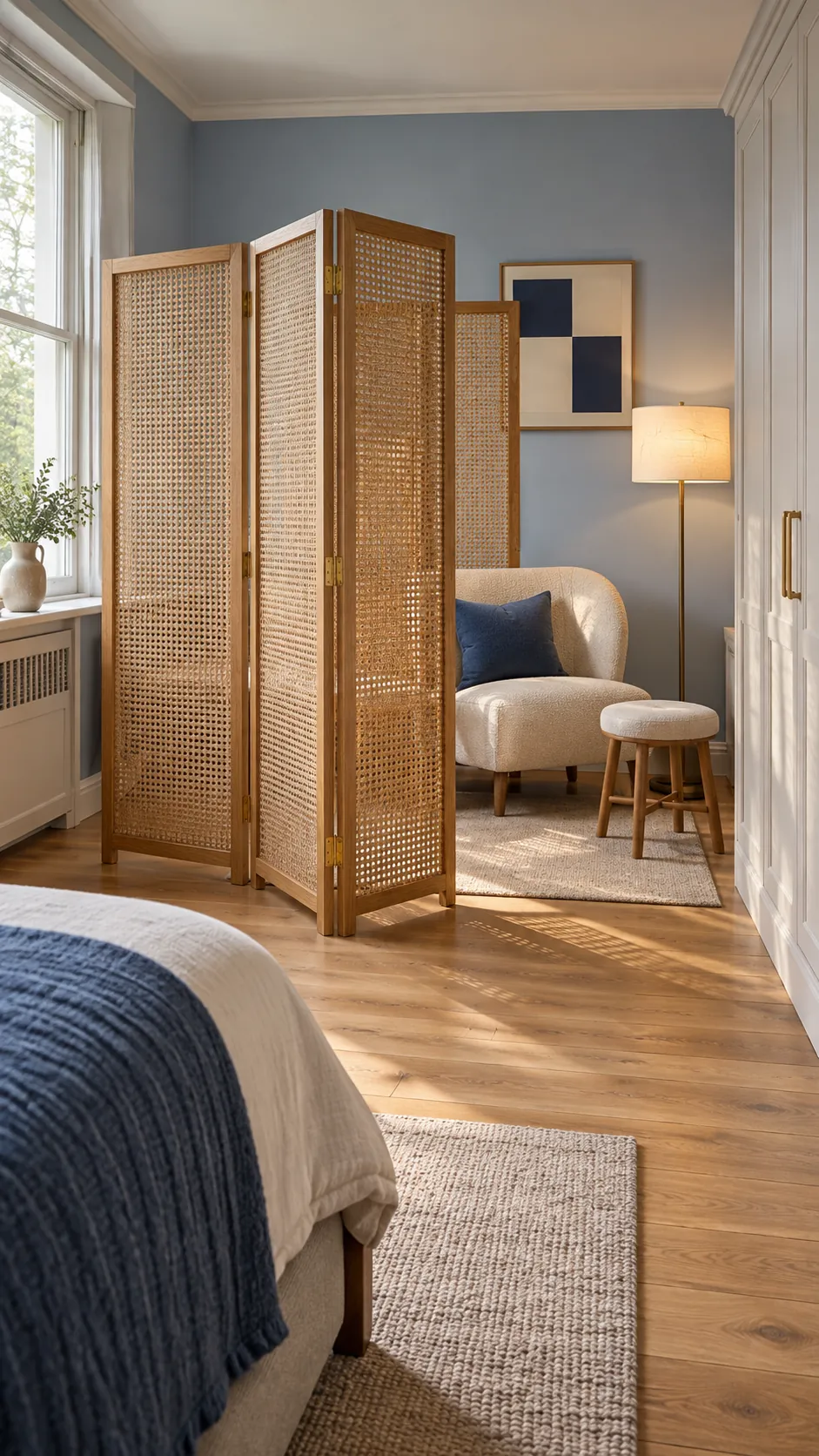
Use a folding screen to shape a quiet zone
A folding screen can give a reading or dressing area a sense of enclosure without permanent construction. Place it where the panels do not block a window, vent, or route to the bathroom. The screen should support a real use rather than hide an empty corner for its own sake.
Layer light at three heights
One ceiling fixture leaves corners dim and the bed visually flat. Combine ambient light overhead, reading light near the mattress, and a lower lamp near seating or a dresser. Separate controls let the room become softer at night without losing useful illumination.
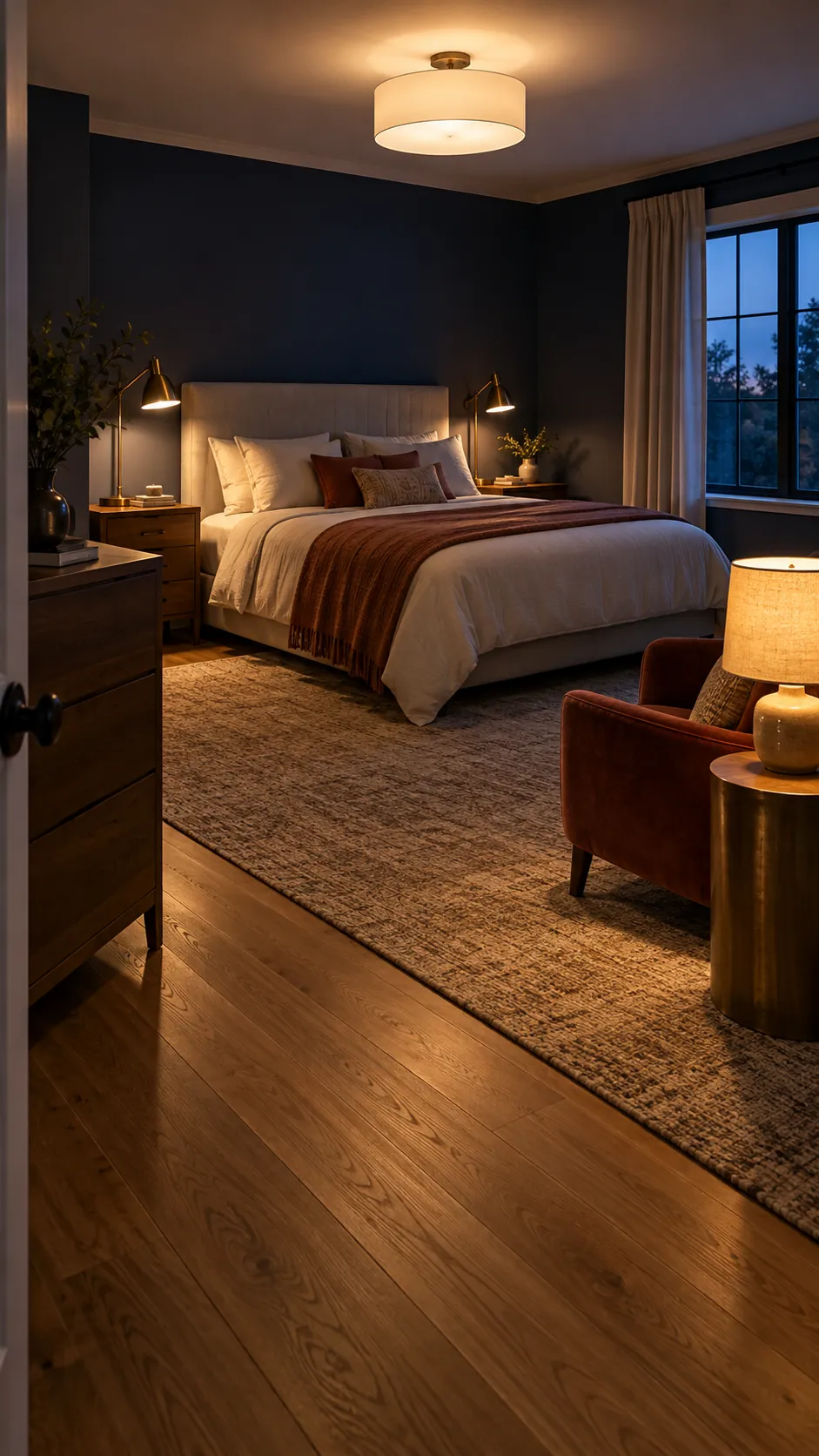
Repeat materials across separate zones
A large room feels fragmented when every area uses a different finish. Repeat the same wood tone, woven texture, or accent color near the bed, seating area, and dresser. The connection can be subtle, but it helps the eye read several furniture zones as one inviting bedroom design.
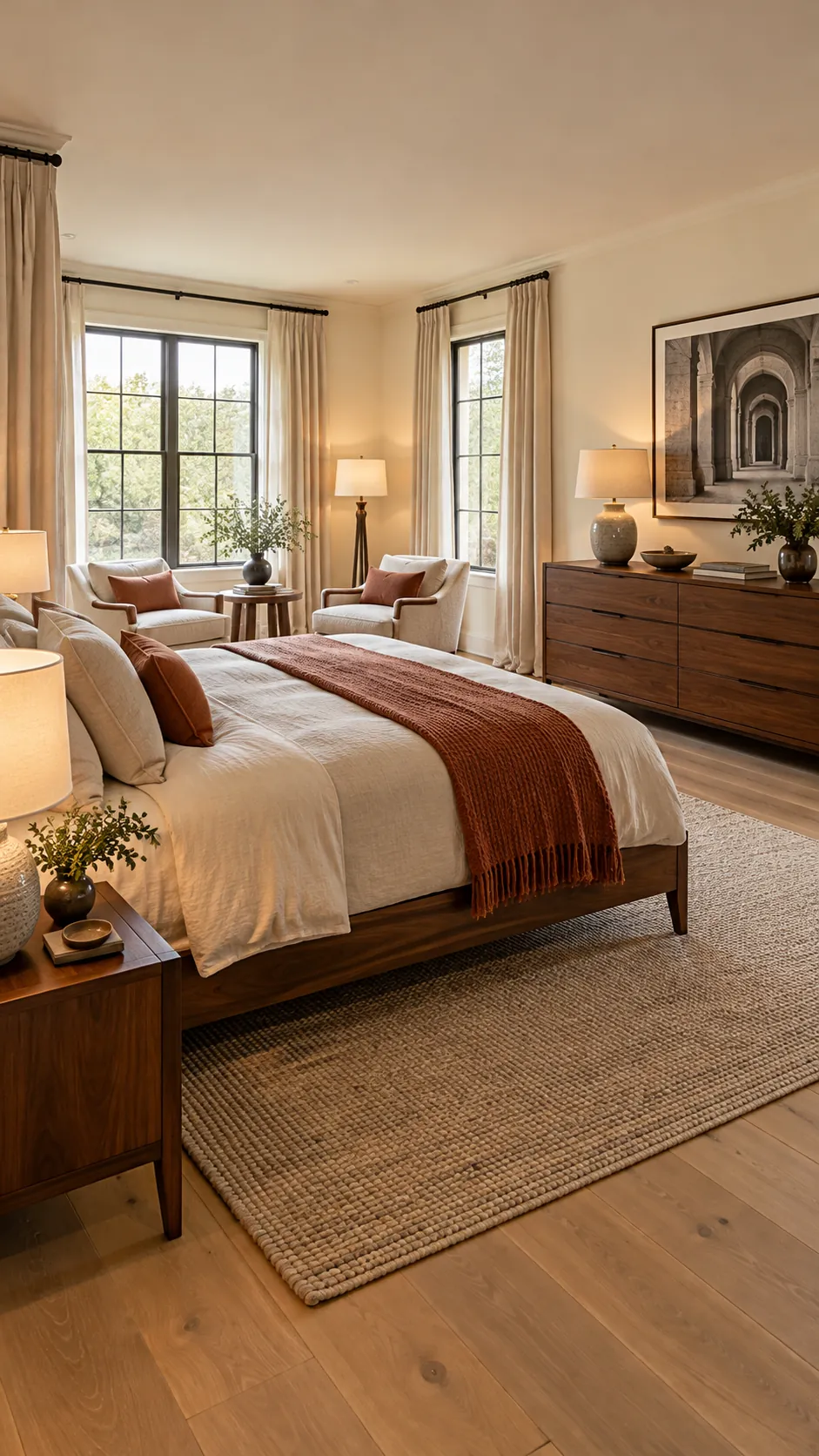
Choose fewer pieces at the right scale
Several undersized chairs and tables can make a spacious bedroom look more bare, not less. Replace scattered filler with a few pieces that relate to the bed and wall dimensions. Each item should support sleep, dressing, reading, or storage so the room remains useful.
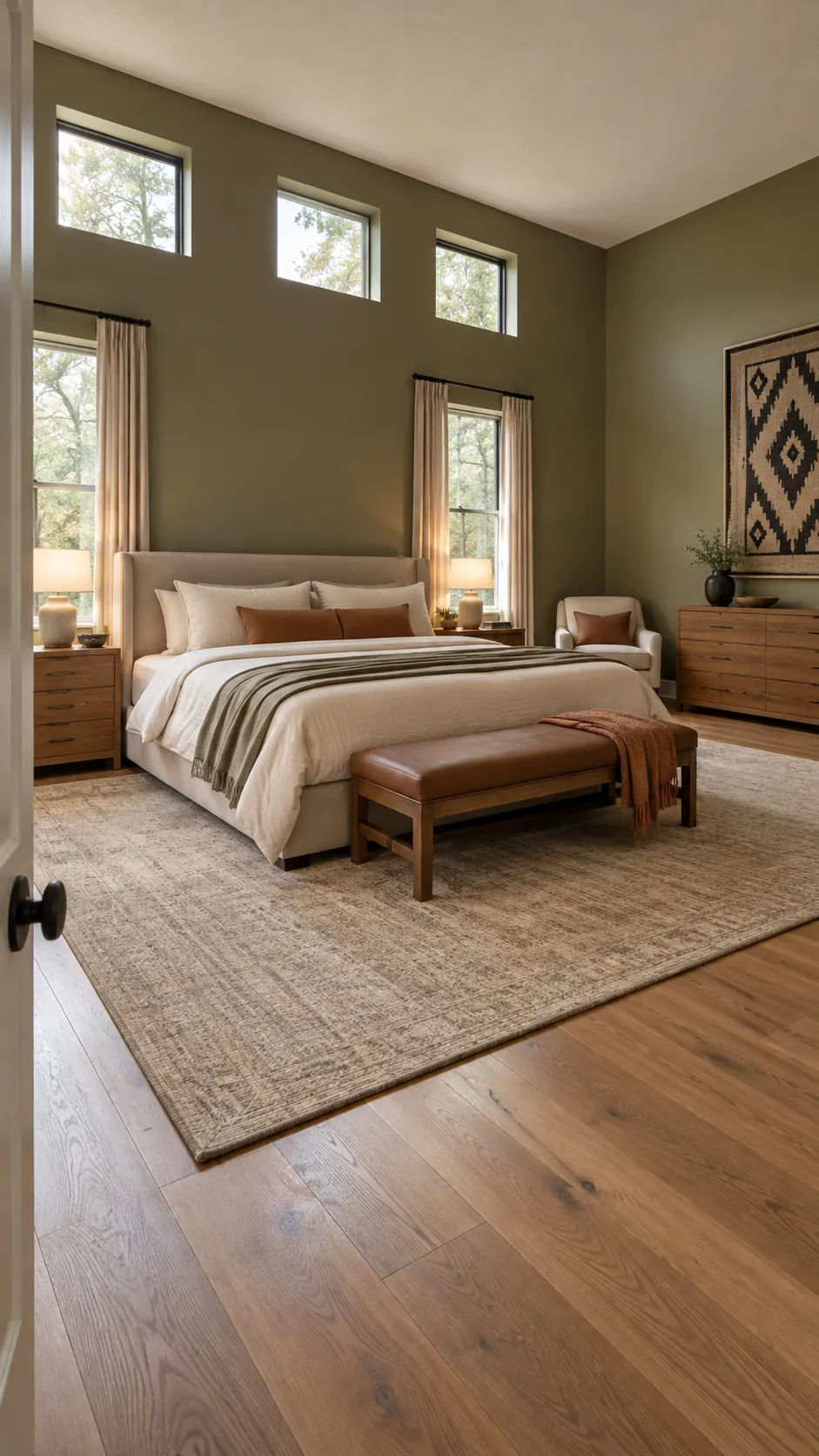
Protect a little intentional open space
Not every empty area needs a chair, plant, or basket. Keep one clear patch where the room can breathe and daily movement stays easy. When the bed zone, storage, and seating area already feel complete, open floor becomes calm negative space rather than evidence that something is missing.