
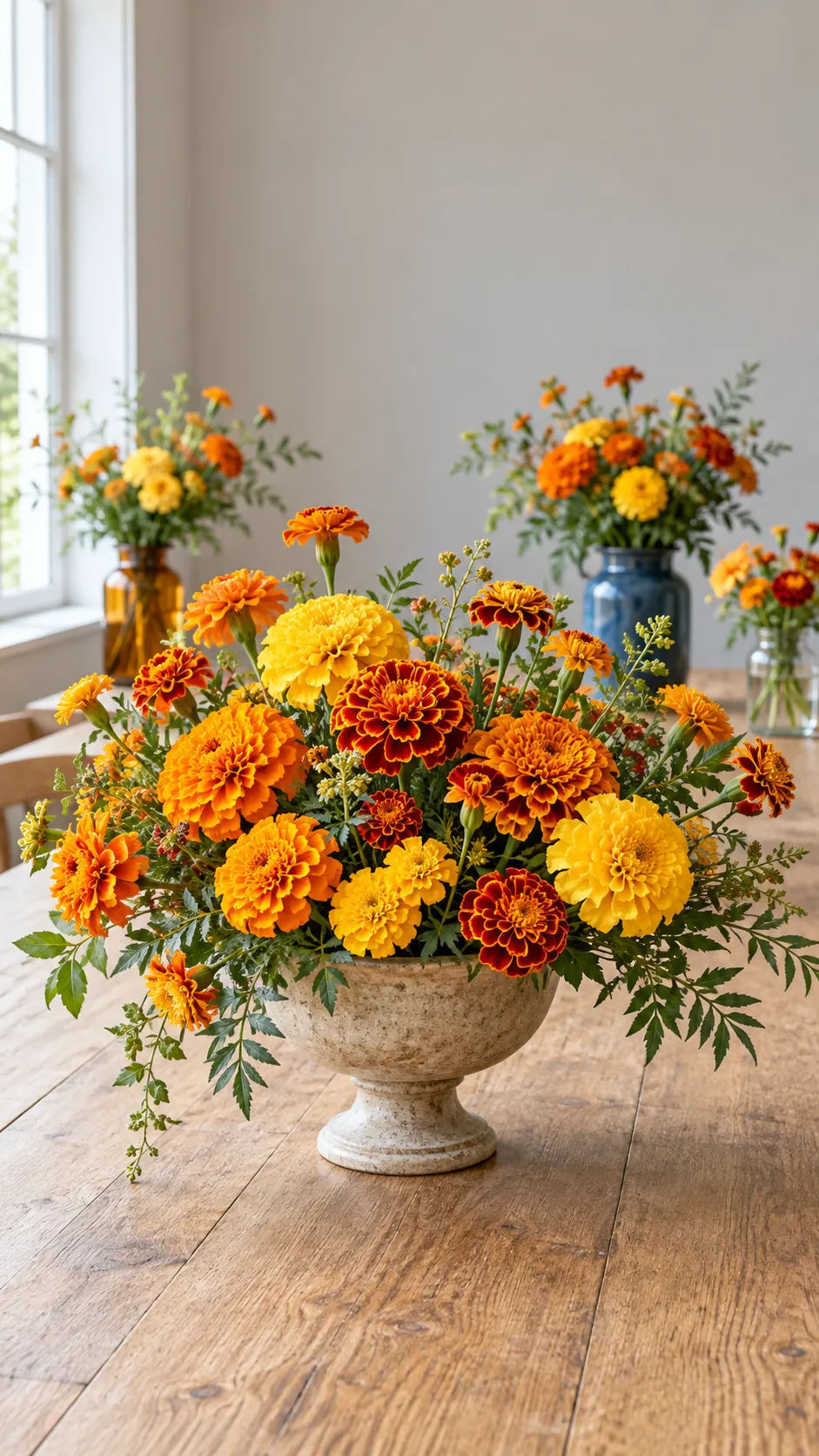
Marigolds bring intense color to a fall table, but their rounded heads can merge into one heavy block when every stem sits at the same height. The best marigold arrangements change the vessel, flower scale, movement, or spacing while keeping the table comfortable to use. These ideas range from one simple jar to a long centerpiece, so you can match the flowers to the table rather than forcing one format.
Low Golden Compote
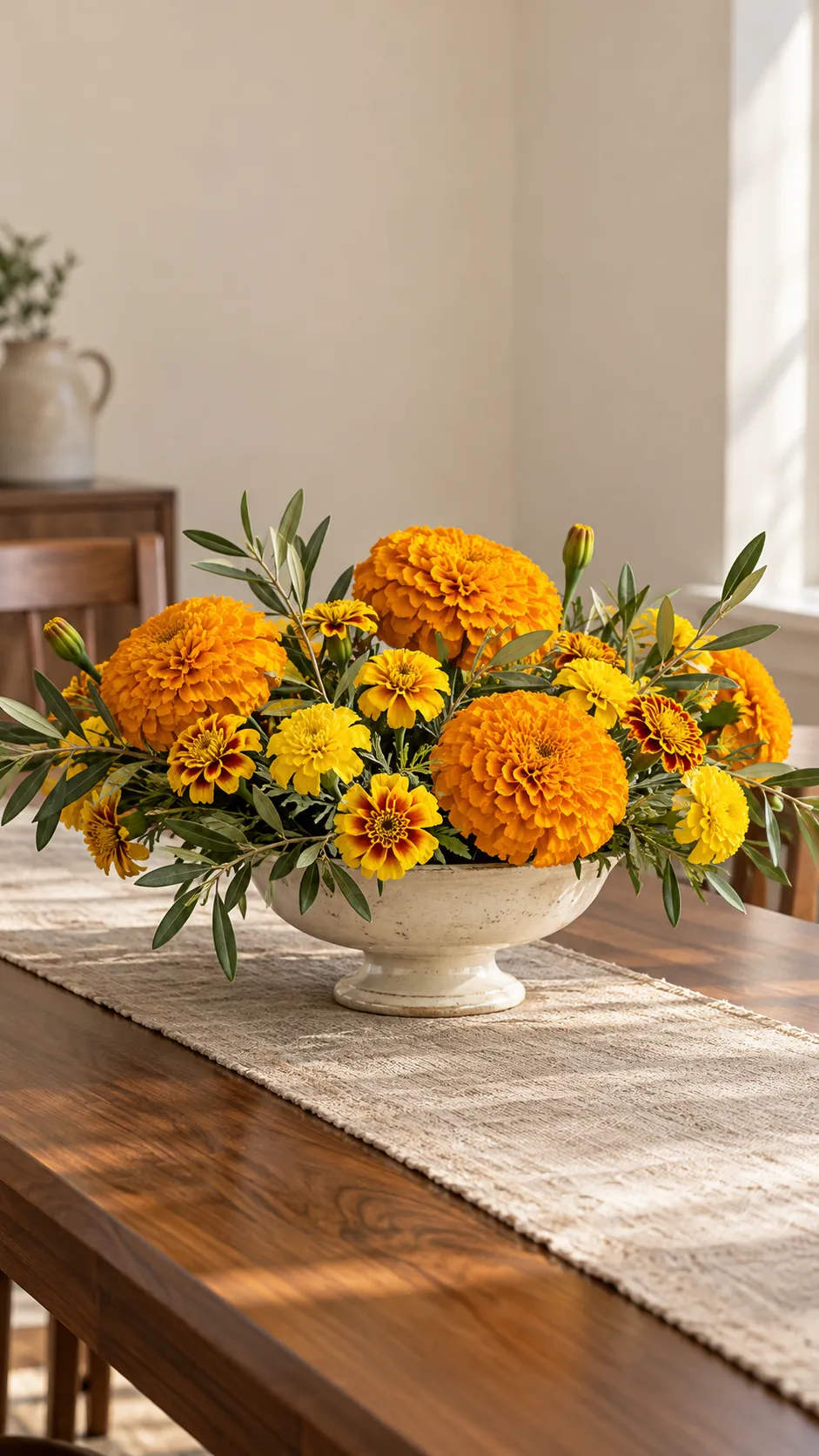
A low compote filled with golden marigolds keeps the table bright without blocking conversation. Cut the outer stems shorter and let the central blooms rise by only a few centimeters. A few olive leaves around the rim separate the orange and yellow flowers from the vessel.
Amber Bottle Trio
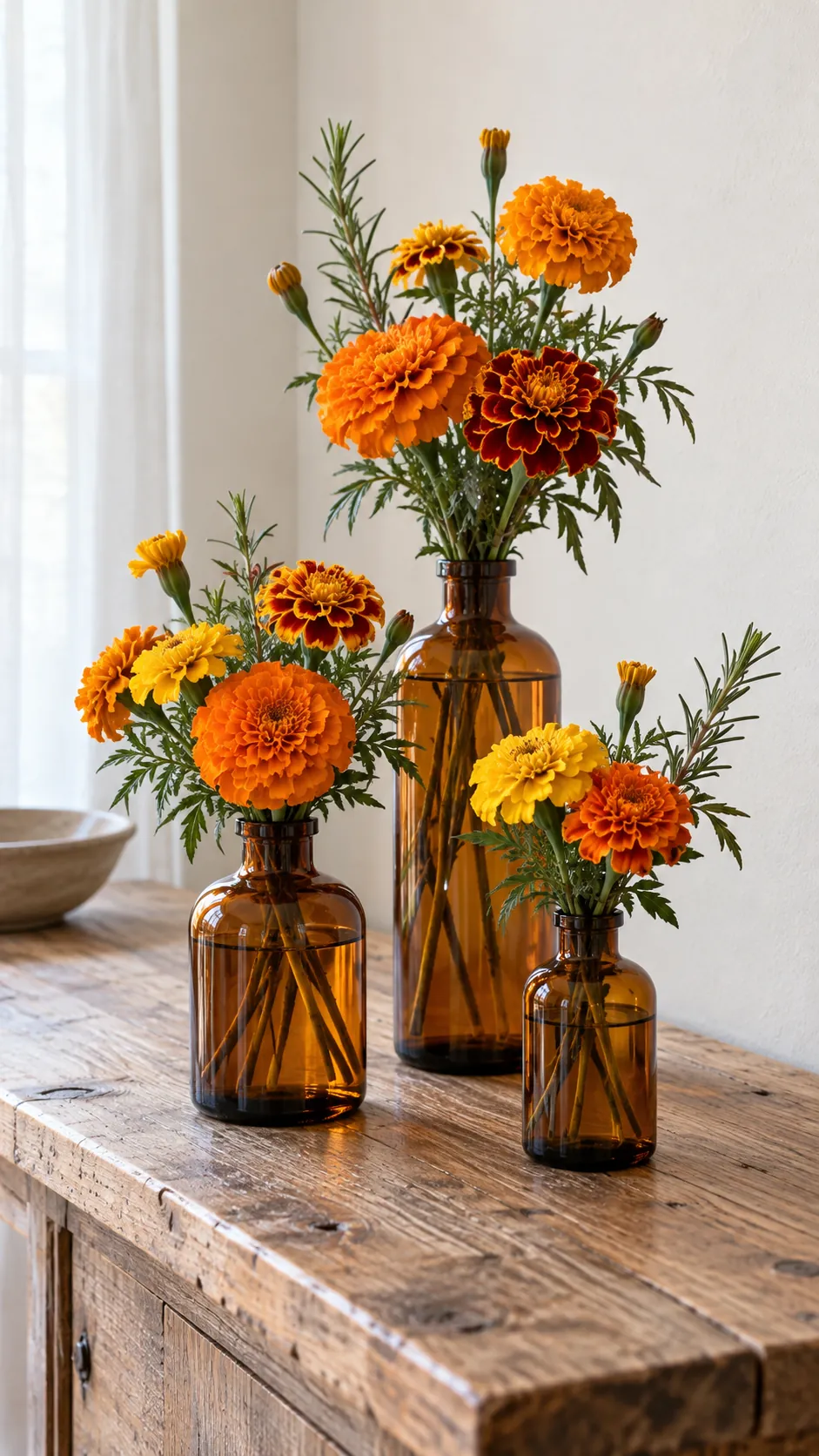
Three amber bottles turn a modest bunch of marigolds into a flexible table arrangement. Give each bottle a different mix of orange, yellow, and two tone blooms, then vary the stem heights. Space the bottles along the table so the repeated color creates rhythm rather than one dense centerpiece.
Marigolds With Burgundy Dahlias
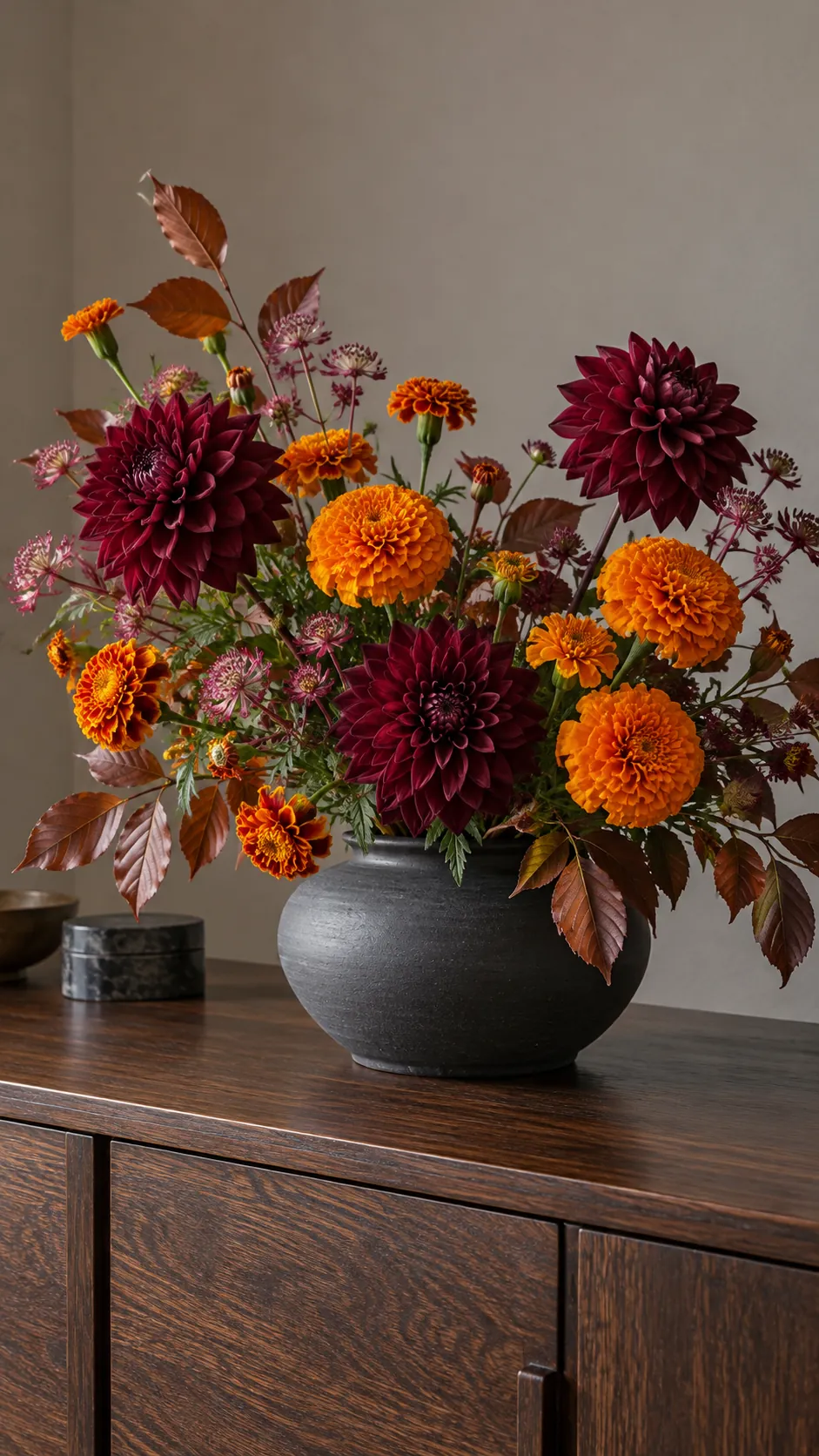
Burgundy dahlias give orange marigolds a dark anchor and make their warm color look more intentional. Use fewer dahlias because each large flower carries more visual weight. Add copper beech leaves between the two bloom sizes to create a gradual transition.
Marigolds With Airy Grasses
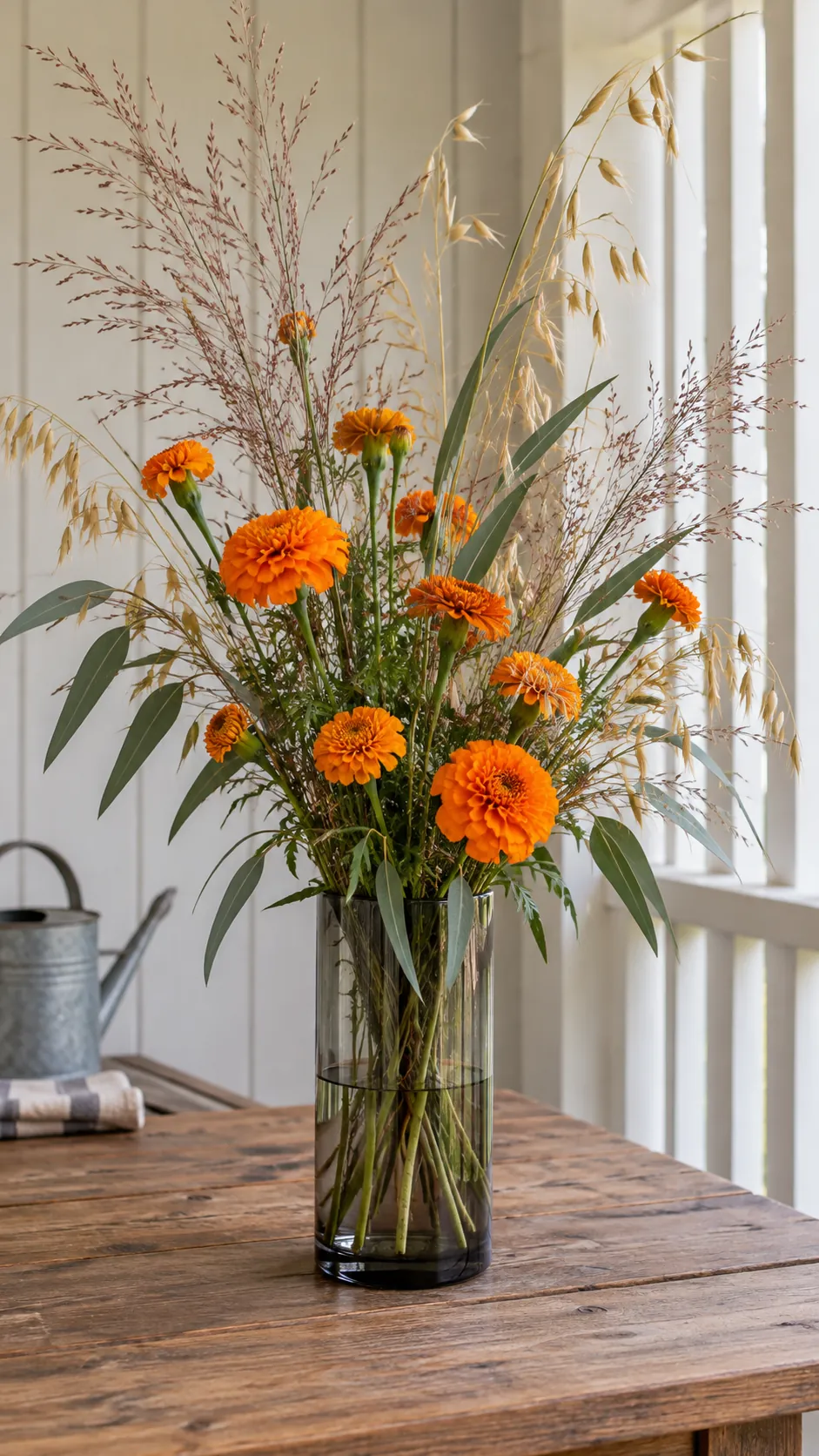
Fine autumn grasses lift a dense marigold centerpiece and introduce movement above the round flower heads. Keep the grasses in small uneven clusters so they do not form a stiff halo. A simple stoneware vase lets the contrast between fluffy flowers and narrow seed heads lead the design.
Terracotta Pitcher Mix
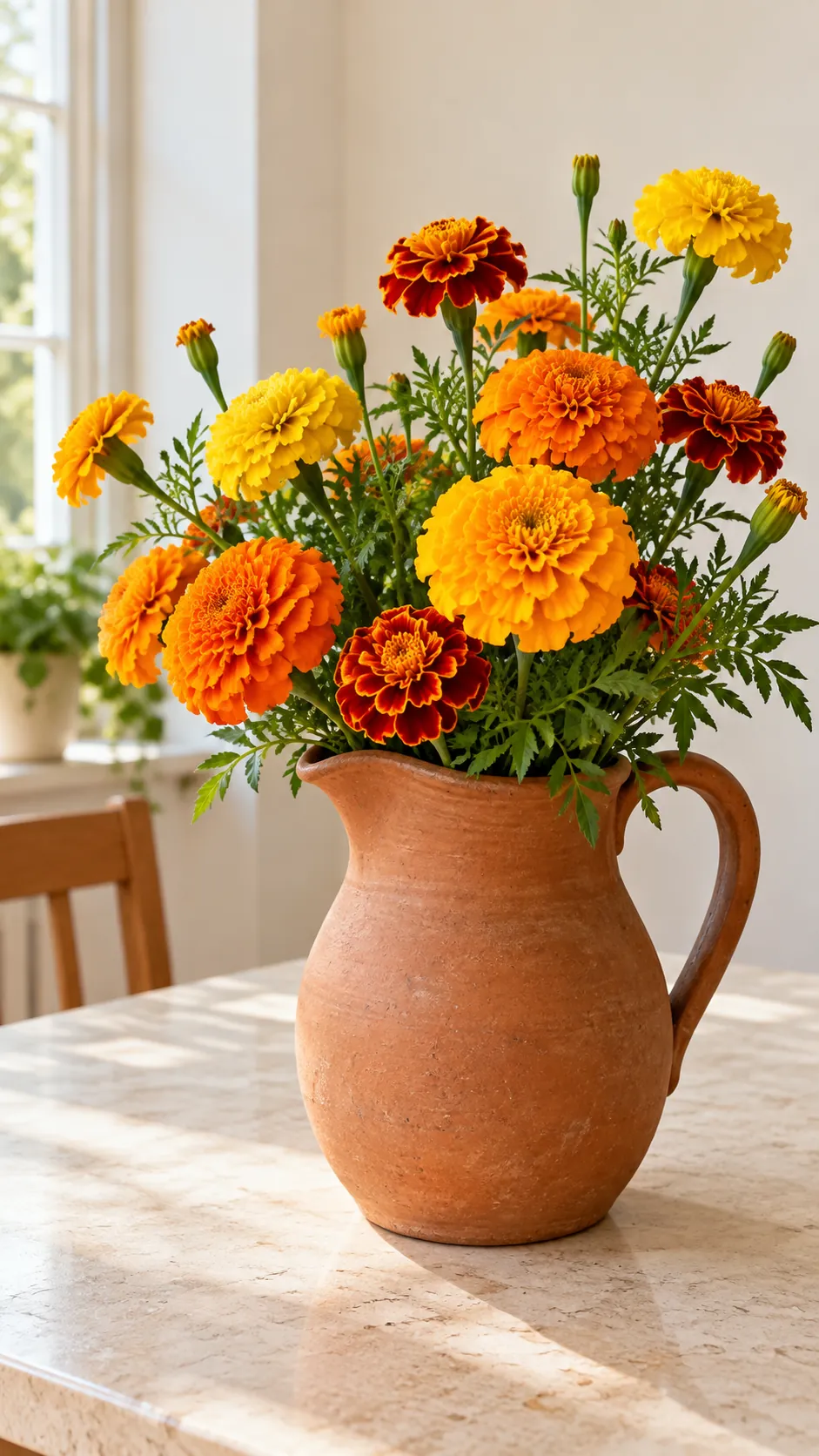
A terracotta pitcher echoes the earthy side of a vibrant marigold palette. Mix lemon yellow, golden, and burnt orange blooms, then include several buds to prevent a solid ball of color. Place the tallest stems near the handle side so the spout remains visible and the vessel still feels balanced.
Marigold Table Garland
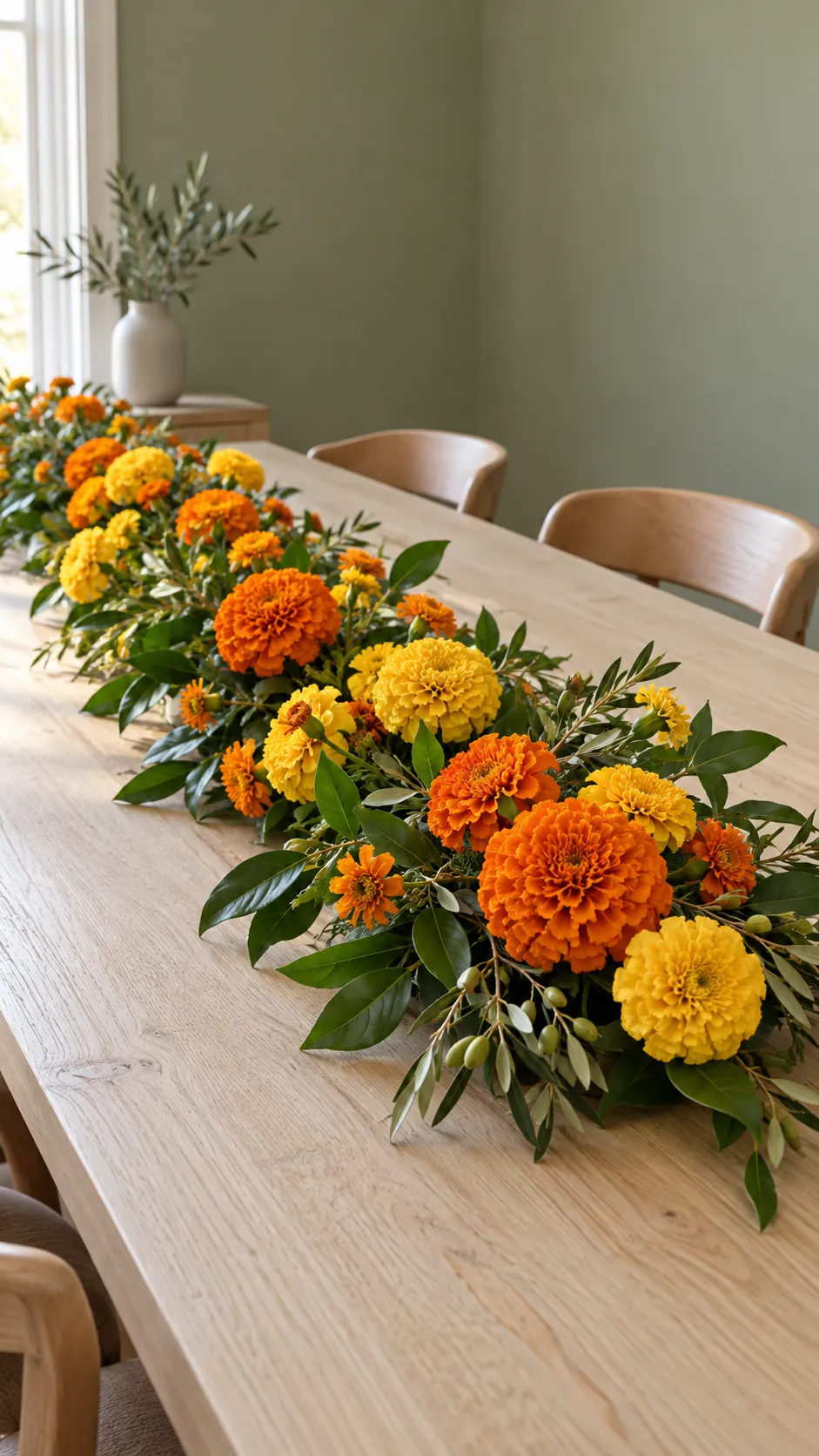
A marigold table garland carries color along a long table while keeping the center low. Cluster flower heads in small groups and connect them with flexible foliage rather than packing every section evenly. Place each stem end in a concealed water source if the garland must stay fresh for several hours.
Mini Bud Vase Line
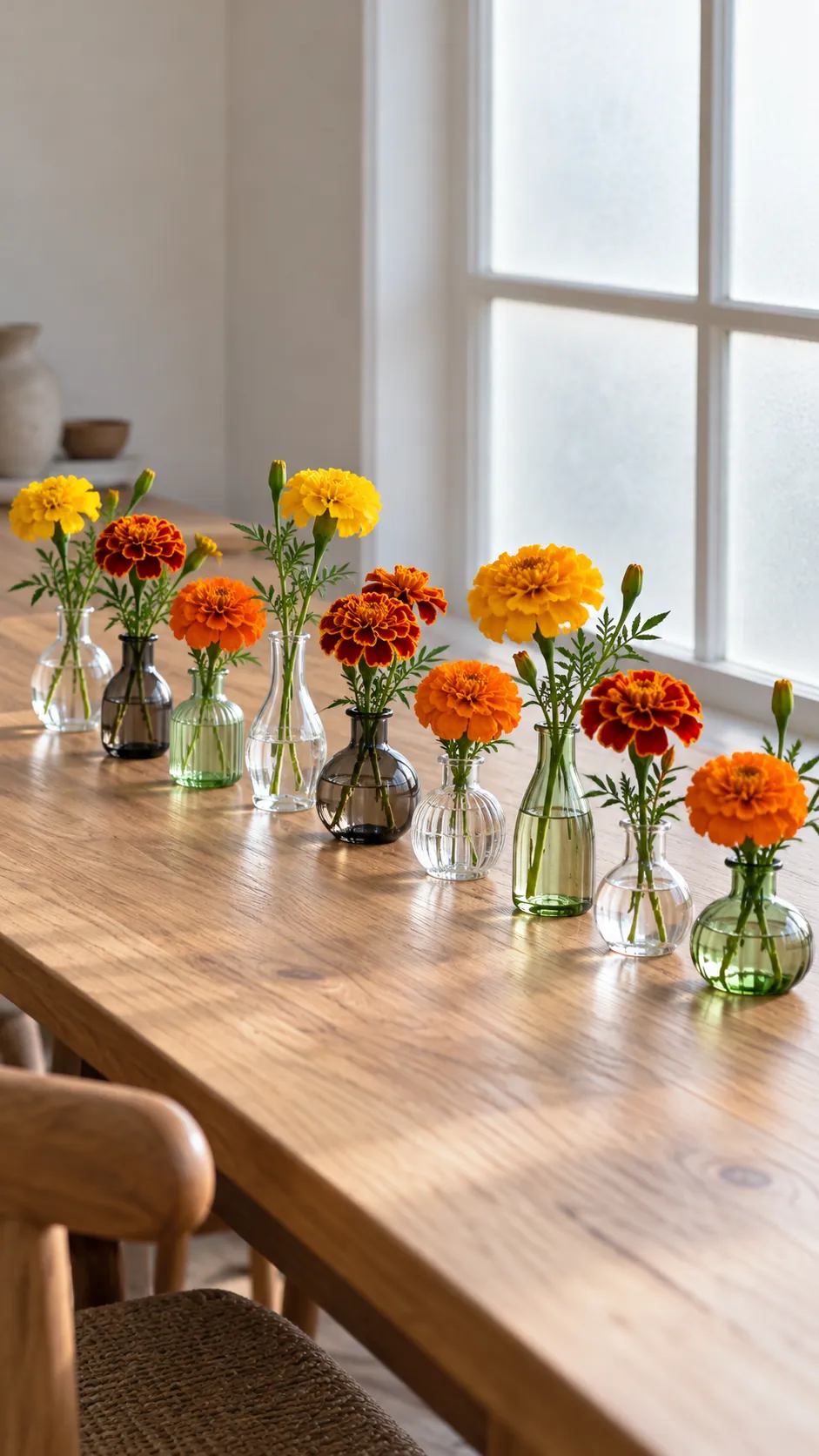
Mini bud vases make each marigold variety easy to notice and let you adjust the table after dishes arrive. Use one to three stems per vase and alternate narrow and rounded containers. Keep the spacing consistent enough to feel deliberate, but vary the flower heights so the row does not look mechanical.
Marigolds With Crabapple Branches
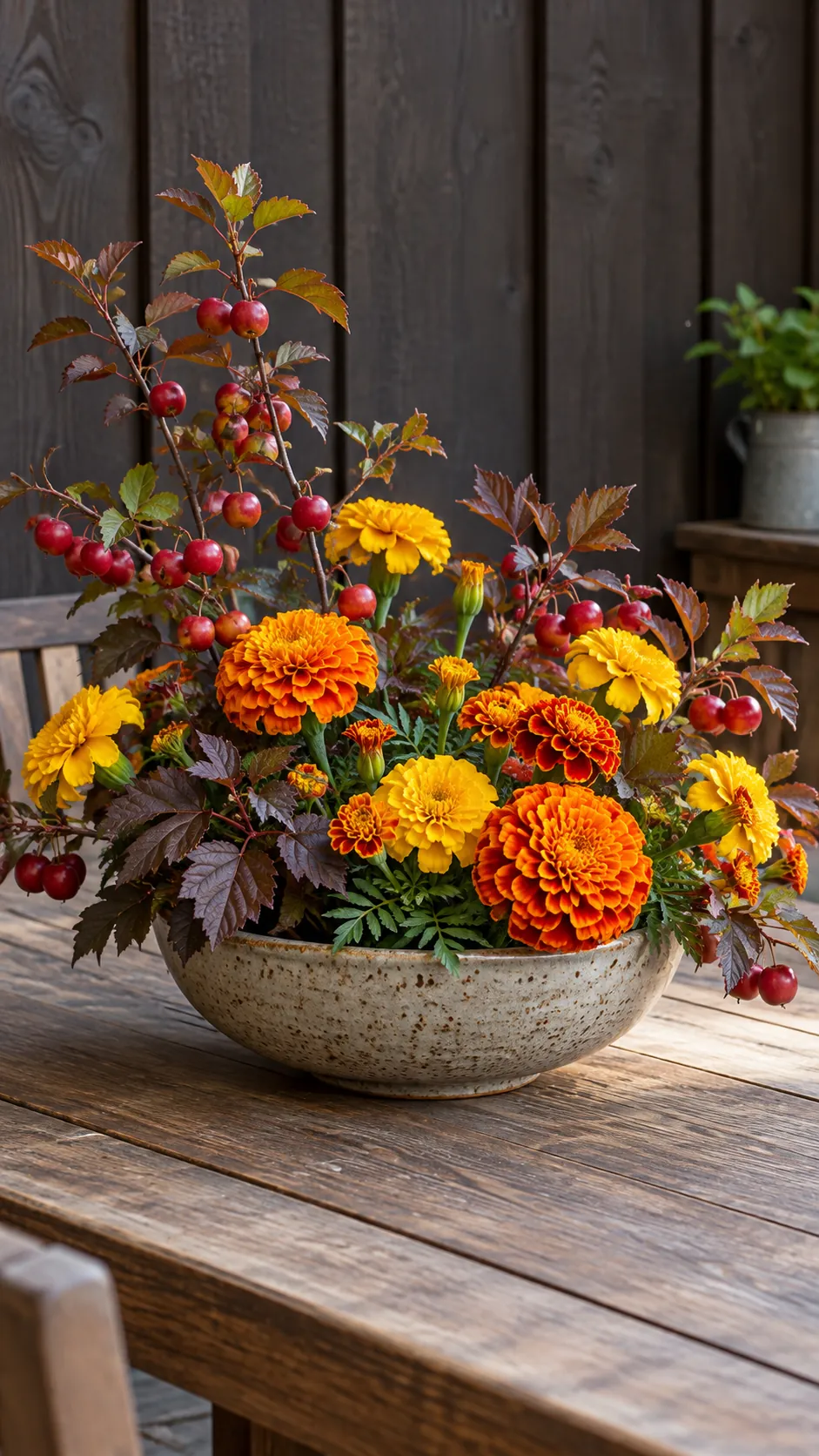
Red crabapple branches bring small dark accents to yellow and orange marigolds without adding another large flower. Keep the fruiting stems within the arrangement outline so they do not snag a sleeve or fall across a plate. A broad ceramic vase provides the weight needed for the woody branches.
Brass Urn Centerpiece
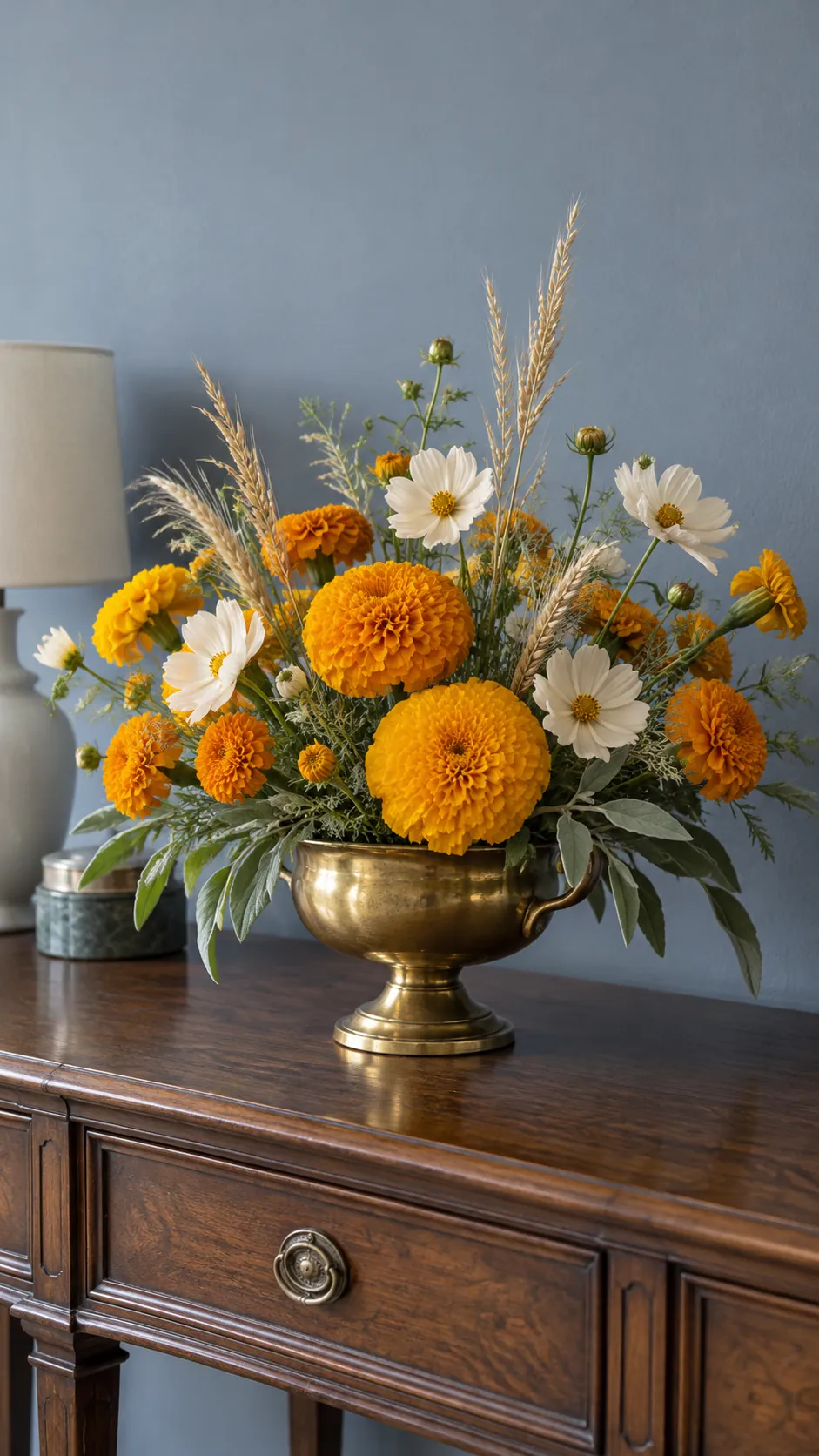
A muted brass urn intensifies golden marigolds while giving the centerpiece a more formal outline. Include cream flowers or pale seed heads so the metal and petals do not merge into one yellow mass. Polish only the handling marks and let a gentle patina keep the arrangement grounded.
Blue Pottery Contrast
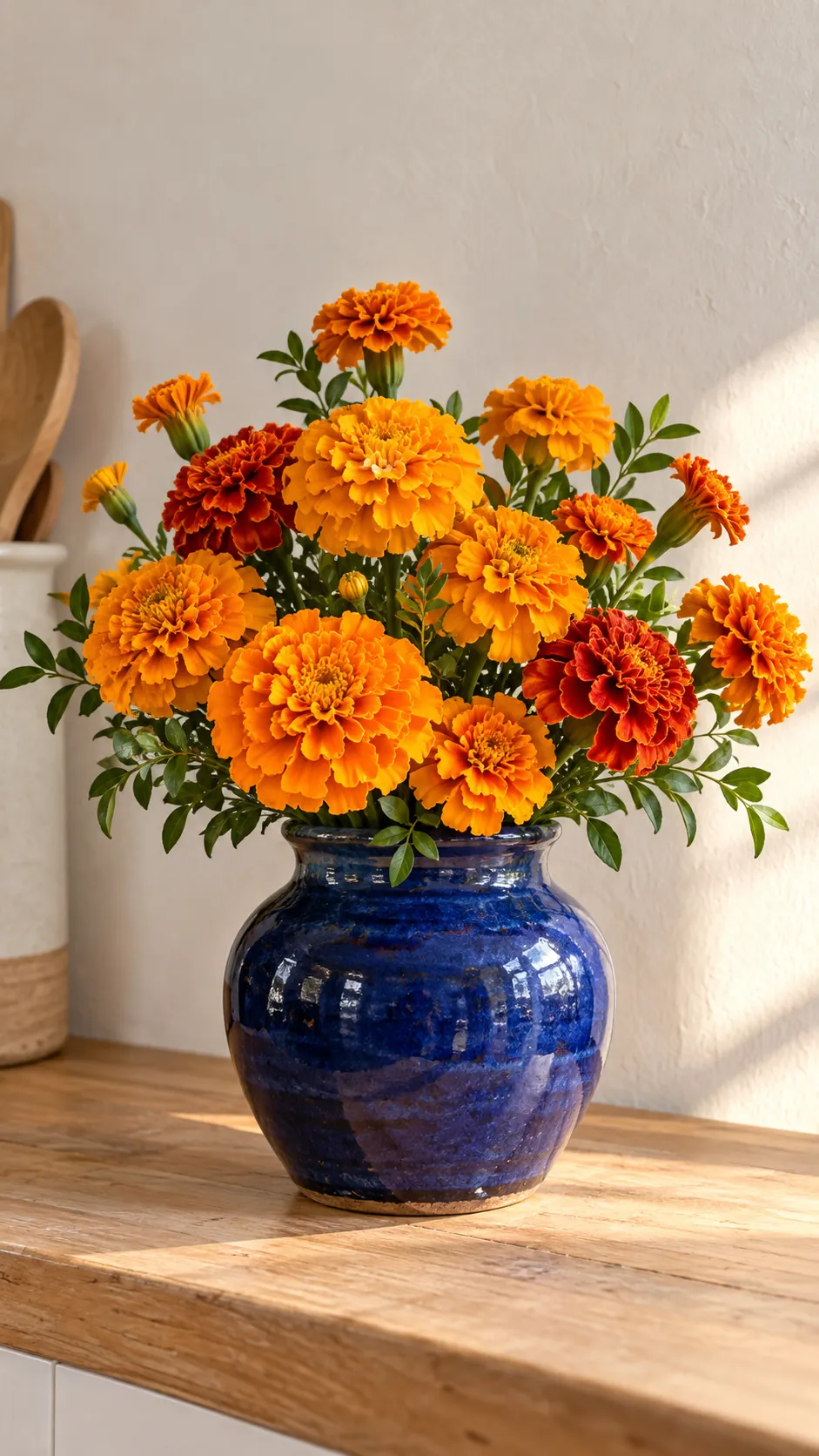
Deep blue pottery makes orange marigolds look vivid because the colors sit opposite each other visually. Use mostly one orange variety and add minimal green foliage so the contrast remains clean. A compact rounded shape keeps the bold palette from becoming noisy.
Marigolds With White Cosmos
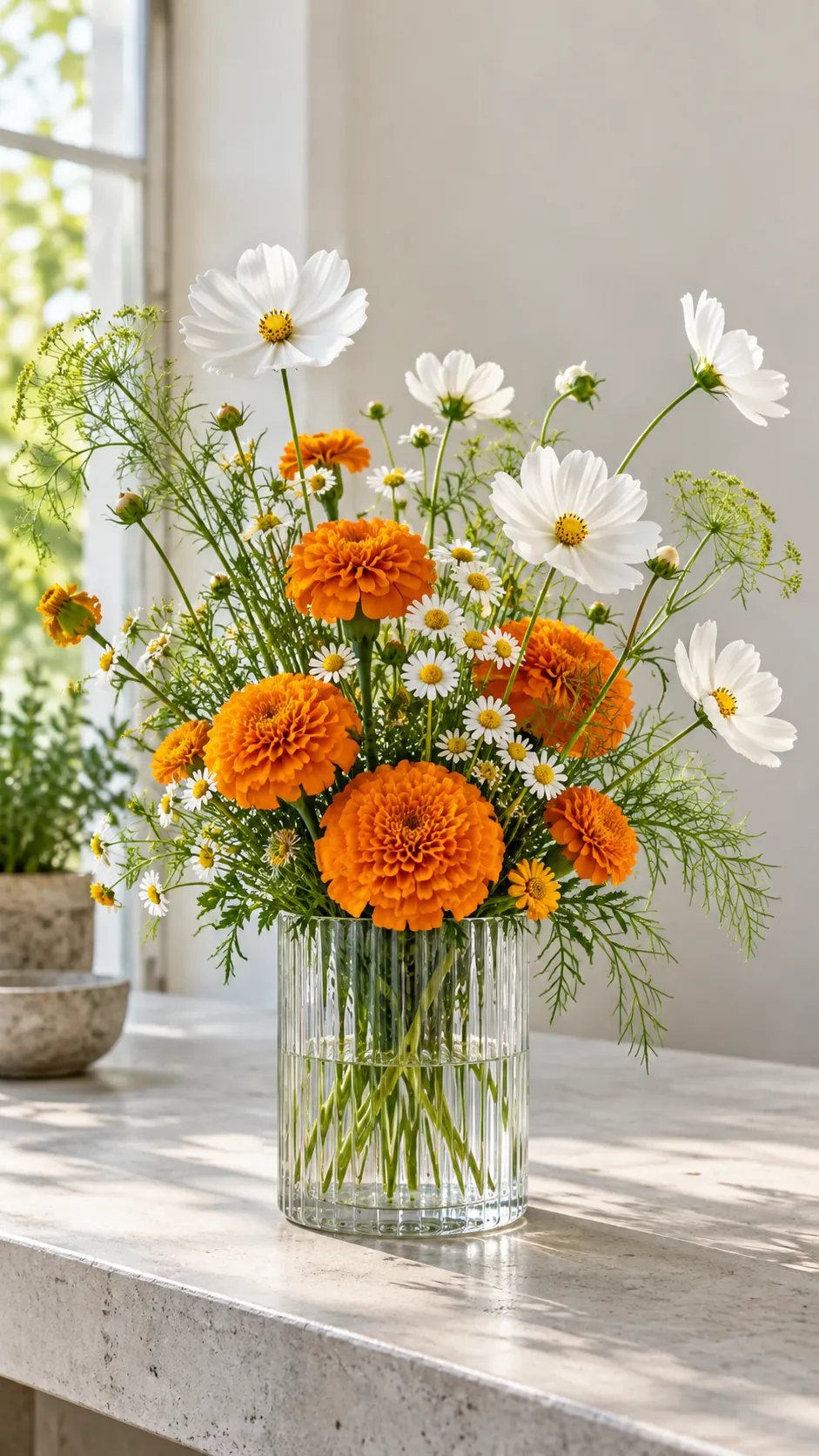
White cosmos creates light gaps around dense marigolds and softens a strong orange palette. Let the cosmos sit slightly higher and turn in several directions while the marigolds form a lower base. Keep the stems loose enough that both flower shapes remain visible.
Marigolds With Sunflowers
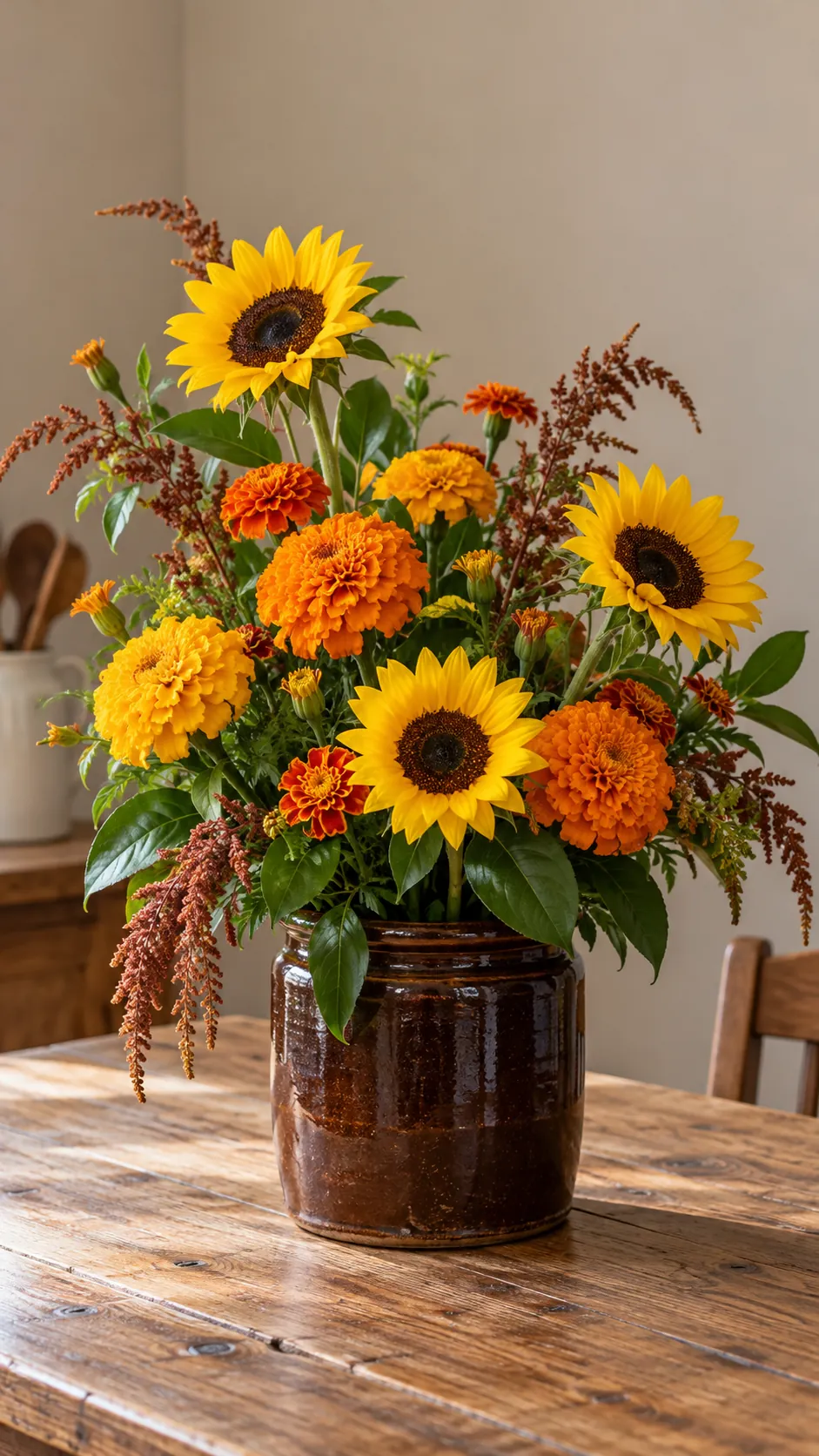
Small sunflowers and marigolds create a bright harvest combination when their scales remain distinct. Use only a few sunflowers as focal points, then surround them with smaller marigold clusters. Deep green leaves and a dark brown vase give the yellow and orange flowers enough contrast.
Shallow Bowl Ring
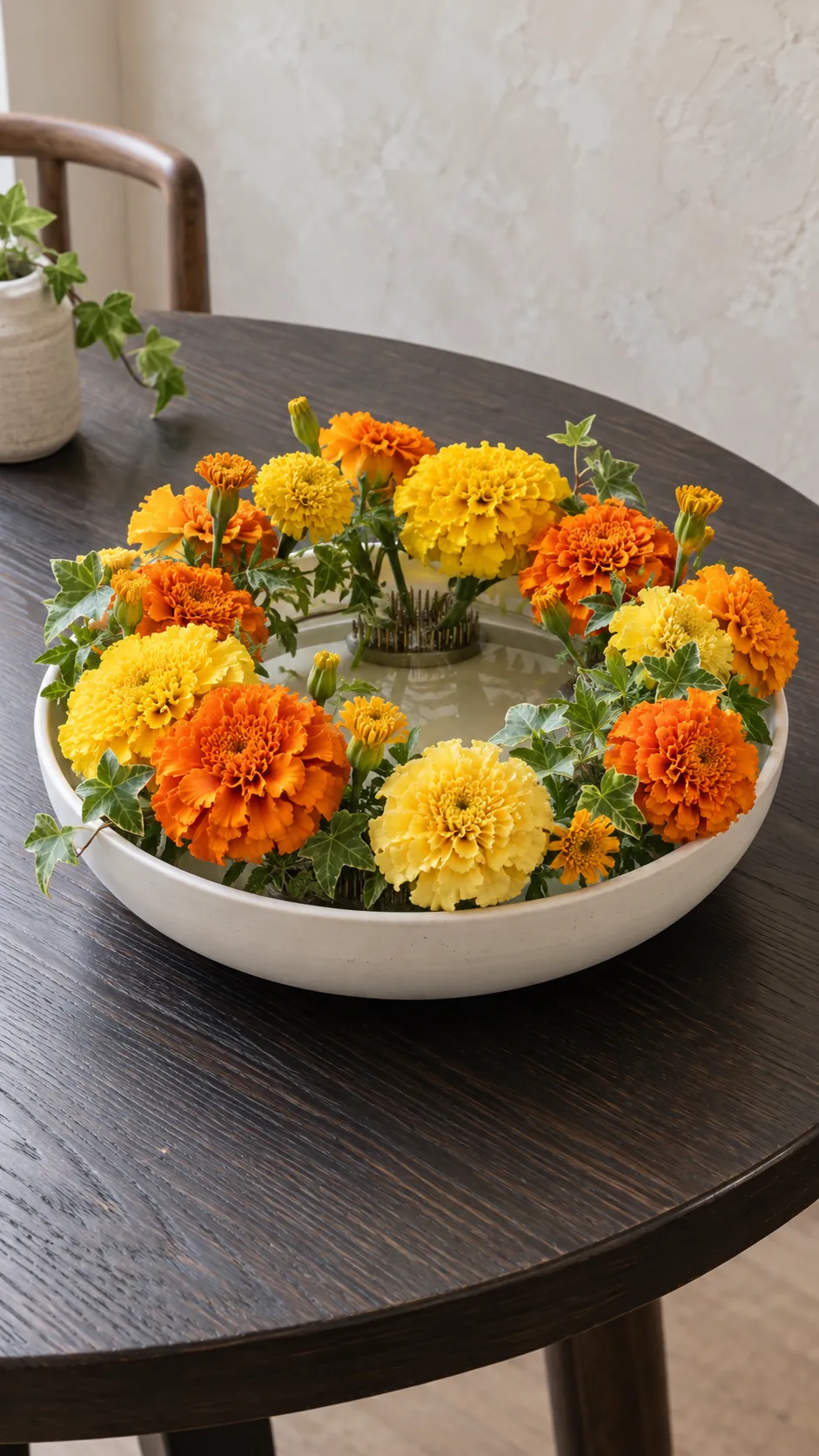
A shallow bowl ring leaves an open center and gives a round table a clear low focal point. Place marigolds in a reusable pin frog or wire support, then turn some heads outward along the rim. Leave the center empty or fill it with visible water rather than adding a decorative object that competes with the flowers.
Woven Basket With Hidden Jars
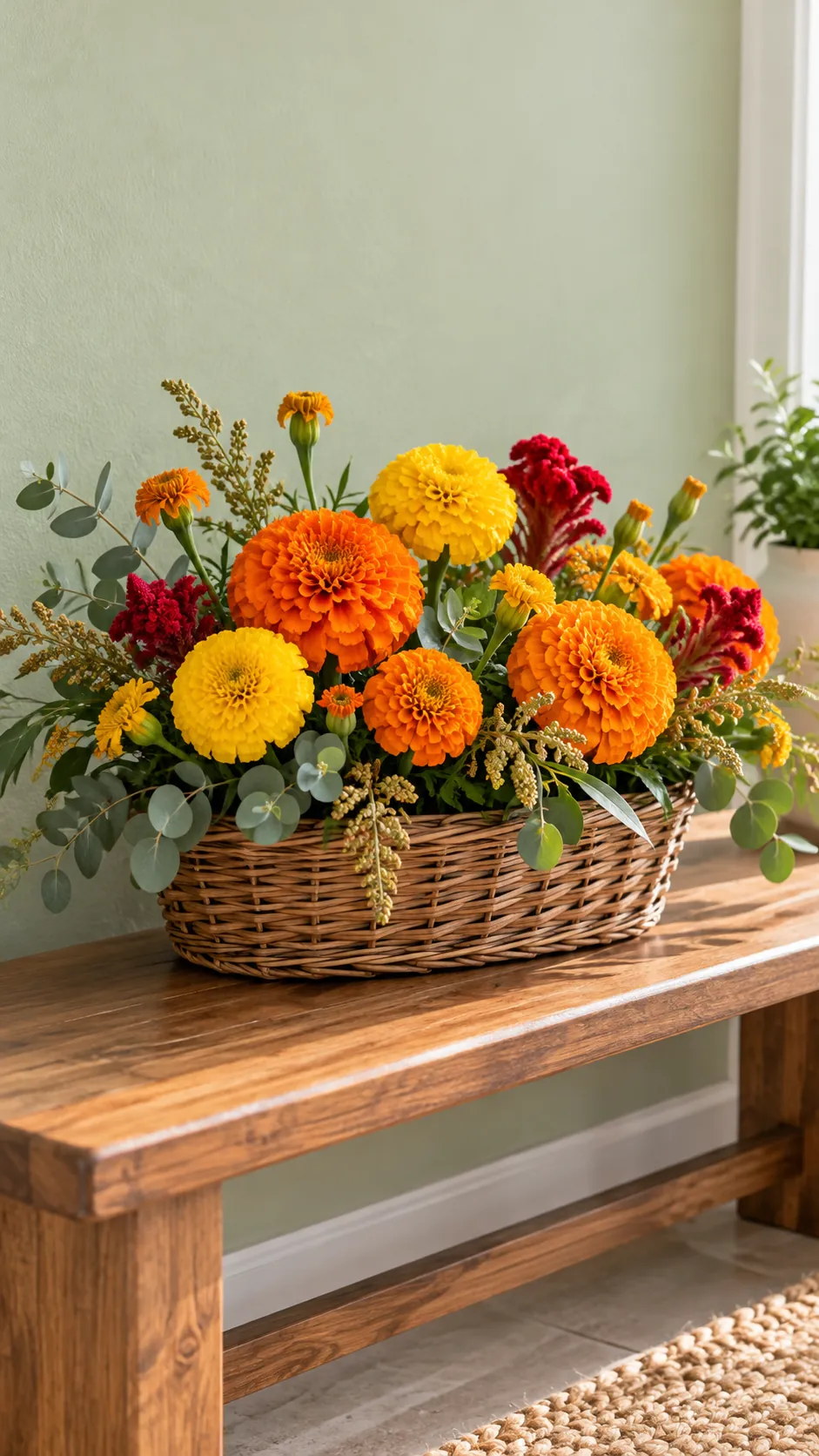
A woven basket can hold a marigold centerpiece when the flower stems sit in hidden watertight jars. Use two or three containers to distribute water and keep the basket base dry. Let a few stems cross between the jar groups so the finished arrangement reads as one design.
Marigolds With Amaranth
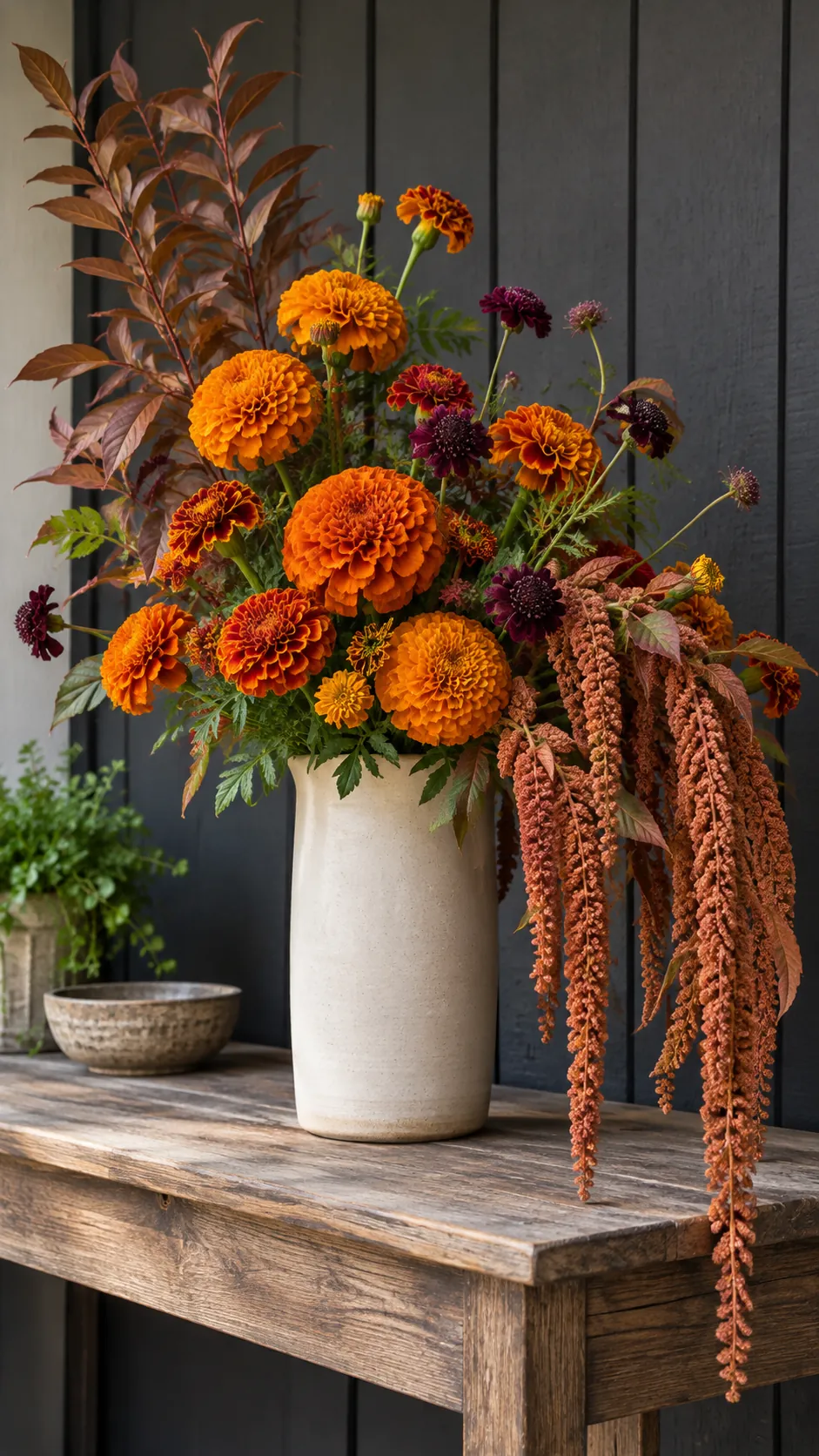
Trailing copper amaranth gives round marigolds a clear downward movement and a deeper autumn color. Keep the marigolds above the vase rim and let only two or three tassels descend along one side. Add upright bronze foliage on the opposite side to balance the visual weight.
Simple Clear Jar Cluster
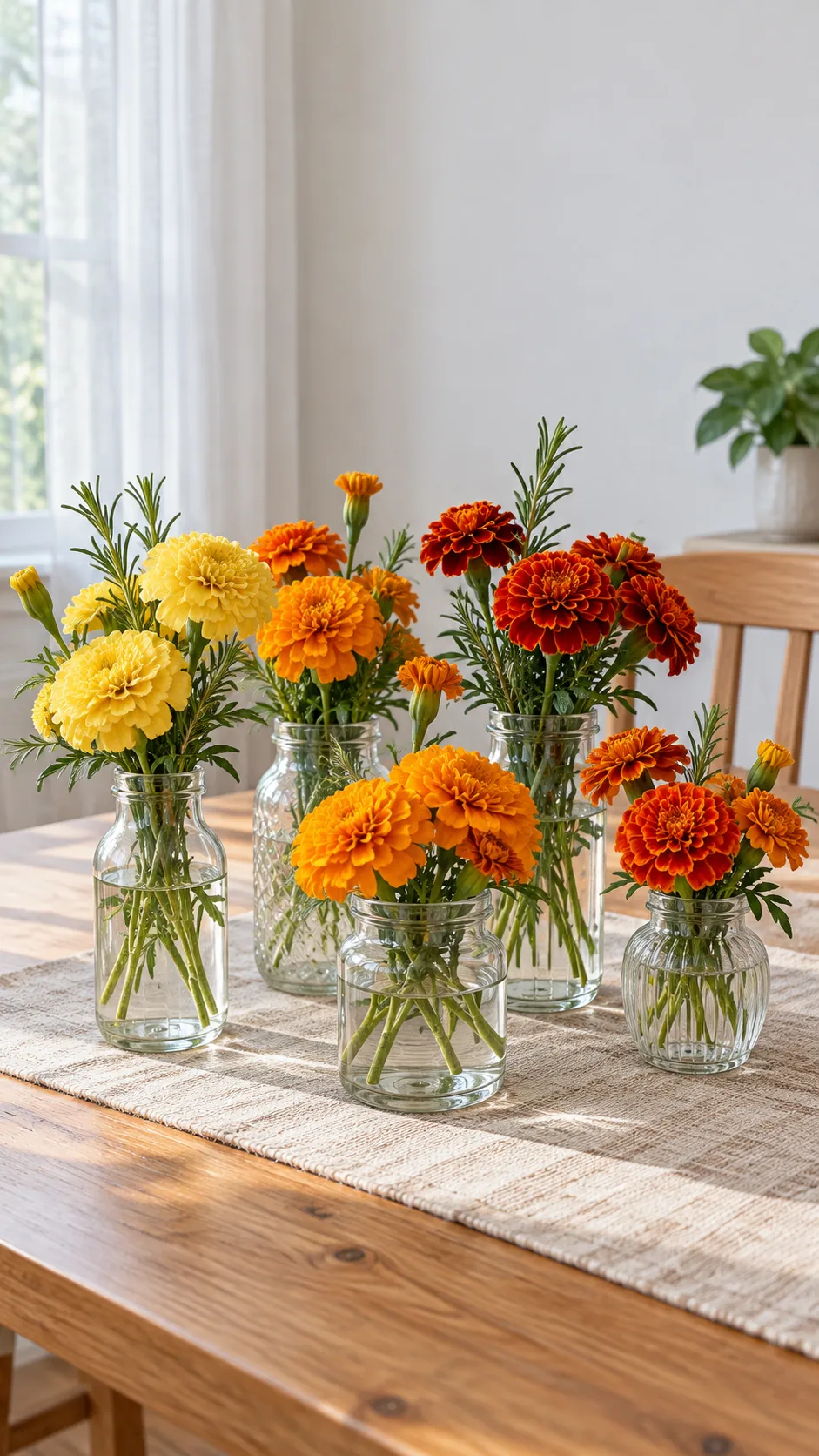
A cluster of clear jars shows the natural stems and works when you need several simple harvest flowers across a table. Sort the marigolds by color, then give each jar one dominant shade with a smaller accent shade. Repeat the water level and jar spacing so the casual materials still look organized.