
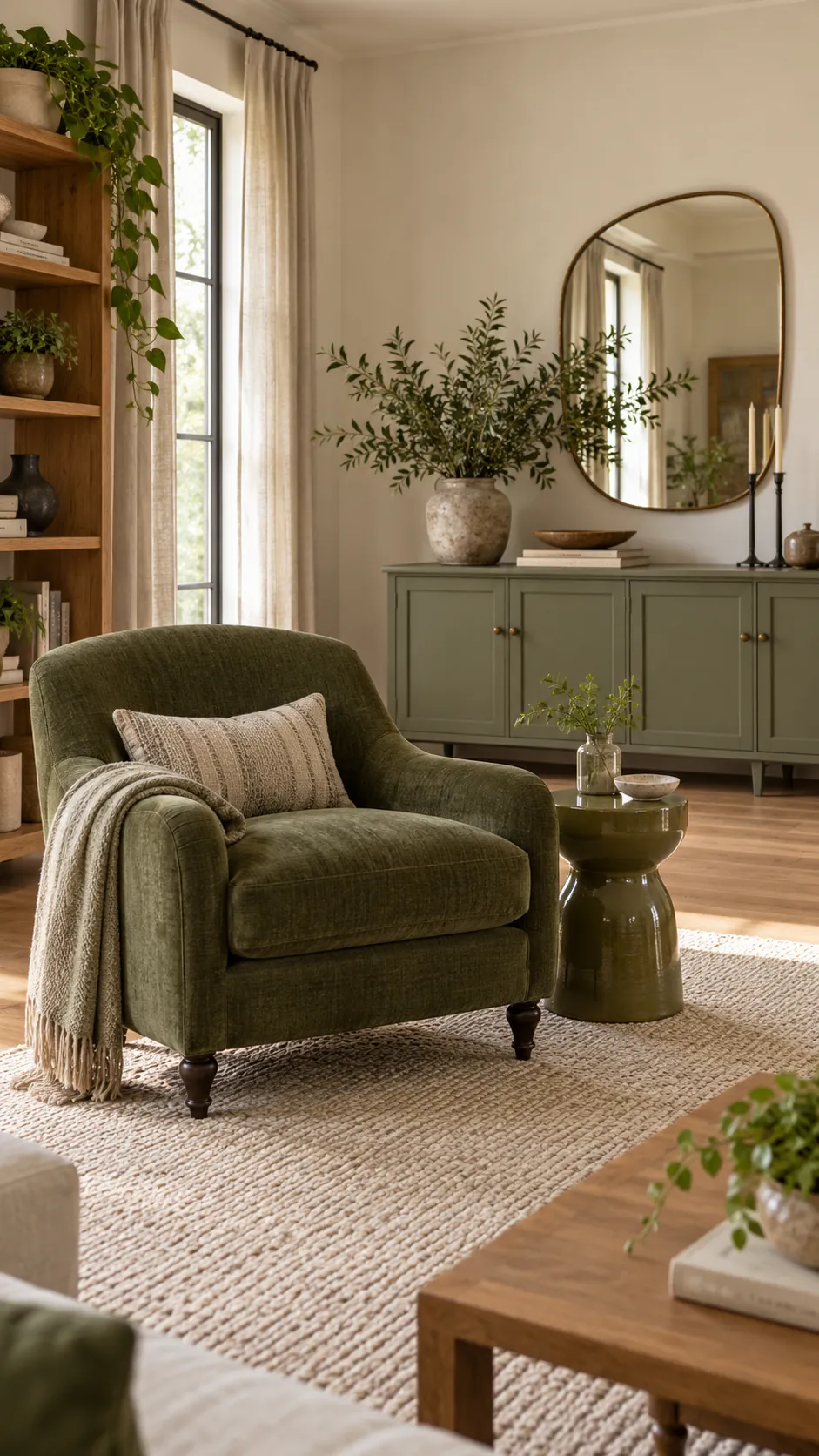
Green furniture works best when it solves a real need before it adds colour. A beautiful chair that blocks circulation or a painted cabinet that cannot handle daily wear will soon feel like a mistake. Start with function, scale, and material, then choose the green that connects to the room around it.
Choose the job before the piece
Decide what the room lacks: comfortable seating, closed storage, a work surface, or a visual anchor. Measure the available space and mark the footprint so doors, drawers, and walking routes still work. A green accent chair can fill a quiet corner, while a painted sideboard can add colour without taking over the seating area.
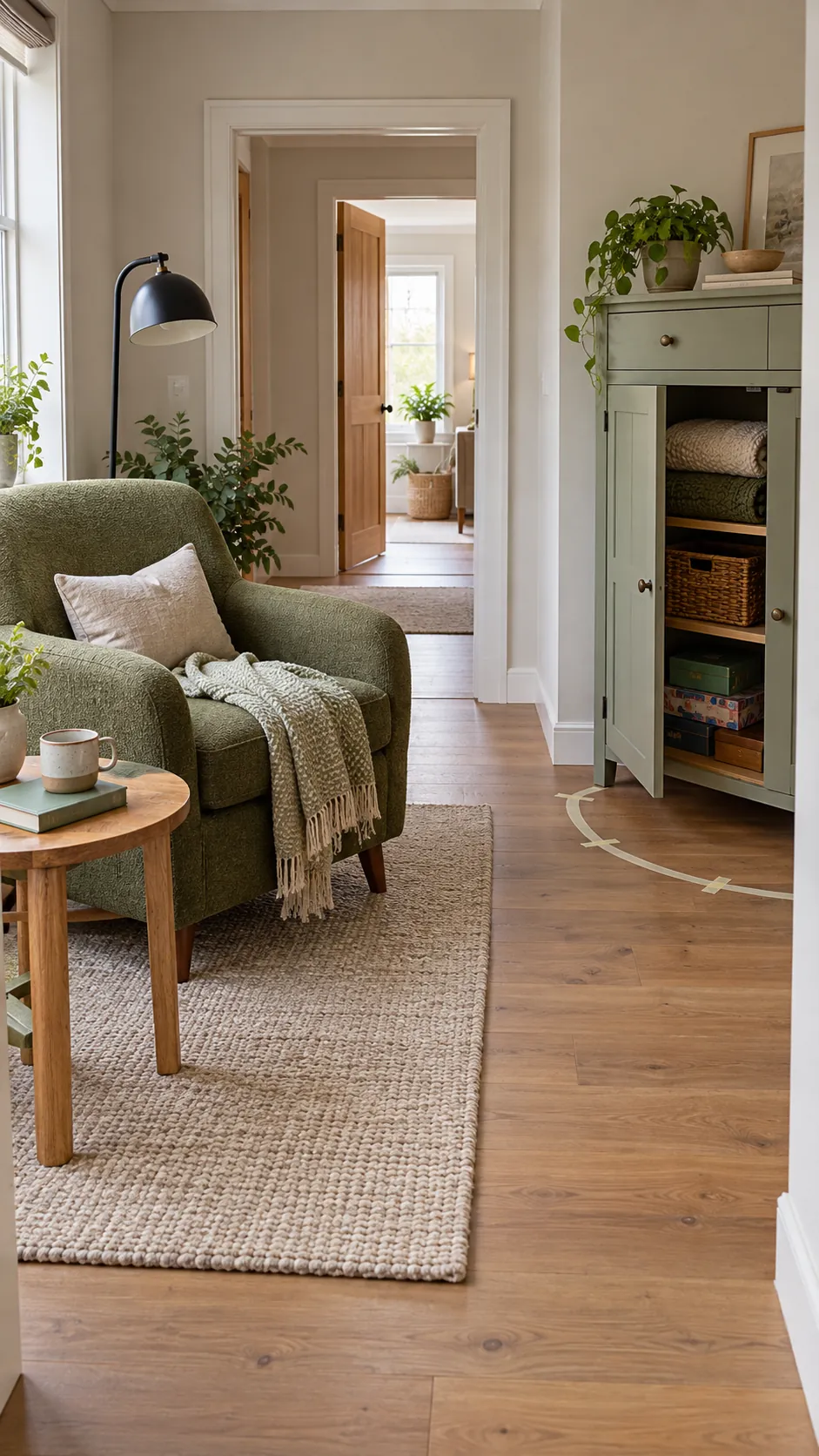
Check the usable interior as well as the outside dimensions. Deep drawers, sturdy shelves, and a supportive seat matter more than decorative details. The piece should make the room easier to use from the first day.
Pick one dominant green family
Olive, moss, sage, emerald, and blue green create very different moods. Choose one family as the main direction, then allow lighter or darker versions to appear in smaller pieces. Several greens can work together when their undertones feel related and the room includes enough neutral space.
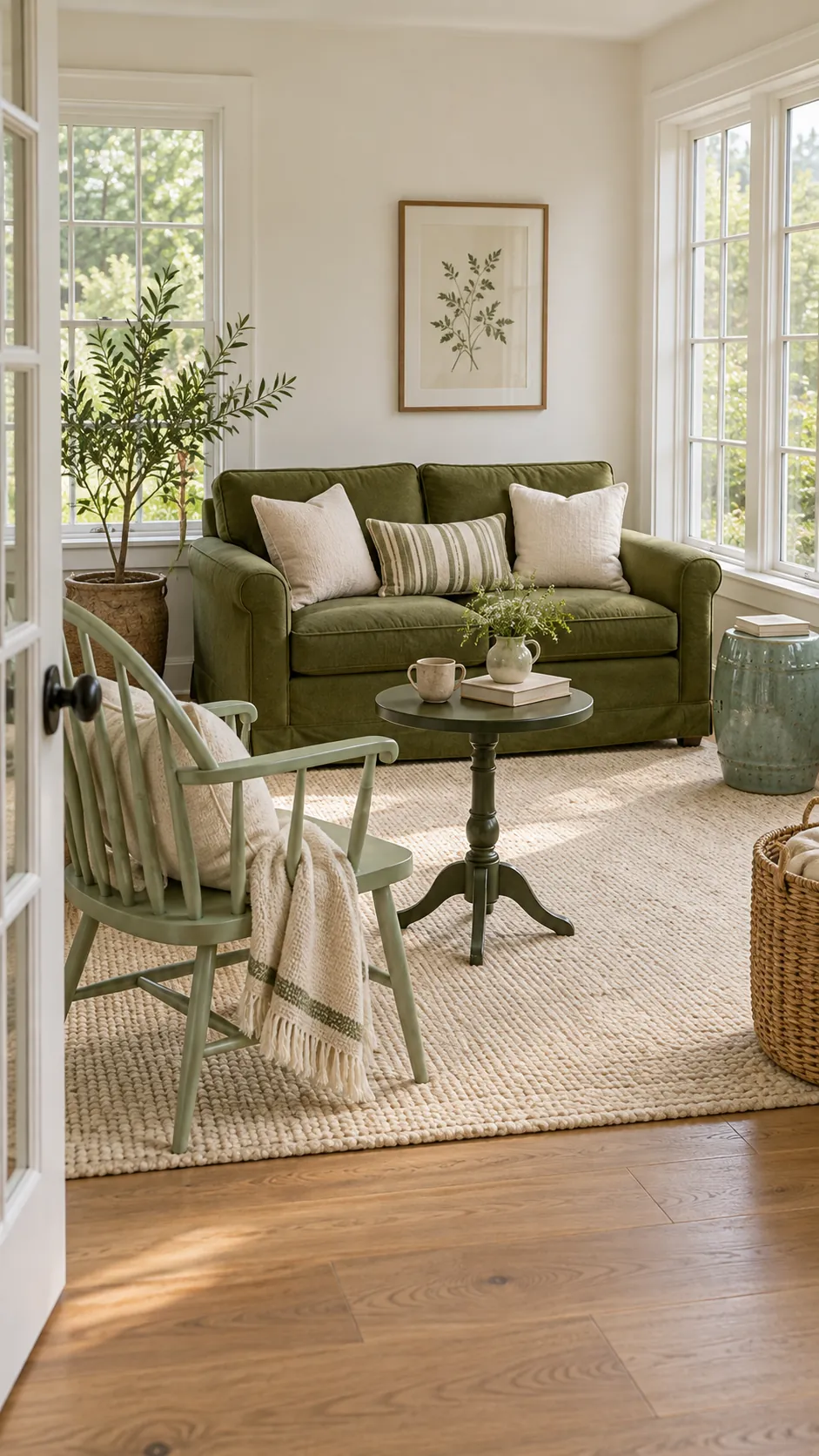
Compare real samples beside the floor, walls, curtains, and largest wood surface. A small online image cannot show how a finish responds to your daylight. Keep the green that remains convincing in both bright and shaded areas.
Mix shapes instead of buying a set
A room full of matching green pieces can look flat even when each item is attractive. Combine a rounded upholstered chair with a straight painted cabinet, or a simple bench with a sculptural side table. Repeating one material or leg finish is enough to create a relationship.
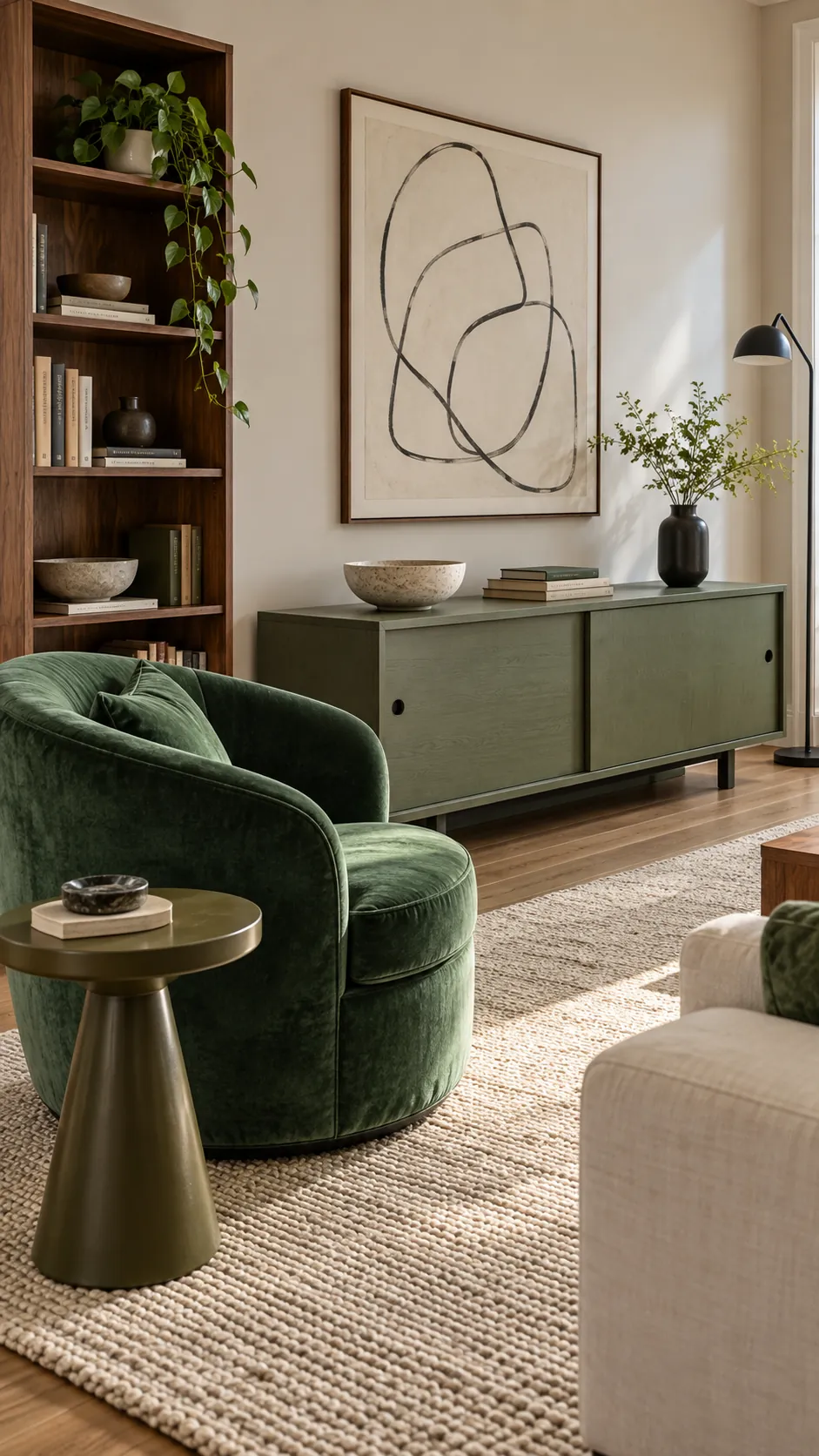
Use contrast to solve visual heaviness. Raised legs and open frames help a compact room, while a low solid cabinet can ground a tall wall. The pieces should share a mood, not an identical silhouette.
Match the material to wear
Green velvet brings depth, but its pile changes with touch and light. A tight performance weave suits busy seating, while painted timber works well for storage if the finish can resist chips and cleaning. Ask how the surface should be maintained and whether damaged parts can be repaired.
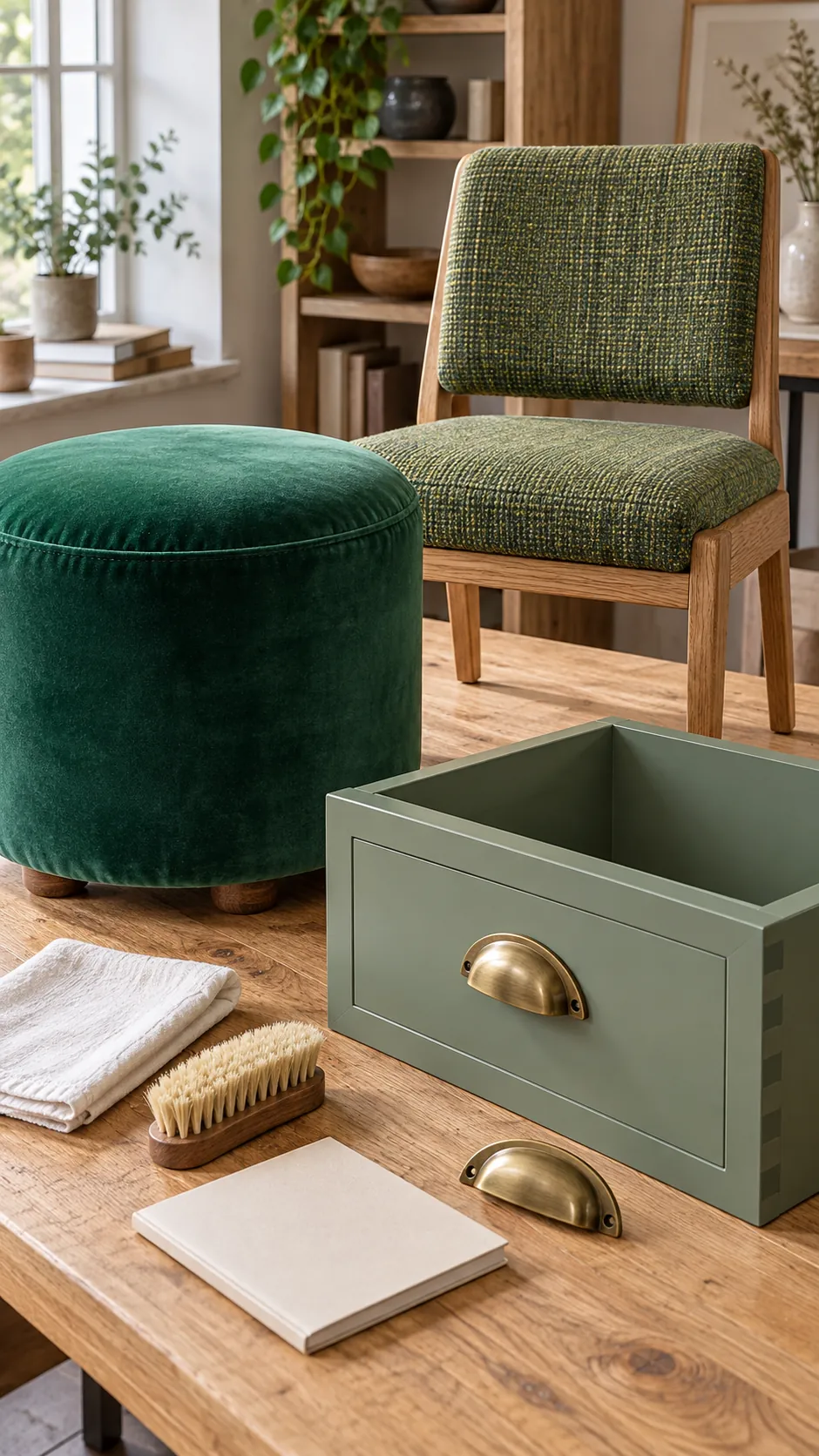
Look closely at seams, corners, handles, drawer runners, and the underside of upholstered frames. These areas reveal construction quality more clearly than a polished front. The right finish should age in a way you can accept.
Connect green with wood and neutrals
Natural wood gives green warmth and prevents a neutral room from feeling impersonal. Pale oak keeps the scheme light, while walnut and dark stained timber create a richer contrast. Warm white, oatmeal, stone, and soft charcoal can hold the larger surfaces so the furniture remains the focus.
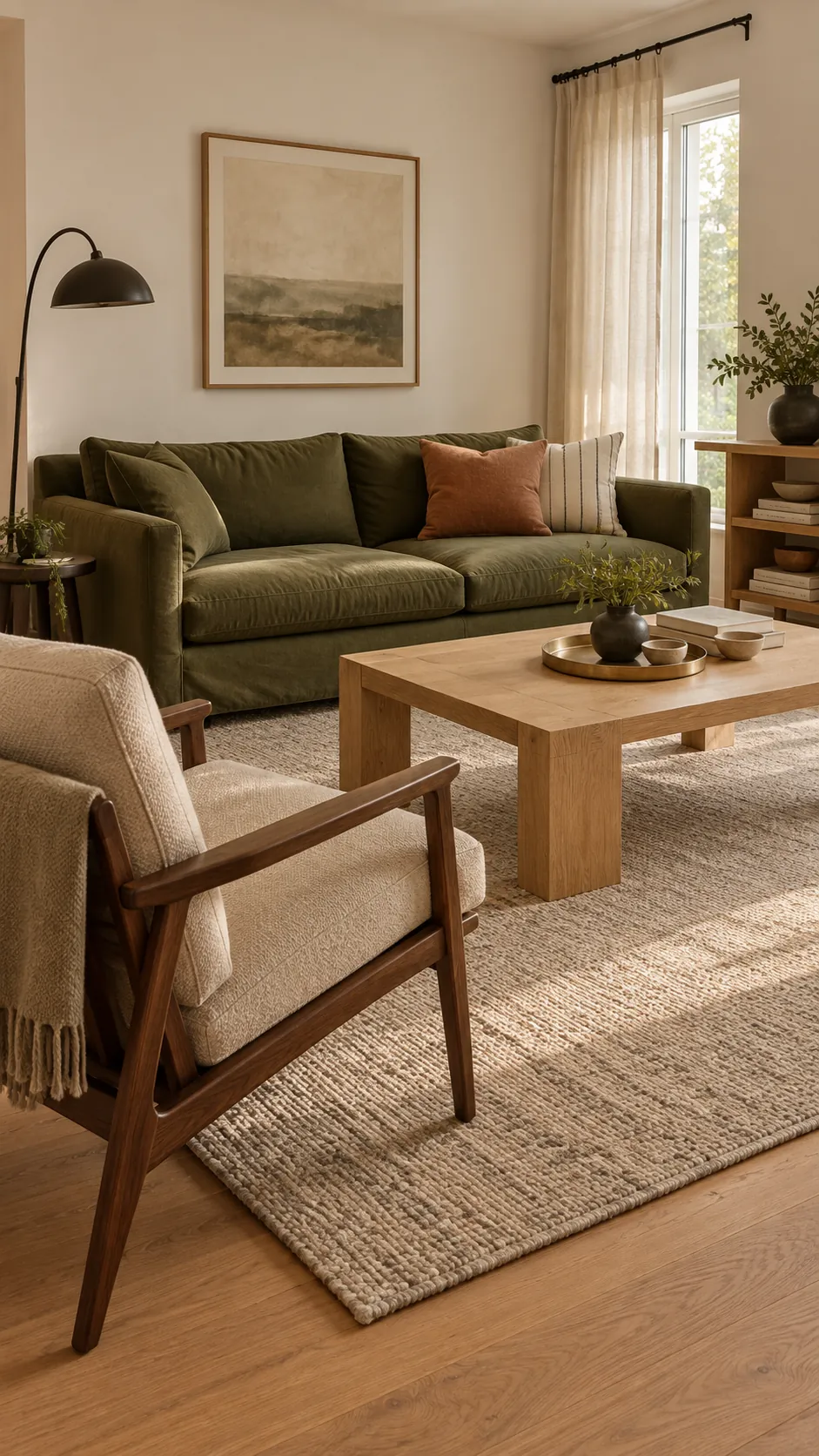
Choose one main wood tone and let other woods sit close to it in warmth. Small black or brass details can bridge differences between furniture pieces. A rug that includes green, neutral, and wood related tones can make the whole room feel intentional.
Test painted furniture before committing
When painting an existing piece, prepare a large removable sample and stand it on the actual furniture. Check how the green looks beside the top, hardware, floor, and wall throughout the day. Clean, sand, prime, and use a finish suited to the surface rather than relying on colour to hide poor preparation.
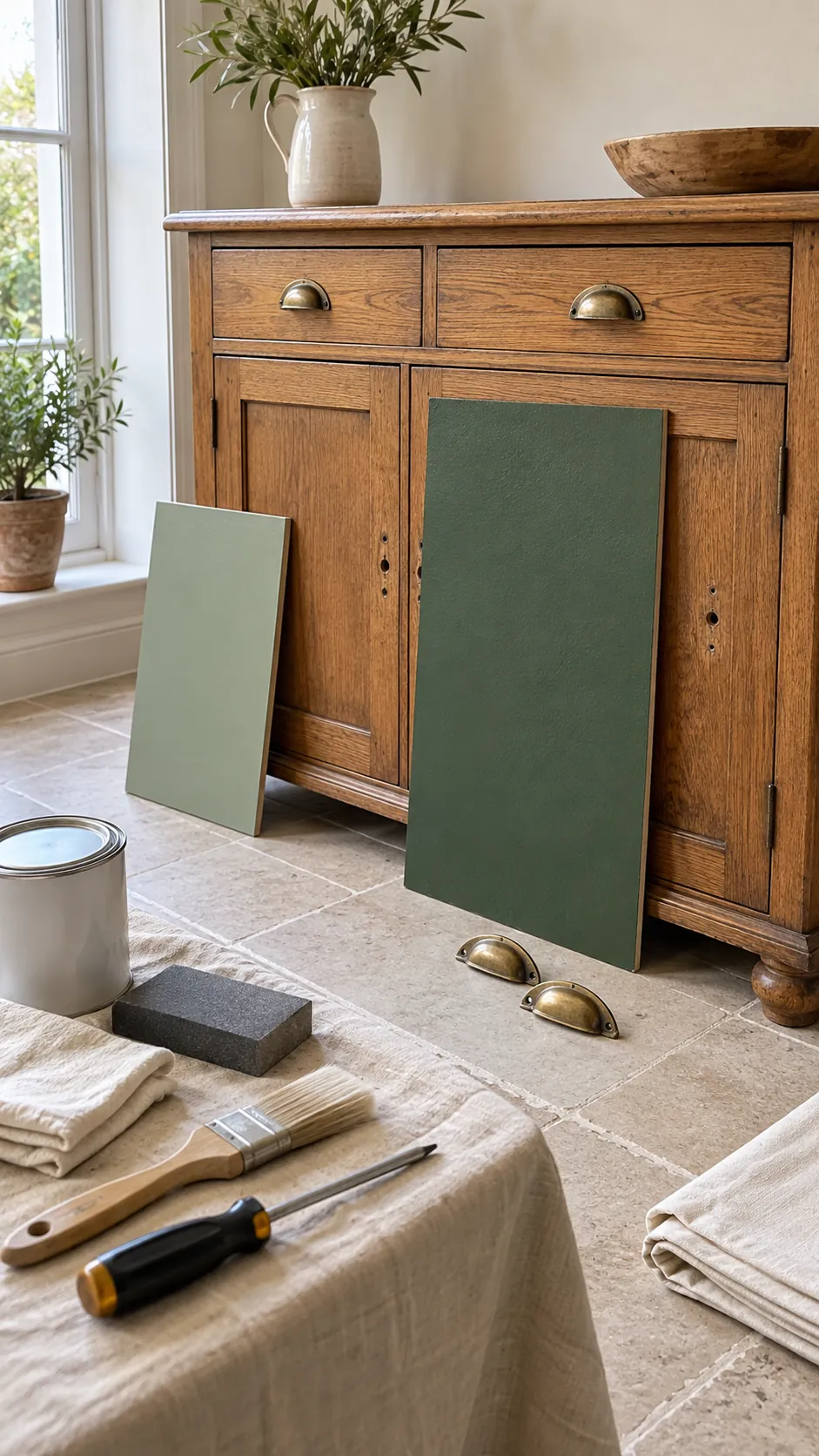
Keep moving parts free of thick paint and allow the recommended curing time before use. Replace hardware only if its scale and hole spacing suit the piece. A careful finish makes green furniture feel deliberate rather than temporarily updated.