
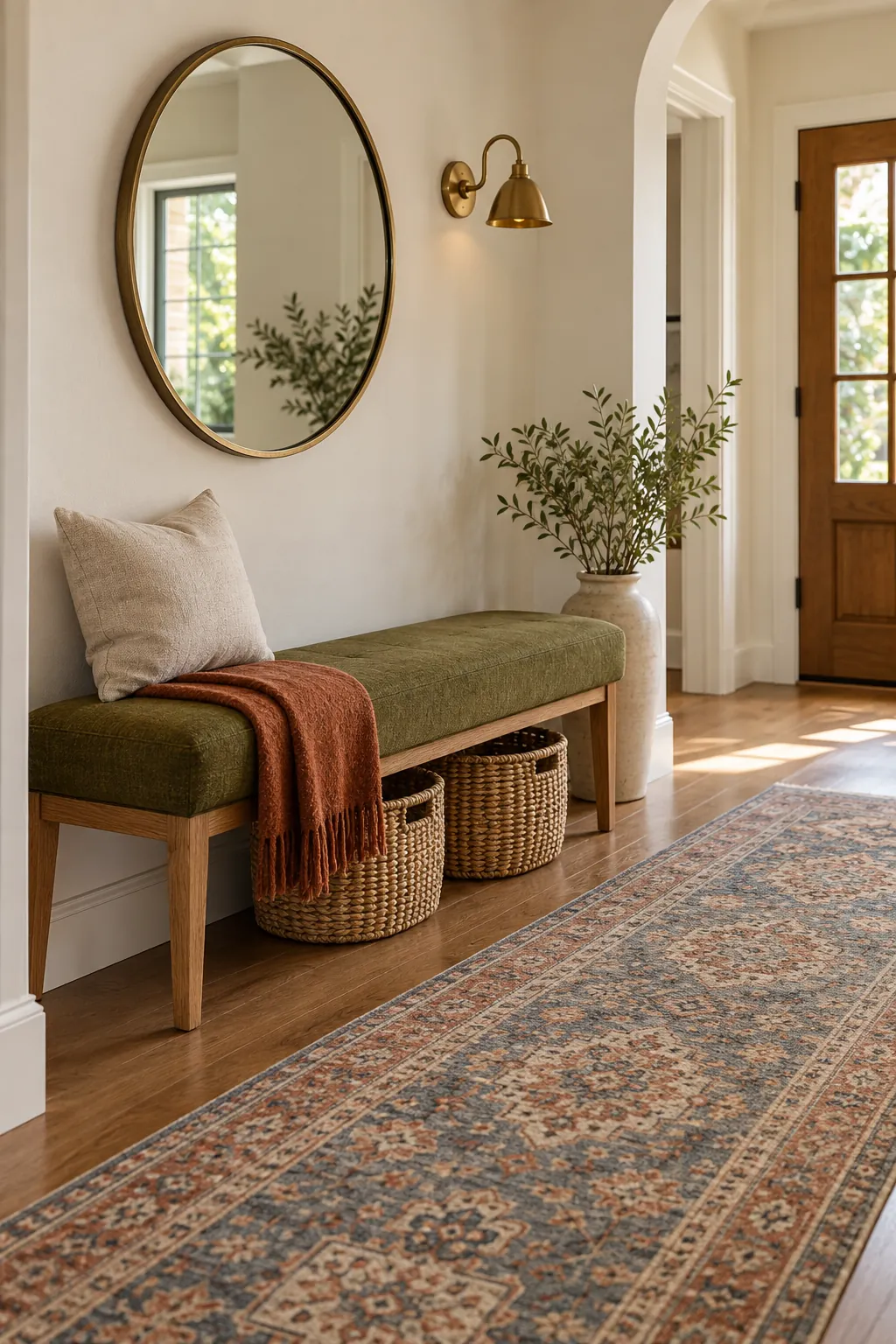
A green bench can add storage, seating, and colour in one move, but styling must protect the surface you actually need to sit on. The most useful arrangement starts with the room, the bench material, and the items that must live nearby. Add comfort and decoration only after circulation and daily habits work.
Build a useful entryway
Place the bench where the door can open fully and people can sit without blocking the route. Use baskets below for shoes, hats, or gloves, and keep the seat mostly clear. One firm cushion at the end can add comfort while leaving enough space to put on shoes.
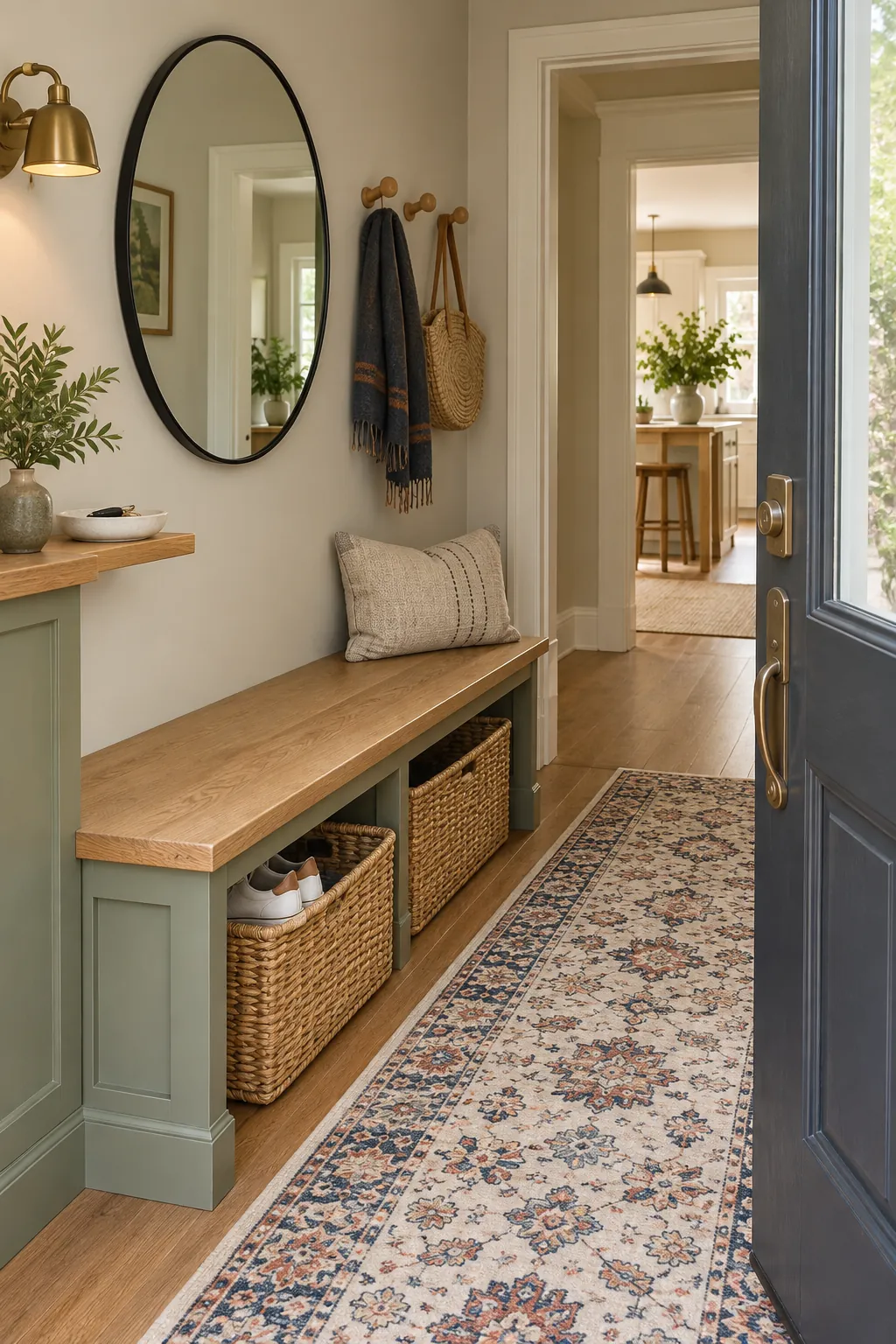
A washable runner as long as the bench helps define the entry zone. Add a mirror or hooks only when their height works for the people who use them. Leave a small tray nearby for keys rather than turning the seat into a drop zone.
Soften the foot of a bed
An olive green upholstered bench can ground pale bedding and connect the bed to darker wood furniture. Choose a bench that is narrower than the mattress and low enough not to hide the footboard. A folded throw adds texture without covering the upholstery.
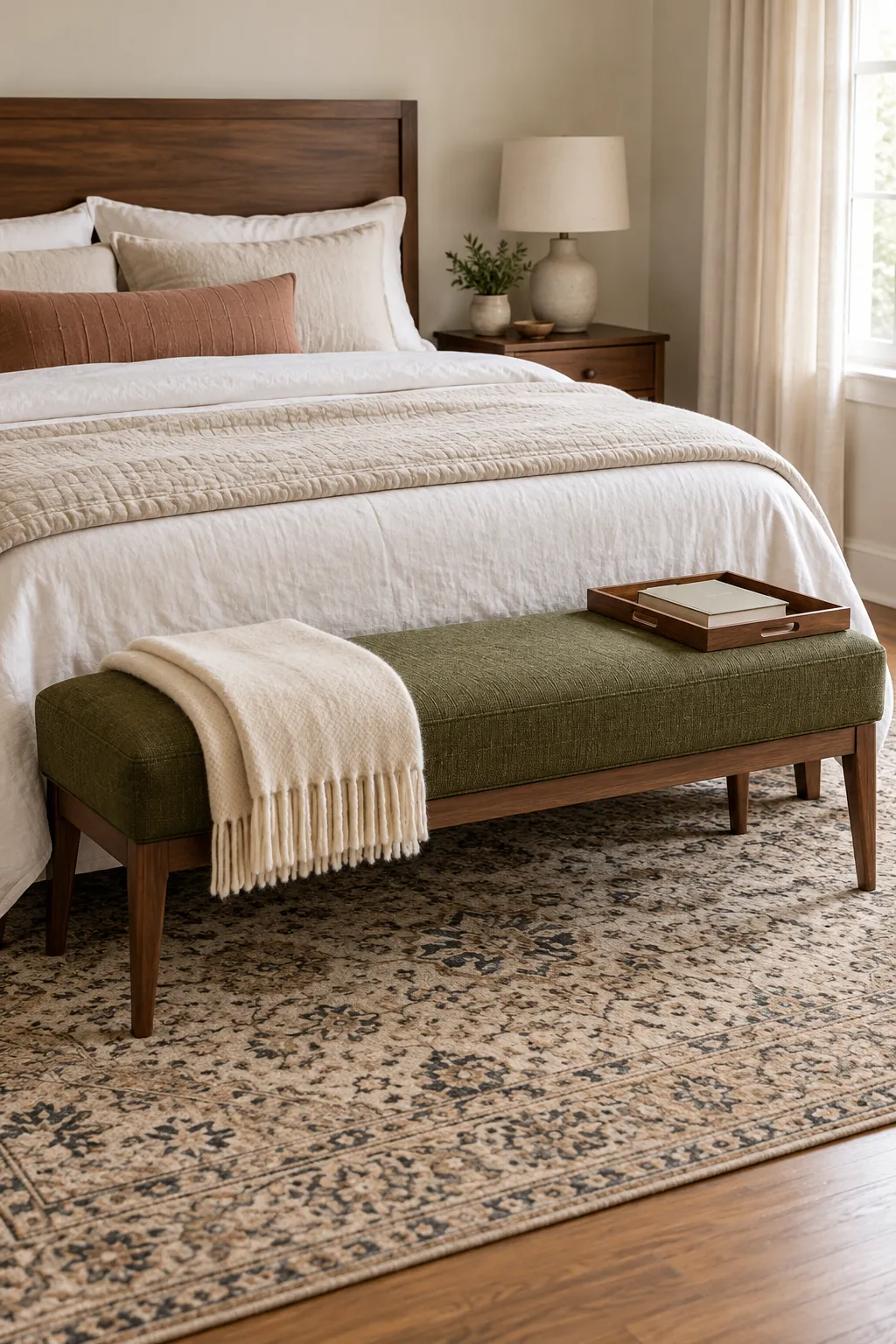
Keep pillows on the bed instead of piling them on the bench each night. A low tray can hold a book or folded sleepwear, but it should be easy to remove. The bench should remain useful for dressing and laying out clothes.
Create dining room seating
A green bench can replace chairs along one side of a dining table and make a small room feel less crowded. Check that the seat height works with the table and that diners can slide in without hitting legs or supports. A wipeable fabric or painted timber finish is more forgiving around food.
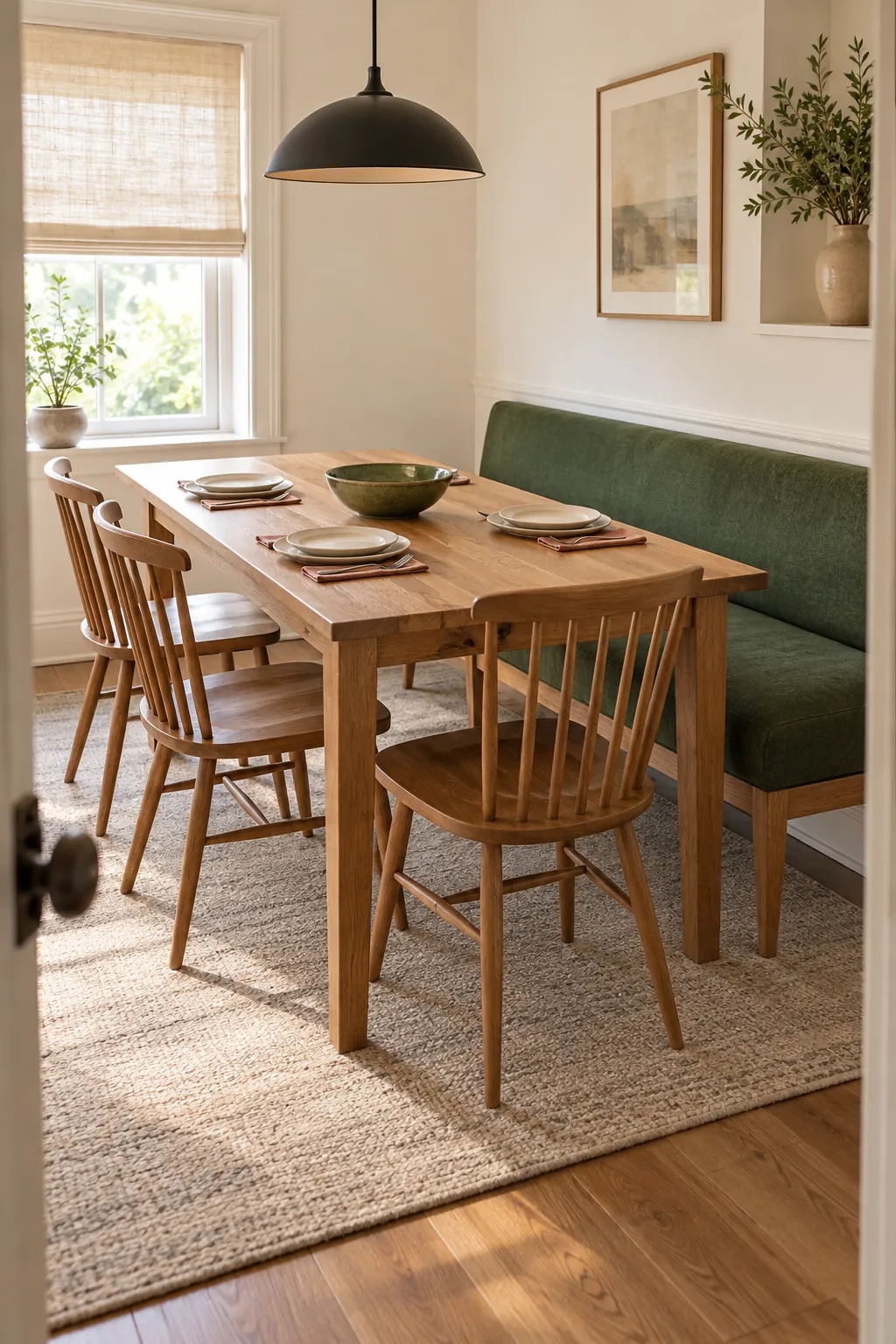
Use one long seat pad rather than several loose pillows that shift during meals. Repeat the green in a small ceramic or curtain stripe so the bench feels connected. Keep the tabletop simple because the coloured seat already carries visual weight.
Make a narrow hall feel intentional
A slim backless bench can turn an empty hall into a deliberate pause without making it feel like a room. Choose raised legs so more floor remains visible and keep the depth shallow. A single cushion, wall mirror, and compact sconce give the bench context without narrowing the passage.
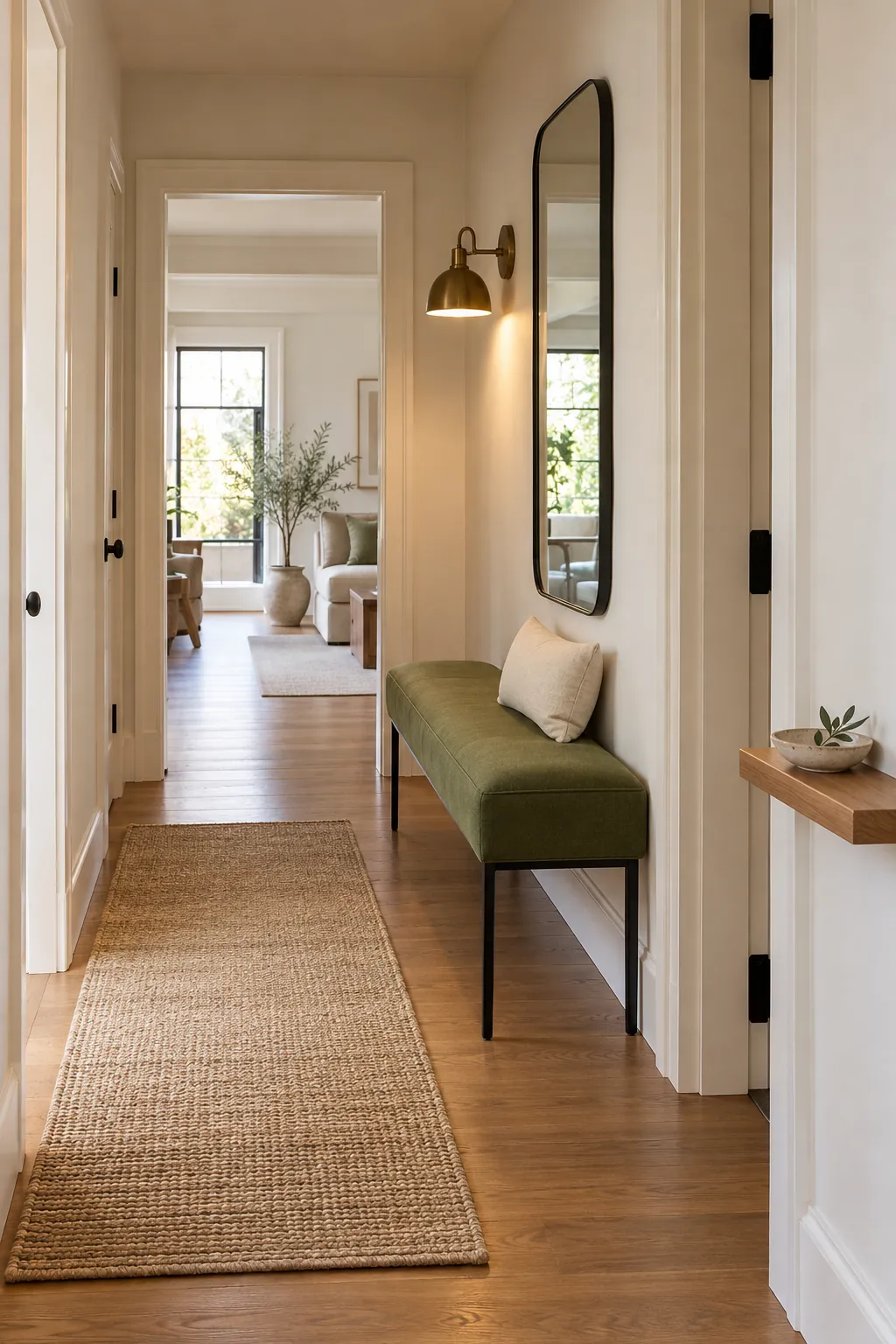
Stop the runner before the bench legs if the passage is very tight, or use a full length rug that lies completely flat. Avoid baskets that project beyond the seat. The clearest test is whether two people can pass without turning sideways.
Prepare for a busy mudroom
A painted green timber bench works well where wet shoes, bags, and outdoor clothing collect. Use durable hooks, washable baskets, and a hard wearing floor so moisture can be managed. Leave open space under the seat for boots to dry instead of filling every gap.
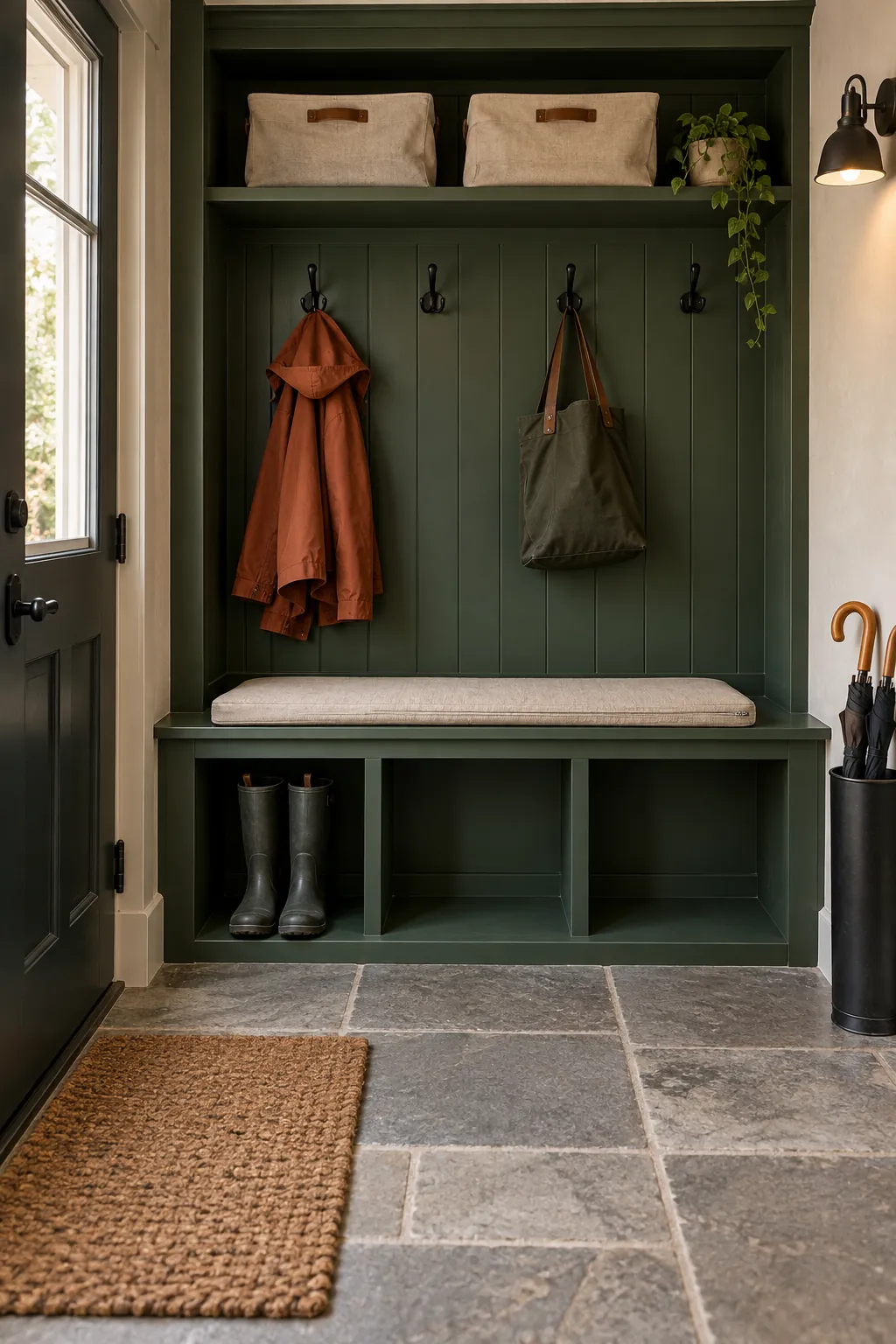
Choose a finish that can be wiped and touched up. A removable seat pad should have a washable cover and should not trap damp against the timber. Label storage through consistent positions rather than adding visual clutter.
Balance pillows rug and wall decor
Let the bench remain the main green element, then pull one small accent from the rug for a pillow or throw. If the rug has a strong pattern, use solid cushions with texture. If the rug is quiet, one restrained block print can add interest.
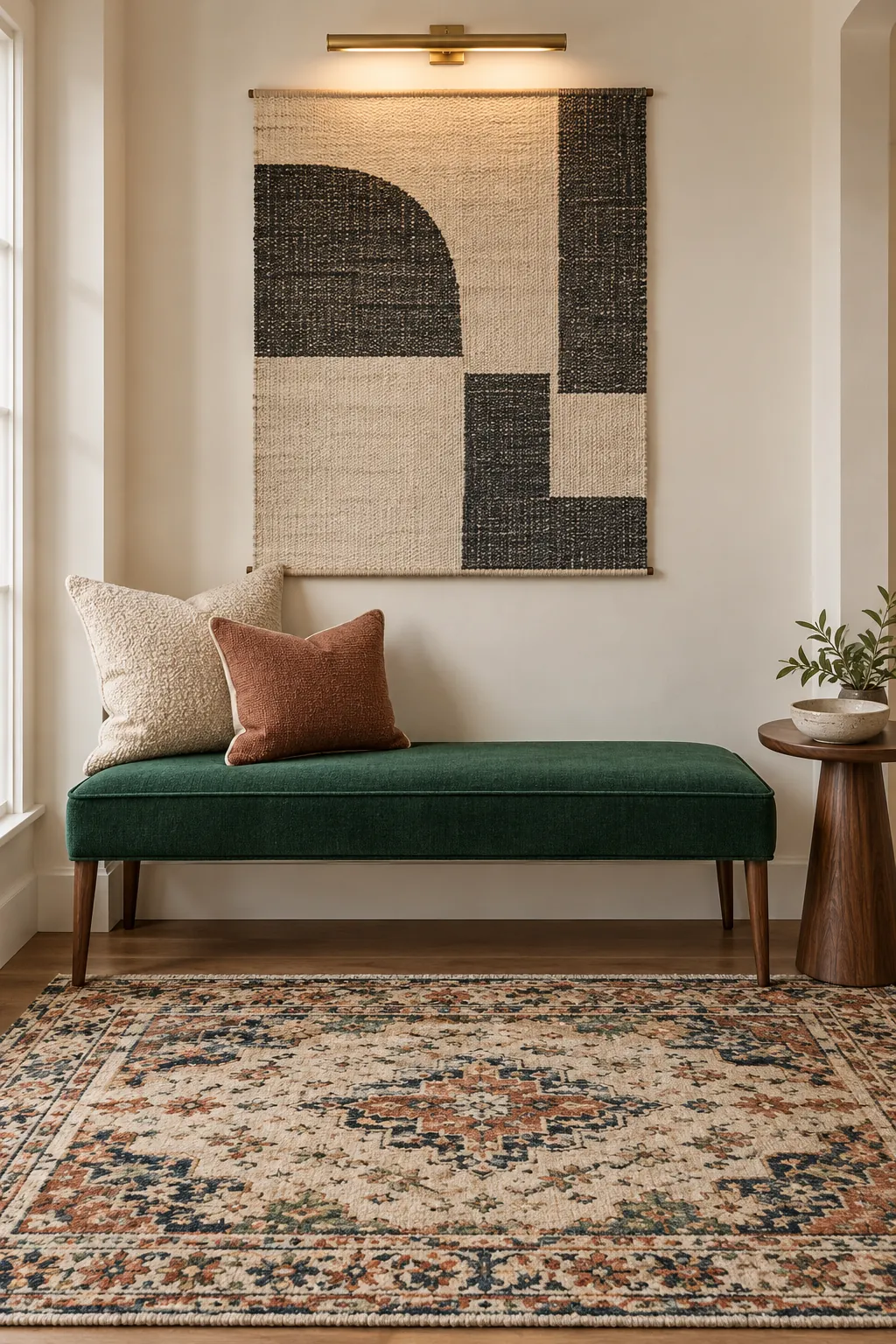
Keep the wall treatment close to the bench width so the arrangement feels anchored. Two pillows are usually enough on a short bench, and one may be better when the seat is used every day. The finished space should look welcoming while still making its purpose obvious.