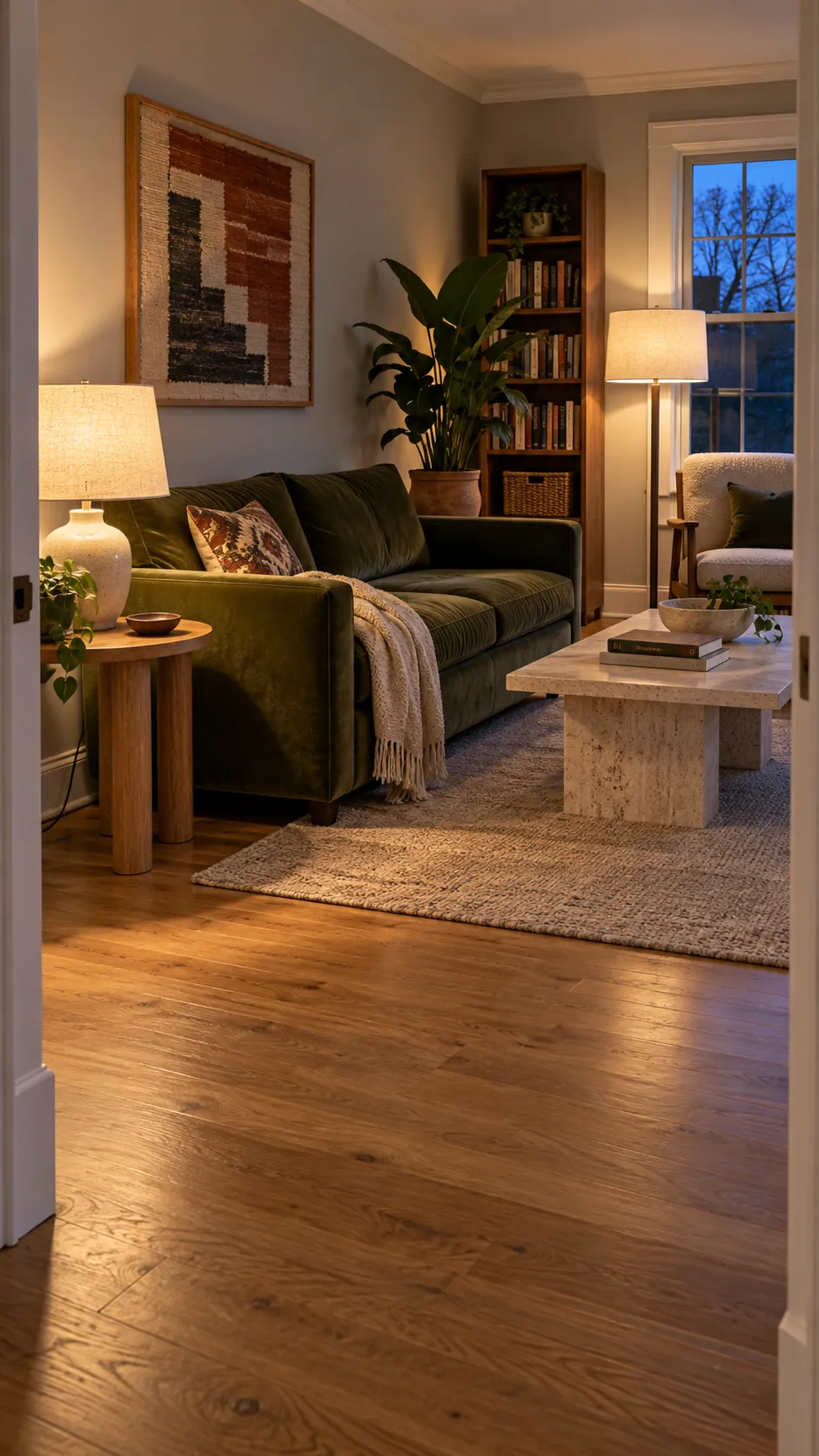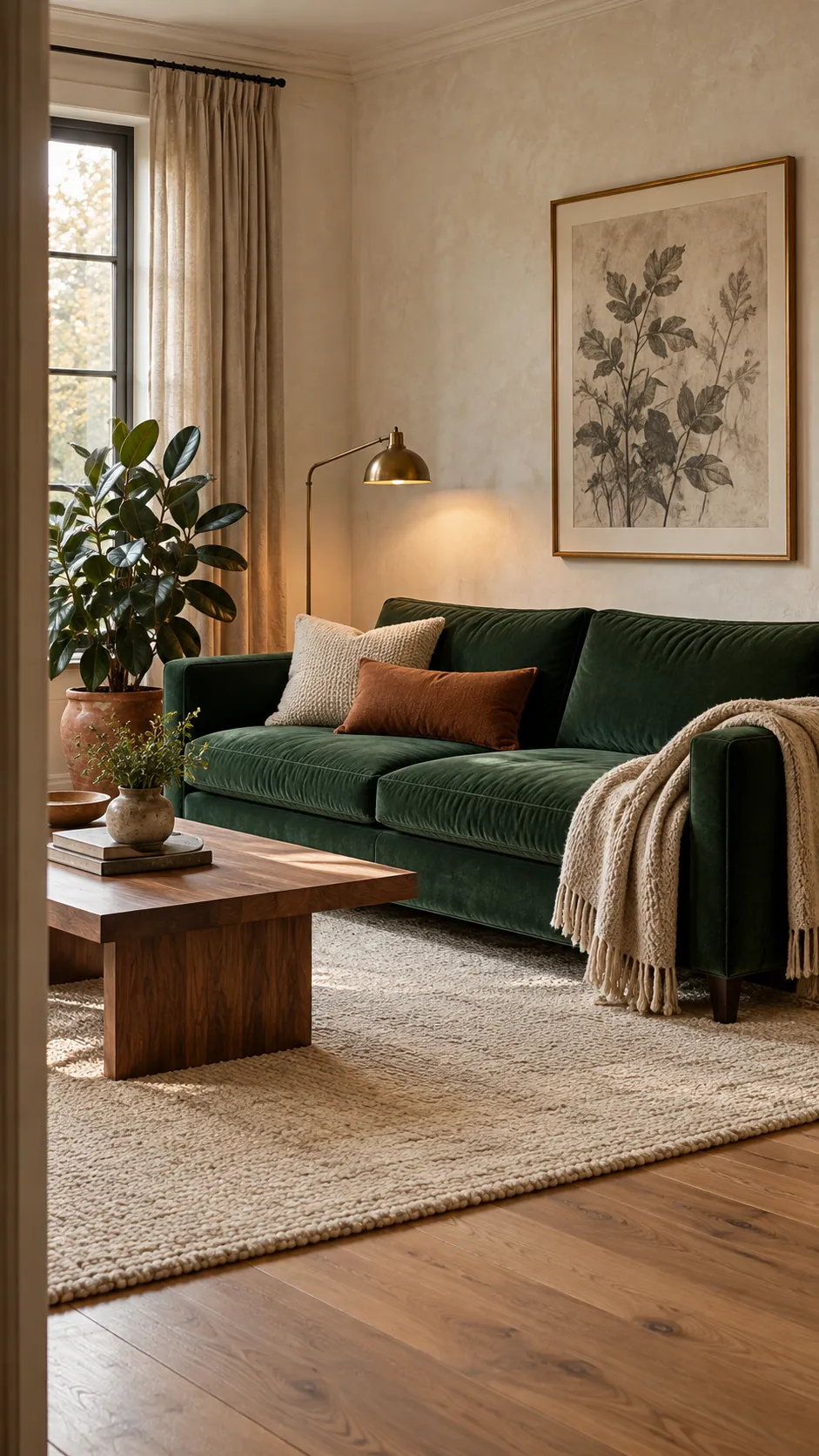
A velvet sofa can look rich in a showroom yet feel surprisingly difficult at home. Its color changes with the light, its texture already carries visual weight, and one wrong supporting choice can make the whole room feel dark or overly formal. The easiest solution is to treat the sofa as the strongest texture in the room, then build a calmer setting around it.
Start with the fixed surfaces you already own, especially the floor, wall color, and window direction. Then choose a restrained palette, one grounding rug, and a few materials that repeat in small doses. This creates a room that feels intentional without forcing every object to match the green.
Build a balanced color palette
Look at the sofa in morning, afternoon, and evening light before buying anything. Emerald velvet often appears cooler in daylight and deeper under warm lamps, while olive velvet can shift toward brown or gold. Use that changing undertone as your guide rather than relying on the product name.
A dependable palette combines green with a warm neutral, a natural brown, and one controlled accent. Cream, oatmeal, camel, walnut, and muted terracotta soften a dark green luxury living room without draining its character. If you prefer a cooler room, choose soft stone and dusty blue, but add warm wood so the scheme does not feel flat.
Choose a rug that grounds the sofa
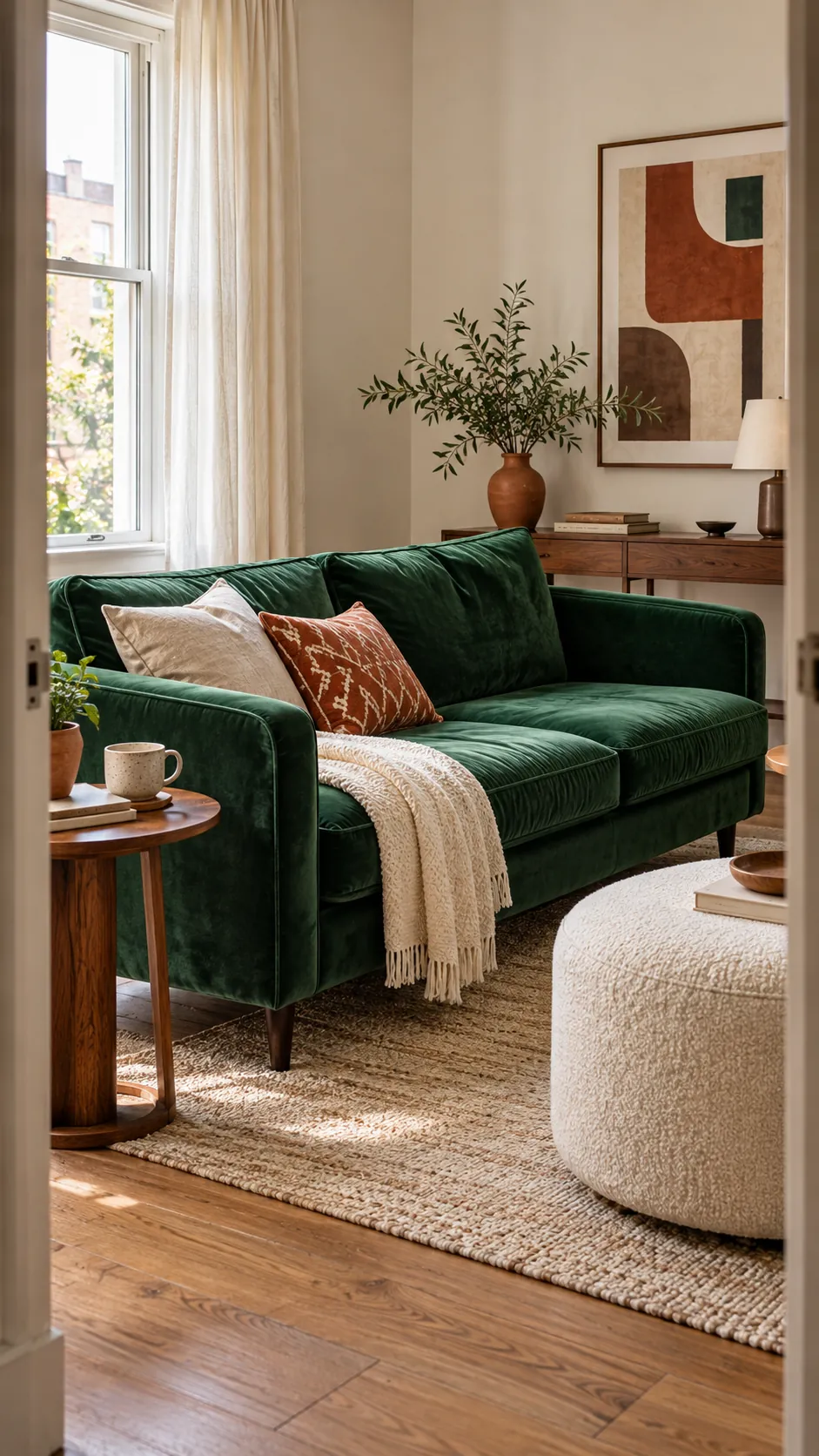
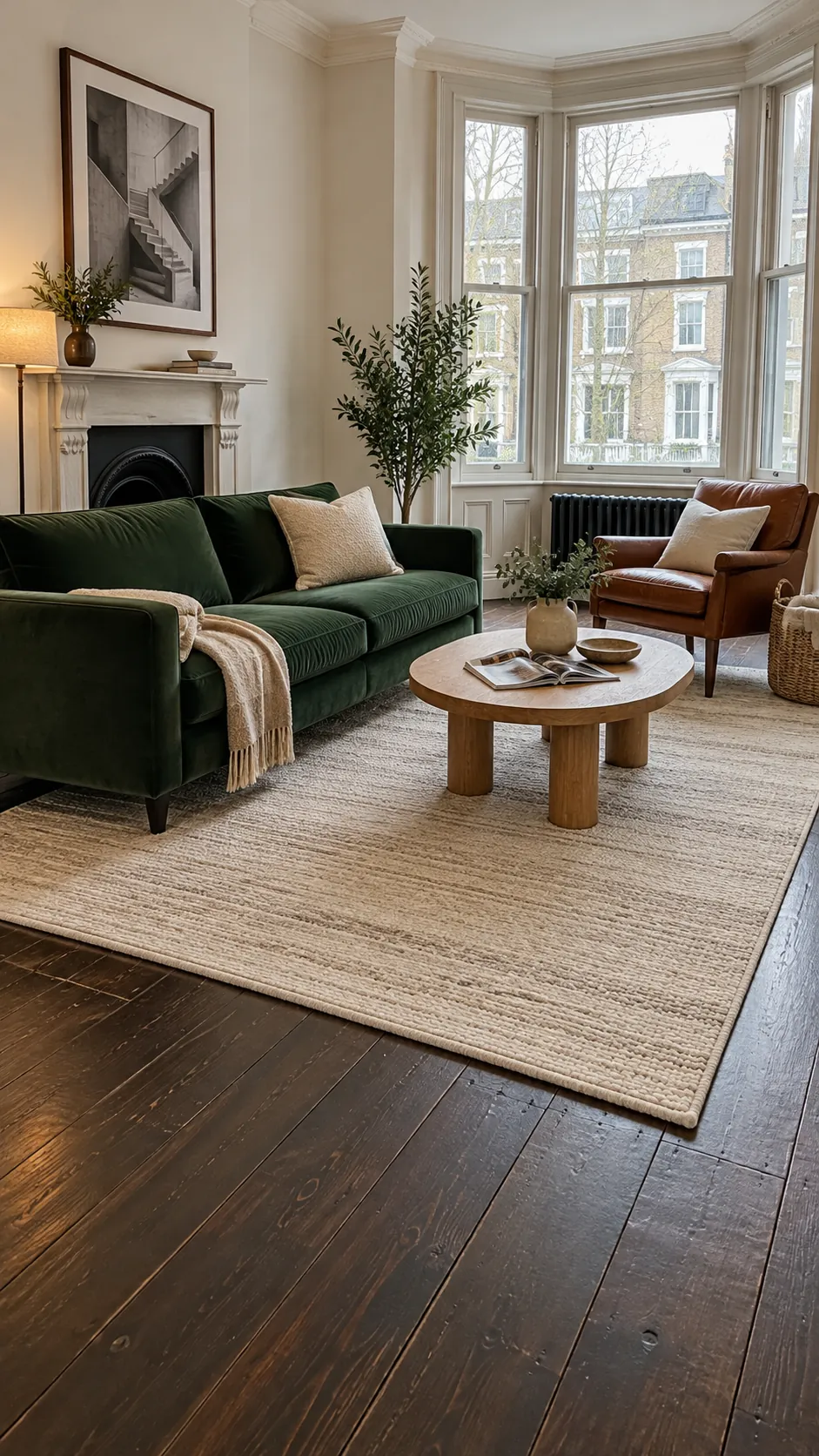
The rug should connect the sofa to the floor instead of competing with both. On dark brown flooring, a light wool rug in ivory, sand, or faded beige creates useful contrast and keeps the seating area from becoming a single dark block. On pale oak, a vintage inspired rug with rust, cream, faded blue, and a small amount of green adds depth while still letting the wood show.
Choose a rug large enough for the sofa front legs and nearby chairs to rest on it. This makes the furniture read as one conversation area and usually feels more settled than a small rug floating in front. If the velvet is smooth and lustrous, favor a low pile wool, woven jute blend, or gently distressed surface rather than another glossy material.
Layer pillows without hiding the velvet
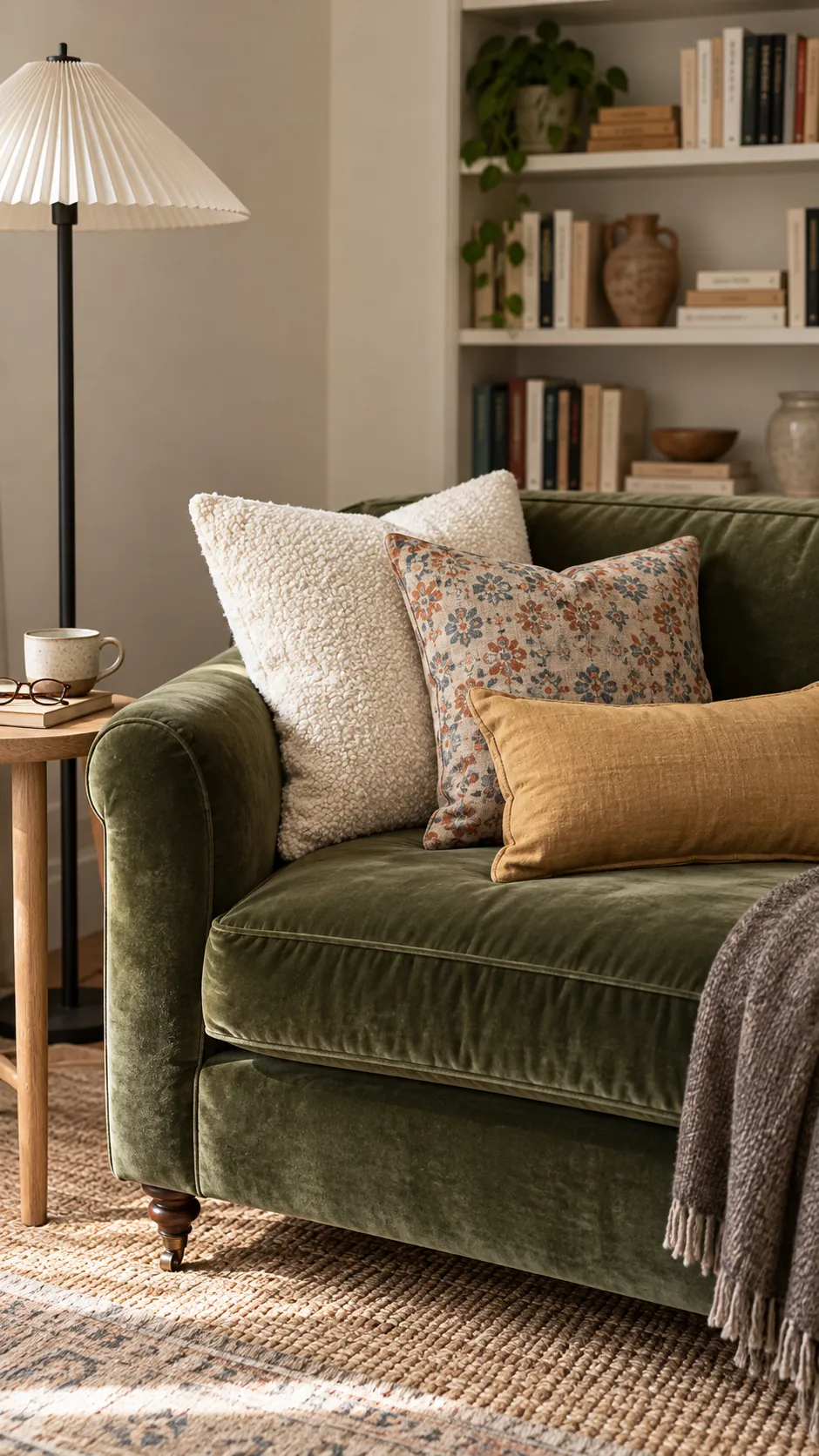
Green velvet already supplies color and sheen, so the best pillows bring contrast through fiber and shape. Try one nubby cream pillow, one patterned lumbar pillow, and one accent in rust, ochre, blush, or muted blue. A limited group looks more relaxed than a perfectly mirrored arrangement at both ends.
Keep most pillow covers matte, such as linen, boucle, wool, or block printed cotton. If you add another velvet pillow, choose a distinct shade and a smaller size so it reads as an accent rather than an attempted match. Leave enough open seat and back space for the sofa silhouette to remain visible.
Use curtains to control mood and light
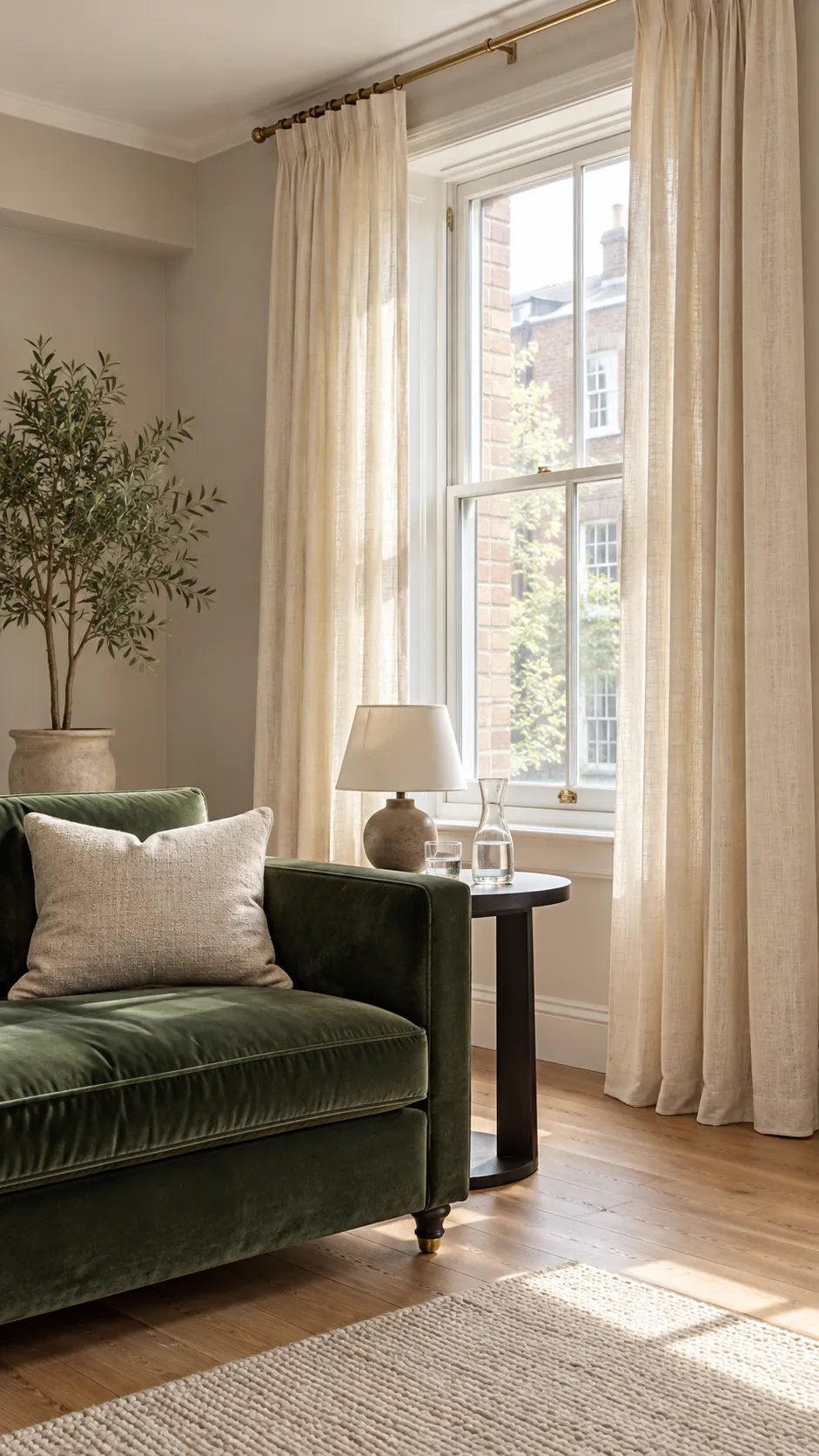
Curtains influence both the room color and the way velvet reflects light. Warm white or natural linen panels keep a compact room bright and soften strong daylight without creating another dominant color. Hang them close to the ceiling and let them reach the floor so the window appears taller and the sofa feels less bulky.
For a moodier space, select muted clay, smoky blue, or a small scale pattern that repeats a minor color from the rug. Avoid curtains that match the sofa exactly because the large green surfaces can feel heavy and can reveal undertone differences. A black, aged brass, or dark bronze curtain rod gives the window a crisp edge without adding visual clutter.
Mix wood and metal with a clear hierarchy
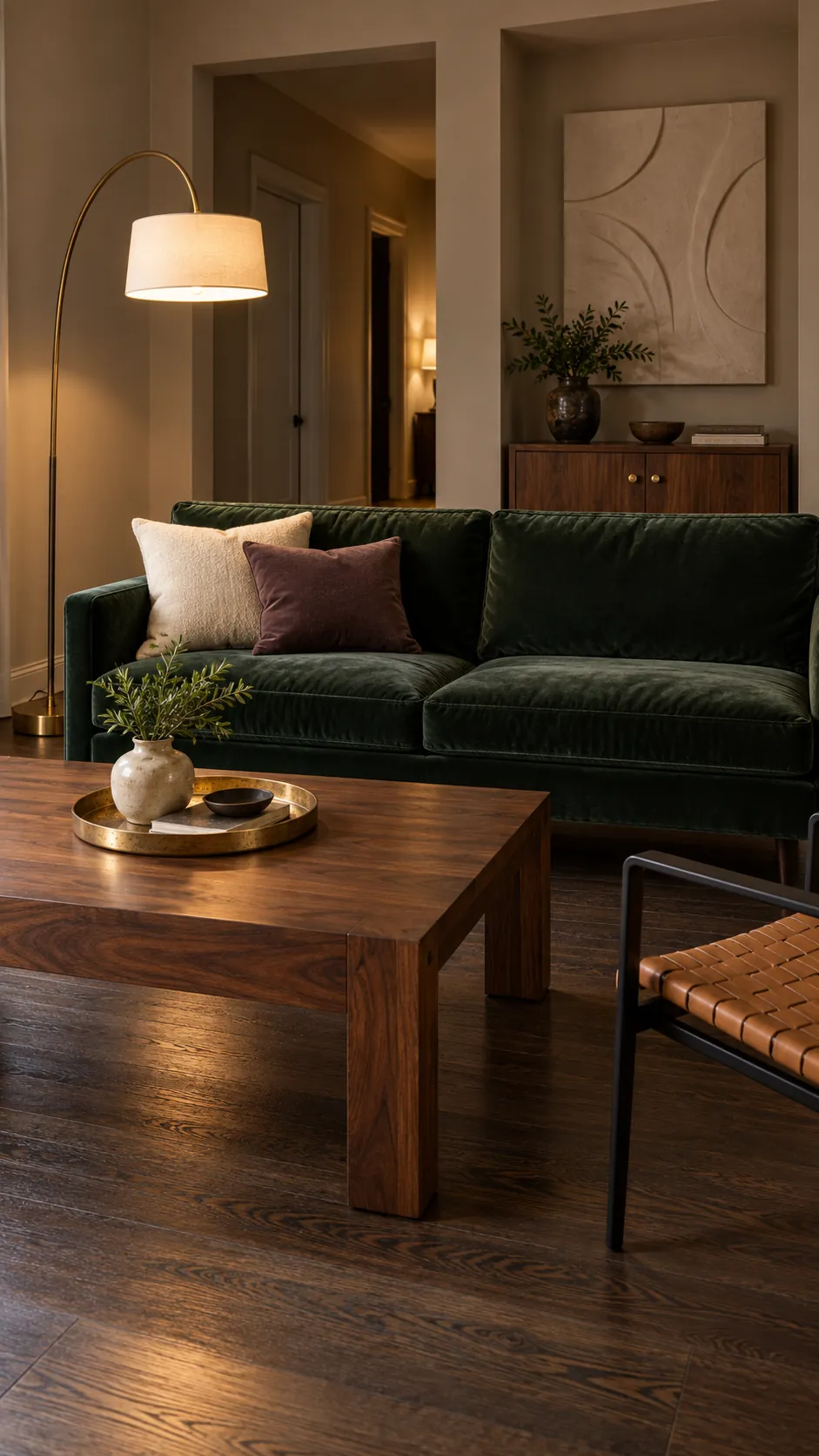
Green velvet and brass decor can feel elegant, but brass works best as a repeated detail rather than the main material. Use it on a lamp, a tray, or slim table legs, then anchor those highlights with walnut, oak, or dark stained wood. The wood gives the room warmth and stops the metallic accents from feeling like a themed set.
Choose one main wood tone and allow a second tone only when it has a clear role. For example, a walnut coffee table can lead while a pale oak side table quietly relates to the floor. Glass, stone, or blackened steel can break up the wood if the room already contains several timber surfaces.
Finish with lighting, spacing, and everyday details
Good lighting reveals velvet texture without turning the sofa into a dark mass. Combine a shaded floor lamp near one end with a smaller table lamp across the room, then use warm white bulbs with similar color. Place the brightest lamp slightly beside or in front of the sofa so light grazes the pile instead of flattening it from overhead.
Leave practical breathing room around the furniture. Keep a clear walking path, set a side table within reach, and avoid crowding every corner with plants or accessories. One healthy plant, a stack of books, and a ceramic bowl provide enough ordinary detail to make the setting feel lived in.
Before buying the final accent, remove one item and view the room from the doorway. If the sofa still feels isolated, repeat its green once in a small pattern or plant leaf rather than adding another large green surface. The finished room should let the velvet sofa lead while the rug, curtains, lighting, and furniture make it comfortable to live with every day.