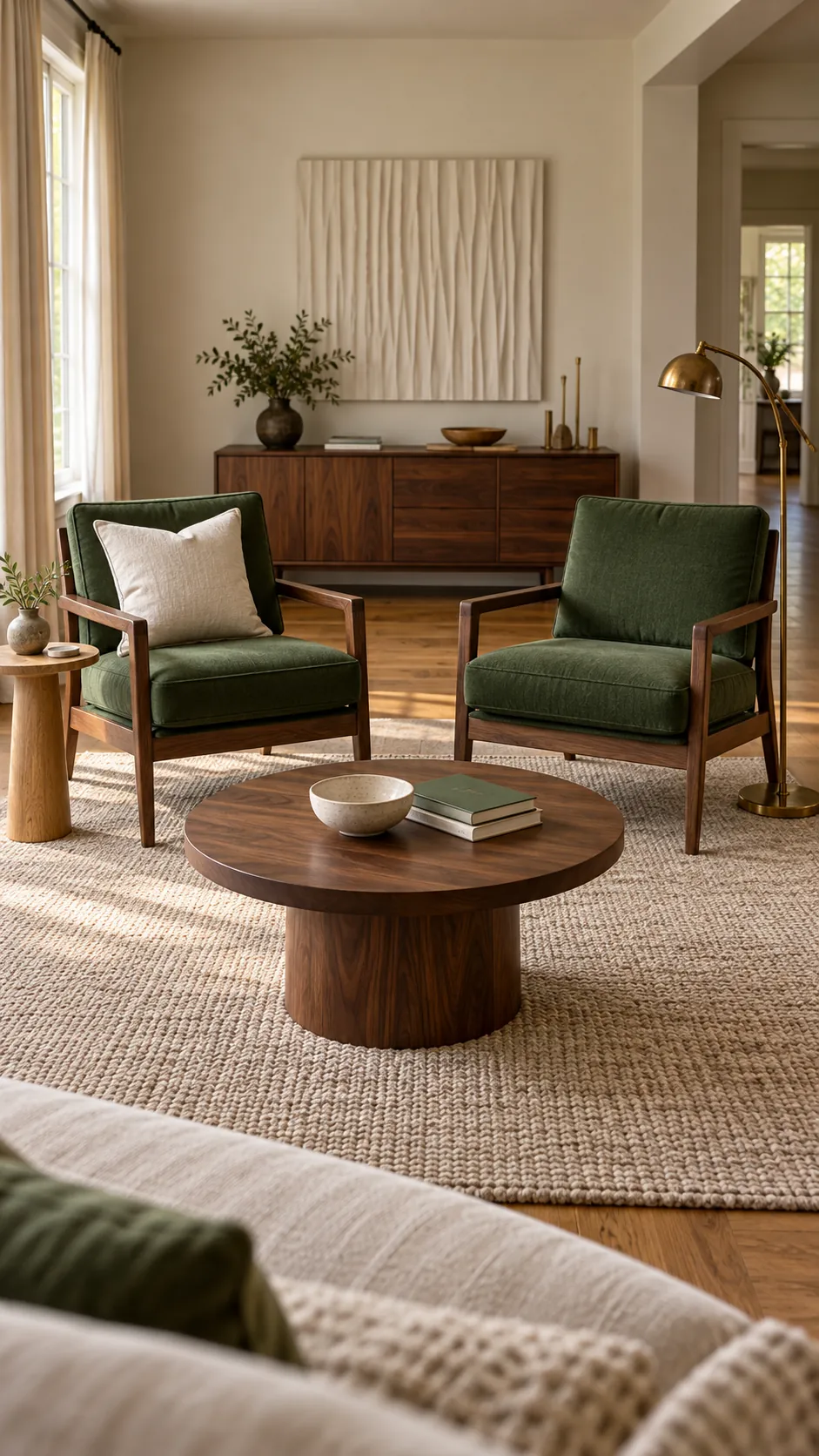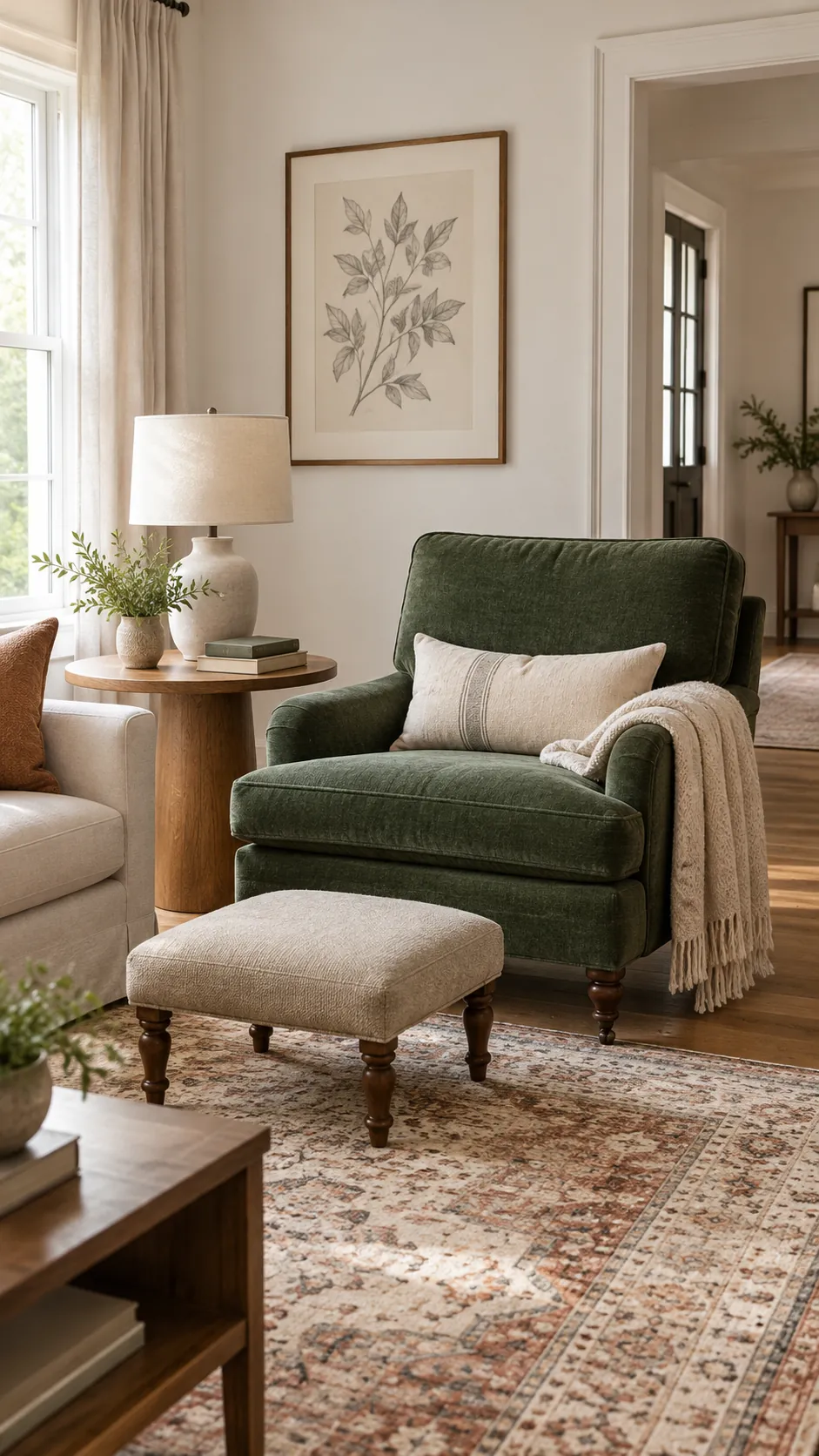
A green armchair can solve an empty corner or create a useful reading spot, but it can also look stranded when nothing around it relates to its color or scale. The fix is not to add green everywhere. Give the chair a clear job, connect it to the nearest seating group, and repeat one or two supporting colors in smaller doses.
Before buying decor, sit in the chair and check the view, light, reach, and walking path. A beautiful arrangement still fails when there is nowhere to set a drink or the chair blocks the route through the room. Start with function, then use textiles, wood, and lighting to make the green feel intentional.
Give the chair a clear role
Decide whether the chair belongs to a conversation area, a reading nook, or a quiet bedroom corner. In a living room, angle it toward the sofa rather than pressing it flat against the wall. This small turn makes the chair feel connected and leaves a more natural line of sight.
Keep enough space behind and beside the chair for people to pass without brushing the arms. A small round table can fill an awkward gap while staying easier to navigate than a square table. If the chair swivels or reclines, test its full movement before placing the rug or lamp.
Build a color palette from the green
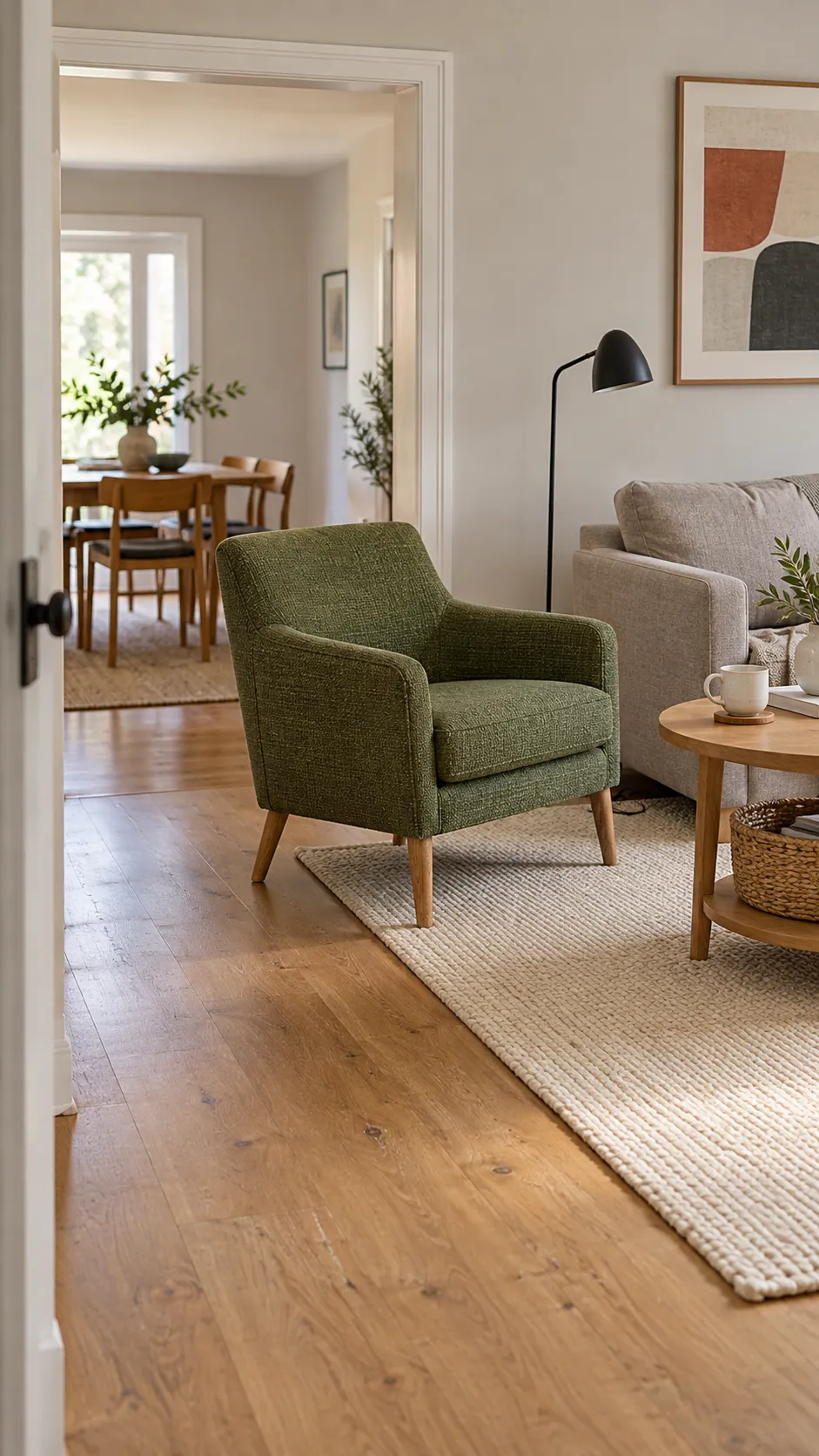
Read the chair color in the actual room light. Emerald green works well with cream, walnut, rust, and muted blue, while olive green often suits oatmeal, camel, terracotta, and black. Choose one warm neutral as the base and one accent color so the room does not become a collection of competing statements.
Repeat the chair color once at a smaller scale, perhaps in a rug motif, book spine, or plant leaf. The repeat should be subtle enough that the armchair remains the focal point. Avoid matching the wall, curtains, and pillows to the exact same green because small undertone differences become more obvious across large surfaces.
Use the rug to connect nearby furniture
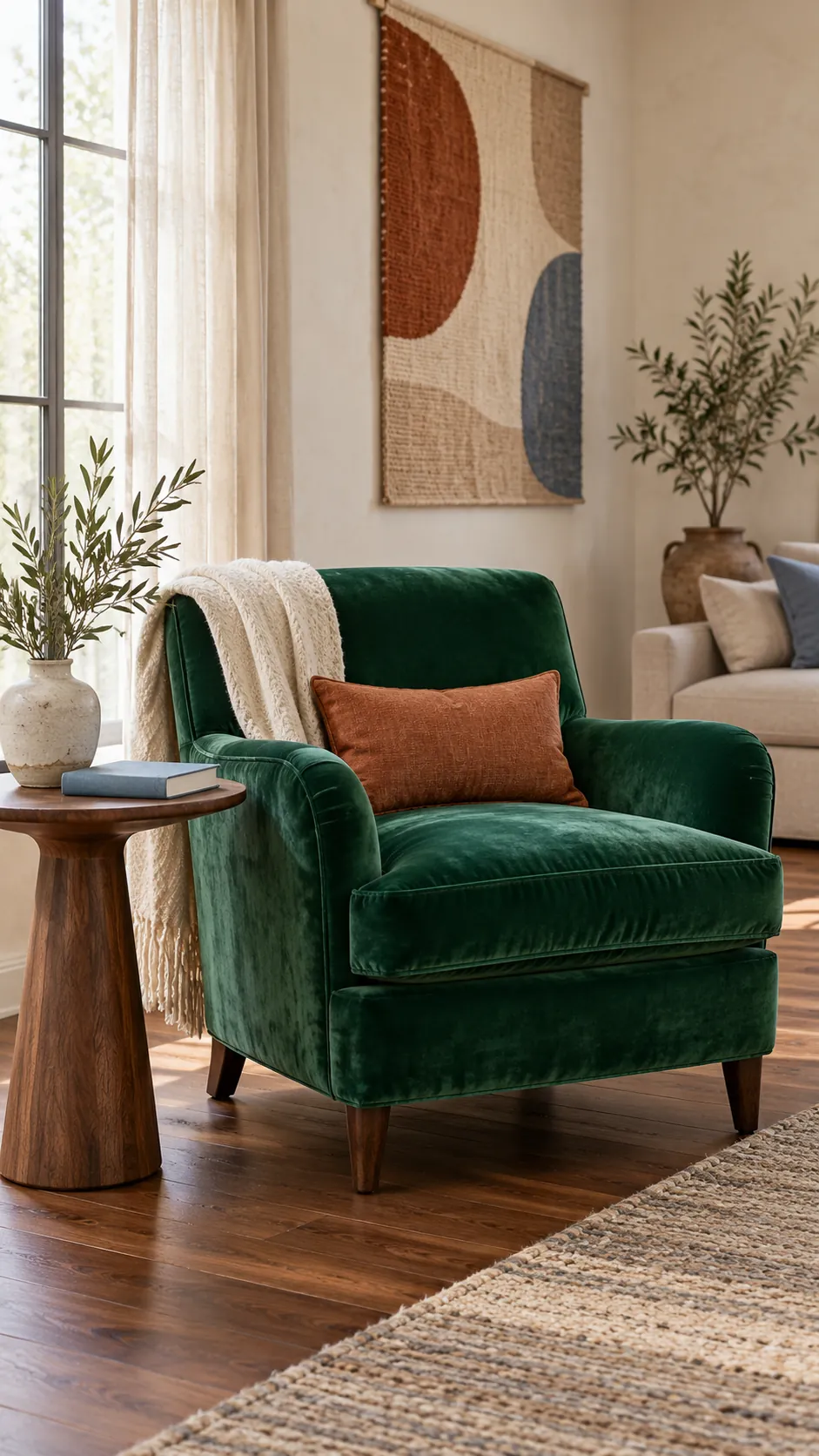
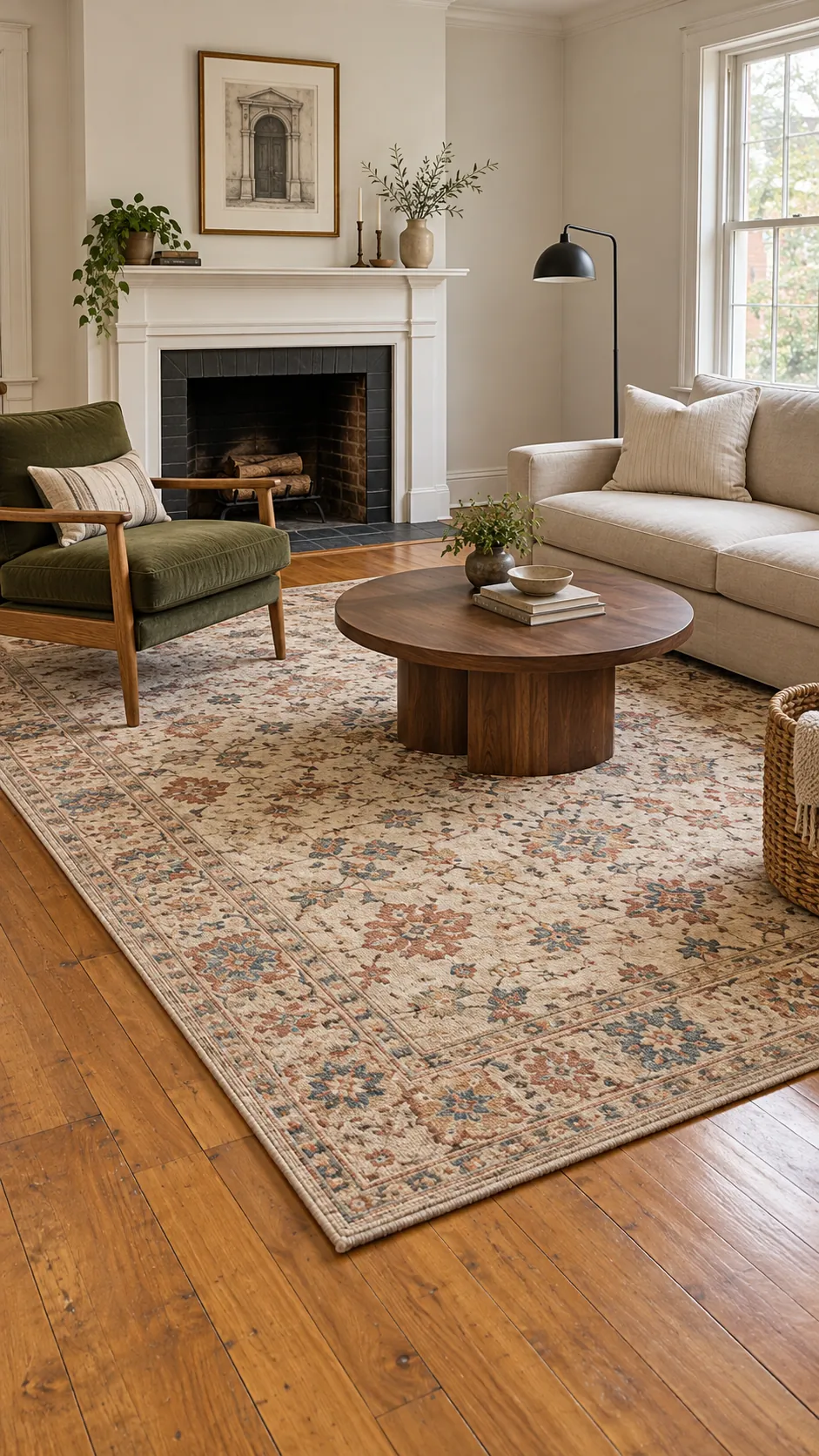
A rug can make one green chair feel part of a larger seating area. Place at least the chair front legs on the same rug as the sofa or side table, then keep the pattern quieter than the upholstery. Cream, faded rust, soft blue, and natural tan are flexible choices because they bridge green with common wood tones.
A small round rug can define a separate reading nook, but it should extend beyond the chair base and table. Skip an extra rug when the main room already has several strong layered textiles. In that case, use a floor lamp and side table to define the zone without introducing another competing pattern.
Add one useful pillow or throw
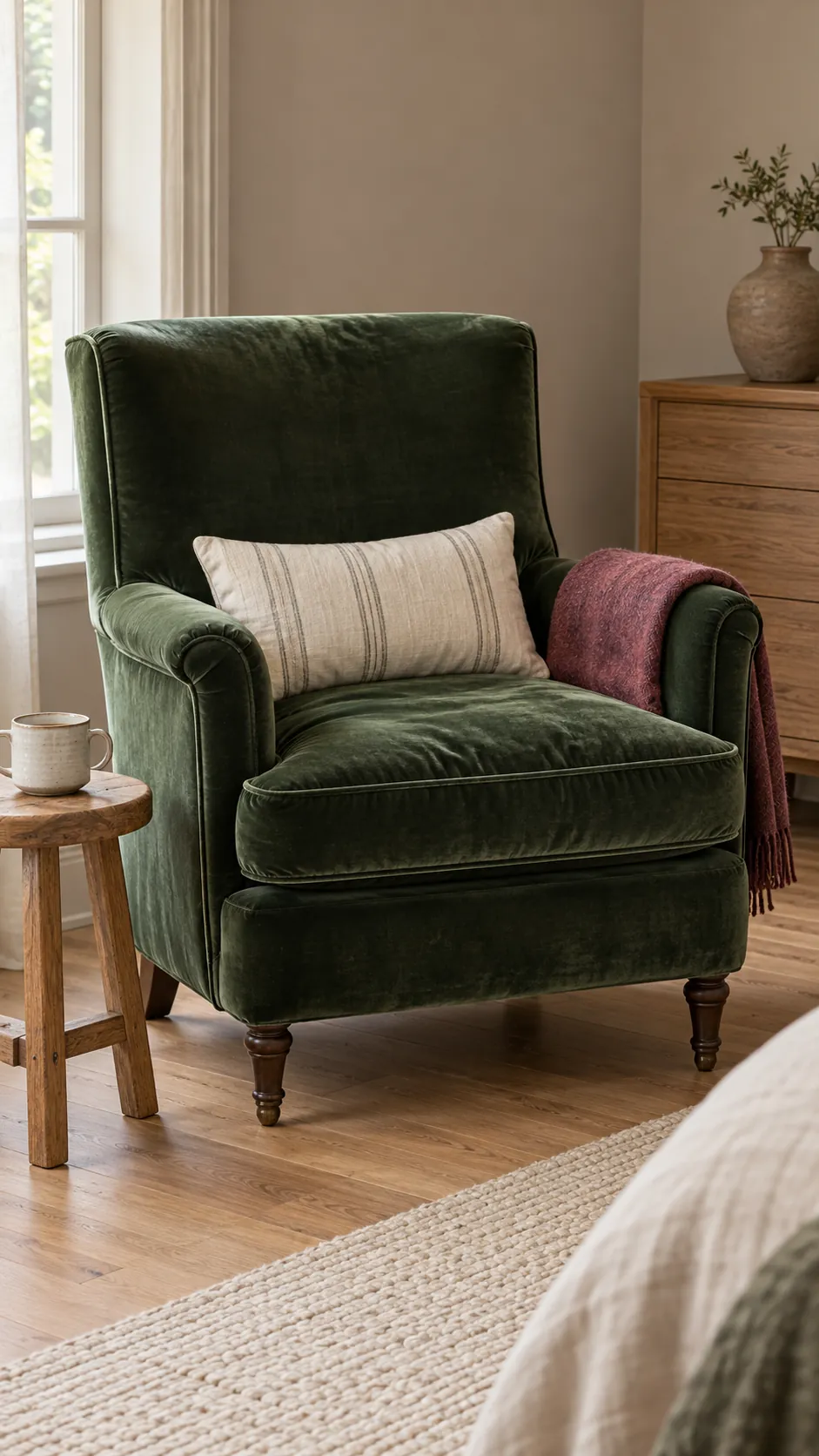
An armchair has less visual and physical space than a sofa, so one well chosen pillow is usually enough. Use a small lumbar shape when the seat is deep, or choose a soft square pillow when the back feels firm. Linen, wool, boucle, and block printed cotton create contrast with green velvet without adding more shine.
Pull the pillow color from the rug or nearby art instead of matching the chair. A rust or cream pillow warms emerald upholstery, while muted berry or faded blue adds a measured contrast to olive. Fold a lightweight throw over one arm only when it does not cover the chair silhouette or drag across the floor.
Create a practical reading nook
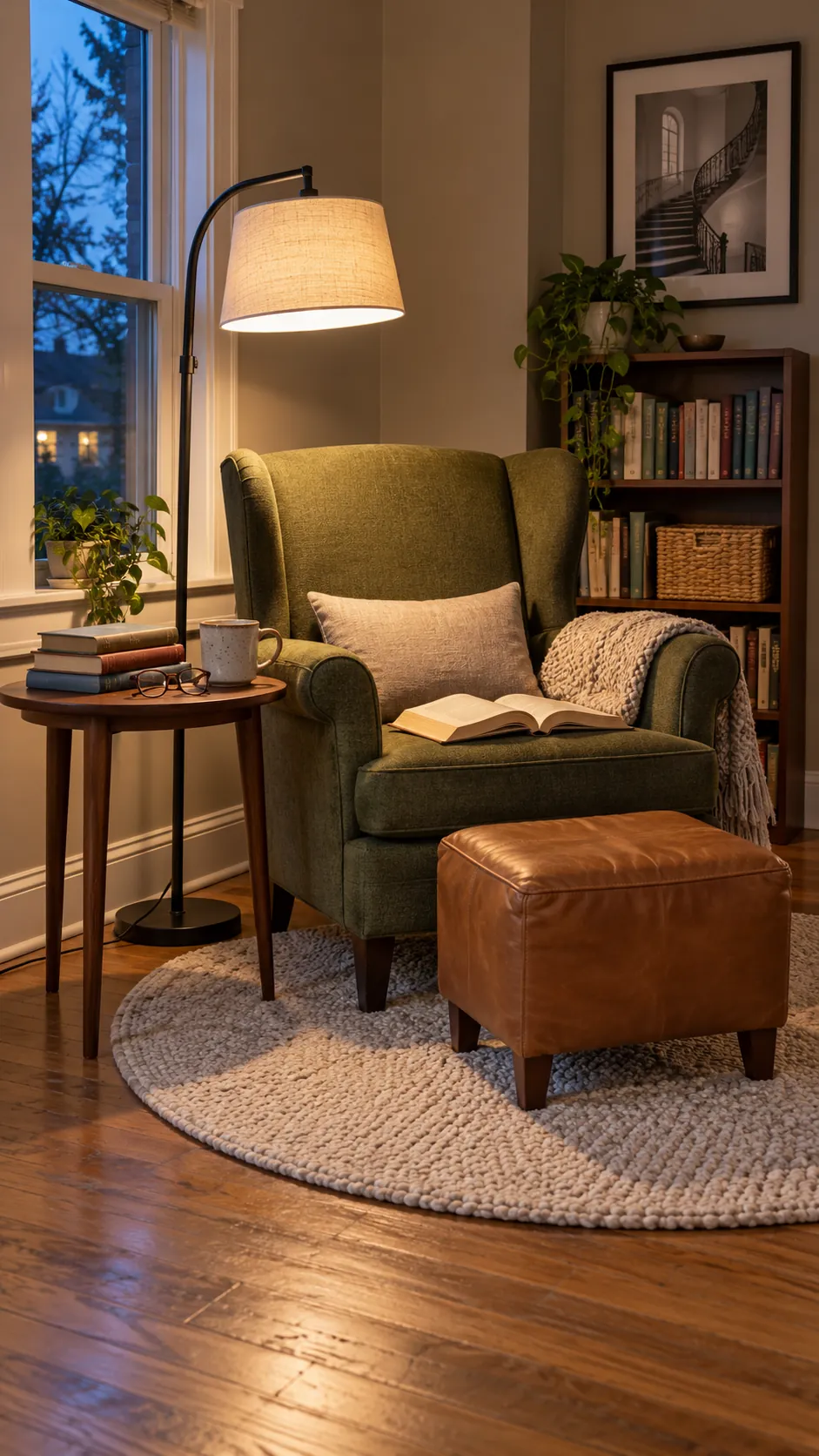
A green chair reading nook needs more than decoration. Place a shaded floor lamp slightly behind the shoulder so light reaches the page without shining directly into your eyes. Add a table level with the chair arm, and keep its surface large enough for a book, drink, and glasses.
Use a small bookcase or basket only if it does not narrow the approach. A footstool can improve comfort, but it needs room to move aside when the chair is not in use. The most convincing nook looks ready for a real evening, with useful light and reachable objects rather than a crowded display.
Balance pairs and wood tones
Two green armchairs can face a sofa, sit at right angles to it, or form a compact conversation zone across a round table. Keep the chairs related, but do not mirror every nearby object. One shared rug and a centered table provide enough structure, while different lamps or side details keep the arrangement from feeling formal.
Choose one leading wood tone for the table or chair frames. Walnut deepens emerald and forest green, while oak lifts olive and moss shades. If the room already contains both woods, repeat each once and add a small black or aged brass detail to help the mix feel deliberate.
Step back to the main doorway before adding anything else. The armchairs should look connected to the room, leave clear movement around them, and remain comfortable to use. When those practical points work, a few restrained colors and materials are enough to make the green feel completely at home.