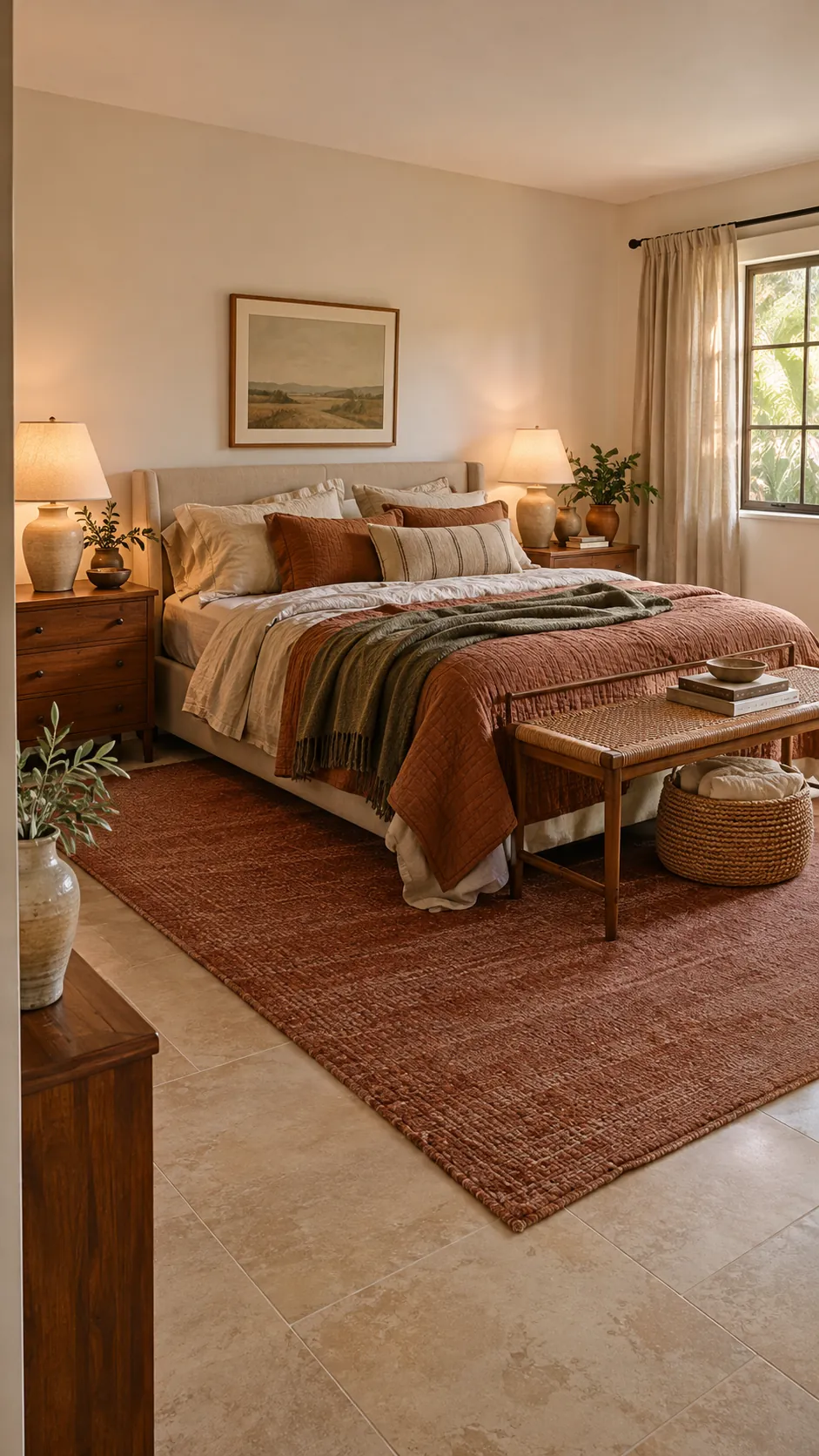
Tile can make a bedroom practical, cool, and easy to clean, yet the same hard surface can leave bare feet cold and the room visually sparse. The useful fix is not to disguise every tile. It is to add softness where your body meets the room, then repeat warmth at eye level so the floor no longer sets the whole mood.
Anchor the Bed With a Generous Rug
Choose a rug wide enough to extend beyond both sides of the bed, since a narrow strip can make the bed look stranded on the tile. Place the front edge near the nightstands or run the rug beneath the whole bed when the room allows it. A dense wool blend or a low pile washable rug gives feet a warmer first step without making doors difficult to open.
Layer a Soft Runner Beside the Bed
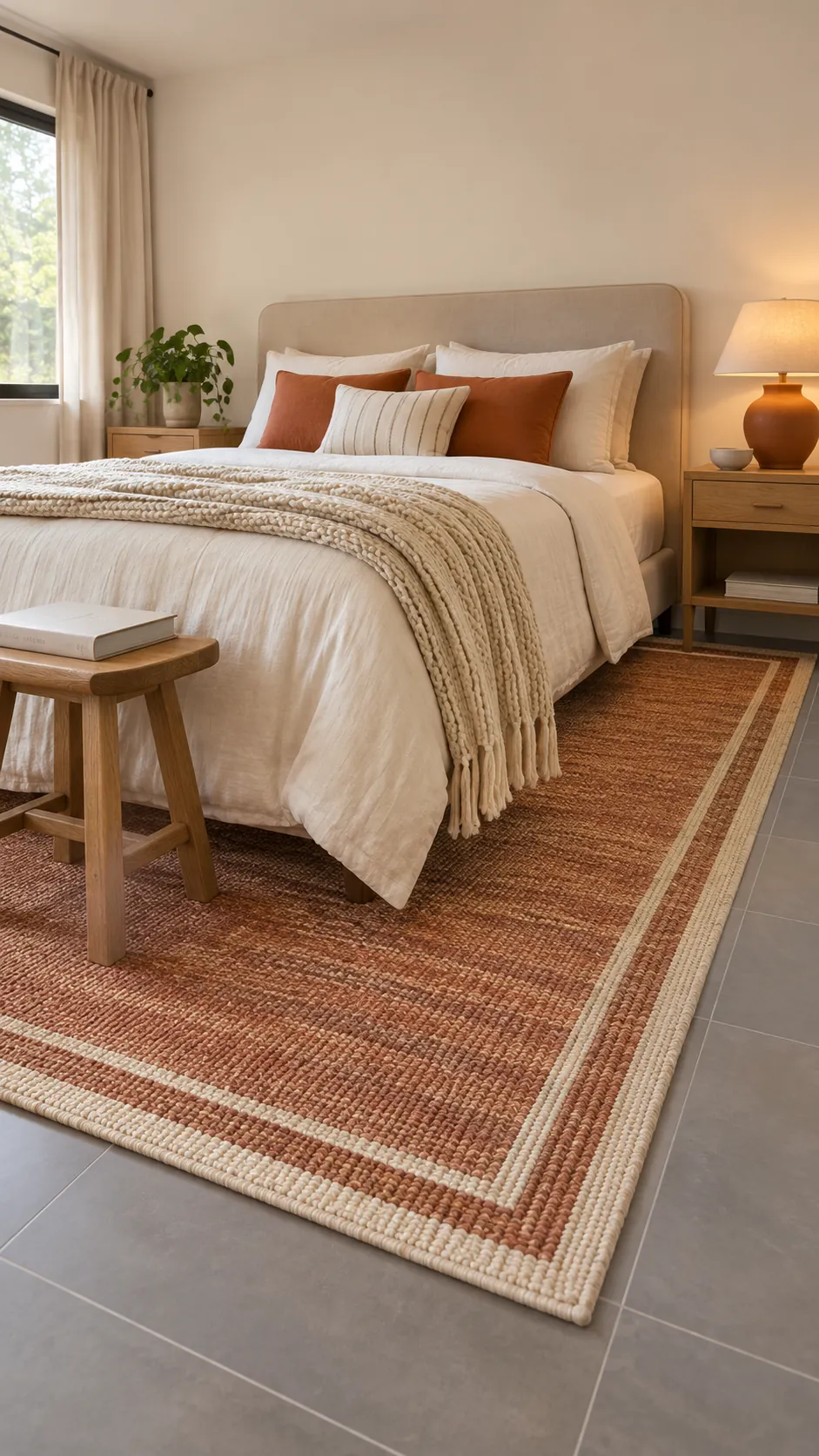
A runner is useful when a large rug would hide attractive tile or exceed the budget. Set it along the side where you usually get up, and keep its outer edge clear of the door path. Use a proper nonslip pad cut slightly smaller than the runner so the corners stay flat and the layer feels intentional.
Build a More Tactile Bed
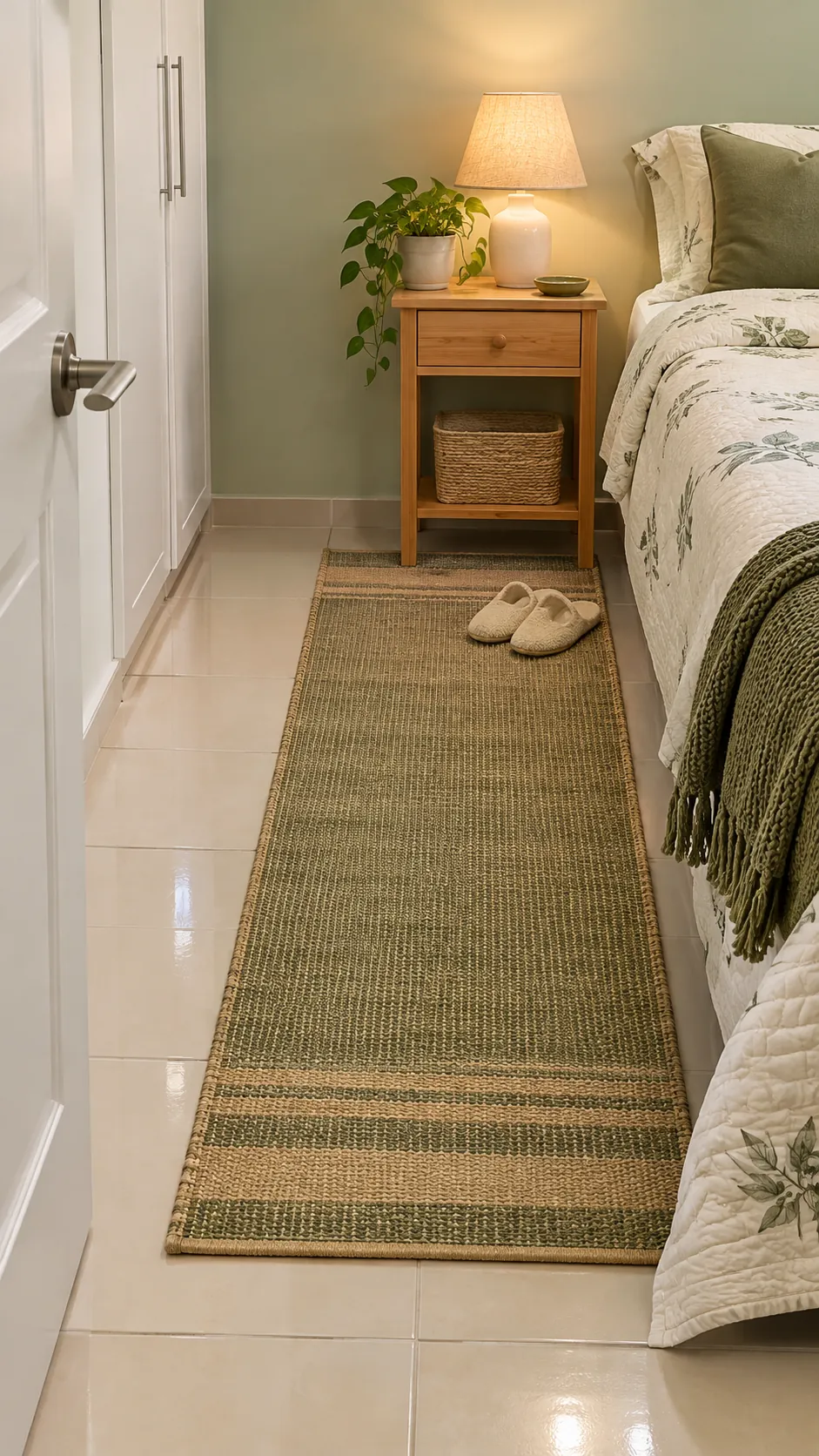
Give the eye a softer focal point by mixing a quilt, a relaxed linen cover, and one plush throw with clearly different weaves. Keep the palette related so the layers feel calm rather than busy. The contrast between rumpled cloth and smooth tile makes the room feel warmer even before you step onto the rug.
Use Curtains That Reach the Floor
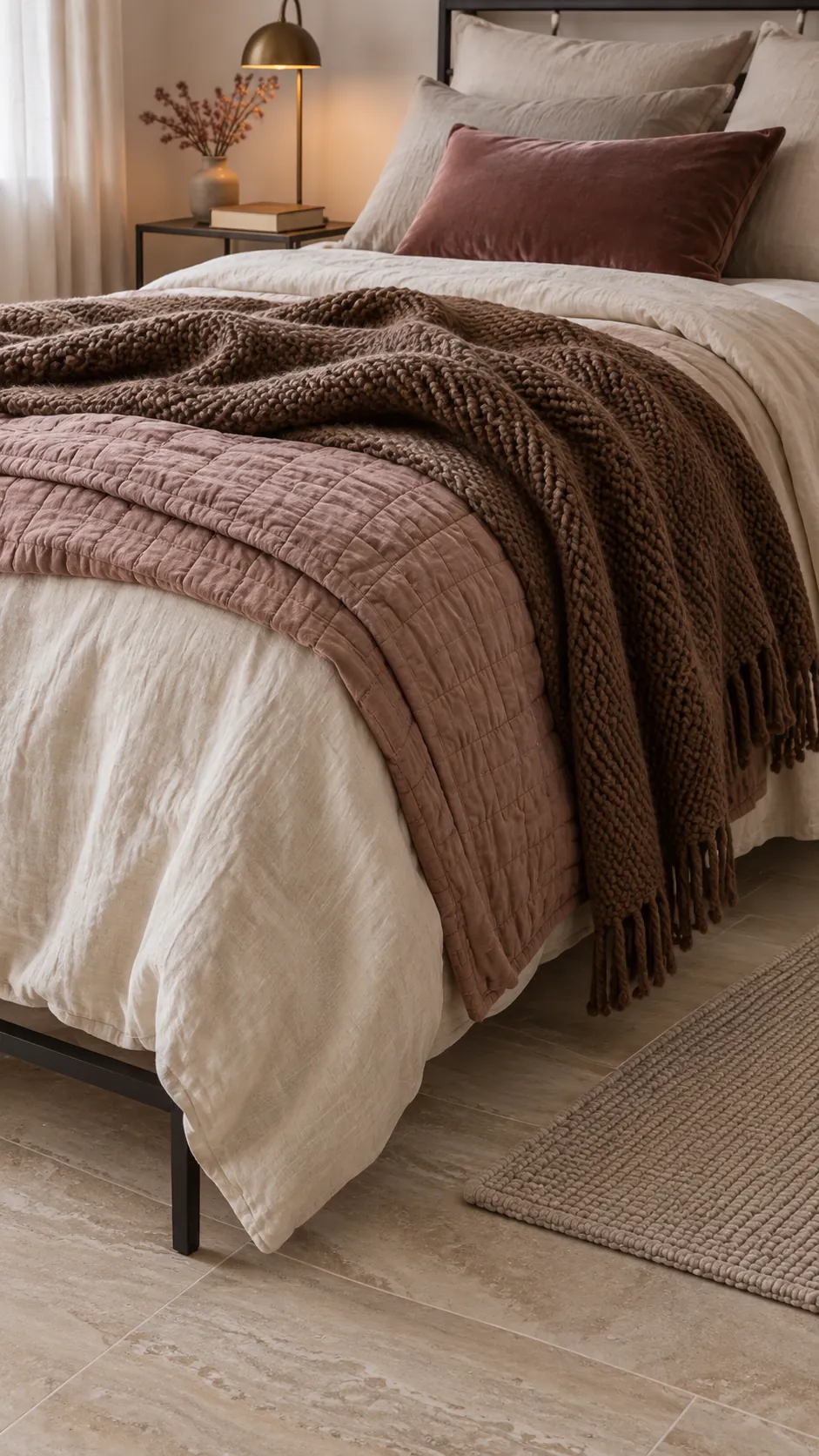
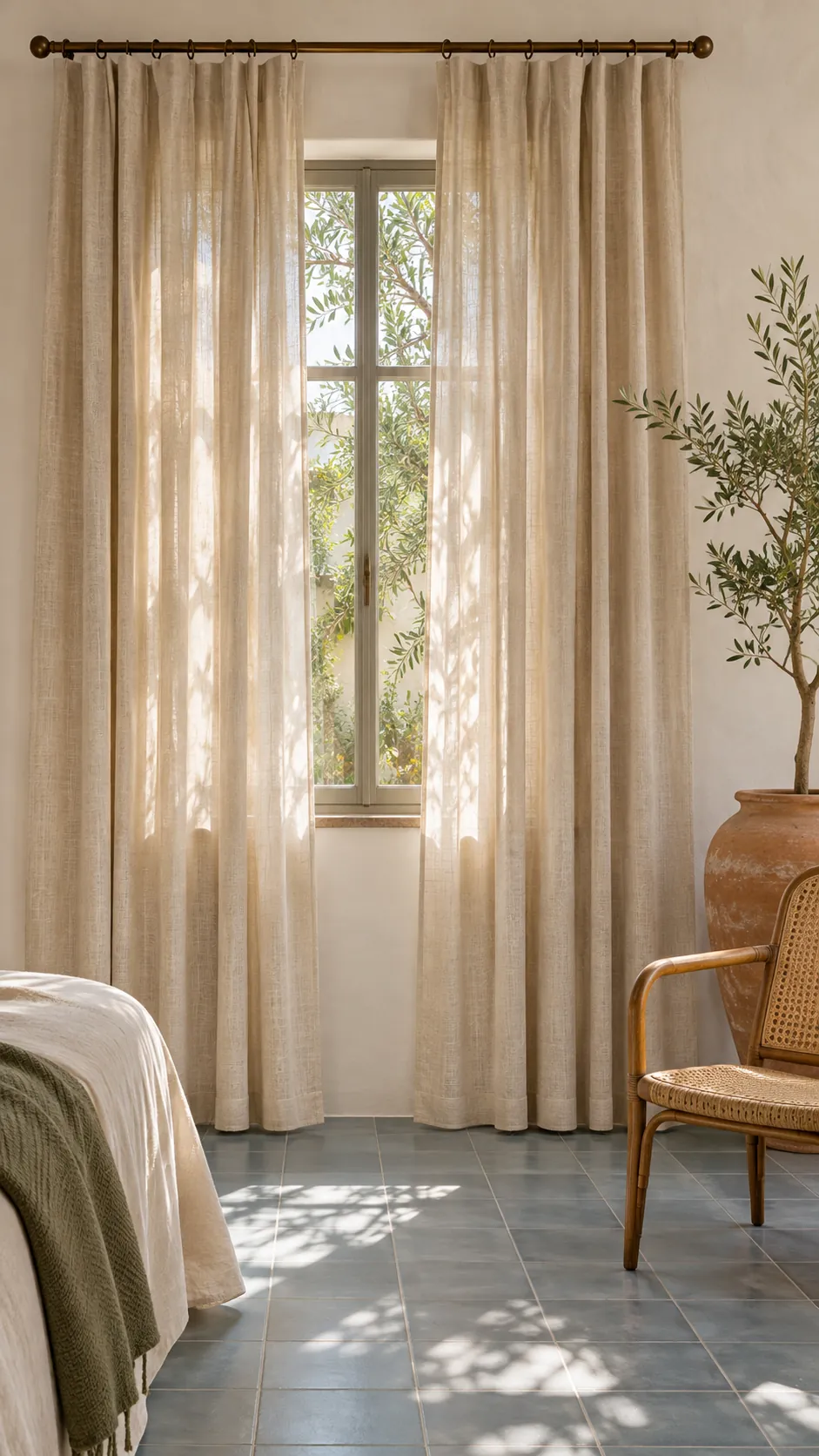
Full length curtains add a tall column of fabric that balances the broad hard surface below. Hang the rod above the window and extend it beyond the frame so open panels do not steal daylight. Let the hems stop just above the tile, which keeps them clean while preserving the soft vertical line.
Replace Harsh Overhead Light With Layers
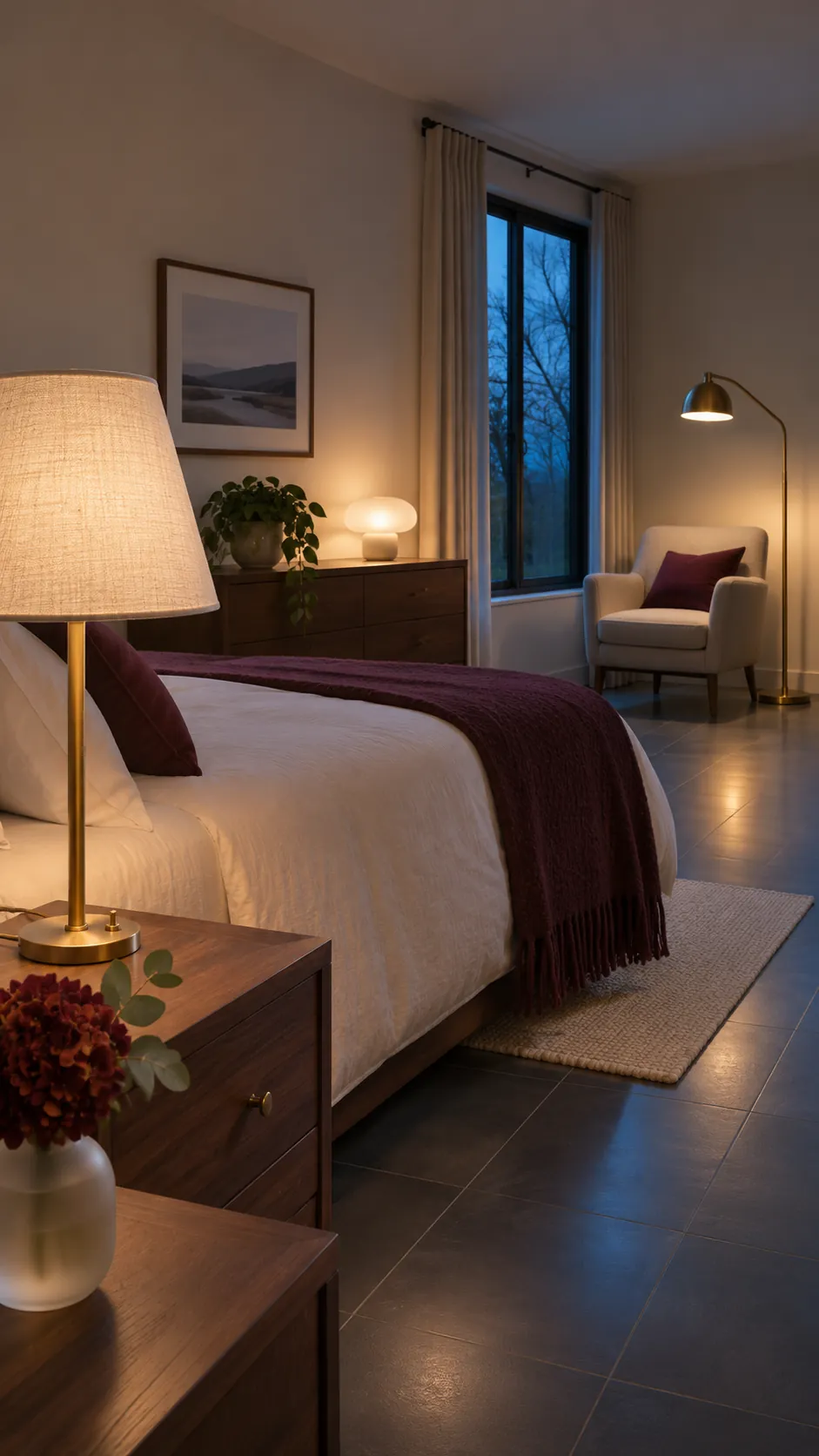
A single bright ceiling fixture can sharpen every reflection on glazed tile. Use warm bedside lamps for evening light, then add a shaded floor lamp near a chair or dresser if a dark corner remains. Keep bulbs in a similar warm color range so the floor reflects one calm glow instead of several conflicting tones.
Bring Warm Wood Near the Floor
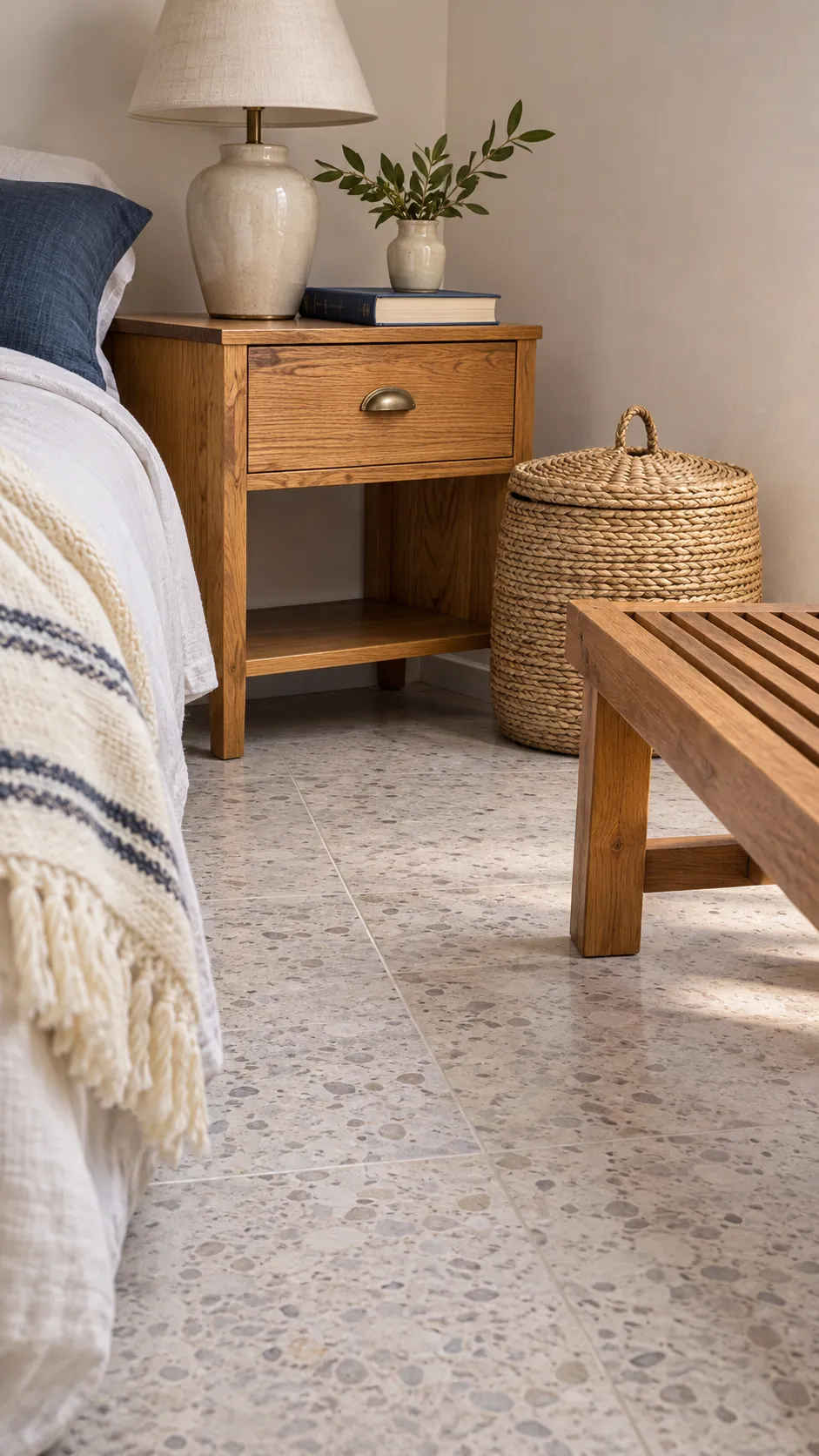
Wood nightstands, a low bench, or a woven basket can interrupt the cool visual field without covering it. Choose one wood family and repeat it in two or three places rather than mixing many unrelated finishes. Medium oak, walnut, and cane all offer visible grain that makes smooth tile feel like a deliberate counterpoint.
Add an Upholstered Landing Spot
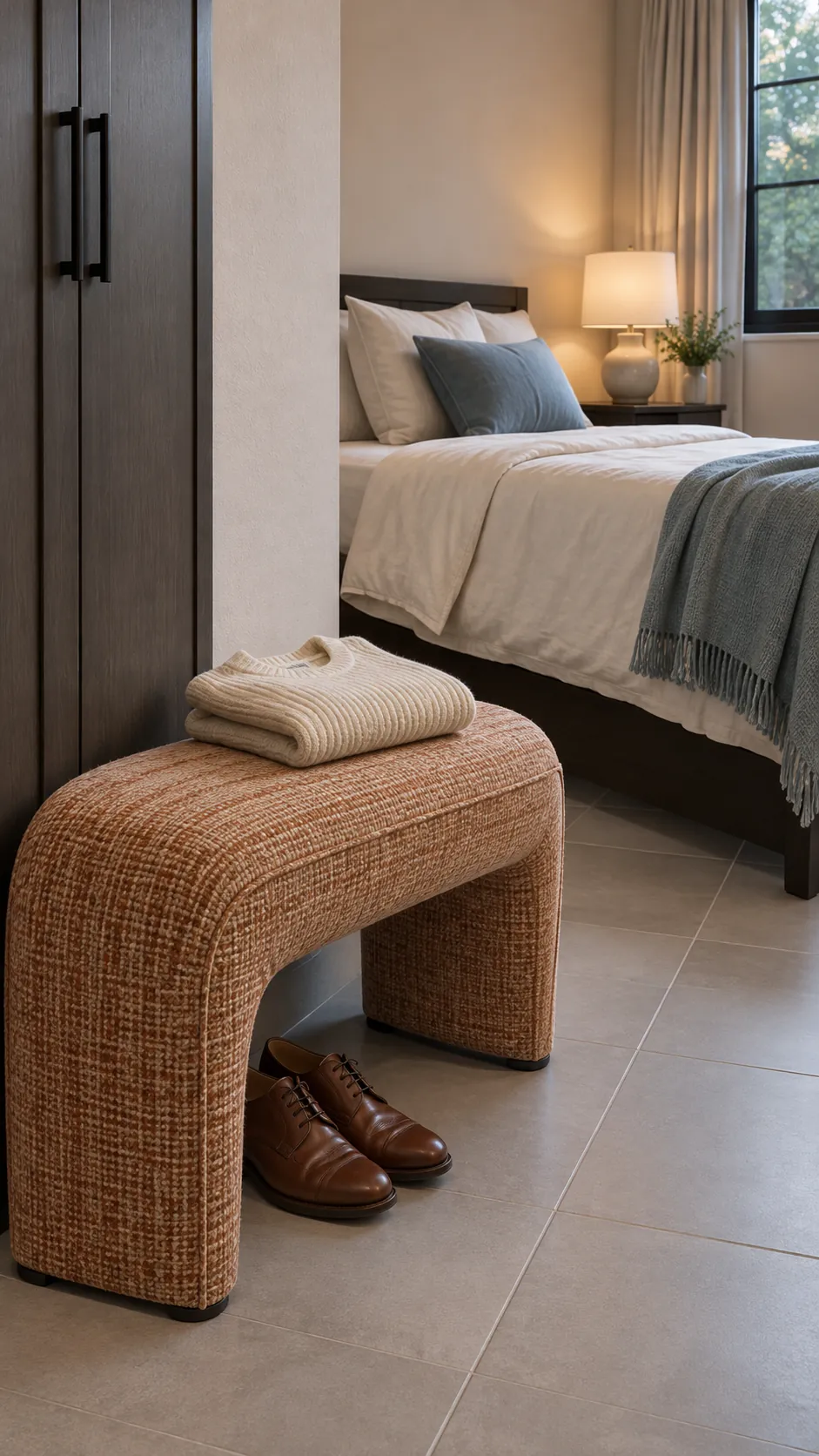
A padded bench or compact chair gives the room a soft shape that tile cannot provide. Put it where you can sit to dress without narrowing the main route around the bed. A washable woven upholstery in a warm neutral works harder than a delicate fabric in a room where dust is easy to see.
Choose a Wall Color With Gentle Warmth
Cool white walls beside pale tile can make the room read as stark, especially under bright bulbs. A creamy white, muted clay, soft mushroom, or dusty rose adds warmth while remaining restful. Test a large sample at morning and evening because tile reflections can shift the color more than a small swatch suggests.
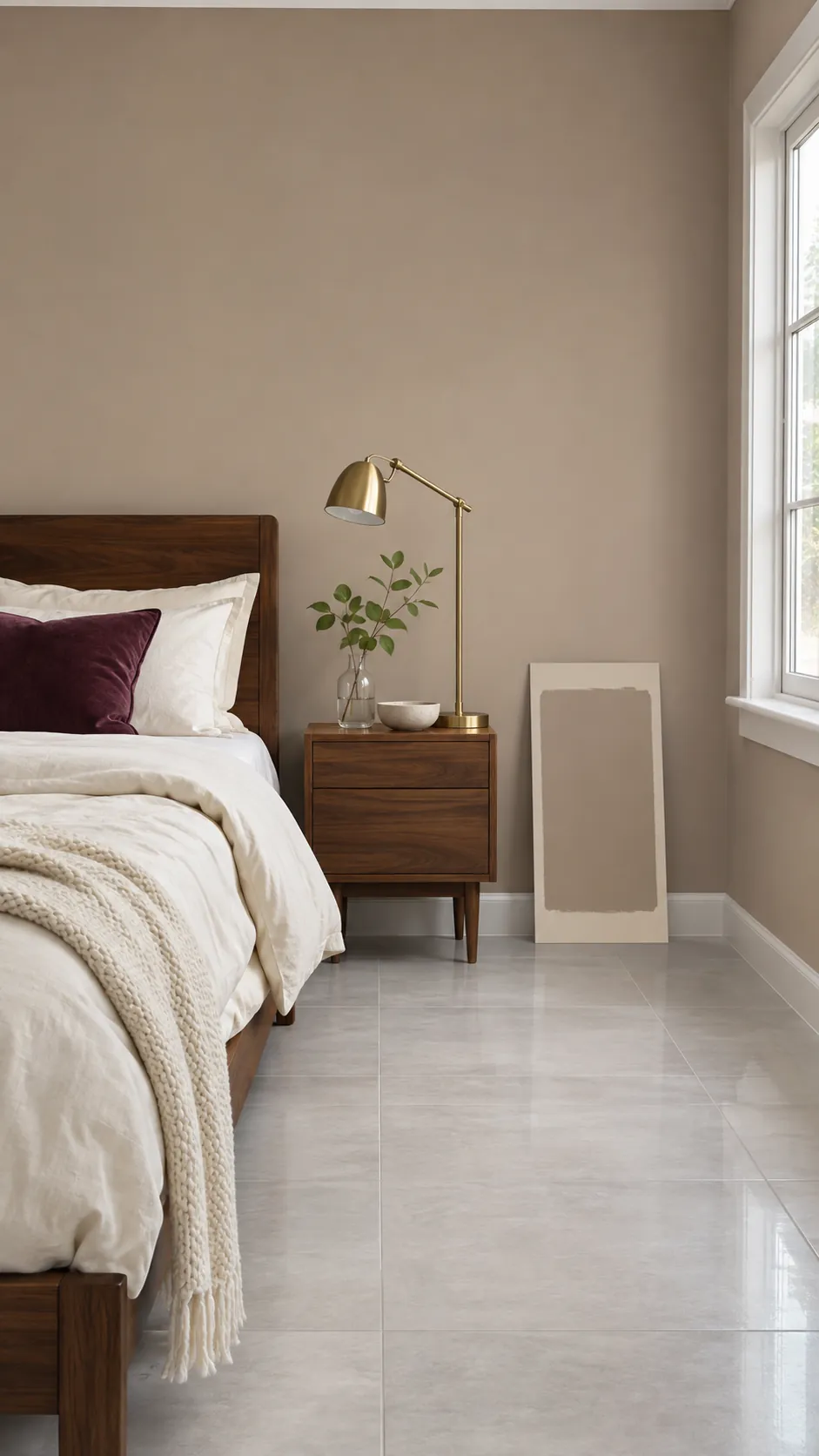
Repeat One Warm Accent Color
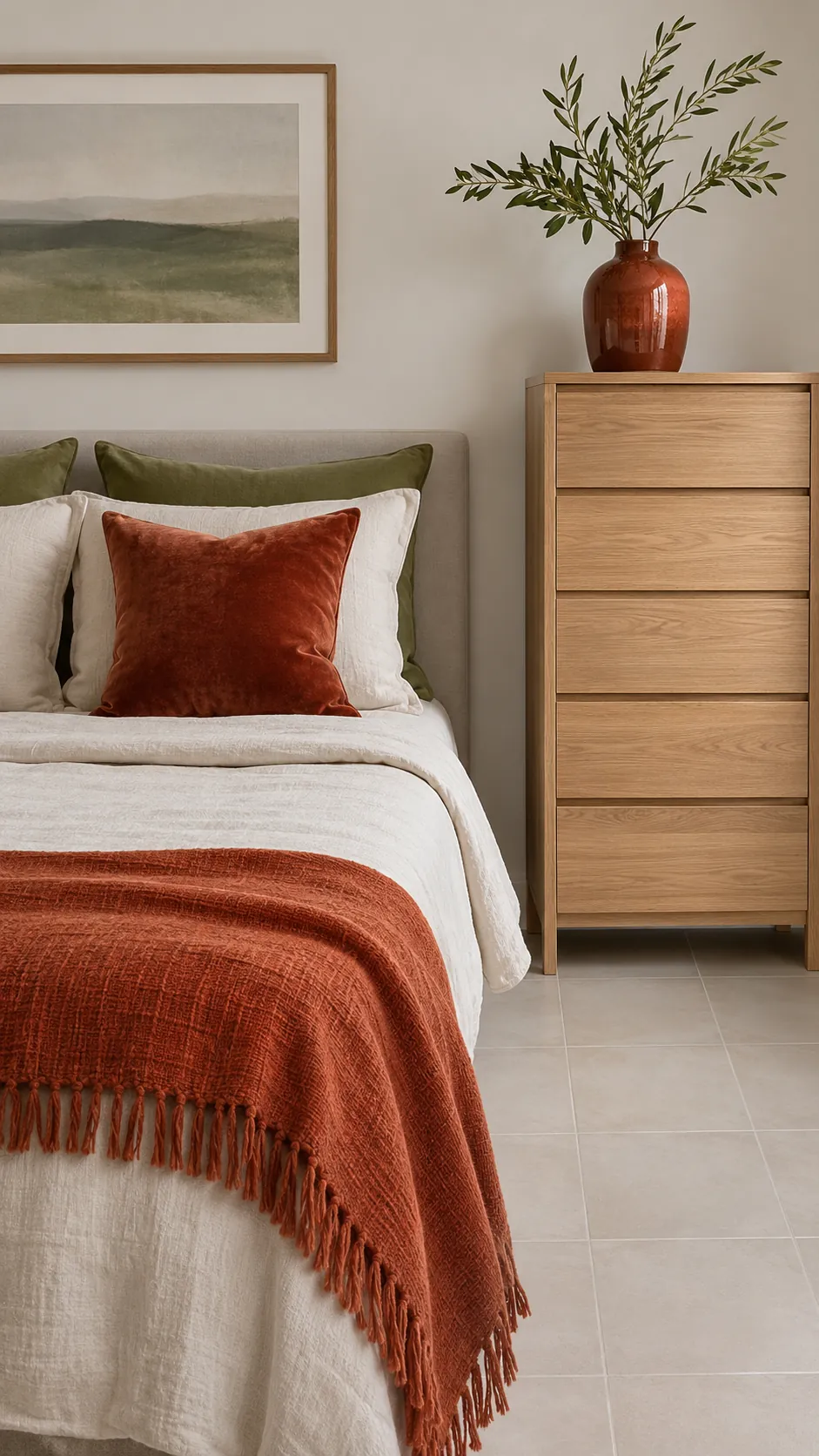
Choose one grounded accent such as rust, olive, tobacco, or muted plum and place it at three different heights. A cushion, a bedside object, and a small textile can create the repetition without filling the room with decor. This simple rhythm pulls attention through the whole room instead of leaving the eye fixed on the floor.
Soften Sound With Fabric Surfaces
Hard floors can make footsteps and small noises feel more noticeable at night. Curtains, a fabric headboard, a rug pad, and a filled bookcase each reduce a different reflective surface. You do not need acoustic panels when ordinary bedroom layers already make speech and movement sound less sharp.
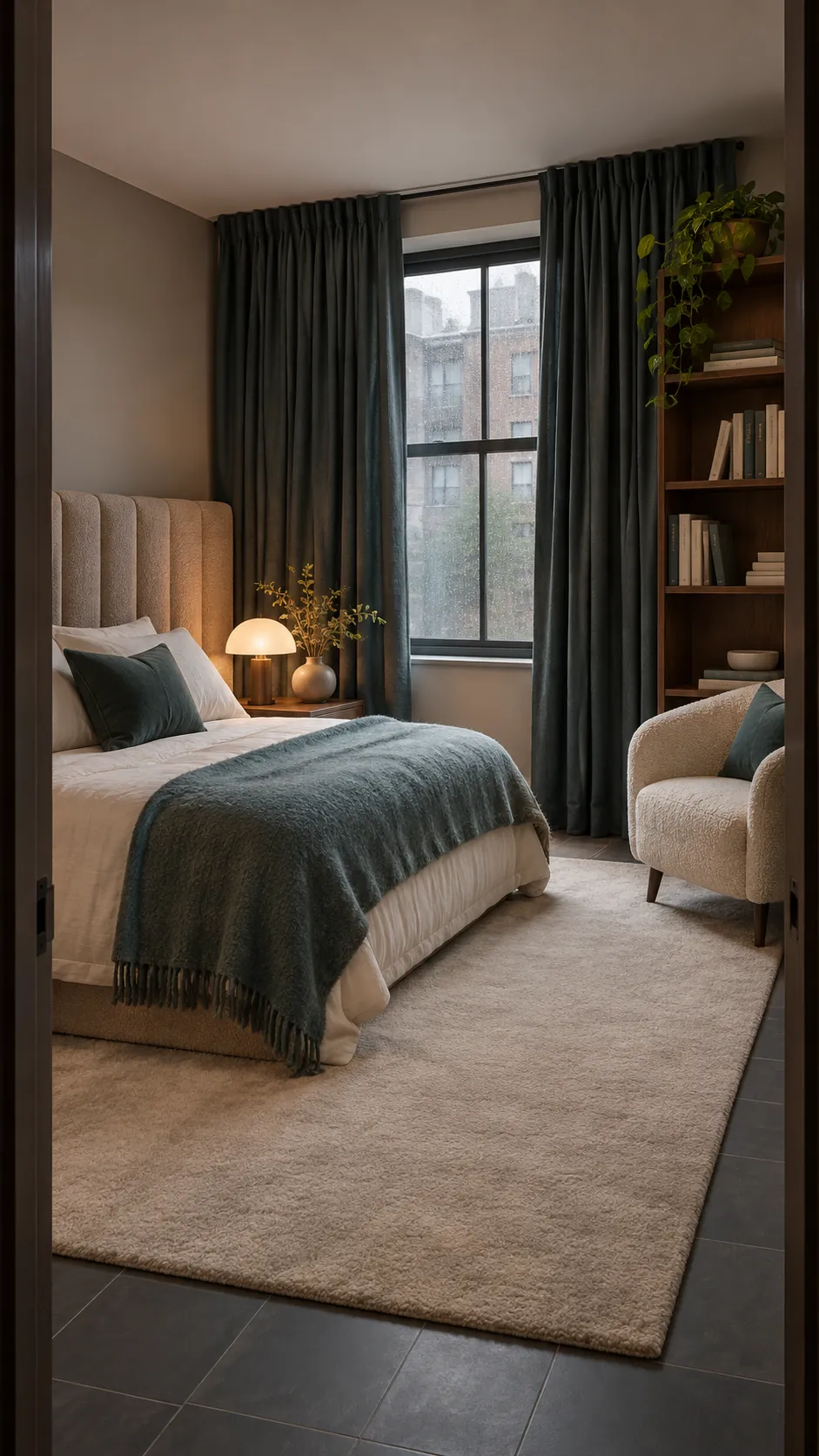
Create a Warm Route for Bare Feet
Think about the path from the bed to the wardrobe and bathroom rather than trying to cover the complete floor. A bedside rug and a second small washable mat can protect the two places where cold tile feels most distracting. Leave a visible band of tile between them so the arrangement looks planned and remains easy to clean.

Use Baskets to Hide Visual Clutter
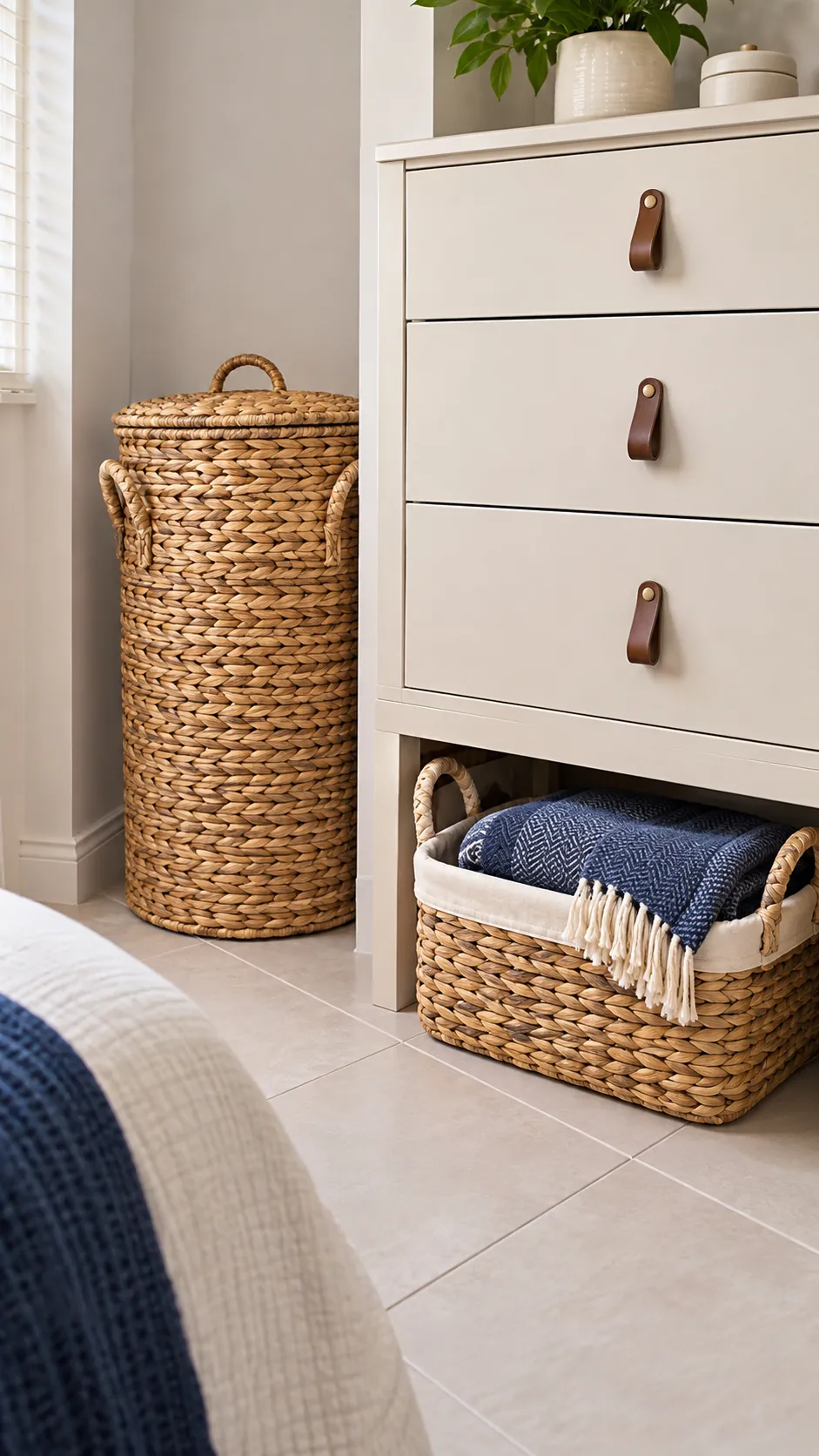
Tile makes dust, cords, and scattered clothes more visible because the surface has few places for the eye to rest. Put a lidded hamper near the dressing area and use one open basket for spare blankets. Natural fiber baskets add texture, but smooth lined interiors prevent delicate fabric from catching on rough strands.
Make Rental Changes Easy to Reverse
Renters can build warmth with freestanding lamps, washable rugs, removable curtain hardware, and art leaned on a dresser. Avoid adhesive products on tile or grout unless the lease and manufacturer both allow them. Photograph the original room and store every removed fitting together, which makes the final reset much simpler.
Leave Some Tile Visible on Purpose
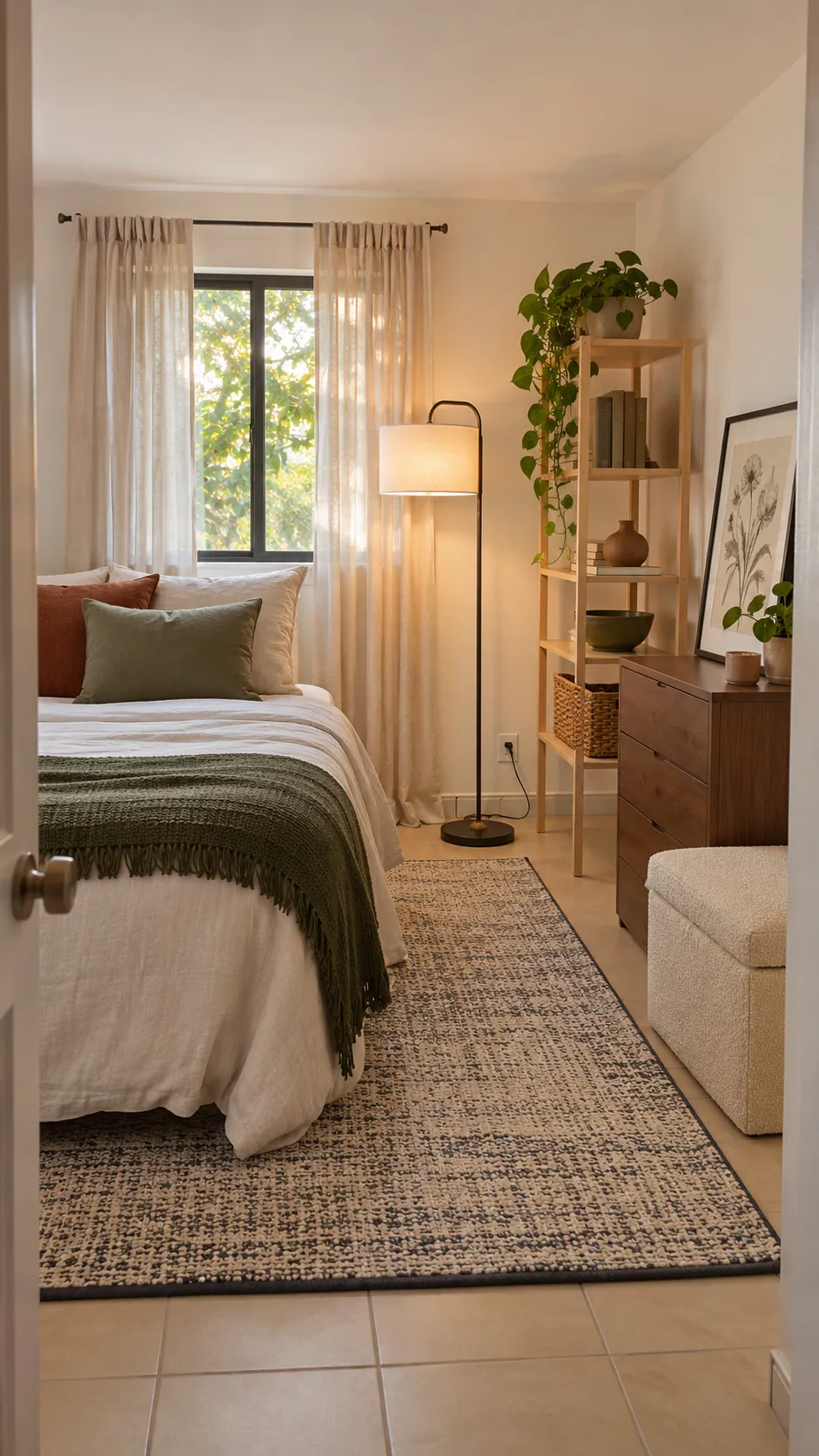
A cozy bedroom does not require the tile to disappear. Show a clean border around the rug and repeat one floor color in the bedding or pottery so the surface belongs to the scheme. The result feels balanced because hard and soft materials support each other instead of competing for control.