
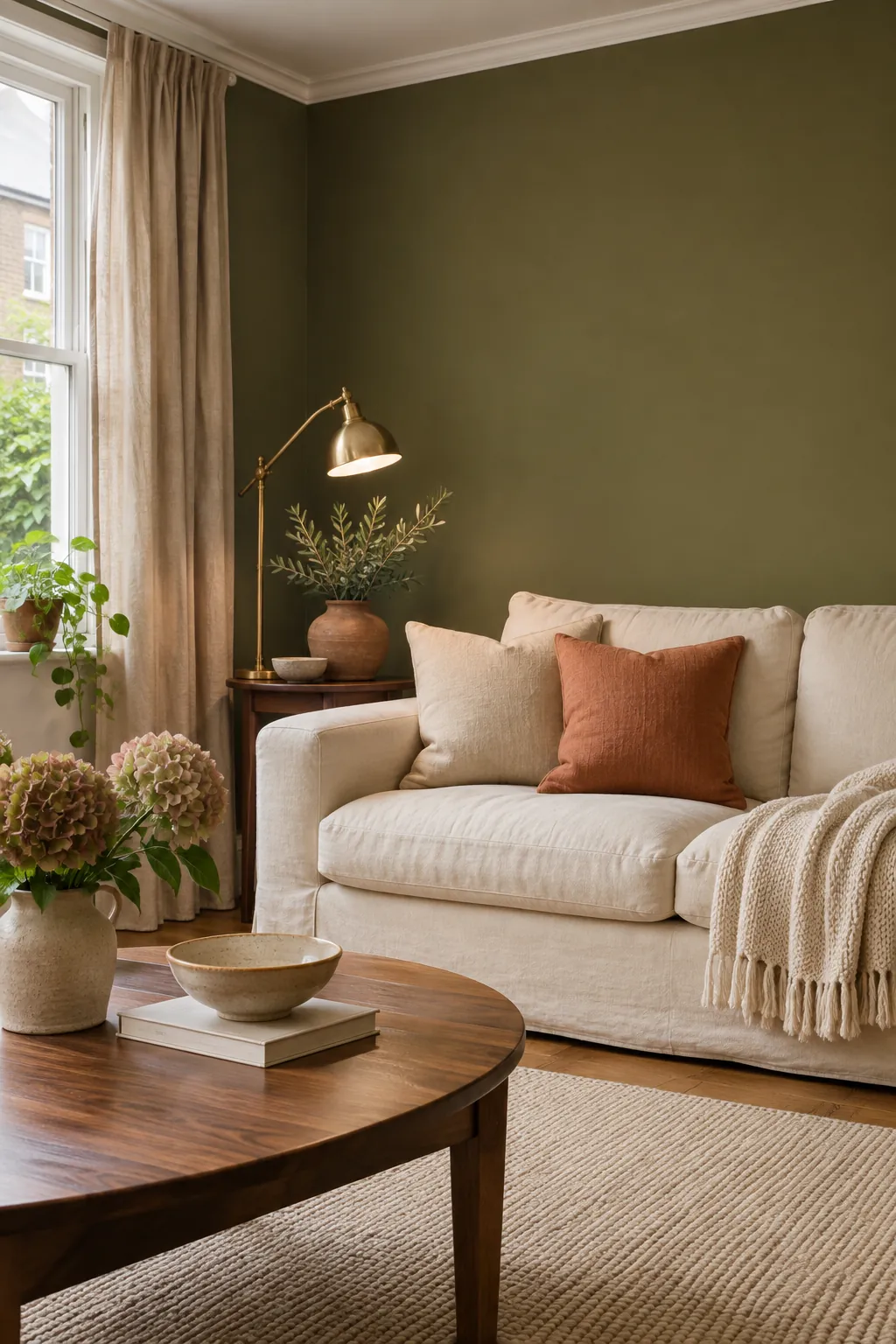
Warm white, cream, camel, walnut, terracotta, muted burgundy, and dusty blue can all work with olive green walls. The safest palette combines one light neutral, one natural material, and one restrained accent. Olive already contains yellow and brown, so a room can become murky when every other surface is dark or similarly muted.
Start with the floor and largest furniture. Those fixed colors decide whether olive needs more lightness, more warmth, or a cooler note for balance. Judge every sample in the room because daylight can make the same olive look golden, gray, or nearly brown.
Pair olive with a warm white
Olive is usually a warm green, so warm white and soft cream are more dependable than a sharp blue white. They brighten the room without making the green look dirty. Use the light neutral on adjacent walls, ceilings, curtains, or large upholstery when the olive covers several walls.
Compare the white directly beside the paint. A neutral that looks pleasant alone may reveal pink or gray when it touches olive. The right white stays quiet and lets the green retain its earthy character.
Add light values when the floor is dark
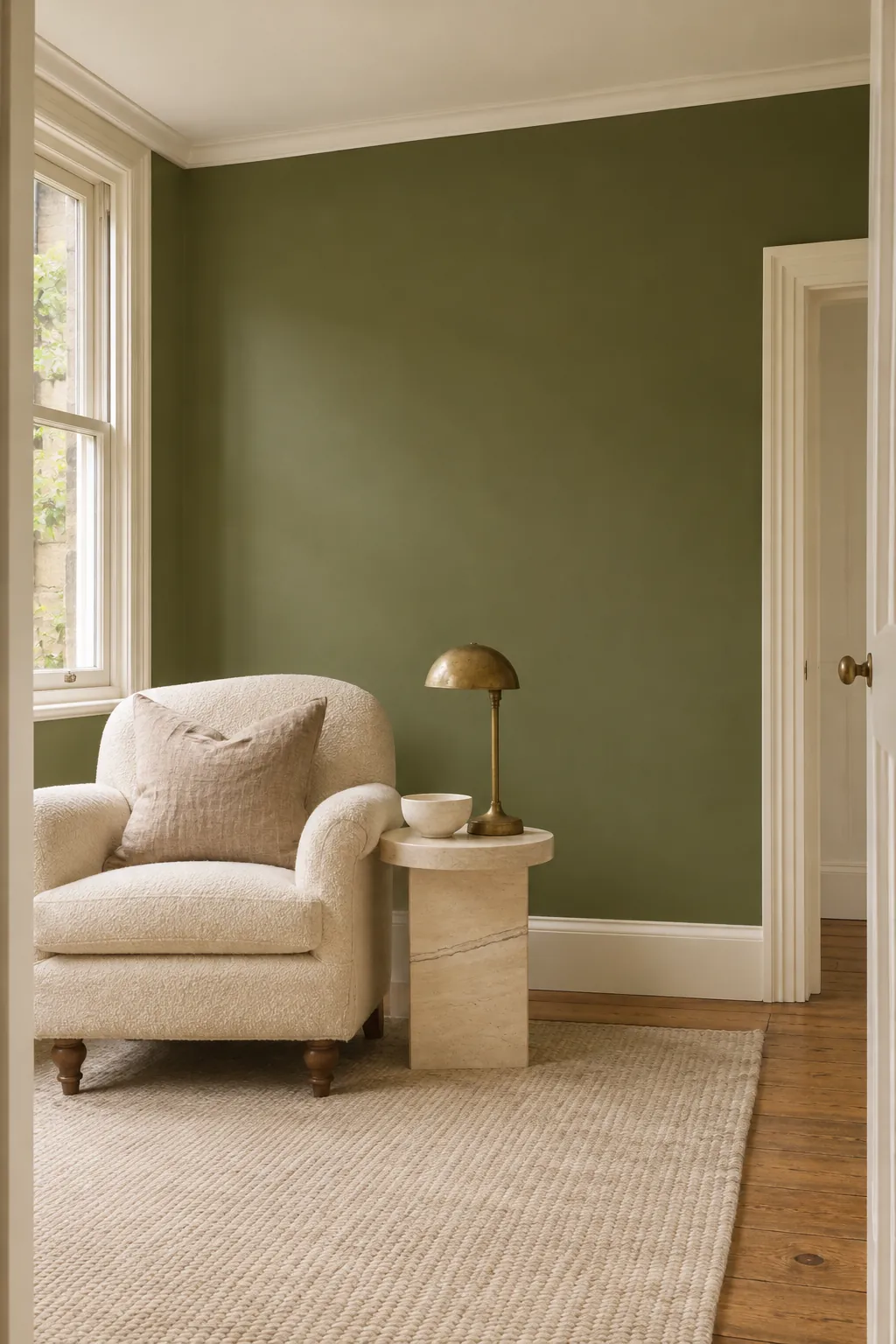
Dark wood floors and olive green living room paint can feel rich, but they need a large pale surface between them. A cream rug, flax sofa, or warm white curtain prevents the walls and floor from joining into one heavy band. Keep some visible floor so the room still has depth.
Use dark furniture selectively. One walnut cabinet can reinforce the earth tones, while several dark pieces may reduce contrast too far. Pale oak, cane, or cream painted furniture can lift the composition without fighting the wall.
Choose wood tones with visible contrast
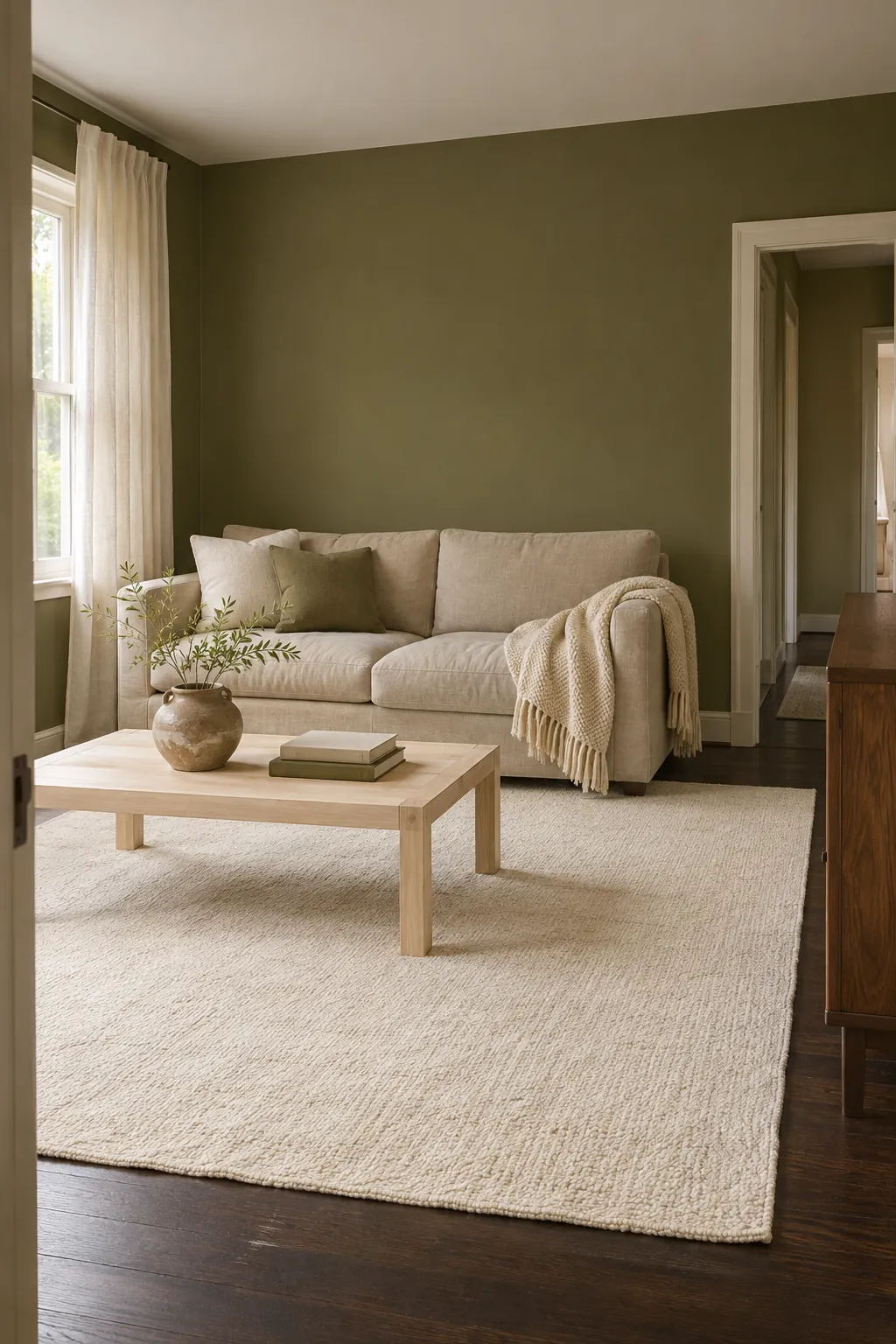
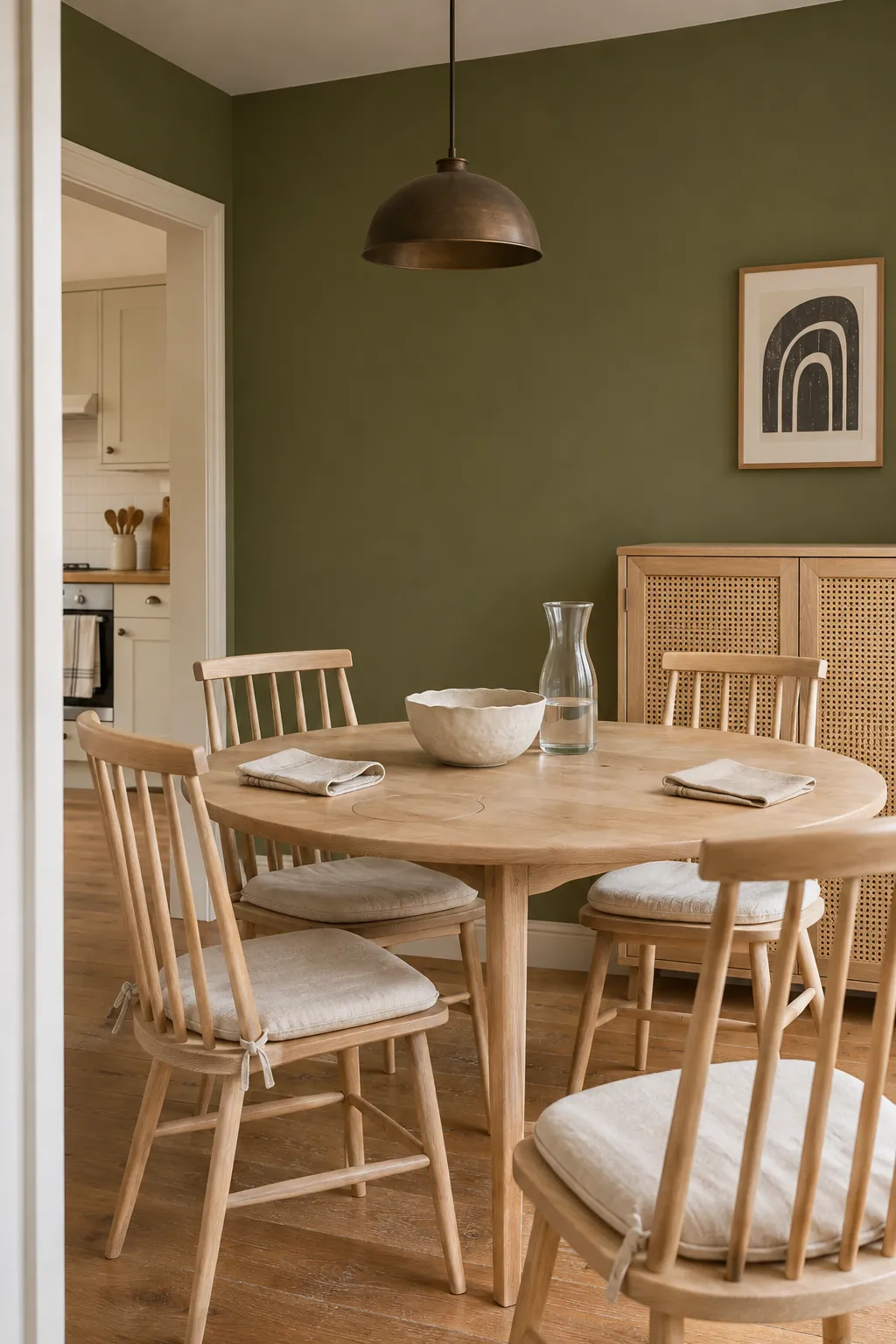
Wood tones with olive green walls feel natural because both carry warmth. Pale oak makes the room lighter and more relaxed. Walnut creates a deeper, traditional result. Honey oak can work when the olive is gray enough to keep the palette from turning overly yellow.
Repeat one wood family rather than mixing many similar browns. A table, frame, and small lamp base are enough to make the connection deliberate. Add cream or black in small amounts to define the edges.
Use red through earthy versions
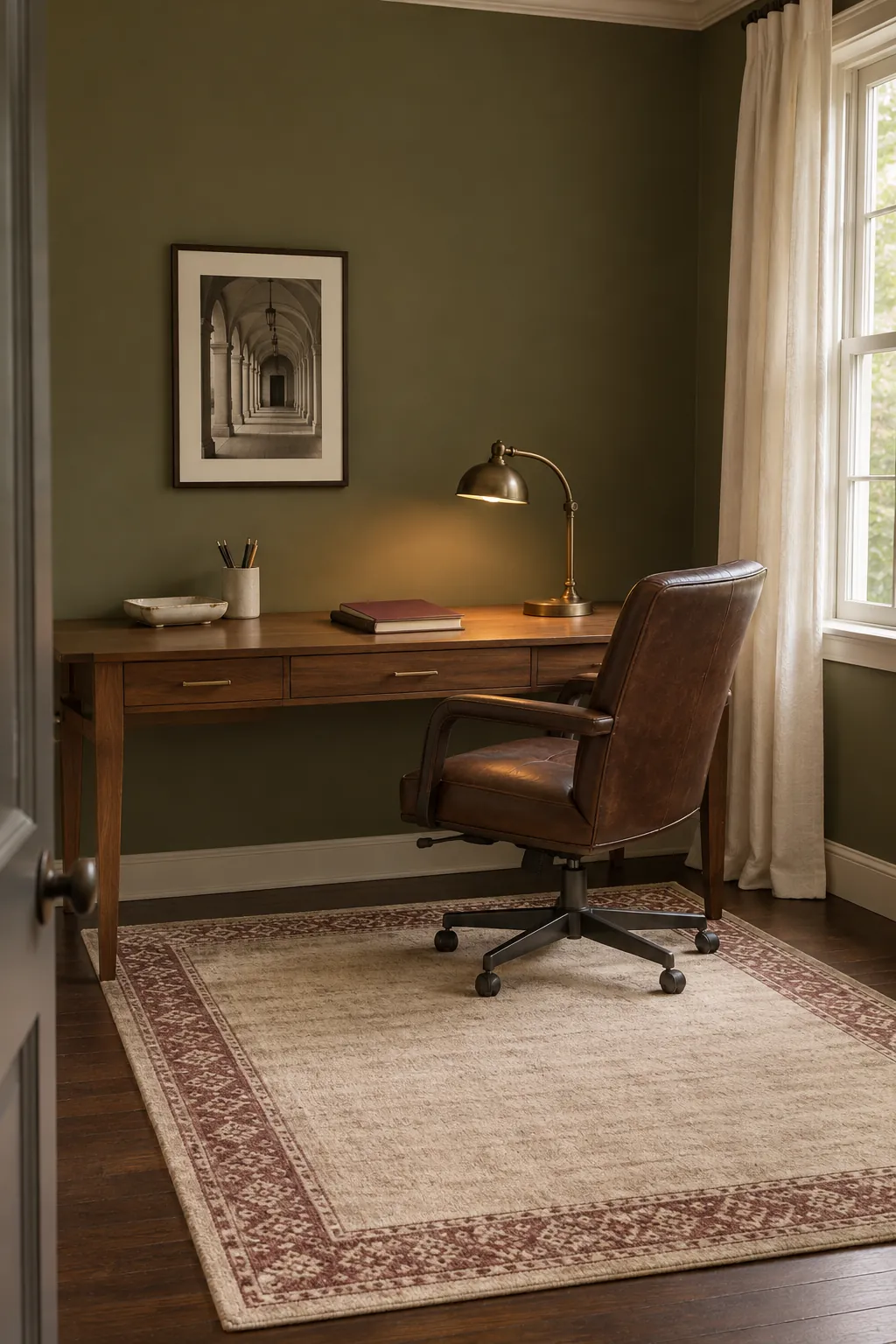
Bright red can make olive feel themed, but muted burgundy, rust, brick, and terracotta often work beautifully. These colors share the same earthy depth. A patterned rug can include olive, cream, and rust, provided one of those colors connects to the sofa or floor.
Let the rug carry several values. A mostly dark red rug on dark flooring may add weight, while a design with a cream ground creates separation. Repeat the warm accent once in a cushion or ceramic object and stop there.
Avoid pairing olive with unrelated mint
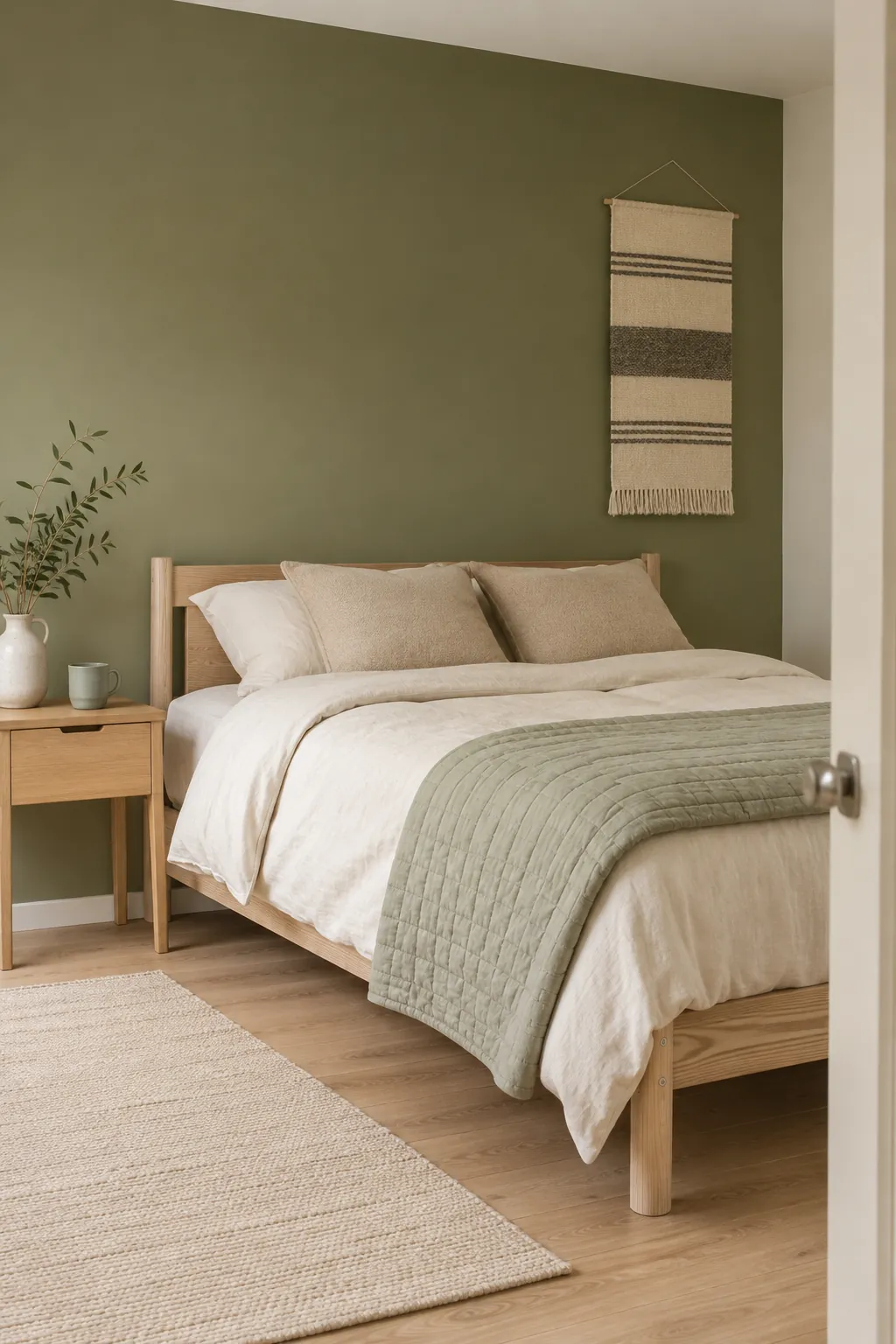
Mint and olive can clash because one feels fresh and cool while the other feels muted and warm. If you want two greens, choose shades with a shared undertone and a clear difference in value. A pale gray sage is usually easier beside olive than a bright mint.
Another option is to keep the second wall warm white and repeat green through plants or textiles. The olive remains the main color, and the room gains variation without a competing painted surface.
Choose curtains that bring back light
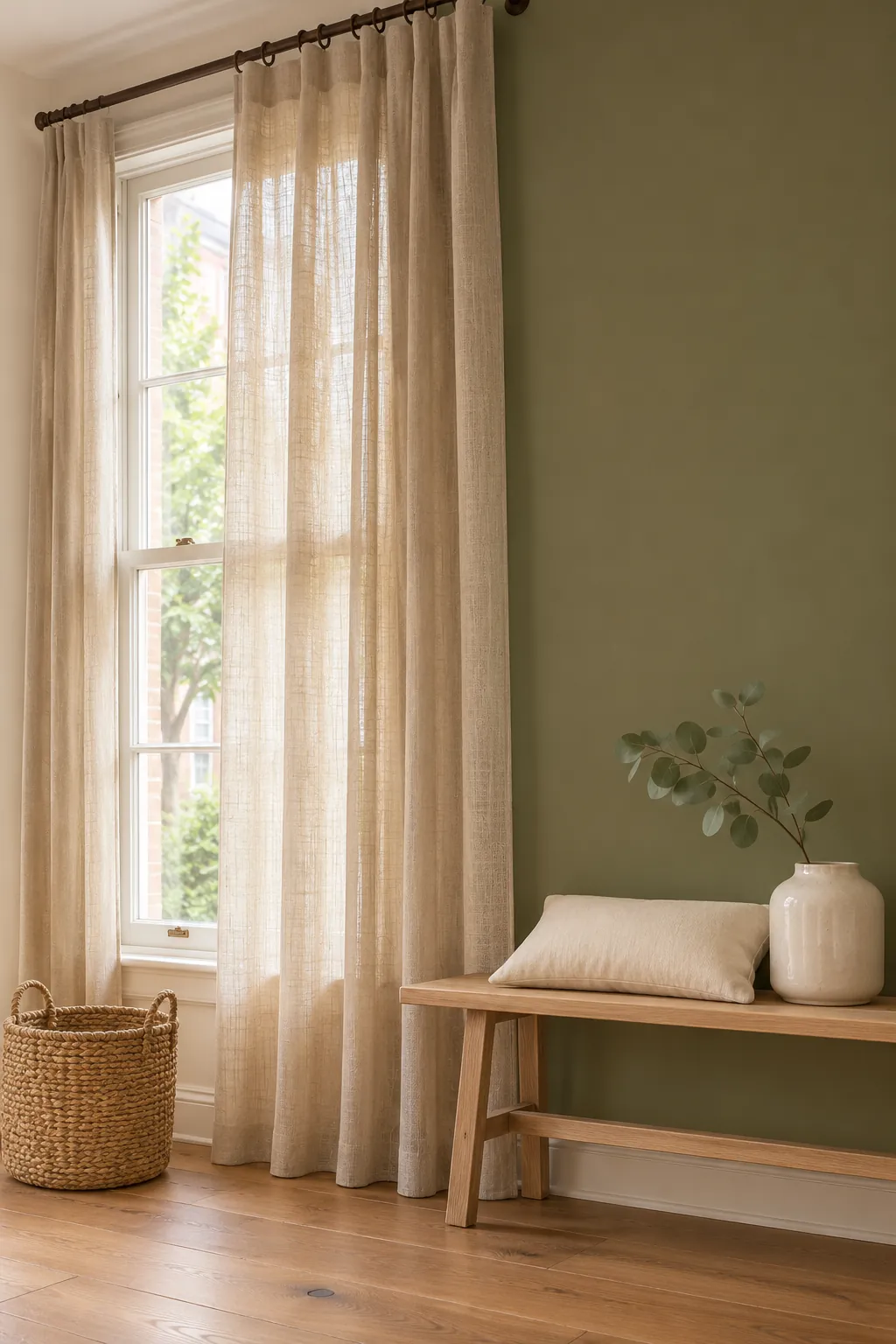
Curtains for olive green walls work best when they offset the wall rather than match it. Natural flax, warm white, oatmeal, and pale mushroom are reliable. Dusty blue can add cool contrast in a bright room, while a small olive pattern can connect the fabric without turning the window into another solid green block.
Test the fabric while light passes through it. Daylight makes thin neutral curtains appear warmer, and a fabric that seems gray on a table may become cream at the window.
Carry one neutral into adjacent rooms
Connected rooms do not need the same paint. Repeat one warm white, wood tone, or floor material across the doorway, then let olive be the distinctive room color. This creates continuity without forcing every nearby color to share the same green undertone.
Test the full palette before buying
Place the olive sample beside the floor, main upholstery, curtain fabric, rug, and proposed neutral. View the group during the dullest part of the day and again under lamps. If the palette still has a clear light value, a middle value, and a controlled dark note, the room will feel layered rather than murky.