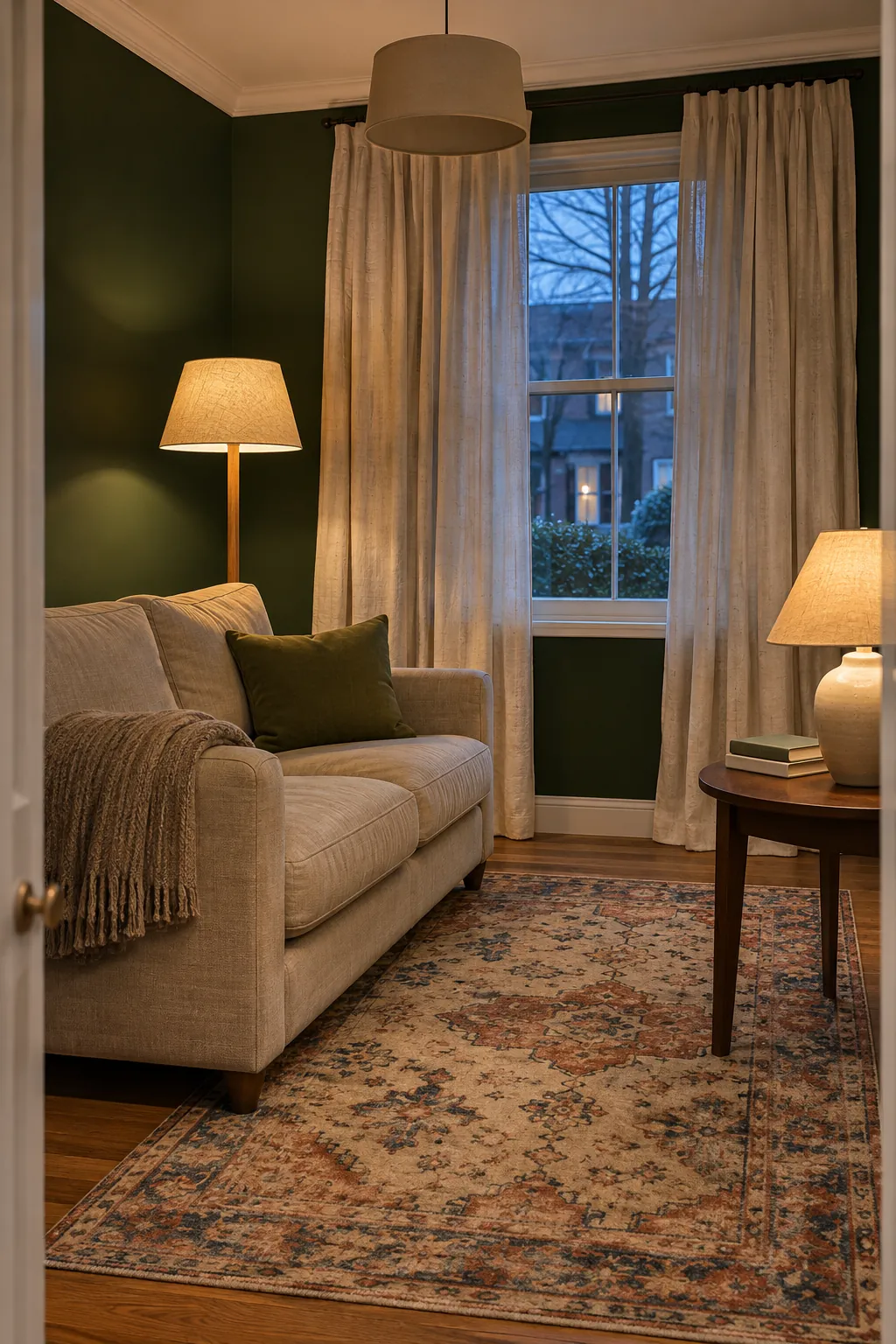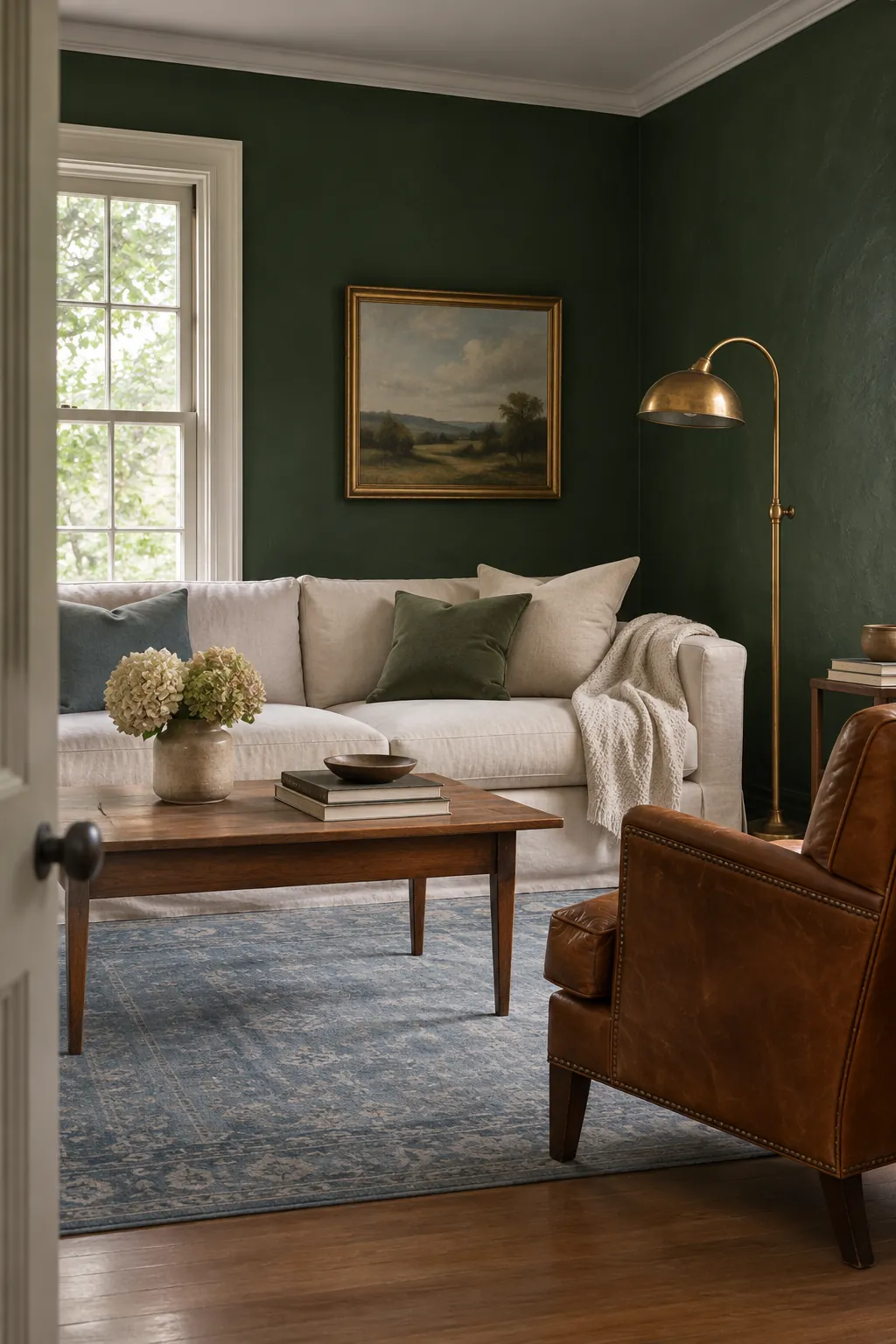
Forest green can make a room feel sheltered and elegant, yet it absorbs enough light that the wrong companions can turn it flat or heavy. The most successful schemes give the eye a pale resting place, repeat warmth from the floor or furniture, and use dark accents in smaller areas than the wall itself.
Begin with light and undertone
Forest green may lean blue, yellow, or slightly gray. Compare the wall with cream and bright white paper, then look again after sunset under your normal lamps. A blue leaning green often feels formal beside crisp stone colours, while a warmer green settles naturally with cream, camel, and aged wood.
Notice how much daylight the room keeps throughout the day. In a dim northern room, reserve more surface area for pale curtains, ceiling, rug, and upholstery. A bright room can carry deeper furniture and a more dramatic rug without losing definition.
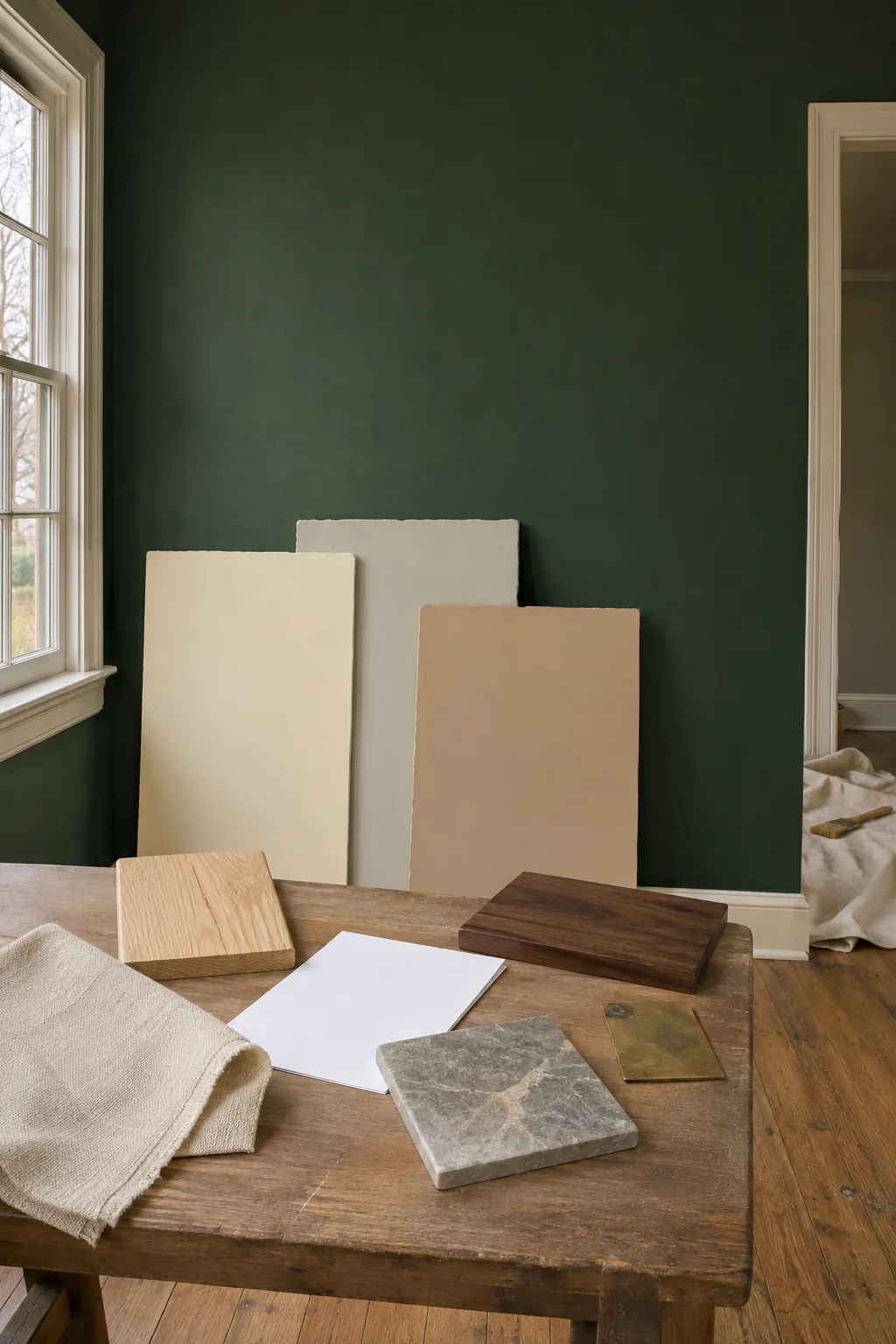
Cream and warm white create contrast without glare
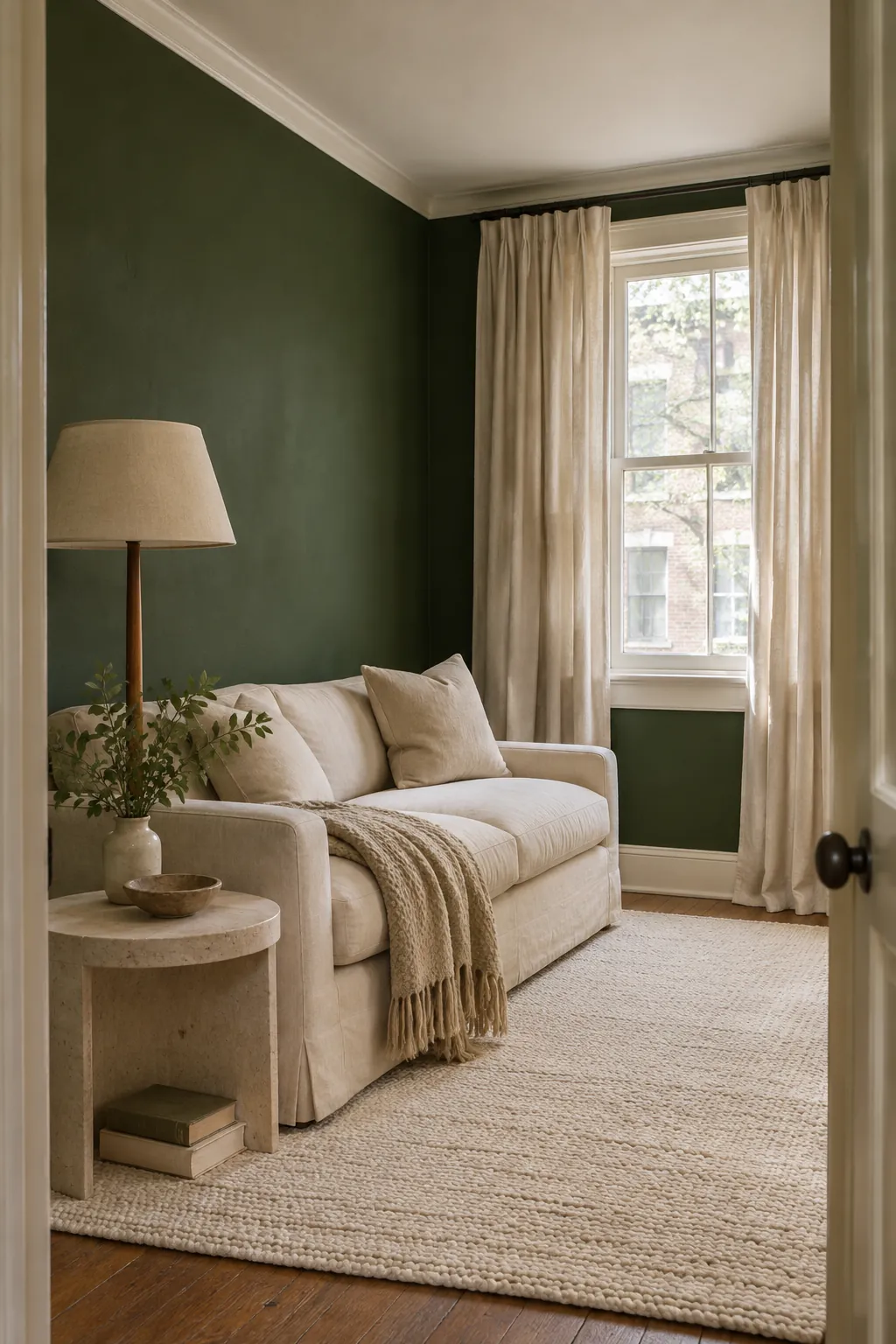
Cream is one of the easiest forest green wall colour combinations because it lifts the room while keeping its warmth. Use it across large surfaces such as a sofa, full curtains, bedding, or a broad wool rug. Warm white trim can sharpen the architecture without looking icy.
Pure brilliant white creates stronger contrast and may make a yellow leaning forest green appear muddy. Test the actual trim colour beside the paint. When the ceiling and trim cannot change, repeat their white in a lampshade or textile so it feels connected to the room.
Natural wood and cognac leather add warmth
Wood tones with forest green walls change the character of the room. Pale oak makes a small room feel lighter, walnut creates a tailored contrast, and aged pine supports a relaxed country mood. Mixed woods can work when one tone dominates and the other appears again in a smaller object.
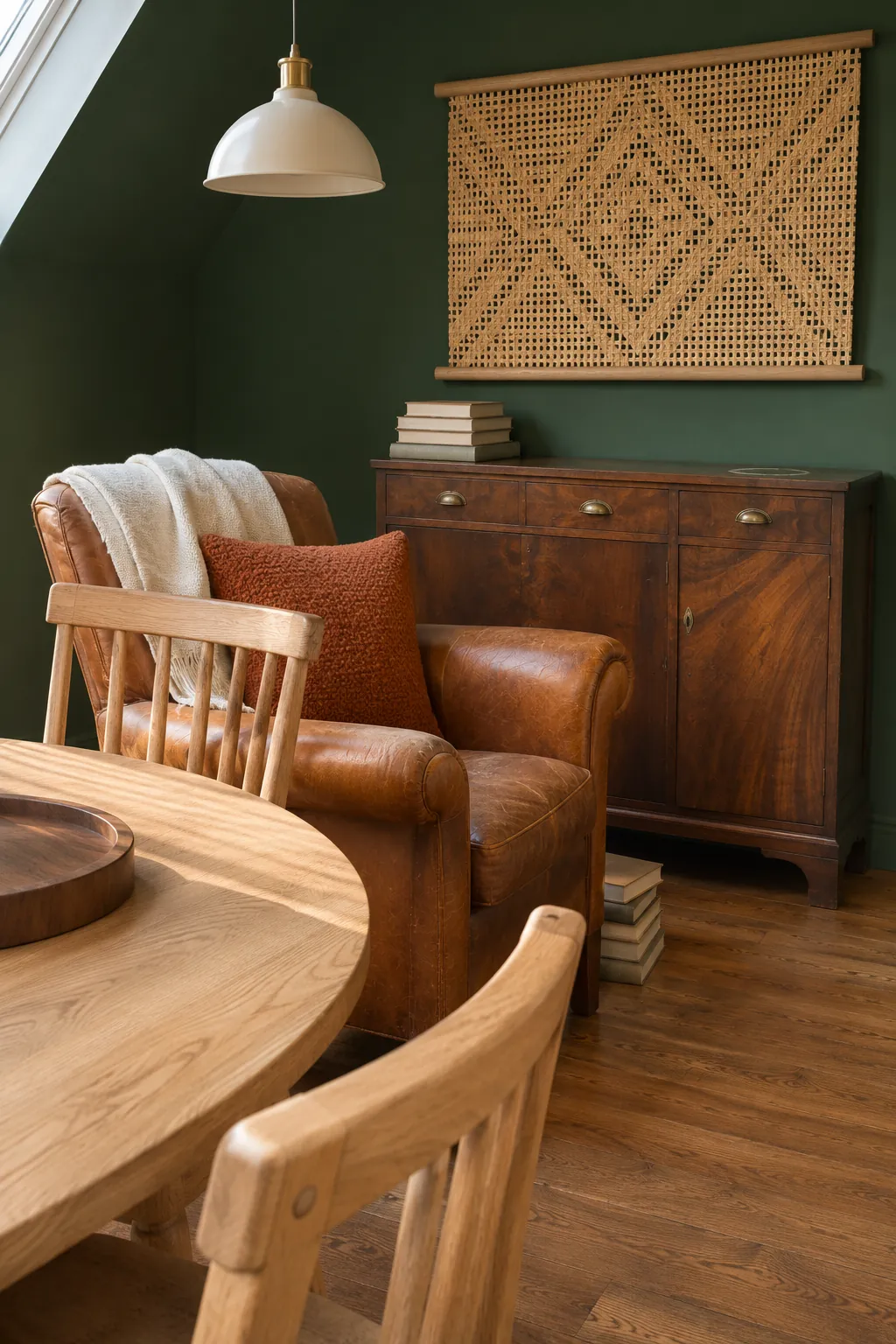
Cognac leather is useful furniture with forest green walls because its orange brown warmth sits clearly against the cool depth of green. Keep surrounding textiles in cream, oatmeal, or muted rust. Too many dark brown pieces can remove the light that the room needs.
Visible grain, woven cane, linen, and wool prevent the palette from feeling flat. Their small variations soften the solid colour of the painted wall.
Bring in muted pink, clay, or plum for softness
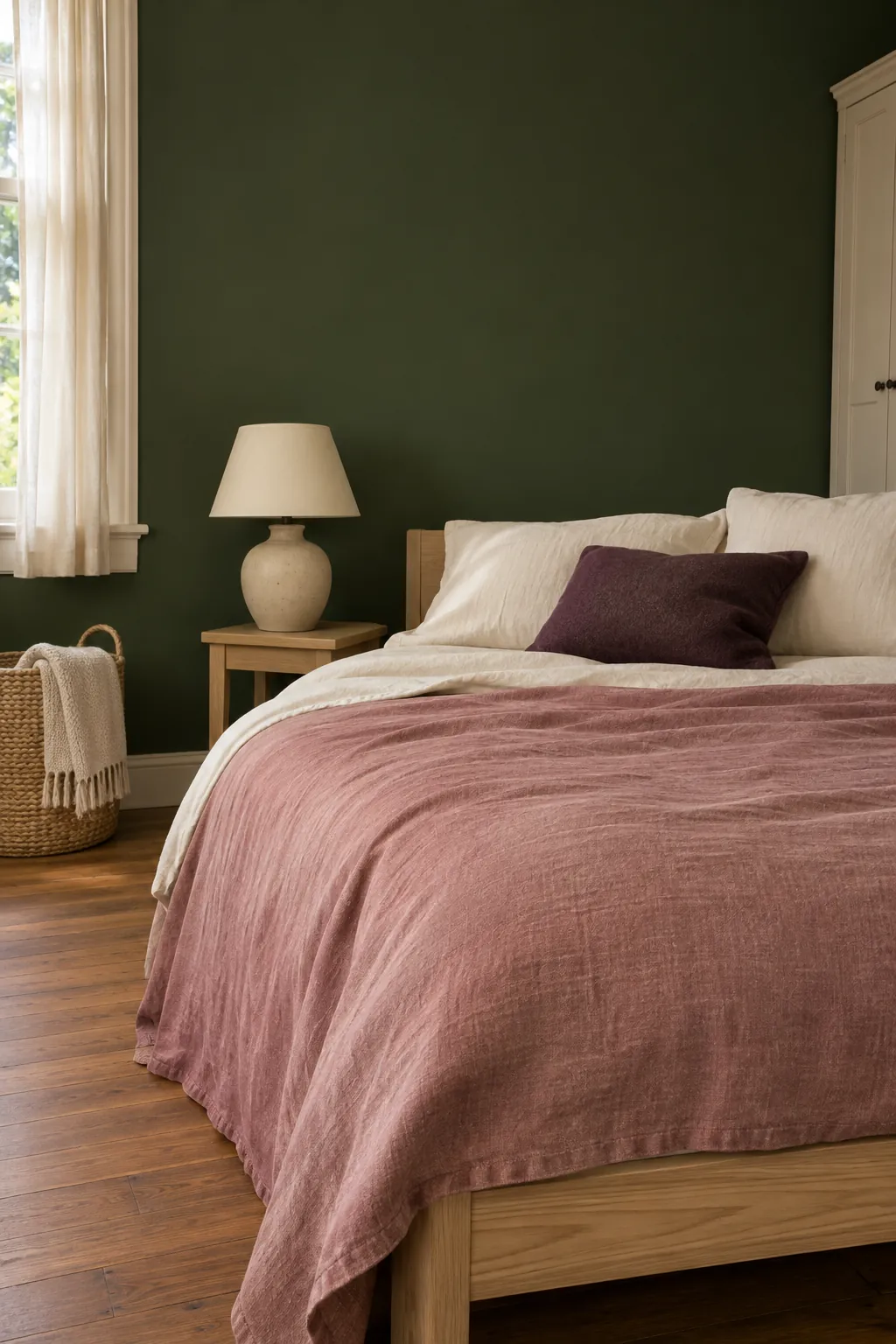
Dusty pink and faded clay soften forest green without weakening it. Use one on a chair, bed cover, or a few areas within a patterned rug. Muted colour matters because vivid red against deep green can look seasonal rather than restful.
Plum and aubergine create a moodier relationship. They suit a forest green bedroom with good daylight, especially when cream bedding separates the two dark colours. For a lighter result, choose a pale blush with a gray undertone and repeat it only once or twice.
Use blue, brass, and black as precise accents
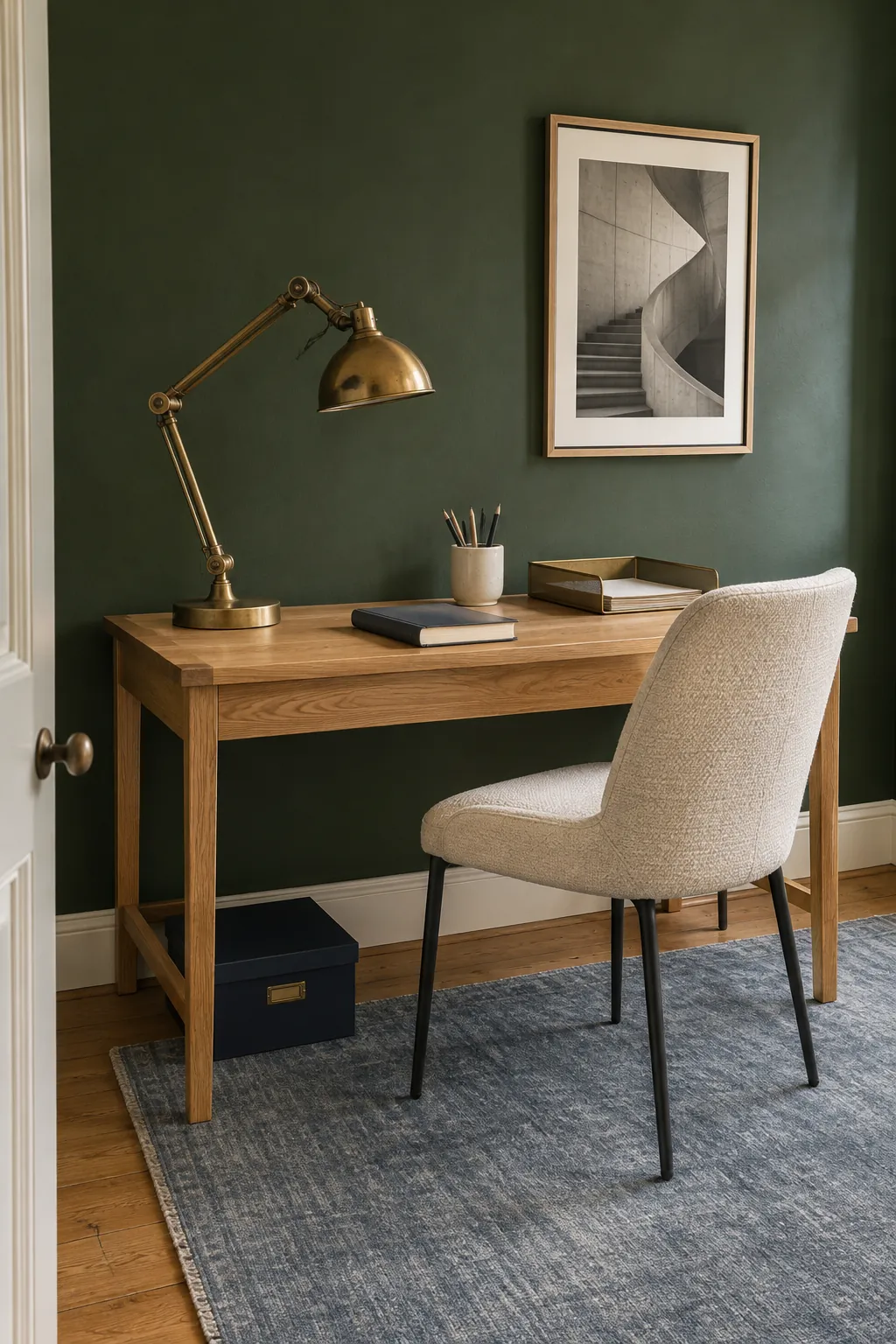
Muted navy and smoky blue can sit beside forest green when their values are different. A faded blue rug gives a dark wall a softer base, while a navy cabinet creates a more formal scheme. Add enough cream or pale wood between them so the colours remain distinct.
Aged brass brings a small point of warmth and reflected light. Use it on a lamp, handle, or narrow frame rather than across every fitting. Matte black gives definition to curtain rods and furniture legs, but large black surfaces can disappear against the wall and make the room feel crowded.
Finish with curtains, rugs, and layered light
Curtains for forest green walls cover a large visual area. Unbleached linen or warm white cotton keeps the room open, while curtains close to the wall colour create an enveloping effect. If you choose matching green, vary the value and texture so the window does not disappear.
Rugs for forest green rooms can repeat a little green, but they should also connect the floor and sofa. Cream with charcoal lines suits a modern room. A faded pattern containing rust, beige, and blue can unite mixed furniture without adding one more isolated colour.
Use more than one light source after dark. A shaded floor lamp, a table lamp, and gentle ceiling light reveal texture at different heights. Choose warm neutral bulbs that keep cream clear and forest green recognisable. The goal is depth with visible edges, not a dark room filled with bright points.