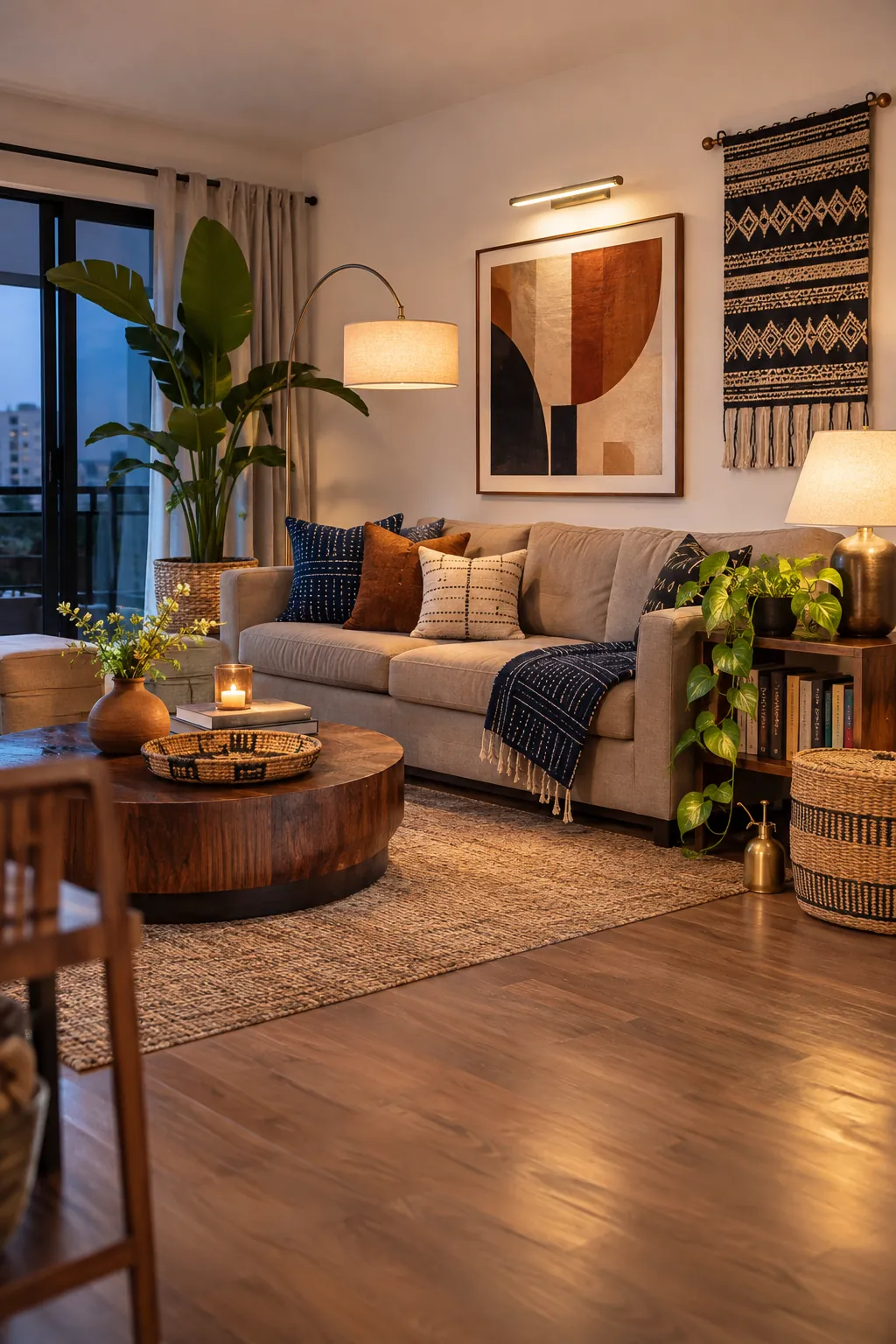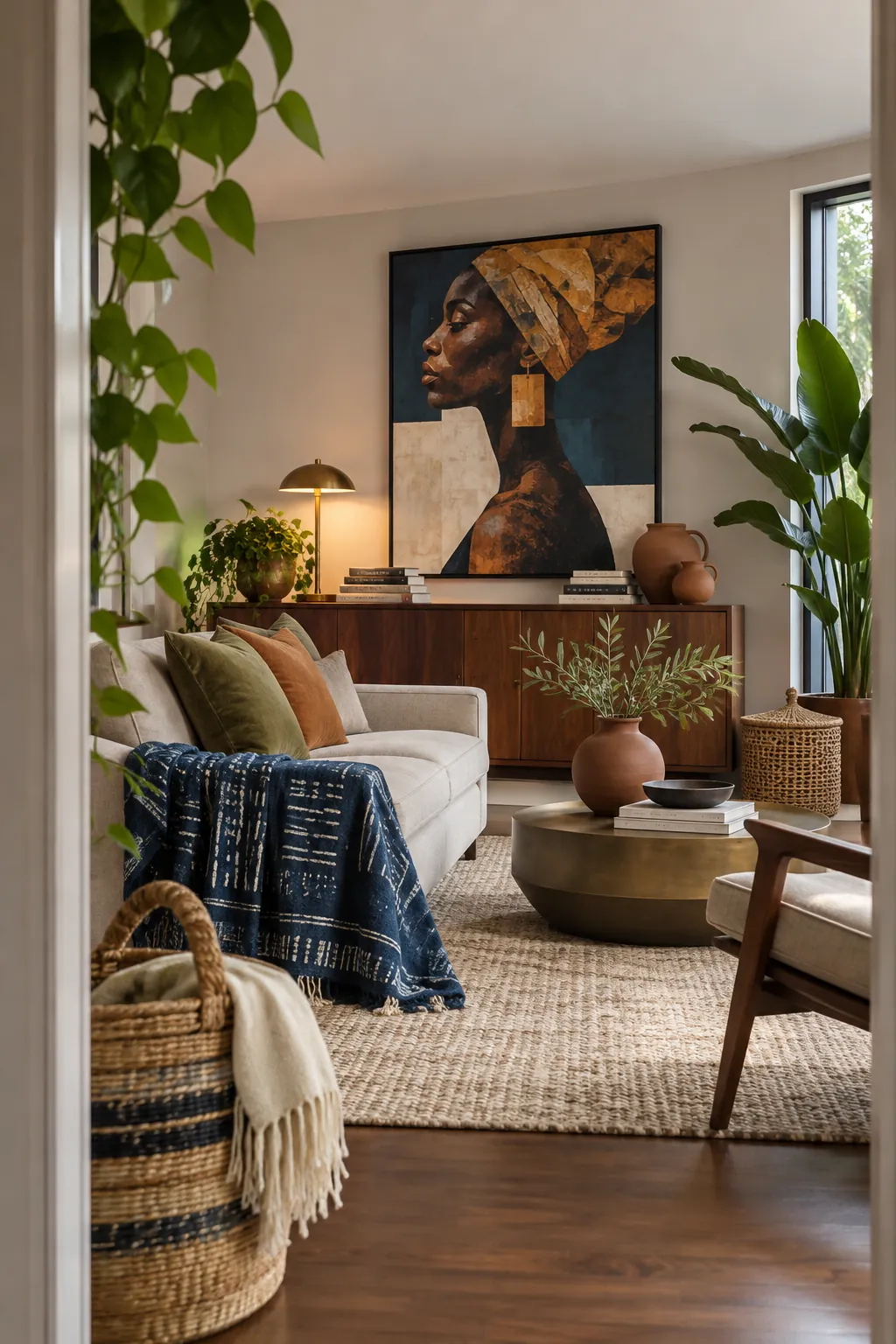
A room gains identity through relationships, not through a shopping list of symbols. Keep the furniture that already supports daily life, then add art, textiles, books, plants, and useful craft with clear origins and personal meaning. The result should feel like a modern home shaped by real interests, not a set built around a broad label.
Build the Palette from the Furniture You Own
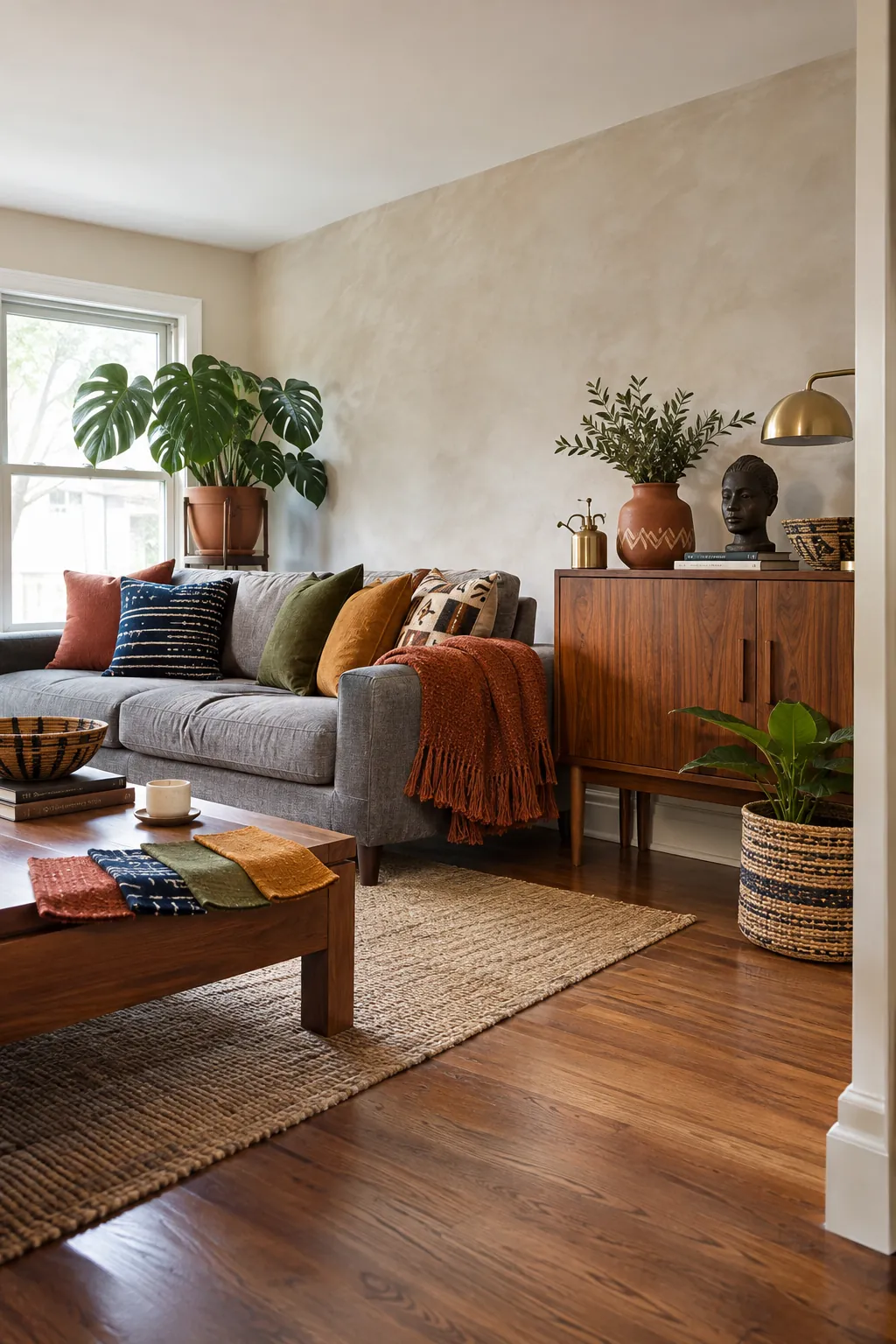
Start with the sofa, cabinets, and floor that already occupy the room. Pull one warm neutral from the largest piece, then add clay, indigo, olive, or ochre in smaller layers. This approach makes new textiles and art look connected without disguising useful furniture.
Choose One Textile with a Known Origin
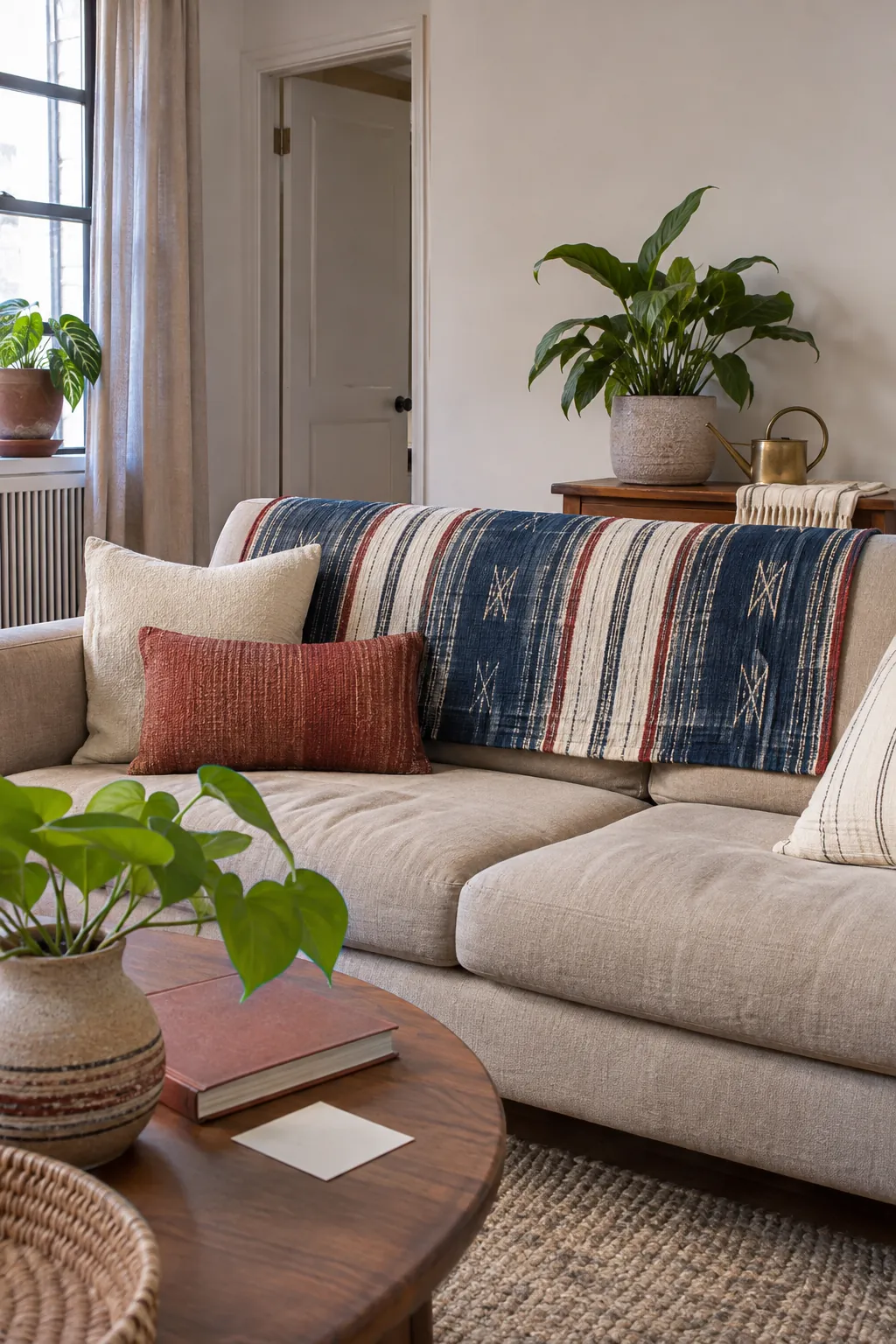
A single handwoven textile can carry more meaning than several anonymous patterned cushions. Learn who made it, where it came from, and how the original object is meant to be used before placing it in the room. Display it where its weave and scale remain visible, then let nearby fabrics stay quieter.
Center Contemporary African Art
Art should reflect an artist and a point of view, not a vague continental theme. Choose a work by a contemporary African or African diaspora artist whose practice you can name and support. Give the piece generous space above the existing sofa or console so it leads the room instead of competing with many small decorations.
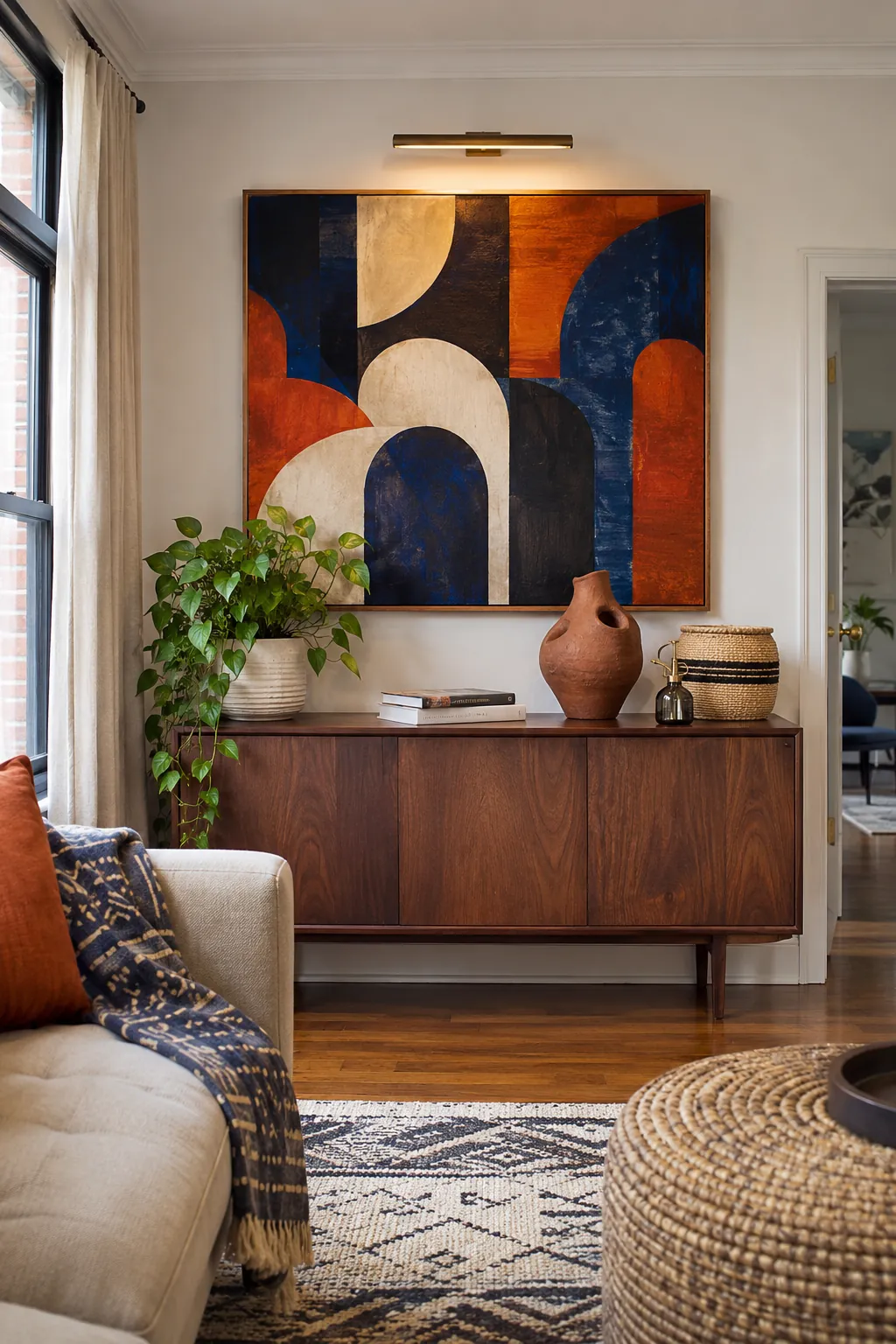
Add Useful Baskets and Artisan Forms
A lidded basket can store throws or media supplies while adding hand worked texture. Pair it with one carved wood bowl or clay vessel that has a known maker or source. Useful objects keep the room grounded and avoid turning craft into a row of untouchable props.
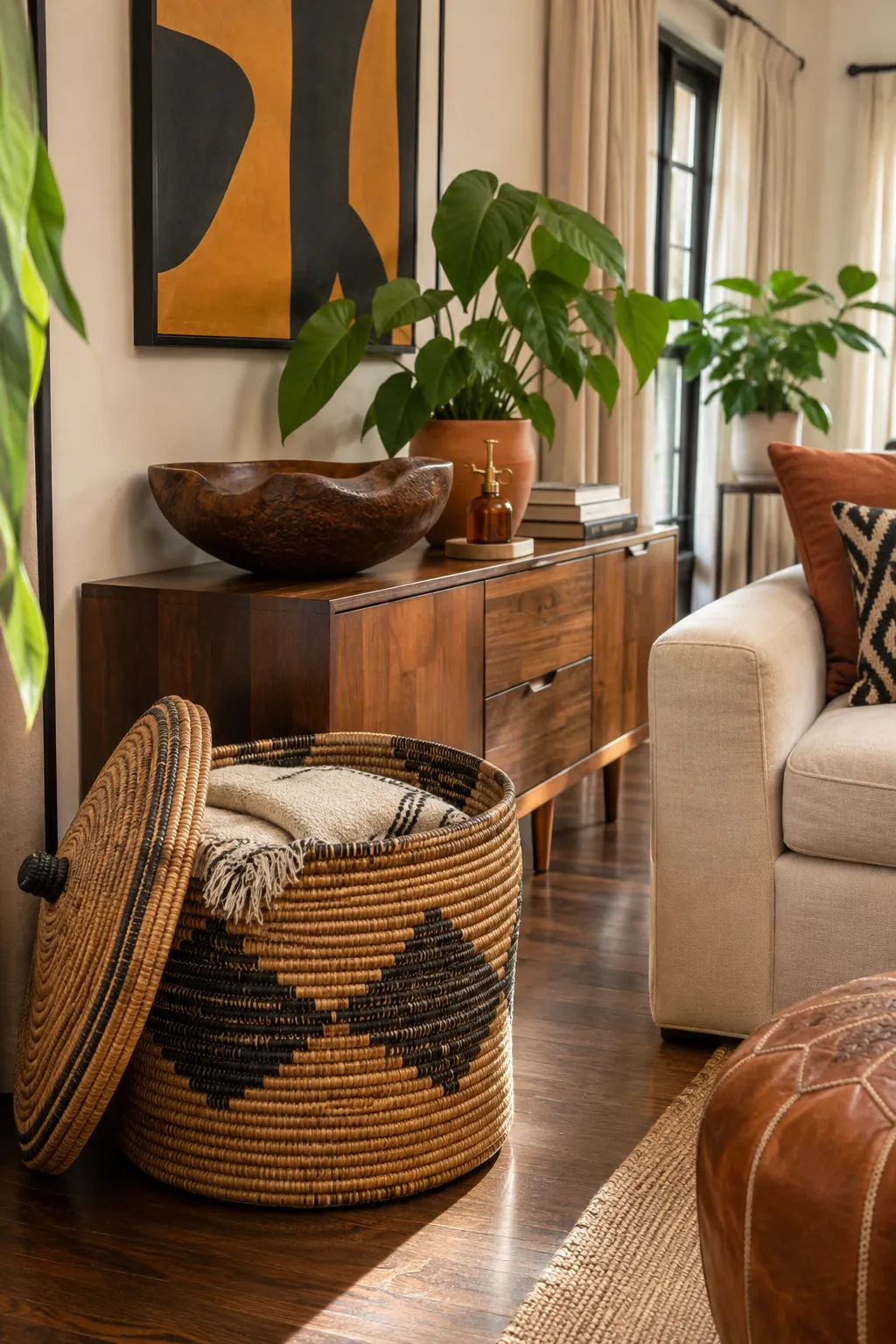
Let Books and Plants Make the Room Personal
Books reveal interests and history in a way purchased decor cannot imitate. Arrange a manageable selection on the existing shelves, then use plants to soften the vertical lines and connect the collection to the room. Leave open shelf space so meaningful objects have room to be seen.
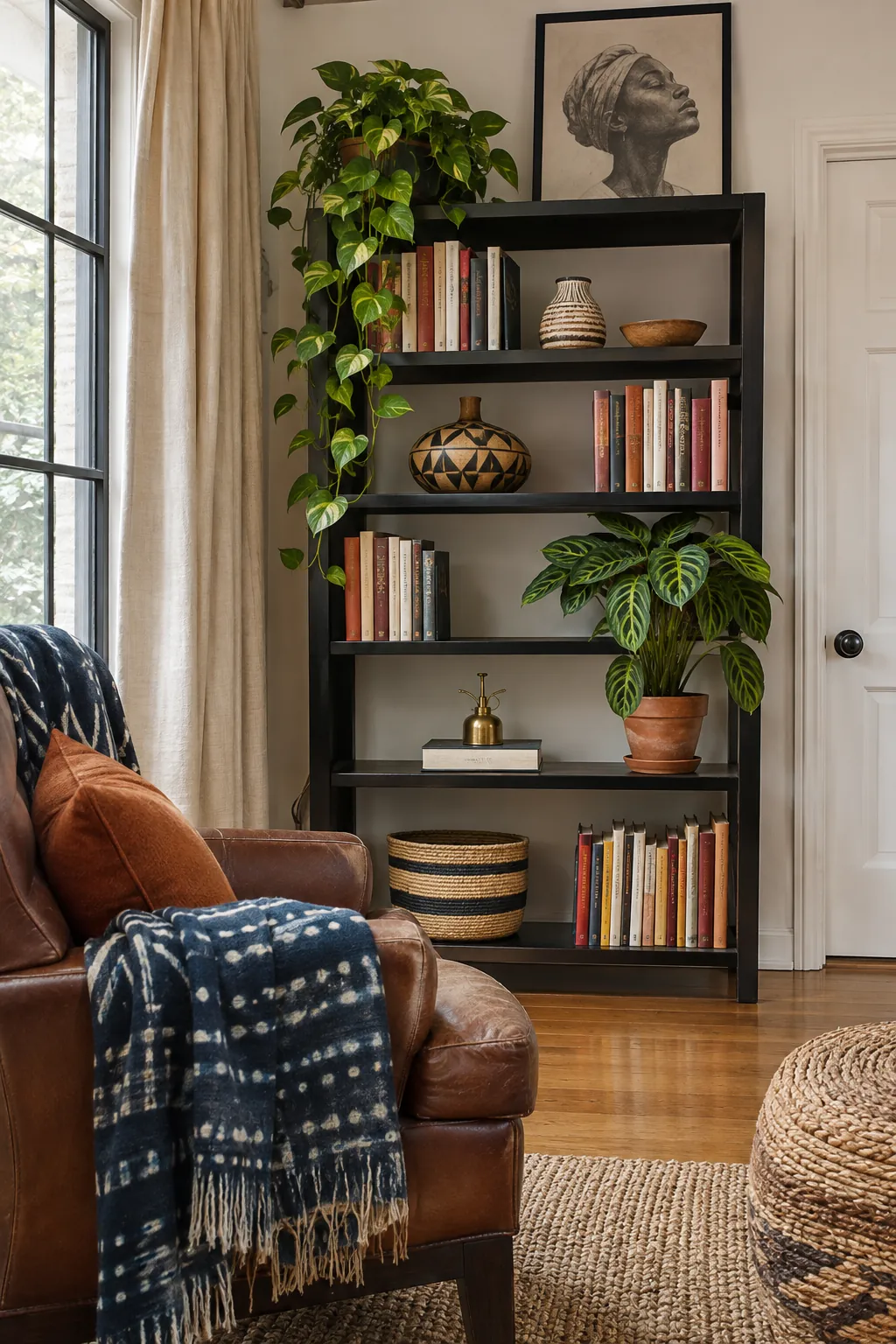
Finish with Layered Light and Open Space
Warm light reveals weave, wood grain, clay, and art after daylight fades. Use a floor lamp for reading, a table lamp for ambient glow, and focused light only where a work of art benefits from it. Remove any object that blocks circulation or repeats a story already told elsewhere in the room.