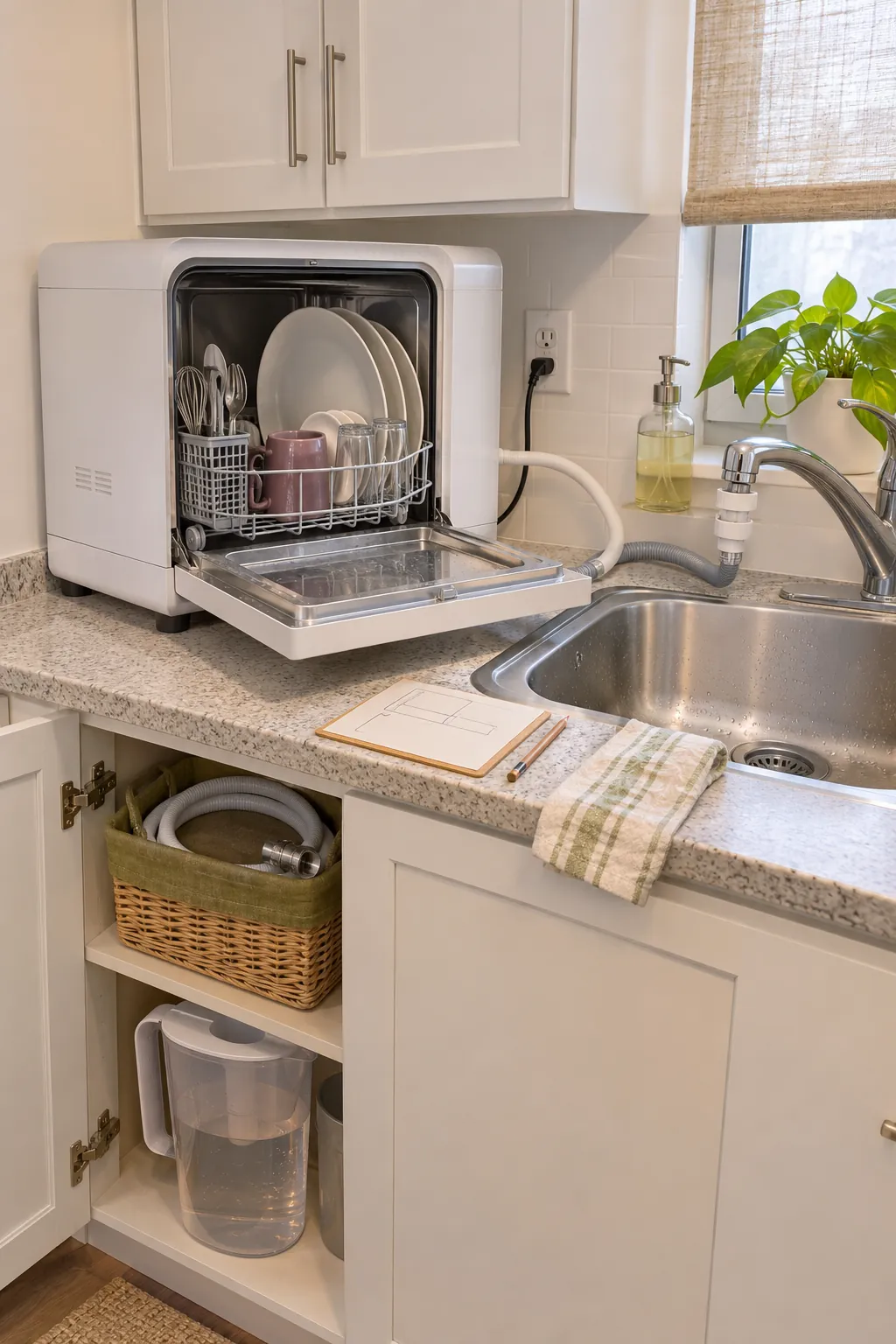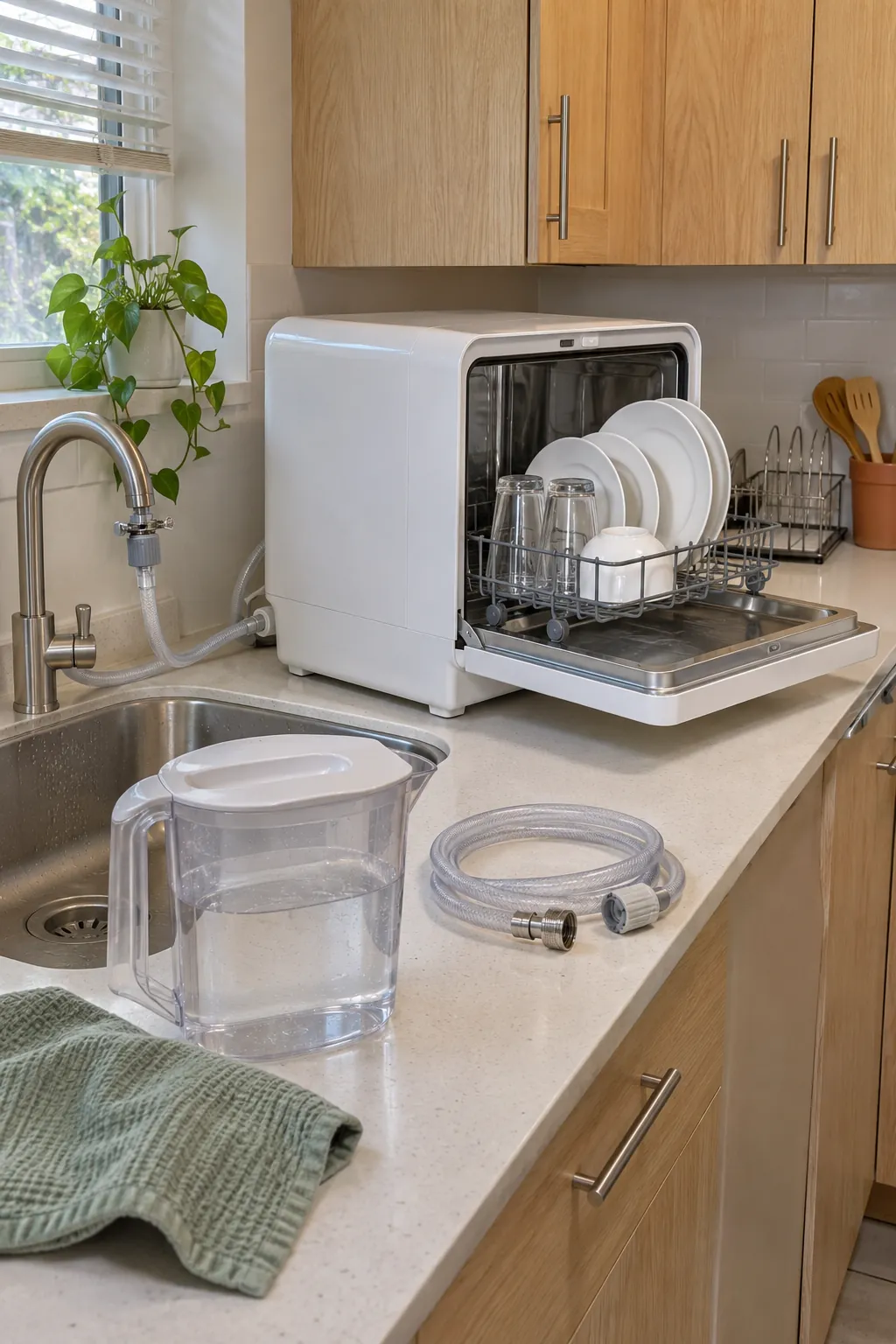
A countertop dishwasher can save hours of hand washing, but the wrong water supply can turn that convenience into a daily nuisance. In a rental, the best choice depends less on marketing claims and more on your faucet, counter depth, sink access, and tolerance for filling a pitcher.
A built in tank avoids a supply connection. A faucet hookup usually removes the filling step, but only when the tap accepts the correct adapter and the sink can stay dedicated during a cycle. The practical winner is the model that fits your actual kitchen routine without permanent changes.
Measure the rental setup before choosing
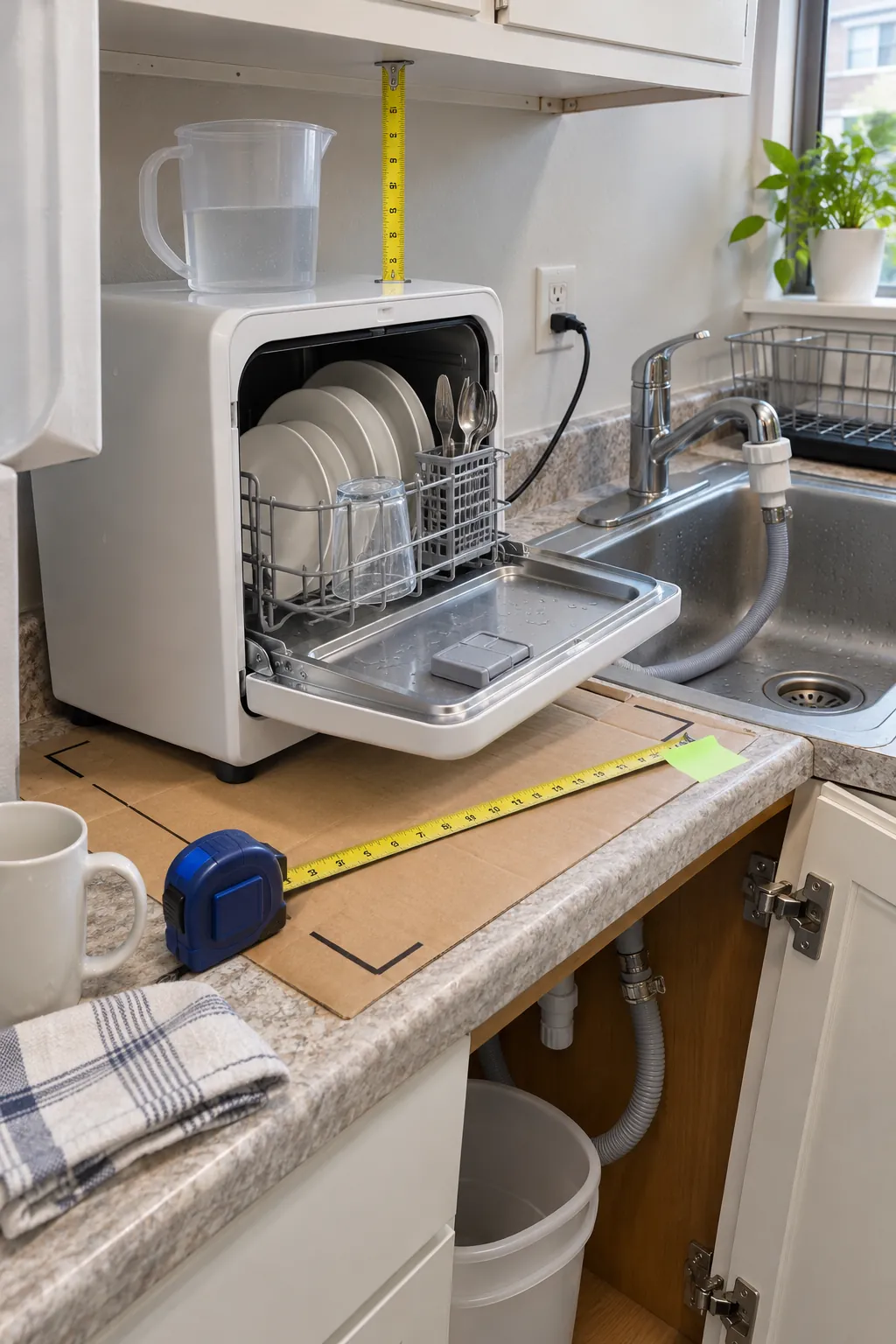
Measure the counter depth from the wall to the front edge, then compare it with the full appliance depth, including any hose bend behind it. Check the open door depth and the height above the machine because a tank model often needs room for a pitcher at the top. Confirm that the power cord reaches a suitable outlet without crossing the sink.
Trace the proposed drain hose route into the sink. The hose needs enough length to reach without a tight bend, and its end needs a secure position that will not jump out when water starts flowing. A shallow counter, tall faucet, low upper cabinet, or awkward outlet can matter more than the advertised place setting count.
A water tank suits an incompatible faucet
A water tank dishwasher is often the safer starting point when the rental has a pull down spray faucet, a threadless spout, or an aerator that the lease does not allow you to remove. You fill the machine with a pitcher for each cycle, so there is no pressurized supply hose attached to the tap. This also leaves the faucet available while the dishwasher fills from its own reservoir.
The tradeoff is repeated lifting and pouring. Check the tank capacity in the manual and picture that amount of water as a real routine, especially if you expect more than one load on busy days. A top fill opening also needs clear space above the appliance, and a full pitcher can be awkward under low cabinets.
A faucet hookup reduces repeated filling
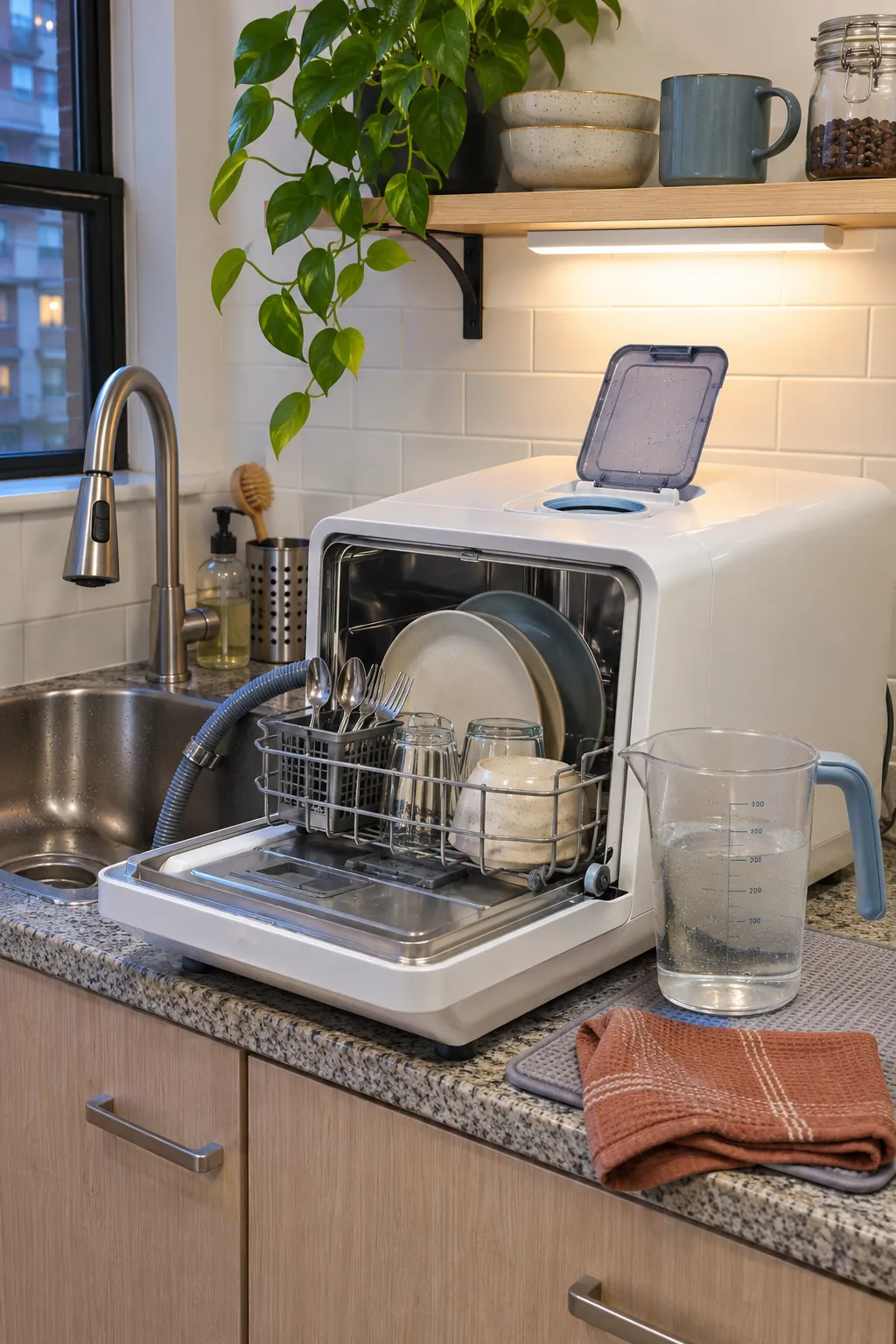
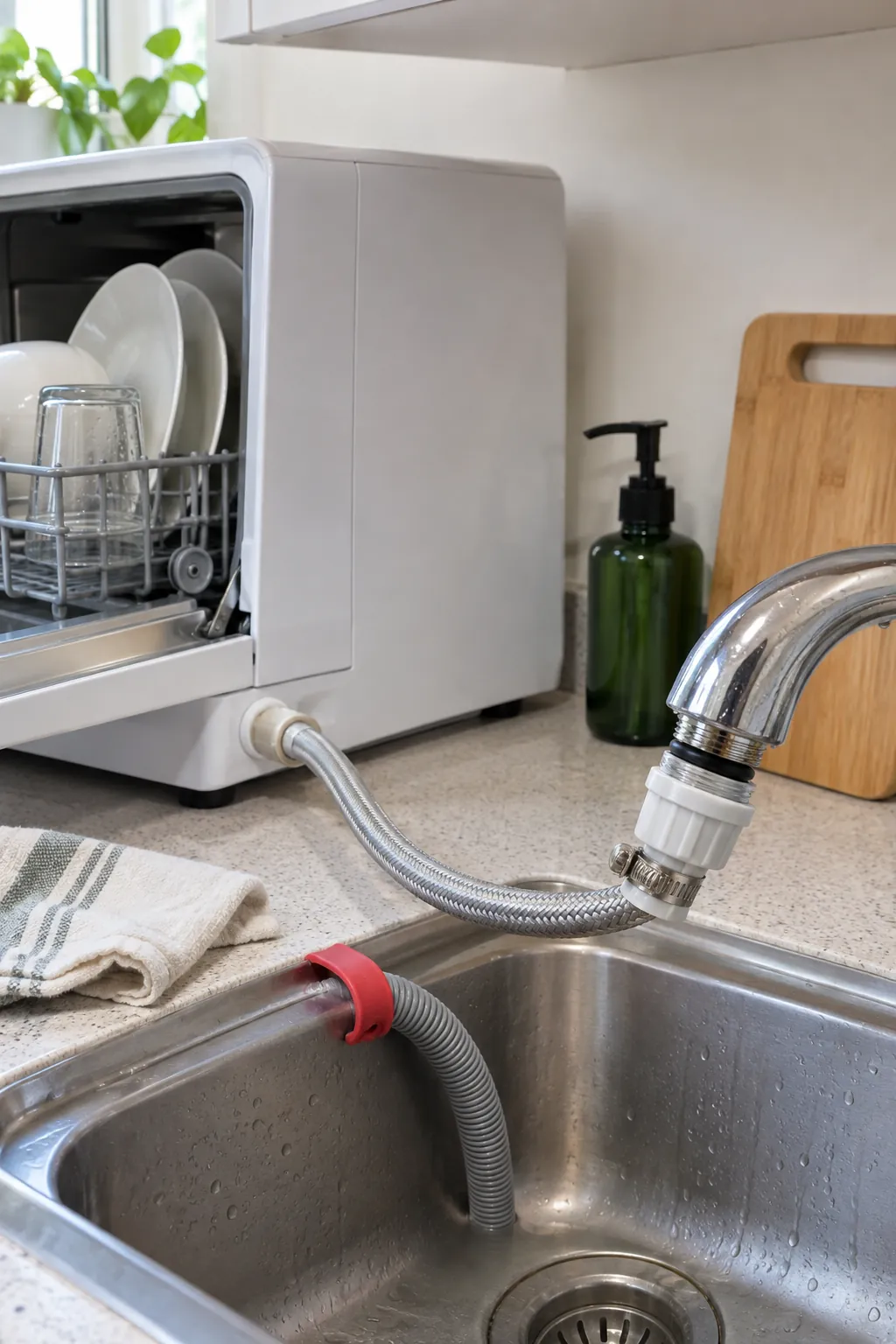
A faucet hookup dishwasher can feel easier when a standard removable aerator exposes a compatible thread. The quick connector supplies water as the cycle needs it, which removes the pitcher routine and can suit households that run the machine often. You still need to attach the coupler correctly, turn on the tap, and keep the sink area clear.
Do not assume that an included adapter fits every faucet. Pull down heads, designer taps, unusual thread sizes, and damaged aerators can defeat a simple connection. Identify the faucet model when possible, compare its thread with the appliance manual, and ask the landlord before replacing any tap part.
Drainage and leak control matter in both setups
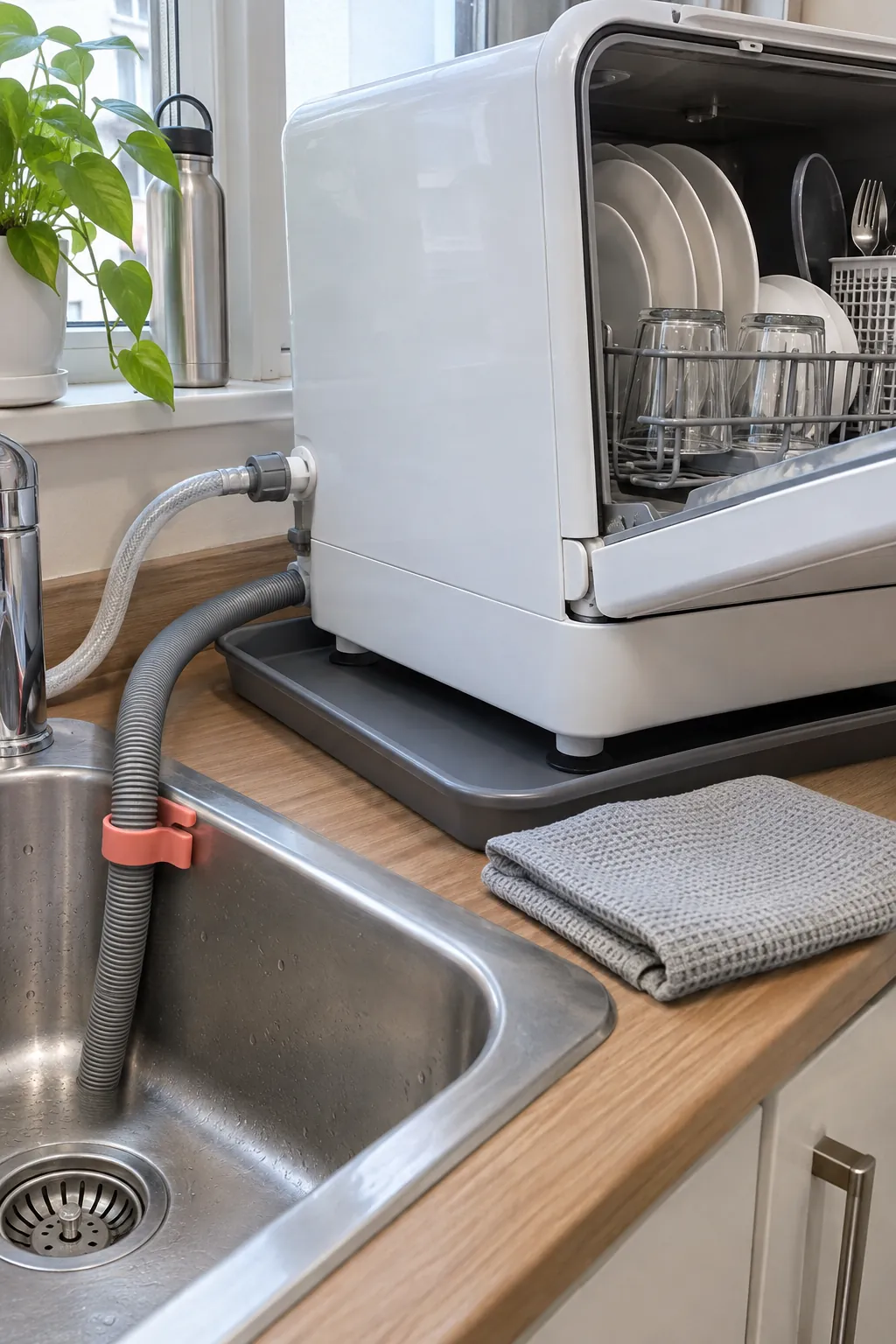
A tank changes the water supply, not the need to drain. Both types normally discharge through a hose into the sink, so the hose must stay secured and the basin must remain open enough to accept the full flow. A sink filled with dishes can cause splashing or slow drainage at exactly the wrong moment.
Test the first cycle while you are nearby. Watch the supply connector, hose joints, drain outlet, and the area beneath the appliance. A shallow leak tray or absorbent mat can reveal a slow drip early, but it does not replace a sound connection. Turn off the faucet after a hookup cycle and release pressure according to the product manual before disconnecting it.
Match capacity to the dishes you actually use
Compact capacity claims can hide the detail that matters most: whether your dinner plates clear the spray arm and door. Measure the diameter of your largest everyday plate, the height of your mugs, and the size of the cookware you hope to wash. Compare those measurements with the rack diagram and maximum plate guidance in the manual.
A small rack works best when you load it often and keep large pans for the sink. If you cook one pot meals or use wide plates, a slightly larger faucet hookup model may save more labor than a very small tank unit. If you mostly wash bowls, cups, and cutlery, a compact tank model may cover the daily load without taking over the counter.
Compare daily effort, not only installation
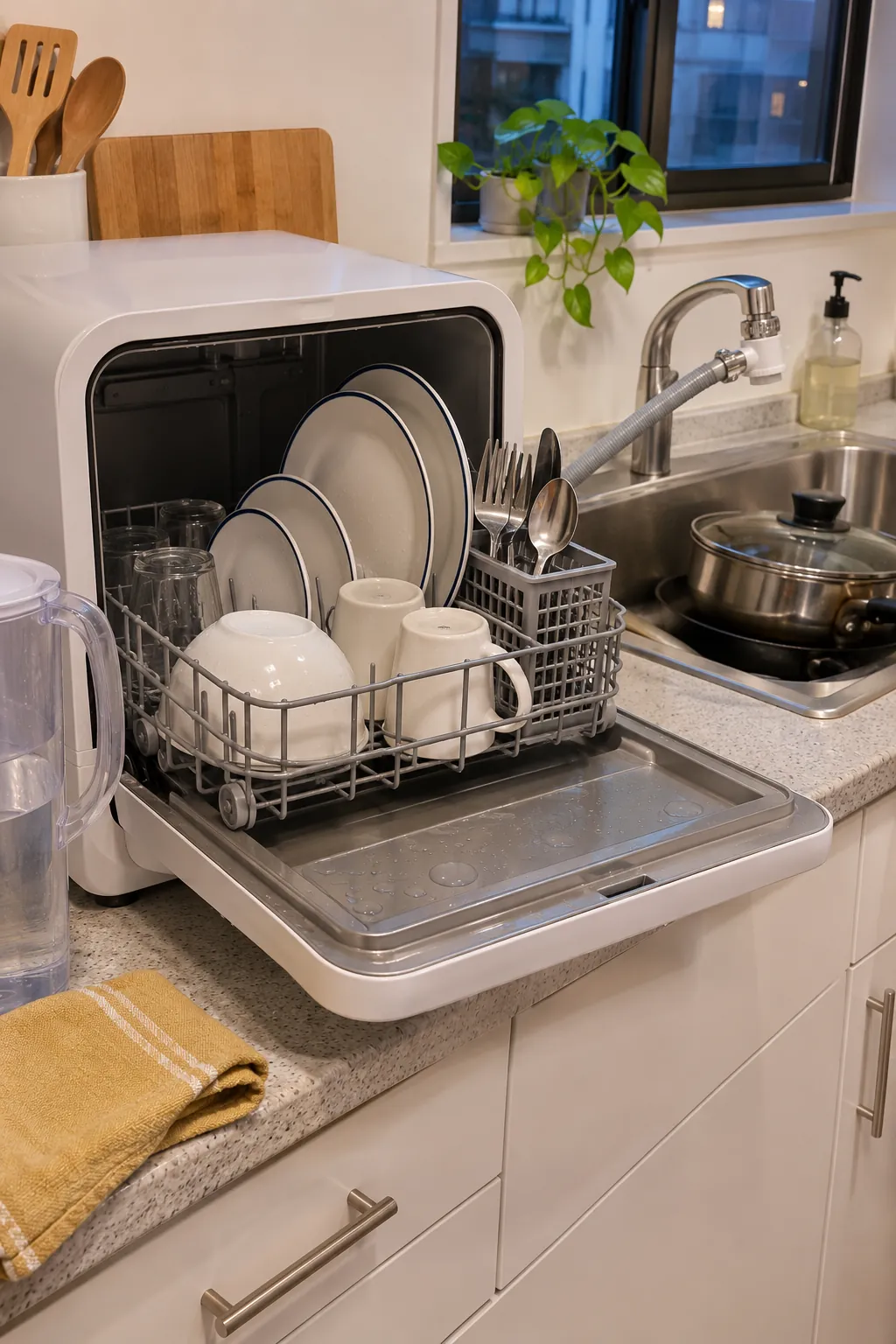
Installation happens once, but filling, connecting, draining, and clearing the sink happen every cycle. A tank model asks for several measured pours. A hookup model asks for faucet access and a secure connection. Decide which interruption fits your habits rather than choosing the option with the shortest setup video.
Noise and cycle time also shape the routine in a studio or open apartment. Check the stated sound level when available and think about when you can run the machine. A long cycle is easier to accept when the connection is stable and the sink remains usable enough for basic tasks.
Choose the supply method your rental can support
Choose a water tank model when faucet compatibility is doubtful, permanent plumbing is off limits, and you can comfortably manage the filling routine. Choose a faucet hookup model when the tap has verified compatible threads, the sink can stay committed during a cycle, and frequent loads make manual filling tiresome.
Before ordering, confirm the appliance dimensions, open door clearance, faucet connection, drain route, largest plate size, outlet position, and lease restrictions. That short check turns a broad small kitchen appliance comparison into a decision based on your own counter and habits. The best countertop dishwasher is the one that can run safely without forcing you to redesign the rental around it.