The wall opposite the bed becomes part of your first and last view each day, so it needs enough presence without visual glare. A mirror is not the only way to fill that space. Texture, broad shapes, useful furniture, and personal art can create a calmer focal wall that still feels complete.
Hang an Oversized Woven Textile
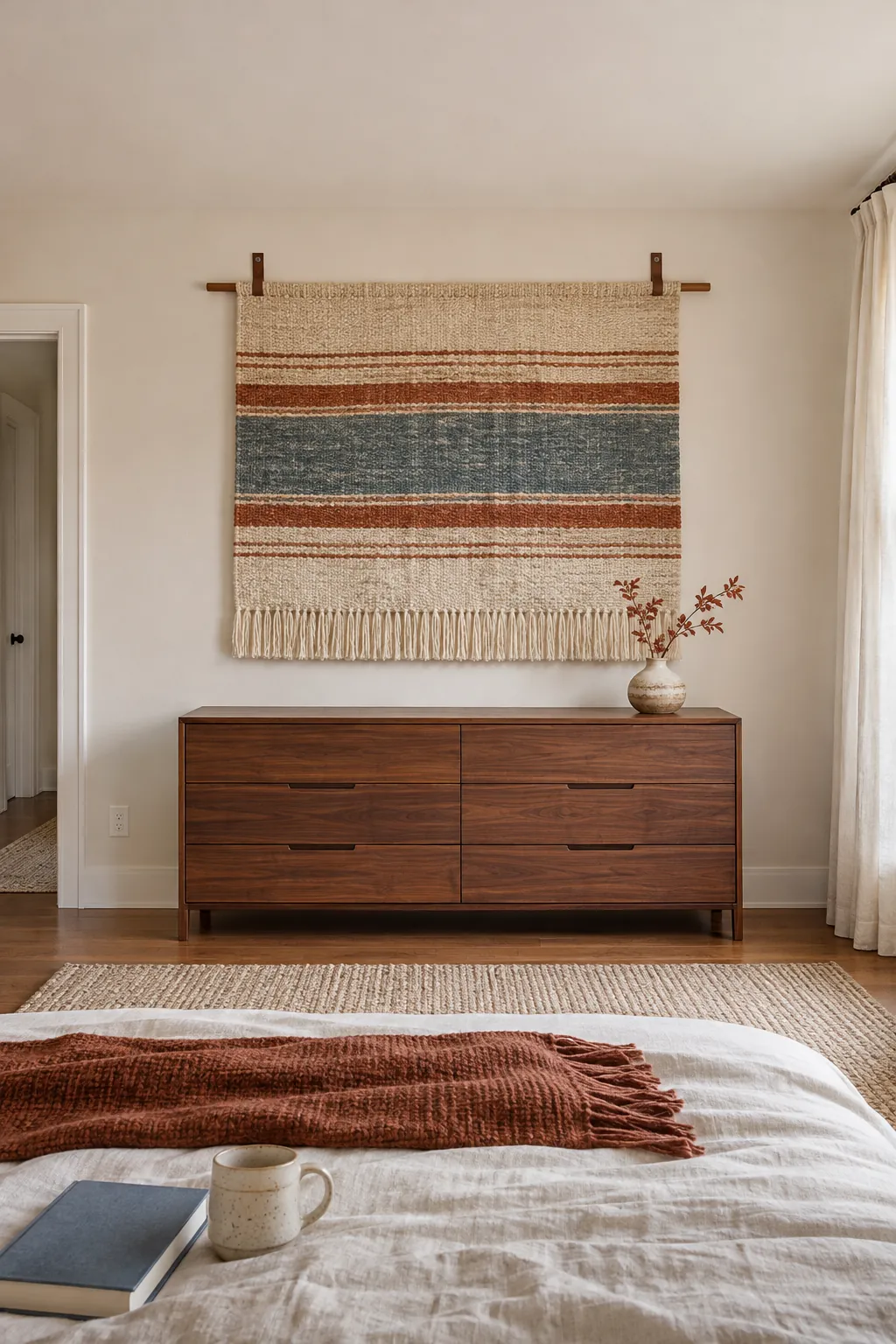
An oversized textile fills a broad wall without the hard reflection of glass. Choose a piece that is clearly narrower than the bed wall and hang it from a secure level support so the weave does not sag. Wool and cotton also soften sound, which can make the view from bed feel quieter.
Create a Calm Three Print Series
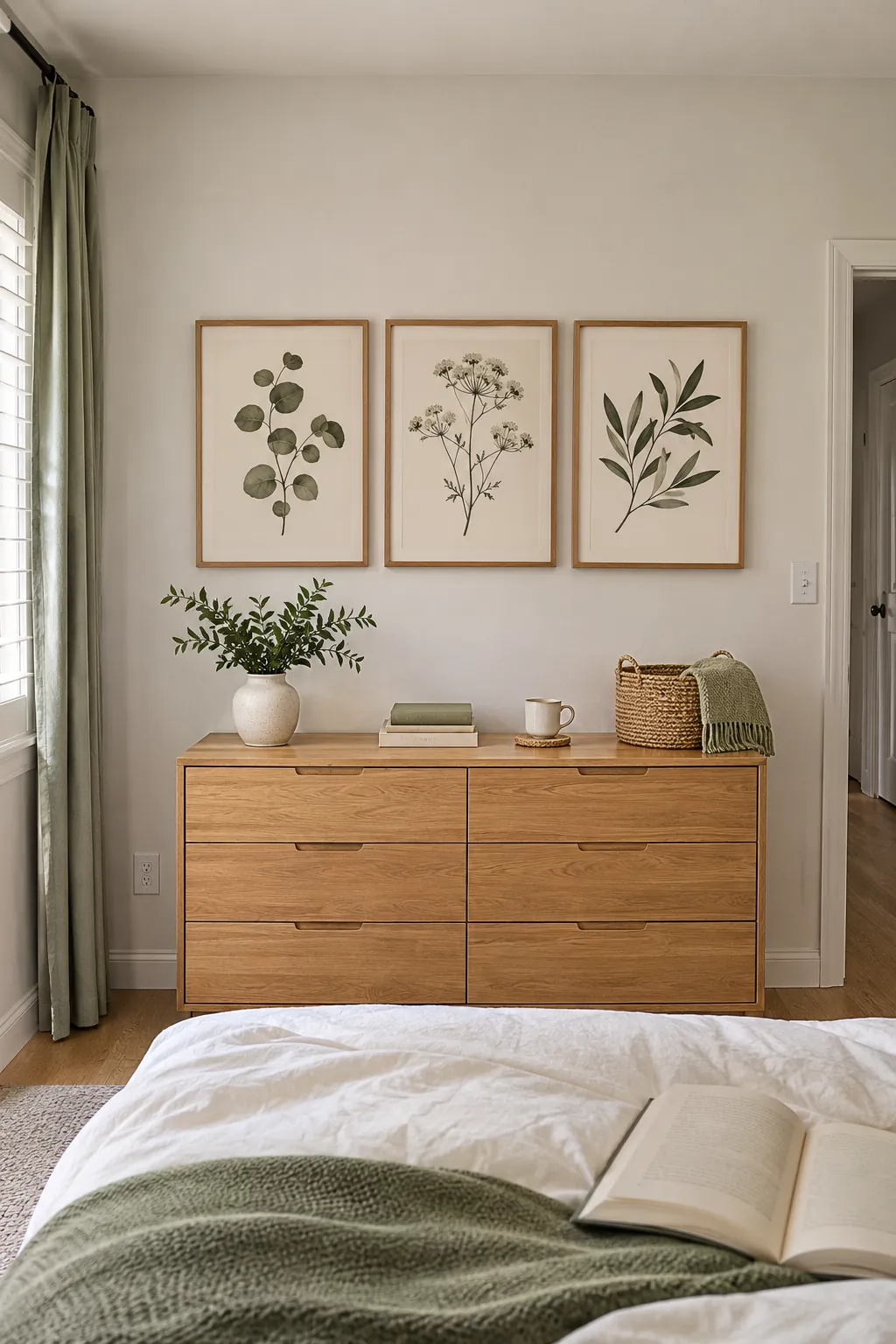
A coordinated print series gives the opposite wall rhythm without one dominant image. Keep frame sizes equal, use narrow consistent gaps, and align the group with the bed or dresser below. Botanical studies work especially well when each specimen has a different silhouette but shares the same paper and mat color.
Style a Low Picture Ledge
A low picture ledge lets framed bedroom prints overlap into one relaxed composition. Put the tallest work off center, then step smaller pieces toward the open side. Use a shelf with a front lip and secure each frame so nothing can slide if the wall is bumped.
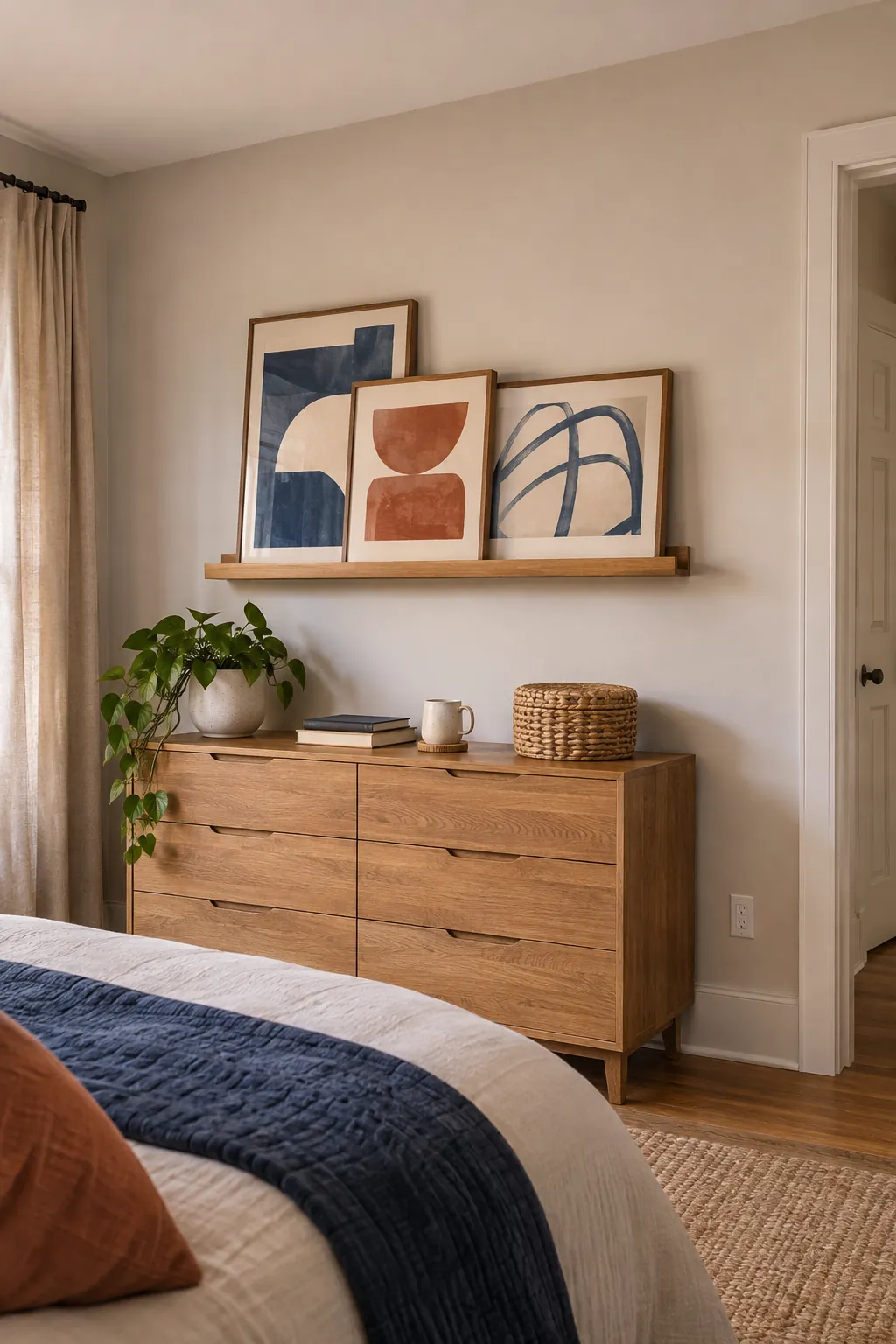
Group Shallow Woven Baskets
Shallow baskets add warmth through shape and weave rather than shine. Arrange different diameters on the floor first, then preserve a few repeated gaps as the cluster expands. Proper basket hangers keep the display close to the wall and prevent the group from looking bulky from the bed.
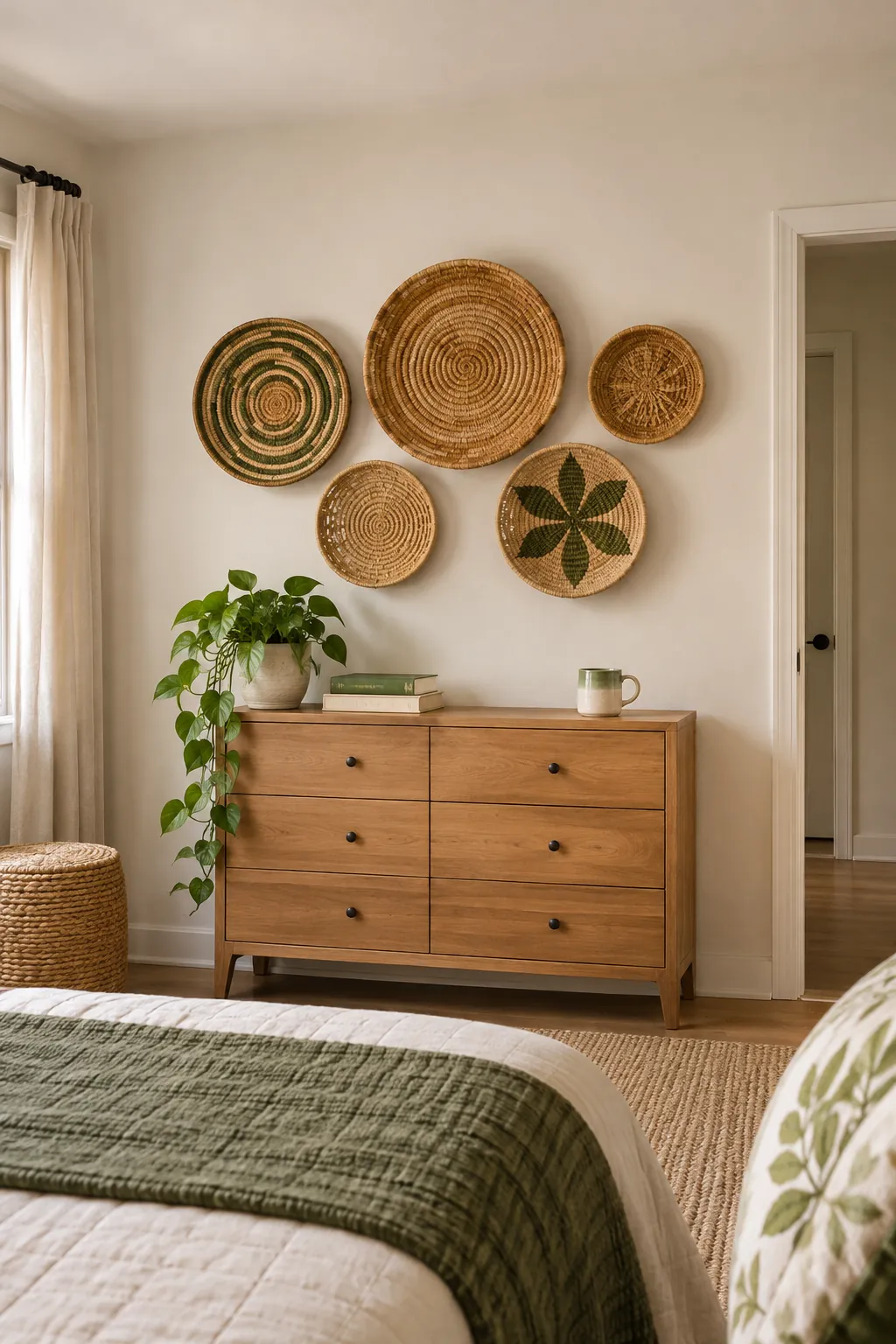
Choose a Sculptural Wall Relief
A sculptural wall relief gives a blank bedroom wall strong shadow detail with a limited palette. Side light reveals the carved surface throughout the day, while a matte finish avoids glare. Select one generous piece instead of several small objects so the view stays restful.
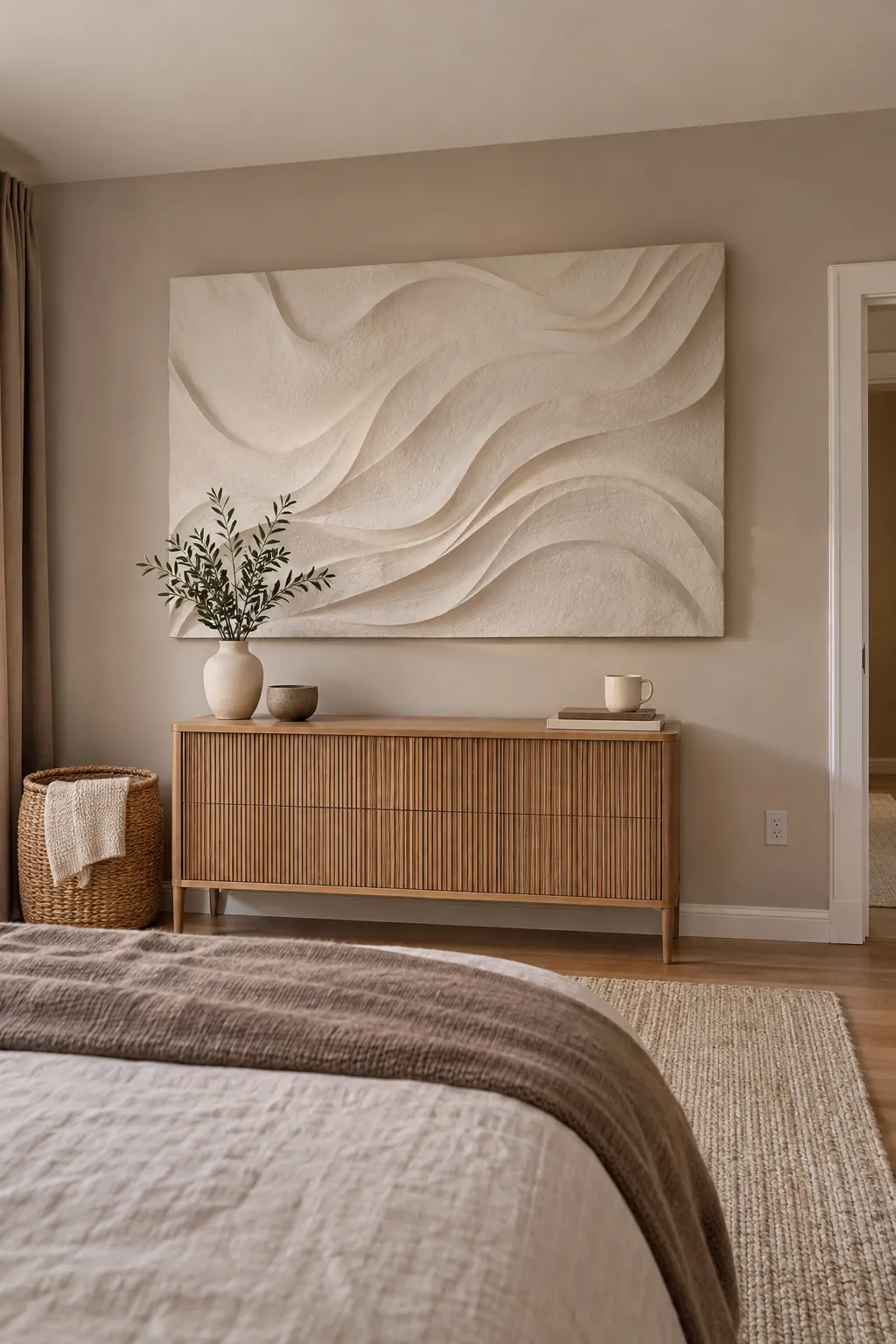
Display a Handmade Quilt
A handmade quilt can carry color, memory, and softness across the wall. Use a proper sleeve or textile hanging system that distributes weight along the top edge. Keep the lower edge clear of furniture and direct sun so the fabric hangs freely and fades evenly.
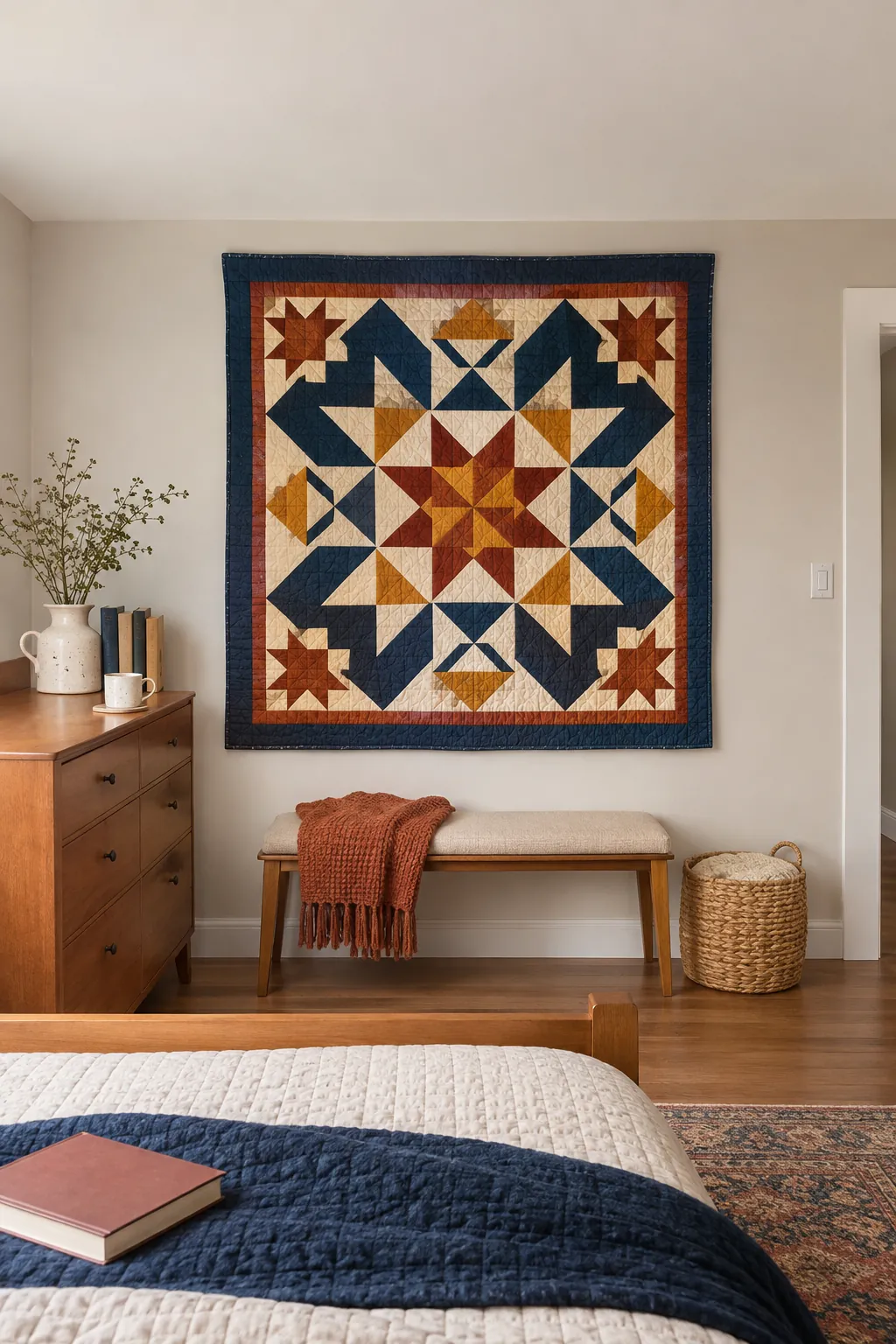
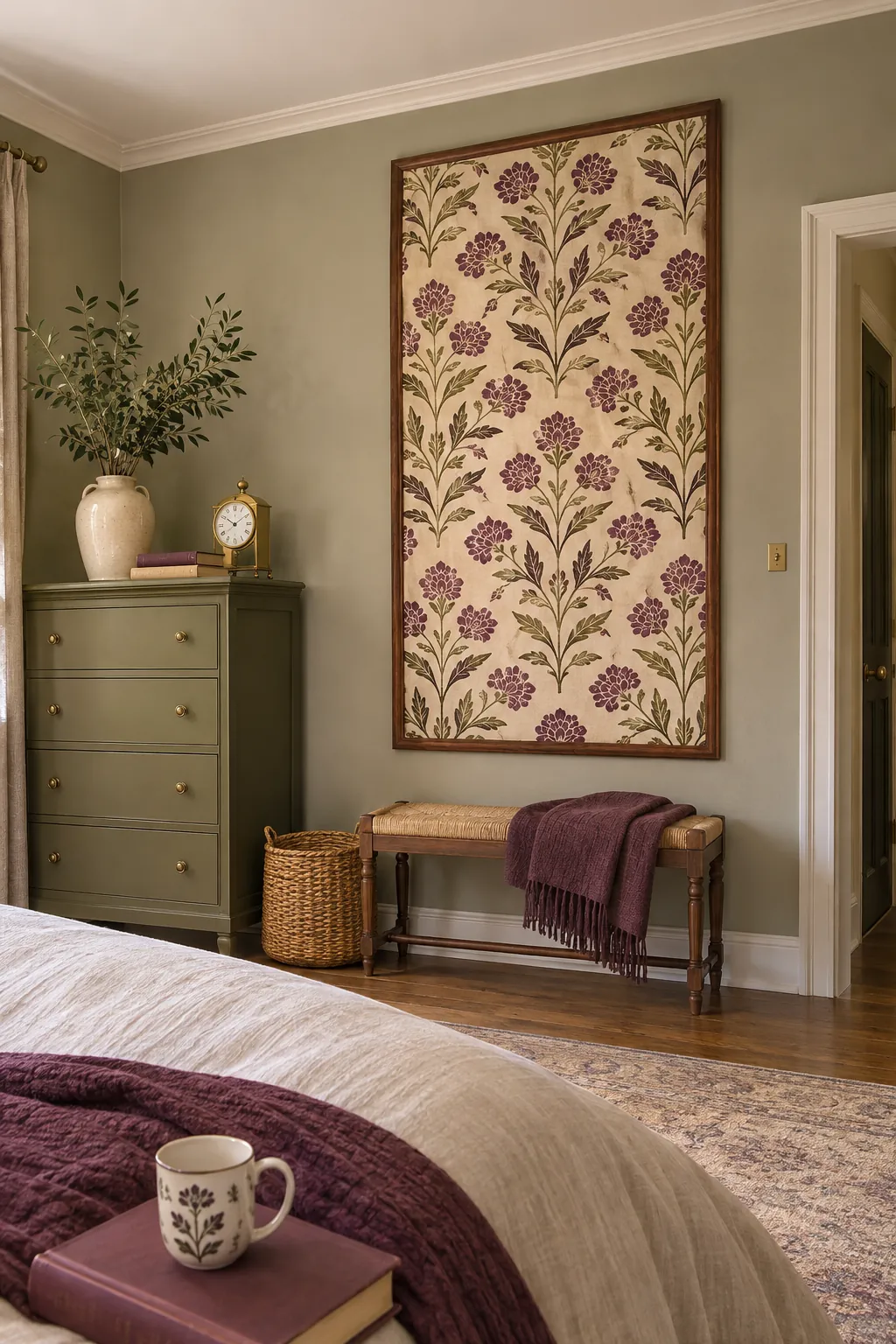
Frame a Wallpaper Panel
Framing one wallpaper panel offers pattern without committing the whole room. Choose a motif with enough scale to remain clear from bed, then use a wide simple frame that gives the print visual authority. This approach also makes leftover wallpaper feel like personal bedroom artwork rather than a sample.
Mount One Long Floating Shelf
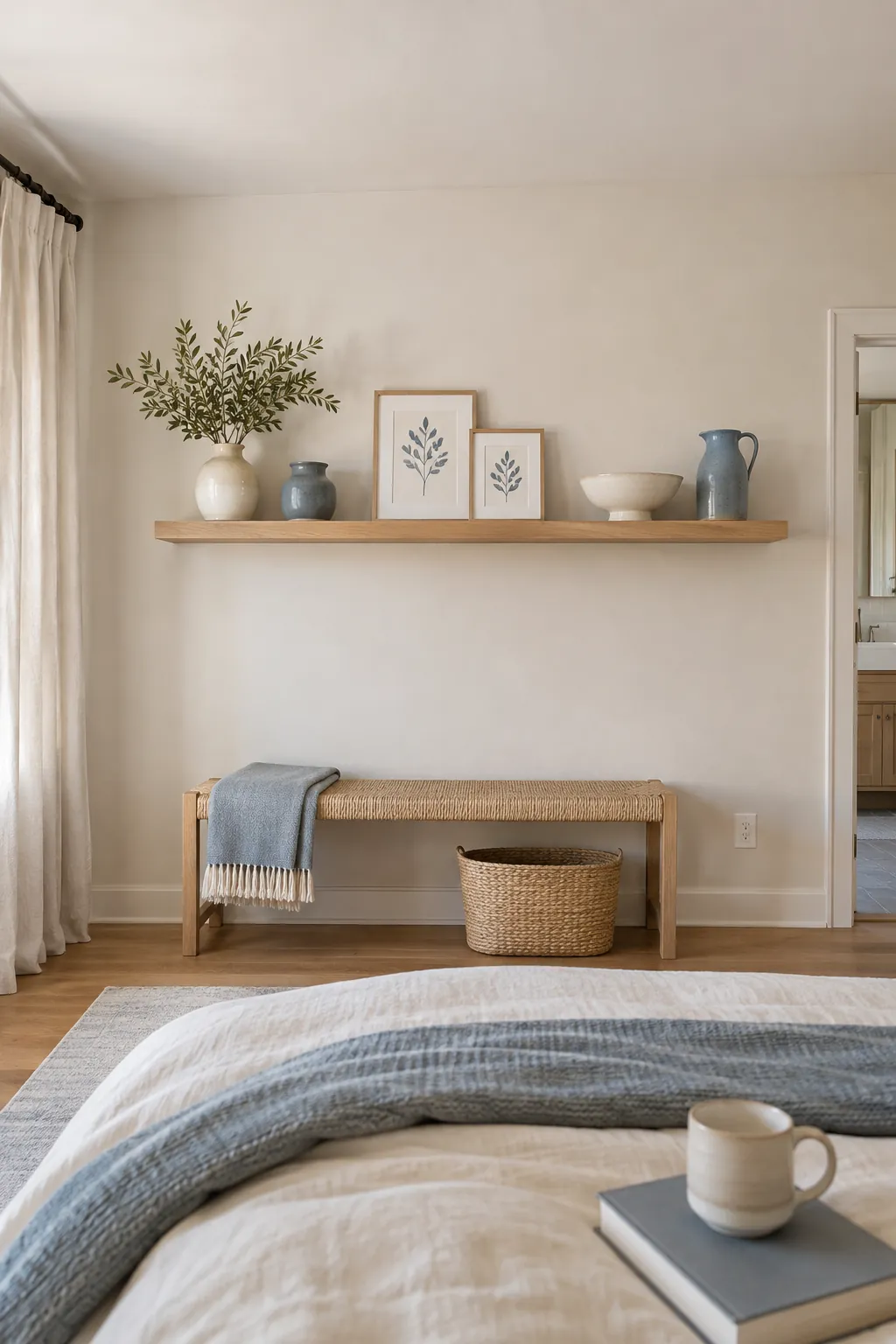
One long floating shelf can connect a dresser and the wall above it. Keep objects low, vary their shapes, and leave obvious empty sections so the shelf does not become storage overflow. Mount it at a height that allows the dresser top to remain useful and easy to clean.
Arrange a Ceramic Plate Collection
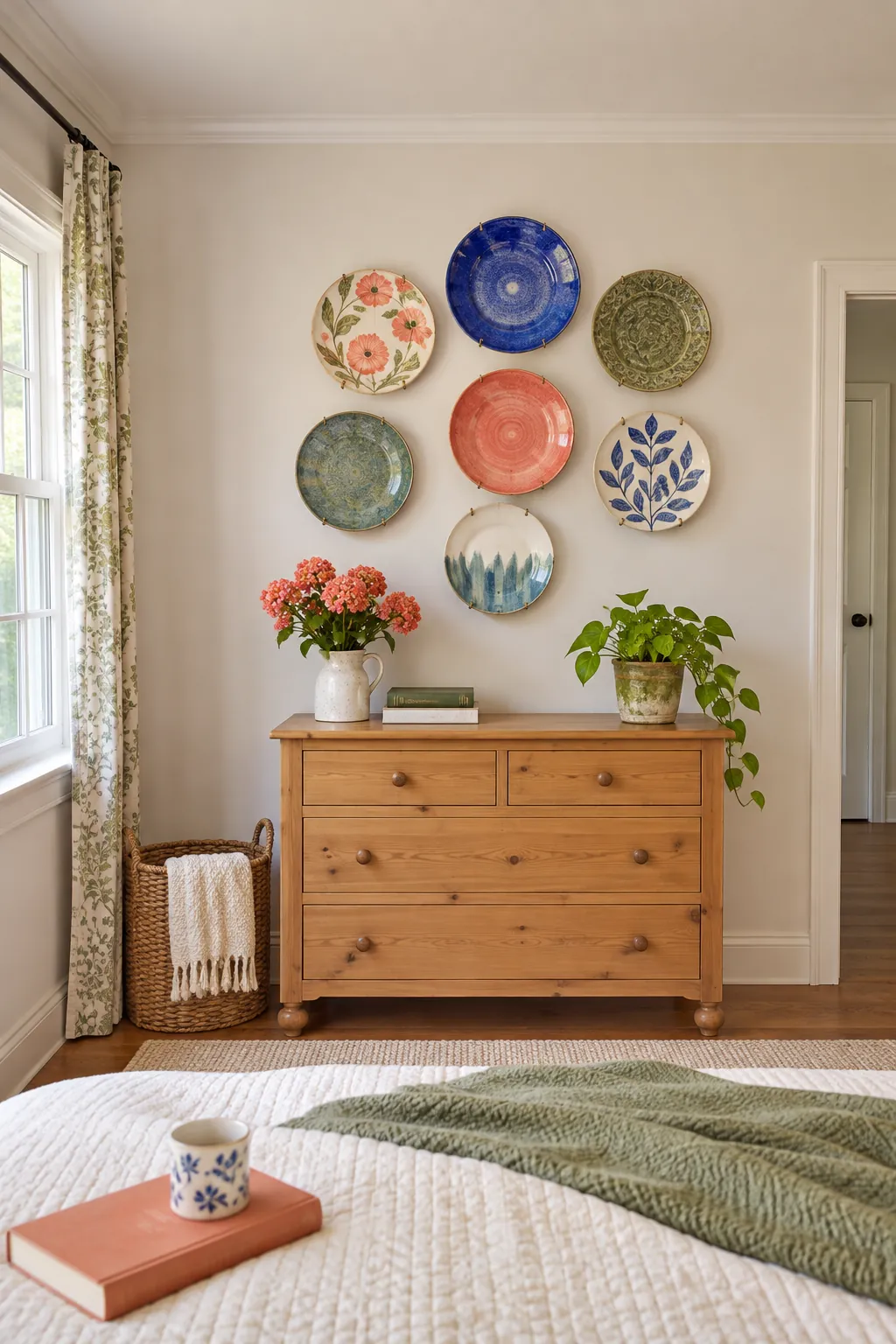
Ceramic plates create a decorative wall object collection with color and relief. Use reliable plate hangers sized to each rim, and avoid valuable daily dishes that need frequent removal. An oval outline echoes the width of a bed while keeping the outer edges soft.
Layer Two Fiber Art Panels
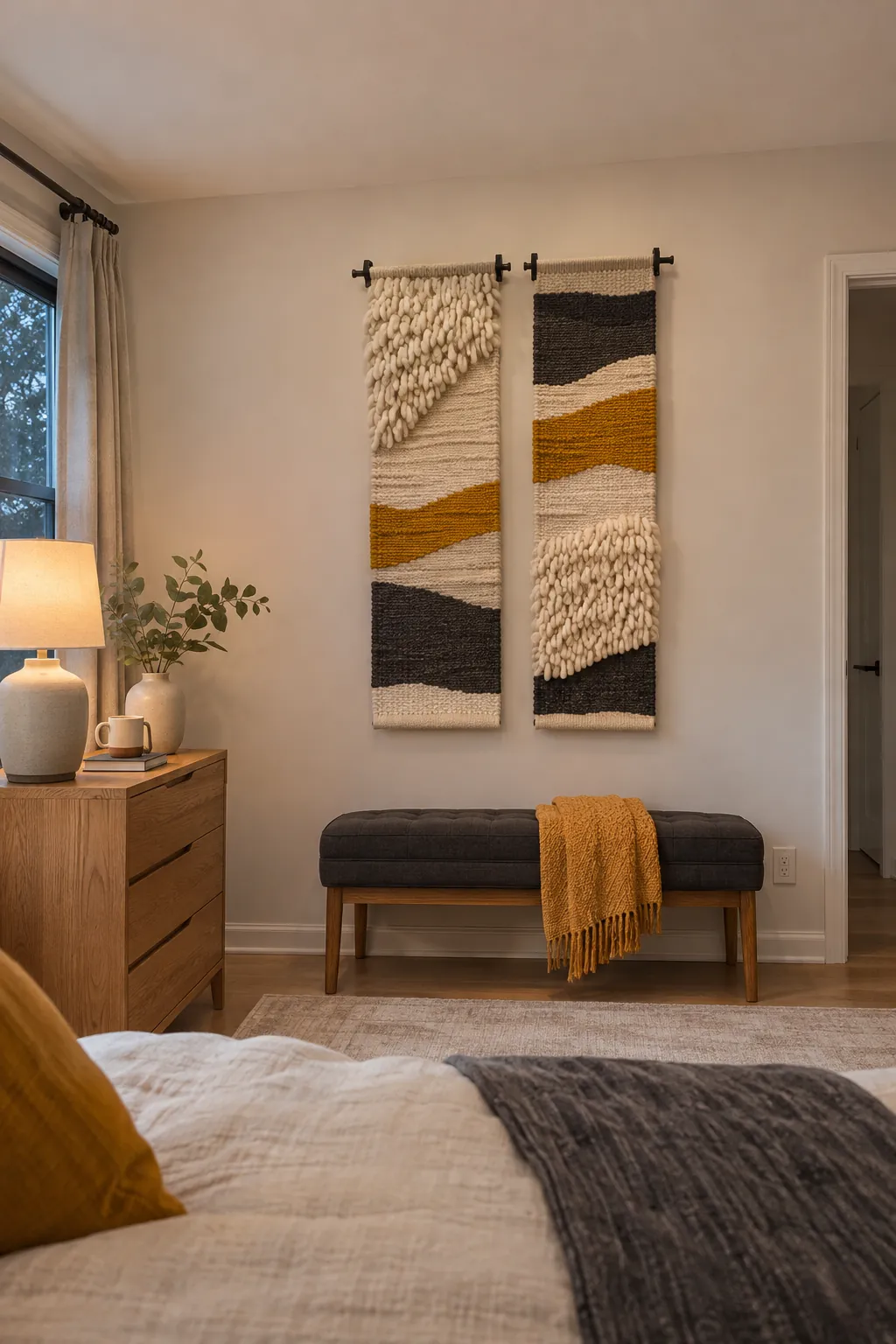
Two fiber panels provide a calm vertical pair when the wall is tall and narrow. Let the pieces share one material or color while their looped and flat textures differ. A modest gap makes them read together without losing the handmade edges that give each panel character.
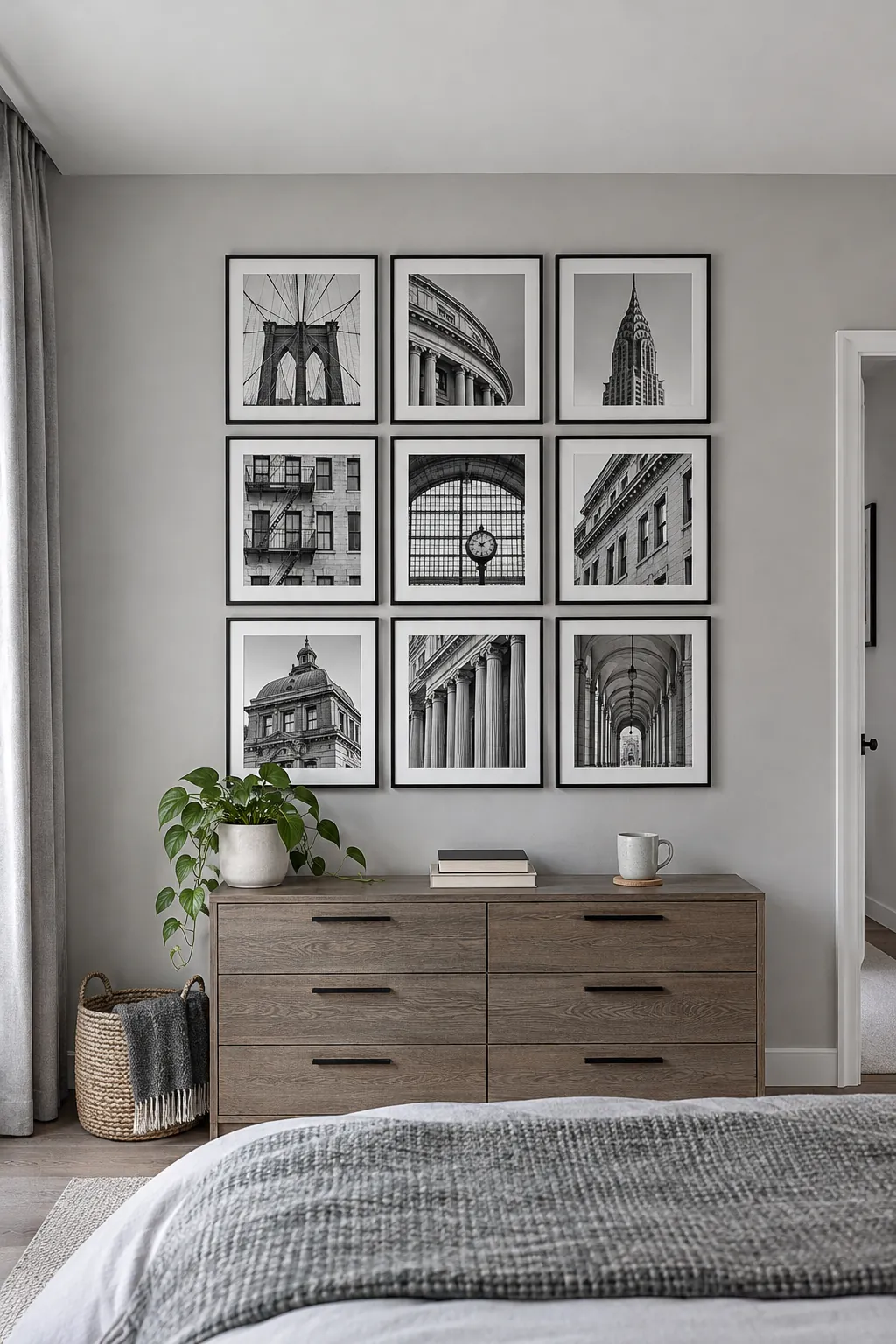
Build a Black and White Photo Grid
A black and white photo grid looks ordered from across the room and rewards closer viewing. Use one subject family, such as doors, staircases, or building details, rather than unrelated snapshots. Equal crops, mats, and spacing turn the nine pictures into one bedroom focal wall.
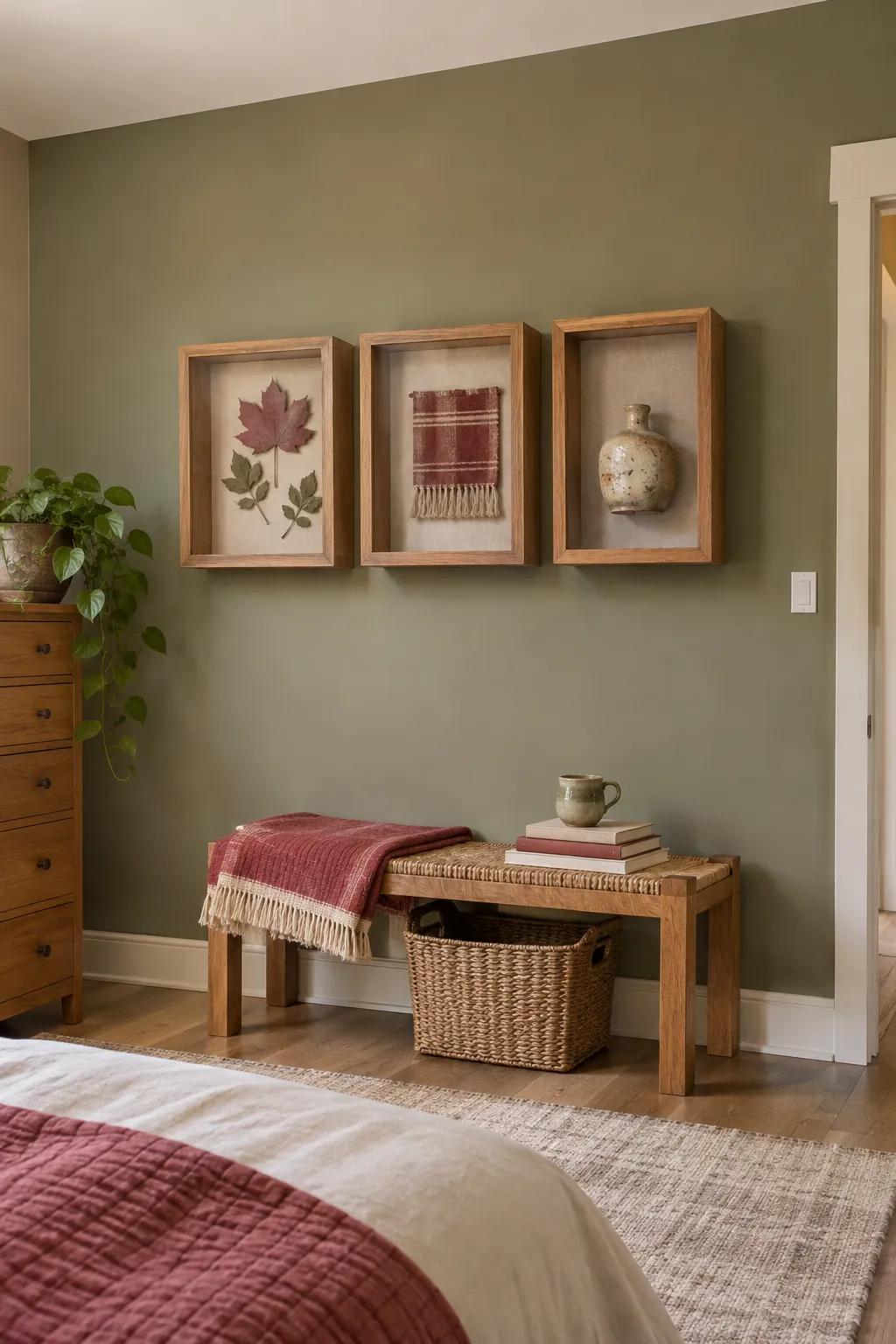
Use Shadow Boxes for Personal Objects
Shadow boxes can protect small meaningful objects while turning them into art. Limit each box to one clear arrangement and use an interior backing that supports the object without visible glue. Consistent outside frames unite leaves, textile fragments, and keepsakes that would otherwise feel unrelated.
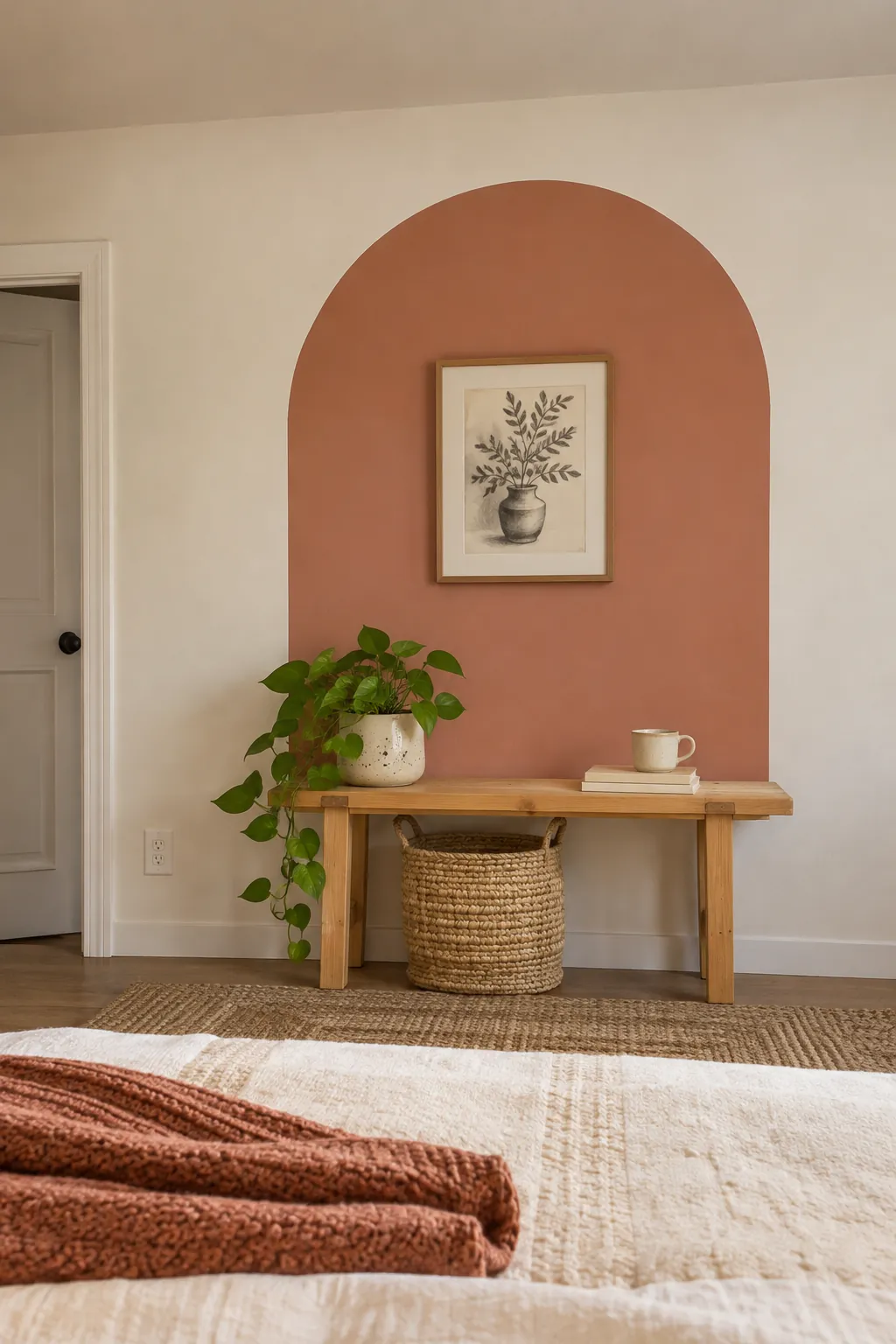
Paint a Soft Color Arch
A painted arch supplies scale and color at very low material cost. Draw the curve with a string guide or flexible template, then keep the edges crisp enough to look intentional. One small drawing centered within the color field gains presence without needing an oversized frame.
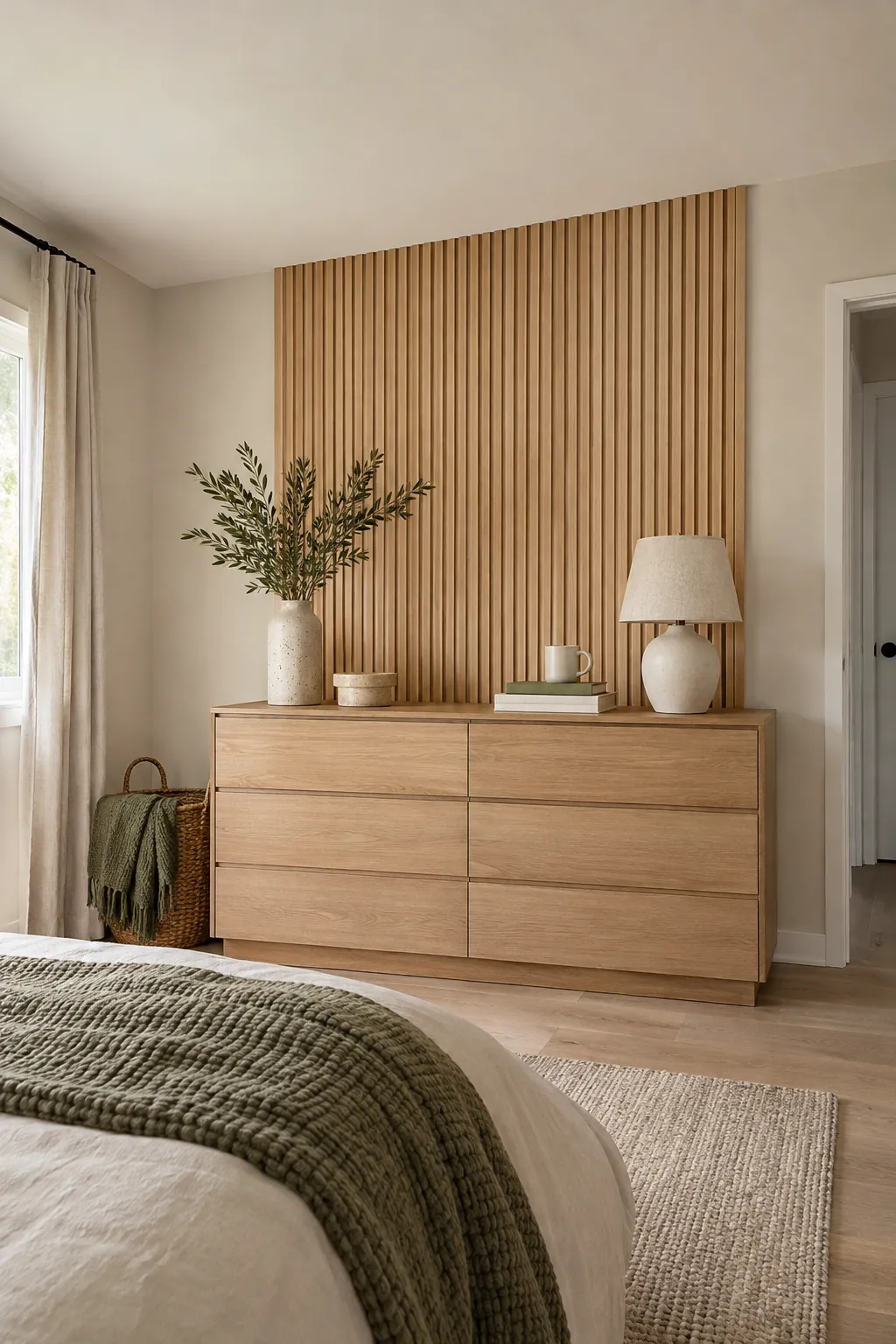
Add a Narrow Wood Slat Panel
A slat panel brings vertical rhythm to the wall and can define a dresser zone. Keep the wood tone close to other furniture and stop the panel at a deliberate width. Shallow slats add enough shadow to be interesting without creating a heavy feature behind the walking path.
Hang a Full Length Fabric Panel
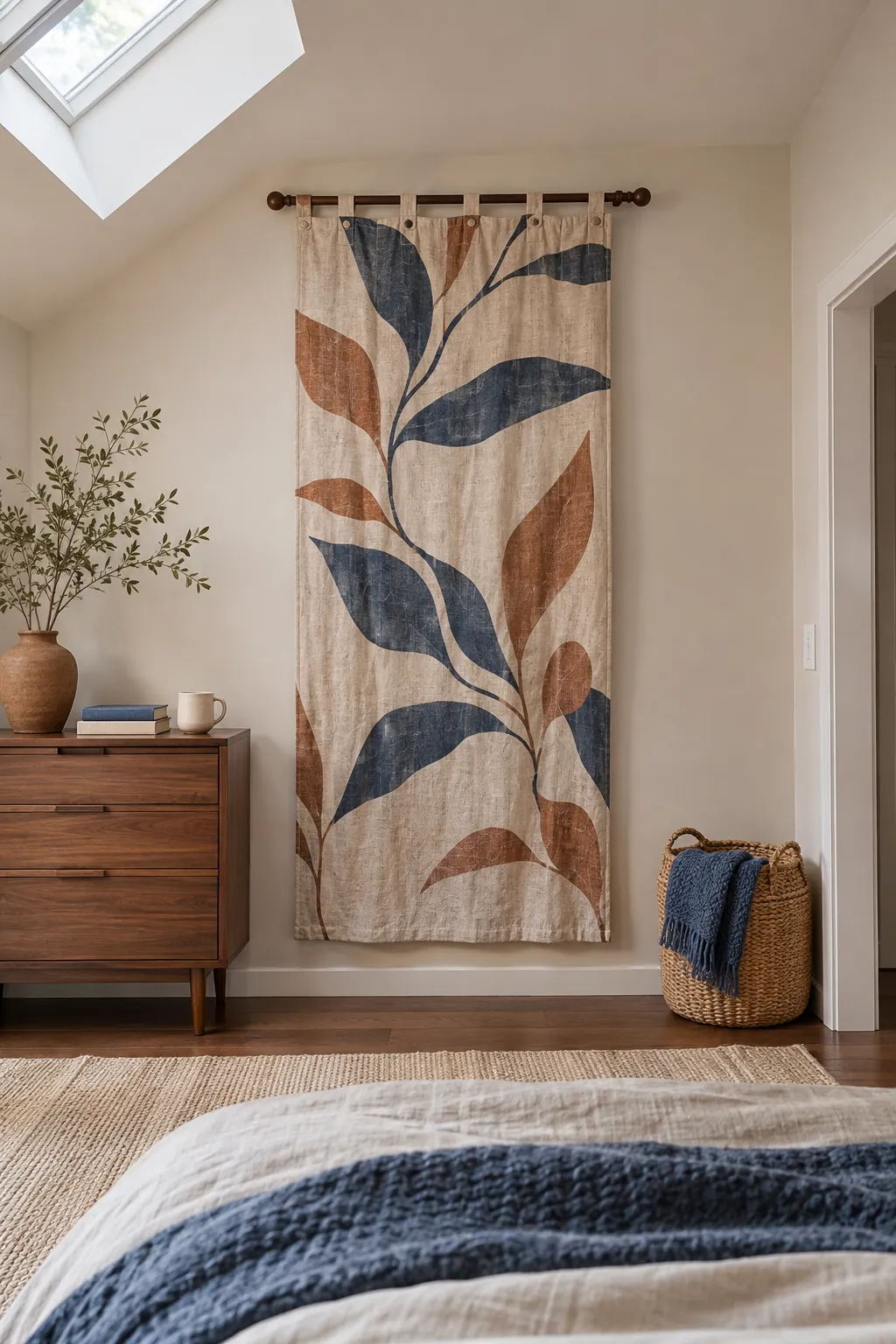
A full length fabric panel suits a tall wall where horizontal art would leave too much empty height. Add a discreet weight at the lower edge so the textile remains straight. A large abstract leaf pattern can introduce movement while staying calmer than a reflective mirror.
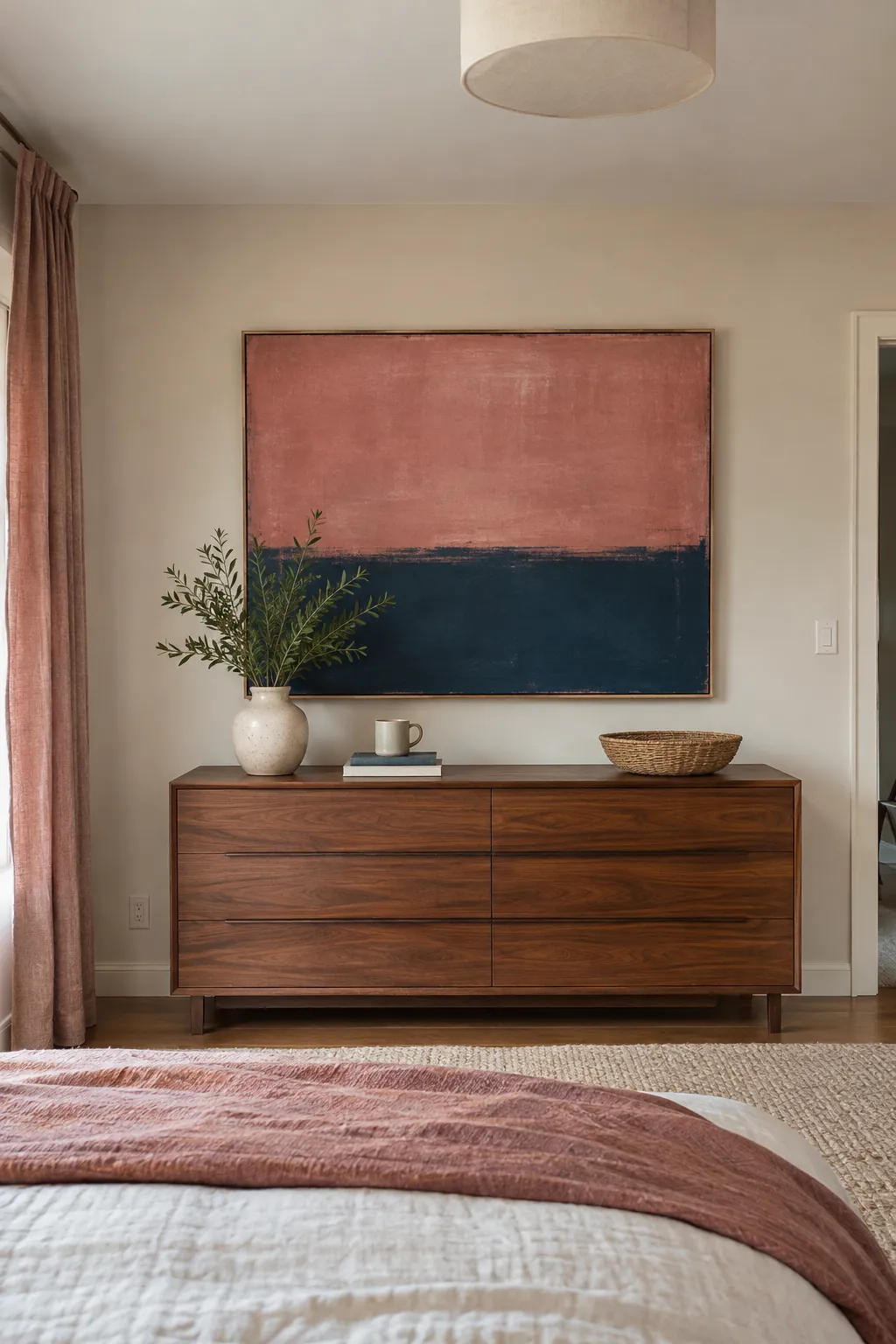
Anchor the Wall With a Dresser and Art
A dresser and broad painting create a complete composition with useful storage below. Choose art that is narrower than the furniture, then keep lamps and ceramics low enough that they do not cover the image. The horizontal relationship feels stable from bed and prevents the artwork from floating alone.
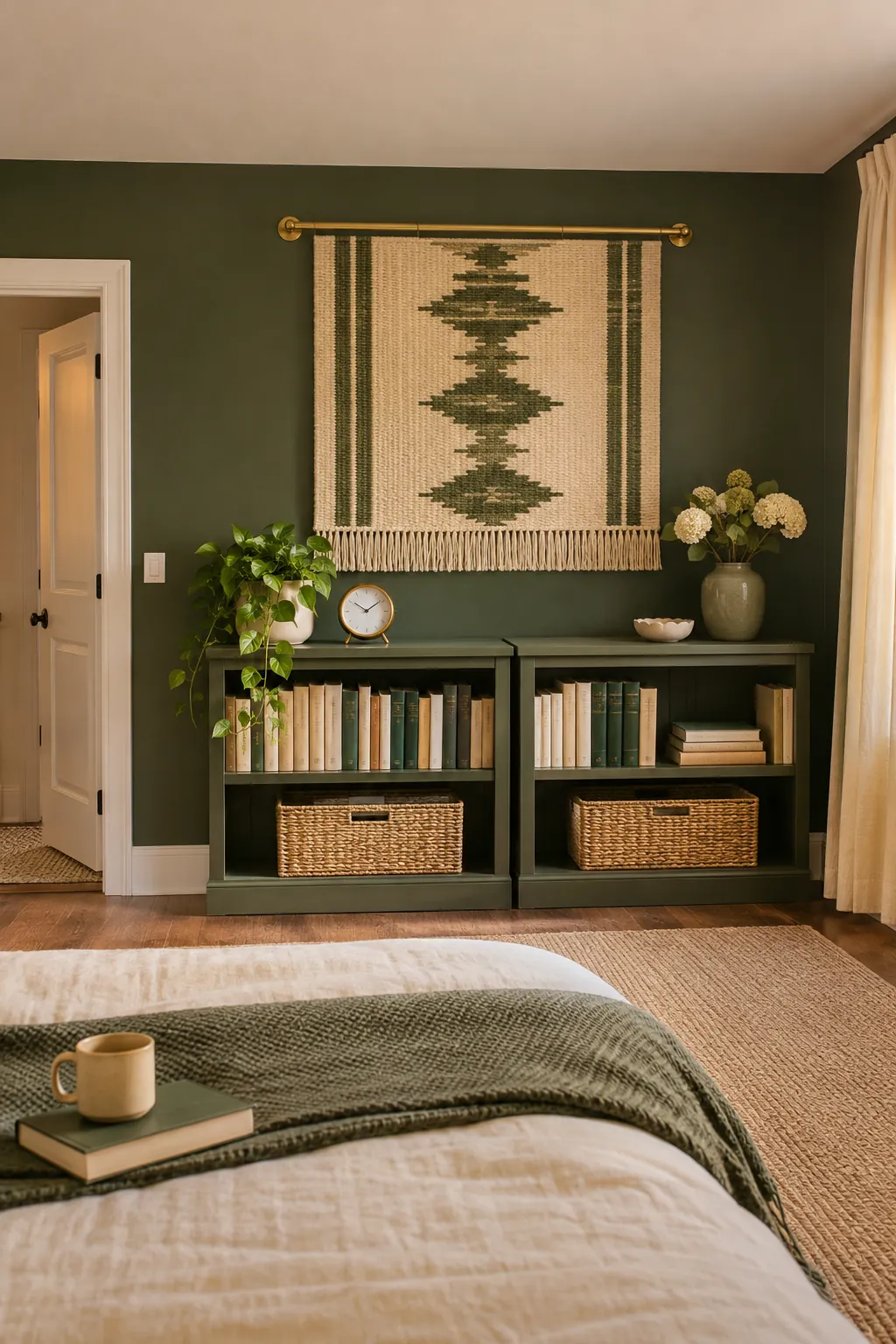
Use Bookcases as a Framed Composition
Two low bookcases can frame the center of the opposite wall without making the bedroom feel like an office. Balance book heights, include closed baskets for visual rest, and place one textile or painting above the central gap. Leaving open wall over the bookcases keeps the arrangement breathable.
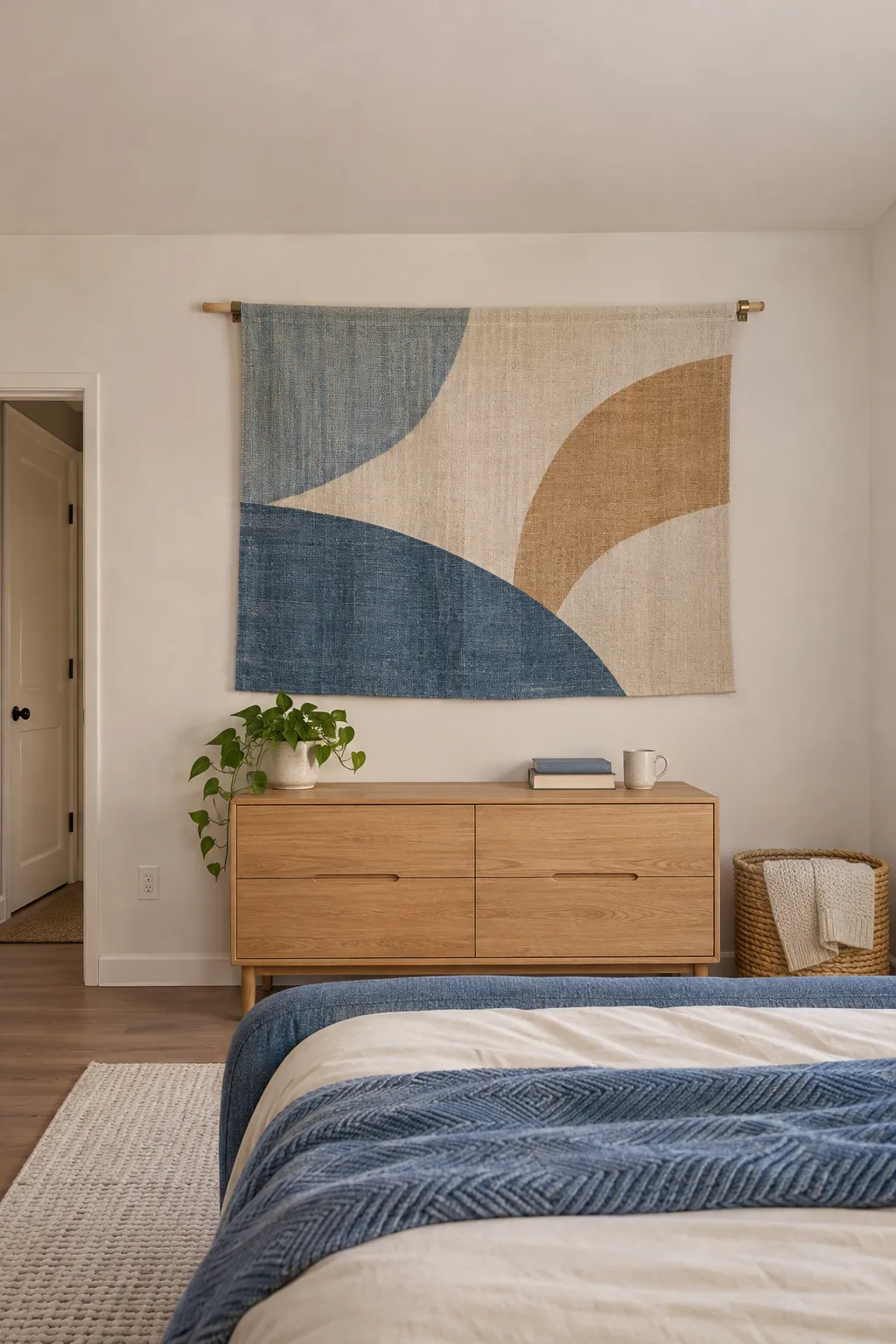
Choose a Soft Tapestry
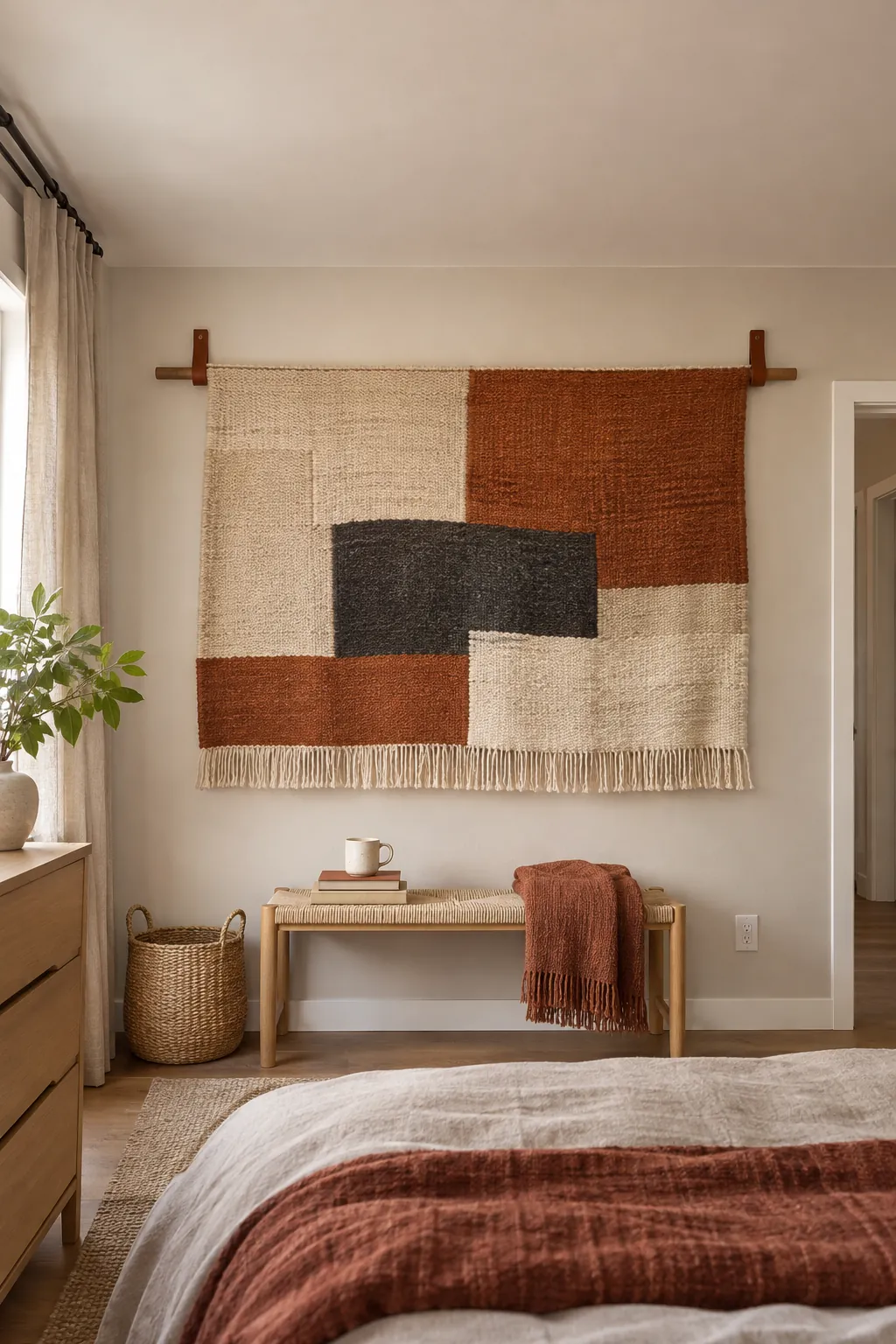
A flat tapestry offers broad color with less visual noise than a detailed gallery wall. Look for an abstract design with large shapes that still reads at the distance from pillow to wall. A concealed top bar keeps the piece straight while letting the woven surface remain the focus.
Frame Pressed Botanical Specimens
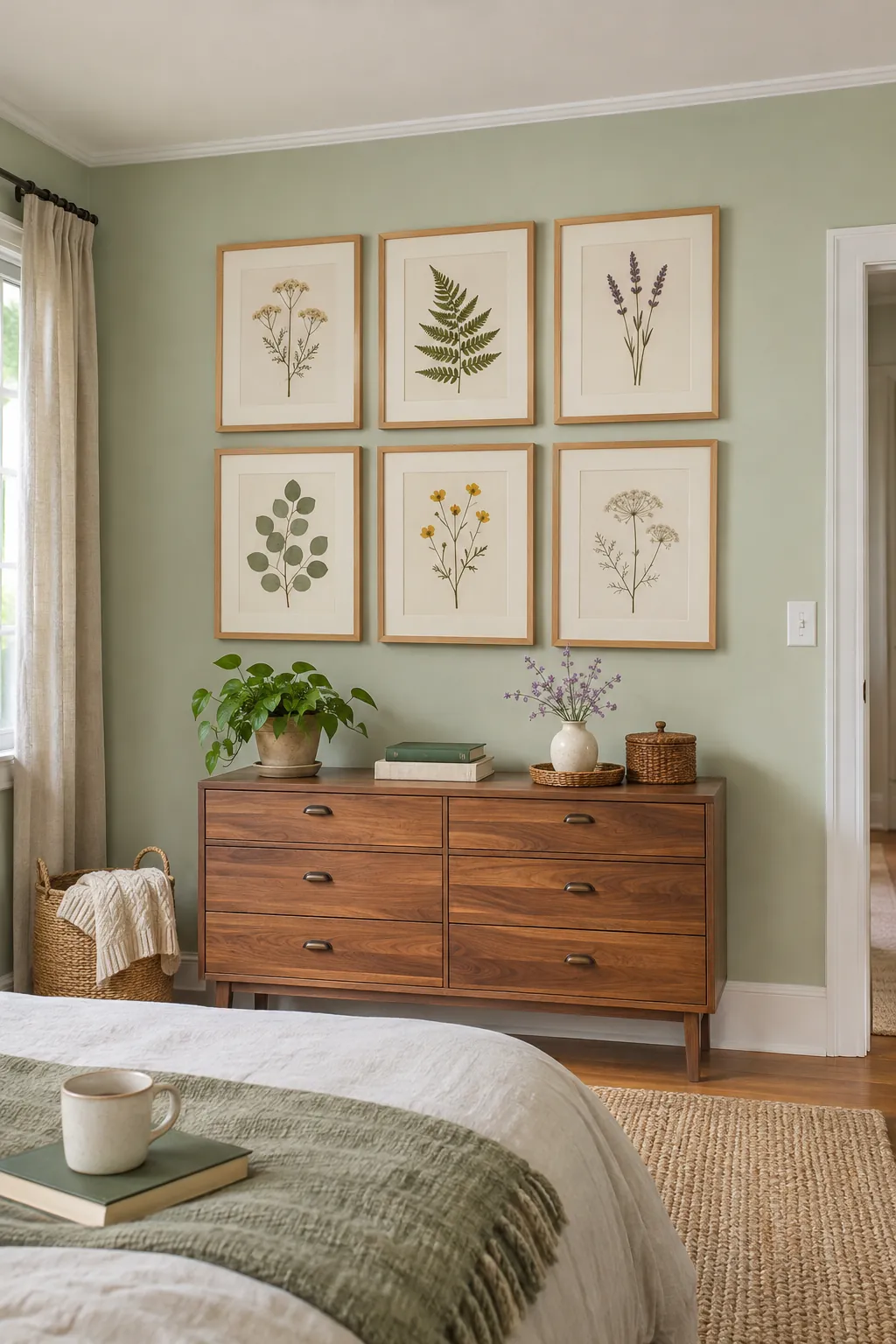
Pressed botanical specimens bring natural detail into a bright bedroom. Use generous mats so delicate stems do not disappear inside the frames, and choose specimens with distinct leaf structures. Arrange the set as a measured grid for calm repetition rather than a loose cluster.
Install a Quiet Oversized Clock
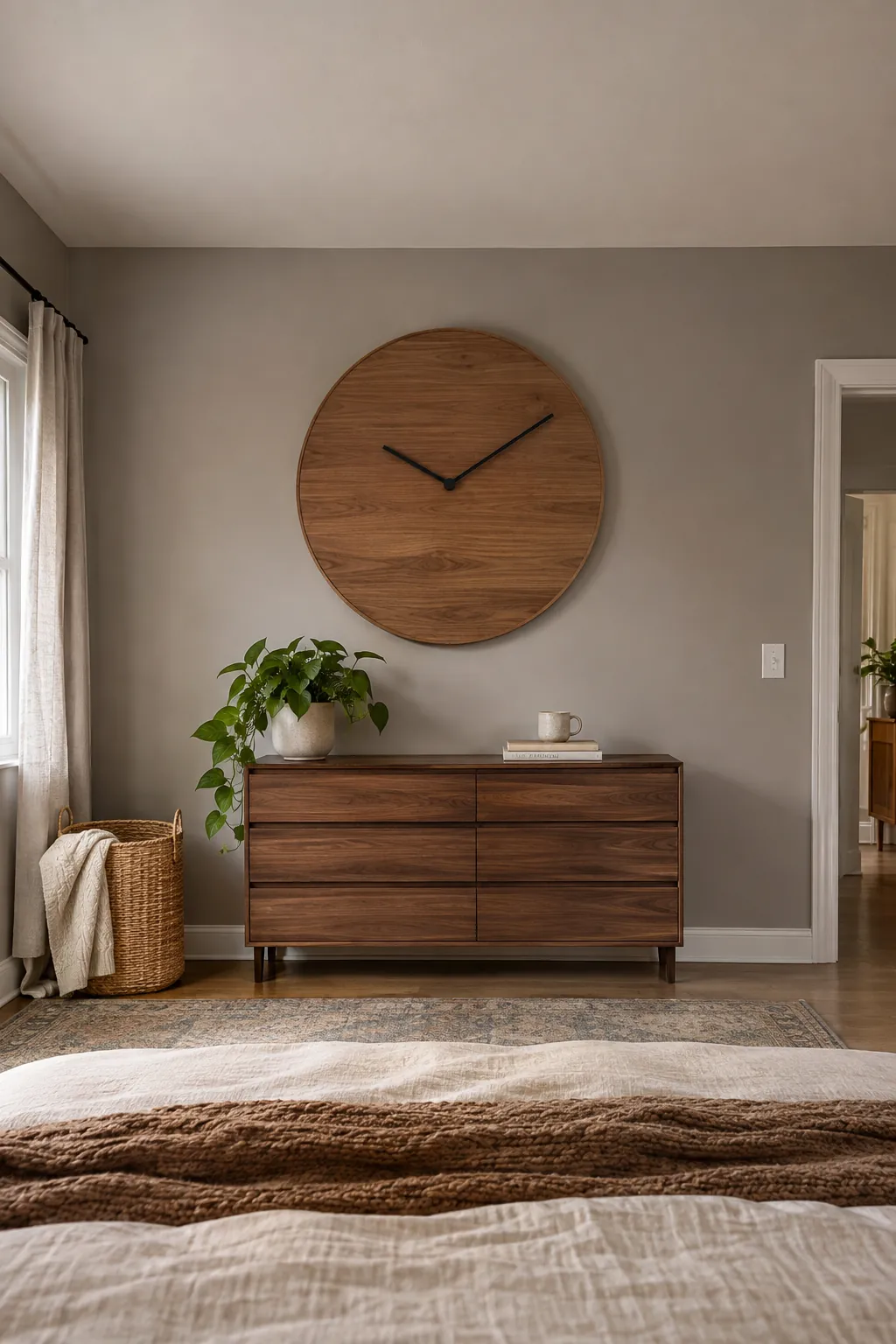
An oversized clock can fill the wall while remaining useful, provided its design is quiet. Choose a wood face with simple hands, no bright second hand, and silent movement for sleeping comfort. Leave a broad clear area around it so the clock reads as one sculptural object.
Combine Art With a Slim Bench
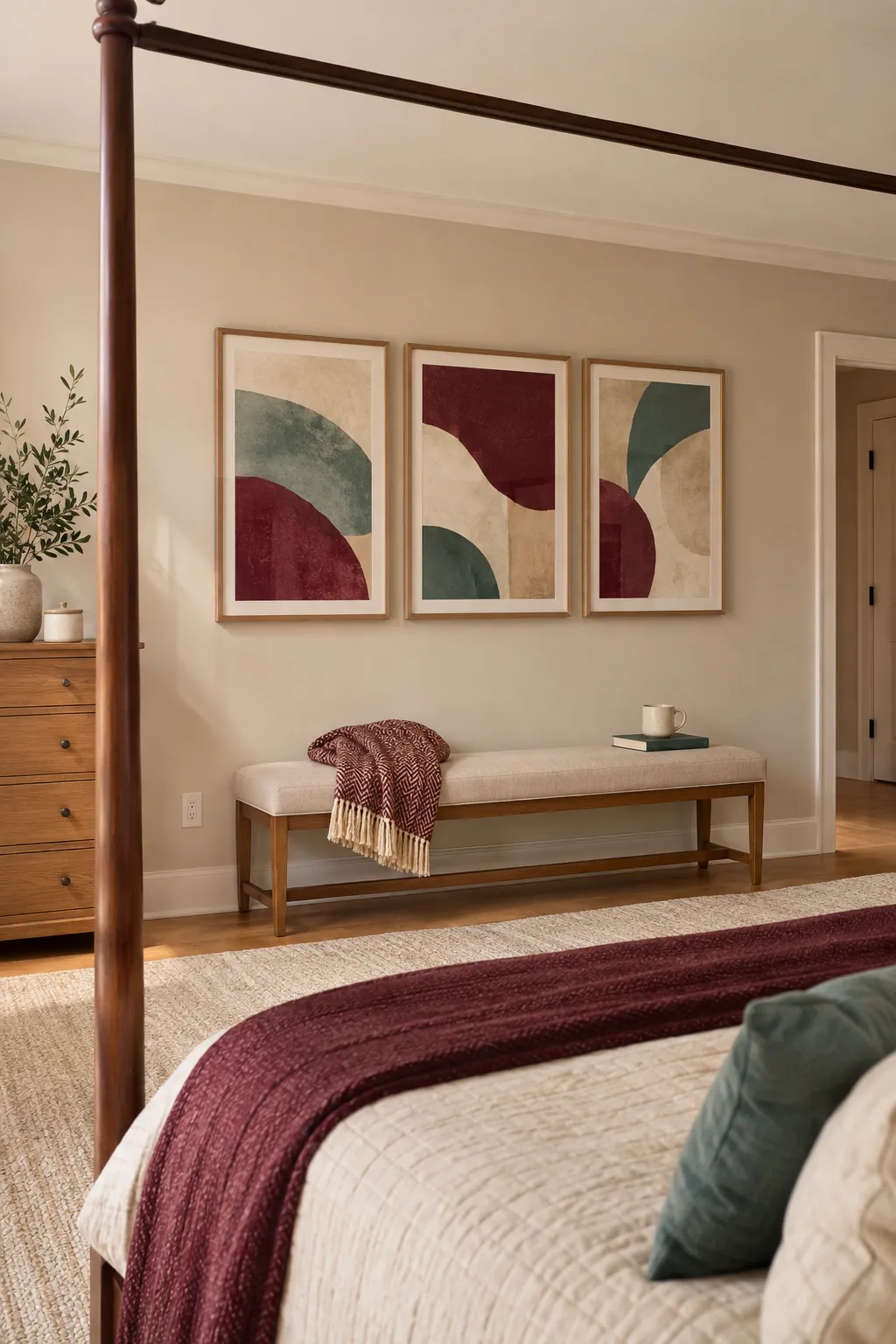
A slim bench gives the opposite wall a lower anchor and a practical place for clothes or bedding. Hang a three piece print set above it, keeping the art narrower than the bench and aligned with its center. The layered arrangement adds depth without another cabinet or reflective surface.