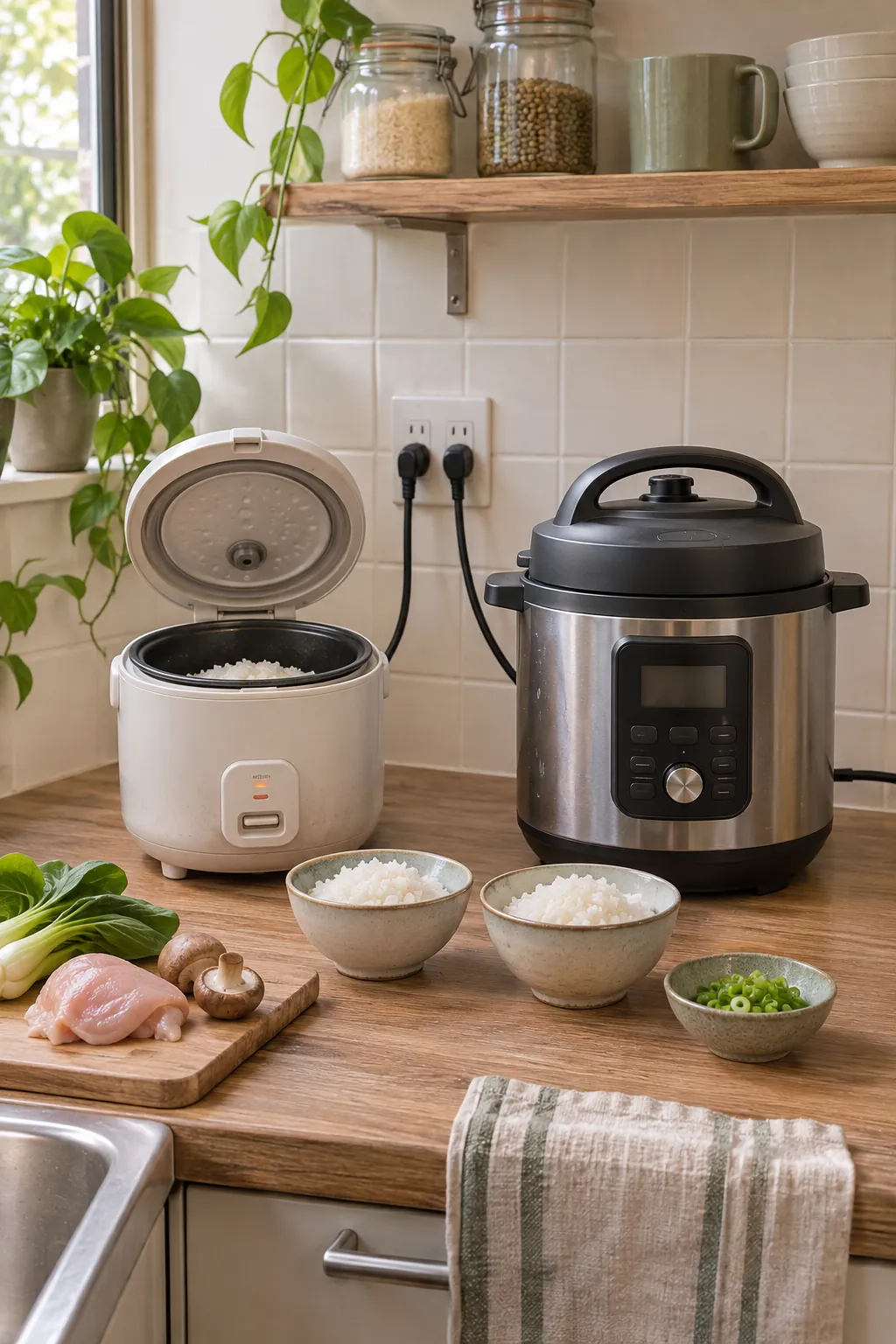
A small kitchen makes every appliance earn its place. The difficult choice is not simply which machine can cook rice. It is whether you want the easiest possible bowl of rice or one pot that can also pressure cook dinner. The right answer depends on your smallest normal batch, your weekly menu, and how much cleanup you will tolerate on a busy night.
Start With What You Cook Most Often
A compact rice cooker is usually the better specialist. You measure rice and water, press one control, and let the machine manage heat and resting time. That simple routine matters when rice appears at three or four meals each week.
A multicooker earns its larger footprint when you will also use pressure cooking, slow cooking, steaming, or sautéing. Those functions can replace other equipment, but only if they match food you already make. A long program list has little value when most dinners still happen in a frying pan.
Choose Capacity by the Smallest Batch
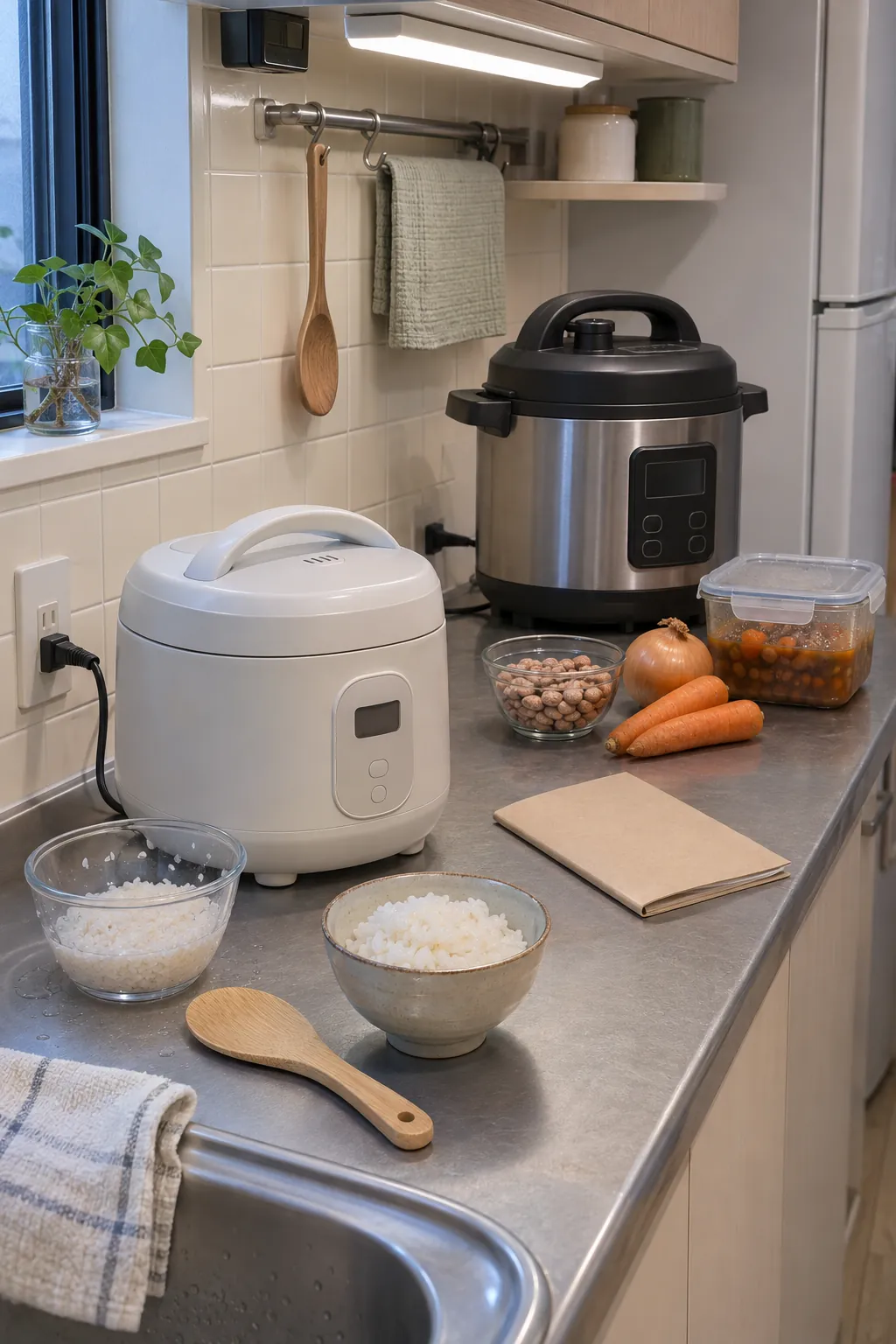
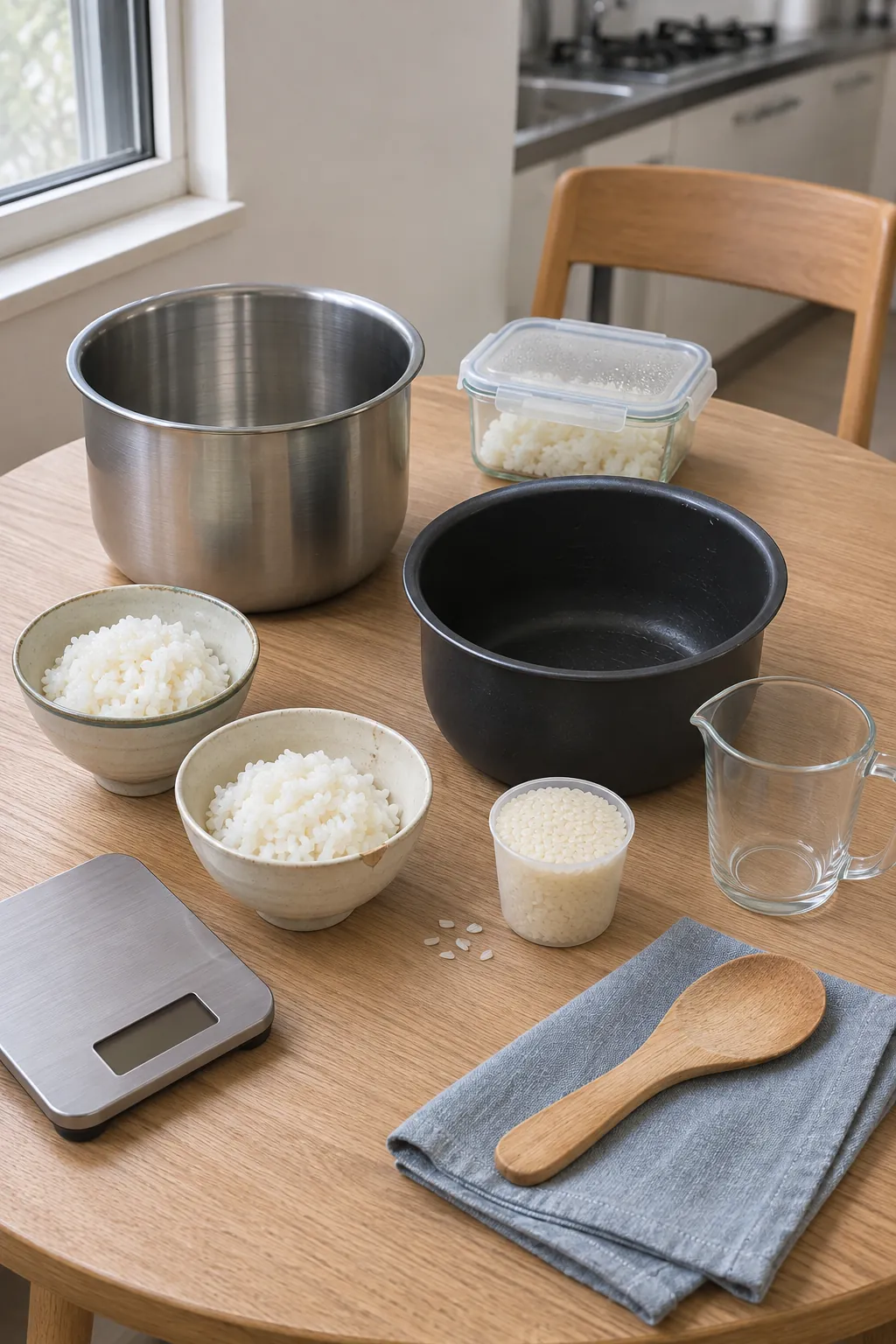
Capacity labels can mislead because rice cooker cups are often smaller than a standard measuring cup. Check the manual for the minimum dry rice amount, not only the advertised maximum. One person who wants one fresh serving needs a machine that can cook that small amount evenly without leaving a dry ring around the pot.
For one or two people, a rice cooker in the three cup class often leaves useful room for leftovers without becoming bulky. A tiny one cup model can suit a strict single serving routine, but it gives you less flexibility for guests or batch cooking. A multicooker also needs enough liquid and food volume to build pressure correctly, so its practical minimum can be more important than its total capacity.
Compare the Real Time to Dinner
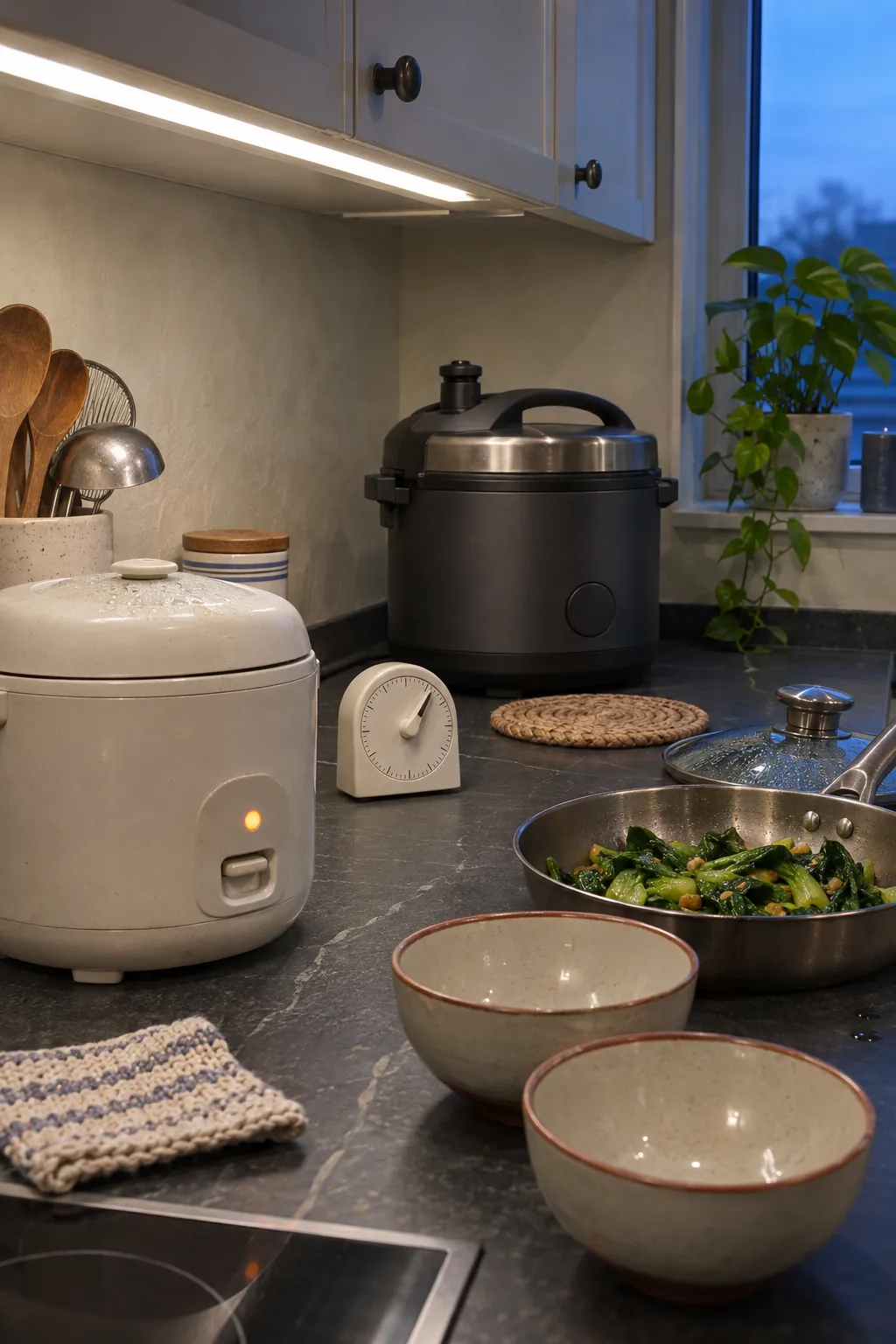
Pressure cooking time is only one part of a multicooker cycle. The pot must heat, reach pressure, cook, and then release pressure. A program that shows three minutes can therefore take much longer from button press to an open lid.
A rice cooker may display a longer cook cycle, yet it often needs less attention. Many models shift to warm automatically and allow a short resting period that improves texture. Compare the complete hands off routine rather than the number shown beside one stage.
The better machine is the one whose timing fits your evening. If you want rice ready while you cook vegetables, predictable automatic warming may matter more than speed. If a pressure cooked stew is the whole meal, the multicooker can save effort even when the total cycle is not short.
Look Closely at Rice Texture
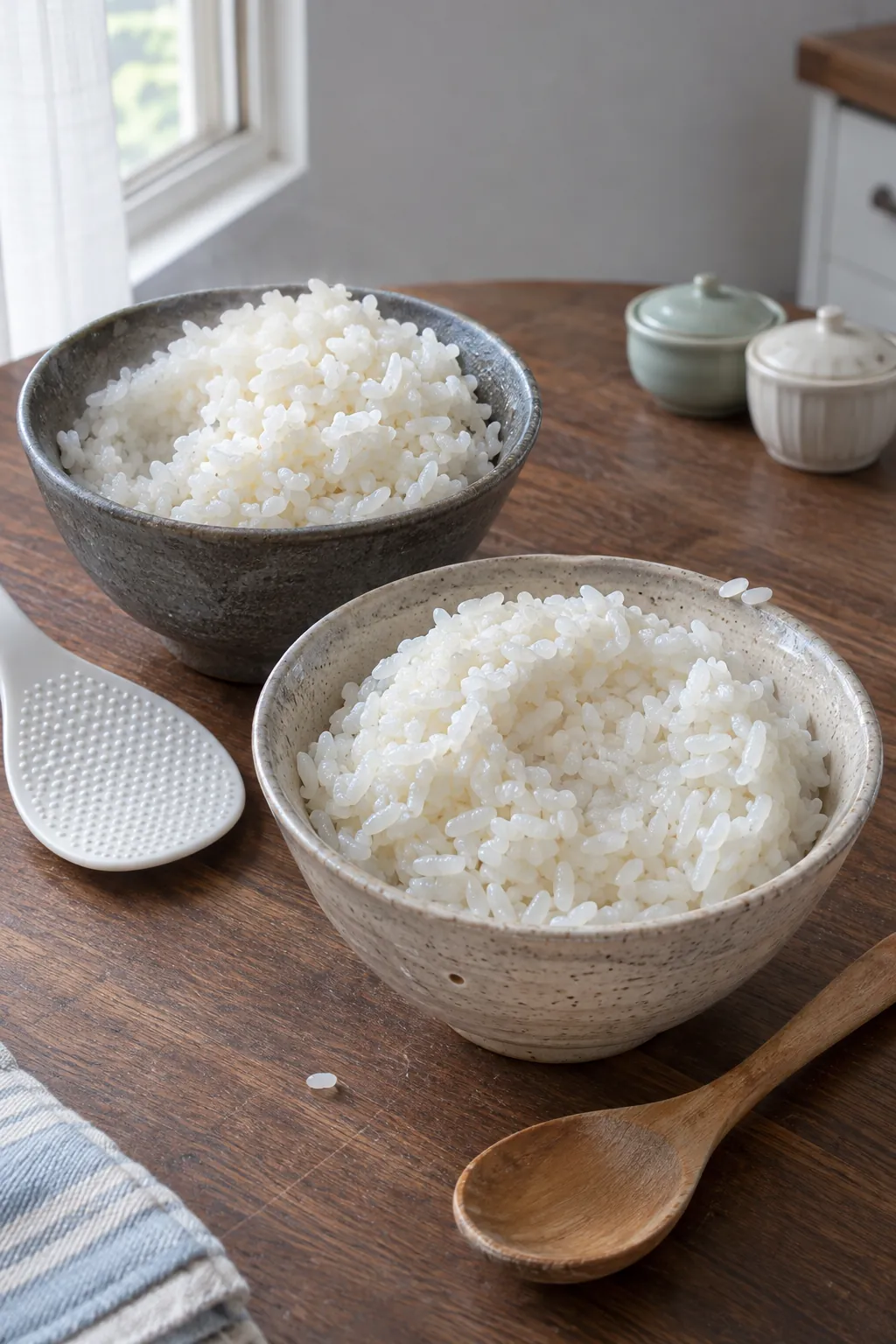
Dedicated rice cookers are designed around gradual heat control and a rest at the end. That can make them more forgiving across white rice, brown rice, and mixed grains. Models with sensors can adjust when the water or room temperature varies slightly.
A multicooker can make excellent rice, but the method may need more testing. The correct water ratio can differ from a saucepan recipe because little steam escapes under pressure. Natural pressure release also affects texture, so opening the valve too soon can leave grains uneven. Follow the specific manual first, then change only one variable at a time.
Count Every Cleanup Part
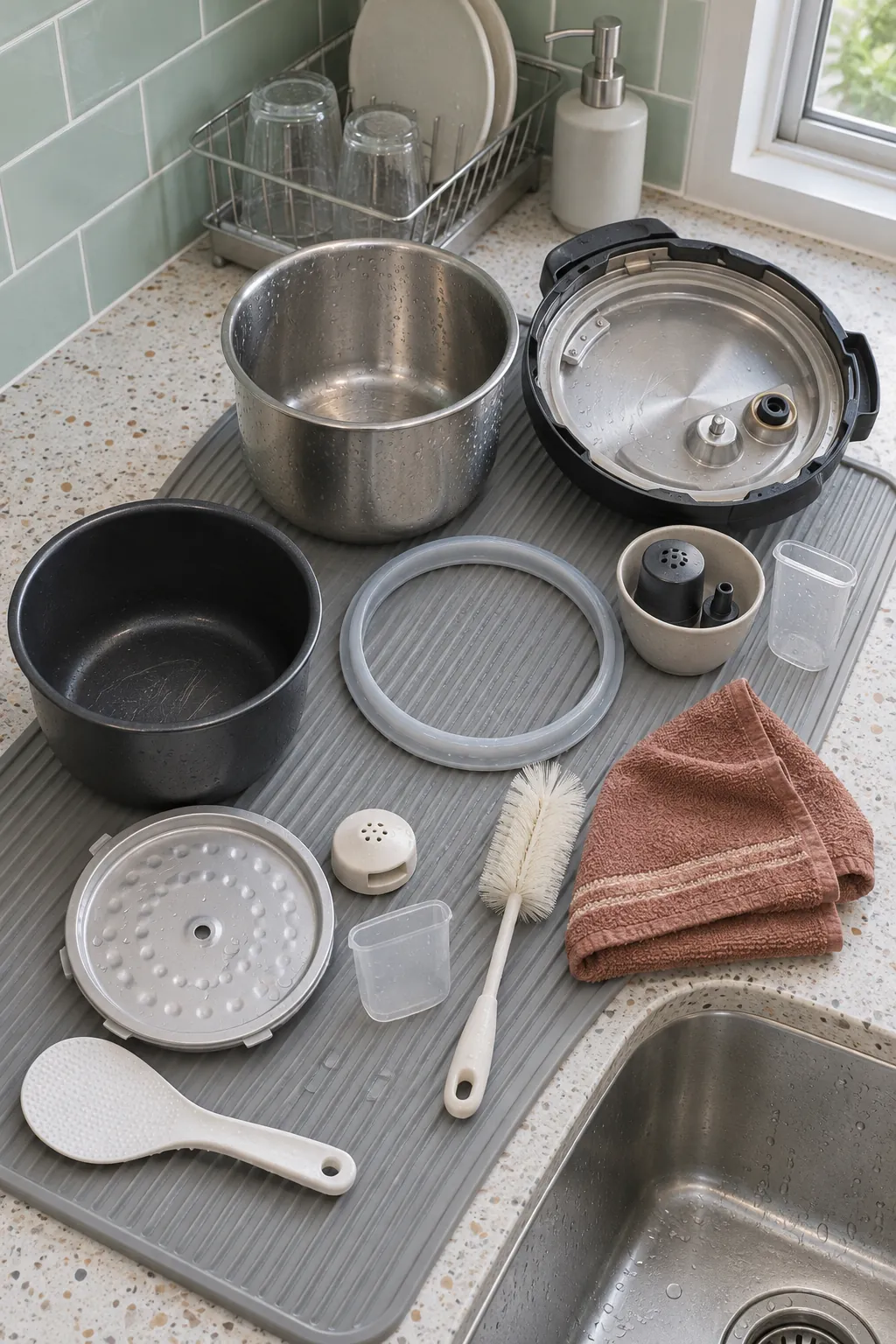
A basic rice cooker may ask you to wash only the inner pot, lid insert, steam vent, and condensation cup. Check whether those pieces detach without tools and whether the inner pot has corners that trap grains. A removable cord can also make the body easier to store and wipe.
A pressure multicooker adds a sealing ring, valve parts, and a lid channel. Strong food aromas can remain in the silicone ring, especially after curries or beans, and then transfer to mild rice. Some owners keep separate rings for savory meals and grains. That solution works, but it creates another accessory to clean and store.
Measure Storage and Working Clearance
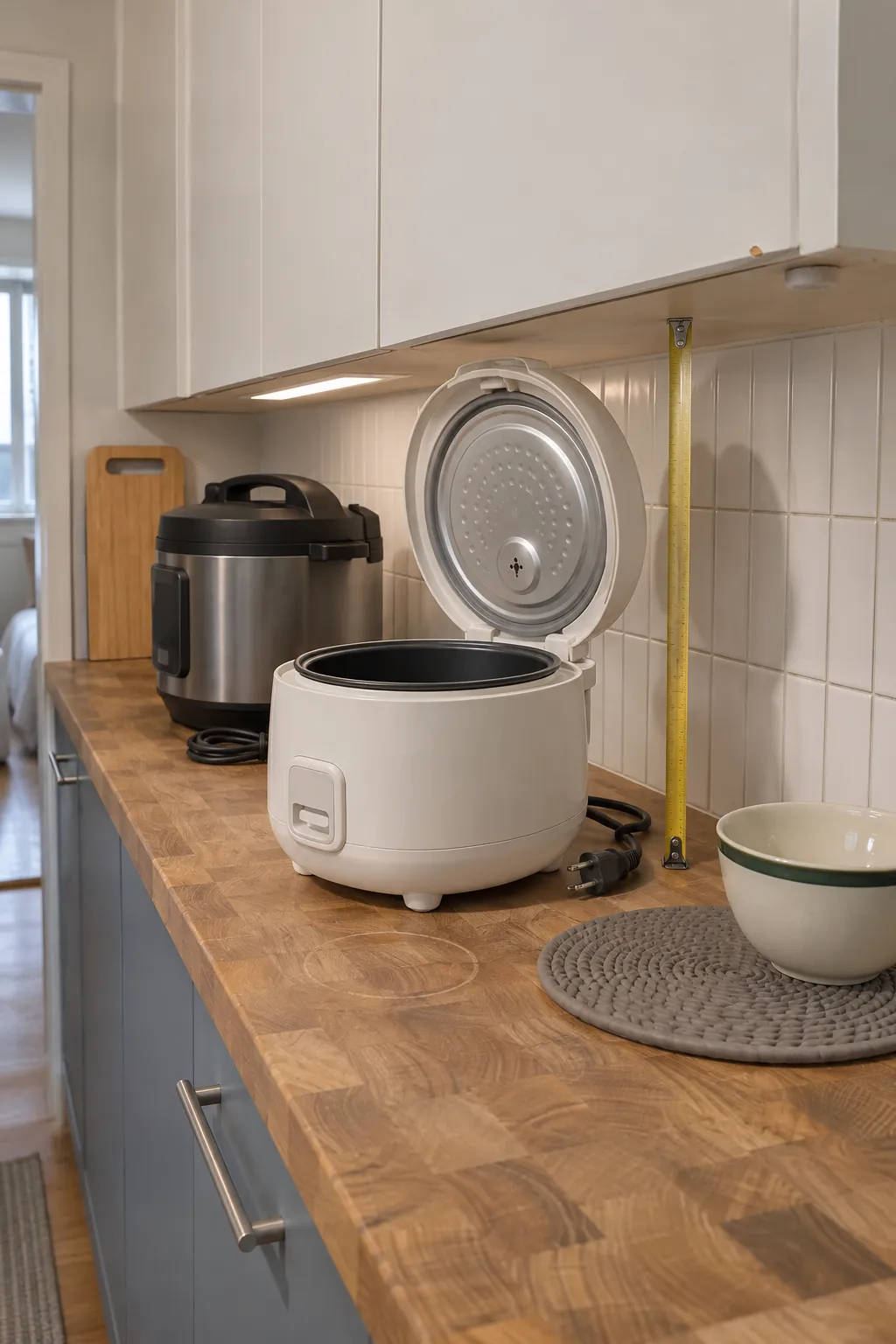
Measure the appliance width and depth, then add room for handles, the plug, and an open lid. A machine that fits a shelf may still be awkward if its lid hits the cabinet above. Steam also needs a clear path away from cabinet faces and wall surfaces.
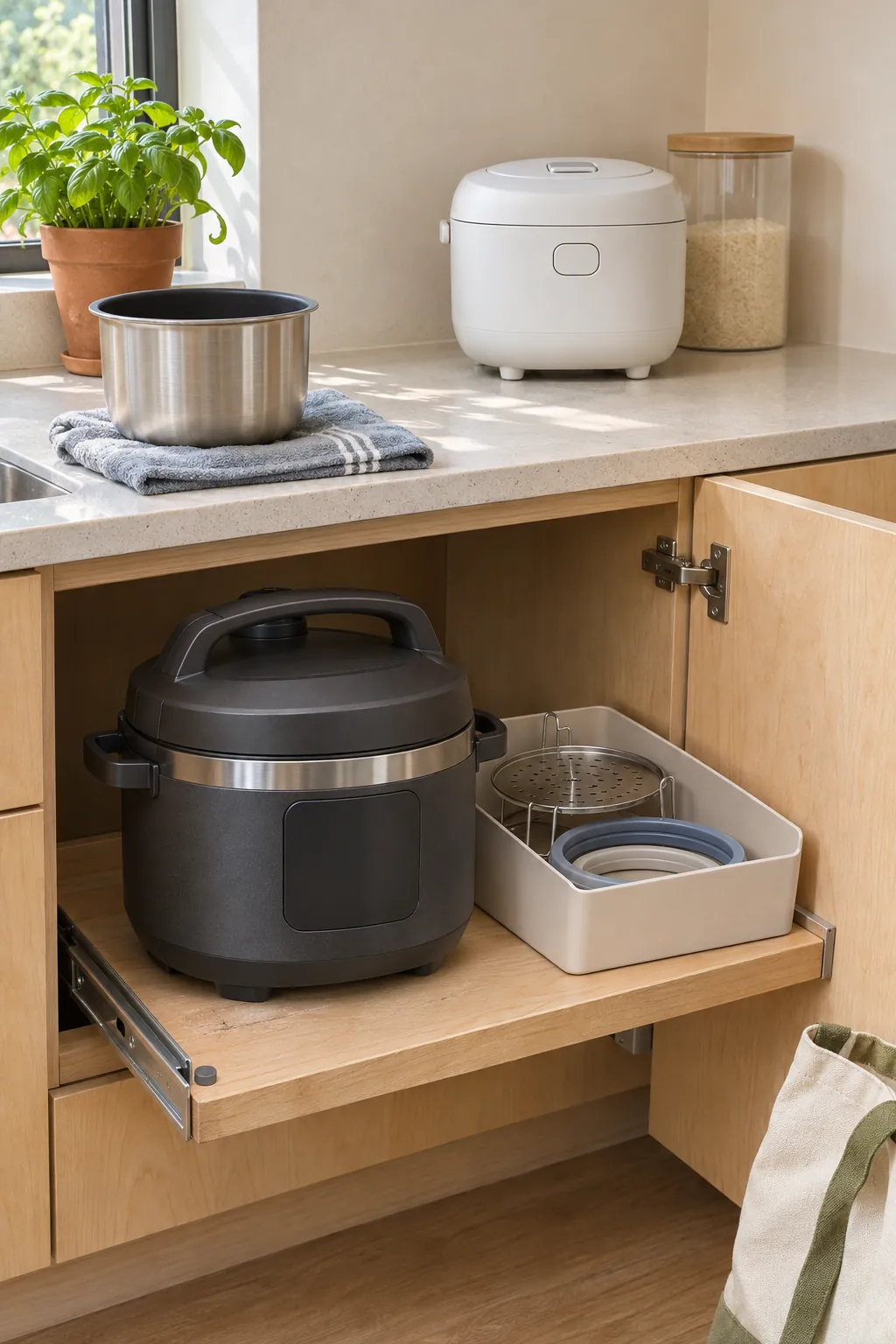
Think about the whole cooking zone. You need space to rinse rice, set down the hot inner pot, and open the lid without moving other appliances. A tall multicooker can consume less counter width than a wide rice cooker, yet be harder to use under low cabinets. Store accessories inside the clean, dry pot only when they cannot scratch its coating.
Make the final choice from your routine. Choose the compact rice cooker when frequent rice, small reliable batches, simple cleaning, and automatic warming matter most. Choose the compact multicooker when pressure cooked meals are already part of your plan and one versatile pot truly replaces equipment you would otherwise keep.