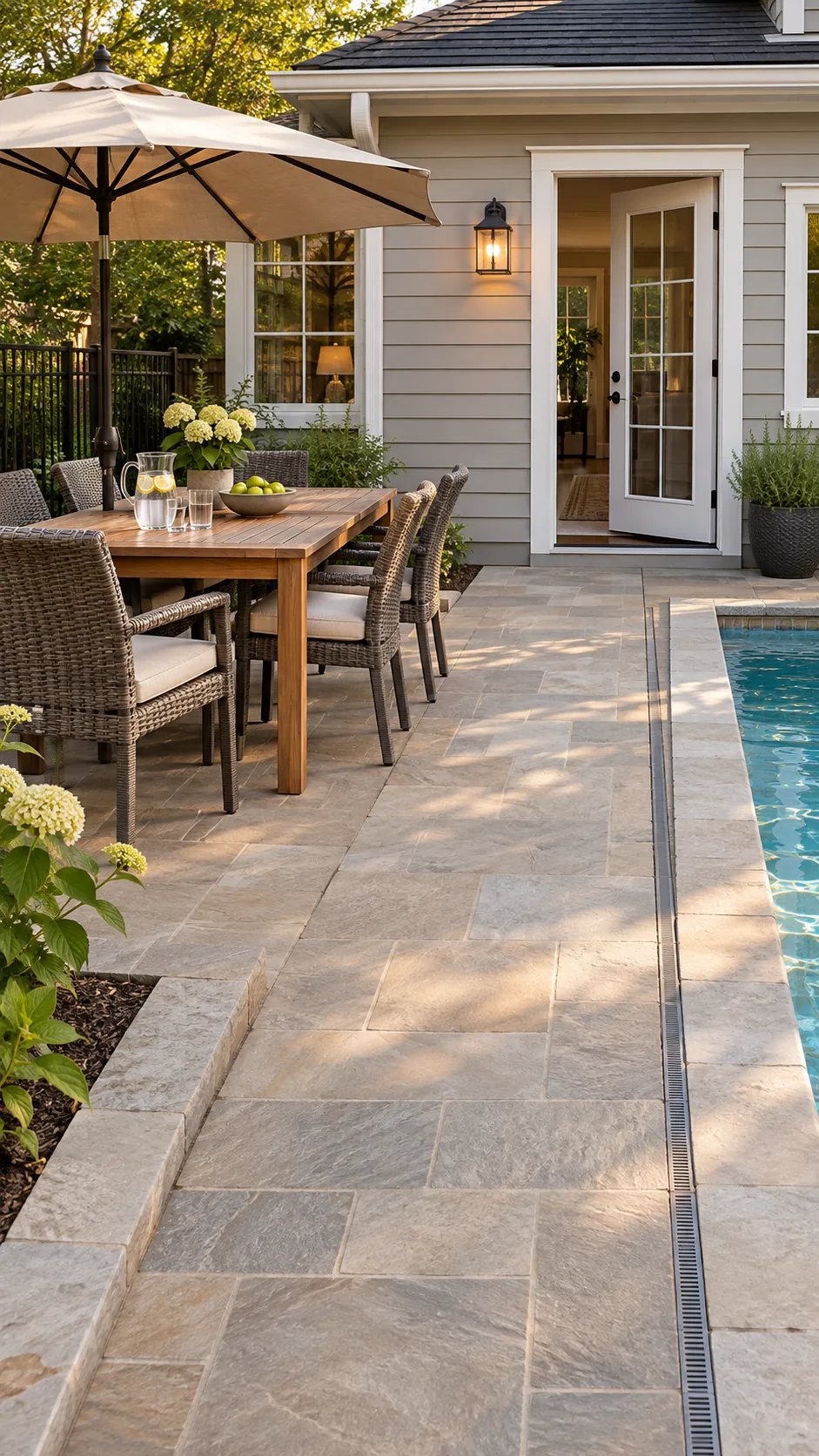
A poolside table can look perfectly placed when every chair is tucked in, then block the busiest route as soon as people sit down. The useful plan starts with movement, not furniture. Protect the line between the house, pool gate, towels, food, and bathroom before choosing the dining set.
Trace the Route Before You Place Furniture
Watch how family members actually move from the back door to the pool and mark the most direct line. Include trips made with trays, wet towels, toys, and small children, because those loads change how much room feels comfortable. Treat that line as permanent circulation rather than spare patio space.
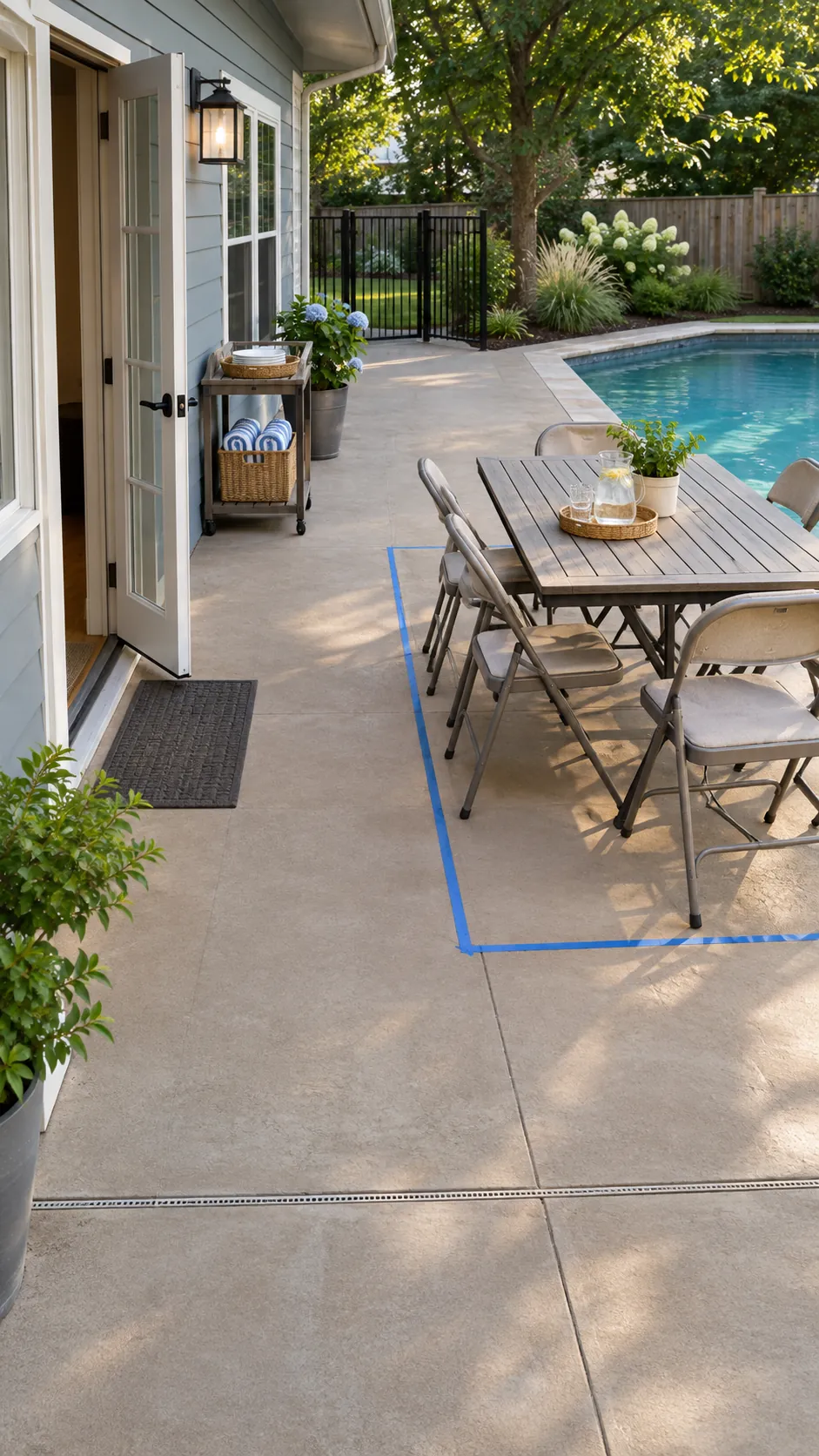
Use removable tape, chalk, or a garden hose to outline the route for several days. Open every nearby door and gate during the test. If someone must turn sideways or walk behind an occupied chair, the corridor is not protected yet.
Measure Chairs in Their Used Position
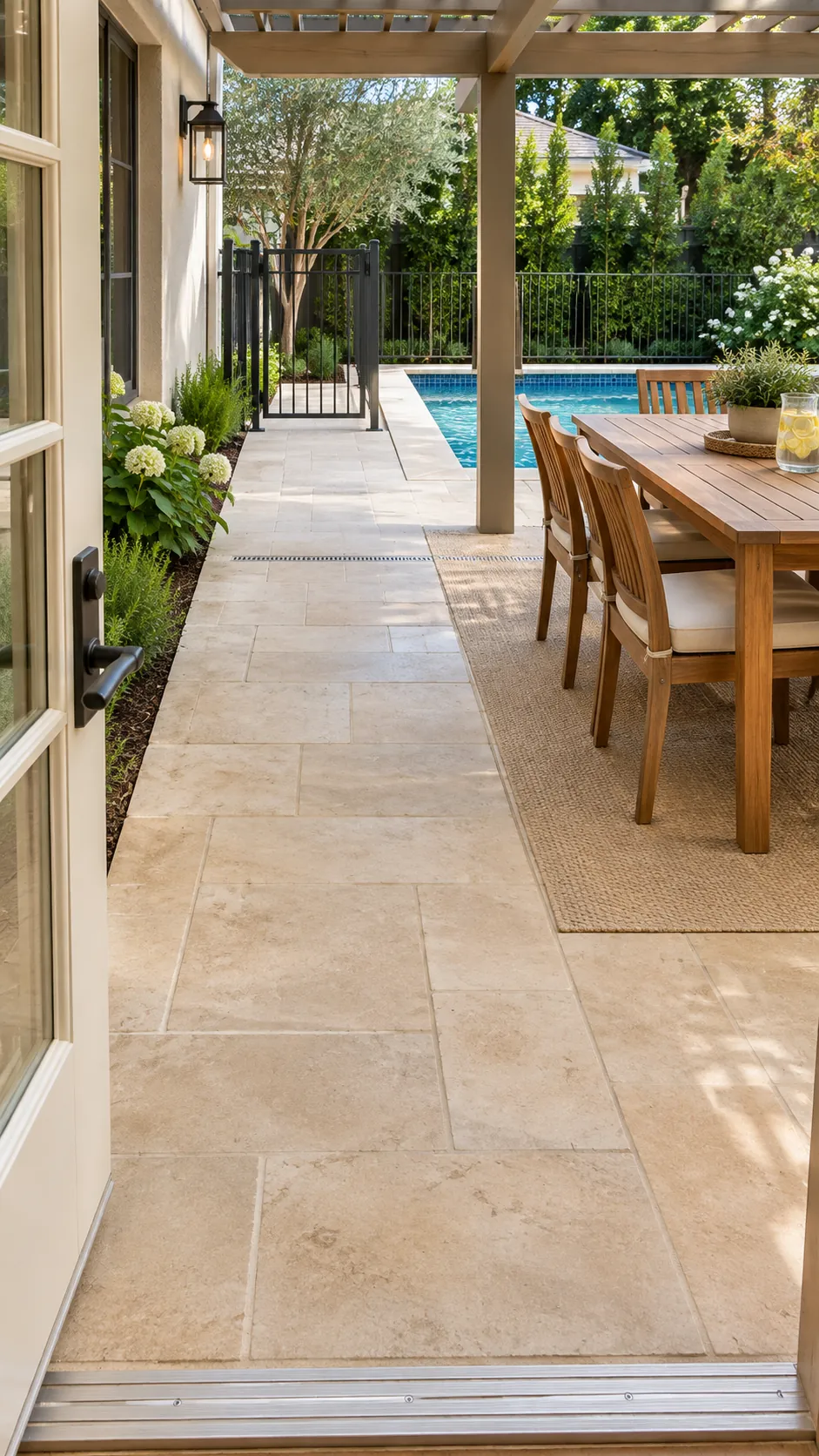
The table footprint is only the center of the dining zone. Pull each chair out to a realistic sitting position, then leave room for a person to pass without brushing the seated guest. Benches can reduce visual clutter, but they still need space for people to enter and leave.
Test the largest gathering you expect rather than the quietest weekday meal. Add any high chair, serving cart, or extra seat that appears during family events. A smaller table that works fully expanded is more useful than a large table that turns the patio into an obstacle course.
Keep the Fast Lane Behind the Diners
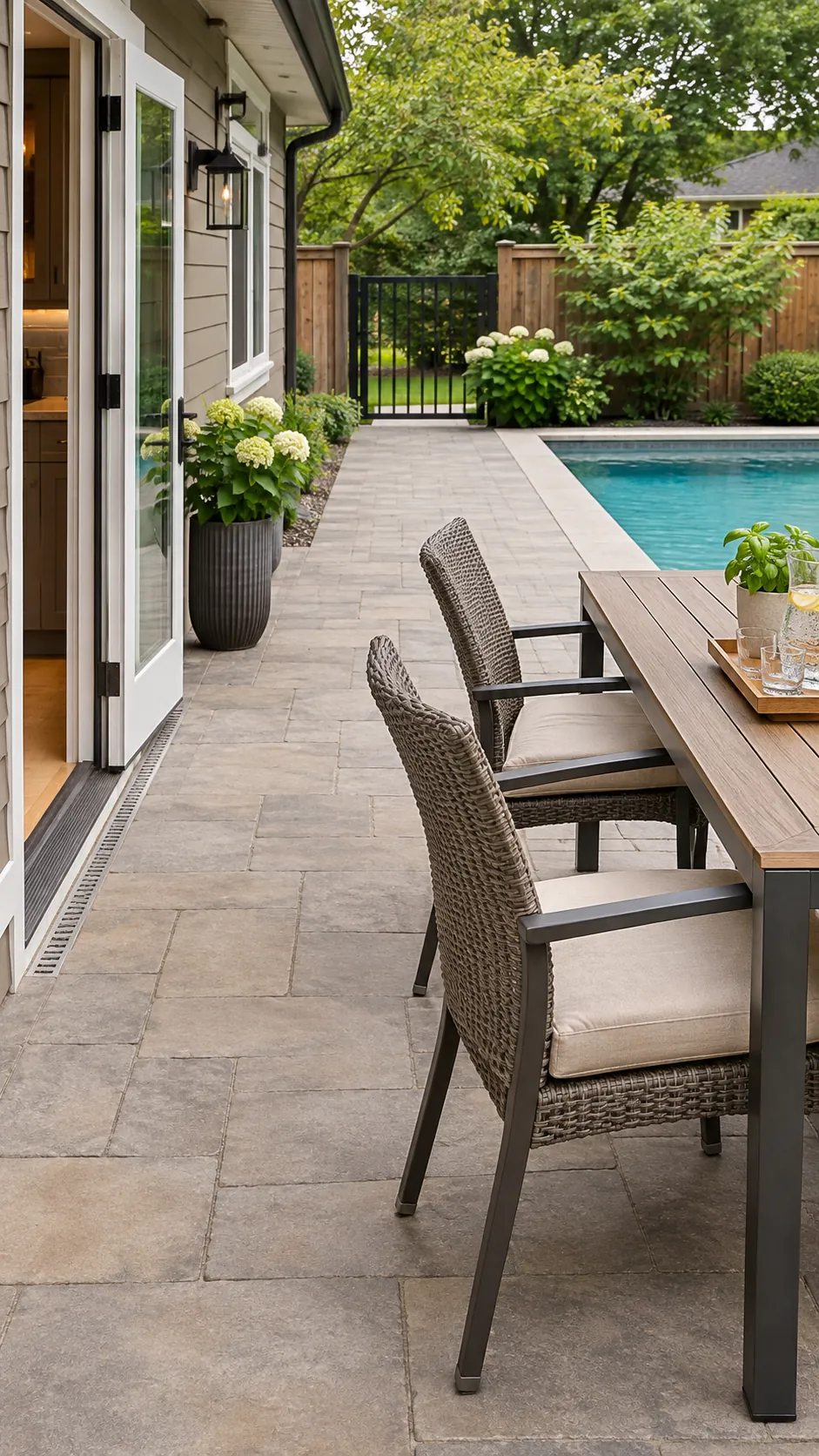
When possible, place the main walkway behind one short end of the table instead of along the backs of several chairs. People can then move between the house and pool without entering conversations or asking diners to move. This arrangement also keeps wet swimmers away from plates and serving dishes.
Rotate the table before assuming the patio is too small. A change of orientation can turn a long conflict zone into one clear crossing. Keep the active route visually obvious with continuous paving or a consistent edge.
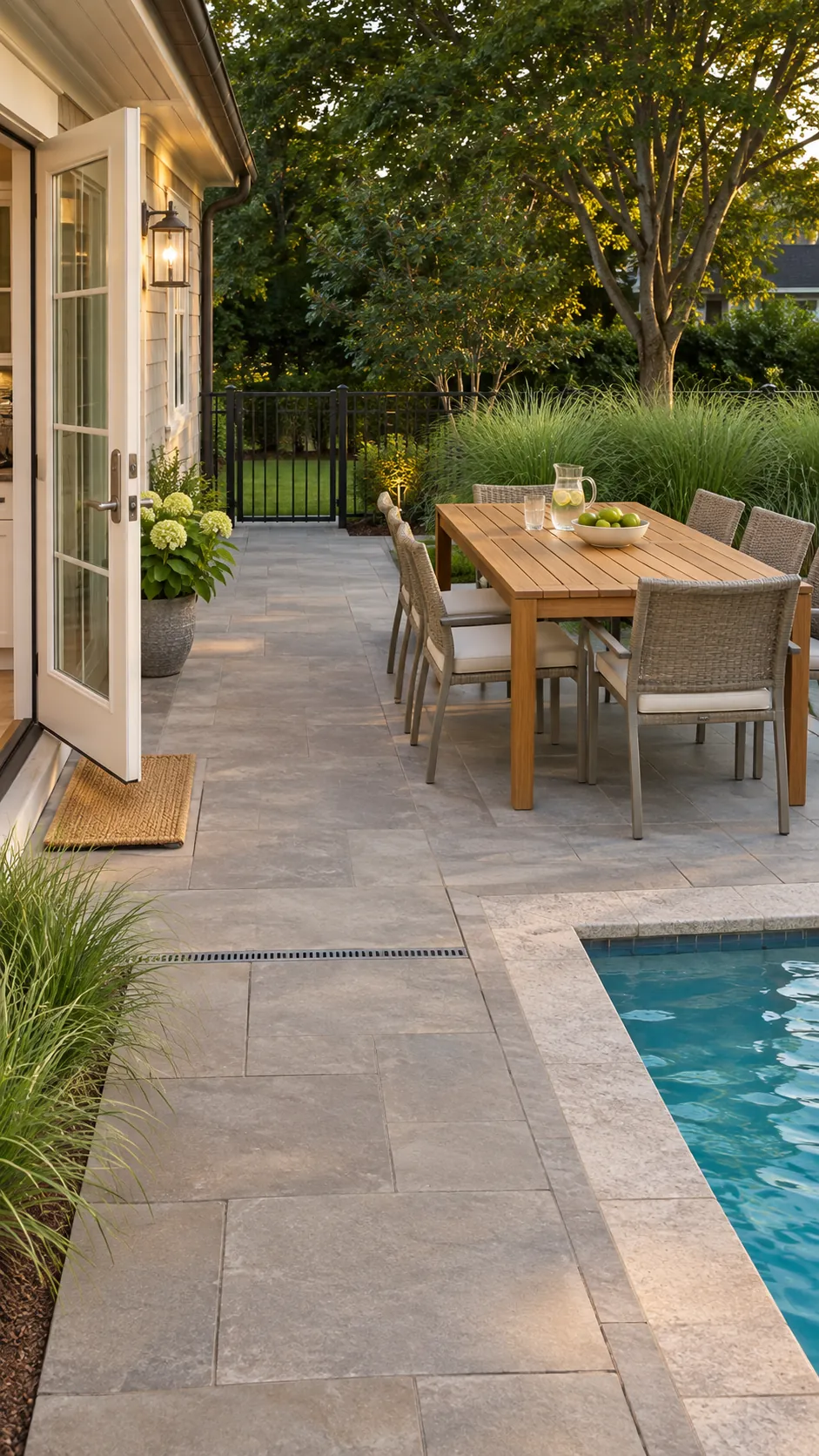
Separate Food Service From Wet Traffic
Put the serving surface on the house side of the dining area so food travels the shortest controlled path. Keep it away from the pool edge and from the route used by dripping swimmers. A narrow console or mobile cart can work better than placing every dish on the table.
Consider where hot food, glassware, and coolers will pause during a gathering. Those temporary objects cause many of the worst bottlenecks because they are not shown on a furniture plan. Give each one a safe landing point before guests arrive.
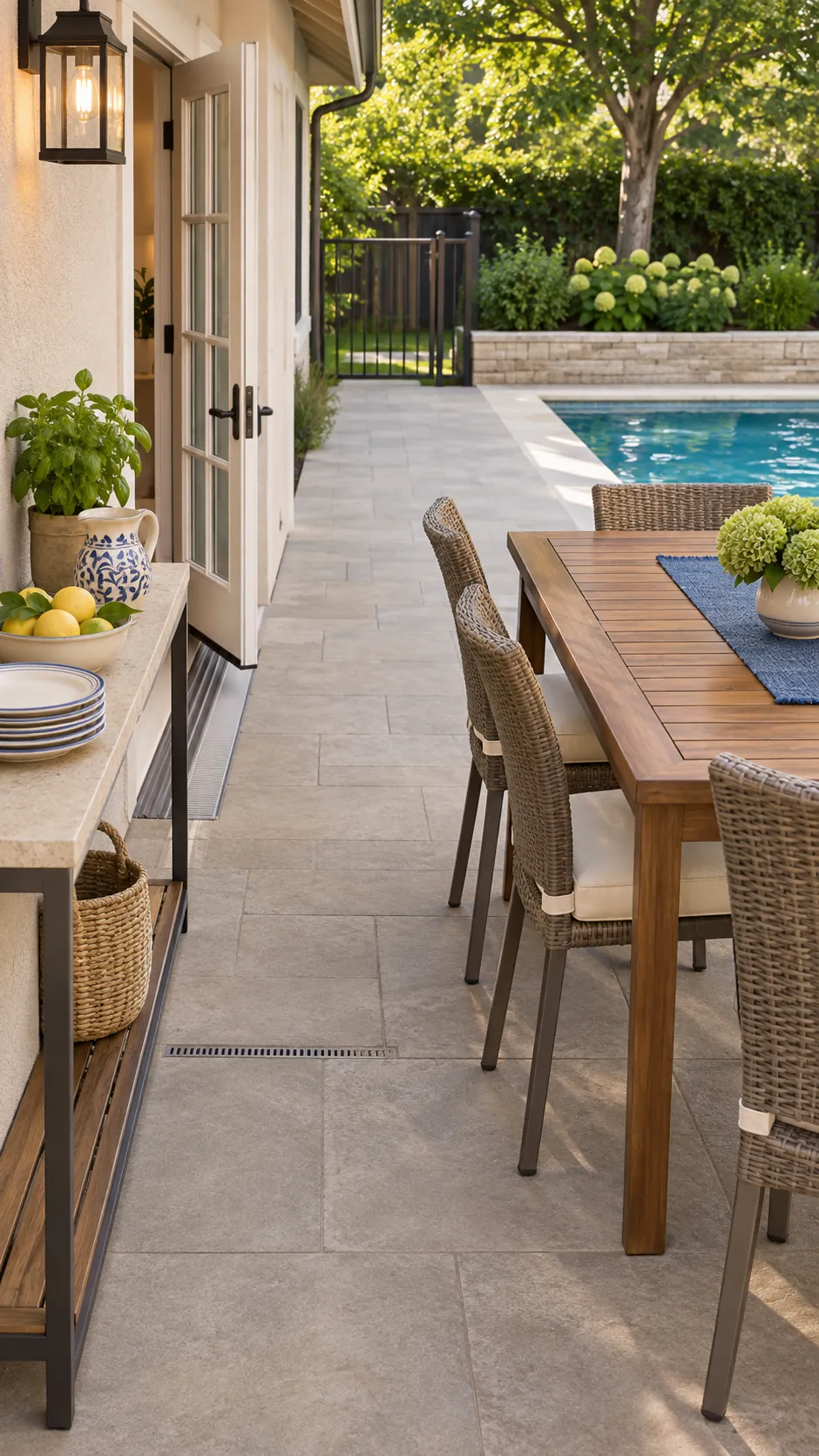
Use Shade Without Creating a New Barrier
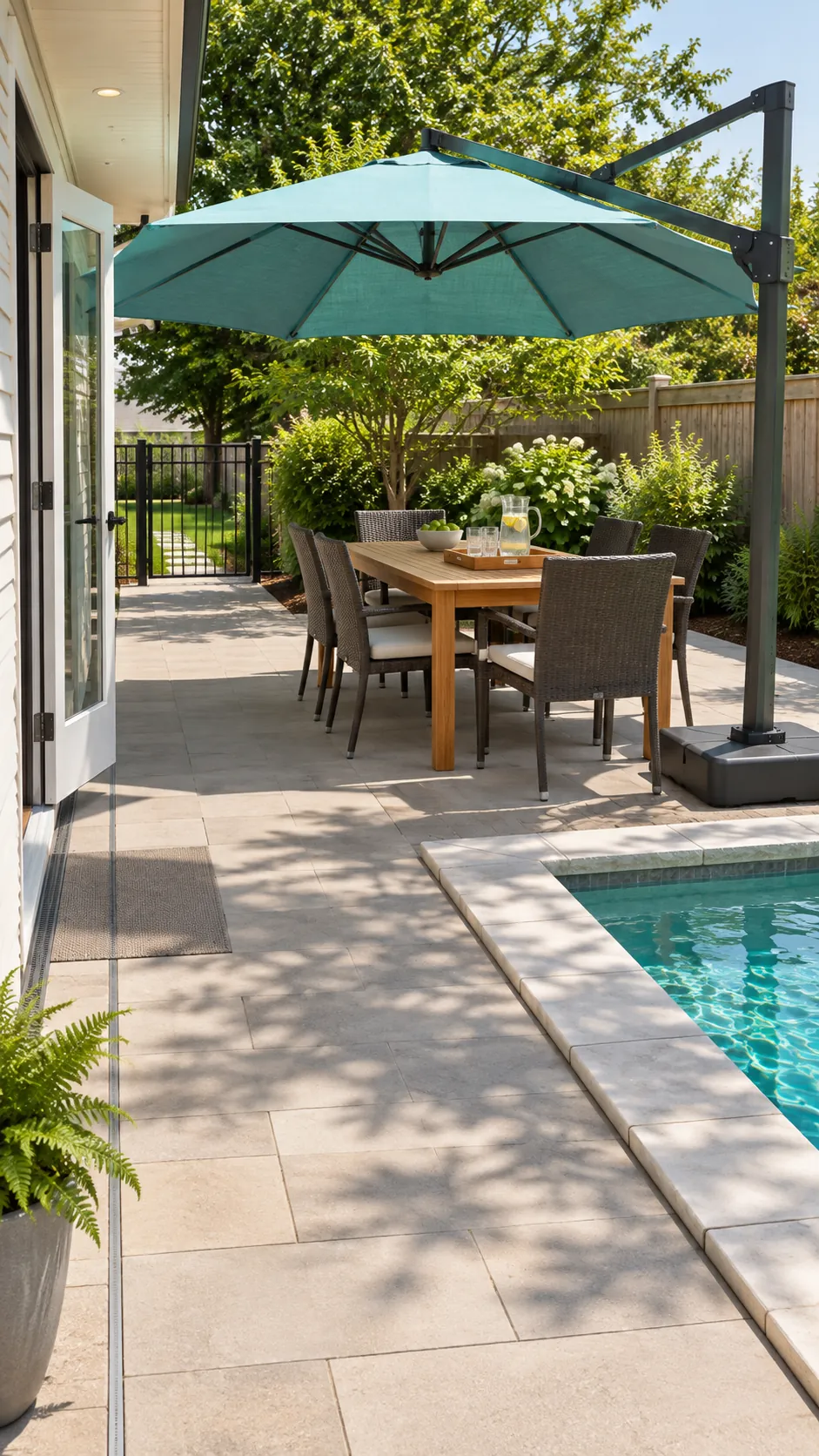
An umbrella pole, canopy leg, or shade sail anchor can solve heat while creating a collision point. Place supports inside the dining footprint or beyond the traffic edge, never in the protected route. Confirm that the shade still covers seated people during the hours when the area is used most.
A cantilever umbrella can move the support away from the table center, but its base needs a stable location and enough weight for the manufacturer’s limits. A fixed structure requires professional review for wind, drainage, and local permits. Close or secure shade equipment whenever conditions exceed its rated use.
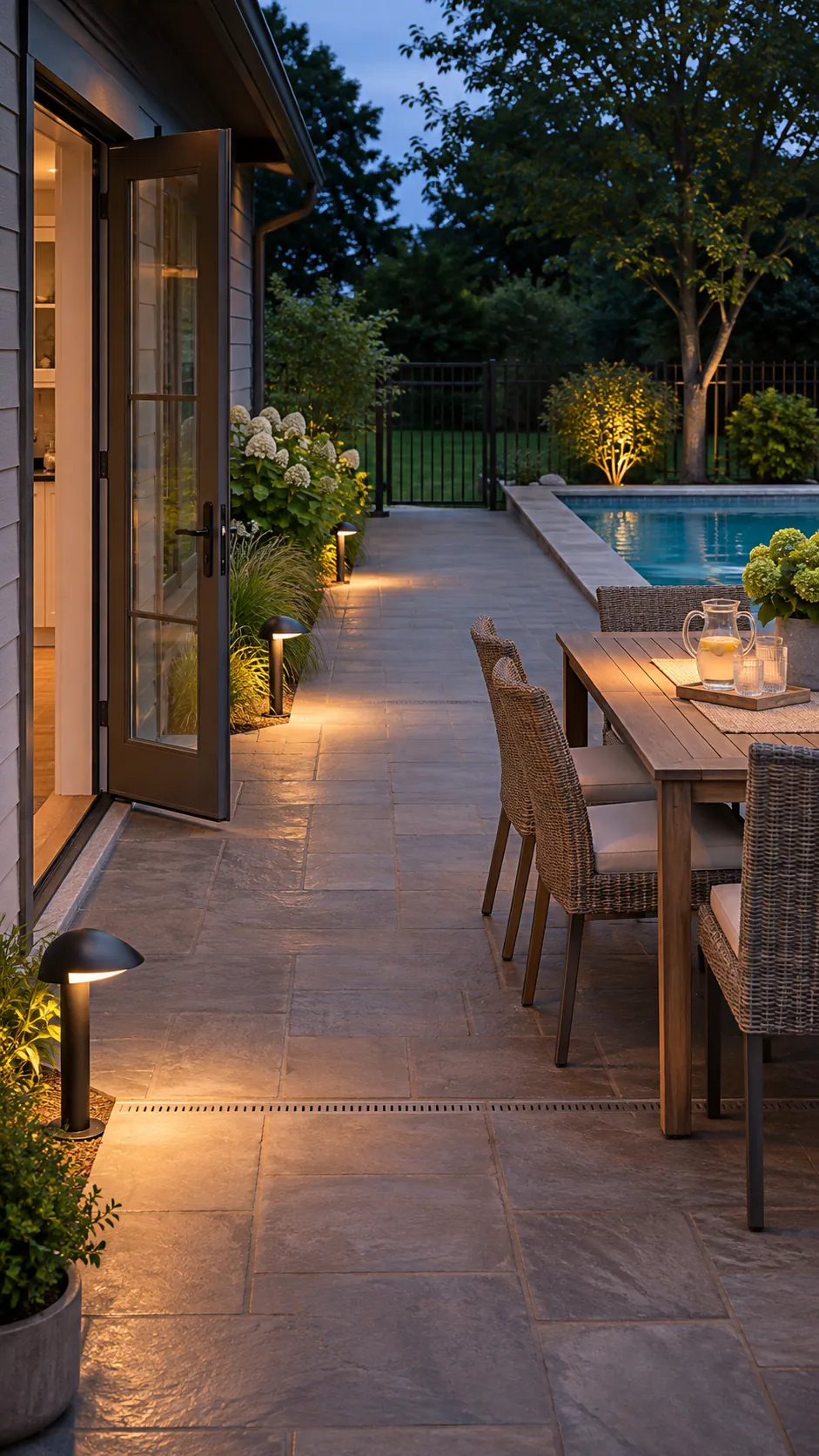
Make the Walkway Easy to Read at Night
Pool gatherings often continue after the furniture and paving become difficult to distinguish. Light the route as a continuous path and illuminate changes in level without aiming glare into seated faces. Keep electrical work and fixtures suitable for the required pool environment and local code.
Warm light near the table can define the dining zone while lower shielded light guides circulation. Avoid loose cords across the deck. Check the result from both directions because a fixture that feels comfortable from the house can glare when viewed from the pool.
Run a Full Family Test Before Buying
Build a temporary outline with boxes, folding chairs, and tape at the exact dimensions of the proposed furniture. Seat people, pull out every chair, open the house door, and carry a loaded tray through the route. Repeat the test with pool toys and towels on the deck, since a perfect empty patio can fail during real use.
Move the outline until no one has to interrupt a diner or step close to the water to pass. Record the final dimensions and take a photo from the house door. Buy only furniture that fits that tested envelope, including chair depth, base position, and any shade equipment.