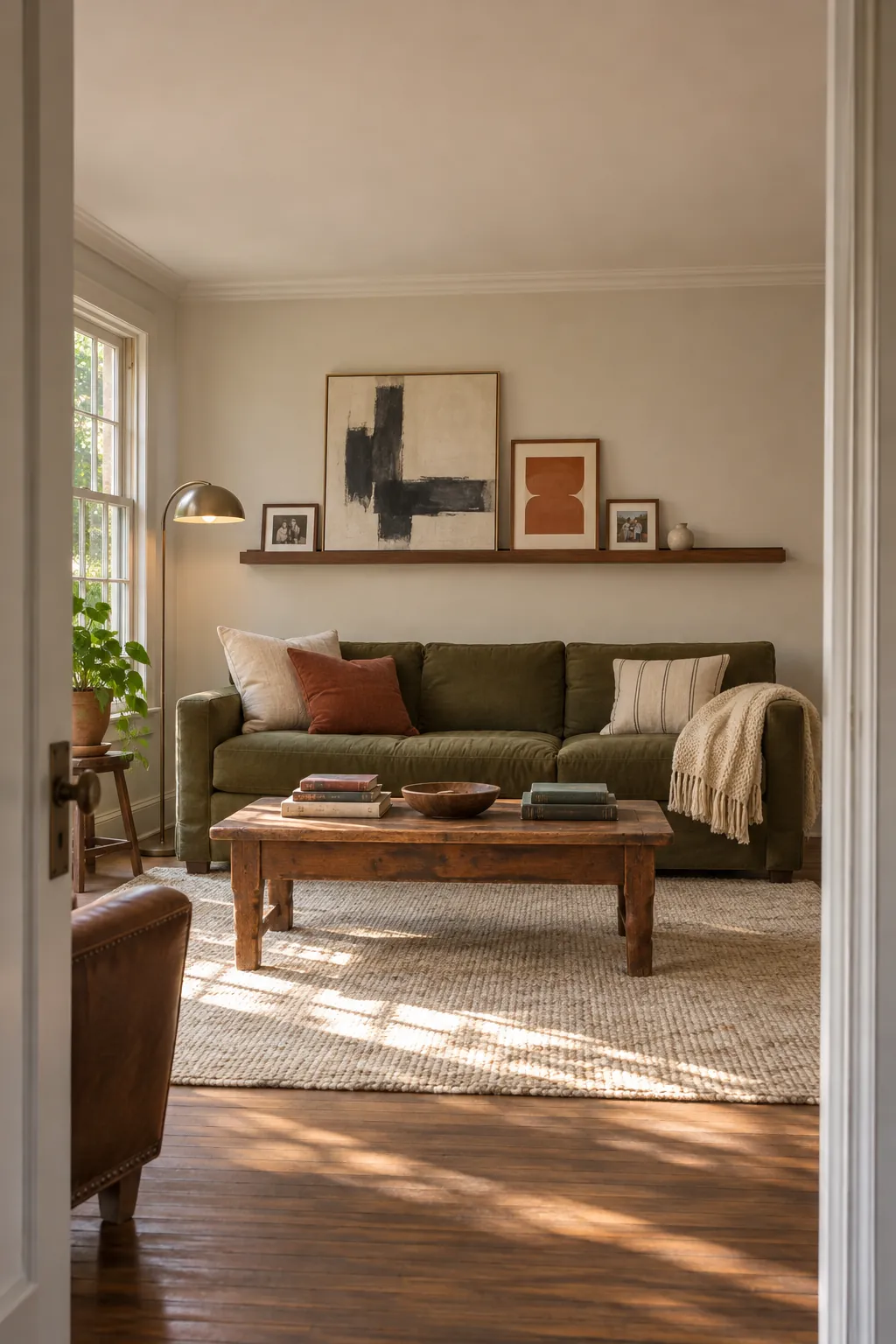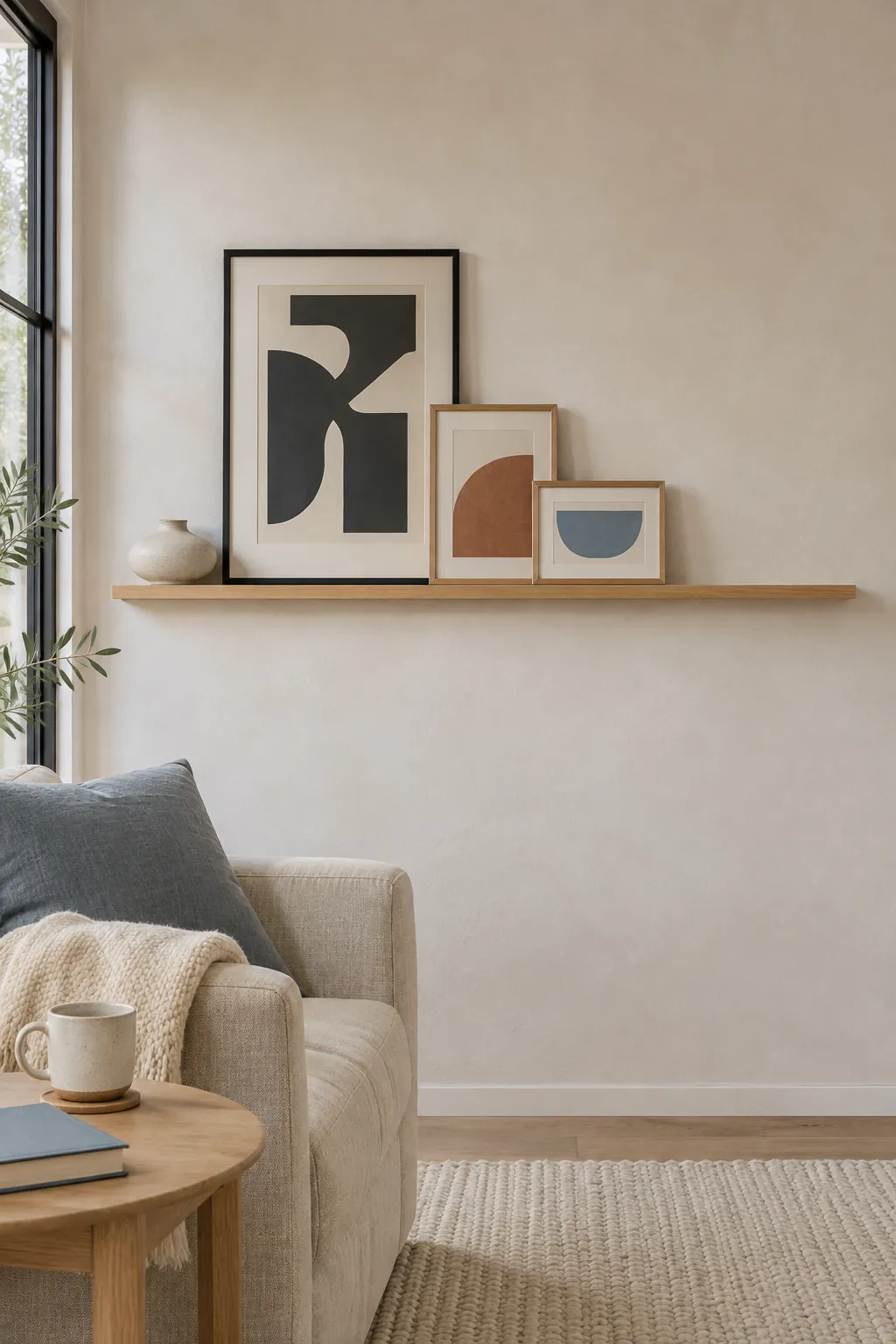
A picture ledge becomes busy when every frame asks for equal attention. A calmer display uses a clear anchor, controlled overlap, and deliberate gaps. Treat the shelf as one composition rather than a place to fit every piece you own.
Choose One Large Anchor
Begin with the largest frame and place it slightly away from the exact center. This anchor sets the height and gives smaller pieces a clear role. One strong image also keeps the eye from bouncing between several similar focal points.
Build a Simple Height Rhythm
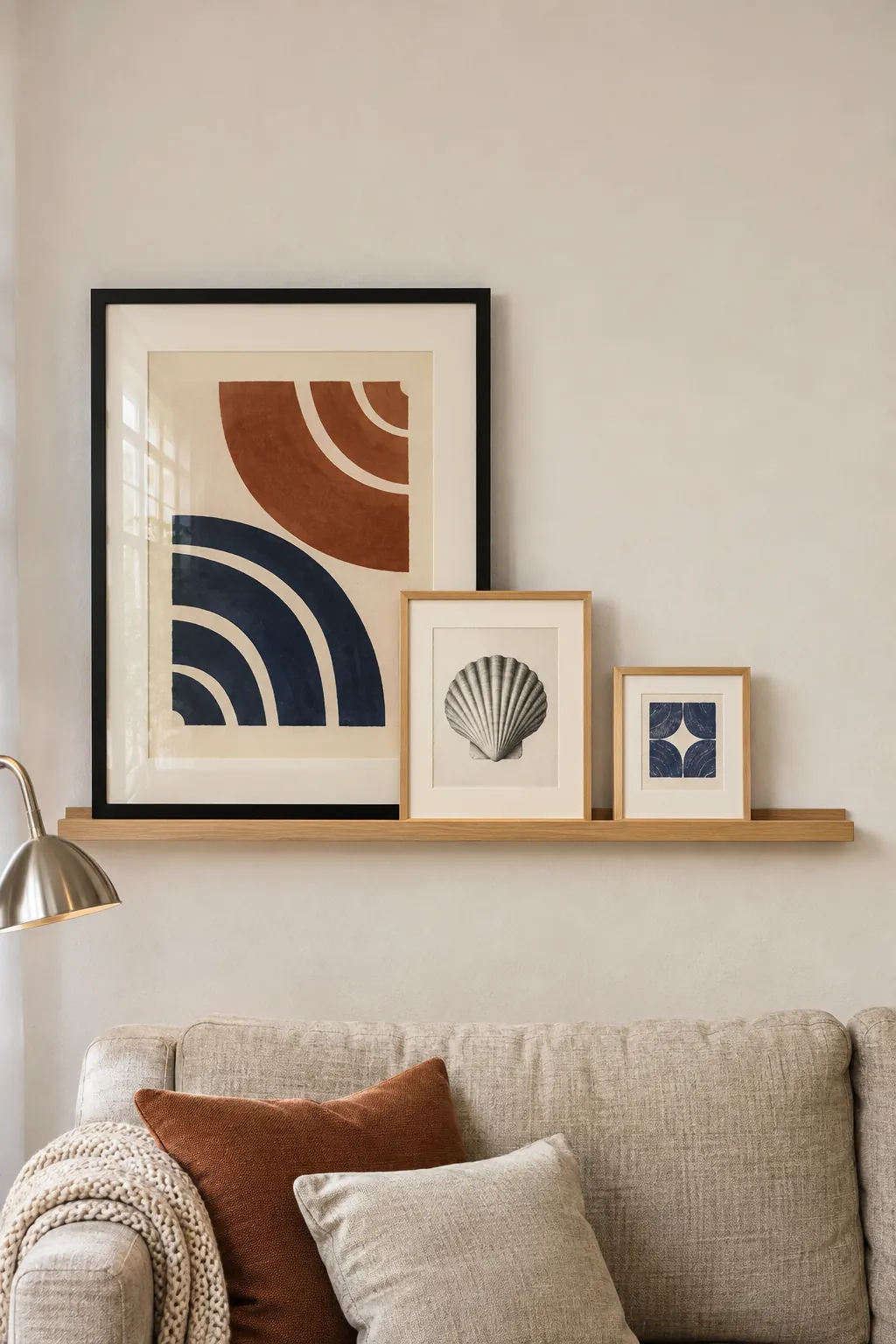
Arrange frames in a tall, medium, and low sequence instead of lining up every top edge. The changing heights create movement while the ledge provides a stable base. Repeat only one height if you need to extend the display across a longer shelf.
Unify Mixed Frames With Matching Mats
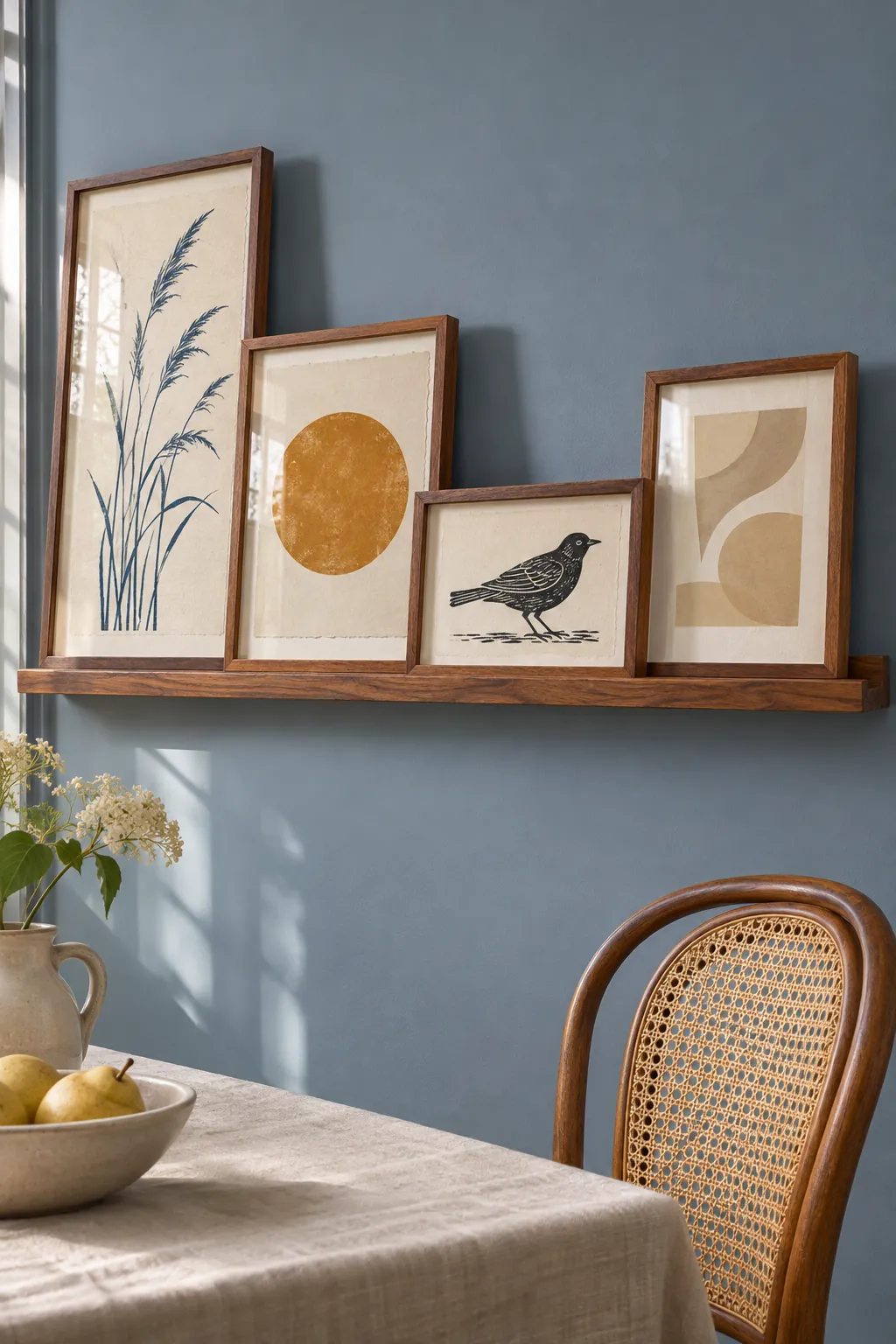
Black, oak, and brass frames can work together when their mats share the same warm white tone. The repeated border gives varied artwork a common visual pause. Keep ornate profiles to one accent frame so the mixed display still feels edited.
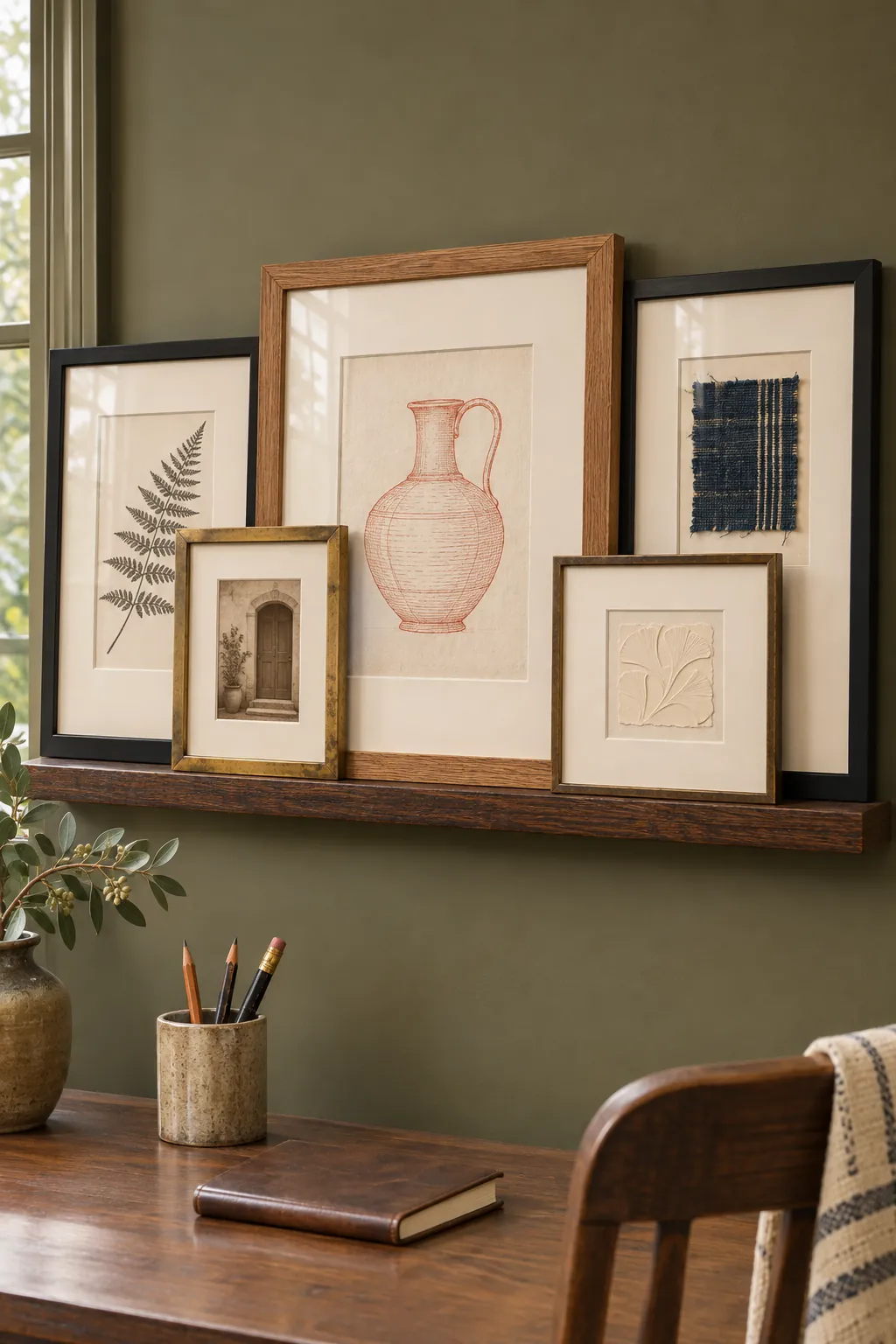
Overlap Only the Frame Corners
Layering works best when a smaller frame covers an empty corner or a narrow mat edge. Do not hide the main subject of the artwork behind another piece. A shallow overlap creates depth while every image remains easy to read.
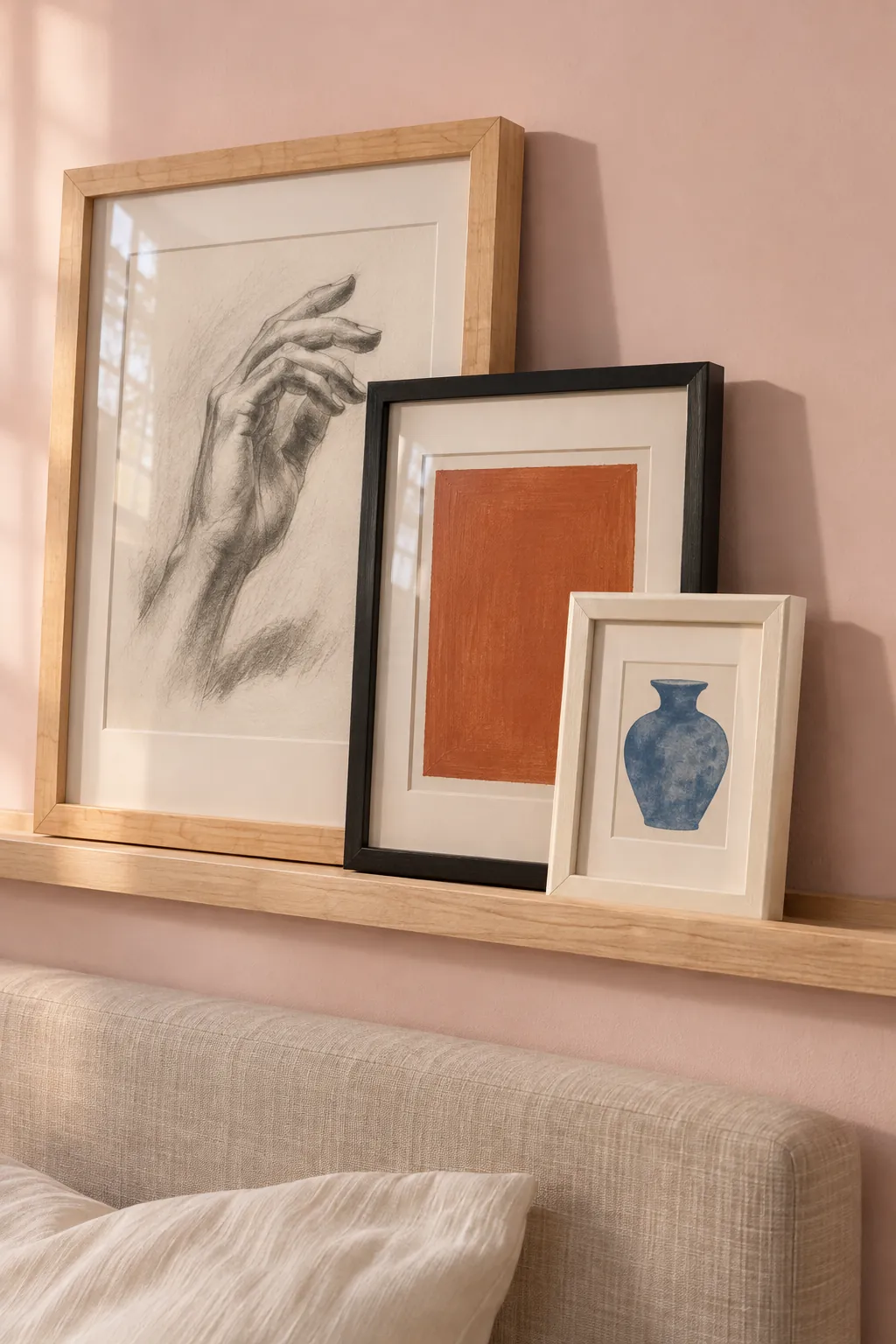
Leave Part of the Ledge Empty
Negative space is an active part of picture ledge styling. Stop the arrangement before the shelf ends and let a clear section frame the final piece. This open area makes the objects you kept feel more important.
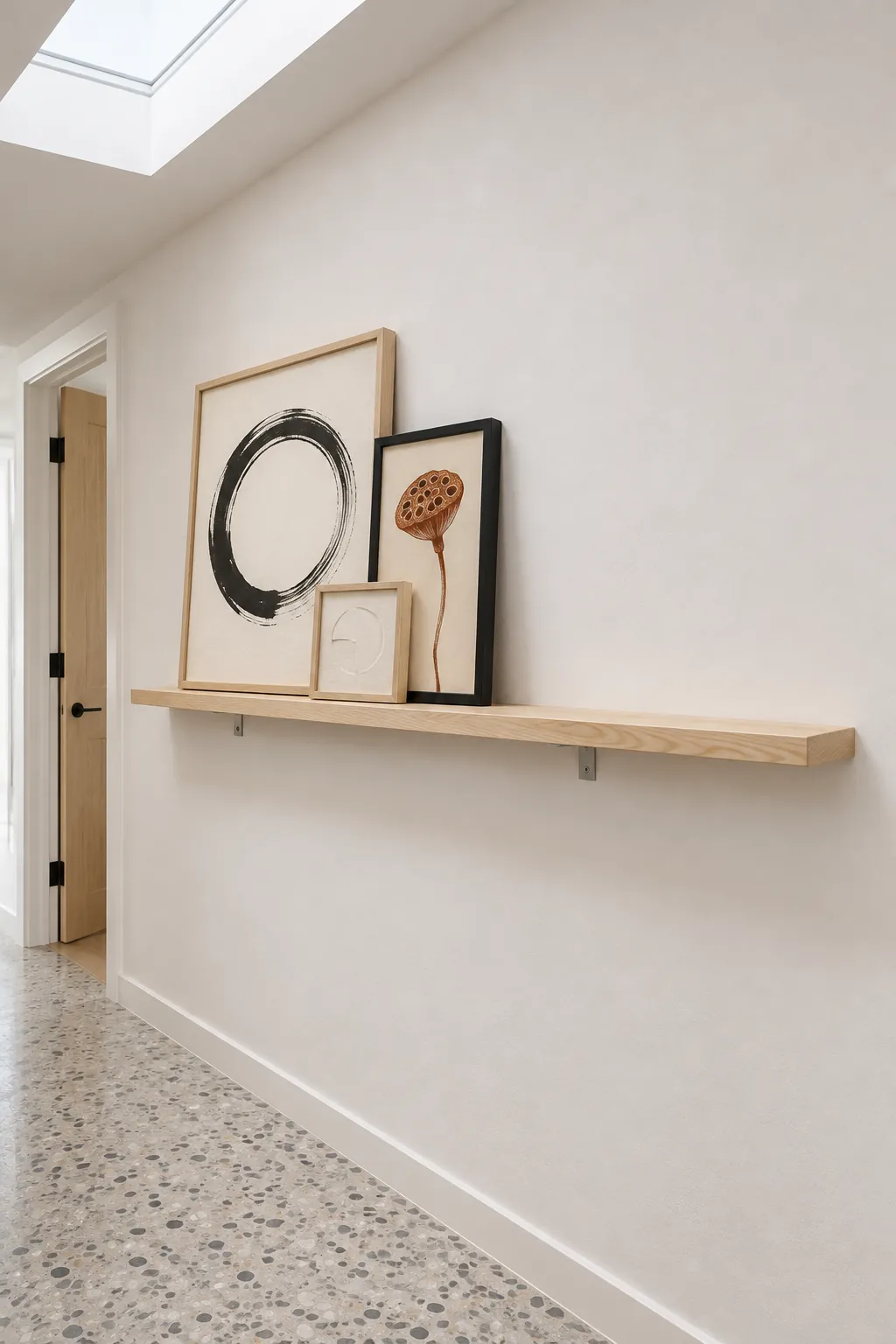
Limit the Artwork Palette
Choose prints that repeat two or three colors already present in the room. The subjects can differ because the shared palette supplies visual balance. Avoid matching every tone exactly, since a little variation keeps the arrangement personal.
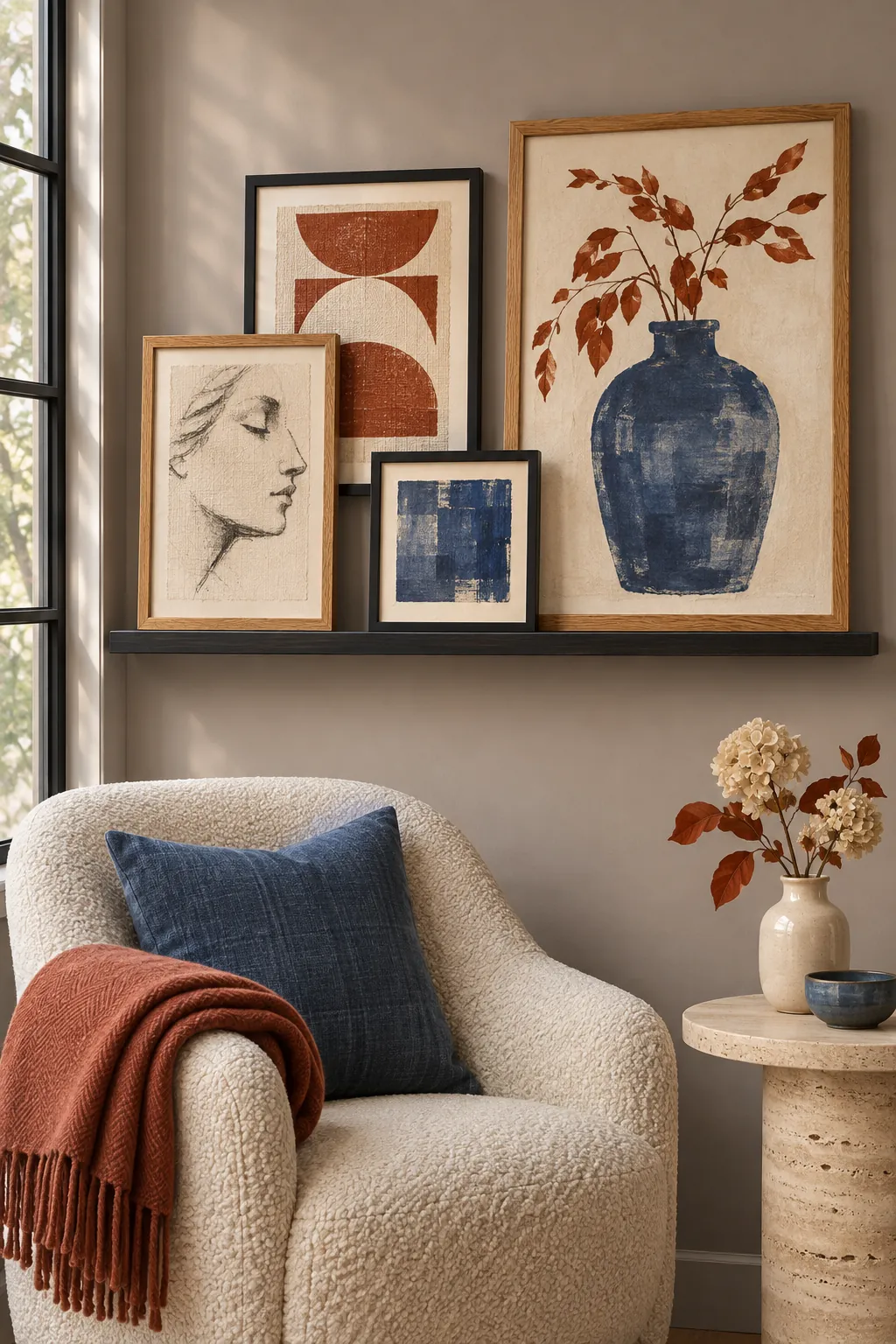
Add One Small Sculptural Object
A single ceramic vessel or carved object can break up a row of rectangles. Keep it lower than the smallest frame and allow wall space around its outline. Several ornaments usually weaken the artwork and make dusting harder.
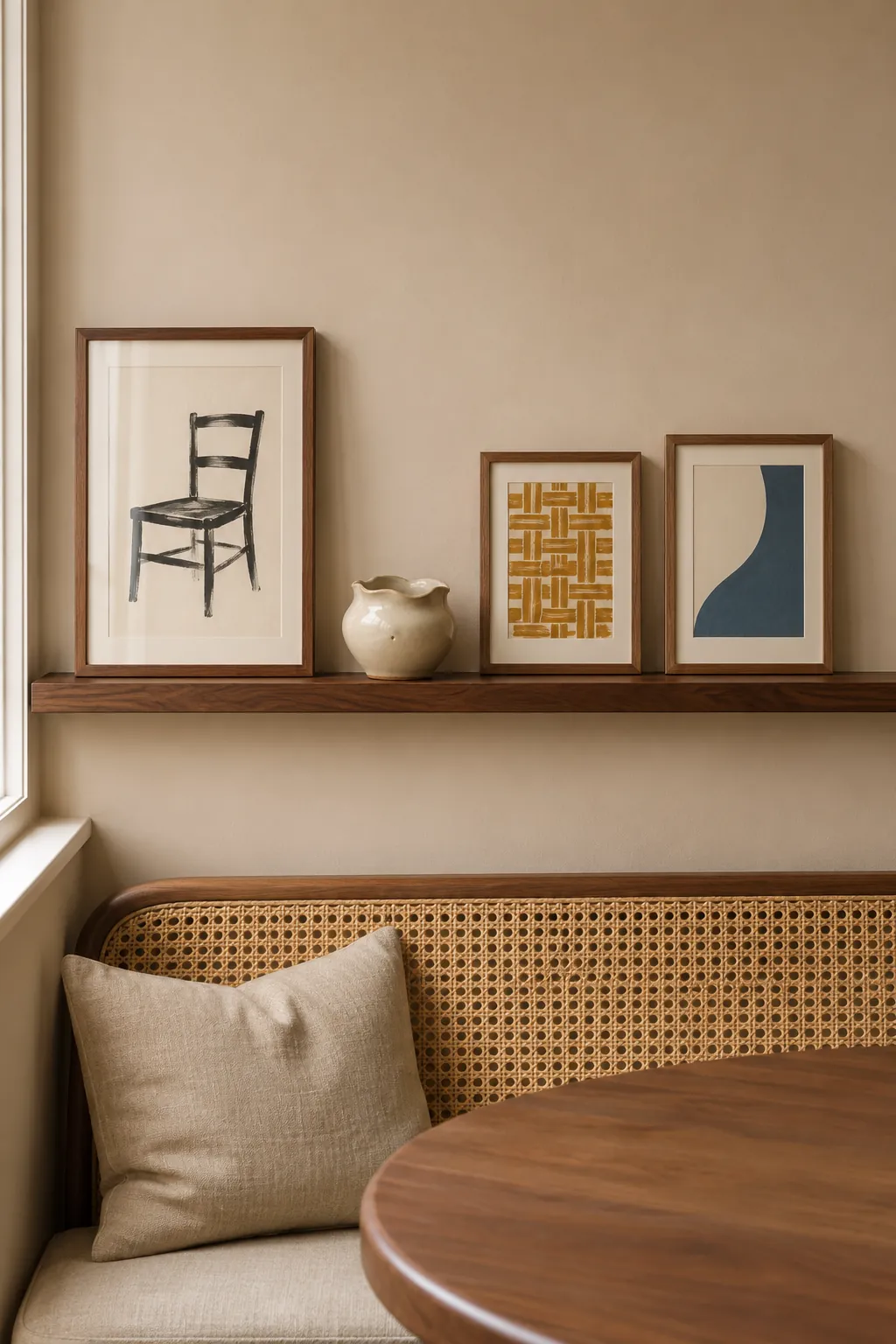
Edit Personal Photos Into a Small Story
Select a few photographs connected by one trip, season, or family moment. Print them in a consistent treatment so ordinary snapshots feel intentional together. Mixing one wider scene with two close details creates variety without adding more frames.
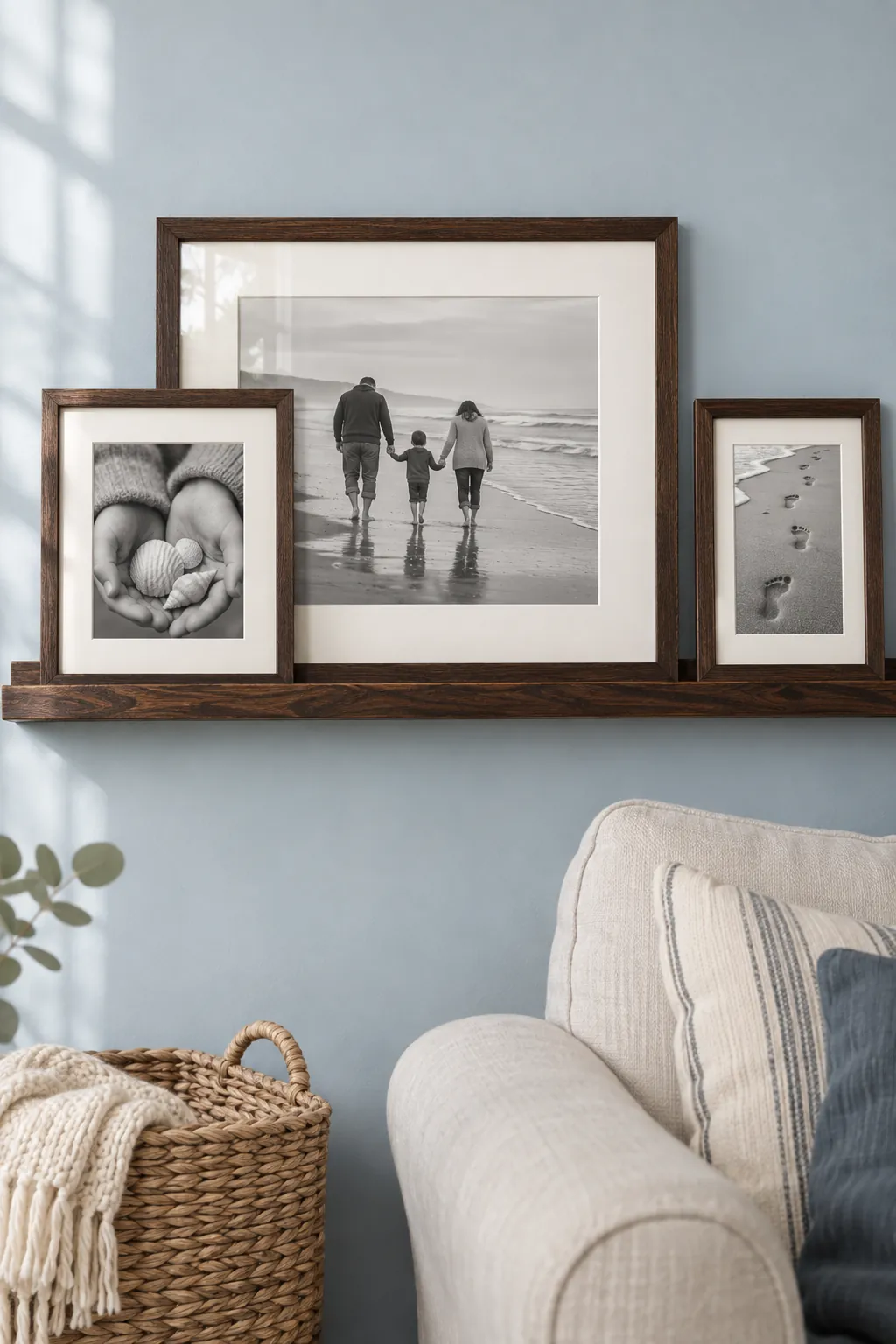
Create a Quiet Seasonal Swap
Change one small print rather than rebuilding the full arrangement for each season. A pressed leaf study, simple winter sketch, or bright summer photograph can shift the mood. Store the removed piece behind the anchor frame if the ledge depth allows it safely.
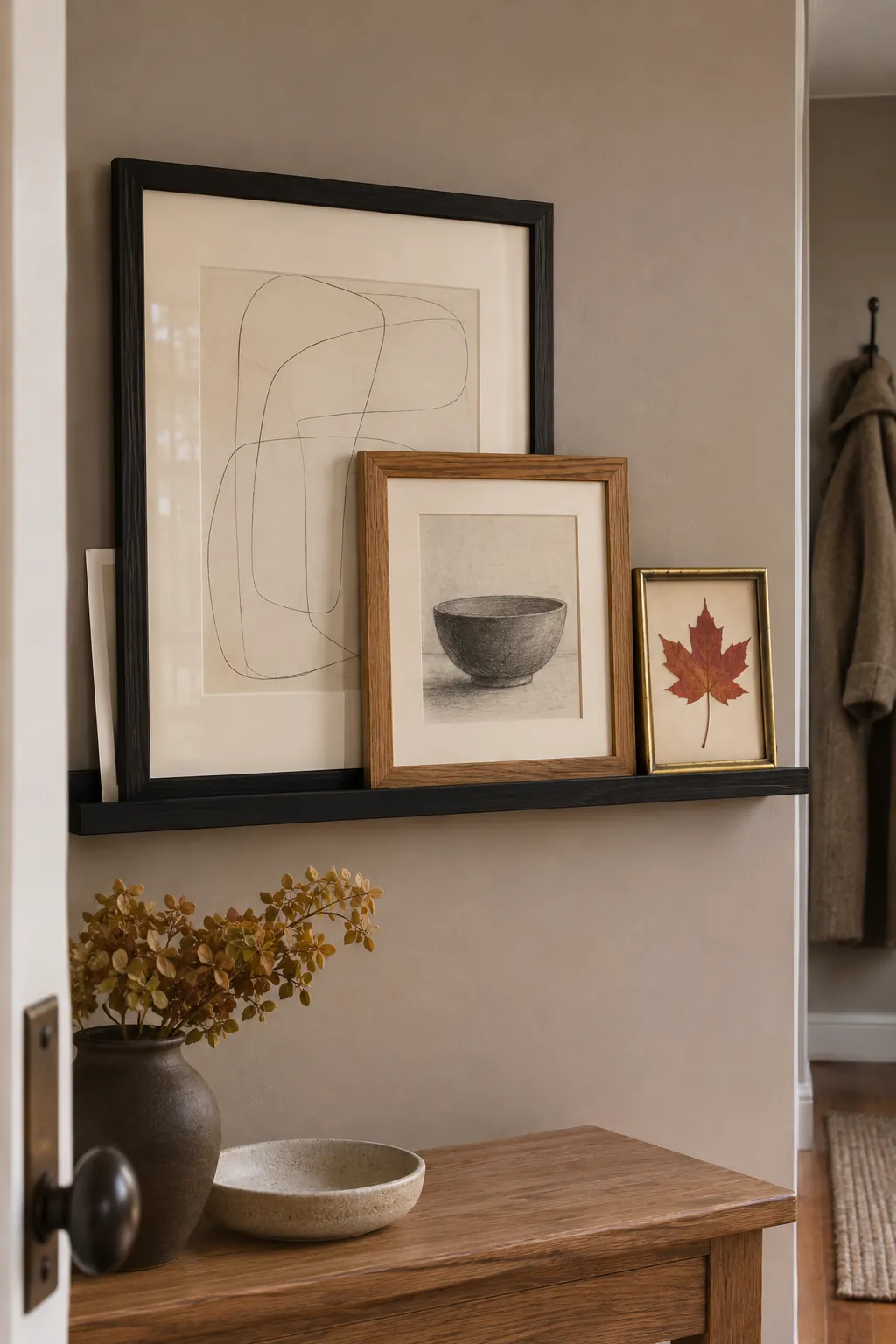
Check the Display From Across the Room
Step back to the main doorway before deciding that an empty gap needs another object. The frame group should read as one uneven shape with a clear center of attention. Remove the weakest piece when the ledge looks heavy, because subtraction usually improves the final proportions faster than rearranging everything.