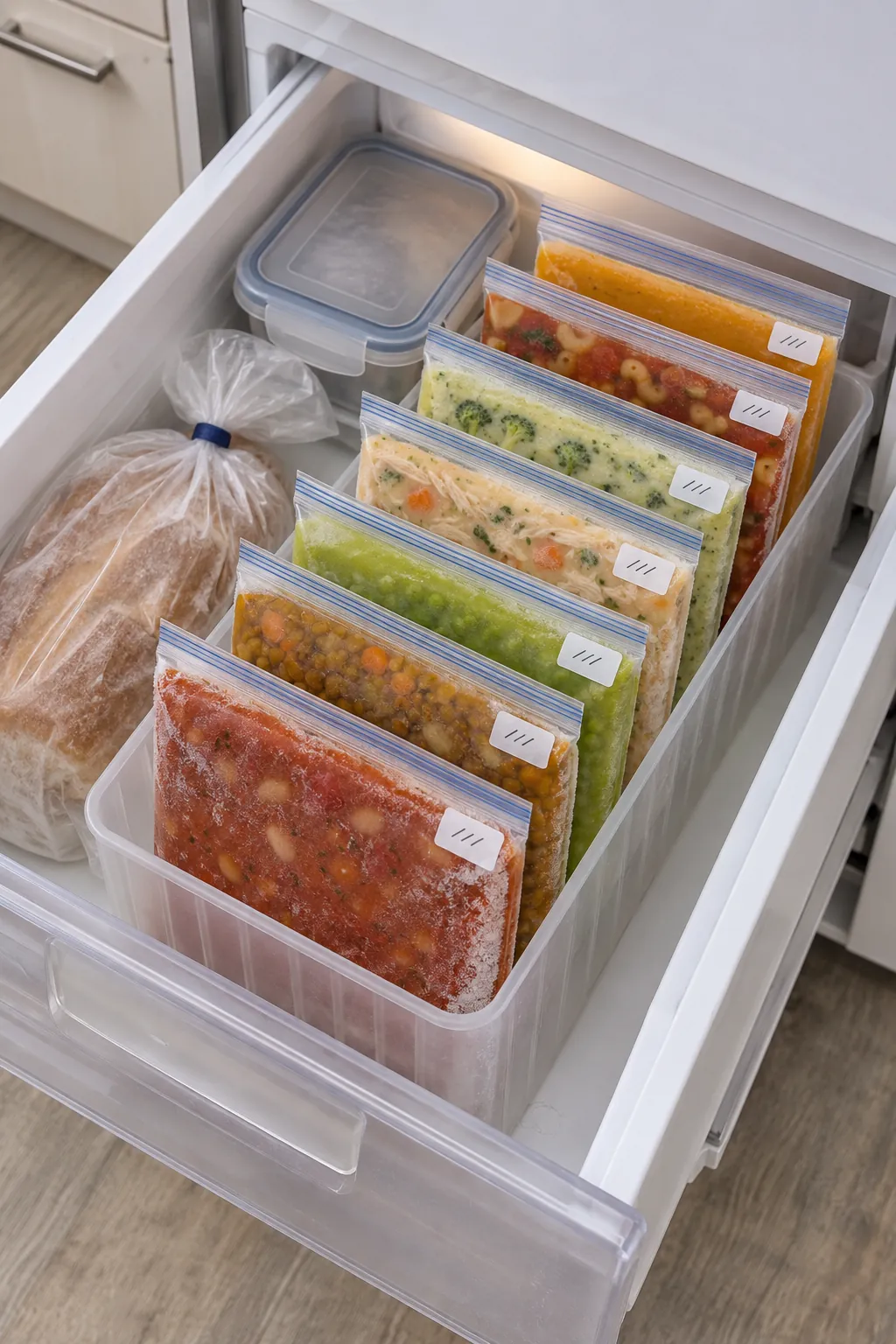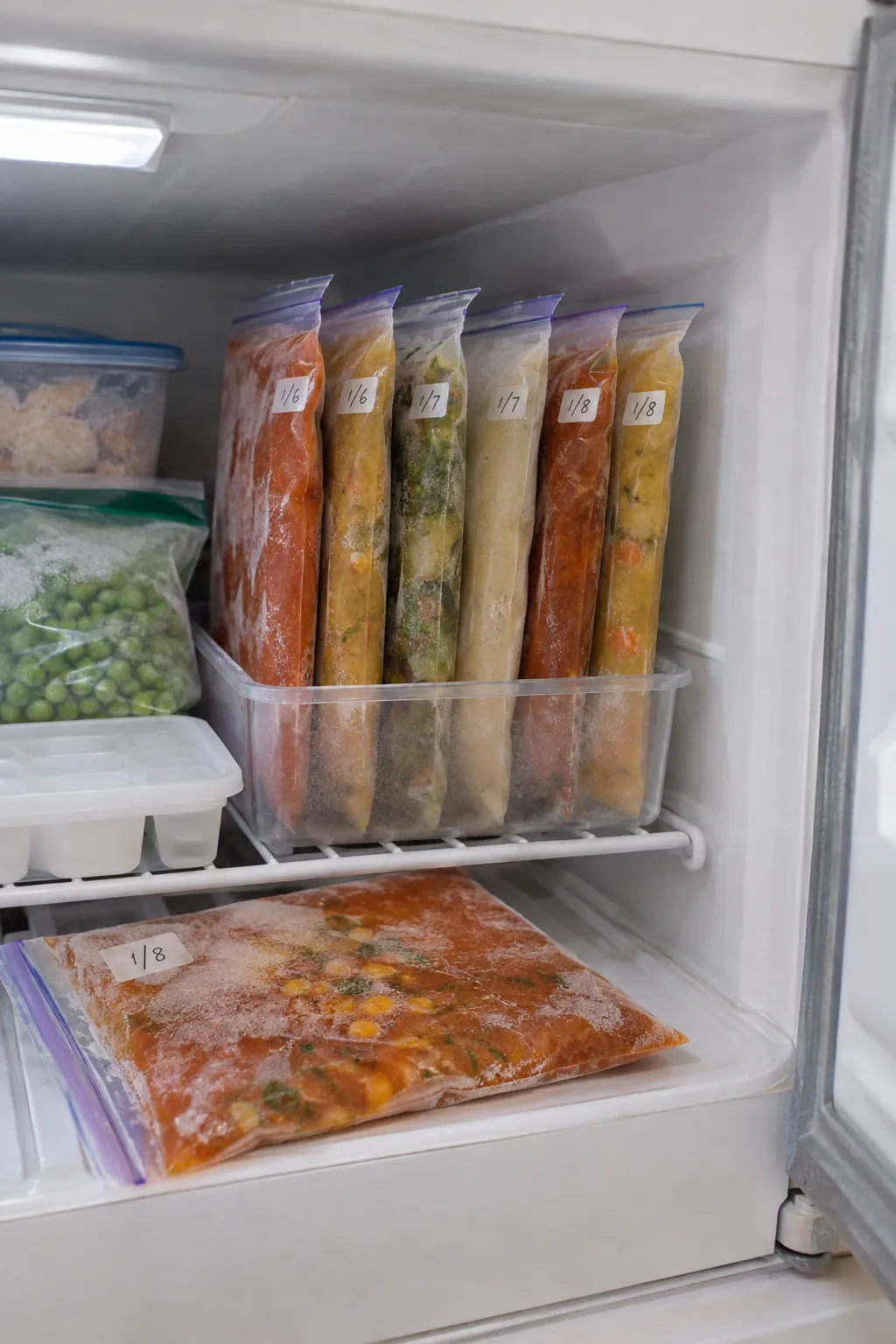
A round container can consume a surprising amount of a compact freezer, especially when several half filled tubs leave unusable gaps around them. A thin frozen sheet uses the same food in a shape that can stack neatly or stand upright. The method is simple, but cooling, portion size, sealing, and the first freeze all determine whether it stays tidy.
Cool the soup before it enters a bag
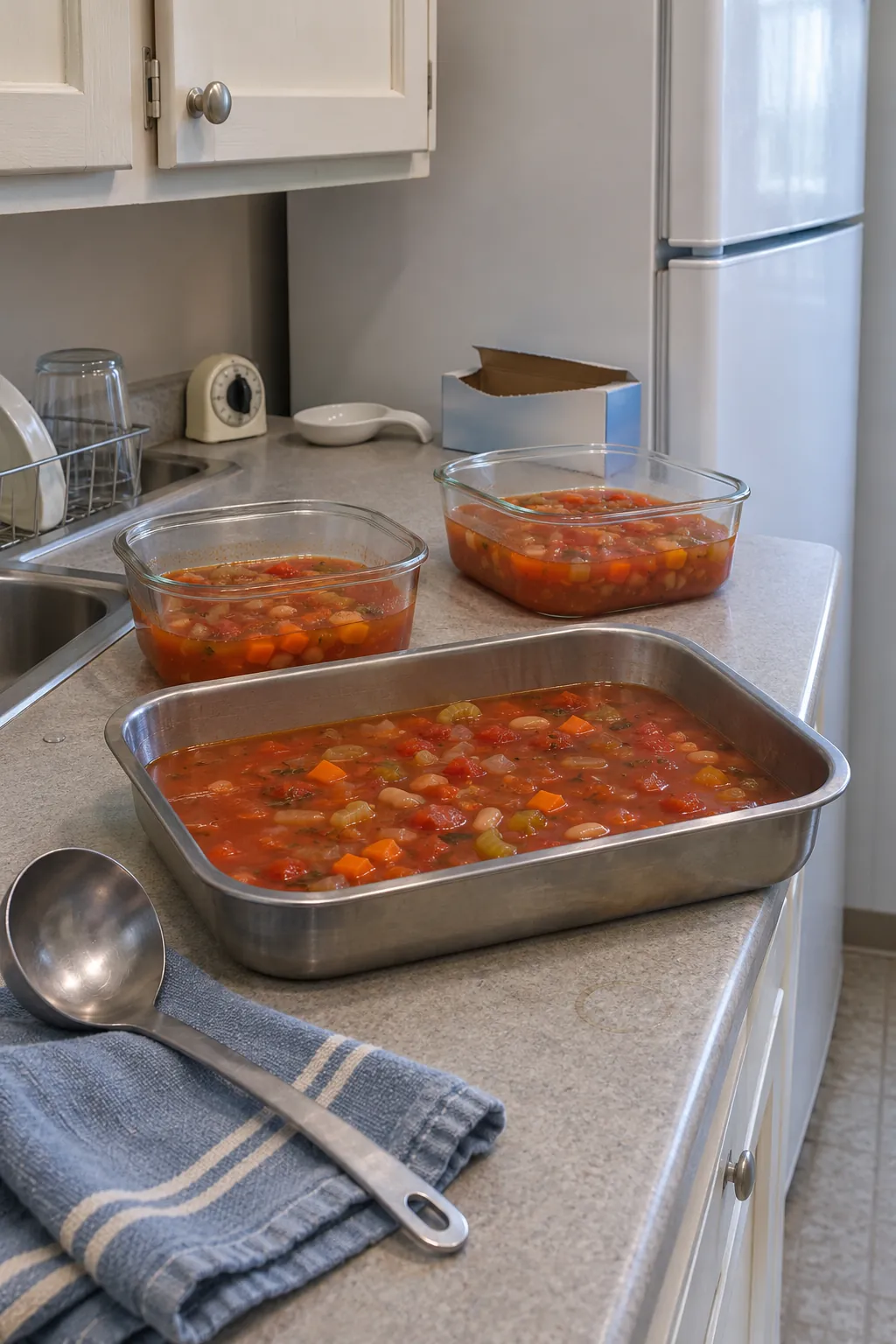
Move freshly cooked soup out of the deep stockpot so it can cool efficiently. Divide it among shallow containers, then refrigerate it promptly rather than leaving a large hot pot on the counter for a long time. Cold soup is easier to handle, creates less steam inside the bag, and does not warm the other food in a small freezer.
Very thick soup may become almost solid when chilled. Stir it before portioning so vegetables, beans, broth, and meat are distributed evenly. If the recipe contains pasta, rice, or dairy that tends to soften or separate, consider freezing the soup base and adding that ingredient when reheating.
Choose portions that match one meal
Decide how much soup you normally heat at one time. One or two servings per bag work well in an apartment kitchen because a small packet thaws quickly and avoids leftovers that need another container. Measure one typical serving once, then use the same ladle count for the rest of the batch.
Use bags sold for freezer storage, not thin sandwich bags. A quart size often suits one or two servings and makes a manageable frozen sheet. Leave open space near the top because soup expands as it freezes and the seal needs a clean, dry area.
Fill each bag without coating the seal
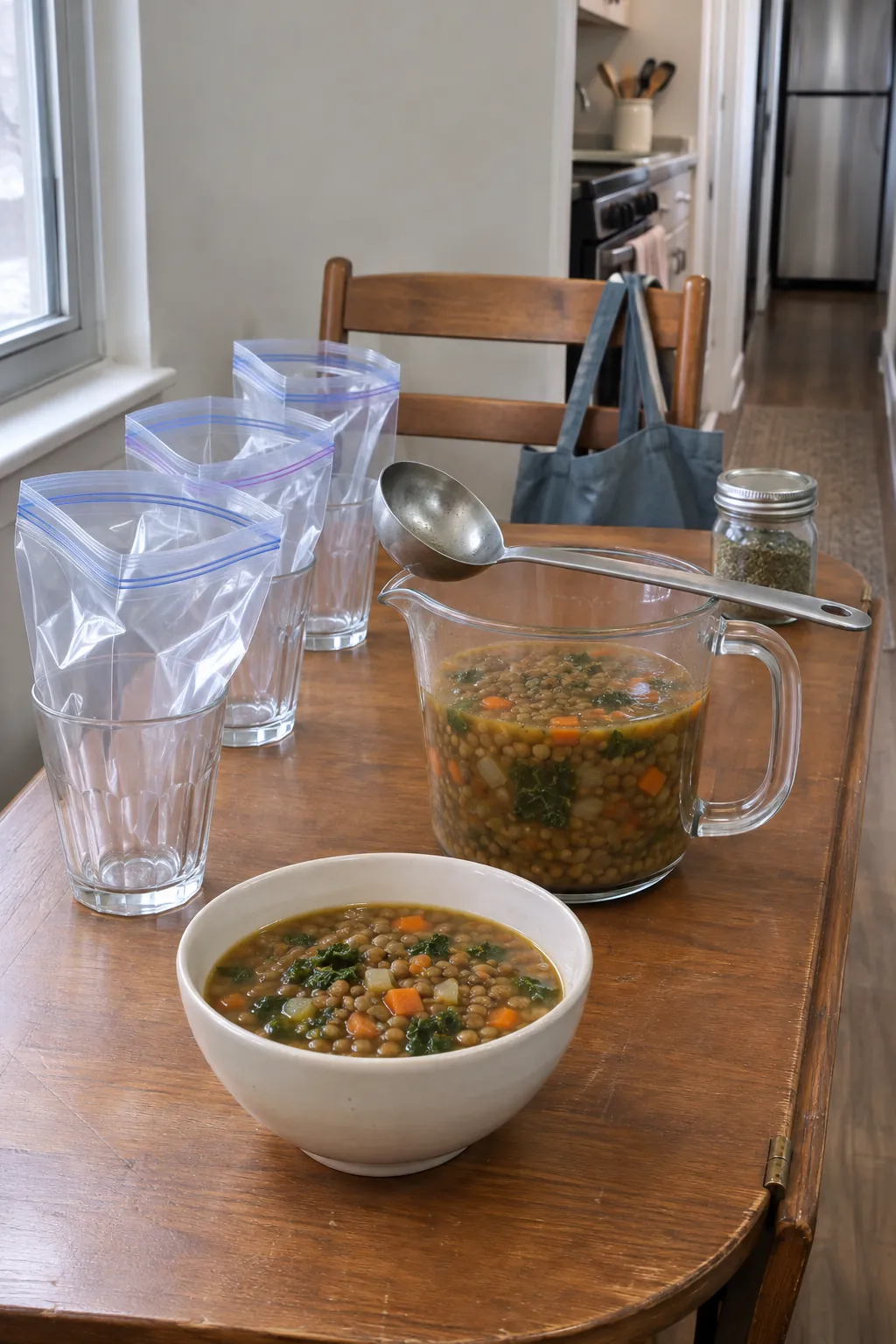
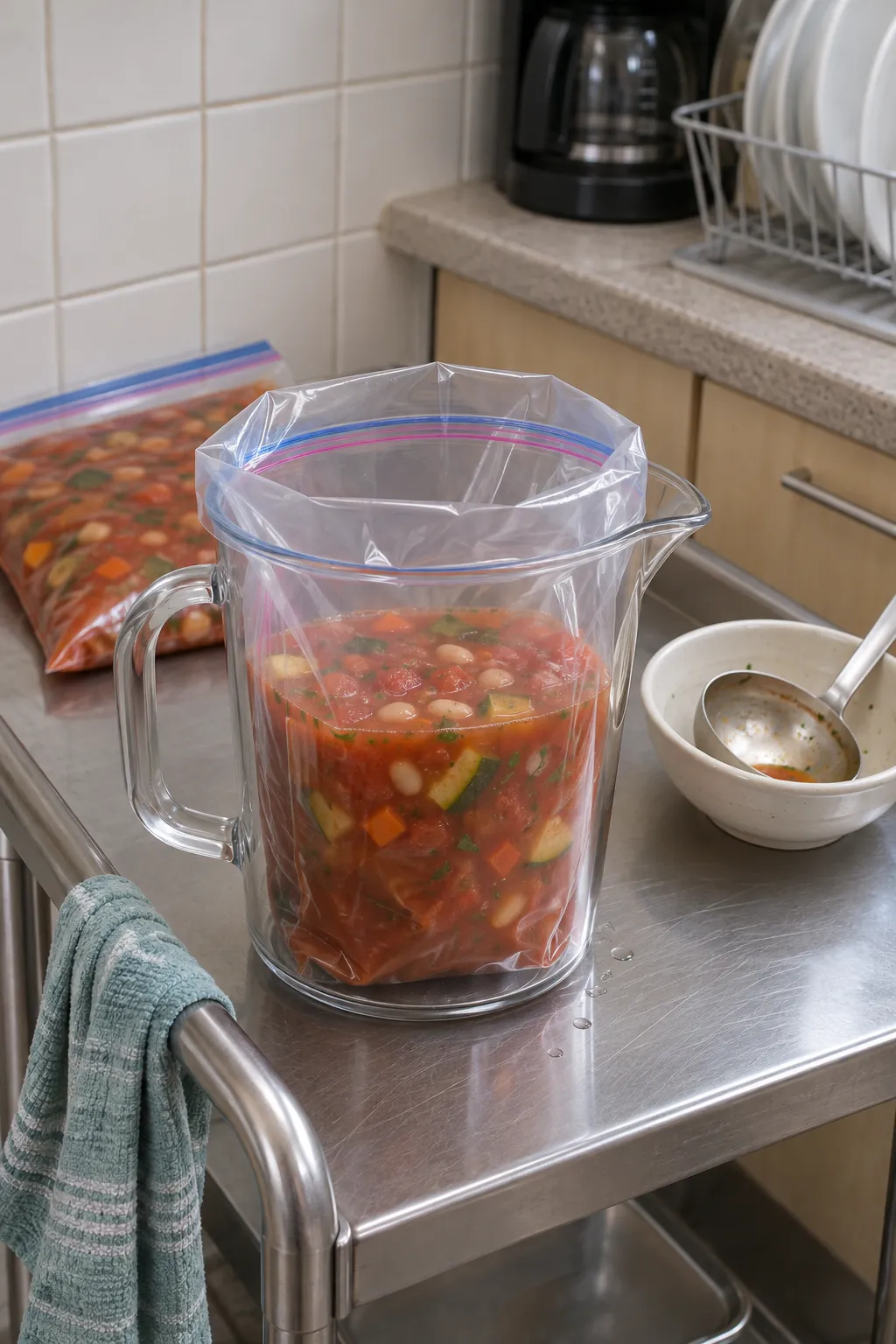
Stand an open freezer bag inside a tall bowl or large measuring jug. Fold only the upper edge over the rim so the zipper stays away from drips. Ladle in the chilled soup while the container supports the bag and keeps both hands free.
Lift the bag from the bowl and hold it upright. Press out most of the extra air without forcing liquid toward the opening, then close the zipper almost completely. Ease out the final pocket of air and finish the seal. Wipe the outside dry and check the full zipper with your fingers before the bag goes near the freezer.
Label while the bag is clean and dry
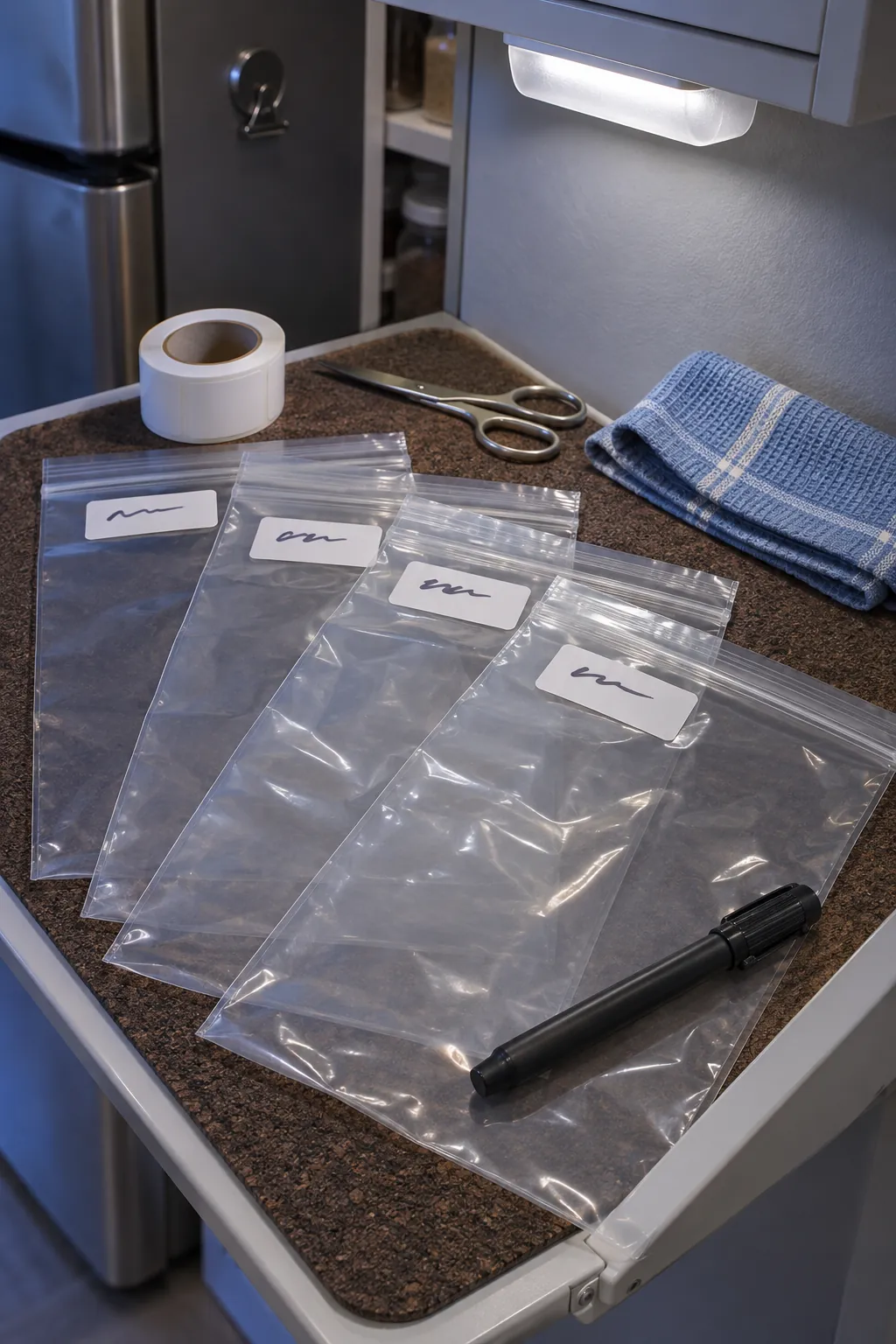
Write the soup name, portion amount, and freeze date where you can see them after the bags are stored. Label an empty bag before filling, or dry the filled bag completely before writing. A short reheating note can help when one soup needs added broth or a gentle heat.
Place the label near the top edge so it remains visible when frozen packets stand like files. Keep the same label position on every bag. Consistency makes a narrow freezer bin easier to scan without pulling out the whole stack.
Freeze on a rigid tray first
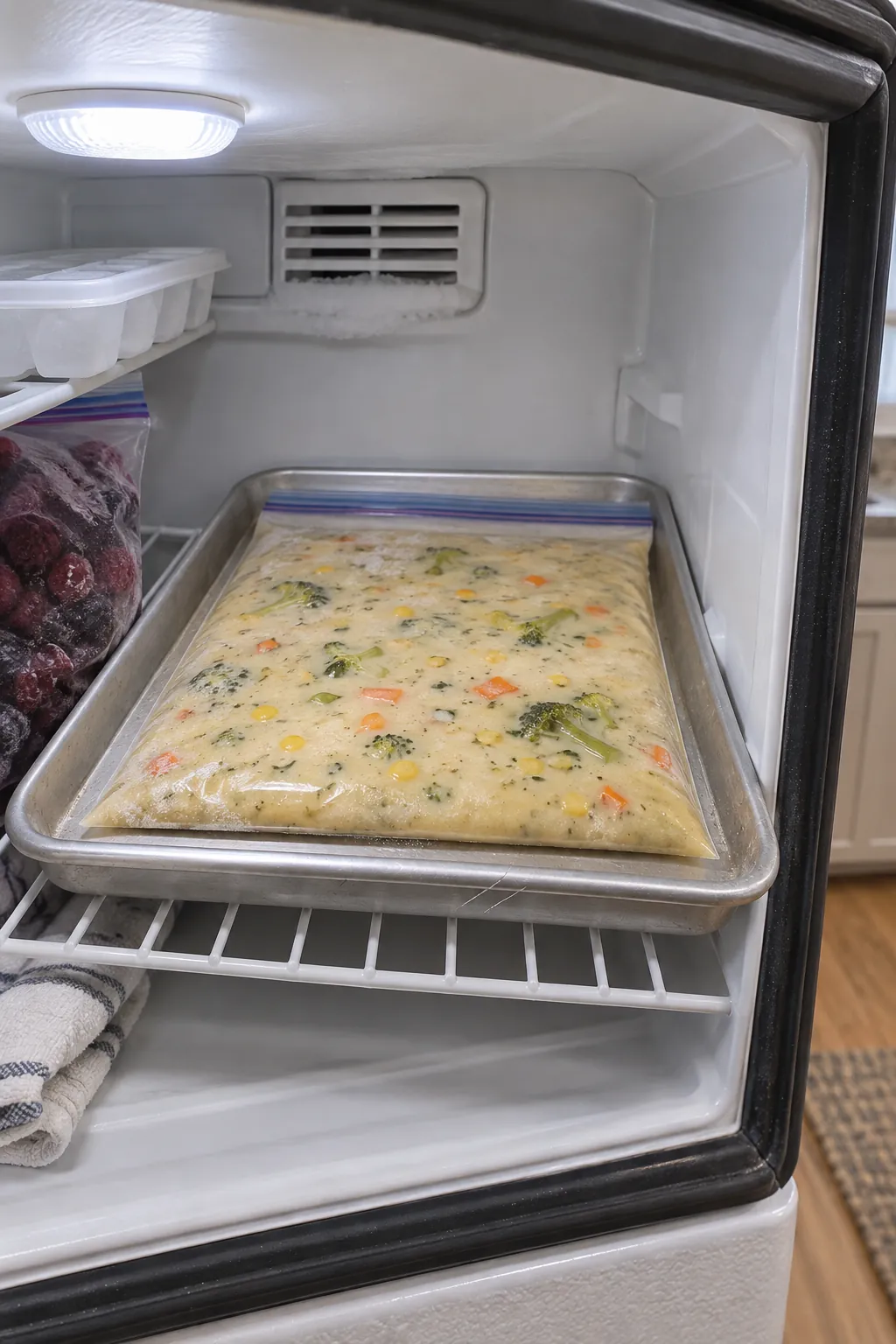
Set the sealed bag on a rimmed baking sheet, cutting board, or other flat freezer safe tray. Spread the soup into an even layer while keeping the zipper slightly higher than the liquid. The support keeps the packet flat and catches a leak before it reaches the freezer shelf.
Choose a temporary level space in the freezer and leave the packet undisturbed until it is firm throughout. Do not place a soft bag over wire shelving because the soup can sag between the bars and freeze into ridges. Do not stack several unfrozen bags unless a rigid divider supports every layer.
Store the frozen sheets where they stay visible
Once each packet is completely solid, remove the tray and move the frozen sheets into their permanent position. Stack them on a stable shelf if the pile will remain short, or stand them upright inside a narrow bin like files. Keep labels facing the same direction and place older soup at the front.
Protect the sheets from sharp packages and crowded drawer rails, since a punctured bag can leak during thawing. Thaw soup in the refrigerator inside a bowl or other leak resistant container. If you need it sooner, follow safe thawing guidance for the bag you used, then transfer the soup to a pot for thorough reheating. The compact shape saves space only when the packets stay easy to identify, retrieve, and return to order.