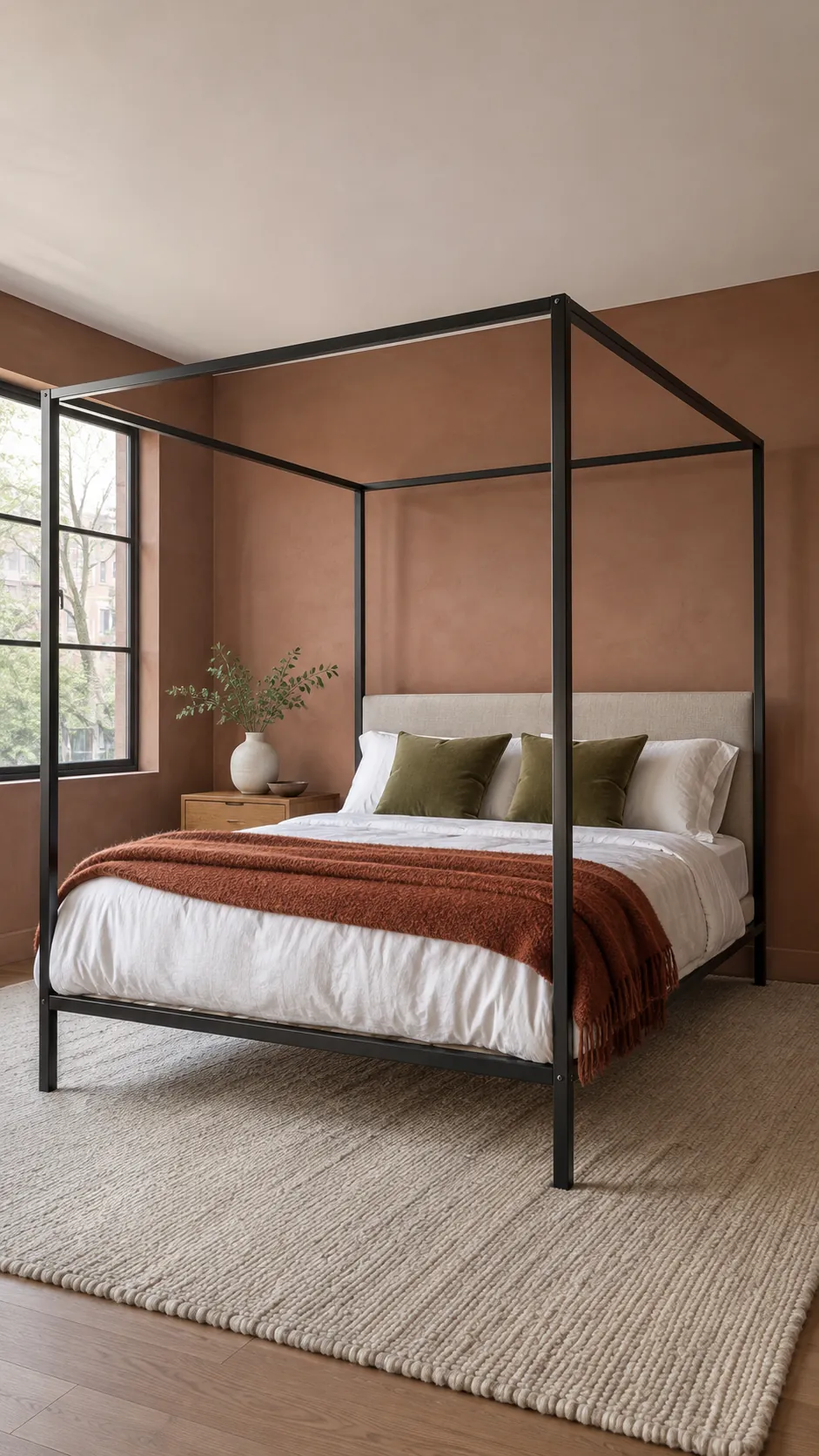
A slender metal frame can give a bedroom height without the visual bulk of heavy furniture. The same slim members, however, make the quality of every weld, bolt, slat, and center support important. A good frame feels still and quiet in use. A weak one turns ordinary movement into sway and noise.
Judge the bed as a working structure before you judge its finish. Room dimensions, tube shape, connection design, mattress support, and floor contact determine whether the elegant outline remains enjoyable after assembly.
Check the full footprint and ceiling clearance
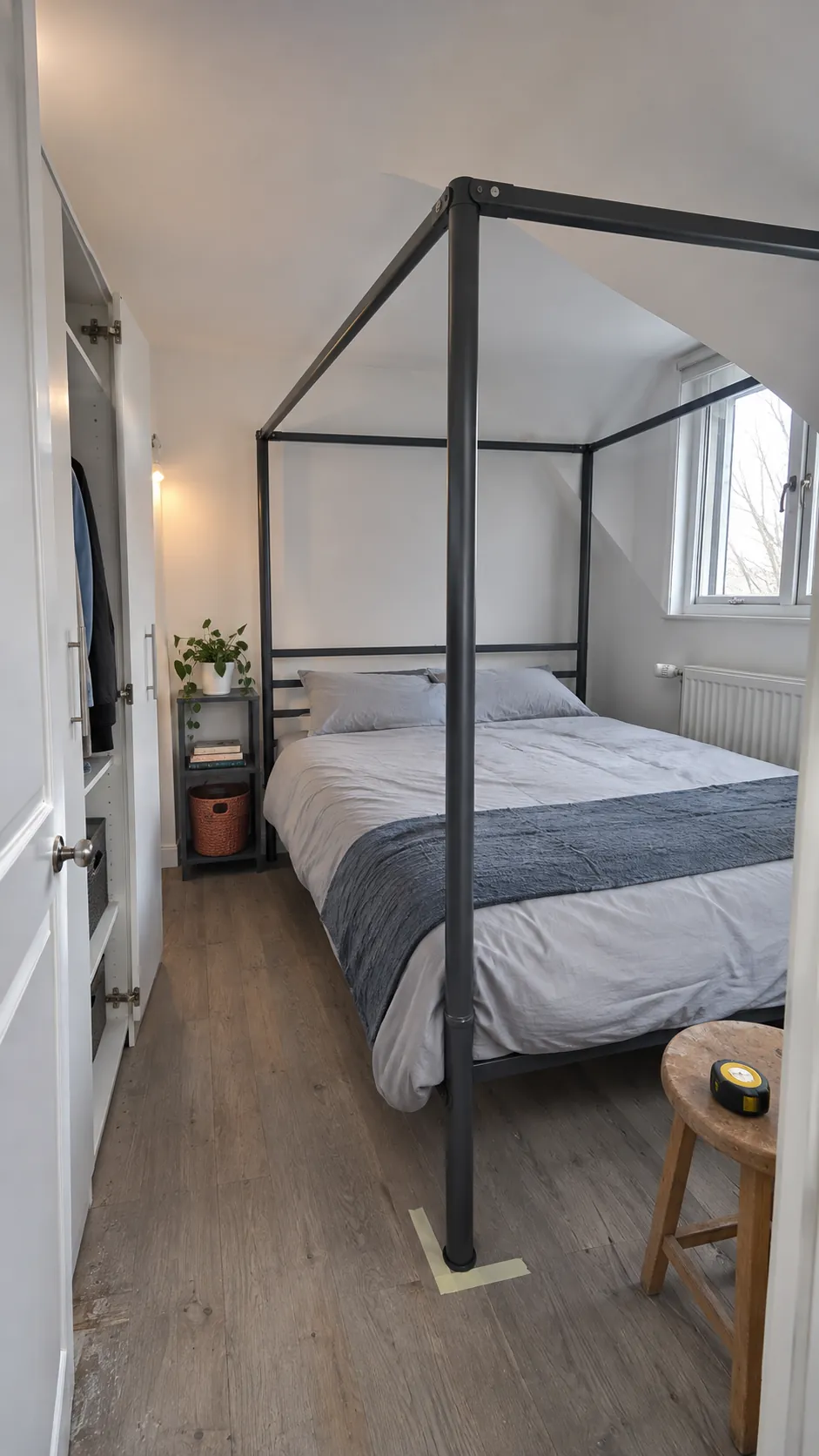
Measure the outside edges of the posts rather than relying on the mattress size. Some frames add several inches at the head and foot, while decorative finials can make the upper corners wider. Mark those limits on the floor, then test the routes to doors, drawers, outlets, and wardrobes.
Metal posts often look light enough for a compact room, but the upper rectangle still creates a strong visual ceiling. Leave open space above it and keep fans or hanging lights outside the frame. In a room with a low or sloped ceiling, a half canopy bed can provide height at the head without enclosing the entire mattress.
Stand in the doorway and check whether the nearest post blocks the main view. A narrow black canopy bed can recede against a darker wall, while brass or pale painted metal will attract more attention. The right placement should preserve a comfortable path on the side you use most.
Understand what the metal frame is made from
Most modern metal beds use steel tube because it offers useful strength with less weight than a solid bar. Rectangular tube resists twisting well and gives a crisp modern canopy bed profile. Round tube feels softer and can suit vintage forms, but its wall thickness and connection design still determine stiffness.
An iron canopy bed may refer to actual wrought or cast components, or it may be a style label applied to steel. Ask the maker to identify the material and finish. Genuine older frames also deserve a careful inspection for corrosion, cracked welds, altered rails, and mattress support that no longer matches current sizes.
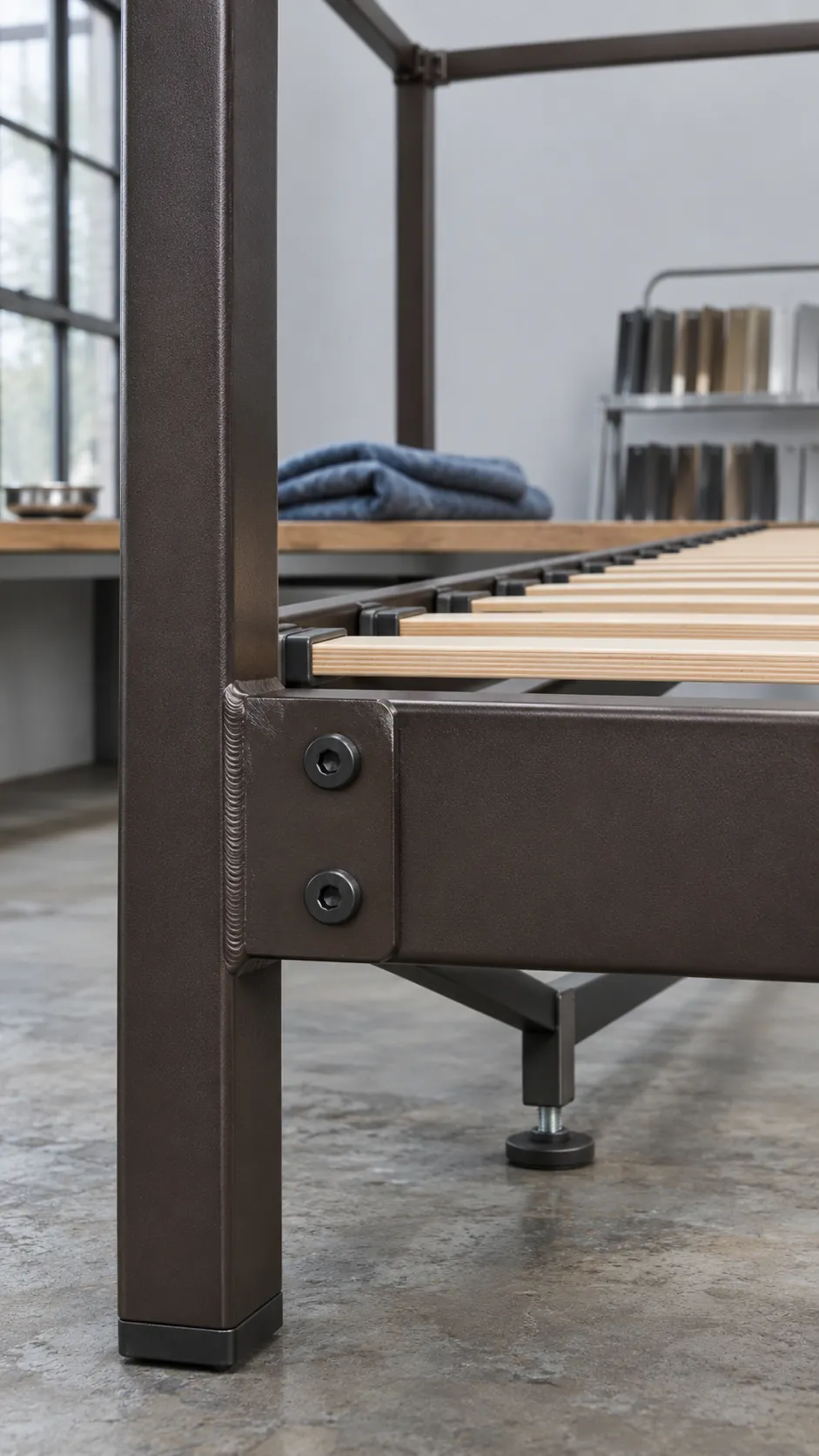
Weight alone is not a reliable quality test. Look for straight members, continuous clean welds, substantial brackets, and protected tube ends. A published capacity, clear slat requirements, and replaceable hardware provide more useful evidence than a vague claim that the frame is heavy duty.
Inspect every connection before assembly
Noise begins where parts move against each other. A precise bracket with a bolt that threads fully and seats squarely is more likely to remain quiet than a misaligned hole that forces the fastener at an angle. Check the hardware list before delivery day and stop if a bolt resists normal hand threading.
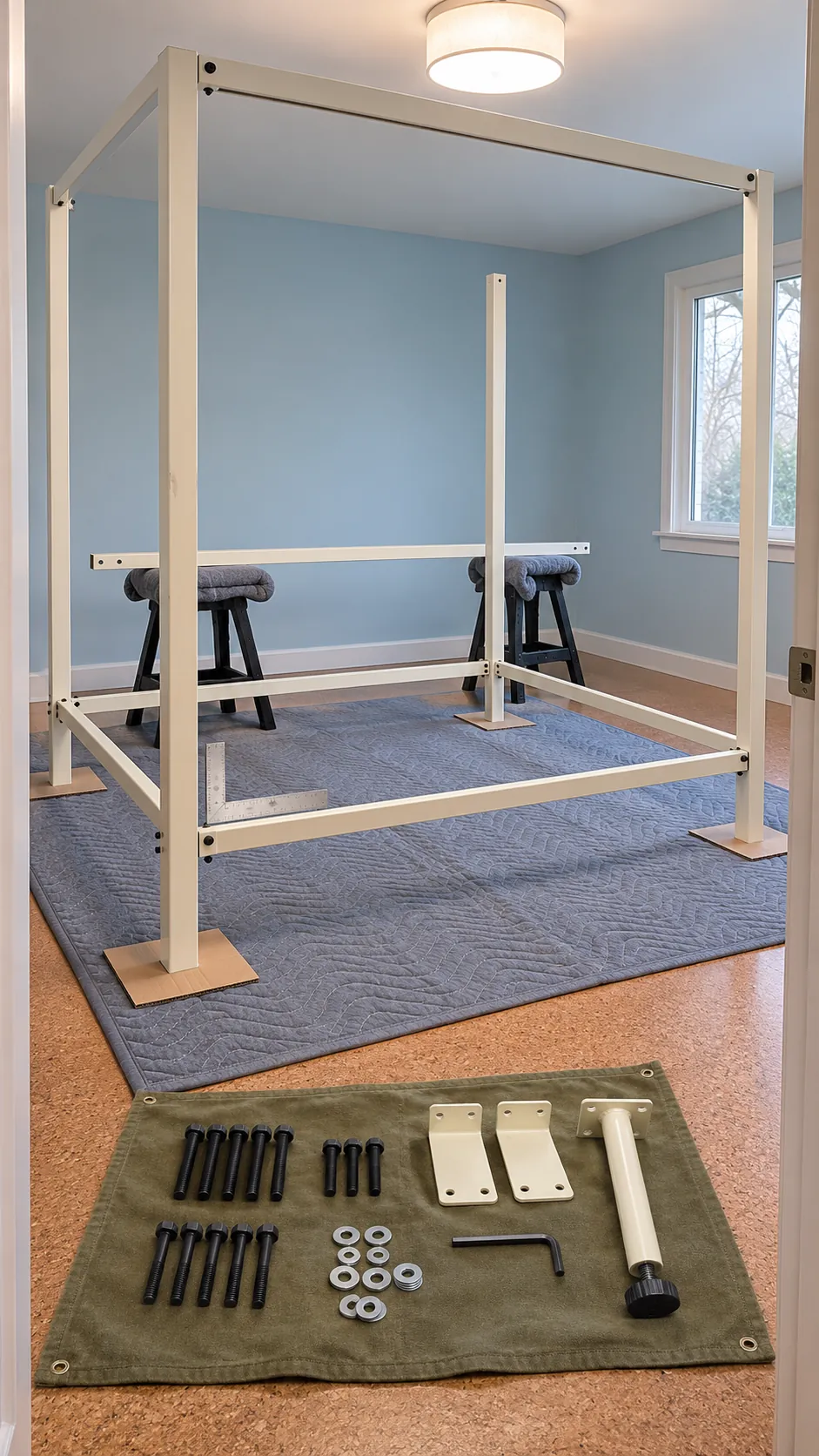
Assemble the lower frame loosely, confirm that it is square, then tighten connections in a balanced sequence. Fit the center supports so their feet just make stable contact with the floor according to the maker’s directions. A center leg that carries too much or too little load can cause movement, uneven support, or noise.
Upper rails need equal care. They may be decorative, structural, or designed to carry light fabric only. Never use them for exercise, storage, or a load that the instructions do not approve.
Choose a finish that supports the room
Matte black creates the clearest outline and works well with modern canopy bedroom decor. It can also show pale dust, so the upper rails need regular attention. Soft white metal blends into light walls, while bronze and antique brass add warmth without the mass of carved wood.
Powder coating generally provides an even durable surface when preparation is good. Inspect corners, welds, and bolt holes for chips before assembly because damage is easier to document and repair at that stage. For a vintage canopy bed, a little age can be attractive, but active rust should not be treated as decoration.
Balance a graphic frame with quieter shapes nearby. Curved lamps, soft bedding, and a textured rug prevent a square frame from feeling severe. If the bed already has scrollwork or finials, keep other patterns restrained so the silhouette remains readable.

Add curtains with light loads and safe spacing
Confirm that the maker permits fabric before adding it. Light linen, cotton voile, or a breathable blend usually places less strain on slim rails than dense lined drapery. Use smooth ties or rings that will not scrape the finish, and spread attachment points so one section does not carry all the weight.
Keep every panel away from bulbs, heaters, candles, fans, and outlets. Avoid long fabric that pools on the floor where it catches dust or creates a trip hazard. A pair of panels at the head can soften the frame without closing the whole bed, which is useful for a canopy bed small room layout.
Test a fabric sample in daylight and at night. The color and transparency can change more than expected, and inexpensive material may feel stiff or look shiny under a lamp. Washable fabric with finished hems is easier to keep attractive.

Find the source of movement and squeaks
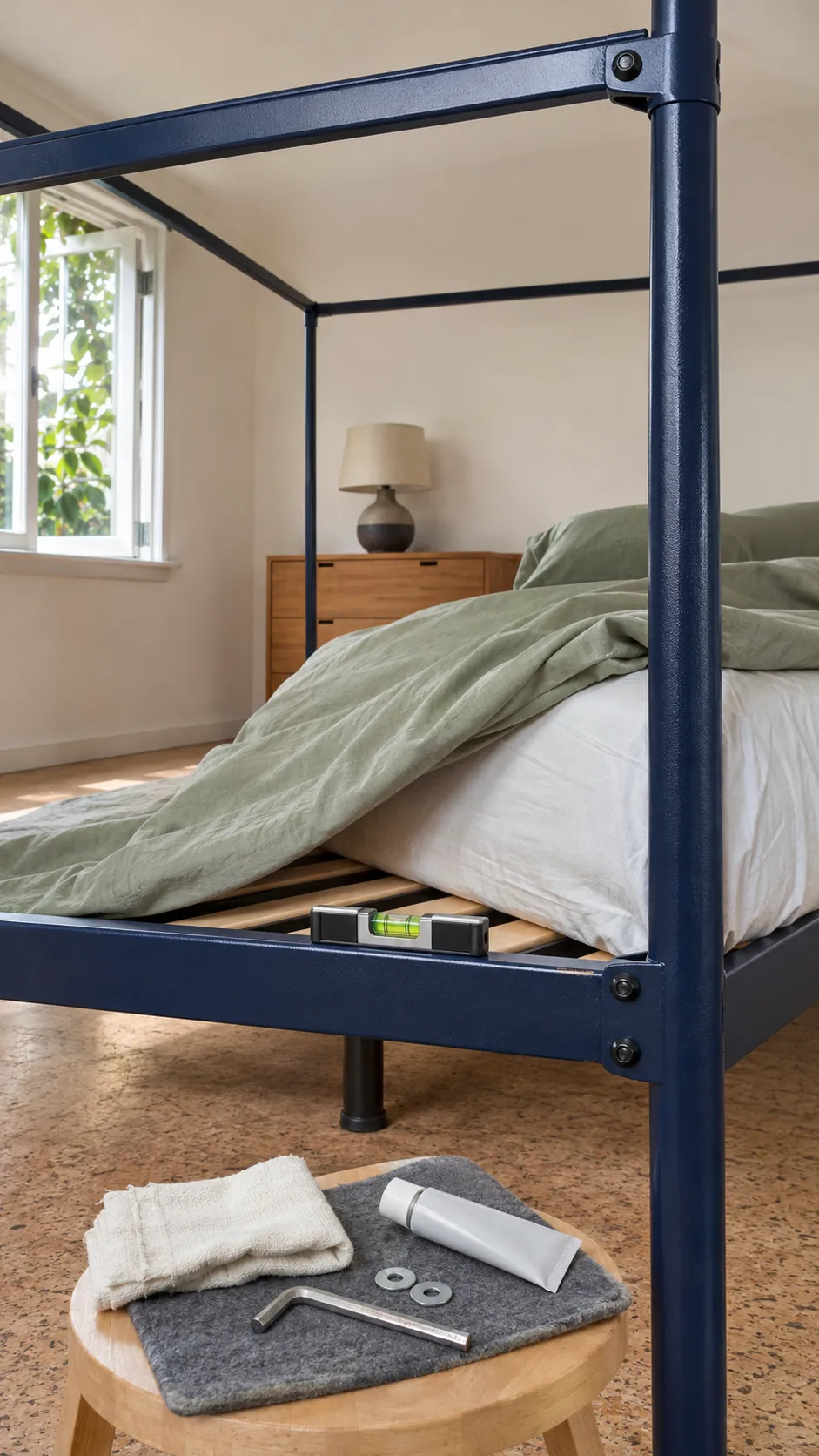
Do not tighten every fastener blindly when a bed becomes noisy. Remove bedding noise from the test, then press one joint or rail at a time while another person listens. Check floor level, center foot contact, slat movement, headboard contact, and each threaded connection in a consistent order.
Use the maintenance method approved by the maker. Correct loose hardware with the supplied tool and replace damaged or poorly fitting parts instead of forcing them. A suitable isolating washer or approved dry lubricant can help a known contact point, but it should not hide a bent bracket, failed weld, or stripped thread.
Recheck the frame after its first weeks of use and after moving it. A well designed metal canopy bed should keep its strong outline without announcing every turn in the night, and careful diagnosis protects both the frame and your sleep.