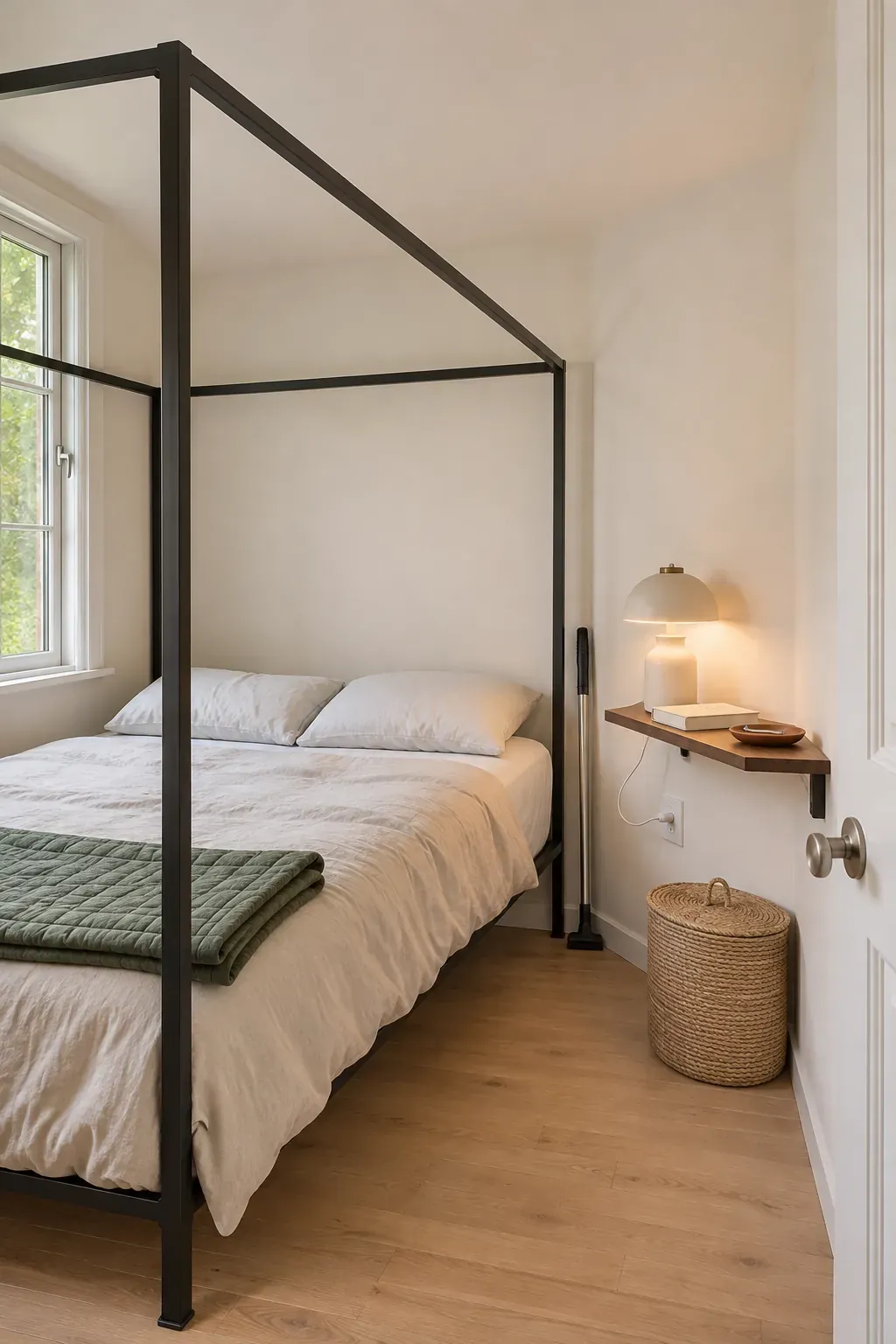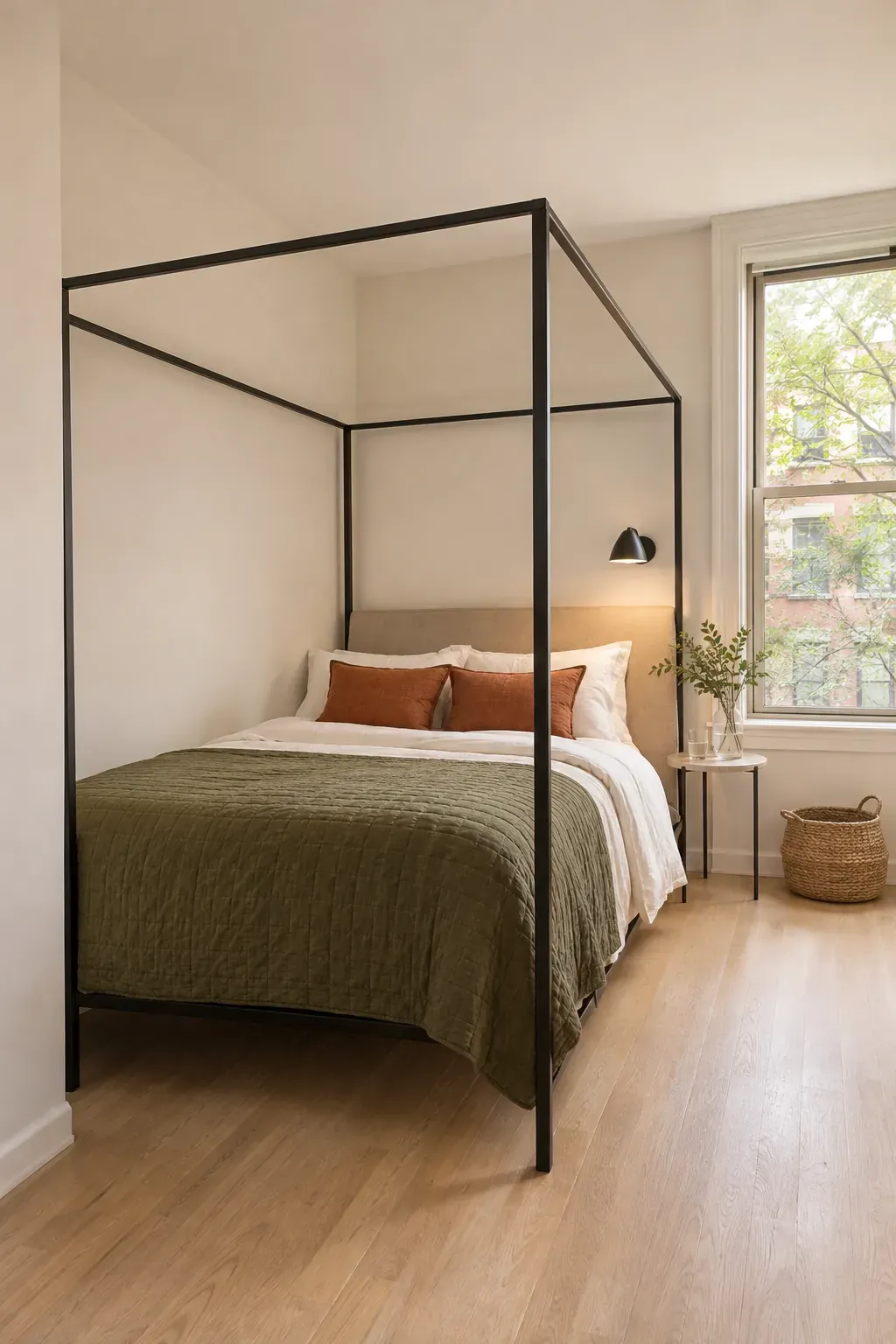
A corner canopy bed can make a compact bedroom feel intentional, but only when the frame, walking path, and fabric plan suit the room. The corner position saves open floor area on two sides. It also makes the wall side harder to reach and can crowd windows, outlets, or heating vents. The best setup begins with exact measurements and a clear plan for daily use.
Measure the whole corner before choosing a frame
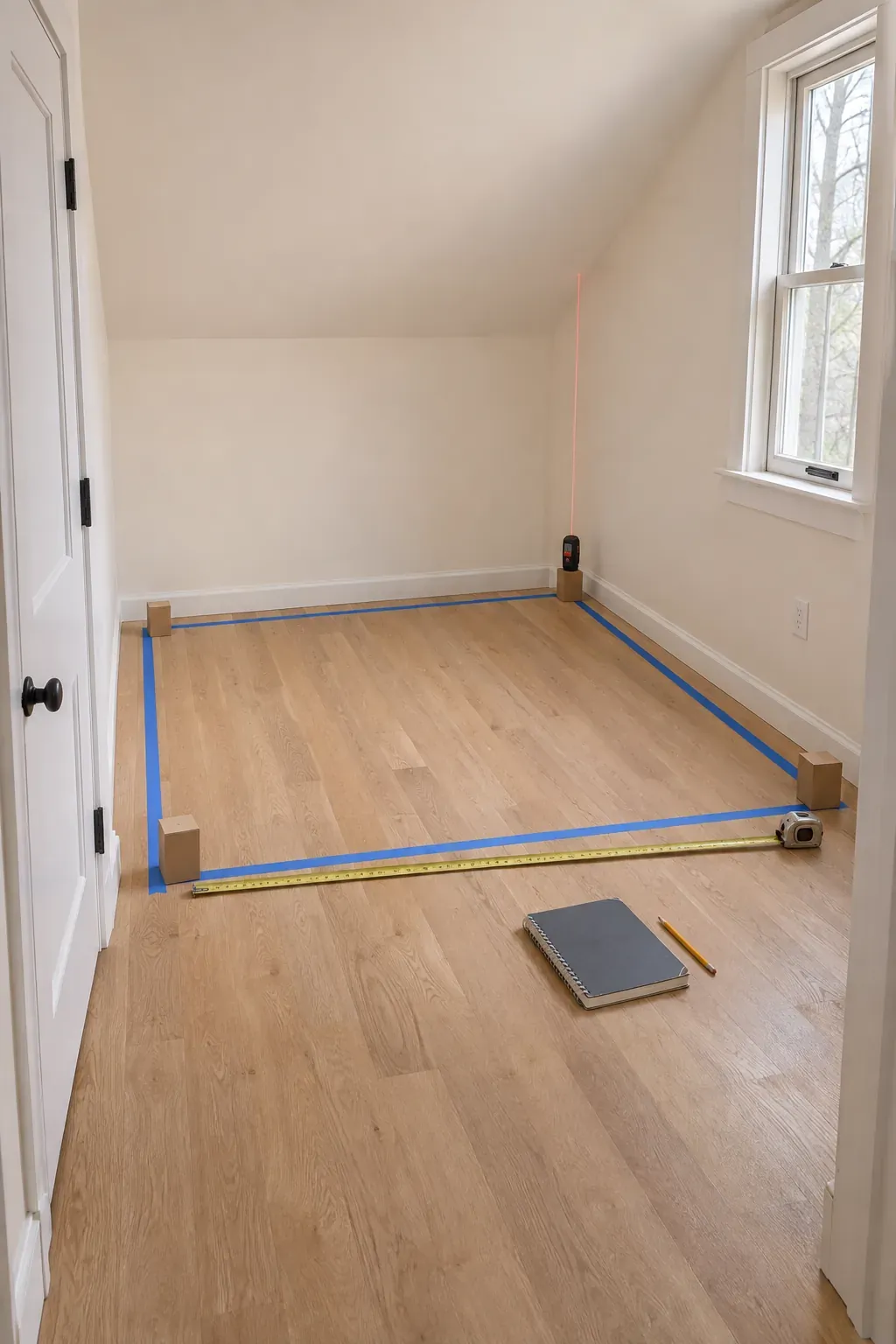
Measure the mattress footprint, the outside width and length of the frame, and the full height of the posts. Then measure the ceiling at every post location because floors and ceilings are not always level. Leave enough space above the top rails for assembly and for any fabric you plan to add. Check baseboards, window trim, curtain rods, sloped ceilings, and wall fixtures. Mark the proposed footprint with removable tape and walk around it for several days. A useful plan preserves a comfortable route from the door to the bed and keeps drawers, closet doors, and windows usable.
Choose which two sides can meet the walls
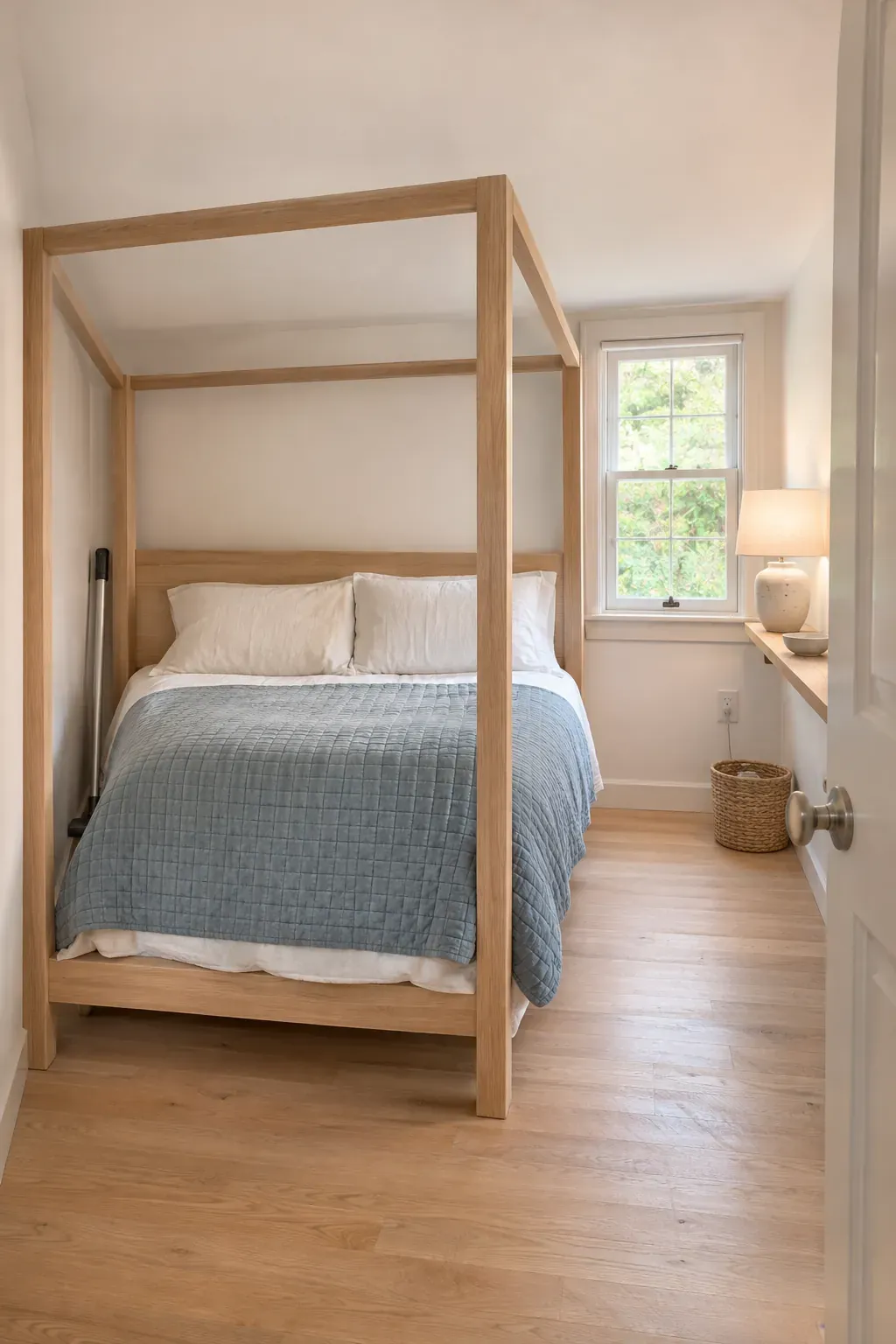
Putting the head and one long side near walls creates the strongest corner effect and leaves the opposite side open. This works well for one sleeper who is comfortable entering from a single side. Two sleepers usually need access on both sides, so a corner placement may cause nightly disruption. Leave a small cleaning gap instead of pressing upholstery or wood directly against the wall. The gap also reduces rubbing, trapped moisture, and marks on paint. Place the bed so pillows do not cover an operable window and so the frame does not block an emergency exit.
Select a frame that keeps the room visually open
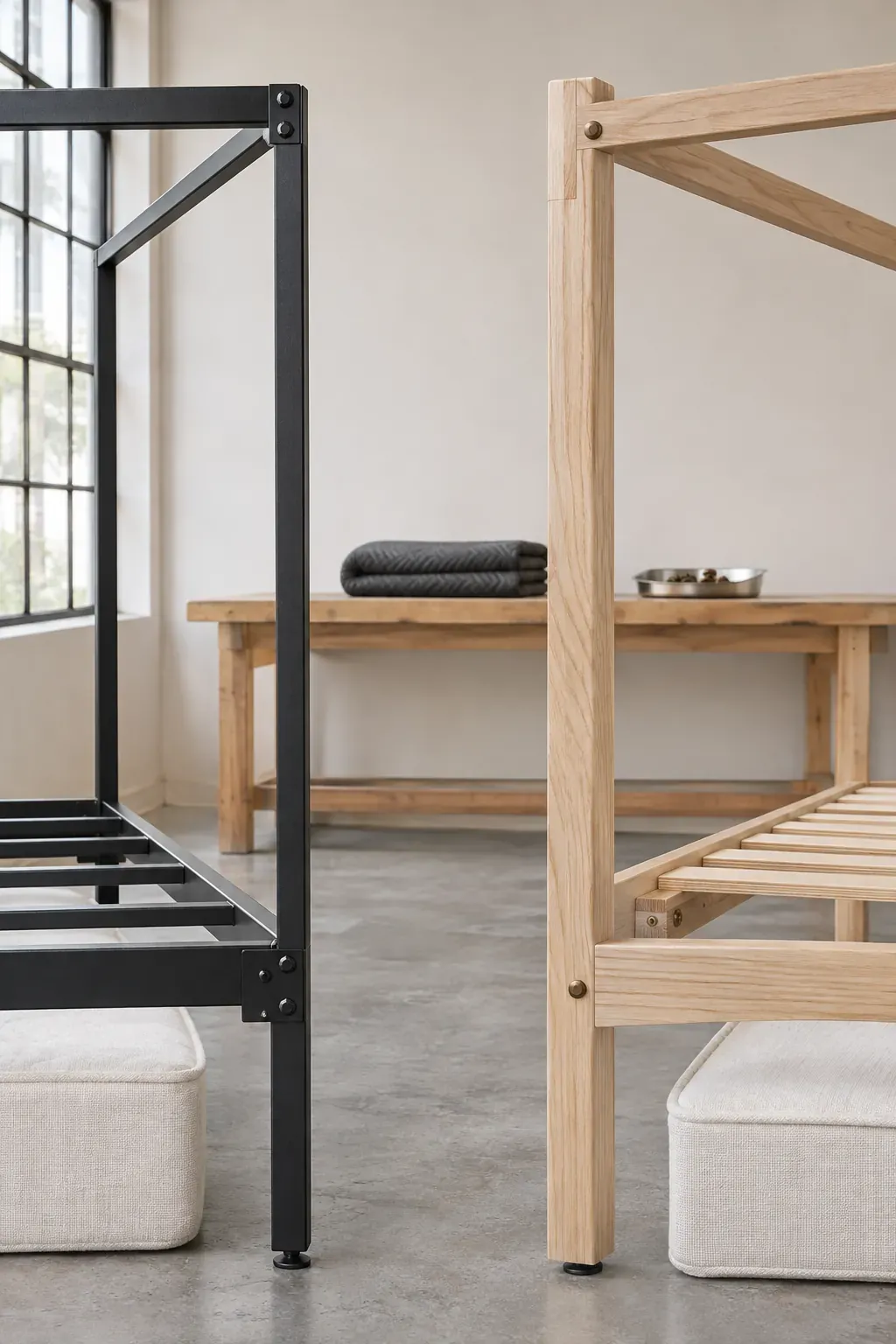
Thin metal posts and simple top rails usually feel lighter in a small room than thick carved wood. Pale wood can also work when the profile is restrained and the bedding has quiet colors. A half canopy or an open frame without fabric gives the suggestion of enclosure without creating a solid visual block. Check the support system as carefully as the style. Center legs should contact the floor, slats should match the mattress maker requirements, and every connection should be serviceable after the bed is near the walls. A frame that depends on inaccessible wall side bolts will be frustrating to tighten later.
Plan assembly before moving the bed into place
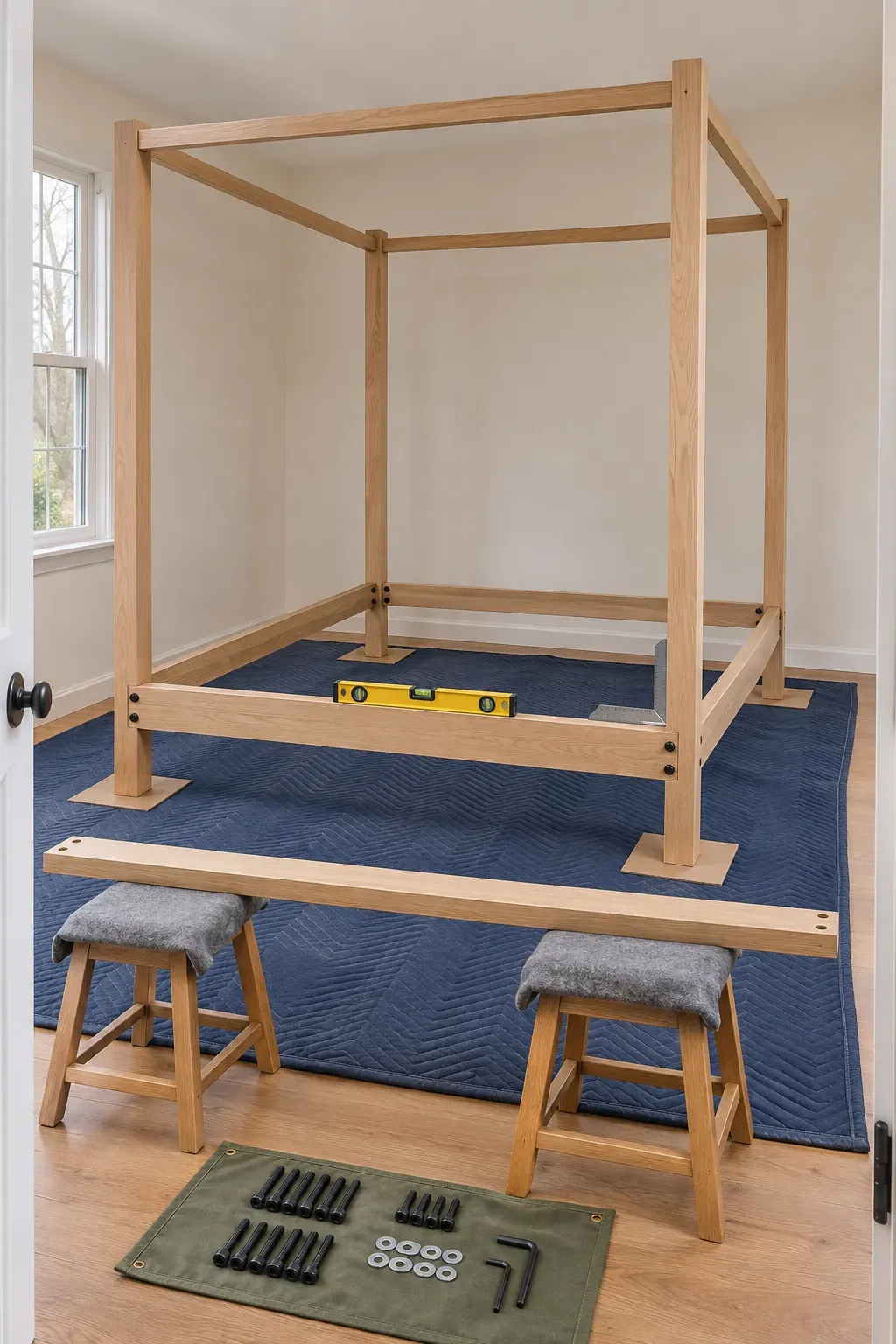
Build the frame in the room because a complete canopy rarely fits through a doorway. Protect the floor, sort hardware, and identify the head, foot, left, and right rails before lifting anything. Assemble the lower rectangle away from the walls, square it, and add the support system. Install posts and top rails with a second adult when the instructions require it. Tighten fasteners in stages so the frame stays square. After the mattress is installed, move the bed carefully into its final position without dragging or twisting the posts. Keep the correct tool nearby and check connections again after the first week.
Use fabric without blocking air or light
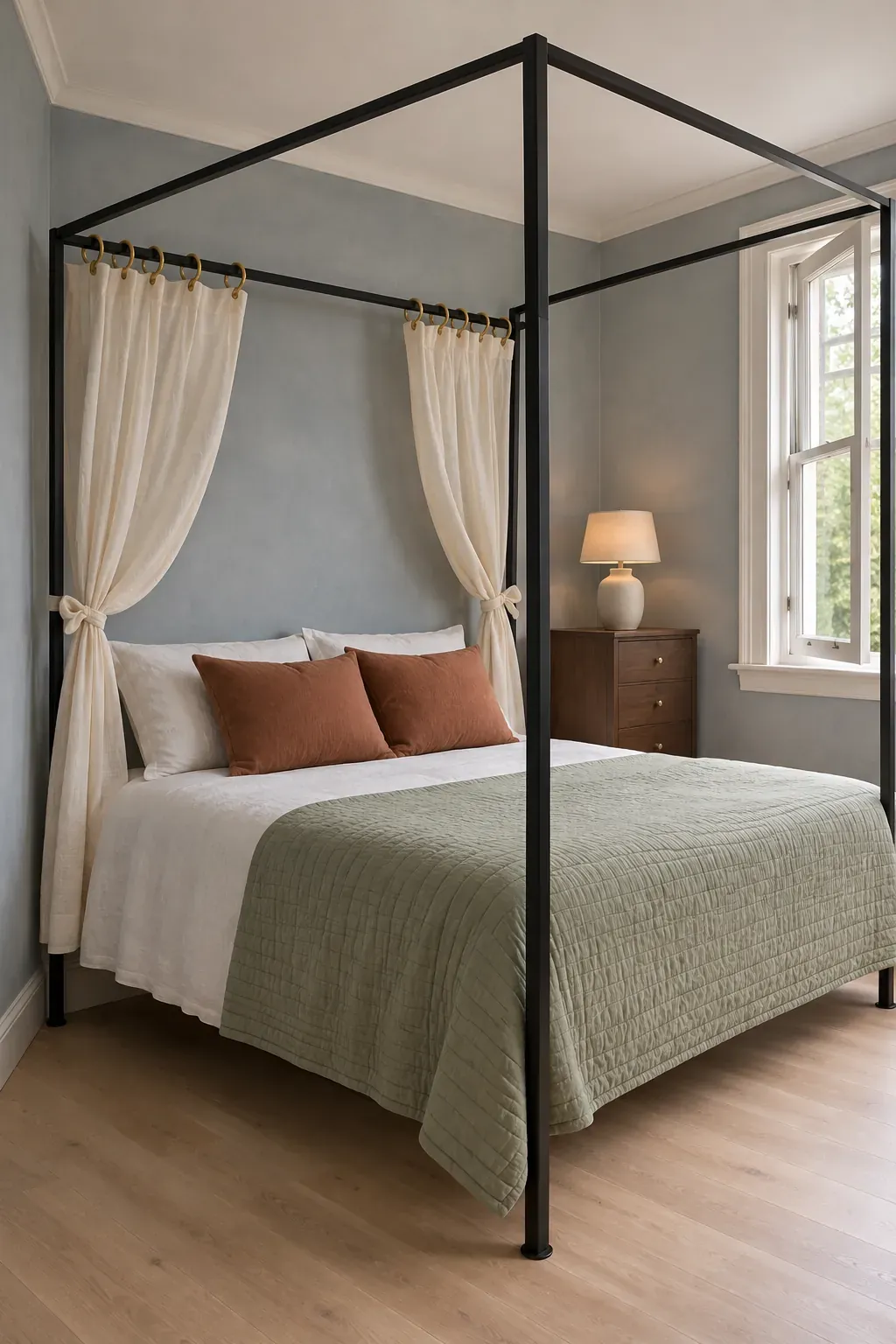
Full curtains on every rail can make a small corner feel dark and can restrict access. Try one soft panel at the head, short corner swags, or two panels that remain tied back during the day. Choose washable fabric and use smooth rings or ties that do not scrape the finish. Keep cloth well away from lamps, heaters, fans, candles, outlets, and any hot surface. Do not attach heavy fabric to rails unless the maker permits the added load. If the room has limited daylight, an open top and pale fabric will preserve more brightness than a dense overhead canopy.
Finish the corner with useful bedside details
A wall shelf or narrow table can replace a bulky nightstand on the enclosed side. Use a reachable switch, secure charging cable, and reading light that does not touch fabric. Keep bedding simple so making the wall side is manageable. A fitted sheet with strong elastic and a lightweight duvet are easier to handle than many tucked layers. Vacuum the wall gap with a slim tool and inspect the upper rails for dust. Check fasteners, slats, and center supports every few months. The result should feel calm and sheltered while still allowing safe movement, fresh air, and routine care.