
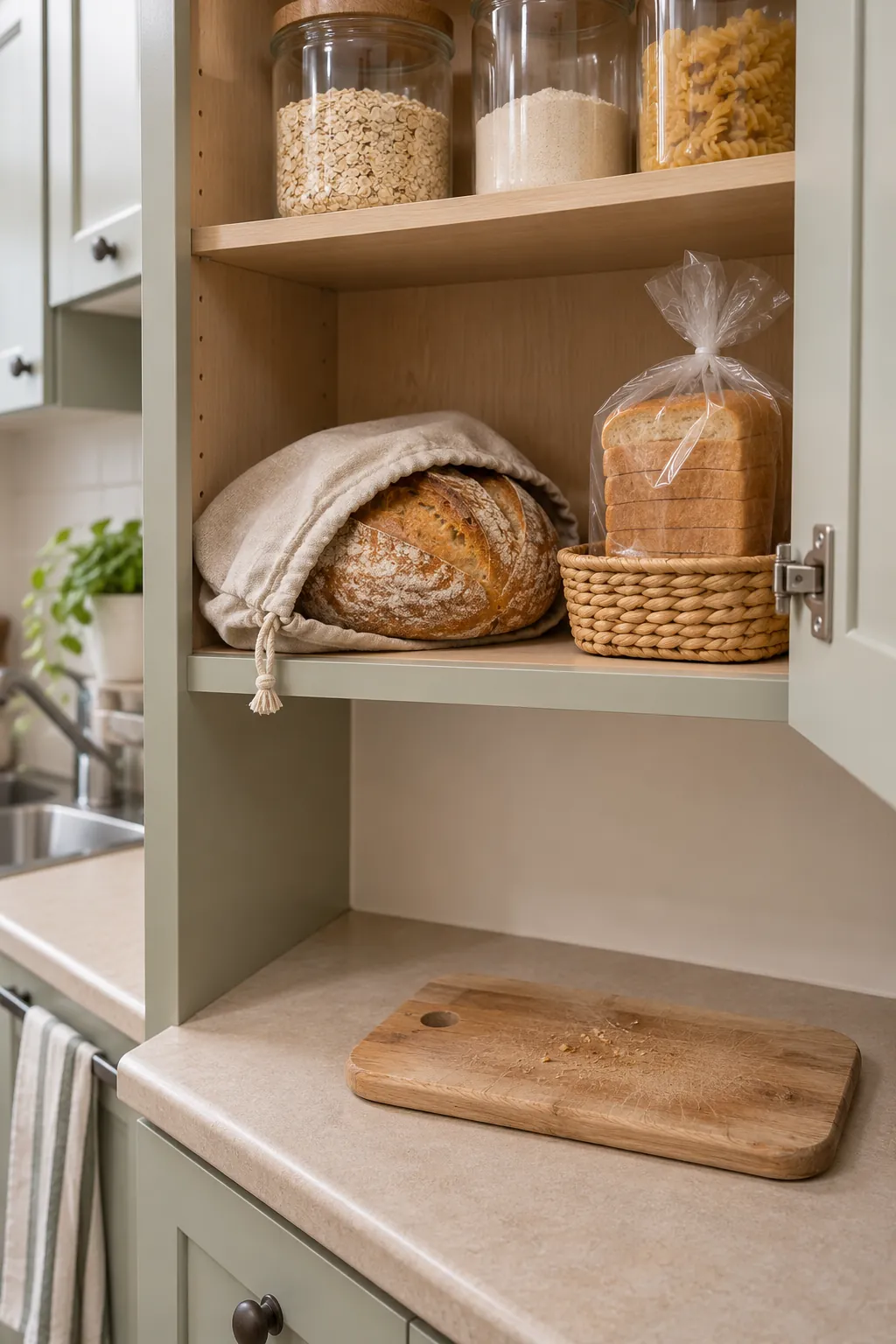
A loaf can take over a tiny kitchen long before it goes stale. The useful question is not which large container to buy. It is how much bread needs to stay within reach, how much air that bread needs, and where the rest can wait without wasting work space.
The most reliable small kitchen system separates bread for the next day or two from bread for later. It also keeps heat, steam, sunlight, and damp food away from the loaf. That small change protects texture while giving the counter back to cooking.
Choose storage by how fast you eat the loaf
Start with your real eating pace. If a loaf disappears within two days, a breathable bag in a cool cabinet can be enough. If it lasts most of a week, keep a small working portion nearby and freeze the rest on the day you bring it home.
This split system solves two common problems at once. You avoid a bulky countertop bread box, and the whole loaf does not sit through repeated warm days while you slowly use it. Put only what you can finish soon into daily bread storage.
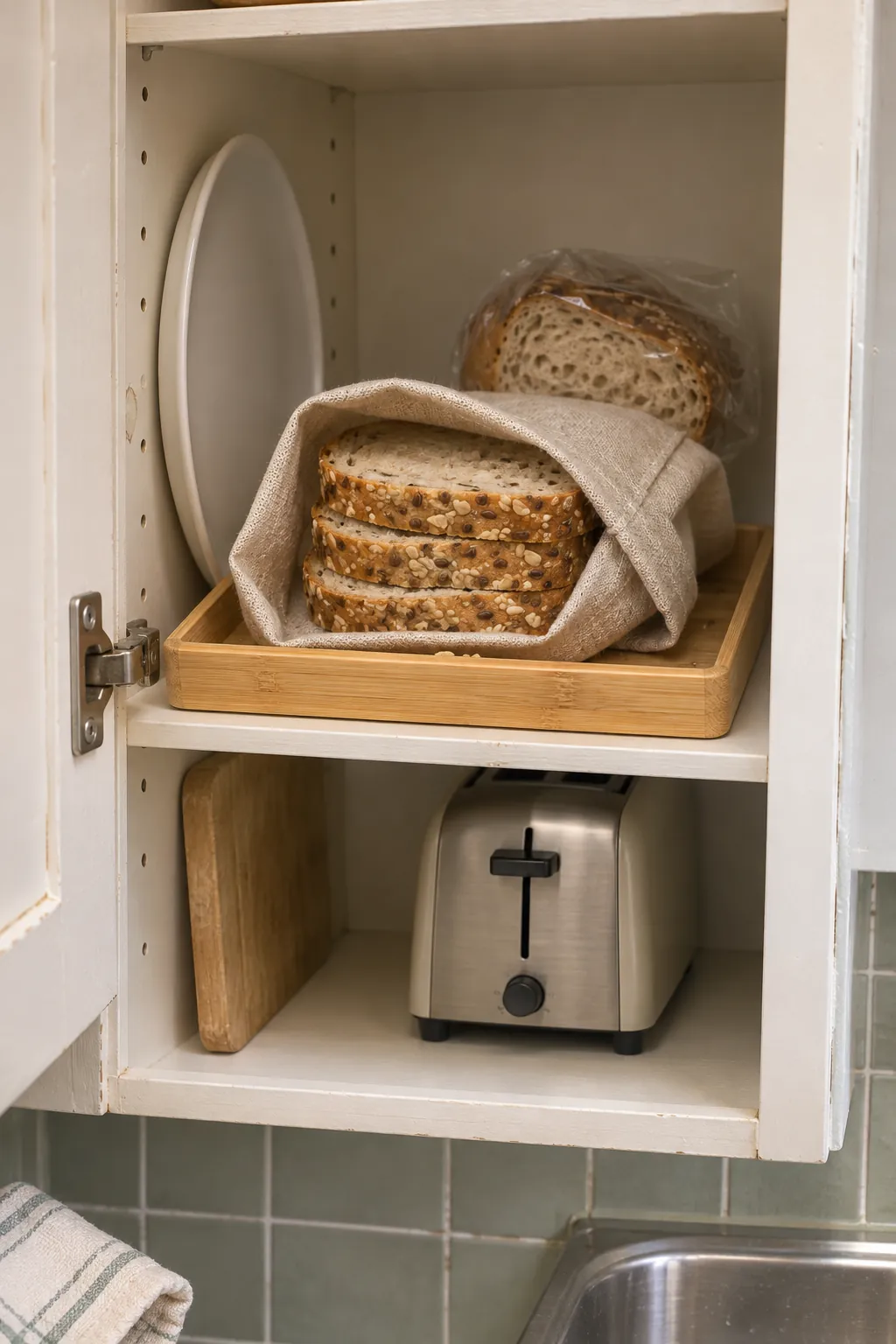
Use a cool cabinet as the daily bread zone
A shallow cabinet shelf works well when it is away from the oven, dishwasher, refrigerator exhaust, and direct sun. Heat speeds quality loss, while trapped humidity encourages mold. Choose one shelf that stays dry and has enough room that the loaf is not crushed by cans or dishes.
Place the bread near the front so it stays visible. A low open basket or shallow tray can catch crumbs and keep bags upright without becoming another sealed box. This is especially useful in a small apartment kitchen where forgotten food quickly becomes wasted food.
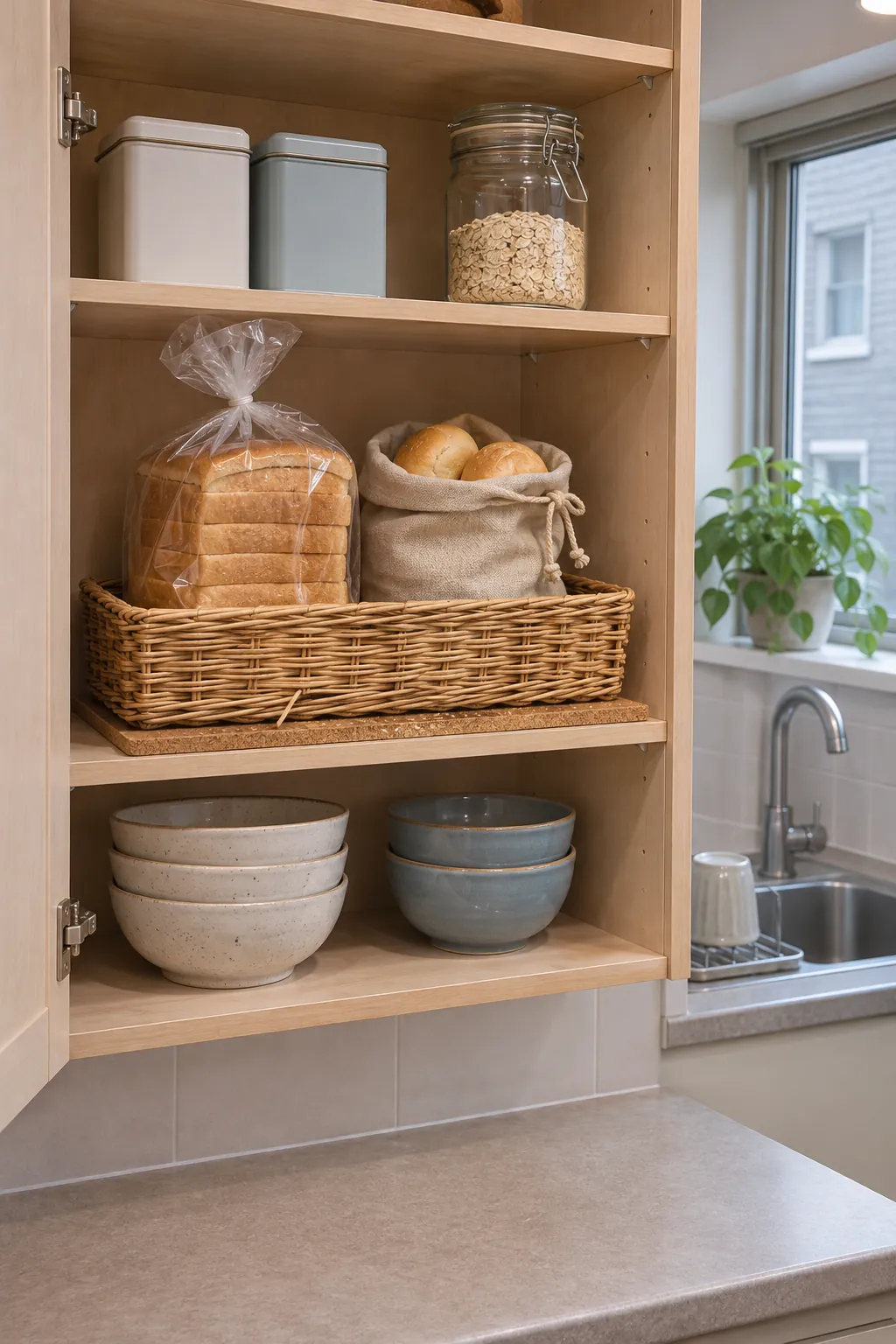
Match the bag to the bread
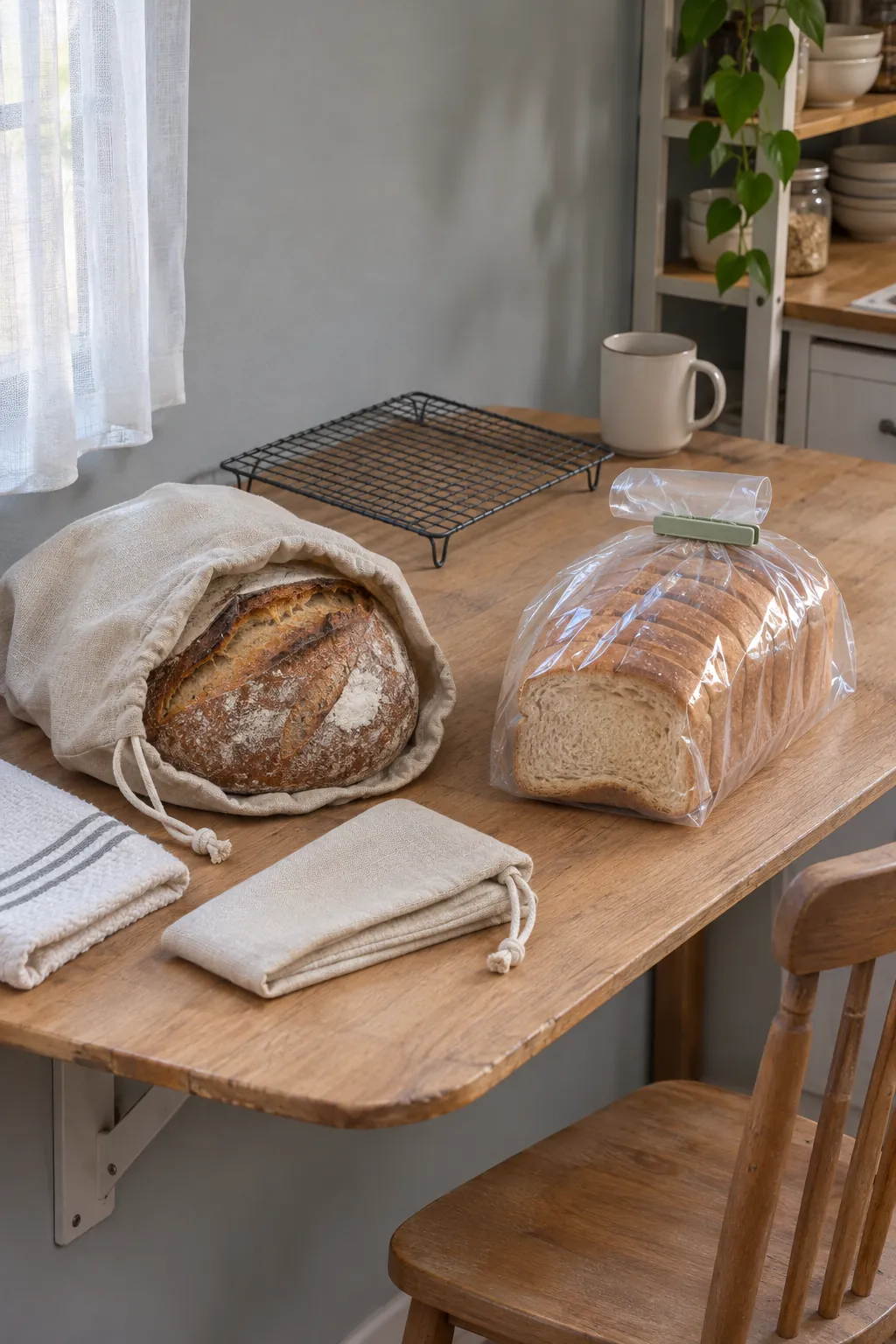
Crusty bread usually benefits from some airflow for a short stay. A clean cotton or linen bag helps protect it while allowing moisture to escape, although the crumb will gradually firm. Soft sliced bread usually keeps its intended texture better in its original closed bag because it was made to retain moisture.
Do not put warm homemade bread into a closed plastic bag. Let it cool fully first, since trapped steam can create condensation. If your home is humid, check the inside of any reusable bag and make sure it is completely dry before the next loaf goes in.
Turn one drawer into a bread drawer
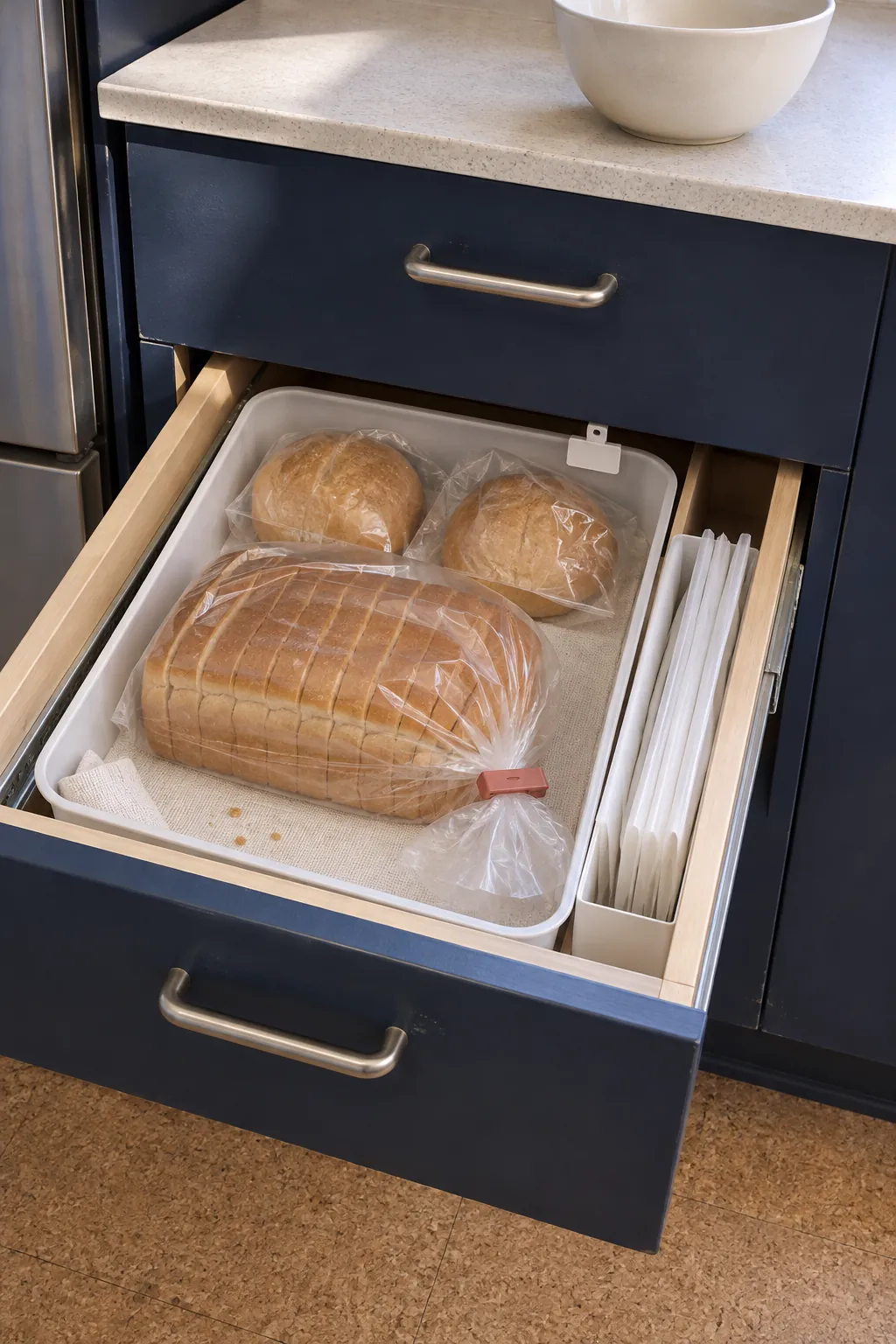
A bread drawer is useful when cabinet shelves are full and the drawer stays cool. Empty it first, wipe away crumbs, and reserve the space for bread and wraps only. A washable liner or shallow bin makes cleaning simple and prevents a loose bag from catching on drawer hardware.
Check the drawer depth before choosing a bin. The loaf should lie naturally without being compressed when the drawer closes. Keep sharp tools, heavy utensils, and damp towels elsewhere so the bread package is not punctured or contaminated.
Freeze bread in portions you will actually use
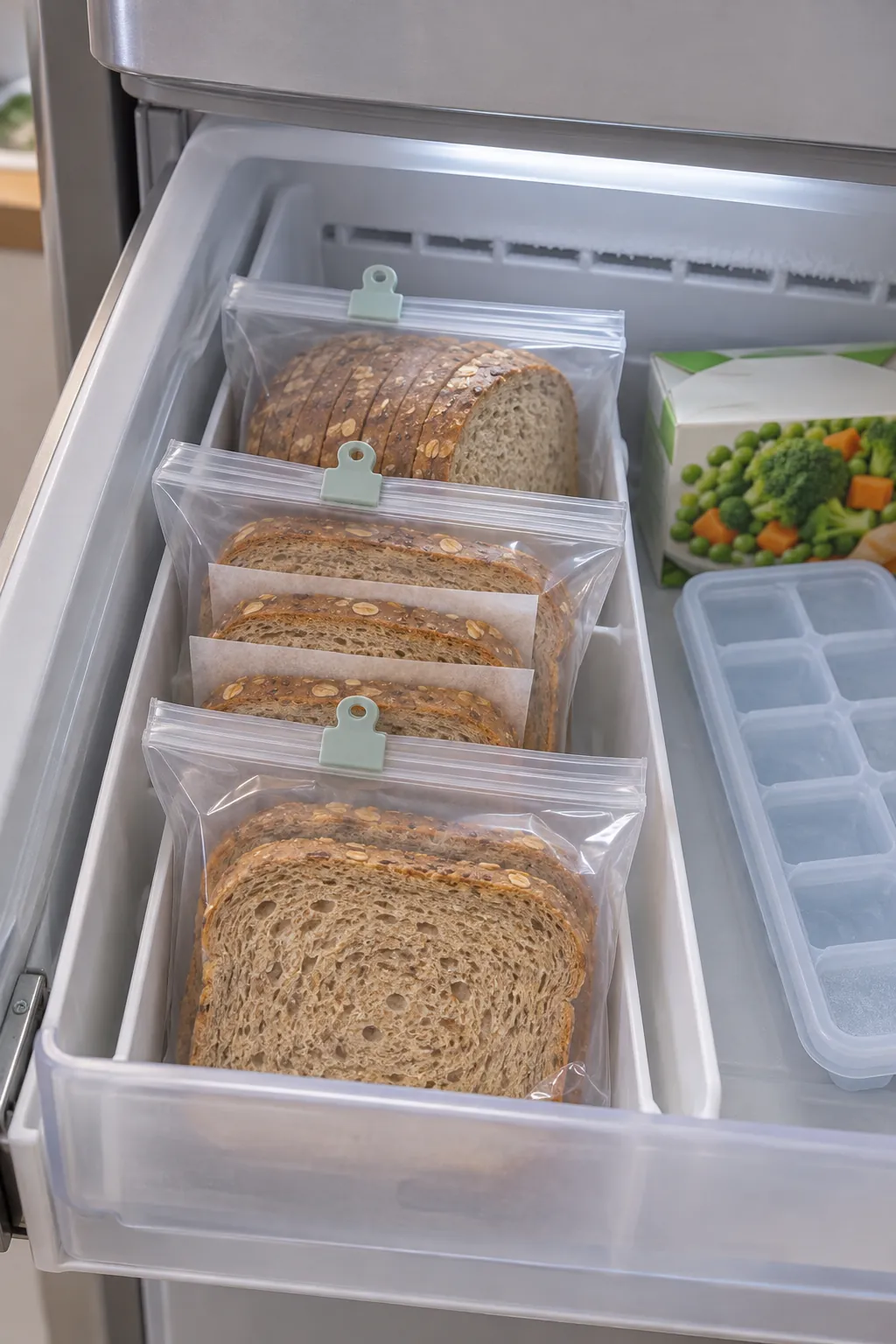
Freezing is the strongest countertop space saving choice when you eat bread slowly. Slice an unsliced loaf first, then divide it into portions sized for one breakfast, one lunch, or one day. Press excess air from a freezer safe bag and add the date so older bread is used first.
Separate slices with small pieces of baking paper only if they tend to freeze together. Take out just what you need and toast it from frozen, or thaw it while still wrapped so condensation forms on the package rather than on the bread. Avoid repeated thawing and freezing because texture suffers.
Keep bread away from hidden heat and moisture
The cabinet above a refrigerator can feel convenient but often runs warm. The space beside a dishwasher may also receive heat and steam. Test a possible spot after cooking and washing dishes, then move the loaf if the shelf feels warm or the bag develops moisture.
Do not store bread beside potatoes, onions, or very ripe fruit in a closed space. Produce can add moisture and odors, and crowded storage reduces airflow around packages. A dry shelf with a simple bread only boundary is easier to inspect and clean.
Reset the system each time you buy bread
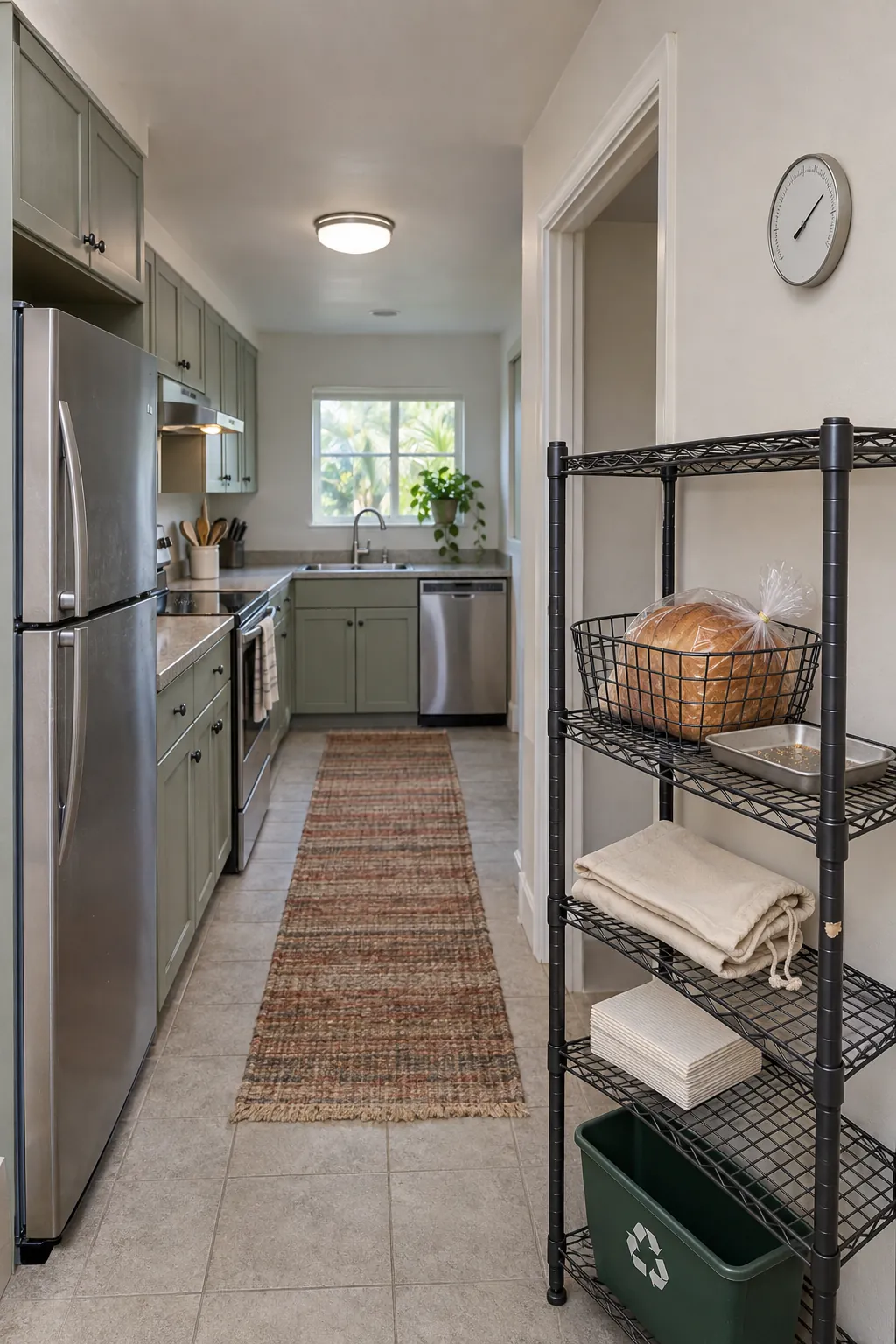
Before a new loaf goes into the daily zone, remove crumbs and check the old package. Never place fresh bread in a bag that held moldy bread. Wash a reusable cloth bag according to its care instructions, and let it dry completely before reuse.
Then decide what stays nearby and what goes straight to the freezer. That brief reset matters more than a specialized container because it keeps the storage volume small and makes forgotten pieces visible. Your final setup should be easy to open, easy to clean, and sized for the bread you truly eat.