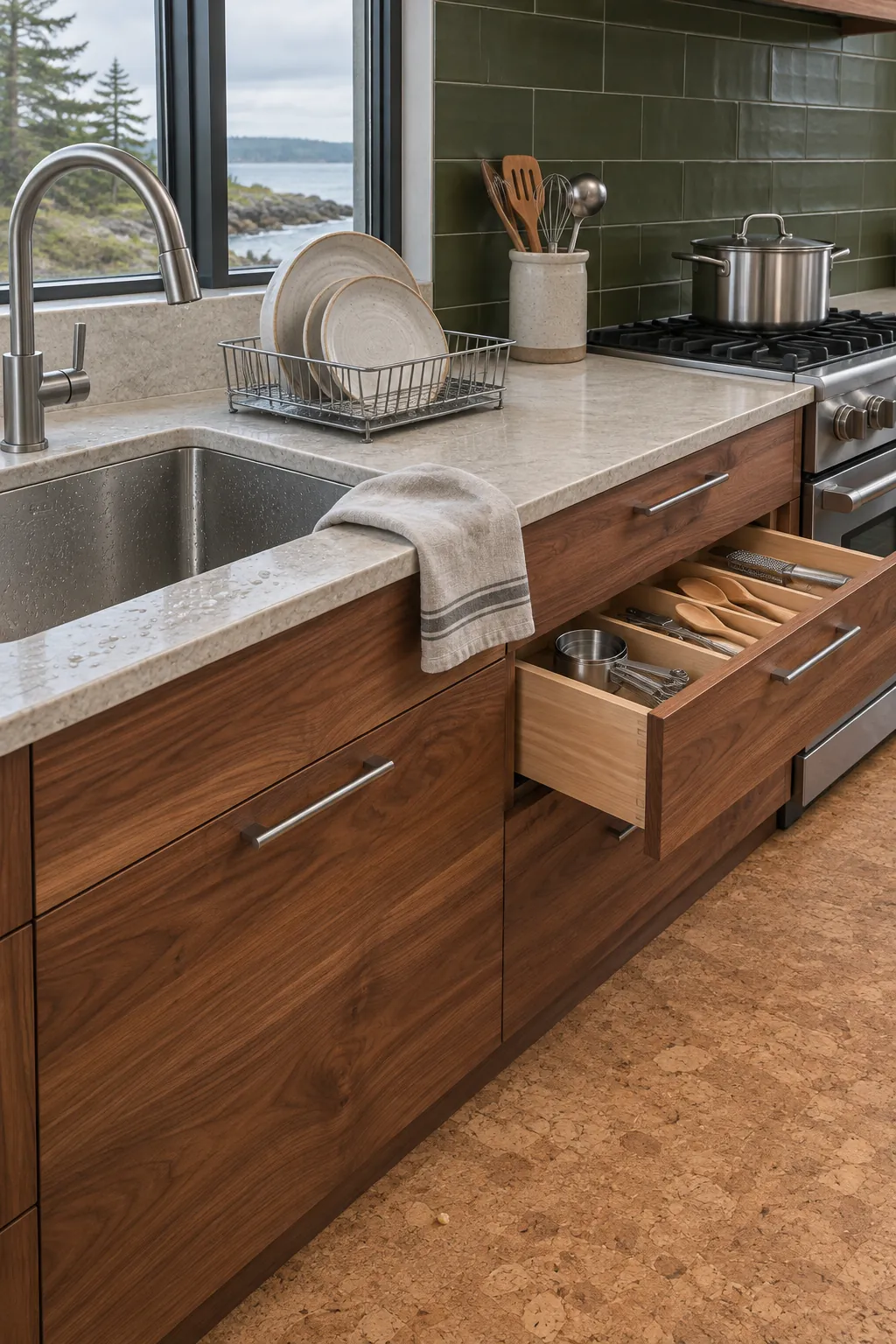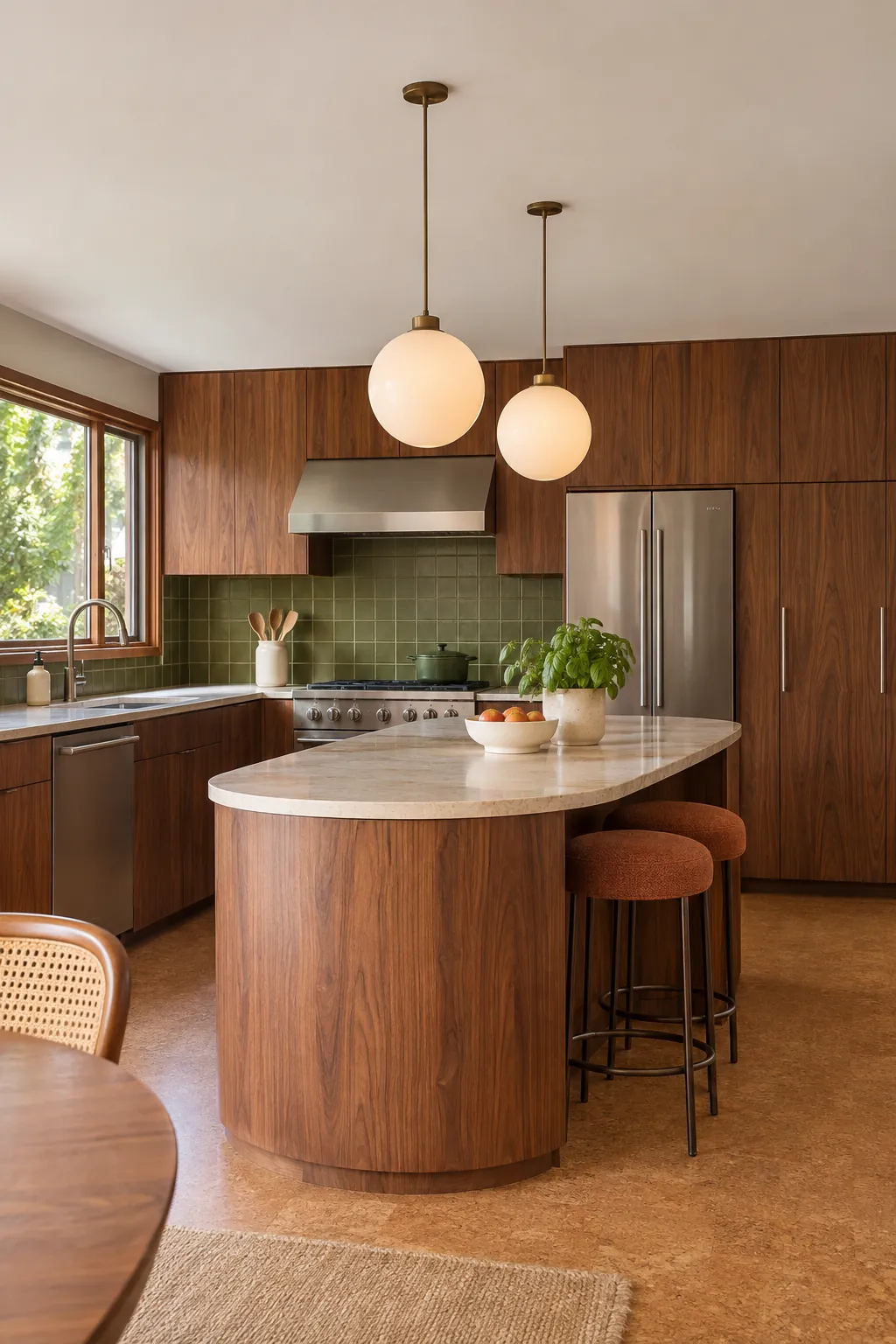
A kitchen can feel warm and character rich without becoming a costume set. The useful goal is to keep the confident shapes, natural materials, and sociable mood of the era while improving light, storage, safety, and daily cleanup. Start with the room you have, then choose a few strong period references instead of applying every retro cue at once.
Choose one clear era anchor
Begin with one feature that carries the design, such as walnut flat panel cabinets, a rounded island, or a graphic tile floor. Let quieter modern surfaces support that anchor so the result feels intentional. This approach also protects the budget because you are not replacing every finish merely to make the room look coordinated.
Build a warm but controlled palette
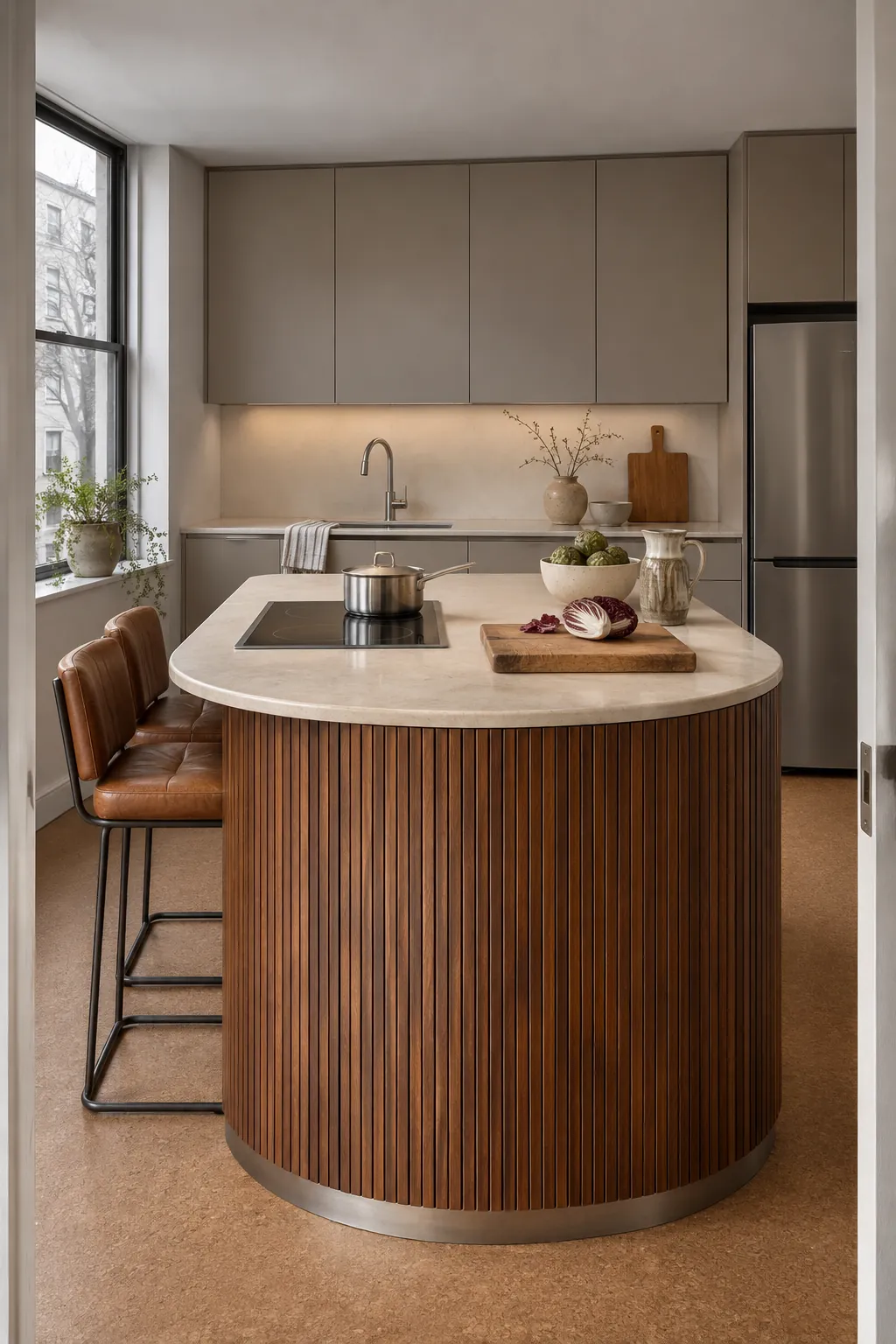
Use warm neutrals as the base, then add avocado, rust, ochre, or burnt orange in a limited area. A muted green backsplash or a pair of rust stools can reference a 70s inspired kitchen without casting the whole room in yellow light. Compare every sample under daylight and evening bulbs because wood, stone, and paint can shift sharply between those conditions.
Balance saturated color with cream, mushroom, soft white, or dark brown. Natural walnut already contributes strong warmth, so it often needs a cooler stone counter or a restrained wall color beside it. Repeat the accent only two or three times to make the room feel connected.
Update the cabinet details
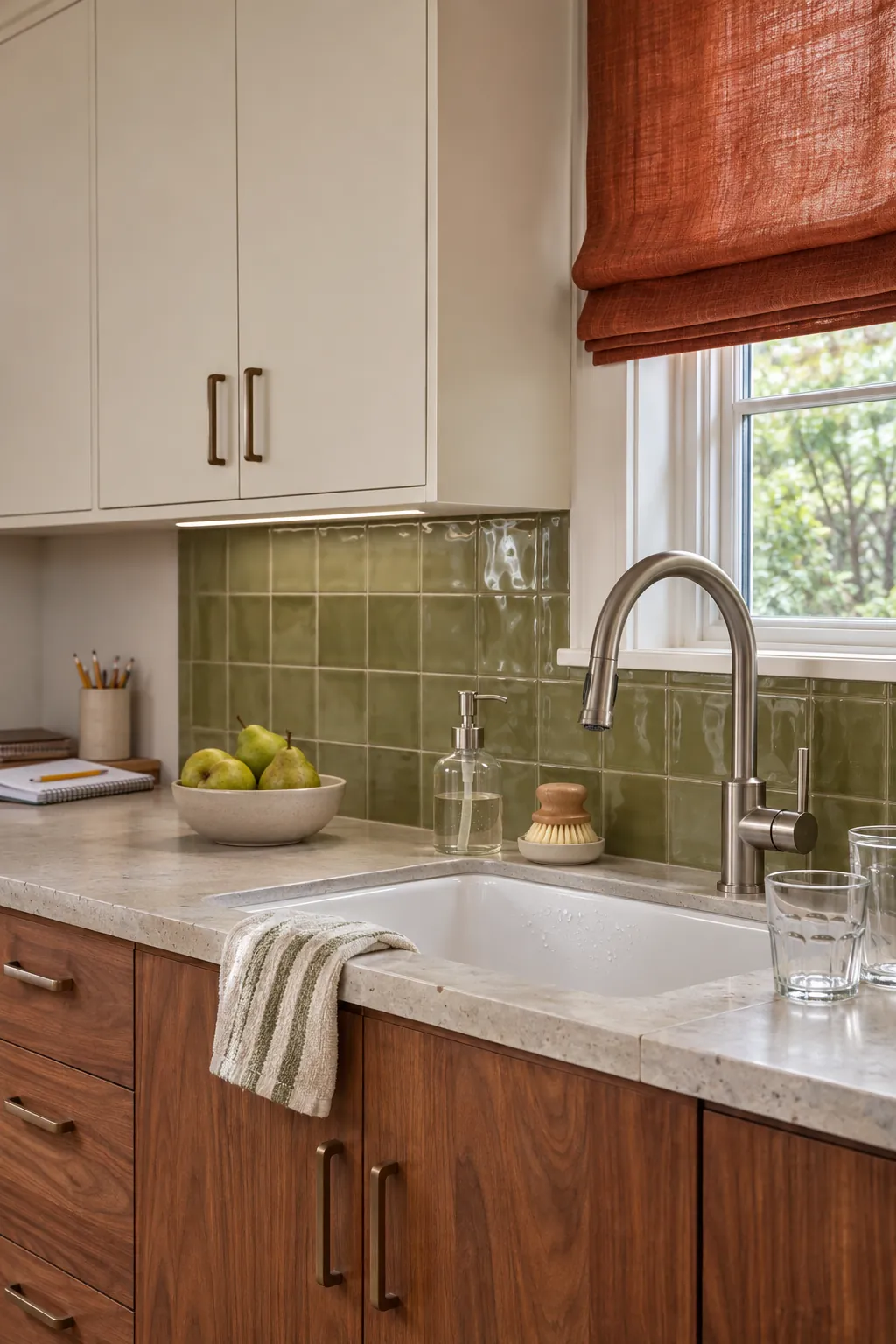
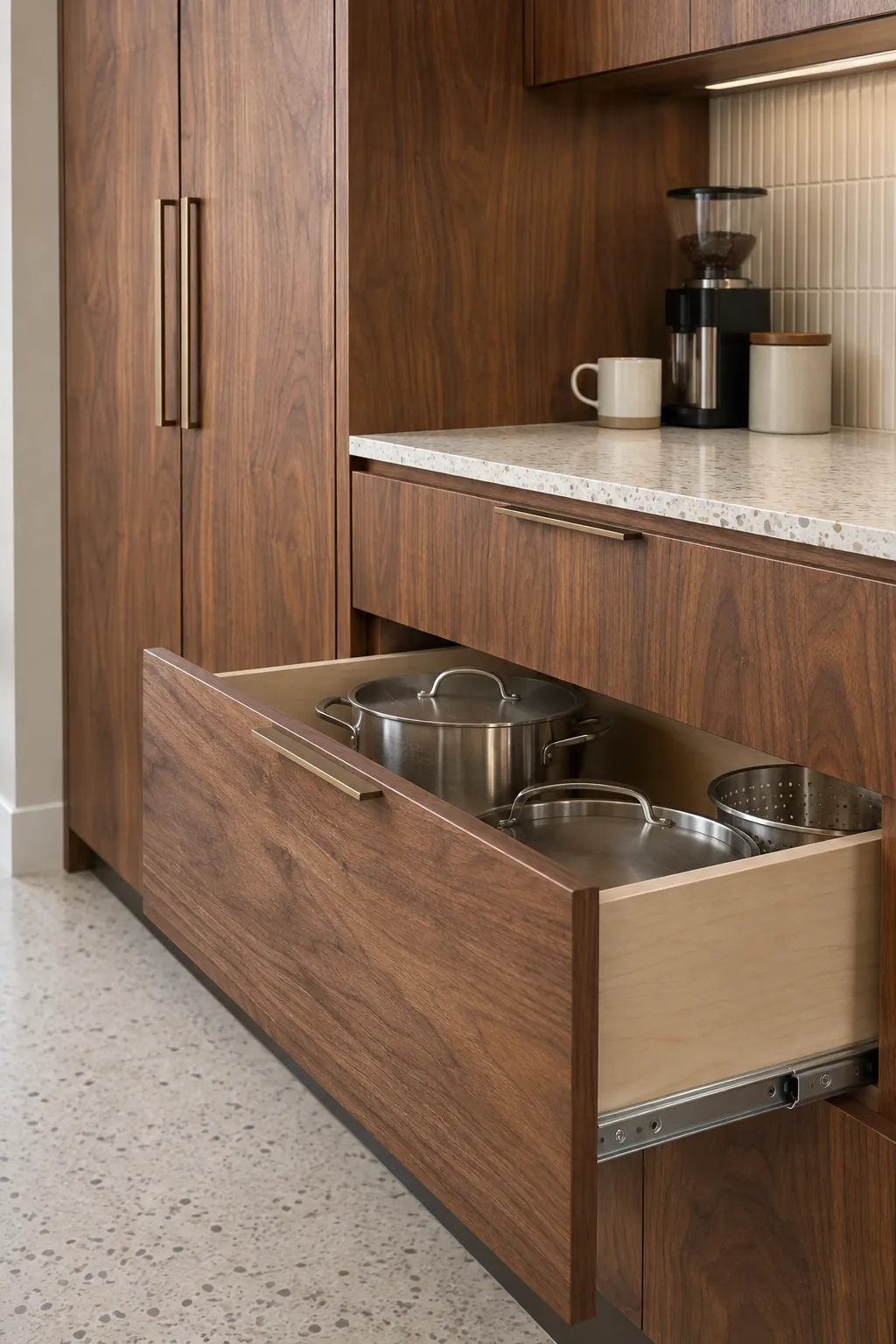
Flat fronts give the strongest period signal, but current hardware and precise alignment keep them practical. If the cabinet boxes are sound, new doors and concealed hinges may deliver more value than a full replacement. Slim bronze pulls, integrated finger channels, and simple wood grain all work, provided the doors remain easy to clean and comfortable to open.
Layer lighting for real work
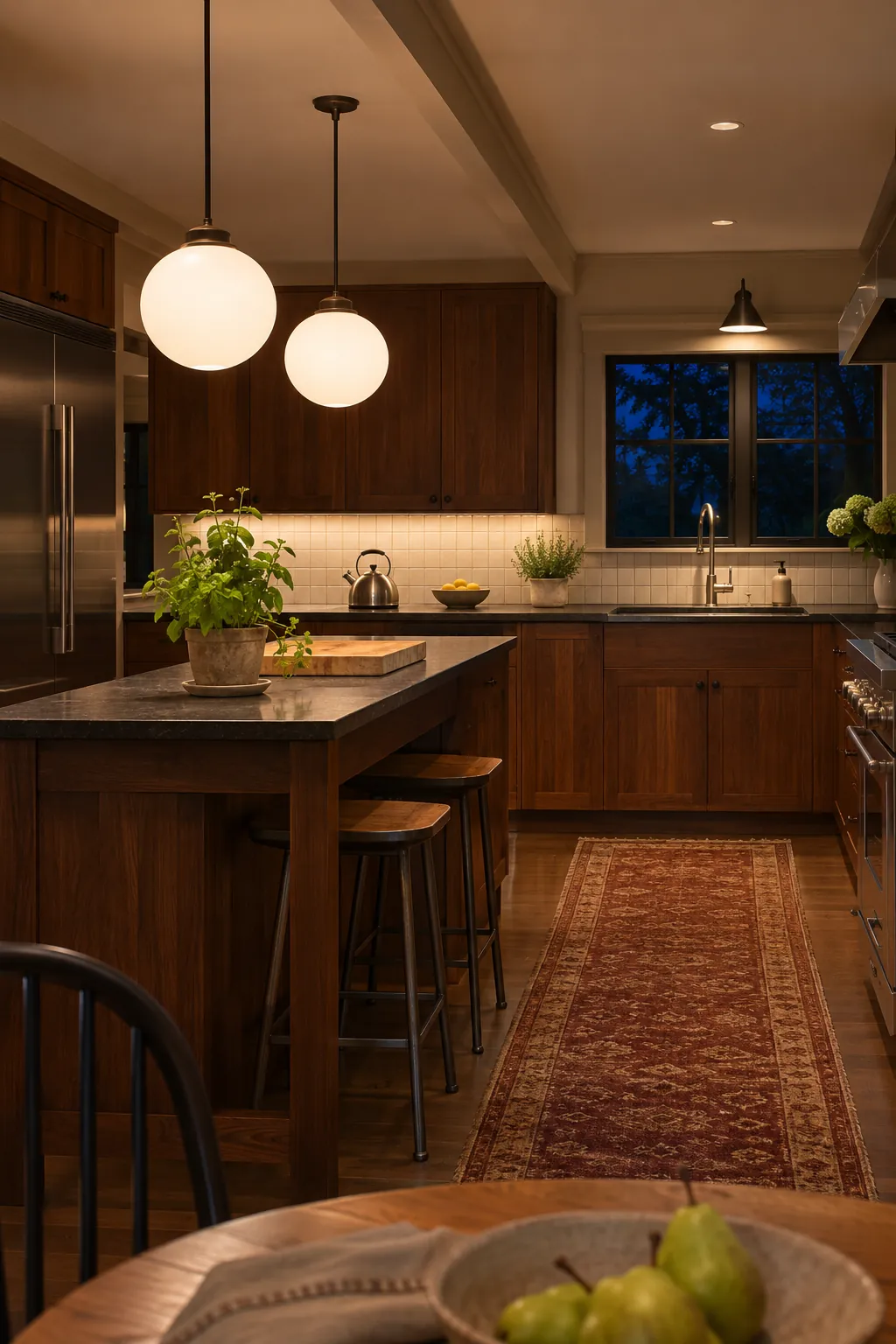
A single decorative pendant cannot light counters, sinks, and cabinets evenly. Combine warm ceiling light with concealed counter lighting and focused illumination at the sink or range. Choose bulbs with accurate color rendering so food and finishes do not look muddy.
Rounded opal glass and simple globe shapes provide a clear retro reference. Keep their scale appropriate to the island and hang them where they do not block sight lines. Put decorative fixtures and task lighting on separate dimmers so the room can change from cooking mode to a softer evening setting.
Use curves where they improve movement
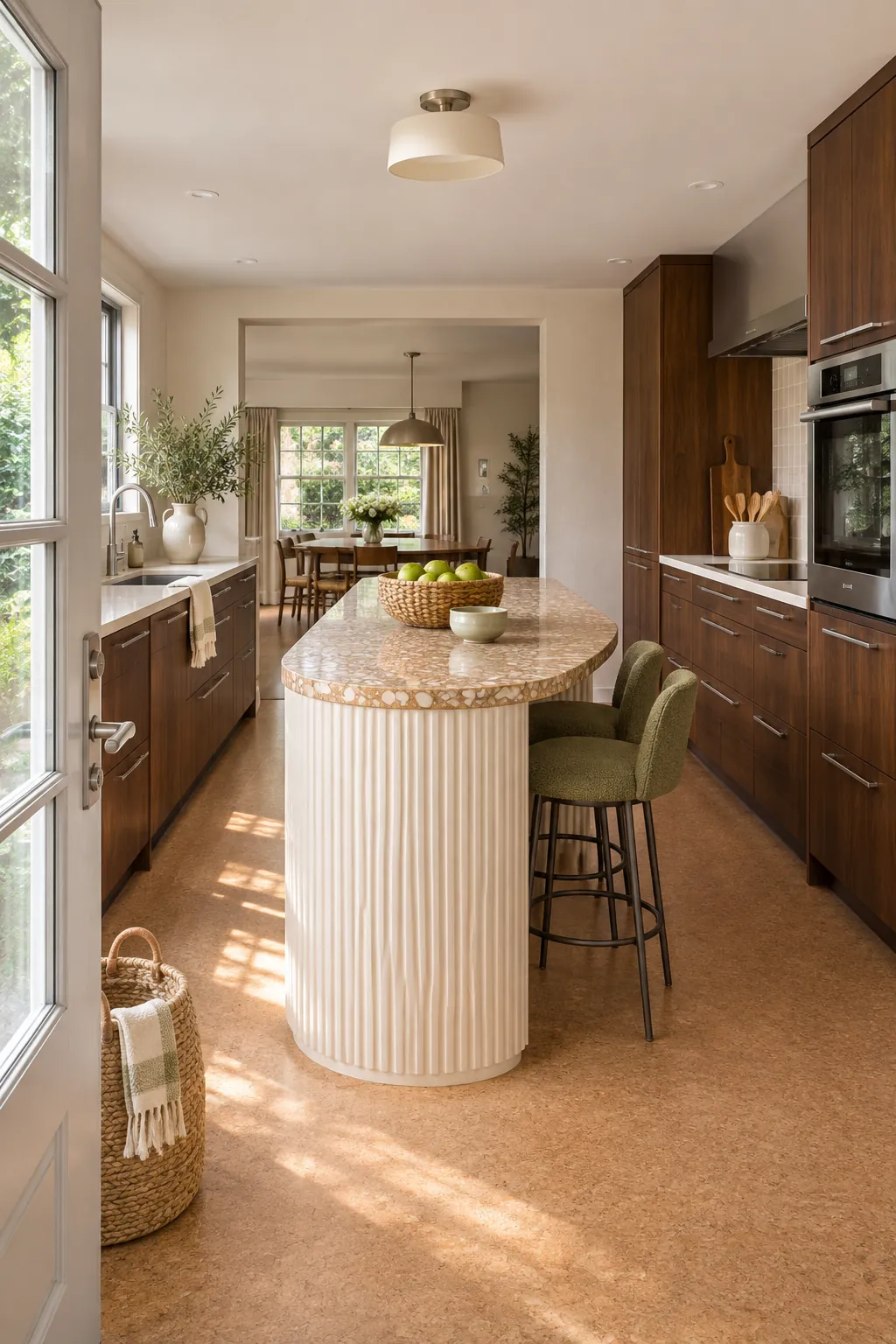
Curved corners soften a compact kitchen and reduce sharp edges along busy paths. A rounded island end, an arched open shelf, or a circular table is usually enough. Check stool clearance, appliance doors, and walking space before committing to a sculptural form.
Finish with durable everyday choices
Choose counters, flooring, and backsplash materials for the way the household actually cooks. Honed stone, durable porcelain, cork, and well sealed wood can all suit the style, but each needs a realistic maintenance plan. Place easy care materials around water and heat, then reserve delicate finishes for lower wear areas.
Keep small appliances near the outlets where they are used and provide deep drawers for heavy cookware. A shallow display shelf can hold a few ceramic pieces without taking over the work zone. When every attractive choice also supports storage, lighting, or movement, the kitchen will feel modern long after a color trend changes.