
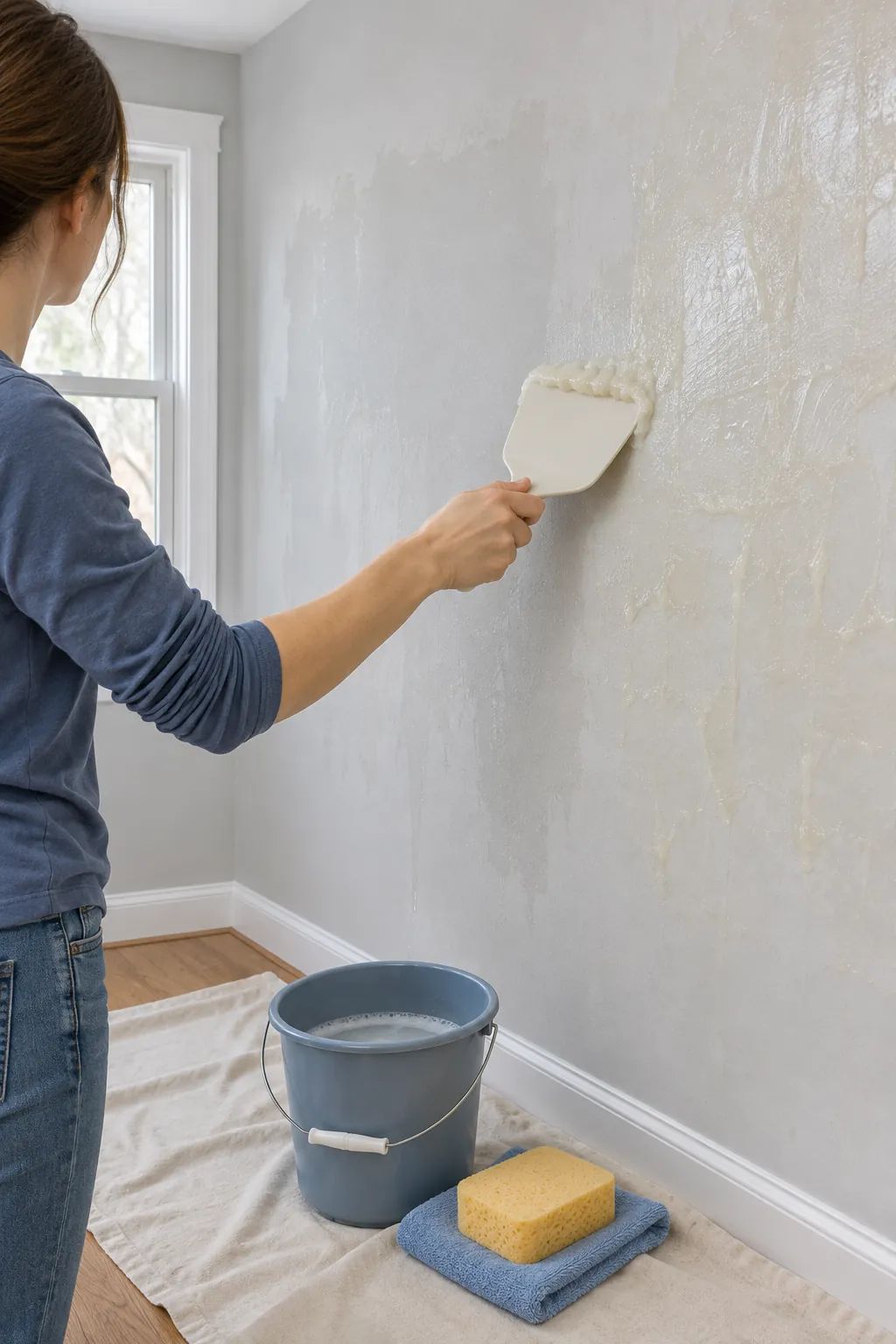
Paint does not reliably hide wallpaper glue. Even a thin residue can reactivate under water-based paint, create rough patches, or weaken adhesion. The safe approach is to test the wall, soften small sections, remove the paste gently, rinse away the final film, and let the surface dry before repair and primer.
Check whether glue is still on the wall
Use side lighting to find shiny streaks and ridges. Wipe a small area with a damp sponge. Wallpaper paste often becomes tacky, slippery, or milky when wet. If water beads without softening the film, the adhesive may need a compatible remover. Test any product in a hidden place and follow its label. Older walls can contain fragile paper or unknown coatings, so begin gently.
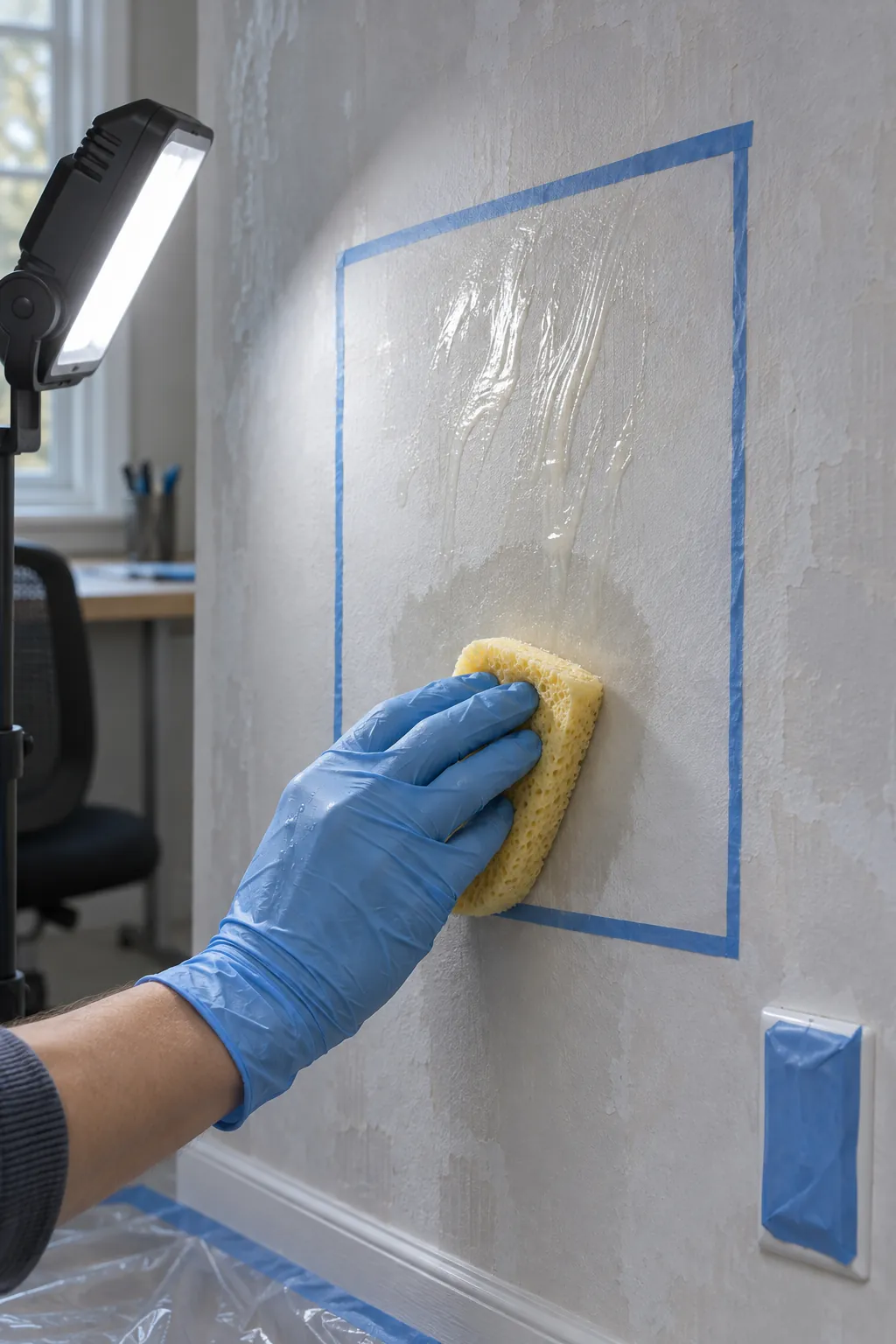
Protect the floor and work in small sections
Cover flooring, protect trim with towels, remove loose wallpaper scraps, and keep water away from electrical openings. Apply warm water or the chosen removal solution with a wrung sponge. Wet only a section you can scrape before it dries. Let the solution dwell long enough to soften the paste, but do not flood paper-faced drywall. Repeated light applications are safer than one soaking.
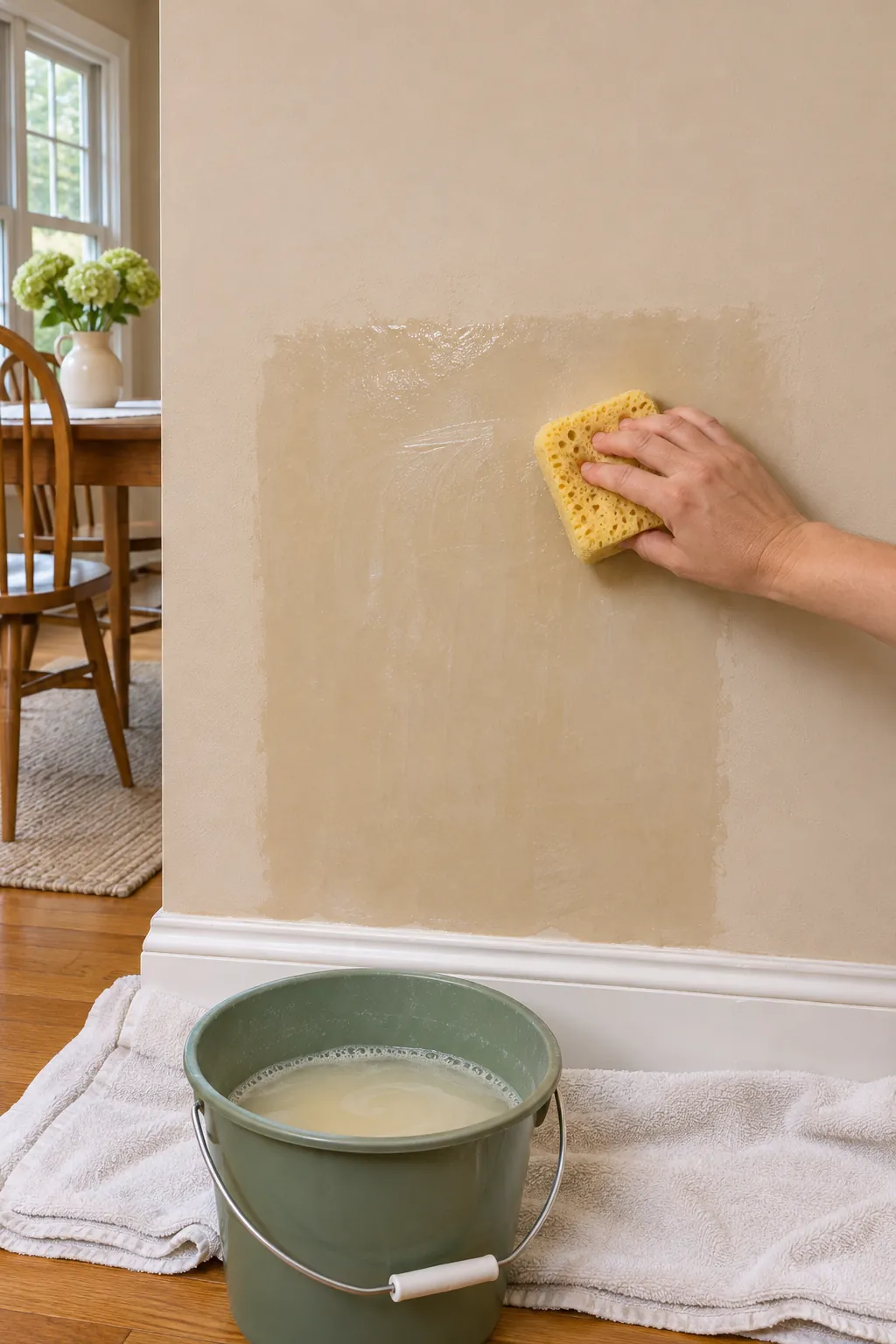
Scrape softened paste without gouging the wall
Hold a broad plastic scraper at a low angle and push gently. Collect the loosened adhesive instead of smearing it onto a clean area. Rewet stubborn spots rather than forcing the blade. A metal razor can cut drywall paper and plaster, so reserve sharper tools for surfaces and situations where the manufacturer explicitly permits them.
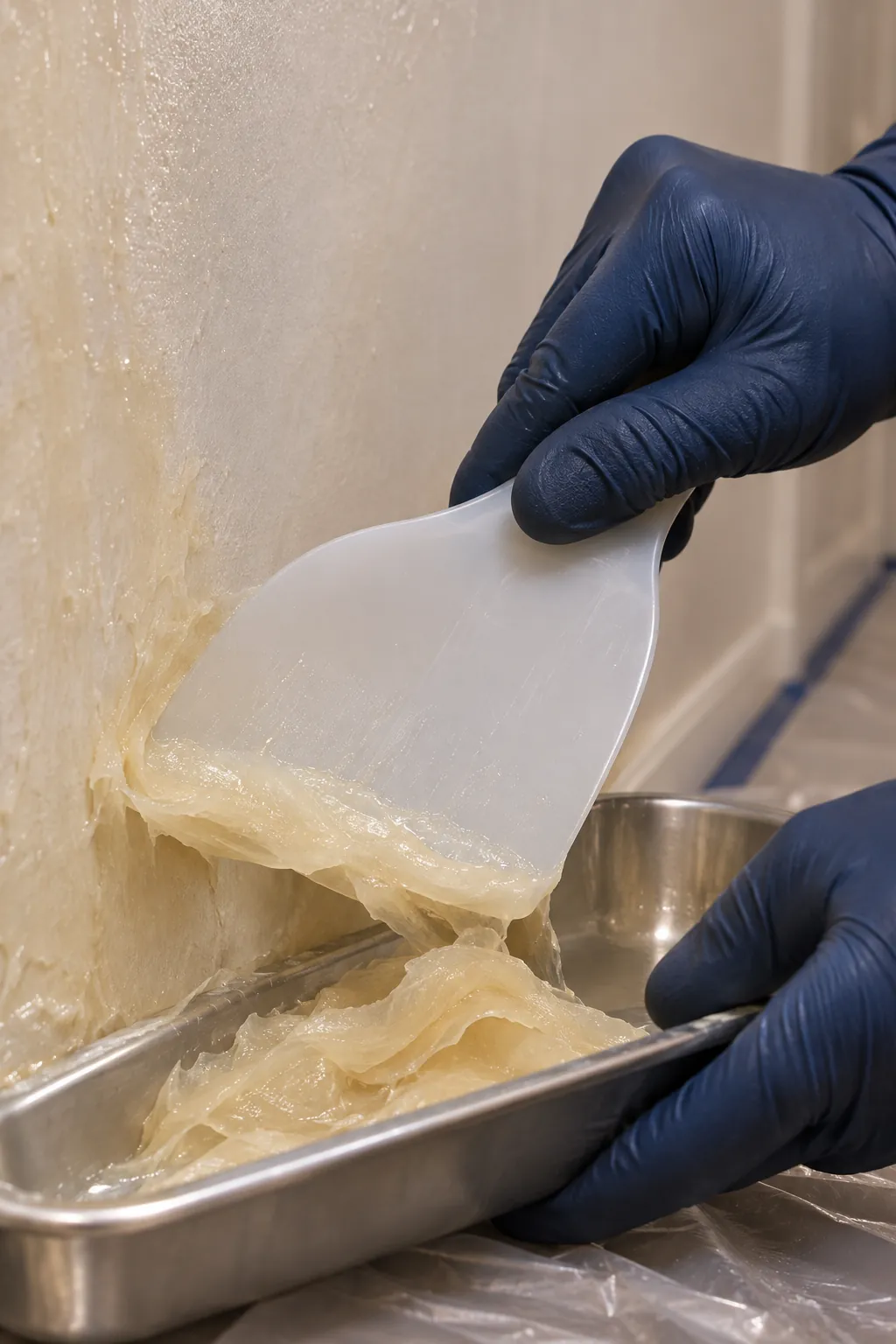
Wash and rinse until the wall is not slick
After scraping, wipe the section with fresh solution and a clean sponge. Then rinse with clean water using a separate sponge or bucket. Change the water when it becomes cloudy. When the wall dries, inspect it again under raking light and repeat the damp test. A clean wall should feel matte and consistent rather than slimy or tacky.
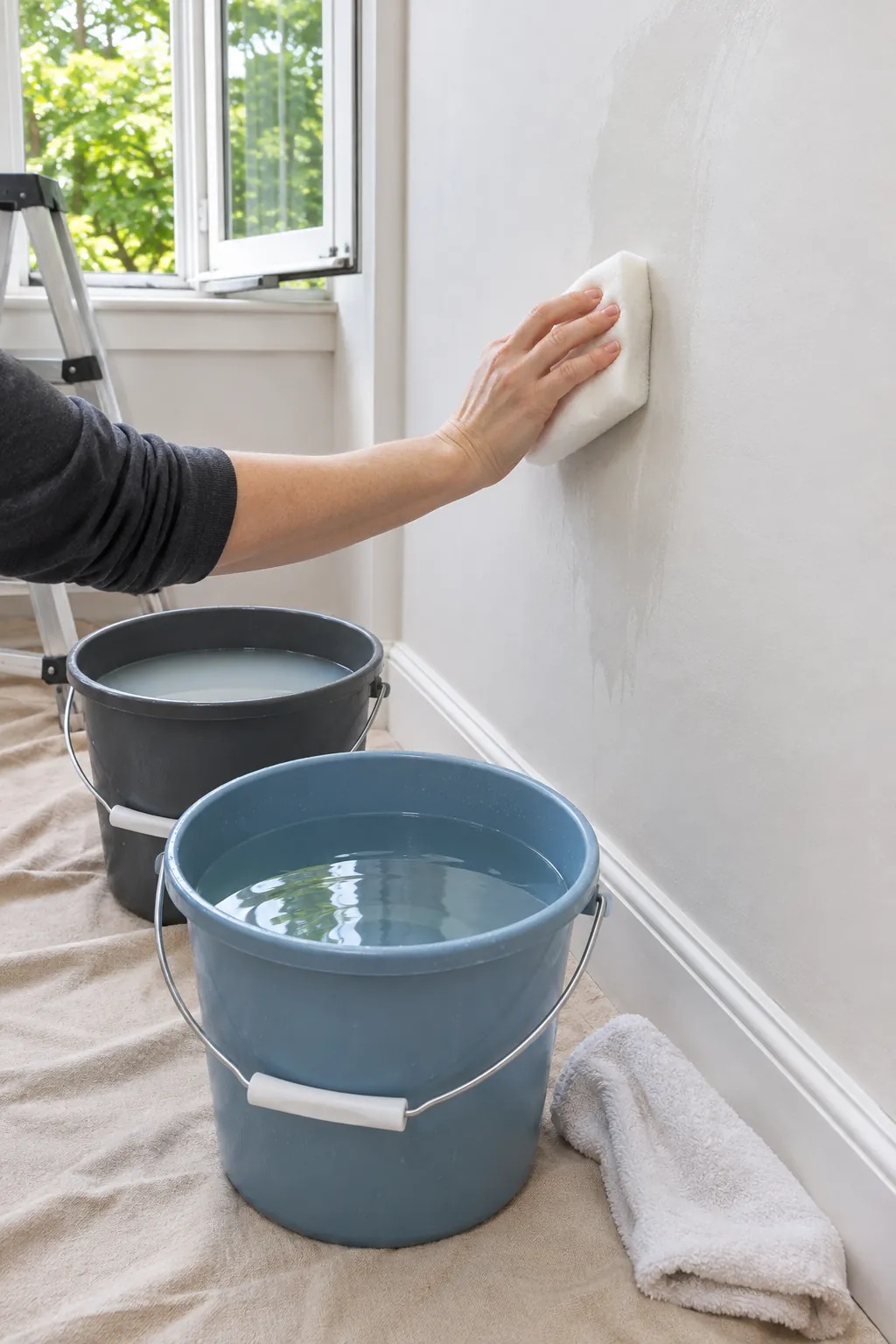
Let the wall dry and repair surface damage
Give the wall enough time to dry fully; cool or humid rooms may need longer. Sand only raised residue or rough repairs, and avoid grinding into drywall paper. Seal torn brown paper before applying joint compound so it does not bubble. Fill dents, feather the edges, let the compound dry, and sand lightly. Remove all dust before primer.
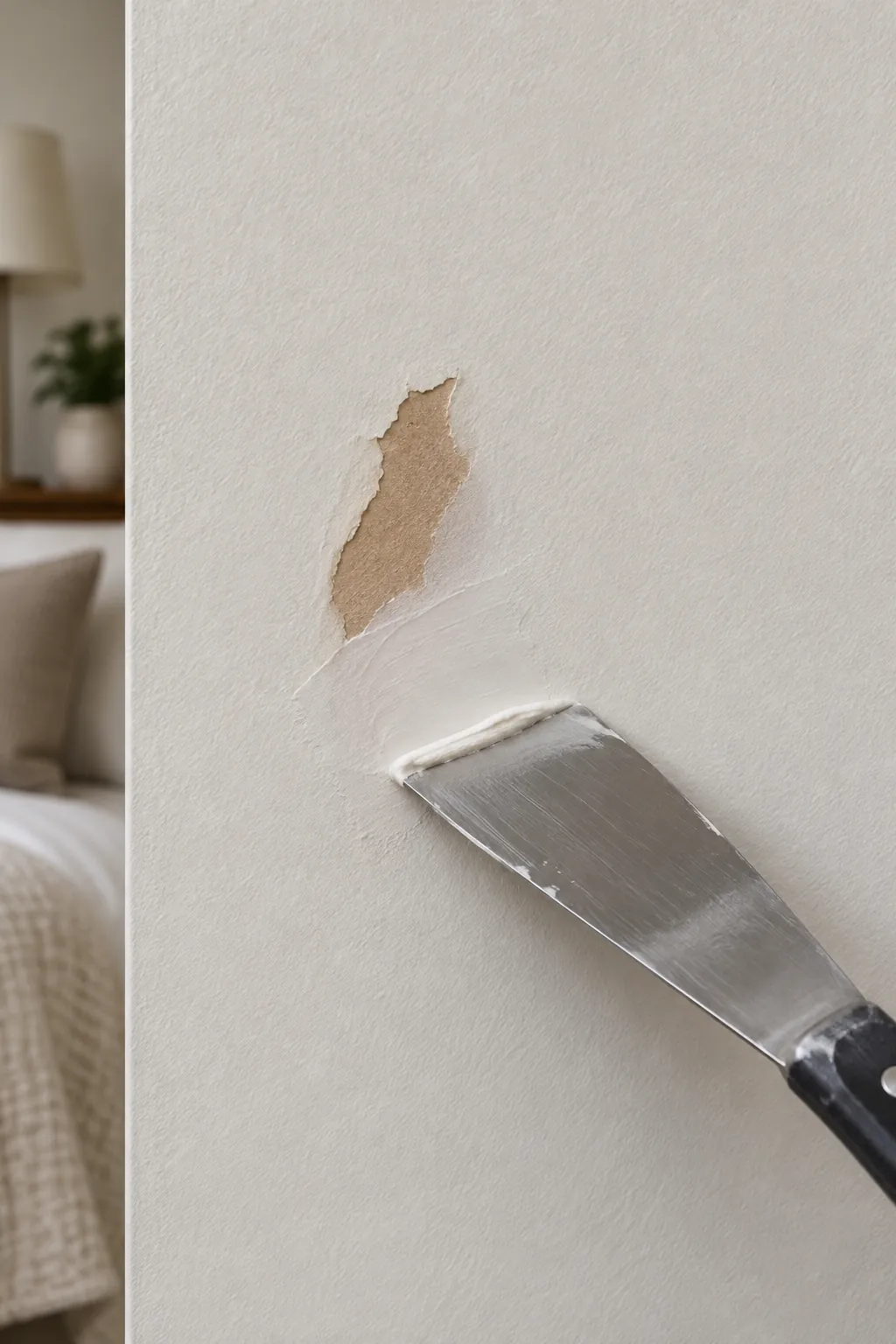
Prime the prepared wall before painting
Use a primer suited to the wall condition and finish paint. A sealing or problem-surface primer can isolate trace residue and make repaired areas absorb paint evenly, but primer is not a substitute for removing heavy glue. Follow the product instructions for ventilation, drying, and topcoating. After primer dries, inspect the wall once more and correct visible ridges before finish paint.
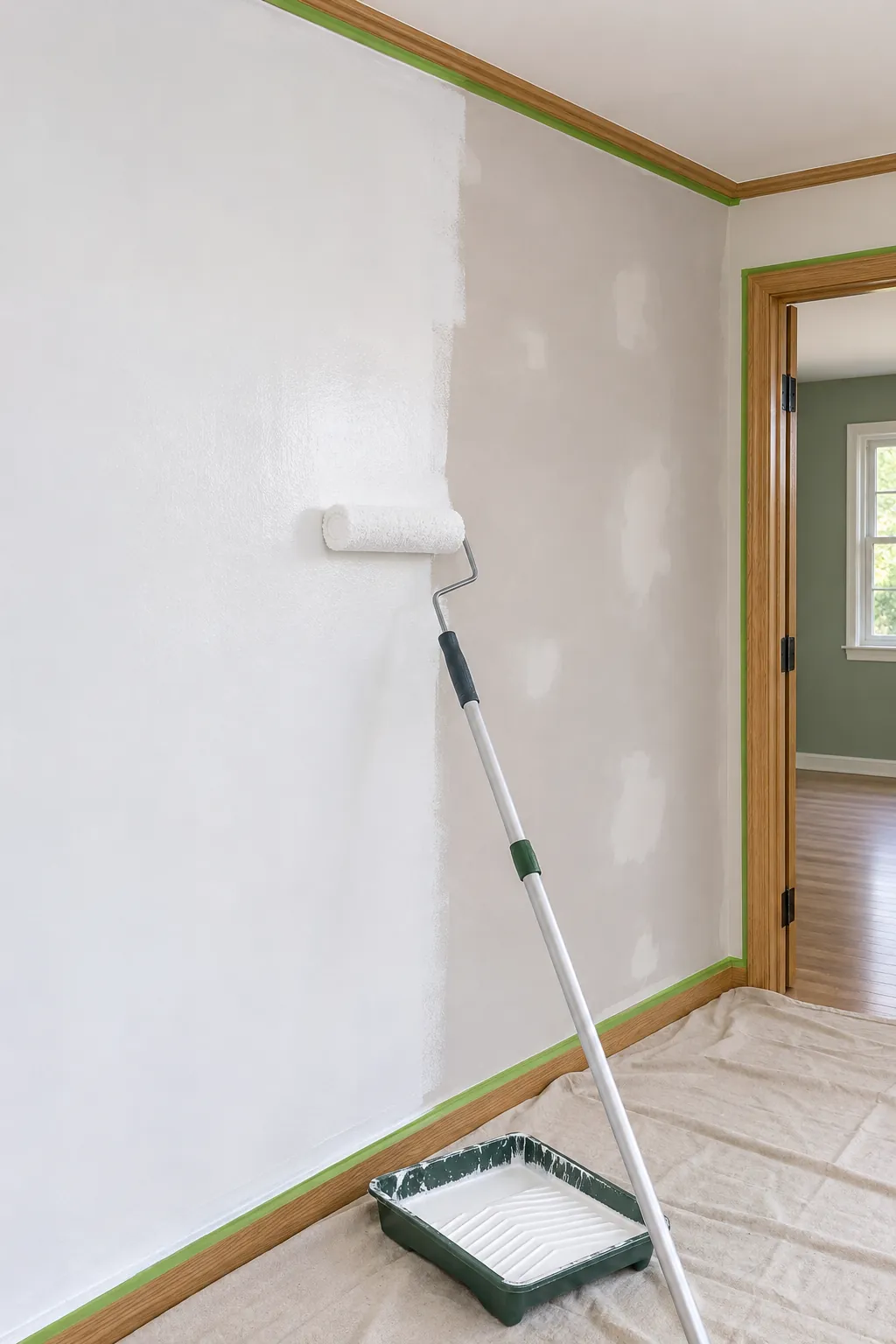
What not to do
- Do not paint directly over thick, glossy, or tacky paste.
- Do not saturate drywall or leave water around electrical boxes.
- Do not use excessive scraper pressure on softened wall paper.
- Do not prime until the wall is dry, clean, and dust-free.
- Do not assume a smooth-looking wall is residue-free; test it.
Careful cleaning takes longer than rolling on paint, but it prevents bubbling, rough texture, and adhesion failures that are much harder to repair later.