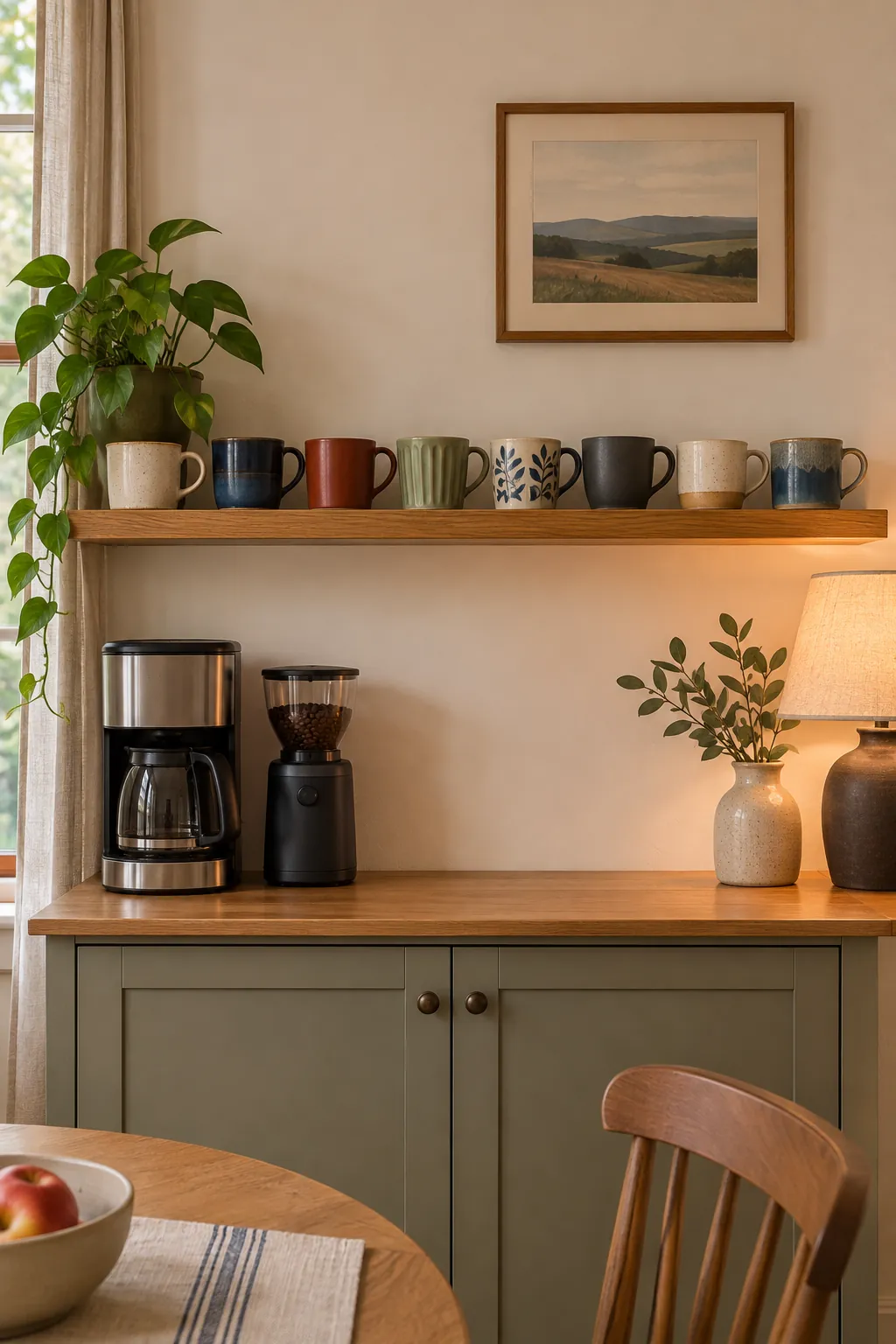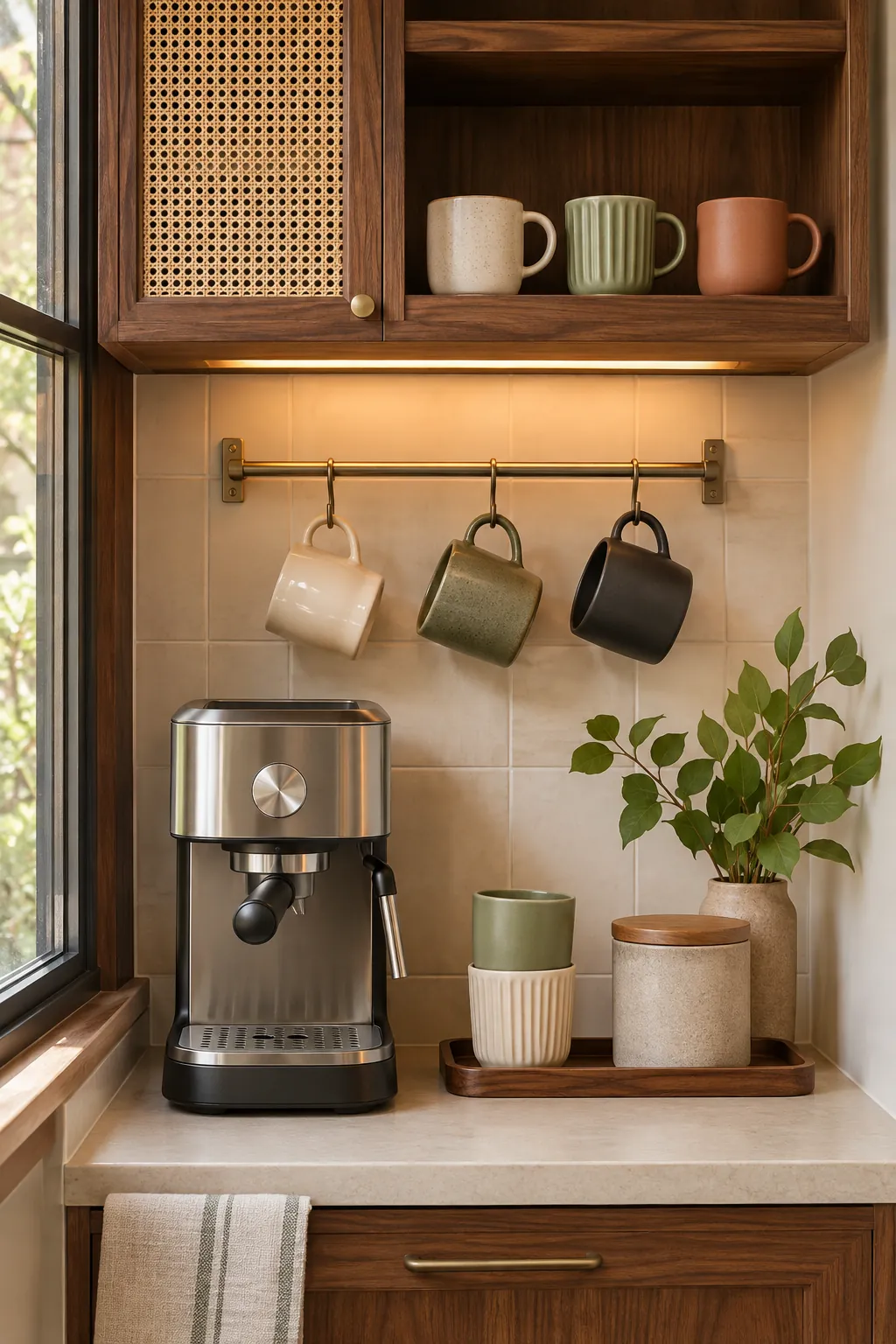
Mugs become clutter when their handles steal space, their heights vary, and favorites hide behind cups nobody uses. A good storage plan keeps the daily set easy to reach while giving every extra mug a firm limit. Measure the available width, depth, and height before choosing hardware.
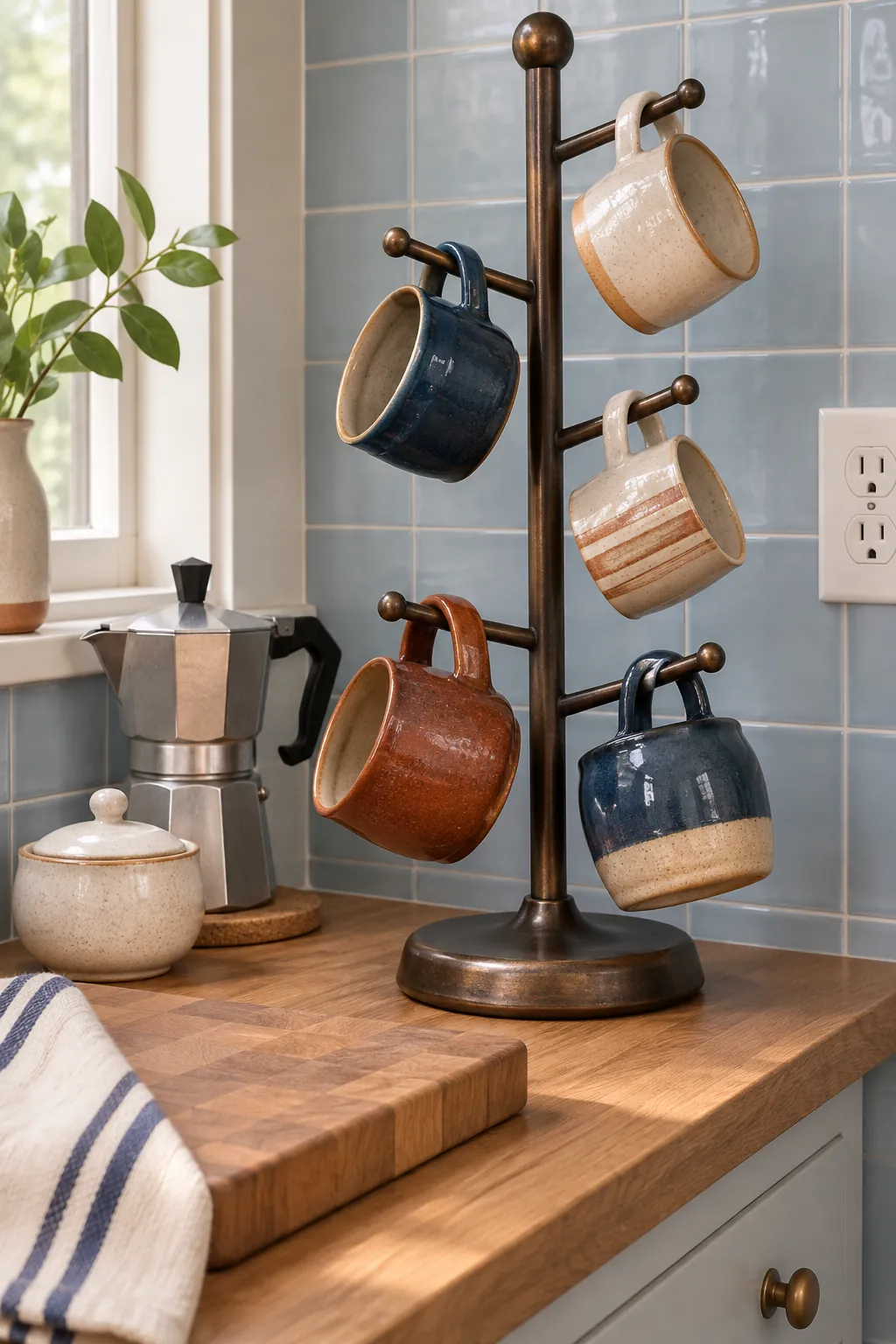
Use a slim mug tree
A vertical mug tree stores several cups within one small base footprint. Choose a stable model with arms spaced far enough apart for your widest handles. Keep the heaviest mugs on the lowest pegs so the stand stays balanced.
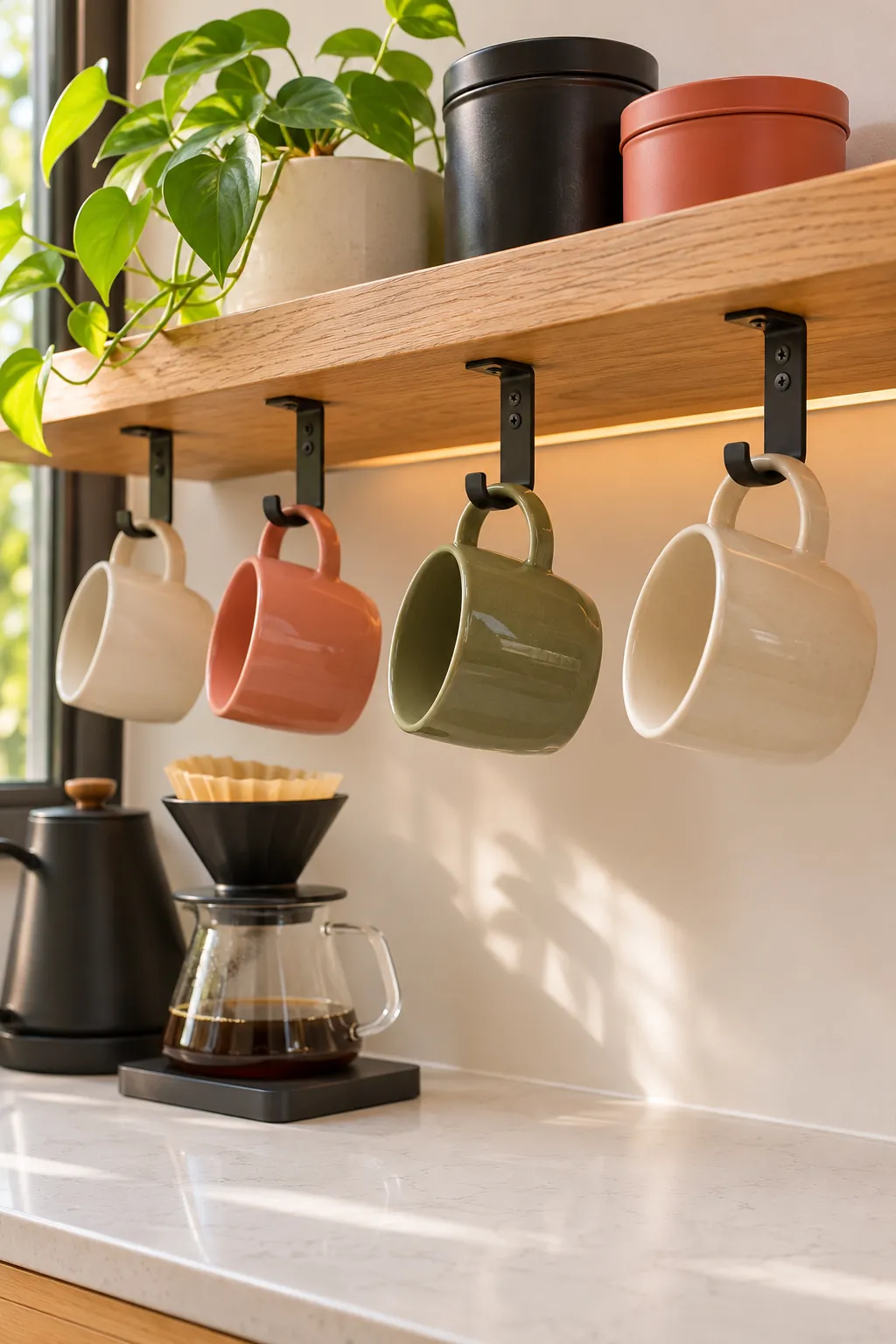
Add hooks beneath a shelf
An under shelf mug holder uses the empty air below an existing shelf. Confirm that the shelf can carry the load and that the hooks do not interfere with the coffee maker lid. Leave enough space between cups so ceramic rims do not knock together.
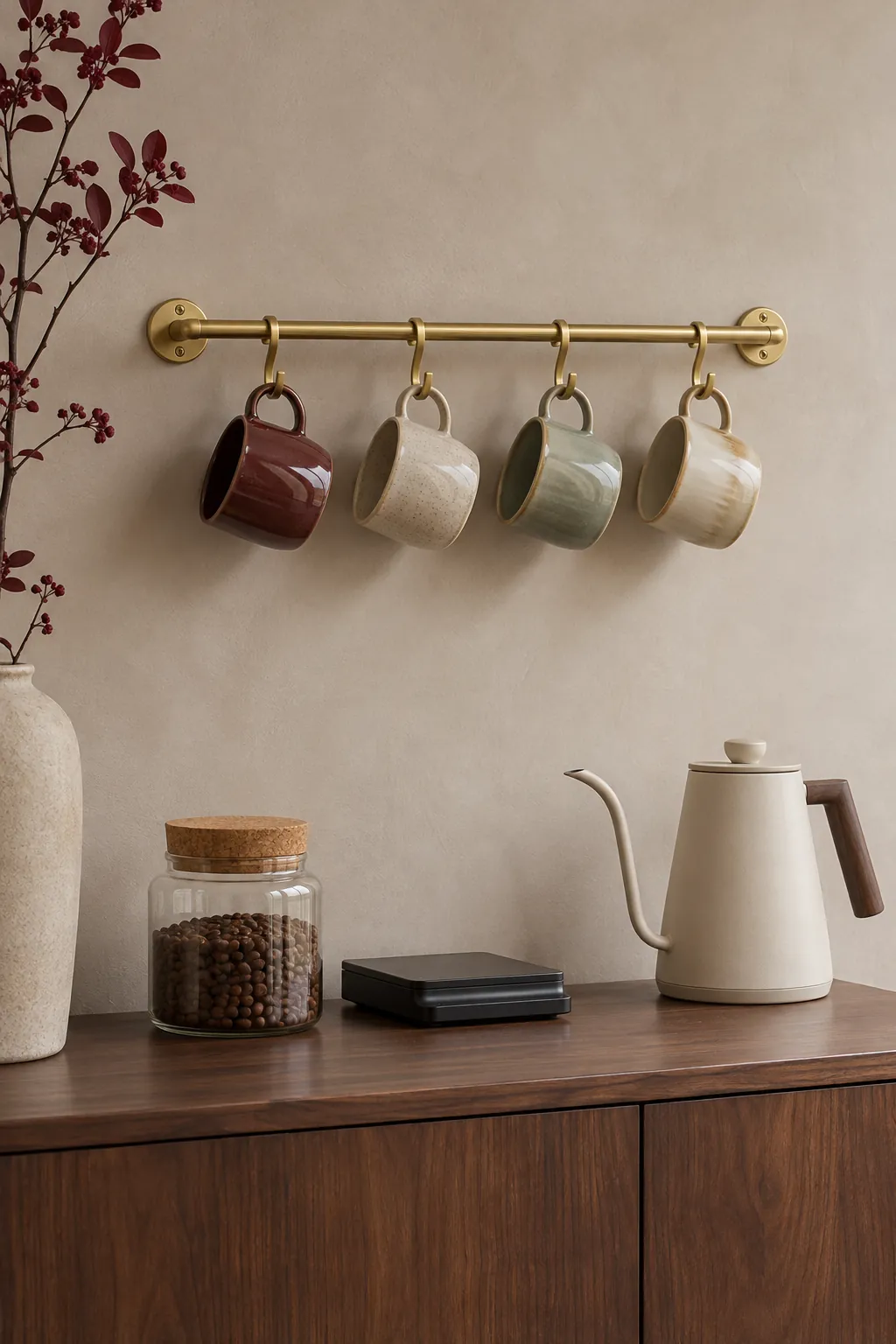
Fit a narrow wall rail
A short wall rail turns a bare strip of wall into coffee mug storage. Mount it into suitable structure and use closed hooks that cannot slide off easily. Position the lowest mug above splashes, heat, and the working path of your hands.
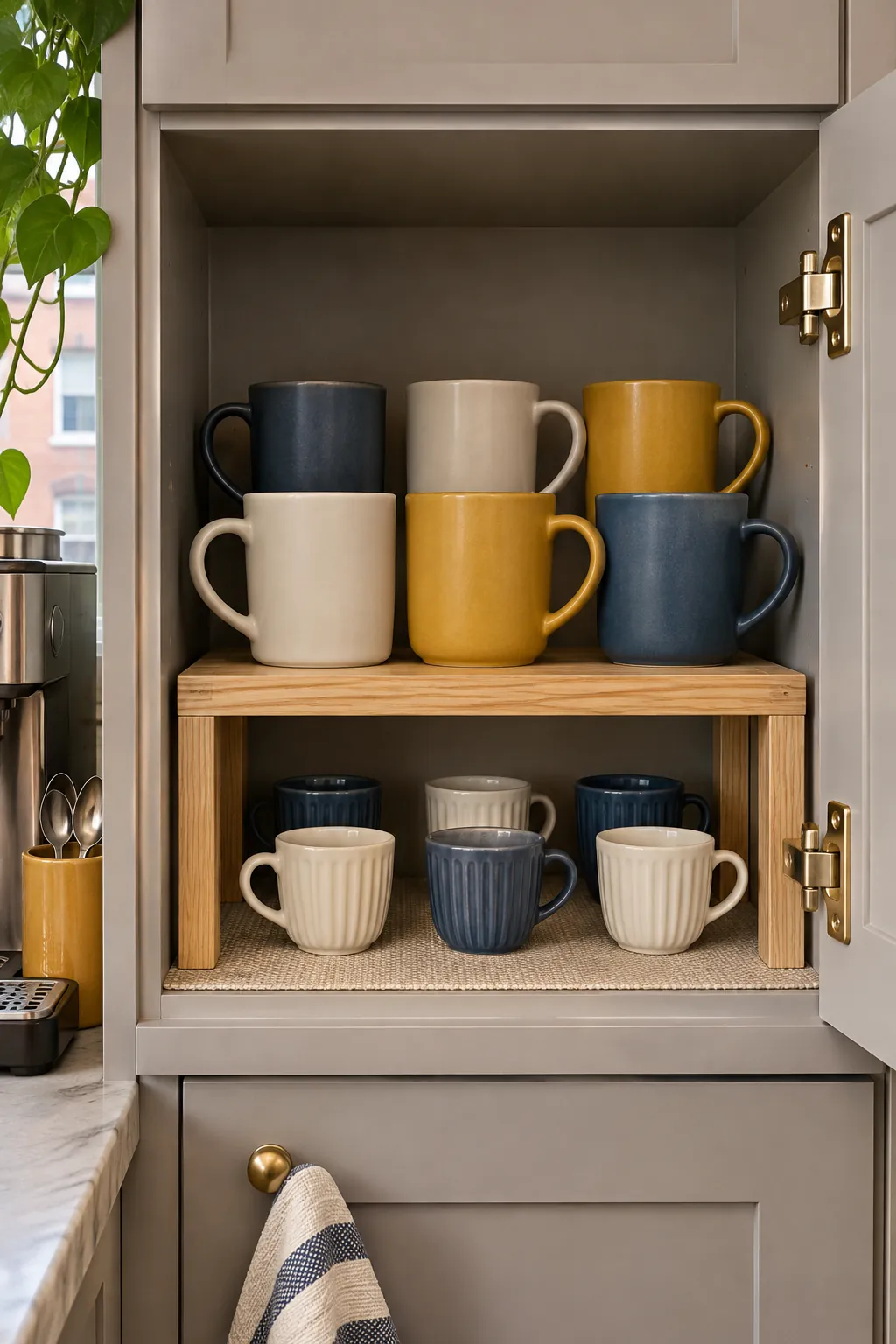
Raise a second cabinet level
A shelf riser divides tall cabinet space into two useful levels. Put shorter espresso cups below and regular mugs above, or reverse the arrangement to suit daily reach. Select a riser that sits flat and does not force handles against the door.
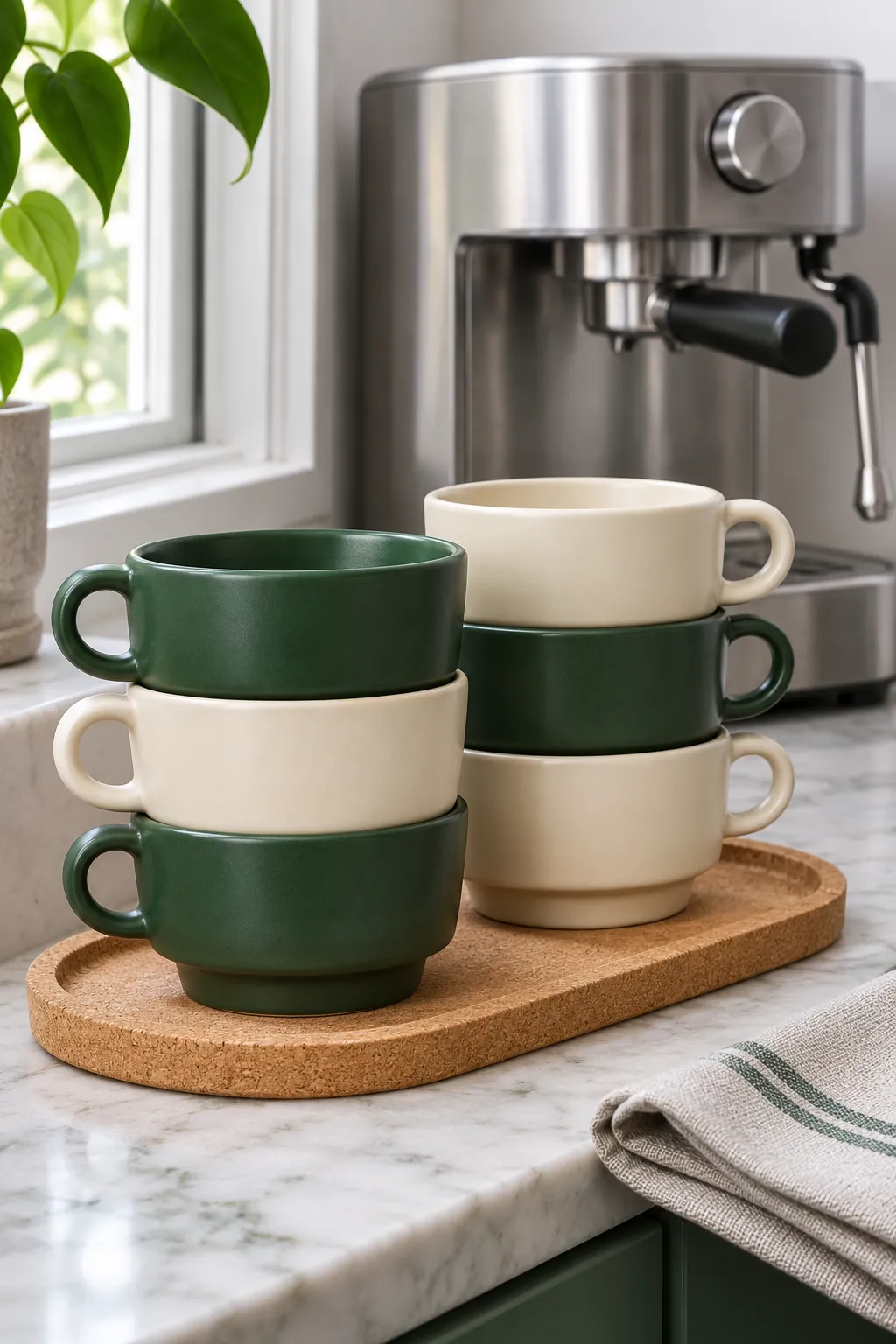
Choose truly stackable cups
Stackable coffee cups use vertical space without separate hardware. Stack only pieces designed to nest securely, because ordinary mug rims can chip or lock together. Keep each stack low enough to lift safely with one hand.
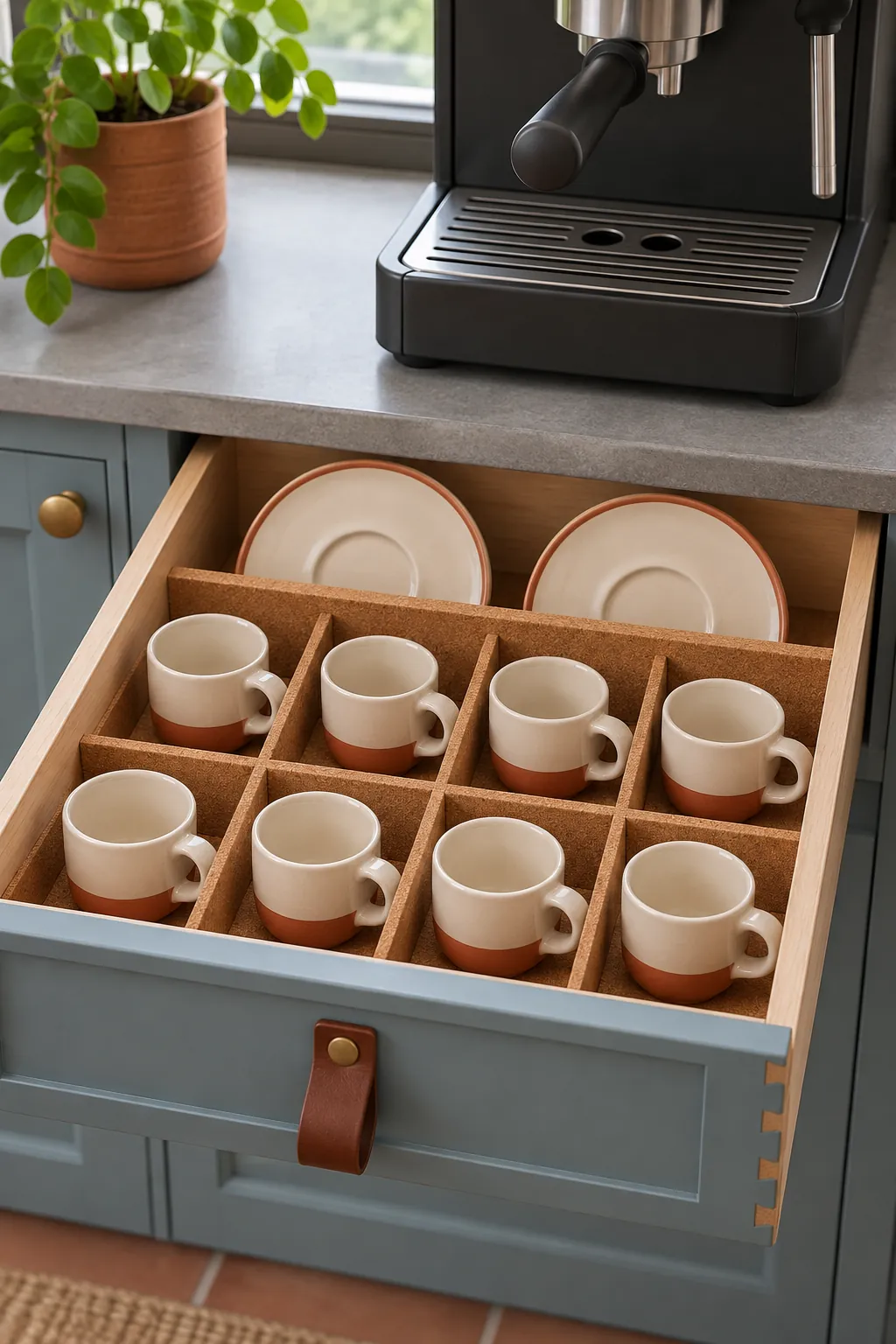
Use a shallow drawer
A deep enough drawer can hold short cups in a single protected layer. Add a nonslip liner and simple dividers so handles do not collide when the drawer moves. This works especially well for espresso cup storage below the machine.
Turn a tray into a daily zone
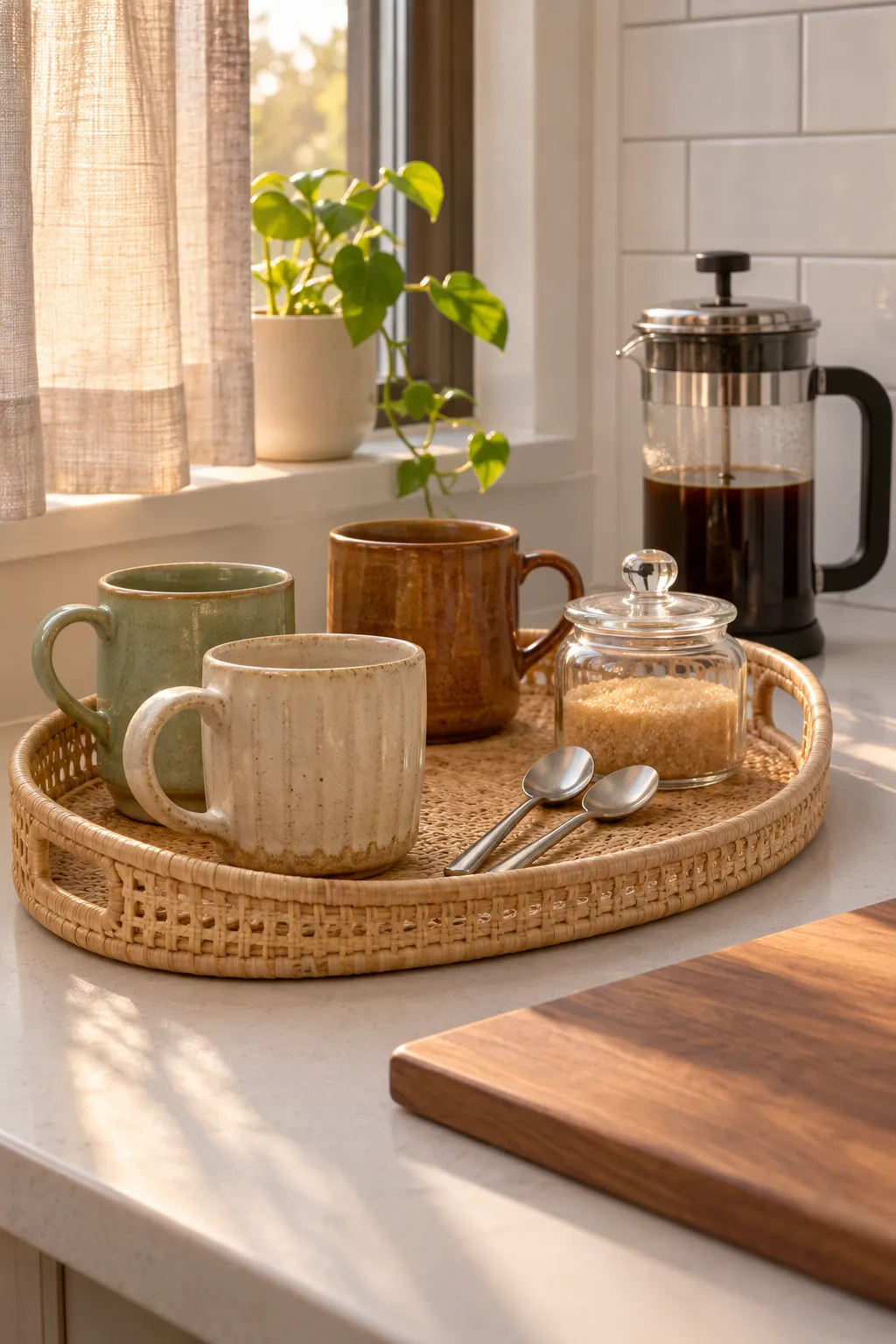
A compact tray gives the daily mugs a clear boundary beside the brewer. Limit the tray to the cups used this week, then return extras to closed storage. The tray also makes it easier to move the whole set when the counter is needed for food preparation.
Mount a small pegboard
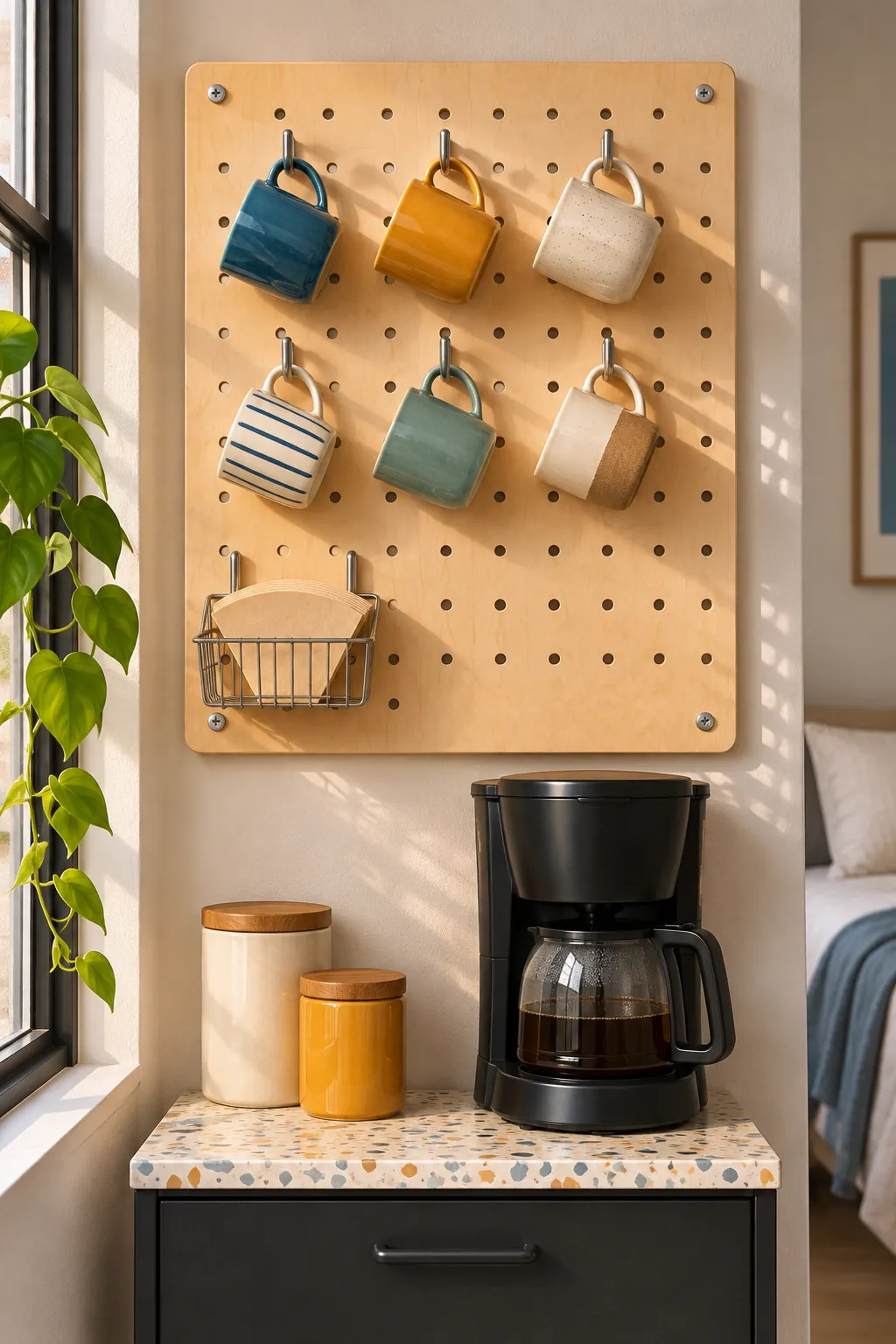
A pegboard adapts when the mug collection changes. Use sturdy hooks rated for the cup weight and test the board before filling every position. Leave a blank zone around the coffee maker so refilling and cleaning remain easy.
Claim the cabinet door
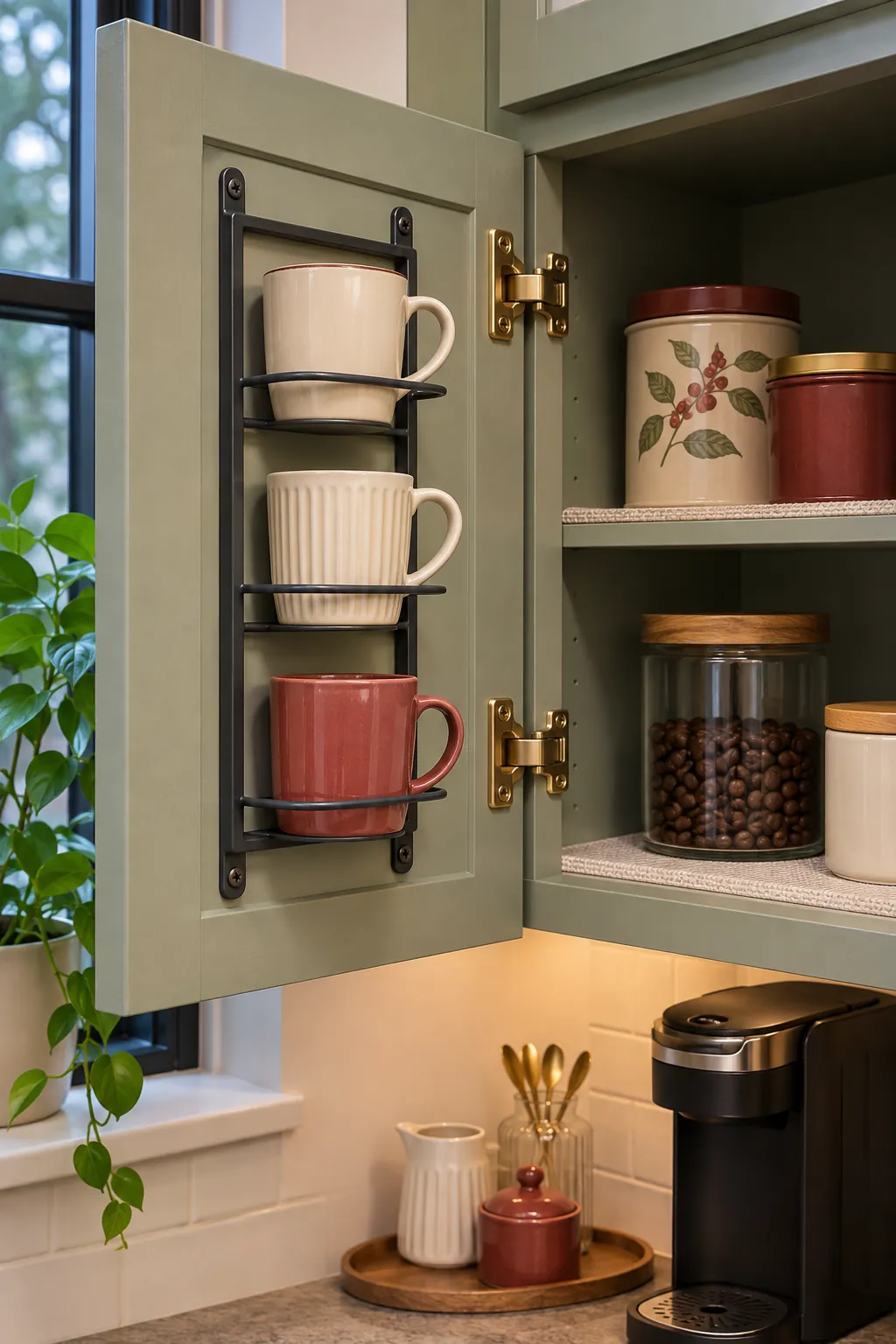
A door mounted rack can hold light cups when interior shelf space is scarce. Check hinge strength, cup depth, and shelf clearance before drilling or adding adhesive hardware. Close the door slowly during the first test to confirm that handles cannot strike the frame.
Display favorites on a picture ledge
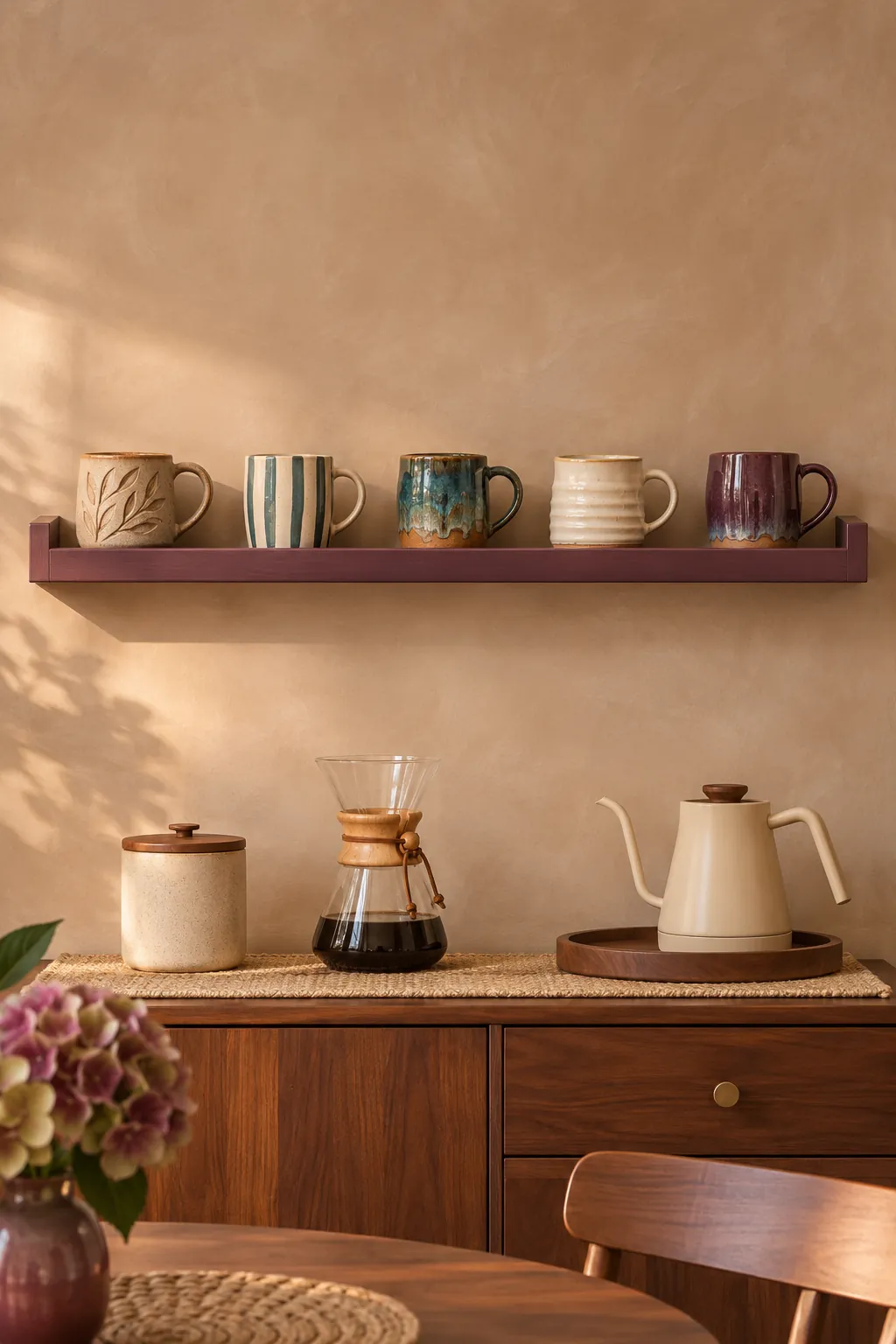
A picture ledge gives a few distinctive mugs a shallow display shelf. Choose a ledge with a raised front lip and keep it away from doors that slam. Rotate the display seasonally rather than crowding every mug onto the wall.
Use a narrow rolling cart
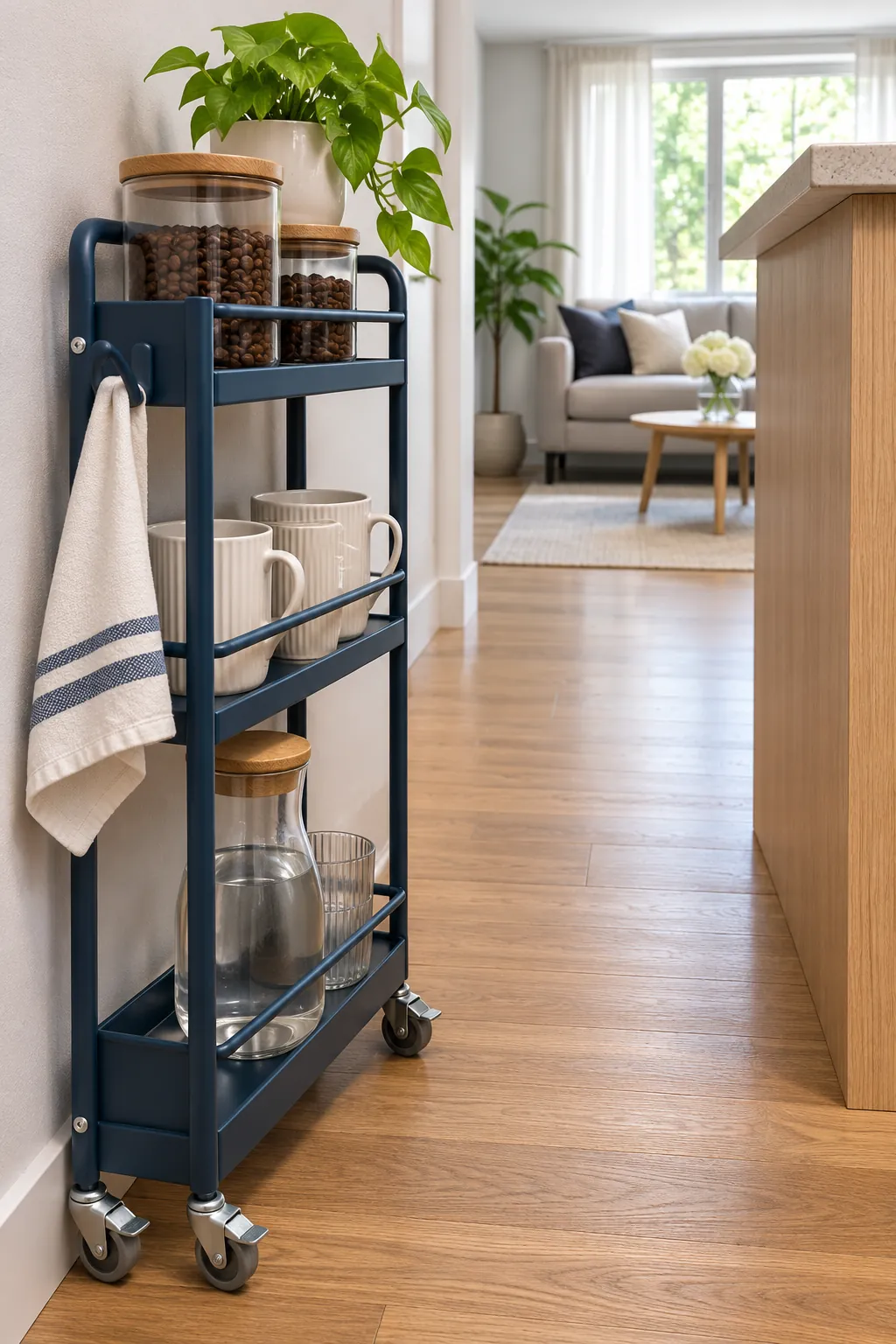
A slim cart adds coffee cup organizer space without permanent cabinets. Store mugs on the middle shelf where they are protected from dust and easy to reach. Lock the casters before handling hot drinks, and keep the cart out of the main walkway.
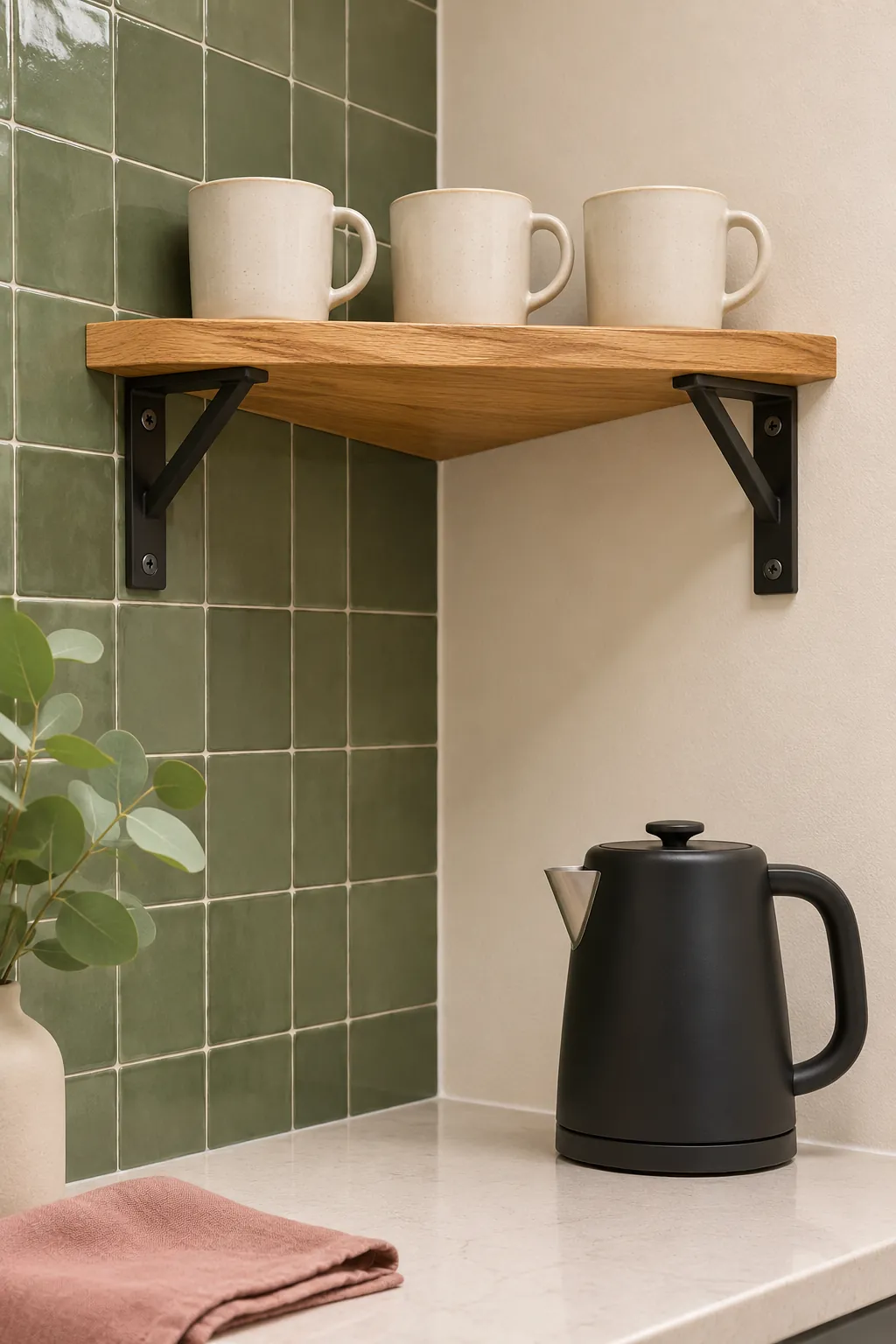
Install a corner shelf
A compact corner shelf uses wall area that often remains empty. Reserve it for two or three light mugs rather than a full heavy collection. Mount it high enough to clear the brewer, but low enough to reach without stretching over hot equipment.
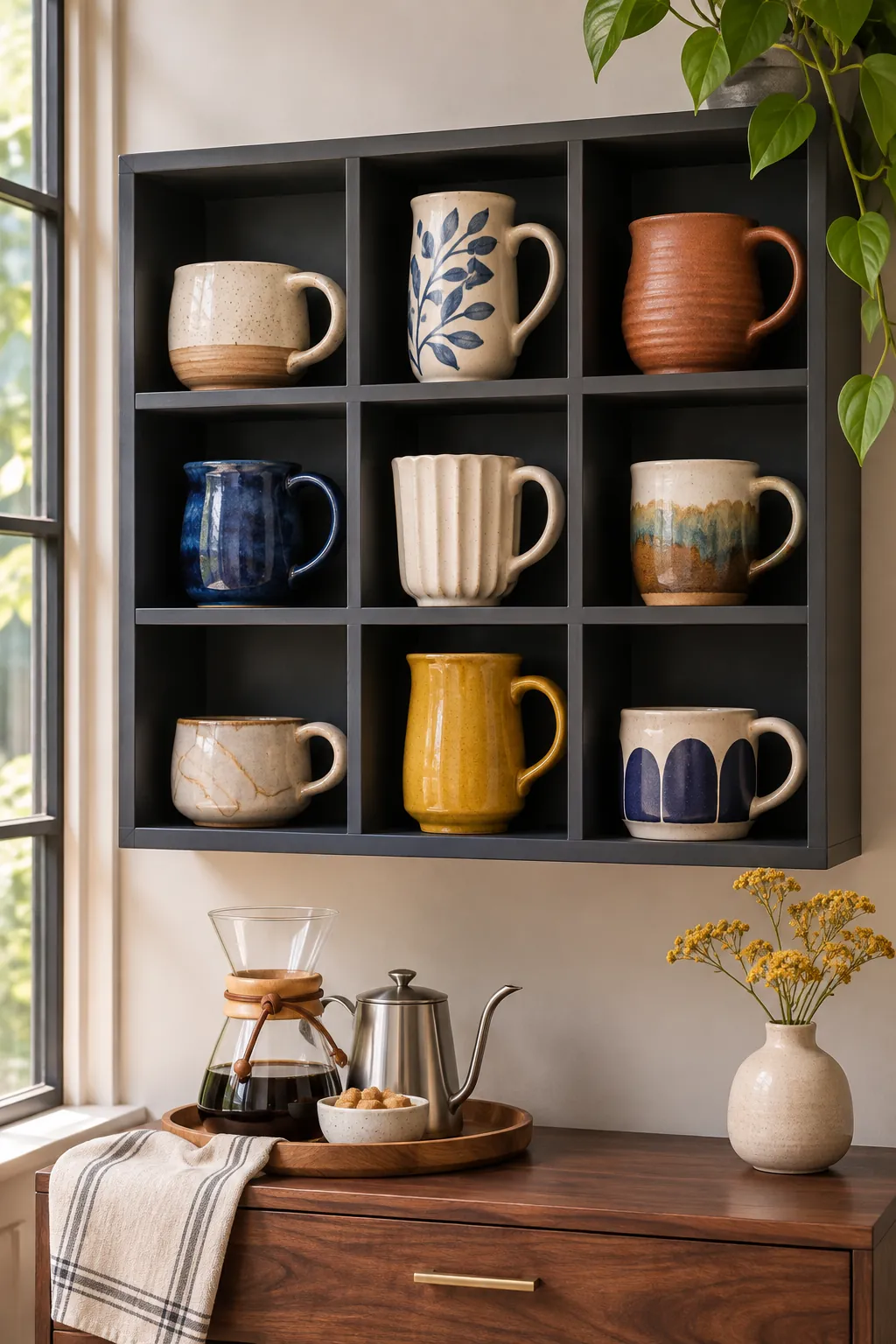
Dedicate a divided cubby
A small cubby keeps mismatched mug shapes from becoming a crowded pile. Give each compartment one cup or one secure stack, depending on its dimensions. Measure the largest handle before choosing the unit so favorites do not end up excluded.
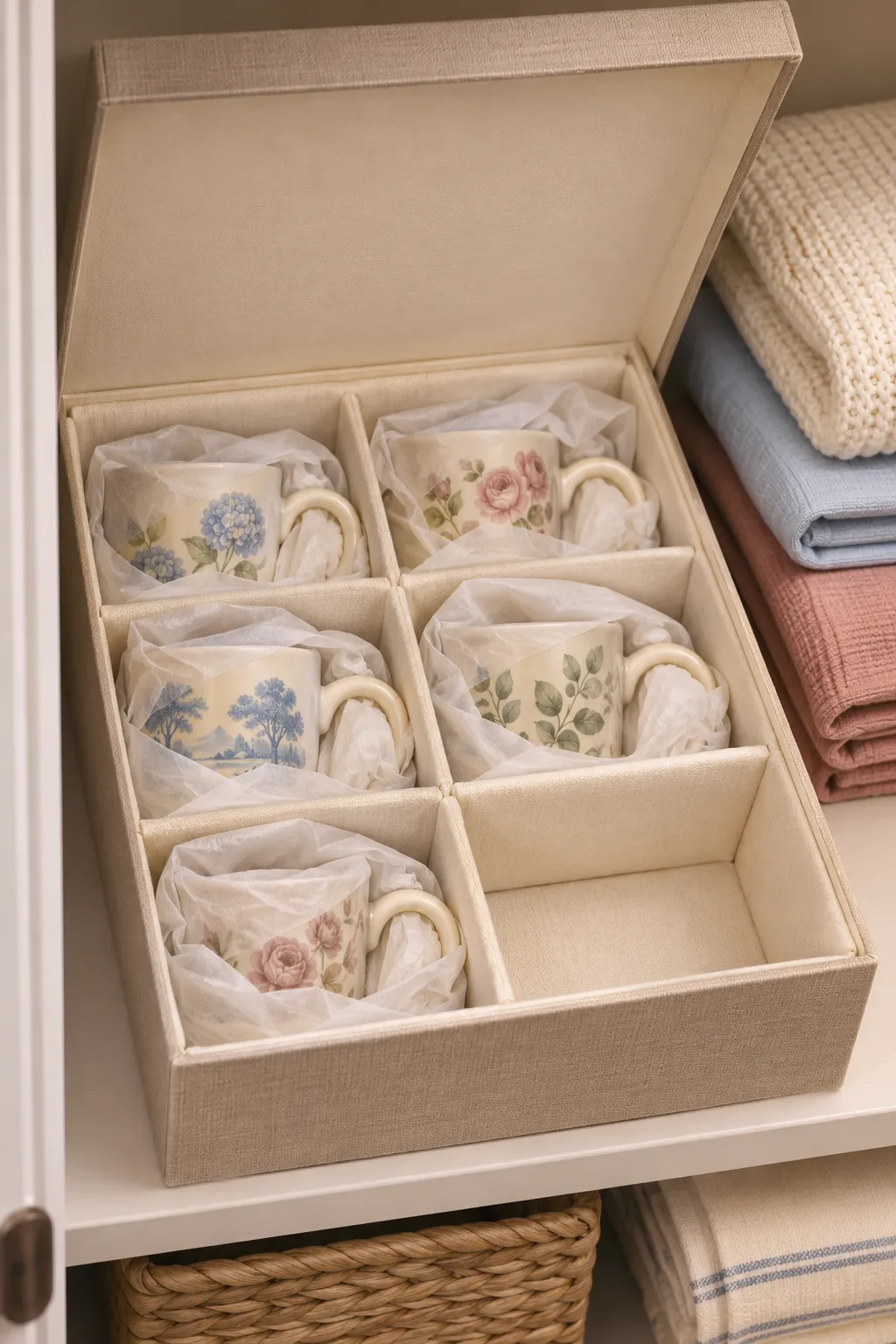
Keep a lidded overflow box
A padded storage box protects sentimental mugs that are not part of the daily rotation. Use individual dividers, wrap delicate handles, and label the outside with a simple inventory. Store the box in a dry closet rather than taking valuable space at the drink station.
Set a firm collection limit
Storage works best when the collection matches the available space. Assign one rack, shelf, or cabinet as the limit, then remove or relocate a mug when a new one arrives. Keep the cups that feel good in the hand and suit the drinks you actually make.