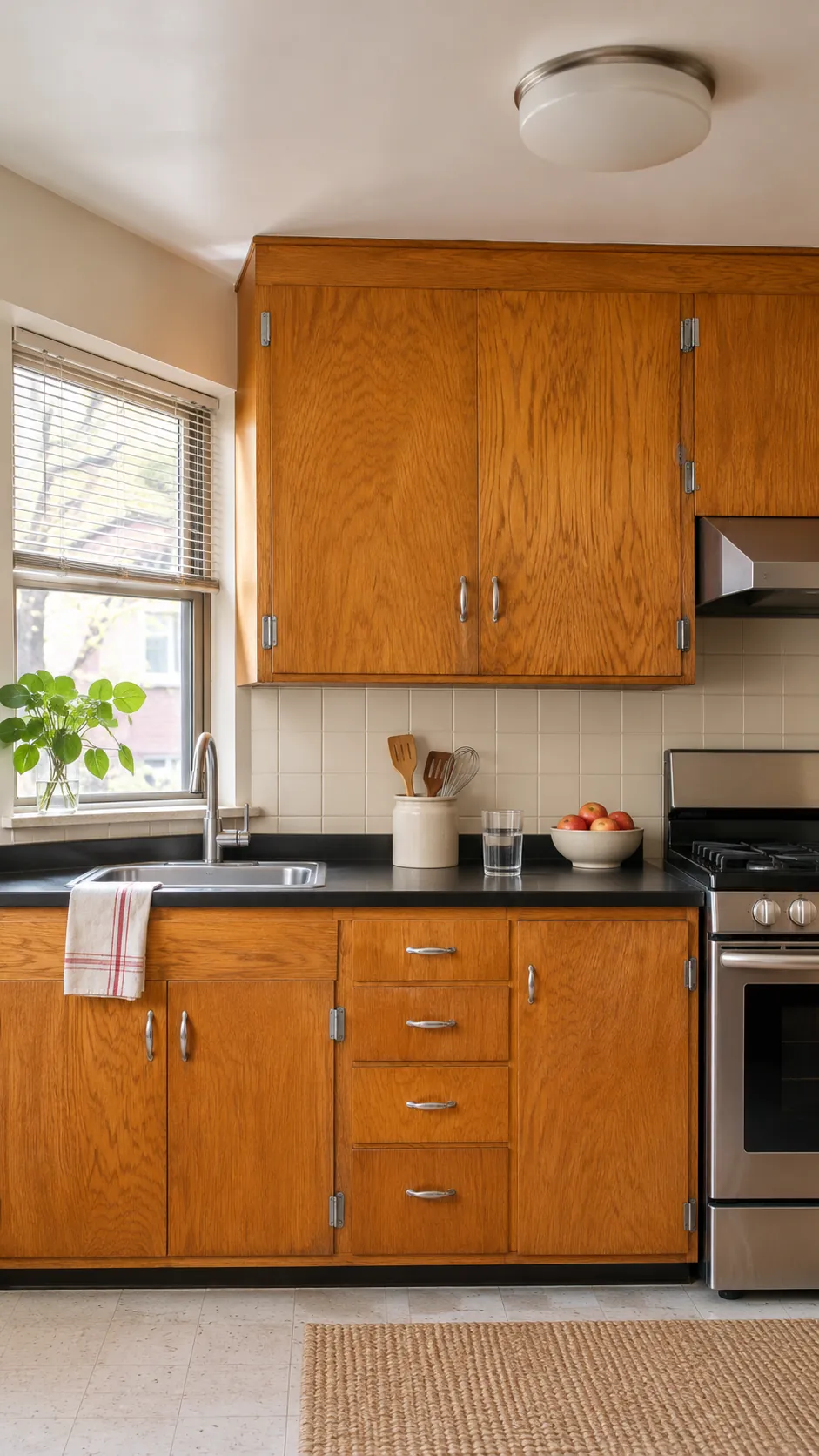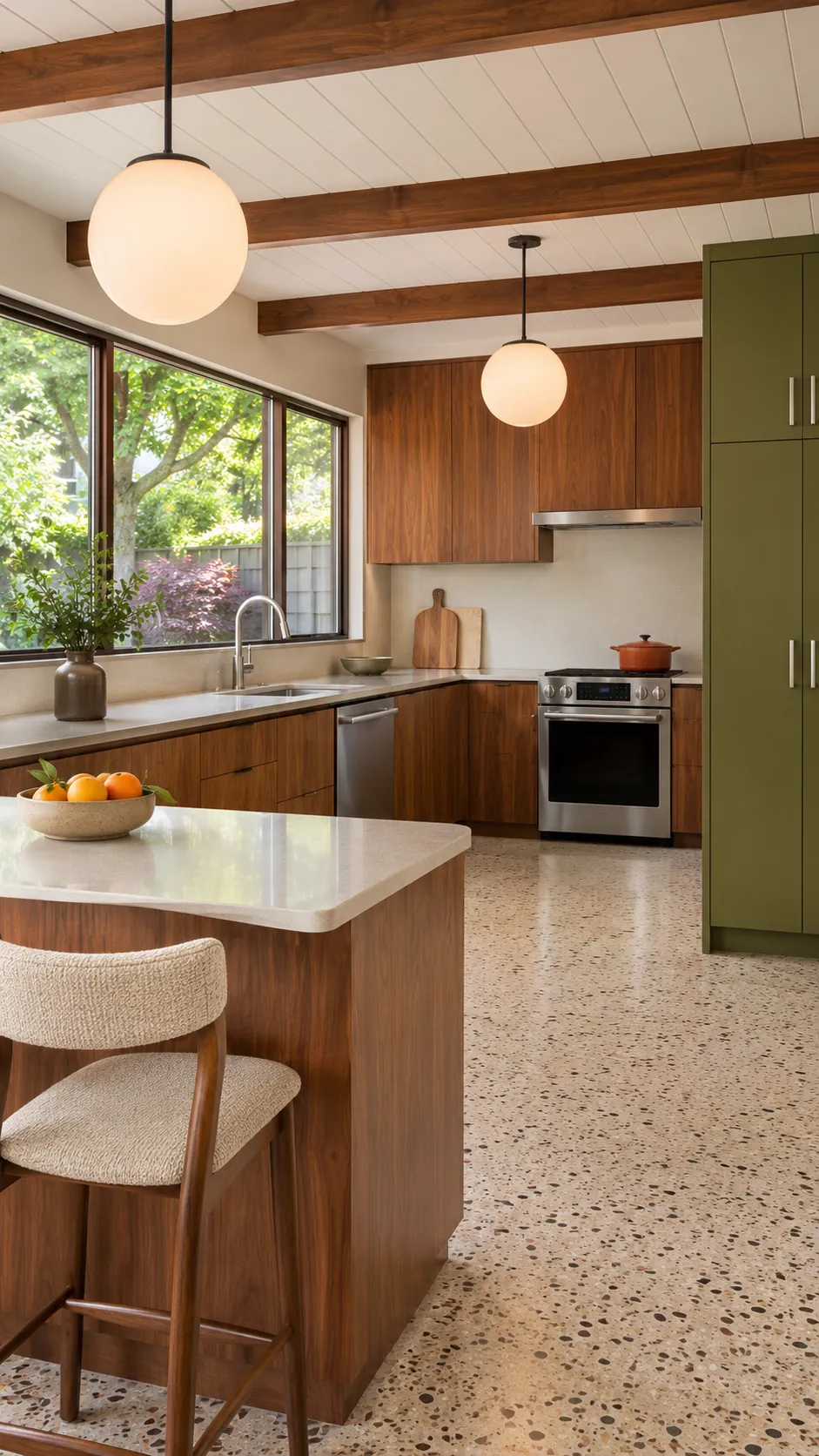
A good renovation does not need to erase the parts that made the house distinct. Midcentury kitchens work because their lines are direct, materials are honest, and every compact area has a purpose. Use these ideas to preserve that clarity while adding the storage, light, and equipment a current household needs.
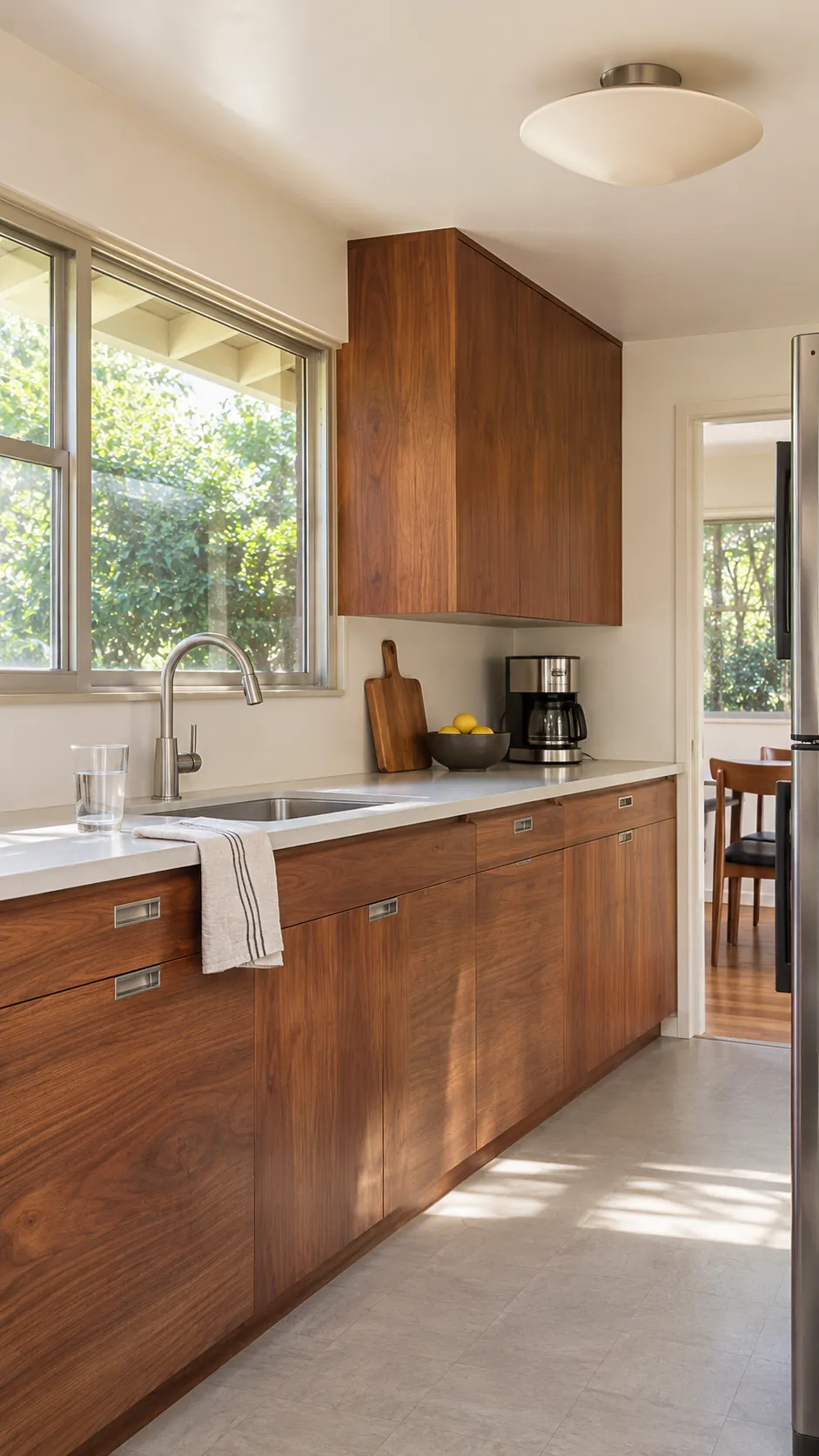
Walnut Flat Panel Cabinets
Flat walnut cabinet doors carry the clean horizontal lines that define a midcentury kitchen. Use continuous grain across nearby fronts and simple recessed pulls so the wood remains the main feature. A pale counter and quiet wall color keep the room from becoming dark.
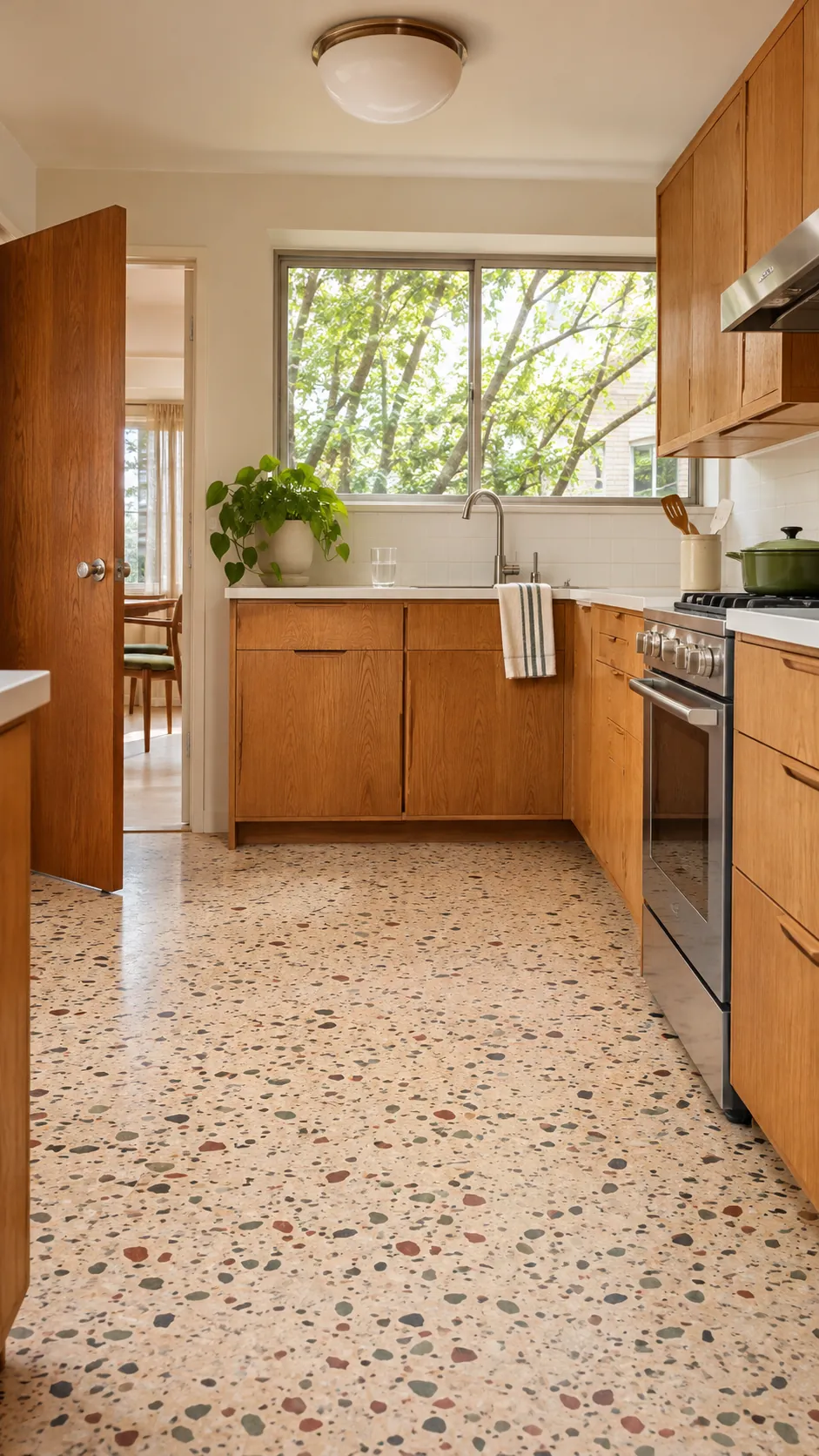
Warm Terrazzo Flooring
Terrazzo gives a busy working floor visual depth without relying on a repeating decorative pattern. Select warm cream aggregate with moss, rust, and charcoal chips that relate to cabinet and upholstery colors. Keep the backsplash simple so the floor can carry the strongest texture.
Opal Globe Pendants
Opal globes provide broad light and a familiar period silhouette without overwhelming a small room. Hang them high enough to preserve views across a peninsula or table. Add discreet task lighting below wall cabinets because decorative fixtures alone rarely cover every work surface.
Colored Laminate Counters
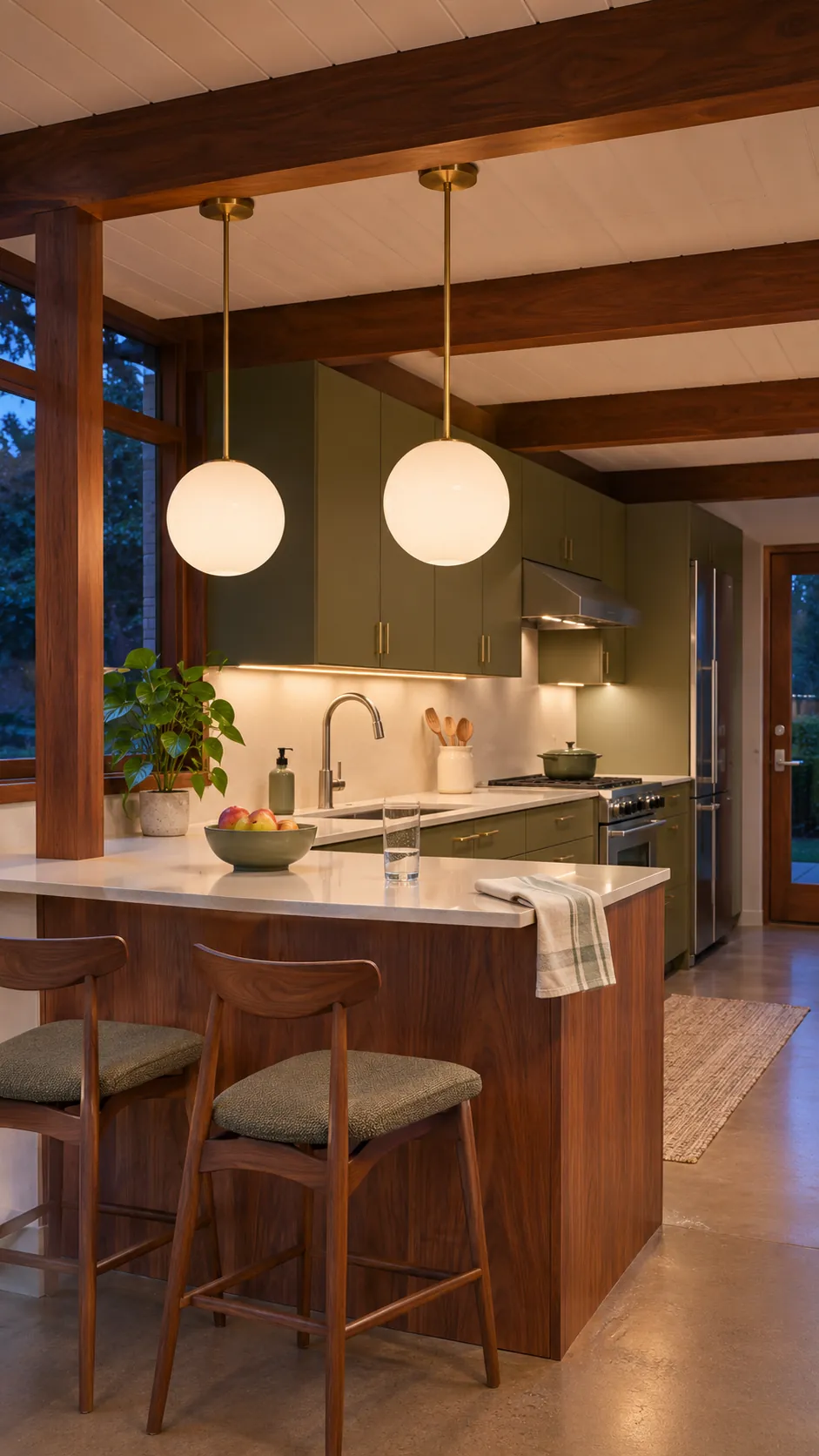
Laminate suits the practical optimism of the period and can be repaired or replaced without imitating stone. A muted aqua or moss counter adds color while a slim edge keeps the profile crisp. Test the sample beside wood cabinets in morning and evening light before committing.
Compact Working Peninsula
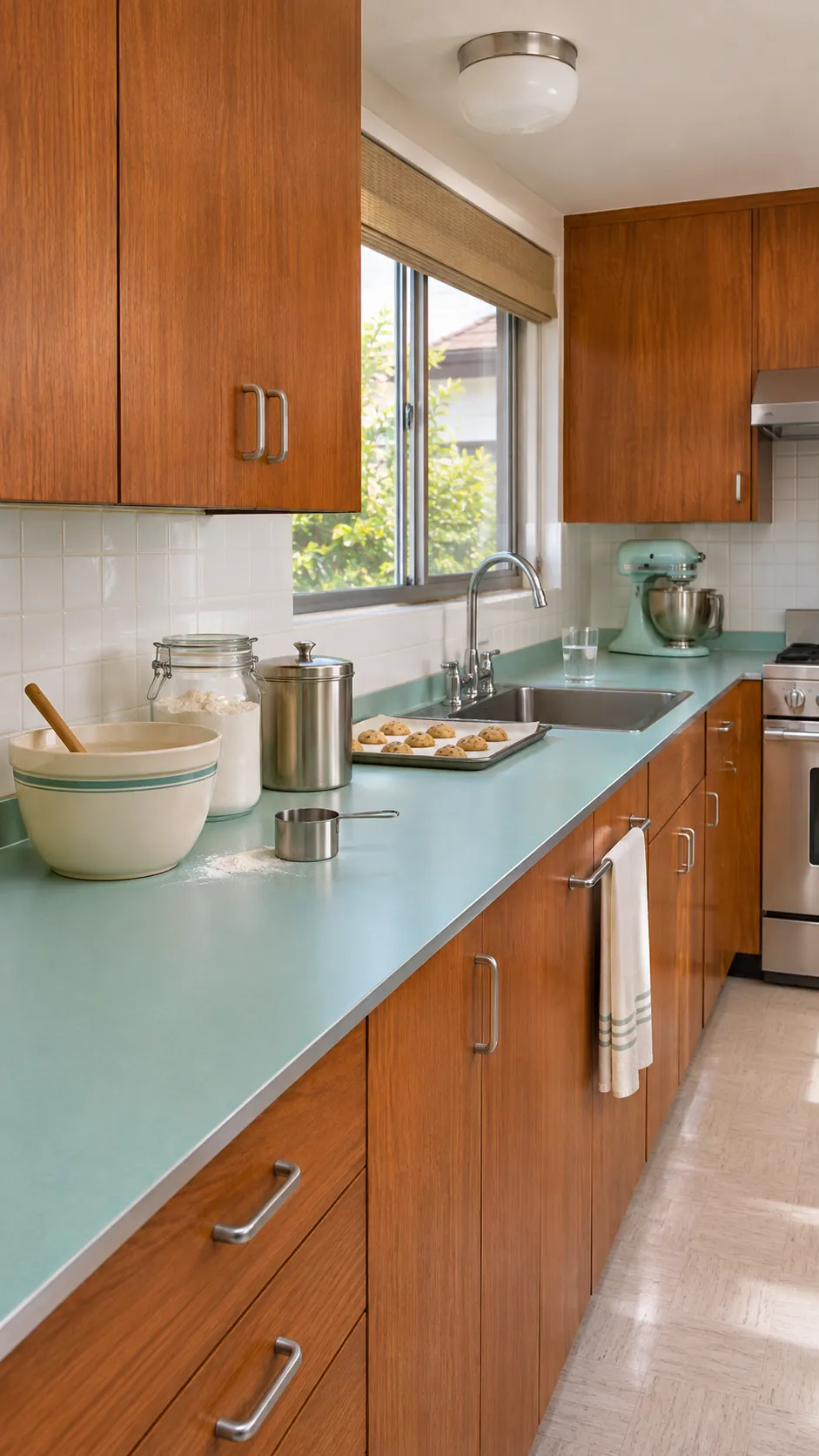
A short peninsula can add preparation space and seating without forcing a full island into a narrow plan. Round the outer corner or soften it with a waterfall end where traffic passes close. Leave the work side open enough for drawers and an appliance door to operate together.
Slatted Wood Room Divider
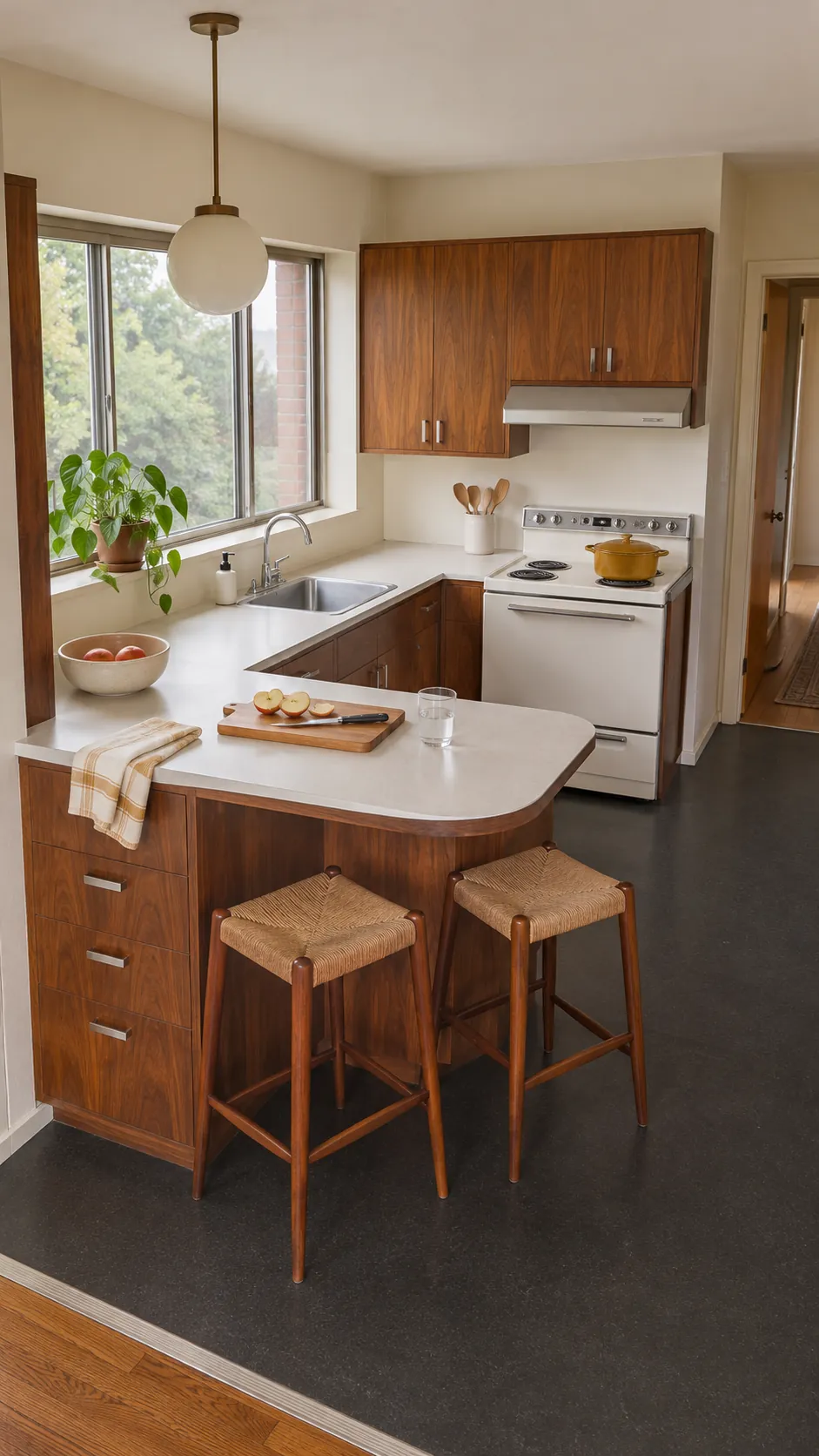
A vertical slatted screen separates the kitchen from an entry or dining area while keeping light and conversation moving. Match the slats to one cabinet wood rather than introducing another species. Space them widely enough to feel open, but close enough to define the edge of the room.
Clerestory Window Light
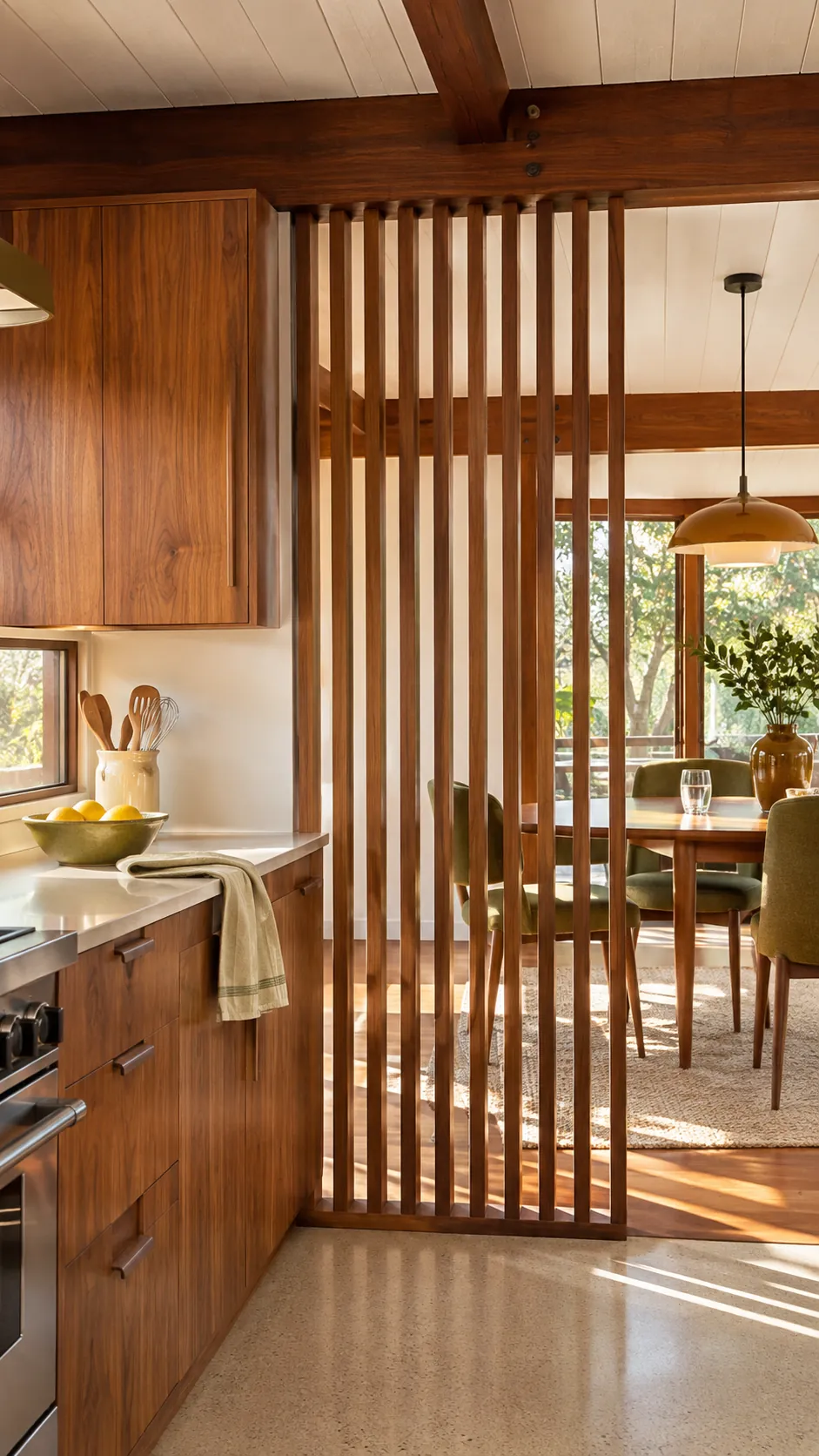
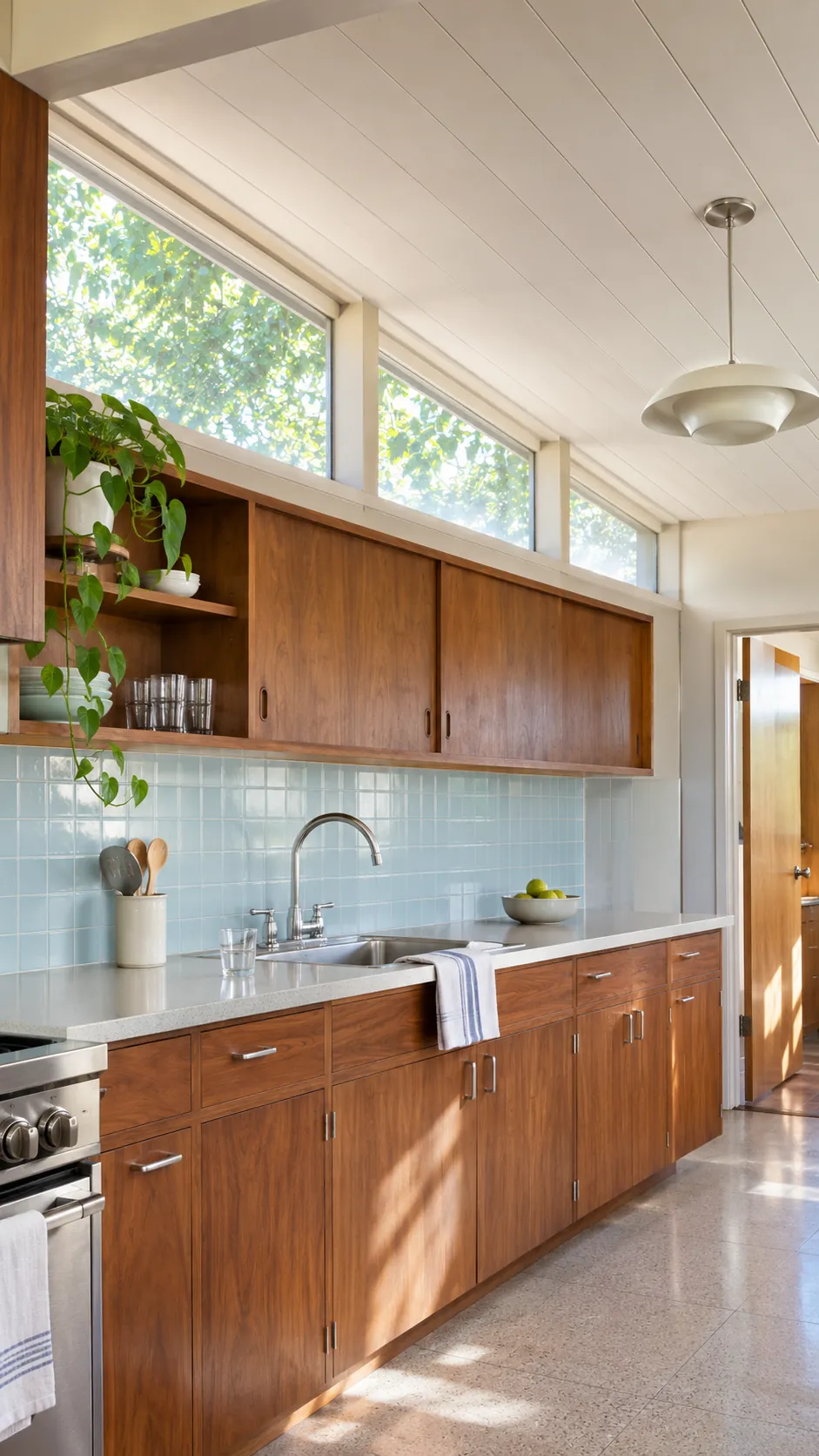
High windows bring daylight deep into a kitchen while preserving long walls for storage. Keep tall cabinets away from the glass so they do not block the light path. A pale ceiling and lightly reflective backsplash can spread illumination without creating glare.
Built In Breakfast Nook
A built in nook uses a corner efficiently and suits the social planning of midcentury homes. Pair a simple upholstered bench with a pedestal table so legs do not crowd the floor. Storage below the seat is useful for linens, but it needs easy access and ventilation.
Utility Pegboard Wall
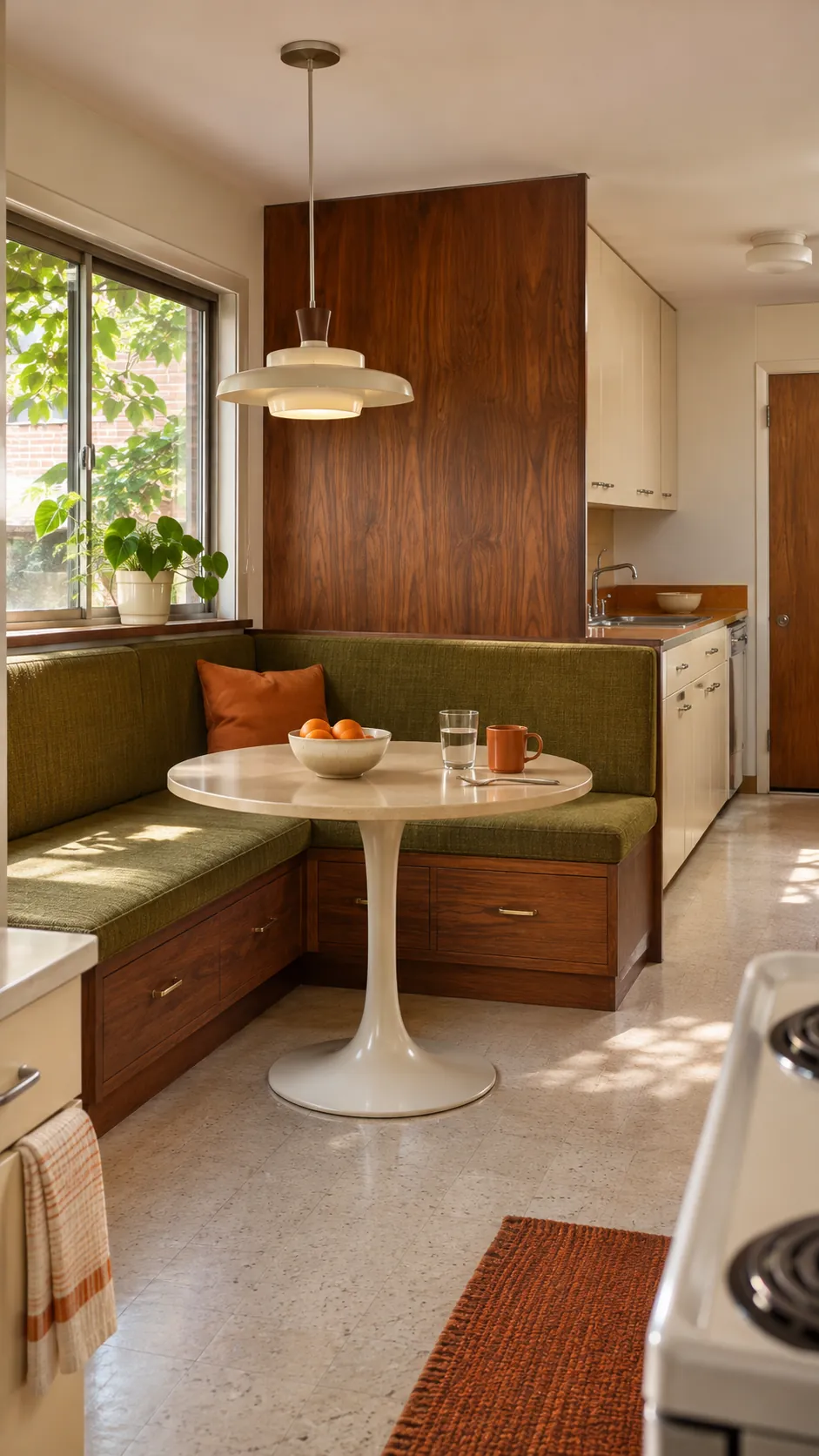
Pegboard turns a shallow wall into adaptable storage that can change with cooking habits. Paint it a saturated but grounded color such as deep teal and hang only frequent tools. Leave empty holes around each group so the wall reads as organized equipment rather than decoration.
Burnt Orange Accent Zone
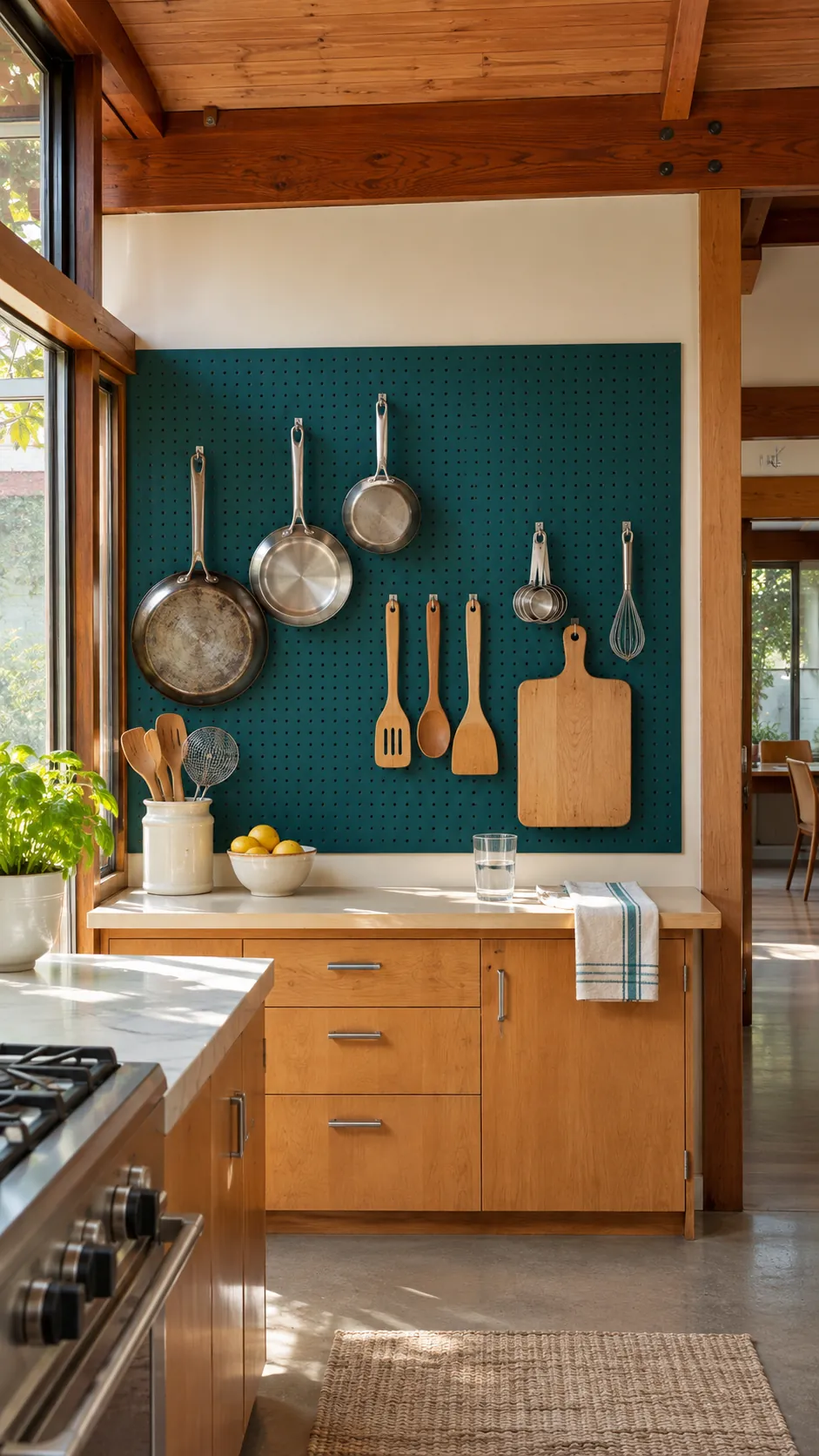
Burnt orange adds the warmth associated with late midcentury interiors without covering the whole kitchen. Use it on a banquette, a single door bank, or one pendant rather than every object. Balance the color with walnut, cream, and olive so it feels grounded.
Small Geometric Backsplash
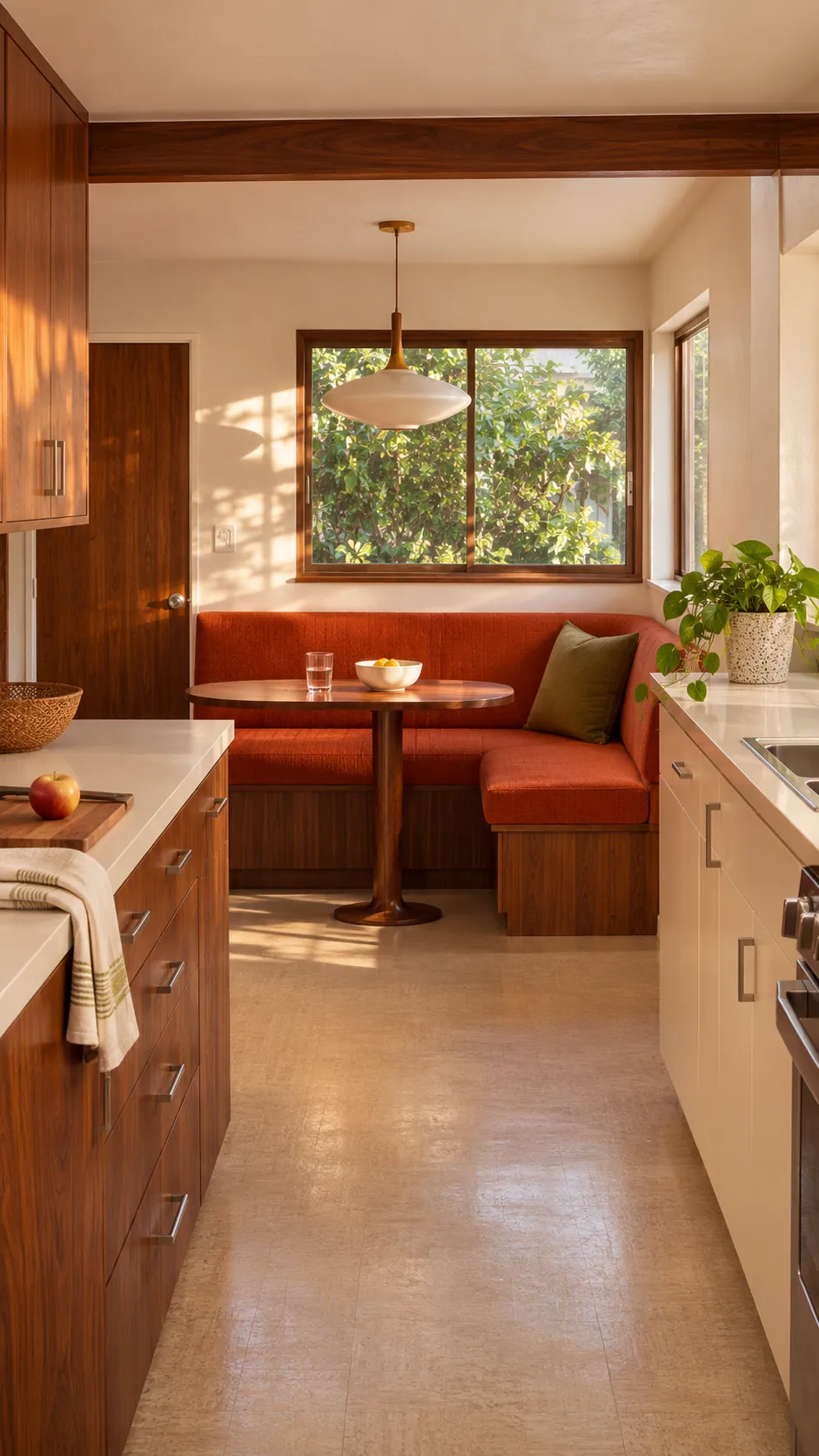
A modest geometric tile can introduce period rhythm in the compact space between counter and cabinets. Choose a two color pattern with enough plain field to keep grout lines from becoming restless. Stop it at logical cabinet edges instead of wrapping every wall.
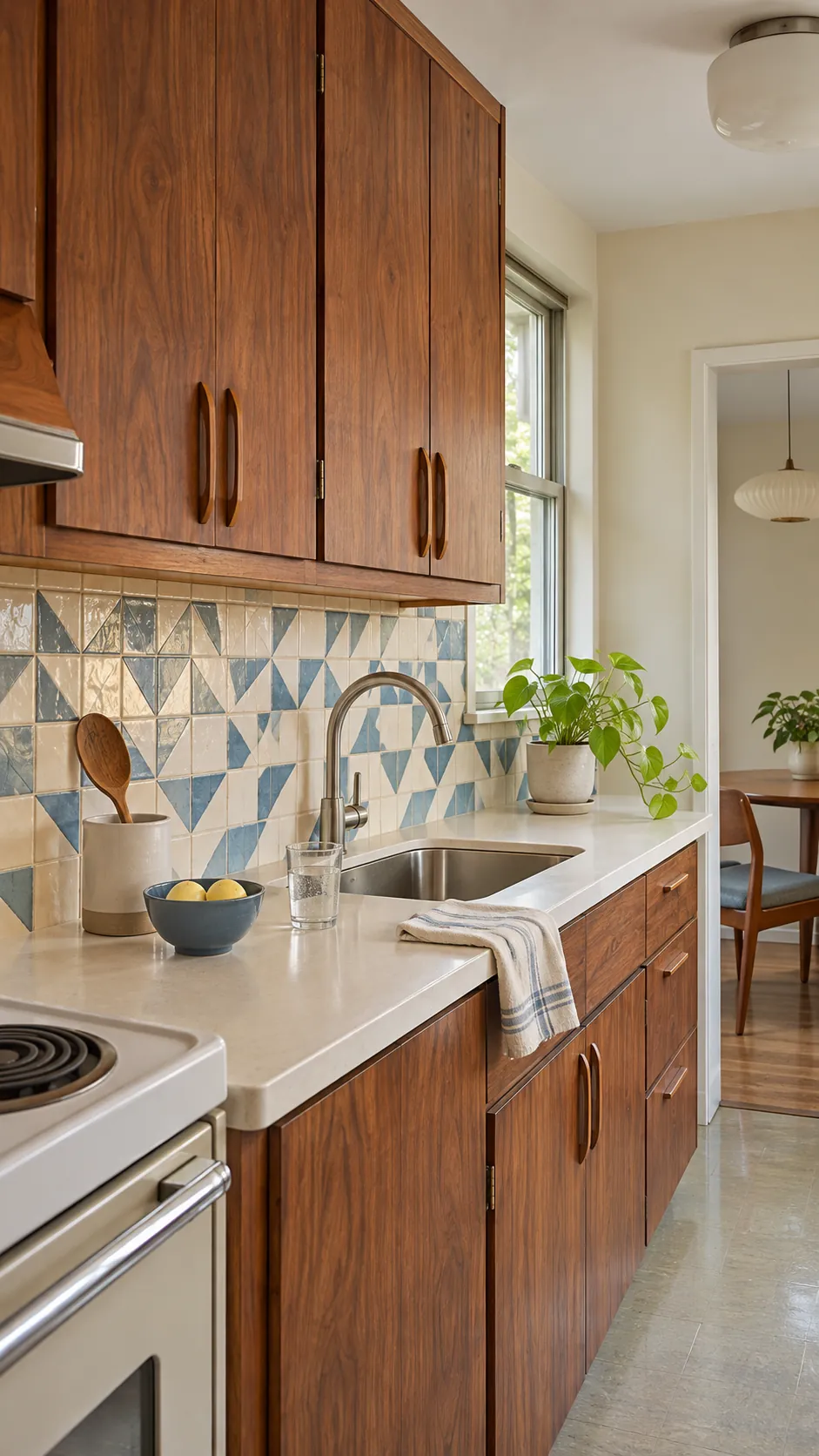
Tulip Table Dining Corner
A round tulip table gives a dining corner a clear period reference and removes legs from a tight path. Pair it with wood chairs or a built bench rather than a complete matching set. The mix feels more natural and lets the table remain a useful shape instead of a museum piece.
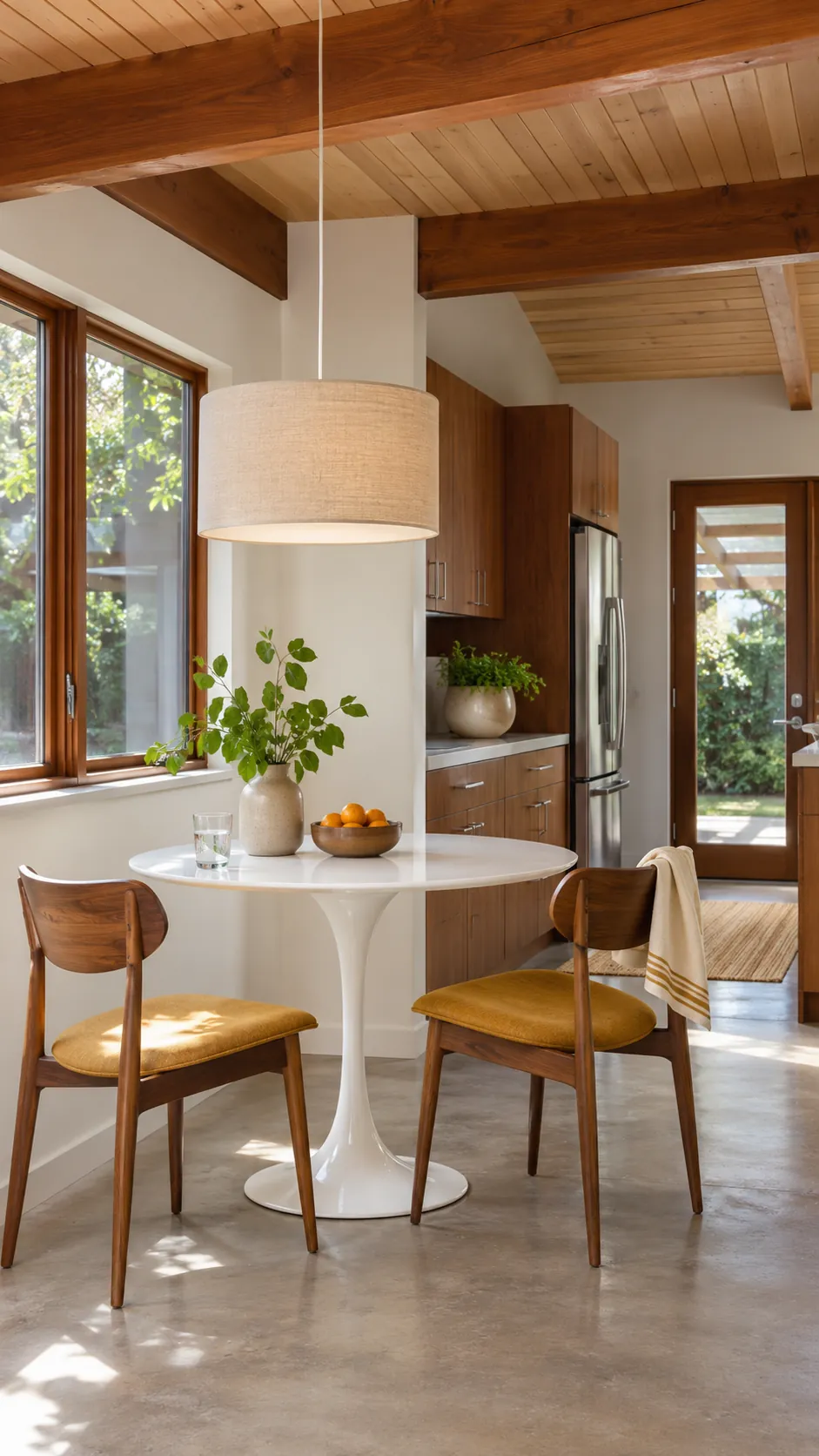
Quiet Integrated Appliances
Panelled appliances let natural wood and horizontal cabinet lines remain continuous. Use ventilation gaps, service access, and correct door swing even when the fronts disappear. Where panels are not possible, choose plain stainless steel and align its edges with nearby drawers.
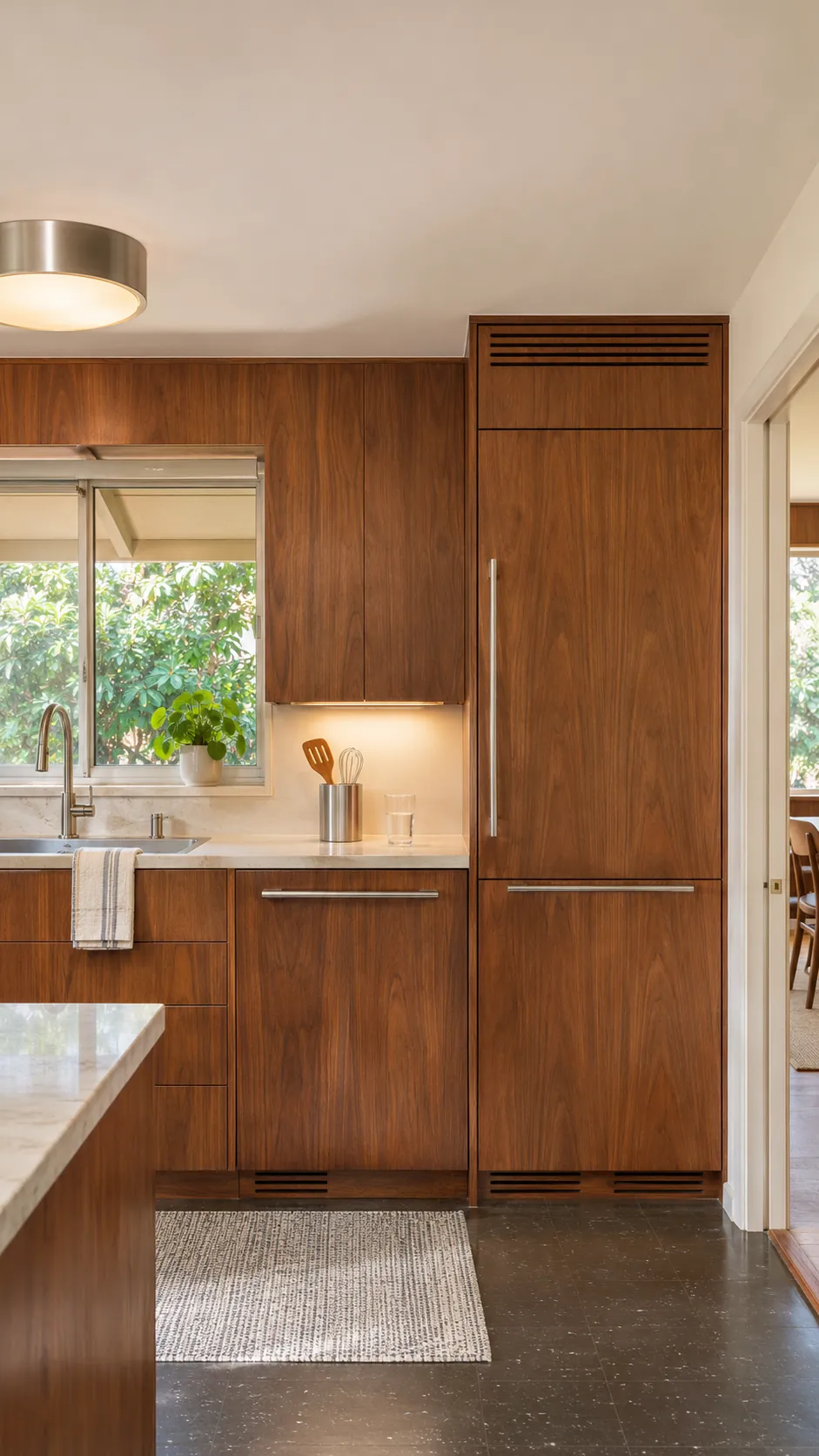
Slim Aged Brass Pulls
Slim brass pulls add warmth without competing with wood grain. Choose one consistent length for doors and a related shorter size for drawers so the elevations remain orderly. A living finish can age naturally, but all handles should still feel comfortable in daily use.
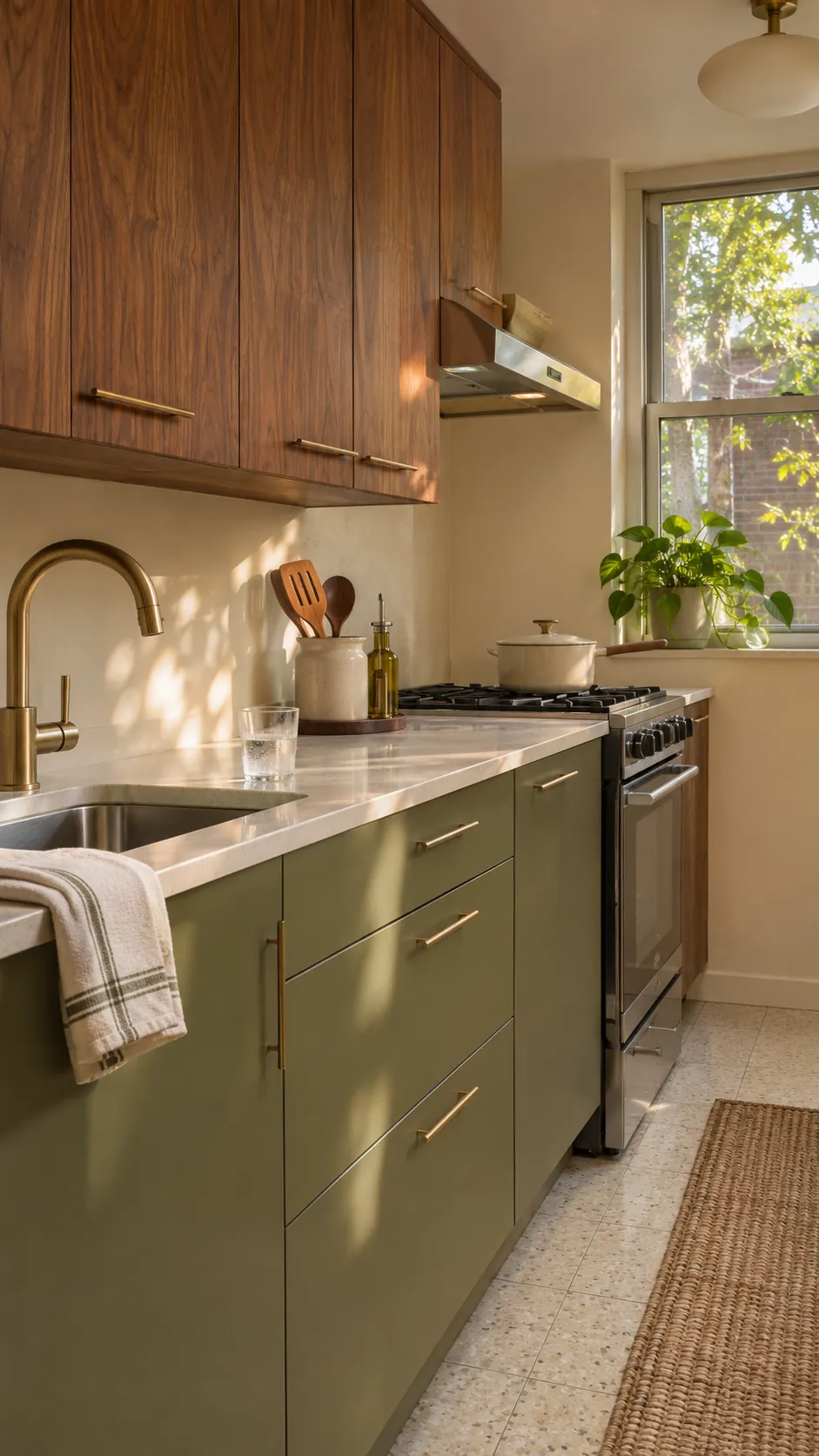
Natural Cork Flooring
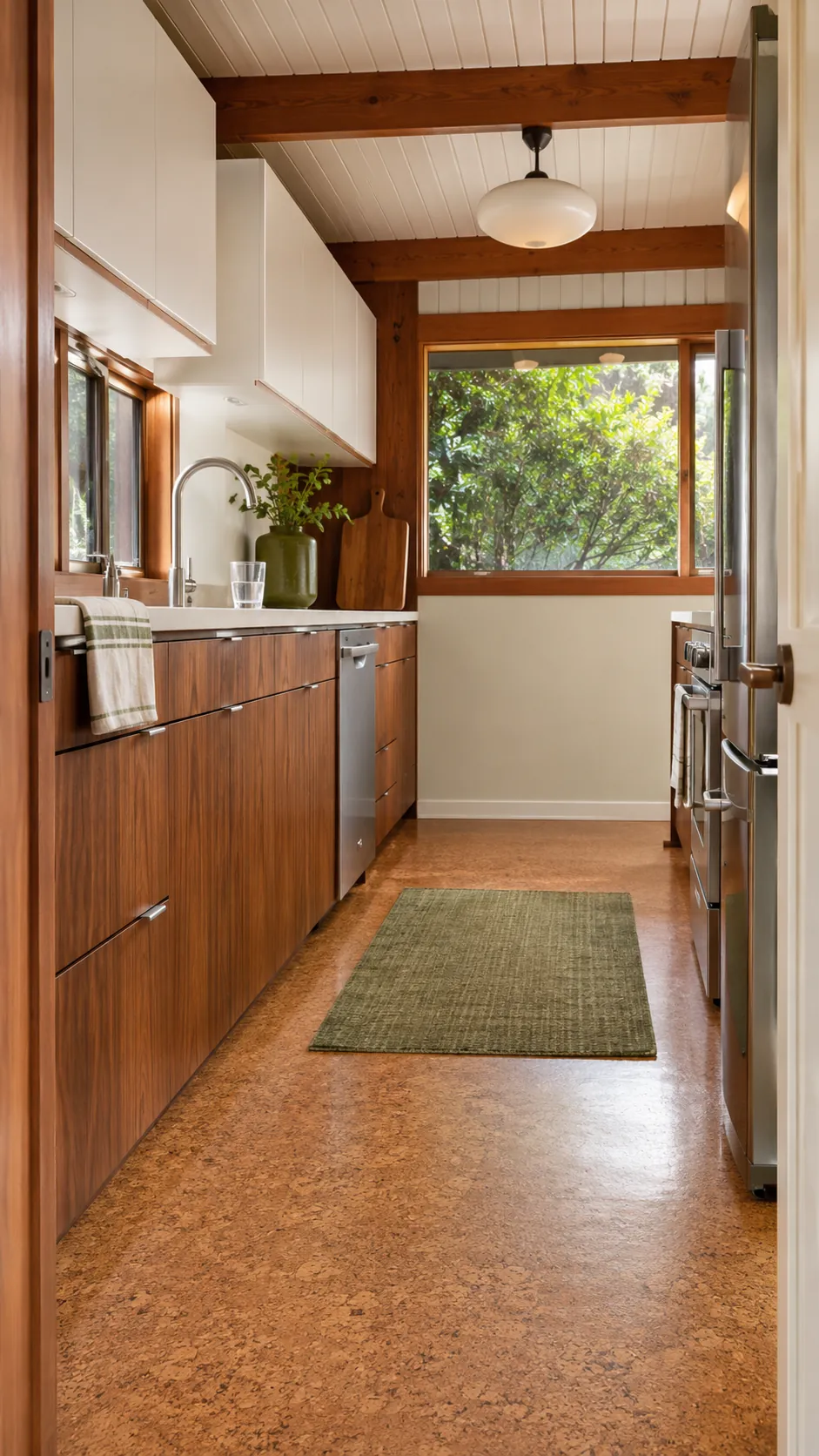
Cork provides quiet footing, warmth, and a subtle organic pattern that supports the period palette. Use a sealed product intended for kitchens and protect seams around the sink and dishwasher. Medium tonal variation hides normal wear while remaining calmer than a bold tile pattern.
Long Floating Display Shelf
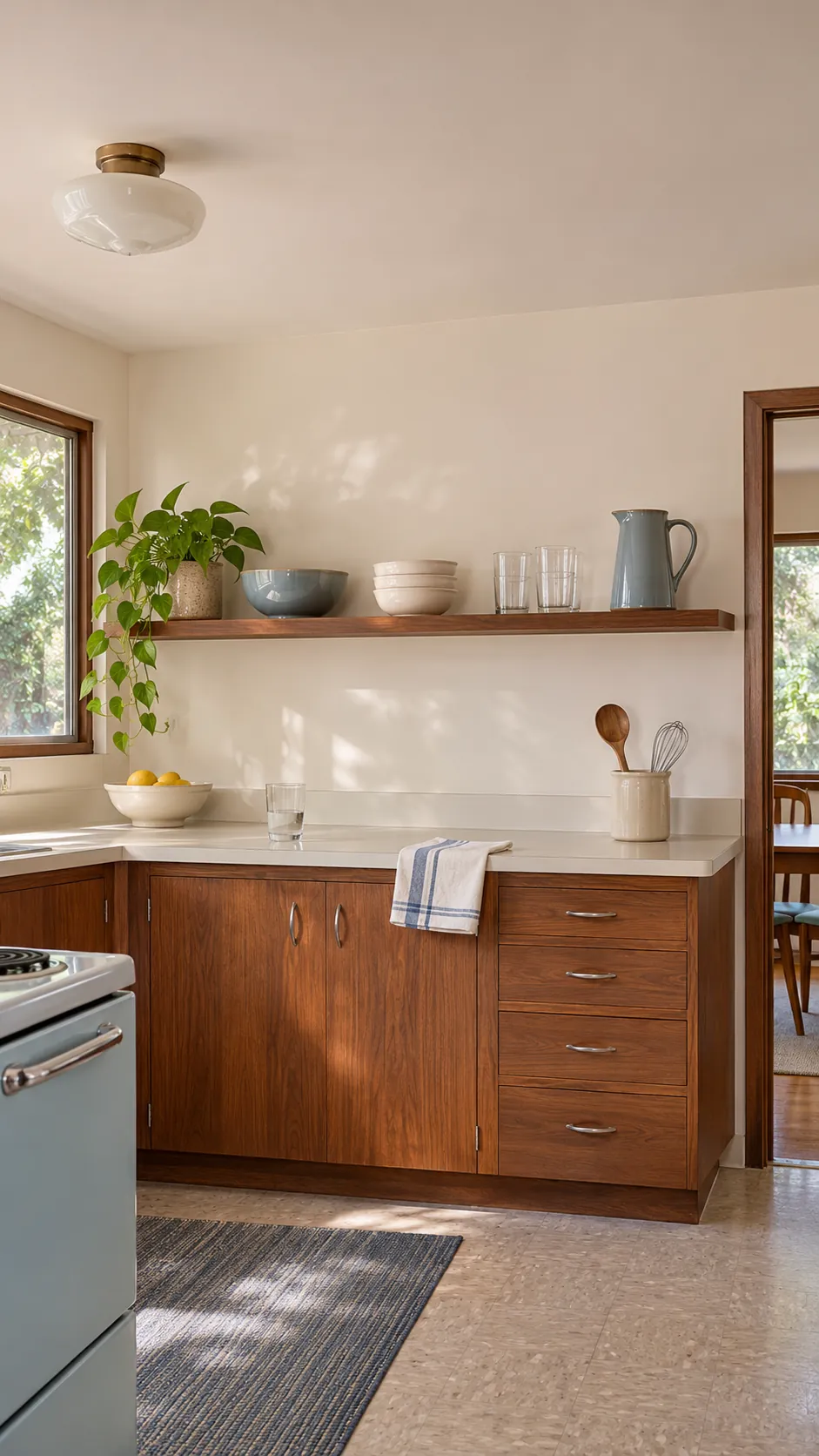
One long floating shelf can emphasize the horizontal architecture of the room. Use it for daily ceramics and a few glass pieces, leaving wide gaps between groups. The shelf needs concealed support strong enough for dishes and should not sit where steam coats everything.
Sunny Plant Ledge
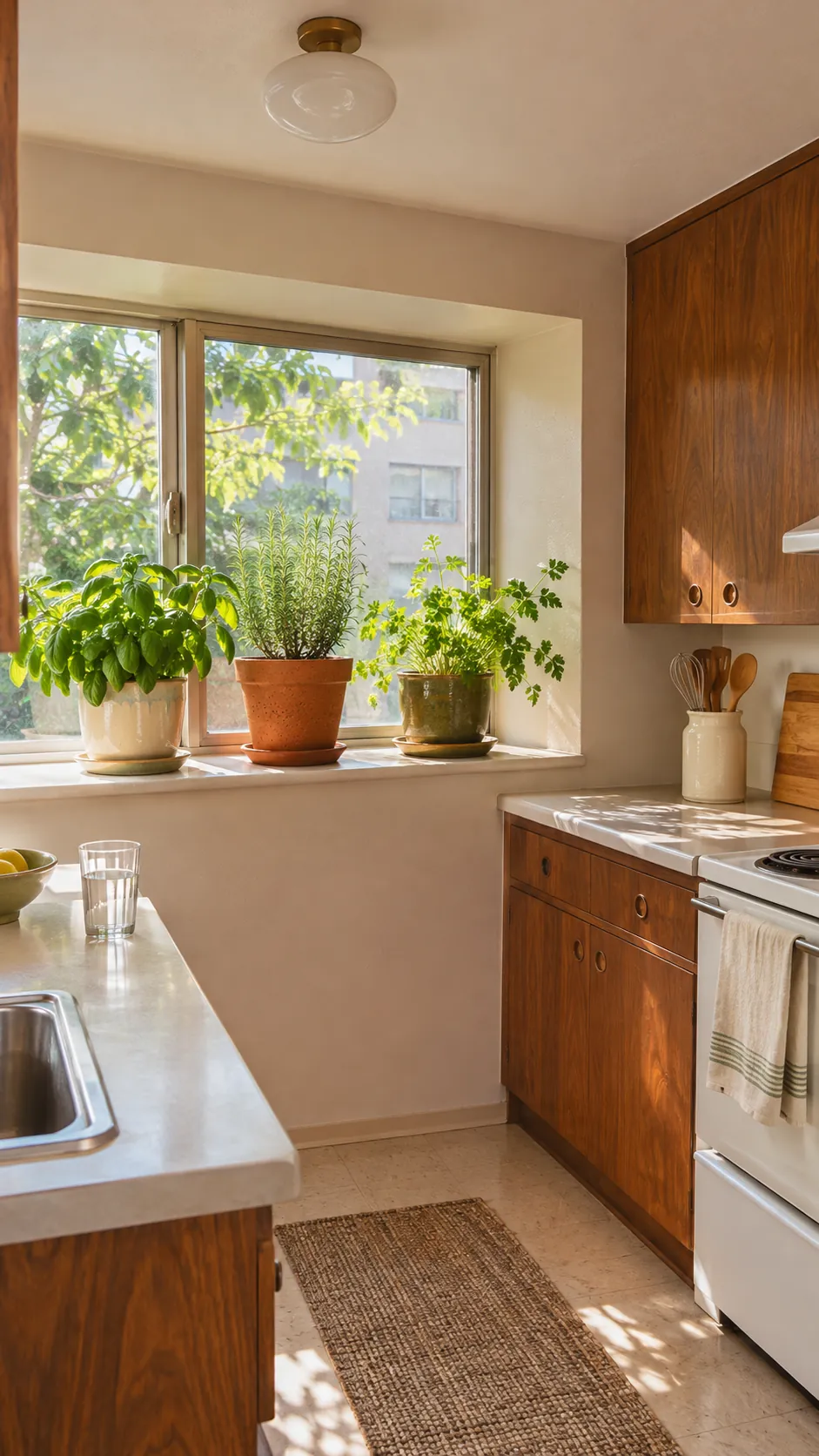
A deep window ledge can hold herbs and compact plants without sacrificing preparation space. Choose containers with trays and keep foliage away from a range or open flame. The green layer connects interior wood to the outdoor view and softens straight cabinet lines.
Dining Room Pass Through
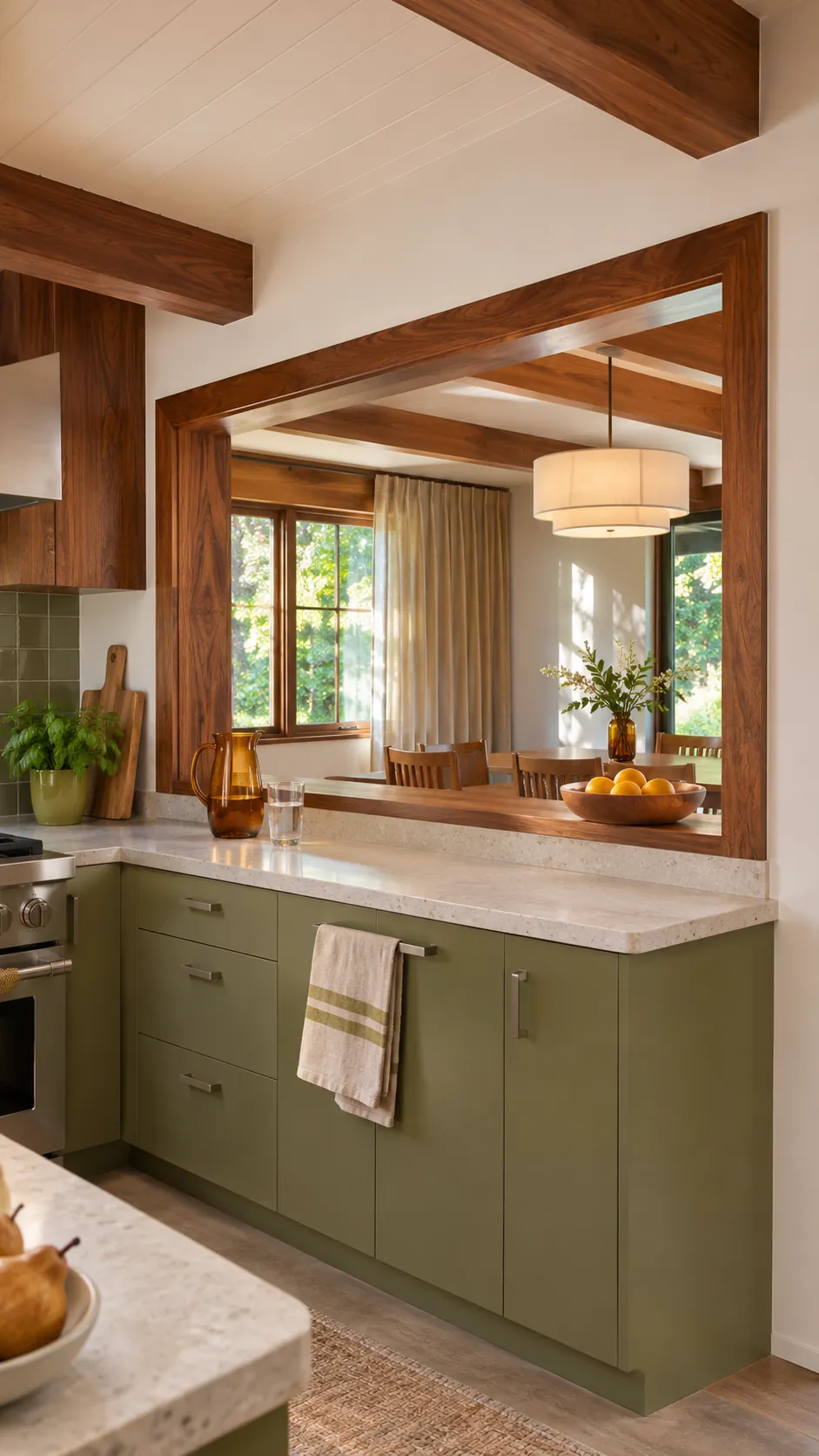
A pass through preserves a visual link between kitchen and dining room while keeping useful base storage. Frame the opening in the same wood as the cabinets and use the ledge for serving rather than permanent decor. Check the wall structure before enlarging any opening.
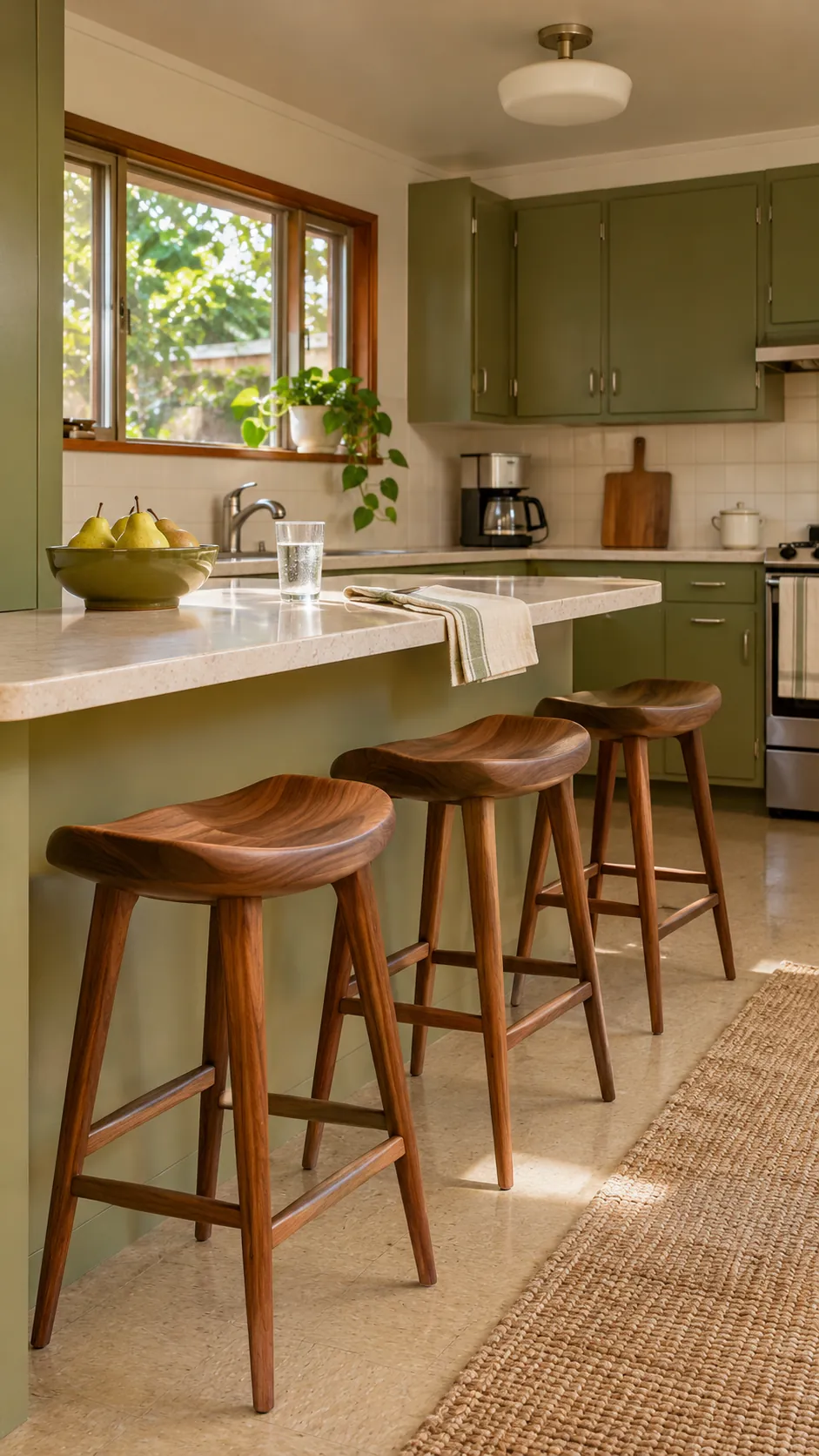
Sculpted Counter Stools
Sculpted wood stools add an organic midcentury form beneath a simple counter. Backless seats tuck away in a narrow kitchen, while low backs provide more support for regular meals. Maintain enough space between stools for elbows and keep the overhang deep enough for comfortable knees.
Wood And Color Cabinet Mix
Two tone cabinetry works best when wood follows the main run and color marks a smaller functional zone. An olive pantry bank or blue island can provide contrast without fragmenting every elevation. Repeat the color once in a textile or ceramic piece, then stop.
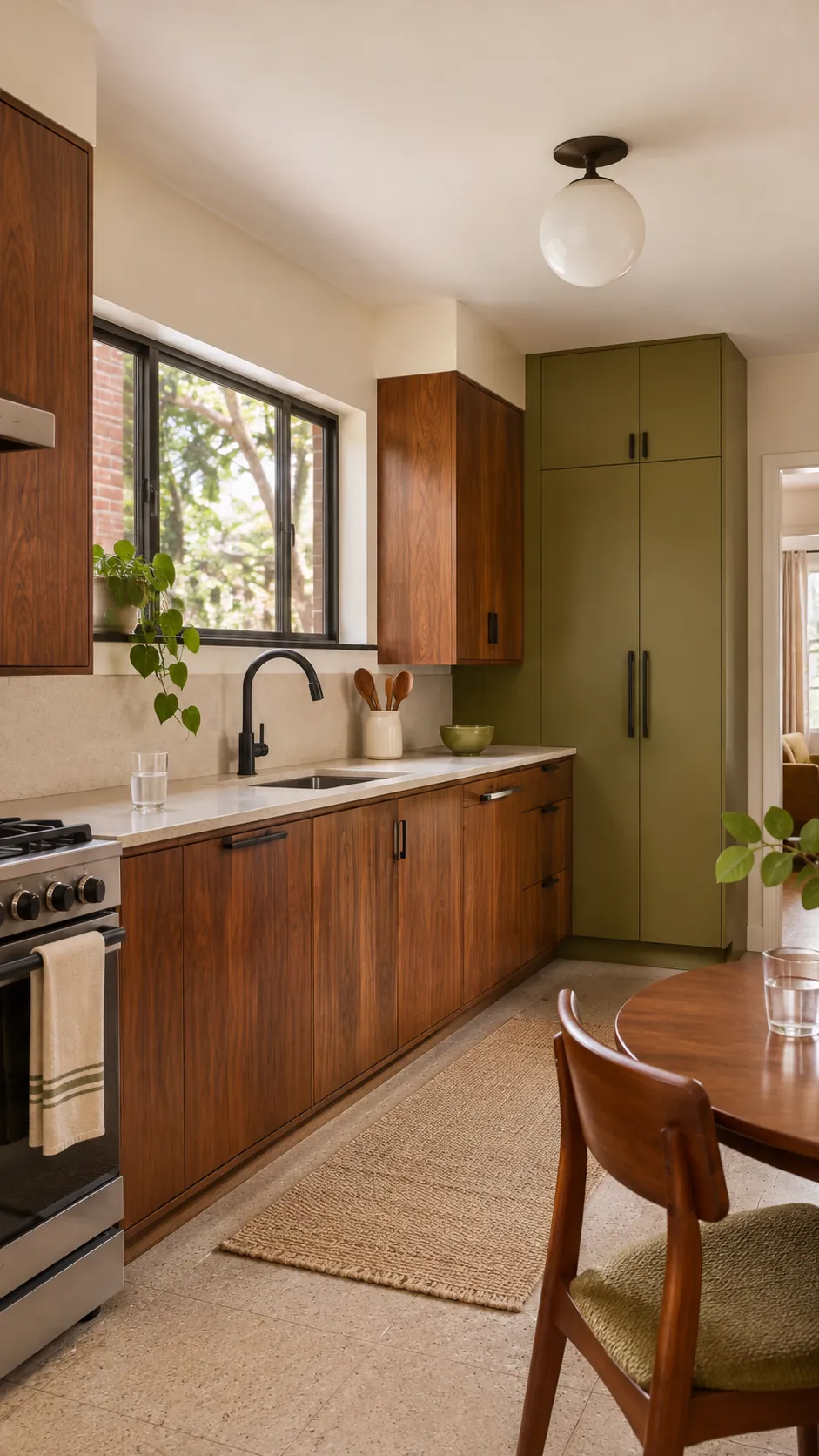
Full Height Pantry Wall
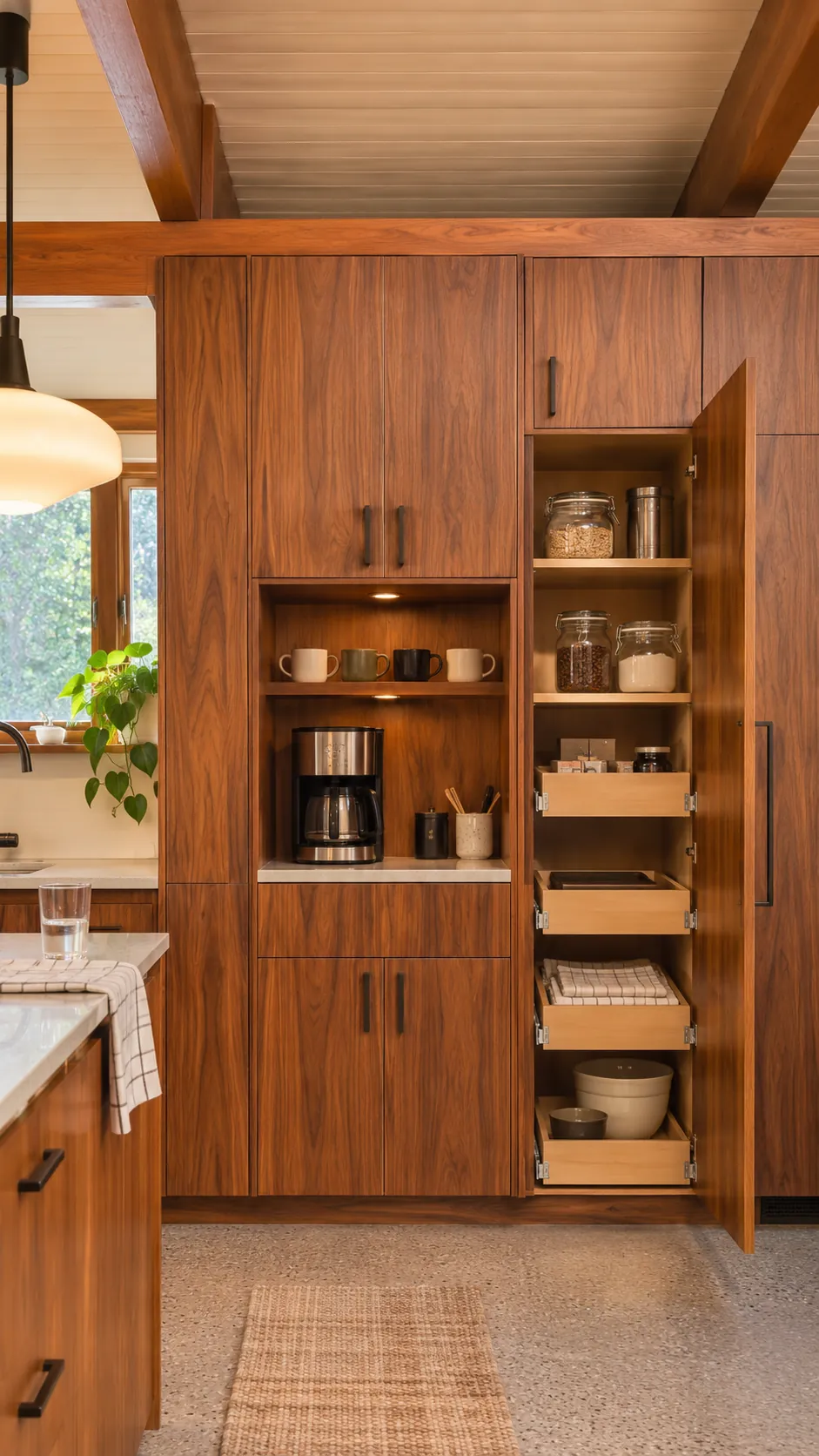
A full height pantry can concentrate storage and leave the rest of the kitchen visually open. Break the wall with one recessed appliance niche or open shelf so it does not become a blank block. Shallow internal drawers make food visible and reduce forgotten items at the back.
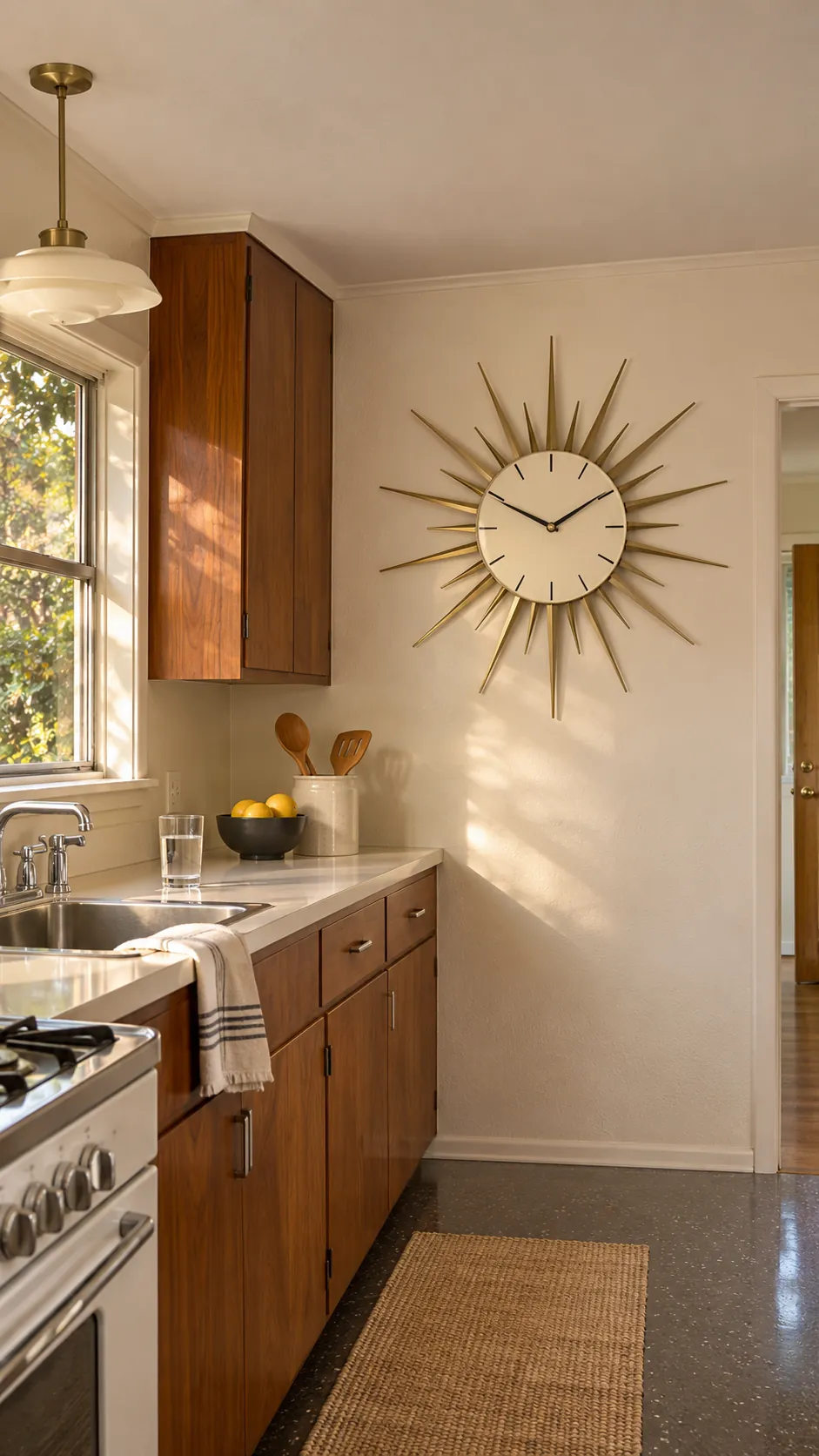
Graphic Wall Clock
A graphic wall clock can supply one playful period shape without turning the room into a collection. Choose a large readable face with simple hands and mount it where steam and grease are limited. Let the clock occupy an otherwise quiet wall so its silhouette remains clear.
Preserved Original Woodwork
Sound original cabinetry often carries better material and stronger connection to the house than a fashionable replacement. Repair hinges, clean the finish, and adjust doors before deciding whether the wood needs stripping or paint. New counters, lighting, and appliances can improve function while the familiar grain keeps the renovation honest.