A table can fit on paper and still make a small apartment feel difficult to use. The real test is whether someone can pull out a chair, carry a plate past the table, and open nearby doors without turning every meal into a furniture shuffle. Shape matters, but the usable clearance around the shape matters more.
Start With the Room, Not the Table
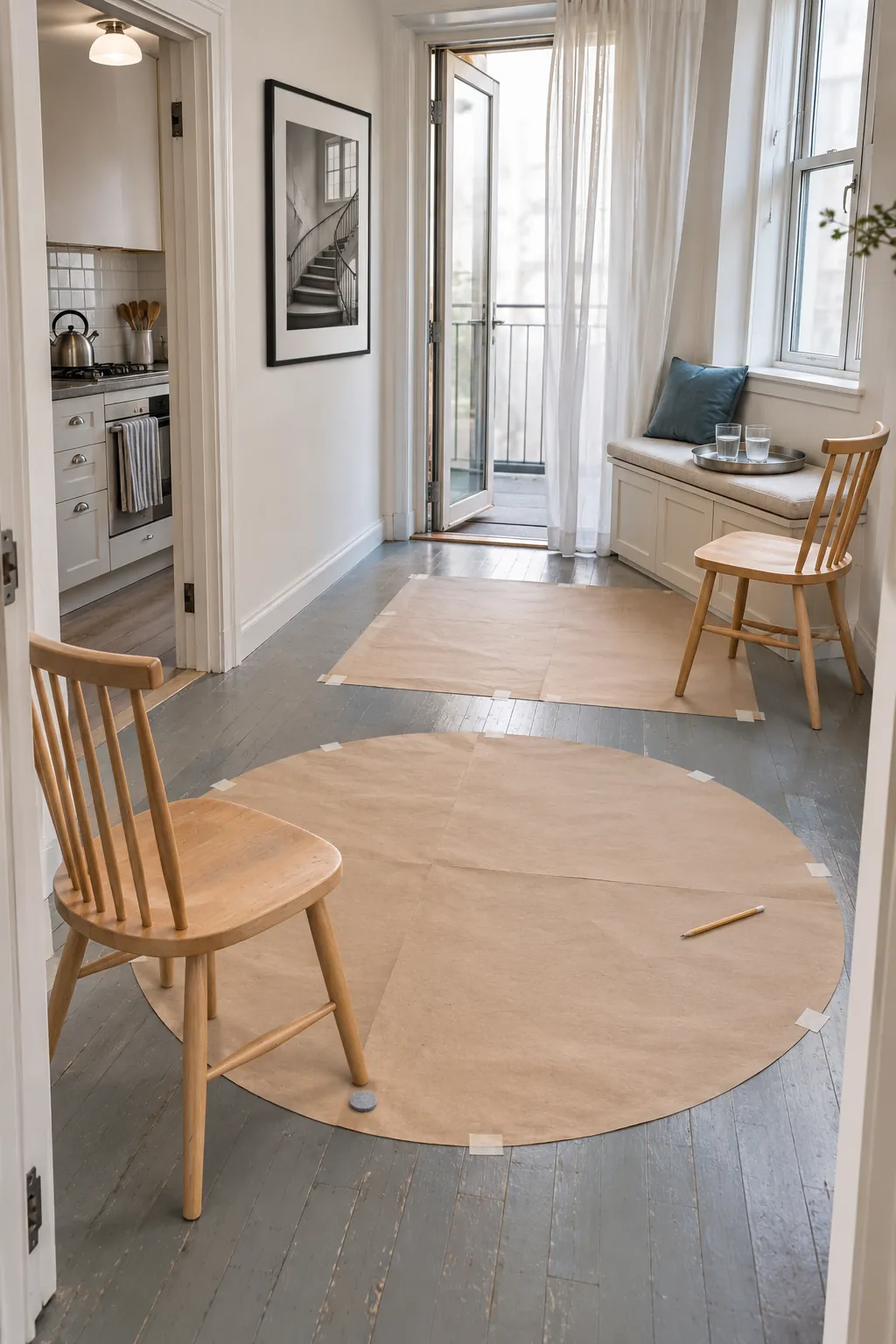
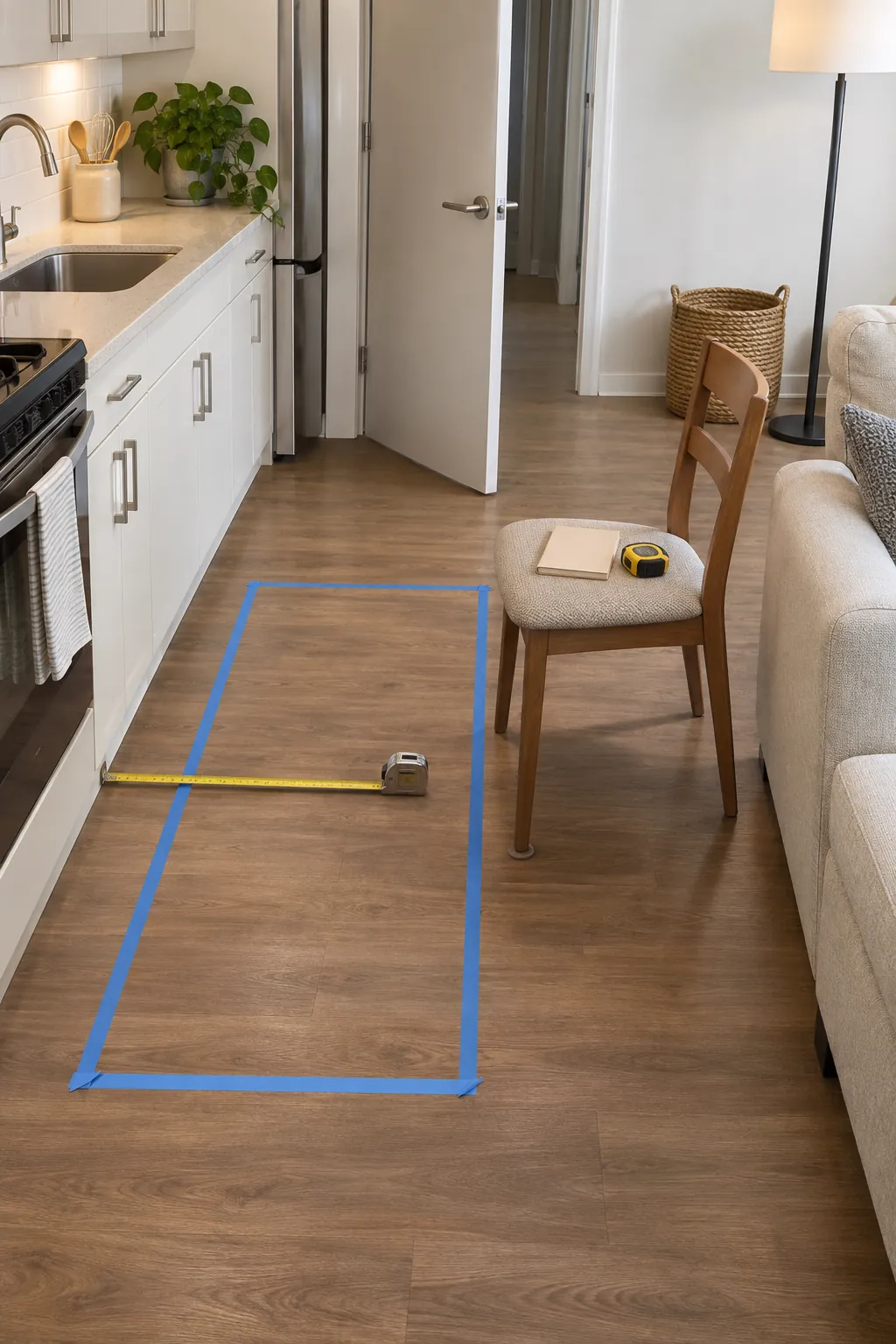
Measure the dining zone at its narrowest points, including baseboards, radiators, door swings, and the edge of kitchen cabinets. Then mark the proposed tabletop on the floor with removable tape. Add the depth of each chair and enough space behind it for the person who will actually use it.
A comfortable target is about thirty six inches from the table edge to a wall or cabinet when a chair must pull out. A tighter apartment may function with about thirty inches where traffic is light, but a main walkway often needs more. Test the taped outline with a chair before buying anything, because the room shape can make a modest table feel larger than its listed dimensions.
Round Tables Keep Corners Out of the Walkway
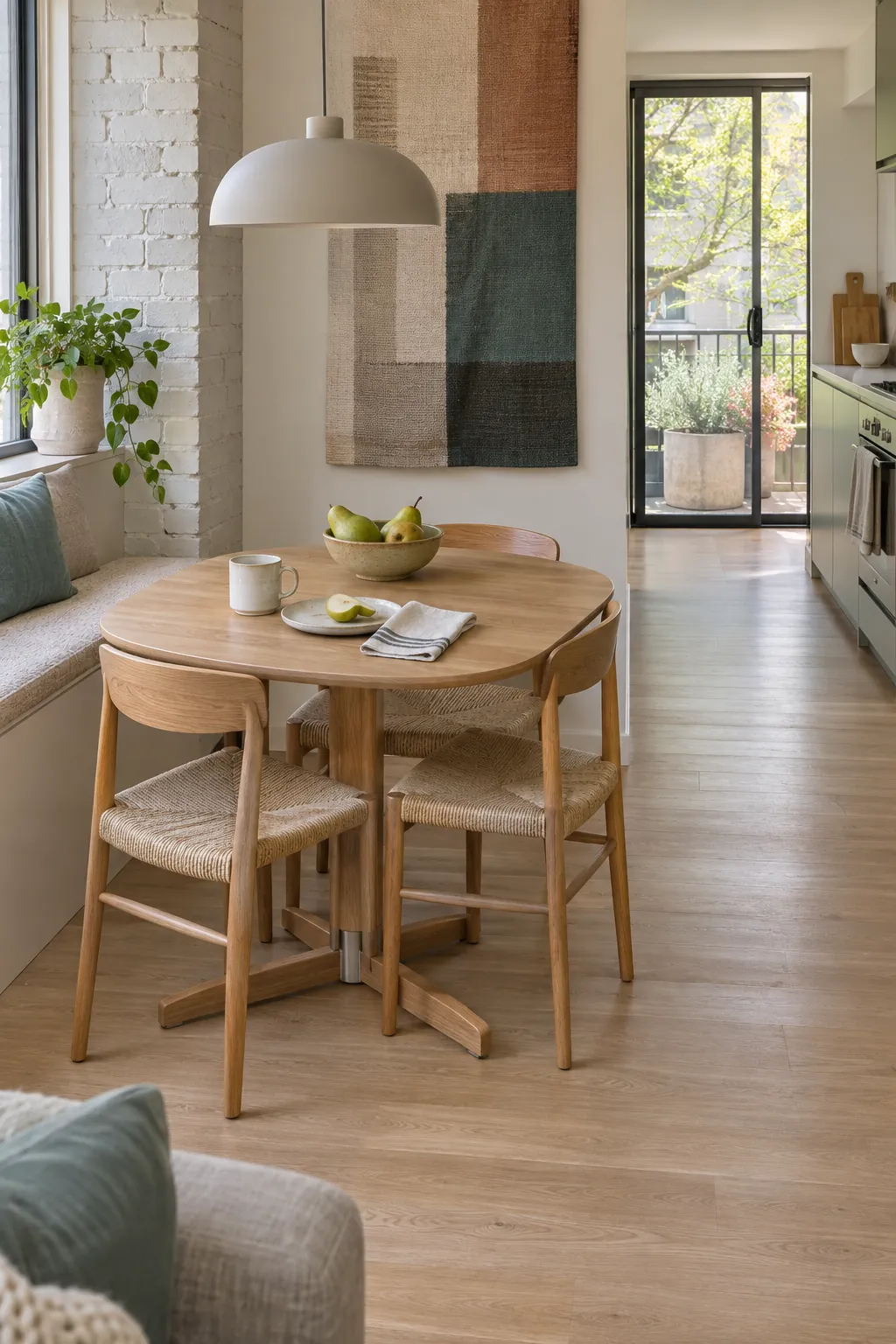
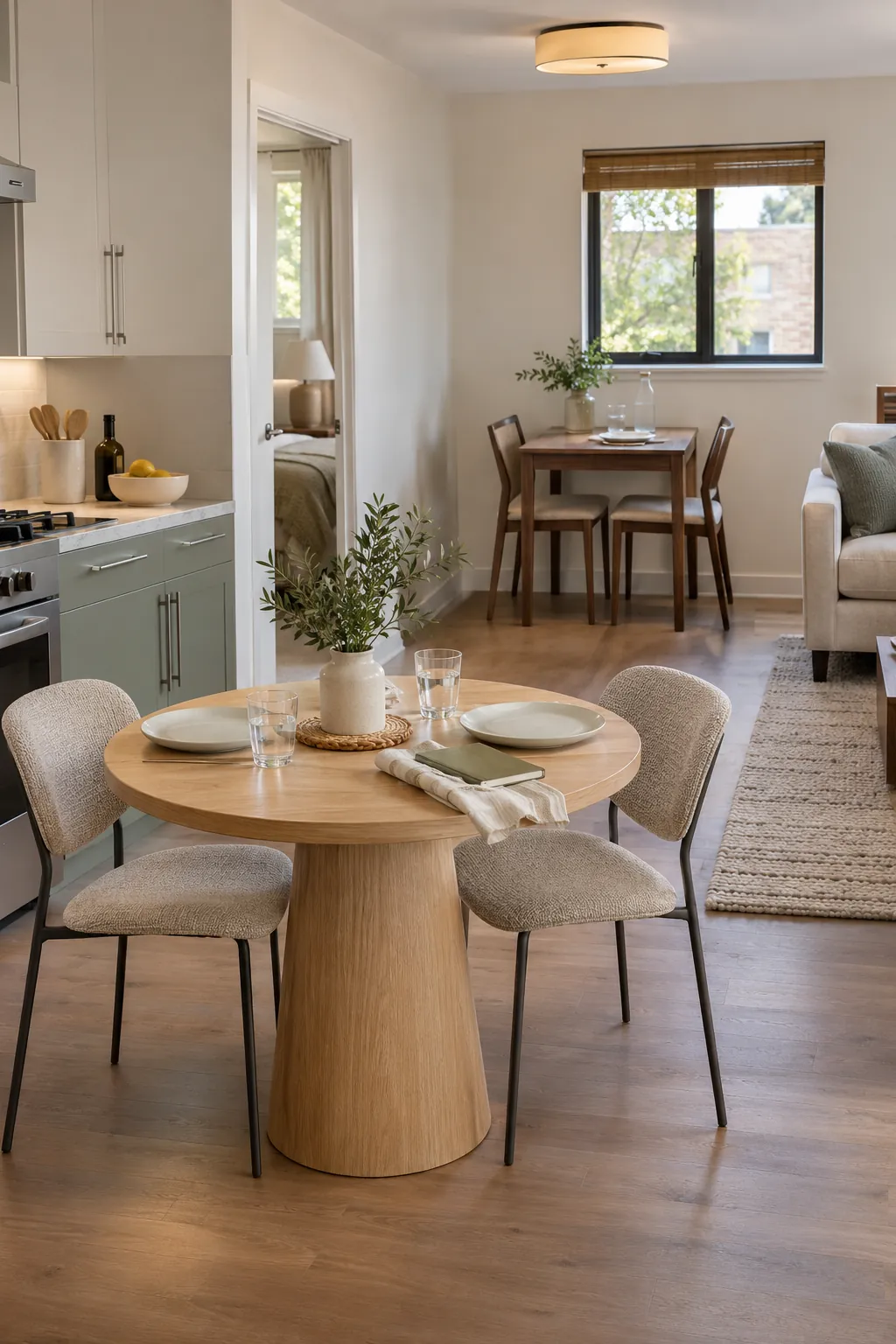
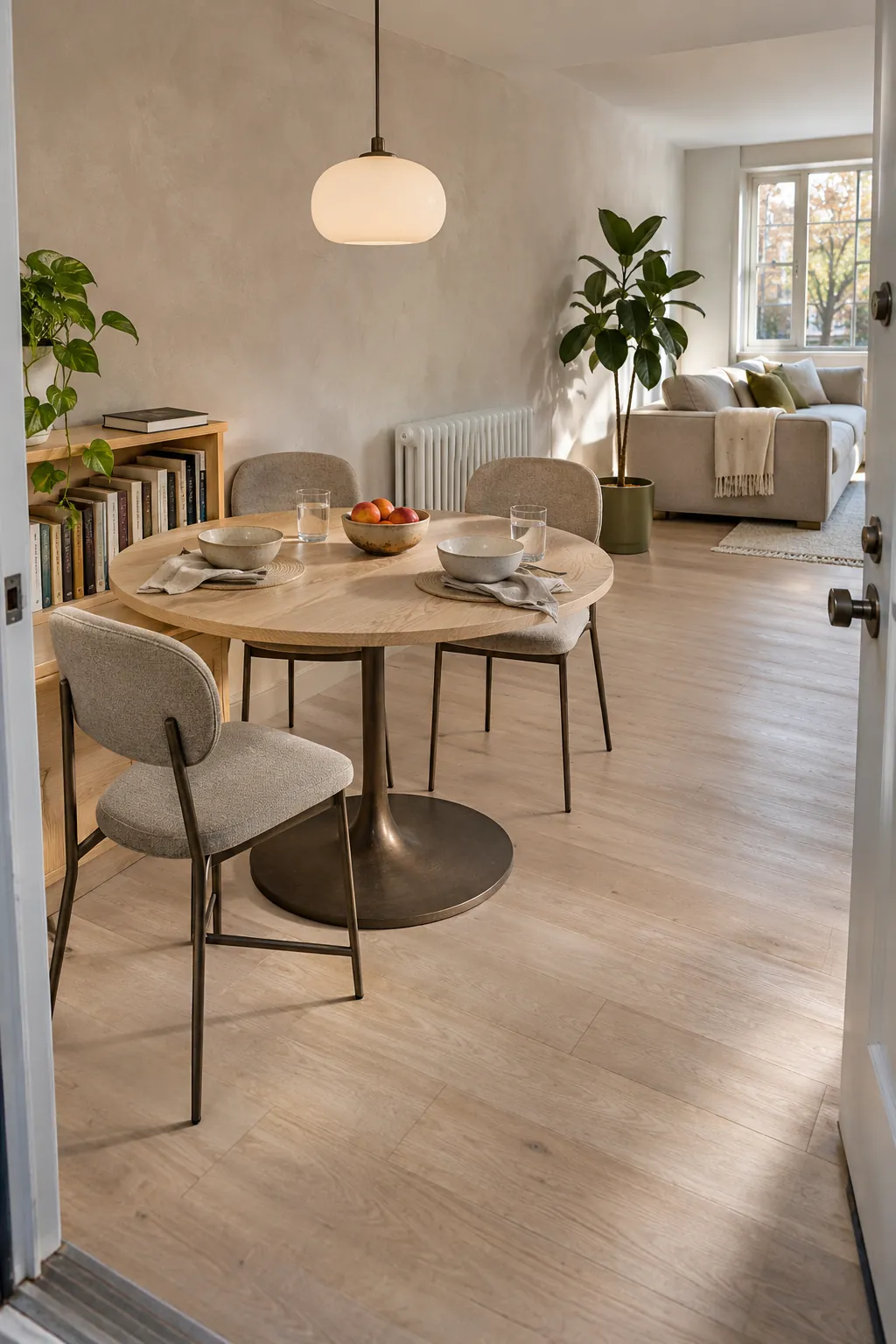
A round dining table is often the safer choice when people pass the table on two or more sides. Its curved edge removes the corner that catches a hip or narrows a diagonal route. Diners can also shift their chairs slightly around the perimeter when one side of the room is tighter.
The advantage is strongest in a nearly square dining zone or an open corner between the kitchen and living room. A pedestal base improves the effect because chair legs do not compete with table legs. The tradeoff is that a round top cannot sit neatly against a straight wall, so unused space can remain behind it.
Square Tables Use Straight Walls Efficiently
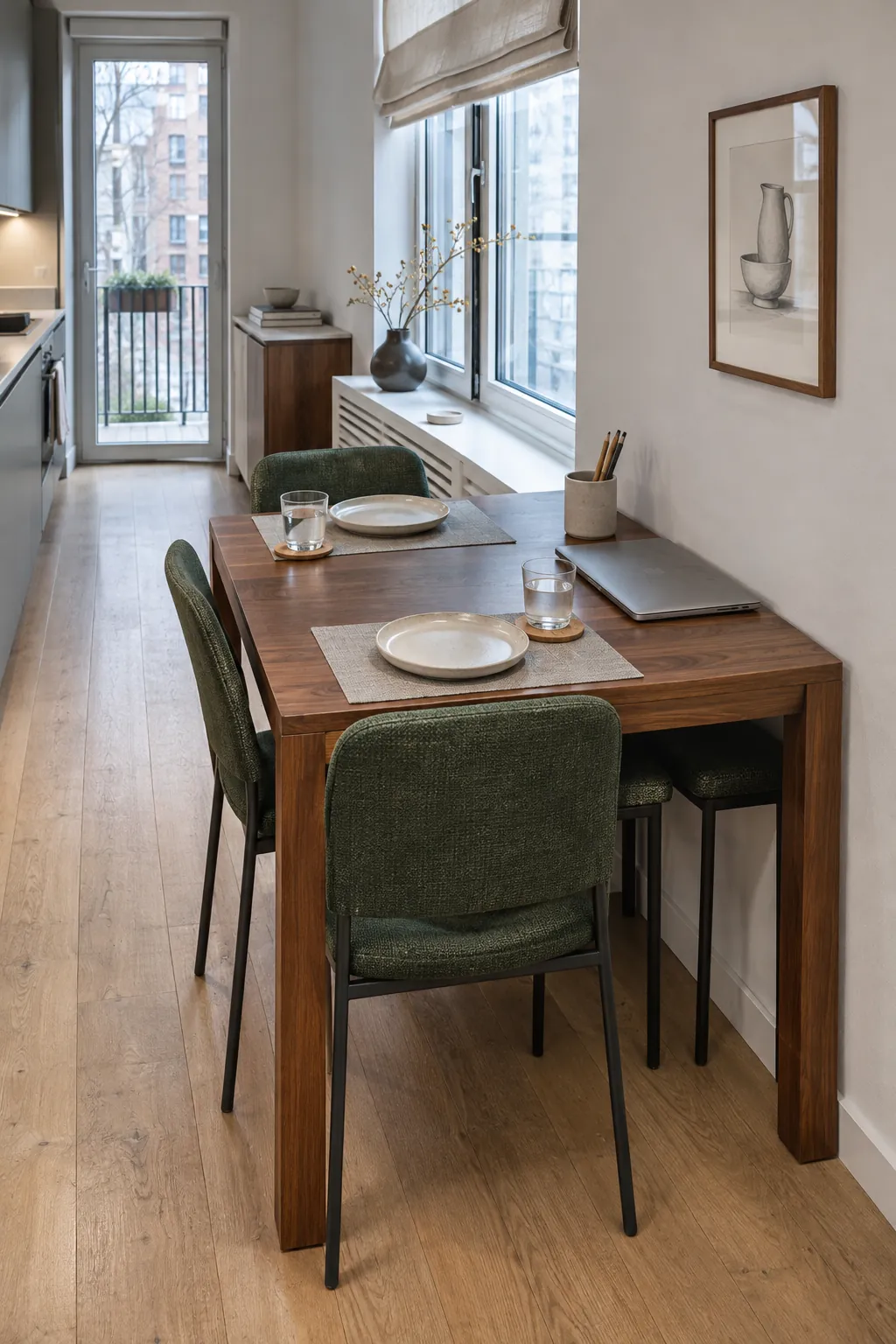
A square dining table earns its place when the apartment needs furniture to align with a wall, window, or cabinet run. It can serve four equal place settings without creating a favored end. When only one or two people eat there, one side can sit close to a wall and move outward for guests.
That flexibility can matter more than the missing corners of a round table. A square top also gives a laptop, board game, or craft project a predictable work surface. Check the corner clearance carefully, since a square table that is only a little too large can interrupt the most natural walking line through the room.
Compare Usable Surface, Not Just Width
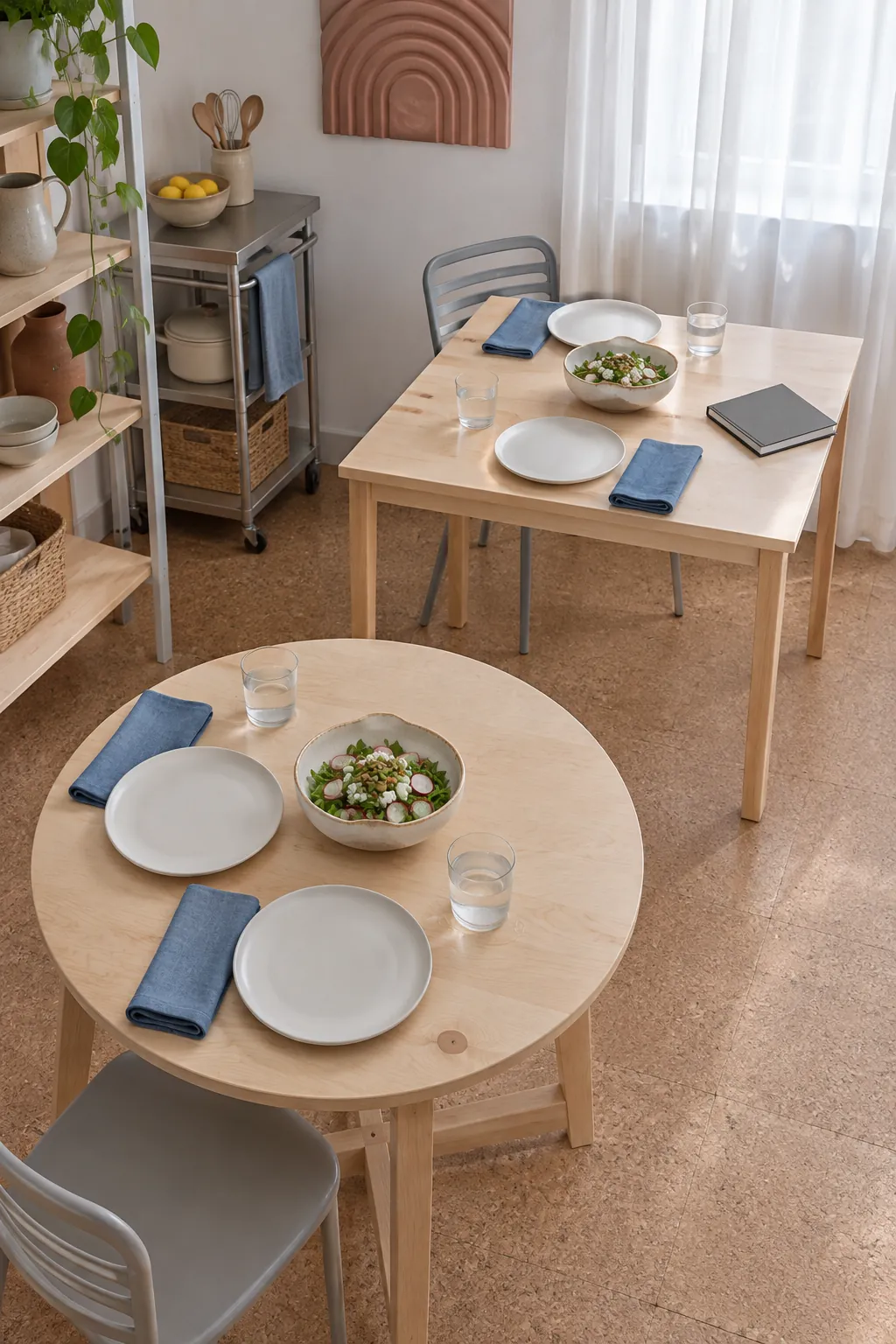
Two tables with the same advertised width do not offer the same usable surface. A square top provides more area near its corners, which helps when the table doubles as a desk or when several serving dishes stay on the table. A round top keeps everything closer to the center, which can make conversation and shared meals easier.
Place dinner plates on a taped outline or a cardboard mockup to see what remains in the middle. Also check whether the chair width suits the curved or straight edge. A compact dining table works only when its top, base, and chairs function as one measured set.
Plan for Everyday Diners Before Occasional Guests
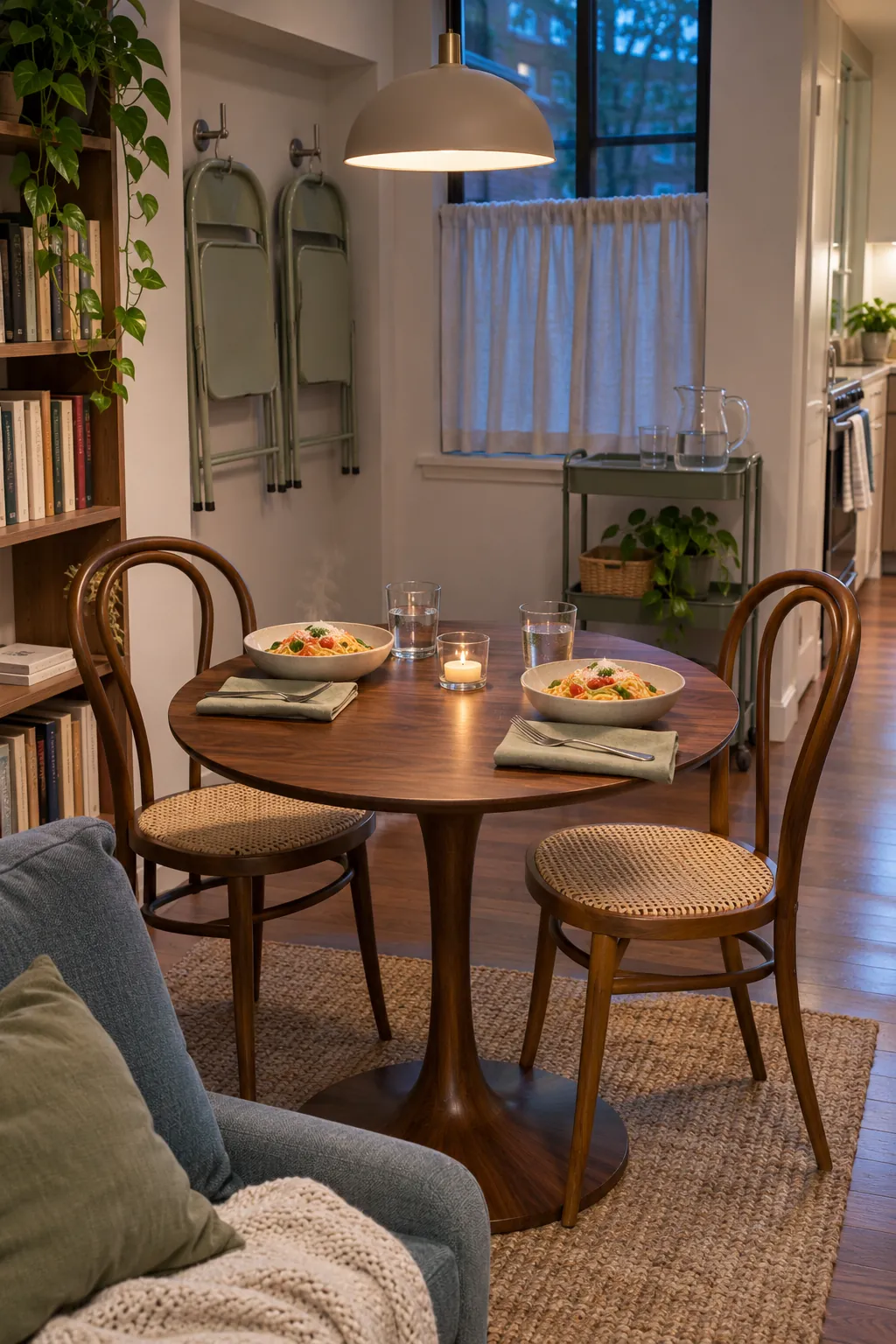
Many small apartments host two people most days and four people only occasionally. Buying for the rare event can leave the room cramped every morning. Choose the smallest shape that supports daily meals, then solve guest seating with a leaf, a movable wall position, or lightweight extra chairs.
A round table usually adapts well when an extra chair can occupy any open part of the perimeter. A square table often handles four regular settings more clearly and can pair with a bench on one side. The better choice is the one that preserves ordinary movement without making a normal meal feel temporary.
Make the Final Choice With a Full Scale Test
Choose round when the table sits in an open route, the room is close to square, and soft circulation matters most. Choose square when the table must align with a wall, provide a larger work surface, or move between a tucked position and a four seat position. Neither shape is automatically smaller in practice.
Leave the taped outline in place for a day. Pull out real chairs, open every nearby door, carry a tray through the space, and sit at each place. The shape that survives that test with the fewest compromises is the right small apartment dining table.