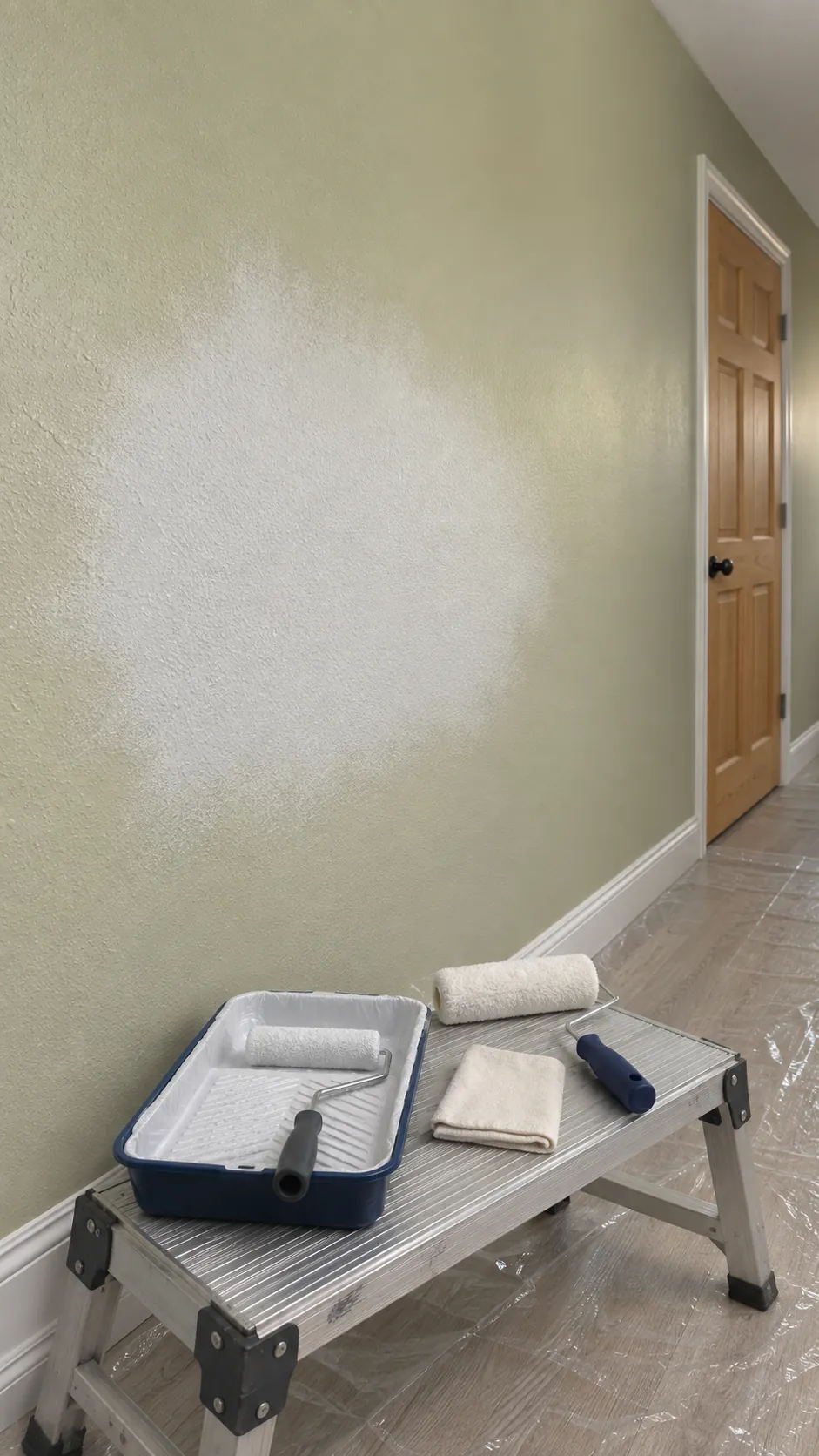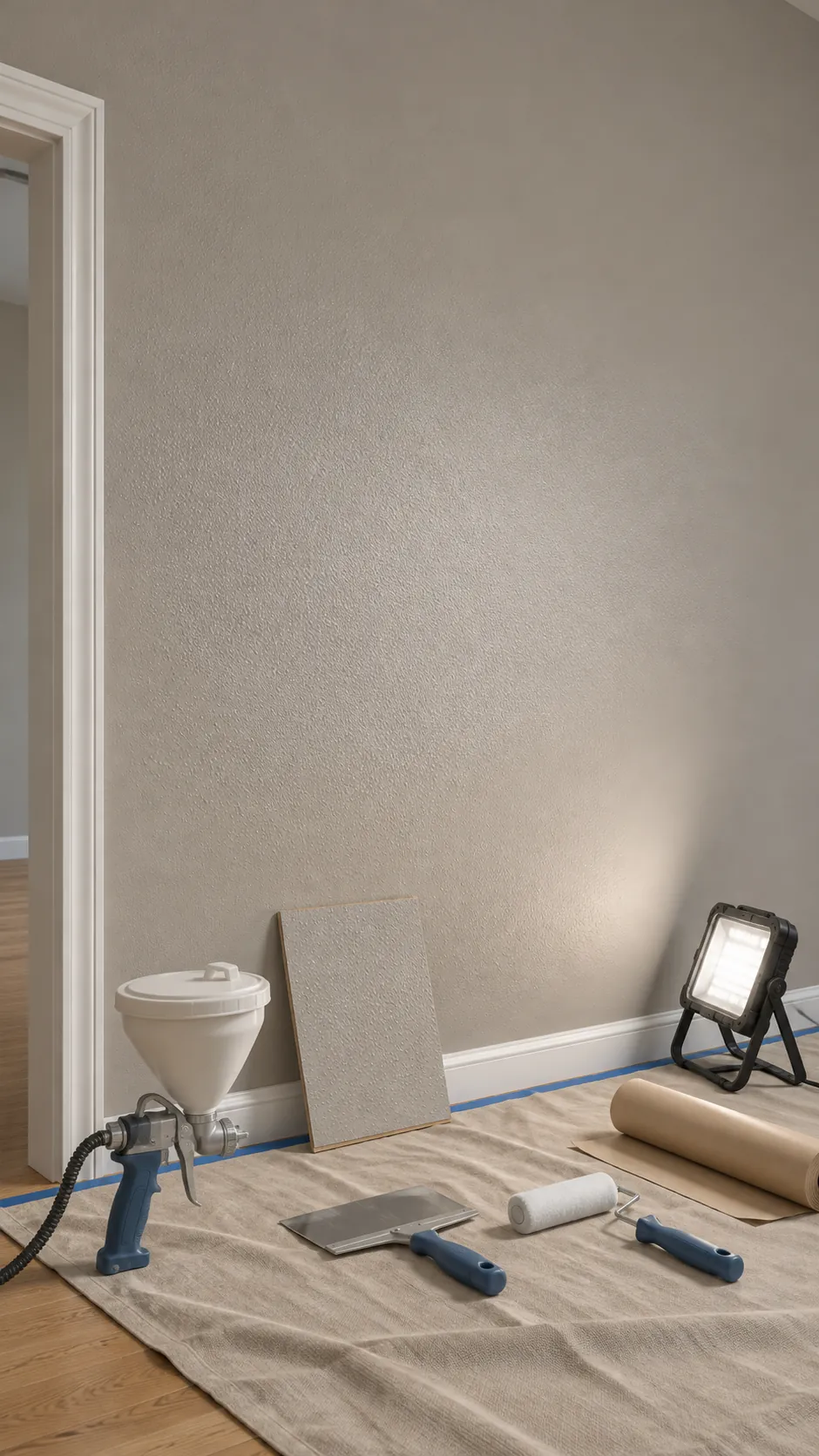
A perfectly smooth patch can remain obvious when the surrounding wall has orange peel, knockdown, or roller texture. The best match comes from studying the existing pattern, practicing away from the wall, and blending a light application beyond the repair edge.
Identify the existing texture
Shine light across the wall and look at the size, spacing, and height of the raised pattern. Orange peel has rounded droplets, while knockdown has flattened islands with irregular edges. Also check whether much of the visible texture comes from roller nap and several paint coats rather than sprayed compound.
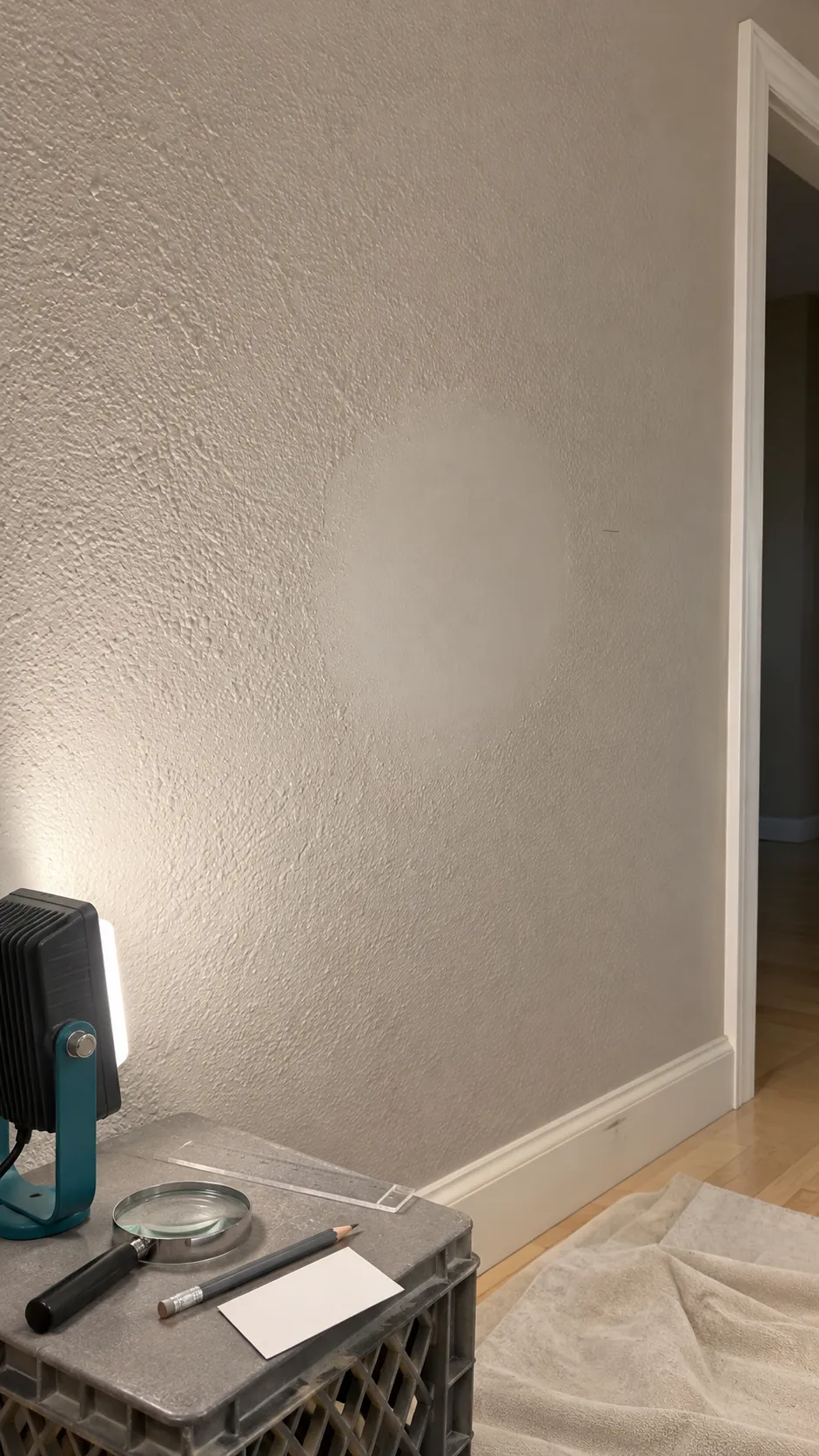
Prepare a wide smooth blend zone
Finish the drywall repair flat and feather joint compound well beyond the damaged opening. Sand the outer edge smooth, then remove dust and prime the bare compound if the texture product requires a sealed surface. A sharp ridge around the patch will stay visible even when the new pattern is close.
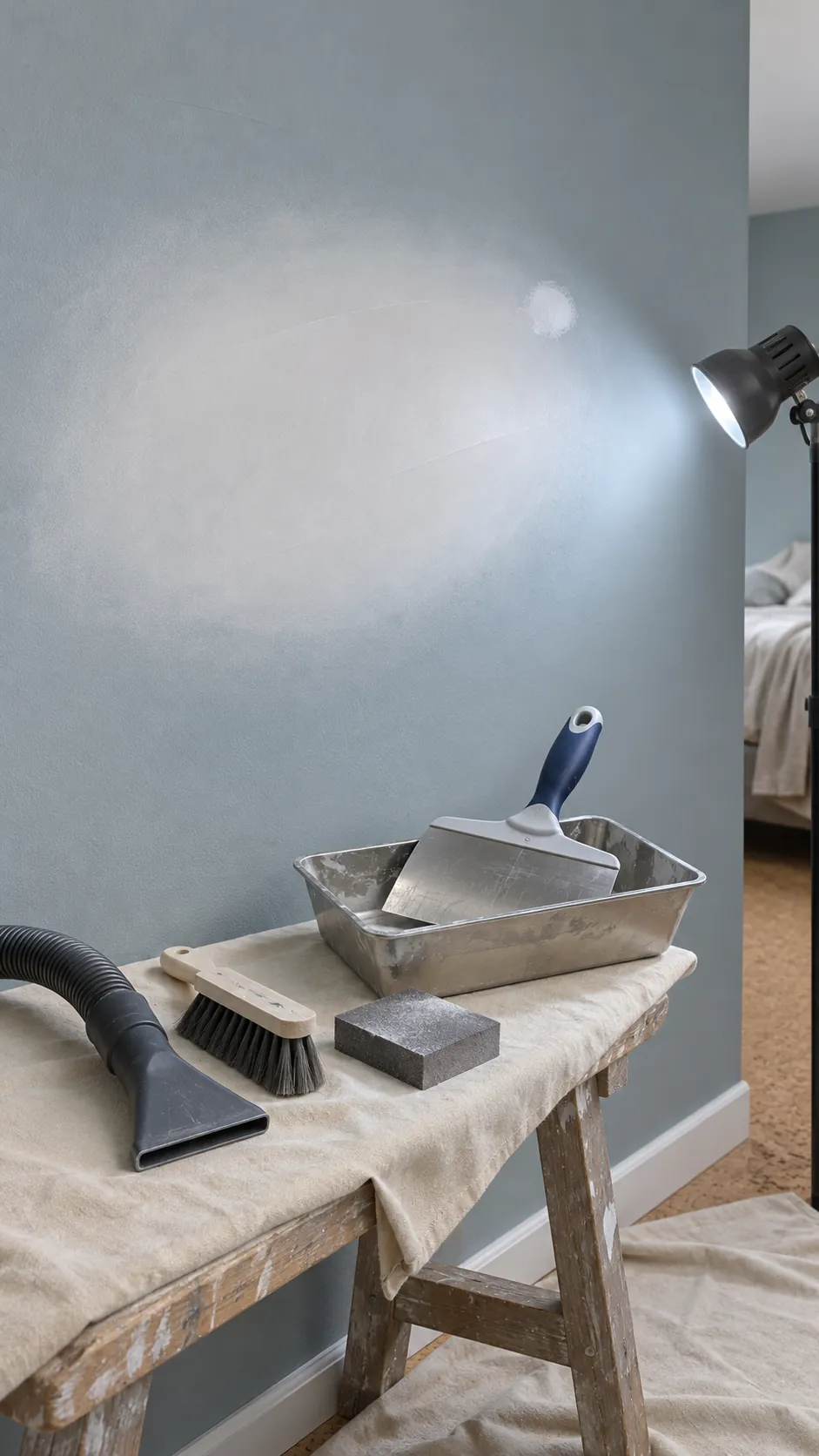
Practice on a test board first
Use scrap drywall or heavy cardboard to test nozzle size, product thickness, pressure, and distance. Let each sample dry because droplets flatten and shrink as moisture leaves. Hold the board beside the wall in the same side light, then choose the sample with the closest scale and density.
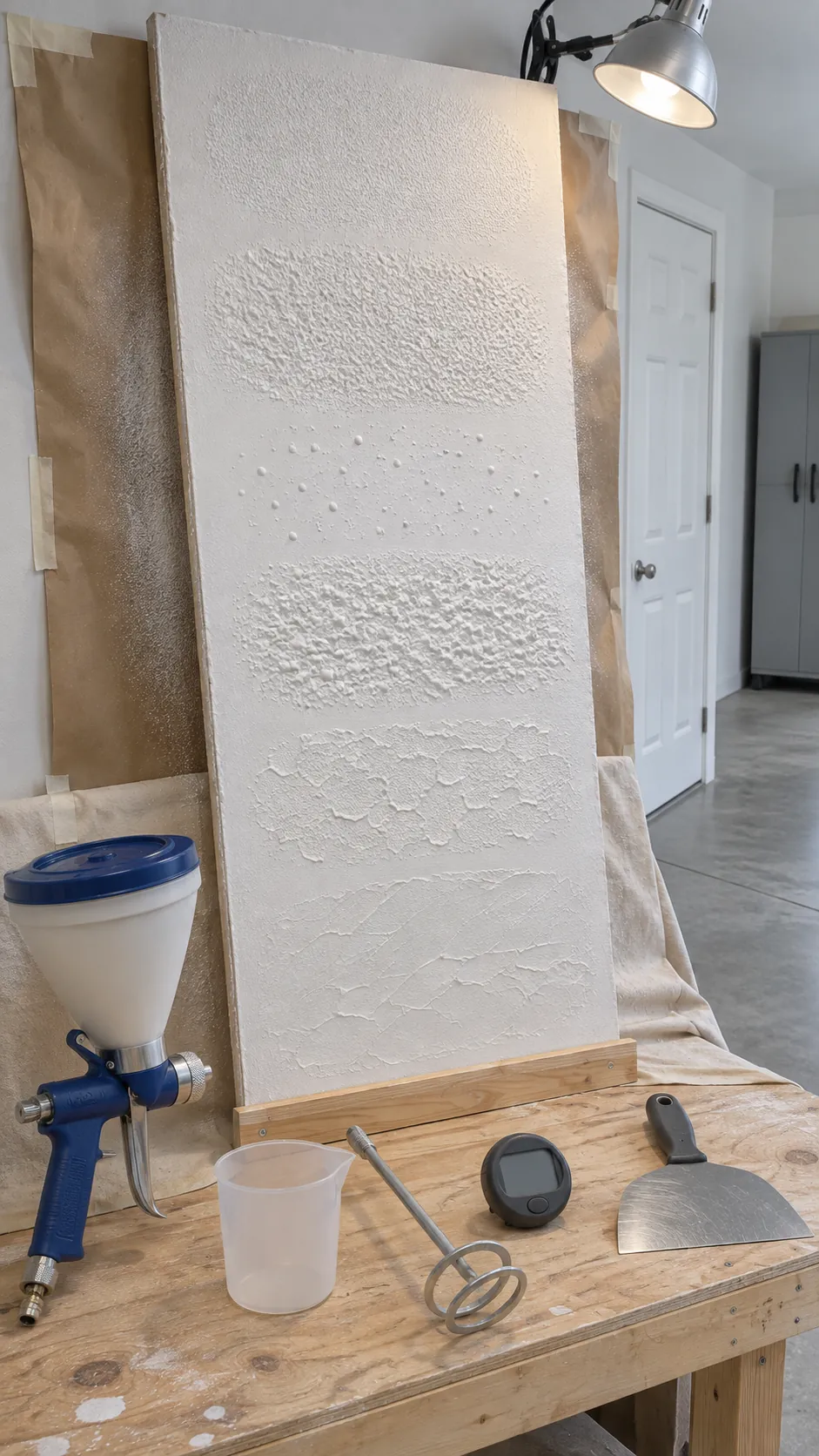
Apply texture lightly from the outside inward
Mask nearby trim and floors, then start with a sparse pass around the outer blend zone. Move toward the center only after the edge begins to resemble the surrounding wall. Several light passes give more control than one heavy coat, and varying the boundary prevents a visible circular halo.
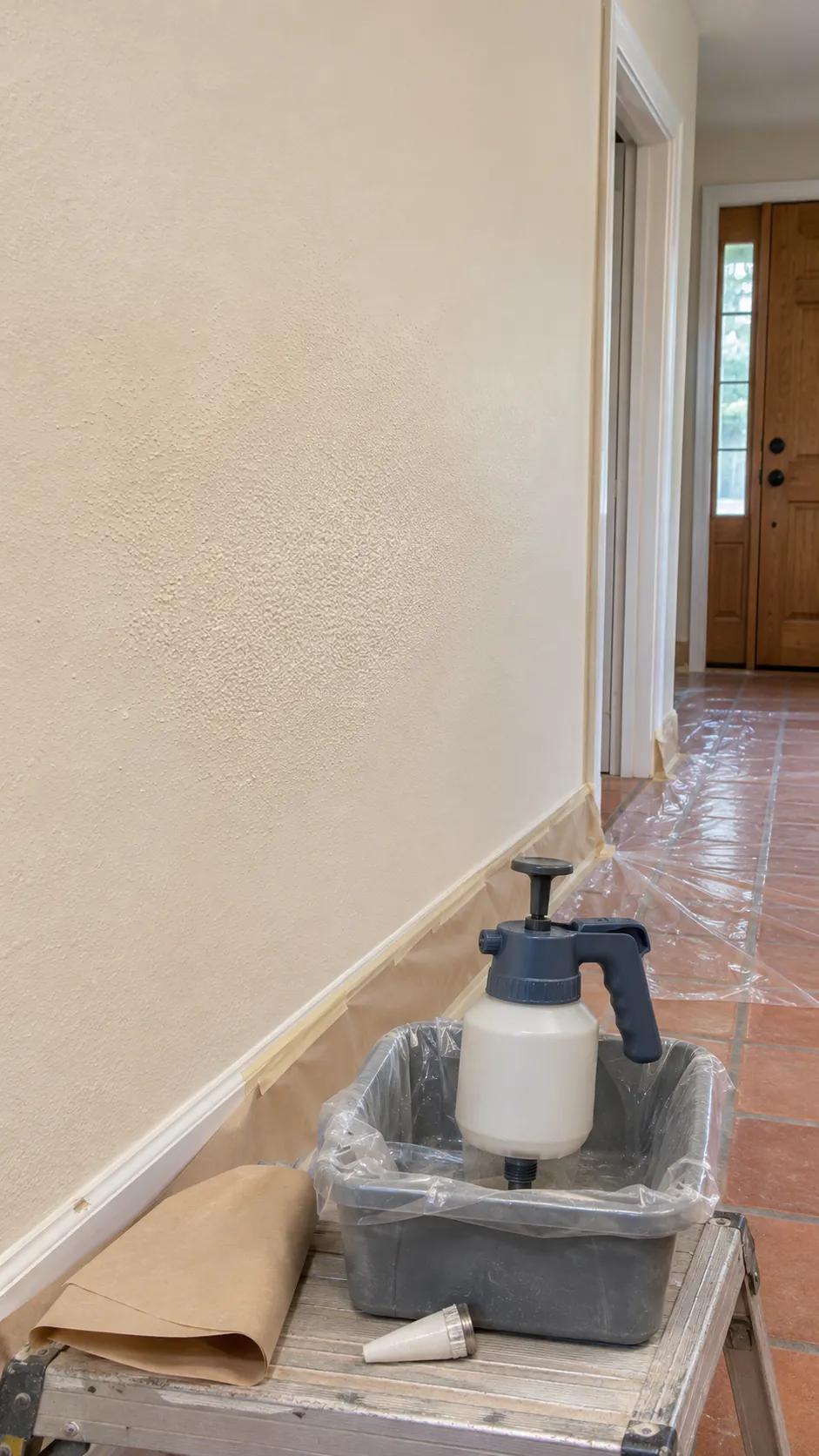
Control knockdown timing and pressure
For knockdown texture, wait until the sprayed peaks lose their wet shine but still yield to a clean knife. Draw the blade with very light pressure so it flattens the tops without scraping the wall bare. Test the timing on the practice board because room temperature, humidity, and droplet size change the waiting period.
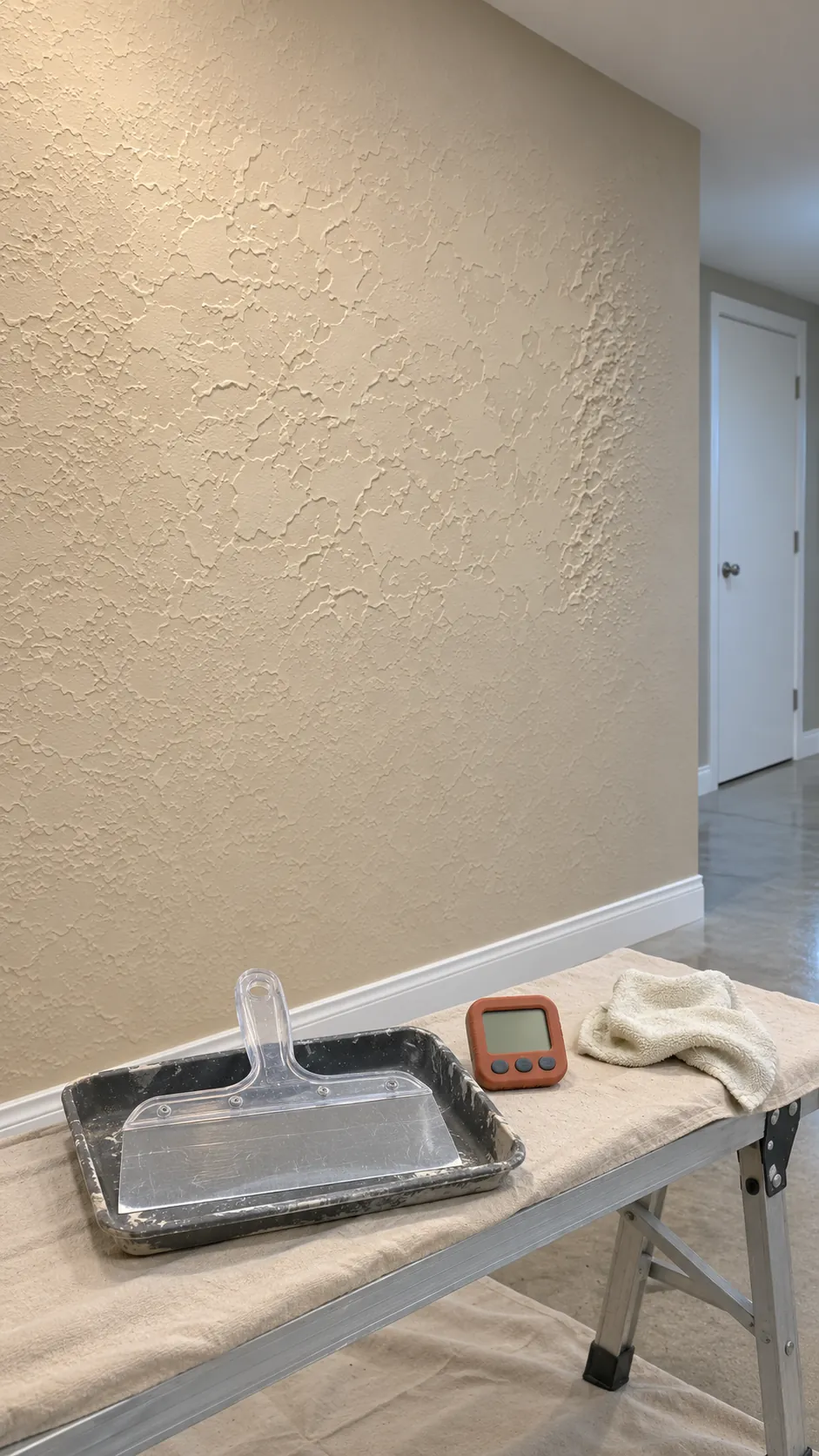
Prime and paint the blended area
Let the texture dry fully, then inspect it from several angles before primer hides the material difference. Prime the complete textured blend zone so paint absorbs evenly. Apply the finish coat with the same roller nap and technique used on the wall, and paint to a natural break when sheen differences make a small touch up visible.