
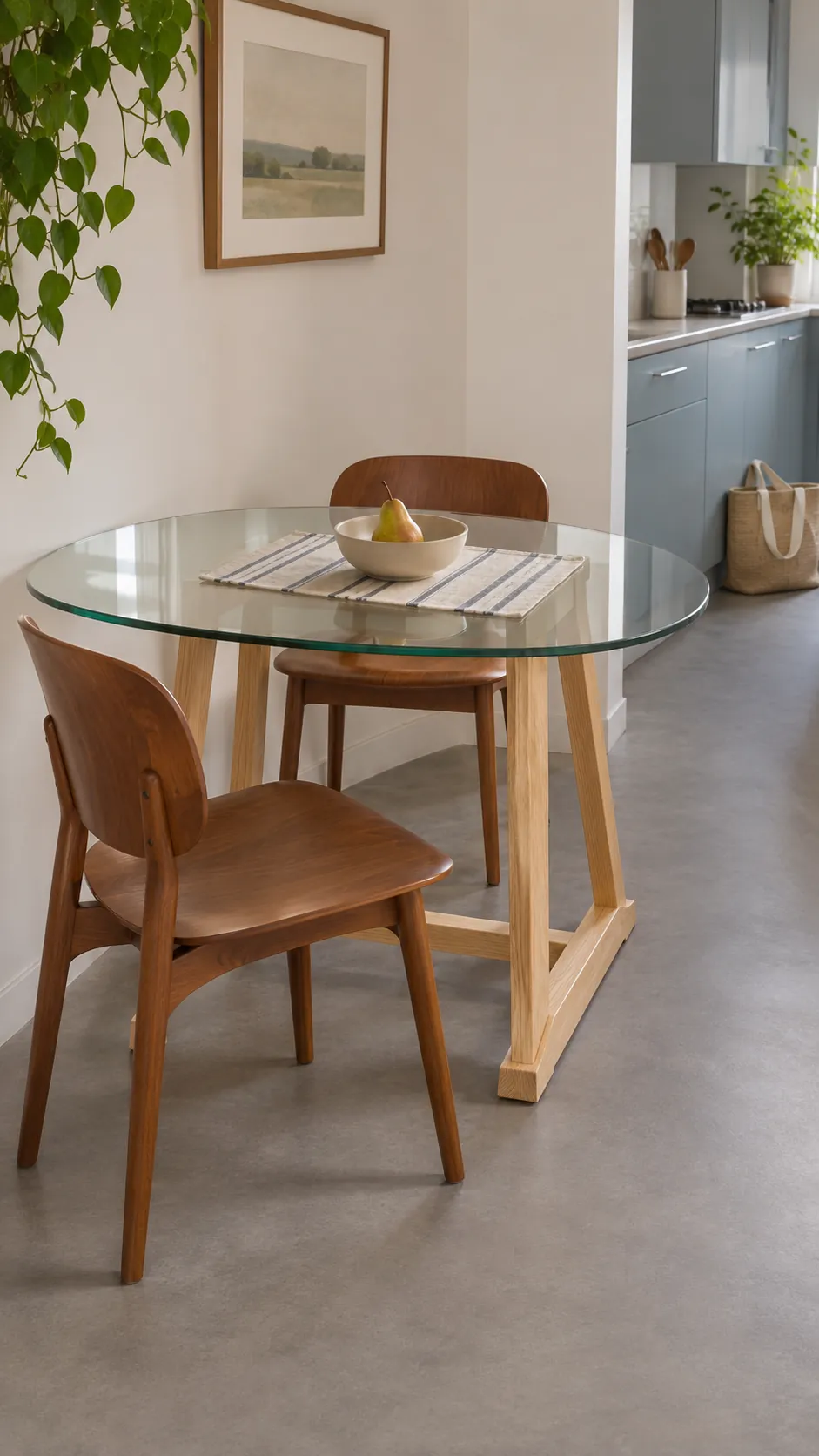
A table can look small in a listing photo and still block the route to your kitchen once somebody sits down. Check the room with the chairs in use first. Once you know what fits, compare how much floor the top lets you see, what you’ll need to wipe after meals and how you’ll get the table through the door.
Measure the room with a chair pulled out
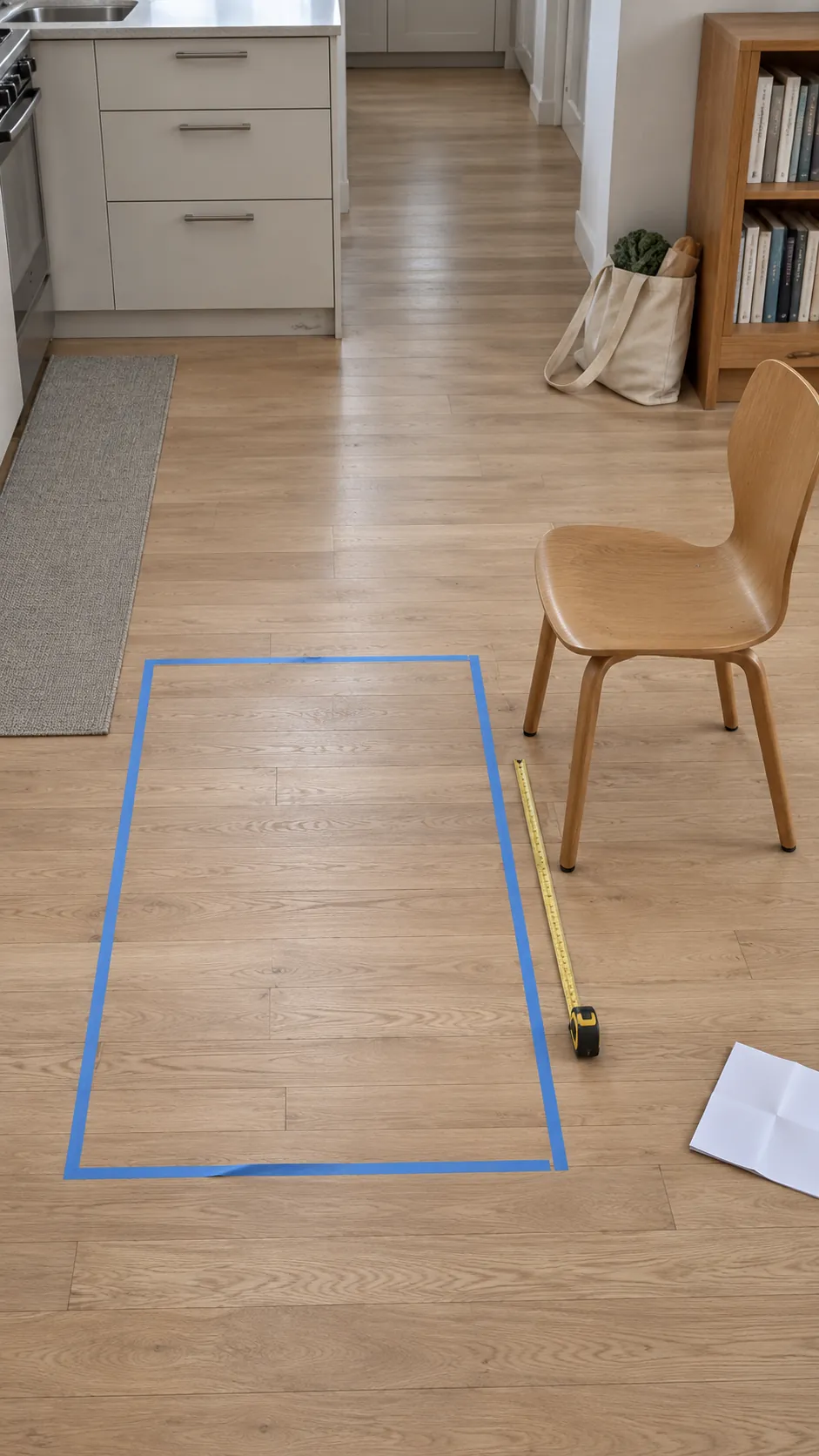
Mark the tabletop outline on the floor with painter’s tape. Put a dining chair at the place you’ll use most, then slide it back far enough to stand. Walk from the kitchen to the sofa or front door while the chair stays out. Repeat with a chair where a guest would sit.
Start with roughly 36 inches from the table edge to the nearest wall or cabinet as a planning allowance. Where people regularly walk behind a seated diner, test a wider gap with your actual chair. Curtains, radiators and cabinet handles can all eat into the space you measured from wall to wall.
Glass opens the view across the room
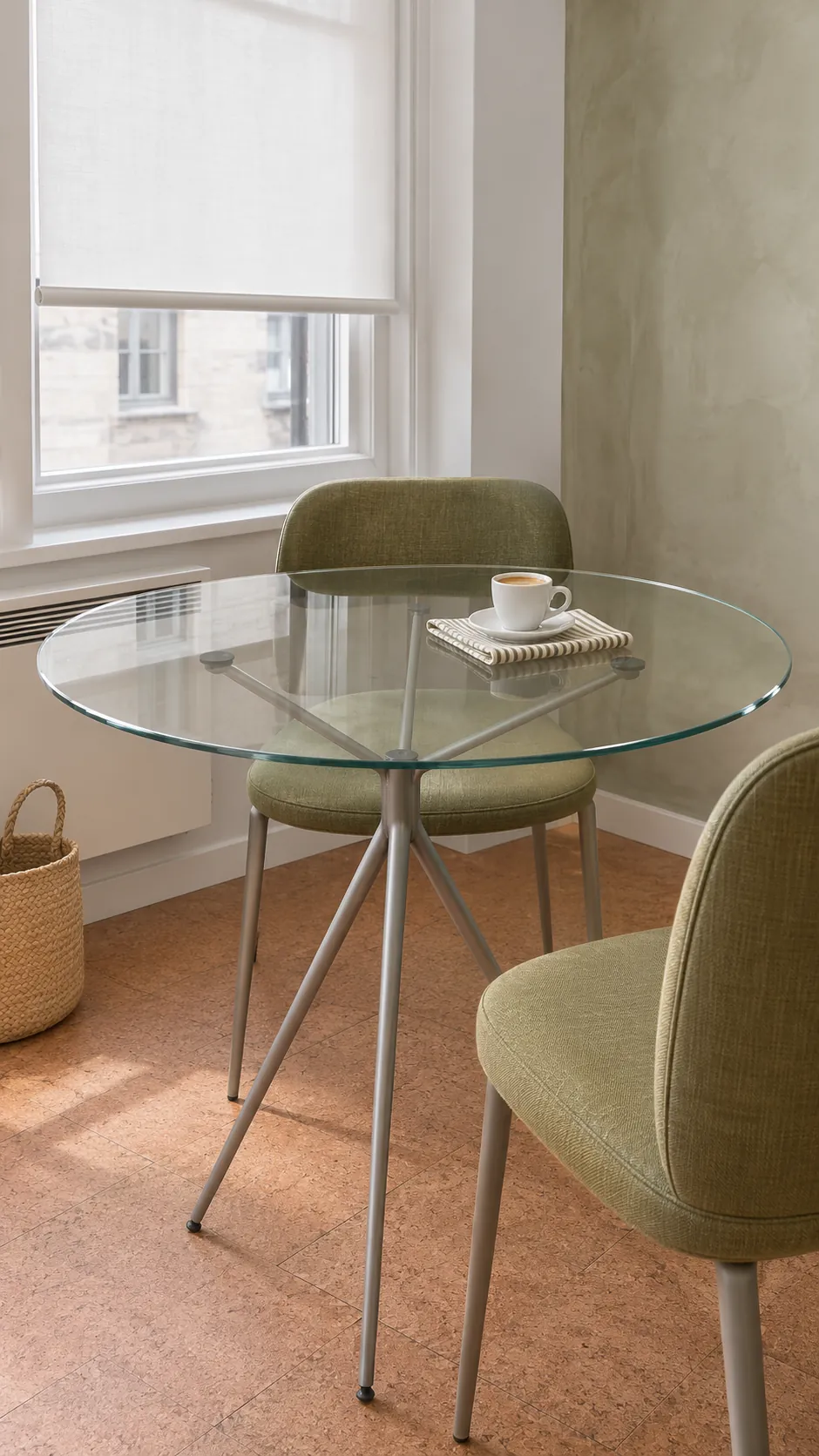
A clear tabletop lets you see the floor and chair seats through it. You’ll notice the effect most if you look across the dining area from the sofa or front door. A thick opaque frame or bulky base can interrupt that view even when the top is transparent.
Check where your knees and chairs go
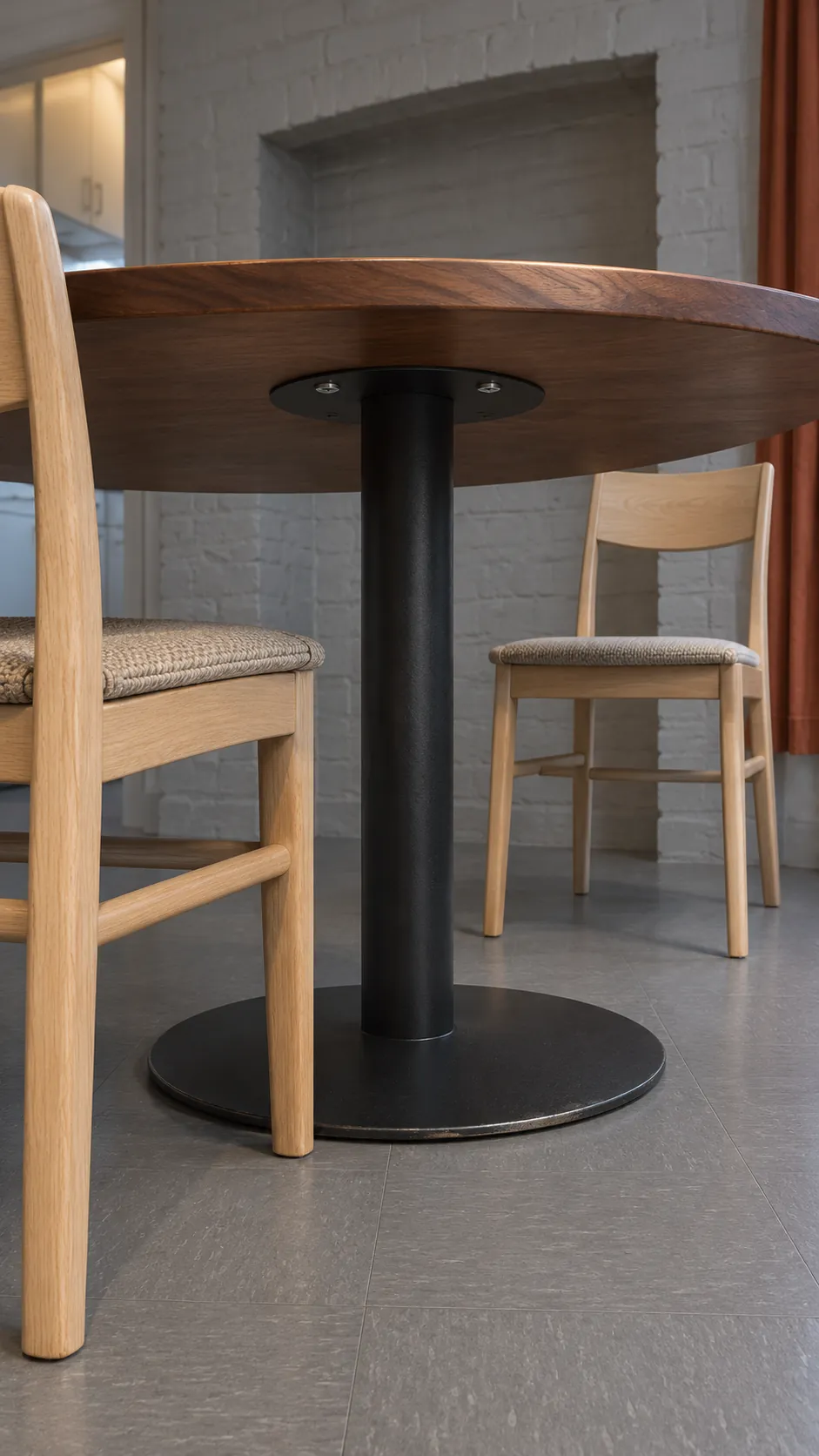
A round table takes the corners out of a tight route. A slim rectangular table can make better use of a long wall. For either shape, check the space between the legs at chair height, and look for a low apron that might press into your thighs.
A pedestal clears the corners for chairs, but a wide foot can get in the way when you sit down. If you plan to tuck in chairs with arms, check the underside height as well as the table height.
Glass wipes clean and shows more marks
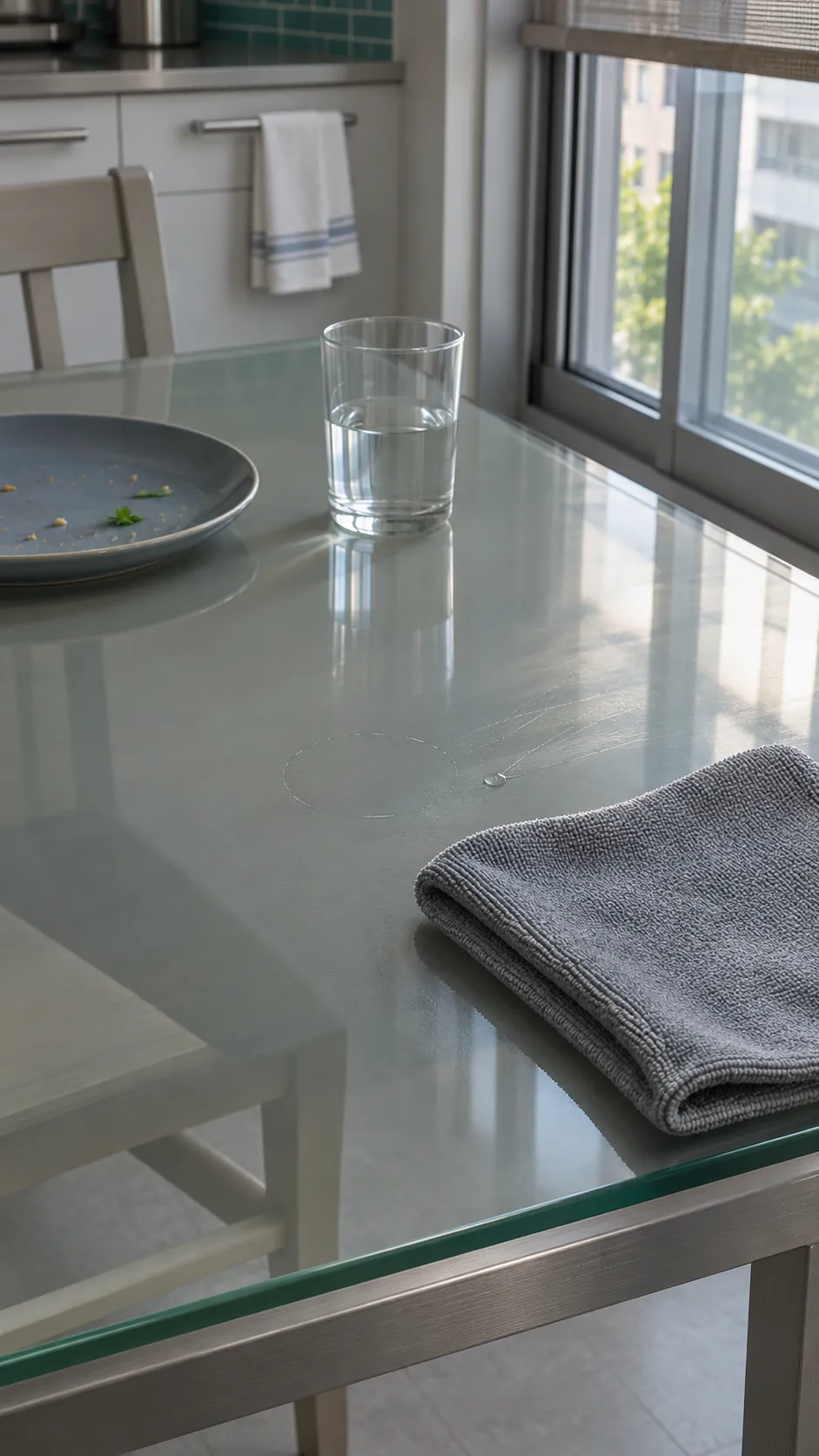
Clear glass can be quick to wipe after dinner. Fingers, crumbs and streaks also show up in low window light, sometimes from both sides of the top. Lift crumbs with a soft cloth first, then use the cleaner specified by the maker. Finish with a clean dry microfiber cloth if streaks remain.
Use a trivet for hot cookware and avoid abrasive pads. For a used table, confirm that the top is tempered safety glass, check the edges for chips, and make sure the original supports hold the top securely. Follow the model’s load limit and care instructions.
Wood care starts with the finish
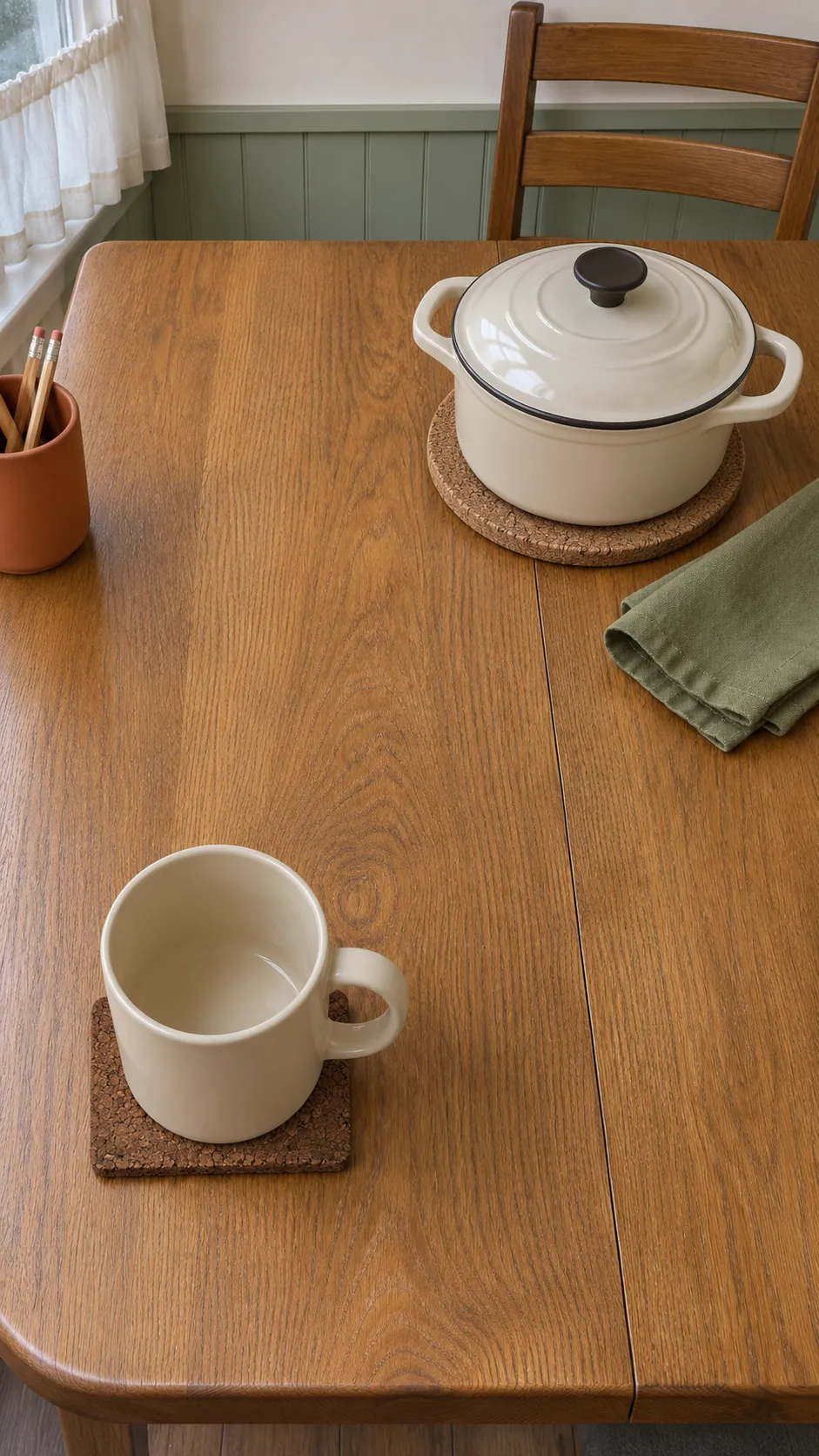
Ask what covers the wood. A sealed top usually needs a soft, lightly damp cloth followed by drying, while an oiled finish may need occasional treatment with a product the maker specifies. Blot spills promptly and use coasters or trivets where moisture or heat could sit against the surface.
Check whether the top is solid wood or veneer. Some solid wood tops can be refinished. A thin veneer has much less material to work with, so check before sanding a scratch or stain.
Compare the heaviest piece you’ll carry
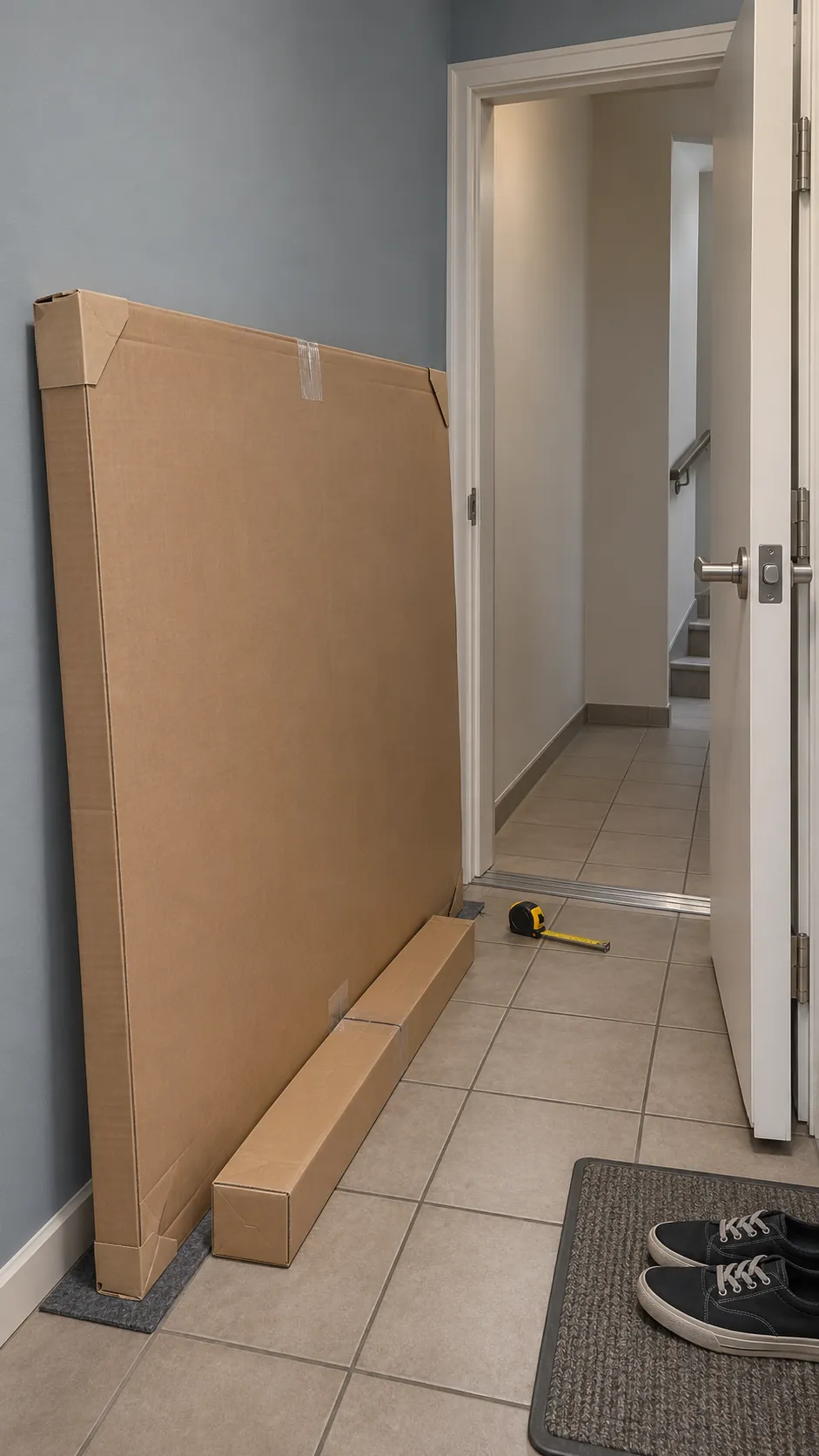
Ask for the assembled weight, the weight of the top by itself and the package dimensions. A glass slab can be awkward to grip and may need two people to handle it as the maker directs. A solid wood table can also be heavy. Removable legs make a difference if you have narrow stairs or a turn outside your door.
If both tables pass the chair test, pick glass when the open view matters most and you’re happy to wipe visible marks. Choose wood when you prefer a warmer surface for daily meals and know how to care for the finish. Before ordering either one, measure the tightest turn on the route into your apartment.