
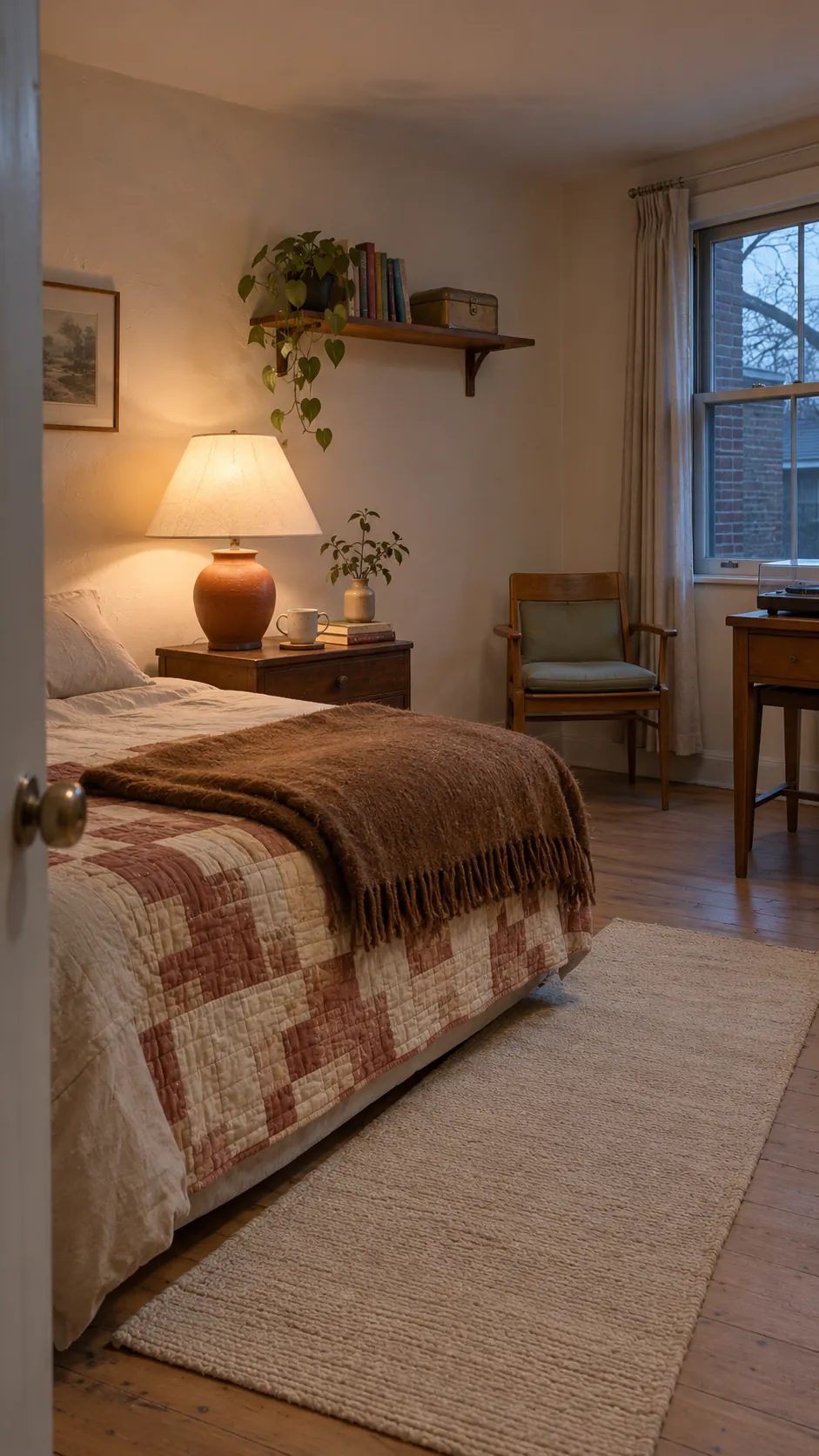
The bedroom can feel bare even with a full dresser and a made bed. Look at it after sunset, when you actually get ready to sleep. A lamp that lights the wall, a rug where your feet land, and a familiar piece of wood furniture can change how the room feels. Start with the place that bothers you most at that hour.
Light the Wall Beside the Bed
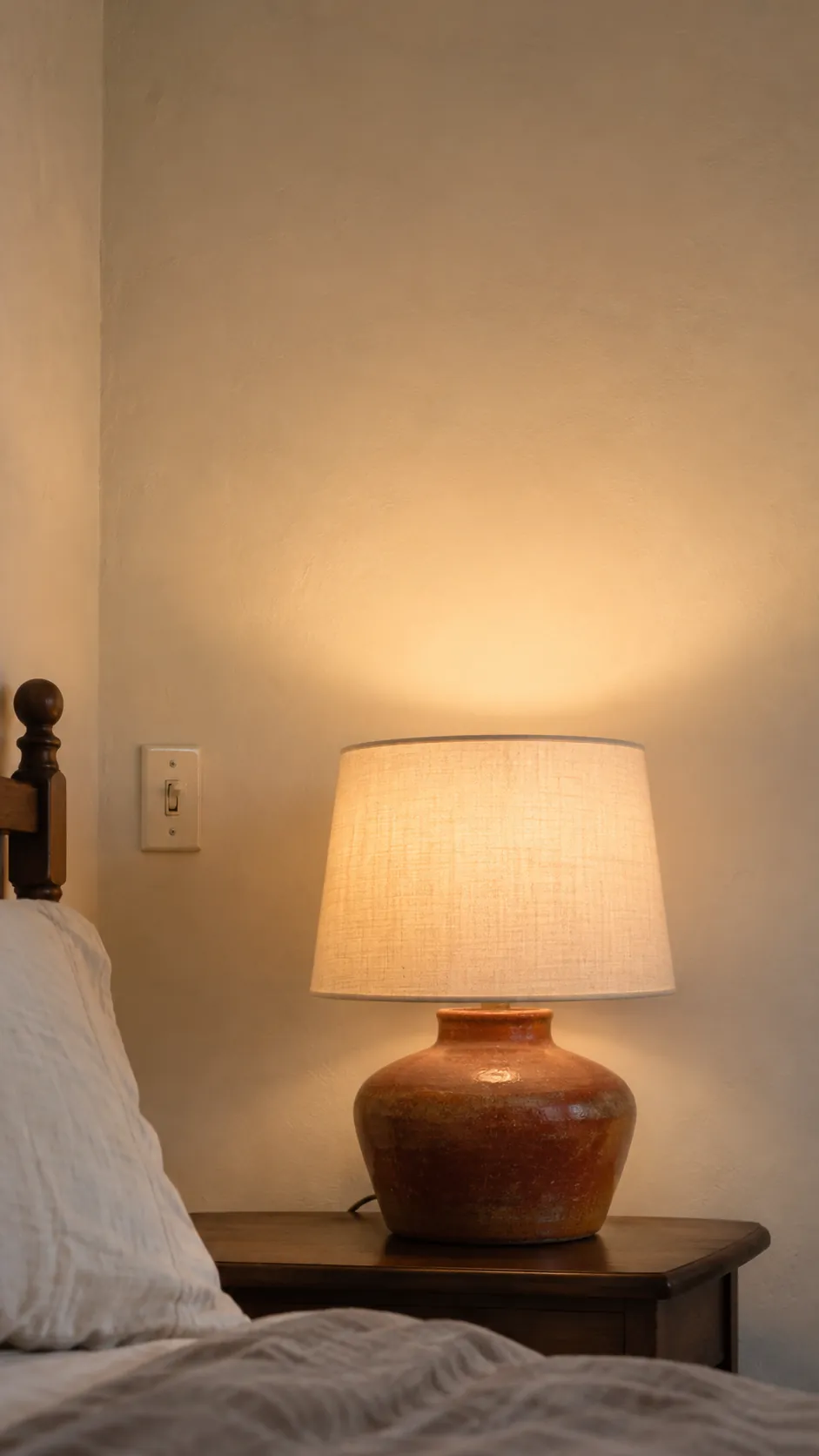
A small lamp with a shade can wash the wall with light and leave the ceiling quiet. Set the lamp where you can switch it off without getting up. Try a warmer white bulb of a type and wattage the lamp accepts. Sit up in bed to check that the bulb itself stays hidden from view.
Give Reading Its Own Light
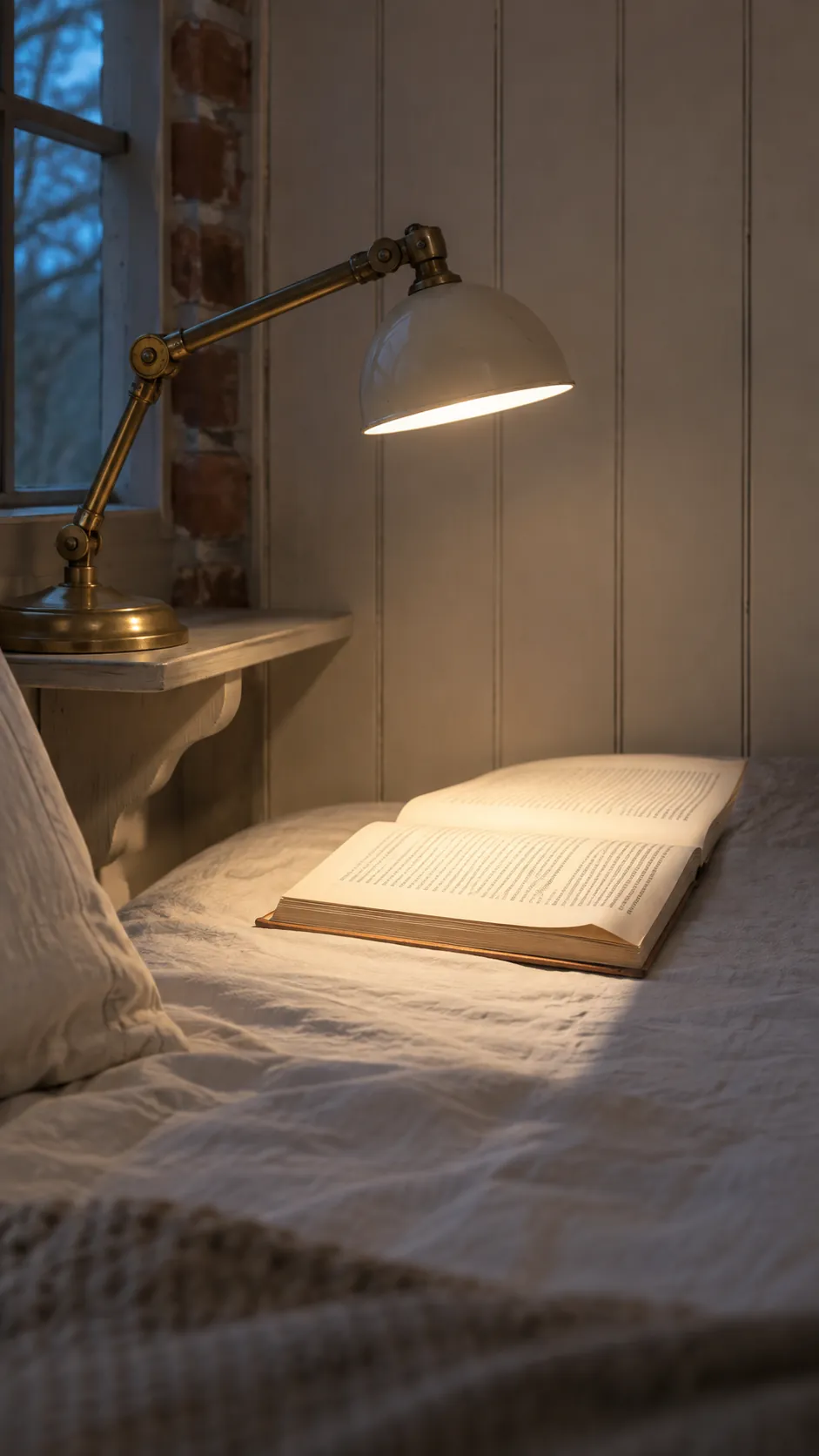
A low shaded lamp may feel good for winding down but fall short when you open a book. Aim an adjustable reading lamp down and across the page. Place it on the other side of your writing hand if you sometimes take notes in bed. An independent switch lets you leave the room dim once you close the book.
Put a Second Lamp Across the Room
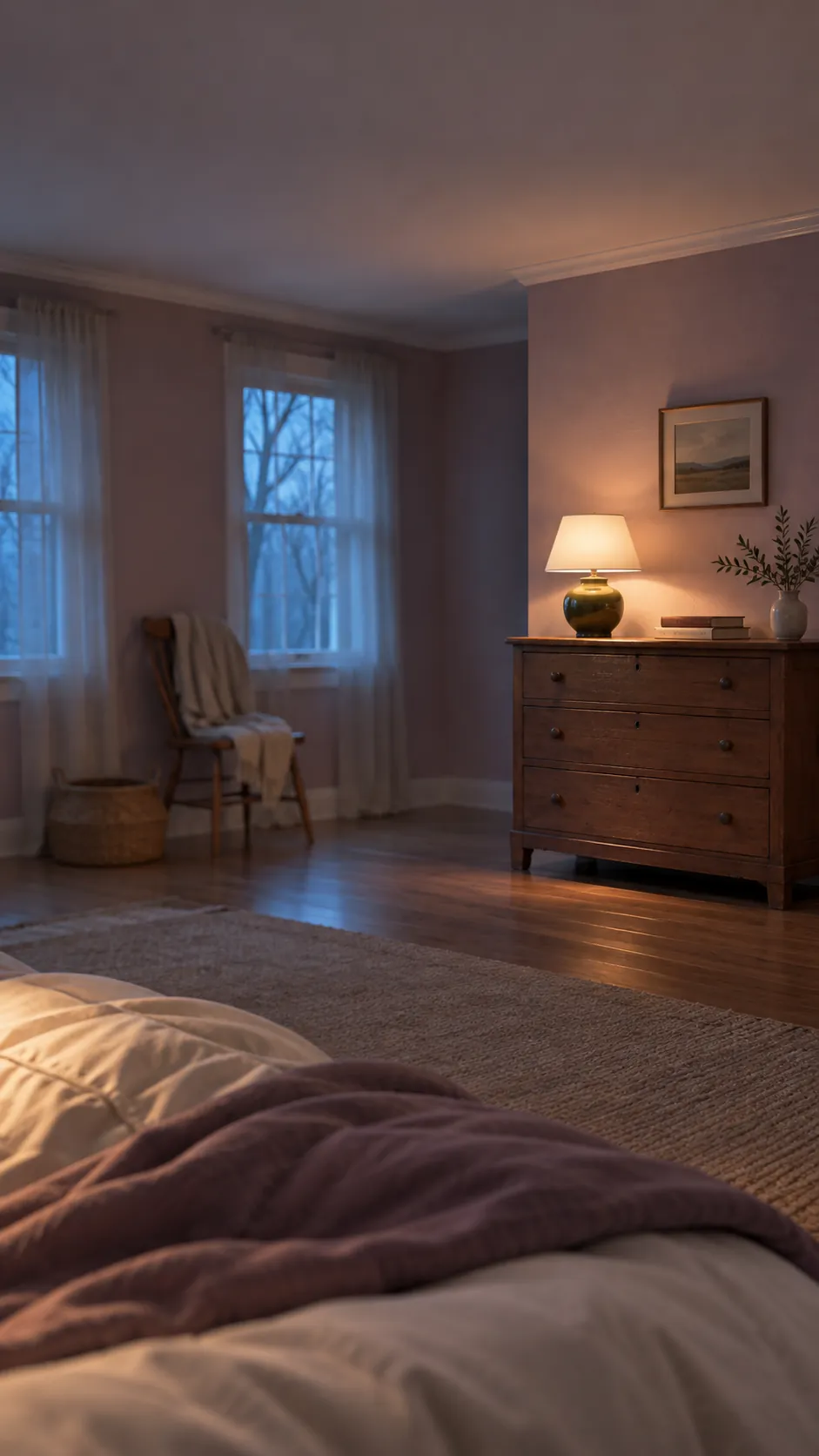
An older lamp on a dresser can brighten the corner you see from bed. Choose a shade that shows some light on the wall as well as the top of the dresser. Switch it on with the bedside lamp and look for any harsh gap between the two pools. Dim one of them if it becomes the only spot you can see.
Use a Toasted Cream Paint Near the Window
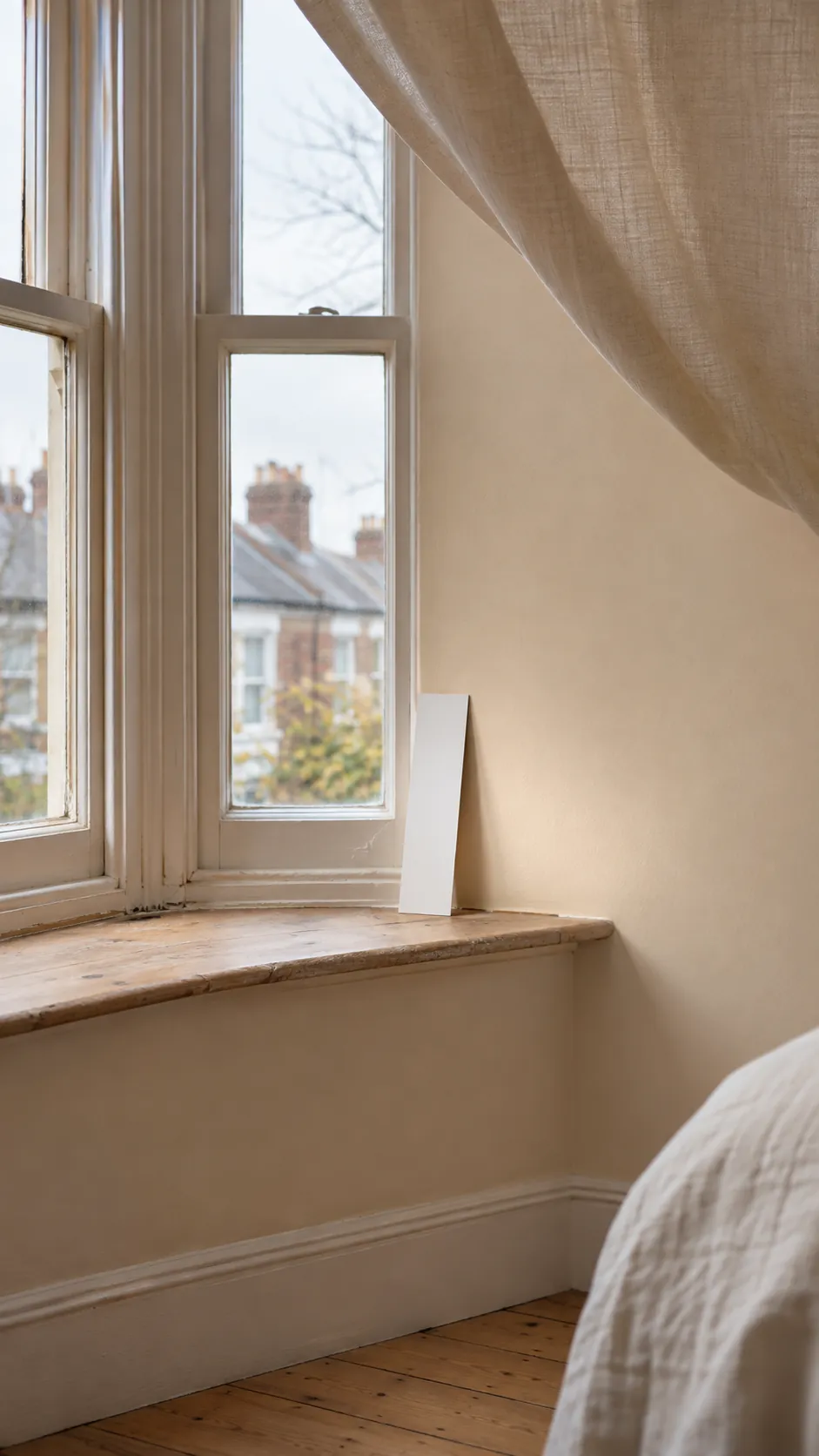
A cream with a small brown undertone can make an older wood floor feel warmer. Paint a large movable sample and compare it with a cooler white at different times of day. Set the sample close to the sill, since that is where the light is strongest. Hold it behind your usual curtain before buying a full tin.
Put Clay Pink Behind the Bed
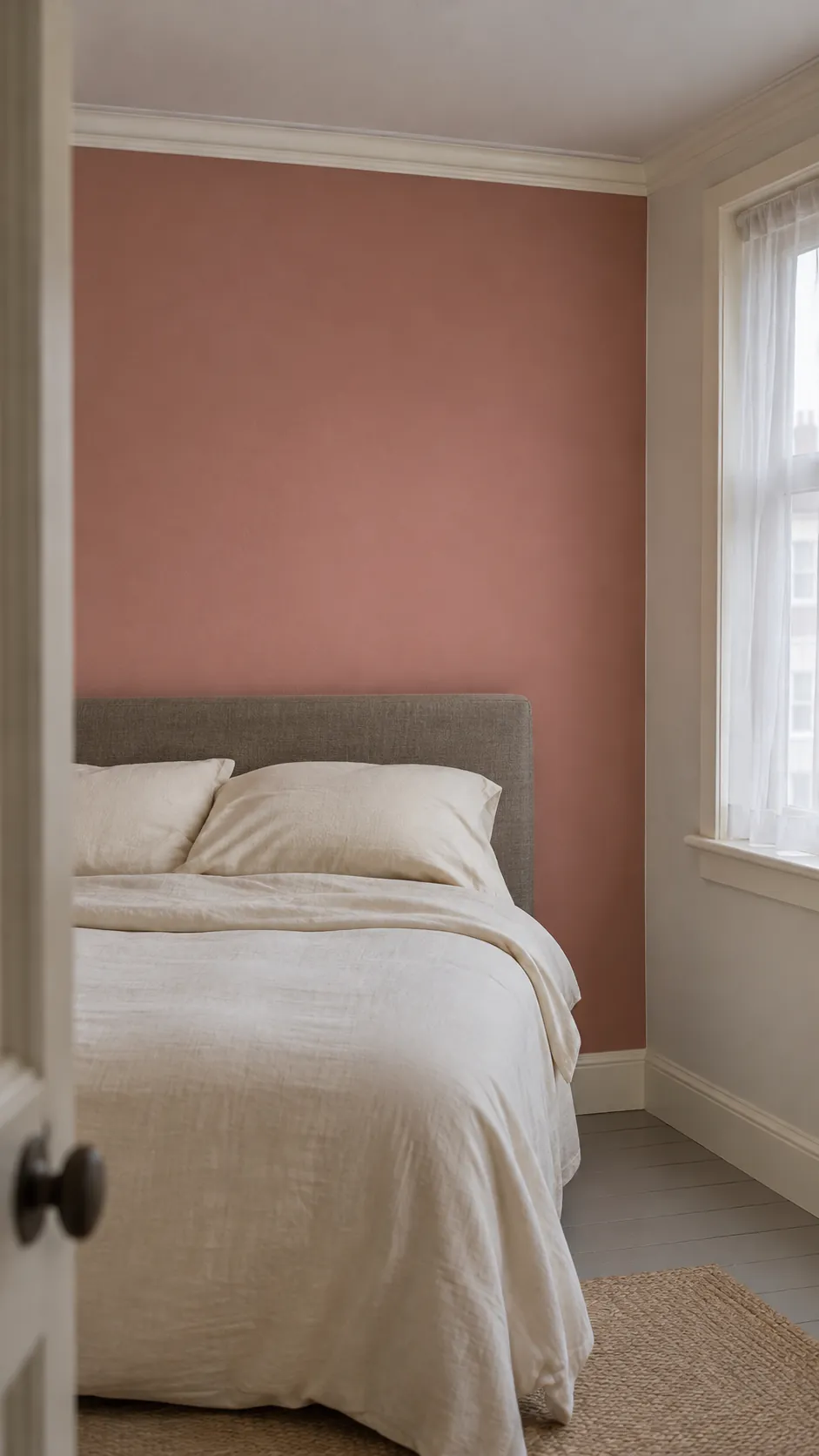
A soft clay pink can give a plain bed a warmer background without borrowing color from every surface. Use a muted color sample beside the actual fabric, since a rosy sheet can pull the wall further toward pink. Leave neighboring trim a simple cream if you want a visible edge. Recheck the sample under your evening light.
Combine Tobacco Brown With Oat
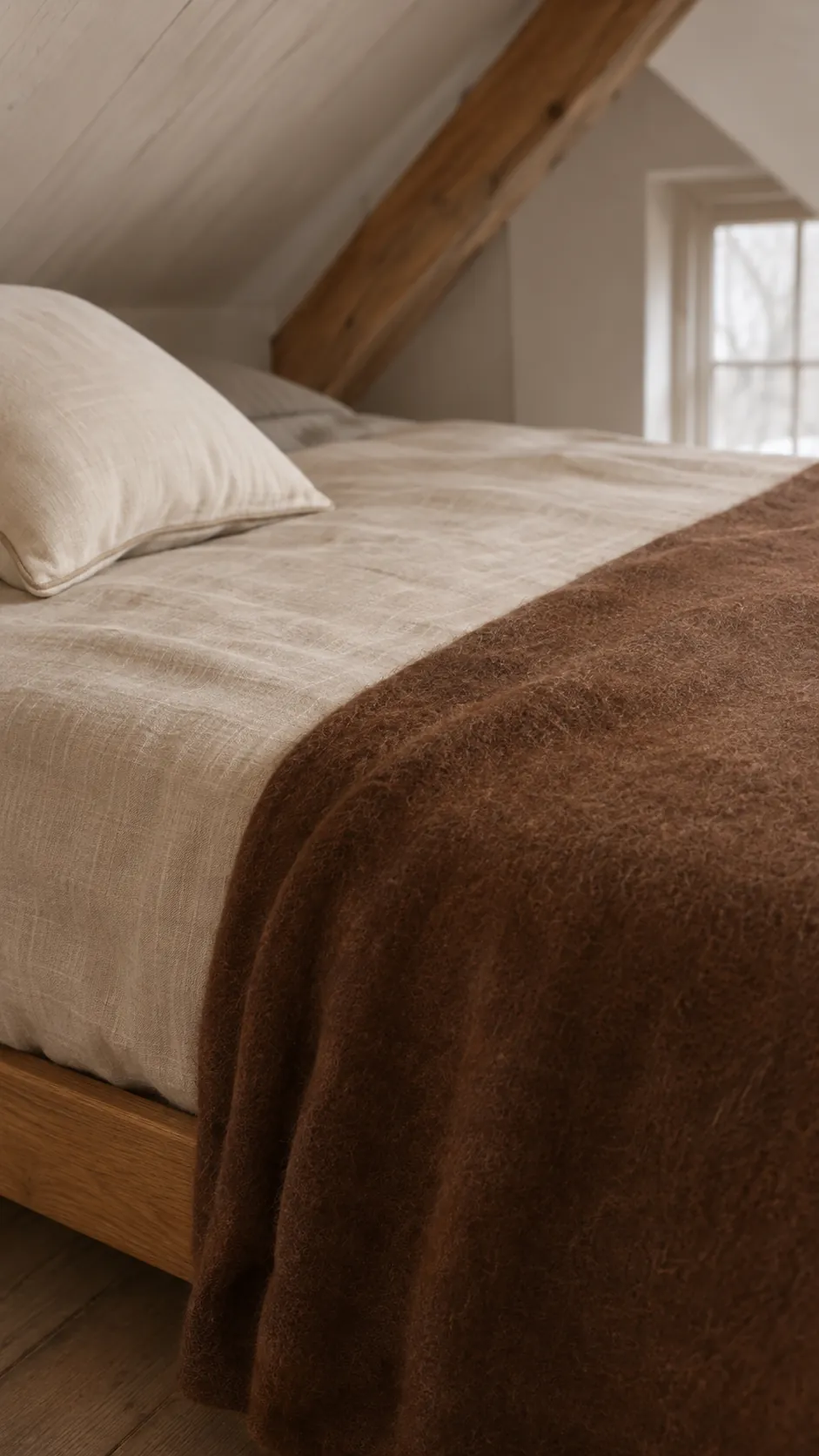
A tobacco brown throw over oatmeal linen gives a bedroom a quiet retro palette. Put the darker textile at the foot if the head of the bed is already in shade. Try a matte texture on one and a tighter smooth weave on the other. That extra difference helps both colors read without needing a printed pattern.
Use a Muted Ochre Stripe at the Foot
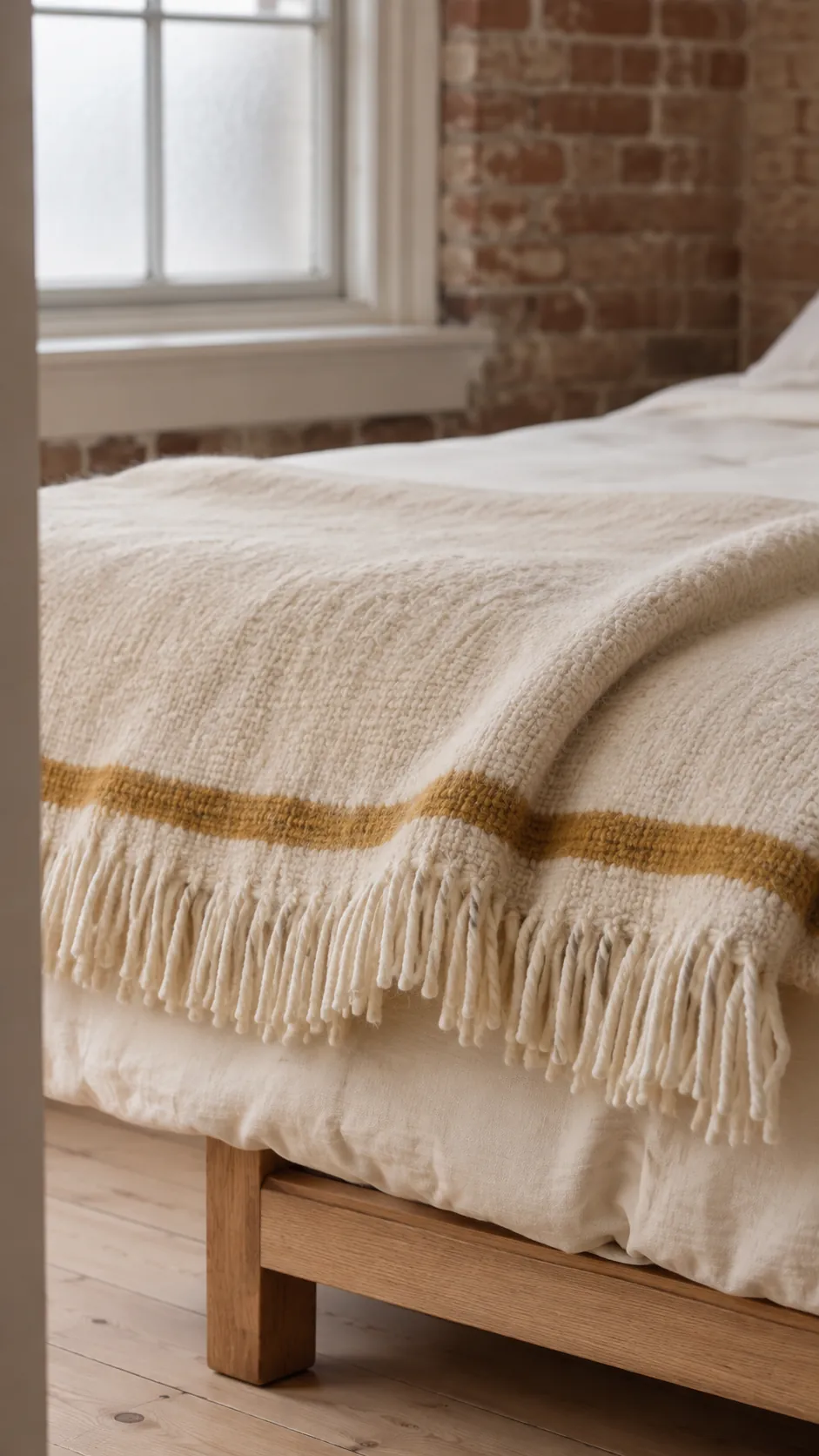
A thin mustard stripe can give a quiet duvet some warmth without covering it. Fold the blanket so one broad stripe shows clearly from the doorway. Let the side remain plain if you already have patterned flooring. Check the textile against your old wood furniture in daylight so the yellows sit together.
Keep a Light Duvet Under an Old Quilt
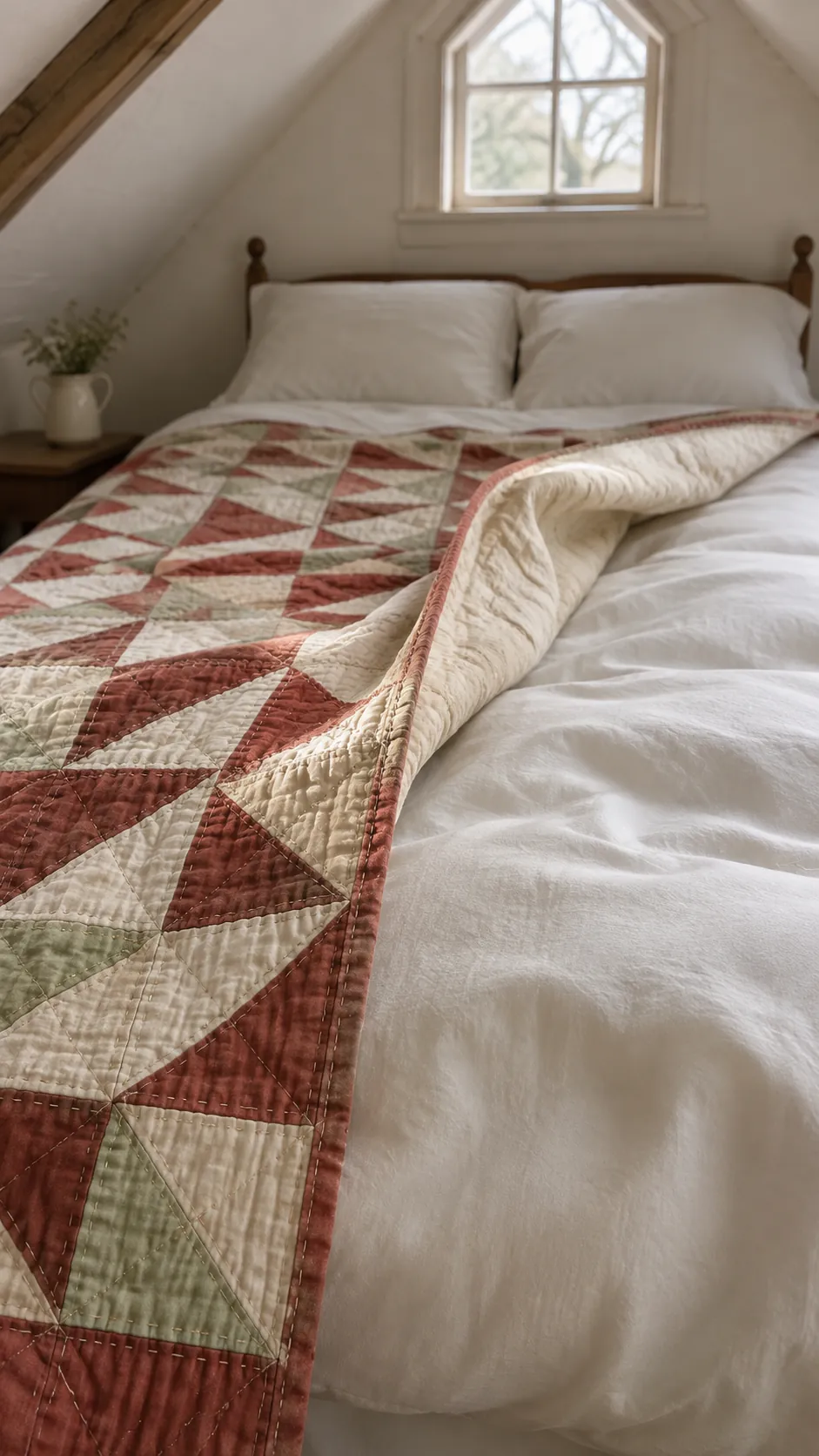
A fragile older quilt works well as the layer you see and fold back. Give it a plain washable duvet below for daily use. Inspect the quilt seams and follow care guidance for its fabric before washing it. Use enough of the duvet to sleep comfortably and take the decorative layer off when it is warm.
Pair Crisp Sheets With a Brushed Throw
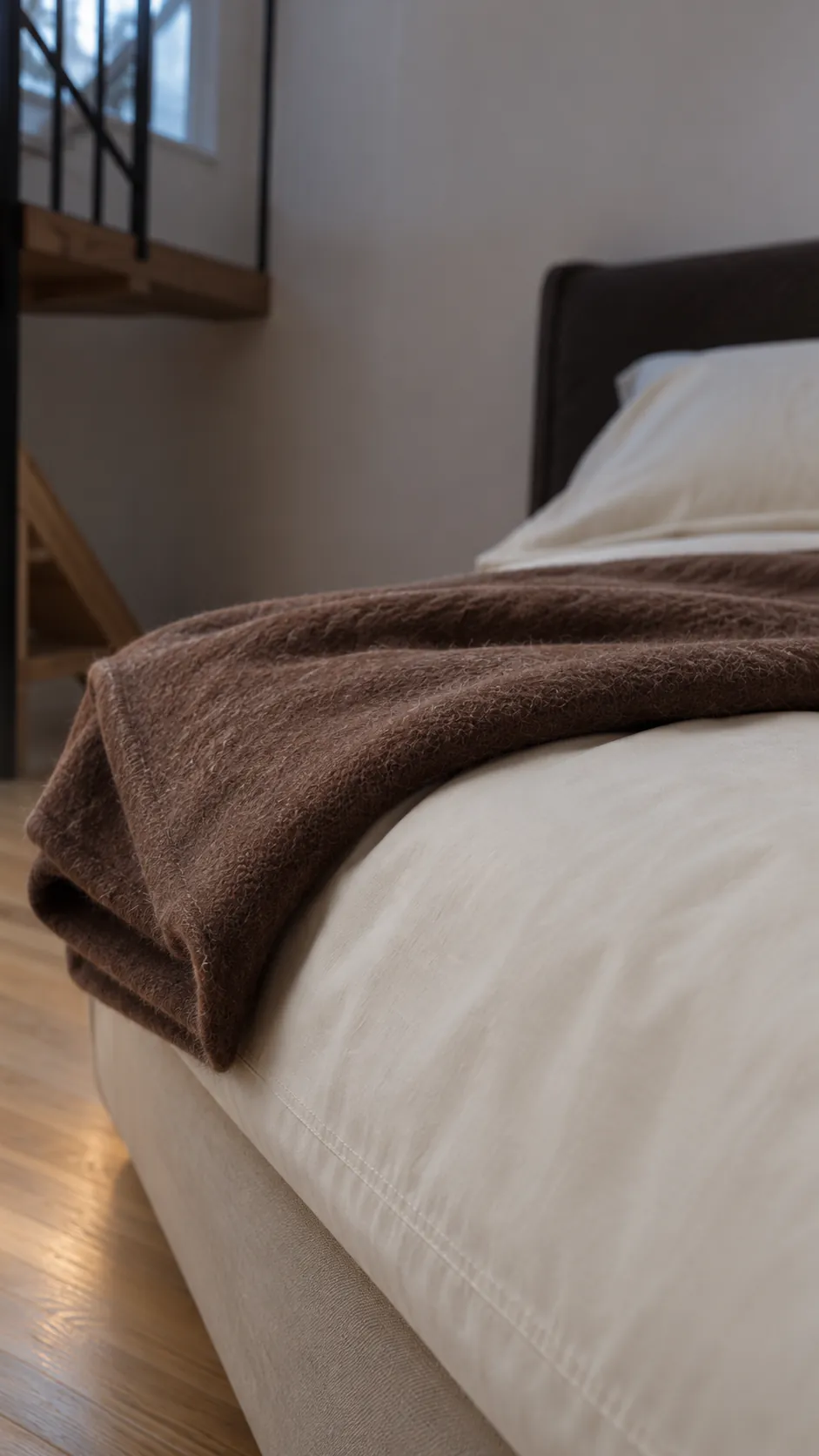
The feel of the bed can change before a large color change does. Lay a brushed cotton or wool throw over smoother sheets where you can reach it on cooler nights. Check that the fabric feels good on your arm before buying it. Use a shorter width if you only need it over your legs.
Add a Small Patchwork Pillow
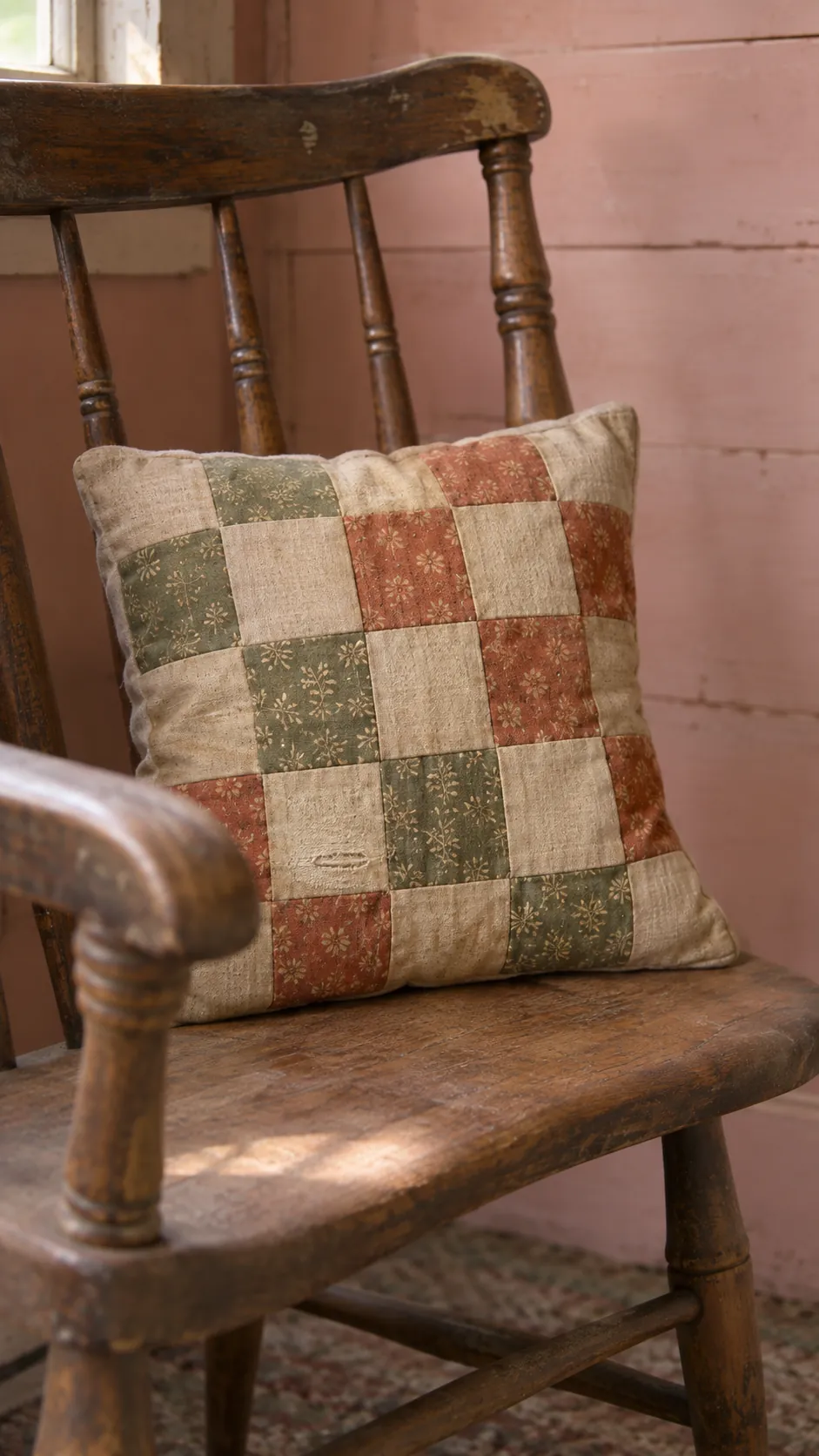
A few squares of old fabric bring in the look of patchwork without requiring a whole bedspread. Choose one or two shared colors with your bedding, such as sage and faded rust. Place the pillow on a chair if you prefer to clear the bed every night. Check the back for a closure so the cover can be cleaned.
Set a Low Wood Nightstand Next to the Mattress
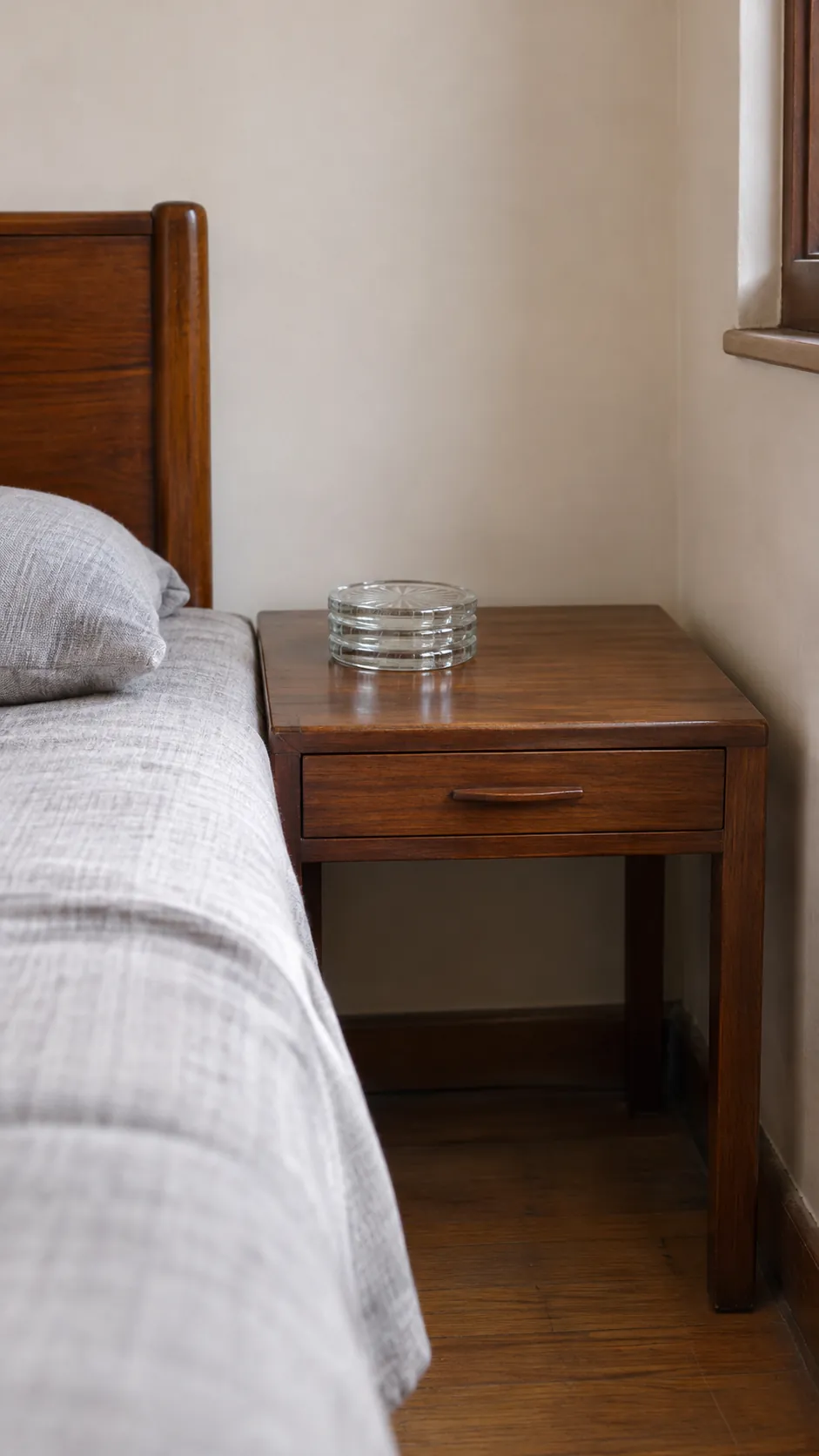
A bedside table feels easier to use when the top is close to where your hand lands. Measure from the floor to the top of the mattress and try a table near that height. A shallow drawer can hold items you want to put away before sleep. Keep enough of the top empty to set a glass down without looking.
Put a Travel Tray on the Dresser
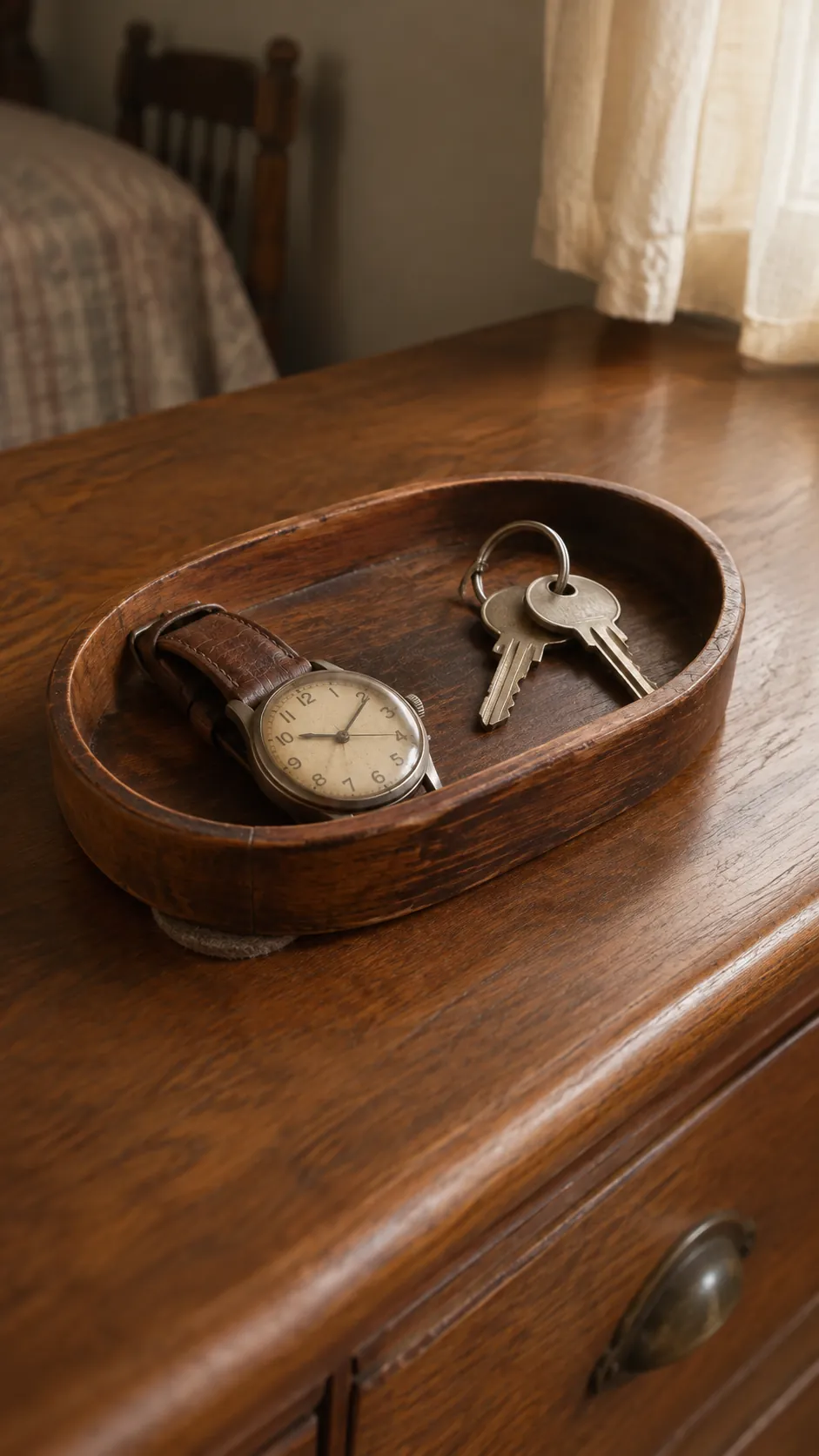
An old wood tray can hold a watch and keys where the edges keep them from rolling. Fit felt under it if the underside drags on the dresser. Choose a tray you can lift to dust in one move. Leave a clear hand span around it so taking things off feels easy.
Make a Drawer for Evening Items
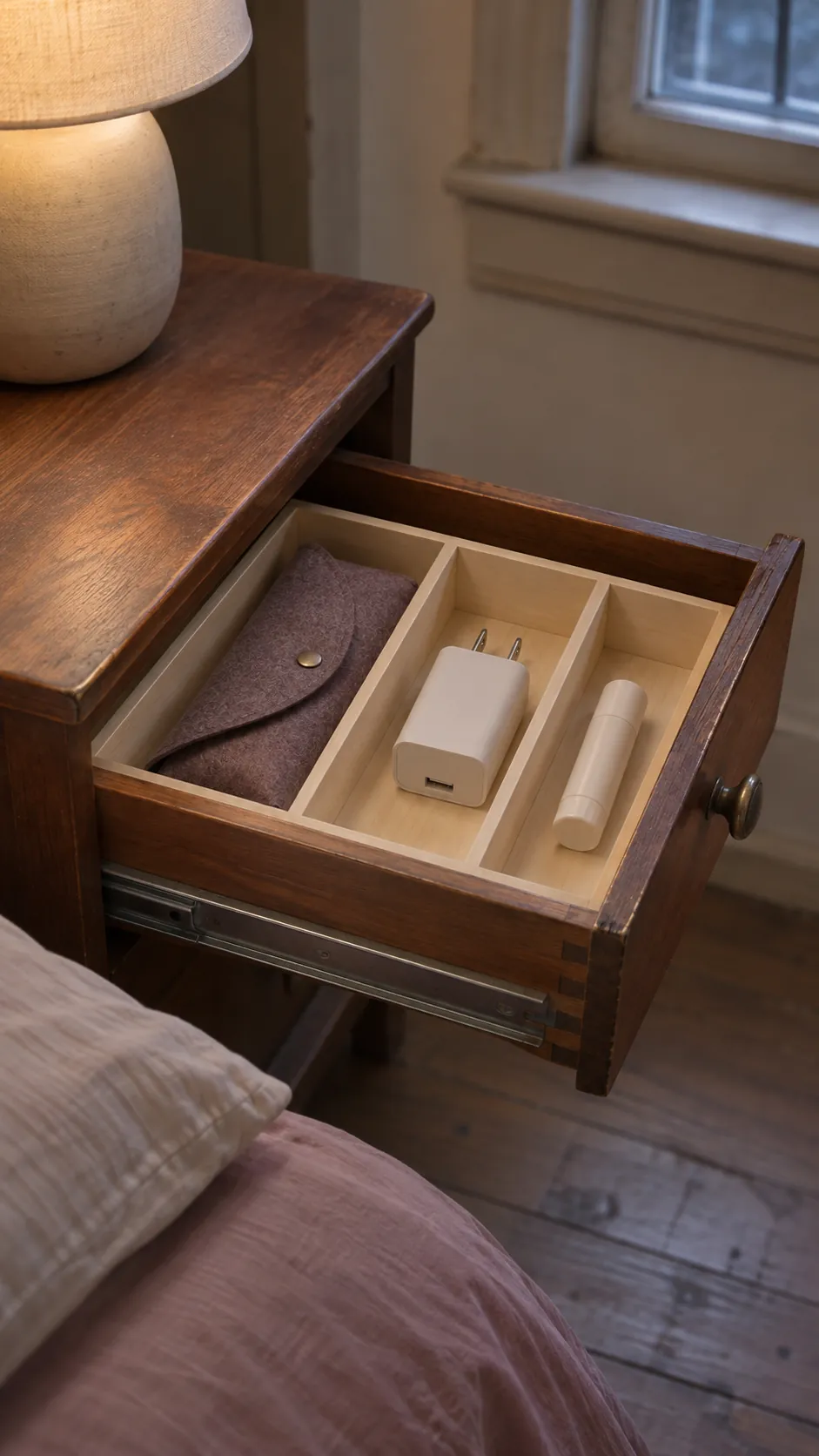
Move lip balm, a spare charger and an eyeglass case into one reachable drawer. A couple of shallow compartments make the small items easier to find in dim light. Test that the drawer still opens from bed without hitting the frame. Leave the things you only use in the morning elsewhere.
Put One Old Stool by a Reading Chair
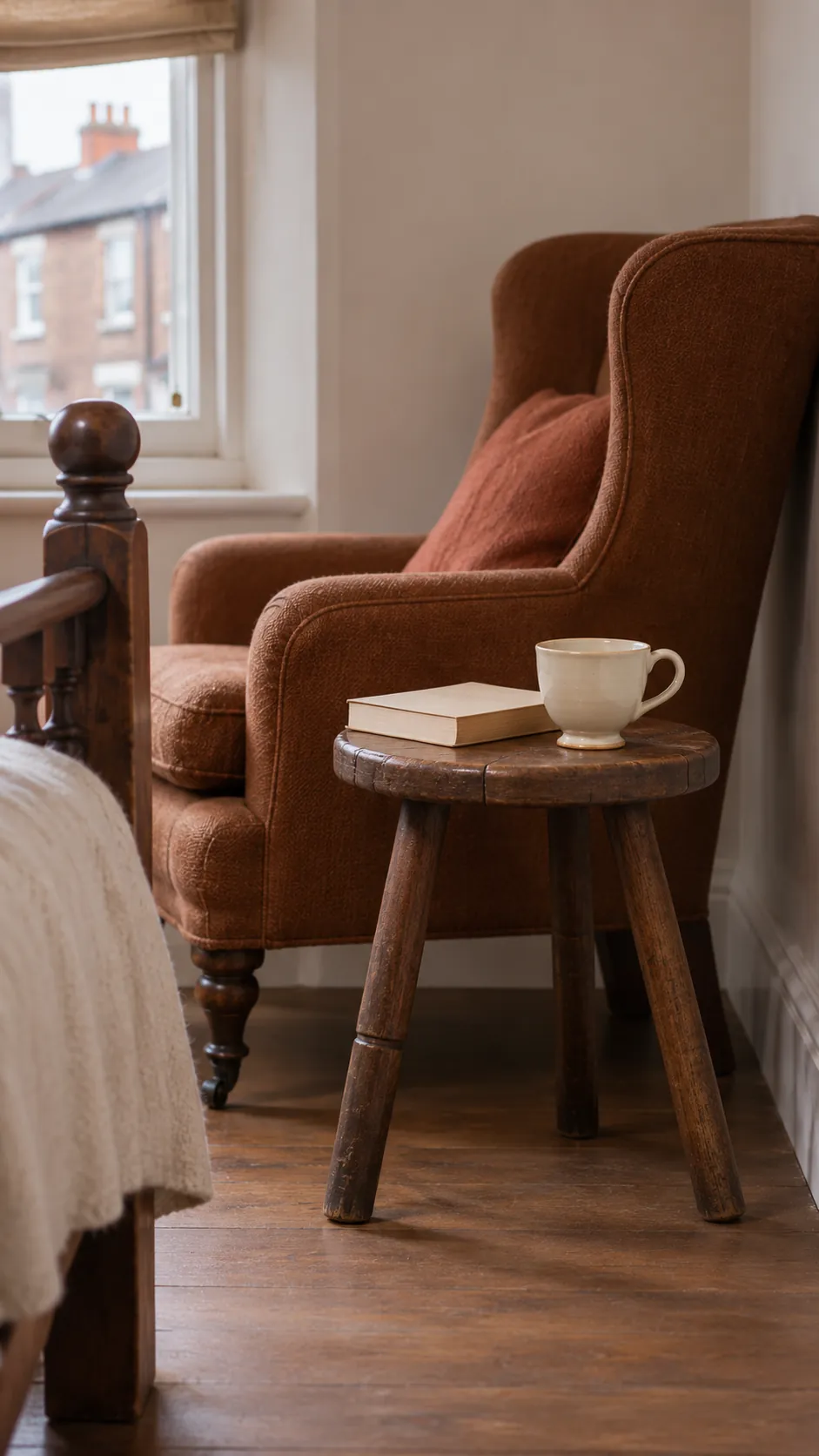
A plain timber stool can hold a book and a cup beside an older armchair. Test its top for wobble and pick one high enough to reach comfortably from the seat. Set it on the side away from the walkway. Tuck it farther under the chair if you need to pass in the dark.
Try a Low Pile Wool Rug Under the Bed
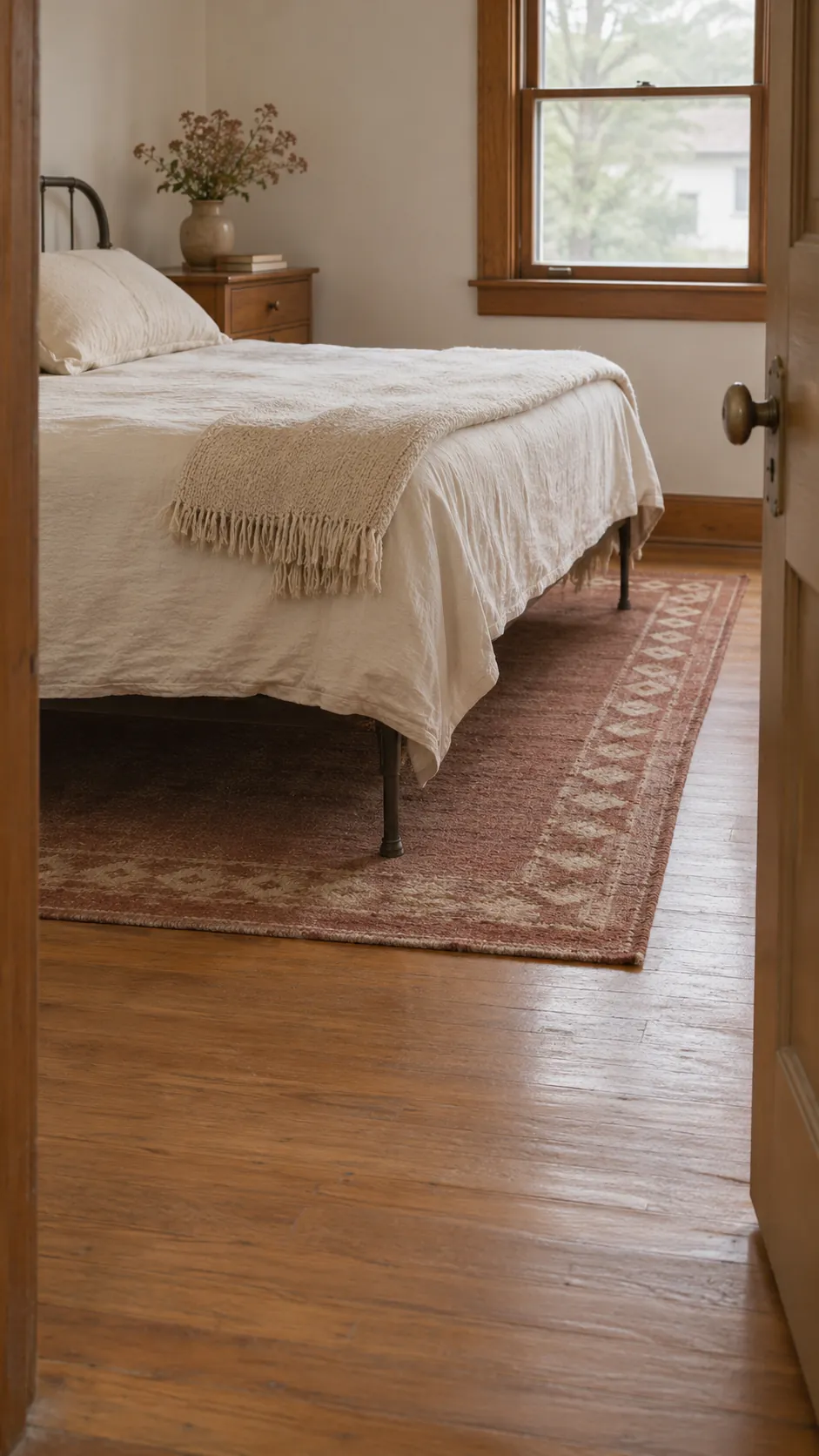
A rug with a warm faded pattern can make the bed area feel more complete. Mark its footprint with tape to see how much of the pattern will be hidden. Choose a size that gives enough room for both feet at the side you use most. Keep it flat over a suitable pad and check that drawers or doors can still open.
Lay an Old Runner Along a Dresser
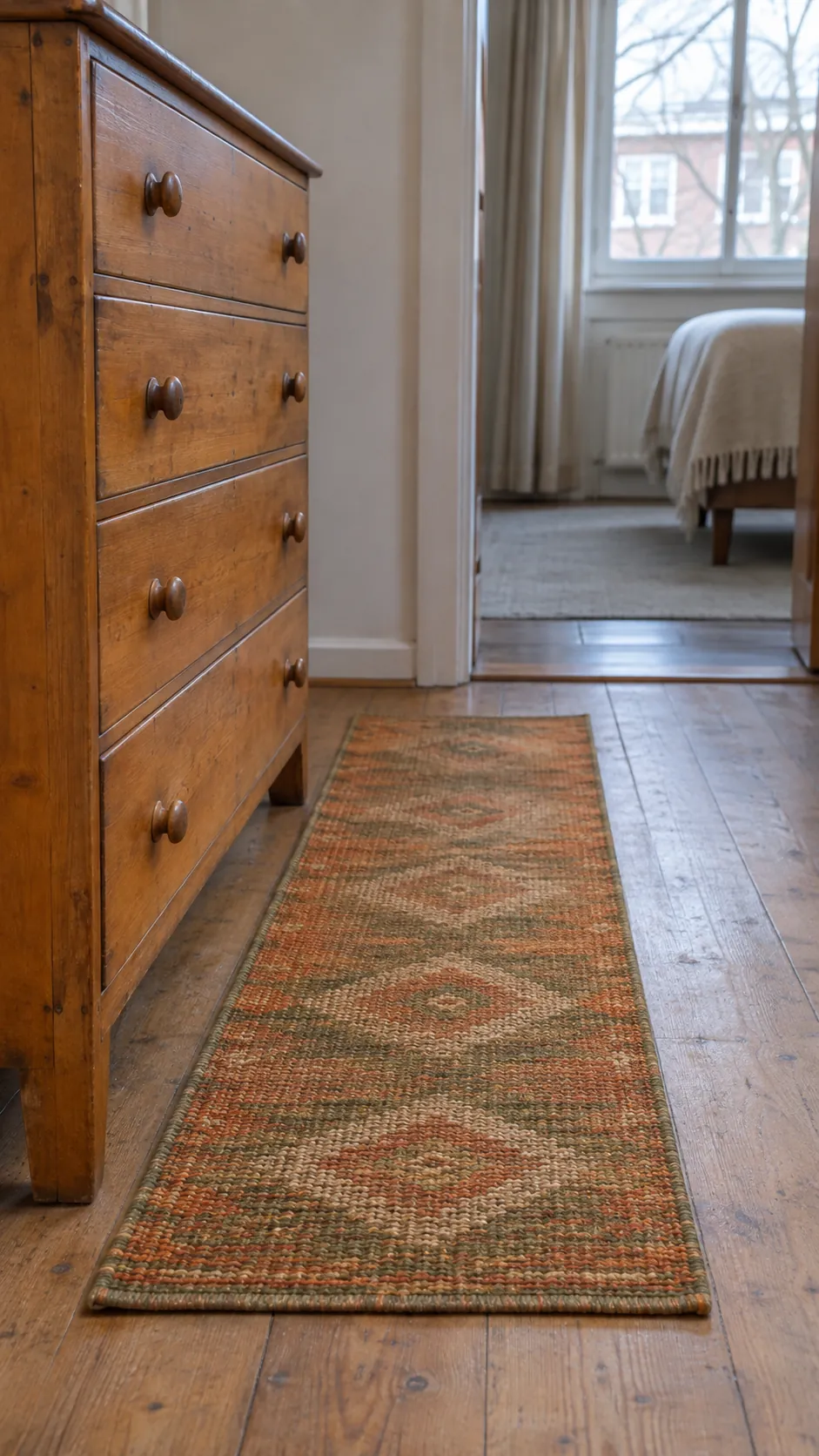
A narrow woven runner can make the dressing area feel softer without lifting the entire bed to add a rug. Let it sit where your feet stay while you open drawers. See whether the dresser’s lower edge catches the runner if it projects too far. Choose a flat edge and a slip resistant pad for a busy route.
Hang Curtains High Enough to Look Relaxed
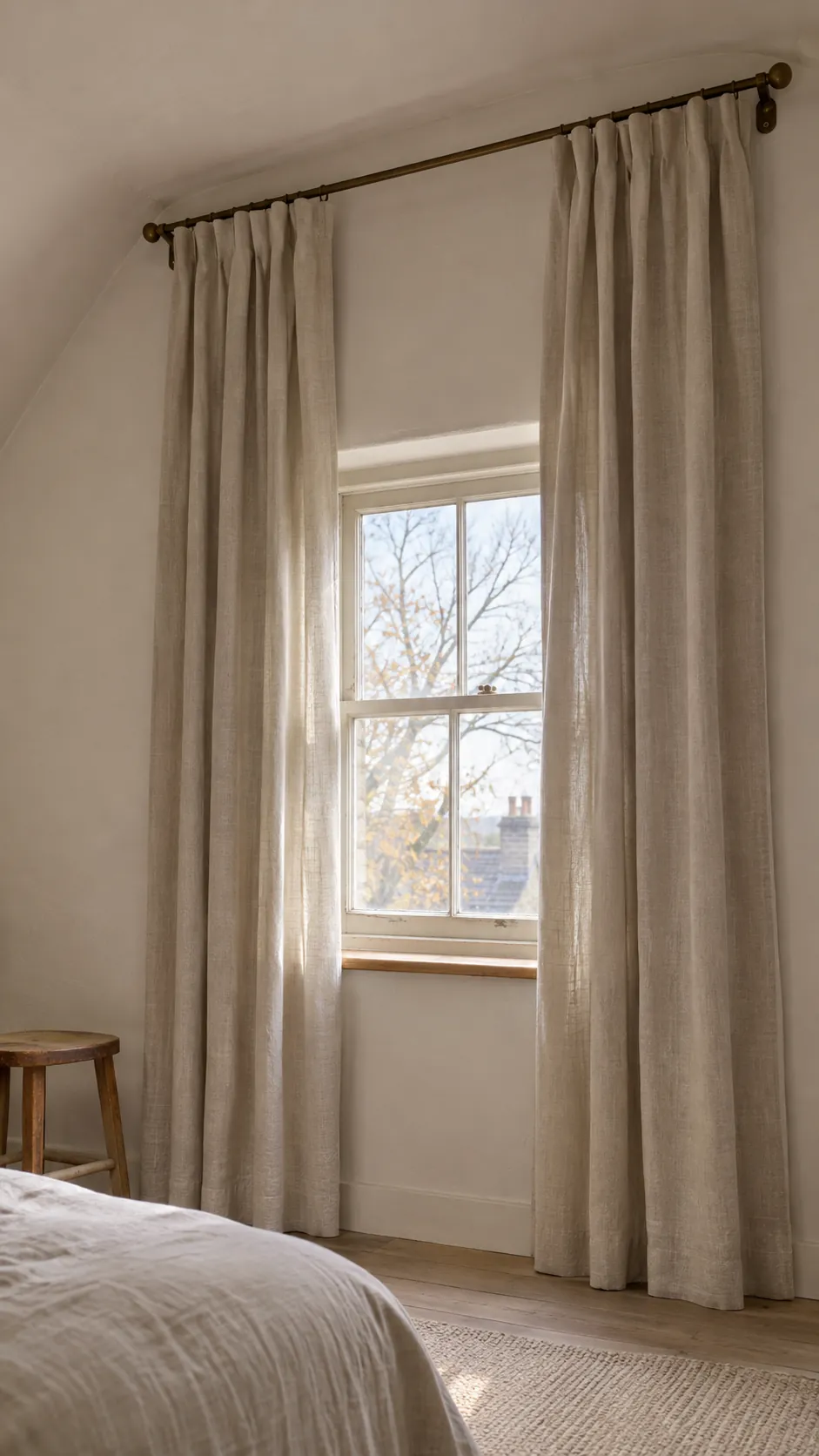
Soft fabric curtains can make a small window feel less abrupt against the wall. Hold the panel up to find a height that lets the fabric fall without lying across a vent. Give the open panels enough room alongside the glass for daylight. Leave the bottom where you can clean under it.
Use a Sheer With a Separate Blackout Shade
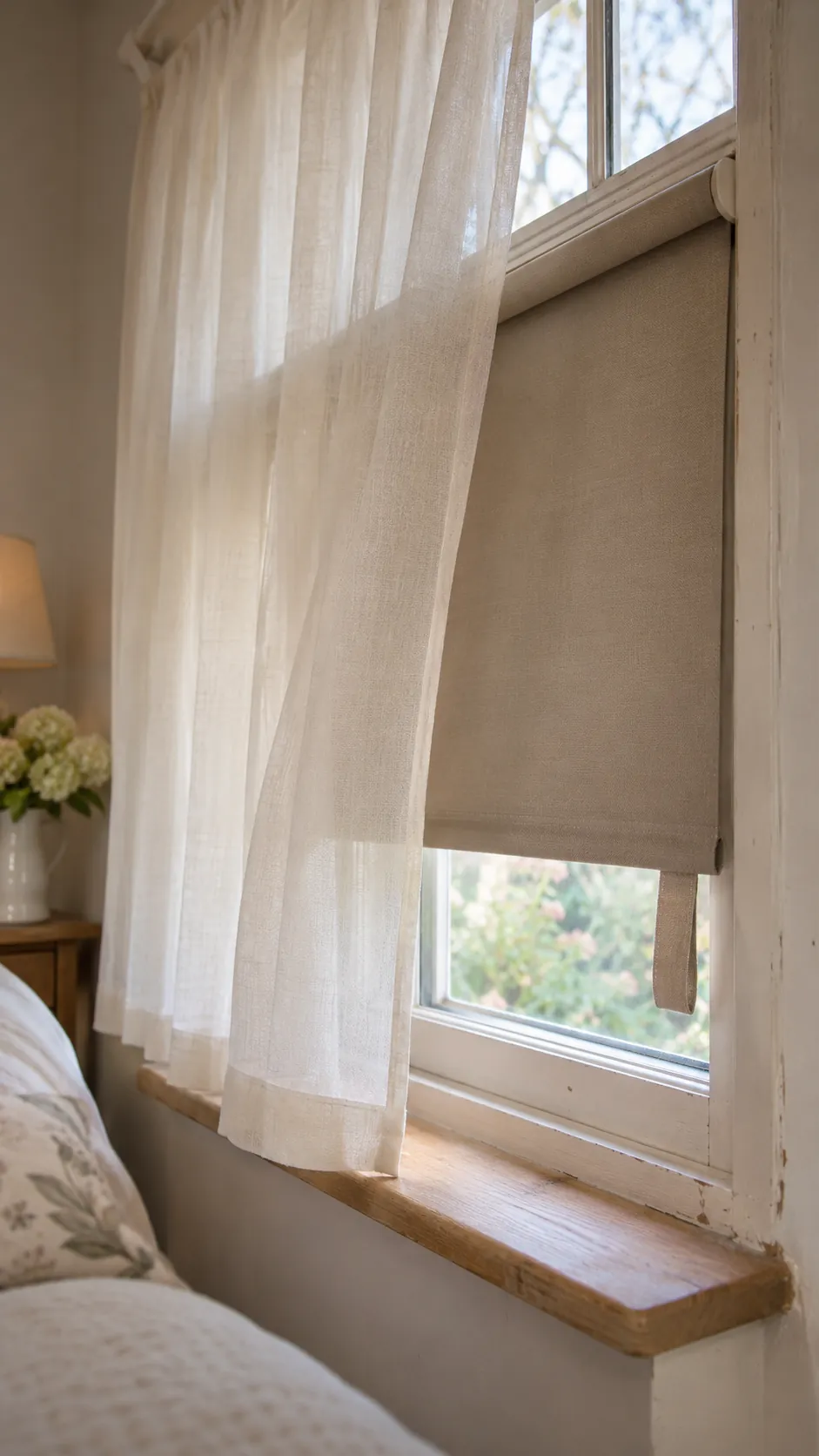
A plain sheer can keep daylight soft while an independent blackout shade handles sleep. Check both controls with the curtain in place so the fabric cannot snag. A white or oatmeal sheer will keep the light closer to its original color. Show both layers to the shop if you need compatible mounts.
Choose an Old Landscape Print for a Quiet Wall
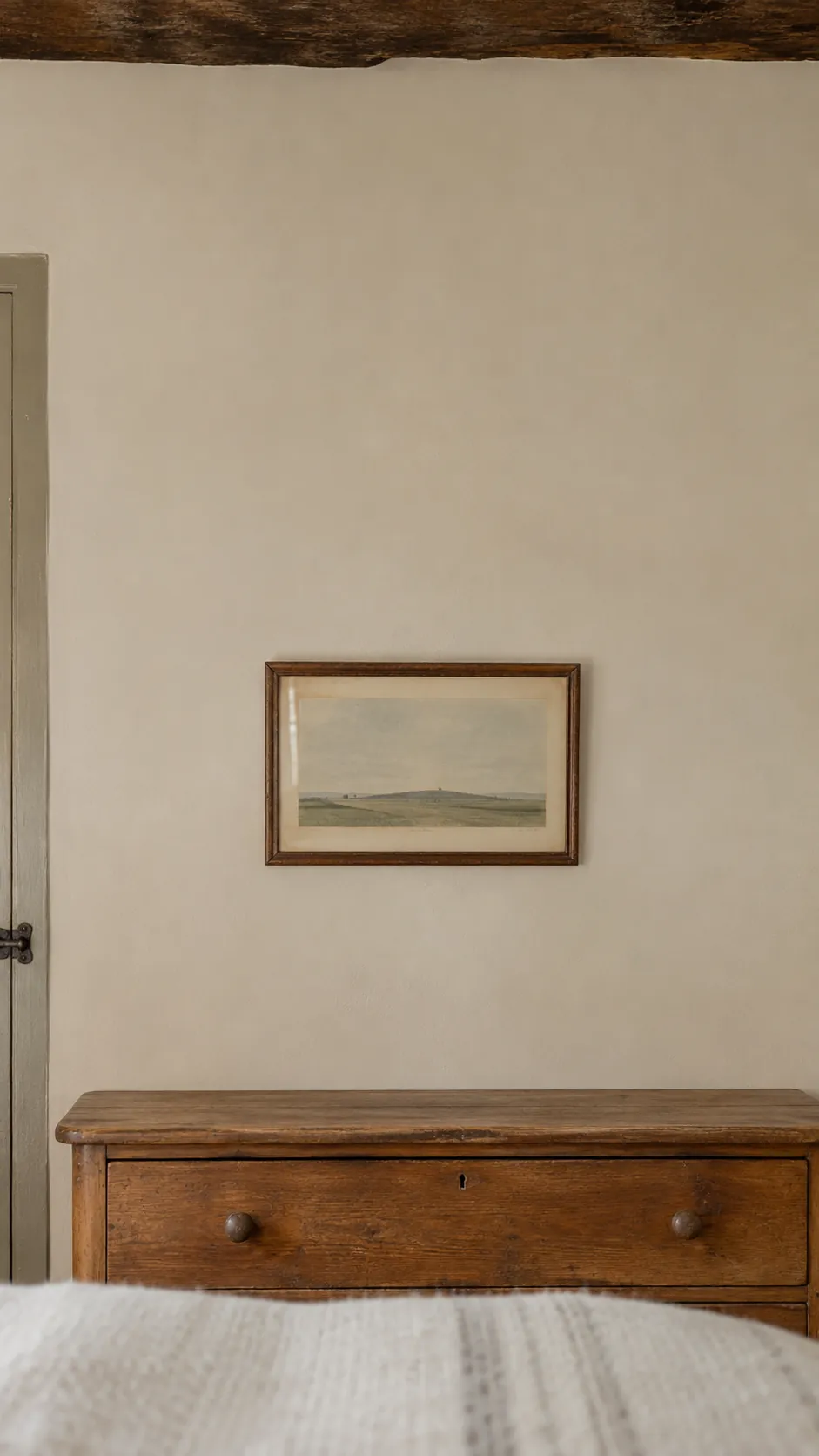
A small old landscape can soften the view from bed with pale green and grey. Try one low over a dresser or across from a reading chair. Keep it away from direct sun if the printing or paper matters to you. Give the horizon a generous quiet patch of wall so it can read on its own.
Hang a Woven Textile Above a Low Bench
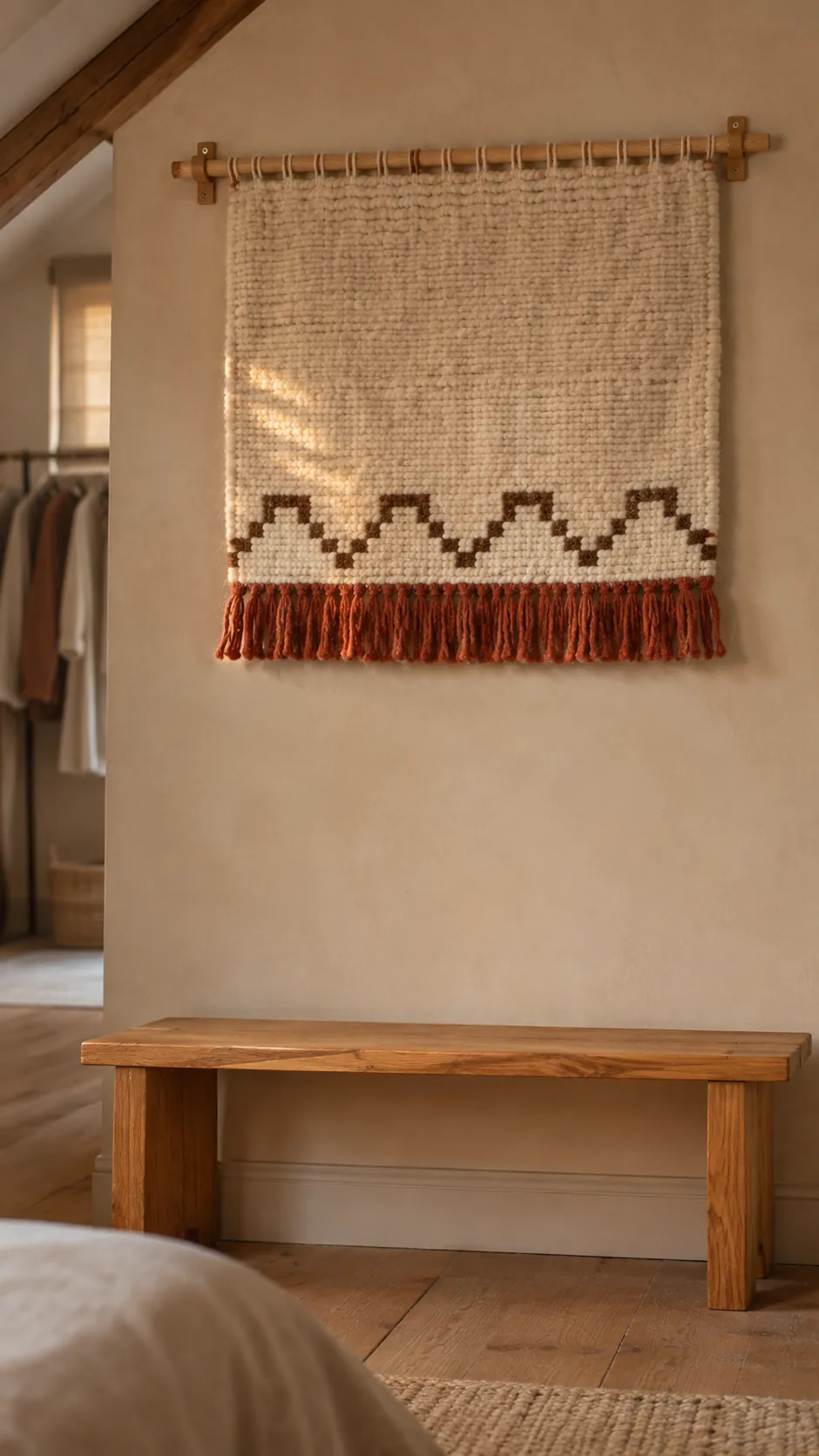
One small vintage weave can bring pattern into an existing pale room. Keep enough space beneath the bench wall hanging that a coat or bag does not brush the fringe. Use a support appropriate for the textile’s weight and condition. Pick a position where you can take it down to dust.
Display a Coat or Robe on a Narrow Rack
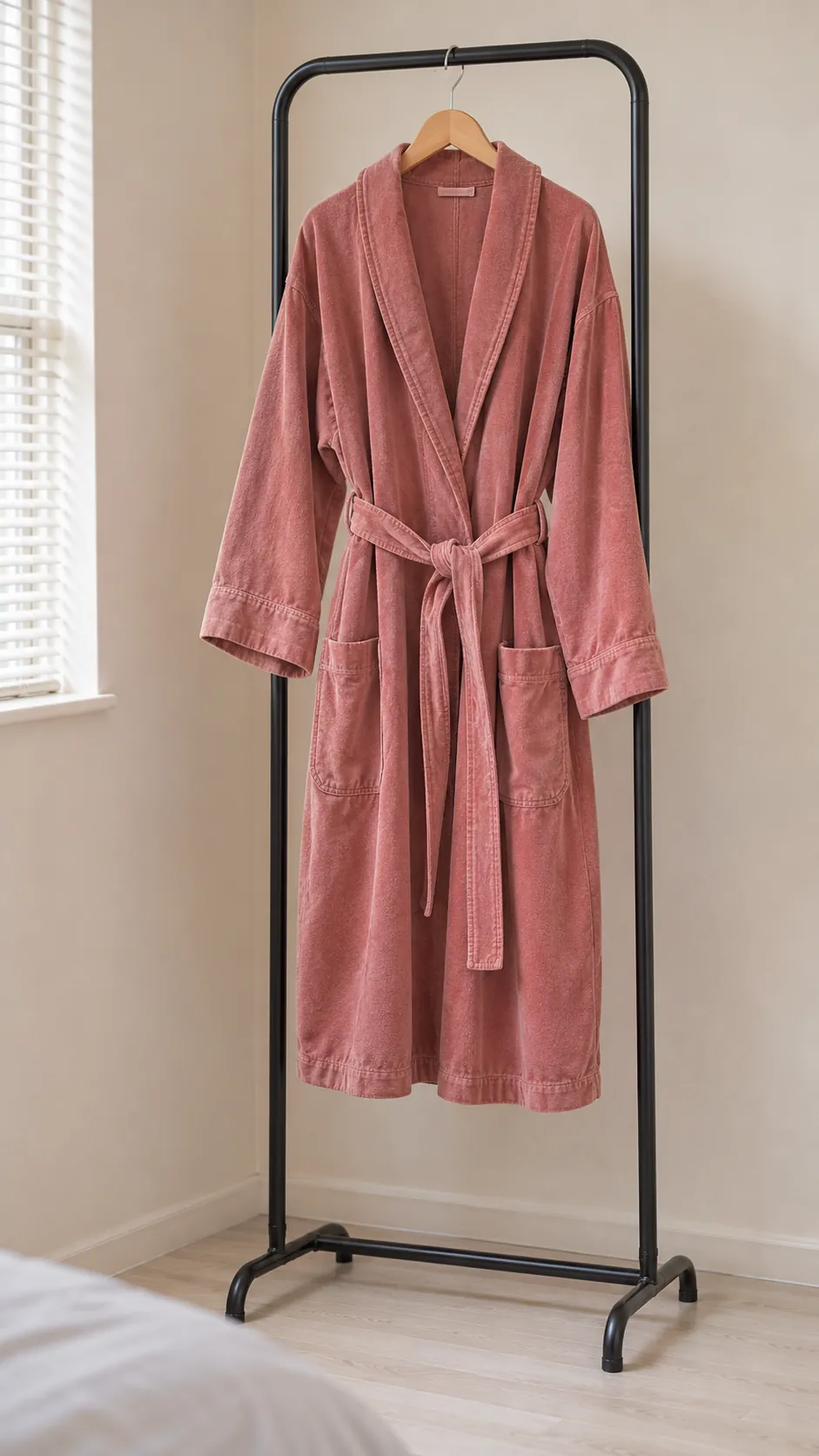
A useful piece of fabric can do some of the work of decor. Hang one favorite robe or coat from a stable freestanding rack by the wardrobe. Check that the hem clears both the floor and the rack feet. Give the rack enough space to lift off a garment without catching a bedside lamp.
Keep a Book by the Bed in a Low Rack
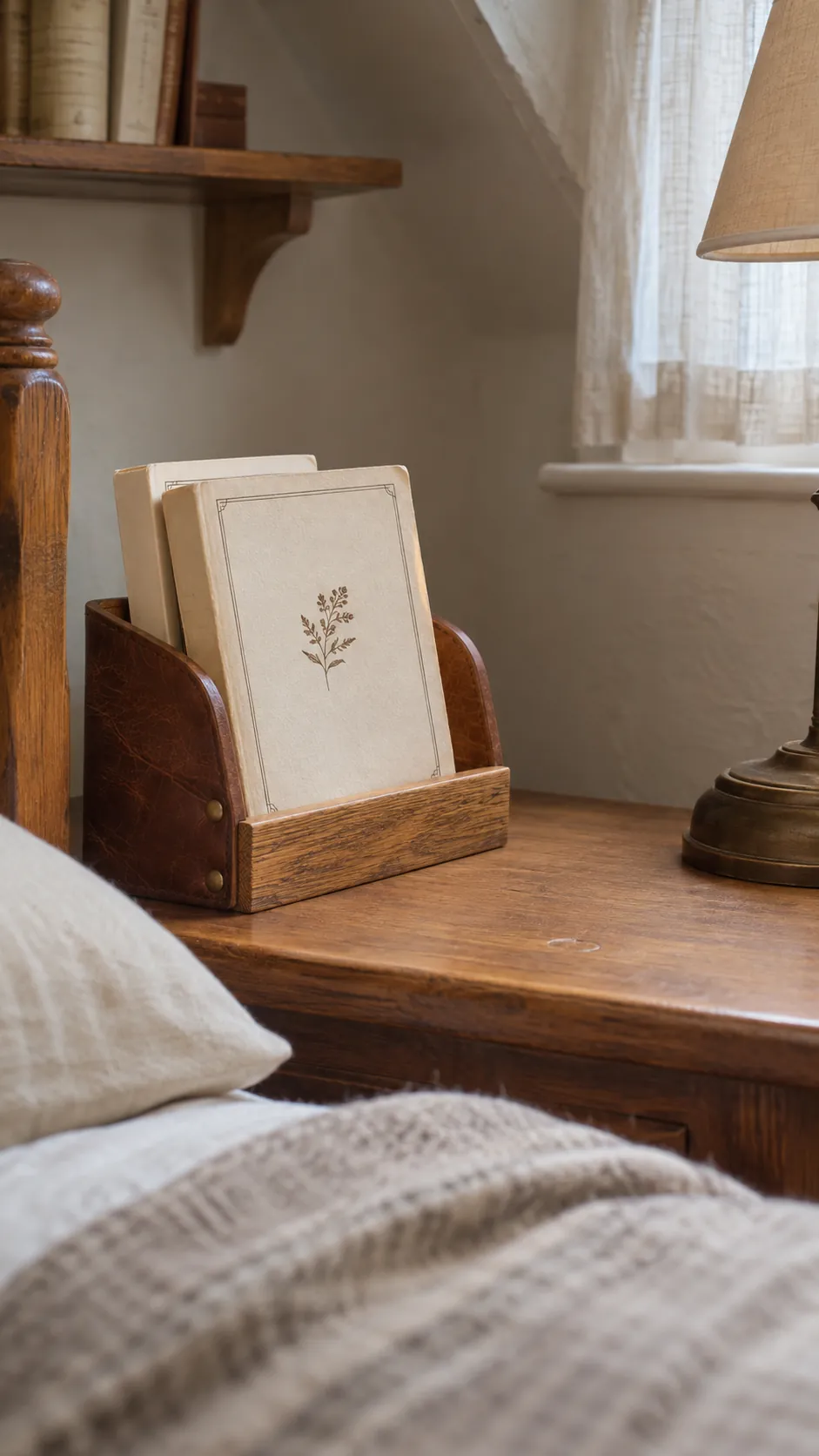
A small divided rack can hold a couple of books upright without stacking everything behind the lamp. Choose it to fit the height and depth of your largest current book. Angle it so the book you are reading comes out first. Clear the rest when the rack begins to crowd your reach.
Set Up a Record Player for Quiet Listening
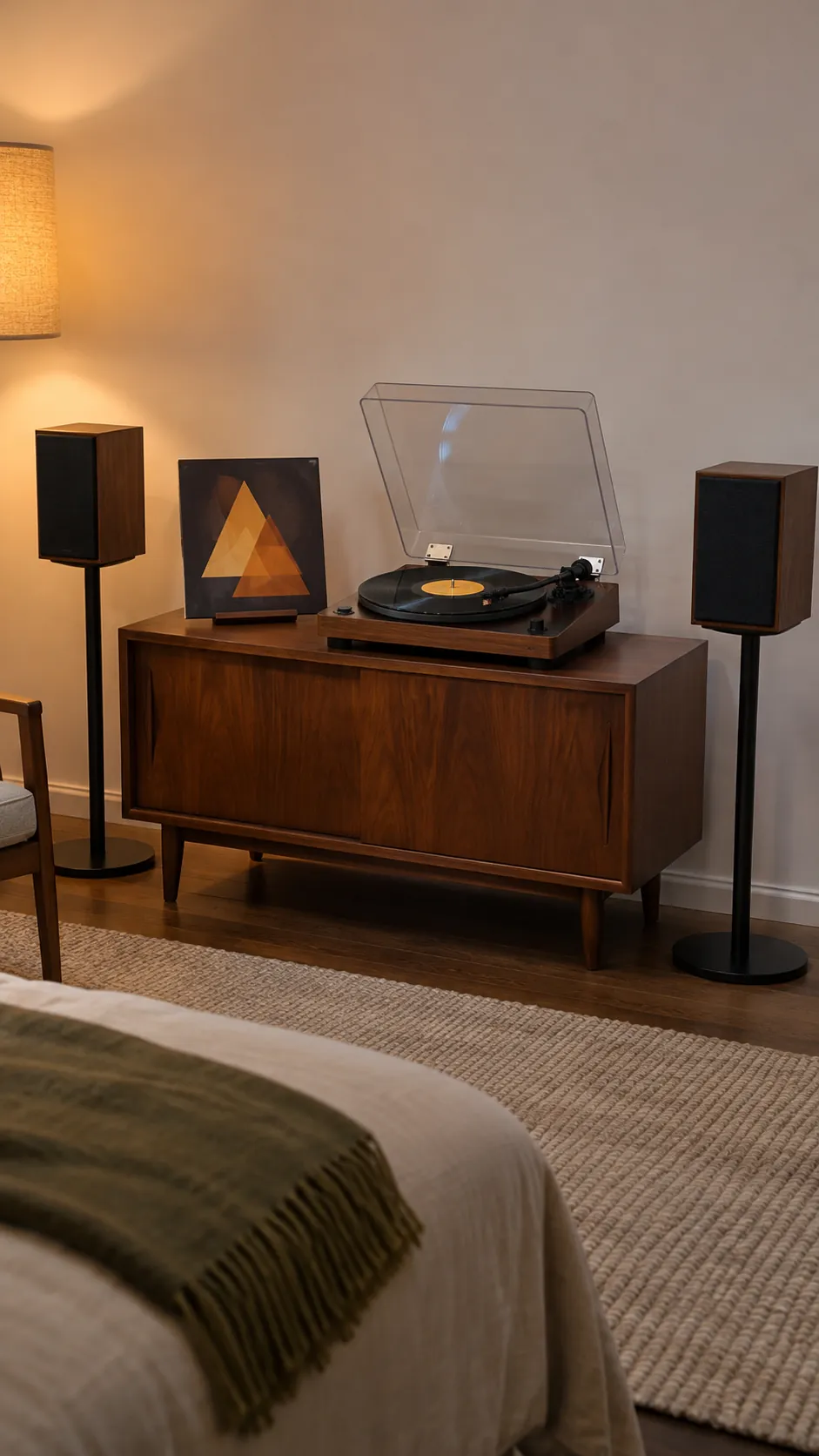
Give a turntable a level sturdy cabinet and room for its lid to open. Keep its speakers where the maker recommends and away from surfaces likely to vibrate with the player. Put a sleeve stand nearby at a level you can see from bed. Store the rest of the records upright and leave the walkway open.
Show a Favorite Record Sleeve on Rotation
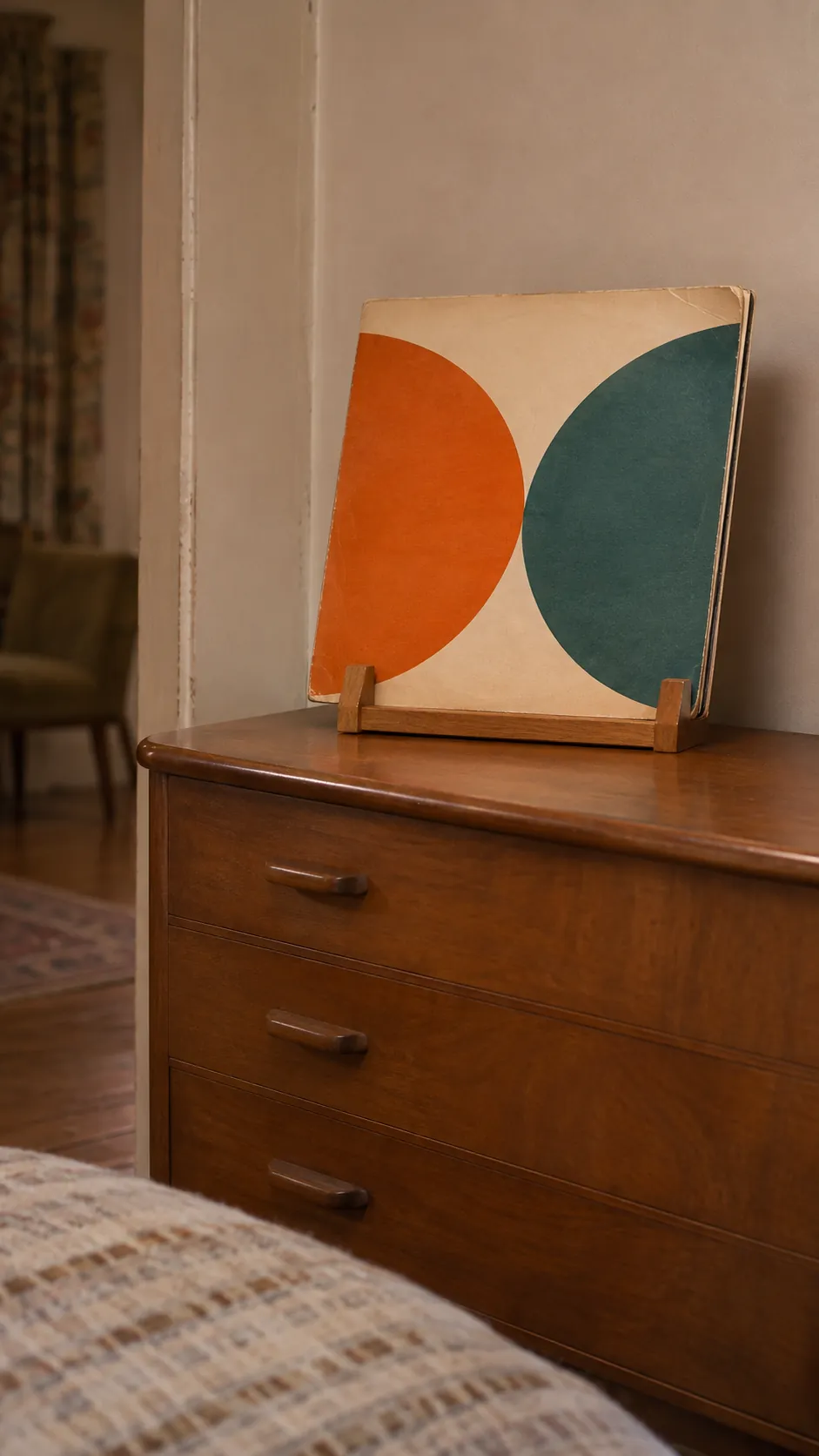
A low stand on a dresser can hold one empty record sleeve as a changing picture. Try a matte design with enough color to be legible in the evening. Keep the sleeve clear of a lamp that can get hot. Leave the active record in its inner sleeve or on the turntable while you display the cover.
Set a Small Wooden Box on the Bedside Shelf
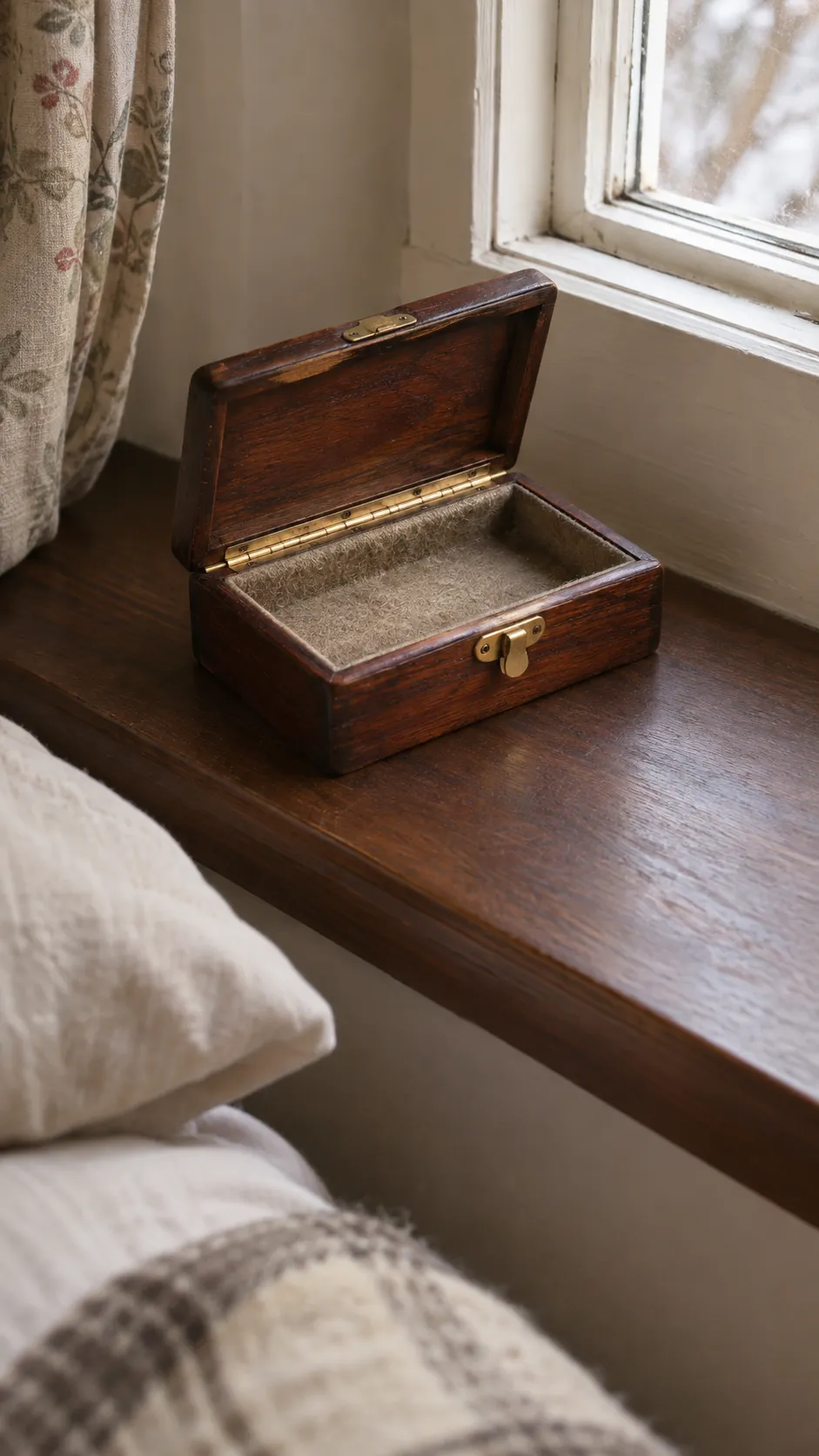
A box with a lid is a good place for little things that make a table look busy. Look for smooth hinges and a lid you can open with one hand. Try a low box that fits below the window so it does not crowd the sill. If the inside has a rough finish, line the base with soft felt.
Use a Warm Lamp Beside a Cooler Daylight Window
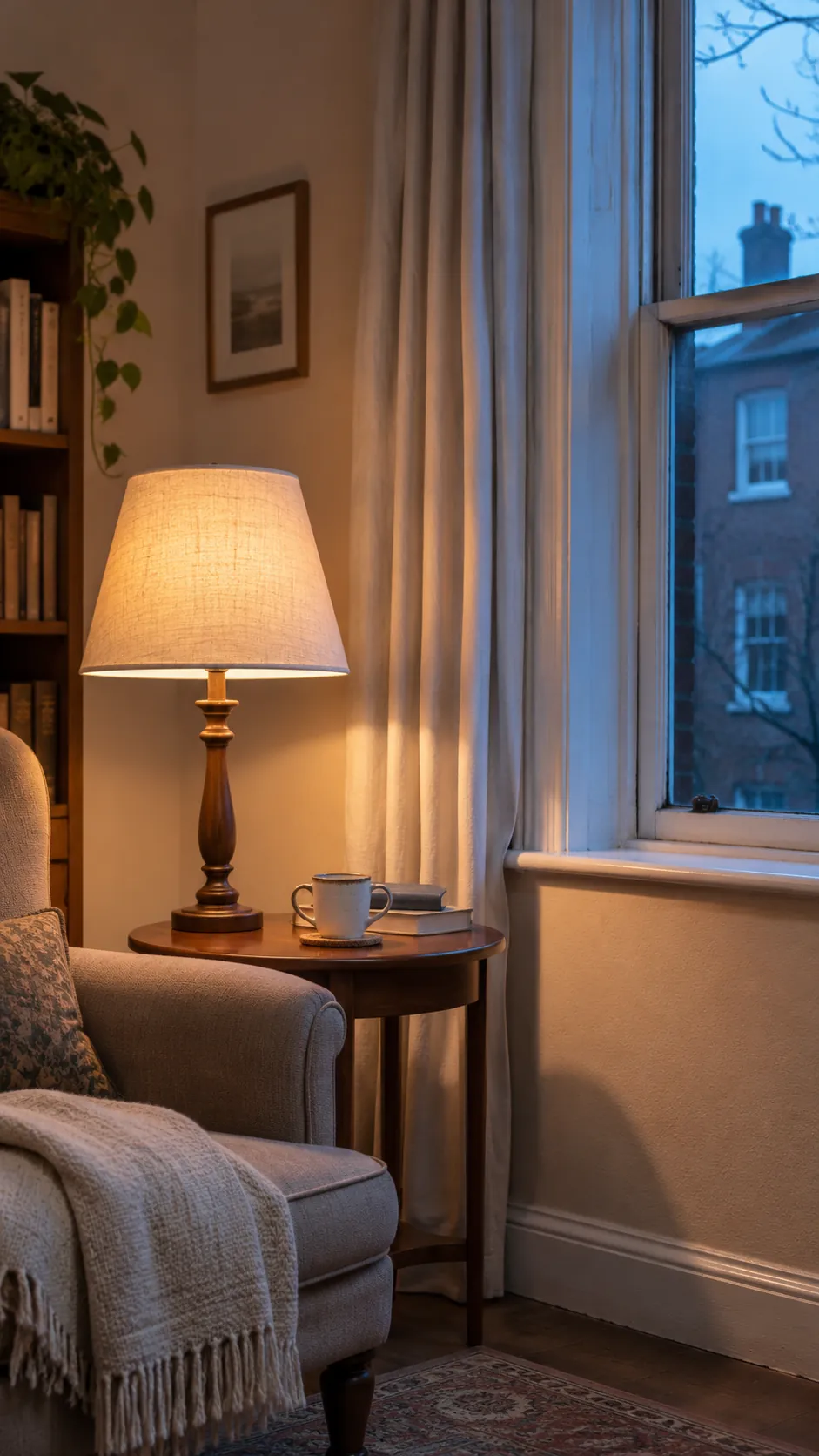
The evening can still look good before the sky goes fully dark. Place a lamp a little away from the window so there is room to see both light colors separately. Try the lamp only after the outdoor light starts to fade. Keep its shade low enough to hide the bulb from your normal chair.
Add a Valet Hook Near the Wardrobe
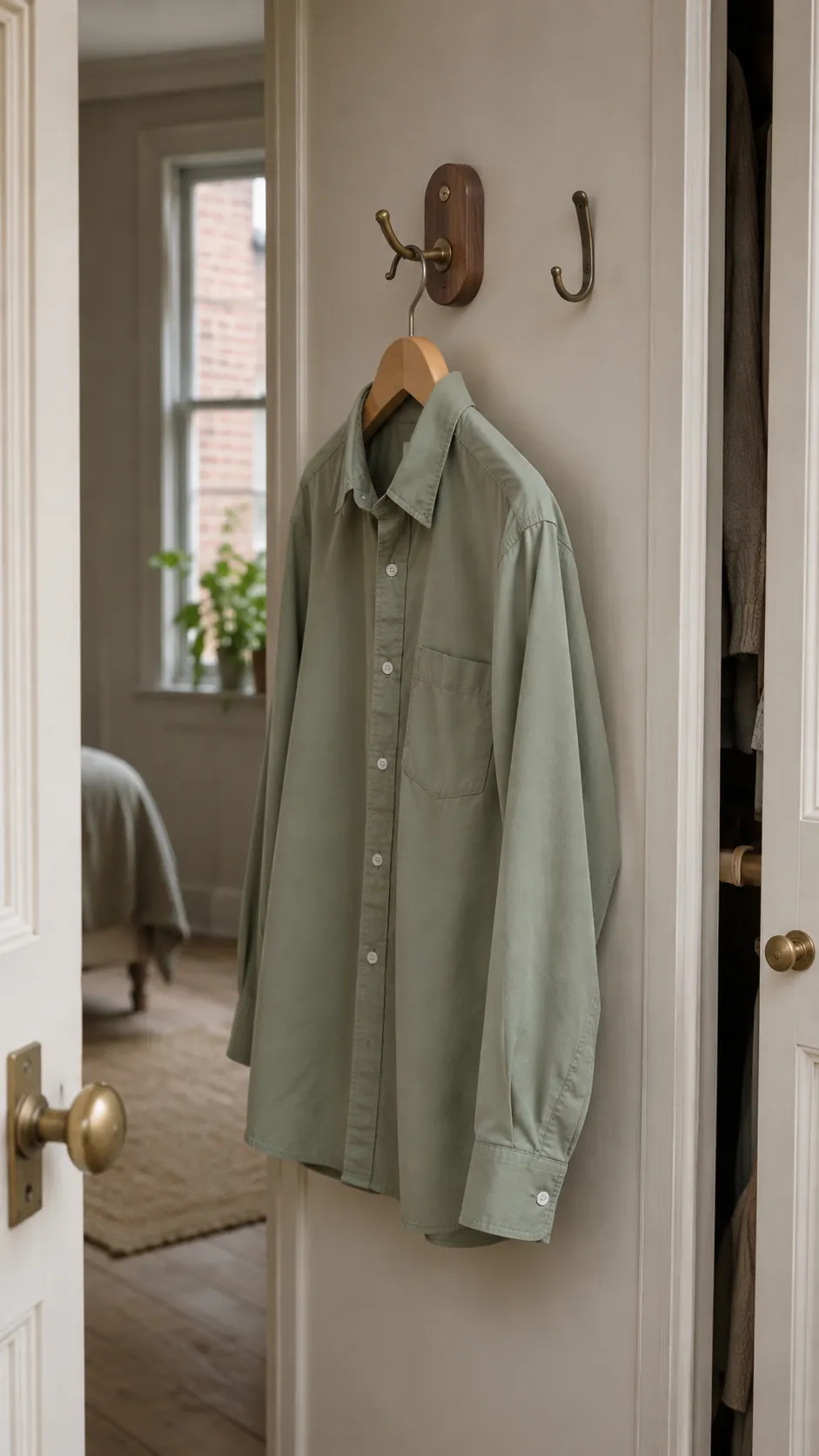
A small broad hook gives tomorrow’s shirt a place that feels more deliberate than the bed. Choose a hanger that keeps the shoulder shape intact. Set the hook far enough inside the room that the wardrobe and bedroom door can both move past it. Leave an empty hook if you need space for a bag in the morning.
Swap a New Knob Onto an Old Nightstand
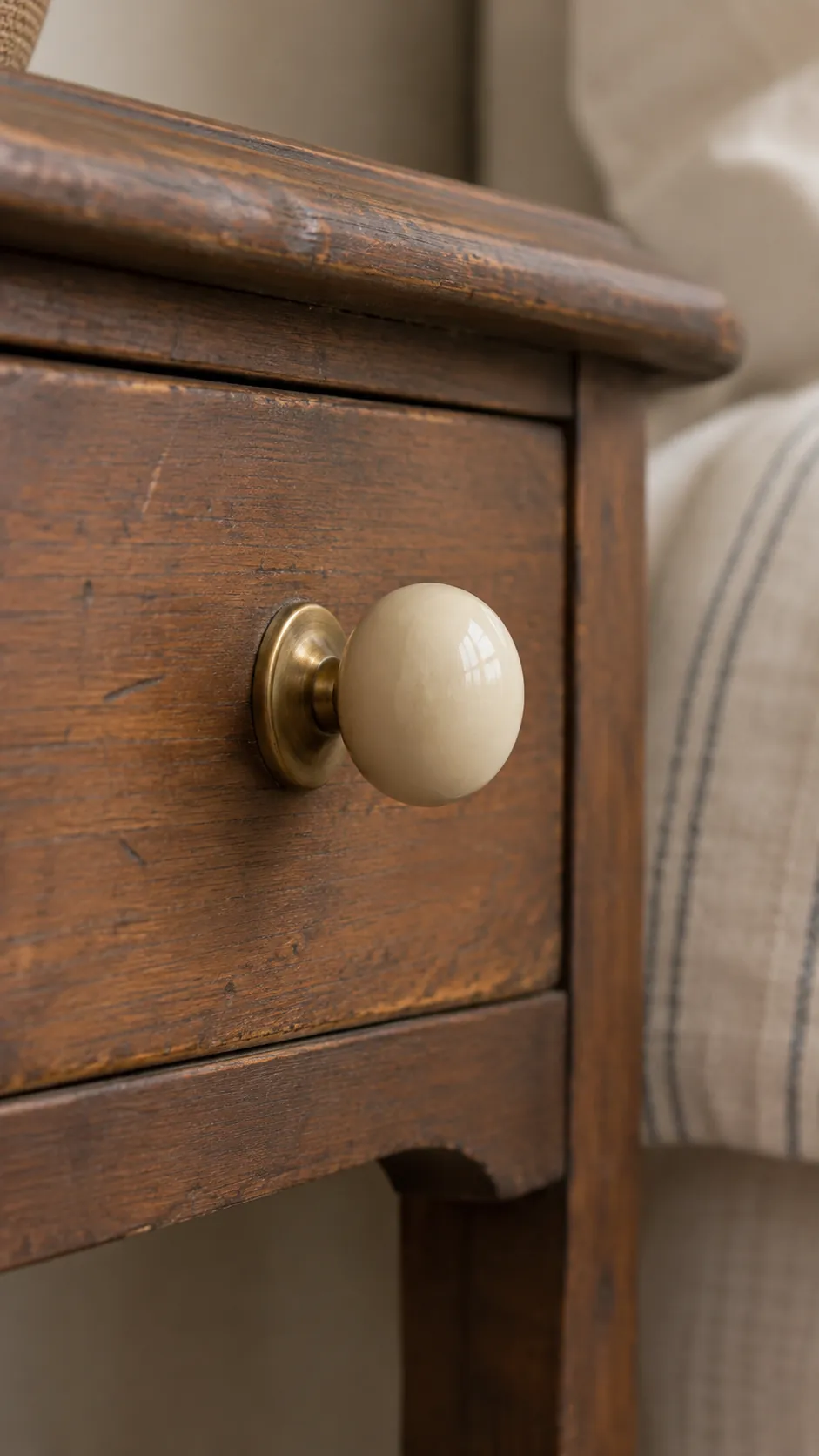
A small porcelain knob can make a worn nightstand look tended to. Check whether the drawer needs one screw or two and measure the depth before shopping. Set a sample knob against the finish to see whether the color helps. Open the drawer gently first to check that the new knob gives a firm grip.
Set a Framed Family Photo on the Sideboard
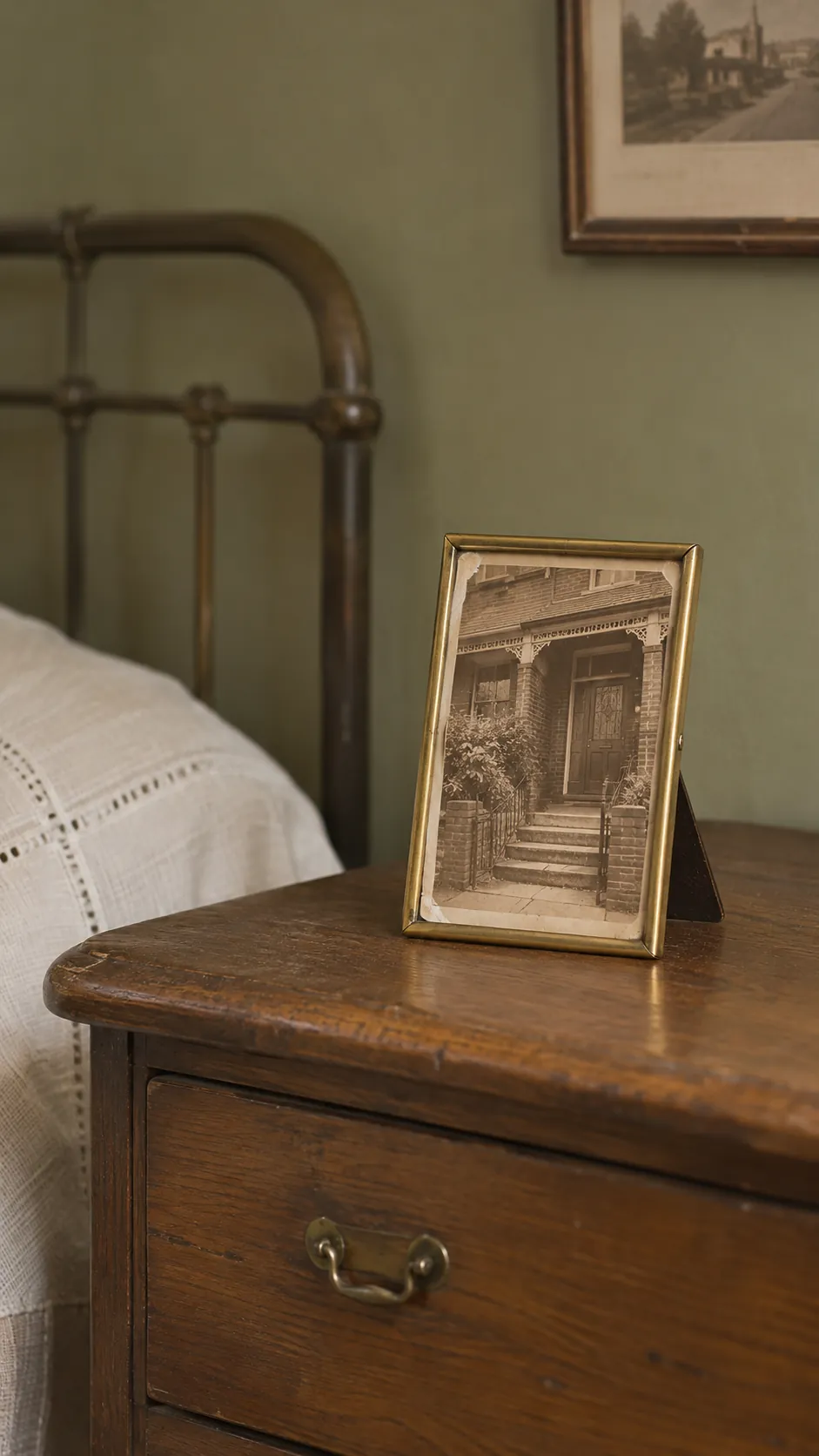
An old photo can give a quiet dresser a point of interest even when there is little else on it. Try a print that is large enough to see from where you dress. A photo of a familiar doorway or porch can work too. Set it in an intact frame with a firm folding support or mount it securely. A copy can protect the only original from stronger daylight.
Put a Small Lamp on a Reused Sewing Table
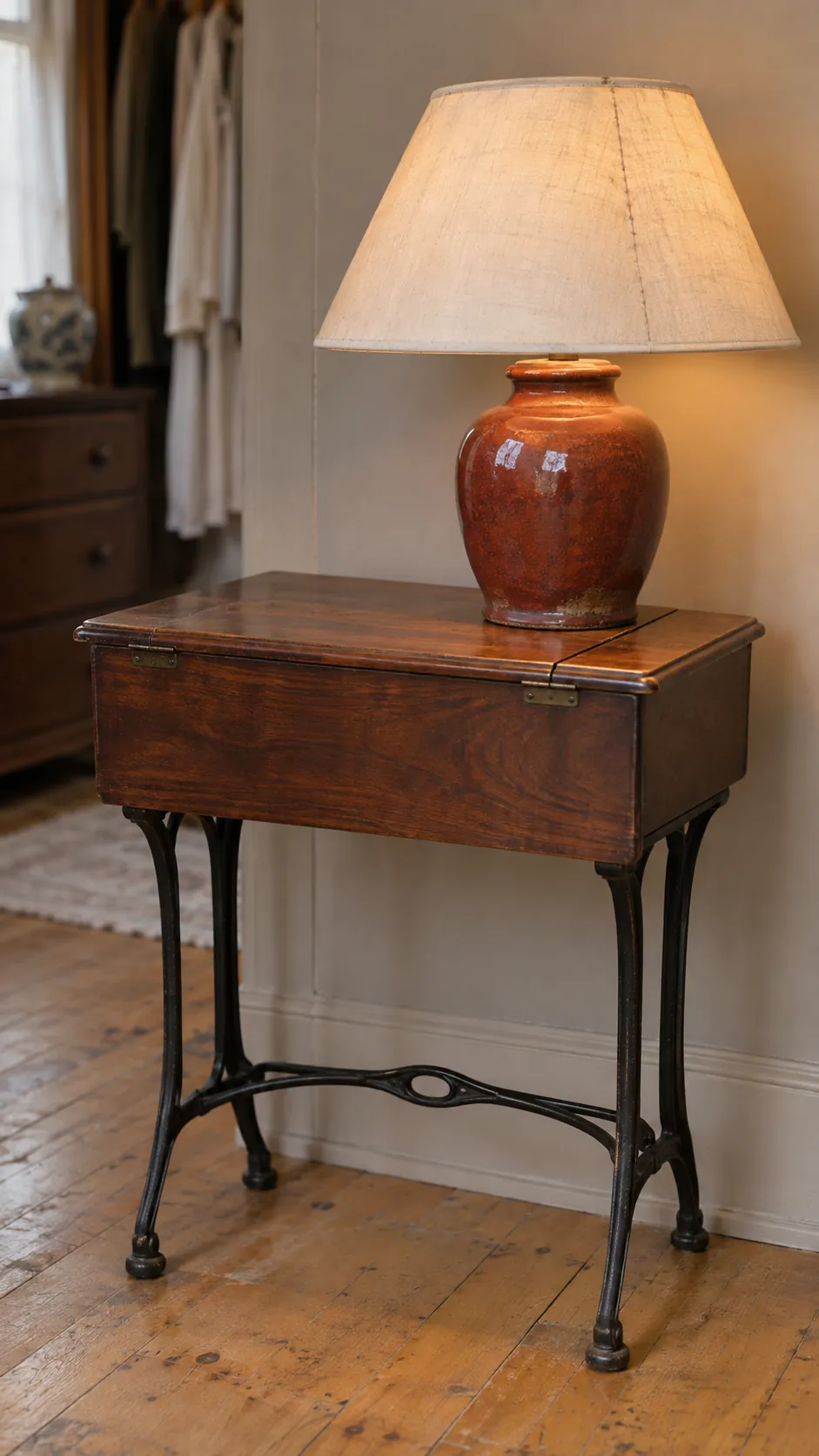
A former sewing table can become an evening surface as long as it opens and closes safely. Inspect the top and leg joints before putting anything heavy on it. Add a lamp with a broad base and route its cord down the far side. Keep the open space in front free enough to sit at if the table height allows.
Choose One Earthy Ceramic Vessel for the Chest
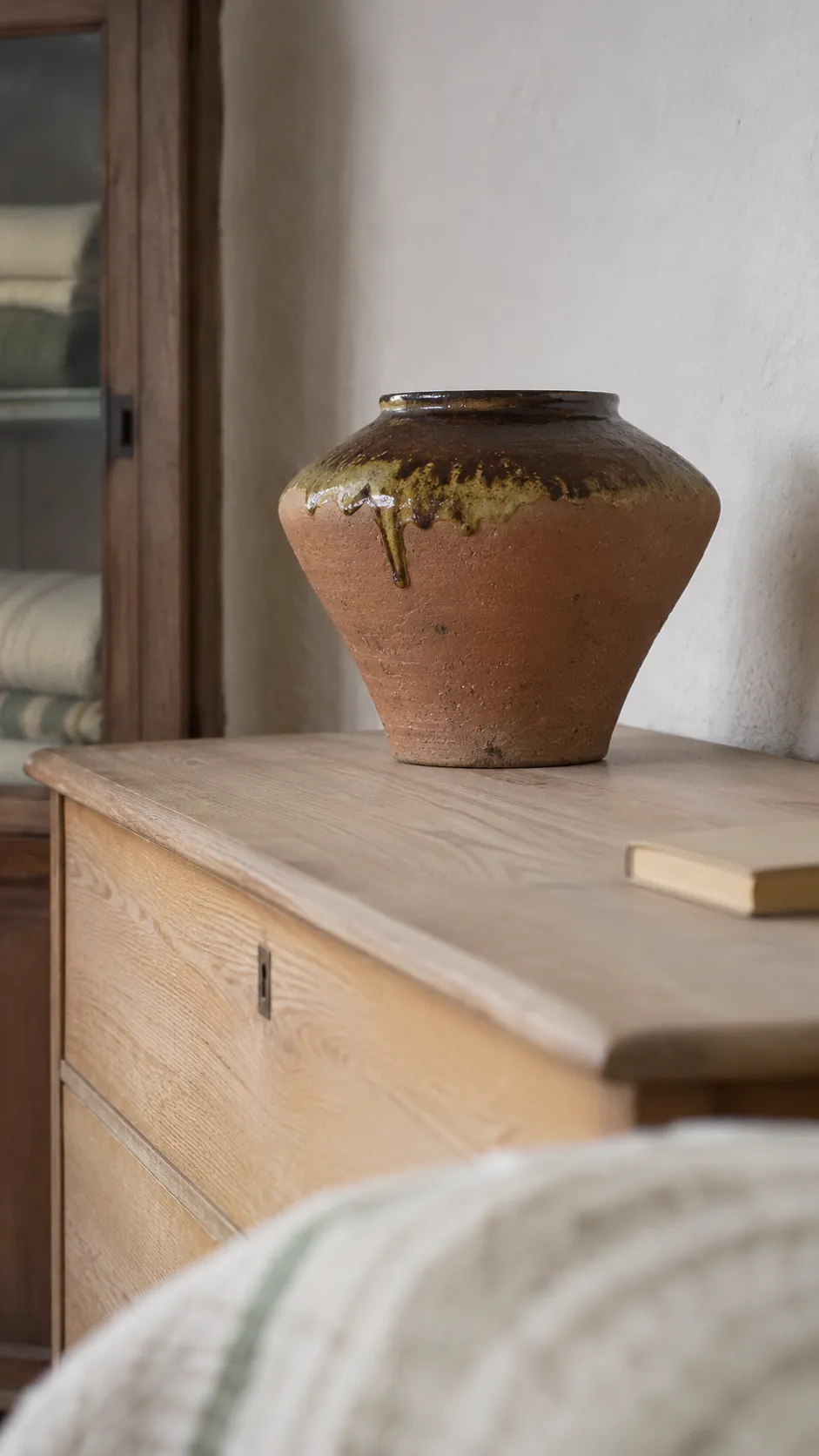
A rough old vase can read as warm even beside a plain cream wall. Look for variation in the glaze and a good broad foot. Set it a few inches back from the chest edge so it does not catch a sleeve. Use it empty if the glaze or base is uncertain.
Put a Footstool Near the Reading Seat
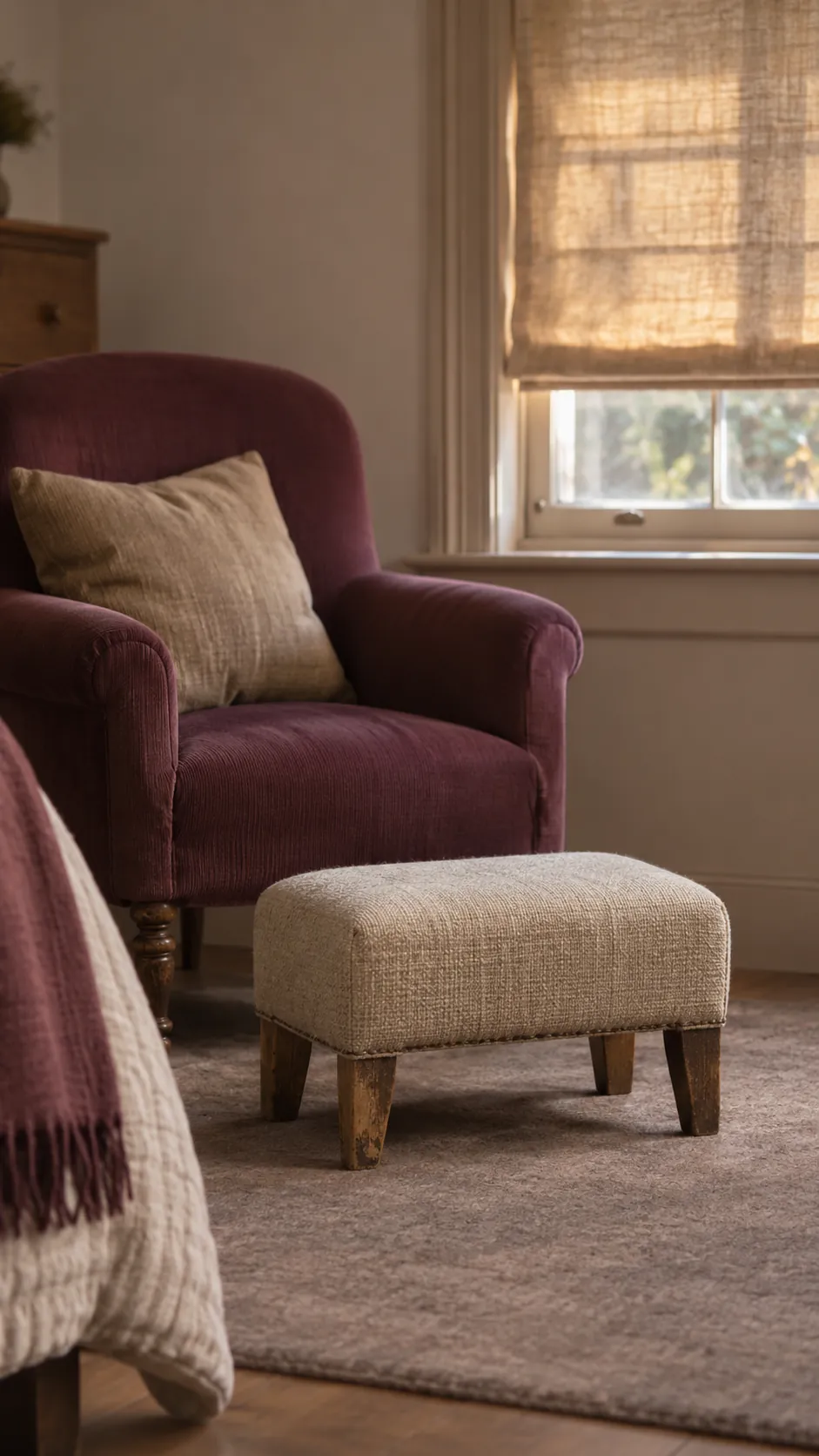
A low stool with an upholstered top can make a small armchair more comfortable. Try the two pieces together so your legs can rest without a sharp bend. Leave standing space on one side and move the stool closer after you sit. A muted woven cover can sit beside a busier vintage chair.
Roll a Thin Blanket Into a Low Basket
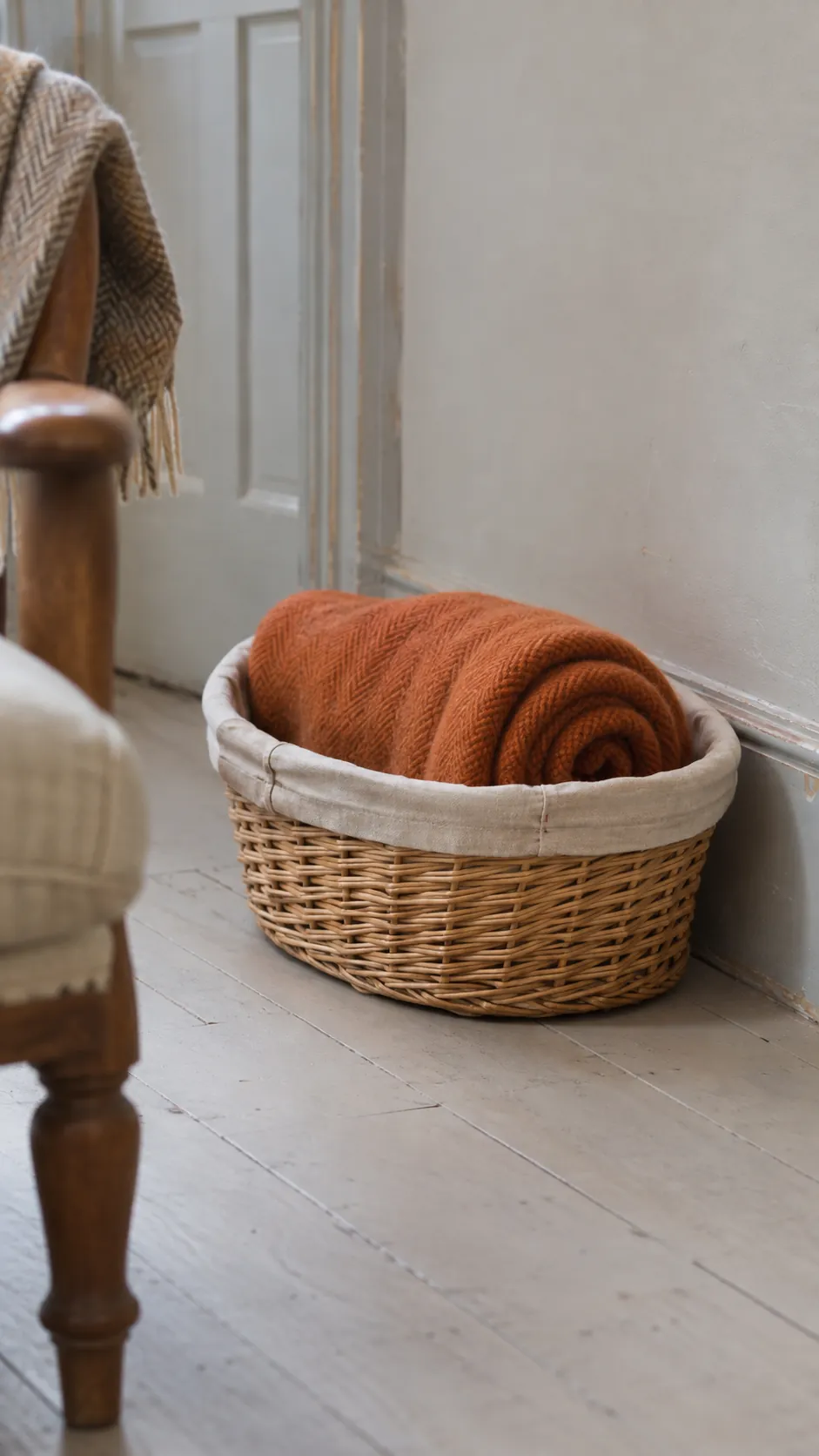
A shallow woven basket keeps a spare layer within reach on a chilly night. Roll the blanket loosely so you can pull it out with one hand. Use a liner if the wicker catches the yarn. Put the basket against the wall where the outer edge cannot catch your toes.
Use Lavender Grey With Old Walnut
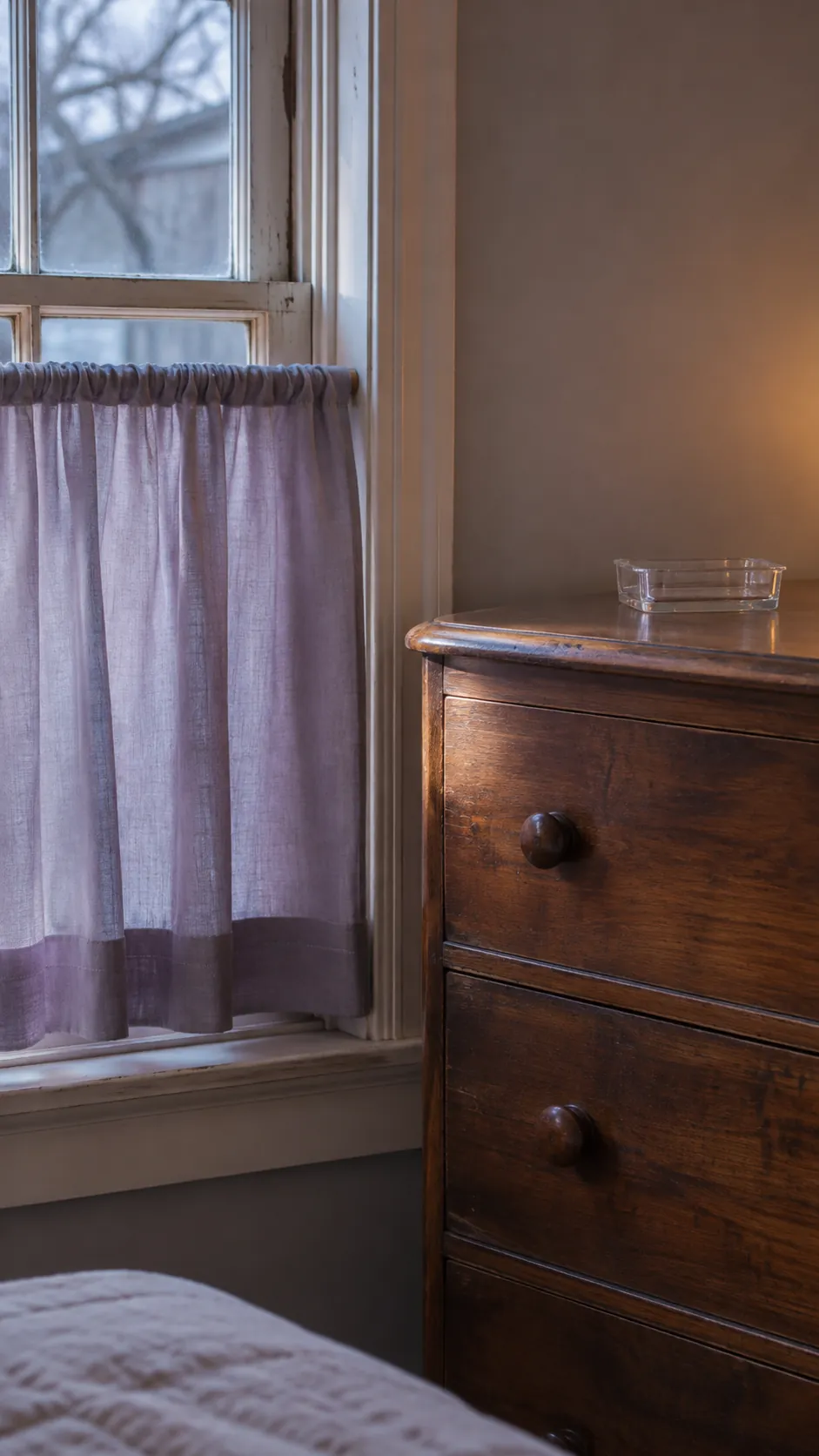
A faint lavender grey can cool the reddish cast of walnut while still feeling soft at night. Try it on one light curtain or a cover instead of repainting the room first. Set the fabric beside a piece of the actual wood and check the two when the lamp is lit. Let the rest of the fabrics stay close to neutral.
Lay a Striped Cushion Across a Window Seat
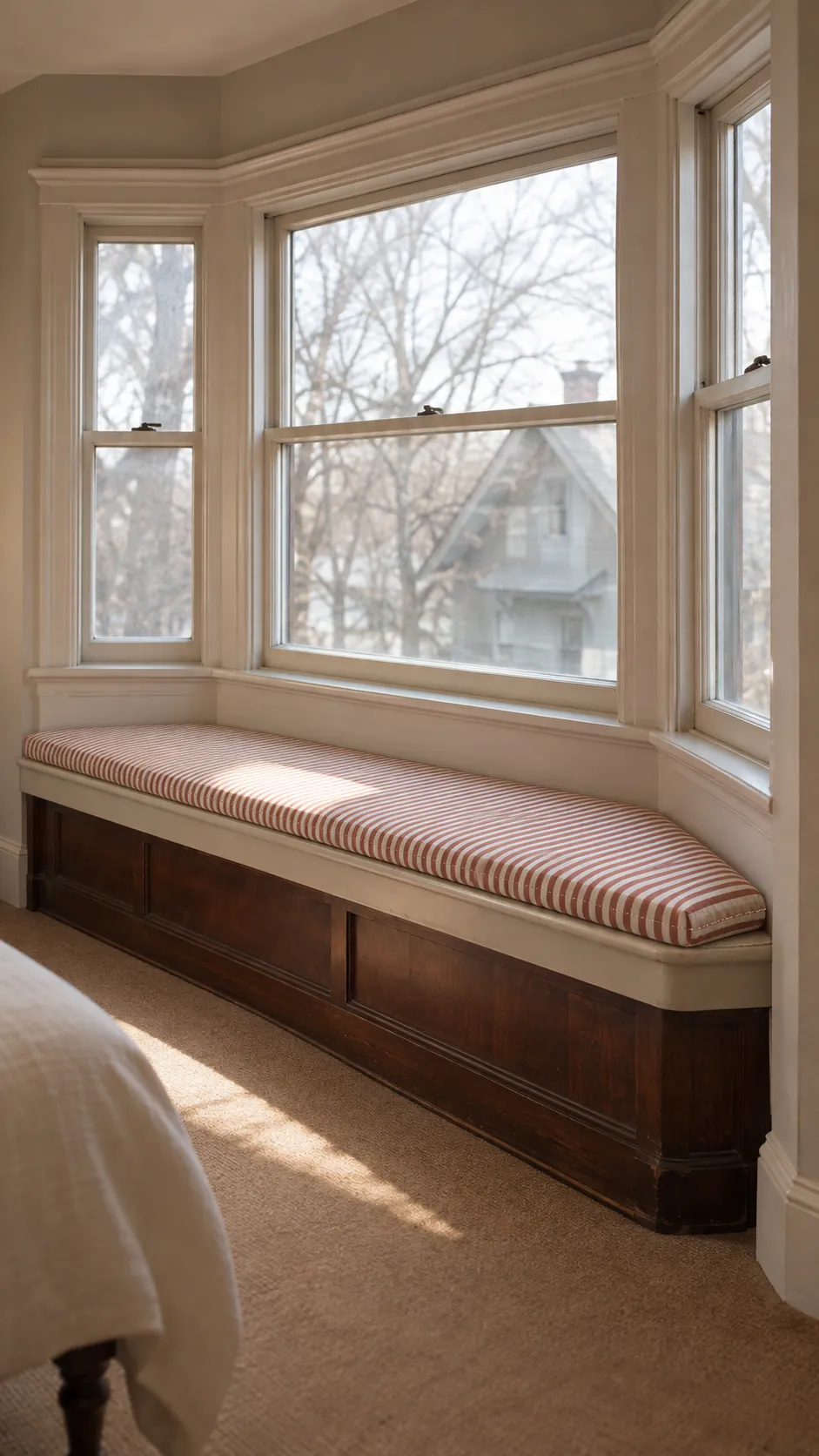
A striped seat pad brings a usable pattern into the part of the room with the most daylight. Measure the full bench and look for a pad that fits without projecting into the aisle. Keep the stripe direction parallel to the window sill if you want it to echo the view. Use a nonslip layer so the pad cannot slide when you sit.
Soften a Bare Door With an Old Fabric Panel
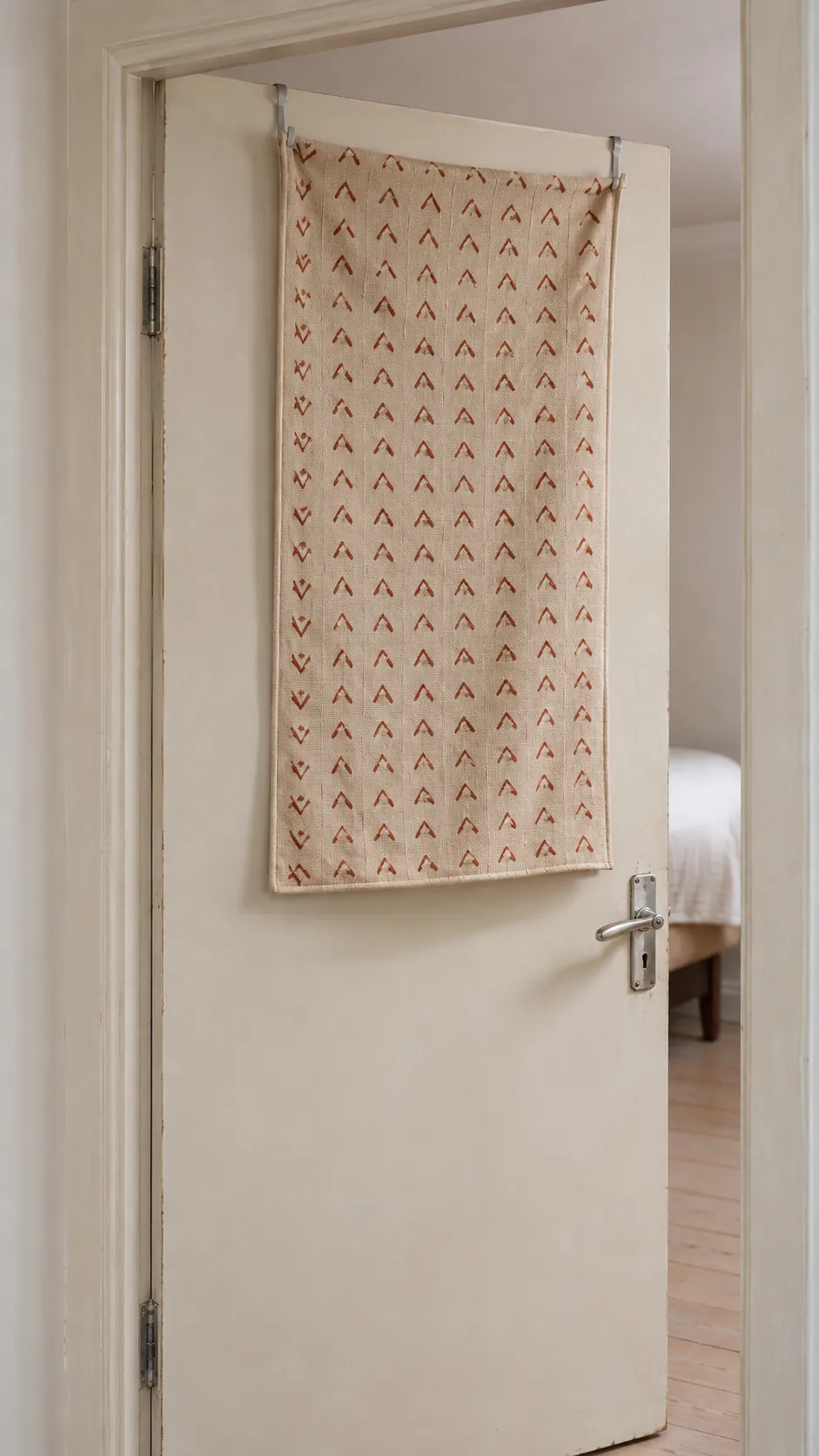
A removable fabric panel can change the feel of a white door without painting it. Choose a light textile and a mounting method that suits the door and the lease. Keep it away from hinges, latches and the floor. Close the door slowly to make sure the fabric does not get caught.
Rearrange the Furniture Before Buying a Bigger Piece
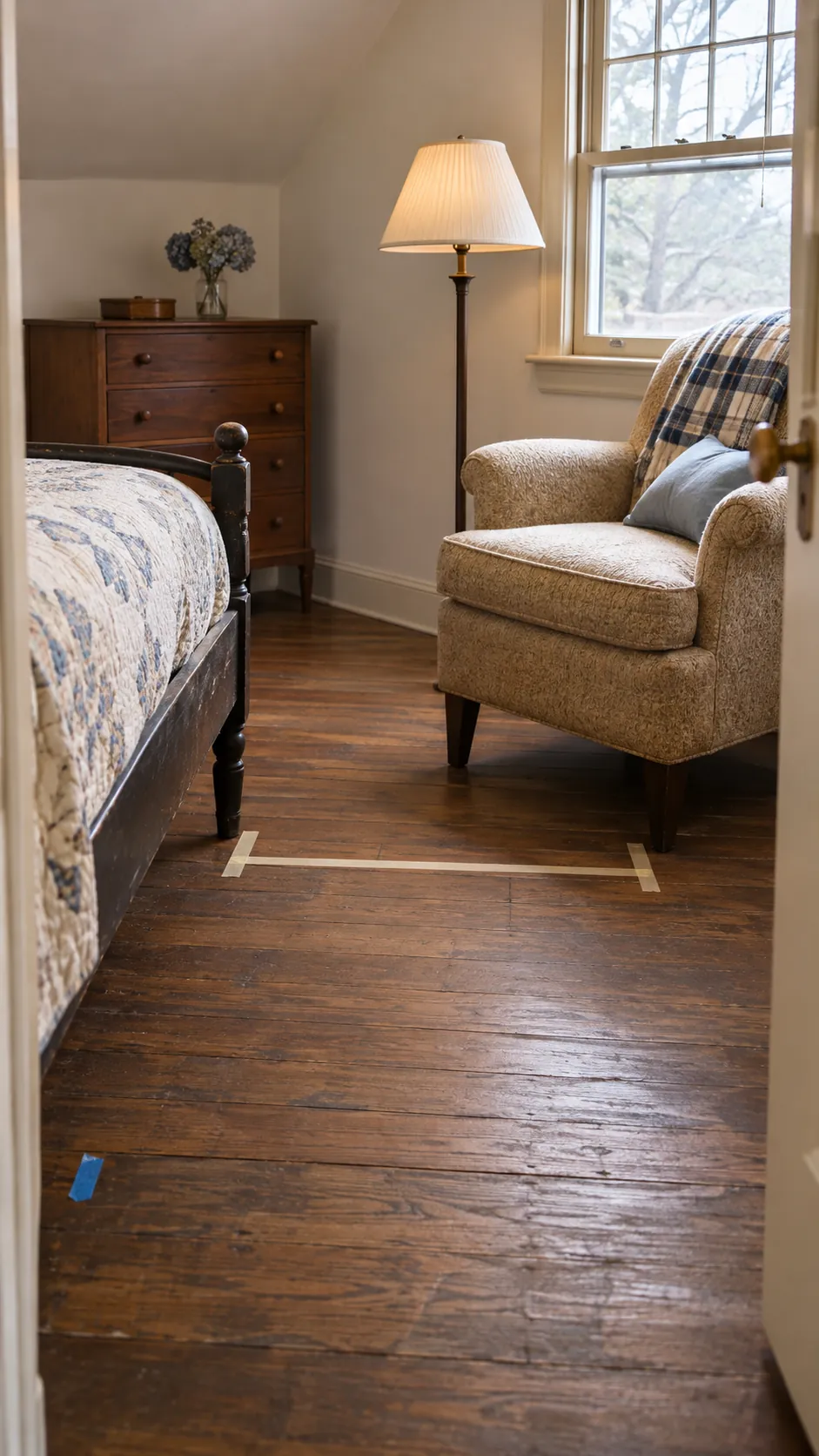
A chair can feel too big where it blocks the light and fine where it sits across from a lamp. Mark the new footprints with tape, then walk from the bed to the door with the overhead light off. Check that your knees clear the dresser drawers. Leave the new arrangement in place for a few days before buying another chair.
Save a Seat for the Next Morning
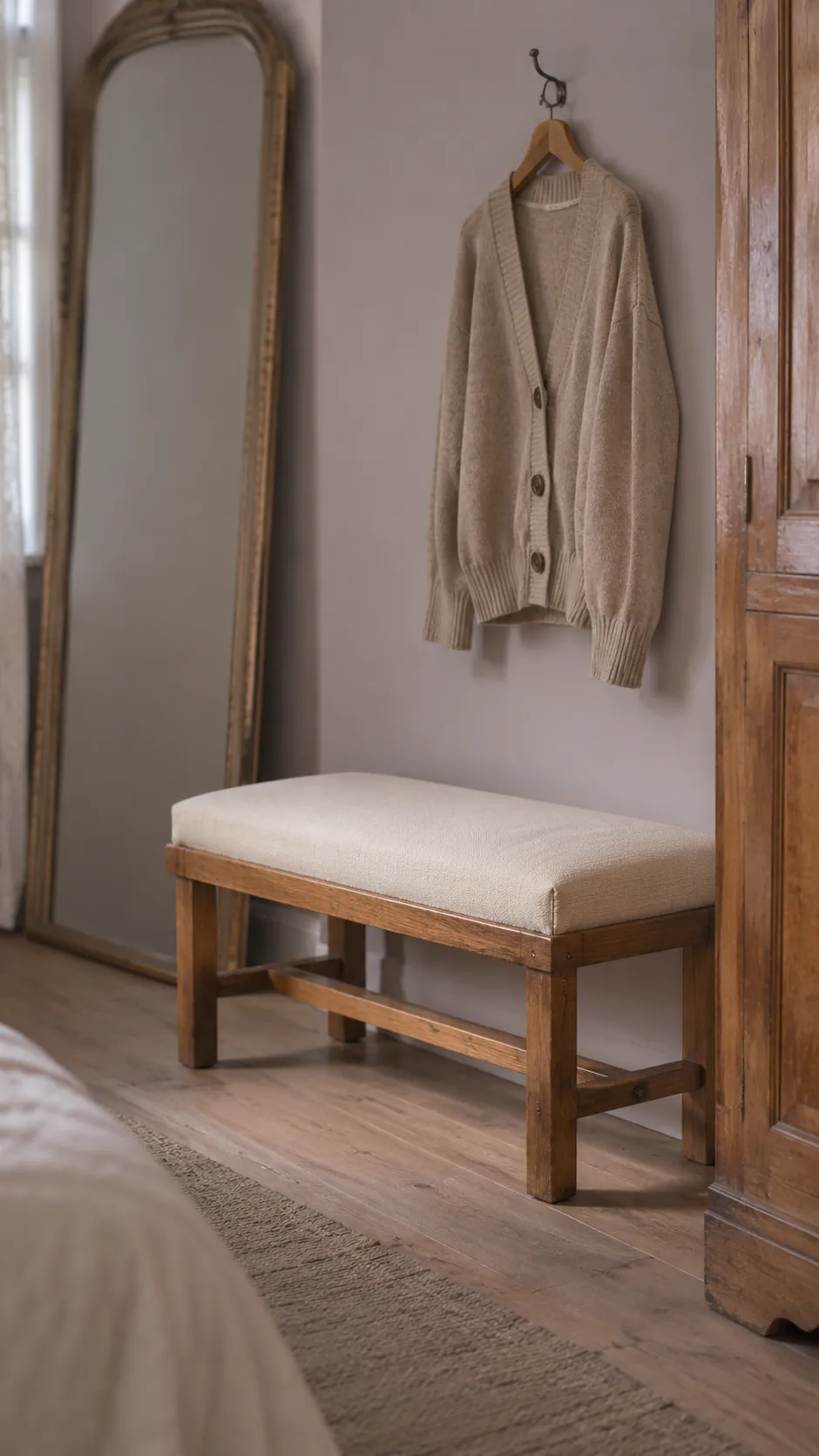
A short bench or a spare chair gives you a place to fold the quilt or put on socks in the morning. Clear off clothes before bed if you want enough space to sit. Keep the seat close to where you dress and away from the main route. Give the things you remove a hook or drawer nearby.
Leave the Bed Ready for How You Sleep
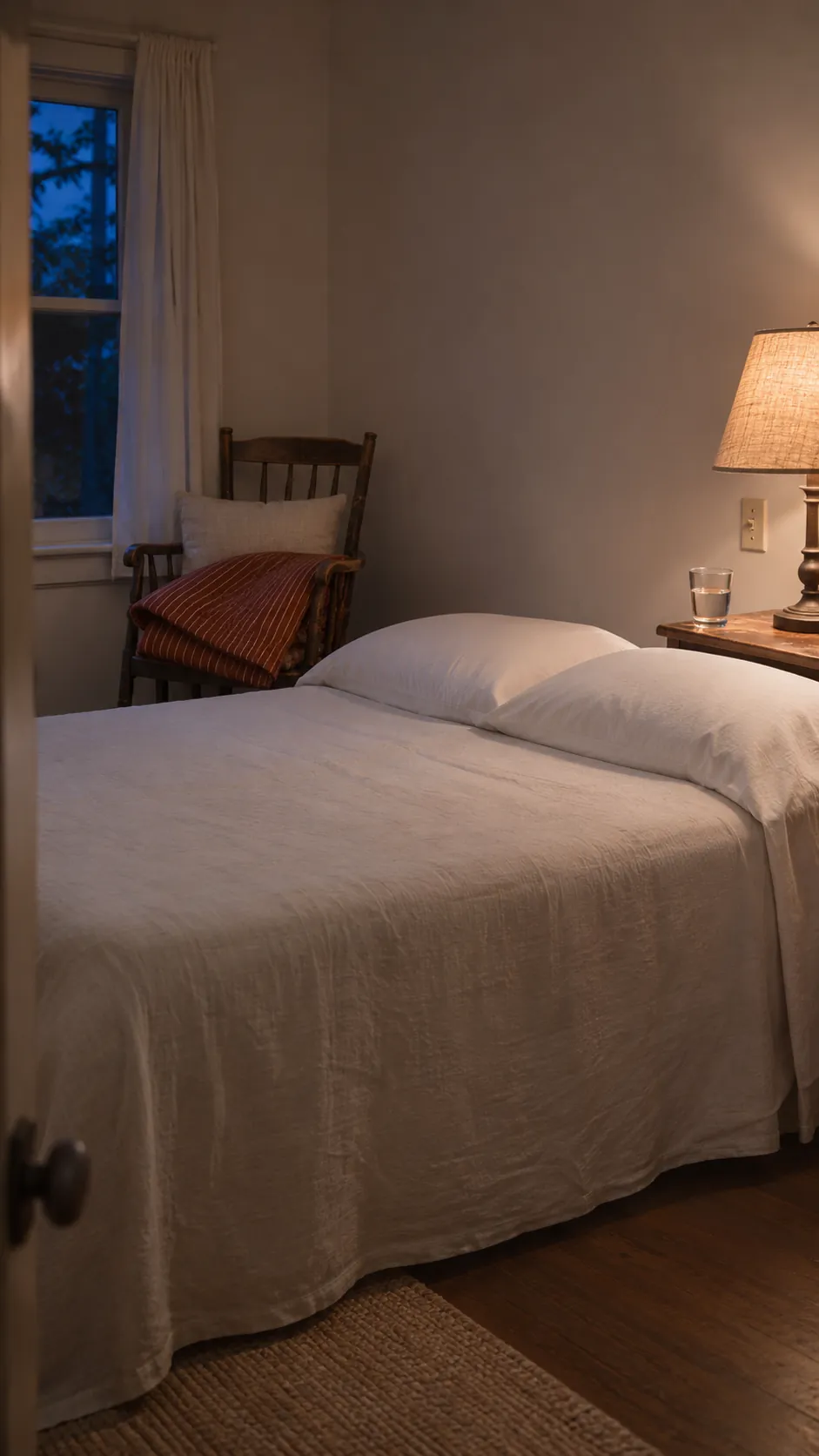
Move the extra cover and decorative pillow to the chair before you turn the lamps down. Put a glass where it will not reach electronics and check that your regular lamp switch is easy to find. The bed may look a little simpler at that point. It should be easier to get into and easier to make again in the morning.