
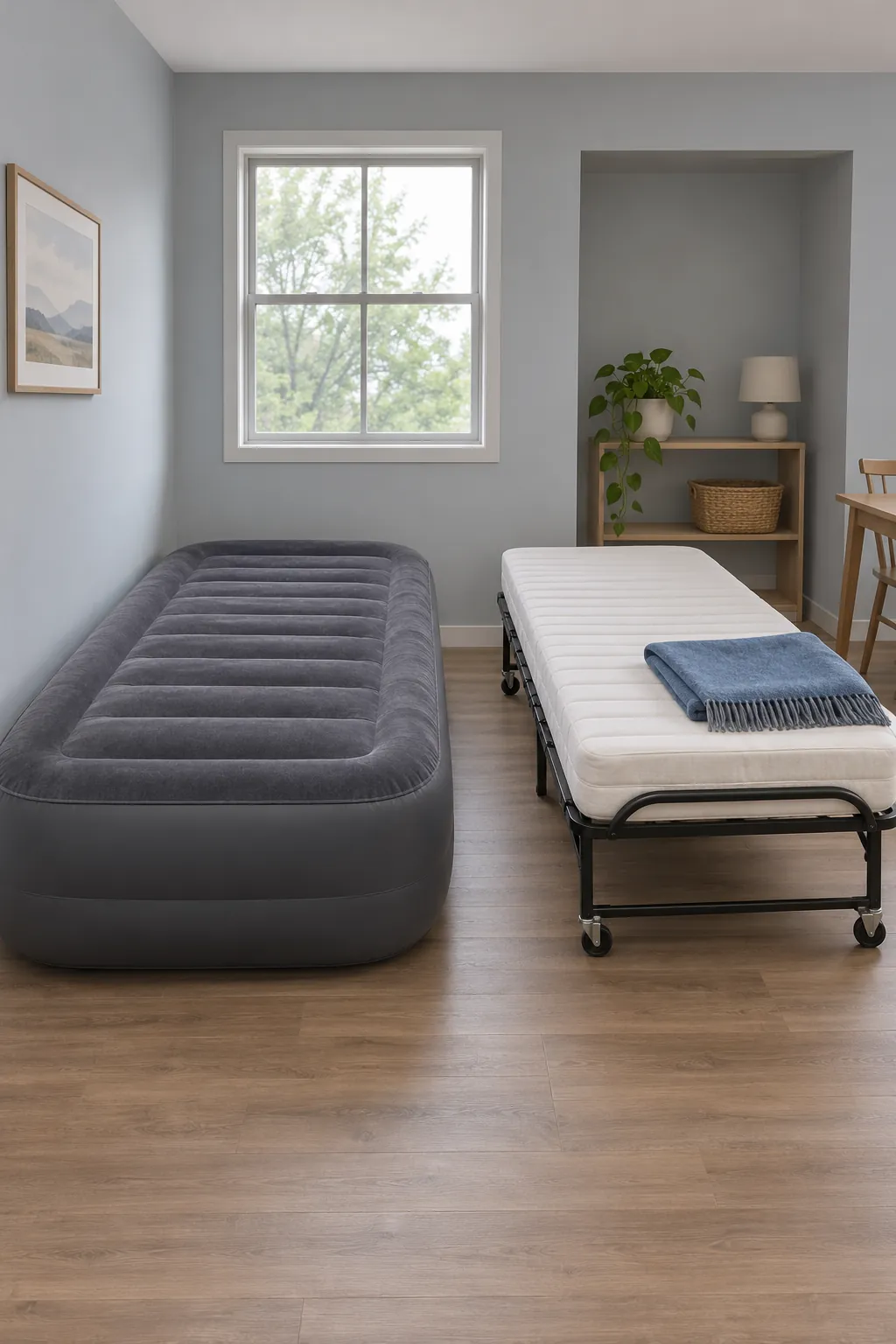
A bed can look tall enough and still be awkward to get out of. The edge may sink when your guest sits, or the only open space beside it may be too narrow to turn. Before choosing a temporary bed, ask what height and support feel familiar to your visitor. Then check whether that setup fits the room after the bed is open.
Compare the height when someone sits
Start with a chair or bed your visitor already gets out of comfortably. Ask whether they normally use an armrest or another stable support. A listed mattress height tells you where the top sits when the bed is empty. The useful comparison is how high the edge remains with weight on it.
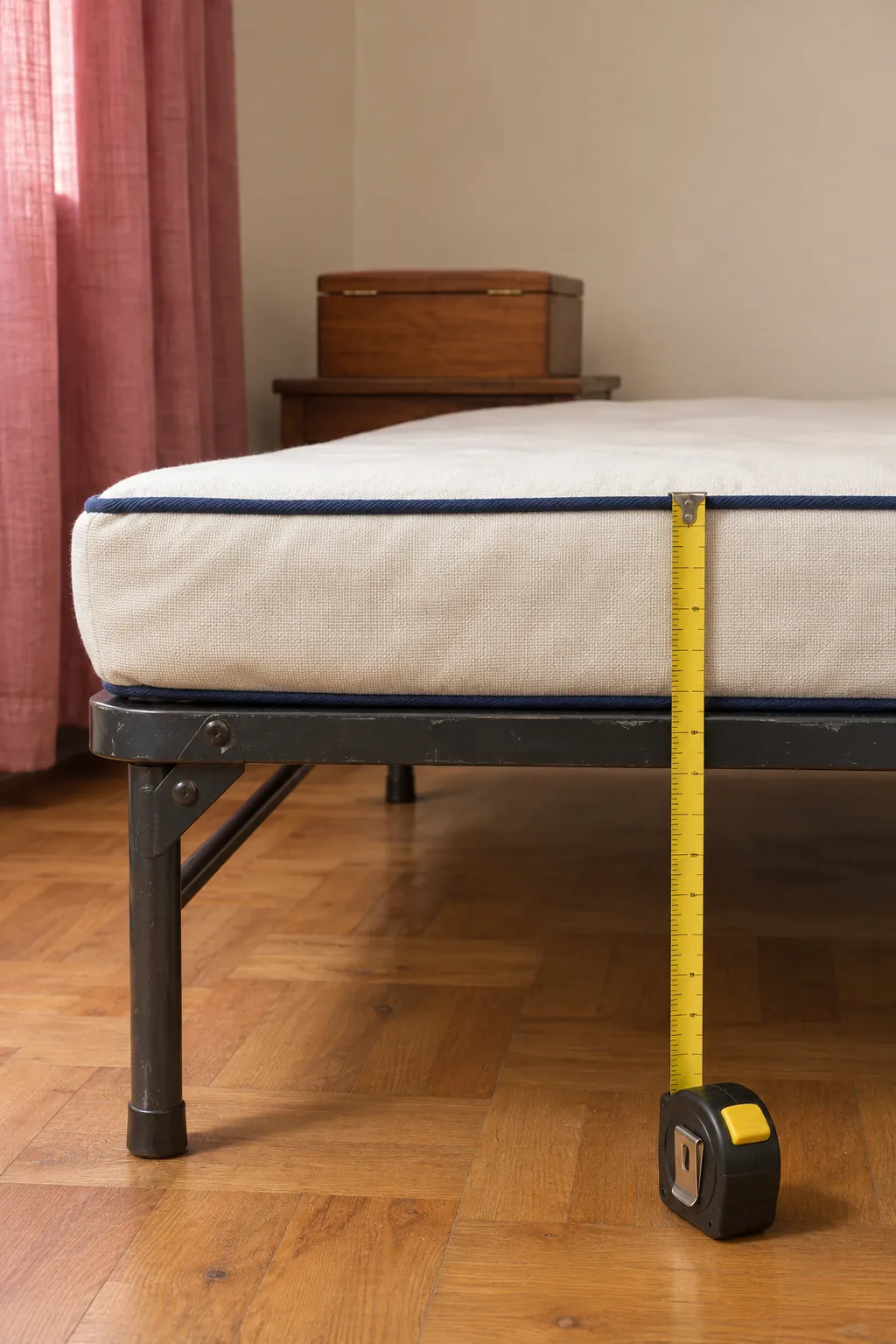
When you test a model, watch whether you can plant both feet and shift forward in one smooth motion. Height alone is a poor reason to pick a bed. An edge that rolls away under you can make a tall bed feel much lower.
A folding frame usually gives a firmer edge
If getting up is the main concern, test a folding guest bed first. Look for a frame that stays still, a mattress that reaches close to the edge, and a seat height that suits your guest. Follow the setup instructions, check the locks, and keep the feet on a level surface.
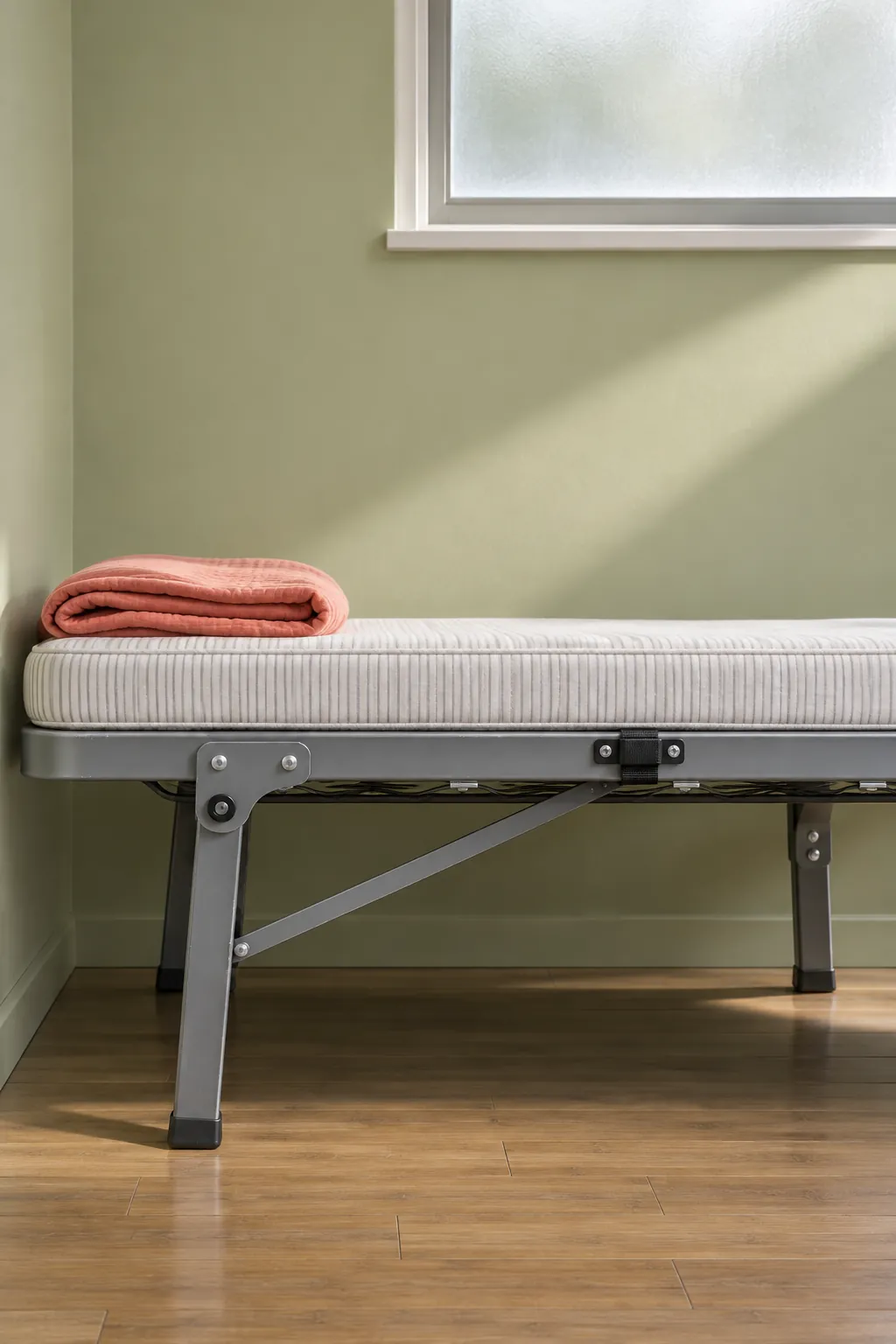
Some compact rollaway beds are narrow or sit low despite having a frame. The mattress may also compress enough to expose the feel of a side rail. Check the rated capacity and sit at the edge of the actual model if possible.
A raised air bed is easier to store
A raised air bed can make sense when storage is the tightest limit and your guest is comfortable with a softer edge. An empty bag takes up little room, and you can move it without a metal frame. Check the specified inflation procedure and test the bed ahead of the visit so you can catch a slow leak or a valve that has not sealed.
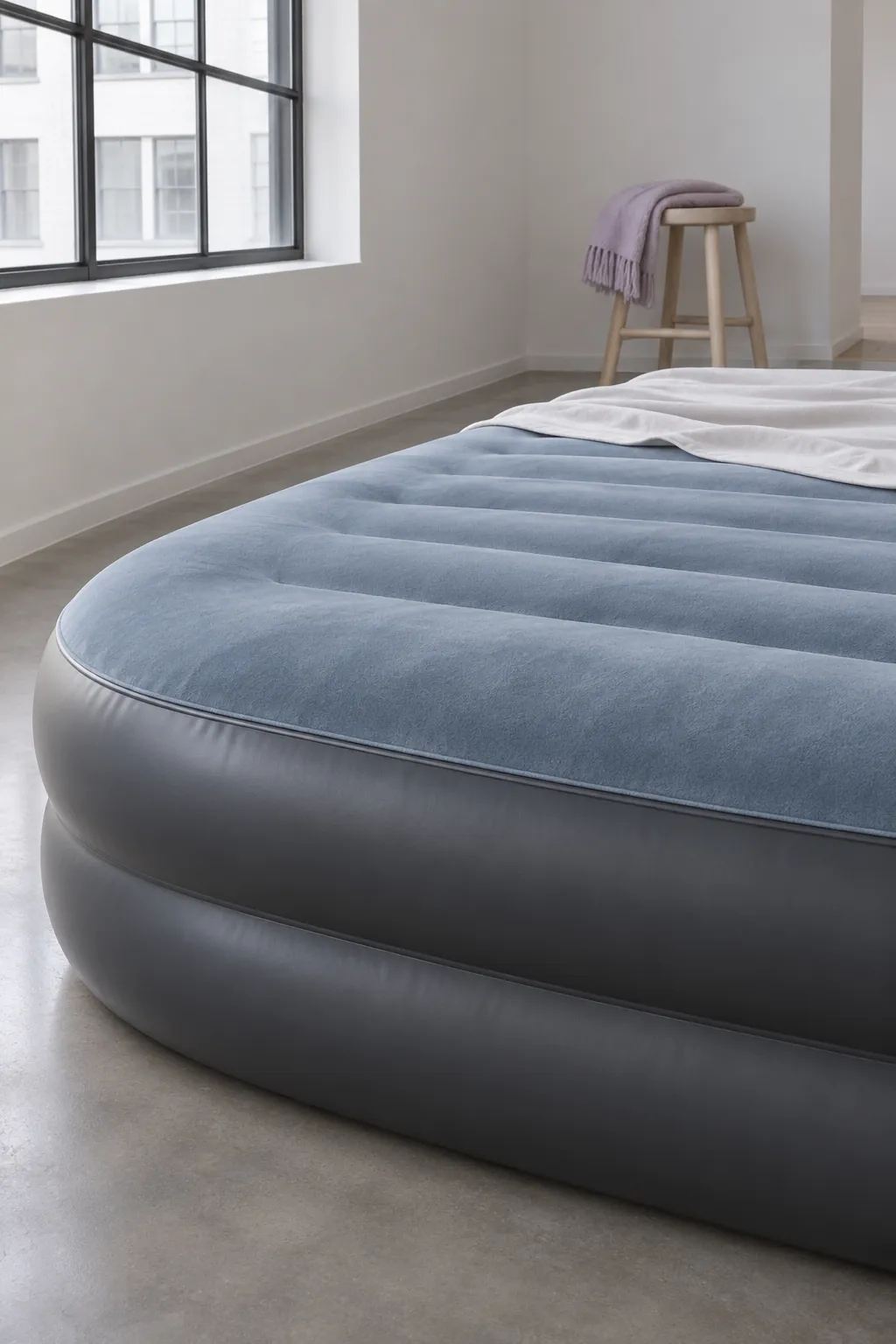
When you sit near the edge, notice whether the side rolls outward and how far you sink. An air bed that feels comfortable when you lie down can still feel awkward the moment you try to stand. Ask before assuming that extra height fixes that problem.
Measure the zone beside the bed
Mark the open bed footprint on the floor with painter’s tape. Leave open space on the side your guest prefers, including room to set both feet down and to turn once standing. If they use a walker or cane, ask them what space and setup they need, and keep that aid within easy reach.
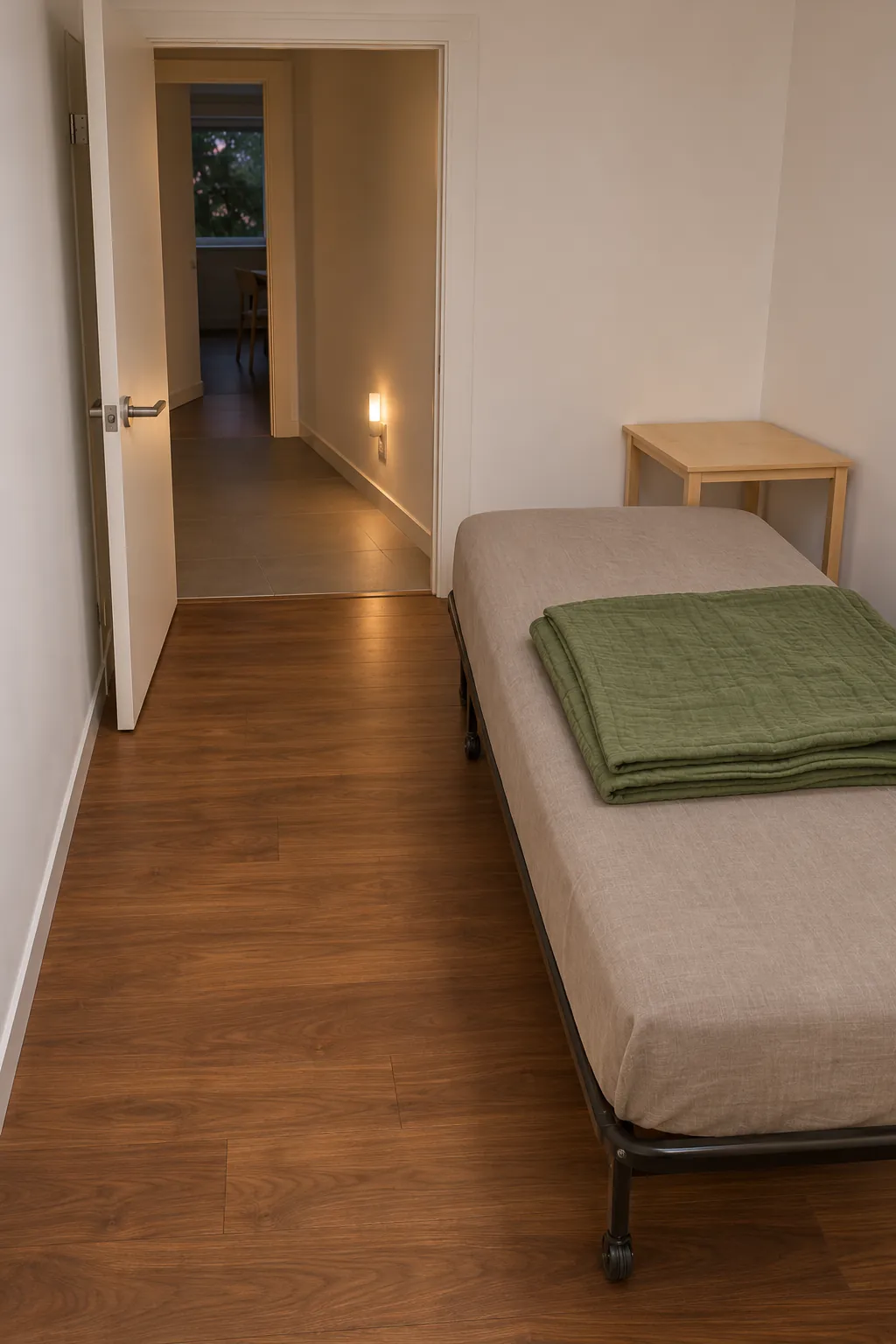
Check the path to the bathroom with the lights low. Shift the coffee table, tuck cords away, and confirm the door opens without hitting bedding or furniture. Measure the route with the bed in place, since room dimensions alone can miss a tight turn.
Check what the bed takes to put away
Compare the packed size of the air bed with the folded height, depth and width of the rollaway. Include wheel and handle projections, and measure the narrowest point on the way to the closet. A folding frame that fits inside the cupboard can still be too awkward to turn through the opening.
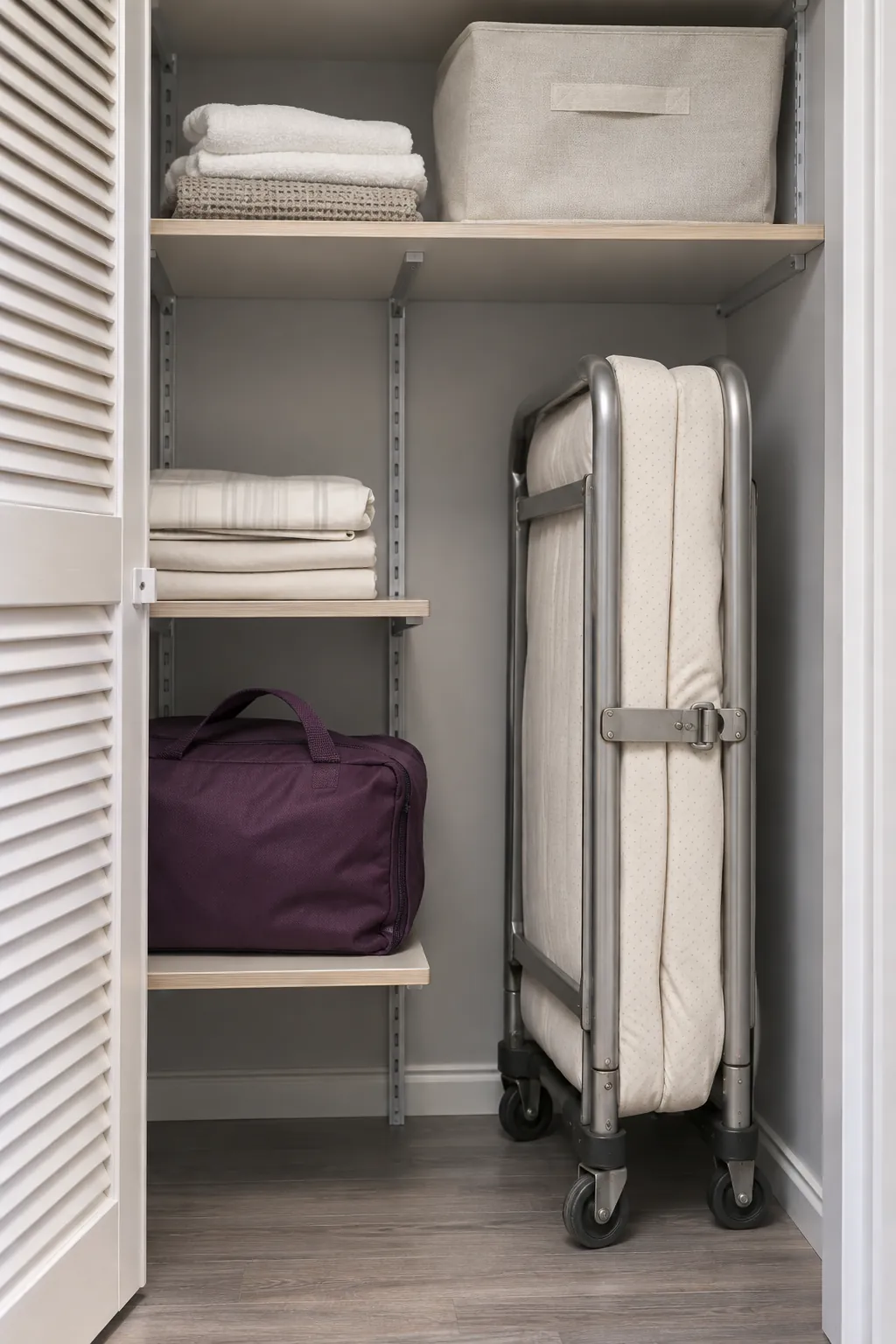
Air beds trade that bulk for inflation and packing time. Make sure the pump reaches a suitable outlet during setup, then keep the lead out of the walking route. With a folding bed, check whether you can safely move it and secure it in the storage position the maker specifies.
Decide with your guest before the visit
Choose the folding bed if your guest prefers its seated height and firmer edge, and you have room to store it. Choose the air bed if your guest is at ease getting up from it and you need the smaller packed size. Ask your visitor directly if the choice is close.
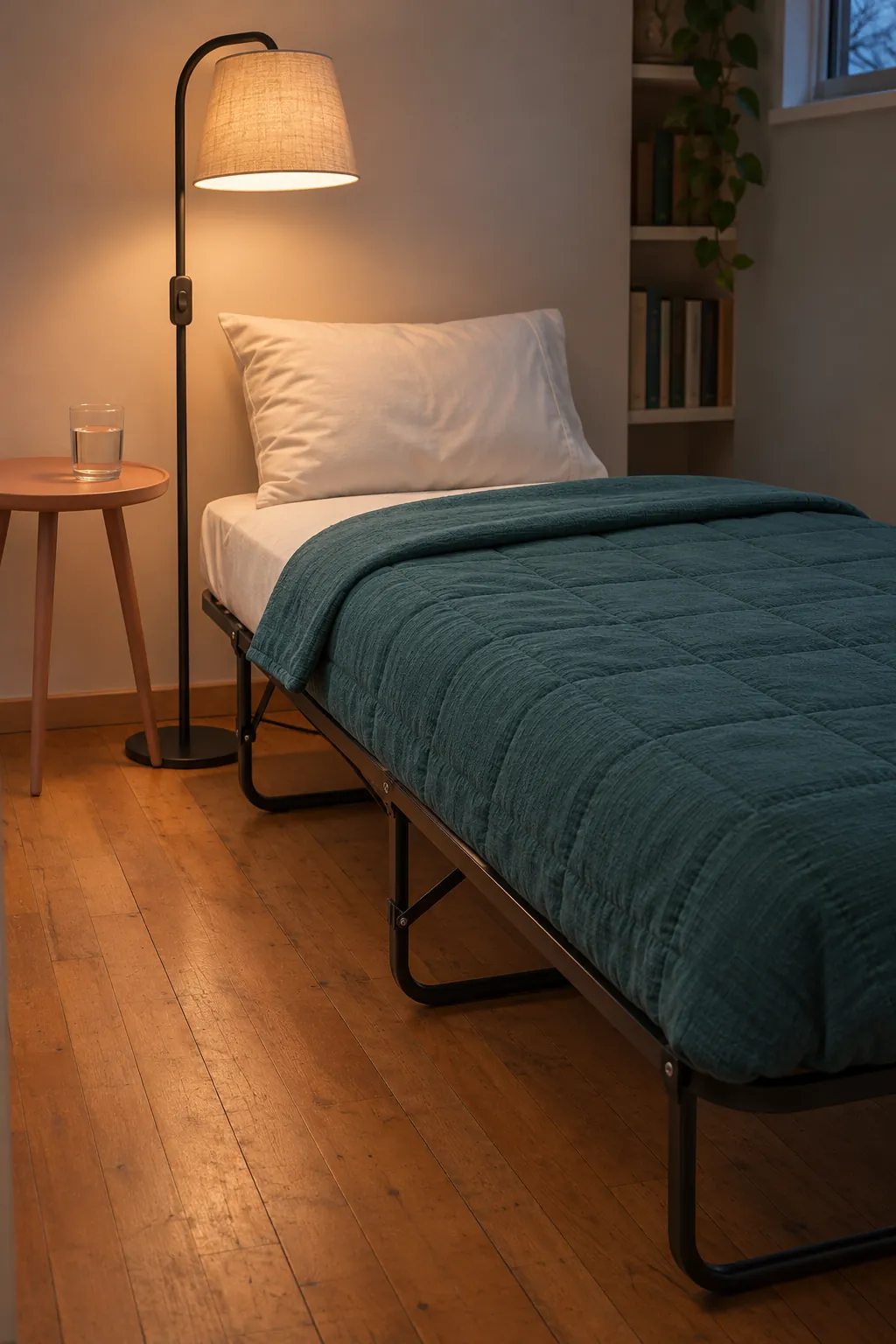
If both options feel too low or unstable for them, offer the most suitable regular bed you have if possible. Set up the temporary bed early enough to change plans if the frame moves, the mattress loses air, or the nighttime route turns out to be tight.