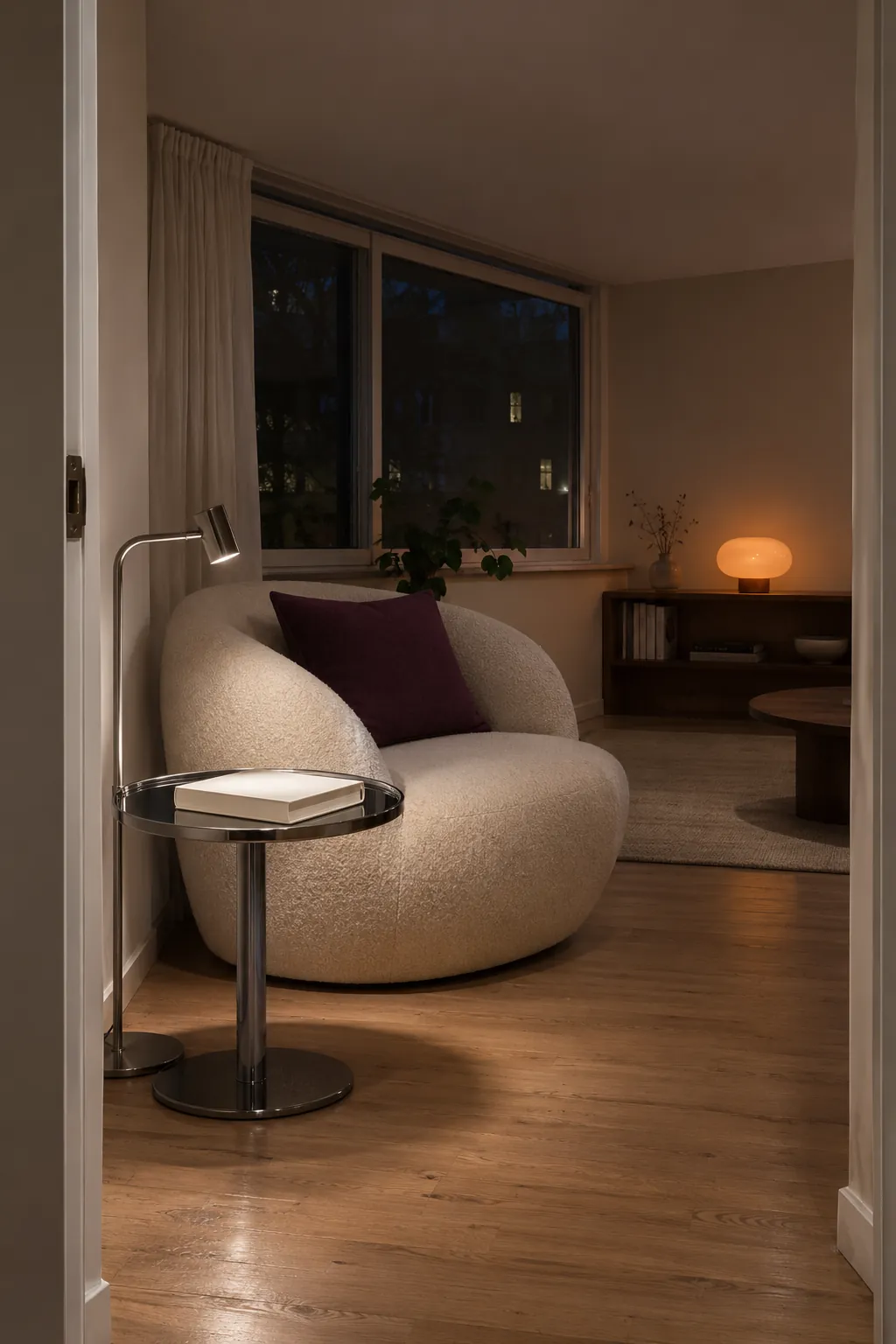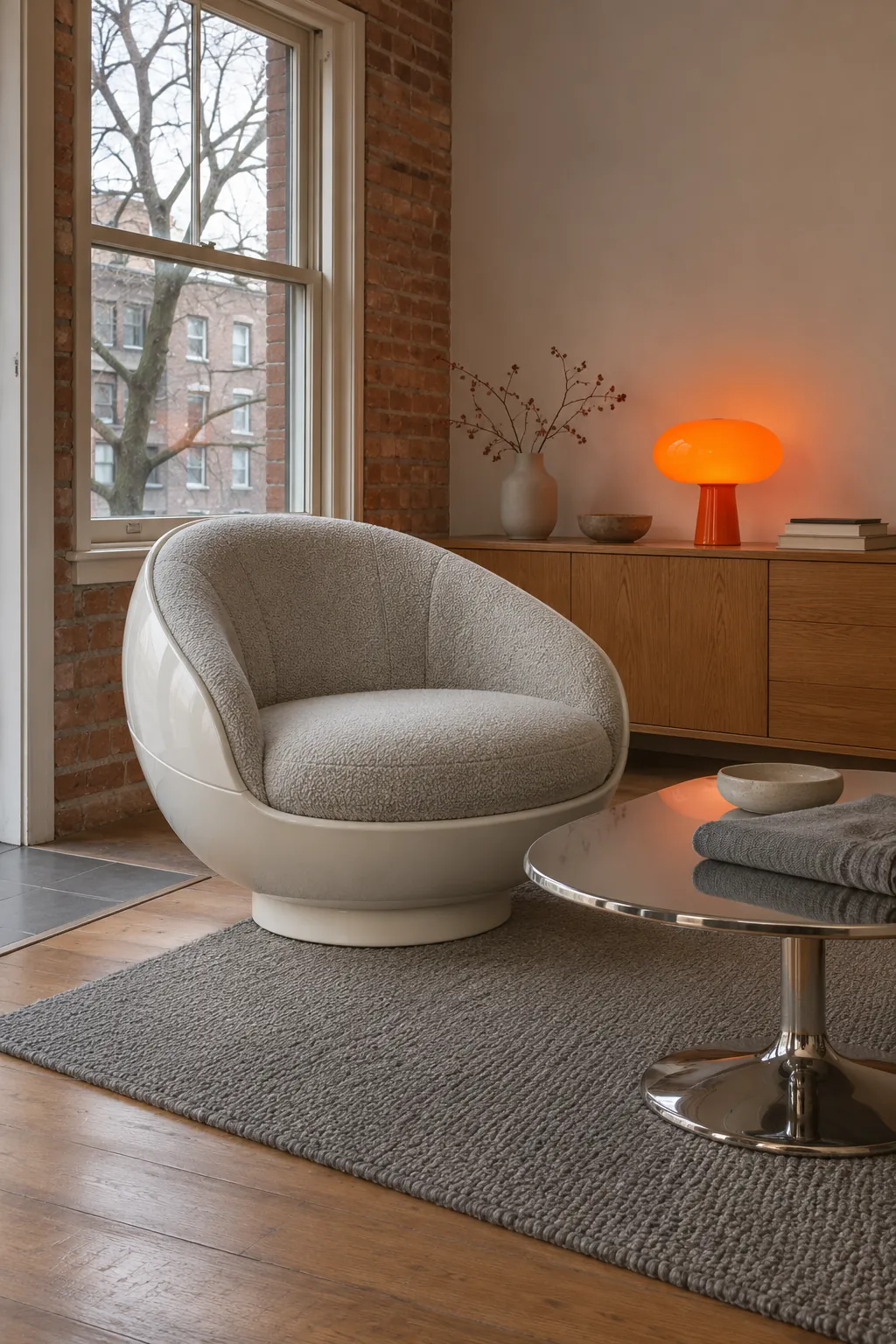
A bright shell chair can look smaller in a photo than it does in your doorway. The curves and gleaming surfaces that make this style appealing also affect how you move through a room and where the light lands. Start with a piece that fits a job you already do, from reading to eating breakfast.
Start with one soft white curve
A curved white chair or table makes the shape easier to see against plain walls. Look for warm white if your floors and trim are already cream. Set the piece apart from the nearest boxy cabinet so its silhouette is visible from the door.
Check the footprint of a ball chair
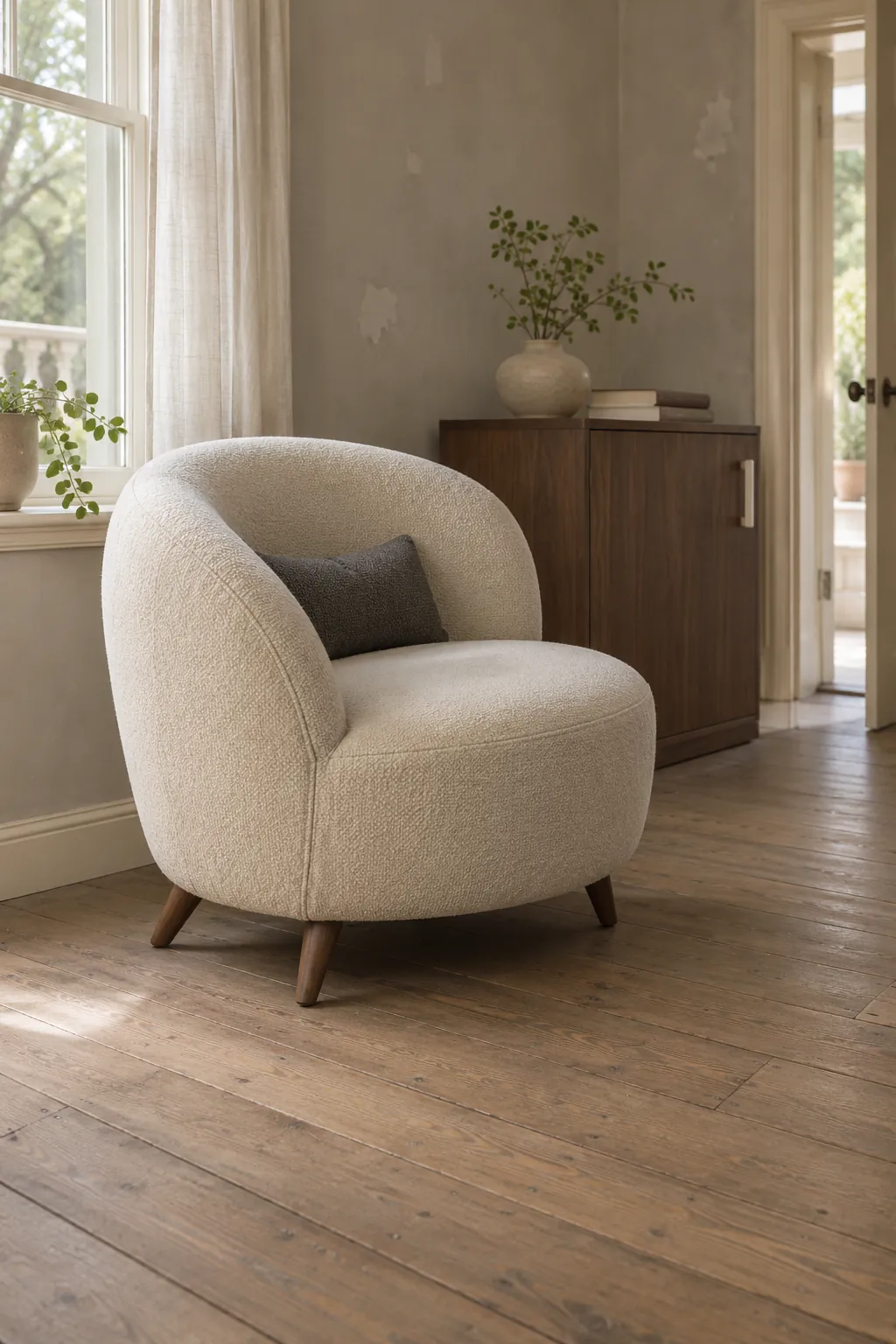
A ball chair can pull the eye away from a busy view and give you a sheltered place to read. Measure the shell at its widest point and check the route into the room before buying. Tape out the base and the shell separately because the shell can occupy much more space.
Use a low lounge chair for a smaller room
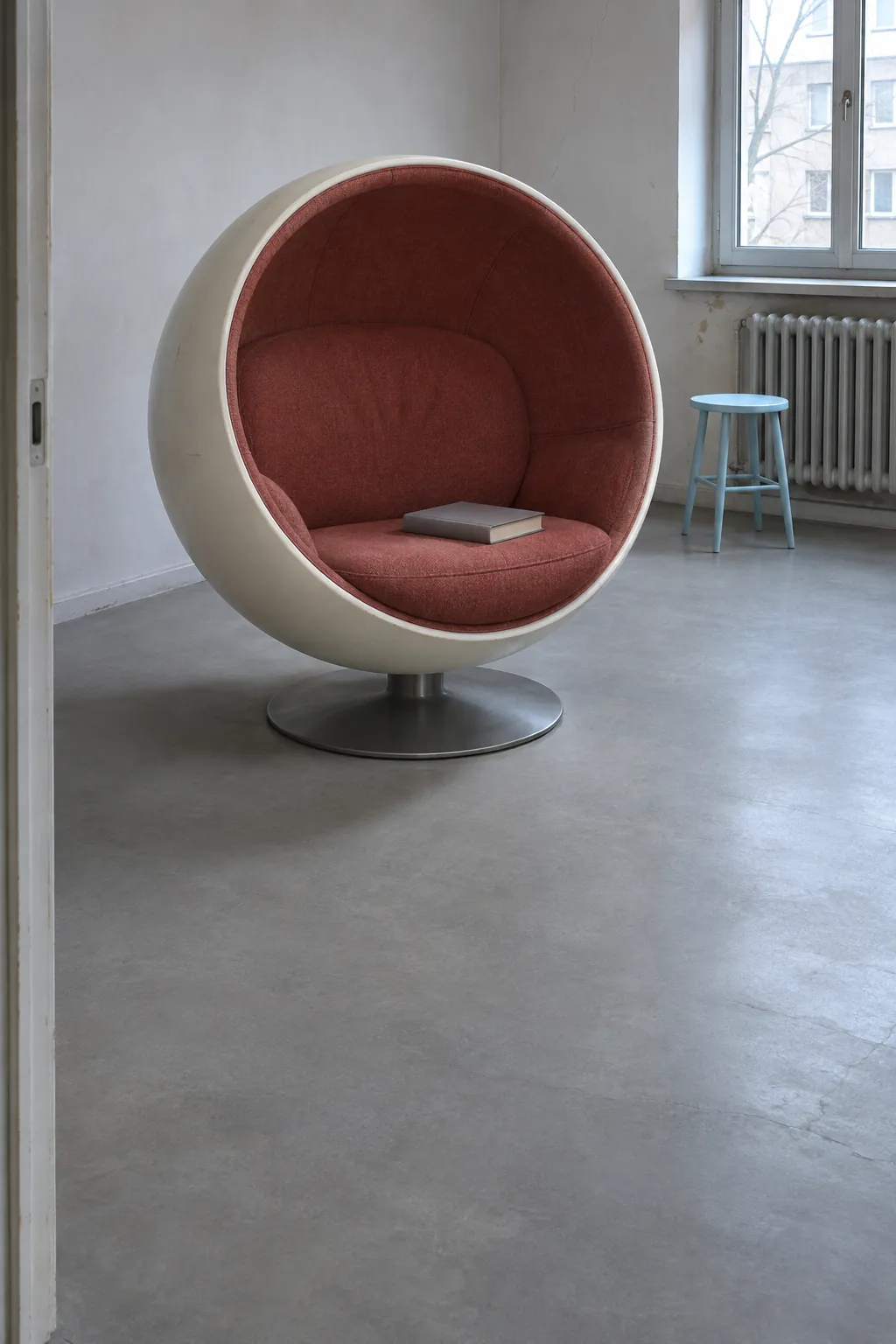
An open lounge chair with a deep curve gives you a similar outline at a shorter height. Check how easy it is for you to stand up from the seat. Choose a compact side table that keeps the open corner accessible.
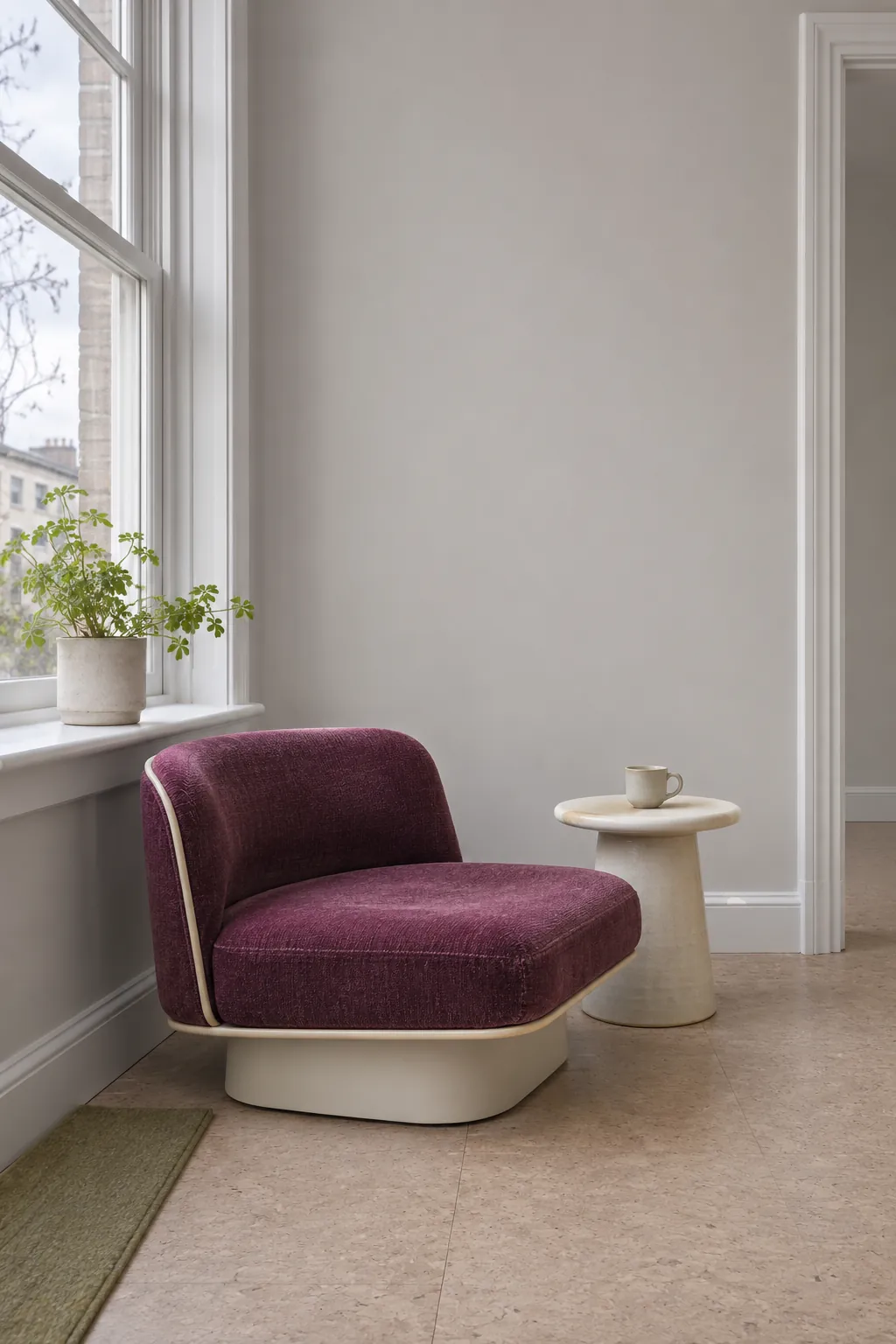
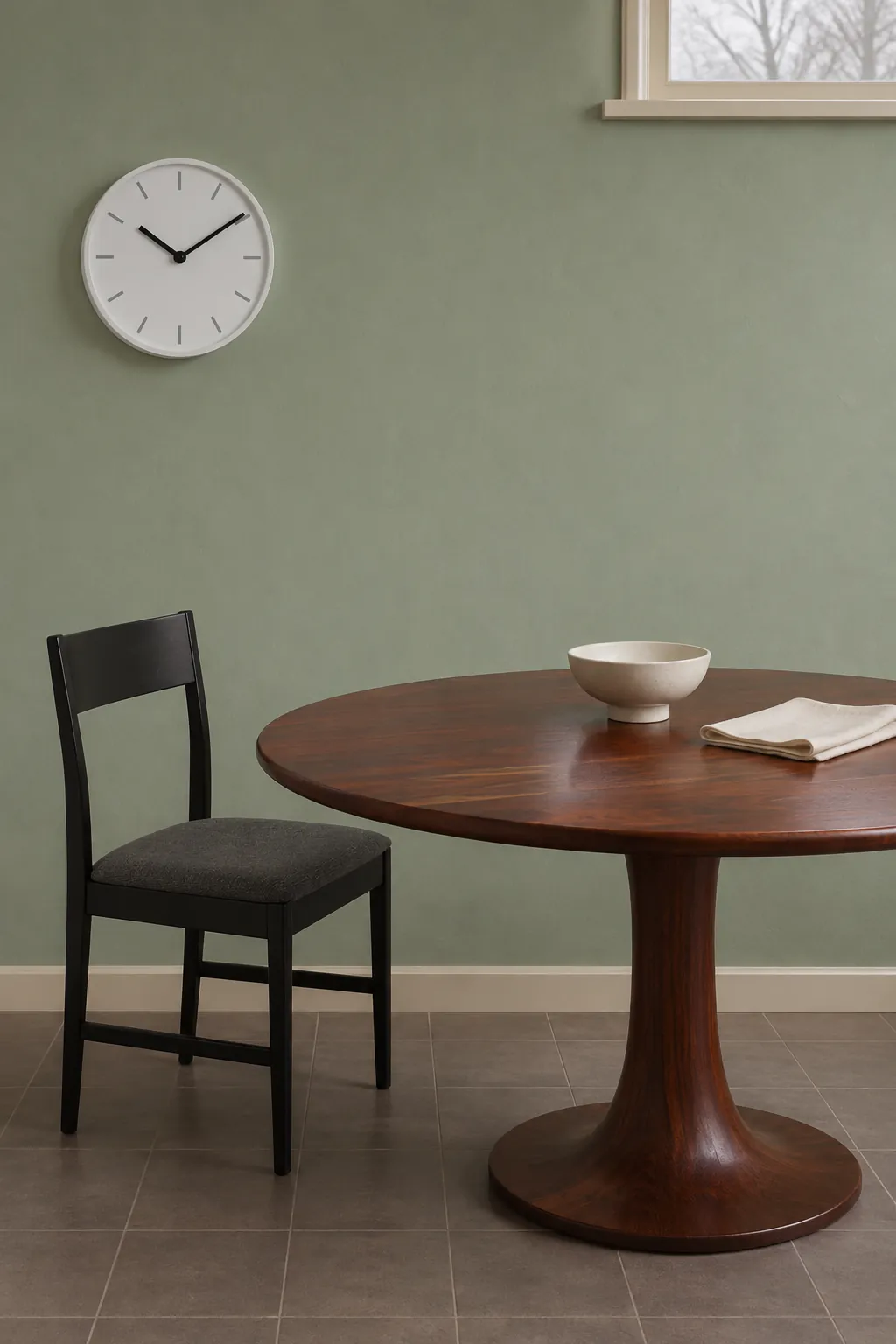
Try a pedestal table under a narrow window
A single pedestal leaves fewer legs around a small tabletop. Turn the chairs toward the window where the morning light is useful. Check the width of the base against the space your feet need under the table.
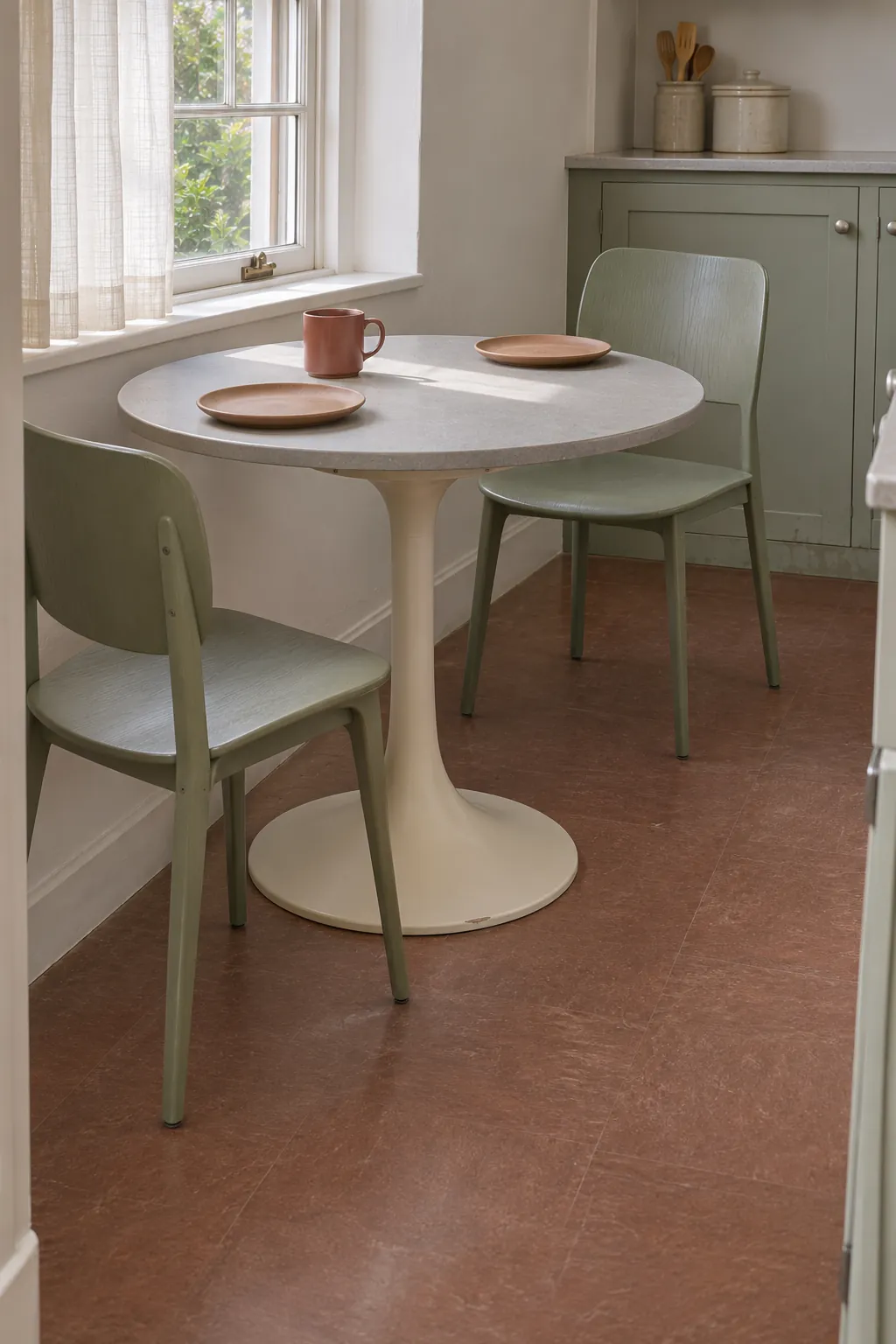
Make orange the detail you see first
Use orange on an object with a clear shape, such as a lamp, seat or cabinet door. Compare a softer burnt orange with a brighter version beside the existing floor. Keep the strongest color on the object you most want to notice.
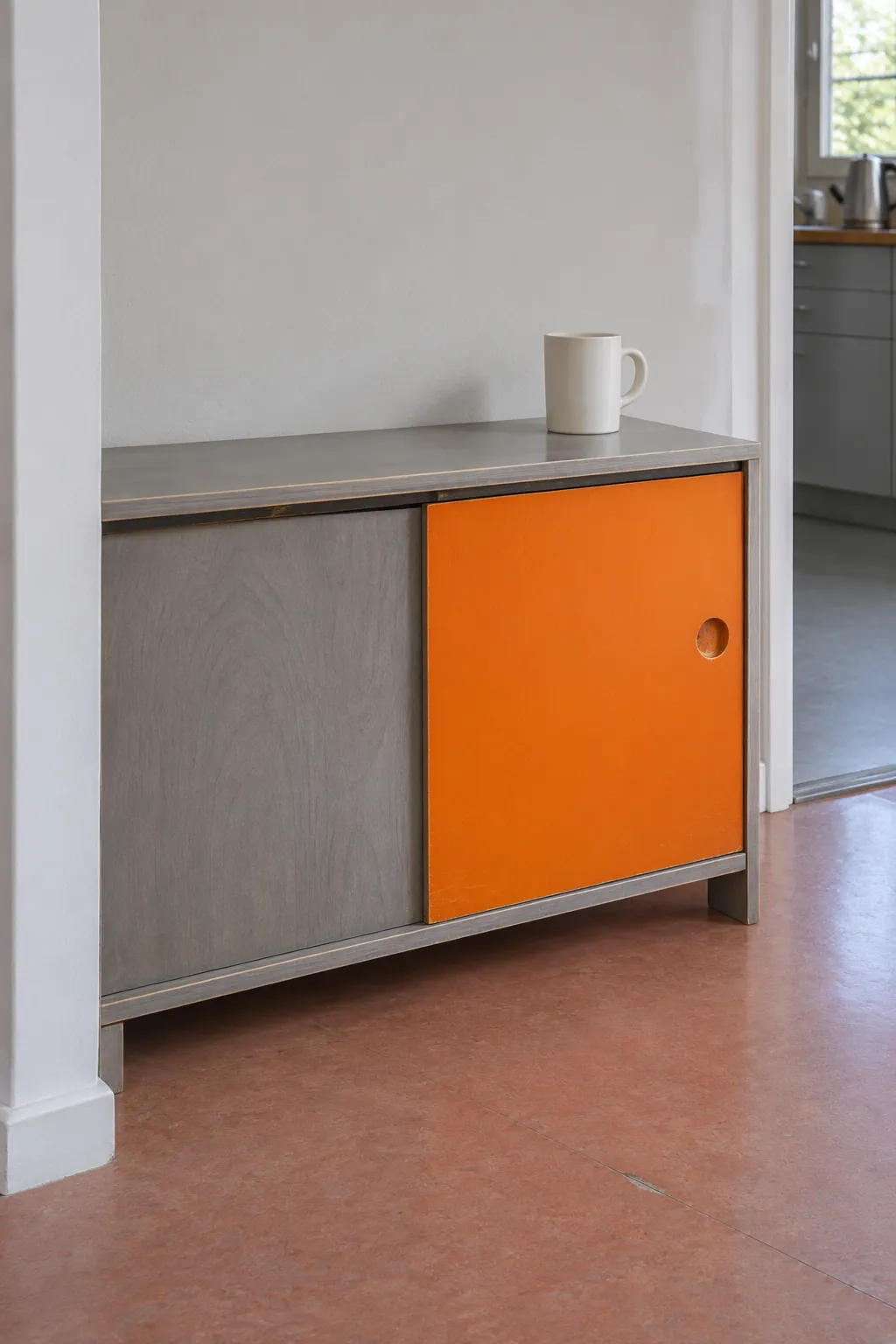
Use an eyeball lamp to light a task
A tilting ball shade can aim light across a desk or shelf. Turn the opening away from your usual eye line to see whether the lamp gives you light without glare. Check the switch and shade movement before buying a vintage example.
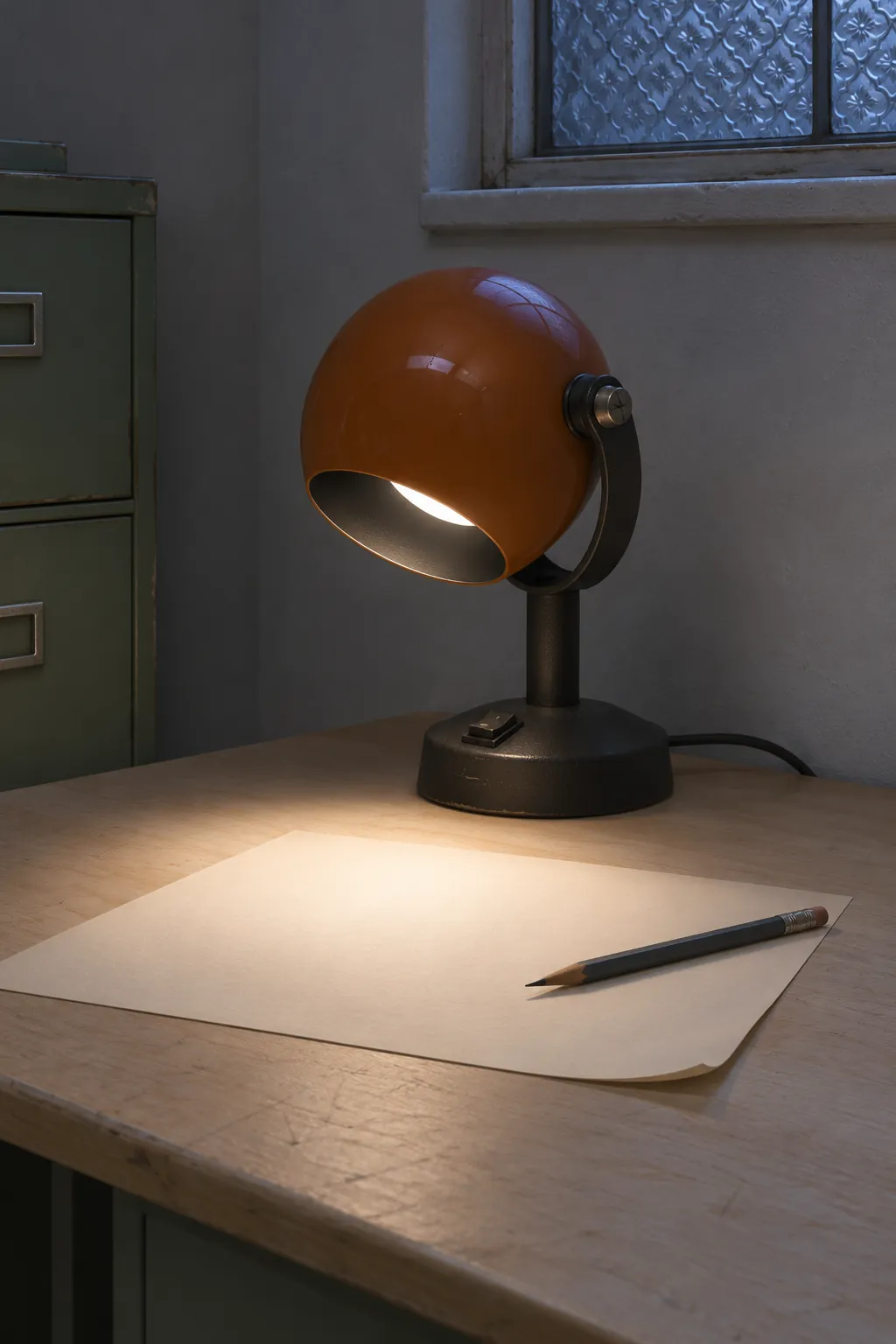
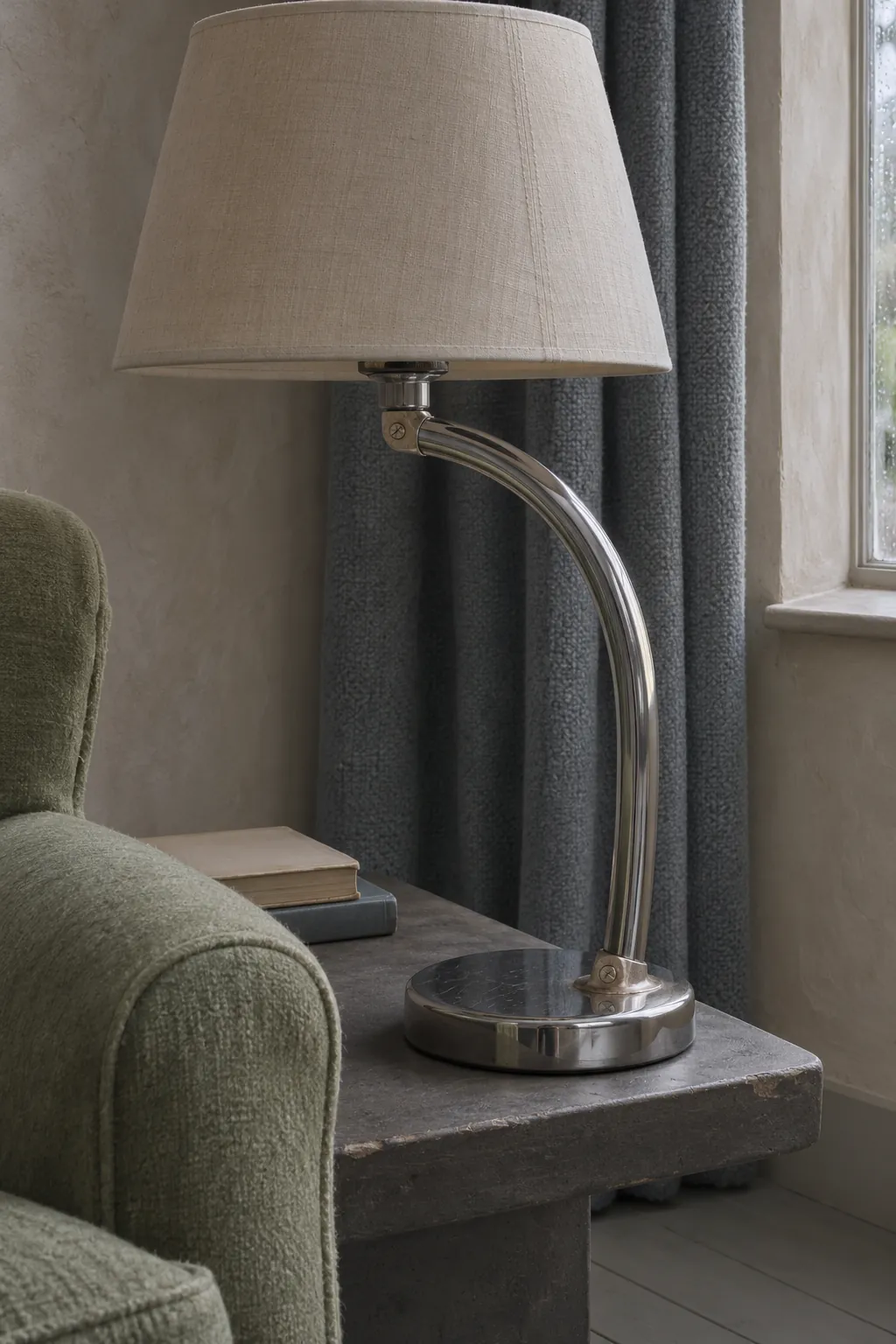
Give a chrome lamp something matte to reflect
Place a chrome lamp beside wool, plaster or unfinished wood. From a usual seat, look at the chrome before you decide where it belongs. Move the lamp if it reflects a bright window or bulb directly into your eyes.
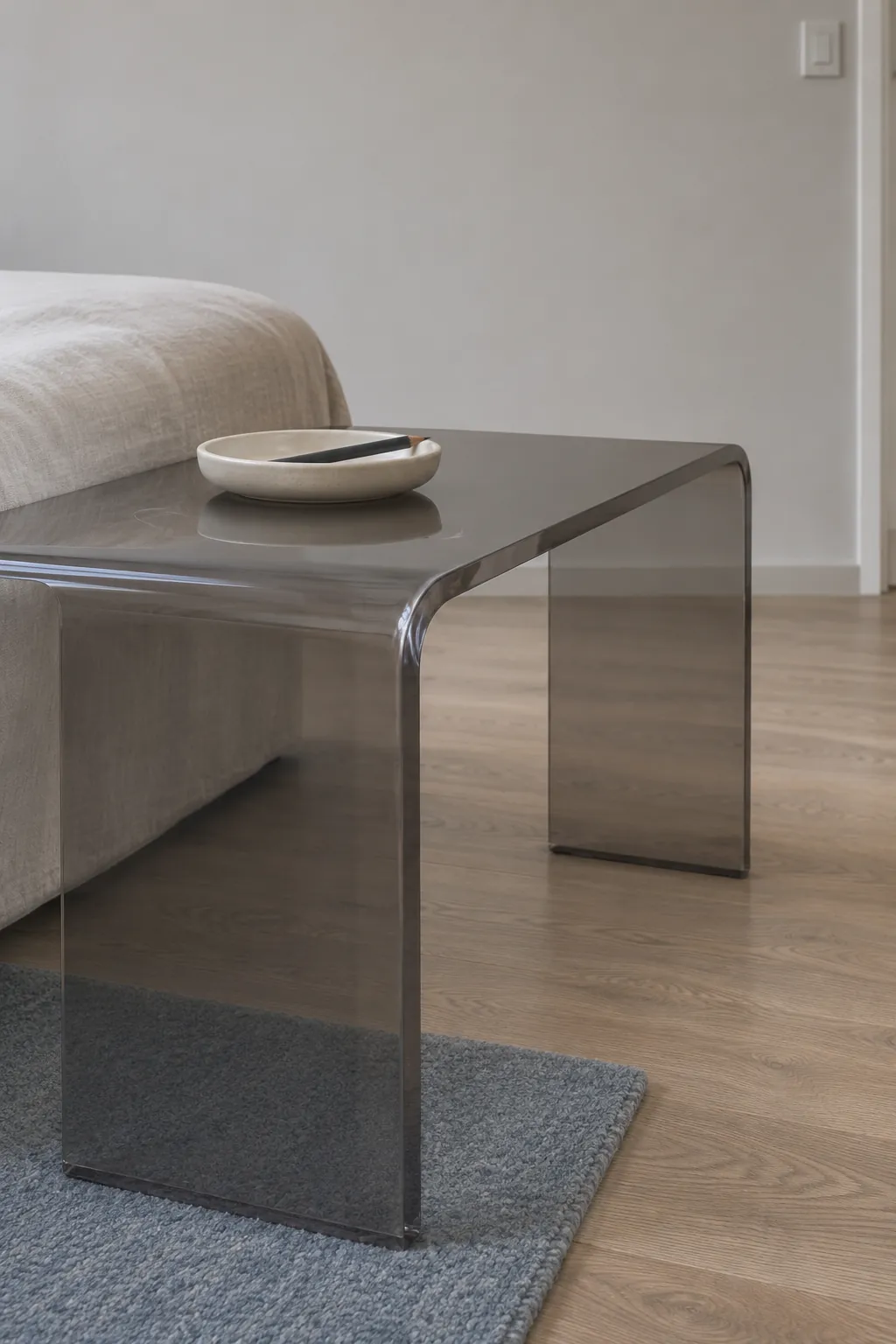
Try a smoked acrylic side table
Smoked acrylic softens the view through a table while keeping its shape light. Check both surfaces for fine scratches and inspect the edges and joints on a used piece. Follow the maker’s cleaner guidance and lift the table by its solid sides.
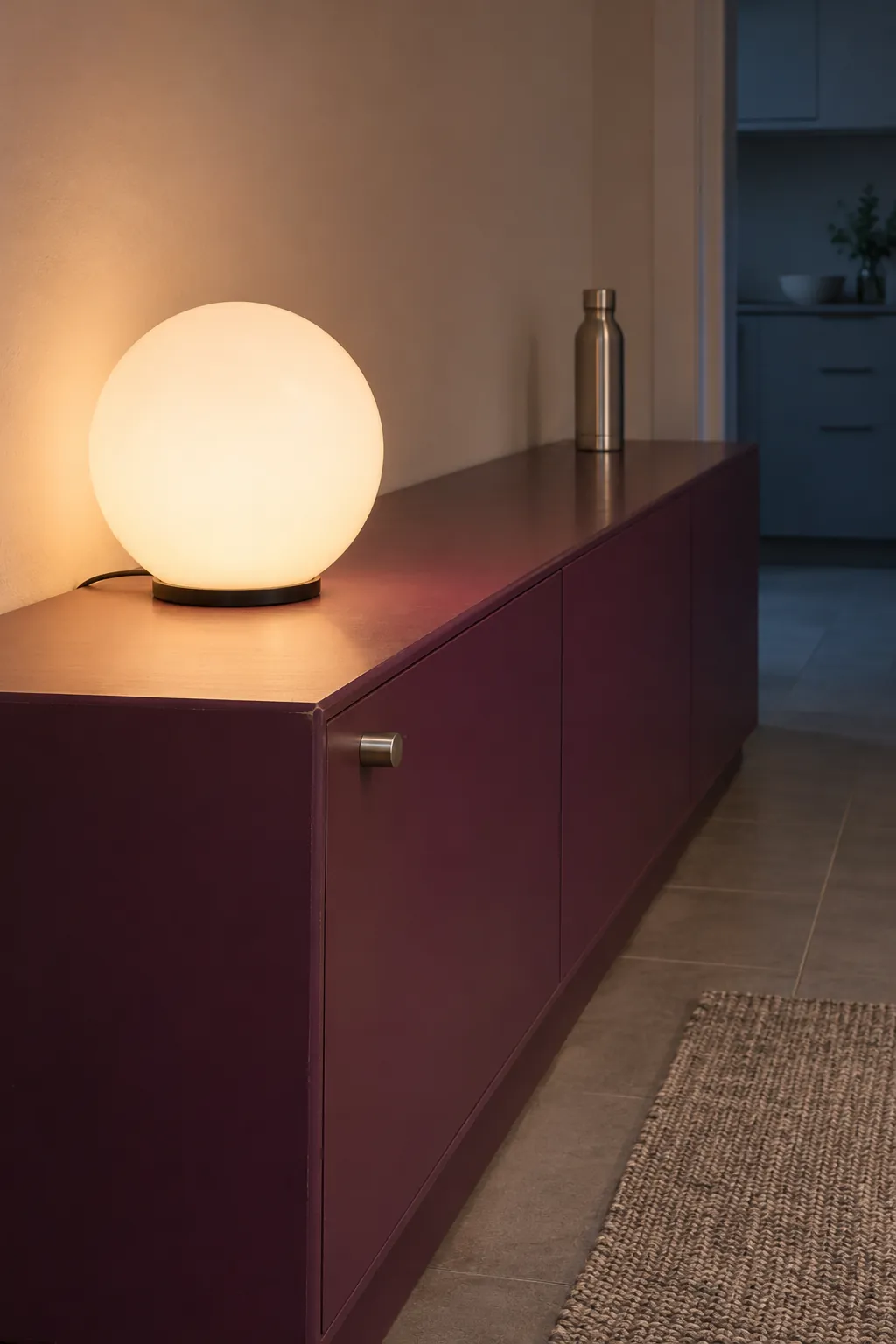
Put an opal globe on a low cabinet
An opal globe can give a low cabinet a rounded top line and spread light gently around it. Look at the lit globe in the evening from the sofa and doorway. Leave enough bare surface around its base to make the light and shadow visible.
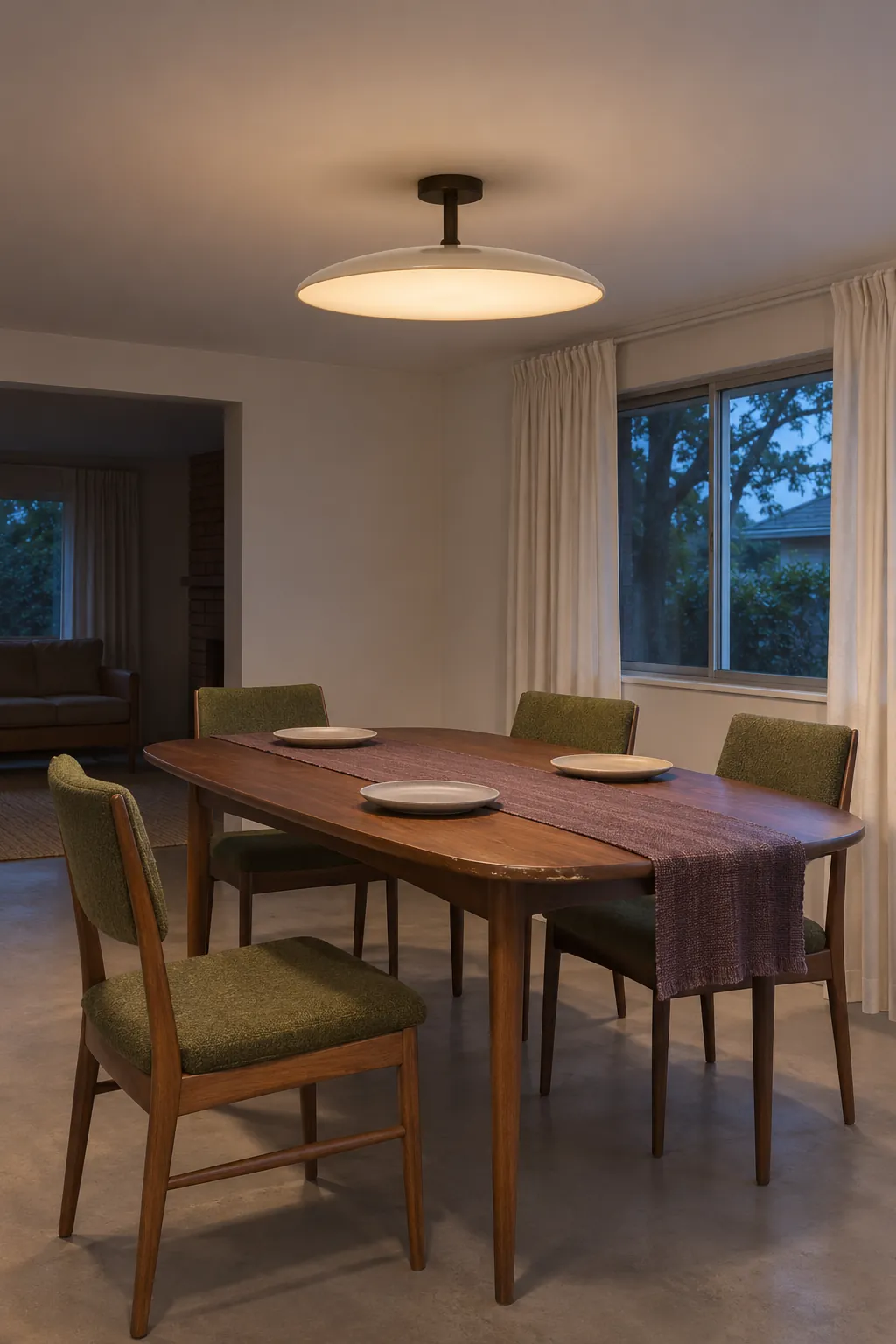
Pick a saucer shade over the dining area
A shallow saucer shade can make a dining table easier to find within an open room. Check that the shade hides the lamp from normal seated positions. Keep the lower rim high enough for conversation across the table and ask an electrician to install a wired fitting.
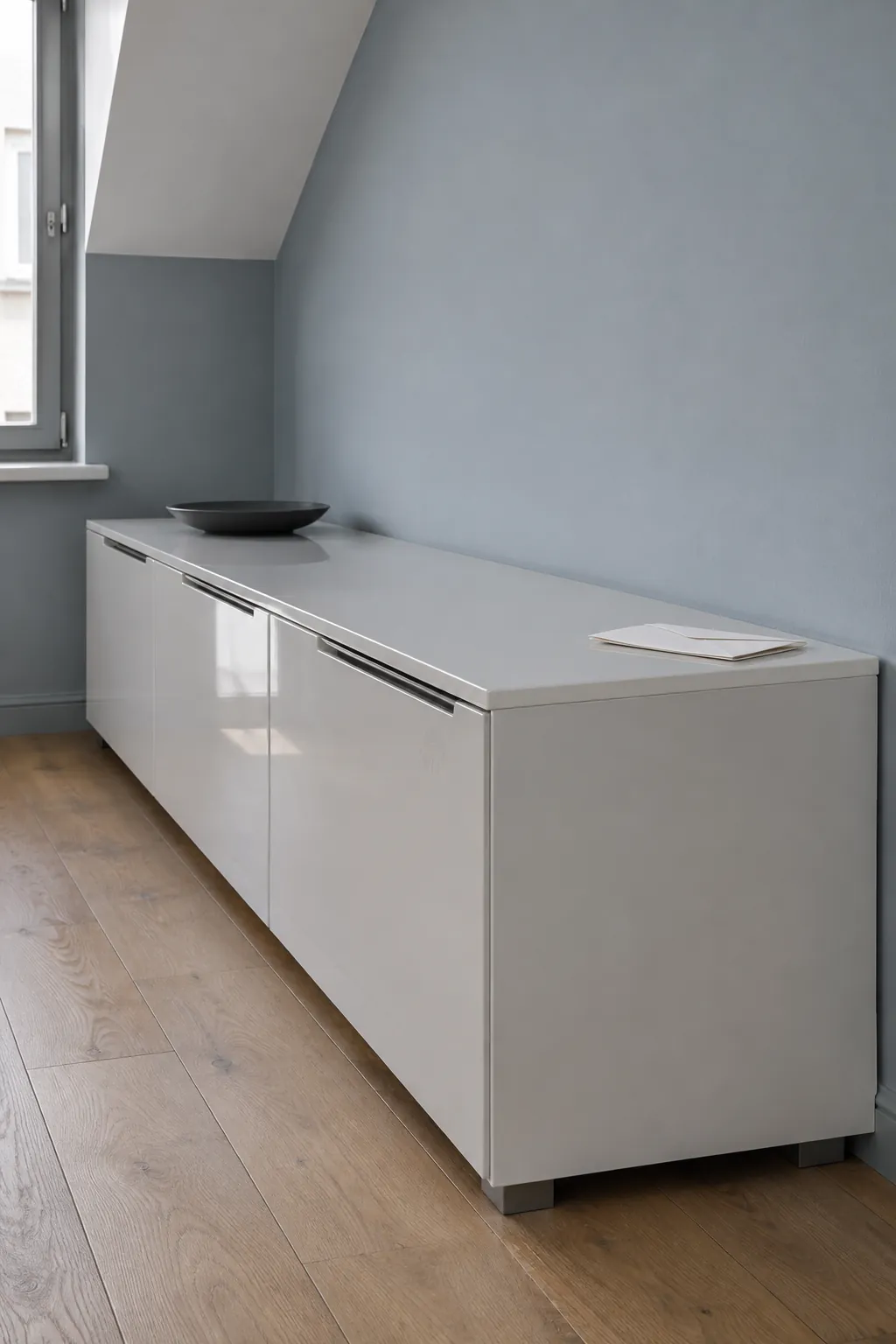
Use a glossy white cabinet down low
Keep a smooth white cabinet low so the eye has room to follow its edge. Look at the finish near daylight to check whether it shows more reflections or fingerprints than you want. Use closed storage for visible cables and small objects while keeping electronics ventilated as directed by their makers.
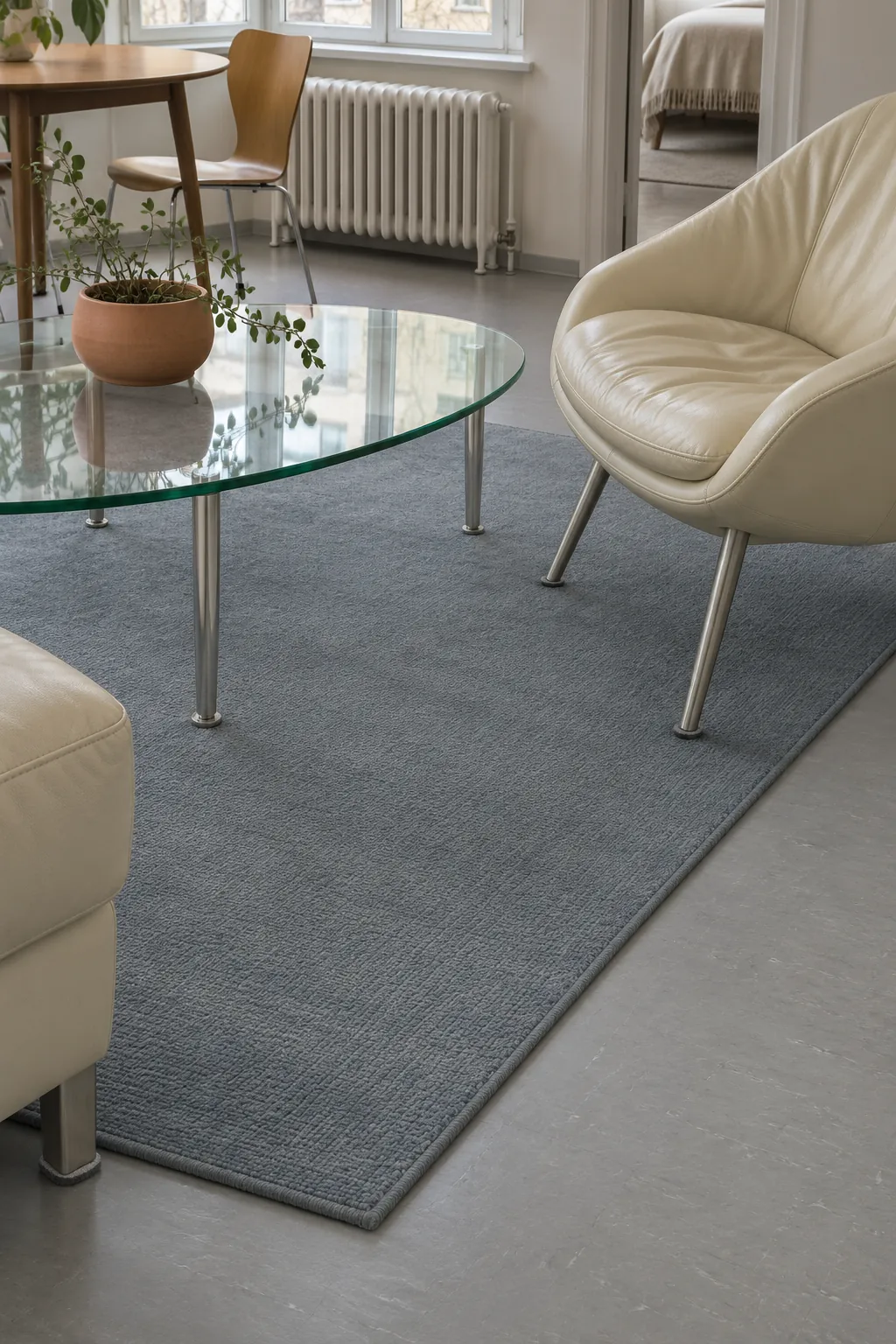
Soften reflective surfaces with a textured rug
A wool rug can make a group of glossy pieces feel more comfortable. Position it so it connects the main seats and leaves visible space around a clear table. Try a low pile if a wheeled chair has to cross the edge.
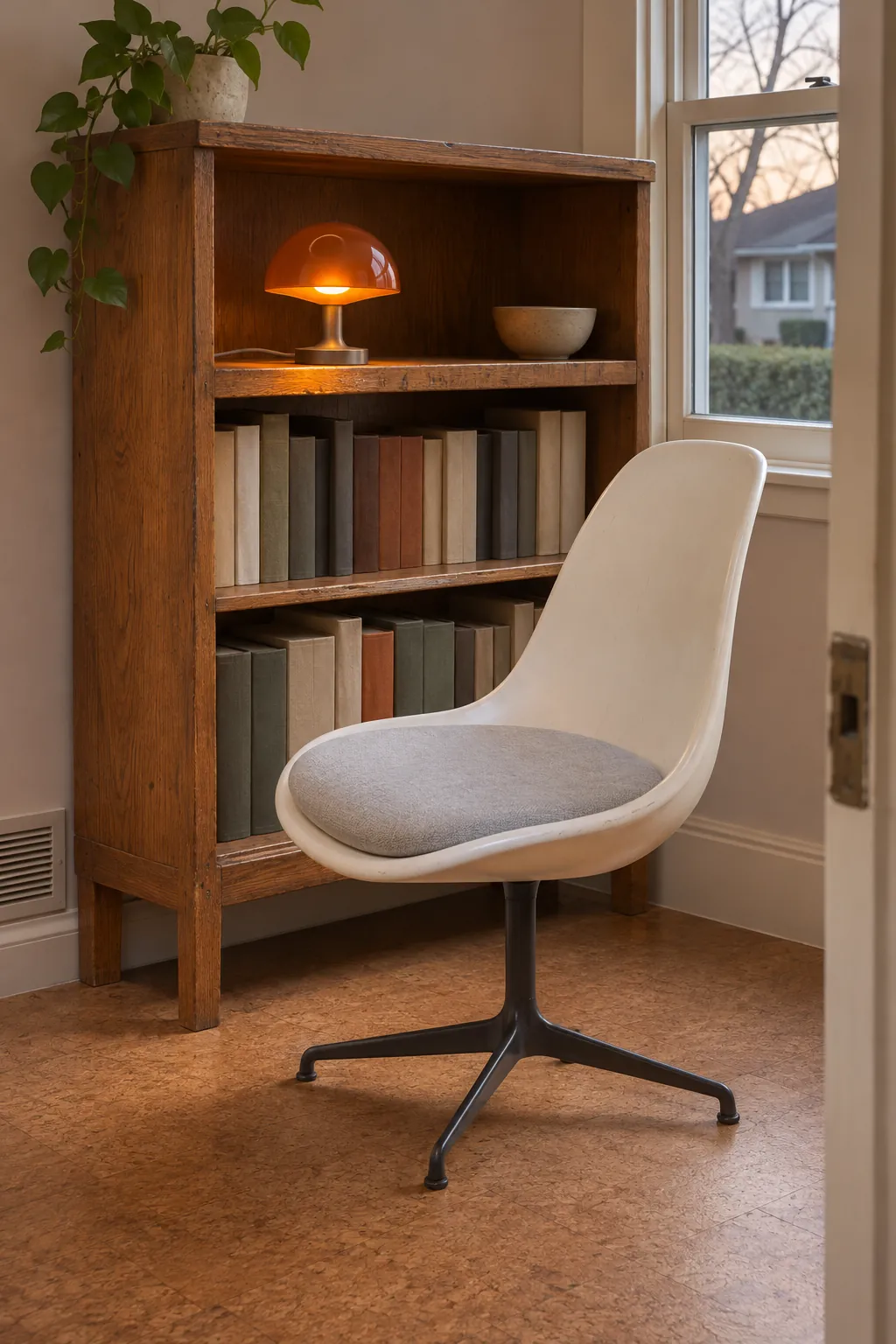
Keep your existing wood furniture
An oak bookcase or walnut cabinet can make a white molded piece feel more at home. Choose the wood tone you already see most often and let it carry the larger surface. Try a single bright lamp on or near it before replacing useful storage.
Repeat a circle at a different scale
A small circular clock can pick up the outline of a larger table or mirror. Give the smaller circle a useful position and enough space around it to read clearly. Keep the other pieces in the room simple so the round shapes stay distinct.
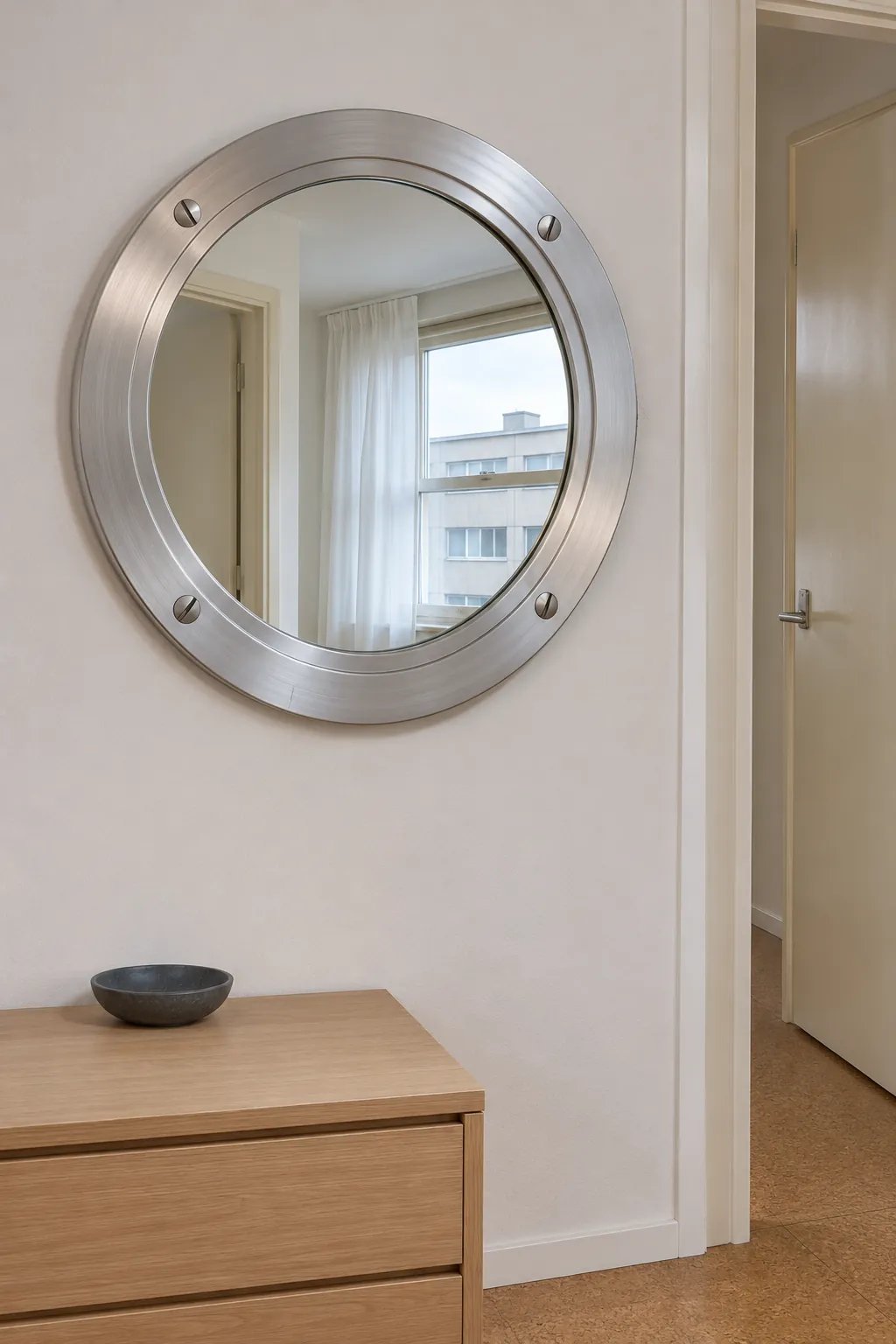
Give a porthole mirror a real view
A thick circular frame can make a plain hallway feel more like the period. Test what the mirror reflects near the door and at your ordinary viewing height. Aim it at a useful patch of daylight or a place where you can check your appearance.
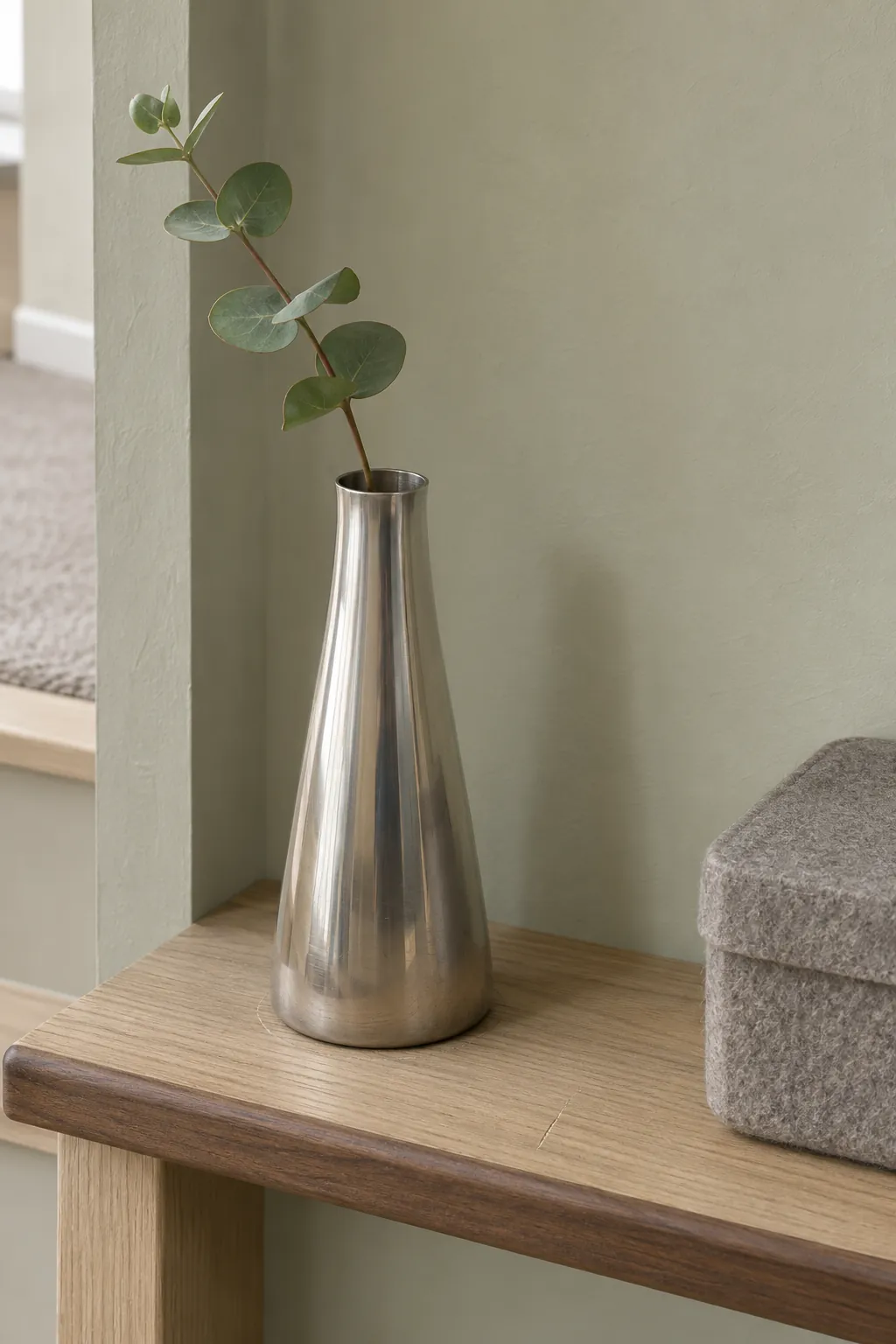
Use a silver vase to test a metallic accent
A single silver vase gives you an easy way to try more shine on a plain shelf. Look at it at different hours to see what the surface reflects. Put it on a broad flat base so the narrow profile does not make it easy to knock over.
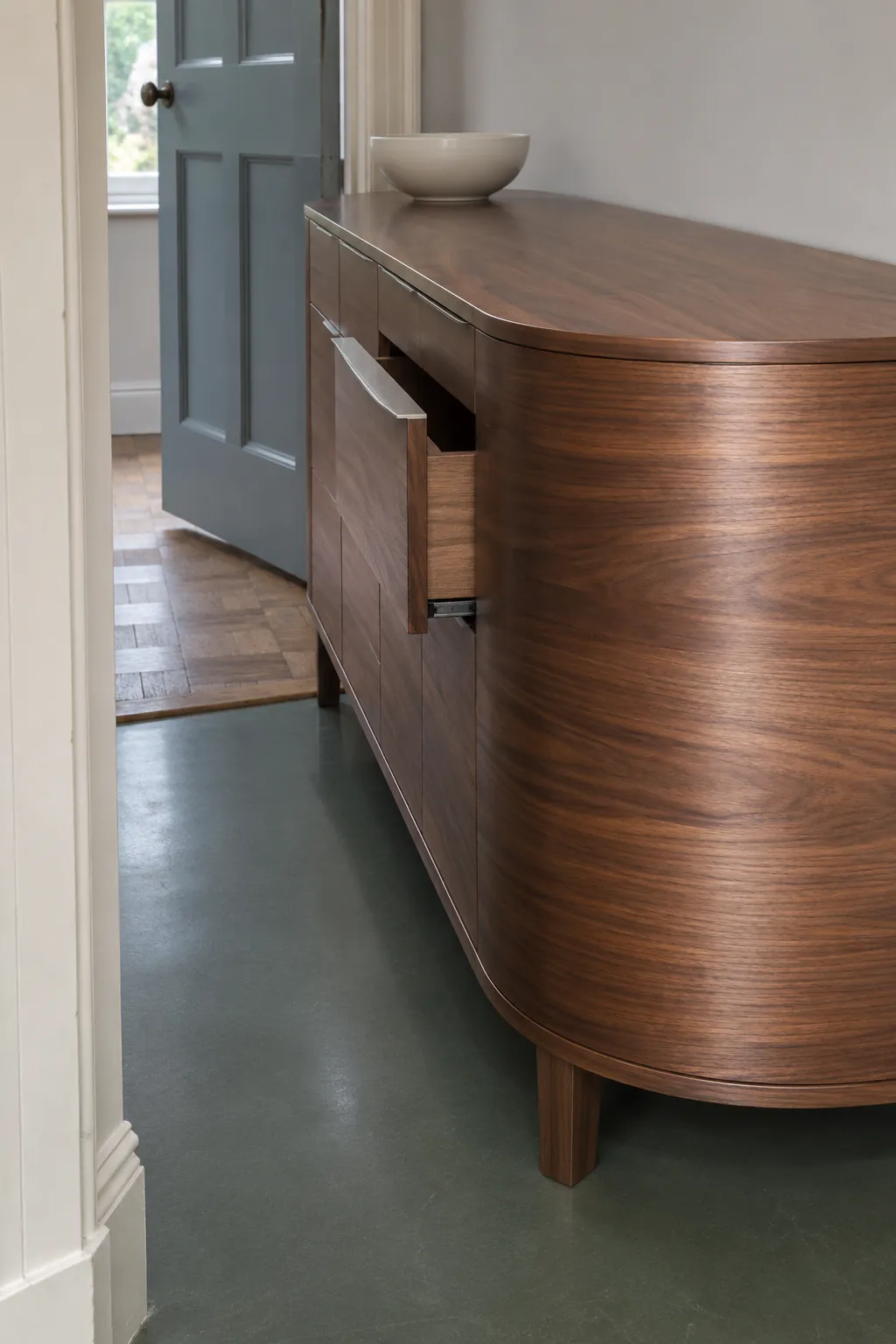
Use a rounded sideboard to ease a tight turn
A rounded end can make a cabinet feel less abrupt near a doorway. Mark the full depth, including any handles, before placing the piece in a narrow path. Open its doors and drawers as part of the test.
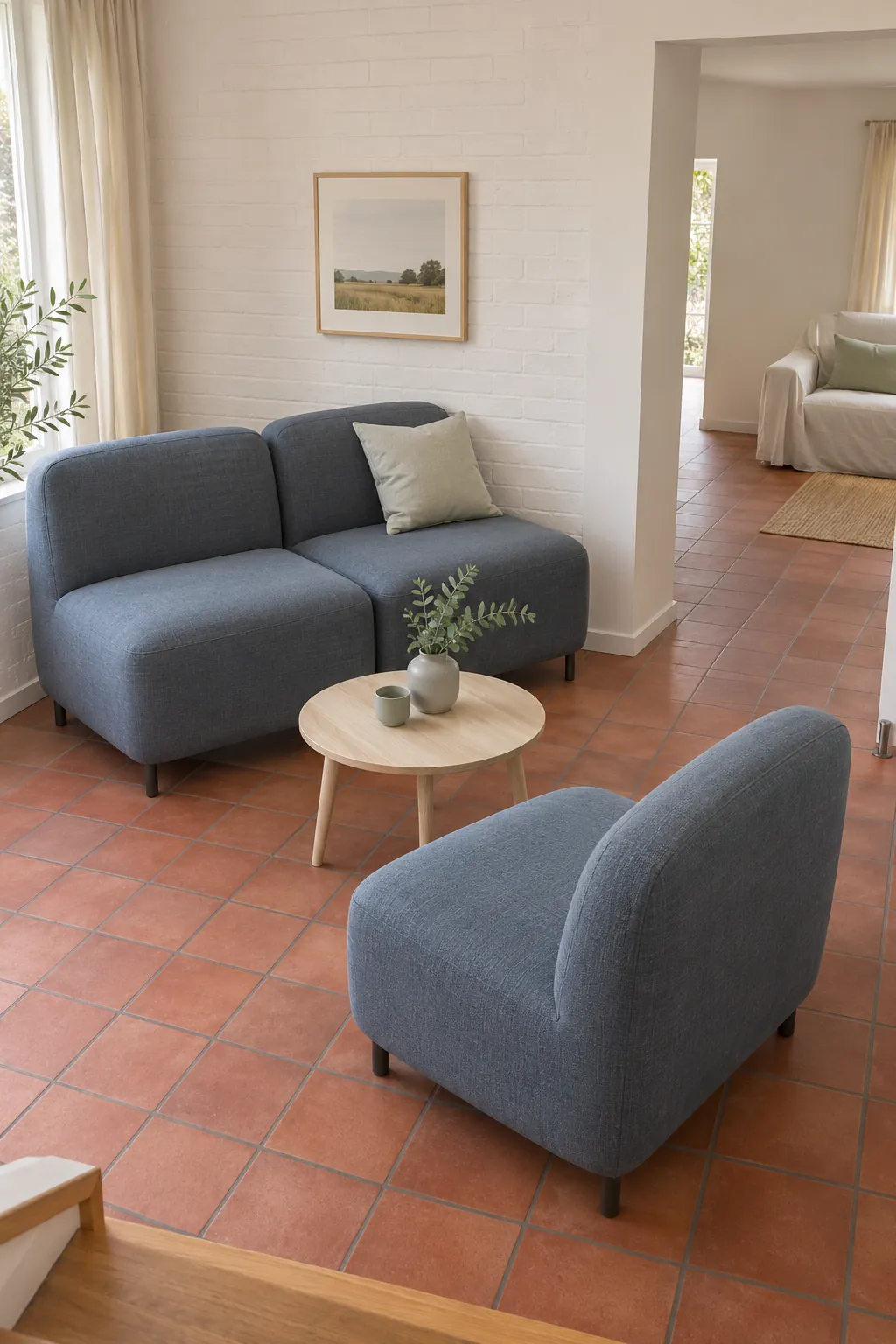
Give a modular bench room to change
Separate seats or bench modules can move when the room needs a different use. Choose pieces that are stable individually and check how the manufacturer intends them to join. Leave somewhere to move a module without blocking an entrance.
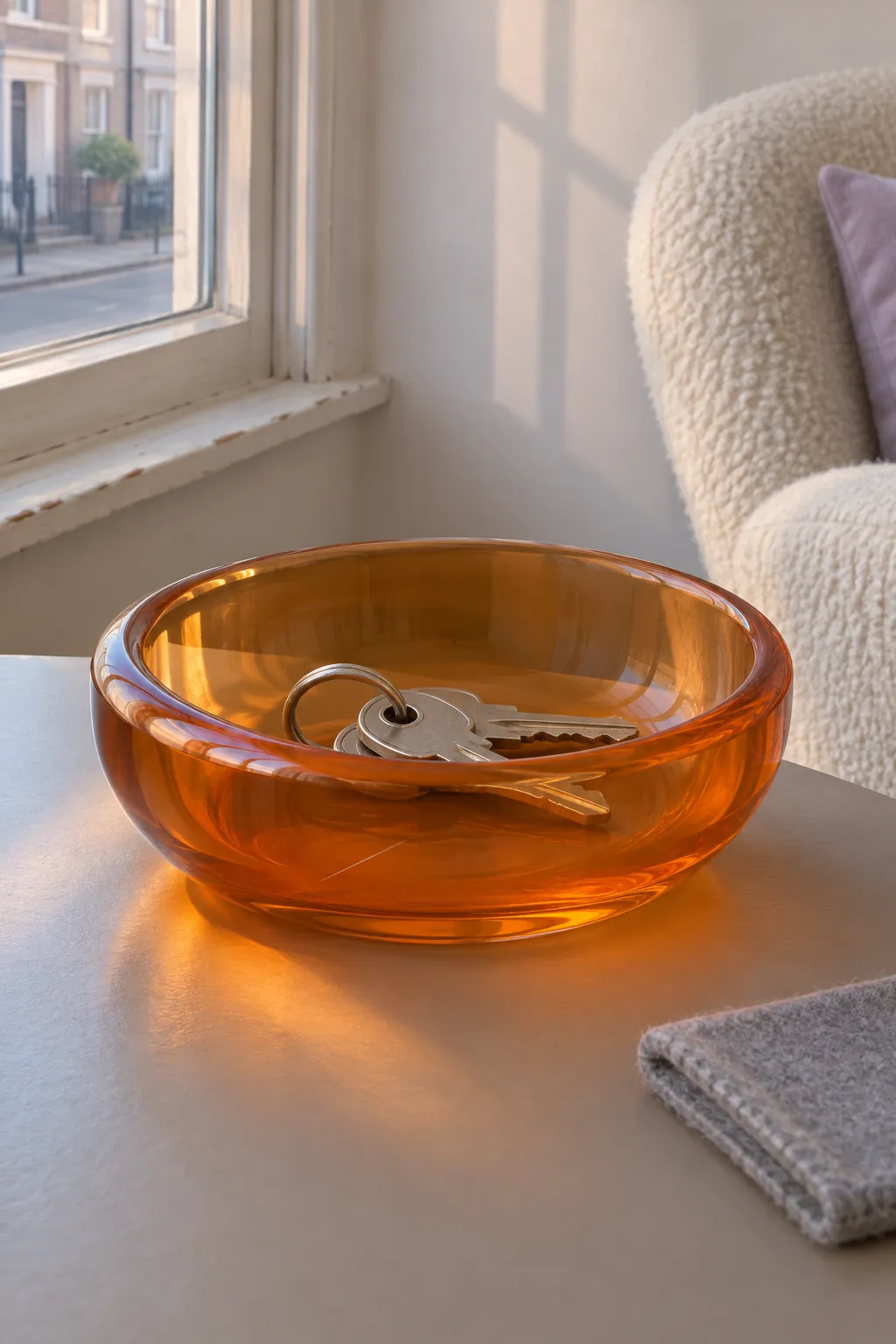
Set a bubble of clear color beside a neutral seat
A translucent orange or blue bowl can tint a small patch of light on a neutral table. Compare the object in daylight against the color it takes at night. Keep it where you can use it for keys or other small items.
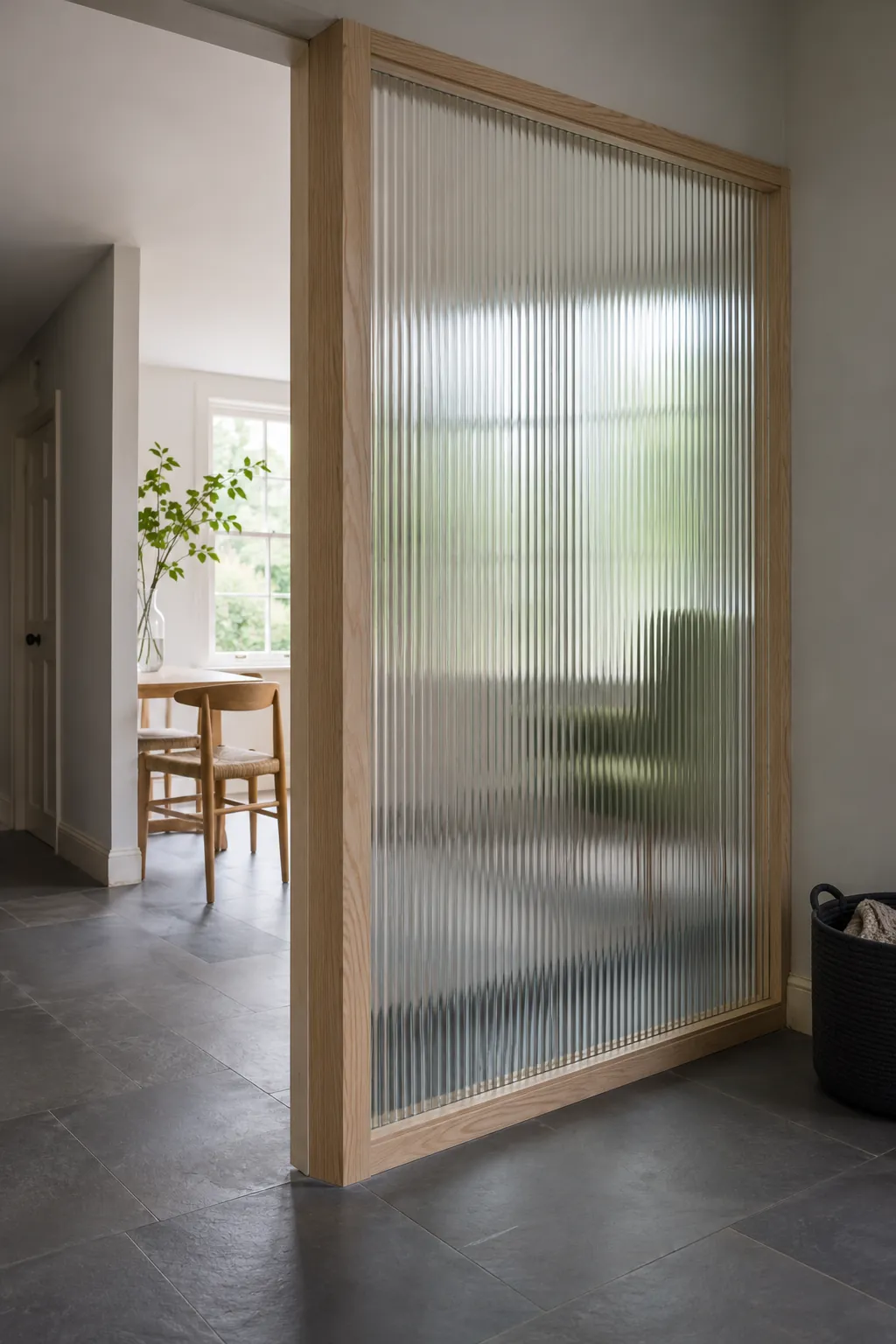
Choose a real material for a ribbed screen
A ribbed glass or acrylic screen can pass light while breaking up the view across a room. Hold a sample where you need privacy and look through it in daylight and after dark. Check the mounting and support requirements before making a permanent change.
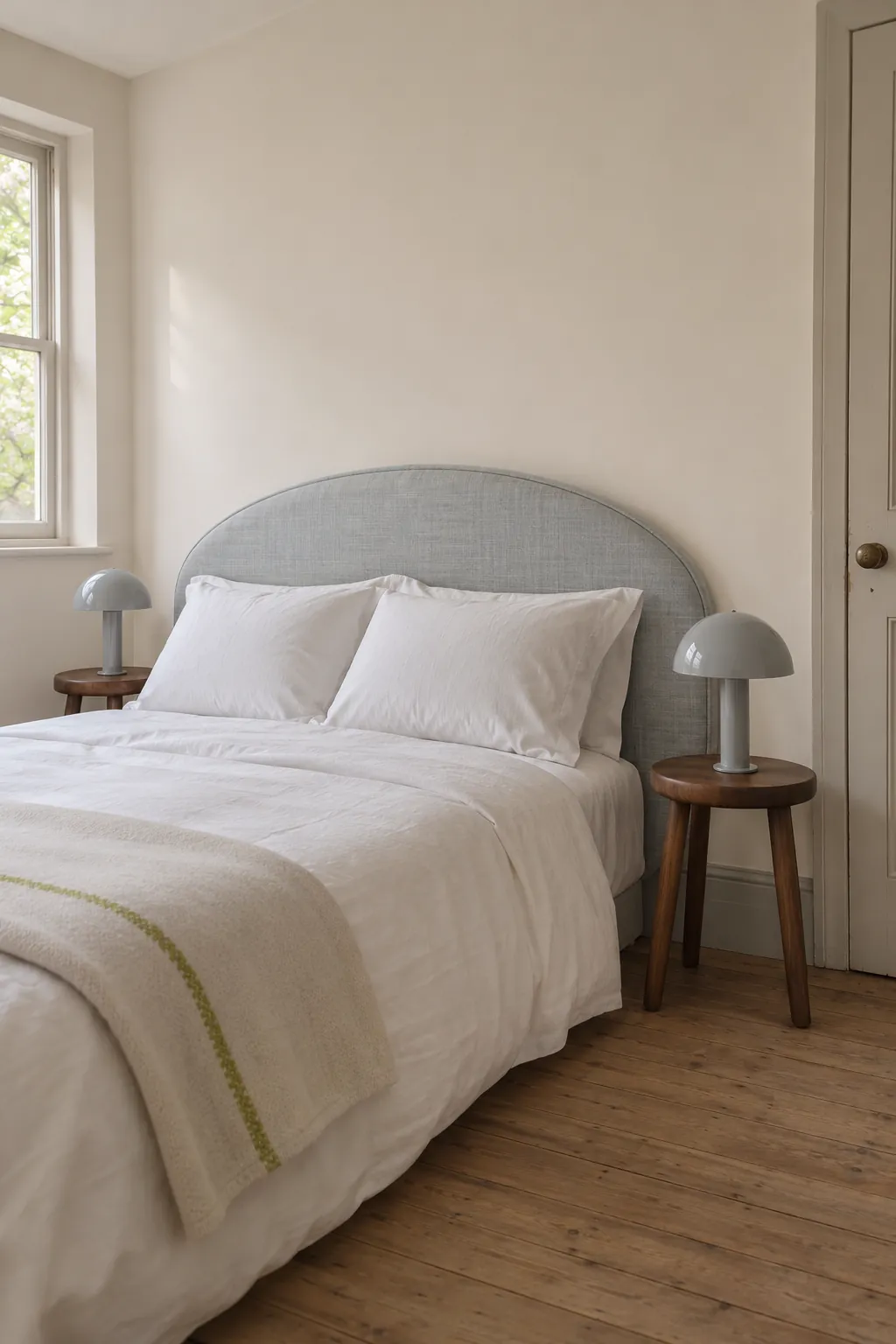
Try a rounded headboard in a quiet bedroom
A low arched headboard brings a soft profile to a square room. Keep the lights near each lower side so their placement follows the needs of the bed. Check the height against pillows you use before choosing an upholstered shape.
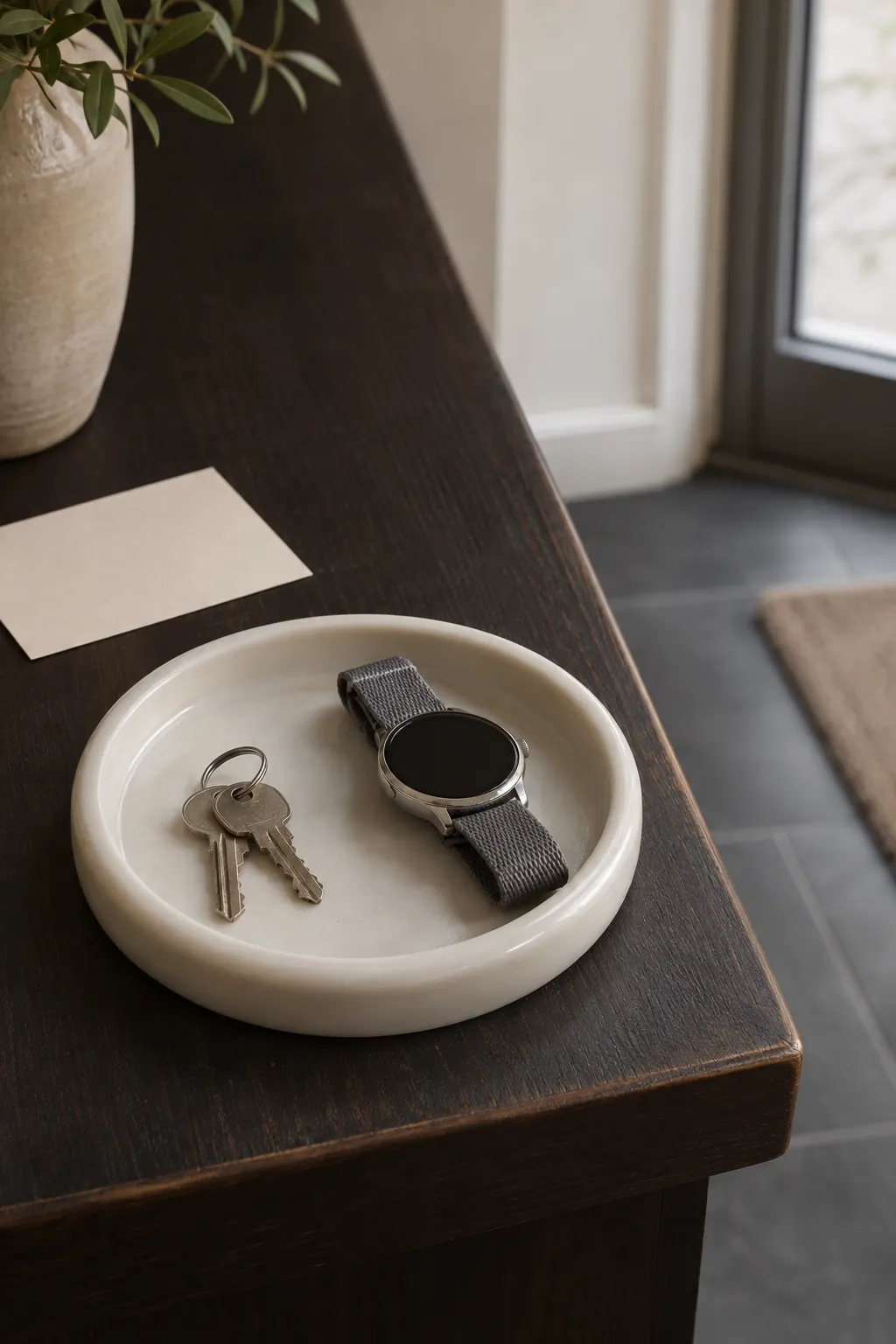
Use a white tray on a dark background
A white tray with a raised edge makes a useful circle inside a plain dark console or counter. Set it near where you already take off a watch or set down keys. Leave some dark surface exposed so the rim is easy to see.
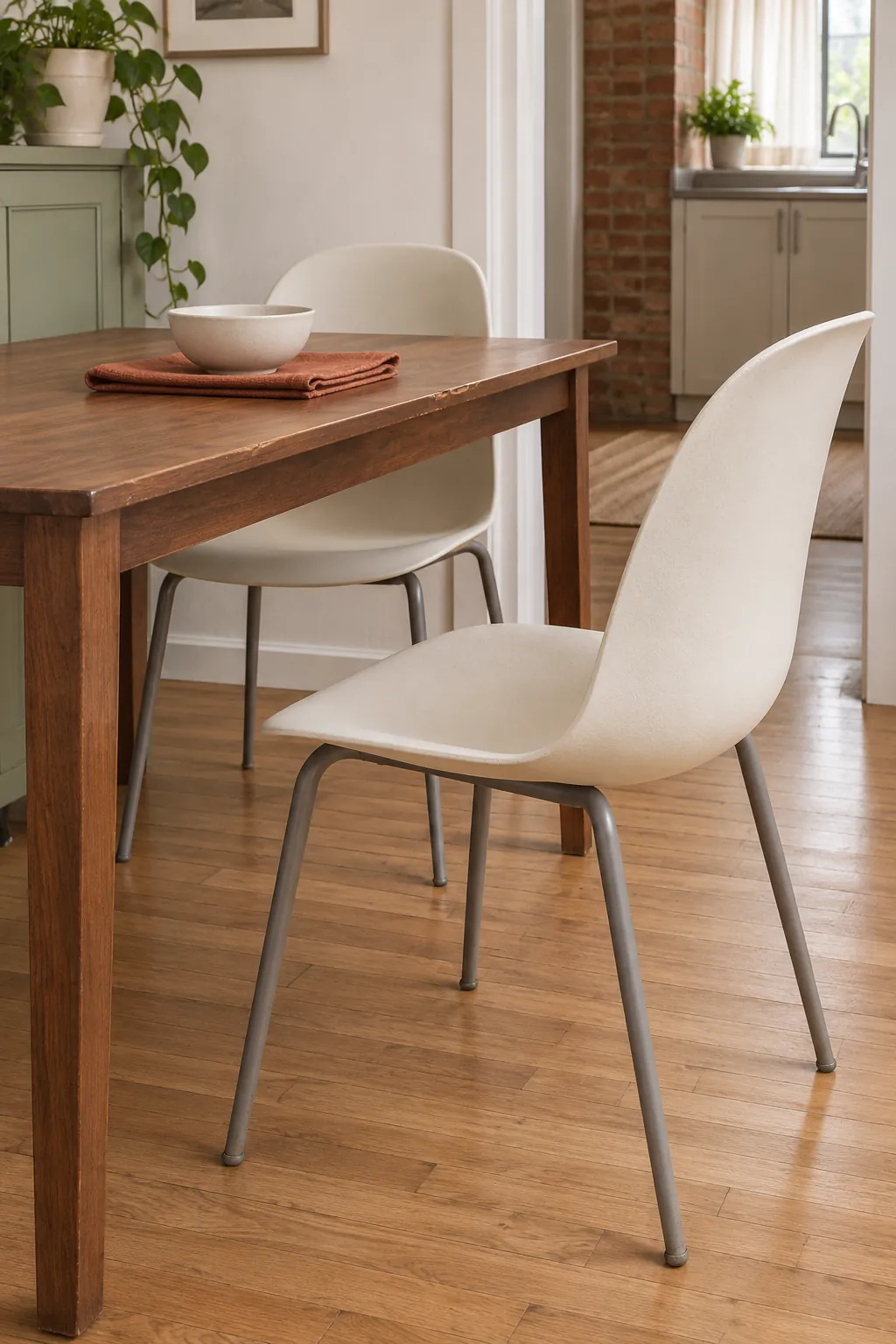
Let the dining chairs carry the curves
Choose molded dining chairs that fit under a tabletop you already own. Check knee clearance and sit for as long as a typical meal before deciding on a shell shape. Place one chair away from the table to see how easy it is to pick up and move.
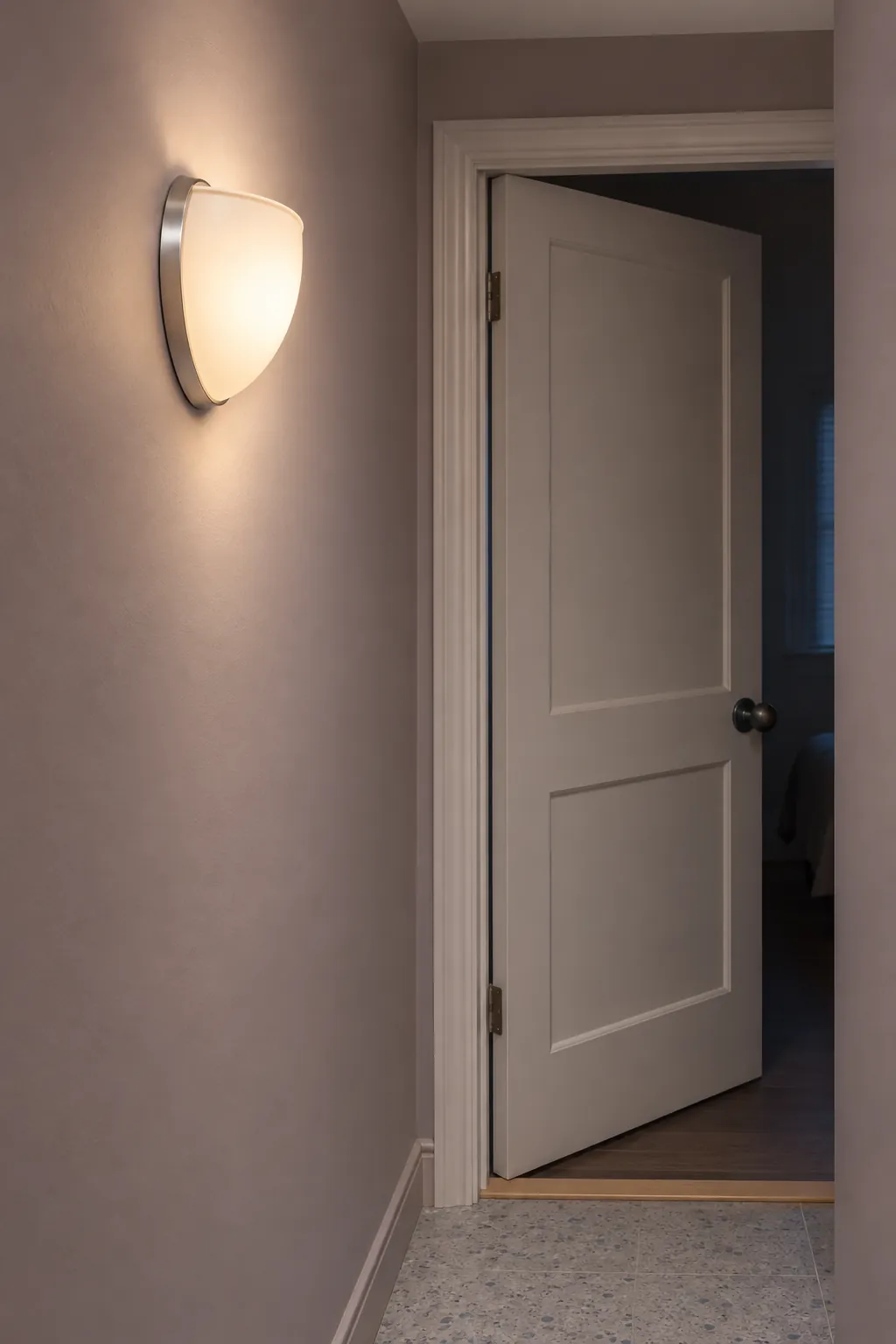
Fit a wall light into a short hallway
A small rounded wall light can bring the look into a place too narrow for furniture. Check its projection from the wall, especially beside a swinging door. Use a diffused shade to spread light on the wall along the route.
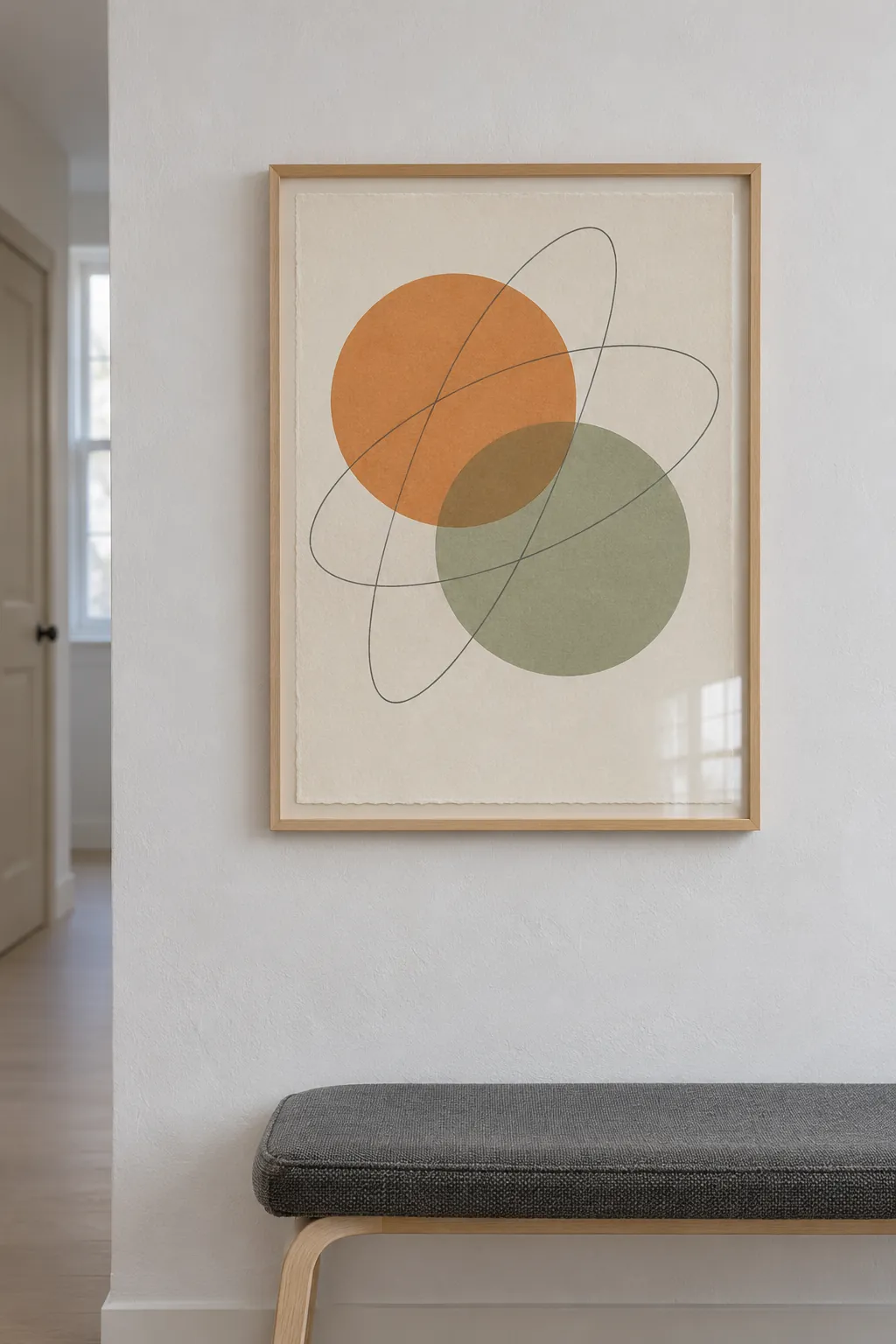
Give one graphic print generous space
A print with orbital lines or a few broad circles can suggest the era with one change. Choose a size you can read from the other side of the room. Give empty wall around the frame and look for reflected glare before hanging it.
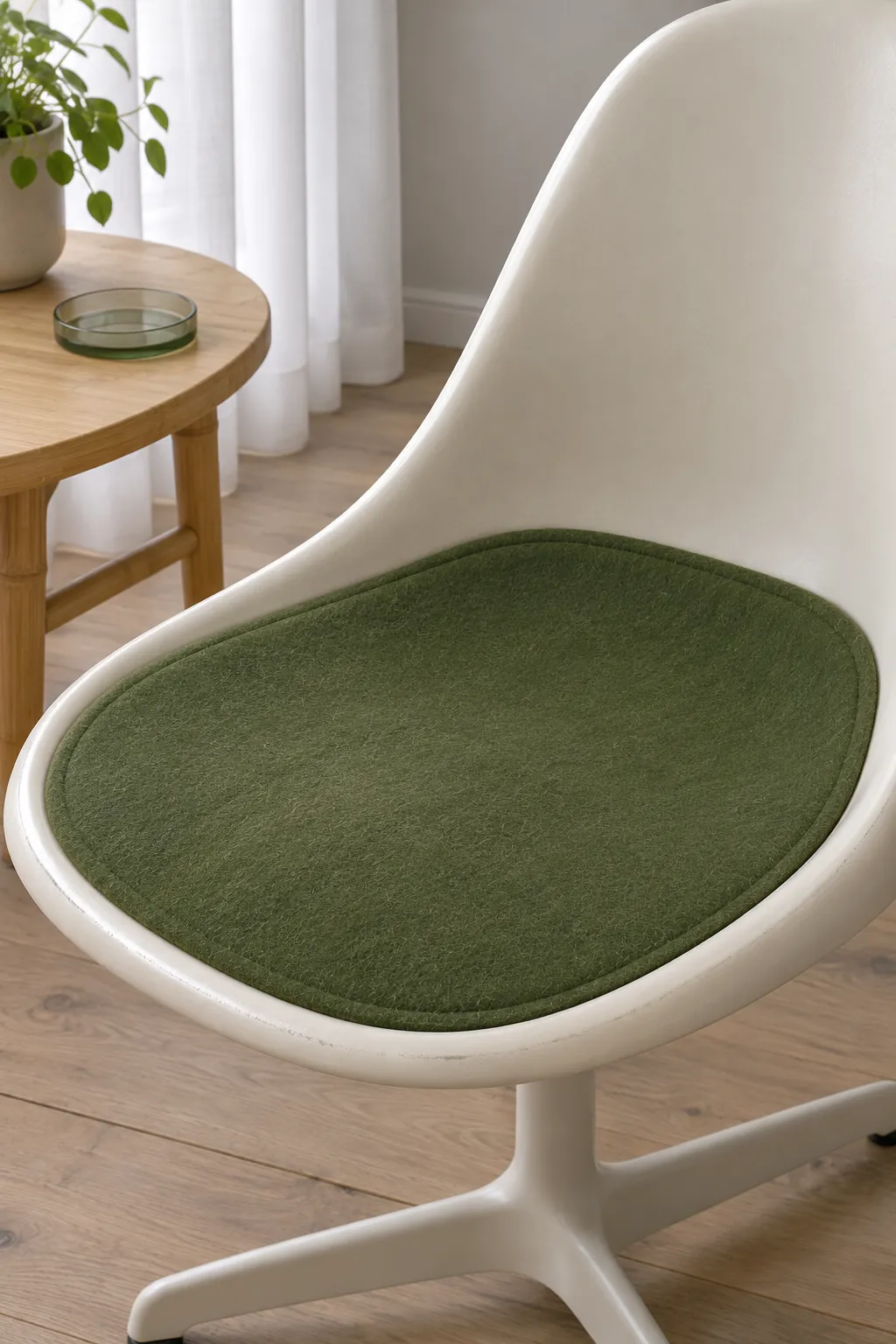
Mix a soft fabric with a hard shell
An upholstered cushion can make a hard shell chair more comfortable for daily use. Choose a cushion that fits the actual curve and stays in place when you sit down. Match the firmness to how long you usually use the chair.
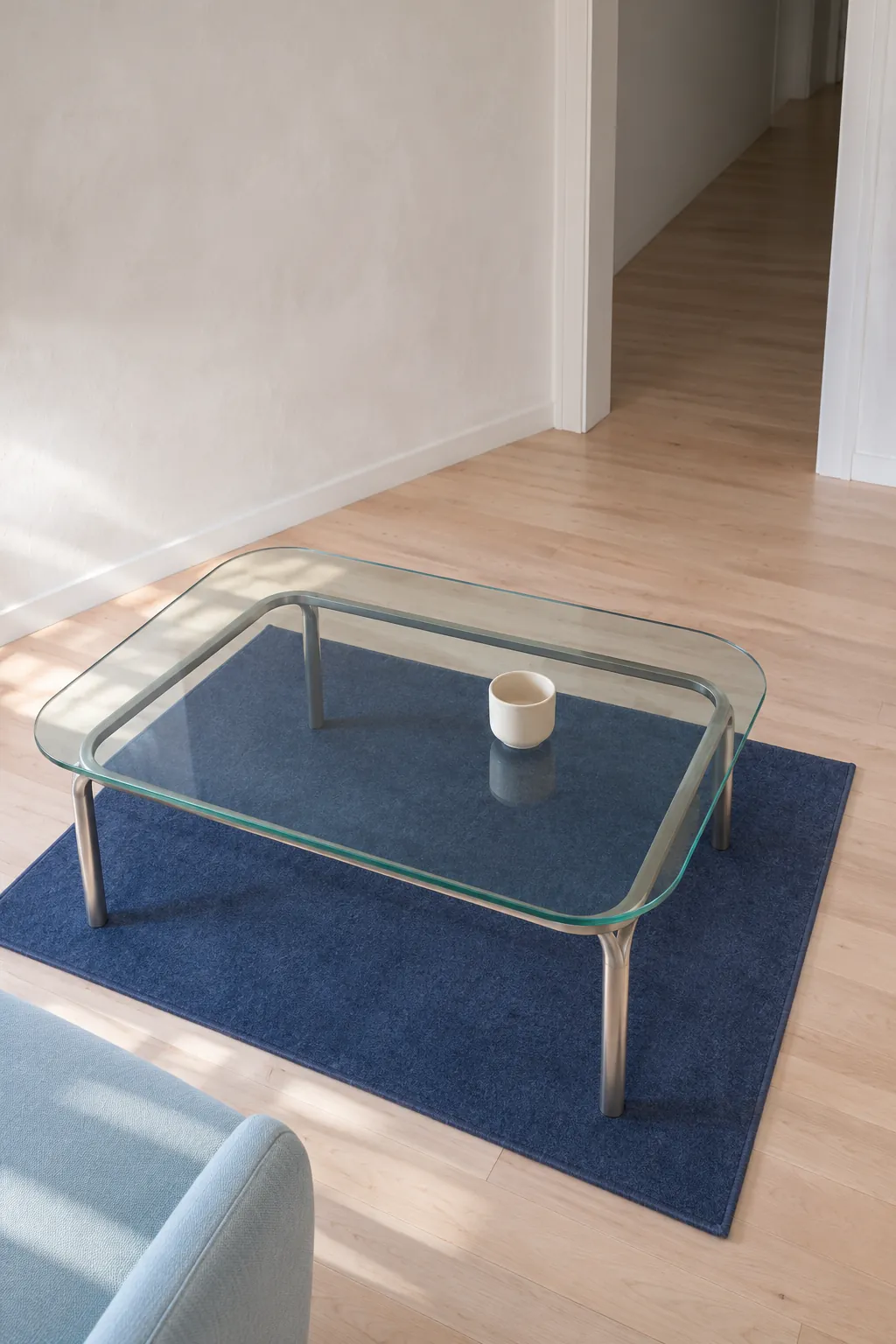
Try color under the table instead of above it
A colored mat can show through a clear table and add depth without a large new object at eye height. Use a flat material with a secure edge if the mat sits near the route. Check the effect from both seated and standing positions.
Balance the room at night
Walk through the room with your usual evening lamps on. Check for an open path, enough light where you read and reflections that distract from a seat. Move or turn one lamp at a time until the shapes and everyday tasks are both easy to see.