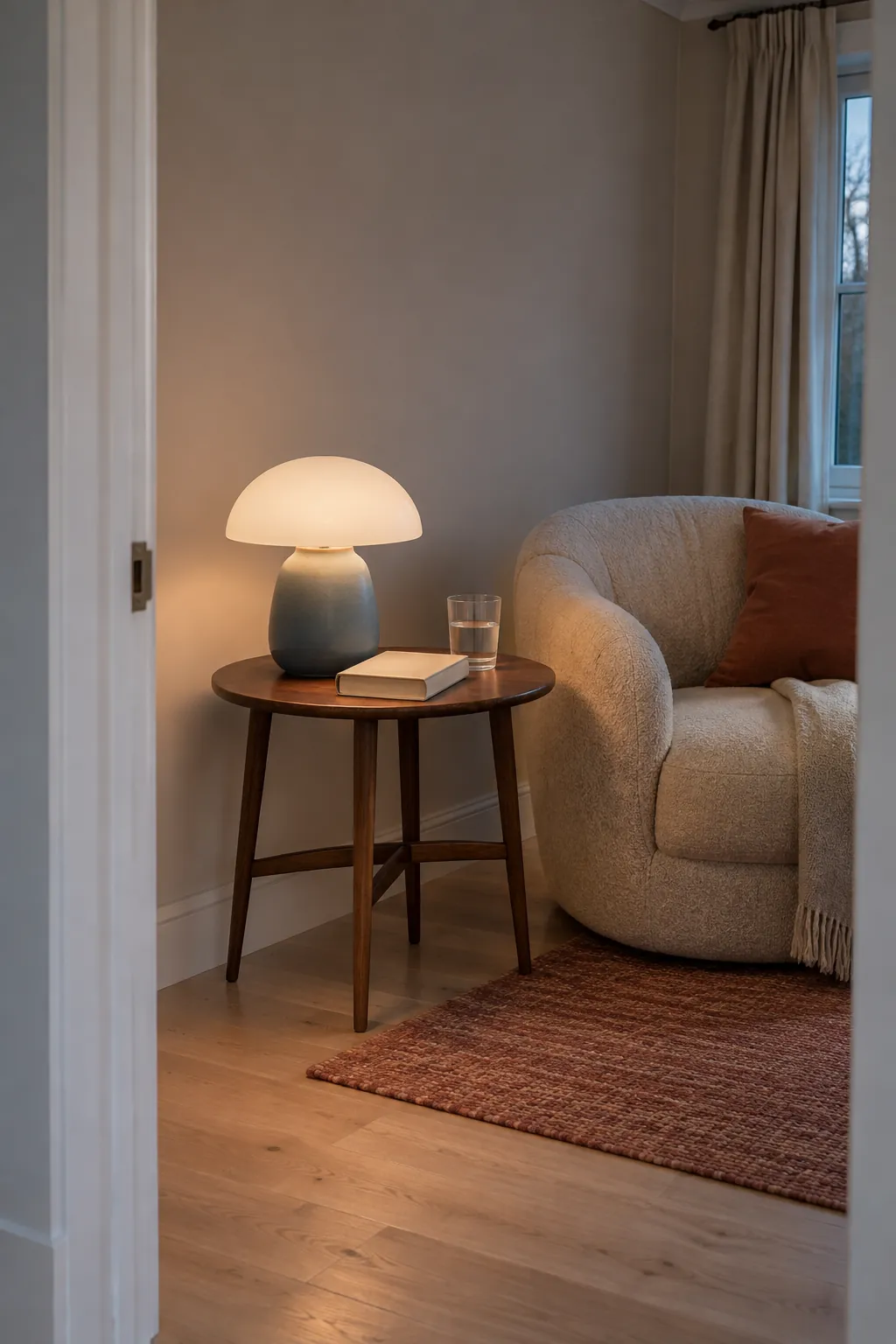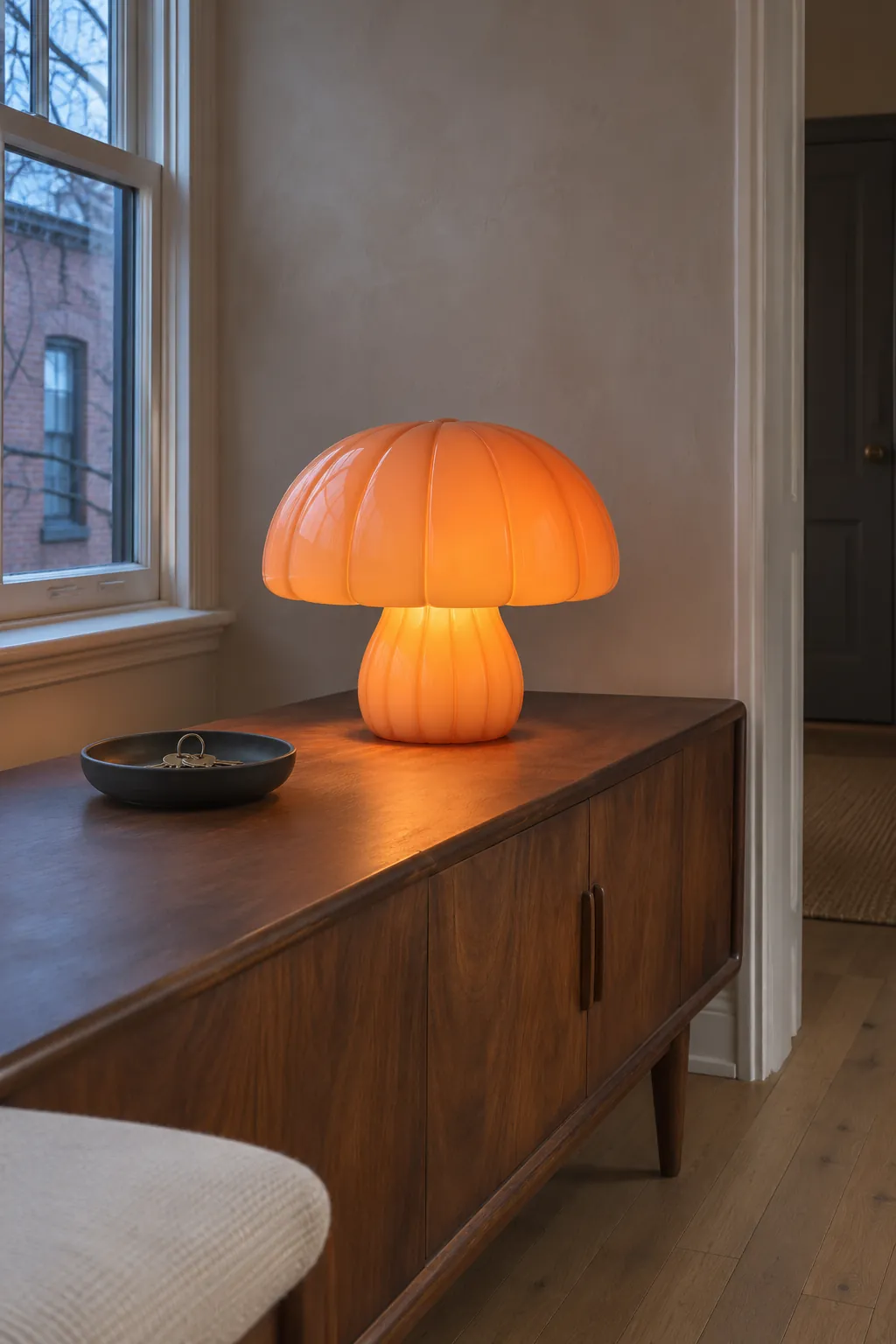
A dome can look small in a listing and still take up half your nightstand. Start by checking what the surface needs to hold and where you will see the shade from. Then decide whether the lamp needs to light a task, brighten a corner, or add a little color when it is off.
Measure the cap before the base
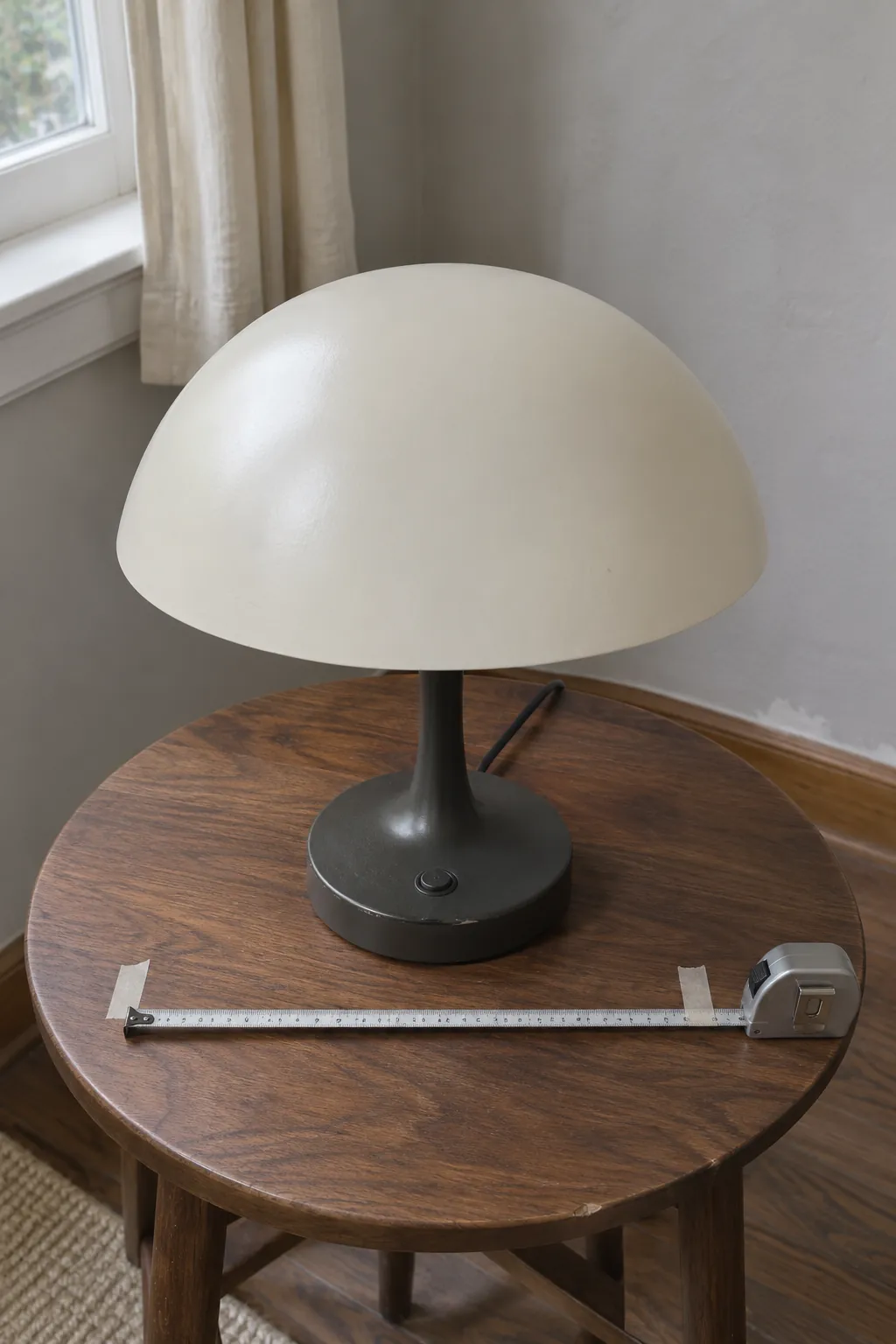
Measure the widest part of the cap and mark that width on your table. Check where it sits in relation to a wall, curtain or the edge of a cupboard door. Test hand space for the switch and any objects you use beside the lamp.
Try a shallow dome for a low shelf
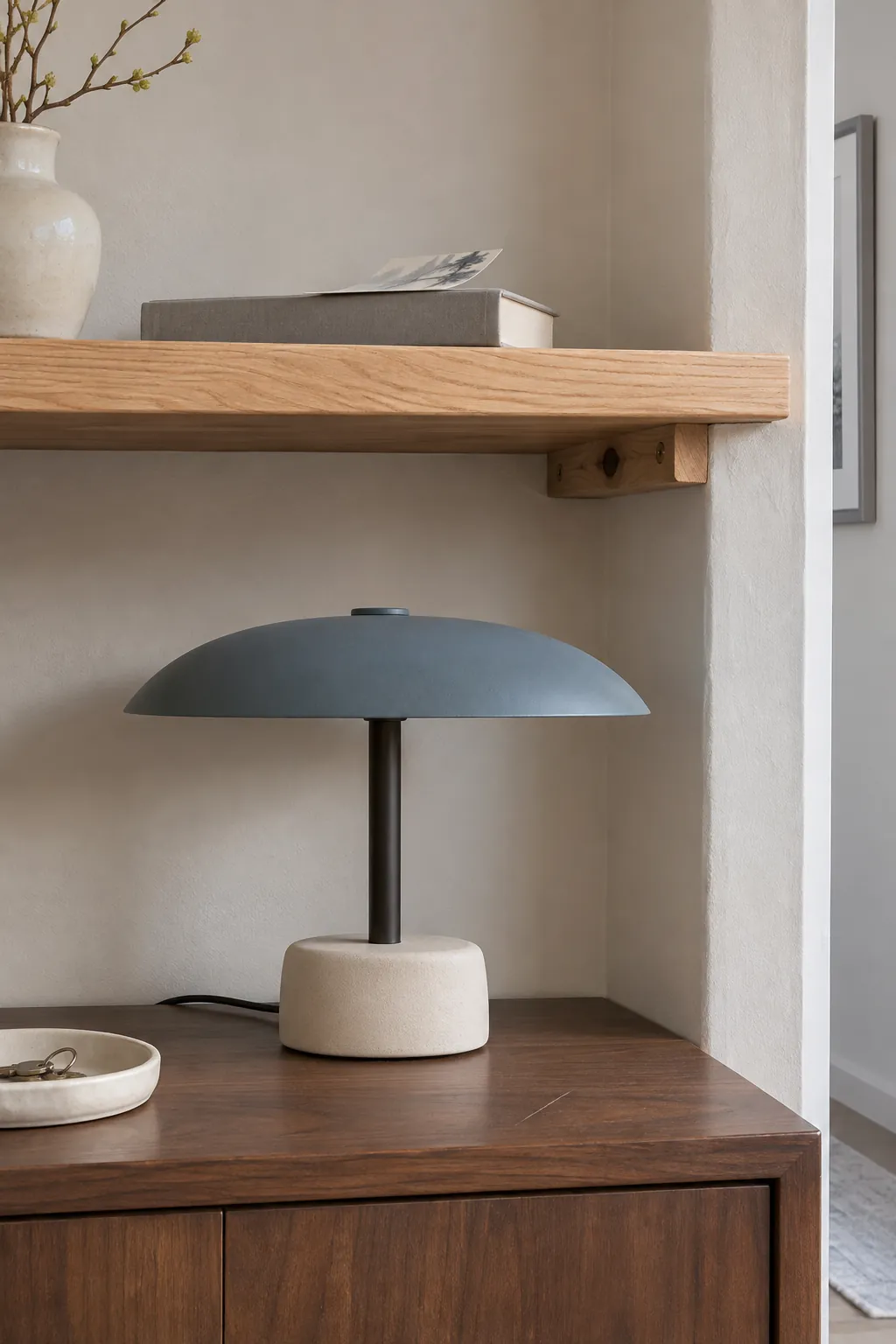
A flattened dome leaves more room under a shelf than a tall round shade. Compare the full lamp height with the opening and follow the maker’s clearance instructions. Keep the sides open enough to reach the switch without touching the shade.
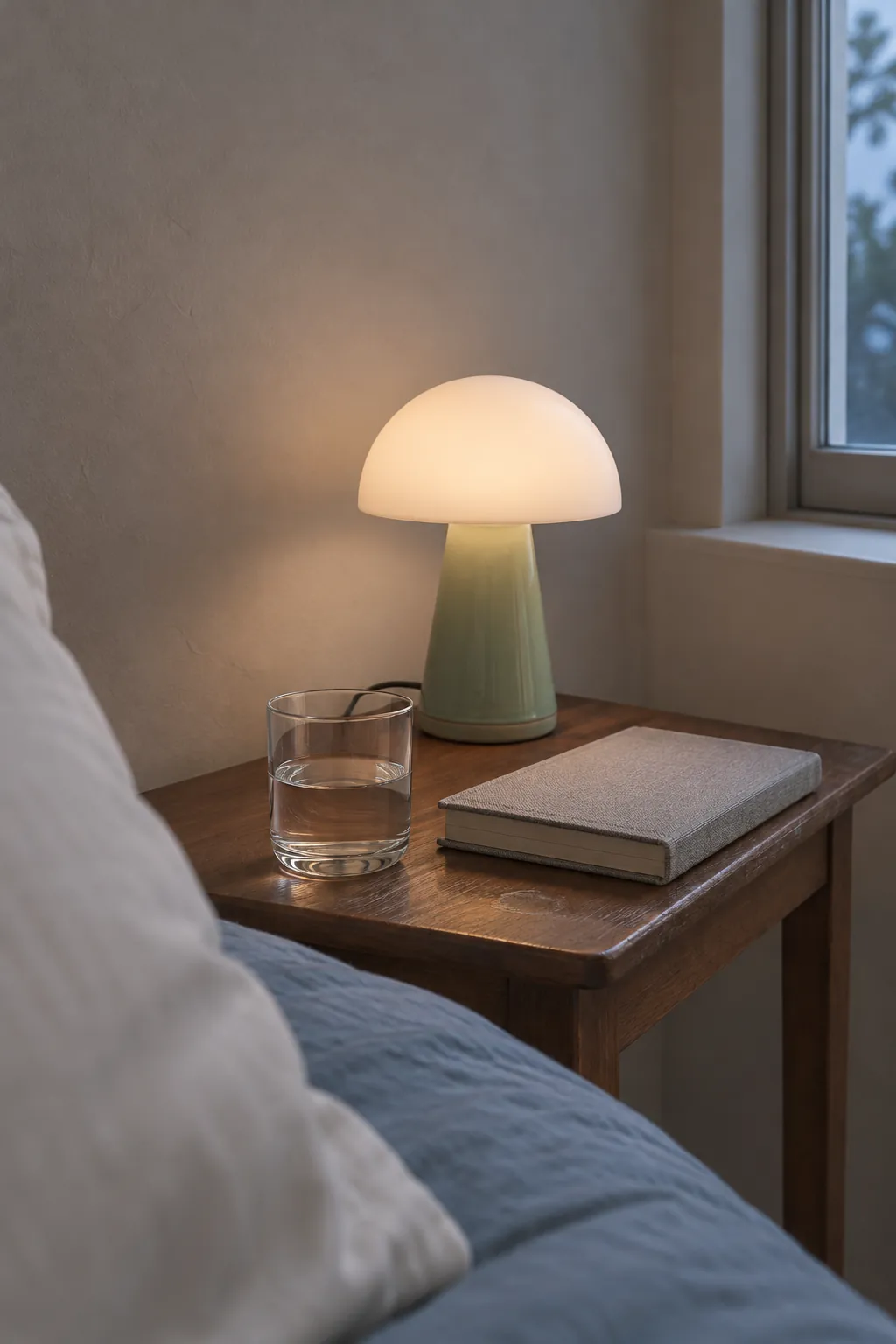
Set opal glass on a narrow nightstand
An opal mushroom lamp gives a softly lit shape to a small nightstand. Choose a cap that keeps the main part of the surface available for a glass and a book. Check the light from your pillow, where the view under the cap is different from the view at the door.
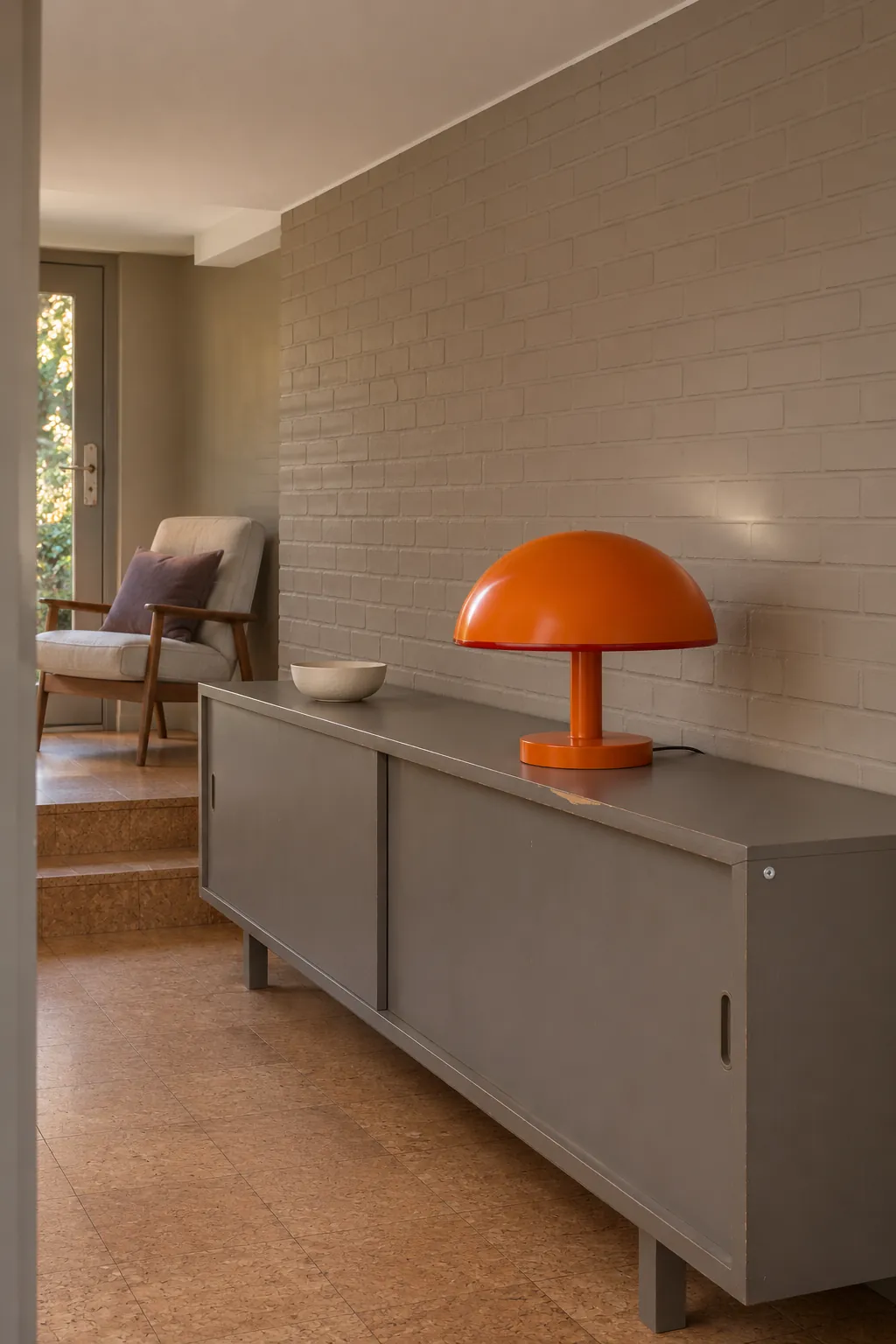
Turn an orange lamp into the room’s accent
An orange mushroom lamp can carry a strong color on a cabinet you already own. Look at it both lit and unlit, because the color of the cap can change a lot when the light is on. Put adjacent bright objects farther away until you can see which one draws you first.
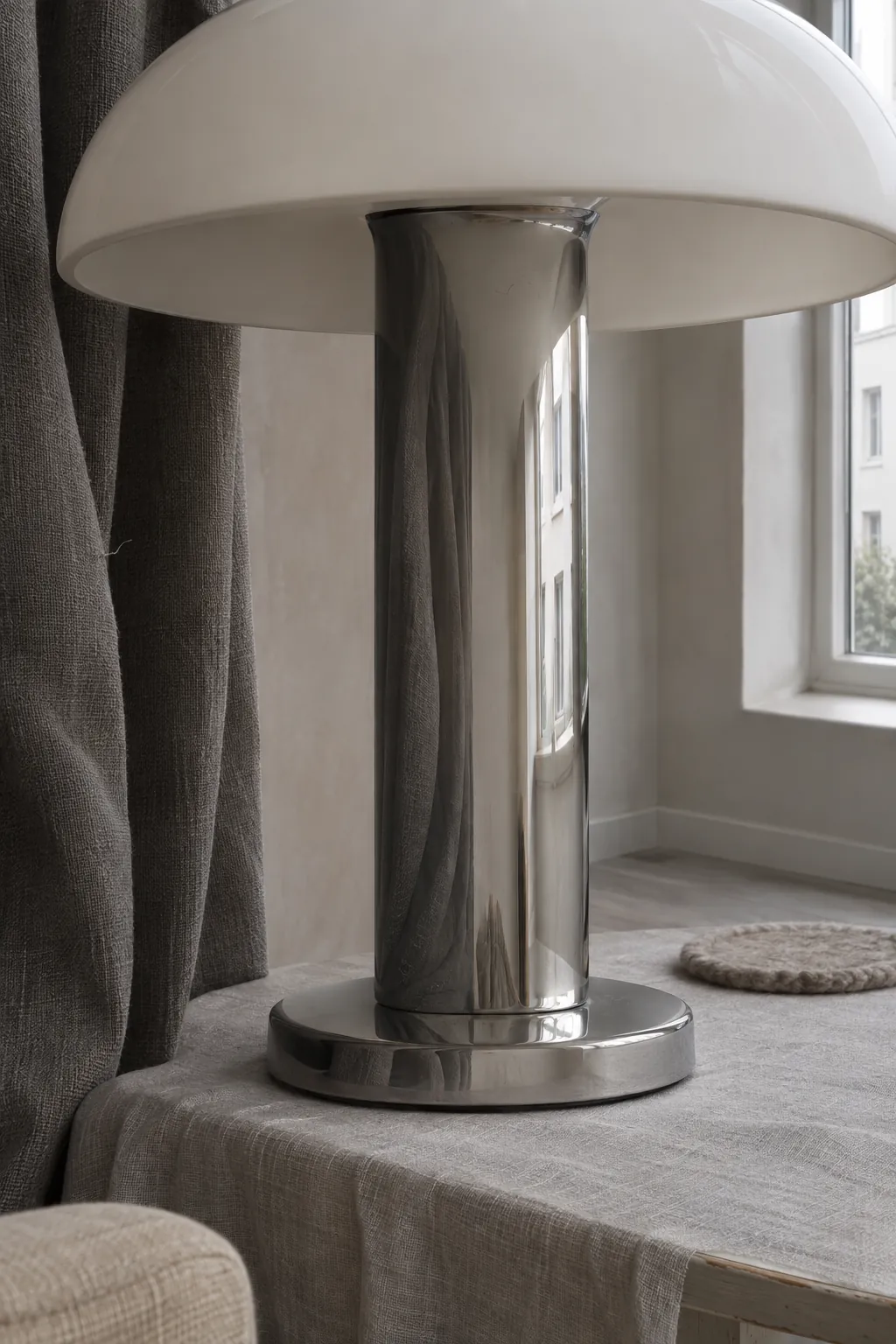
Use a chrome stem next to matte fabric
Silver metal can reflect a soft neutral stripe from a curtain or sofa. Put the lamp where it sees a broad fabric surface instead of a bright window at your eye height. Look again after dark to catch any reflections from another lamp.
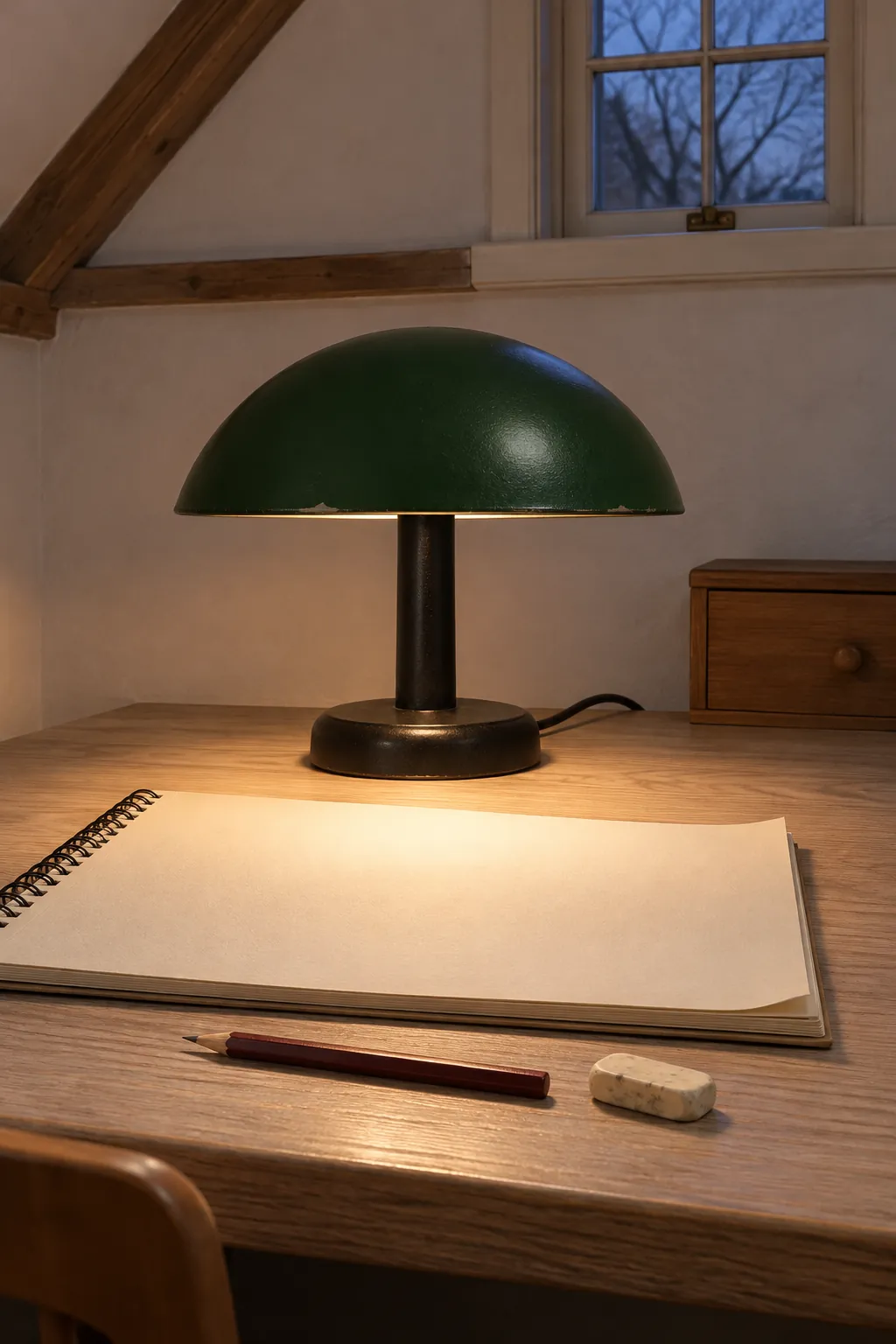
Place a metal cap where you need downward light
An opaque metal cap can put more of the visible light on a desk or table. Set the cap so your usual seat cannot see the bare bulb and check where it lights the work. A second room light can help if the resulting pool feels too isolated.
Give a ribbed glass shade side light
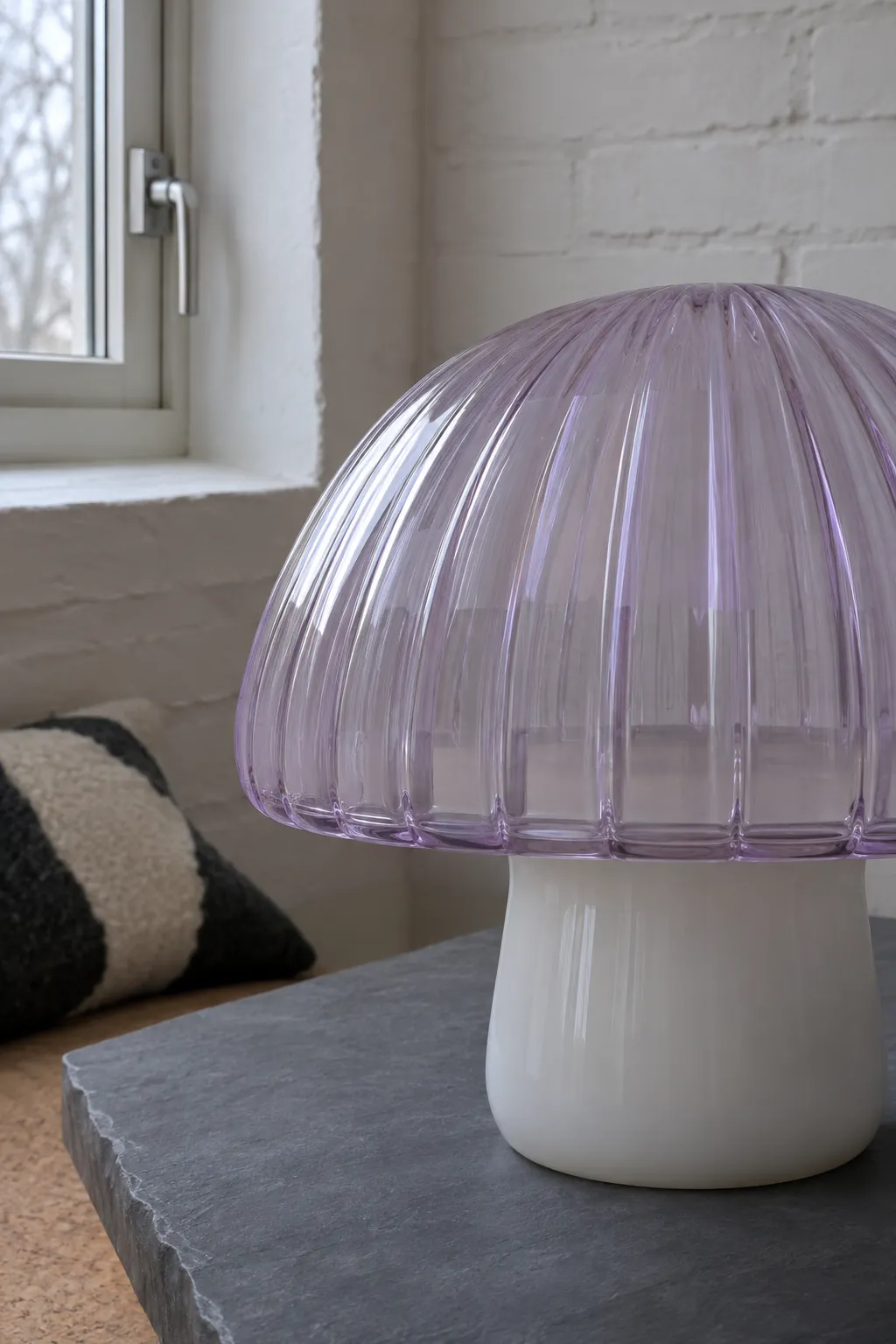
Ribbed glass has a visible pattern even before the lamp is on. Place it near indirect window light and turn the lamp so the brightest reflection falls on one edge. Test the shade at night if the ribs send distracting bright lines across the room.
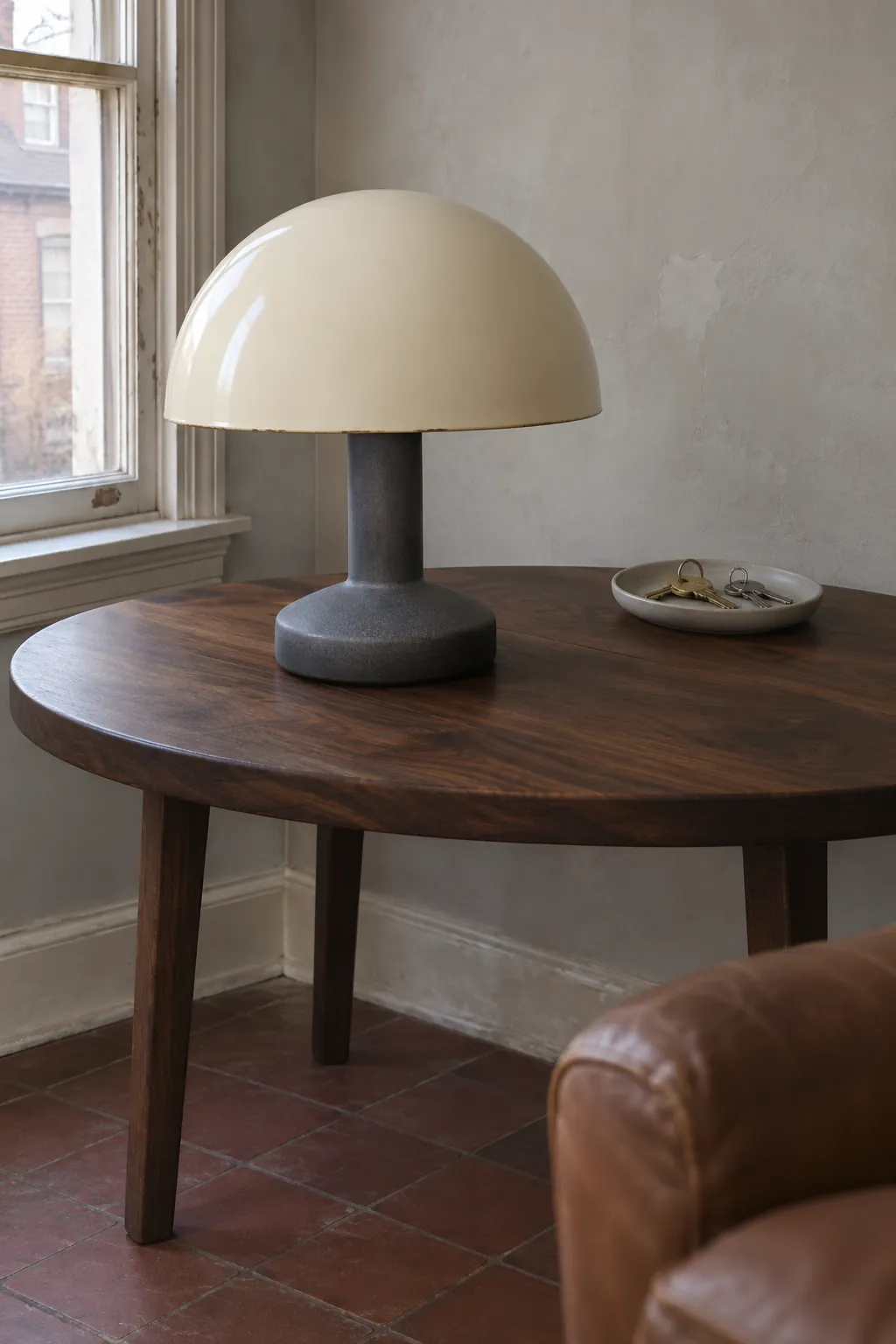
Pair a cream dome with dark wood
A cream dome gives a deep wood table a clear upper edge. Leave enough bare table around the stem to see how the two finishes meet. Add one useful item nearby in a quieter color if the surface would otherwise feel bare.
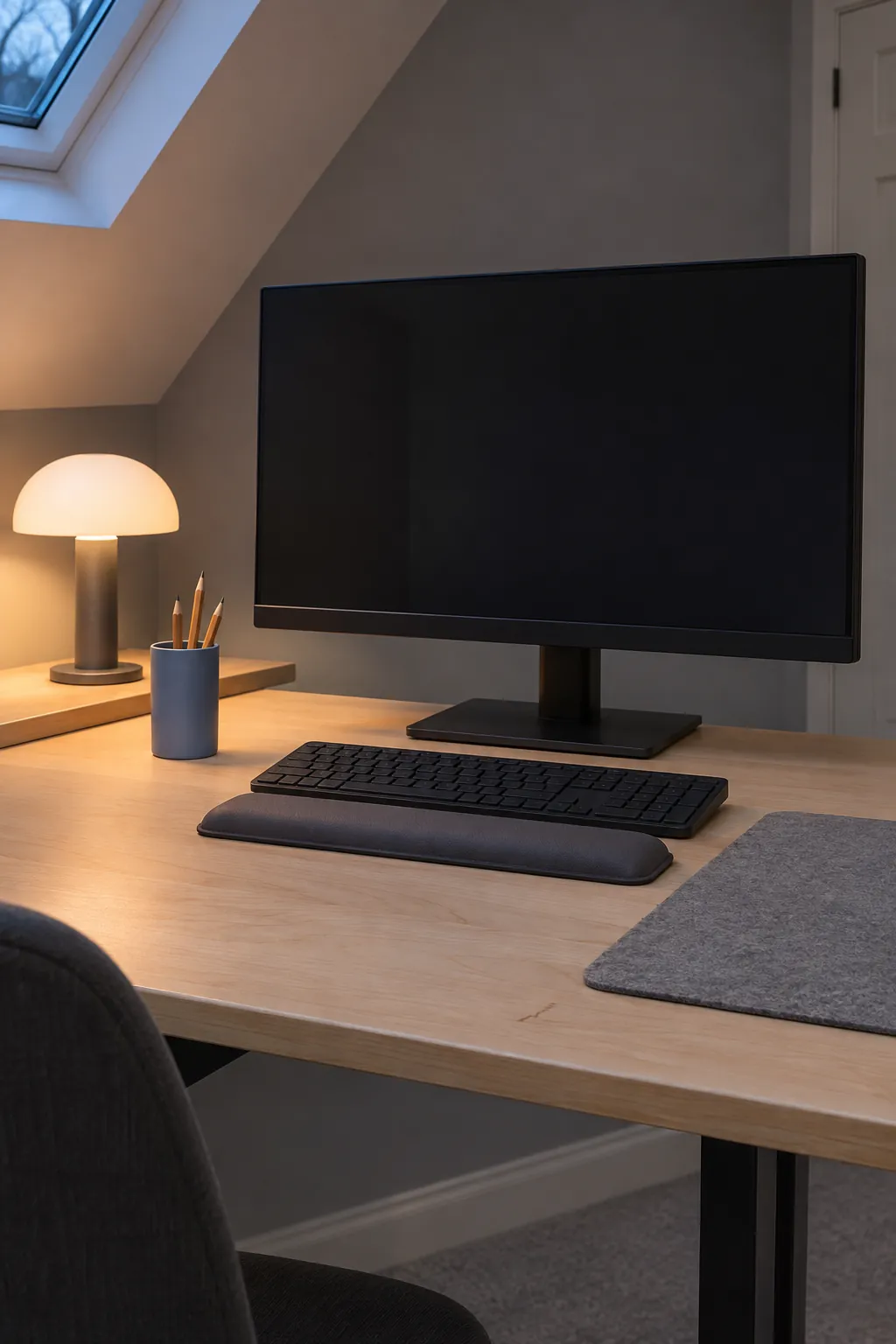
Choose a desk spot that avoids screen reflections
Set the lamp to the side of the monitor while the screen is dark. Move it until the shade or bulb no longer appears in the usual viewing spot. Turn the screen on and check that you still have enough light on the part of the desk you use.
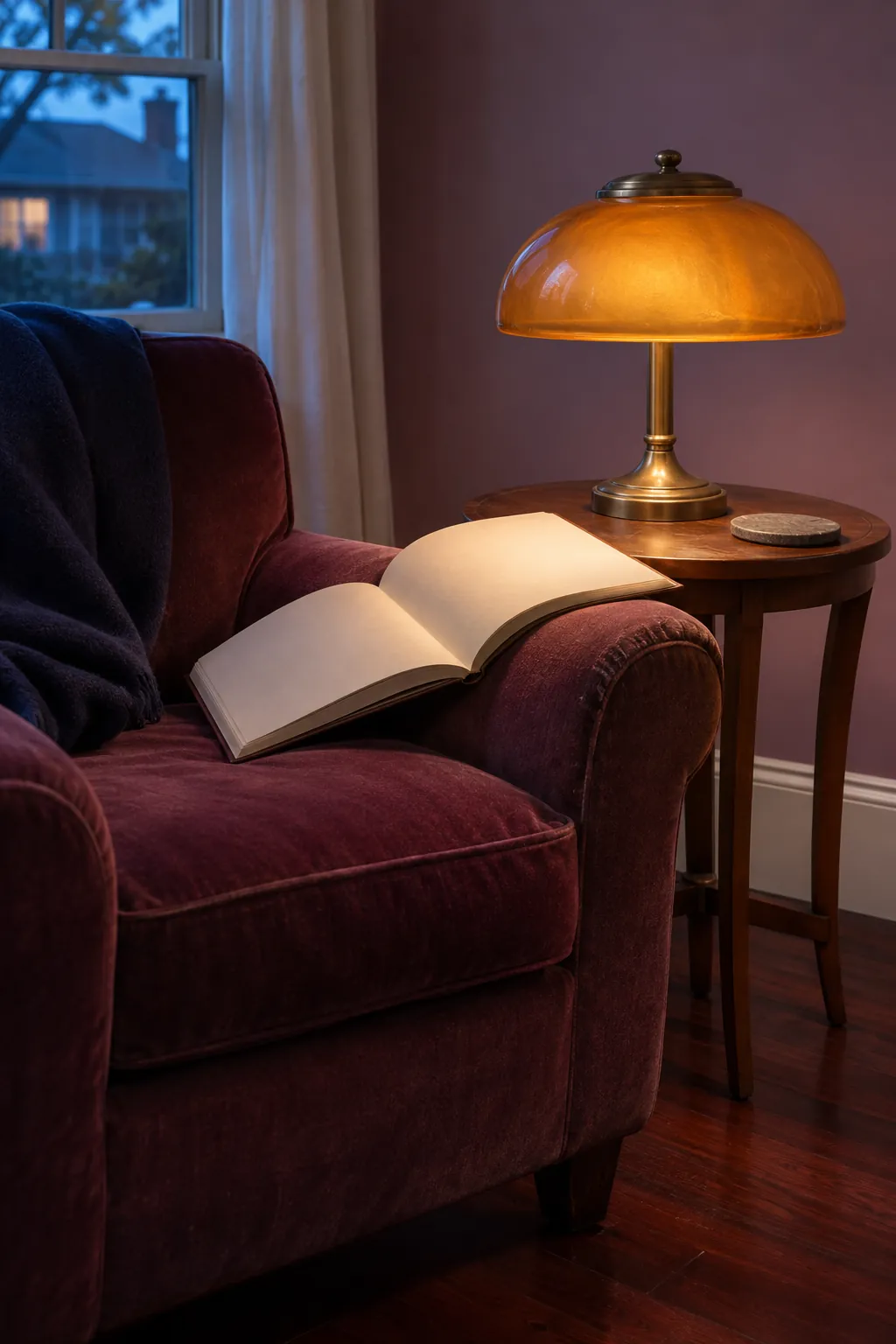
Test the glow from your reading chair
Sit where you normally read and try a page in your usual position. If the brightest area lands behind your shoulder or causes a glare, move the lamp toward the outside edge of the chair. Choose a separate reading light if the mushroom shade gives only a soft room glow.
Leave breathing room above a record cabinet
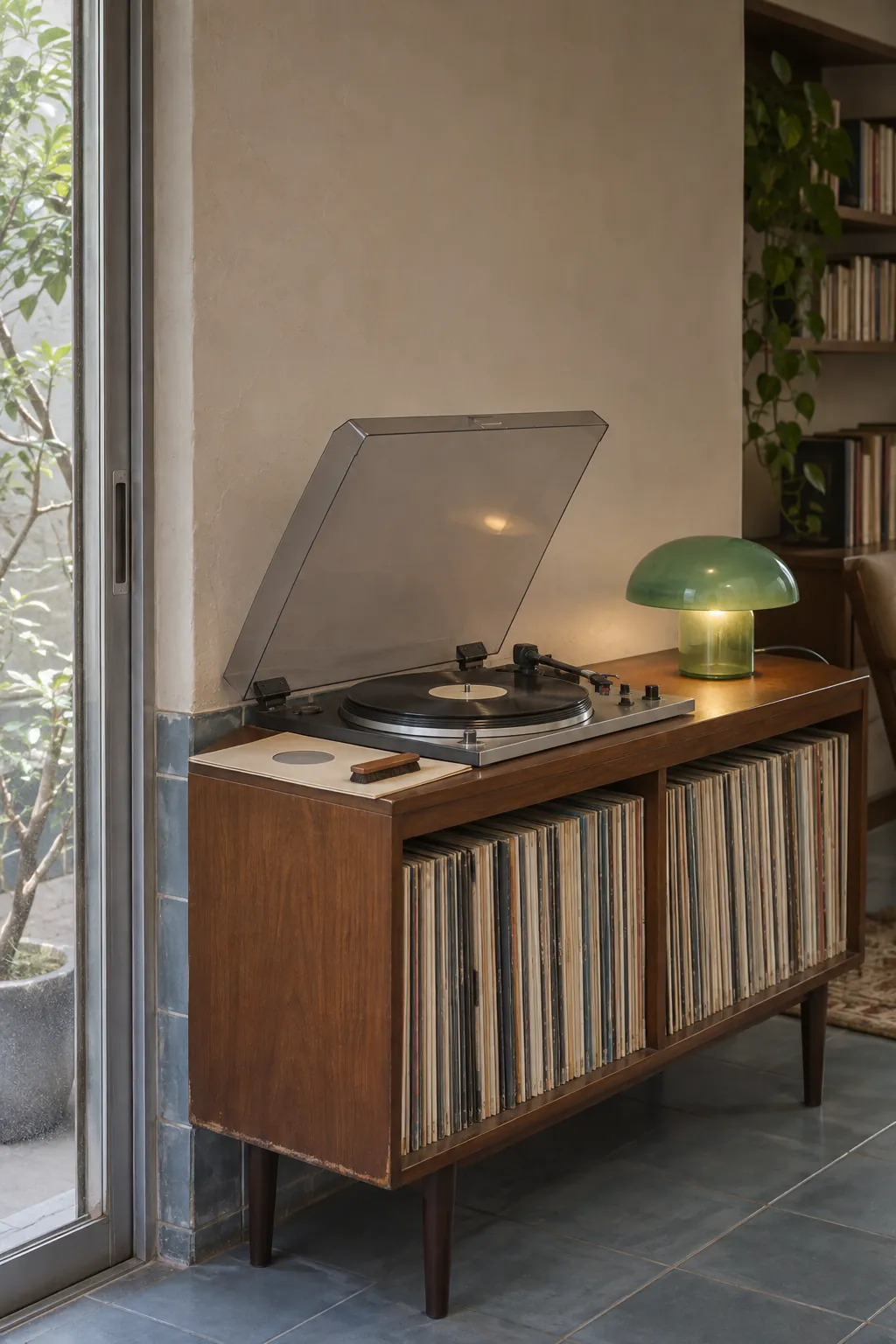
Set a compact lamp at one end of the record cabinet with room to lift the turntable lid. Move the cord down the far side so it stays clear of the controls. Dim the lamp if the cover throws a bright reflection into the listening seat.
Bring a little light to the entry console
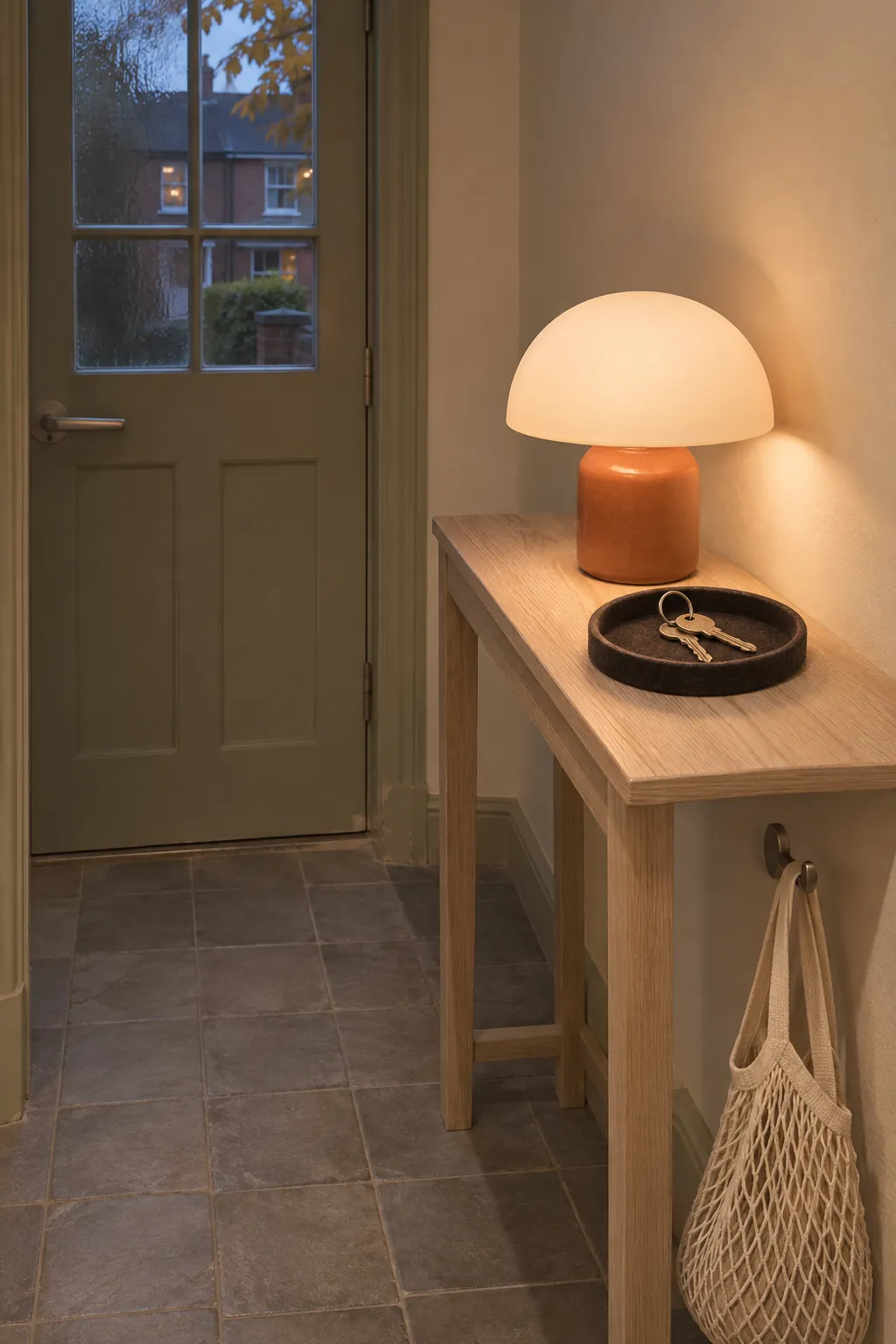
A dome above a key tray gives the entry a visible surface at night. Put the fixture far enough back that bags and sleeves pass it without hitting the cap. Keep the tray in a clear part of the pool of light.
Use a cordless lamp where the table has no outlet
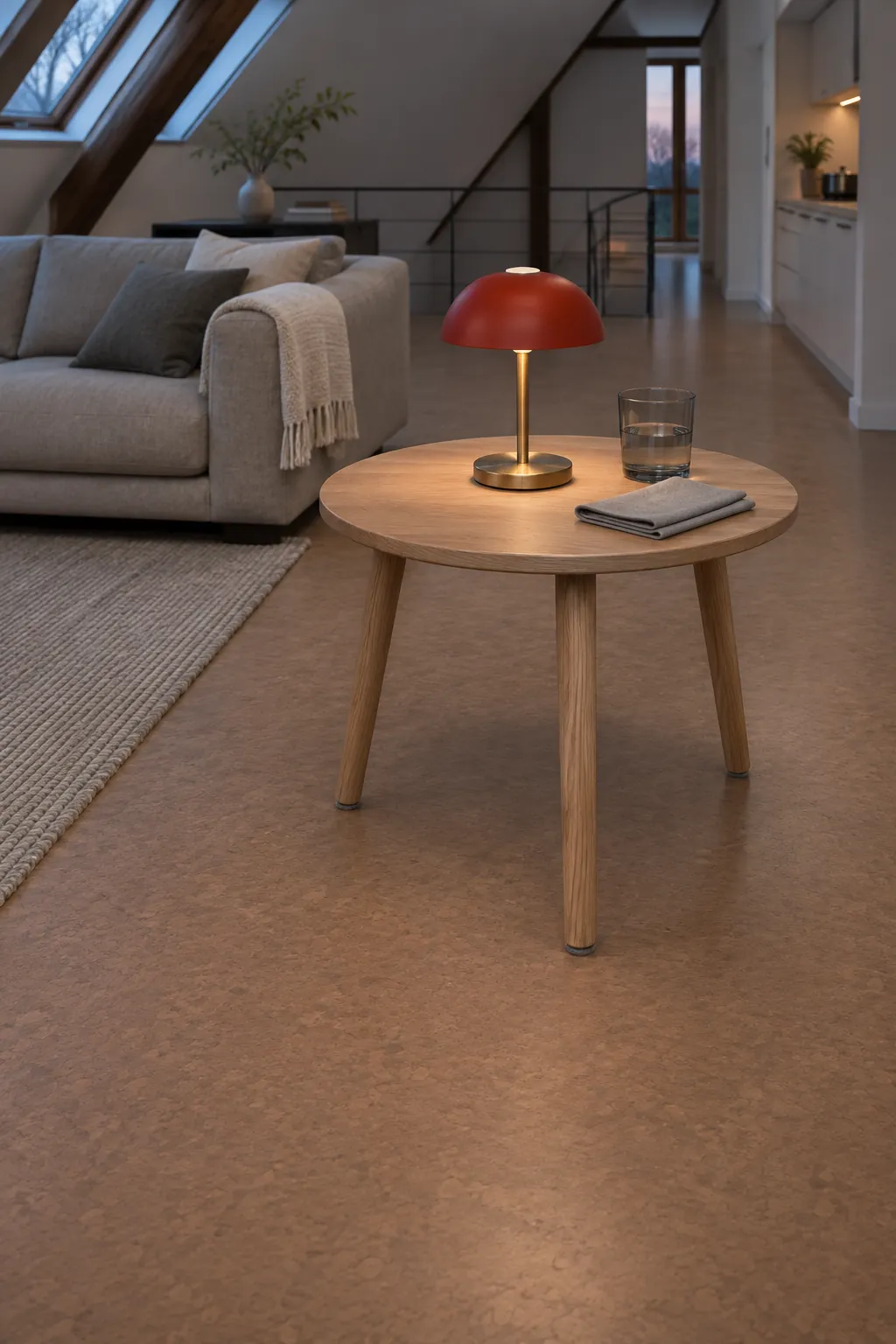
A rechargeable lamp can light an occasional table without trailing a cord across the floor. Look for a broad stable base and a switch you can find after dark. Check the run time on the setting you plan to use and choose a place to charge it.
Keep a plug in lamp tidy on an open table
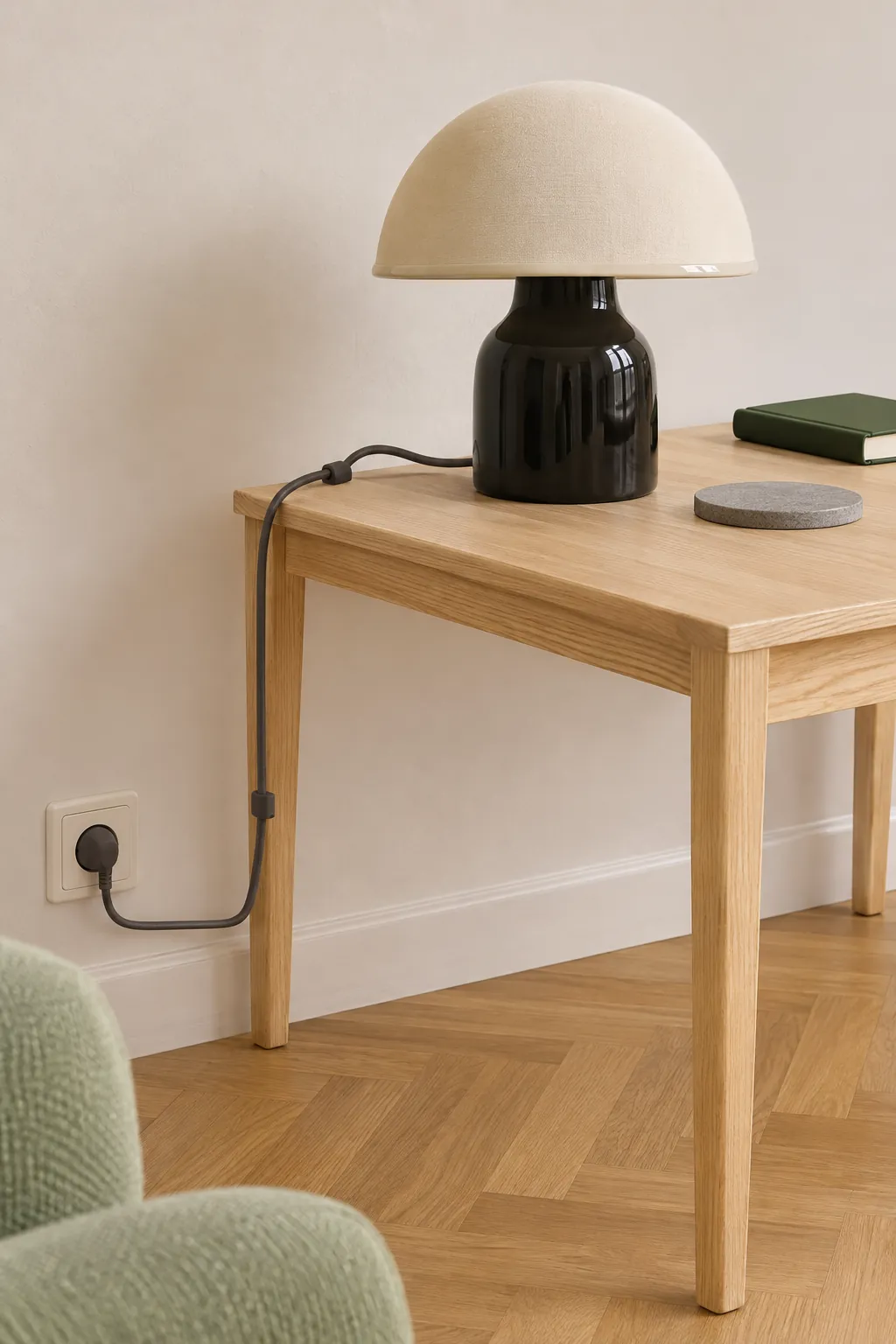
Route the cord down the leg nearest the wall and keep the plug within reach. Choose a clip suited to the surface and follow the lamp maker’s guidance. Leave enough slack at the lamp so moving it a little does not pull it toward the edge.
Set a dome beside a tall plant
Keep the lamp at one end of the shelf and the plant off to the side so stems and leaves do not touch it. Give each object a separate outline with open space around the shade. Use a drip tray and move the pot when watering if the lamp is nearby.
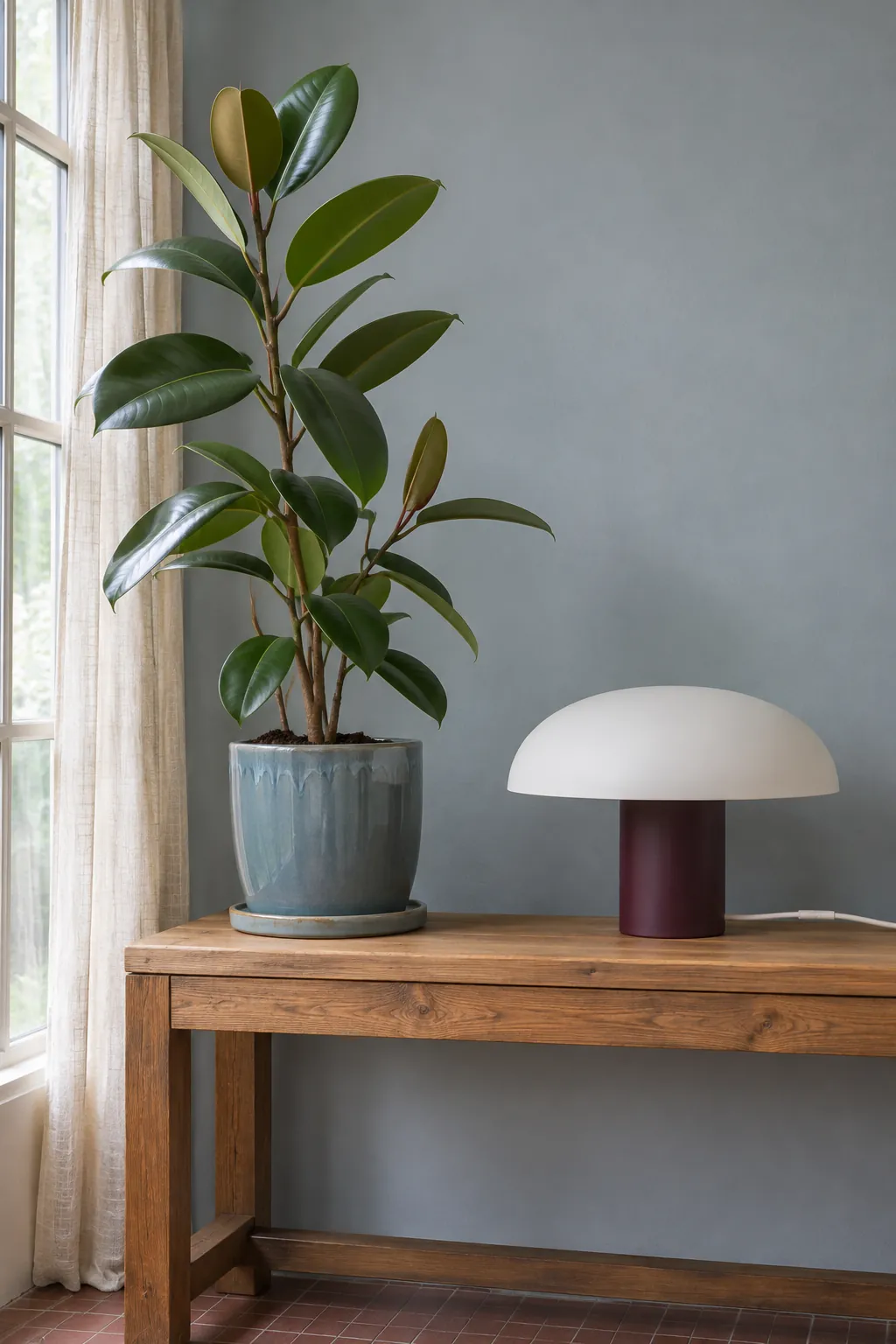
Put a colored dome by a neutral bed
Use a soft blue or red cap if the bed and wall are both pale. Bring a fabric sample or bedding edge near the lamp shade to see how the color changes when it is lit. Keep the lamp scale small enough to leave a useful bedside surface.
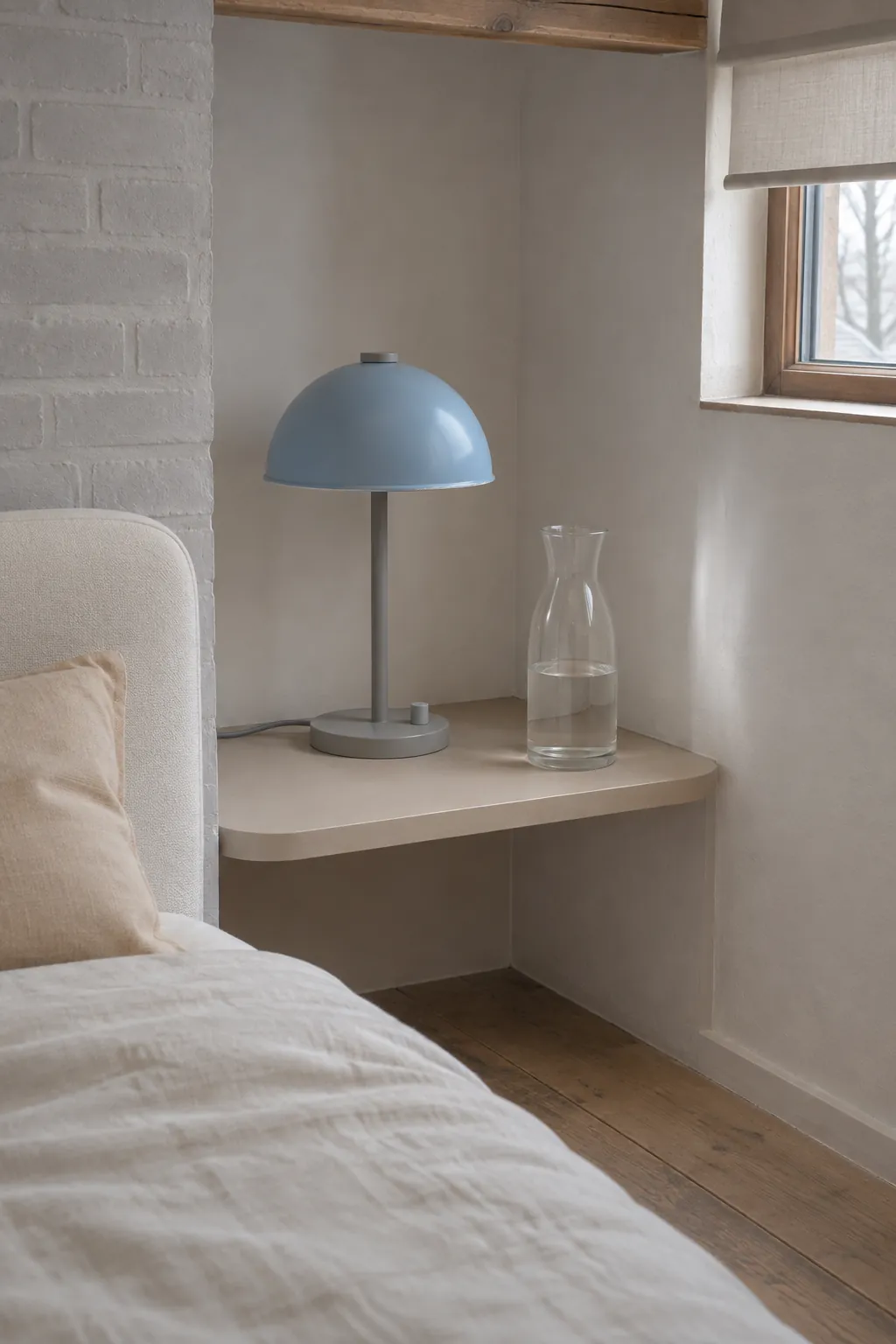
Give a low bookcase one warm spot
A low bookcase gives a small lamp a chance to throw light on the room behind the seating. Set the lamp on a solid section where it will not be lifted with books or jostled. Keep the light away from cables and paper and follow the lamp’s clearance guidance.
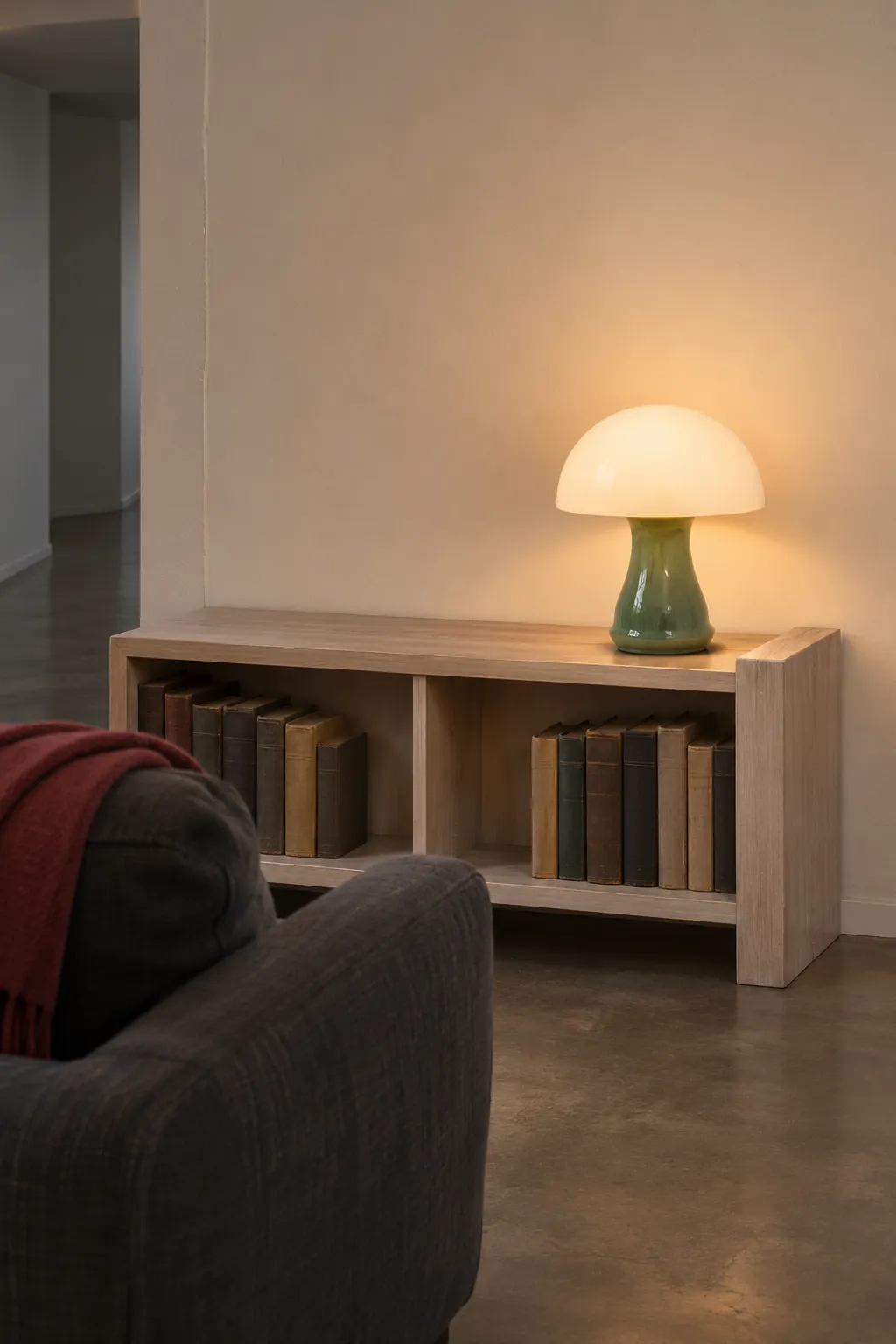
Use a glass base for a lighter profile
A clear or tinted base lets some of the surface below the lamp remain visible. Look for a heavy enough base to sit firmly under the wide cap. Keep the cord behind it so the base can show its actual shape.
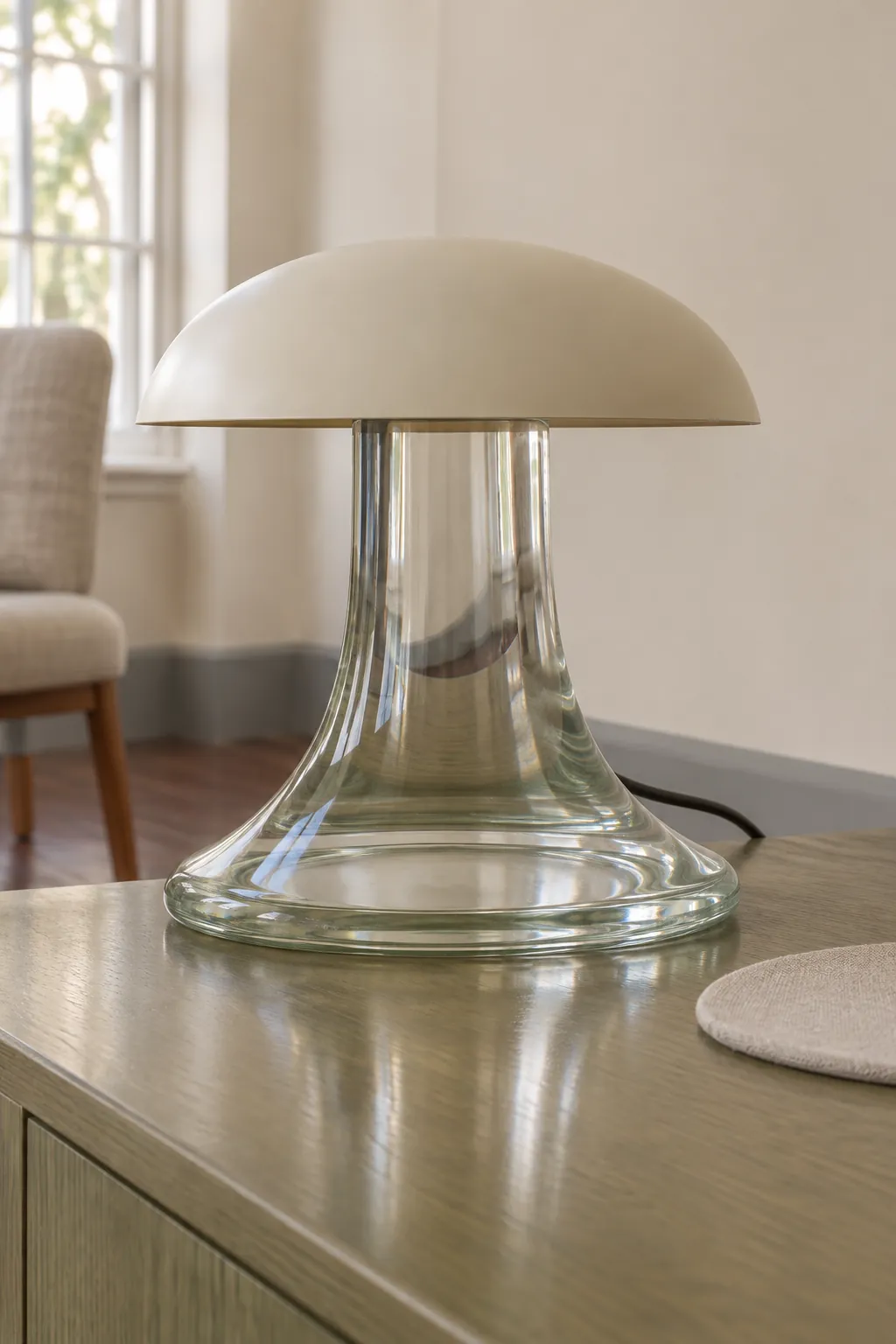
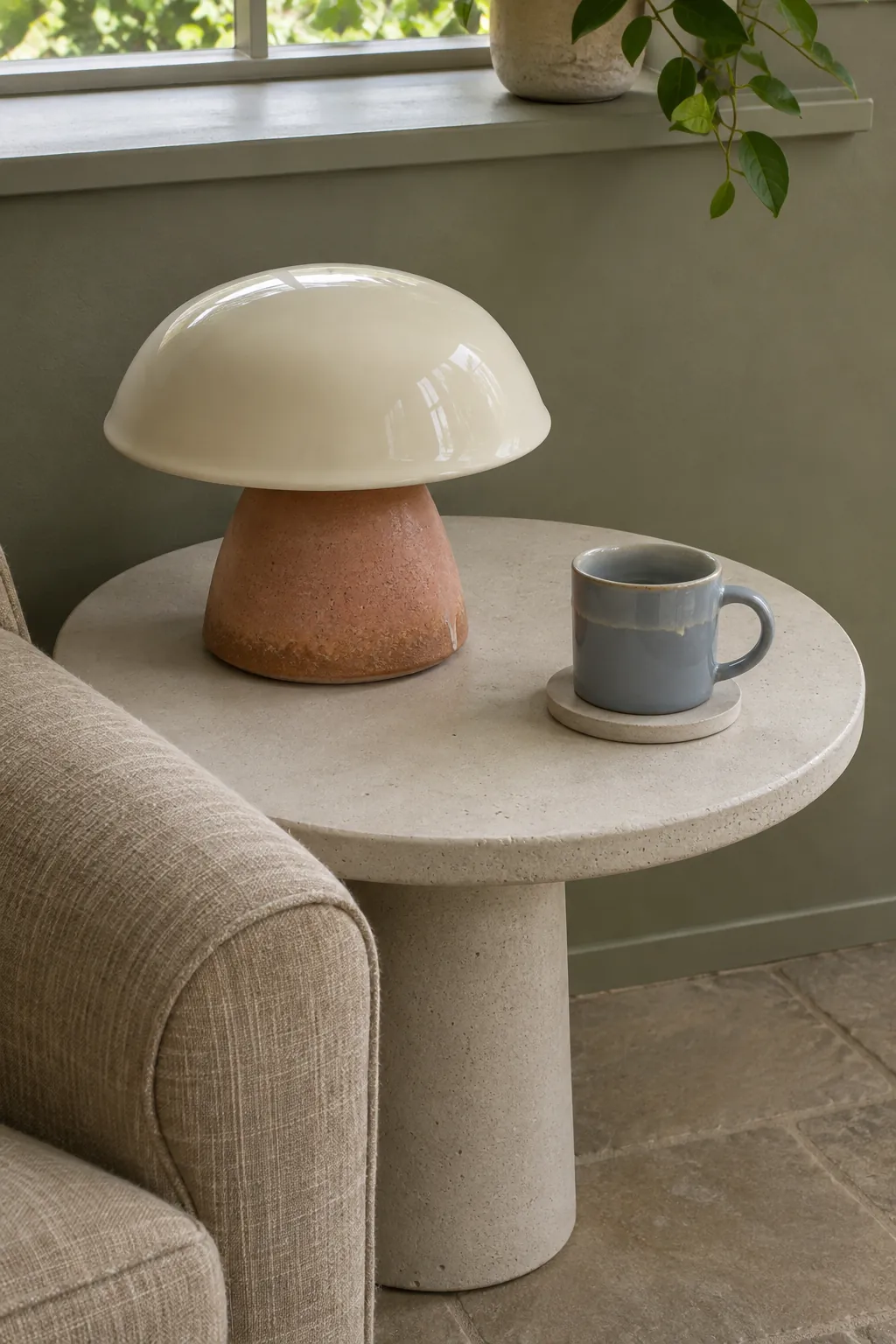
Try a squat ceramic base for a small table
A low ceramic stem can give a cap a stable look on a shallow end table. Check that the base and widest part of the shade sit within the usable width. Put a cup or coaster to one side and try reaching it without catching the lamp.
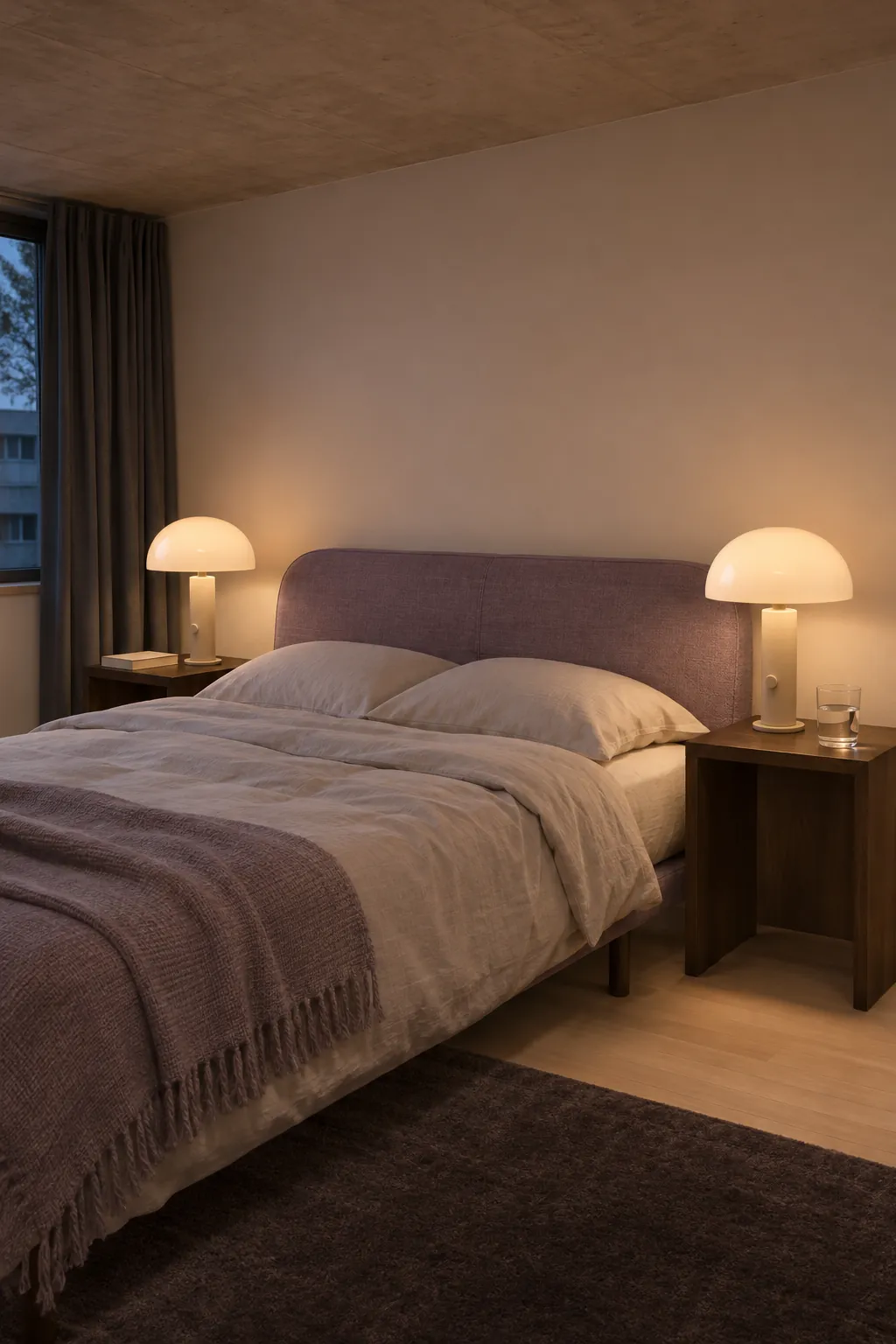
Match two lamps when both sides need the same light
A pair of small domes can give two sides of a bed similar light. Check the switch height and brightness separately from each pillow. Use a bulb within each lamp’s rating and match light output if the two sides serve the same task.
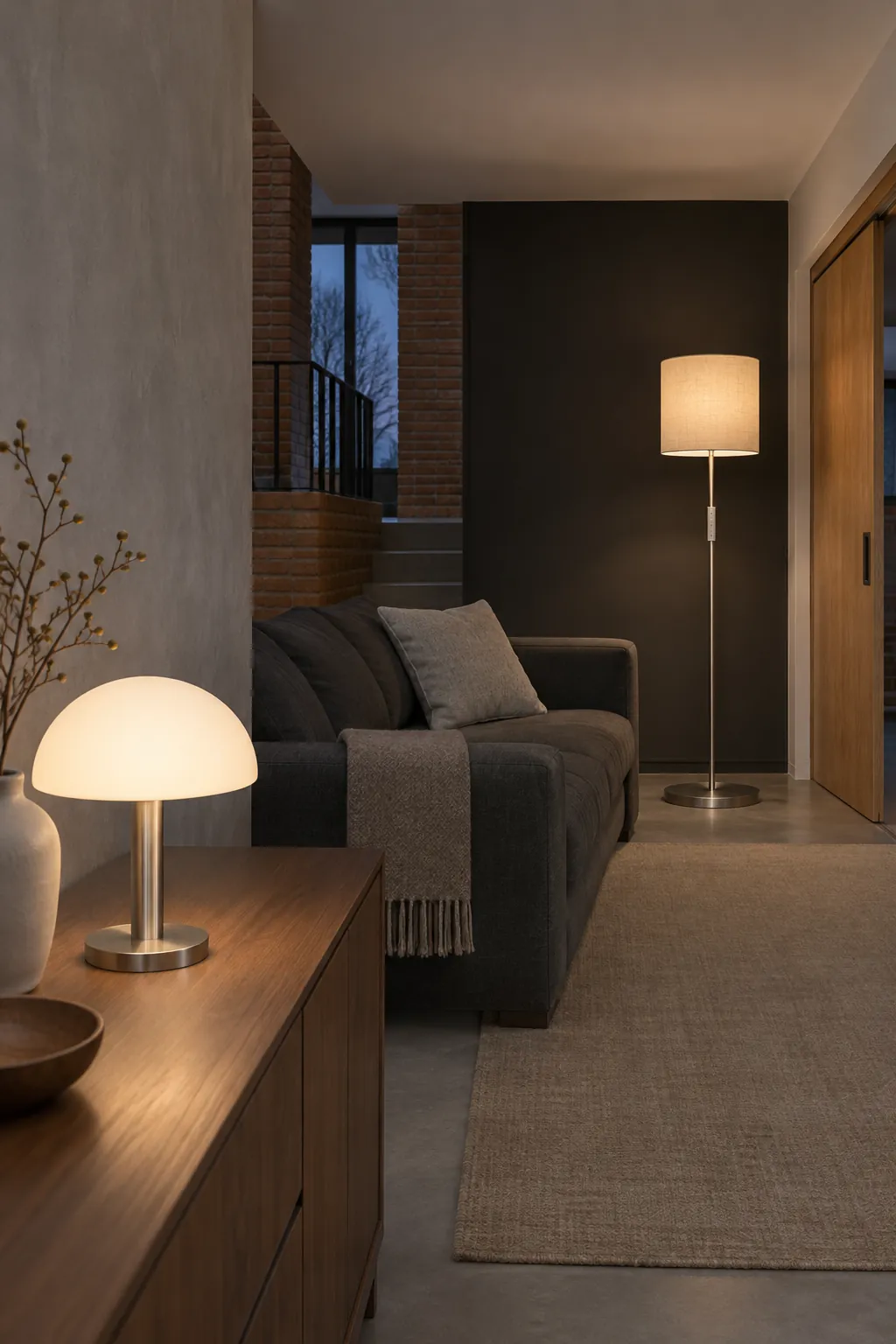
Use different lamps that share one finish
A small mushroom lamp can sit across from a taller floor lamp with the same cream or brushed metal finish. Let each one light a separate part of the room. Try both switches independently so you know which one to use when you only need one area.
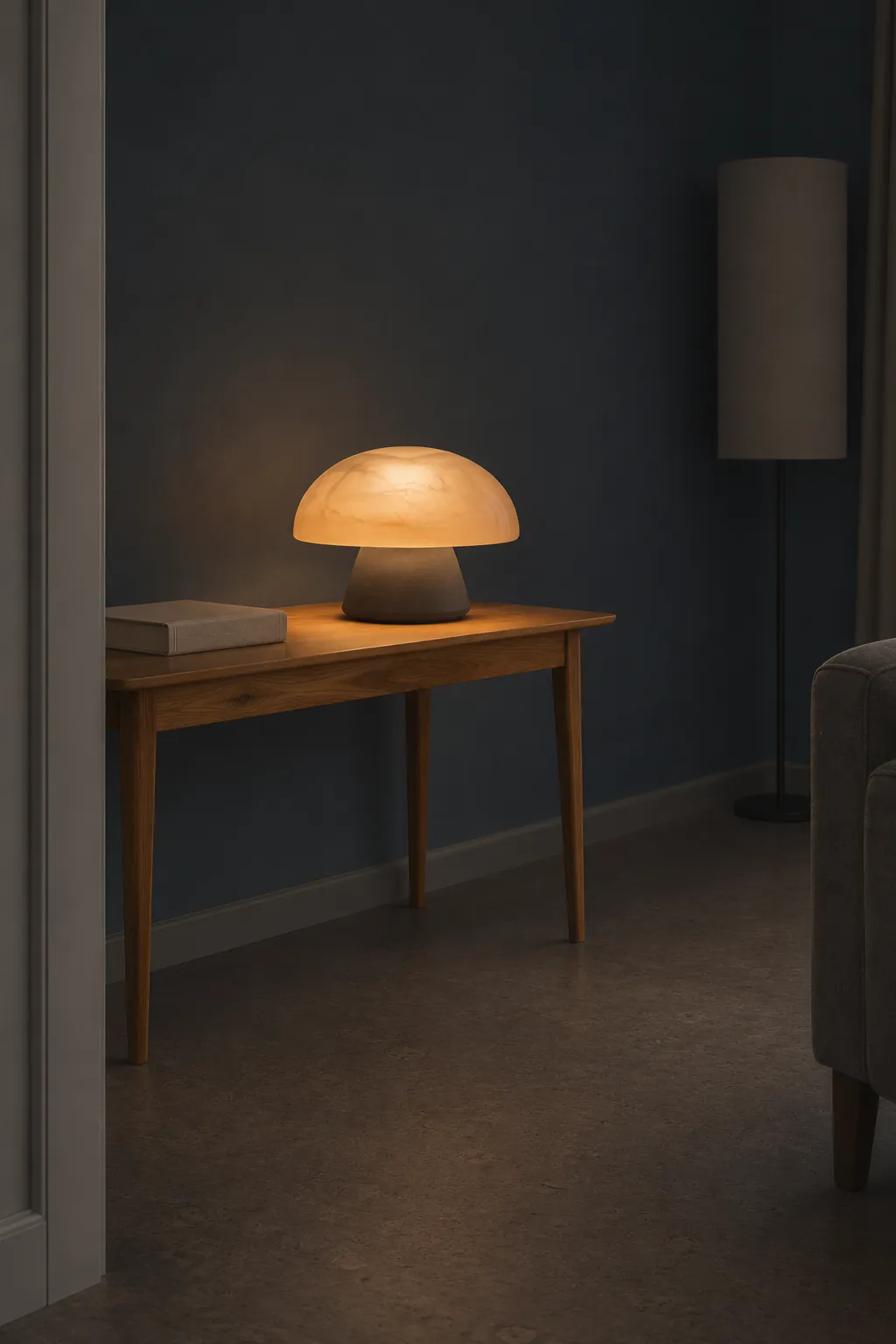
Leave a little dark around a bright shade
A lit cap is easiest to see when surrounding surfaces have lower brightness. Move another lamp away from the same wall or switch it off briefly while you assess the effect. Keep enough light to move around safely.
Try the lamp near a mirror without doubling glare
A mirror can repeat a dome shape and increase the visible light near a console. Move the lamp sideways until the reflection sits where you want it. Check from the approach and from standing height so the bright reflection does not land in your eyes.
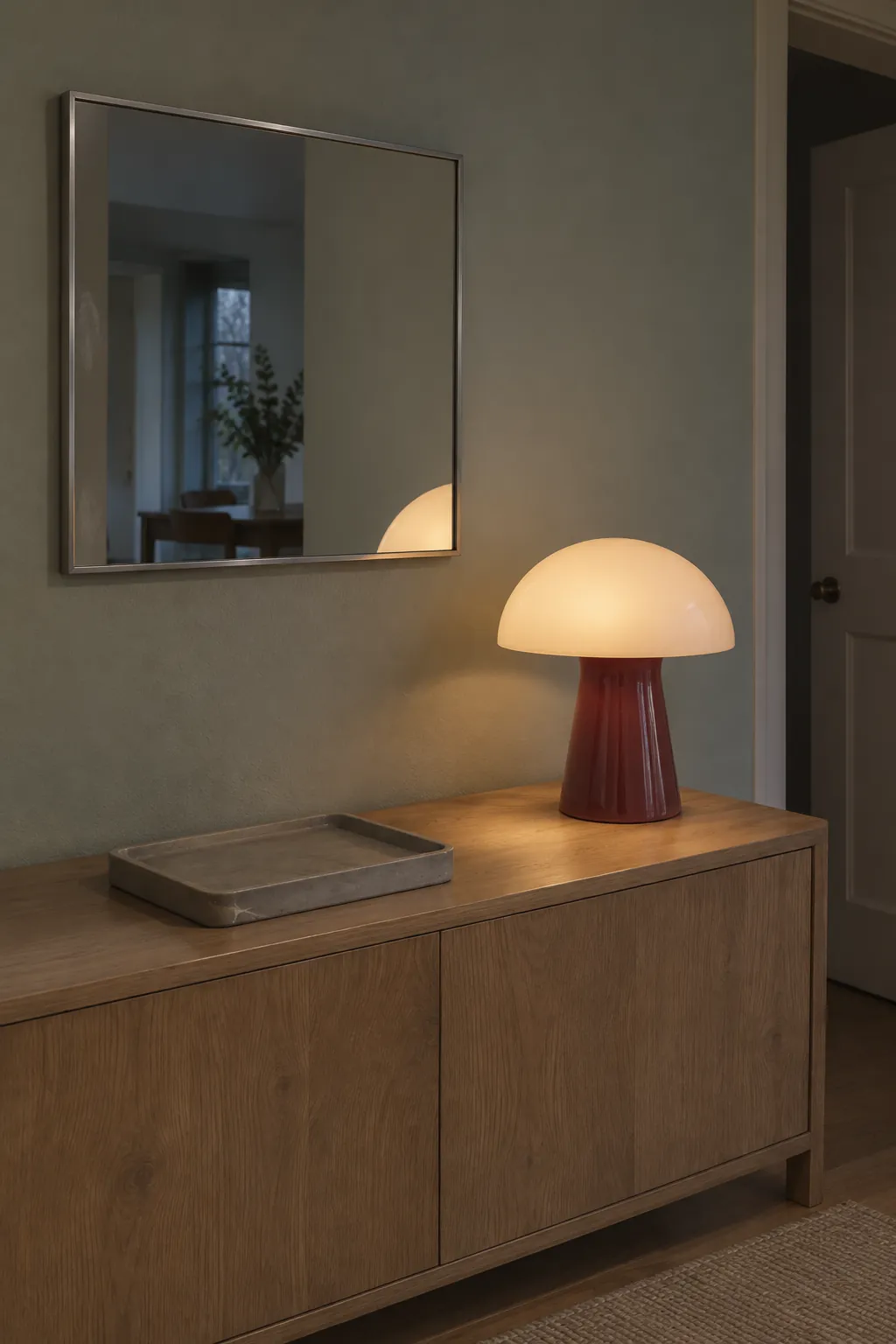
Compare an unlit dome and its evening color
Place the lamp where you plan to use it and look at it before sunset and after dark. A transparent orange cap may shift more than a painted metal one. Use a photo from the same angle if the two views are hard to compare by memory.
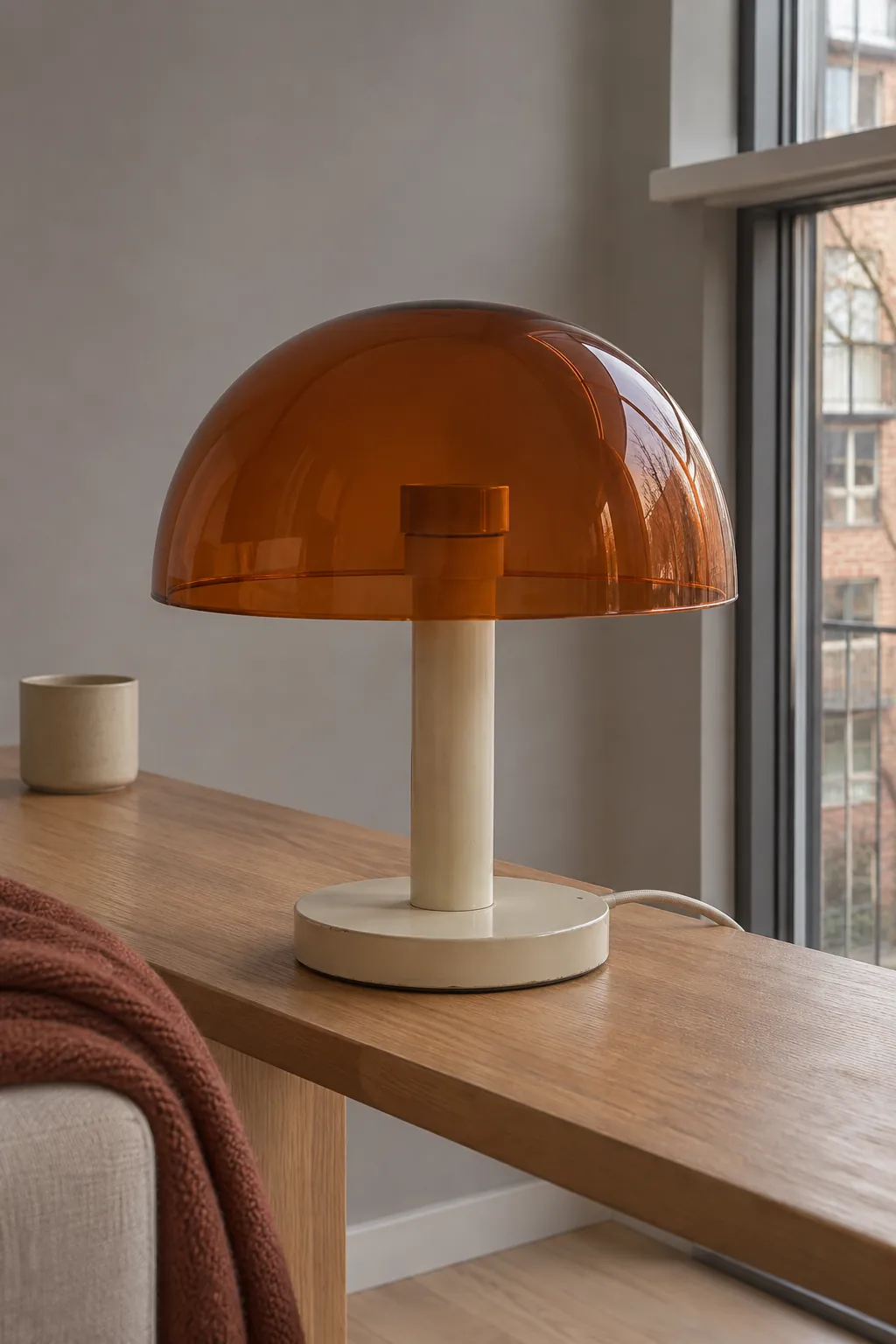
Check older wiring before daily use
Look at the cord, plug and switch on an older table lamp. Stop using it if any part is damaged or a connection feels loose. Have a qualified repairer inspect vintage wiring and follow the fixture rating when choosing a bulb.
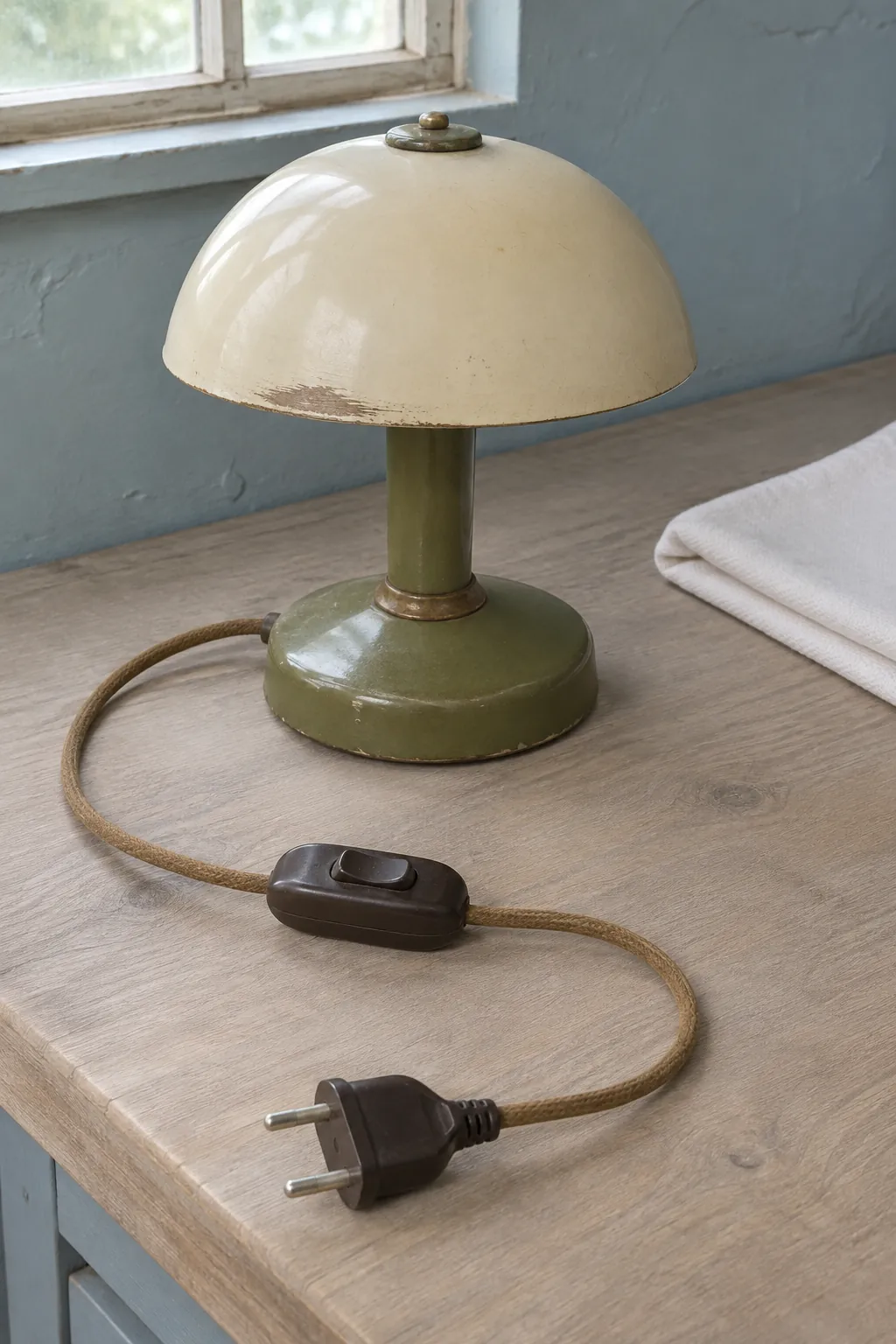
Choose a safe brightness for the shade
Check the fixture label or the maker’s guidance for the bulb type and power limit. Compare compatible bulbs by their light output and where that light falls. If you want to dim it, use a bulb and dimmer that the maker says work together.
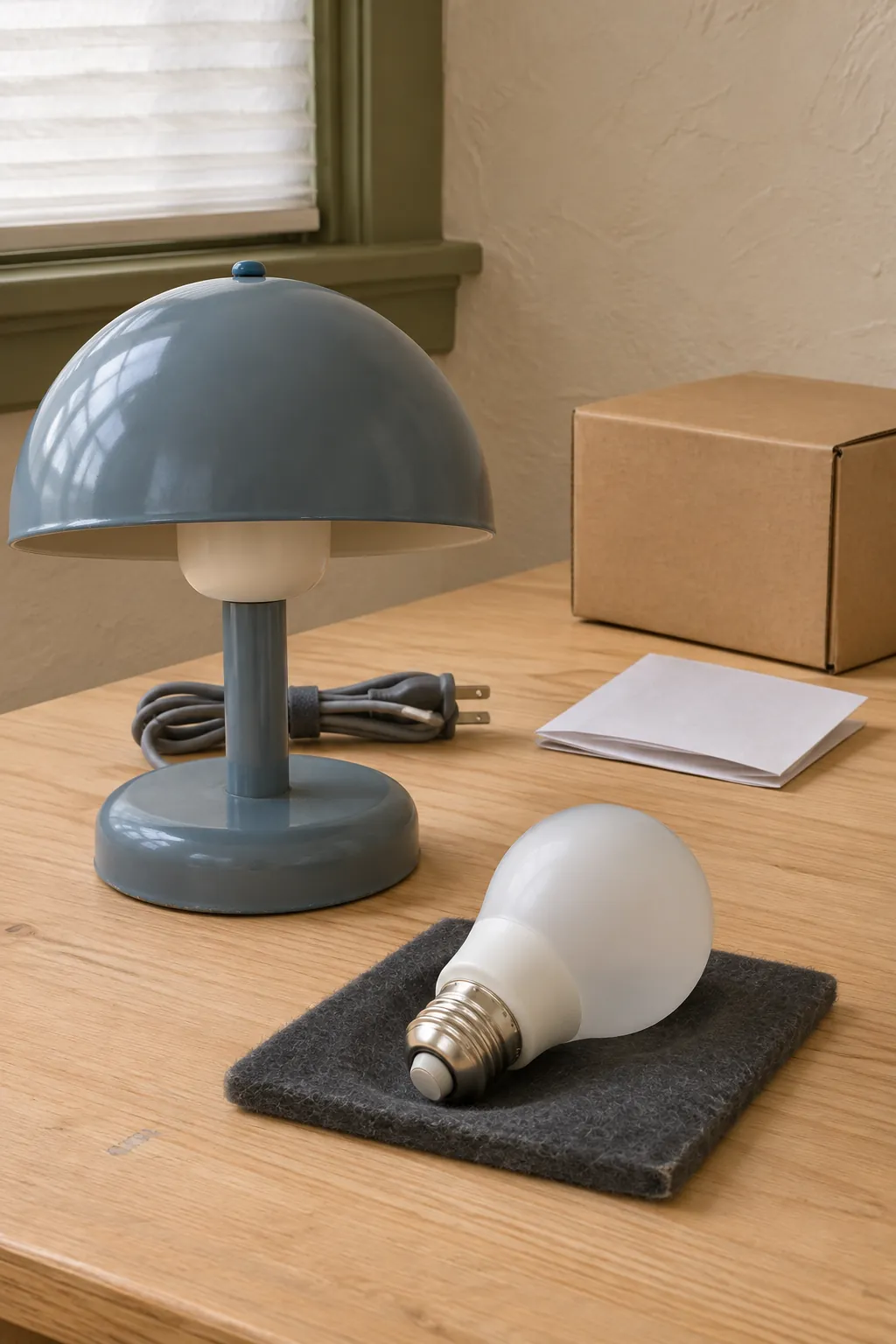
Set a low dome in a dining side nook
A small low dome at the side of the dining room can soften the light after food is served. Put it on a stable shelf or sideboard away from drinks and dishes in transit. Sit down at the table to check for glare in glasses and cutlery.
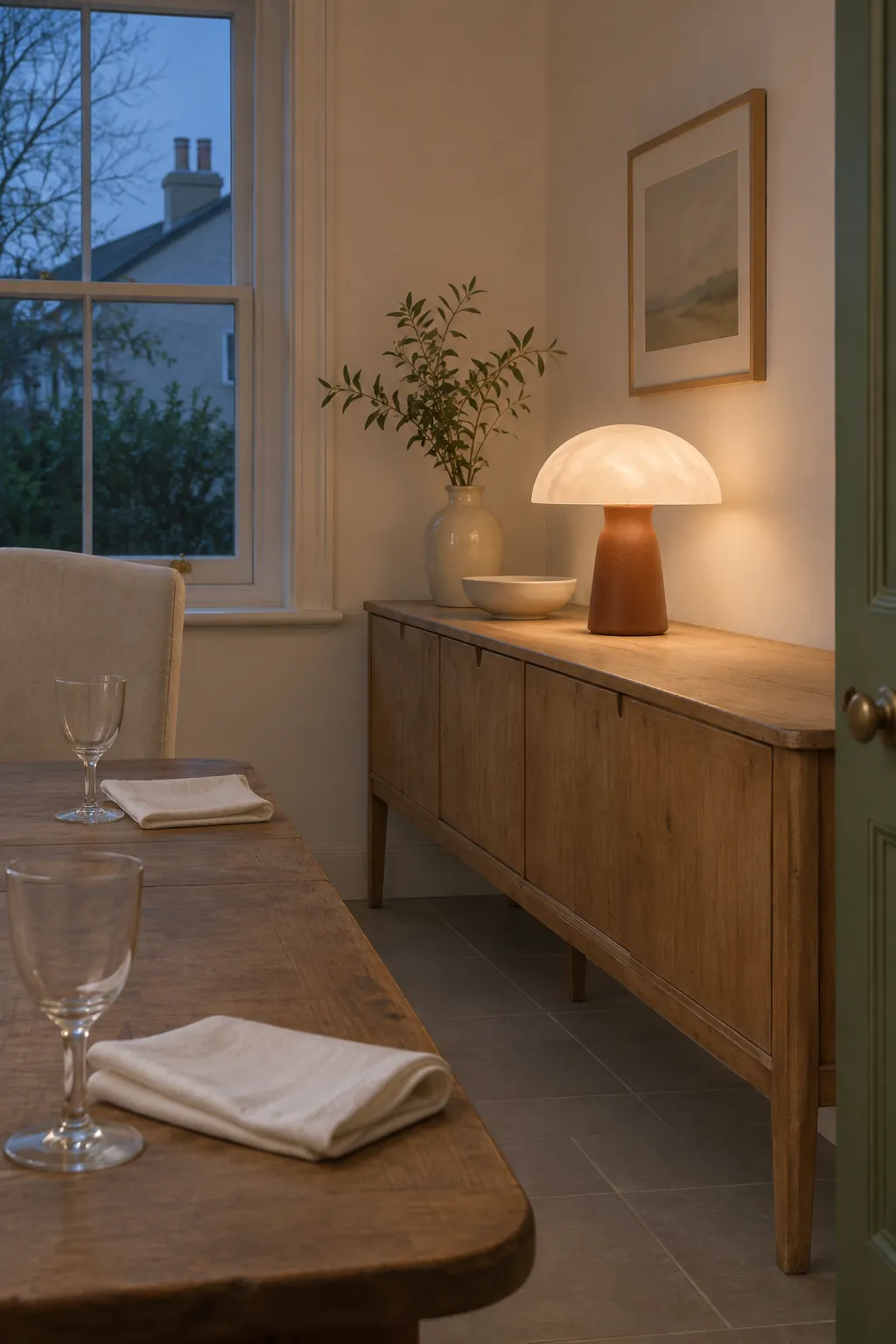
Try a dome with a slim Bauhaus inspired outline
A thin cap and simple stem can sit in a room with clean straight furniture. Give the silhouette space by removing smaller shapes near the rim. Use the cap position to decide whether you want a wide pool of light or a narrower one.
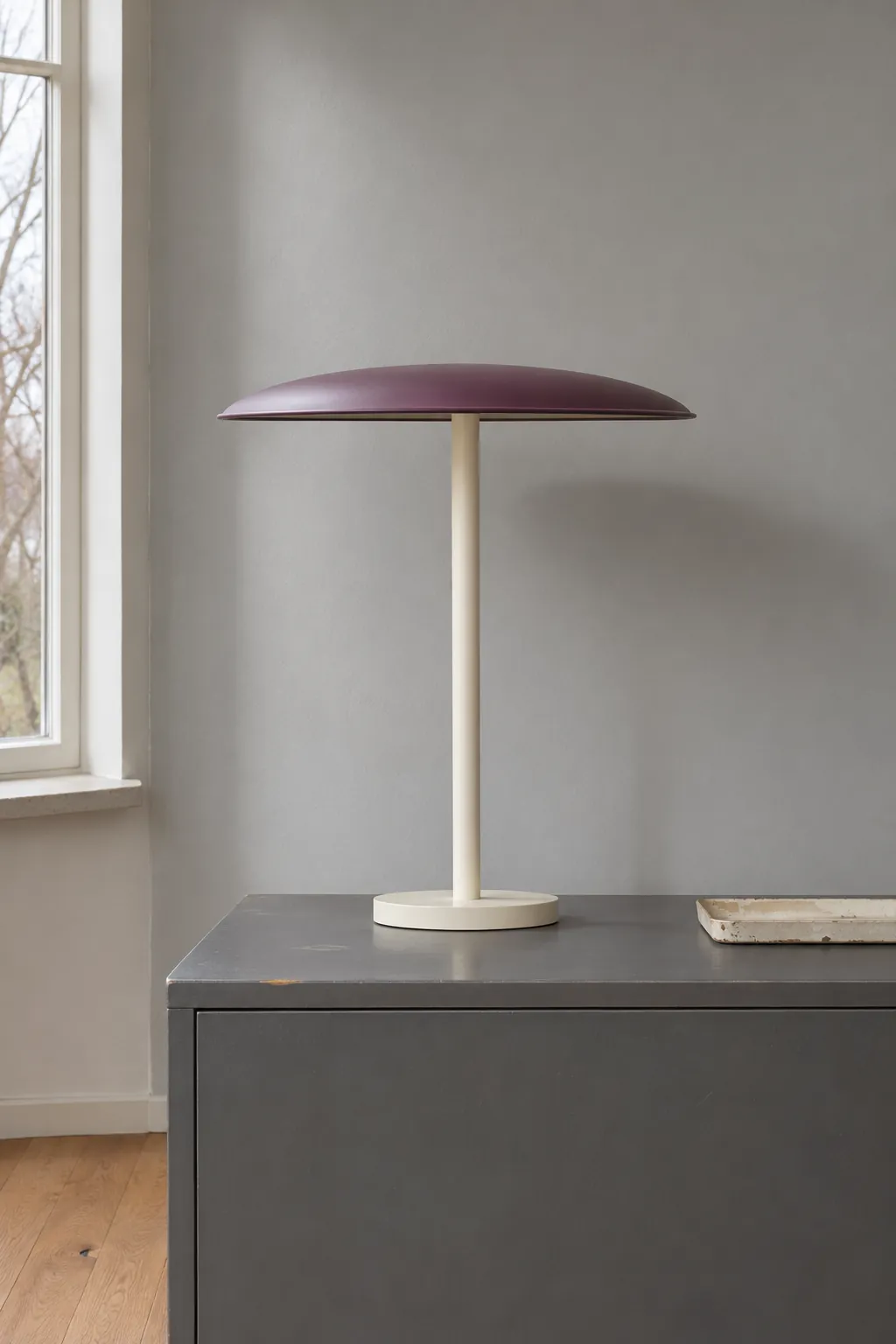
Photograph the lamp from the place you use it
Look at your lamp from the doorway, from the chair or bed, and from where you reach the switch. If the best looking angle creates glare at your normal seat, move the lamp and check each view again. Keep the position that lights what you need and leaves the rest of the surface easy to use.