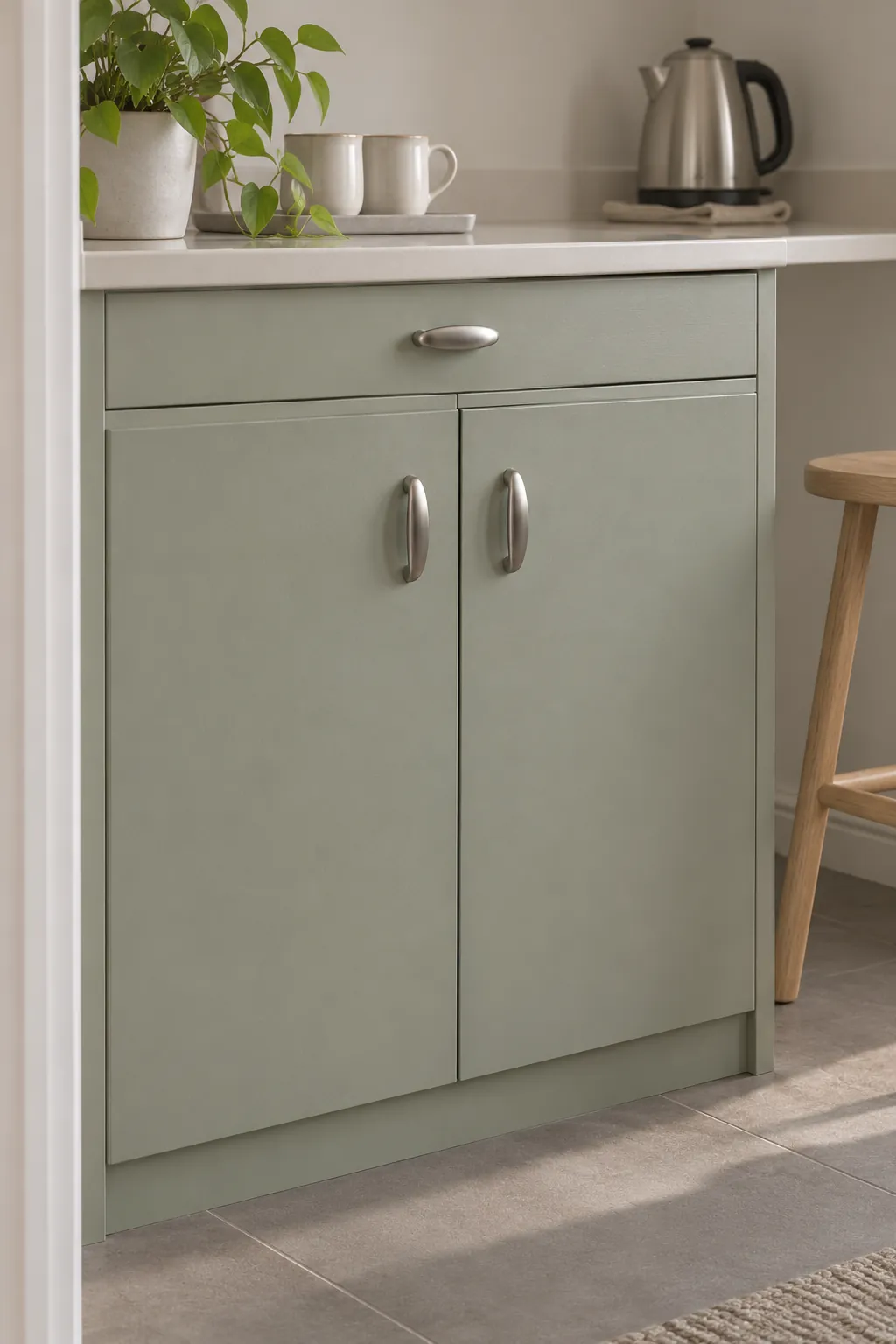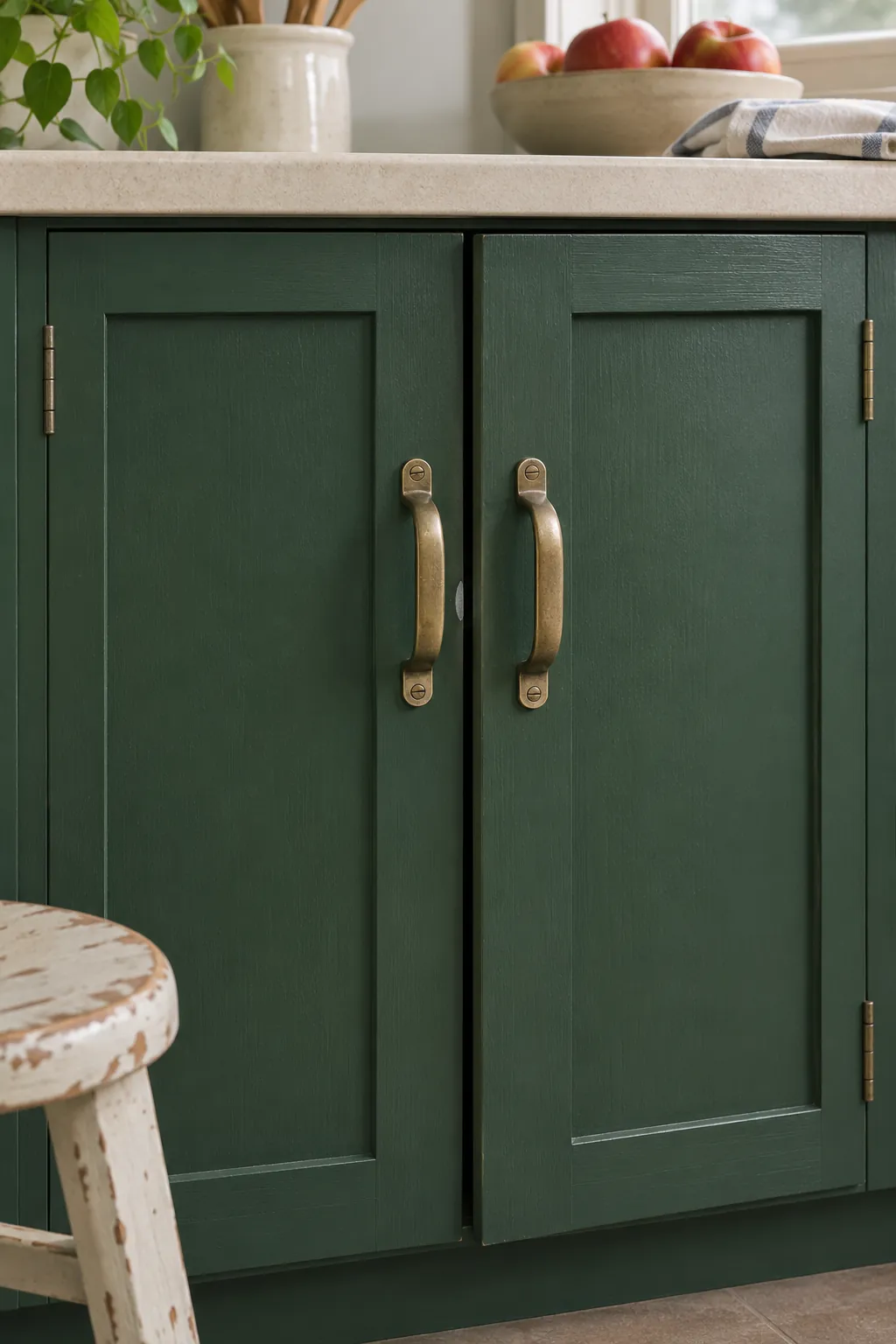
A bright patch on one door edge usually tells you more than the gap you see from across the room. Close each door slowly while the other stays shut and find the first point where they touch. A gap that disappears at one corner calls for a different adjustment from a gap that is tight all the way down.
Find the first point of contact
Look for a shiny spot, a scuff, or a small chip on the two meeting edges. A light held from inside the cabinet can help you see where the gap vanishes. Mark the spot with low tack tape next to the seam if the finish is sound. Keep your fingers out of the gap when you test the swing.
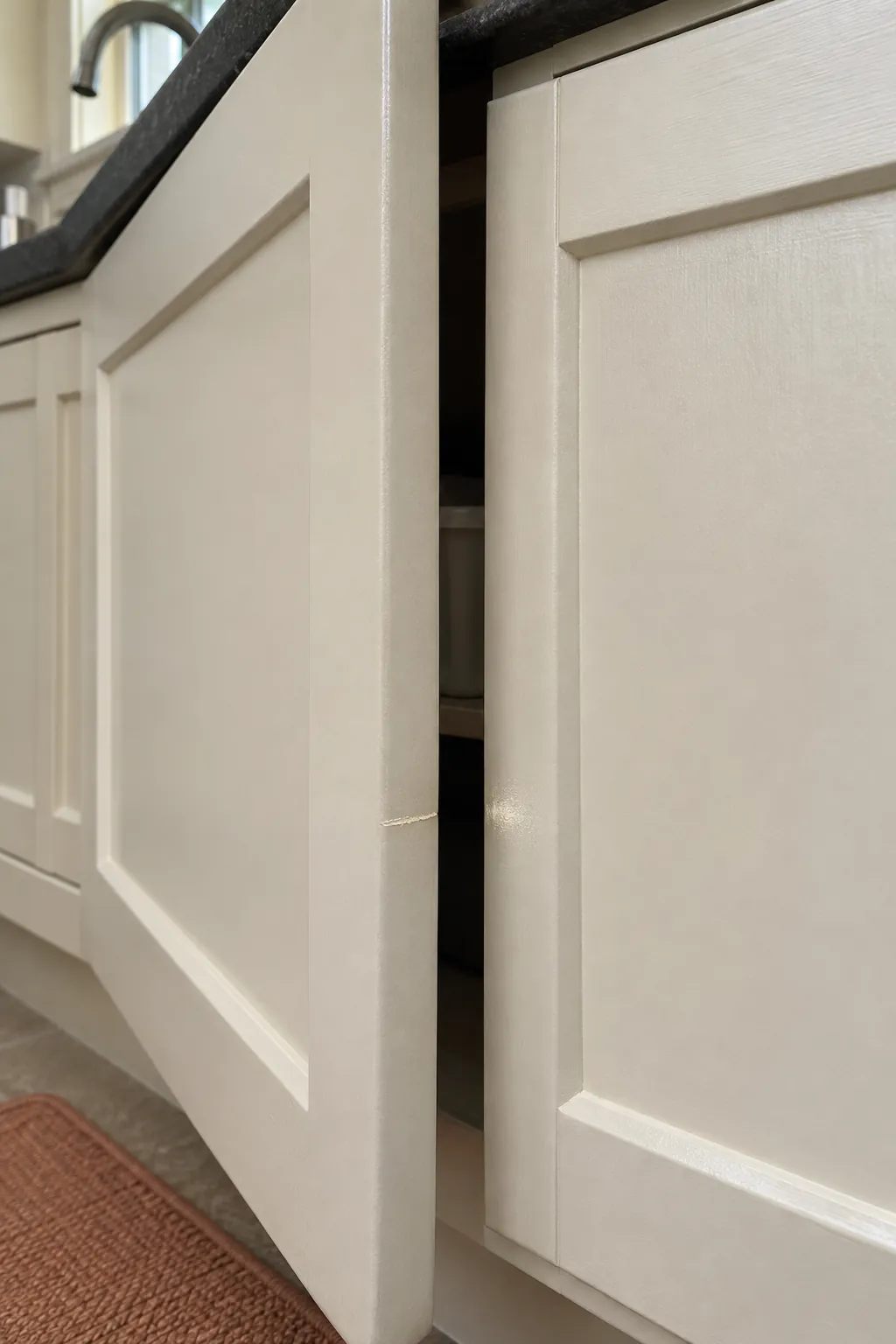
Measure the center gap before moving a door
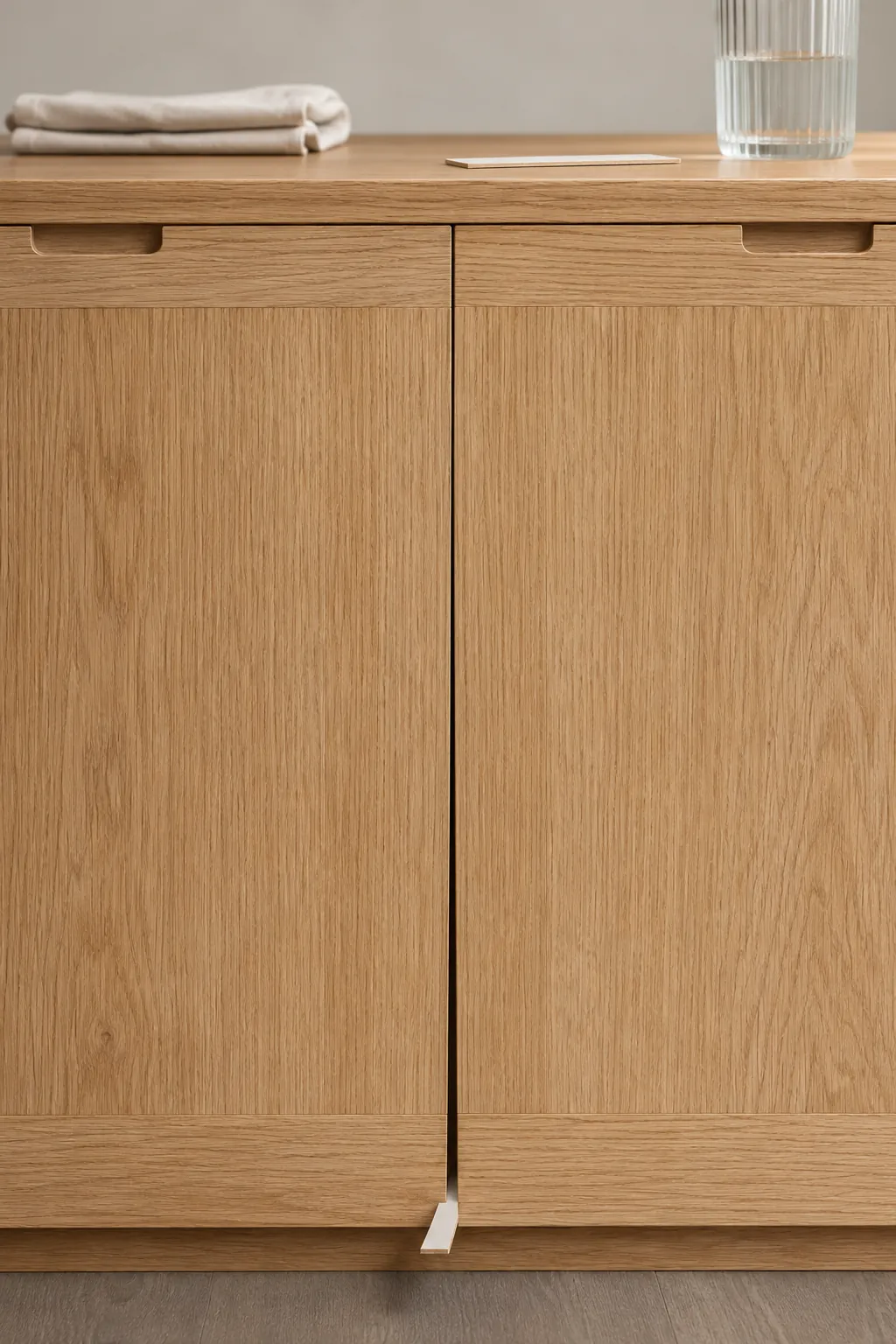
With both doors as close to shut as they will go, compare the gap at the top, middle, and bottom using a small ruler or thin shims. Also look at the clearance at each outside edge. A tapered gap points to a door that hangs at an angle. If the gap is equally tight from top to bottom, check whether either door has room to move outward before deciding which one to adjust.
Check for sag at the mounting plate
A door that suddenly started rubbing after years of use may have a loose hinge. Support the door at its free edge and gently lift it while you watch the plate on the cabinet side. If the plate moves, restore that attachment first. If a screw turns without tightening or the board crumbles, the mounting hole needs repair before the adjustment will hold.
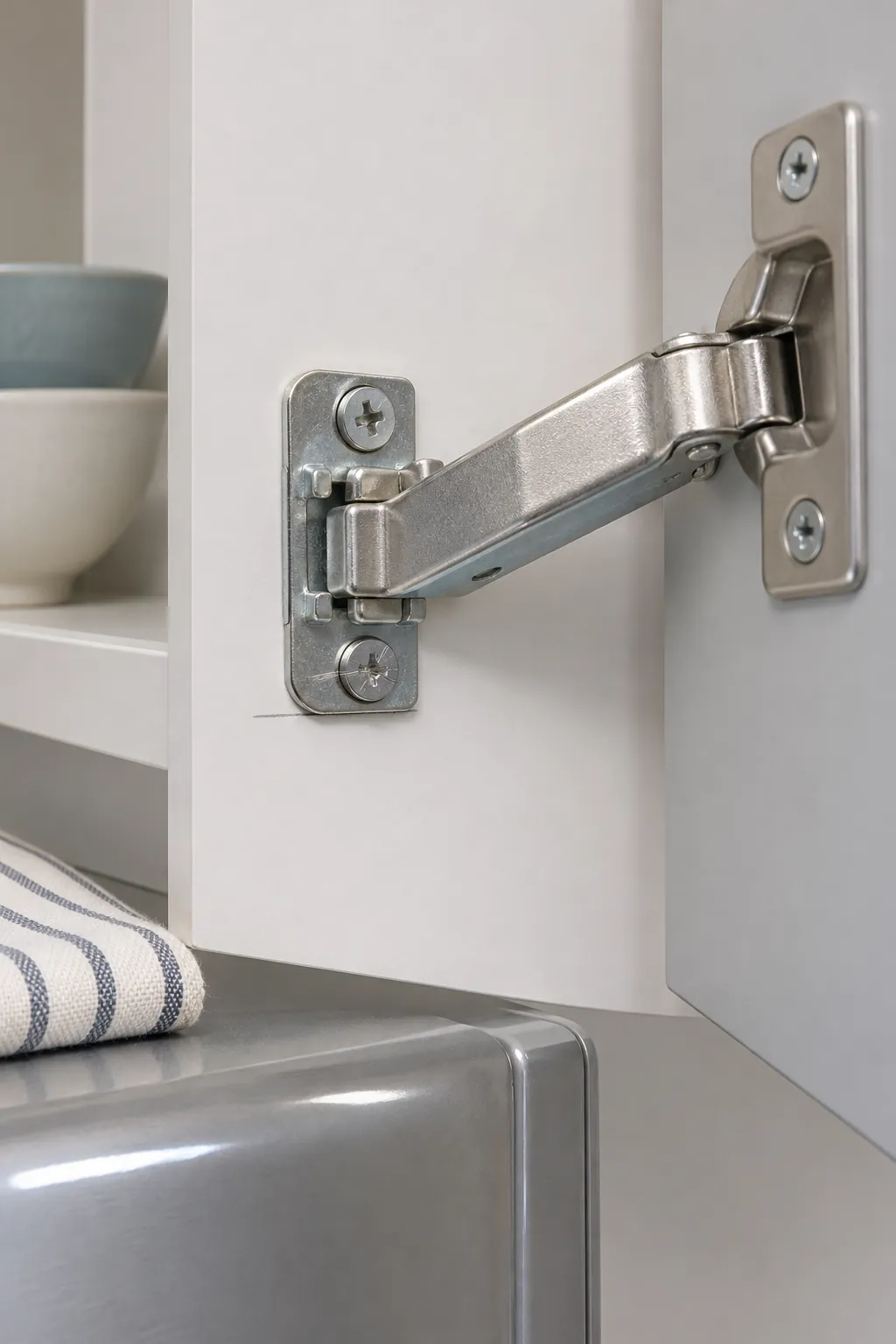
Use the sideways adjuster in small steps
Identify the side adjustment screw in the instructions for your concealed hinge model. Photograph the starting position and use a hand screwdriver that fits the recess. Try a small turn, then close the door to check which way it moved. If the whole inner edge needs more space, move both hinges on that door by similar amounts. For a tight corner, change the nearest hinge slightly and check the gap at the other end before making another move.
If a sideways move improves the center gap but crowds the cabinet on the outer edge, divide the correction between the two doors. Recheck the edges with both doors closed and again as each swings past the other.
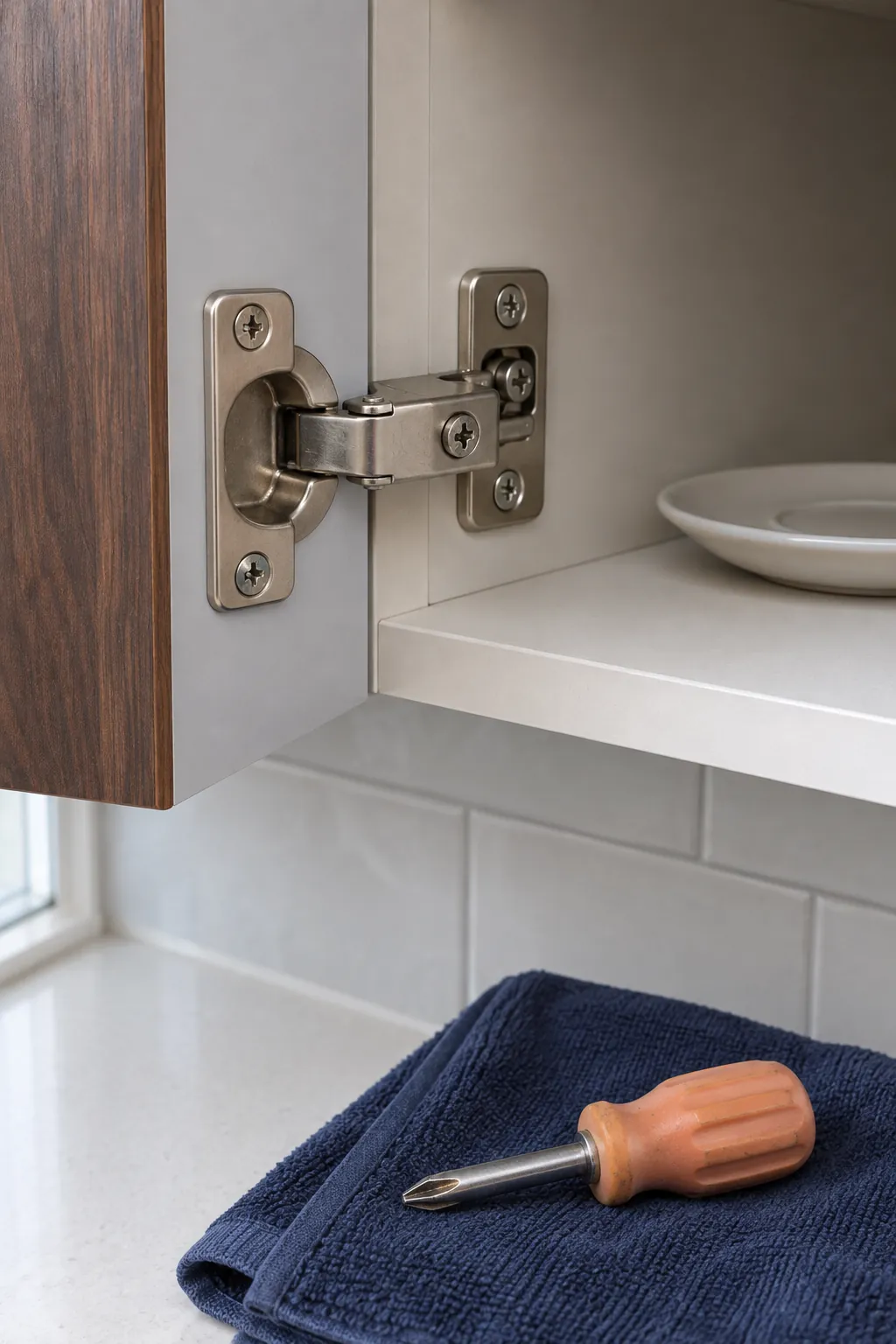
Find out why the hinge ran out of travel
If the doors have always rubbed, or if the problem started when you replaced a hinge, confirm the hinge and its mounting plate suit your cabinet. Overlay is how much of the frame or cabinet side the closed door covers. A hinge for a different overlay may leave too little room at the center even at the limit of adjustment.
Hold a straightedge on each meeting edge and look for a bow. Compare the two diagonals of an accessible cabinet opening if you suspect the box is out of square. A warped door, a distorted cabinet, or a door that is too wide can require a different repair. Avoid forcing the adjuster past its stop.
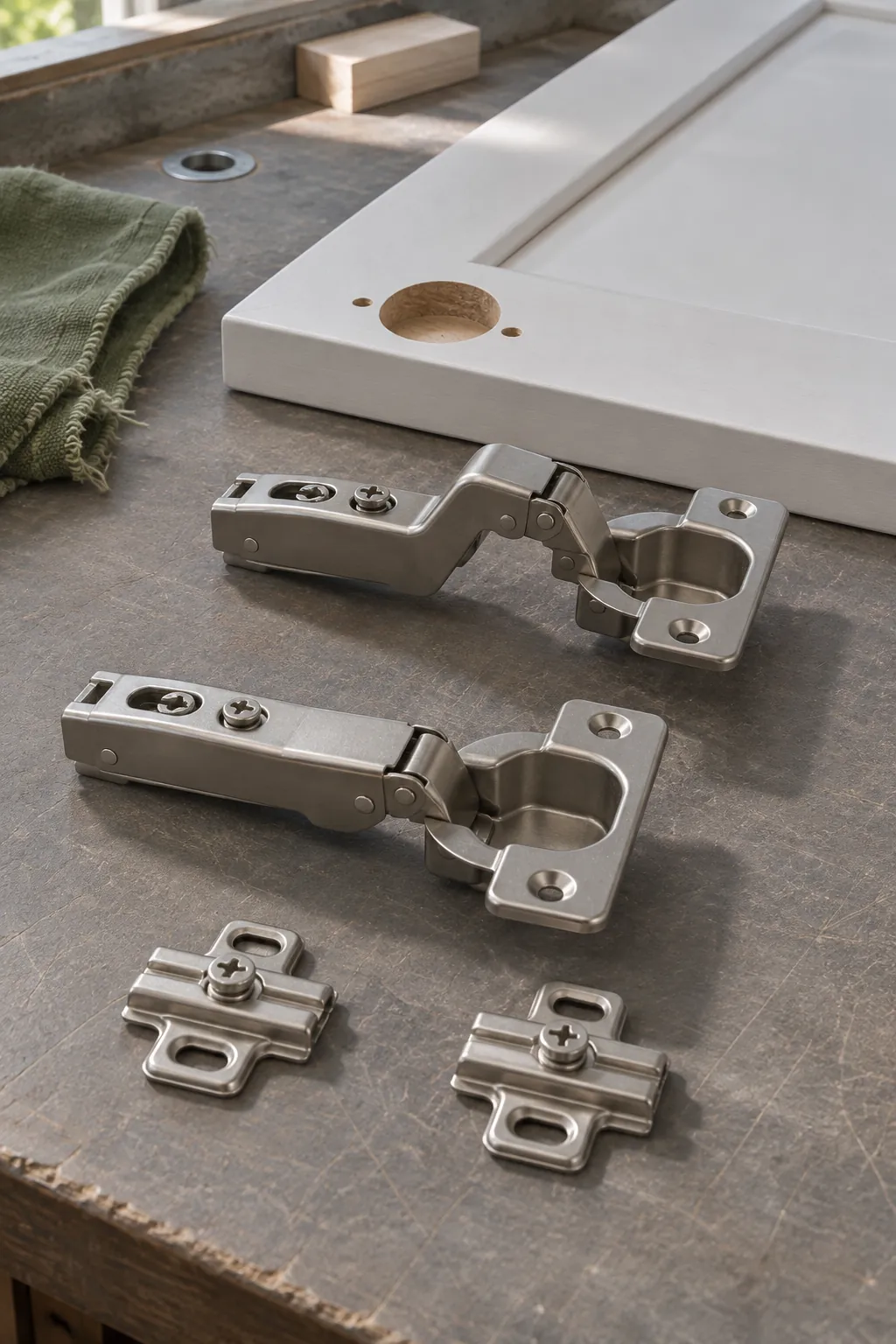
Make sure the edges clear before touching up the finish
Take the tape off and open and close each door several times with its neighbor shut. Watch the original contact point and the outer corners. Once both doors swing cleanly and meet with an even gap, clean the scuffed edge and touch up any exposed material with a finish compatible with the door. Let the repair cure according to the finish instructions before closing the door against anything that might leave a mark.