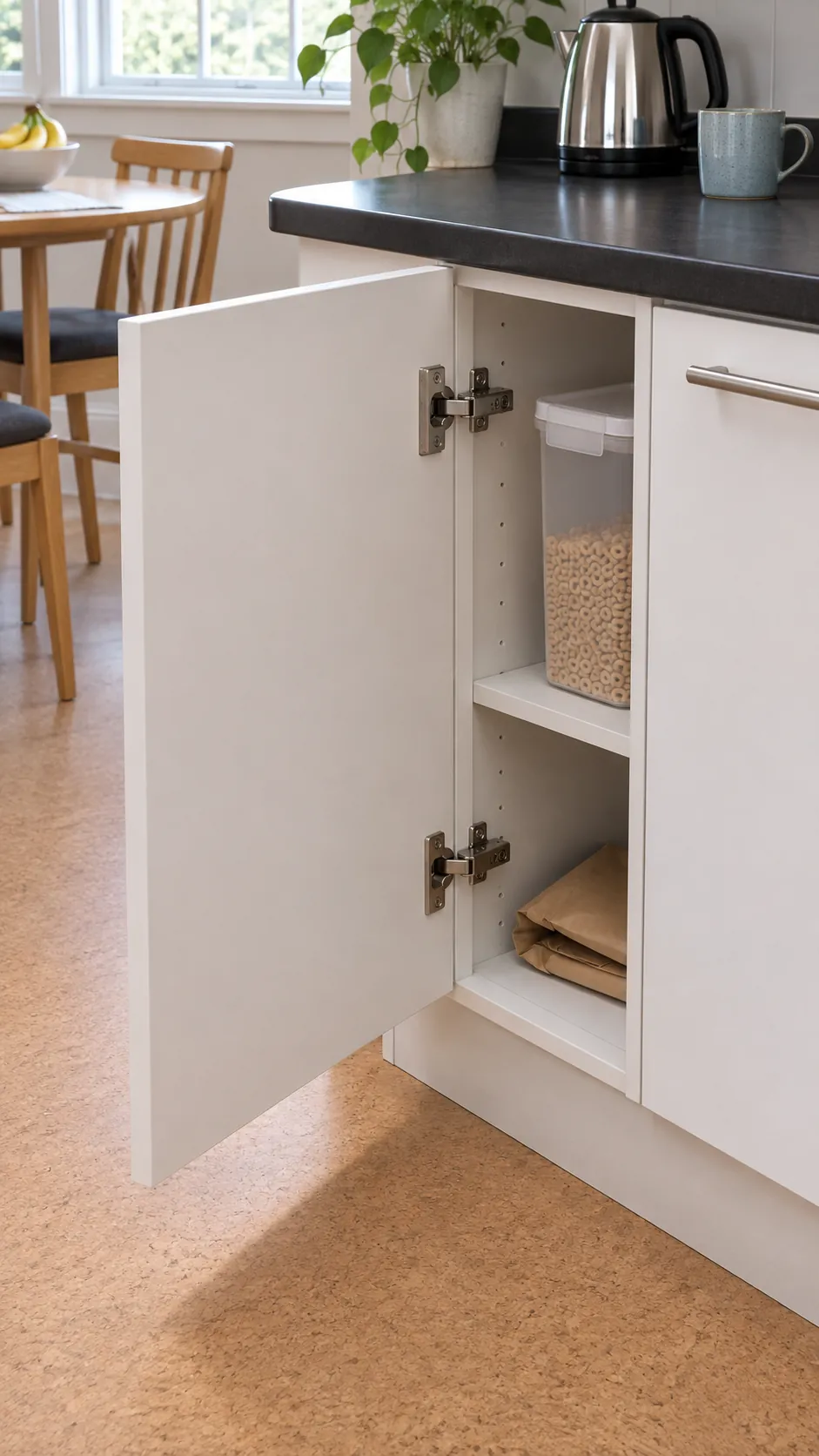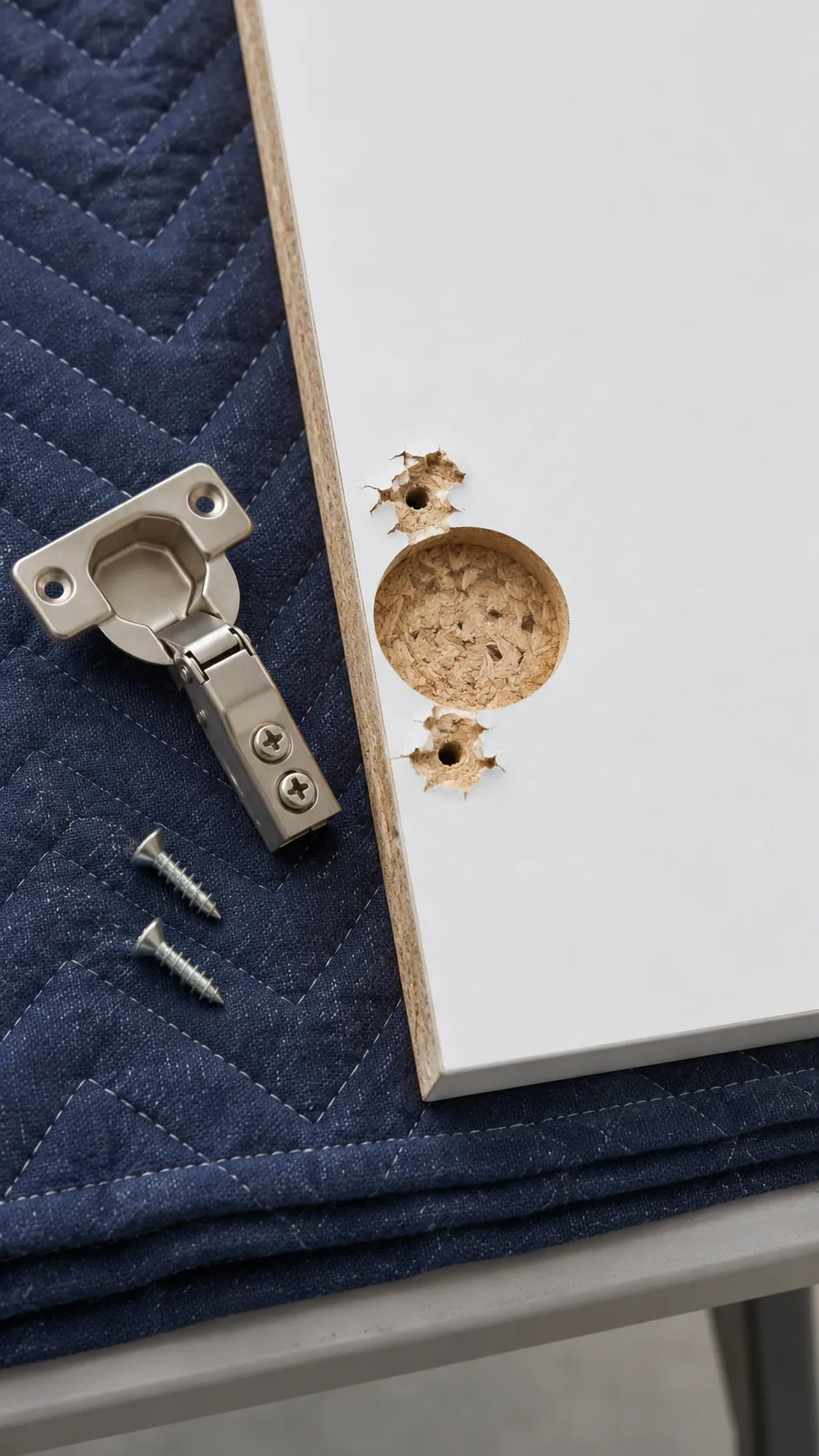
When a cabinet door hangs from one hinge, the weight can tear out the second one. Support the door and get it off the cabinet before inspecting the broken attachment. The repair depends on how much solid particleboard surrounds the damaged holes.
Work out which side pulled loose
Have someone steady a heavy door while you release the remaining hinge or remove its screws. Lay the door face down on a padded surface. Look for damage around the round hinge cup in the door and around the mounting plate on the cabinet wall. The two locations take different repair plates. Save the old hardware so you can check the hole spacing and mounting position.
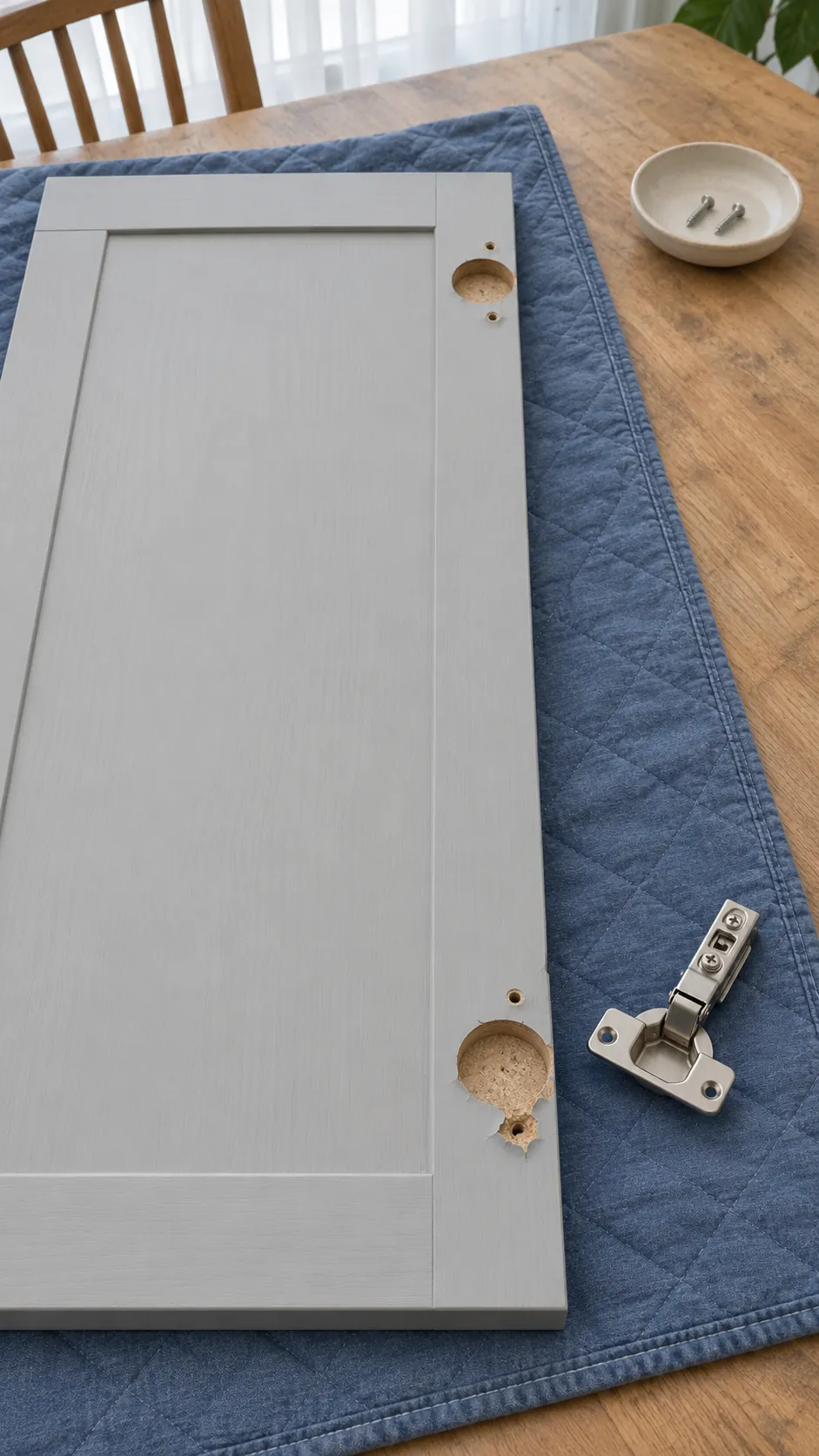
Check how far the board crumbled
Brush or vacuum away loose particles and press lightly on the board just beyond the break. A small stripped hole in dry, firm board may be rebuilt. A localized crater with solid material around it is a candidate for a repair plate. If the board is swollen, soft, split through to the edge, or crumbles over a wide area, fix any moisture source and replace the damaged door or cabinet panel.
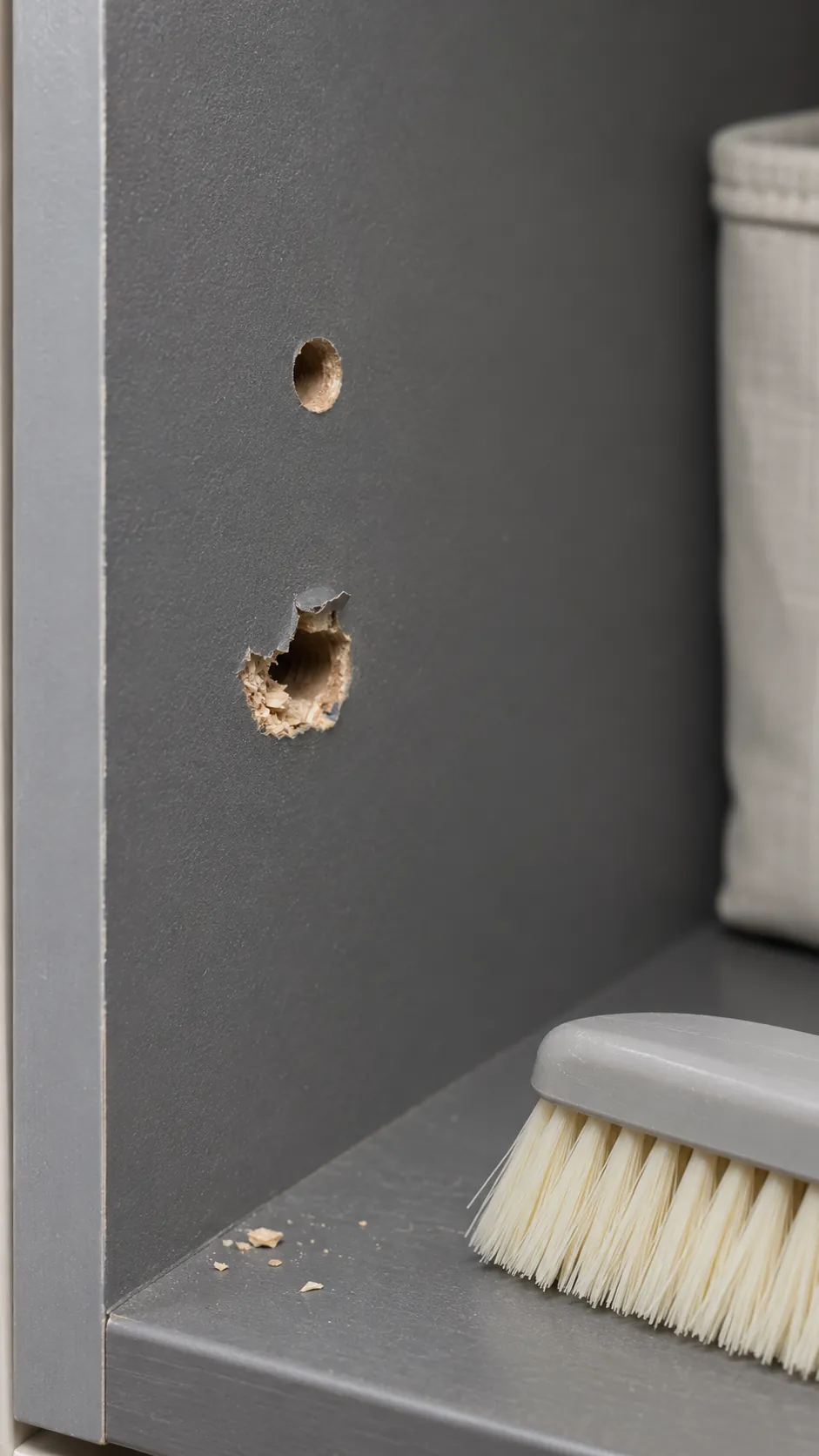
Choose a plate that fits the hinge and the panel
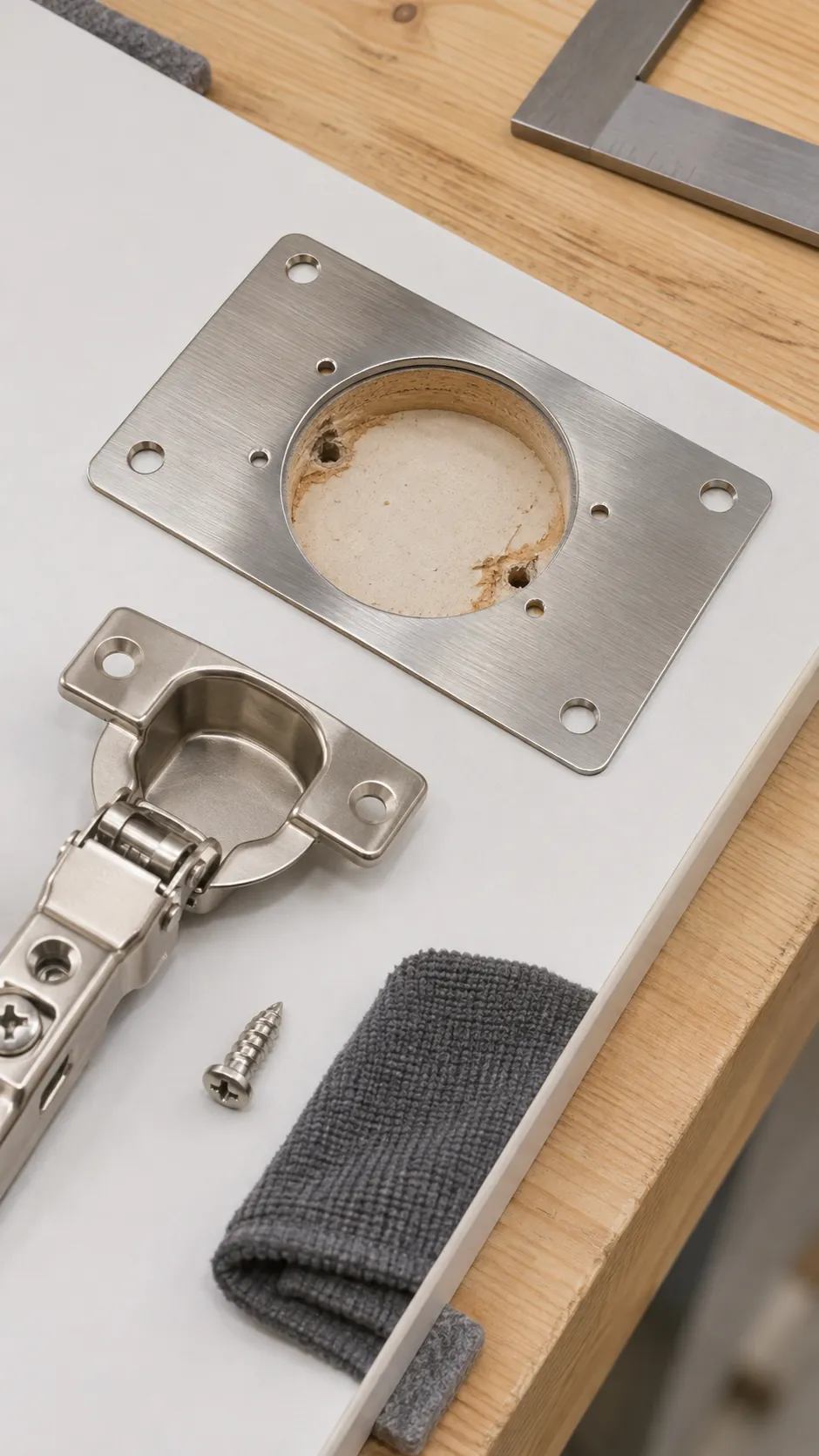
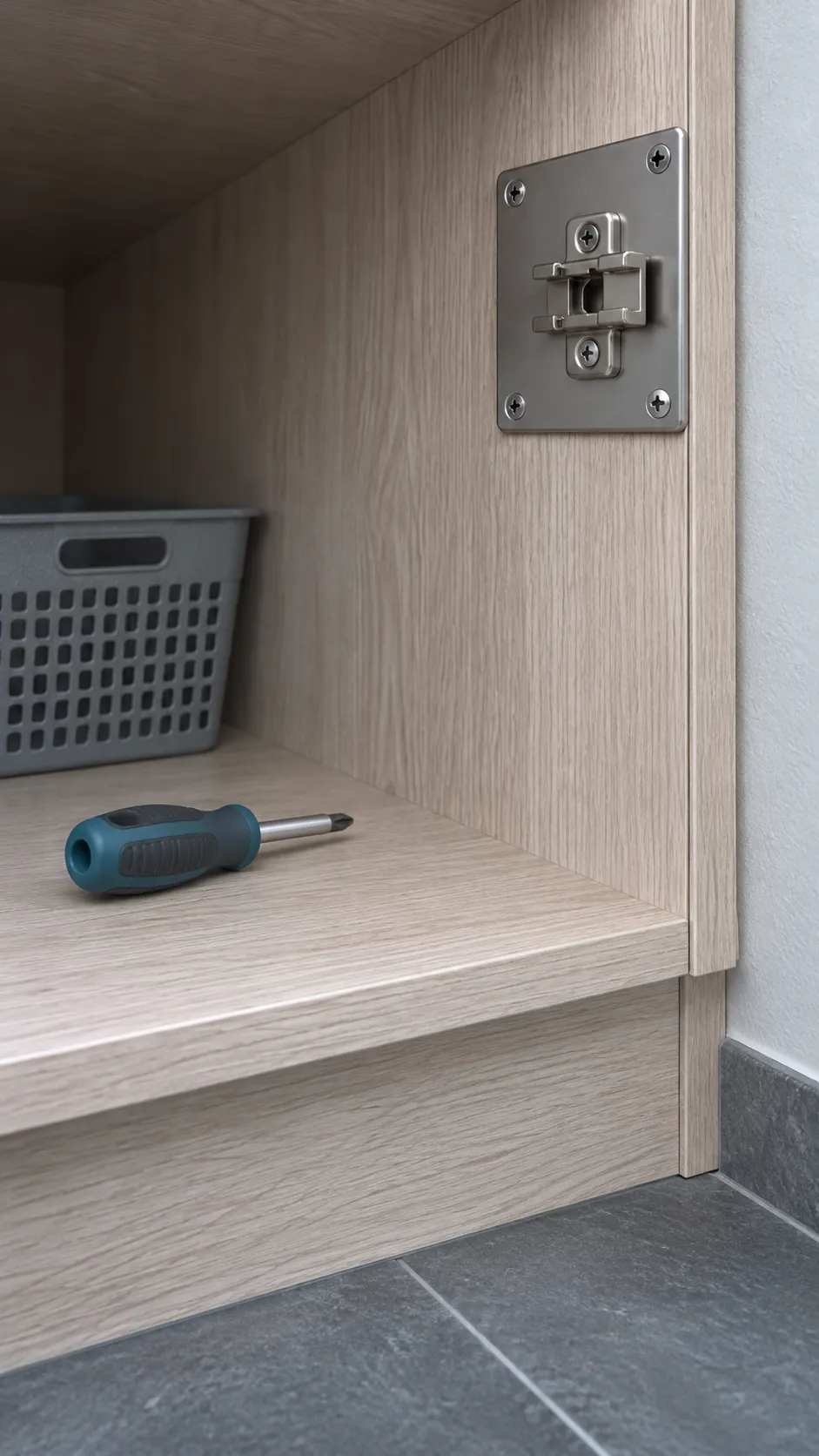
A door side repair plate bridges the damage around a hinge cup and carries its screws into sound material farther from the cup hole. A cabinet side plate bridges damage under the mounting bracket. Check the dimensions and hole layout against your actual hinge. Set the plate in place without screws to confirm that the cup or bracket seats, that the plate lies flat, and that the new screw locations land on solid board.
Check for shelf interference and measure the panel thickness. Use only fasteners that suit the plate and cabinet material and stay short enough to leave the finished face intact. If the repair plate adds thickness, check whether the hinge still has enough adjustment to bring the door back into alignment.
Install the plate before hanging the door
Use the sound hinge or a neighboring matching door to confirm the cup or bracket position. Mark the new pilot holes and set a depth stop so the bit cannot reach the finished face. Drill pilot holes sized for your screws and board. Seat the repair plate with the specified screws, then attach the hinge. Use a hand driver for the final turns so you can feel when the screw seats.
Plug small stripped holes if the board is sound
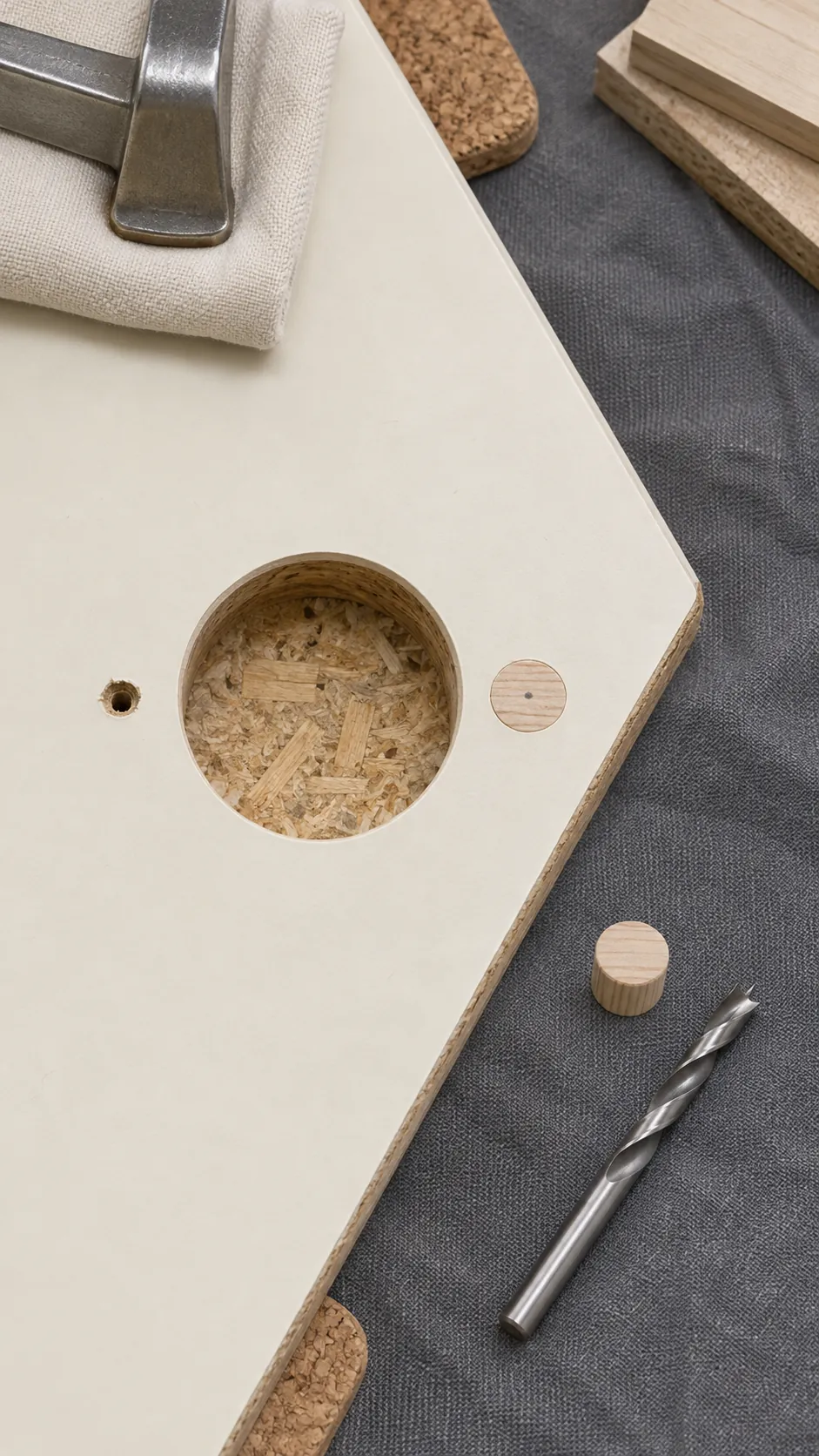
When the original cup or plate still sits flat and only the screw holes are enlarged, a glued hardwood plug can restore the grip. Remove loose material and drill a clean, shallow hole that fits the plug. Stop short of the finished face and keep clear of the cup recess and the panel edge.
Glue the plug into firm, dry material with an adhesive suitable for both surfaces. Let it cure according to the label. Trim the plug flush, mark the original screw center, and drill a fresh pilot hole sized for the fastener. If there is too little intact board for a plug, use a compatible repair plate if it can reach solid material.
Rehang the door and watch the repaired hinge
Support the door while reconnecting both hinges. Close it slowly and adjust the door until the gaps are even and nothing binds. Open it a few times while watching the repaired area. The plate should stay tight to the board and the door should hold its position. If an adjacent wall or handle forces the door past its normal opening angle, add a compatible restriction device or stop before that same load reaches the repair again.