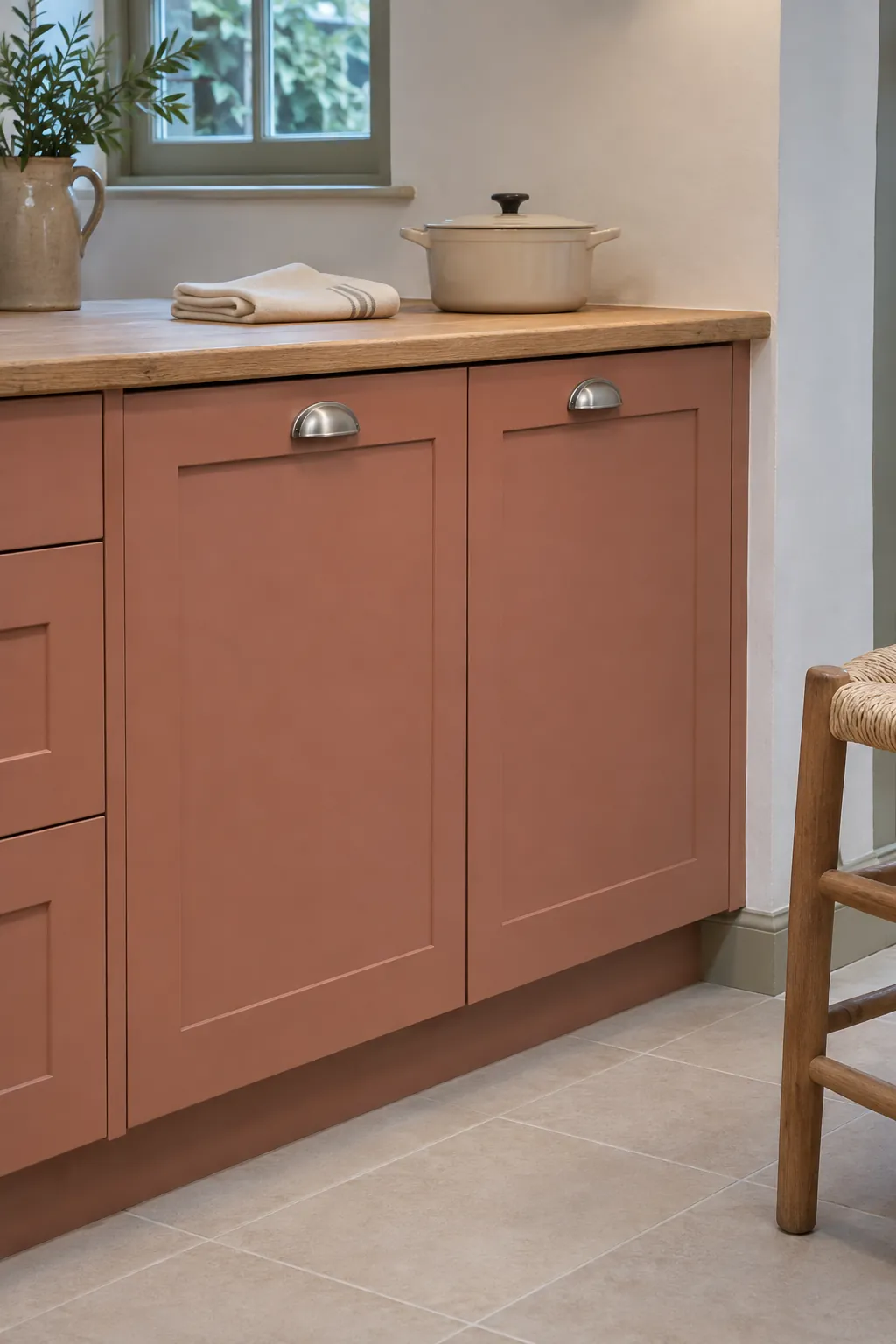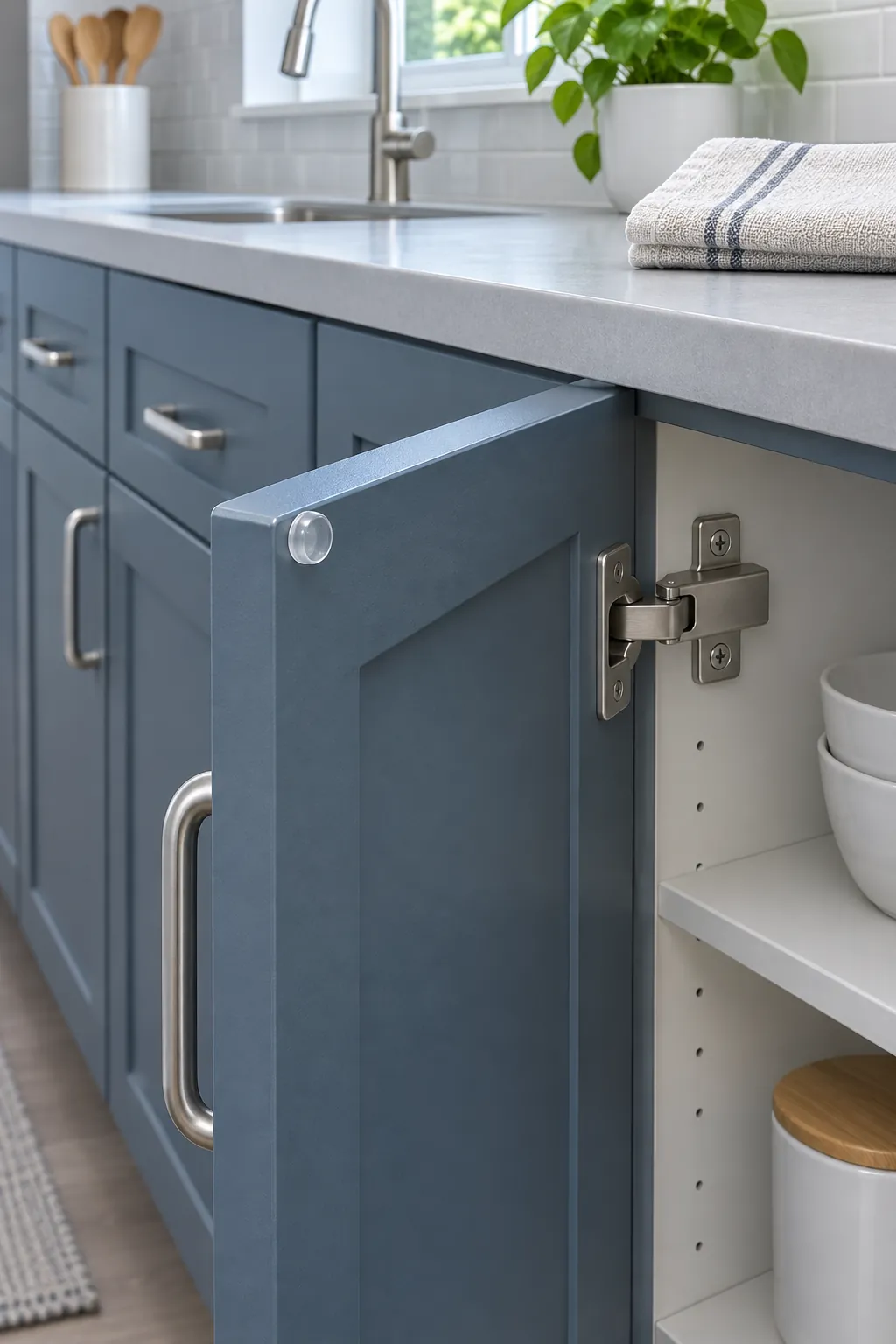
The sound tells you which part to fix. A sharp knock right at the end of the swing often comes from bare wood or laminate hitting the frame. A door that accelerates and slams may need something to slow it down. You can usually test the difference with the hinges you already have.
Find out where the noise comes from
Open and close the door slowly, then repeat at your usual speed. Watch the free edge and check whether the door hits the frame, an adjacent front, or a shelf. Look for a missing bumper or a sticky patch where one fell off. If the door shifts when you lift it lightly, support it and check the hinge mount. Tighten sound fasteners or repair a loose mount before adding anything.
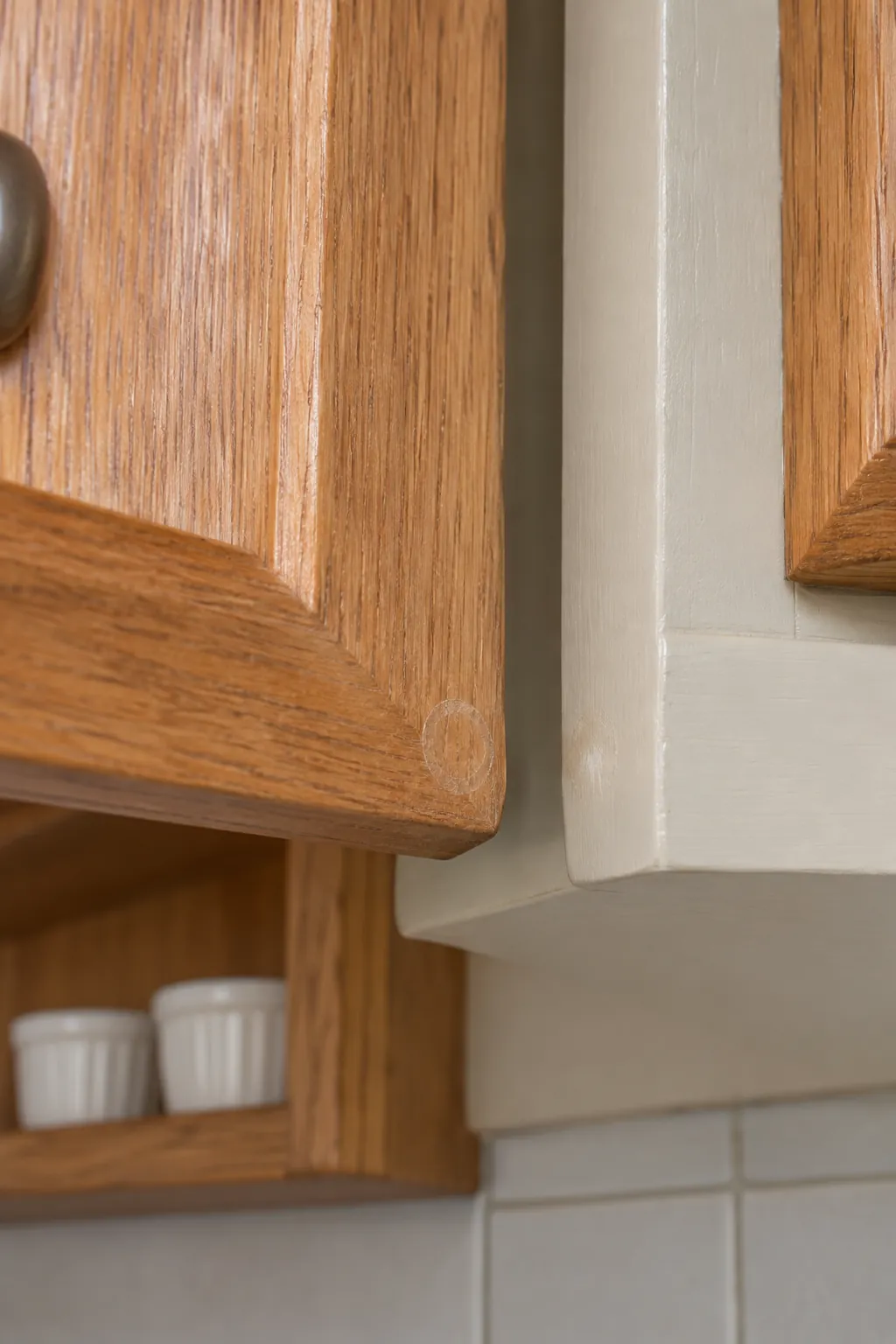
Use bumpers for a hard knock at the frame
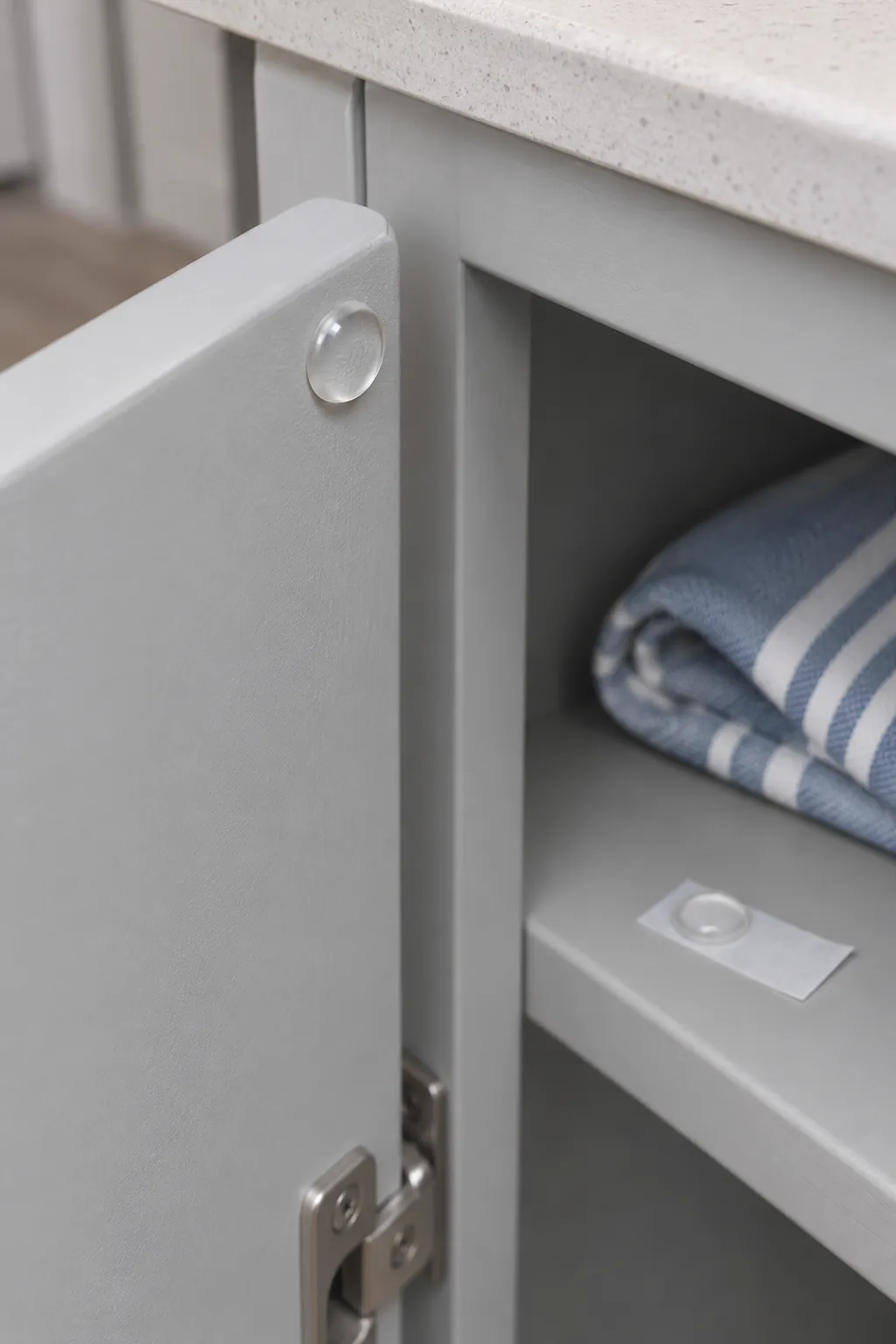
Stick new cabinet bumpers where the door actually meets the frame or cabinet edge. On many doors that means the top and bottom corners of the inside face on the side opposite the hinges. Confirm the contact spots on your cabinet first. Match the thickness of any sound original pads so the closed door sits level.
Remove old adhesive with a product safe for the finish. Clean and dry the attachment points, then press on matching pads. A slim clear rubber or silicone pad can cushion the contact. Felt may suit a dry cabinet. Close the door gently and make sure it still reaches its intended closed position.
Choose an add on damper if the door closes too fast
A bumper softens impact. A damper slows the last part of the swing before impact. Look for a clip on damper made for the exact hinge model, or a surface mounted piston damper approved for the cabinet and door configuration. Check the cabinet type, overlay, hinge opening angle, and door size against the instructions. Corner and wide opening doors often need different hardware.
Check that the hinges pull the door shut on their own if the damper requires that closing force. A door that depends on a magnetic catch or a push latch can behave differently. The damper and latch must work together so the door will stay closed.
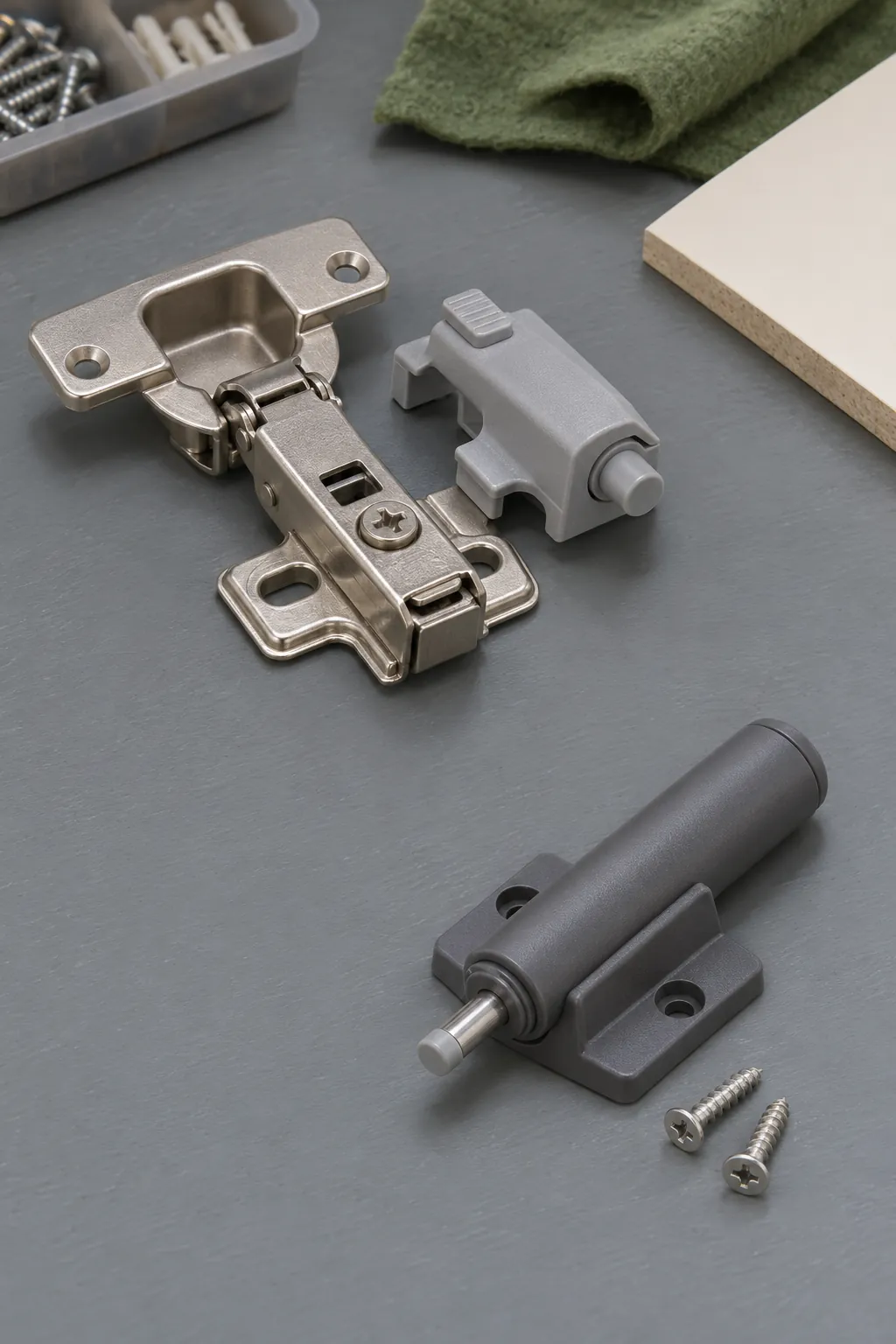
Test the damper position before drilling
Try one door first. Use the manufacturer’s position guide and check that the plunger will meet a flat part of the door near the end of its swing. Make sure the damper clears shelves, pullouts, hinges, and anything else that moves. If the door is inset, confirm the piston can still reach it at the right point.
For a screw mounted model, mark the pilots and limit the drilling depth to protect the cabinet’s finished side. Use the specified fasteners. Fit a clip on damper according to the directions for its hinge, and confirm the clip is fully seated before cycling the door.
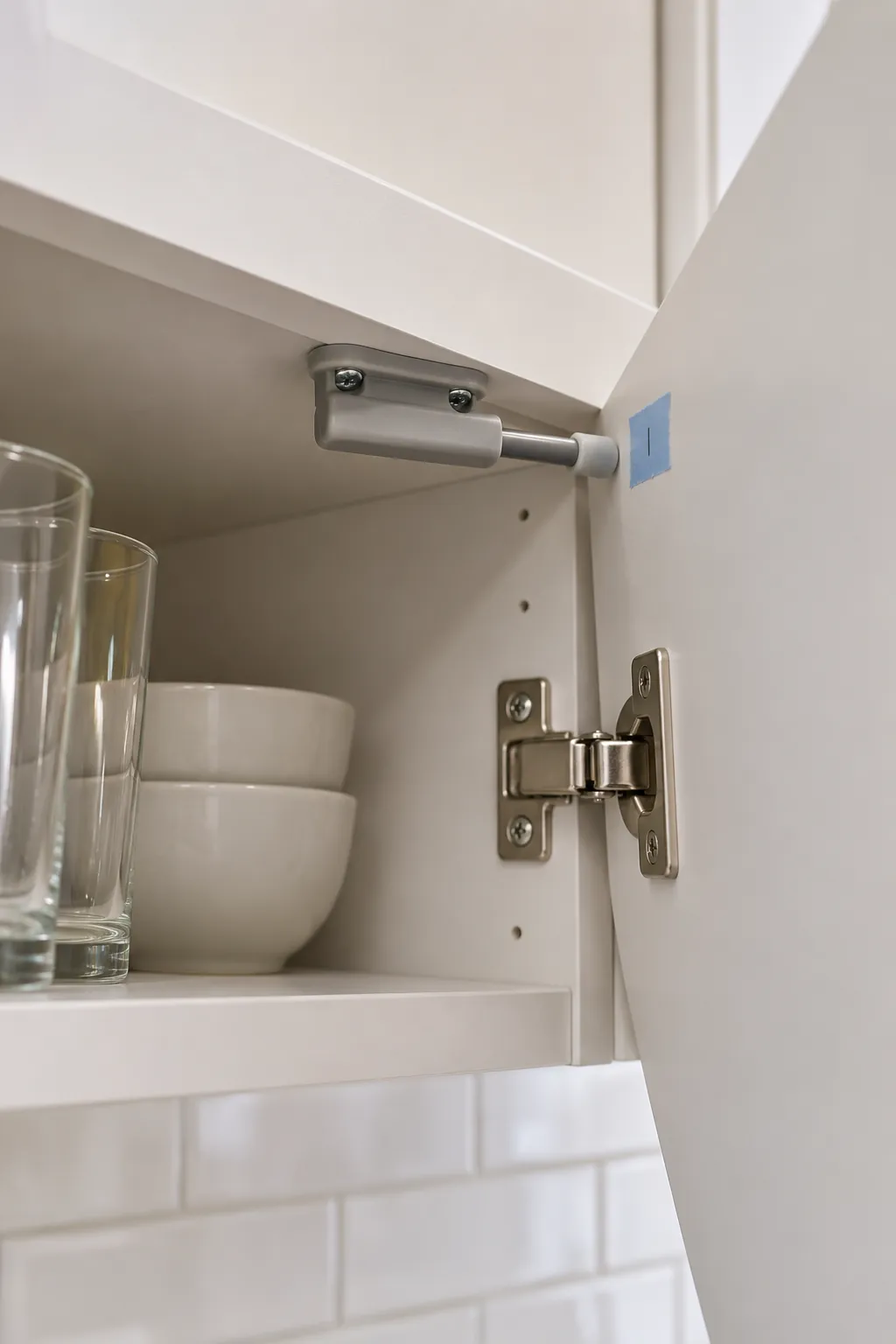
Adjust the closing force and check the latch
Start with the maker’s recommended setting. If the model is adjustable, change it in small steps and test from both a wide opening and a few inches out. The door should slow without stalling before it seats. If it pauses short of closure, check the damper’s placement, resistance setting, and the hinge’s closing force before adding a second damper.
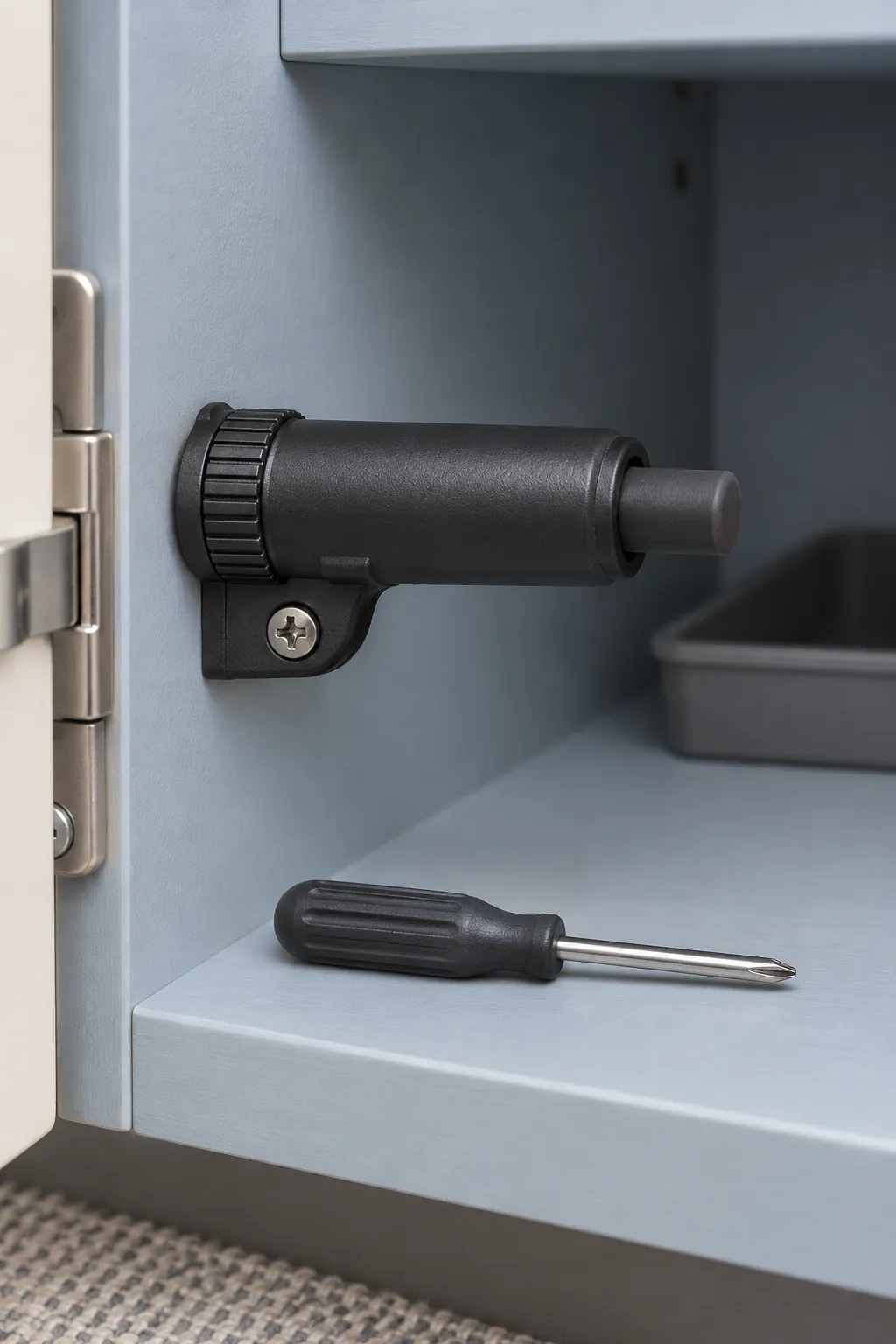
Make sure the quieter door still sits flush
Check the gap at the top and bottom once the door closes. If the free edge sits proud after the bumper swap, try pads that match the original thickness and look again for a misplaced pad or obstruction. Open both doors in a pair and close each with the other shut. If they close freely, sit evenly, and stay shut on their own when designed to do so, the quieter setup is ready to copy to the other cabinets.