
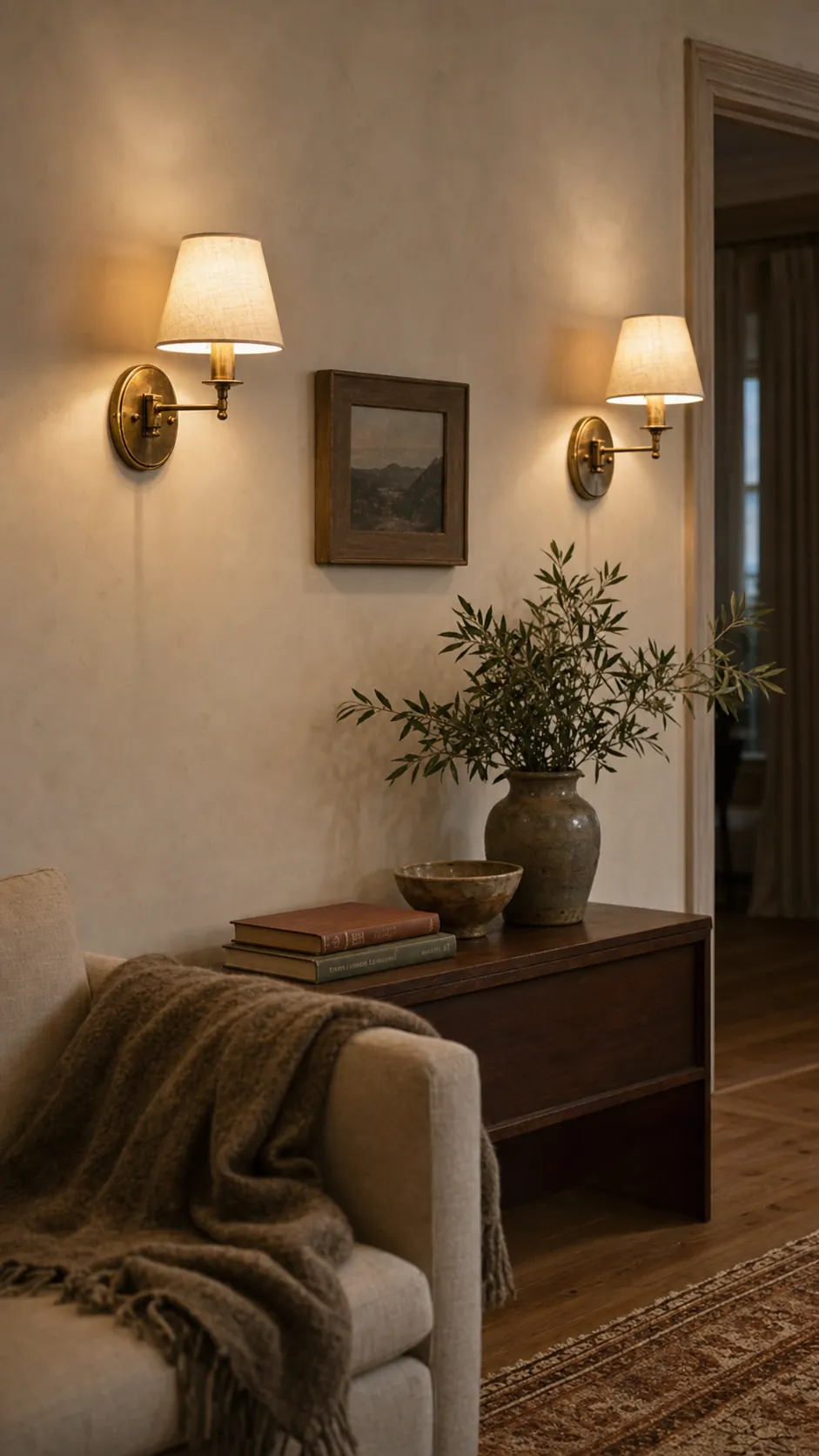
Antique brass wall lights can make a room feel settled, warm, and quietly collected—but only when the light itself is doing useful work. The finish is not a shortcut to coziness. Placement, beam direction, shade material, and bulb temperature matter more than ornament. Get those right, and even a simple brass sconce can soften a modern room without turning it into a period set.
The best starting point is to decide what the wall light should accomplish: replace a bedside lamp, brighten a reading chair, frame a focal point, or add a low layer of ambient light. That decision prevents the two mistakes homeowners mention most often—installing a beautiful fixture where it creates glare, or adding sconces to a wall that already has too many competing features.
Use shaded sconces beside the bed
A pair of shaded antique brass lights frees the nightstands and brings illumination closer to where you actually read. Choose a small pleated linen or parchment shade when you want diffused light rather than the sharp sparkle of an exposed bulb. The lower edge of the shade should sit high enough that you cannot see directly into the bulb while lying down.
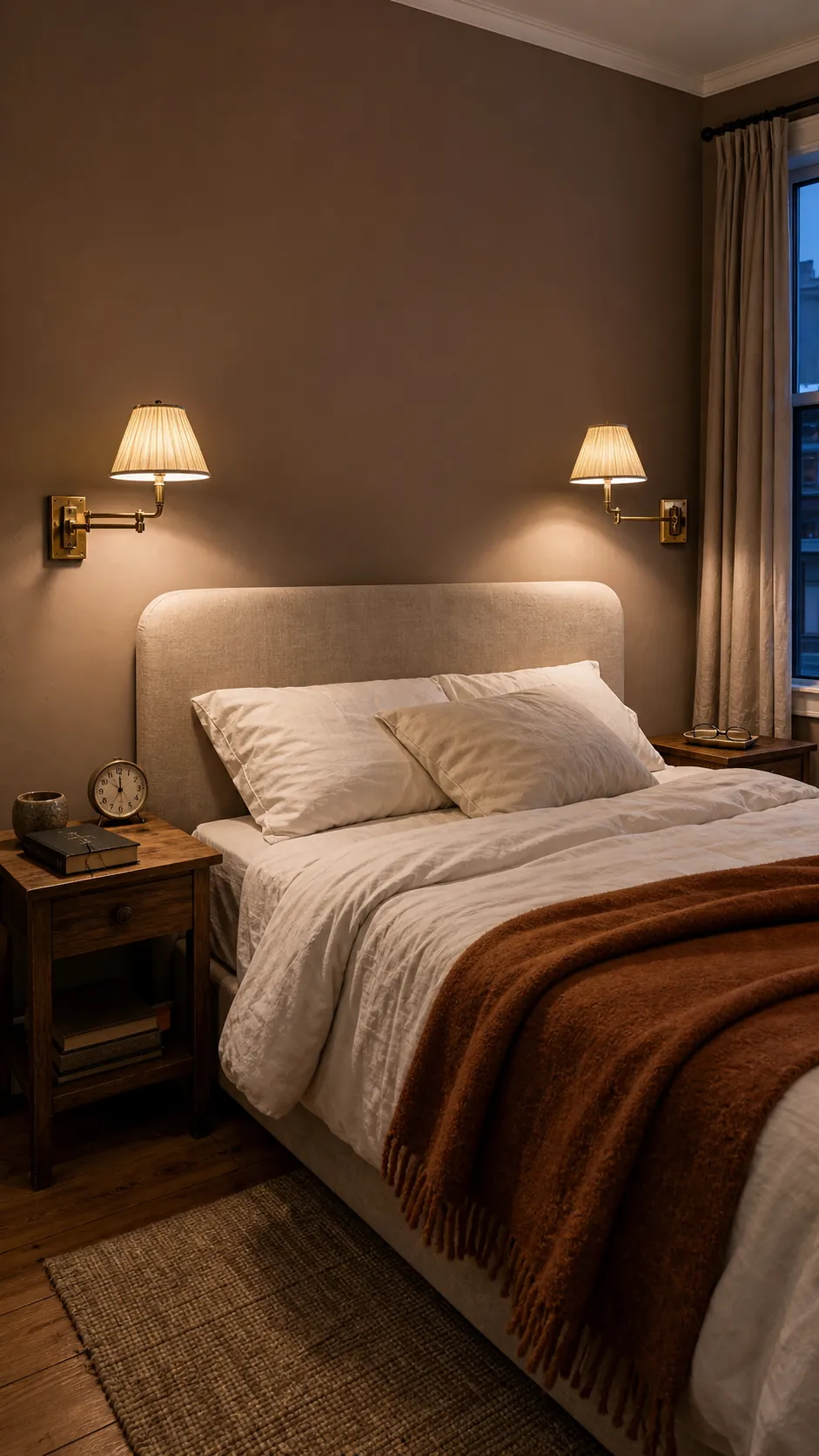
Treat standard mounting heights as a rough check, not a command. Sit against your pillows, mark your eye and shoulder level with removable tape, then hold a cardboard outline of the fixture against the wall. Check the swing of an adjustable arm, the location of switches, and whether the shade crowds the headboard. This quick mock-up is more reliable than measuring from the floor alone because mattress and headboard heights vary so much.
Give a reading corner its own pool of light
A brass swing-arm sconce beside a reading chair creates the intimate effect people often expect from a floor lamp while preserving precious floor space. Aim the light over the reader’s shoulder and onto the page, not toward the seat. A deep metal shade gives the strongest control; a fabric shade spreads more ambient light but may need a brighter bulb.
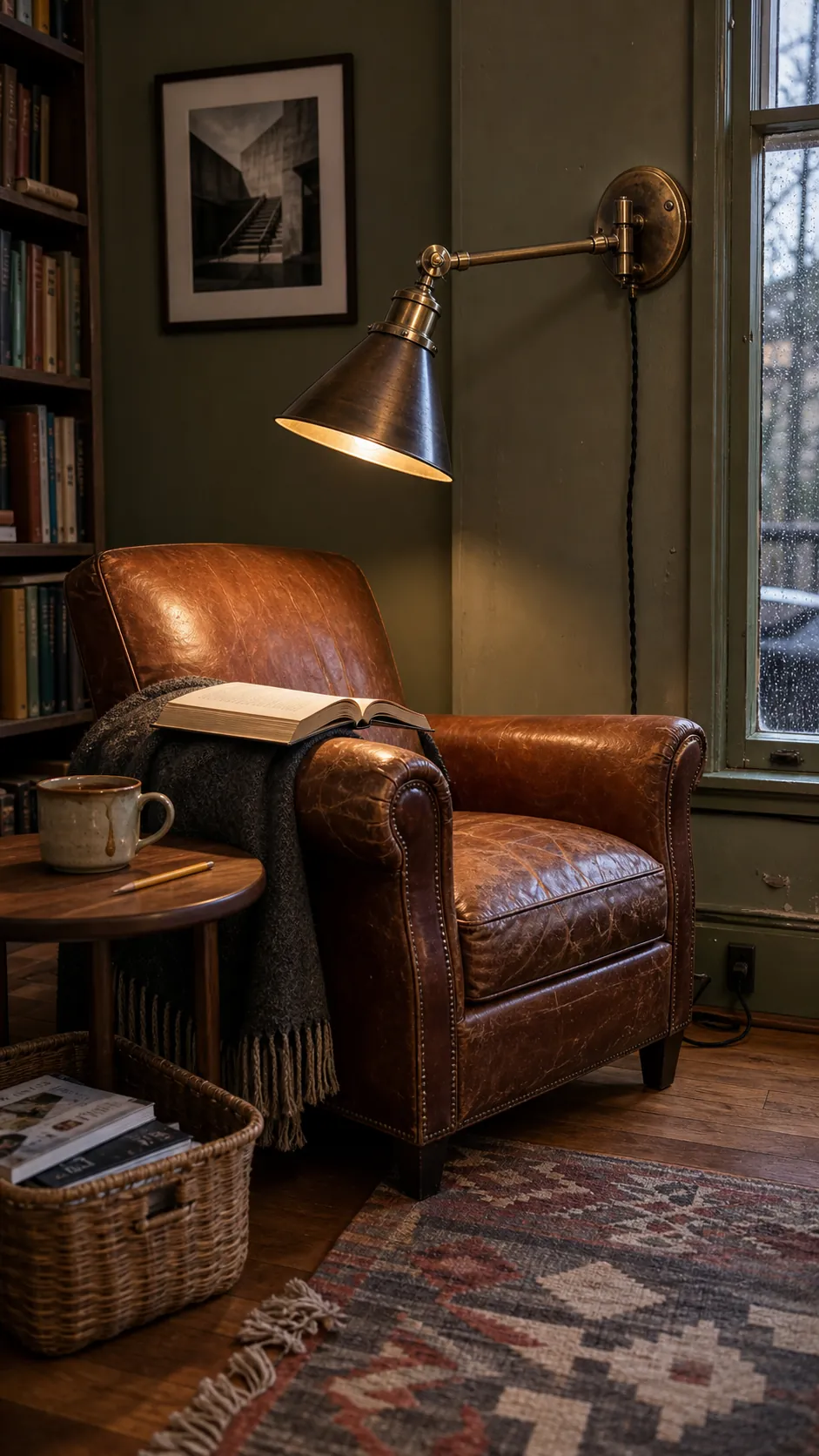
Keep the arrangement visually grounded with a small side table, a textured throw, and one restrained color accent. The antique brass light should connect to the room through warmth rather than exact matching. Walnut, oak, leather, wool, and aged pottery all make natural companions because their surfaces absorb and reflect light unevenly, giving the corner depth.
Frame a fireplace without fighting it
Sconces can give a fireplace wall rhythm, but they should support the mantel rather than become two extra focal points. Slim fixtures with modest backplates work best when the surround already has strong stone, tile, or carved wood. If the television is nearby, test the view from every seat: an exposed bulb or reflective glass shade can create an annoying bright spot on the screen.
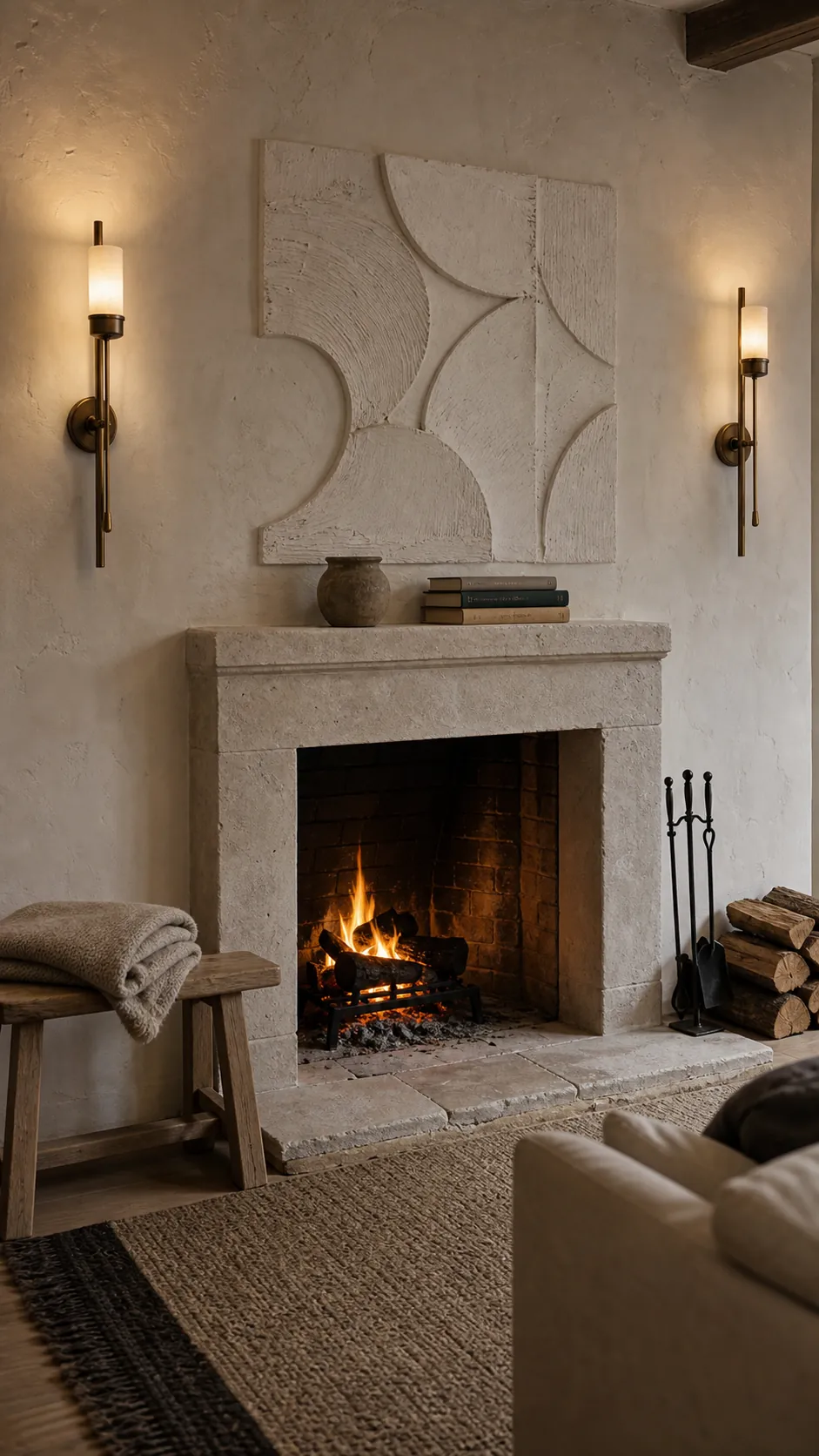
Before committing, tape up the fixture dimensions and step back into the adjoining room. The pair should feel connected to the firebox or mantel, with enough breathing room that the wall does not look pinched. If the fireplace, artwork, television, and sconces all demand equal attention, remove one element. Cozy lighting comes from hierarchy, not simply from adding more fixtures.
Turn a narrow entry into a warm arrival
An entryway benefits from wall lights because they brighten faces and vertical surfaces without using console space. A single lantern-inspired antique brass sconce can make a small hall feel intentional; a symmetrical pair works when a mirror or console is wide enough to anchor both fixtures. Keep protruding arms out of the walking path and away from swinging doors.
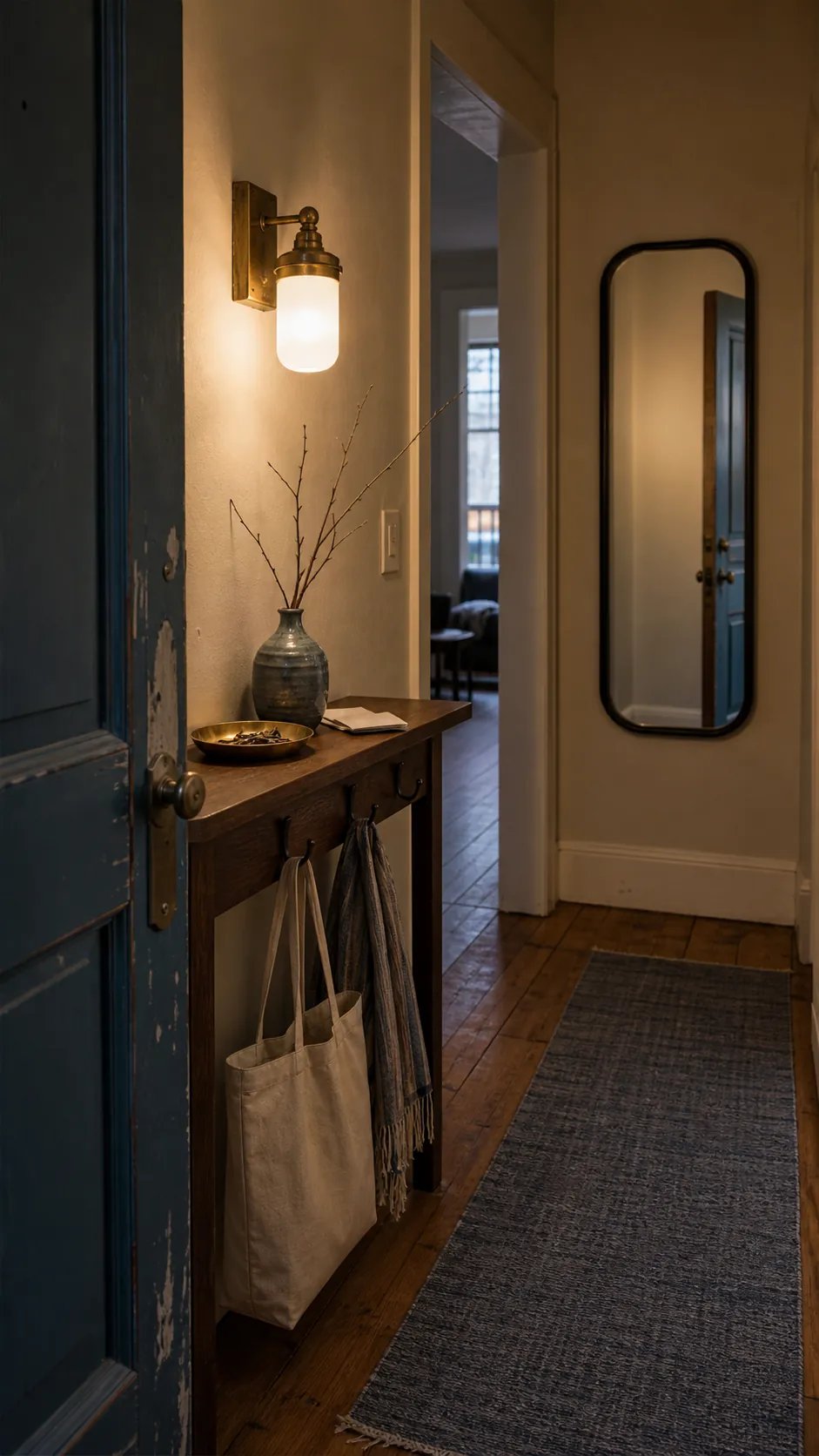
Use the mirror as a practical glare test. Stand where guests naturally pause and make sure the bulb is not reflected directly at eye level. Frosted glass, an opal globe, or a shaded lamp is safer in a tight entry than clear glass. Repeat the brass once in a small object—a tray, hook, or mirror detail—but avoid turning every metal item gold. A little repetition creates cohesion; too much makes the finish feel themed.
Wash a textured wall with gentle light
Up-and-down wall lights are especially effective on limewash, plaster, brick, grasscloth, or paneled walls. The grazing beam catches tiny irregularities and gives the surface a soft evening shadow pattern. In a cozy living room, this is often more atmospheric than a bright ceiling fixture because it keeps illumination at the perimeter and leaves the center calm.
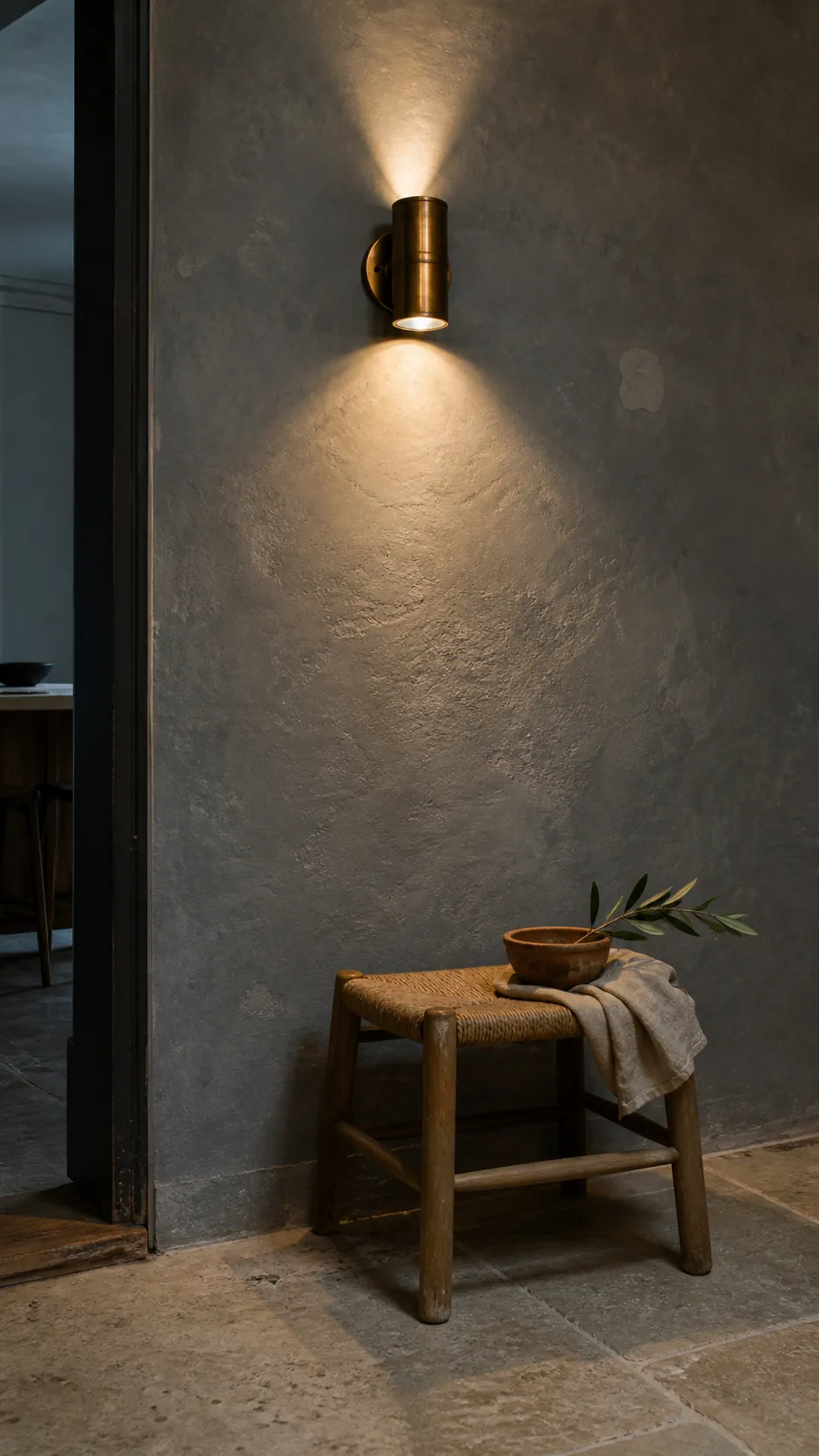
This idea works best when the wall itself is the subject. Avoid squeezing the sconce between several frames or shelves. Look for a fixture with a controlled beam and dimmer compatibility, then sample the light at night. A bulb that seemed pleasantly warm in a store can look orange against beige paint, while a cool bulb can make antique brass appear dull or greenish.
Try a plug-in sconce before hardwiring
Renters and commitment-shy homeowners do not have to skip wall lighting. Plug-in and rechargeable sconces let you test height, scale, and daily usefulness without opening the wall. A fabric-covered cord can look deliberate when it drops straight down and is secured neatly; a paintable cord cover creates a quieter line. Rechargeable fixtures eliminate the cord but require a realistic charging routine.
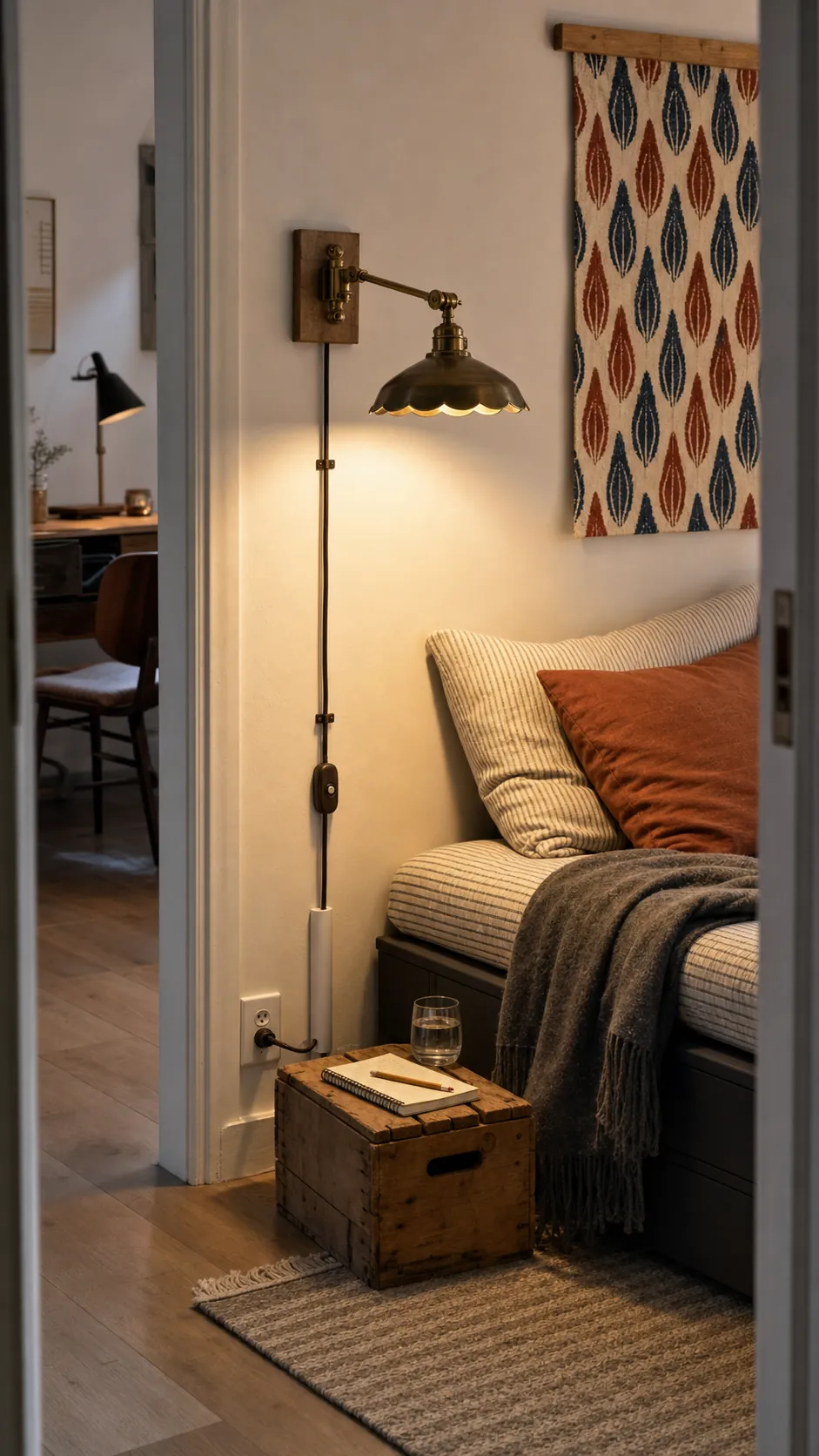
Use removable painter’s tape to live with the proposed position for several evenings before drilling. Check whether the cord crosses furniture, whether the switch is easy to reach, and whether the fixture projects into a walkway. If the test succeeds, you can keep the flexible setup or ask a licensed electrician about a permanent installation later.
Make the brass feel collected, not matched
Antique brass varies from brown and muted to honeyed and almost black. That variation is useful. Instead of trying to match every hinge, handle, and lamp exactly, repeat the finish family in two or three places and let other metals act as punctuation. Black iron can sharpen a traditional room, while aged nickel or dark bronze keeps the palette nuanced.
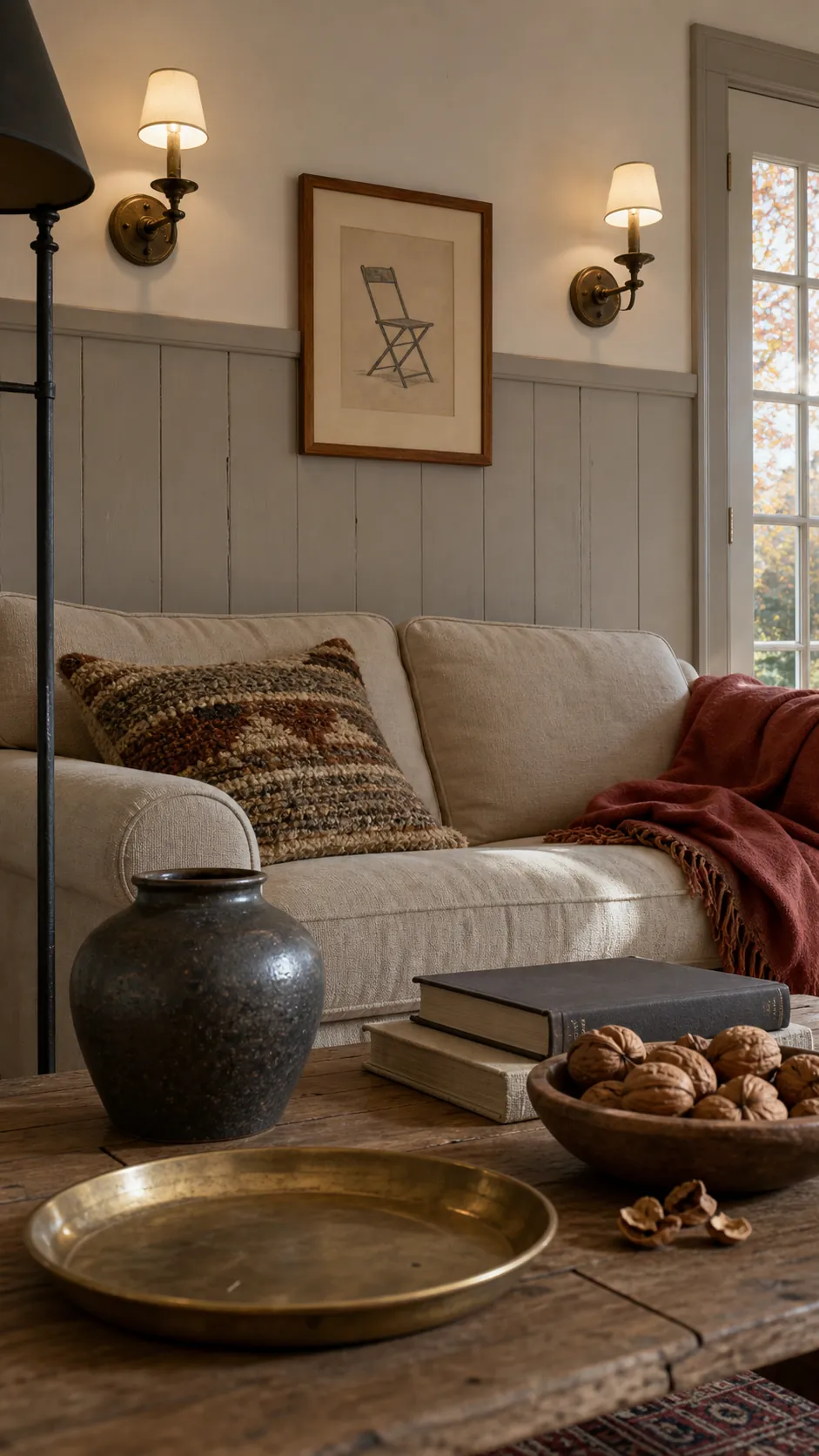
Choose bulbs with warm, comfortable color and enough brightness for the fixture’s real job, then put ambient sconces on dimmers whenever possible. The room should still have another layer of light—a table lamp, floor lamp, pendant, or discreet ceiling source—so no single fixture has to do everything. The coziest rooms are not the dimmest; they are the rooms where light is distributed gently at several heights.
Let everyday use make the final decision
Finally, judge the wall light with the room in use, not in an empty daytime photo. Sit down, turn on the television, read a page, walk through the doorway, and look in the mirror. When the beam supports those ordinary moments and the brass adds a small note of age and warmth, the fixture will feel like it has always belonged there.