
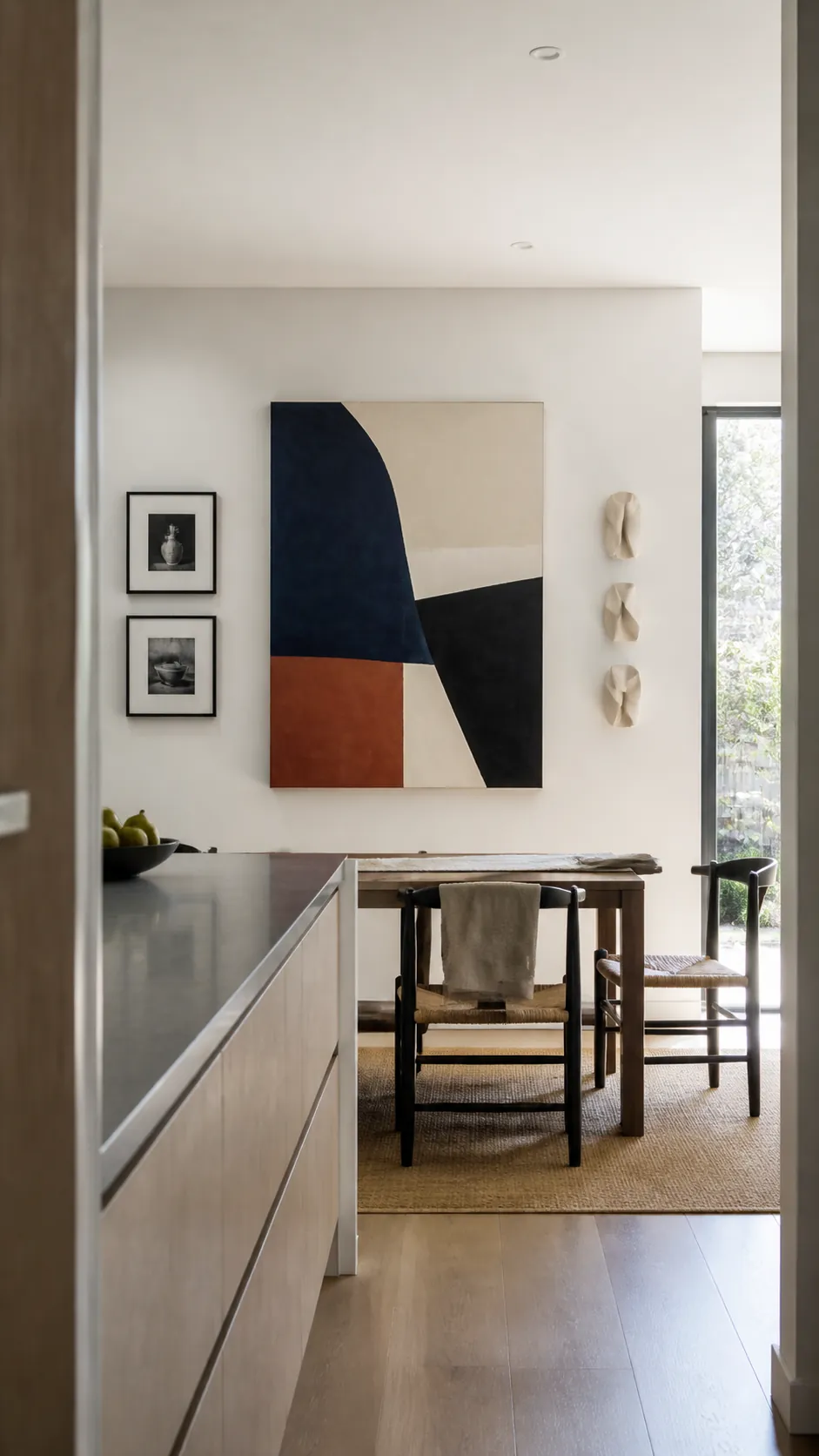
Kitchen art has to do more than look good in a product photo. It lives near changing light, hard surfaces, steam, splashes, and constant movement. The right piece gives the room a point of view without making cooking or cleaning more complicated.
Begin with the wall conditions, not the image style. Notice whether the surface is seen from far away, whether chairs or doors move beneath it, and whether direct sun reaches it. Those limits narrow the choice quickly and make the finished placement feel considered.
Choose one abstract work for a distant view
A large abstract painting can hold a long sight line from an adjoining room. Broad shapes remain clear at a distance, while a restrained palette can connect cabinet, floor, and counter colors. The work should have enough wall around it to read as a deliberate focal point rather than an attempt to cover every blank inch.
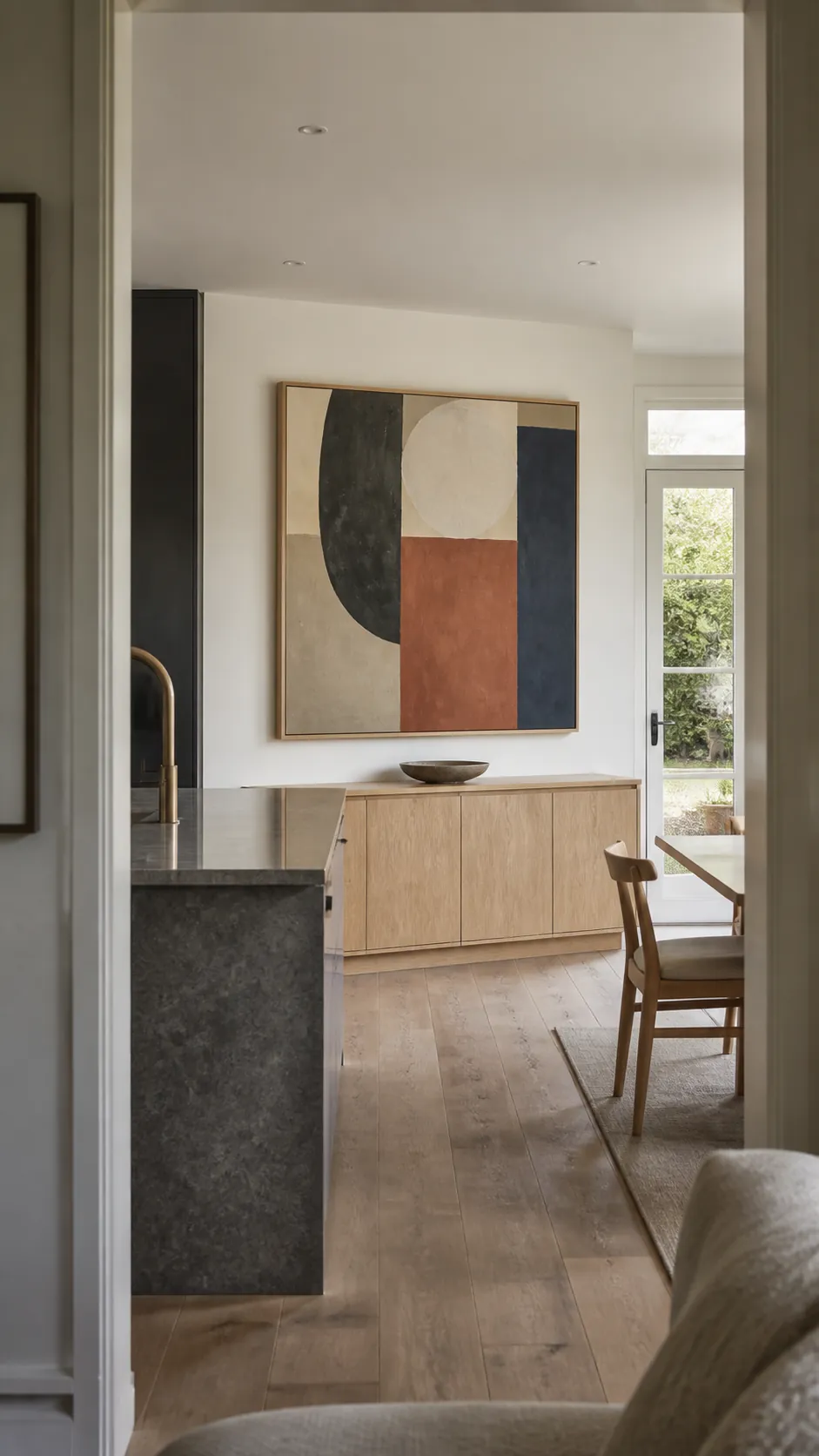
Hang the center near the main standing sight line, then check the composition from the doorway that people use most. A sealed canvas or glazed work is easier to protect than exposed paper near a busy kitchen. Keep valuable originals well beyond heat and water.
Use still life photographs without restaurant cliches
Food photography feels sophisticated when it focuses on light, form, and ordinary ingredients instead of printed slogans. A set of three black and white photographs can show a pear, folded linen, and a ceramic bowl from different angles. Matching mats create unity while varied subjects prevent the group from feeling commercial.
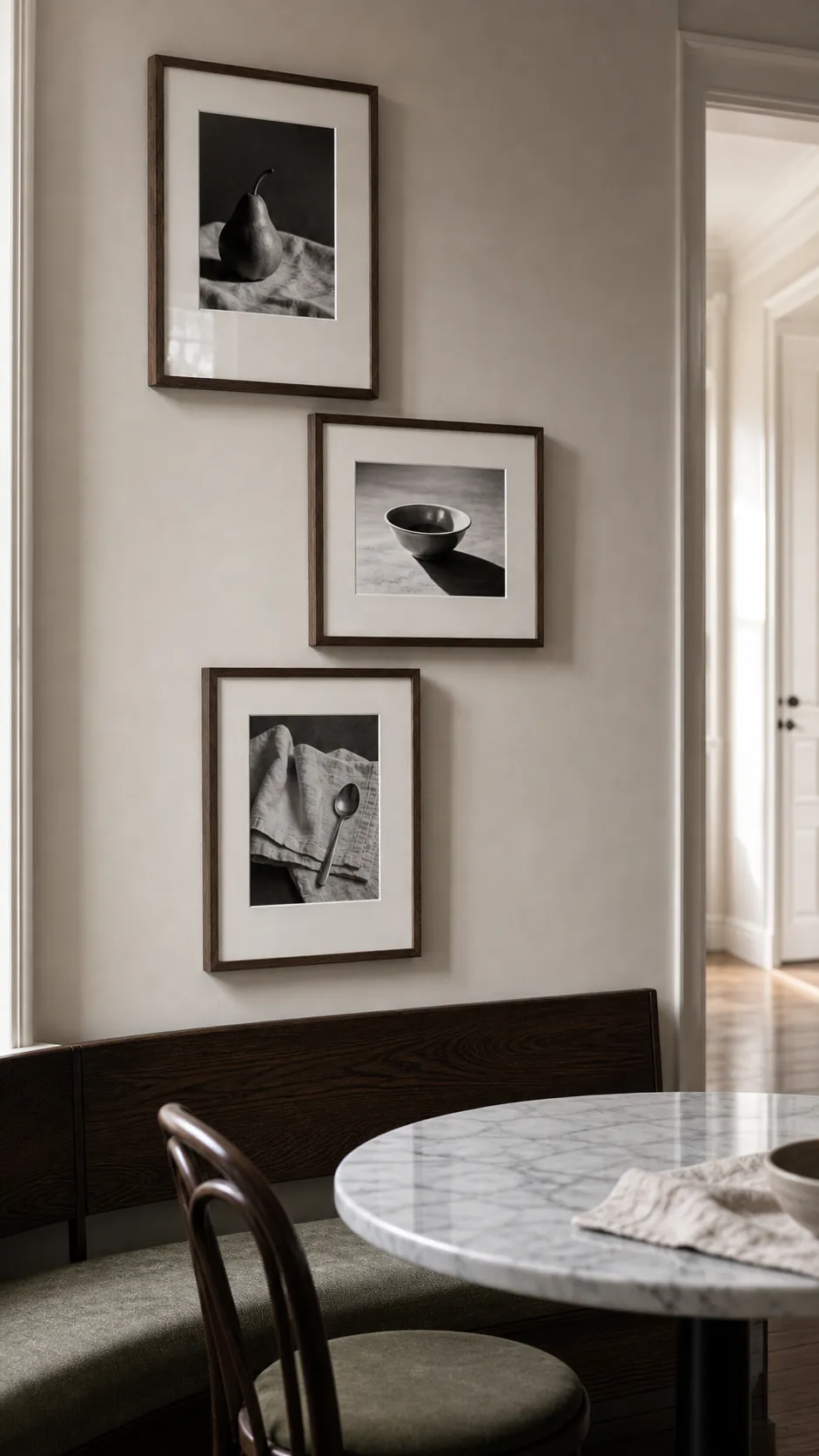
Use acrylic glazing when frames sit above a dining bench or table. It is lighter than glass and easier to wipe. Choose images with strong shadow differences so the set does not disappear against pale walls.
Add dimension with ceramic wall sculpture
Ceramic wall sculpture changes through the day because raised surfaces catch light differently. A cluster of handmade folded forms can provide depth without projecting far into the room. Limit the glaze colors and vary the orientation so the group feels energetic but controlled.
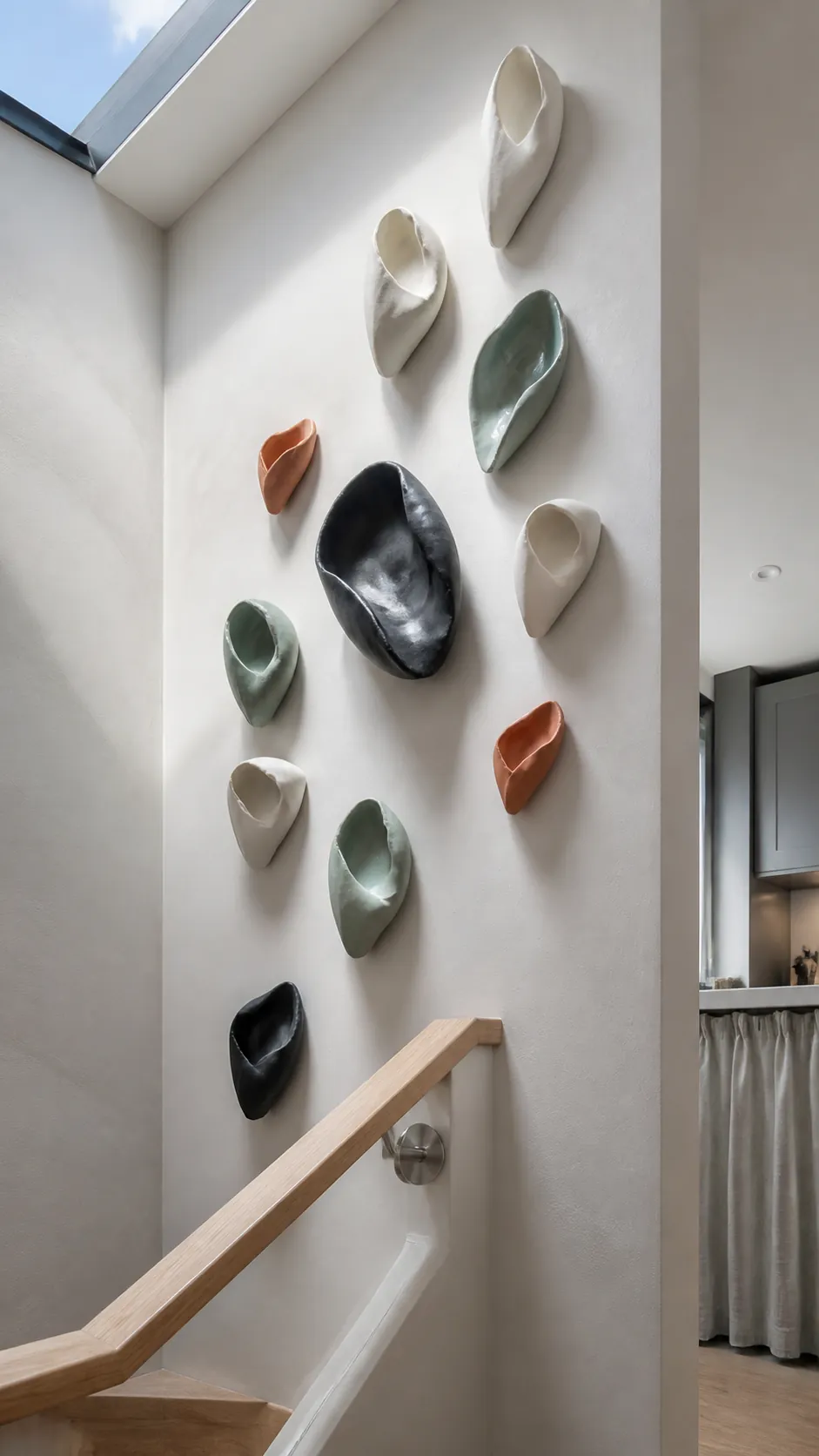
Every piece needs hardware designed for its weight and shape. Place fragile forms away from door swings and high traffic corners. Subtle glaze variation supplies interest, so surrounding shelves and counters can stay visually quiet.
Bring warmth with a modern still life painting
A painted still life can reference the kitchen without becoming literal decor. Look for a composition that reduces vessels and fruit to confident shapes, with visible brushwork that contrasts against smooth cabinets. A dark background can add depth to a bright room, while one vivid accent gives the eye a place to rest.
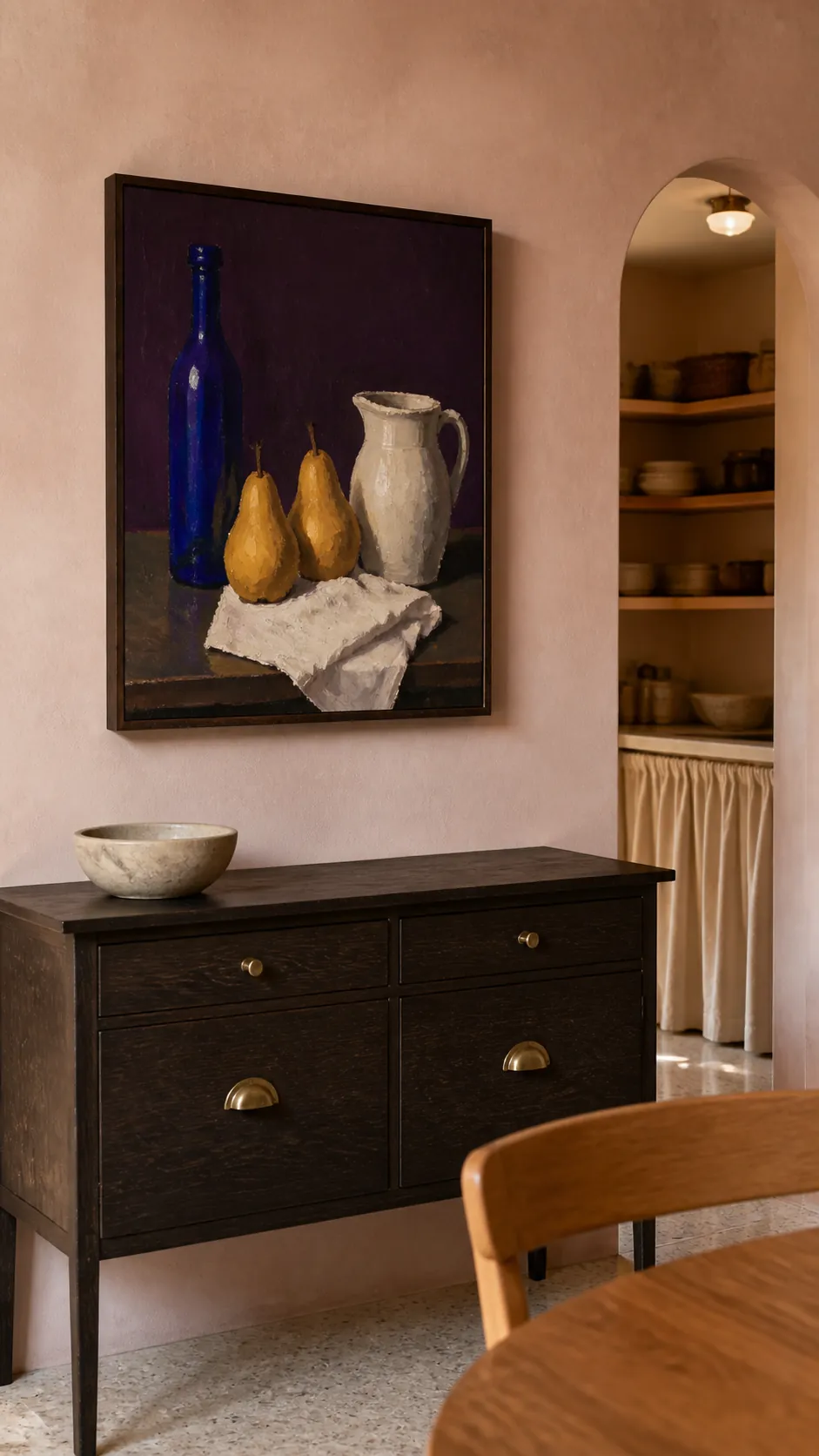
Keep original paint away from strong sun and cooking residue. A side cabinet or breakfast corner usually offers safer conditions than the wall beside a range. Let the painting remain the strongest object nearby rather than surrounding it with themed accessories.
Create rhythm with a linocut print series
Linocut prints bring bold marks and handmade variation to a simple kitchen. A series can explore utensils, leaves, and vessels without readable words. Keep the paper size and ink color consistent, then vary each carved composition so the group rewards a closer look.
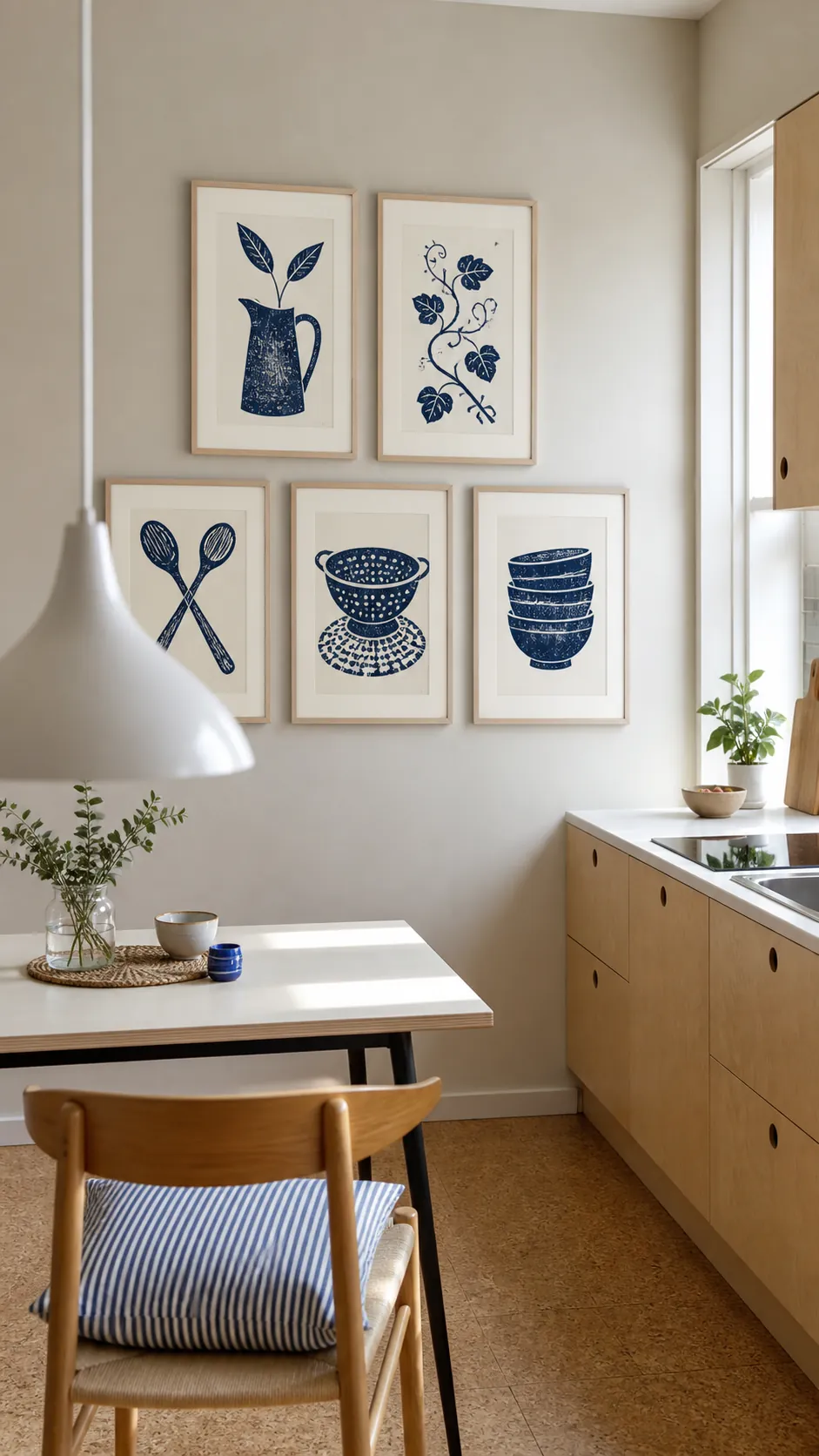
Deep mats protect the paper from touching acrylic and make inexpensive prints feel substantial. Space the frames evenly, but allow the carved marks inside them to remain irregular. This is also a practical approach for kitchen wall art printables when high quality paper and archival ink are used.
Use paper relief where color needs restraint
A framed paper relief creates shadow without adding another strong color. Folded cream forms can echo leaves, waves, or simple geometric arcs, depending on the room. A deep sealed frame protects the raised paper and makes the subtle surface readable from the side.
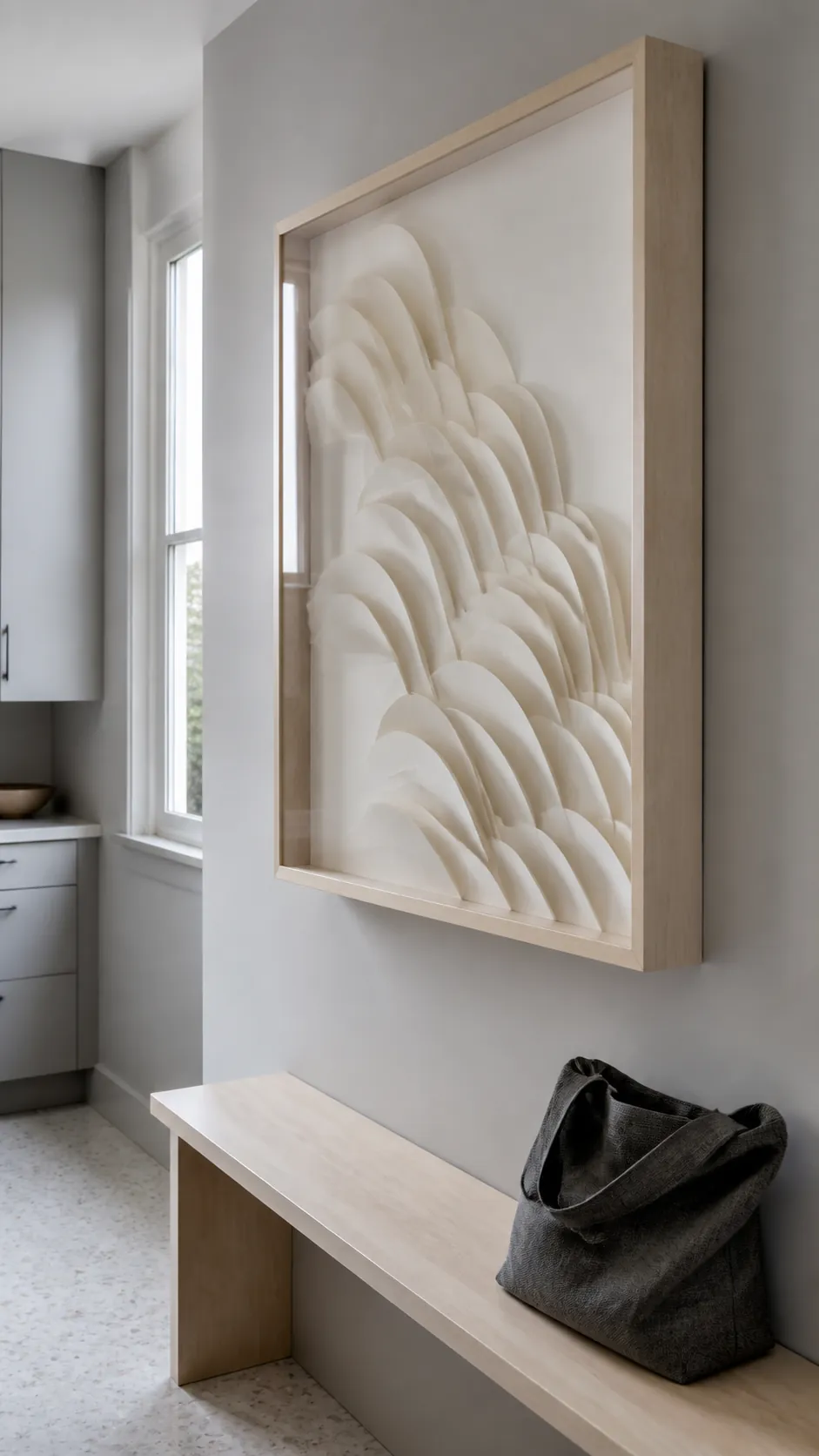
Place the relief where angled daylight can reveal its depth but direct sun cannot fade or weaken the paper. Keep steam and splashes far away, and use secure backing inside the case. The changing shadows provide enough movement that the rest of the wall can remain completely simple.