
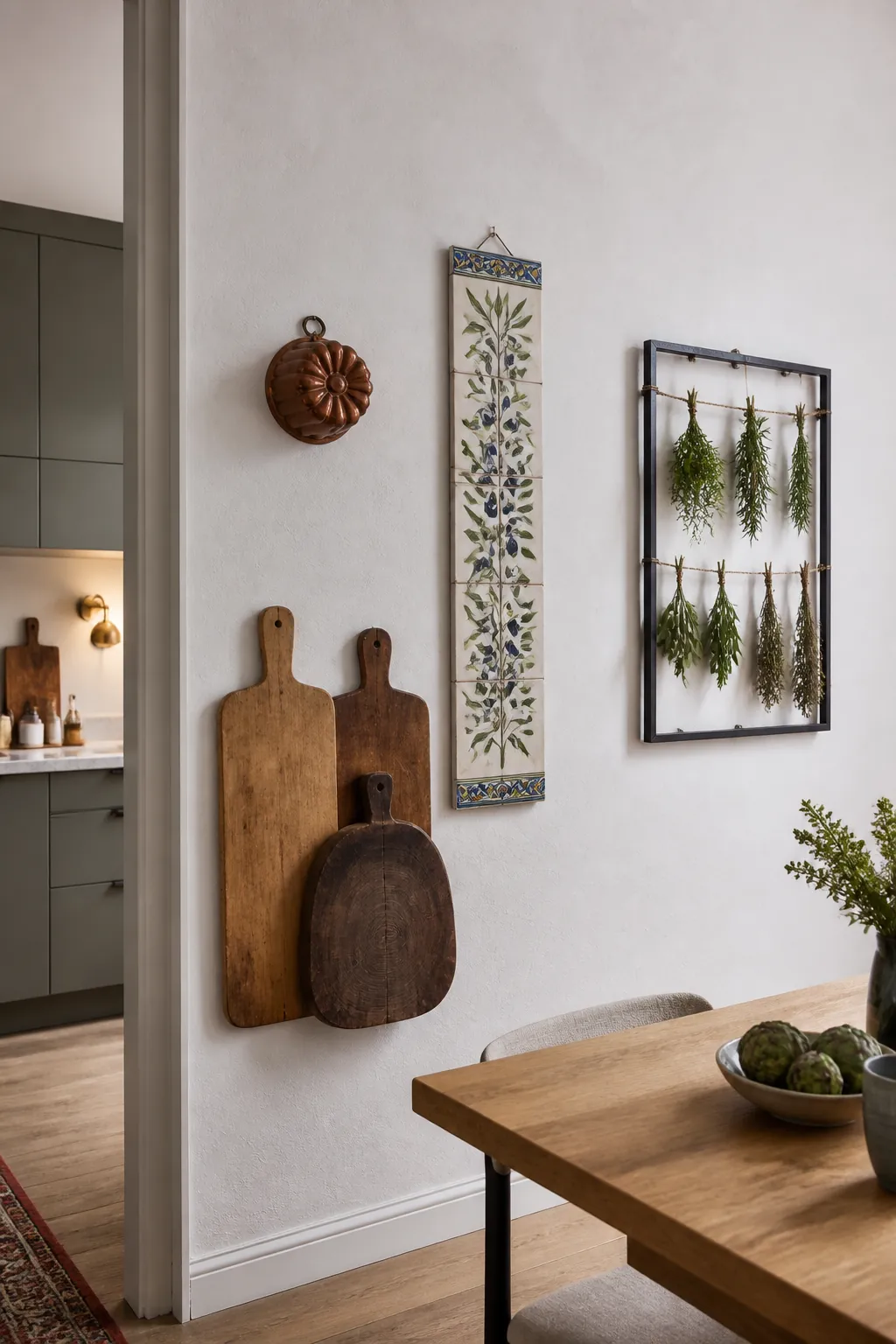
A kitchen can be perfectly functional and still feel anonymous. The quickest fix is not buying a sign or matching print set. It is giving one wall a material, object, or story that could plausibly belong only to your home.
Originality works best when it remains useful and easy to clean. Before hanging anything, check heat, steam, door swings, and the space needed to sit or walk. Then choose one unusual idea with enough scale to look intentional instead of scattering small novelty pieces everywhere.
Shape a collection from wooden boards
Old cutting and bread boards have distinctive silhouettes, grain, and wear that make them more compelling than generic kitchen wall art. Arrange five or seven boards by outline rather than by size, and leave one broad gap so the group does not become a solid brown mass. Reserve wall display pieces for decoration unless you can remove and wash them easily.
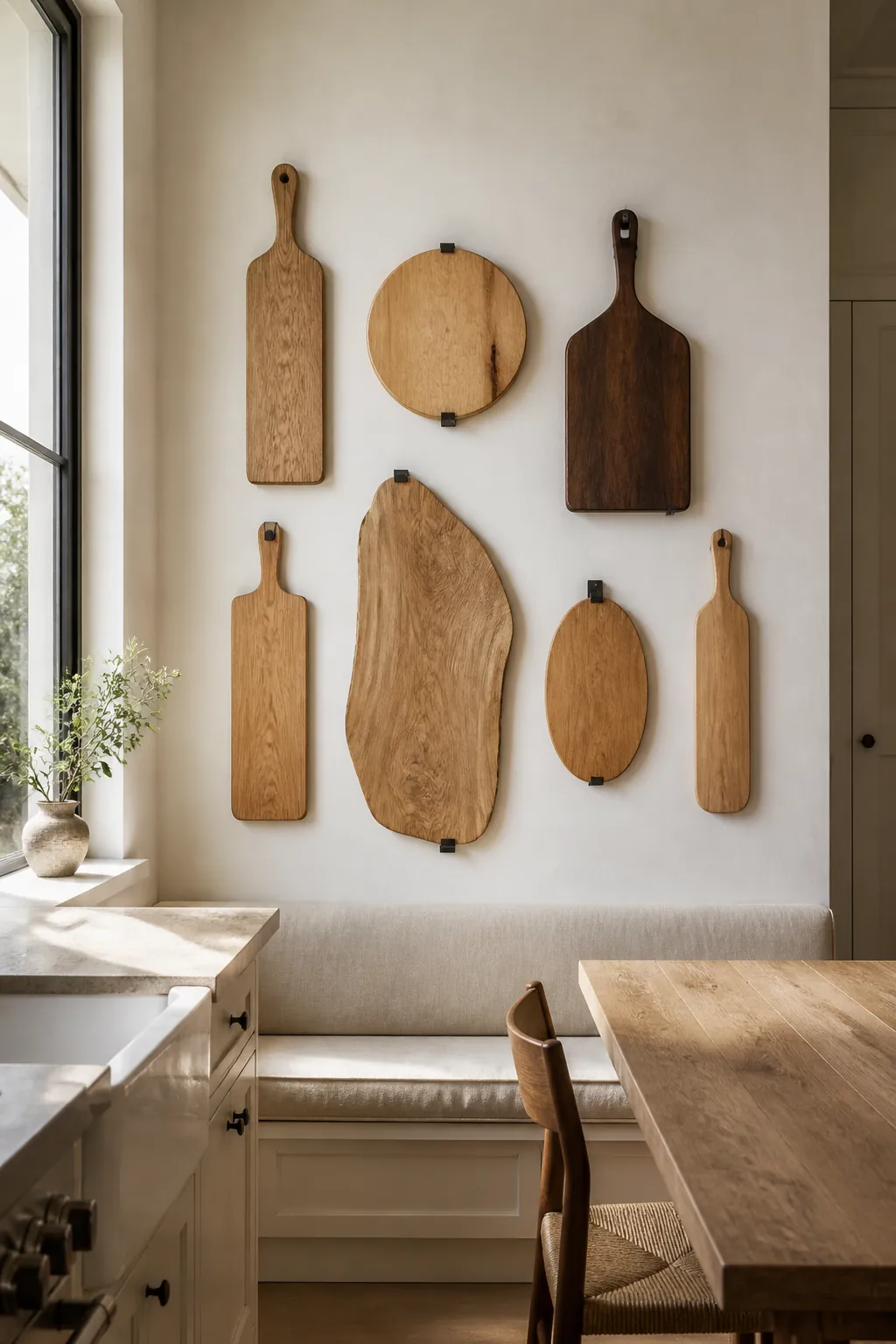
Vary round, handled, and paddle shapes while keeping the wood tones related. Secure each board from a real hole or fitted bracket rather than balancing it on a tiny nail. This gives a blank wall texture and history without adding printed words or a forced theme.
Let copper molds catch natural light
Vintage copper molds create shallow relief and changing reflections across a wall. A loose constellation of different forms feels more personal than a rigid matching grid. Mix aged copper with one or two darker tin pieces so the arrangement keeps depth in bright daylight.
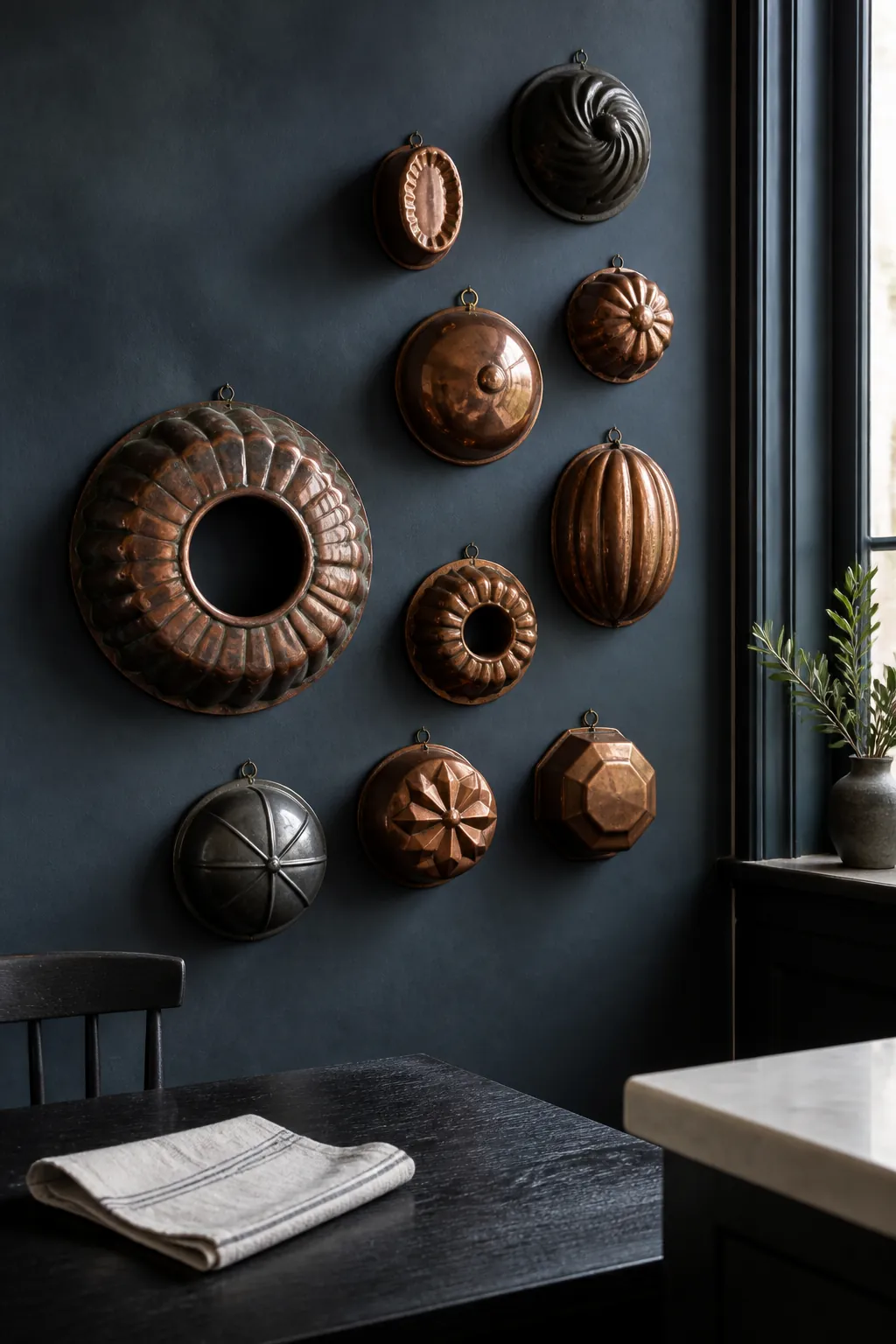
Keep the group away from active burners where grease would settle quickly. Honest patina is part of the appeal, but loose flakes or sharp edges are not. A stable hanger at each mold lets the display remain safe while still looking light.
Make a hand painted tile panel
A small tile panel can introduce color without covering an entire backsplash. Choose one concrete motif, such as olive branches with scattered blue fruit, and frame the tiles with narrow wood trim. The surrounding wall should stay quiet so the panel reads like a crafted architectural detail.
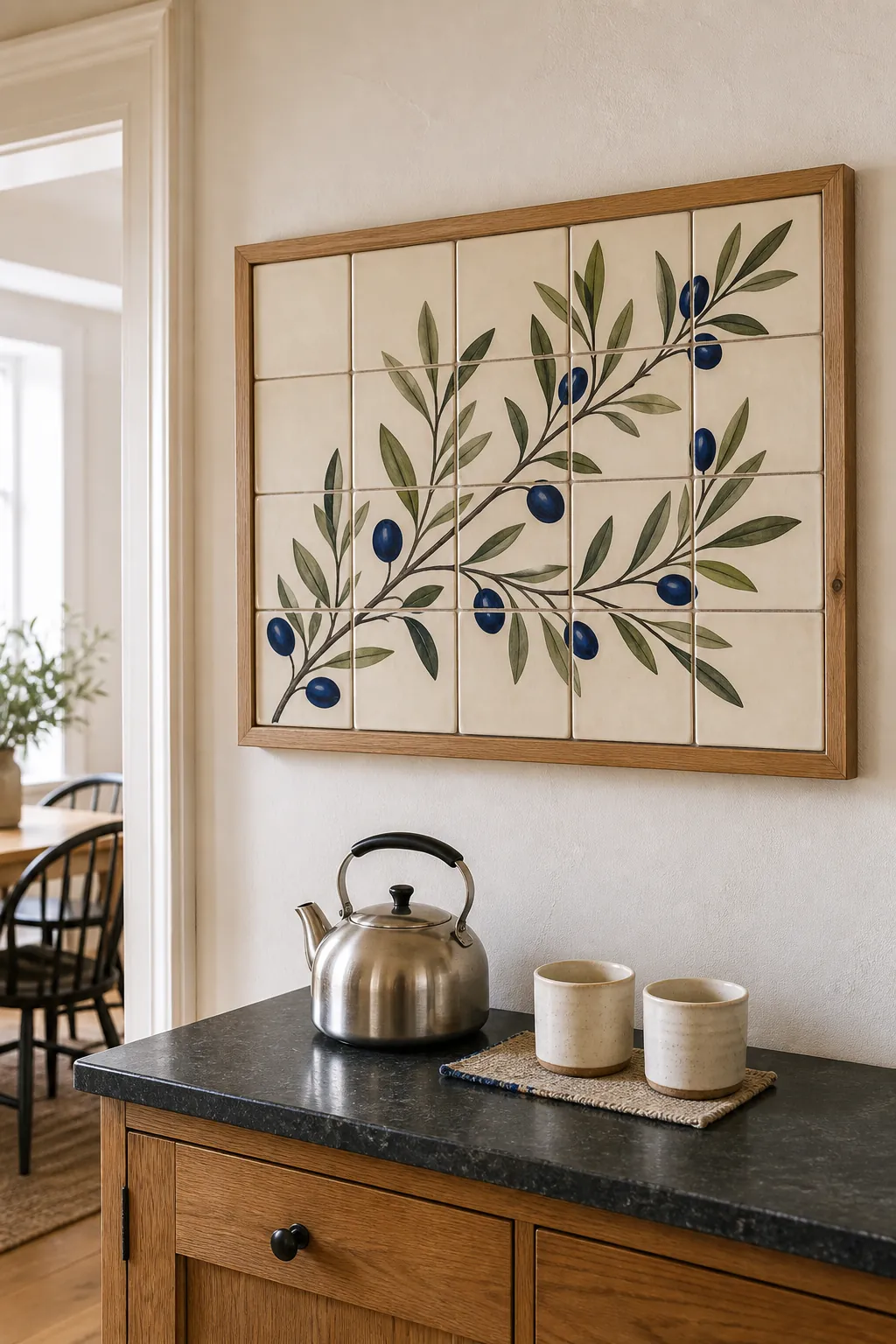
Use this idea on a dining wall or coffee corner where splashes are limited. Slight differences between brush marks make the result feel made rather than printed. If permanent tile is unsuitable, mount the panel on a sealed backing that can be anchored securely.
Frame carved print blocks as artifacts
Carved wood printing blocks have enough depth to cast real shadows, yet their repeated motifs still read as art. Place a few blocks inside a shallow museum case with space around every edge. Botanical, geometric, and border patterns can coexist when the wood tone and mounting cloth remain consistent.
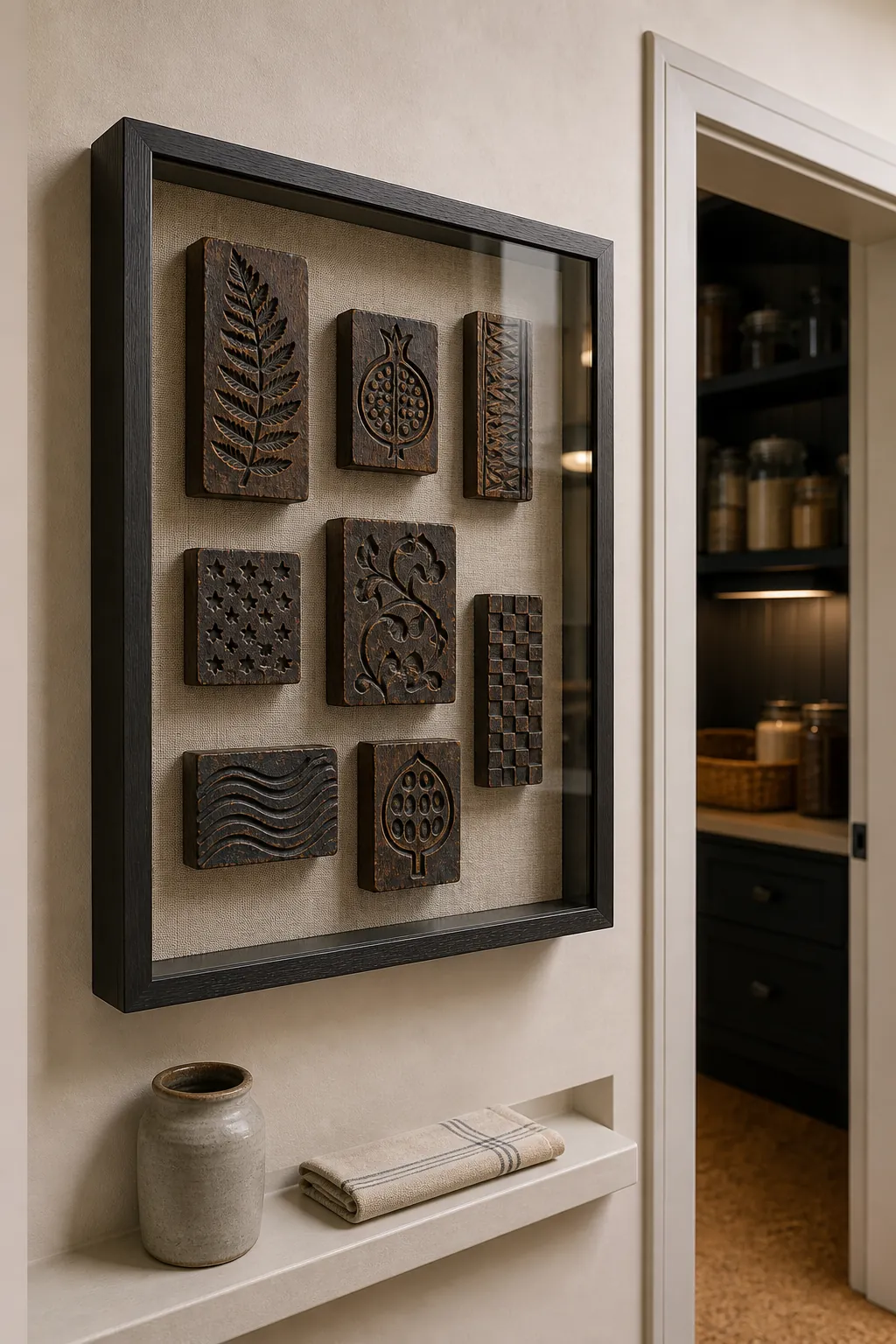
A case with a removable back protects the blocks from dust while allowing careful rearrangement. Avoid crowding every available inch because the shadows need room to define the carvings. This approach brings vintage kitchen wall decor into a clean contemporary room without pretending the whole kitchen is old.
Build a rotating postcard ribbon
A wide linen ribbon with small brass clips creates a flexible display for illustrated postcards, fabric swatches, and a favorite recipe image. Keep the visible paper pieces free of readable text so color and form lead the composition. A single vertical ribbon can suit a small kitchen wall where a wider collage would feel cramped.
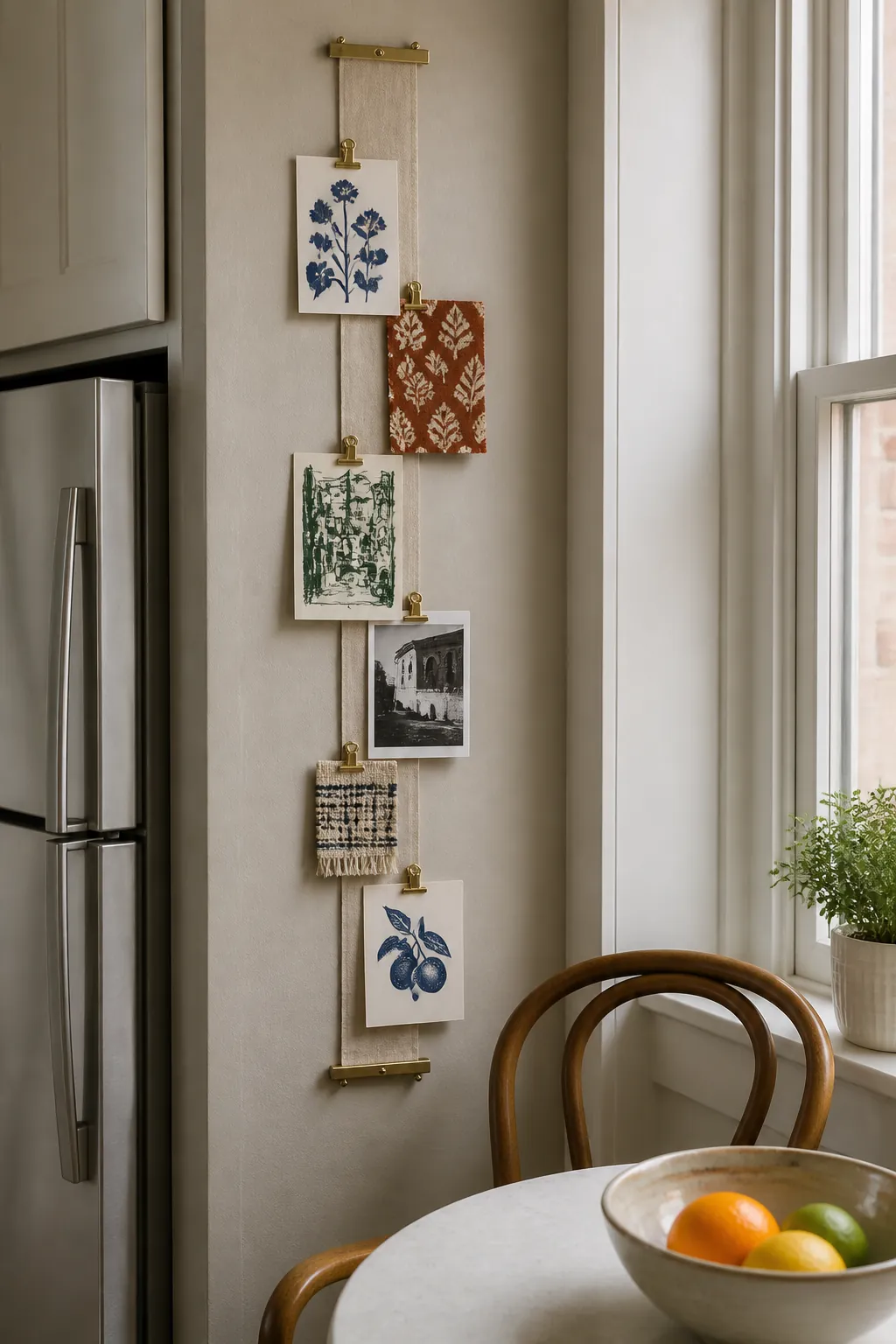
Anchor the ribbon at both ends so paper does not flutter into a work surface. Change only one or two pieces at a time, which preserves a recognizable palette. The display remains personal because its contents can reflect travel, local makers, and everyday discoveries.
Turn herb drying into a living composition
A wall mounted drying frame can combine scent, texture, and actual kitchen use. Space small bundles of rosemary, sage, thyme, and bay along a slim metal grid, with a tray below to catch leaves. Fresh green bundles and older silvery ones create natural variation without extra decoration.
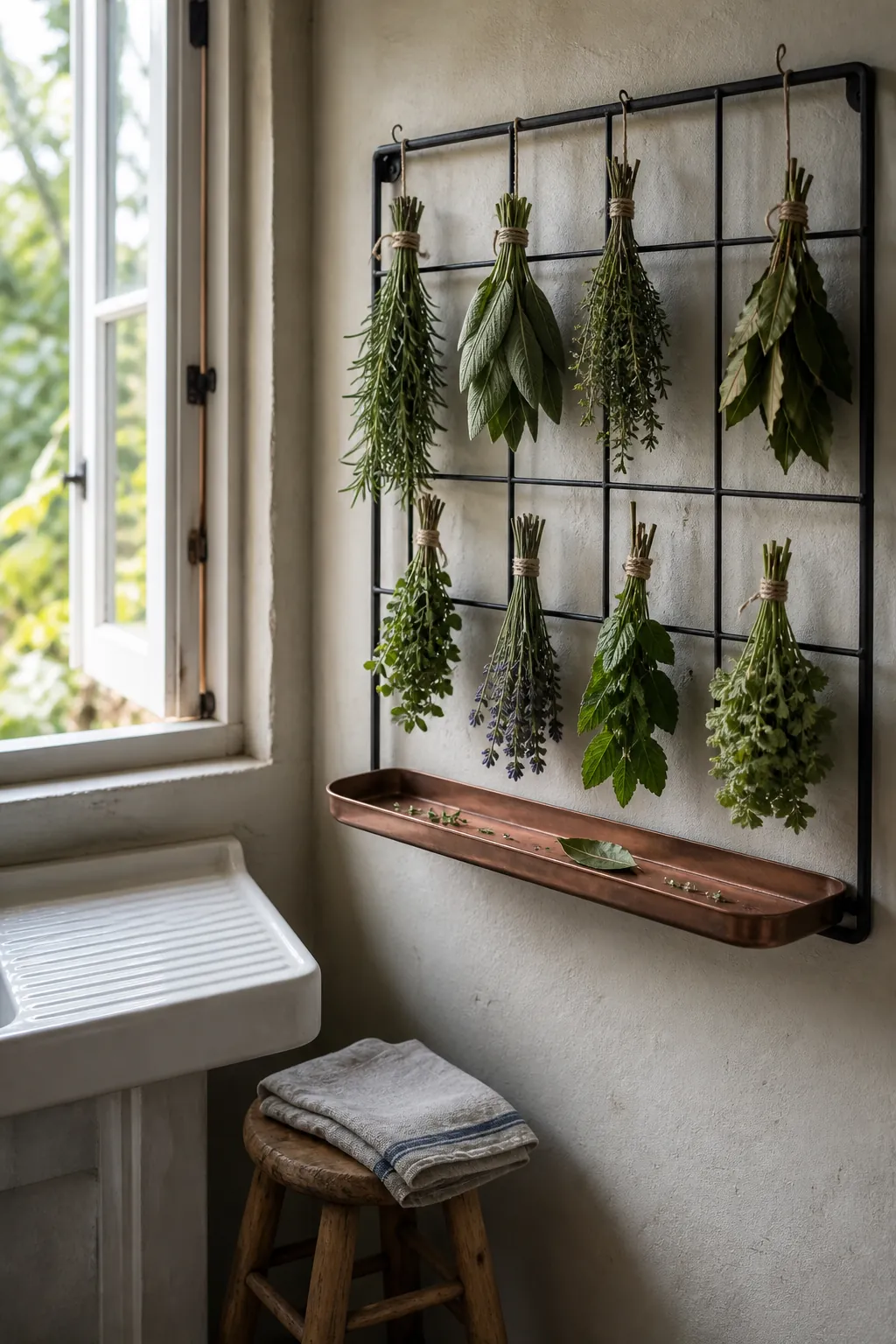
Position the frame where air moves but direct sun and cooking steam do not reach it. Use small bundles so herbs dry rather than trap moisture, and remove any material that changes smell or shows damage. The result feels unique because it changes with the household routine while remaining genuinely useful.