
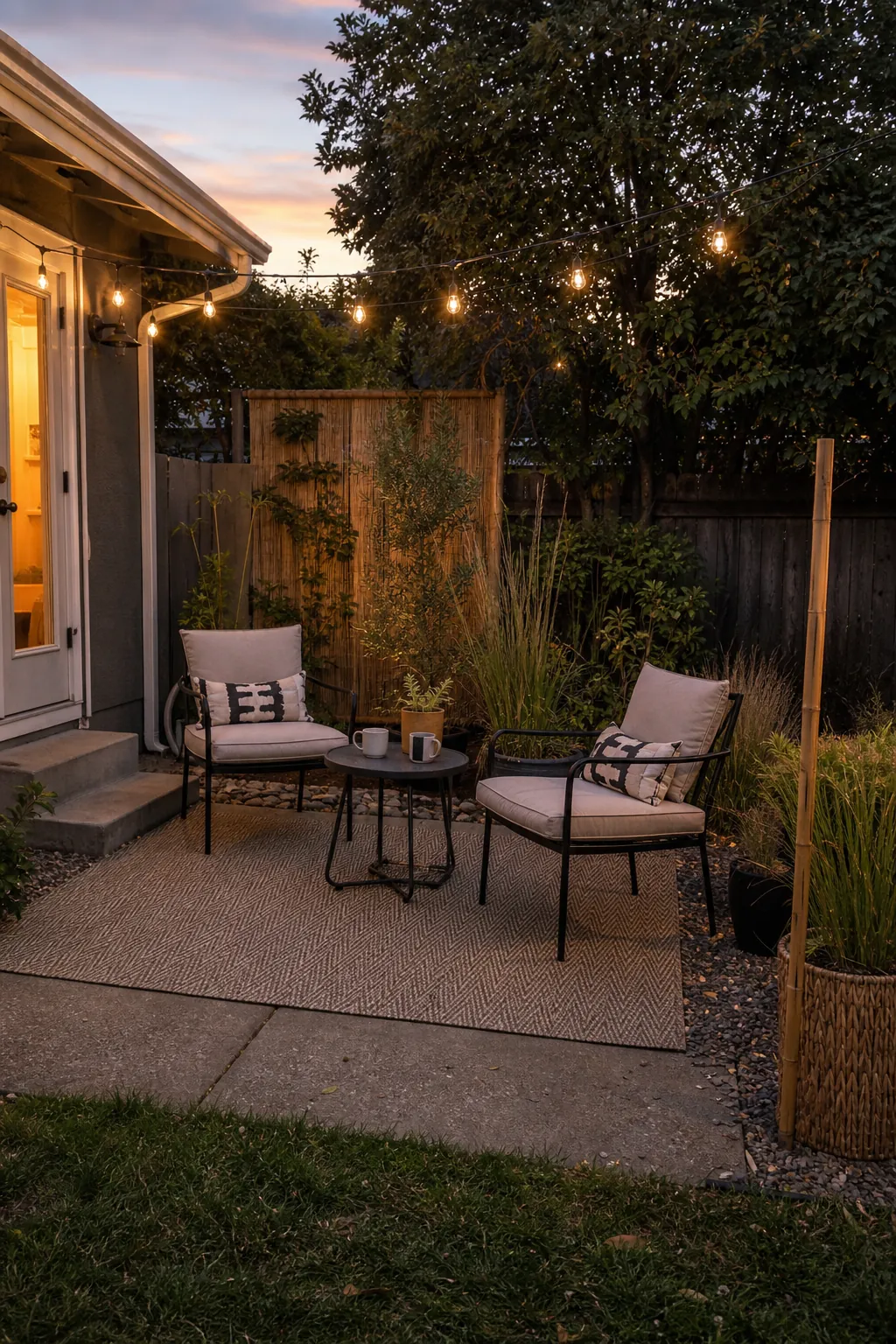
A backyard starts to feel cozy when it gives people a clear place to land. Not a perfect patio. Not a full landscape renovation. Just a spot where the chair is comfortable, the light is warm, the edges feel soft, and nobody feels like they are sitting in the middle of an unfinished yard.
The mistake that makes a Budget Backyard feel harder than it needs to be is trying to fix everything at once. Reddit threads about sad patios, tiny yards, and exposed backyards all circle the same problem: people do not know where to start, so they price out concrete, fences, furniture sets, and full garden design before they have even made one corner usable.
The better move is simple: make one outdoor room feel finished first. Once one corner works, the rest of the backyard stops feeling like a project and starts feeling like optional upgrades.
Start With One Outdoor Room, Not the Whole Yard
A Cozy Backyard does not need every square foot decorated. In fact, small outdoor spaces often feel better when there is breathing room around one strong seating area. Choose the zone you are most likely to use: the slab outside the back door, the shadiest corner, the area near a fence, or the flattest piece of lawn.
Then make that zone read like a room. Put down an outdoor rug, mulch, gravel, or a tight cluster of pavers. Add two chairs and a small table. Bring plants to the corners. The goal is not to hide the entire yard. The goal is to tell your eye, this is where outdoor living happens.

If the space is tiny, do not push furniture to every edge. Leave a little negative space around the seating zone so the yard feels intentional instead of packed. Vertical decor, tall planters, and a narrow side table can do more for a small patio than three extra chairs nobody uses.
Buy Comfort Before You Buy Decor
Pretty Outdoor Decor helps, but comfort is what makes people stay outside. Before buying lanterns, wall art, or seasonal accessories, make sure the actual seating works. A backyard with one good chair beats a backyard with six stiff chairs arranged for a photo.
- Start with the seat. Look for secondhand patio chairs, a used bistro set, a simple wood bench, or folding lounge chairs that can be stored away.
- Add washable softness. Outdoor cushions, floor pillows, and a throw blanket make metal, plastic, and wood furniture feel less temporary.
- Give every seat a landing spot. A side table, stump, plant stand, or thrifted ceramic stool makes coffee, books, and snacks feel natural outside.
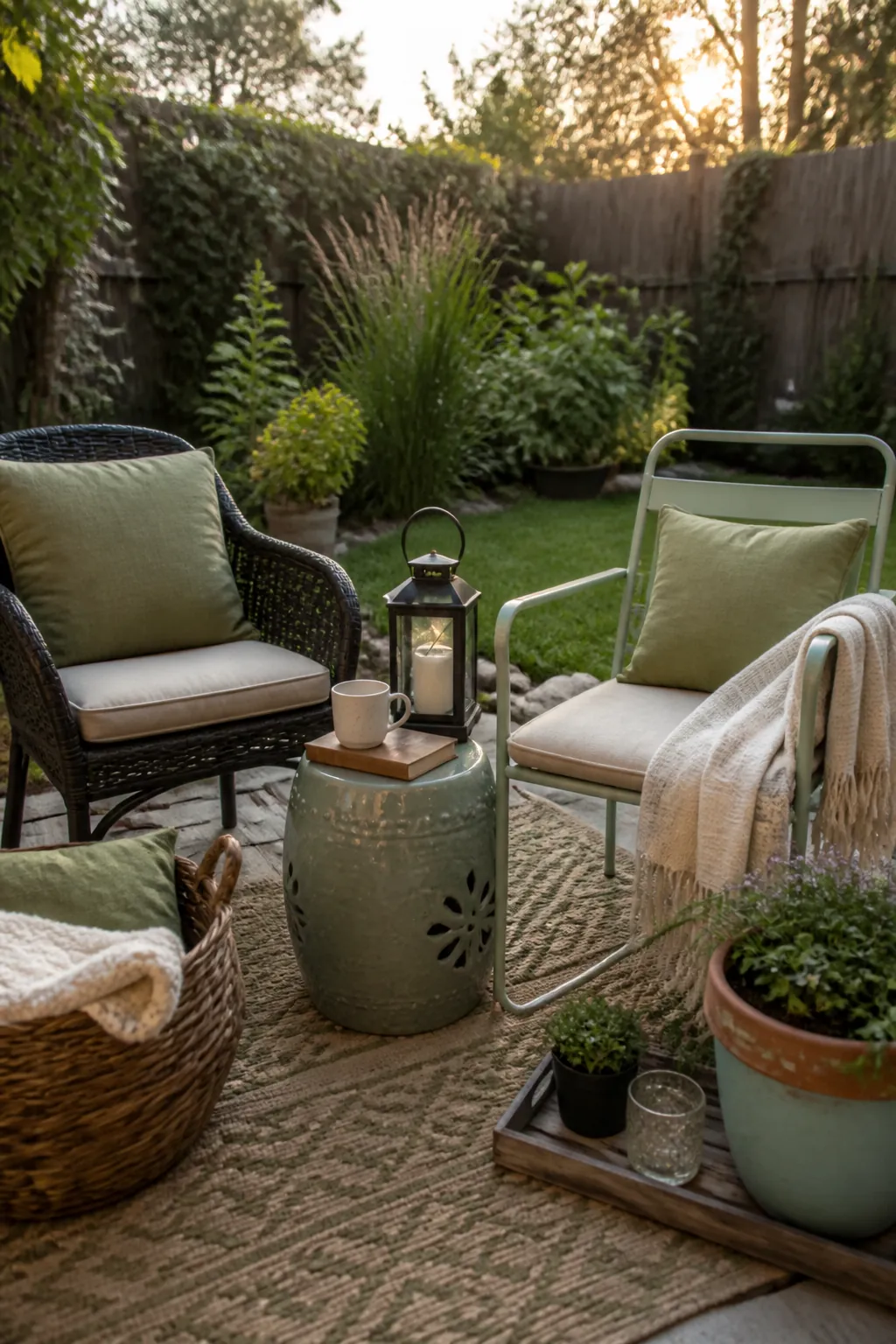
This is where cheap pieces can look surprisingly good. Matching matters less than repetition. If your chairs are different, repeat one cushion color. If your table is secondhand, repeat the same wood tone in a planter or tray. Budget looks messy when every item is random; it looks designed when one or two details repeat.
Use Warm Light to Make the Yard Feel Finished After Sunset
Lighting is the fastest way to make a backyard feel less bare. It also solves a real problem: many patios look acceptable in daylight and depressing at night. A few warm light sources make the space feel safer, softer, and more like an extension of the house.
String lights are popular because they draw a ceiling over the seating area. But they are not the only answer. Solar path lights can outline a walkway, battery lanterns can sit on tables, and a small uplight can make a tree, fence, or planter feel dramatic. The trick is to use layers instead of one harsh floodlight.
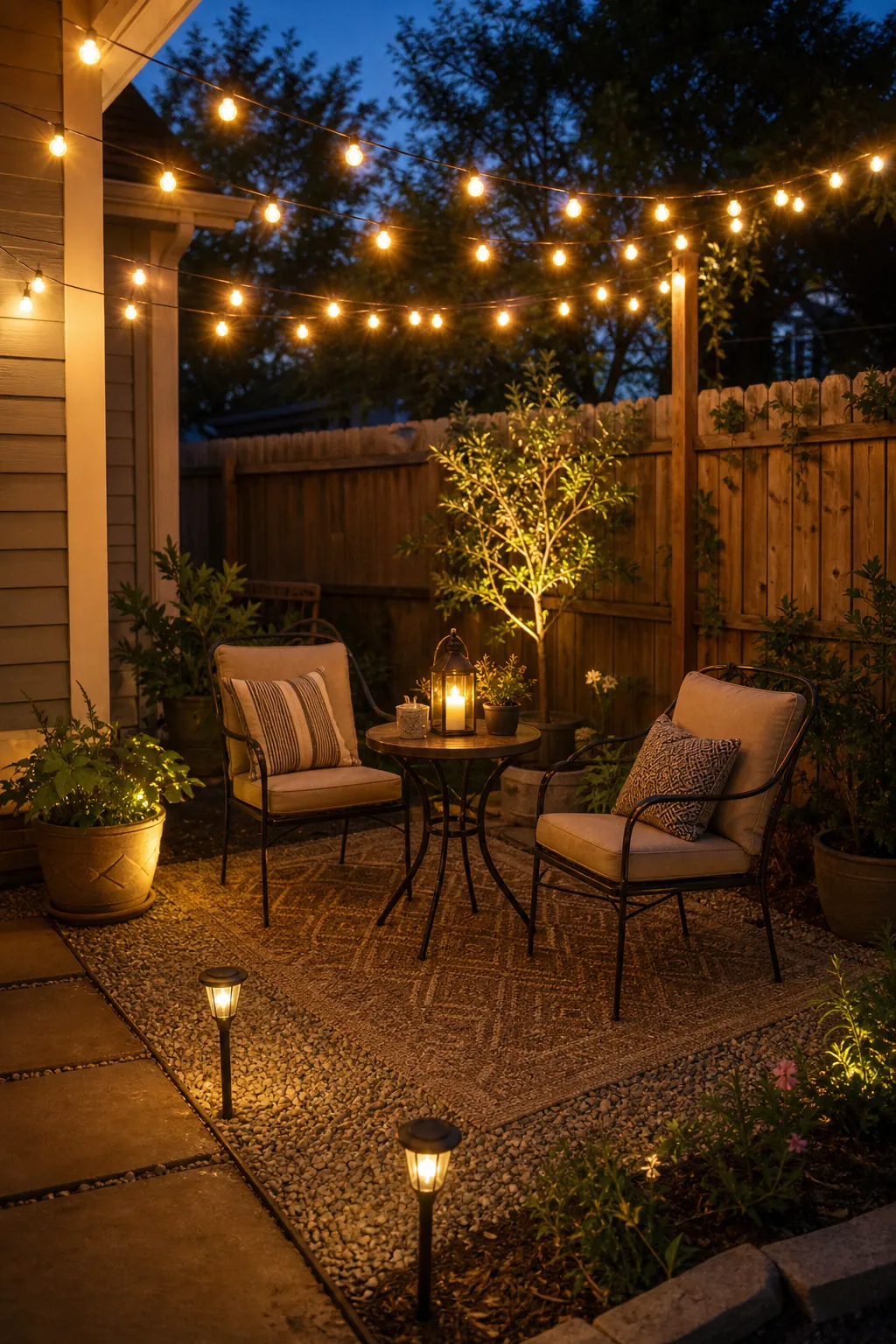
For a polished look, keep the bulbs warm white and mount them with intention. Sagging lights can be charming, but messy cords make the whole space feel unfinished. Use posts, hooks, a fence line, a pergola, or even weighted planter posts so the lighting frames the seating area instead of floating randomly across the yard.
Define the Floor Without Pouring Concrete
Many Backyard Ideas get expensive because they start with a hardscape quote. Concrete, stone, and large decks can be worth it, but they are not the only way to make a backyard feel settled. A floor can be visual before it is permanent.
If you already have a patio slab, clean it first. A pressure wash, scrub, or outdoor-safe concrete stain may change the entire mood. If you have grass or dirt, use pea gravel, compacted decomposed granite, mulch, stepping stones, or a large outdoor rug to create a defined zone. The floor does not have to be fancy; it has to look chosen.
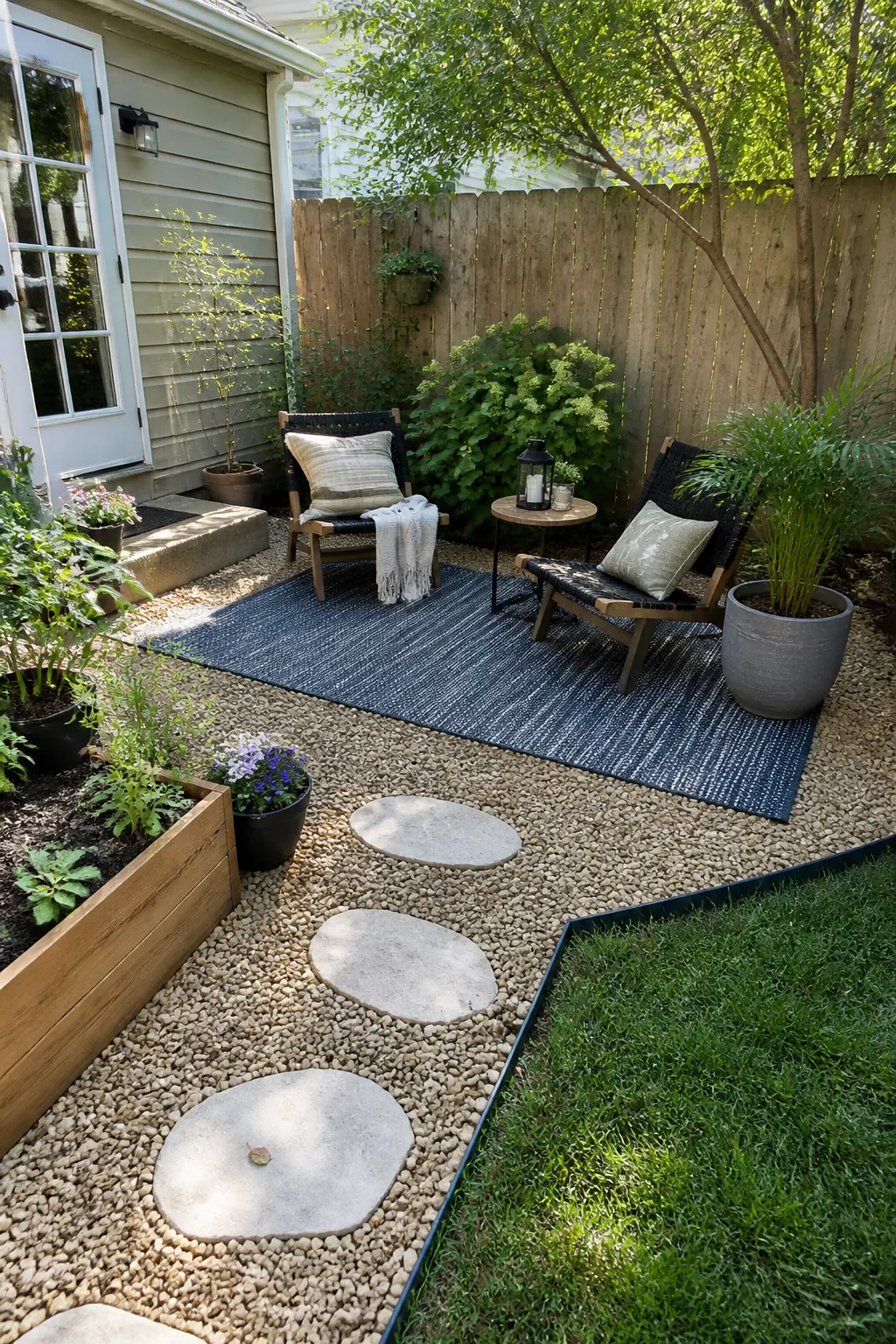
For gravel or mulch, use edging. It is not glamorous, but it keeps the material from wandering into the lawn and makes the project look finished. If chair legs feel unstable on gravel, set small pavers under the front legs or place the furniture on a rug made for outdoor use.
Soften the Edges With Plants You Can Actually Maintain
Plants make a backyard feel alive, but a tight budget is not the place to gamble on fussy choices. Start with containers and edge planting before you attempt a large bed. Pots let you test sun, shade, watering habits, and scale without committing to a full Garden Design plan.
Use plants where they do visual work: behind a chair, beside a door, at the corner of a patio, or along a fence. One oversized pot with a hardy grass or evergreen can look more intentional than five tiny pots scattered everywhere. Herbs are useful near dining areas. Native perennials and drought-tolerant plants can lower maintenance once they are established.
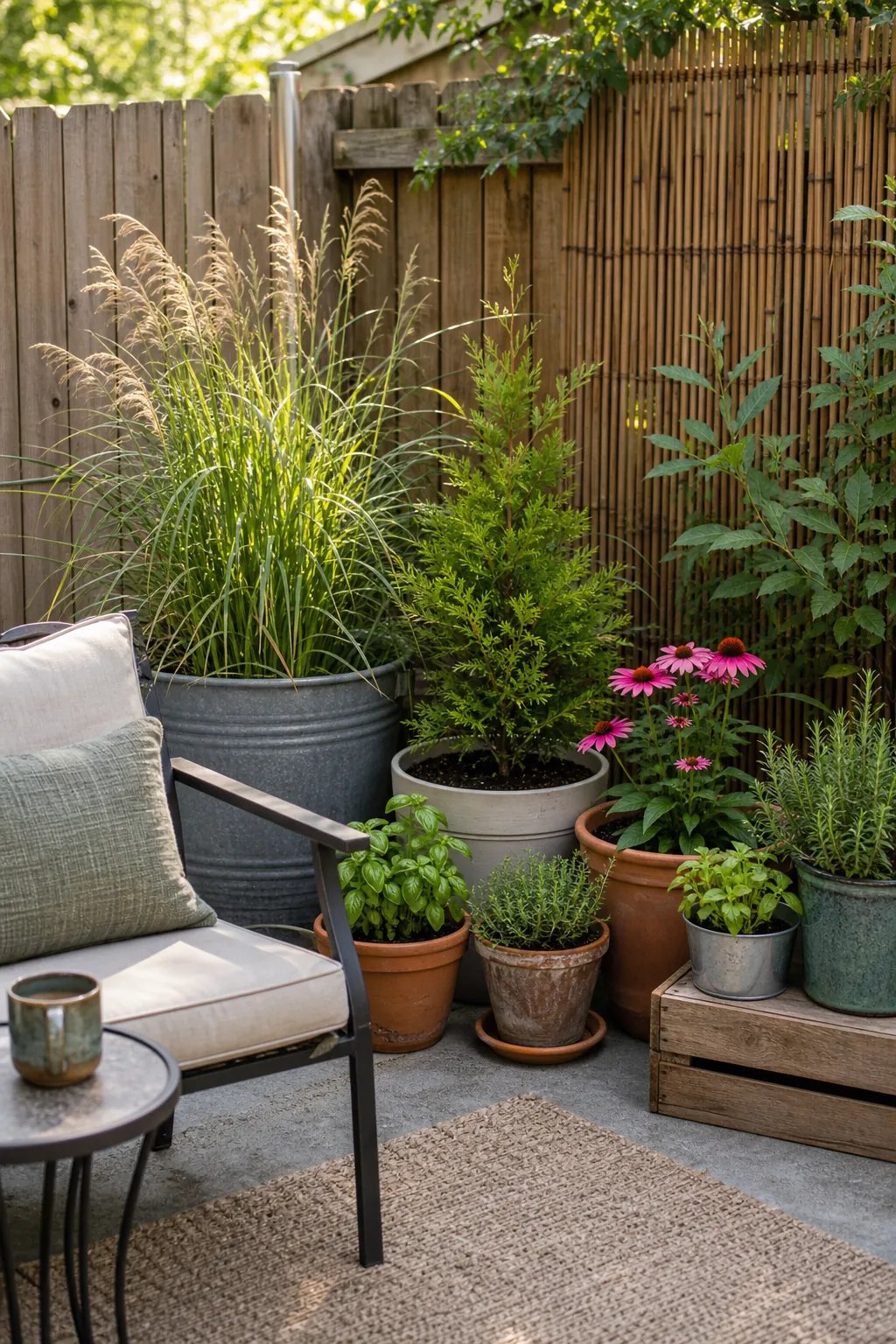
If you love bamboo, be careful with the type and placement. Running bamboo can become a real problem in the ground. For a budget-friendly bamboo look, choose contained planters, clumping varieties suited to your climate, or bamboo-style screens and trellises that give texture without taking over the yard.
Create Privacy by Blocking Sightlines, Not Building a Wall
Privacy is one of the biggest reasons people avoid using their backyards. The good news is that Privacy Ideas do not always require a full fence. In many cases, you only need to block the angle where neighbors, windows, or the street make the seating area feel exposed.
Think in layers. A freestanding trellis can protect one side of a dining table. Tall planters can screen a reading chair. A staggered row of shrubs can break up a view without making the yard feel boxed in. Outdoor curtains, shade cloth, slatted panels, and climbing vines can all create a more private feeling when they are placed close to where people sit.

The most natural look comes from mixing heights. Put the tallest piece where the view is worst, then step down with medium plants, pots, and low greenery. Privacy should make the backyard feel calmer, not smaller.
Make Patio Decor Work Like Storage, Shade, and Weather Protection
Good Patio Decor does more than look nice. On a small budget, every item should earn its place. A storage bench hides cushions. A lidded basket holds outdoor toys. A side table doubles as a plant stand. A simple shade sail or umbrella makes the area usable during the hottest part of the day.
This is especially important for a Family Backyard. A cozy space fails when cushions are always wet, toys are underfoot, or the sun makes the seating area unusable. Choose washable fabrics, lidded storage, stackable pieces, and decor that can be moved when kids, pets, or guests need the space.
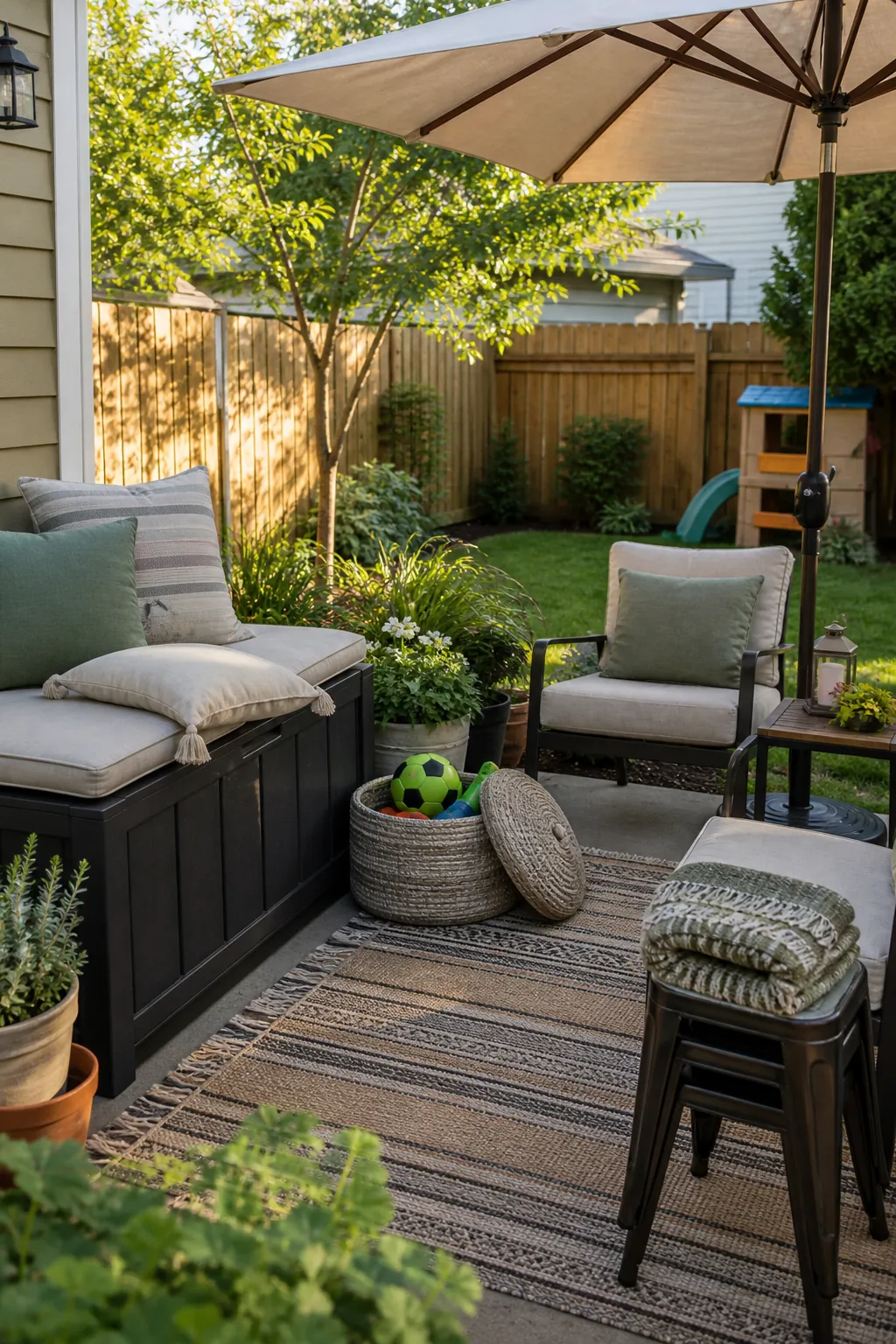
- Choose outdoor-rated fabric so cushions and pillows survive sun and rain better.
- Keep a dry bin near the door for blankets, toys, bug spray, and small lanterns.
- Use shade where people actually sit, not just where it looks balanced in photos.
Add One Reason to Go Outside
A backyard becomes part of daily life when it has a purpose. It does not need a full outdoor kitchen or a huge fire pit. It needs one simple reason to step outside after dinner, on a Saturday morning, or while the kids are playing.
That reason might be a coffee chair, a small grill station, a reading corner, a fire bowl where allowed, a herb table, a game spot, or a low dining setup. This is where Outdoor Seating and layout matter more than shopping. Place the activity close enough to the house that using it feels easy.
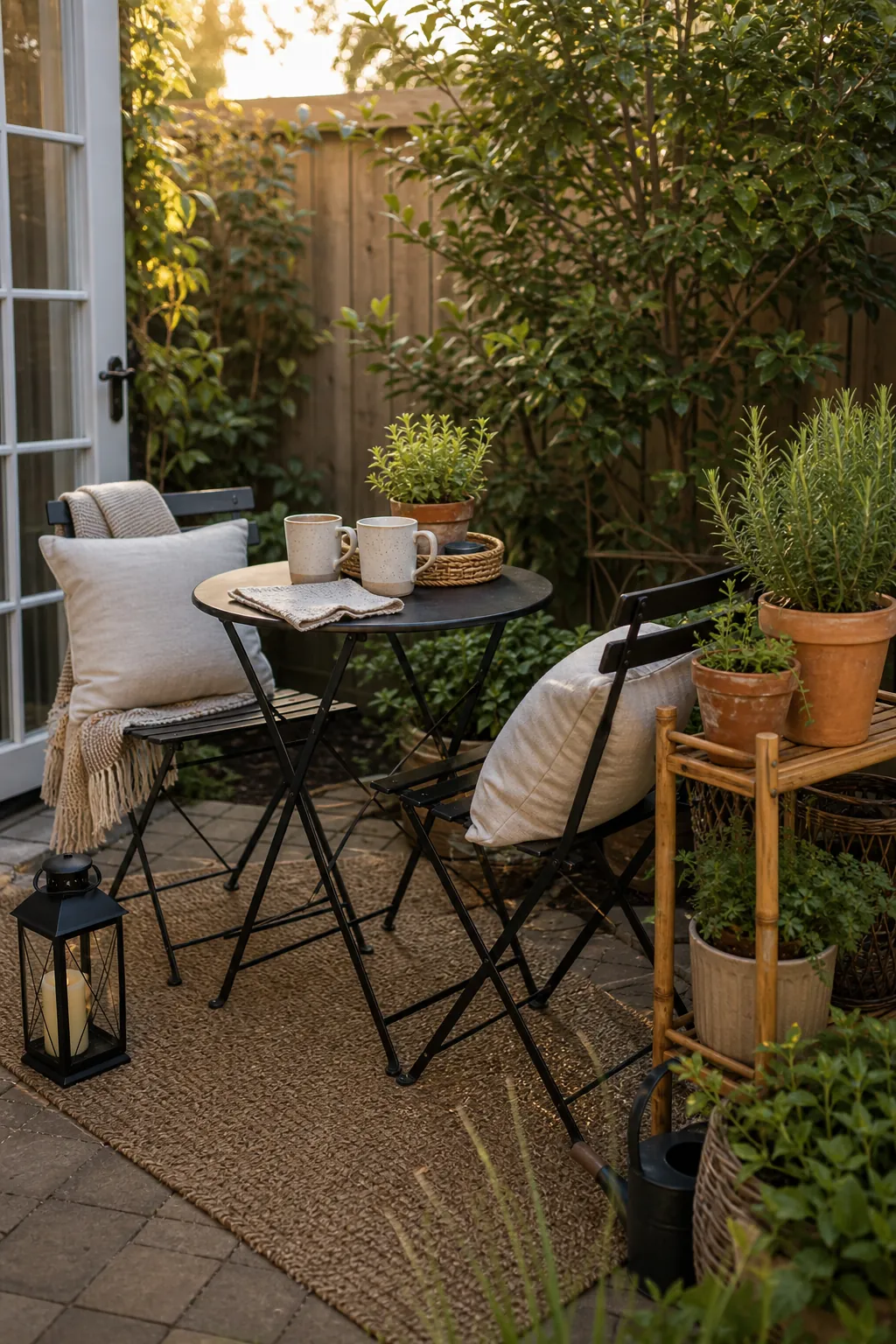
If you are stuck, choose the activity you already do indoors and move a tiny version outside. Coffee, reading, board games, homework, drinks with a friend, or dinner from the grill can all become backyard rituals without a large budget.
A Simple Weekend Plan for a Cozier Backyard
If the yard feels overwhelming, use a weekend plan instead of a mood board. The point is not to finish every project. The point is to create one area that feels good enough to use immediately.
- Friday evening: clear the chosen zone, remove broken items, sweep or wash the surface, and decide where people will sit.
- Saturday morning: source seating first. Check what you already own, then look for secondhand chairs, a small table, or washable cushions.
- Saturday afternoon: define the floor with a rug, gravel, mulch, pavers, or a clean patio surface. Add edging if loose material is involved.
- Saturday evening: install warm lighting where it frames the seating area. Add lanterns or solar lights only where they solve a real dark spot.
- Sunday: add plants and privacy pieces. Put the tallest items behind or beside the seating area, then layer smaller pots in front.
That sequence keeps the budget honest because it solves the biggest problems first: where to sit, where the space begins and ends, how it feels at night, and whether it feels exposed. Accessories can come later.
What to Skip When the Budget Is Tight
Some upgrades are tempting because they look dramatic online, but they can drain the budget before the backyard becomes more usable. Skip anything that creates maintenance you are not ready for, anything too large for the actual space, and anything that looks good only when styled for a photo.
- Skip huge furniture sets if two good chairs and a table would fit your life better.
- Skip random tiny decor until the seating, floor, lighting, and privacy feel settled.
- Skip plants that outgrow the spot or need more water, pruning, or protection than you can give them.
- Skip permanent hardscape until you know where people naturally gather.
The most inviting backyards are rarely the ones with the most stuff. They are the ones where every choice makes the space easier to use. Start with one corner, repeat a few materials, soften the edges, and give yourself a reason to go outside. That is how a modest backyard begins to feel cozy without a big budget.