
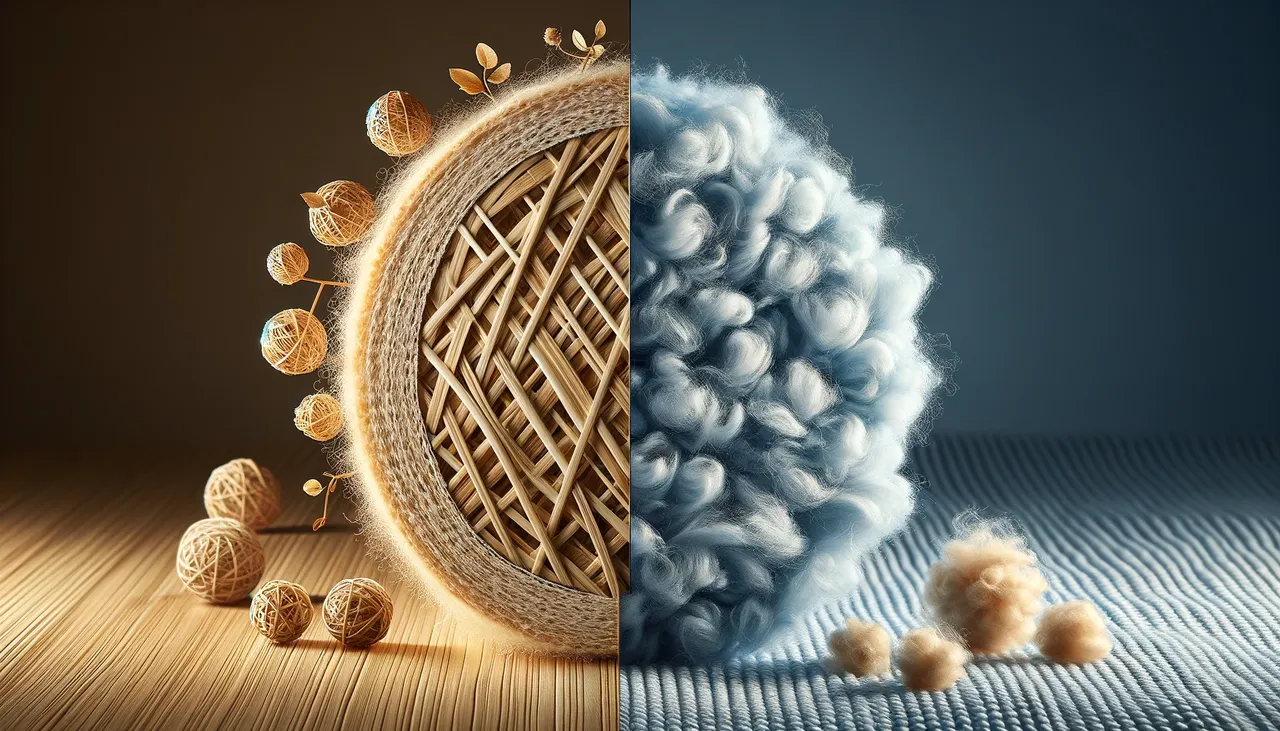
There is a global trend away from synthetic products, and the textile/fabric industry is no different. While synthetic fibers are generally cheaper, natural fibers often have more desirable properties. Microfibers are some of the most popular synthetic fabrics available, but how do they compare to the wonder product that is bamboo? Pitted against one another, who fares better in bamboo vs. microfiber?
Bamboo vs. microfiber is a classic example of natural vs. synthetic products. Bamboo is more sustainable and eco-friendly, provided it is carefully sourced, but microfiber products are more cost-effective. Both are used for various products and inherit their traits from the “parent” material.
Bamboo and microfibers are popular materials for various textiles, each with unique traits, strengths, weaknesses, and desirable end products. The rest of the article examines these two fabric/fiber sources according to their origins, characteristics, uses, and the pros and cons of each.
Bamboo Vs. Microfiber: Characteristics, Origins, And Uses
Although we’re aware of fabrics (most of us wear clothes) and how essential they are in daily life; however, many of us don’t necessarily pay attention to what type of fabric we’re encountering until posed with the question of “Bamboo or microfiber?”
We’ll examine these materials in more detail to answer the question and (subsequent) “Which is better?”.
Bamboo Vs. Microfiber: Physical Characteristics
The physical characteristics of a material are usually its selling point. The difference between bamboo and microfibers indicates natural vs. synthetic fibers.
Bamboo Fabric Physical Characteristics
Bamboo is a popular fabric thanks to the widespread nature of the parent plant, of which there are roughly 1400 species.
The fibers come from various bamboo species and may vary in their characteristics, but share some common properties, including:
- This material is water absorbent thanks to the micro gaps within the fibers.
Bamboo fibers are incredibly strong and elastic, making them durable and stable.
- It’s softer than cotton because of the gaps in the fibers.
- Thanks to the bamboo plant’s natural resistances, the fabric is antibacterial, antifungal, bacteriostatic, hypoallergenic, and hygroscopic (absorbs moisture from the air).
- It’s a natural deodorizer and has ultraviolet light resistance.
Microfiber Physical Characteristics
Microfiber inherits its characteristics from the fibers used to produce the fabric.
Some common features include:
- This material is soft thanks to the thin fiber strands, half the diameter of fine silk, one-third of cotton, one-quarter of fine wool, and one hundred times finer than human hair.
- Thanks to the synthetic fibers, they are (relatively) strong and durable.
- They are water-repellent or absorptive (depending on the materials)
- These fibers are lightweight, wrinkling-resistant, and retain their shape.
- They are lint-free and exceptional at removing dirt.
- Microfibers allow fabric a degree of “breathing,” and insulate heat better.
Bamboo Vs. Microfiber: Origin And Production
Bamboo and microfibers are influenced by their “parent.”
In bamboo’s case, the plant species plays a role in the material’s properties, while microfiber’s properties are directly related to the material used in constructing the fibers.
Bamboo Fibers
Bamboo fabric/fibers are extracted from bamboo plants. They are cellulosic (natural) fibers harvested from the plants’ culm (stem).
Plants are usually 3 to 4 years old as they have the best soft tissue inside their culm-to-size ratio (as bamboo gets older, the culm becomes hollow).
Bamboo plants are usually chopped around the 1st or 2nd node. The harvested bamboo is then cut or crushed into smaller pieces/fragments.
There are three predominant extraction methods:
- Mechanical – cut bamboo soaks for up to 7 days (or boiled for 10 to 15 hours). Once soaked, the fiber is loosened from the culms through force (alternatively through steam). Sharp-edged tools and special “combs” remove the fibers, which are spun into yarn.
Enzymes are also occasionally used to separate the fibers from the culms.
- Chemical – Bamboo culms are crushed and added to vats of caustic chemicals (like sodium hydroxide). This method is cheaper, and the properties are “controlled.” Once treated, the fibers are washed, dried, and spun.
- Combination of mechanical and chemicals – The combination approach is the best option for producing superior bamboo fibers; however, it is not as cost-effective as the chemical method.
Harvesting bamboo for fiber dates back thousands of years to Asia and the surrounding areas, where they used traditional/mechanical methods.
However, in 1864, the first US patent for bamboo fiber was granted to Philipp Lichtenstadt.
Microfibers
Microfibers are fabrics made from incredibly thin strands of synthetic material.
Microfibers are generally produced from polyester but may contain nylon fibers to improve strength and water resistance. Polyamides are the other popular materials used.
Other microfibers are produced from acrylic, rayon (a silk replica), polypropylene, and viscose. Microfibers may also contain natural fibers (like cotton or wool) mixed with the synthetic.
Producing microfibers is a complicated process, which involves:
- In the polymerization process – small molecules are joined to form monomers. Monomers combined chemically produce larger macromolecules. Polymers are the result of 100s of macromolecules together.
- Polymer spinning – three typical methods of spinning polymers are melt and solution (dry or wet) spinning. The polymer in liquid form is extruded through a small opening. The resulting thin filament solidifies when exposed to the air.
- Drawing – once extruded, the filaments are stretched (repeatedly) after they become solid.
While there is some debate, it is widely held that Japanese textile producers introduced microfiber-based textiles (“micro-denier”) in the 1970s.
Bamboo Vs. Microfiber: Situations Of Use
Once the fibers are extracted or synthesized, they are ready for use by various producers in the textile industry.
While there is considerable overlap between “end uses,” some deviances exist between bamboo and microfiber products.
Products Produced From Bamboo Fabric
- Bamboo’s antibacterial properties make it ideal for use in the medical industry for producing various items, including masks and scrubs.
- Bed sheets/linen
- Bathrobes
- Clothes
- Curtains
- Towels
- Wallpapers/hangings
Products Produced For Microfibers
- Dish clothes
- Towels
- Sports gear (clothing, clothes, etc).
- Furniture
- Upholstery
- Bed sheets/linen
Bamboo Vs. Microfiber: The Pros And Cons
As with all materials, bamboo and microfibers have benefits and drawbacks.
The primary pros and cons include:
The Pros Of Bamboo As A Fabric
- Bamboo is a widespread and sustainable resource (provided it is responsibly harvested.)
- Harvesting bamboo provides work for communities in rural areas.
- The mechanical method of extracting bamboo fibers is environmentally friendly.
- Bamboo helps “remove” sweat for evaporation thanks to its absorbance properties. Making it a cool and breathable material.
The Pros Of Microfiber As A Fabric
- Microfibers are a product of their inputs, i.e., the materials used to create the polymer have specific properties, which are known; therefore, you can “tweak,” or custom produce microfibers to have the desired properties.
- Microfibers produce highly desirable fabrics.
- Microfibers are cheaper than bamboo products.
- Several microfiber types include chenille, lightweight, medium-weight, plush, and suede. These different types meet several fabric needs.
The Cons Of Bamboo As A Fabric
- Unfortunately, the mechanical method for extracting bamboo is labor-intensive and does not produce enough fibers. Therefore, many commercial manufacturers use chemical means, which carry environmental concerns.
- The chemicals used to extract bamboo fibers are hazardous and produce toxic fumes (a hazard to laborers in manufacturing plants). This chemical extraction removes (or reduces) the beneficial properties inherent in bamboo (antibacterial, fungal, etc.)
- One downside of bamboo’s characteristics is that it may shrink in water.
- Bamboo is more absorbent, which takes longer to dry.
- Bamboo is generally more expensive.
The Cons Of Microfiber As A Fabric
- Microfibers are synthetic products less environmentally friendly than bamboo and other natural products.
- Producing microfibers is difficult as they are delicate filaments, necessitating time and care during production.
- Polyester and other materials used to make microfiber take hundreds of years to decompose, and they lose tiny synthetic fragments (microplastics) during washing, which move into waterways and eventually the ocean.
Bamboo Vs. Microfiber: Which Is Better?
The choice between bamboo and microfibers is one of natural vs. synthetic fibers. Bamboo (that is sustainably harvested and mechanically extruded) is environmentally friendly.
Another significant difference is that bamboo is a cooler material, while microfibers “hold” heat better. Microfibers also dry quicker than bamboo.
Bamboo tends to be softer than microfiber.
While there are pros and cons for bamboo and microfiber materials, the choice is ultimately a personal preference.
Conclusion
Bamboo and microfibers are popular materials used in a range of products in the textile industry. They have pros and cons relating to their characteristics, making them more desirable to some people. While bamboo is the more sustainable choice (provided it comes from a reputable source), microfibers are cheaper. Choosing between the two comes from personal preference, as both produce fantastic fabrics.