
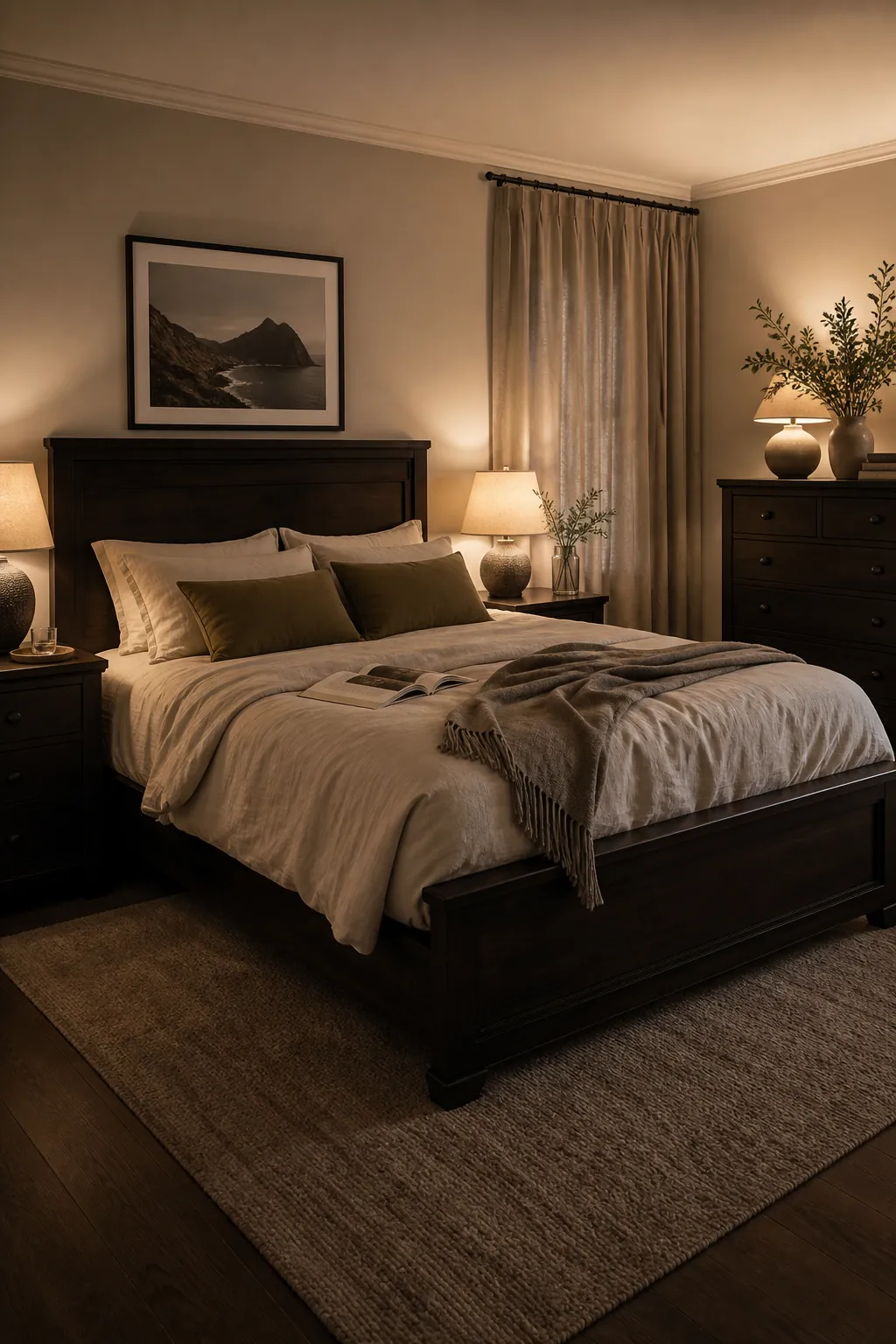
Dark furniture can make a couple bedroom feel grounded, expensive, and calm. It can also make the same room feel heavy if the bedding is flat, the lighting is cold, or every large surface is competing for attention.
The fix is not to hide the dark furniture. The fix is to make it look chosen. A good shared bedroom uses contrast carefully: dark wood or black furniture for weight, neutral bedding for lift, warm lighting for softness, and a few personal details so the room feels like both people live there.
These bedroom ideas for couples with dark furniture are built for real rooms, not perfect showrooms. They work whether the dark piece is a bed frame, dresser, nightstands, wardrobe, or dark floor that makes everything else feel more serious than intended.
Make the Dark Furniture Look Intentional First
The most common mistake with dark furniture is treating it like a problem to cancel out. That usually leads to a room that is half stark white and half heavy brown or black. The contrast is too abrupt, so the eye keeps jumping between extremes.
Start by deciding what the dark furniture is doing in the room. Is it the anchor? Is it the modern bedroom contrast? Is it the warm wood tone that keeps the bedroom decor from feeling too pale? Once you name its job, the rest of the interior styling gets easier.
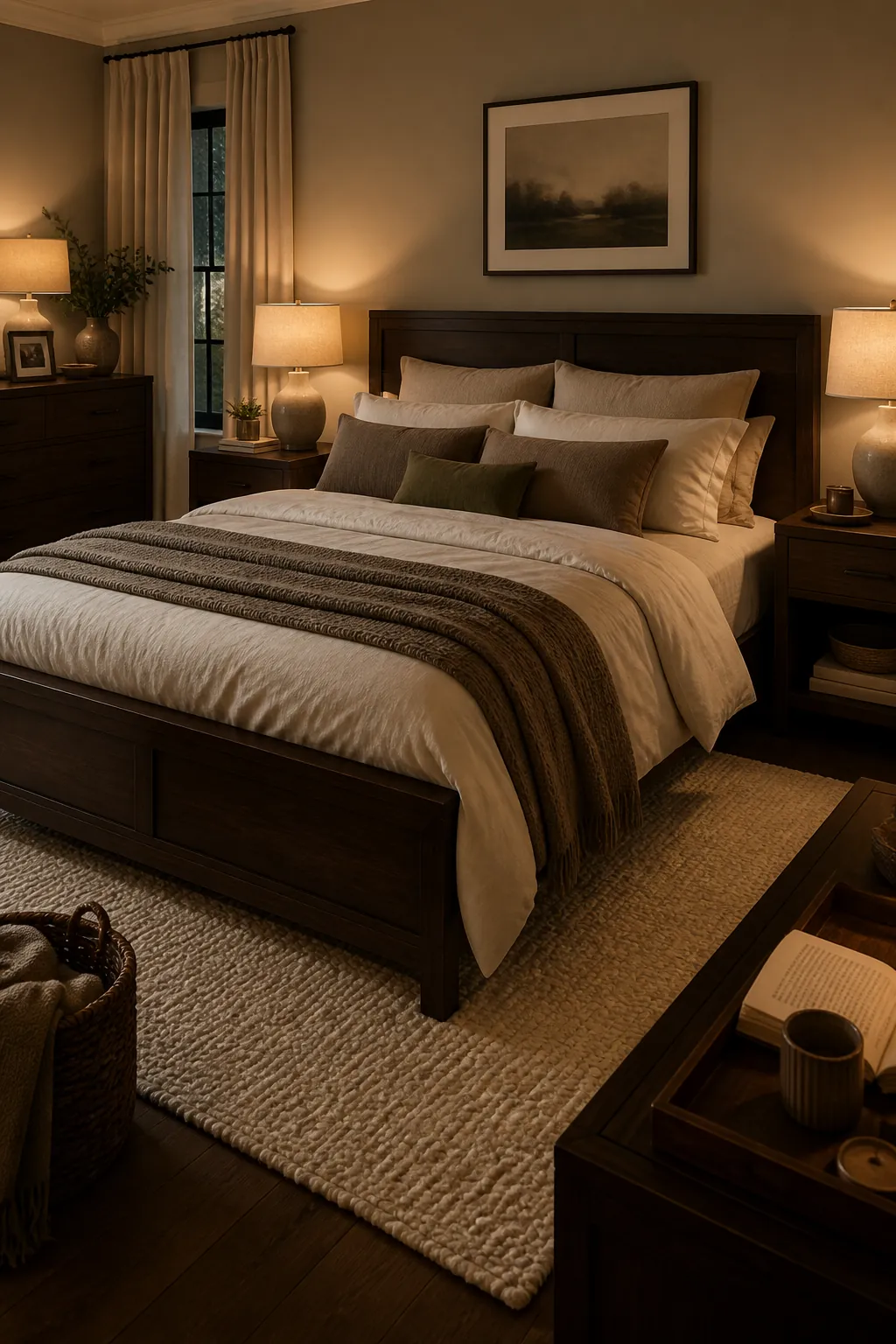
A strong base usually needs three supporting moves: a lighter textile layer, a warmer light source, and at least one texture that is not wood. Think linen, wool, cane, ceramic, boucle, velvet, paper shades, or woven baskets. Dark furniture looks best when it has something soft to push against.
Use Neutral Bedding to Lift the Bed
If the bed frame is dark, the bedding carries more visual responsibility than usual. Pure white can work, but it often makes dark furniture look harsher. A warmer neutral bedding palette is easier to live with: ivory, oatmeal, warm white, mushroom, taupe, stone, soft clay, or a muted stripe.
For a couple bedroom, keep the formula practical. Use comfortable sheets, one duvet or quilt, two sleeping pillows per person if needed, two to three decorative pillows, and one throw at the foot of the bed. If the bed takes too long to reset, the styling will not survive real mornings.
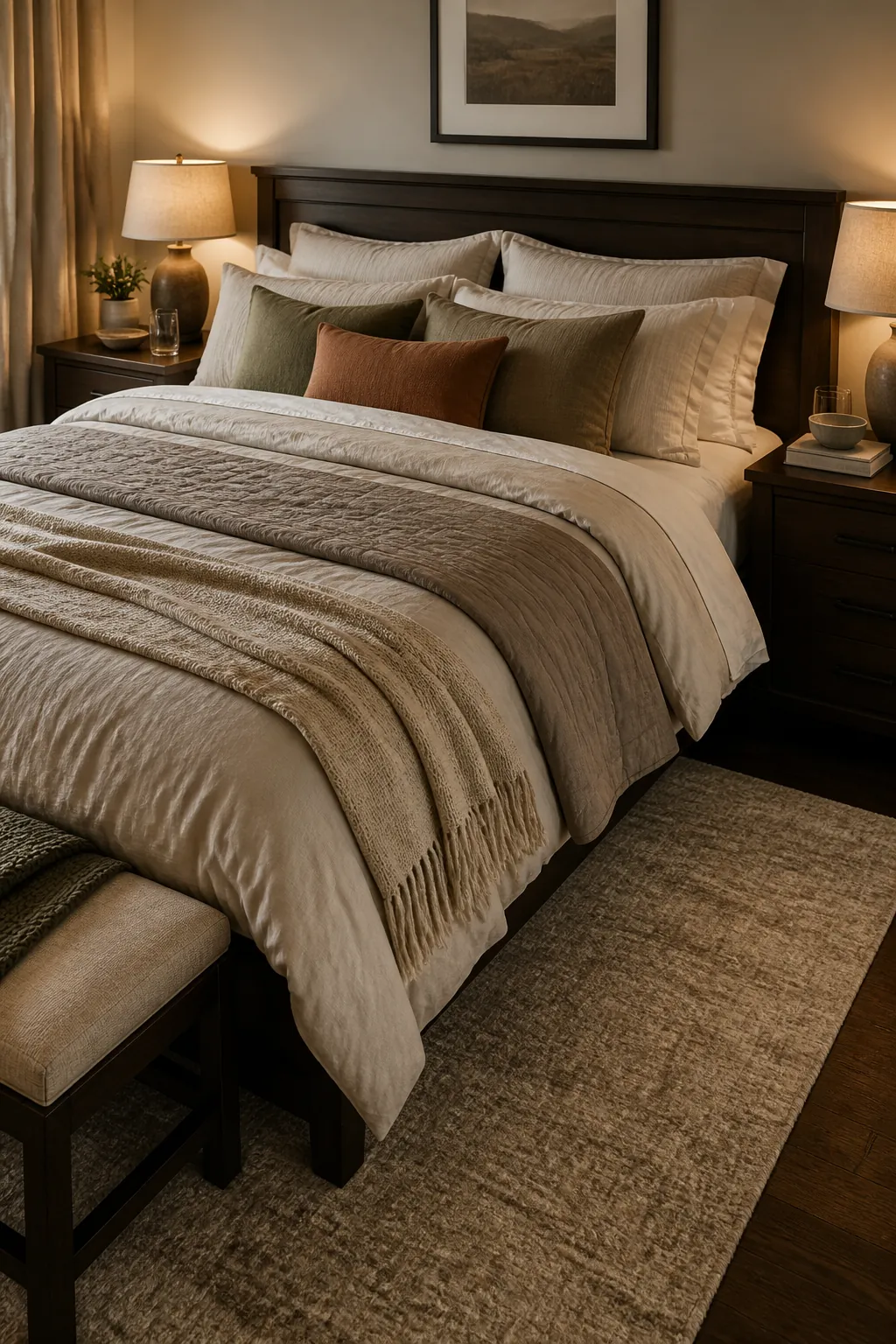
The key is texture, not pileup. Washed cotton, linen, a waffle blanket, a matelasse coverlet, or a nubby wool throw can make dark furniture feel cozy without turning the bed into a display. When the color stays quiet, texture can do the warming work.
Put Warm Lighting Lower Than Eye Level
Dark furniture exposes bad lighting quickly. A bright overhead bulb can make black or espresso furniture look flat and severe. A single cool lamp can make warm wood look mismatched. The better move is layered warm lighting, especially below eye level.
Use bedside lamps, wall sconces, shaded table lamps, or a small dresser lamp before relying on the ceiling light. For a shared bedroom, this also solves a practical problem: one person can read or get ready without flooding the whole room with harsh light.

Warm lighting does not mean making the room orange. It means using bulbs that soften shadows, fabric or paper shades that diffuse the glow, and light sources that sit near the bed instead of above it. A cozy bedroom is usually lit from the side, not blasted from the ceiling.
Soften the Room With a Rug and Curtains
When dark furniture sits on dark floors, the whole bedroom can feel like one heavy block. A rug breaks that block apart. It gives the bed a softer landing zone, adds color without repainting, and makes the dark furniture look framed instead of swallowed.
Choose a rug that is large enough to extend beyond the sides and foot of the bed. In a smaller room, even a rug that shows mainly at the foot and sides can help. Warm neutrals, faded terracotta, muted olive, dusty blue, or cream with a quiet pattern all pair well with dark furniture.
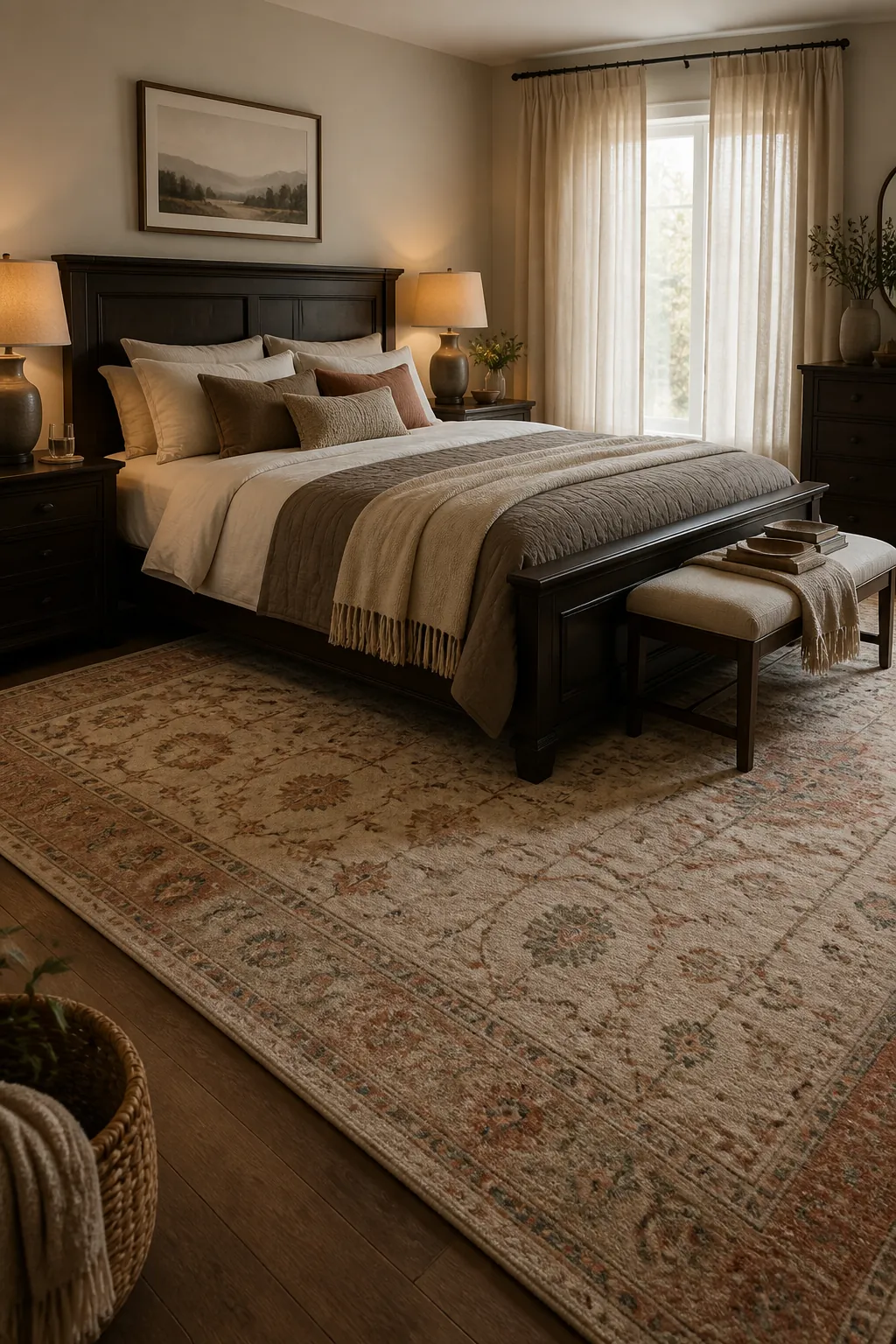
Curtains matter for the same reason. Hard blinds, bare windows, and dark furniture can make a bedroom feel rigid. Fabric softens the edges. If privacy allows, layer light-filtering curtains with blackout panels so the room works in the morning and still feels restful at night.
Balance Both Sides Without Making Them Identical
A couple bedroom can look strangely impersonal when both sides of the bed are styled exactly the same. It can also look messy when each person treats their side like a separate room. The useful middle ground is balanced, not identical.
Keep the visual weight similar: two lamps or two sconces, nightstands close in height, and storage that handles real habits. Then let the details differ. One side might have a book stack and tray. The other might have a framed photo, small dish, or drawer for chargers.
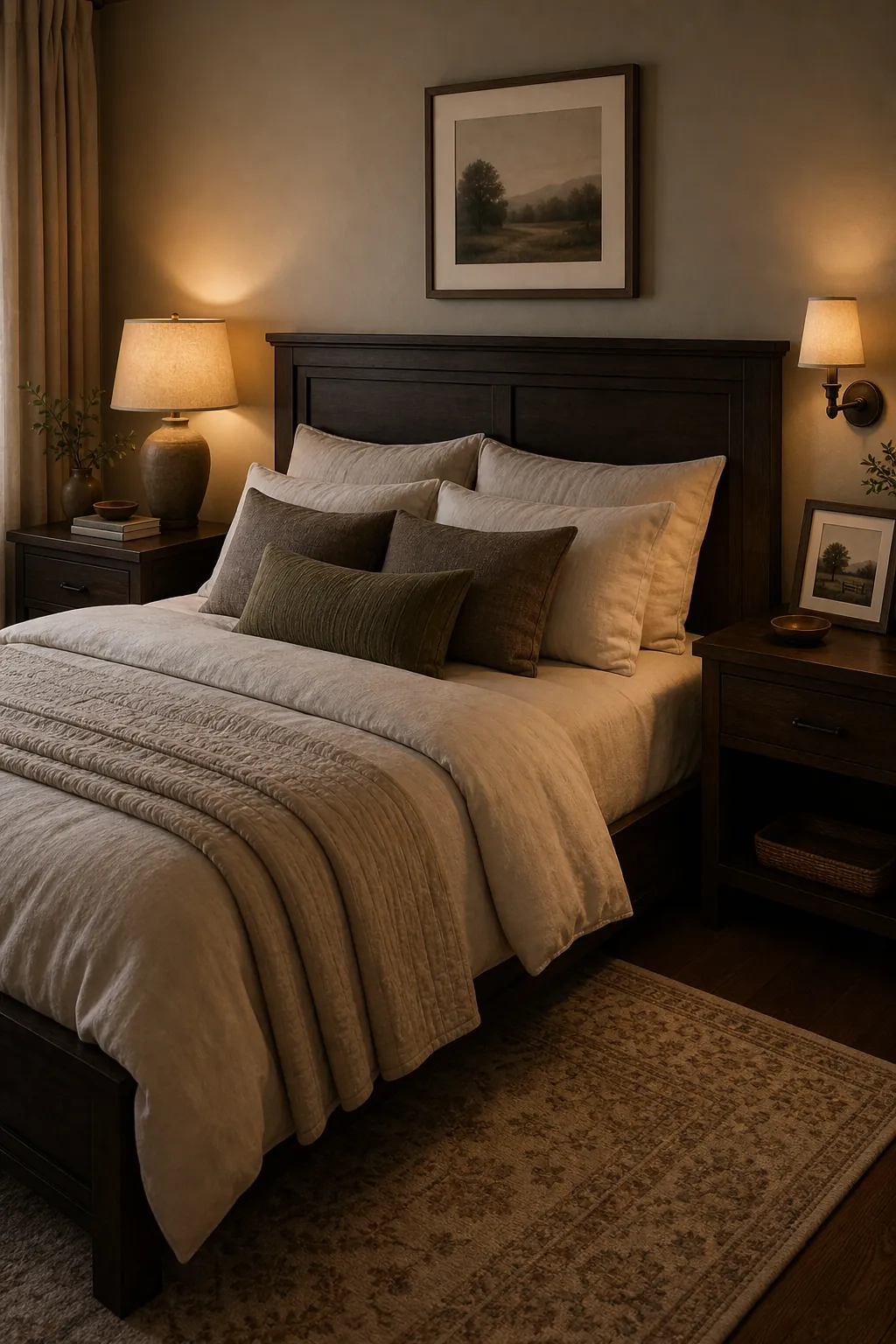
This is where bedroom styling becomes personal. The room should not erase either person, but it should not display every object either. Give each person one visible personal detail and one hidden place for the practical clutter.
Add Color in Small, Confident Doses
Dark furniture gives you permission to use richer colors, but the room does not need to become dramatic. The best accent colors usually have some depth: olive, moss, rust, burgundy, ochre, tobacco, navy, muted plum, or dusty blue. These colors can sit beside dark wood or black furniture without looking flimsy.
Use color where it is easy to change: pillows, a throw, art, a lamp shade, a small bench, a vase, or the rug. Avoid making every accent match. A room feels more natural when the colors are related, not identical.
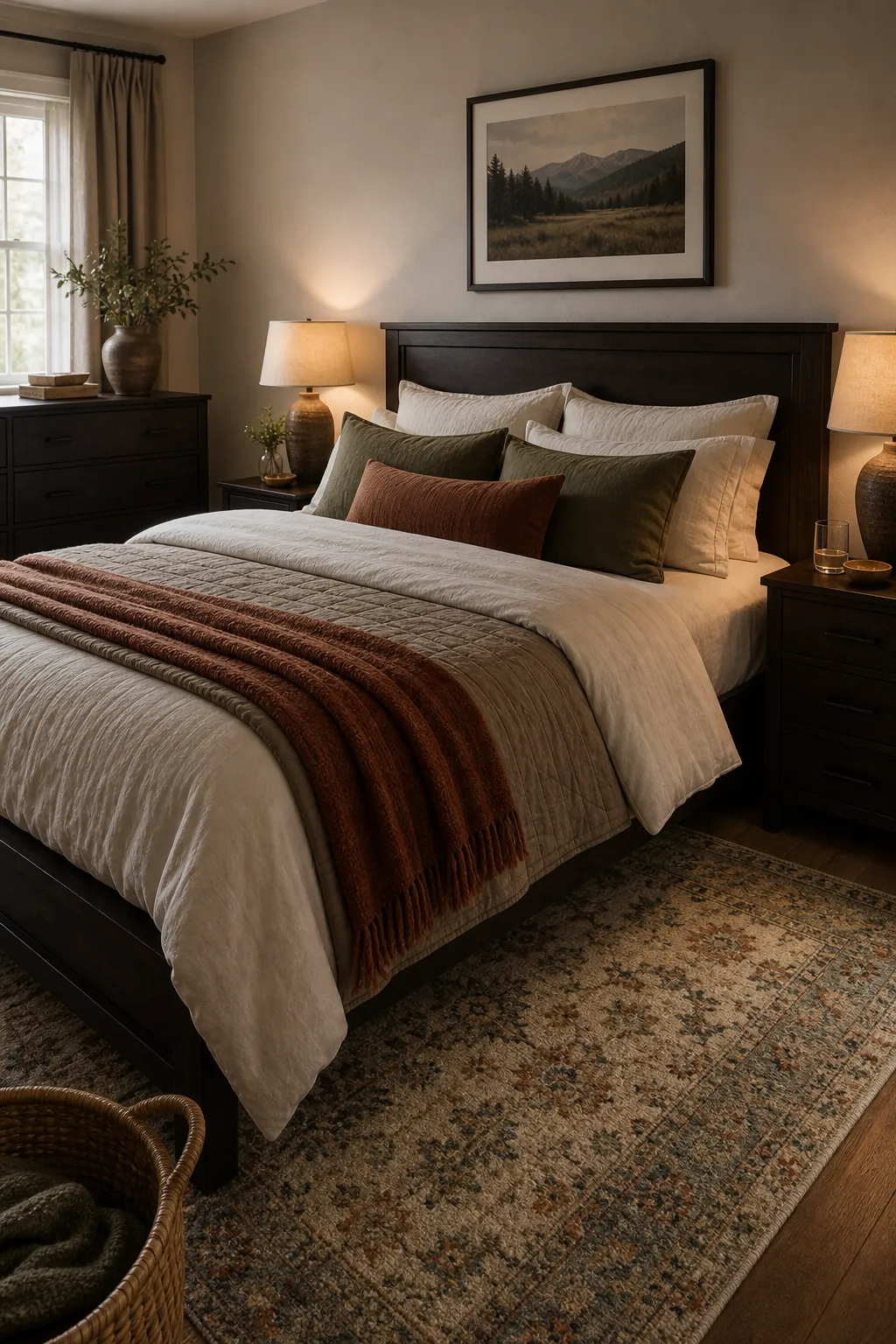
If the bedroom already has cool gray, silver hardware, or black-and-white bedding, add warmth before adding more contrast. A clay pillow, warm wood tray, brass lamp, woven basket, or cream throw can change the mood faster than another dark object.
Use Mirrors and Art With a Purpose
Mirrors can help a dark bedroom, but placement matters. A mirror should reflect light, a calm wall, or a useful dressing view. If it reflects clutter, a dark corner, or the bed from an awkward angle, it can make the room feel busier instead of brighter.
Art has a similar rule. One large piece over the bed, a pair of frames, or a small personal photo on a nightstand usually works better than filling every wall. In a shared bedroom, choose art that both people can live with: landscape, abstract, black-and-white photography, or a personal image framed in a grown-up way.
The goal is not to make the room generic. It is to make personal choices feel edited. Dark furniture already has visual strength, so the wall decor should add meaning without shouting over it.
Keep the Final Edit Calm and Shared
Before buying more, edit what is already visible. Remove anything that is only there because nobody decided where it belongs. Store the useful-but-ugly items. Keep the pieces that add comfort, memory, or texture.
A couple bedroom with dark furniture does not need to be pale, romantic in an obvious way, or perfectly symmetrical. It needs a clear mood, enough warmth, and practical space for two people. When the dark furniture is treated as the anchor, the rest of the room can feel softer, more modern, and more shared.