
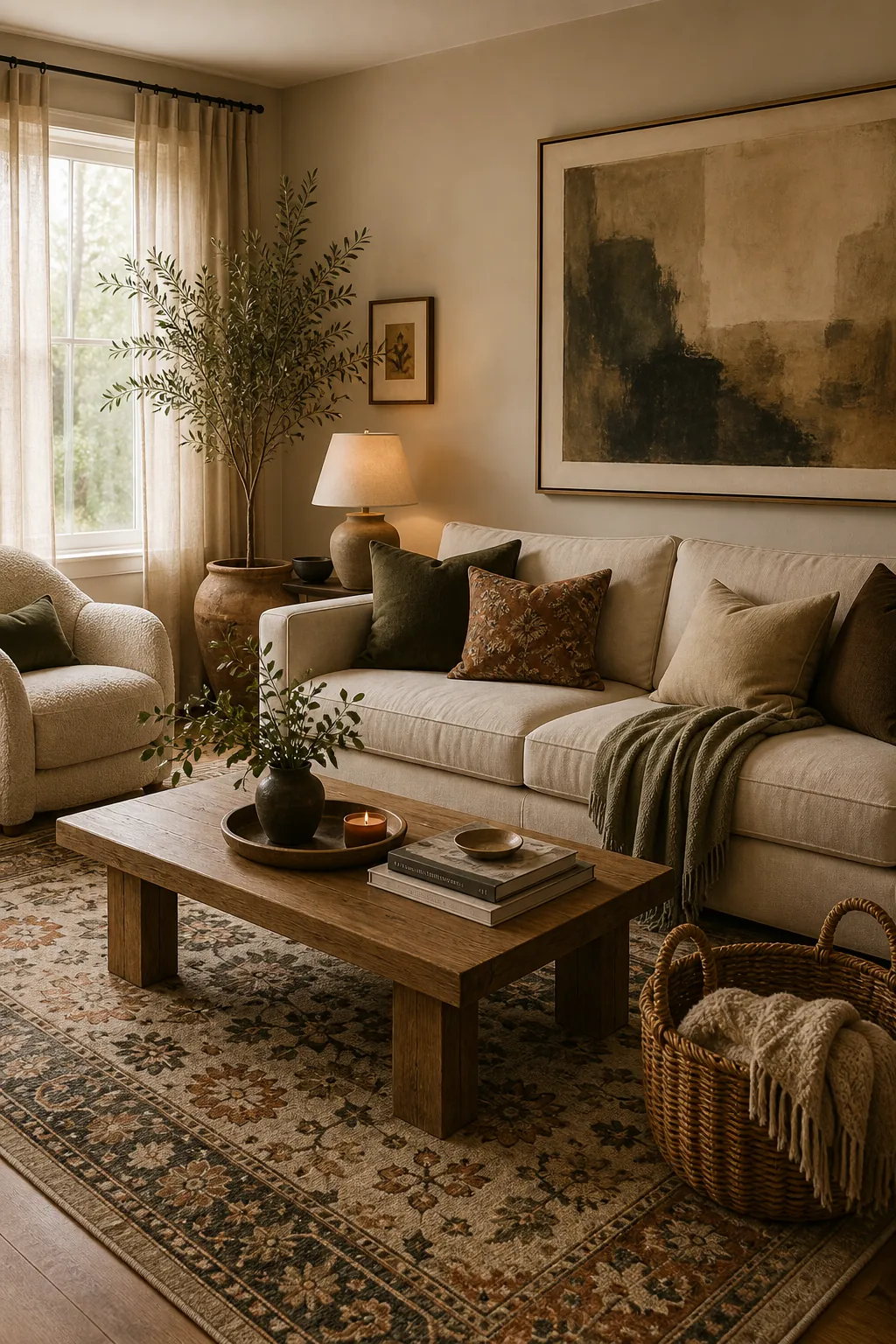
Beige is not the reason a room feels boring. Beige only looks dull when it is asked to do all the work alone. If the walls, sofa, rug, curtains, art, and accessories are all quiet, the room has no point of view.
The goal is not to turn a beige room into a colorful room. The goal is to give it scale, rhythm, texture, contrast, and one clear focal point. Those choices make beige feel warm and considered instead of safe and empty.
Give the Room One Confident Focal Point
A beige room gets boring fast when nothing is strong enough to hold attention. Start with one focal point: oversized art, a large mirror, a sculptural lamp, a fireplace wall, or a patterned rug. Do not scatter five tiny decorative moments around the room and expect them to add up.
One large focal point looks calmer than ten small accents. In a beige room, scale is often what makes the difference between minimal and unfinished.
Keep the Undertones From Fighting
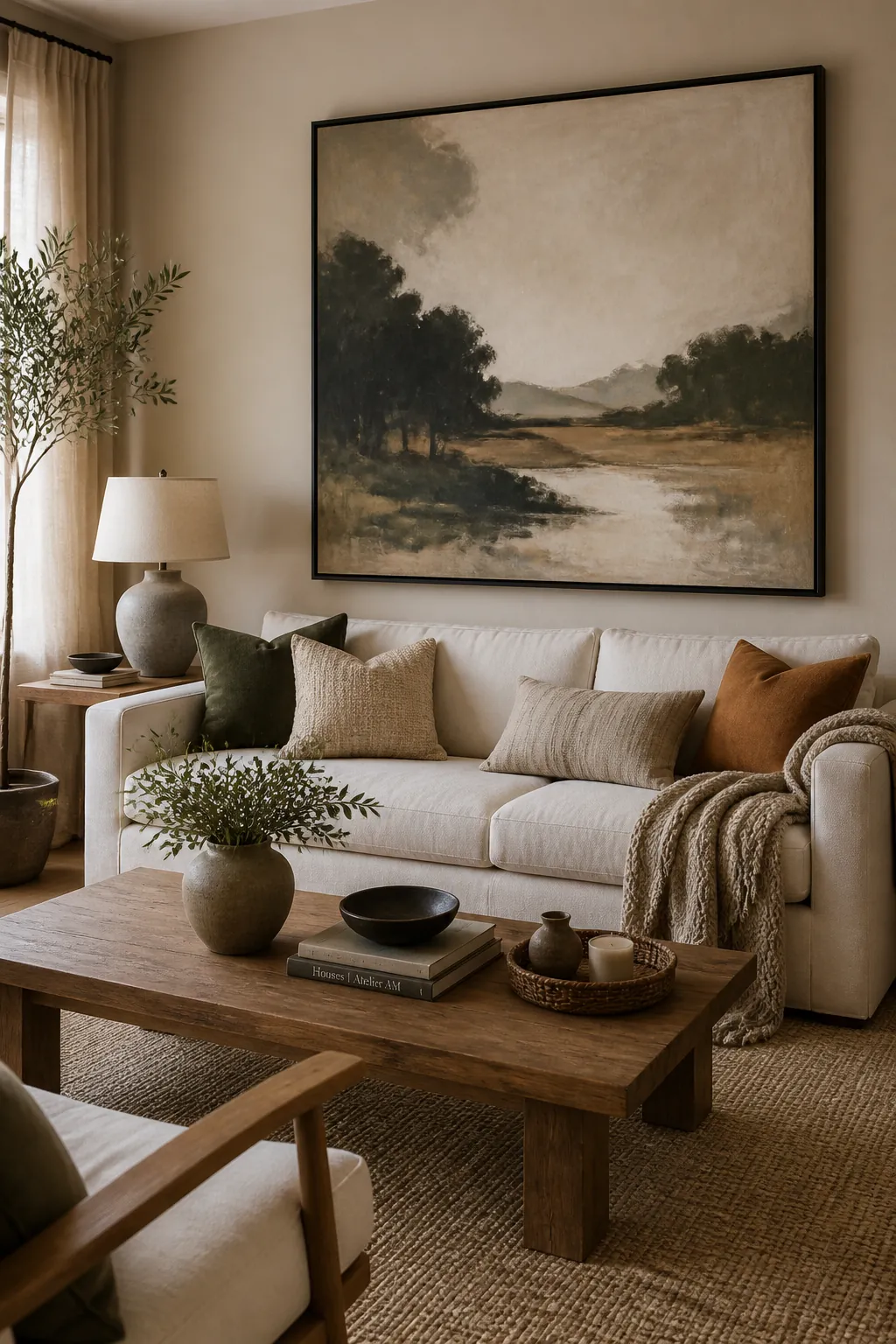
Beige can be yellow, pink, gray, green, or peach underneath. A room feels off when warm beige walls sit next to a cold gray sofa, a yellow rug, and stark white curtains. The eye may not name the problem, but it feels the clash.
Choose a direction and stay close to it. Warm beige pairs well with cream, flax, camel, oak, jute, terracotta, and aged brass. Cooler greige wants stone, black, taupe, and clearer whites. Undertone discipline makes a beige room feel expensive before you buy anything new.
Use Bigger Pieces Than You Think You Need
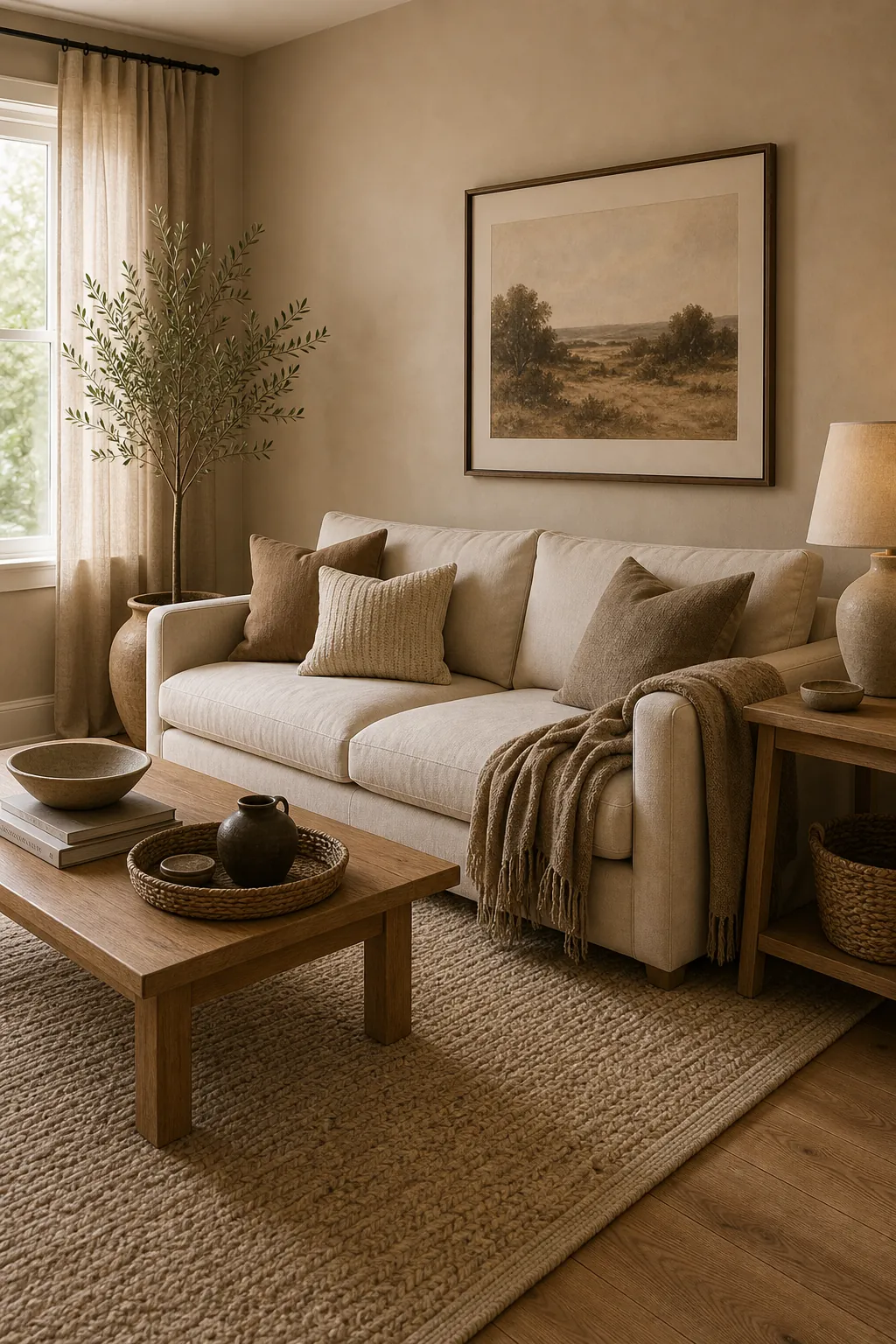
Small choices make beige look timid. A too-small rug, short curtains, tiny art, and miniature lamps leave the room feeling temporary. Beige needs scale because the color itself is quiet.
Hang curtains high and wide. Choose a rug that reaches under the front legs of the furniture. Pick art that fills the wall, not a little frame floating in the middle. Large neutral pieces create calm; undersized neutral pieces create emptiness.
Repeat Two Accent Colors Instead of Collecting Random Ones
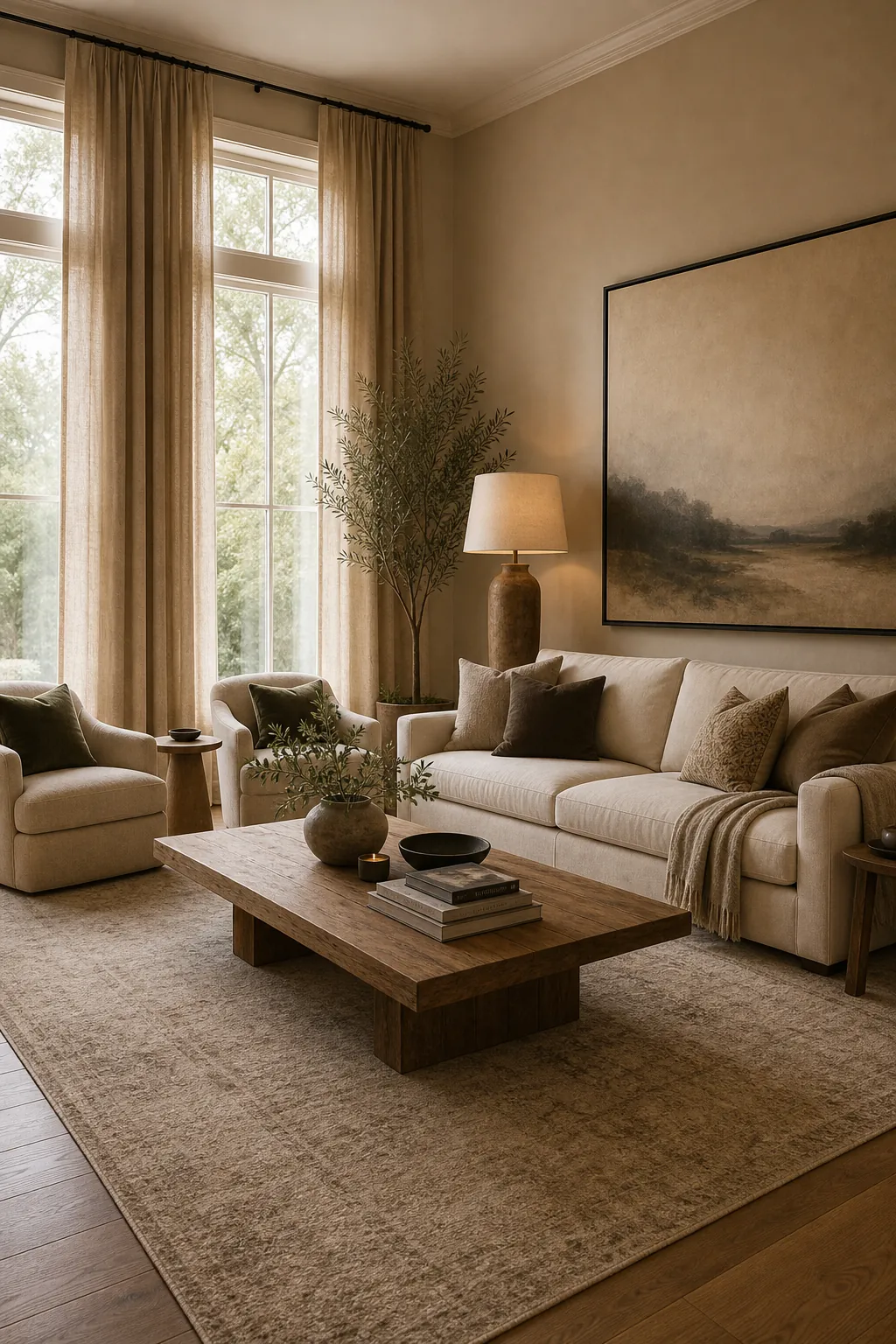
A beige room does not need a rainbow to feel alive. It needs repetition. Choose two muted accent colors and repeat them in small places: pillows, art, books, ceramics, throws, or a patterned rug.
Olive and terracotta work beautifully with warm beige. Charcoal and rust feel sharper. Dusty blue and taupe can cool the room down. The exact colors matter less than the repetition. A repeated color looks intentional; a one-off color looks accidental.
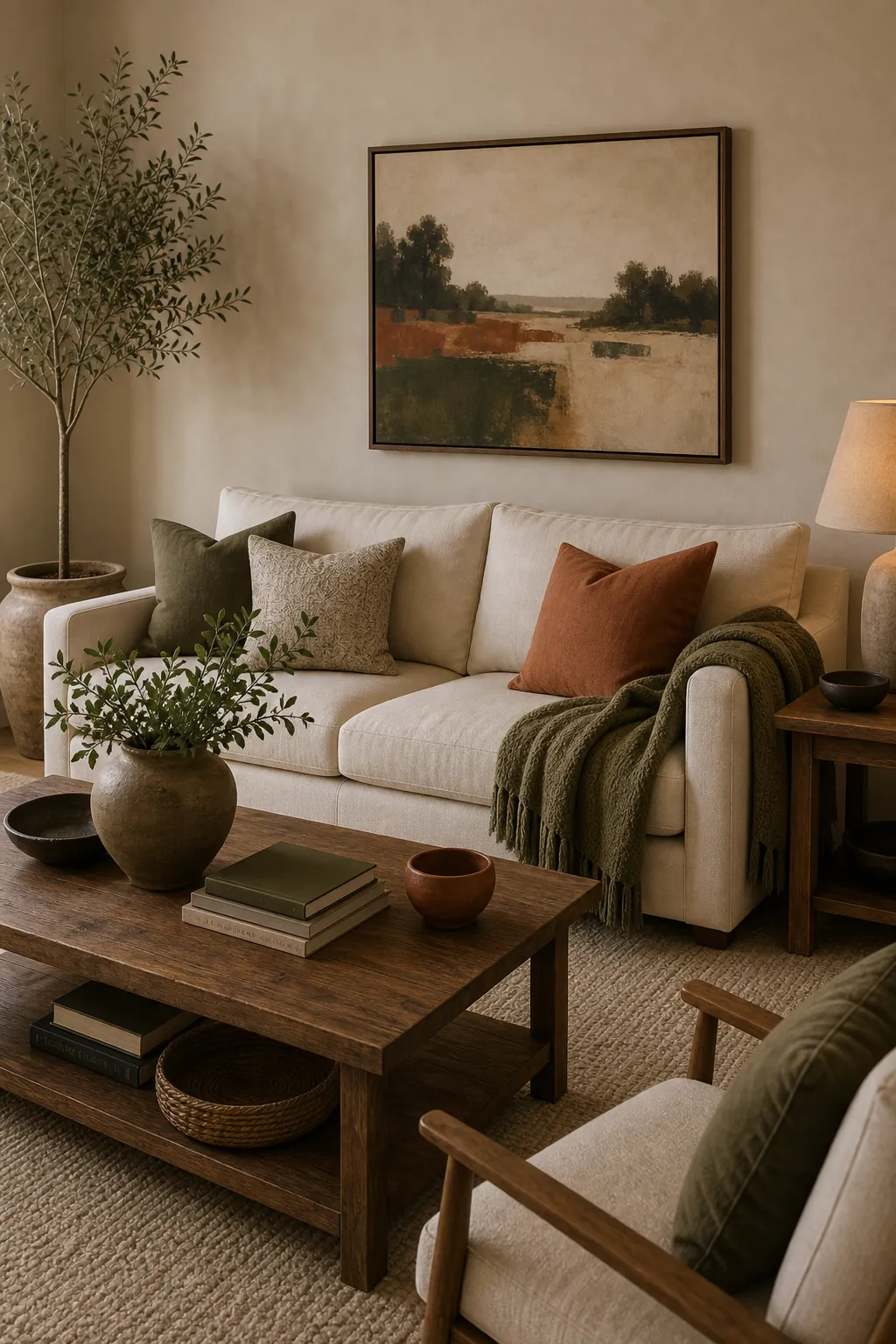
Add Organic Shapes So the Room Has Movement
Beige rooms often contain many rectangles: sofa, rug, coffee table, TV, windows, frames. Too many straight lines make a neutral palette feel stiff. Curves, plants, branches, round tables, woven baskets, and irregular ceramics soften the room without adding visual noise.
Natural shapes are the easiest way to make beige feel less flat. A tall plant, a round mirror, a curved chair, or a handmade vase can change the energy of the room without changing the color scheme.
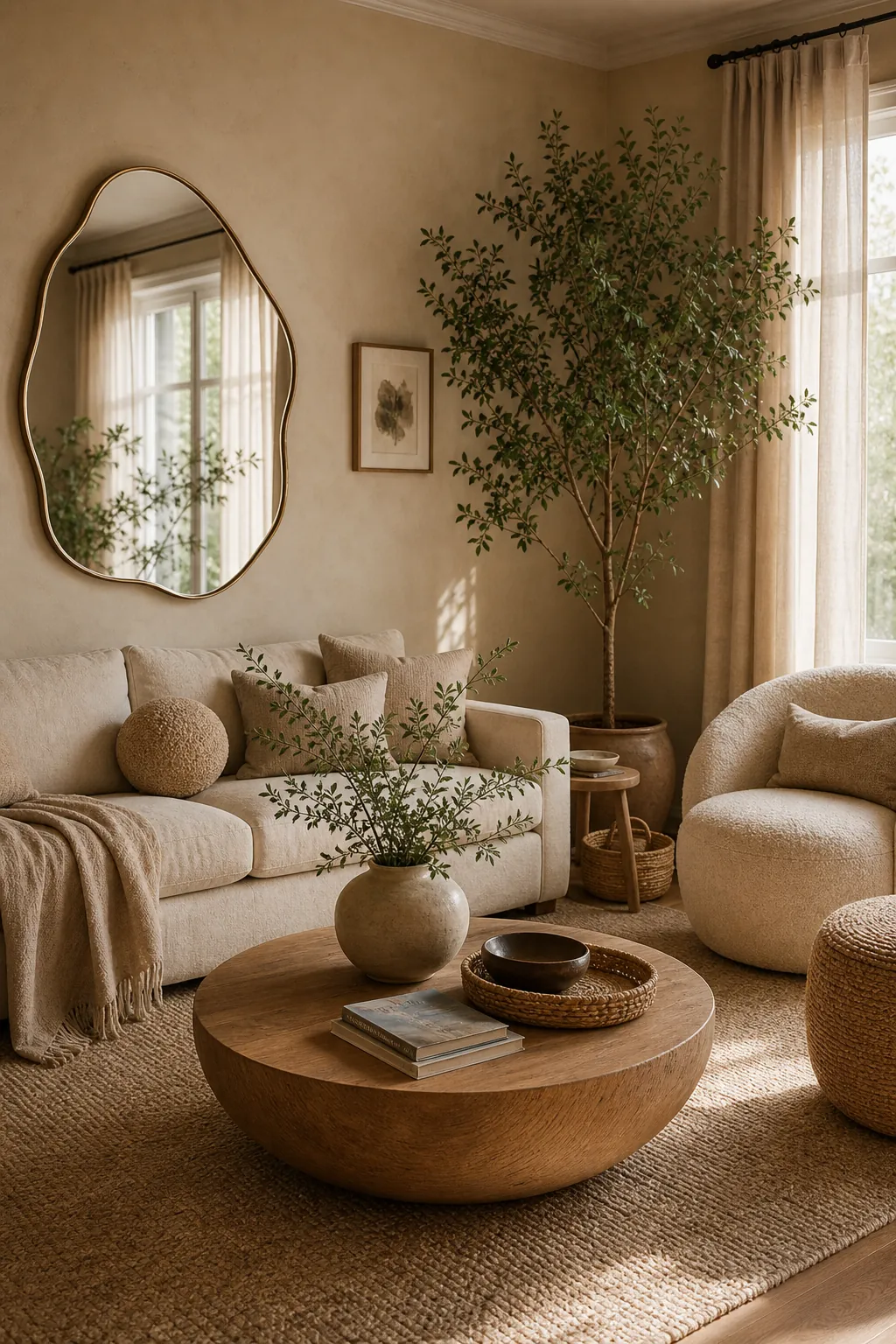
Let Lighting Add the Final Layer
If a beige room only has one overhead light, it will look plain at night. Lamps create shadows, and shadows are what make neutral colors feel dimensional. Add a table lamp, a floor lamp, a picture light, or a wall sconce before you decide the room needs more decor.
Small reflective details help too: aged brass, glazed ceramic, a mirror, dark bronze, or a stone tray. The best beige rooms have a little glow, not a lot of shine.
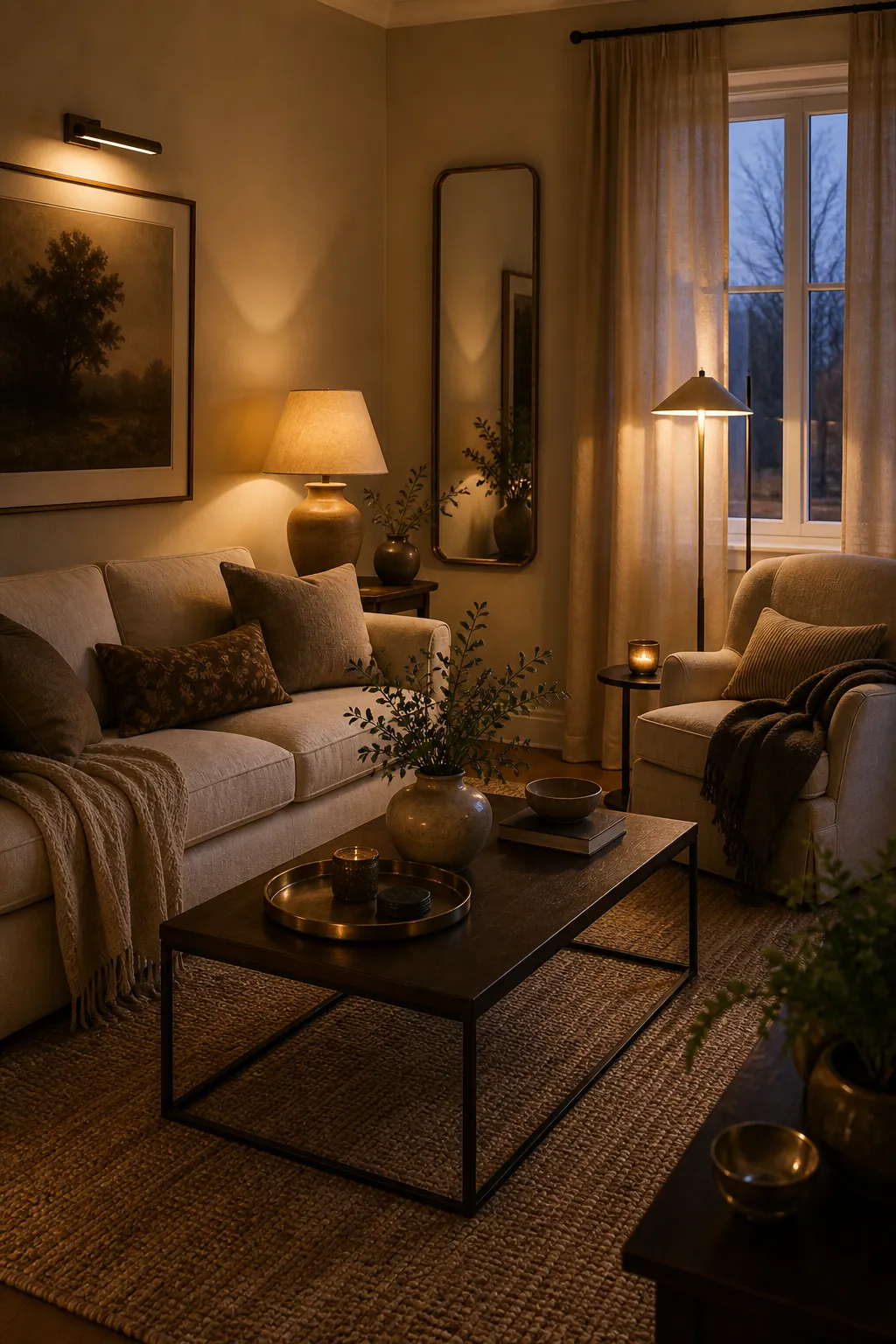
The Beige Room Checklist
- One focal point large enough to carry the room.
- Consistent undertones so the beige palette feels calm.
- Correct scale for rugs, curtains, art, and lamps.
- Two repeated accent colors used in small doses.
- Organic shapes through plants, curves, baskets, and ceramics.
- Layered lighting so the room has depth after dark.
A beige room becomes boring when every decision is quiet. Make one decision bold, repeat your accents, vary the textures, and let the lighting create shadow. Beige will still feel soft, but it will no longer feel empty.