
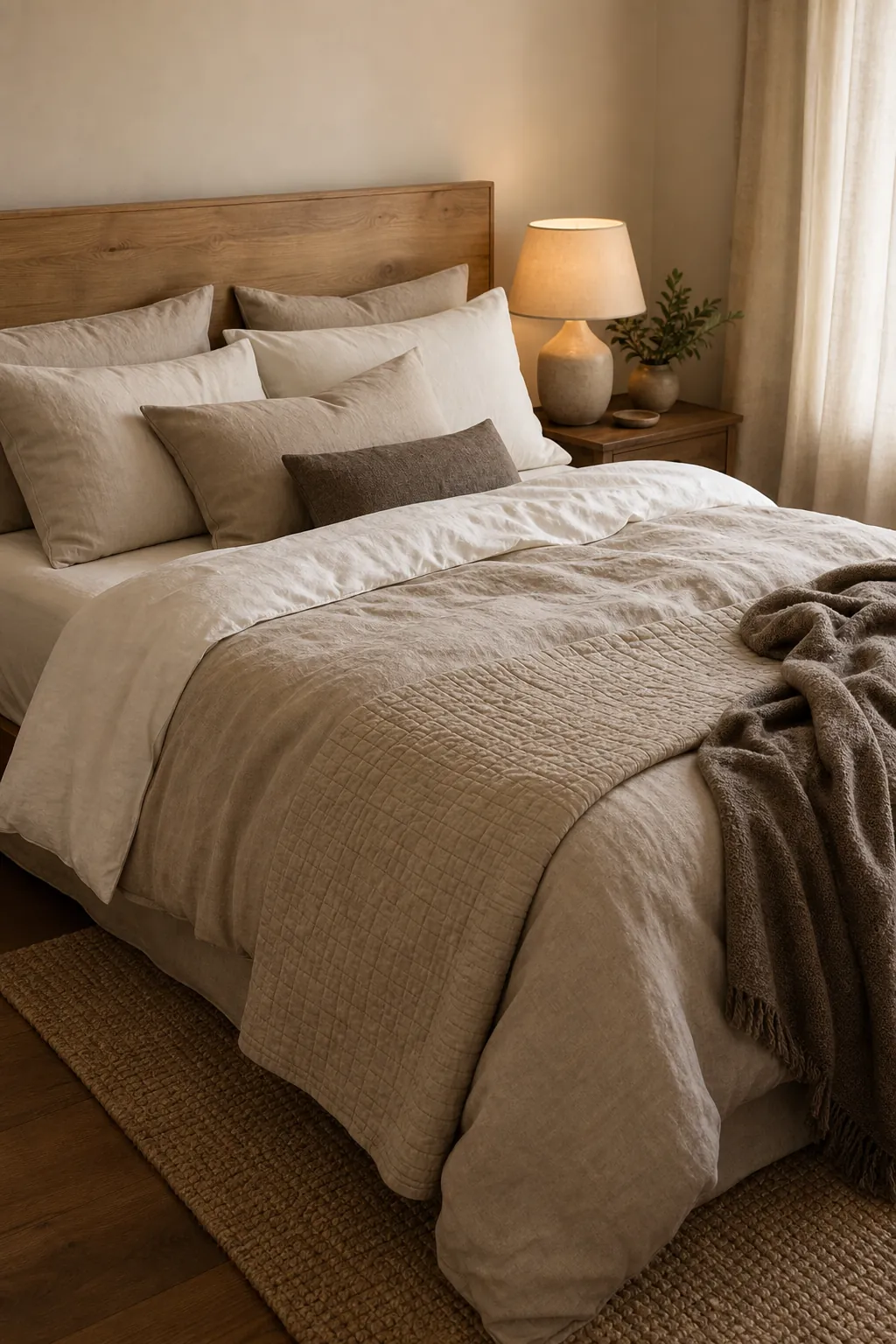
Beige bedding can make a bedroom feel quiet, warm, and easy to rest in, but only when it has enough depth. The mistake is treating beige like one flat color. A cozy bed usually needs several close-but-different neutrals, touchable layers, warm light, and one grounding accent so the whole room feels soft instead of washed out.
That is the pattern people keep circling around when they ask for bedroom decor help: they want a light and relaxing bedroom, but they are afraid beige will look stark, dull, or too matchy. The fix is not to abandon beige bedding. The fix is to build it like a palette, not a single shade.
Start With Undertone Before You Buy More Layers
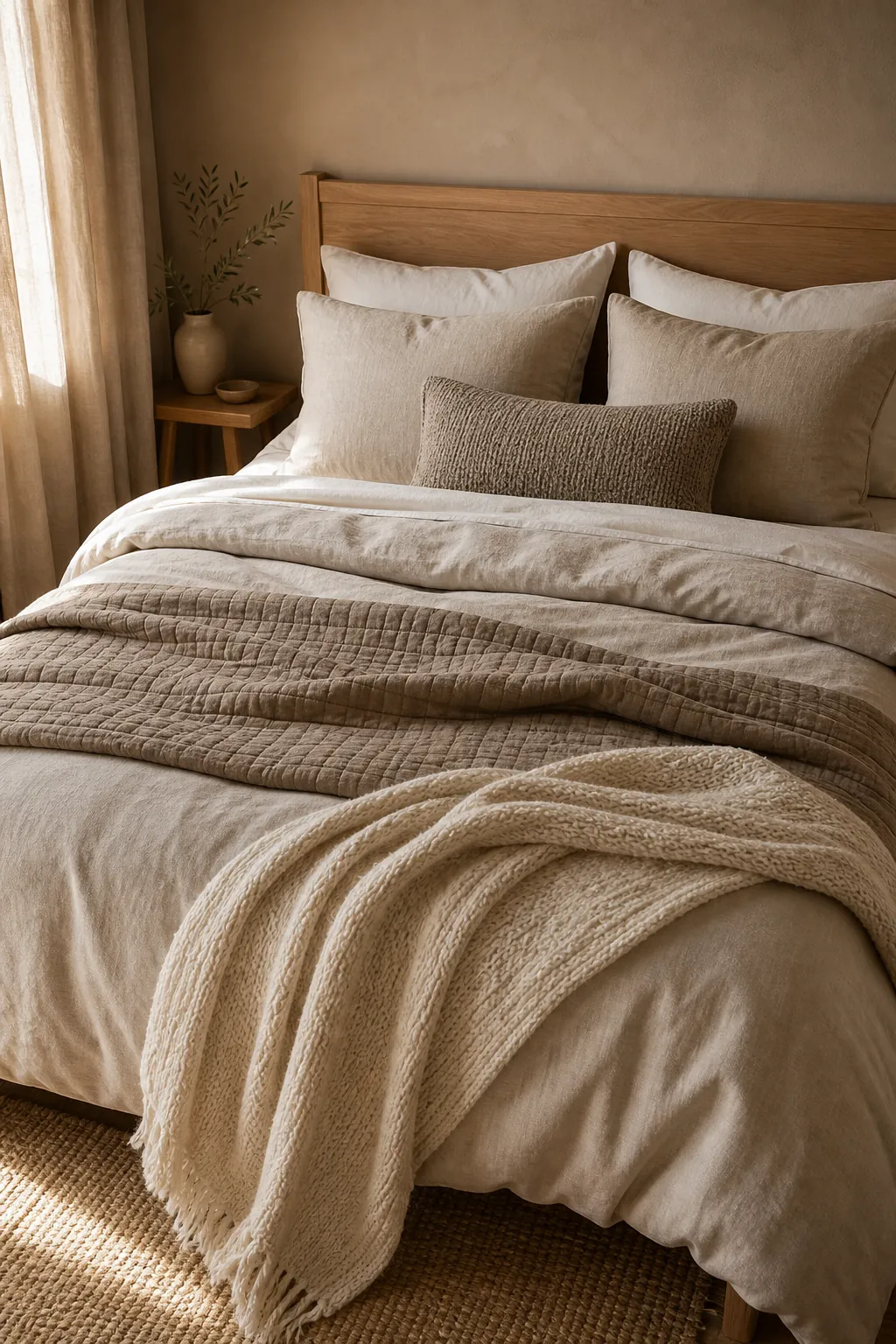
The best beige bedding idea is also the least glamorous: check the undertone first. Beige can lean yellow, pink, gray, green, or taupe. If the walls, flooring, or furniture already lean cool, a very golden beige may suddenly look muddy. If the room has warm wood, brass, or cream paint, a cold greige duvet can look lifeless.
A simple rule works in most bedrooms: choose the biggest bedding piece in the undertone that already exists in the room. If your headboard, floors, or nightstands are warm, use oatmeal, flax, camel, or cream. If the room has gray carpet, cool white walls, or charcoal furniture, try taupe, mushroom, stone, or a gray-beige coverlet. Cozy beige bedding should relate to the room before it tries to decorate it.
Layer Cream, Oatmeal, Taupe, and Flax Instead of One Beige
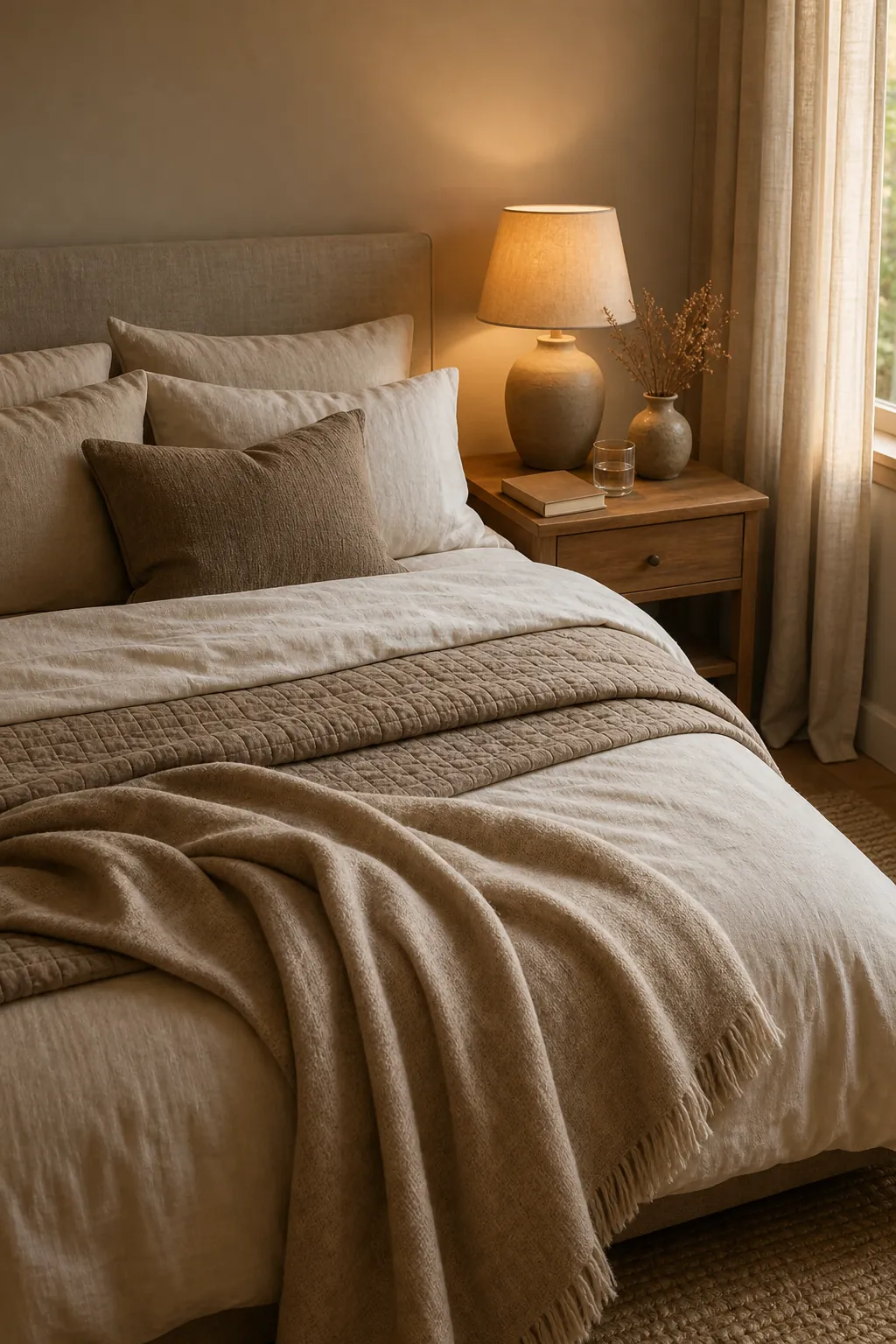
A neutral bedroom feels flat when every fabric is the same color and finish. The coziest beige beds usually have at least four tones: a light sheet, a middle duvet, a slightly deeper quilt or coverlet, and a throw blanket that adds either softness or contrast.
- Warm white sheets keep the bed fresh and prevent beige from feeling heavy.
- Oatmeal or flax duvet covers create the main beige bedding color without looking too yellow.
- Taupe, mushroom, or camel quilts add shadow and make the layers visible.
- Chunky throw blankets bring soft textures that read cozy even from across the room.
The layers should look related, not identical. Think of the bed as a stack of warm neutrals: cream, ivory, sand, oat, flax, taupe, and a little camel. The change between each layer can be subtle, but the eye needs somewhere to land.
Use Texture So Beige Feels Intentional
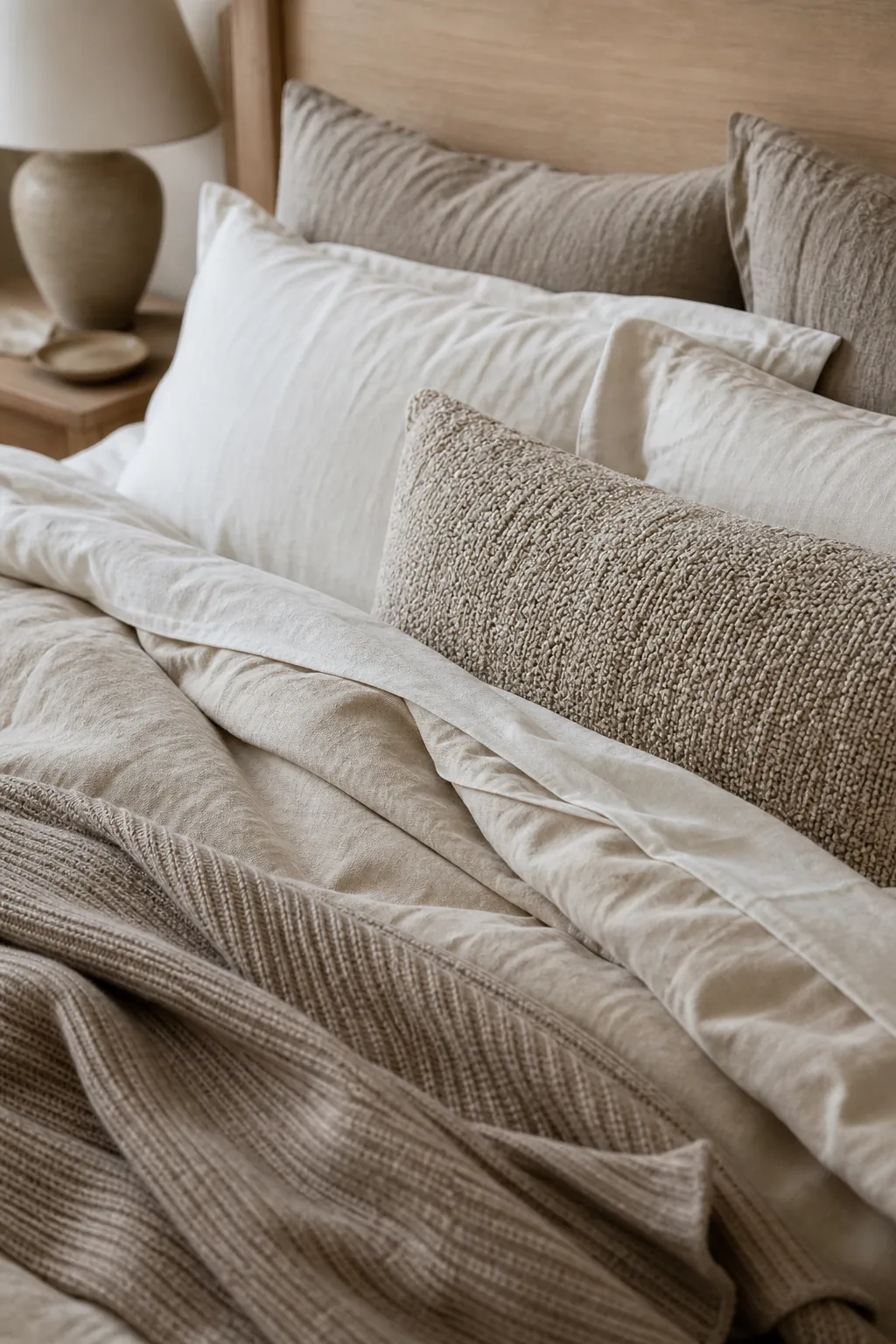
Color is only half the story. Beige bedding becomes interesting when the fabrics do different jobs. Smooth cotton sheets feel clean. Linen adds relaxed wrinkles. A quilt brings structure. A boucle or nubby pillow adds tiny shadows. A knit throw adds weight. Texture is what keeps a neutral bedroom from looking empty.
If your room already has plain walls and a simple bed frame, avoid buying only smooth pieces. Pair a crisp sheet with a washed linen duvet. Put a matelasse coverlet under a softer comforter. Add one ribbed, waffle, or chunky knit throw blanket. You do not need a lot of pattern if the texture is strong enough.
Balance Dark Wood With Warm Whites and Sand
Dark wood furniture can make beige bedding look elegant, but it needs lightness around it. If your bedroom has walnut, espresso, or antique wood, keep the sheet and pillow base warm white or cream. Then add a sand duvet, oatmeal quilt, or camel throw so the bedding connects to the furniture without copying it.
This is especially useful when the room has dark nightstands or a heavy bed frame. A fully tan bed can make the furniture feel heavier. A warm white base with beige layers feels brighter and more relaxing.
Add One Earthy Accent When Beige Starts Looking Too Plain
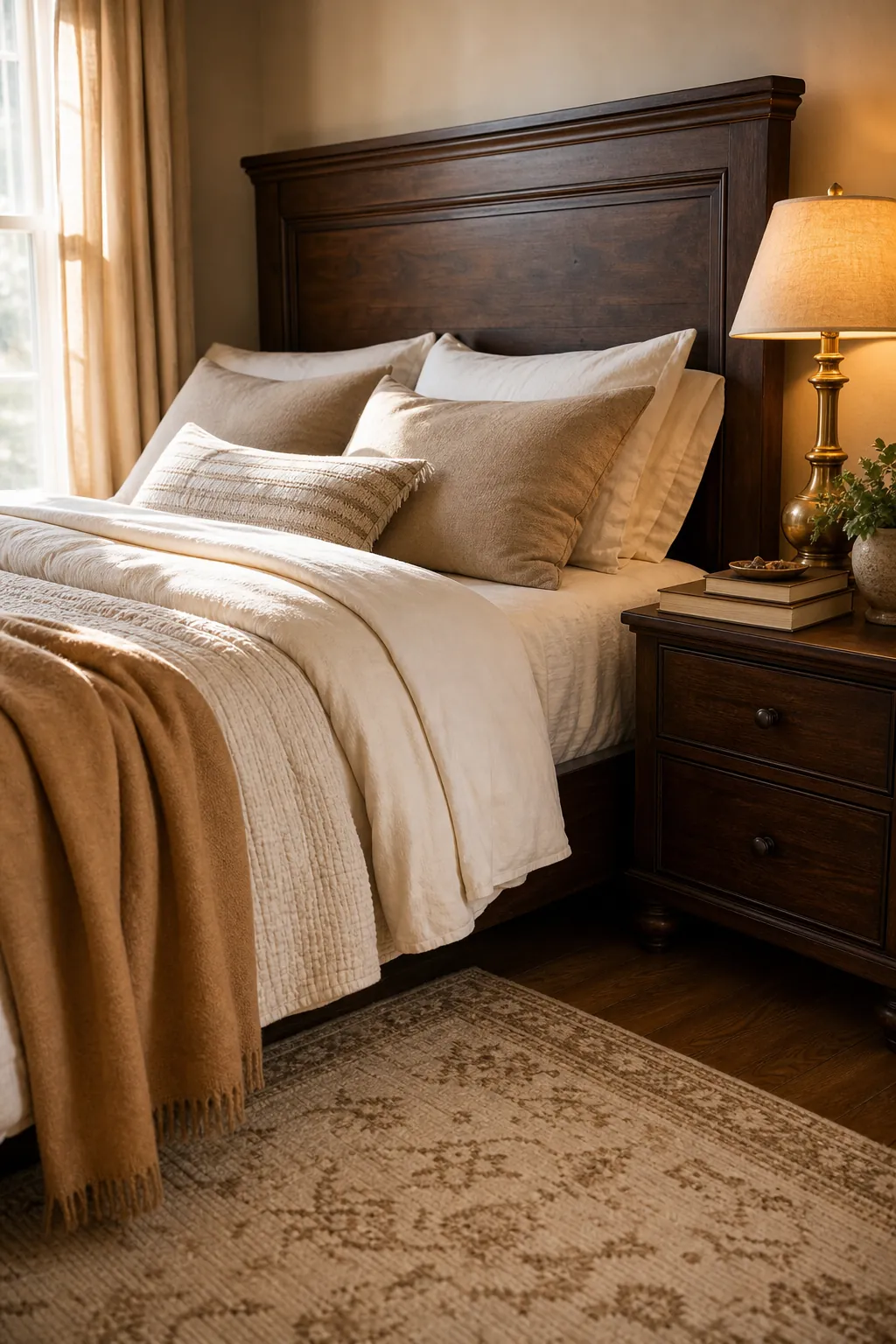
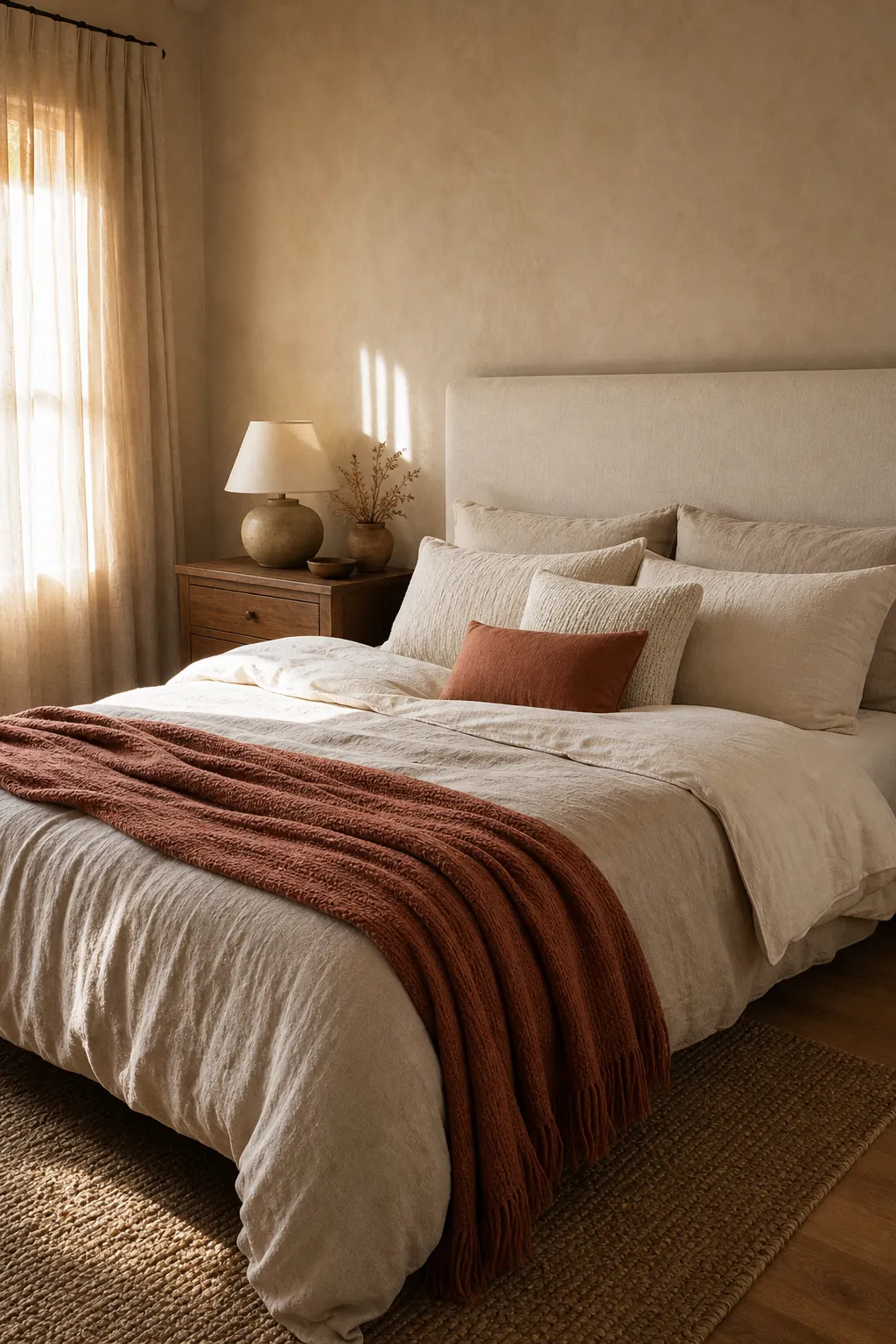
Some bedrooms need a small color shift to feel alive. That does not mean the room stops being neutral. A single earthy accent can make beige bedding feel warmer and more personal without overwhelming the calm mood.
Terracotta is one of the easiest choices because it sits close to tan, clay, and warm wood. Use it as a throw blanket, one lumbar pillow, or a small piece of art rather than changing every layer. The goal is not a red-orange bedroom. The goal is a cozy bedroom where beige has something warm to react to.
Try Sage If You Want Calm Color Without Losing the Neutral Look
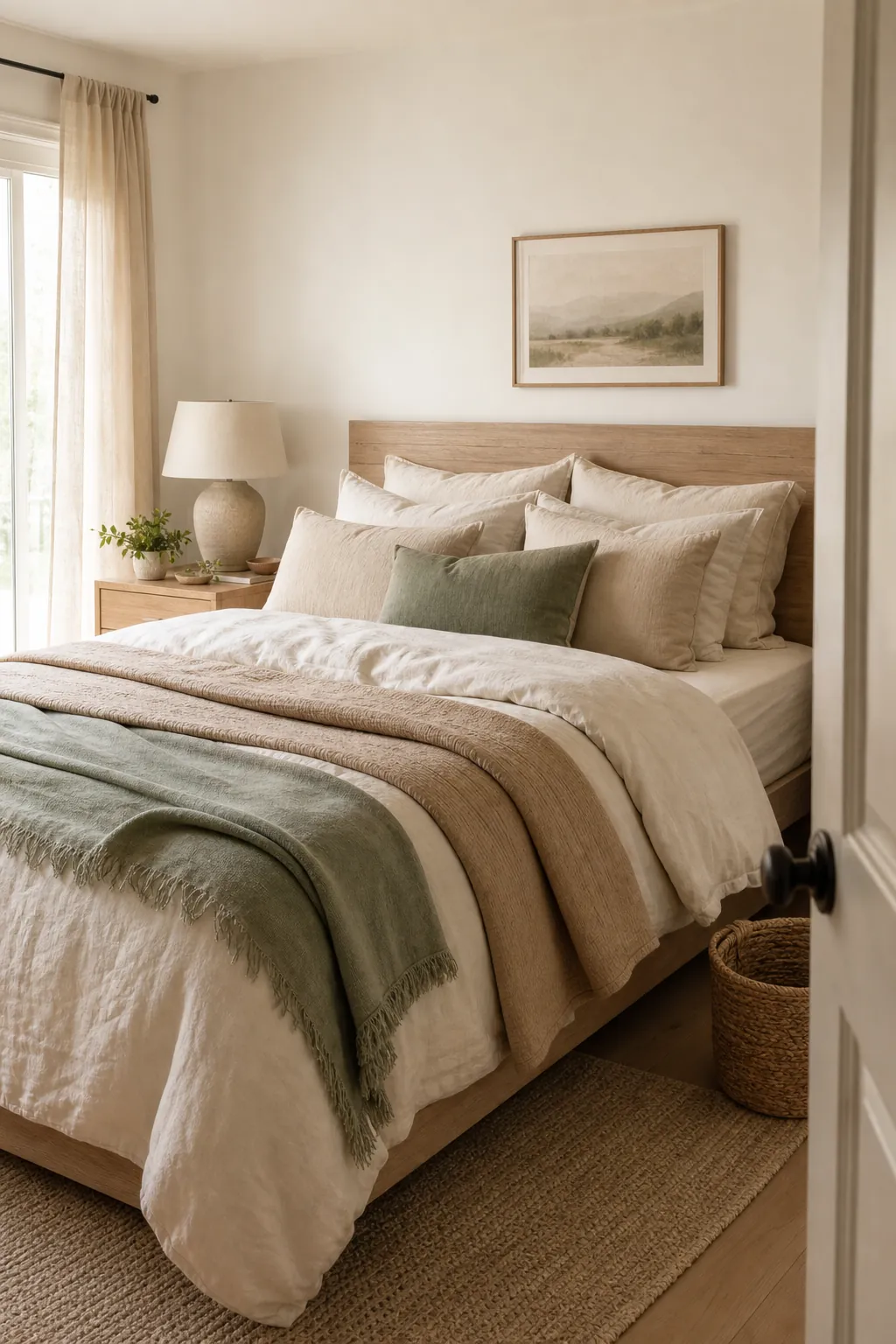
Sage green works well with beige bedding because it brings in a natural note without feeling loud. It also helps when a beige room feels too yellow, too one-note, or too close to the wall color. Keep most of the bed cream, flax, taupe, and oatmeal, then add sage in one throw blanket, one pillow, a plant, or soft artwork.
The trick is restraint. Sage should refresh the beige bedding, not take over the room. If you already have a patterned rug, pull the gentlest green from that pattern. If your room is very plain, a sage lumbar pillow and a small plant may be enough.
Make a Small Bedroom Cozy With Light, Curtains, and a Rug
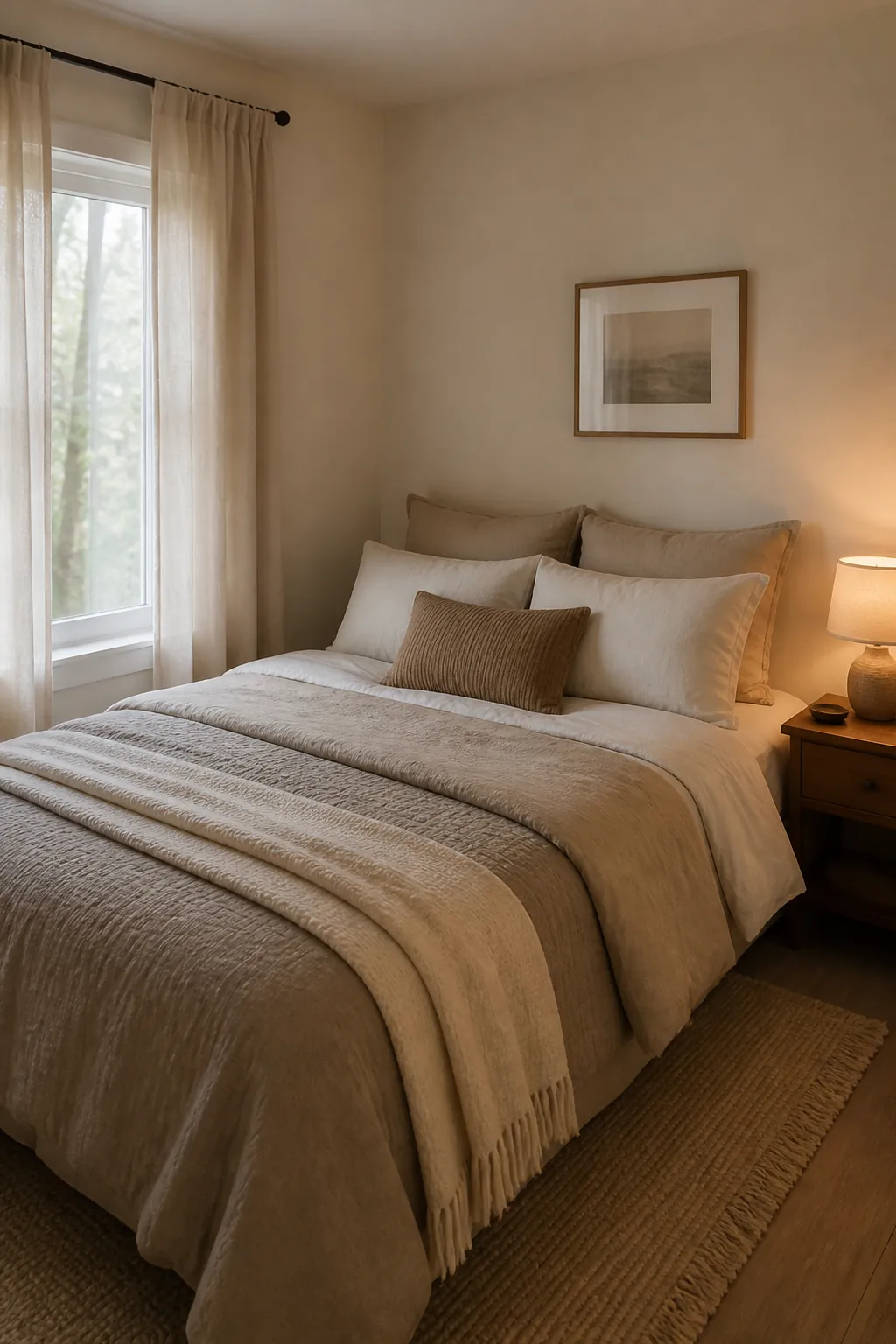
In a small bedroom, beige bedding can either feel peaceful or unfinished. The difference is often what happens around the bed. Floor-length curtains soften the wall. A rug gives the bed a base. A small lamp changes the color temperature. Even a simple wooden nightstand can make the bed feel connected to the room instead of floating in it.
If the bed has to sit near a window or close to a wall, lean into softness. Use a cream duvet, a slightly deeper beige quilt, and a throw blanket with obvious texture. Then add warm light at bed height. Overhead light makes beige bedding look flatter; lamp light gives the folds depth.
Build a Pillow Mix That Looks Soft, Not Busy
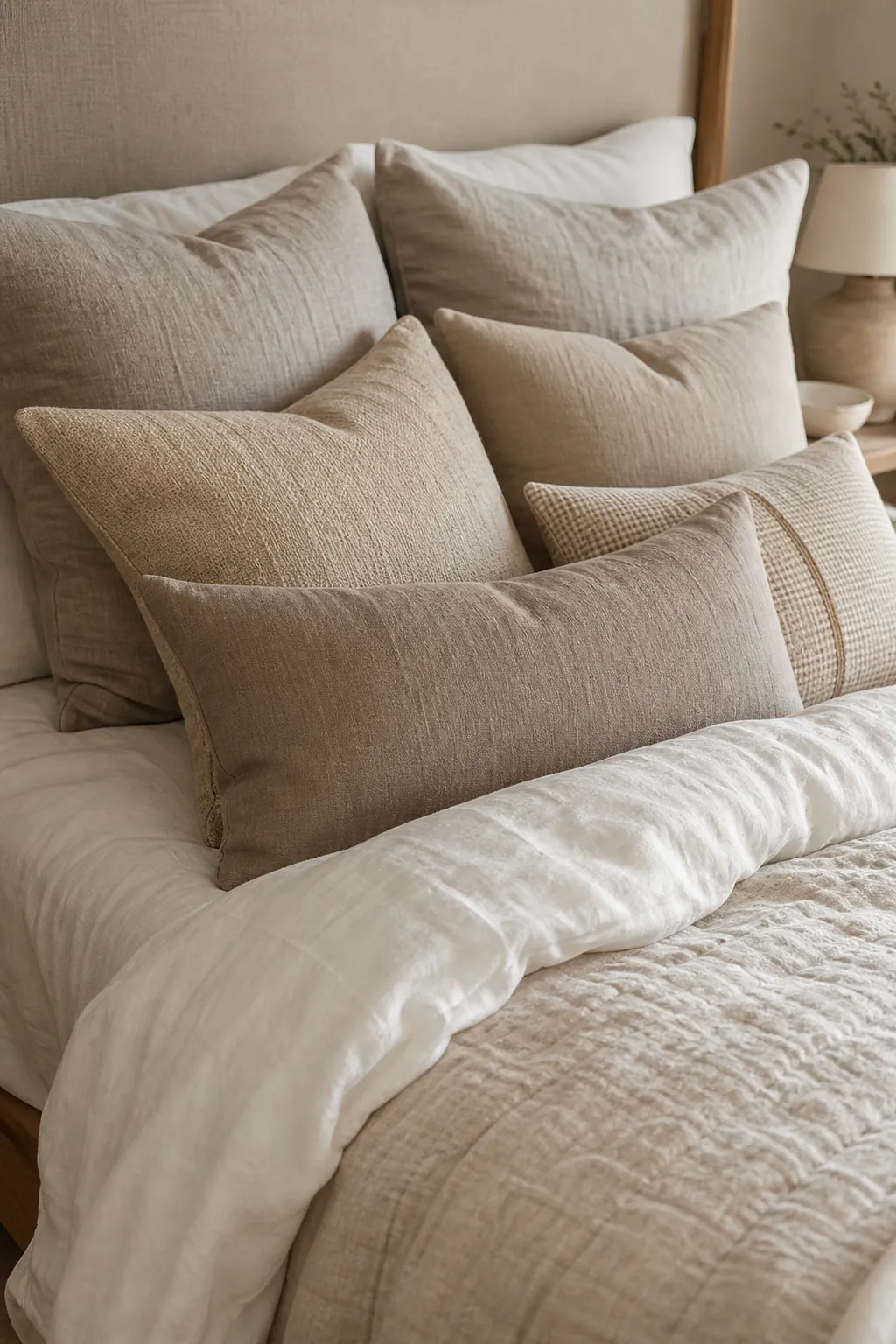
Bedroom pillows are where beige bedding can either become cozy or turn into a pile of identical squares. A balanced mix is simple: start with sleeping pillows, add larger shams, then finish with one lumbar or one smaller accent pillow. Vary size, texture, and tone before you add pattern.
For a queen bed, try two sleeping pillows, two Euro or standard shams, and one lumbar pillow. For a king bed, add one more pair of shams if the headboard is wide. Keep the palette tight: warm white, oatmeal, flax, taupe, and maybe one quiet stripe. The bed should look inviting, not like it needs to be dismantled before sleep.
Let Warm Lighting Finish the Bed
Warm lighting is the quickest way to make beige bedding feel softer. A bulb that is too cool can turn cream sheets gray and make taupe bedding look dull. A bedside lamp, wall sconce, or shaded pendant near the bed creates glow exactly where the fabrics need it.
A relaxing bedroom does not need complicated lighting. Use one lamp on each side if you have room, or one sculptural lamp if space is tight. Choose a shade that diffuses light instead of throwing it straight down. The bedding will look warmer, the pillows will cast softer shadows, and the whole bedroom will feel less exposed.
Easy Beige Bedding Formulas
Use these formulas as a starting point, then adjust the undertone to match your room.
- Fresh and cozy: warm white sheets, oatmeal linen duvet, cream quilt, taupe lumbar pillow, chunky ivory throw.
- Warm and earthy: ivory sheets, sand duvet, camel quilt, terracotta throw blanket, oak nightstand.
- Soft and calm: cream sheets, flax duvet, mushroom coverlet, sage green pillow, linen curtains.
- Dark wood balance: warm white sheets, beige duvet, taupe quilt, brass lamp, ivory rug.
- Small bedroom comfort: cream duvet, textured throw, simple pillow mix, floor-length curtains, warm bedside light.
What to Avoid With Beige Bedding
Beige becomes difficult when everything is too similar. Avoid buying a beige duvet, beige pillows, beige curtains, beige rug, and beige walls all in the same flat tone. Also avoid mixing a very yellow beige with cool gray flooring unless you have a bridge color like taupe, warm white, wood, or sage.
The other common mistake is ignoring maintenance. If bright white sheets make you anxious, choose warm ivory or oatmeal instead. If pets use the bed, mid-tone beige, taupe, linen texture, or small woven patterns can be more forgiving than pure white or very dark bedding.
A Cozy Beige Bed Is About Depth
The most inviting beige bedding does not rely on one perfect duvet. It relies on depth: a sheet that feels fresh, a duvet that sets the main tone, a quilt or coverlet that creates shadow, bedroom pillows that vary in size, and throw blankets that add softness. Once those layers are in place, beige becomes what people usually want from a bedroom: warm, quiet, flexible, and easy to live with.