
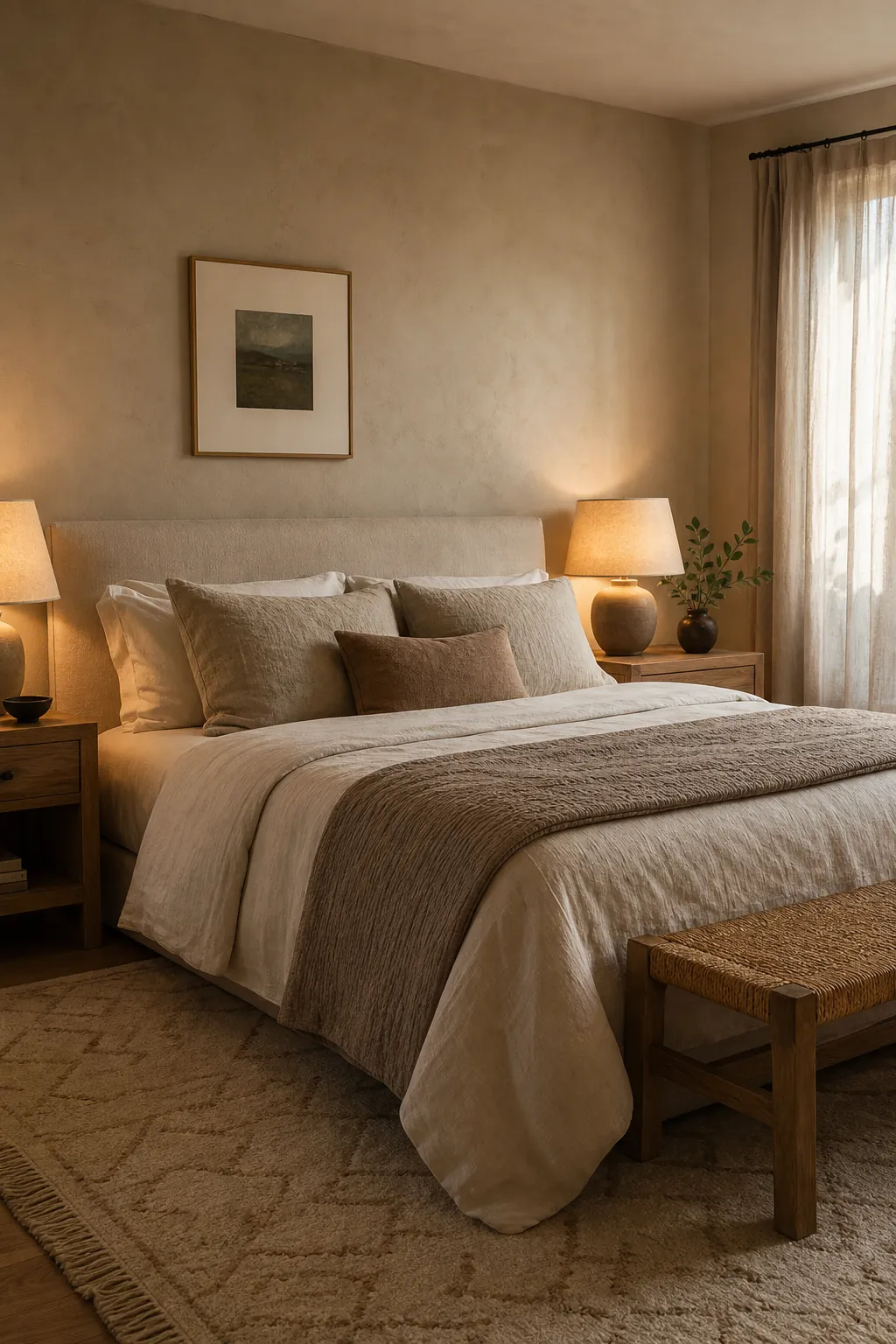
A beige bedroom starts to feel boring when every surface is the same value and the only light comes from the ceiling. The fix is not usually a louder color. It is softer light, clearer contrast, and more touchable texture.
That is why the best beige bedroom ideas rarely depend on one perfect paint color or one expensive bed. They work because the room has a plan: warm bulbs instead of glare, linen and wool instead of flat matching fabric, layered bedding instead of a single duvet, and nightstand styling that looks intentional without becoming cluttered. Beige can be quiet, but it should never feel empty.
Start With Warmth, Not More Beige
The first decision in a neutral bedroom is not whether to buy more beige decor. It is deciding which kind of beige you already have. Cream carpet, greige walls, oak furniture, white bedding, and tan curtains can all be neutral, but they do not always agree with each other.
If the room feels cold, check for gray undertones. Cool gray-beige walls beside yellow cream bedding can make both colors look tired. A warm bedroom usually needs one steady family of undertones: oatmeal, ivory, camel, taupe, warm white, soft brown, muted clay, or olive. You can still have variety, but the variety should feel related.
- Use three beige values: one light tone, one middle tone, and one deeper grounding tone.
- Add one natural contrast: oak, walnut, rattan, jute, aged brass, or ceramic.
- Keep accent color quiet: sage, clay, tobacco brown, muted olive, or charcoal works better than a sharp bright color in a calm beige bedroom.
This creates a neutral bedroom that still has depth. It also prevents the common mistake of buying five beige items that almost match, then wondering why the space feels accidental.
Build the Room Around Soft Lighting
Soft lighting is the fastest way to make beige look intentional. Beige walls can look elegant under warm, low light and flat under a bright overhead fixture. In a bedroom, the ceiling light should help with cleaning and getting dressed. It should not be the main mood.
A cozy bedroom needs layered light at different heights. Put one light beside the bed for reading, one lower accent light across the room, and one soft source near a dresser, mirror, or chair. Warm white bulbs around 2700K usually flatter beige, wood, linen, and skin tones better than cool white bulbs. If the room still feels harsh, add shades, dimmers, or lower-watt bulbs before buying more bedroom decor.
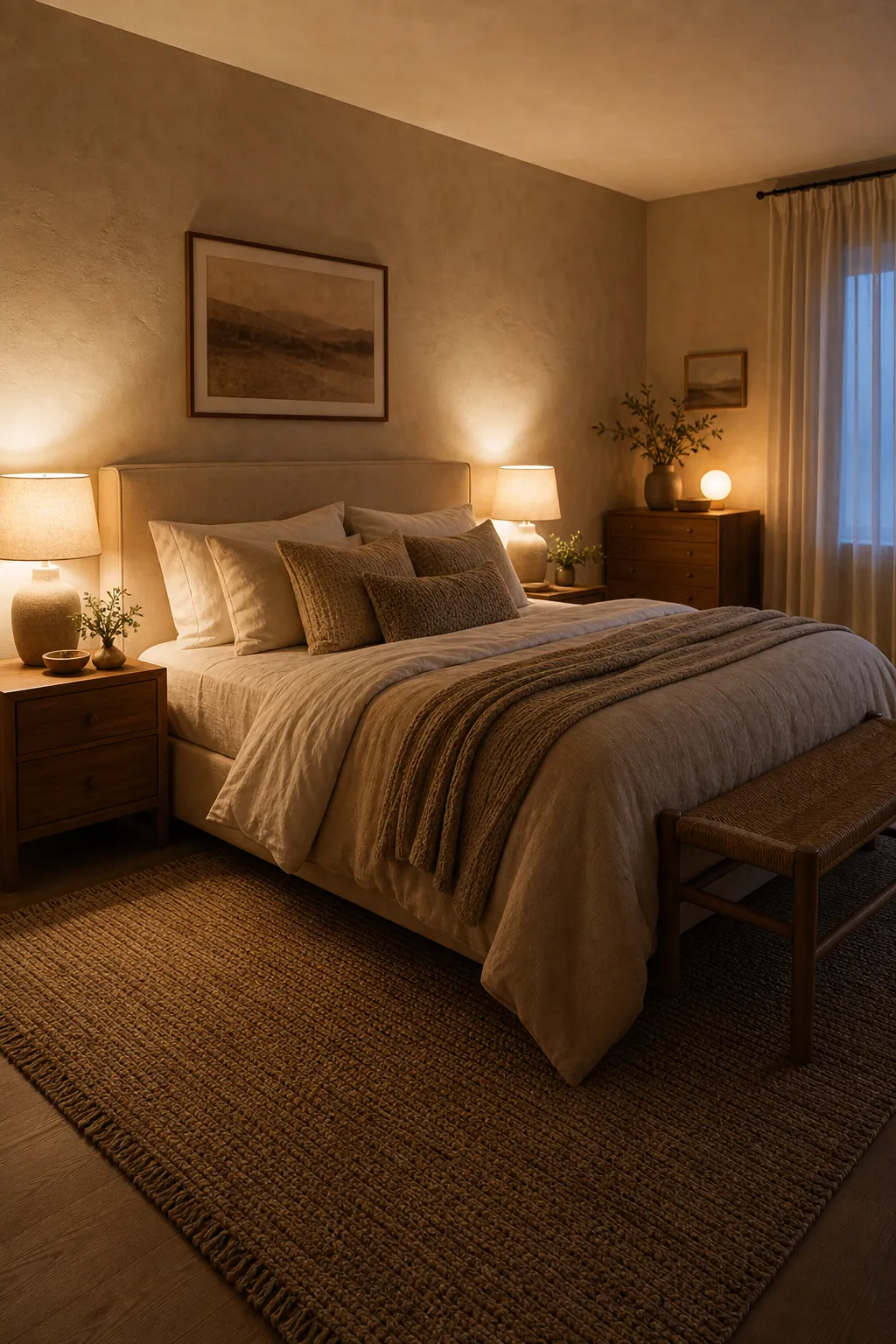
The goal is not a dark room. The goal is controlled glow. A shaded lamp throws light onto the wall and bedding instead of into your eyes. A plug-in sconce frees up a small nightstand. A low lamp in the far corner keeps the room from collapsing into one bright spot beside the bed.
Let Texture Do the Work
When people say a beige bedroom looks bland, they often mean it looks too smooth. A beige wall, beige carpet, beige headboard, and beige duvet can be calm in theory, but if all four surfaces have the same flat finish, the room has nothing for the eye to read.
Bedroom texture should be layered from big to small. Start with the largest soft surfaces: bedding, curtains, rug, and headboard. Then add smaller texture through a throw, basket, lamp shade, ceramic vase, woven tray, or framed textile. The difference between linen, cotton, boucle, wool, wood, and stoneware is what makes a beige bedroom feel finished.

- Linen adds movement: it wrinkles softly and keeps beige from looking stiff.
- Wool adds weight: a wool throw, rug, or blanket gives the bed a grounded feeling.
- Boucle adds softness: use it in one or two accents, not everywhere.
- Wood adds warmth: pale oak feels airy, while walnut or dark brown makes the room more mature.
- Ceramic adds quiet shape: matte pottery keeps nightstand styling from feeling shiny or cold.
The most reliable rule is simple: if the palette is quiet, the materials need to speak.
Use Layered Bedding Instead of a Matching Set
Layered bedding is where a beige bedroom can become a cozy bedroom without adding much clutter. A single duvet in the same shade as the walls often looks unfinished. A bed with too many decorative pillows looks fussy. The middle path is a controlled mix of tones and materials.
Try this formula: ivory sheets, a cream quilt, a beige duvet, a taupe or mushroom coverlet folded across the lower third, and one deeper throw at the foot. For pillows, keep two sleeping pillows, two larger textured pillows, and one lumbar pillow. That is enough to look designed without turning bedtime into a nightly reset.

If white bedding stains too easily or feels too stark, move one layer darker. Stone, oatmeal, warm taupe, and soft brown still read as neutral, but they add forgiveness and contrast. A beige bedroom does not need to be pale from top to bottom. In fact, one deeper bedding layer is often what makes the lighter layers look fresh.
Fix the Wall Behind the Bed
The bed wall is usually the largest blank surface in the room. If it is empty, the bedroom can feel temporary even when the furniture is good. If the art is too small, the room can feel worse because the scale looks timid.
Choose one strong move instead of several tiny ones. A large horizontal artwork, a pair of generous framed prints, a woven wall hanging, a shallow picture ledge, or matching sconces can all work. The key is scale. Above a wide headboard, the art should feel connected to the bed, not like an afterthought floating near the ceiling.
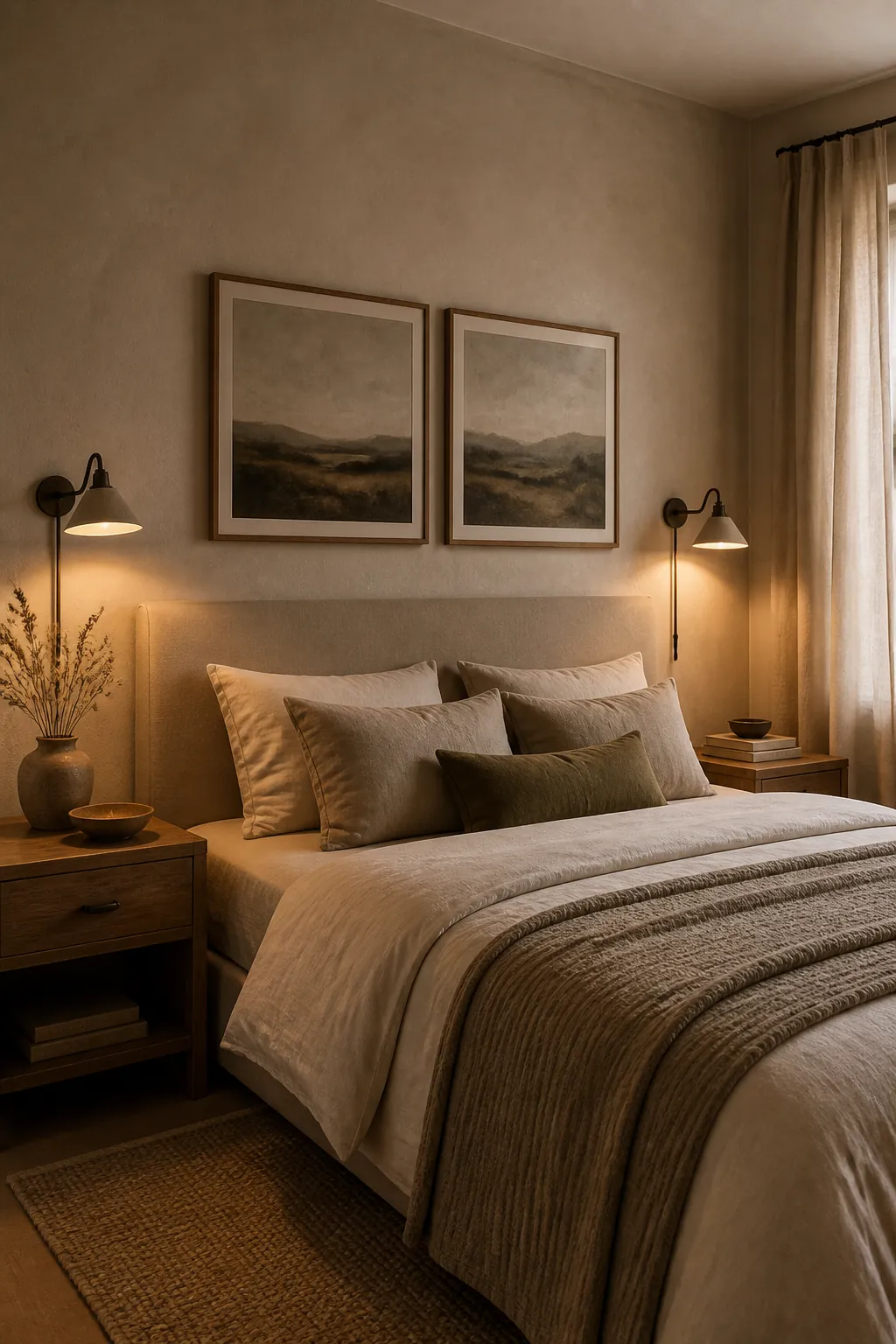
Wall-mounted sconces are especially useful in a beige bedroom because they add both function and shadow. They break up the wall, make nightstands feel cleaner, and create a soft glow near the headboard. Renters can use plug-in sconces with neat cord covers, while homeowners can hardwire fixtures for a quieter look.
Make Nightstand Styling Useful
Nightstand styling is where many neutral bedrooms become cluttered. A tray, candle, stack of books, lamp, vase, framed photo, diffuser, jewelry dish, and water glass can all look nice separately. Together, they often make the room feel busy.
Use fewer objects and make each one earn its space. A good nightstand needs light, a landing spot, and one soft detail. That might be a tall linen-shade lamp, a small tray, and a ceramic vase. If you need storage, choose a drawer, shelf basket, or closed box instead of leaving everything on top.
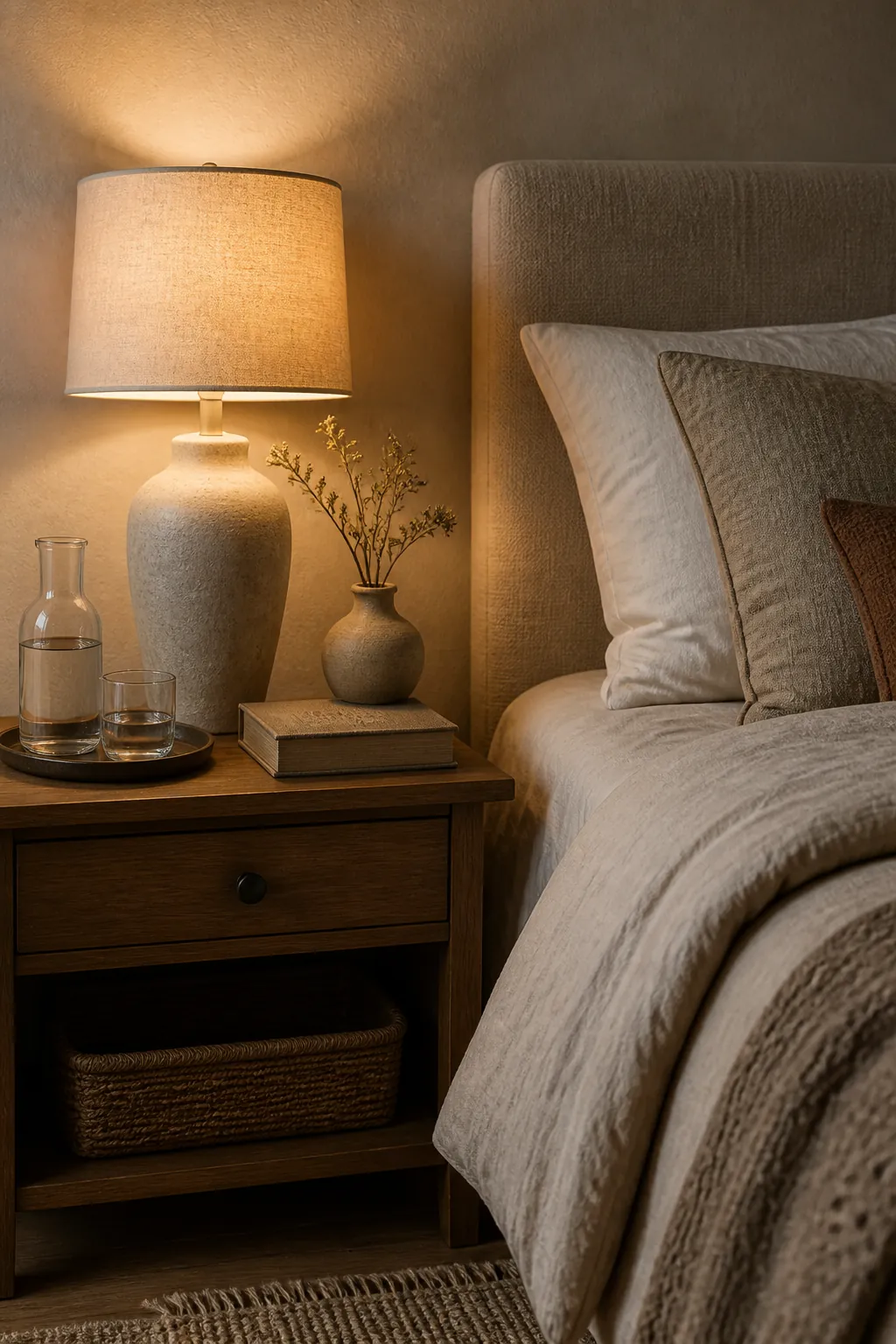
The lamp scale matters. A lamp that is too short can make the whole bed wall feel squat, especially beside a tall headboard. Choose a lamp or sconce that puts light near shoulder height when you are sitting in bed. It will look better and work better.
Add Contrast Through Natural Accents
A neutral room still needs contrast. The safest contrast in a beige bedroom comes from natural materials and earthy tones: dark wood, clay, olive, aged brass, woven fiber, blackened bronze, warm brown, or stone. These accents keep the room grounded without fighting the calm palette.
One of the easiest combinations is beige, ivory, oak, taupe, and a little dark brown. Another is beige, cream, pale wood, muted olive, and aged brass. If you want color, repeat it at least twice in small doses so it looks intentional: a clay pillow and clay-toned art, or an olive branch and muted olive lumbar pillow.
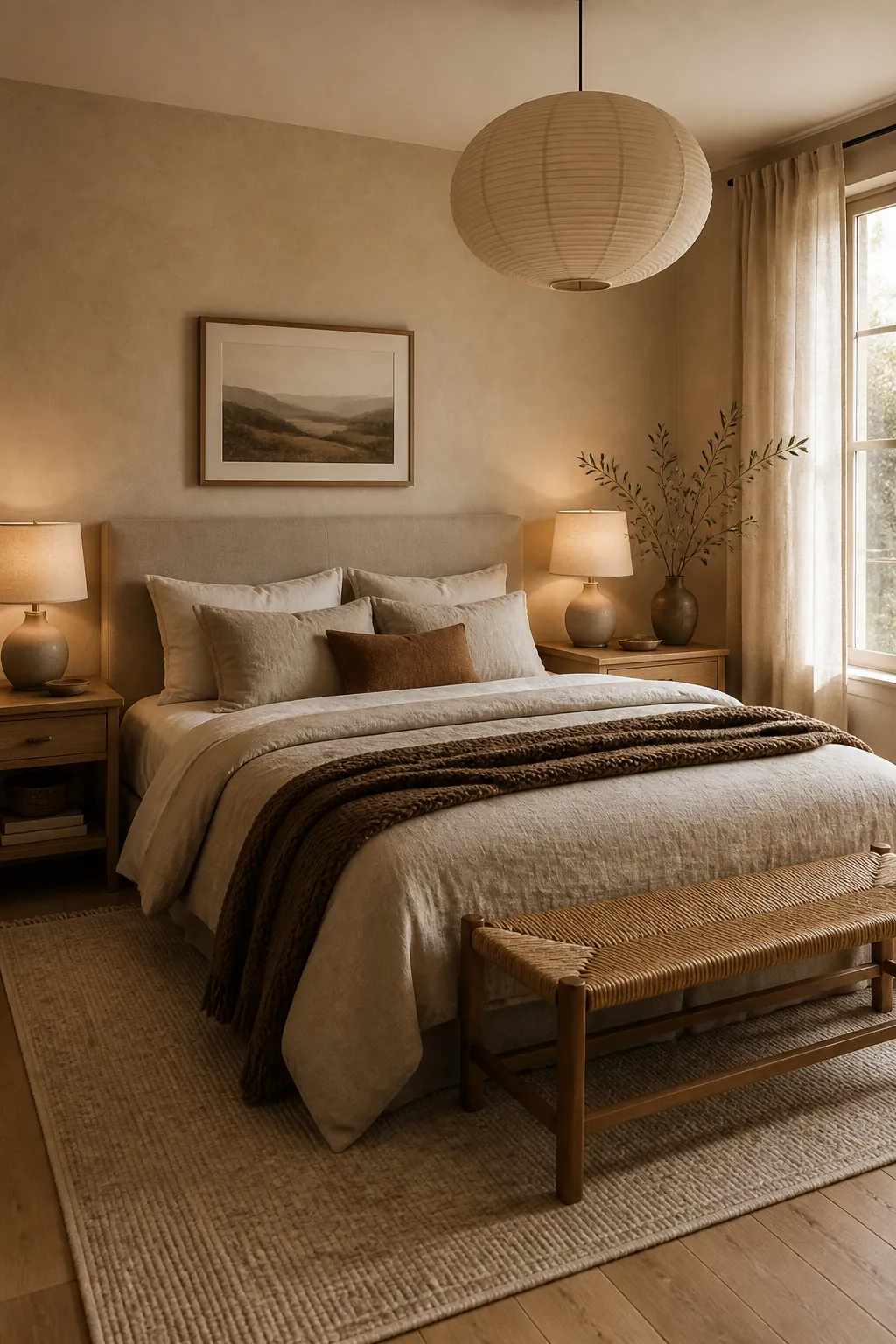
The point is not to hide beige. The point is to give beige something to respond to. Texture creates interest, lighting creates mood, and contrast creates shape.
Renter-Friendly Beige Bedroom Ideas
If you cannot paint, change floors, or hardwire lights, you can still make a beige bedroom feel designed. Focus on changes that cover visual space without requiring renovation.
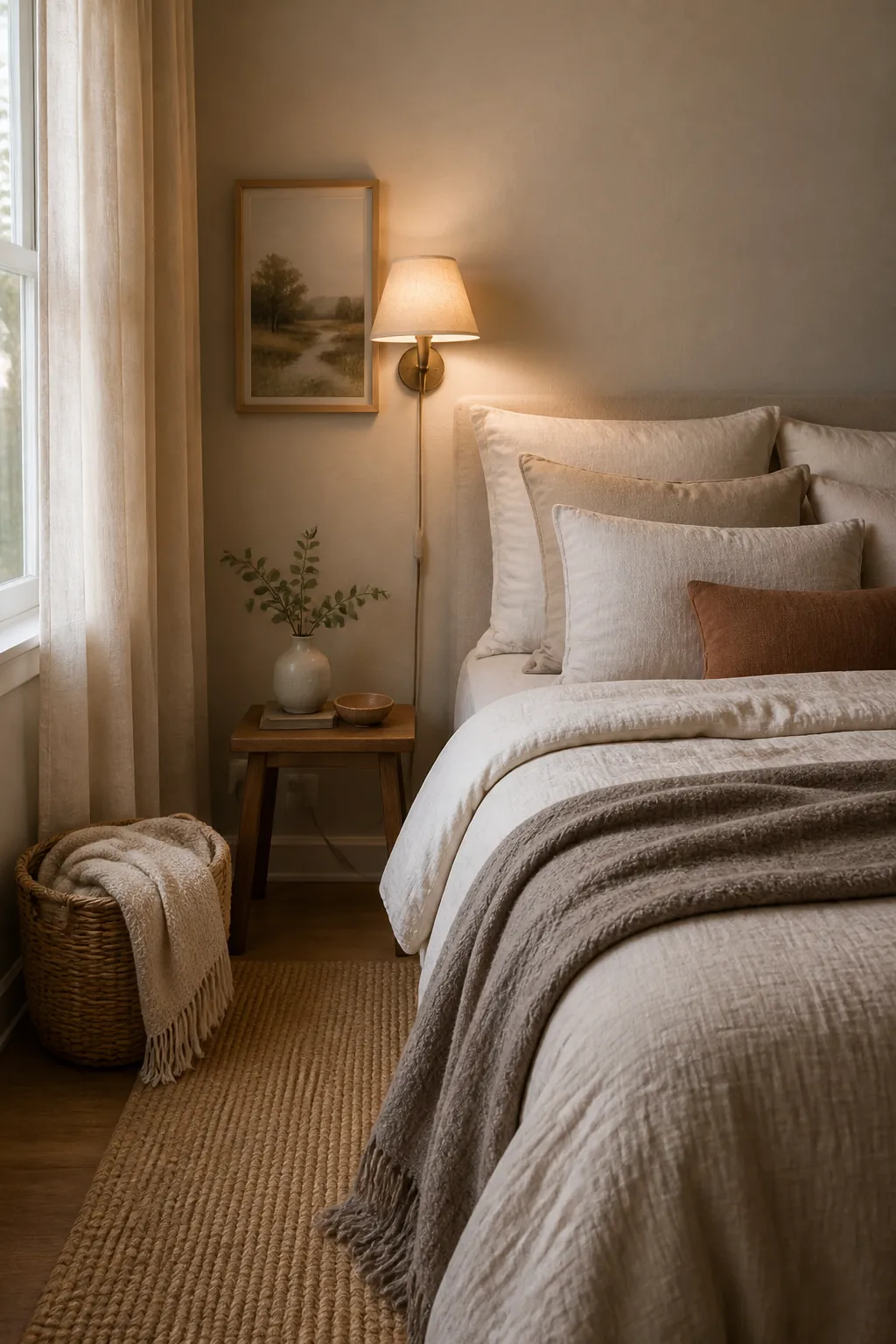
- Hang curtains higher and wider so the window feels larger and the wall looks softer.
- Add a plug-in sconce when the nightstand is too small for a proper lamp.
- Use a large rug to break up beige carpet or cold flooring.
- Lean oversized art on a dresser or hang one large piece above the bed.
- Bring in closed storage through baskets, lidded boxes, or a nightstand drawer.
- Upgrade the bedding layers before replacing all the furniture.
These changes are small, but they affect the surfaces you see most: the bed, the wall, the window, the floor, and the light. That is where a warm bedroom is made.
Common Mistakes That Make Beige Feel Bland
Most beige bedrooms do not fail because beige is wrong. They fail because the room has no hierarchy. Everything is pale, everything is smooth, or everything is lit the same way.
- Using only overhead light: it flattens the walls, bedding, and faces.
- Buying a complete matching set: matching furniture can remove the collected feeling that makes soft home decor work.
- Choosing tiny wall art: small art above a large bed makes the wall feel unfinished.
- Mixing cool gray with warm cream by accident: undertones can make the room look muddy.
- Adding too many pillows: cozy does not mean crowded.
- Ignoring the rug and curtains: large textile surfaces do more for bedroom texture than small accessories.
When in doubt, remove one decorative object and improve one material. A better lamp shade, heavier curtain, larger rug, or richer throw usually does more than another small beige accessory.
A Calm Beige Bedroom Still Needs Decisions
The strongest beige bedroom ideas are specific. They do not rely on beige as a default. They use beige as a backdrop for warm light, natural texture, balanced bedding, and quiet contrast.
Start with the light, because it changes everything else. Then build texture through the biggest fabric surfaces: bedding, curtains, rug, and headboard. Finish with nightstand styling, wall art, and one or two deeper accents. That sequence turns a plain beige room into a cozy bedroom that feels soft, warm, and intentional.