
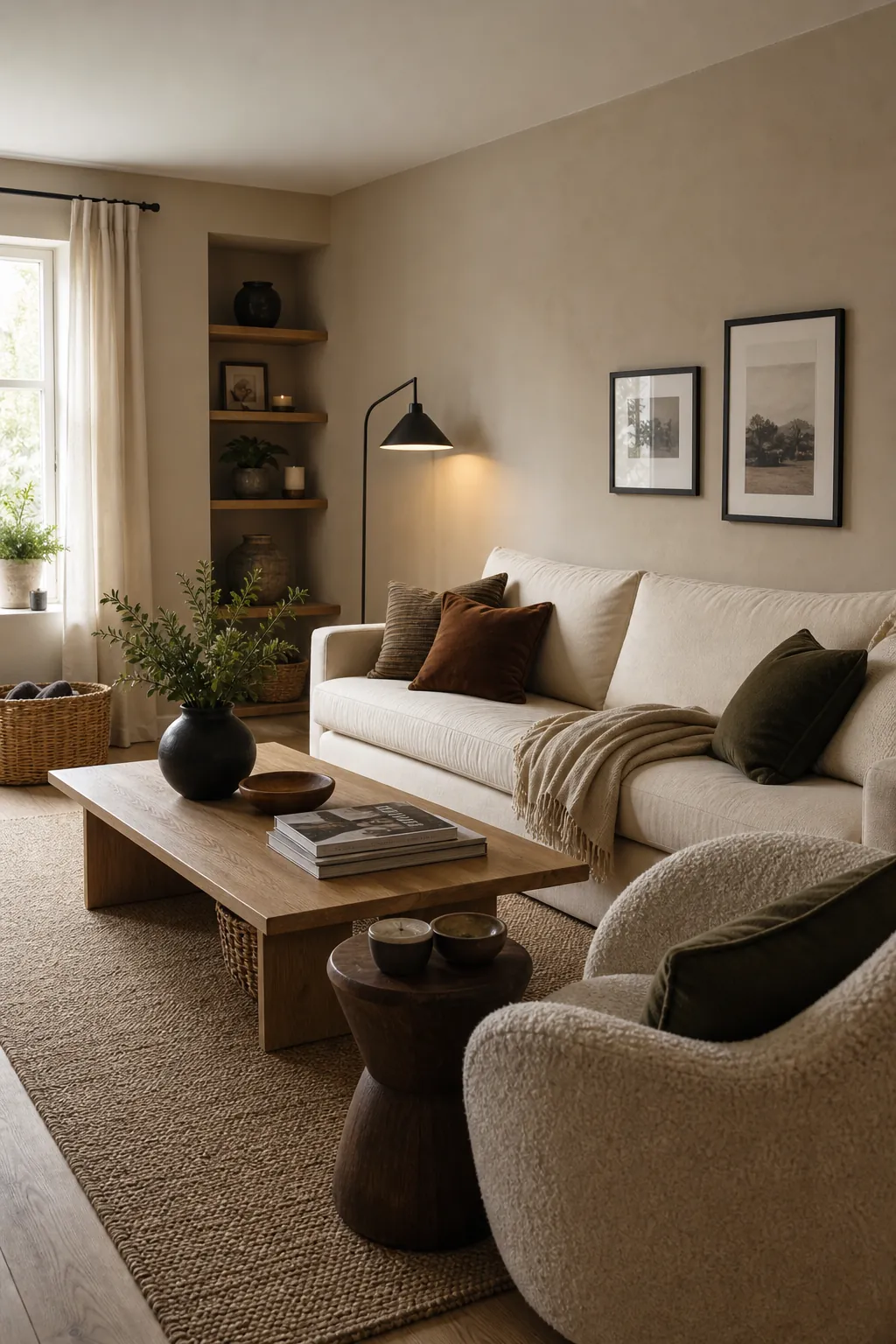
A beige living room usually goes flat for one reason: too many large surfaces sit at the same color value. The sofa, rug, walls, curtains, pillows, and wood pieces may all be pretty on their own, but together they blur into one pale block.
The fix is not to abandon beige. The fix is to give beige something to react against: rough beside smooth, matte beside woven, light beside dark, low light beside tall light, and warm wood beside cooler stone or black metal. That is what makes a neutral room feel intentional instead of unfinished.
Start With Value Contrast Before You Add Color
If every major piece is cream, oatmeal, or pale tan, the eye has nowhere to land. Before buying bright pillows, check whether the room has a real light-to-dark range. A beige room needs at least one deeper anchor: a charcoal frame, a walnut table, a taupe rug, a black lamp, or art with a dark ground.
The easiest rule is light walls, mid-tone upholstery, and one dark repeat. Repeat the dark note at least three times so it looks designed: a picture frame, a lamp base, and a side table; or a dark vase, curtain rod, and coffee table legs.
Put Texture Where People Actually Touch the Room
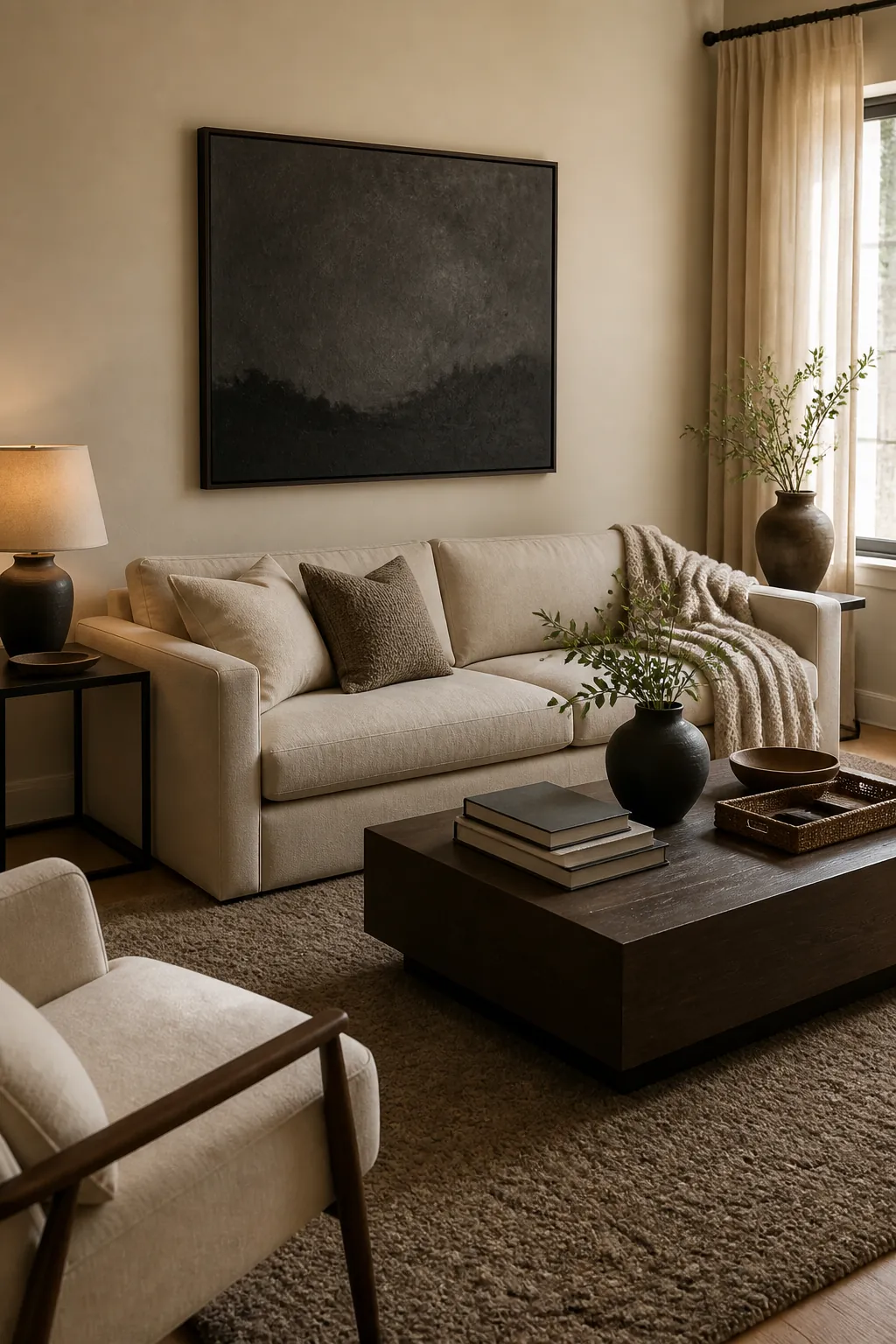
Texture works best when it is close to the body. A linen sofa, boucle chair, ribbed pillow, chunky throw, wool rug, and woven basket all read differently even if they are beige. That difference is what keeps the room from looking like one smooth rental box.
Do not rely on tiny accessories to carry the whole room. Use texture at scale first: rug, curtains, sofa fabric, accent chair, large throw, and baskets. Smaller ceramics and trays can come later.
Mix Wood and Woven Pieces So Beige Feels Warm, Not Washed Out
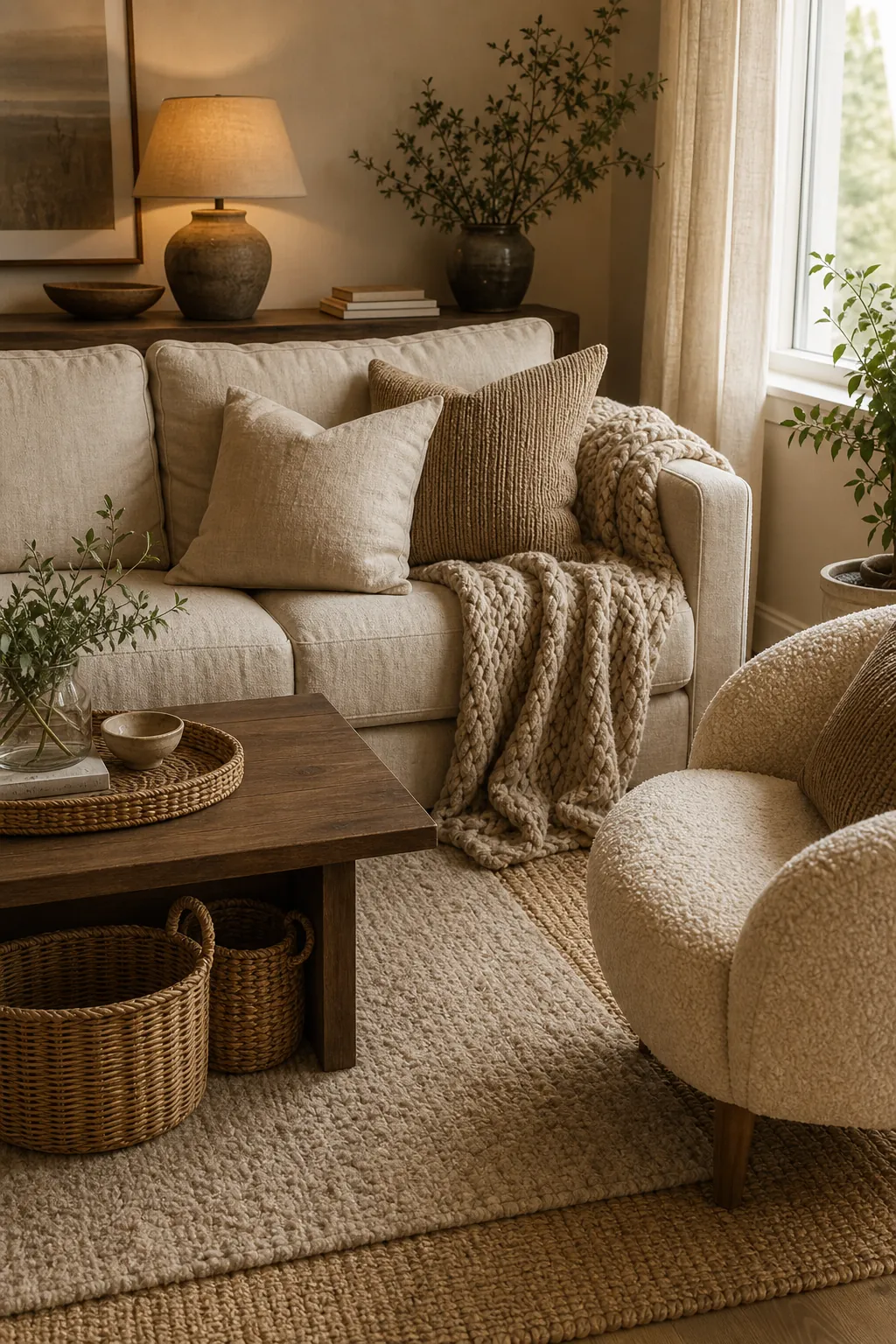
Beige becomes more natural when it sits beside wood grain, rattan, cane, jute, seagrass, and ceramic. The trick is to avoid matching every wood tone. A room with only pale oak can still feel flat; a room with pale oak, a medium walnut note, and one woven texture has more depth.
Use wood as warmth and woven accents as texture. A light oak coffee table, walnut side table, cane chair, and seagrass basket can all live in the same beige room if the shapes stay simple and the undertones stay warm.
Use Black Metal as a Thin Line, Not a Heavy Theme
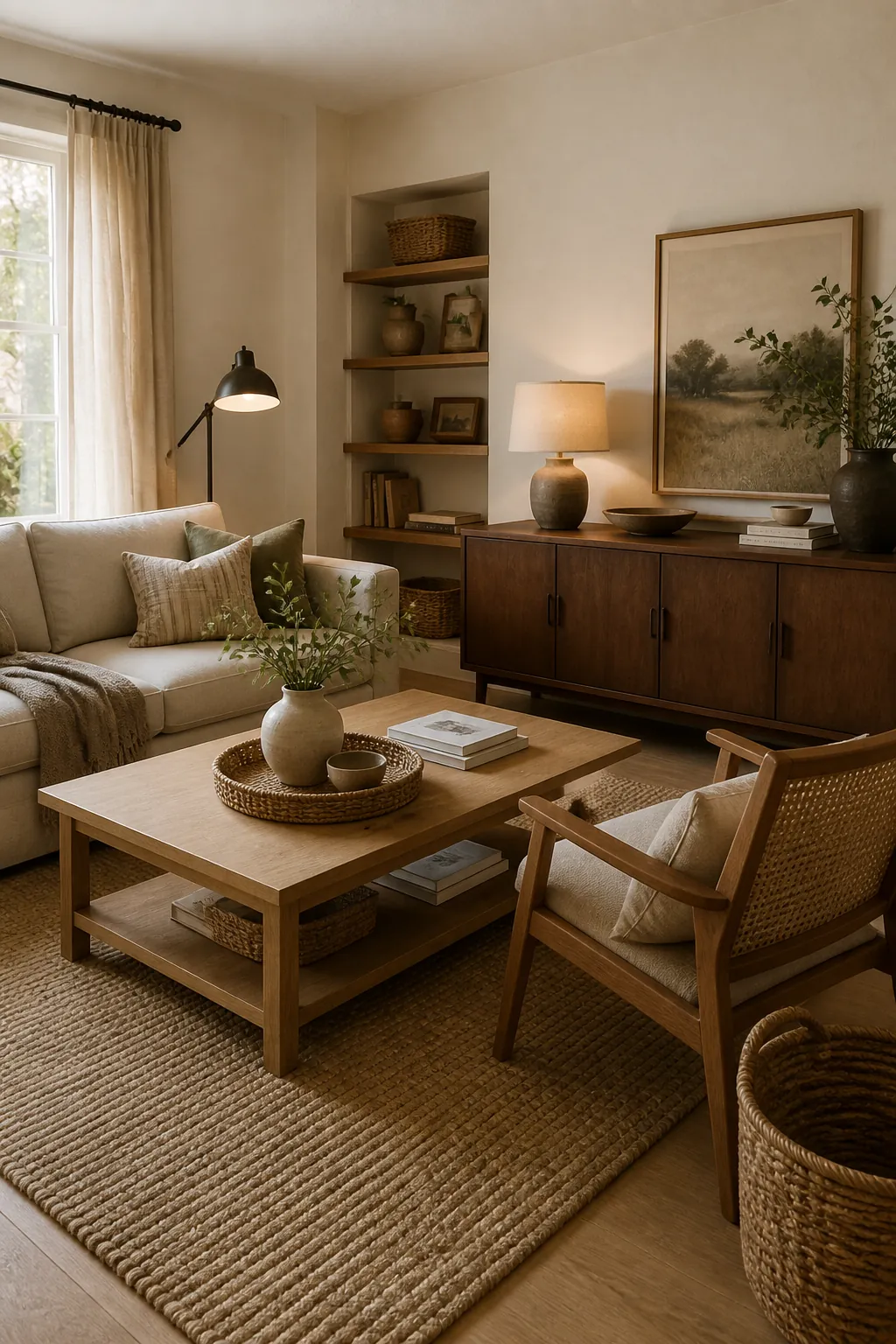
Black metal is one of the fastest ways to sharpen a beige room, but it should act like punctuation. Thin black frames, a slim floor lamp, a metal coffee table base, or a simple curtain rod can make soft beige furniture look cleaner and more deliberate.
The mistake is making the room half beige and half black. That can turn warm neutral decor into something harsh. Keep the black narrow, repeat it quietly, and soften it with wood, linen, and warm light.
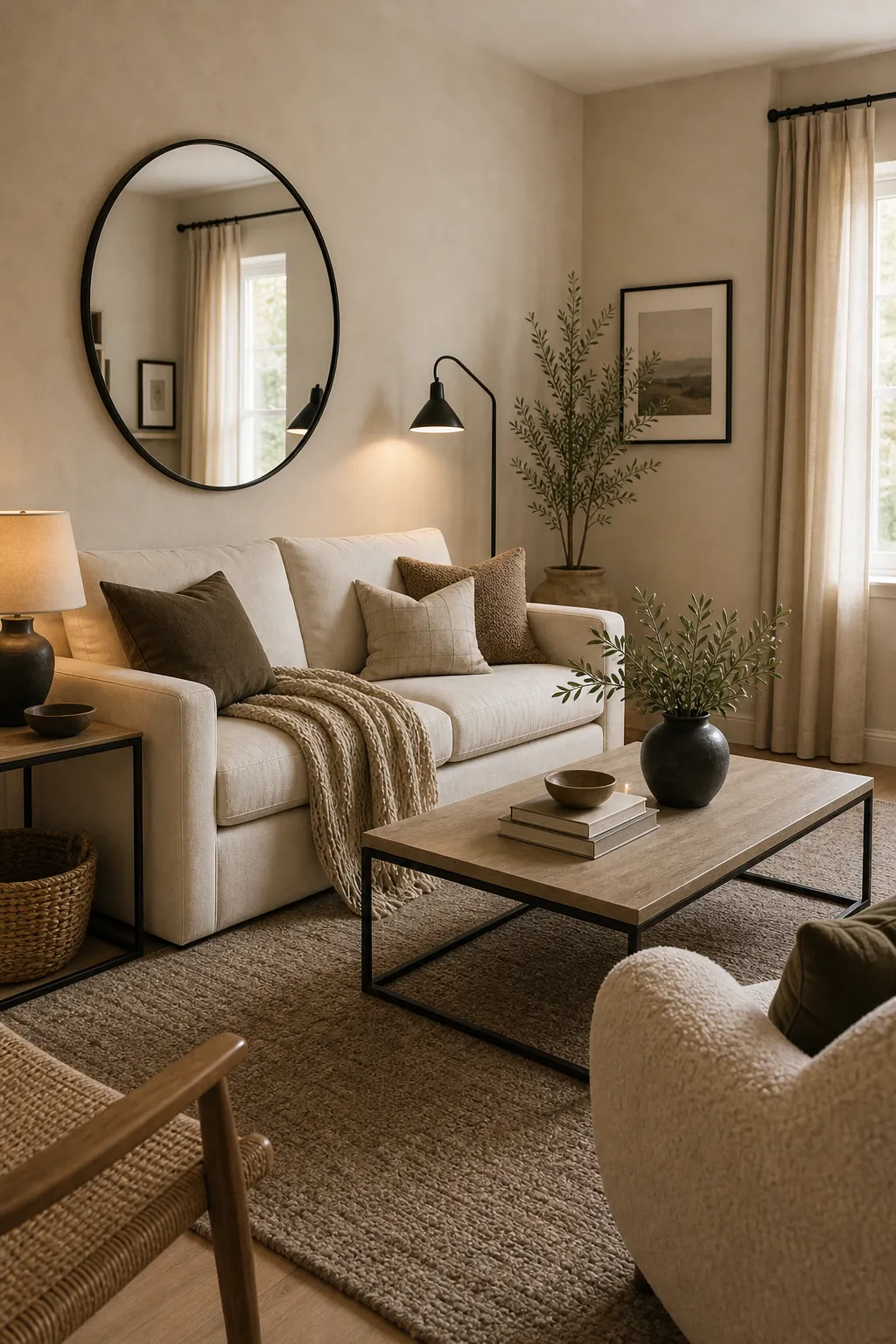
Layer Lighting So the Walls Stop Looking Blank
Flat overhead lighting makes beige look dull because it removes shadow. A beige room needs light at different heights: a table lamp beside the sofa, a floor lamp near a chair, a wall sconce, or a picture light over art. These small pools of light create contrast without changing the paint color.
Lighting is texture you can turn on. Warm bulbs, fabric shades, and low lamps make the same beige wall look richer at night than it does under one ceiling fixture.
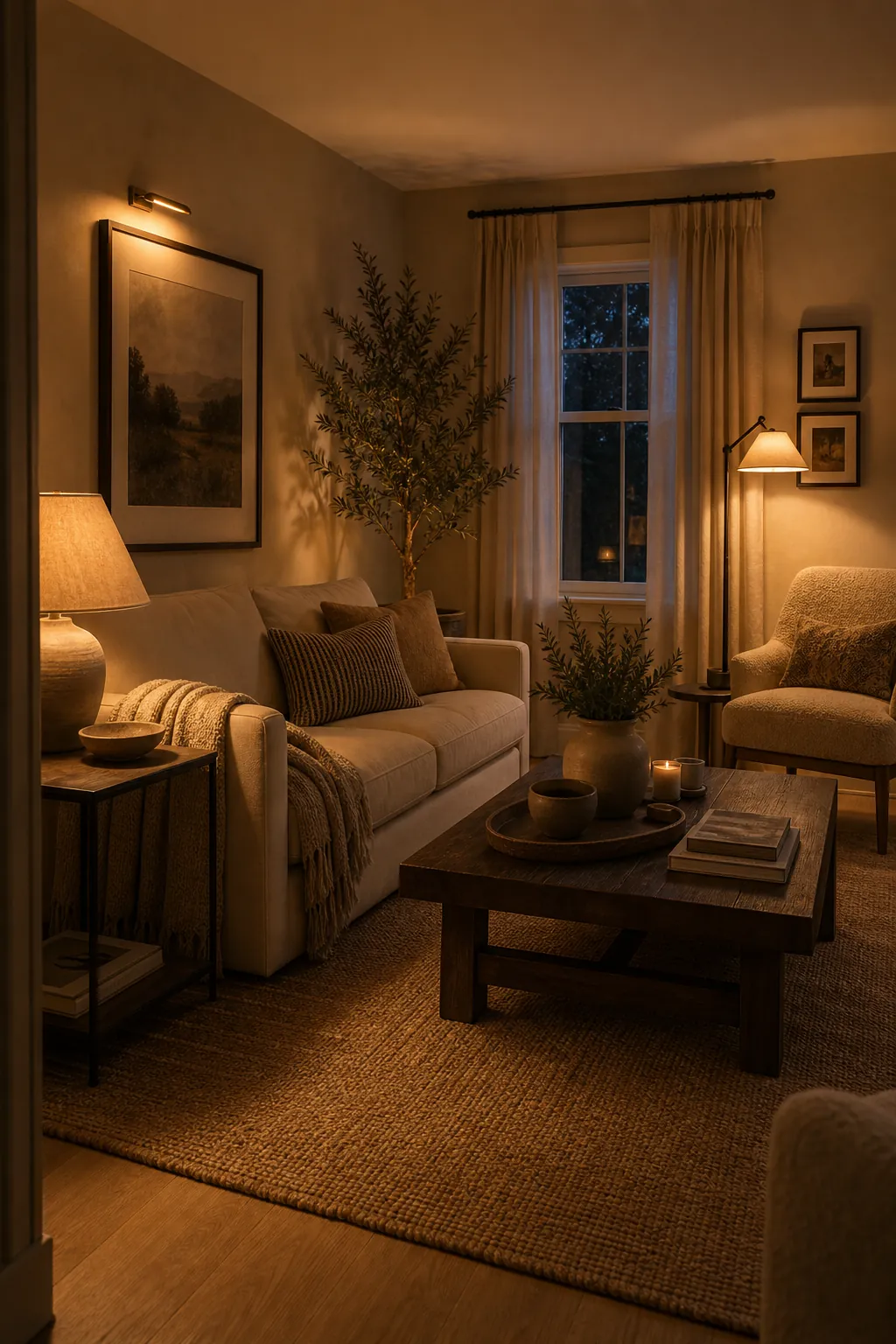
Let One Anchor Piece Choose the Palette
Many beige rooms feel unfinished because the accents are bought one at a time. A green pillow appears, then a rust throw, then a blue vase, and nothing explains why they belong together. Choose one anchor first: a rug, artwork, patterned pillow, or textile with three to five colors you actually like.
Then repeat those colors in small amounts. If the rug has camel, ivory, muted olive, rust, and charcoal, let those notes show up again in pillows, art, books, and ceramics. Repetition makes color feel calm instead of random.
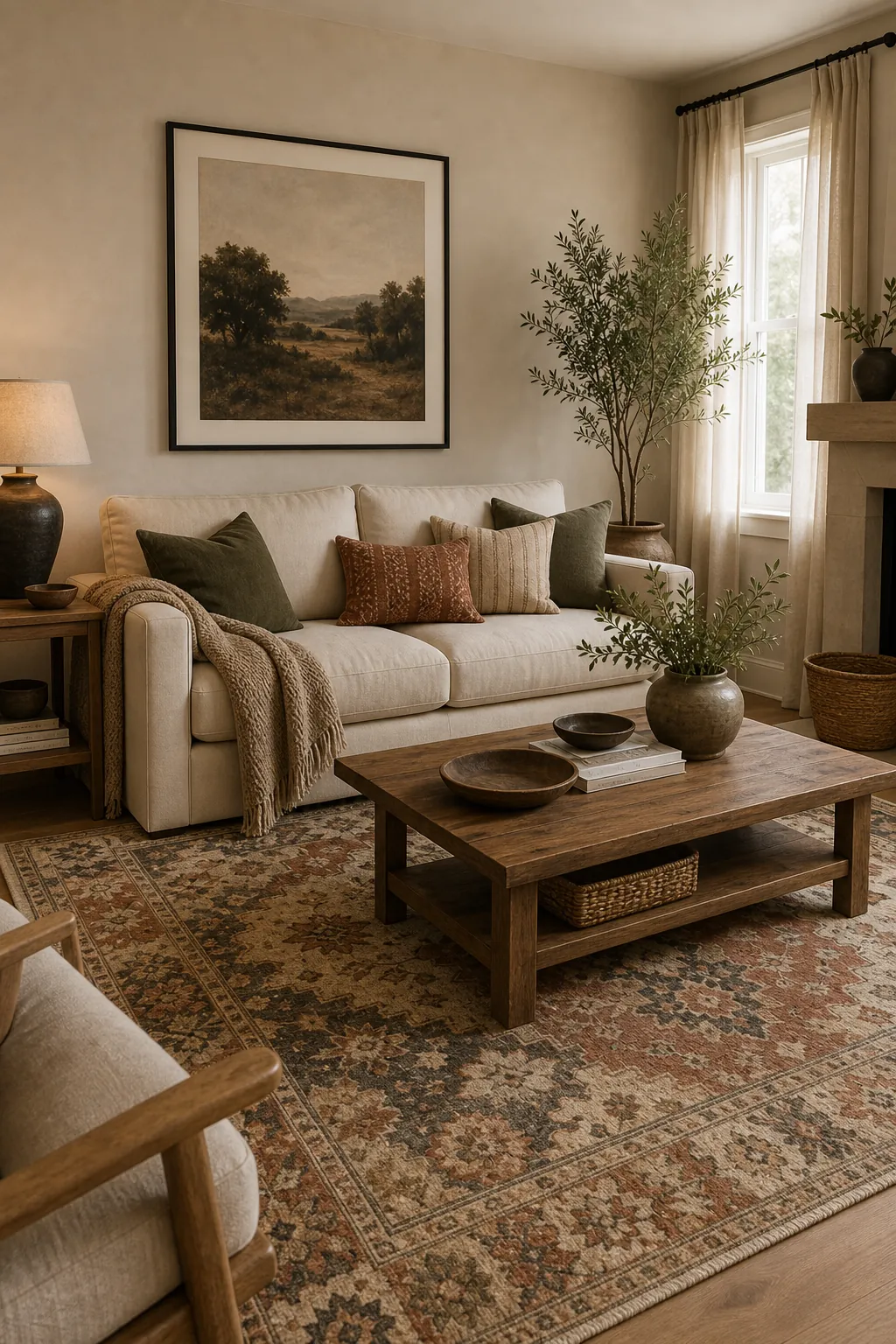
A Simple Formula for a Layered Beige Living Room
- One large soft base: beige sofa, warm walls, or a neutral rug.
- Two or three touchable textures: linen, boucle, wool, jute, rattan, cane, or chunky knit.
- One deeper value: walnut, charcoal, black metal, dark bronze, or deep taupe.
- One natural element: wood grain, woven baskets, greenery, stone, or handmade ceramic.
- Three lighting levels: table, floor, wall, or picture lighting.
- One anchor palette: a rug or artwork that tells you which accent colors to repeat.
The best beige living room ideas do not treat beige as the whole design. They treat it as the background. Once you add texture, contrast, light, and a few repeated accents, beige becomes quiet in the right way: warm, flexible, and easy to live with.