
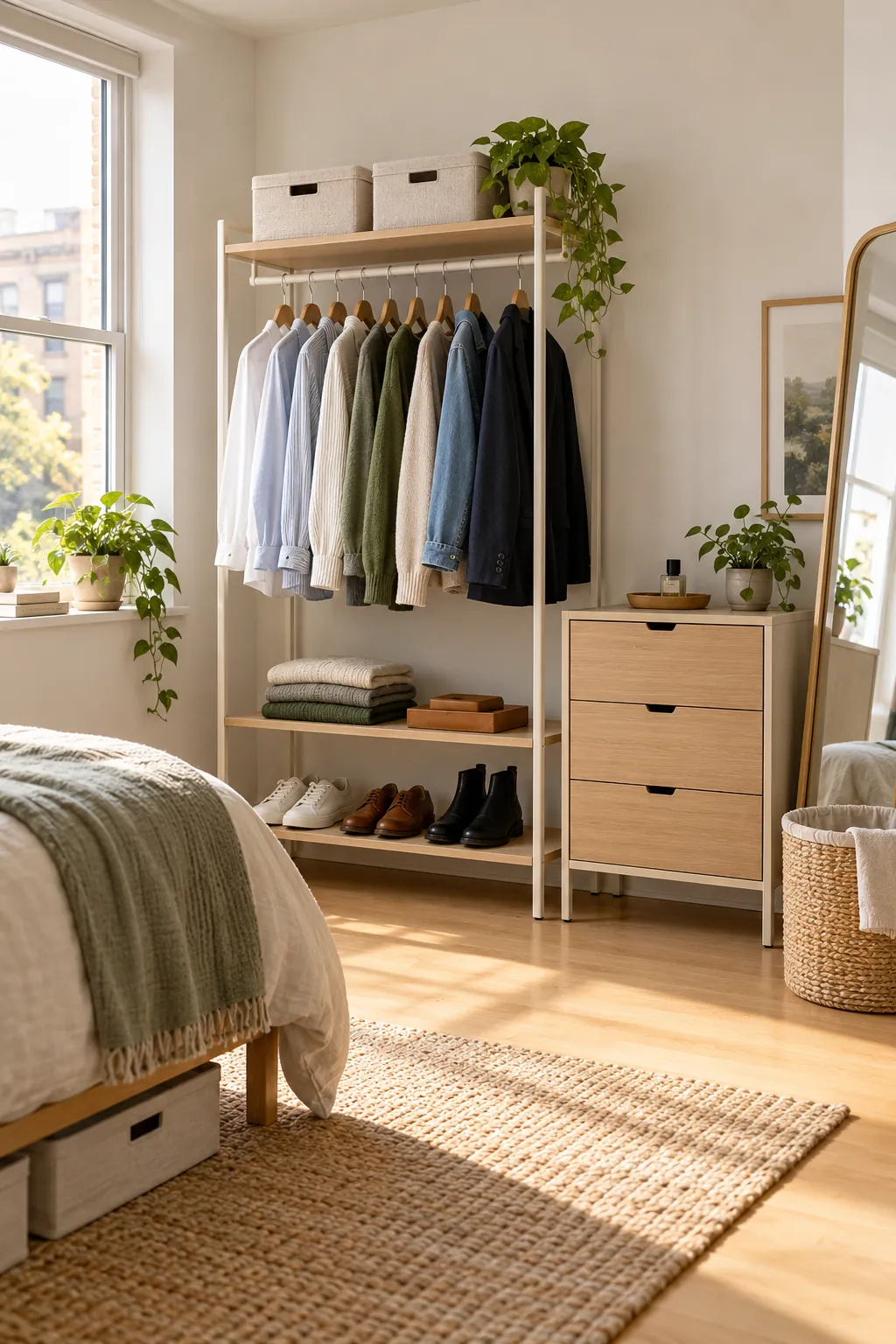
A room without a closet does not need one giant replacement. It needs a place for hanging clothes, a place for folded clothes, and a place for seasonal pieces that does not compete with sleep or movement. Solving those jobs separately often uses less floor space.
Indexed Reddit snippets repeatedly distinguish open clothing racks from enclosed wardrobes, and they pair hanging storage with dressers, cubes, or under bed containers. That mixed approach matters because a rack becomes crowded when it is expected to hold every shirt, sweater, shoe, and spare blanket.
Start With the Clothes You Actually Store
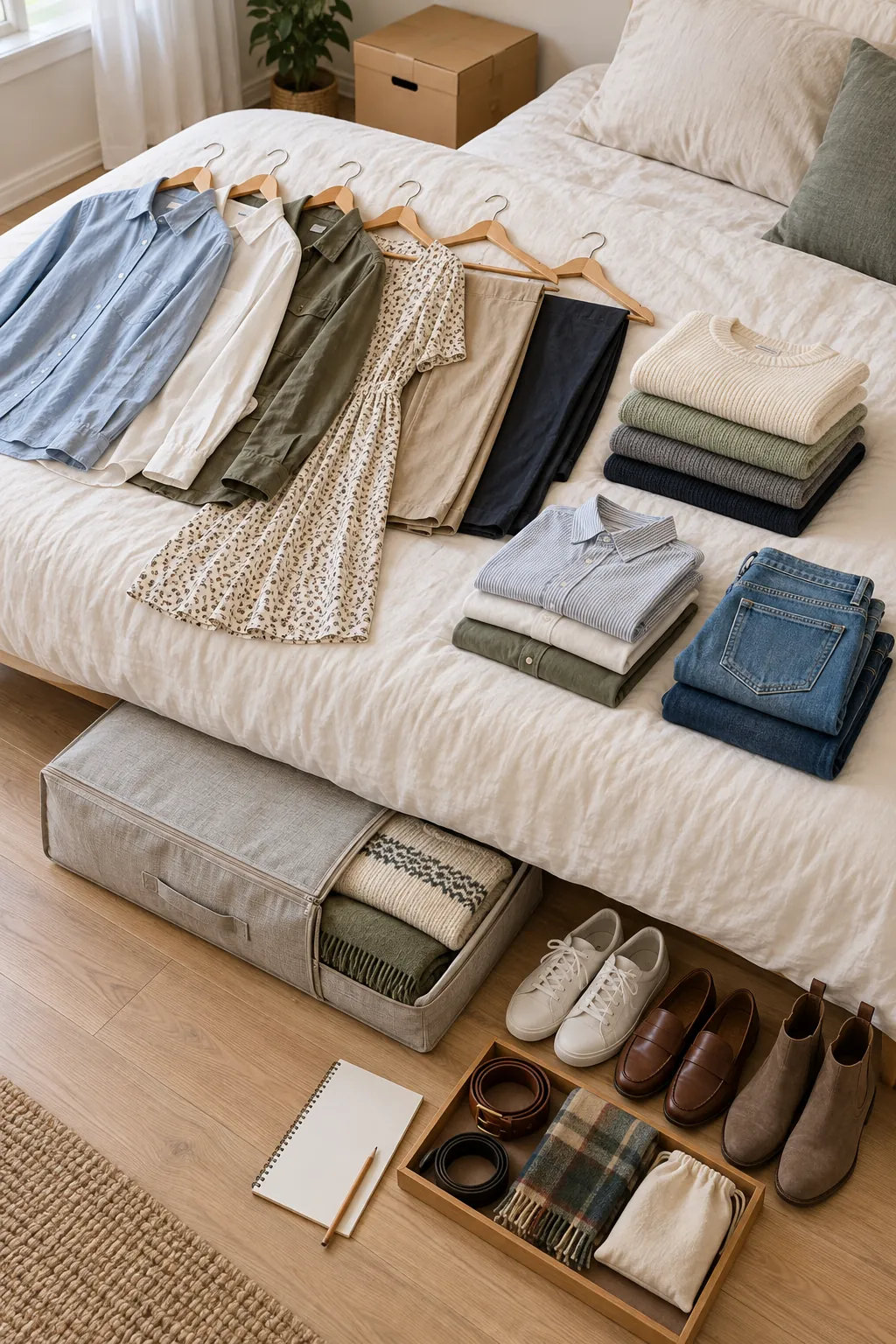
Count hanging garments by length, folded categories by volume, shoes by pair, and seasonal items by container. Keep daily clothing in the easiest zone and move infrequent pieces higher, lower, or under the bed. This inventory prevents buying a beautiful rack with no place for underwear or bulky knits.
Measure the proposed wall or nook, then mark the full depth with removable tape. Include hanger shoulders, curtain movement, drawers, caster swing, baseboards, outlets, and the route from bed to door. Leave breathing room around any heater or vent.
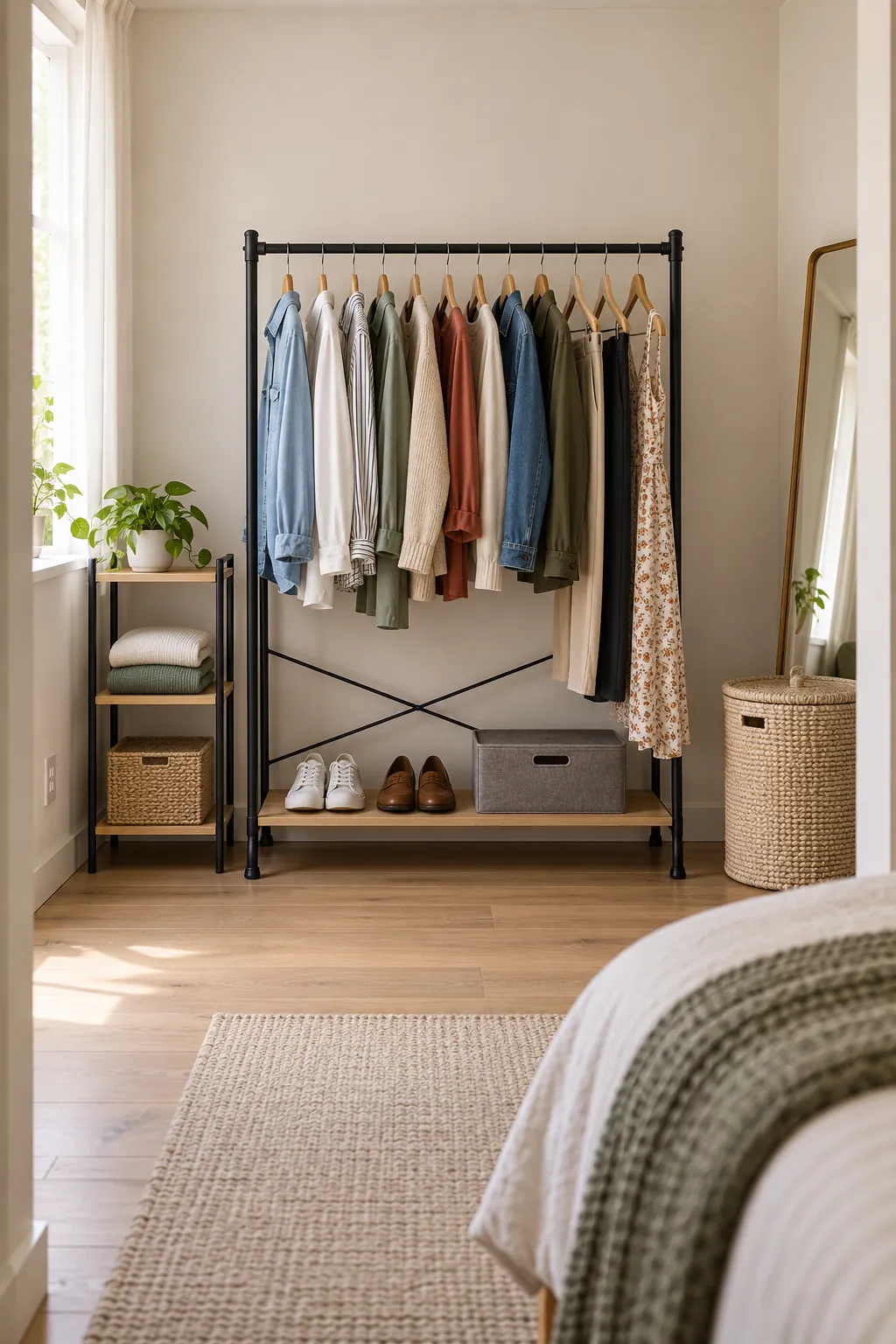
Use an Open Rack for a Small Working Wardrobe
A narrow clothing rack makes daily pieces visible and easy to air. Choose one with a stable base, a rail rated for the intended load, and a lower shelf for shoes or one bin. Slim hangers help, but leaving space between garments makes the rack look calmer and reduces wrinkles.
An open rack works best for a restrained rotation, not an entire lifetime of clothing. Dust garments that remain exposed, keep damp laundry elsewhere, and avoid placing the rack in strong sunlight that may fade fabric. Use matching hangers only if they fit the garment shoulders properly.
Choose a Covered Wardrobe for Dust and Visual Calm
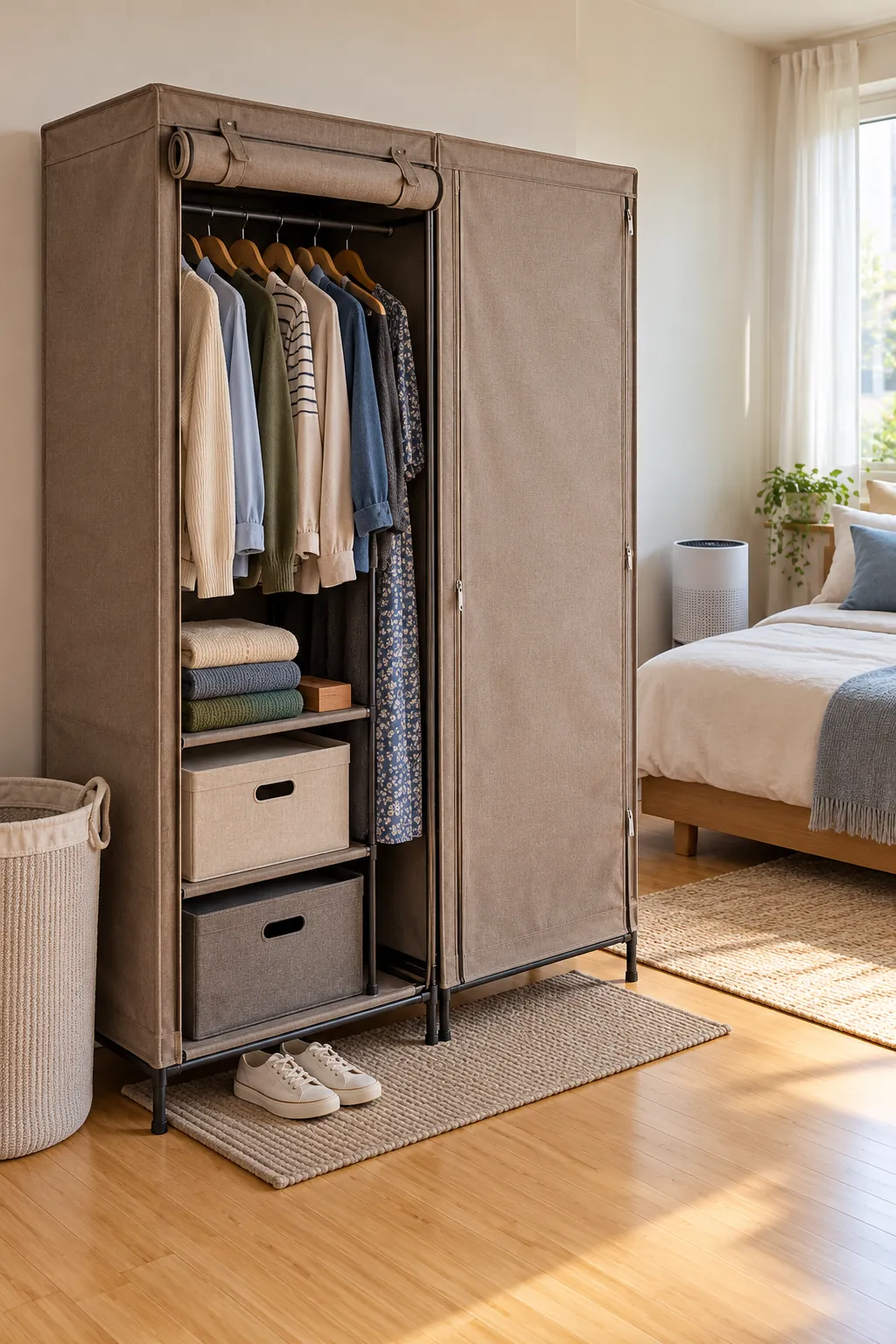
A rolling garment rack with a cover or a freestanding wardrobe for renters hides visual clutter and protects occasional clothing from dust. Look for breathable fabric, a cover that opens fully, and a frame that can carry the rail without leaning. A low shelf or drawer section should support folded pieces.
Covered storage needs ventilation. Do not close damp clothing inside, and leave a small gap from exterior walls that feel cold or collect condensation. A cover also adds depth, so test whether the front can open without touching the bed.
Pick a Rolling Rack When the Layout Must Change
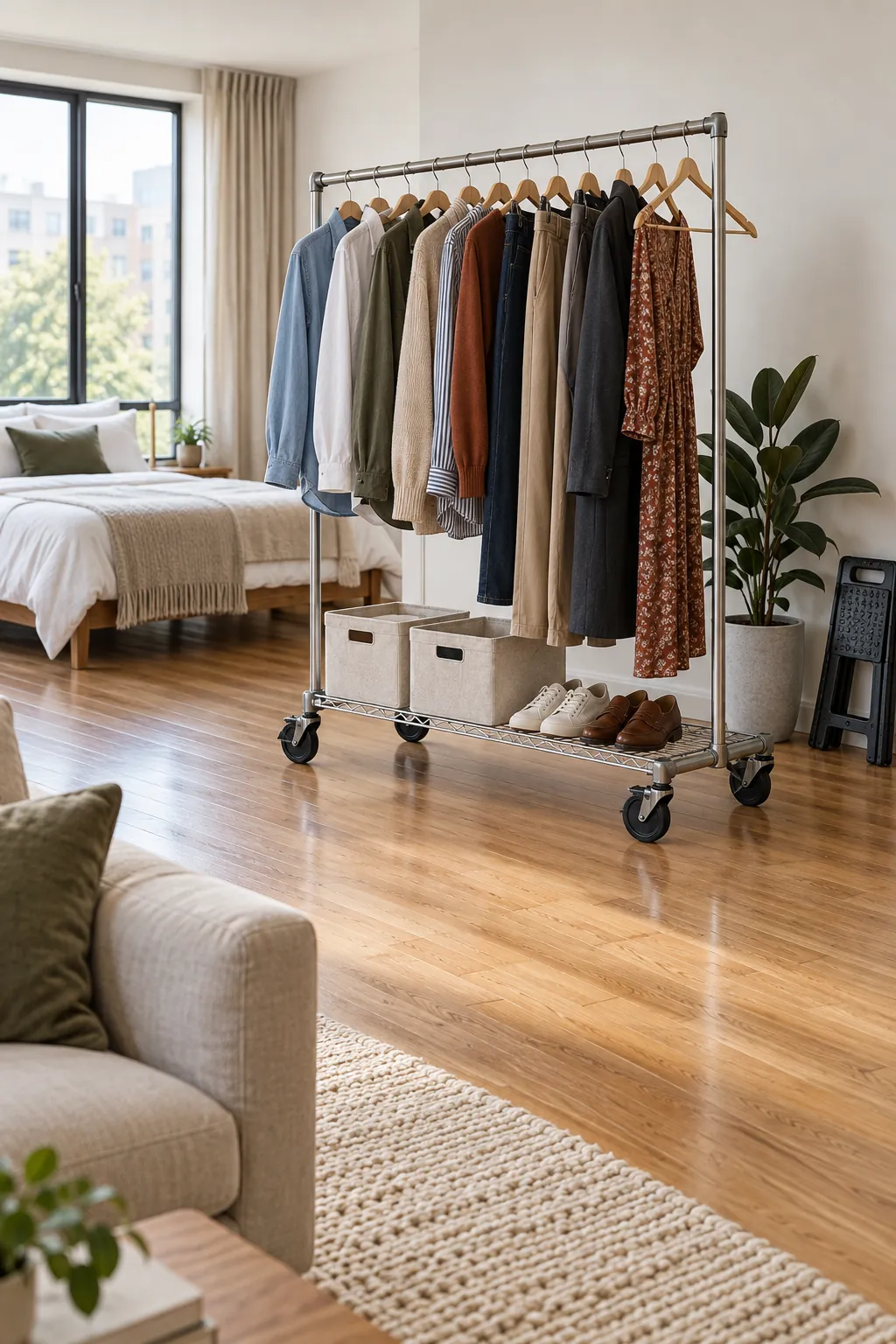
A rolling rack is useful in a studio where the same area supports dressing, laundry, and guests. Locking casters let the rack move for cleaning or serve as a temporary room divider. Check wheel quality, frame bracing, and the largest doorway before choosing width.
Keep weight centered and do not use the rail as a handle unless the maker designed it that way. Move the rack slowly across thresholds, then lock every caster. A portable clothes rack with shelves is only convenient when bins cannot slide during movement.
Combine a Low Dresser With Under Bed Storage
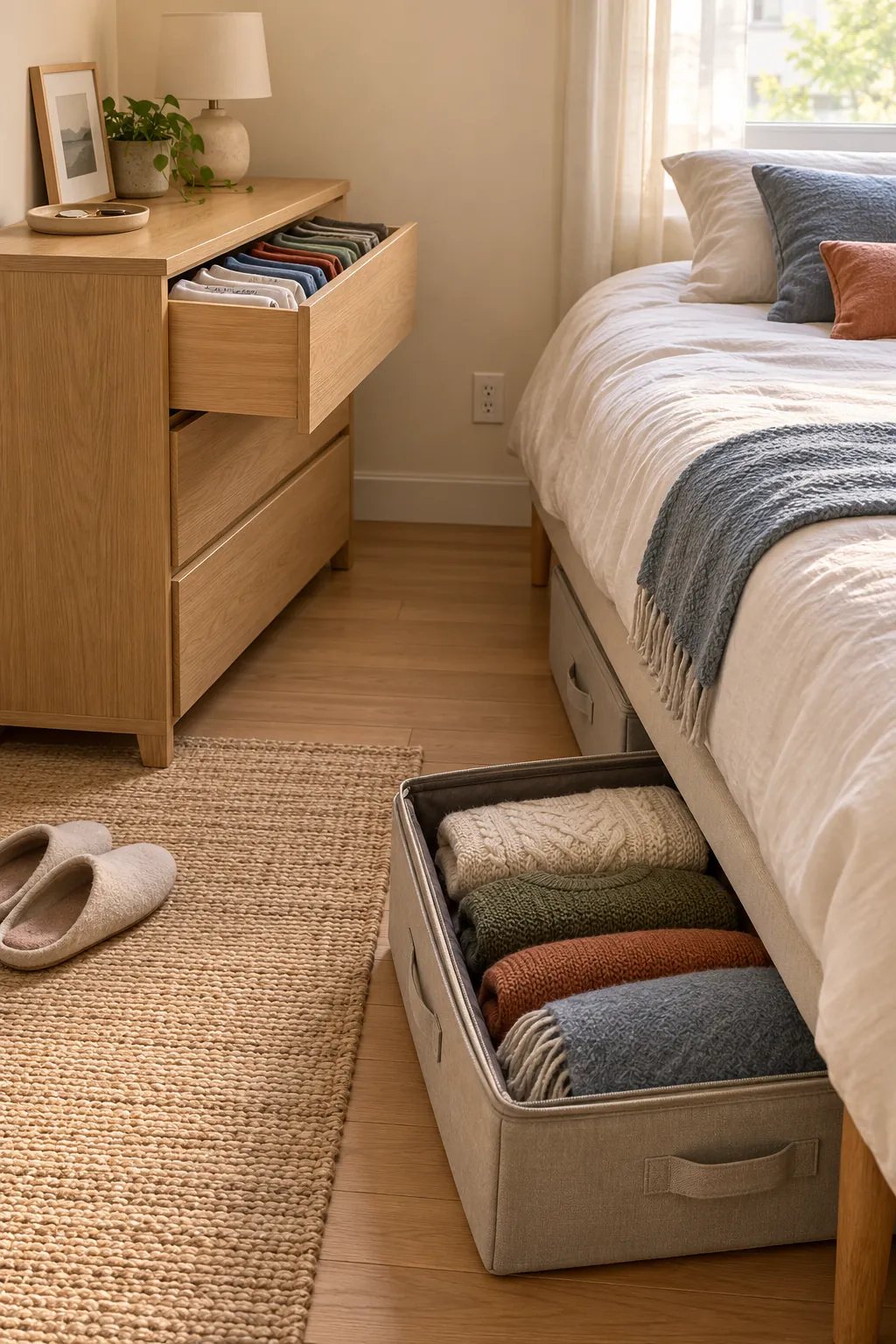
Folded clothing usually needs drawers more than hanging space. A low dresser can hold underwear, sleepwear, exercise clothes, and knits while keeping its top useful as a dressing surface. Under bed bins can take seasonal pieces, spare linens, and rarely worn shoes.
Measure the bed opening at its lowest point and include handles or wheels on the bin. Choose breathable containers for clean dry textiles, and avoid packing them so tightly that fabric creases permanently. Keep one clear path for pulling each bin out.
Turn a Stable Rack Into a Room Zone
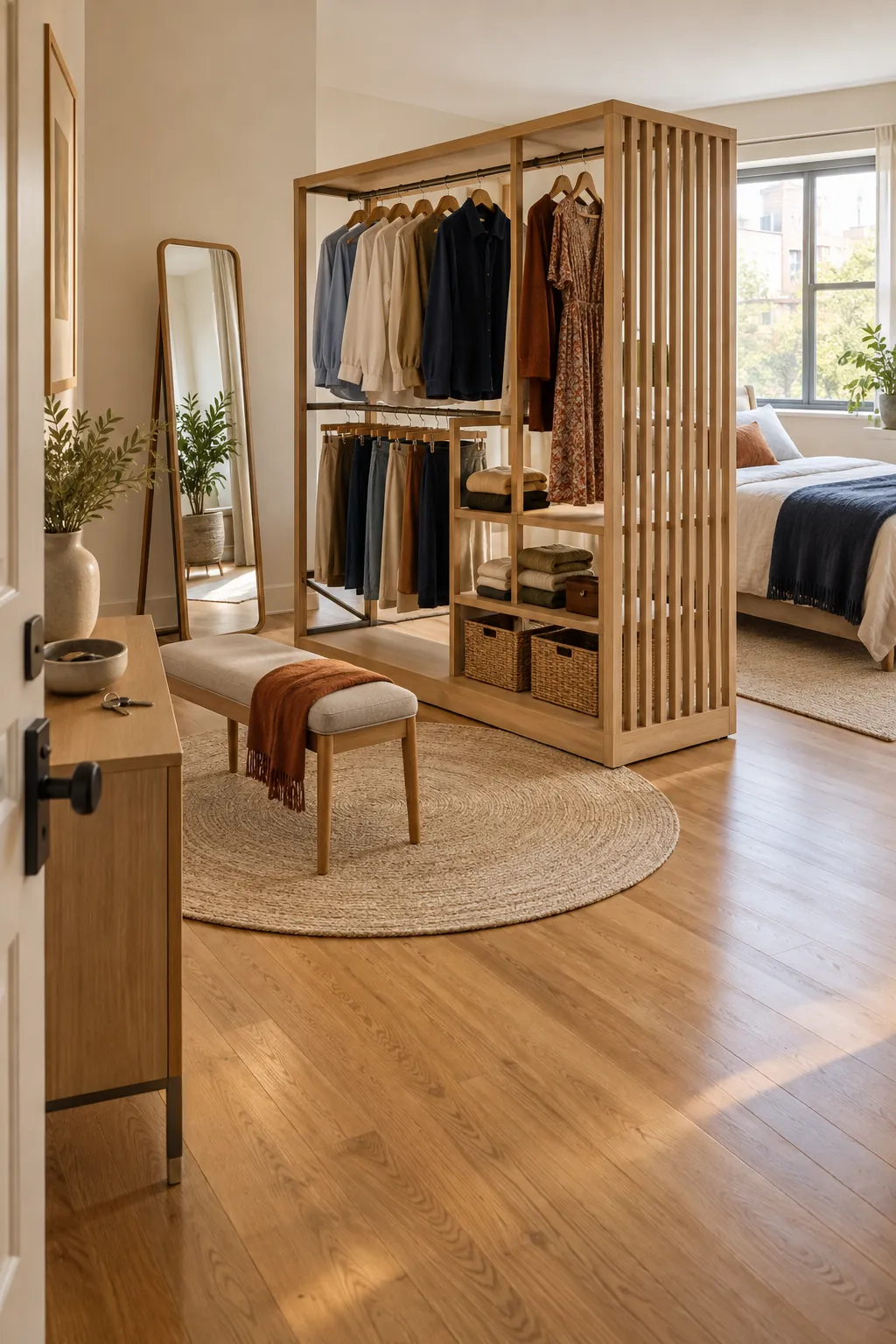
In a studio, a freestanding rack can define a dressing area without drilling. Place the finished back toward the living space, keep the heaviest storage low, and preserve a wide route around both ends. A fabric panel can soften the view only when it does not interfere with ventilation or stability.
Do not treat a tall open unit as a wall. Follow every anti tip instruction, especially where children or pets live, and ask the landlord before using a restraint fastener. If the unit cannot stand safely under the approved setup, choose a lower and wider piece.
Build the Smallest Complete System
For a minimal wardrobe, combine a narrow open rack with one dresser or set of bins. For more clothing or a visually busy bedroom, choose a covered wardrobe with internal shelves. For a studio that changes throughout the day, use a stable rolling system and separate under bed storage.
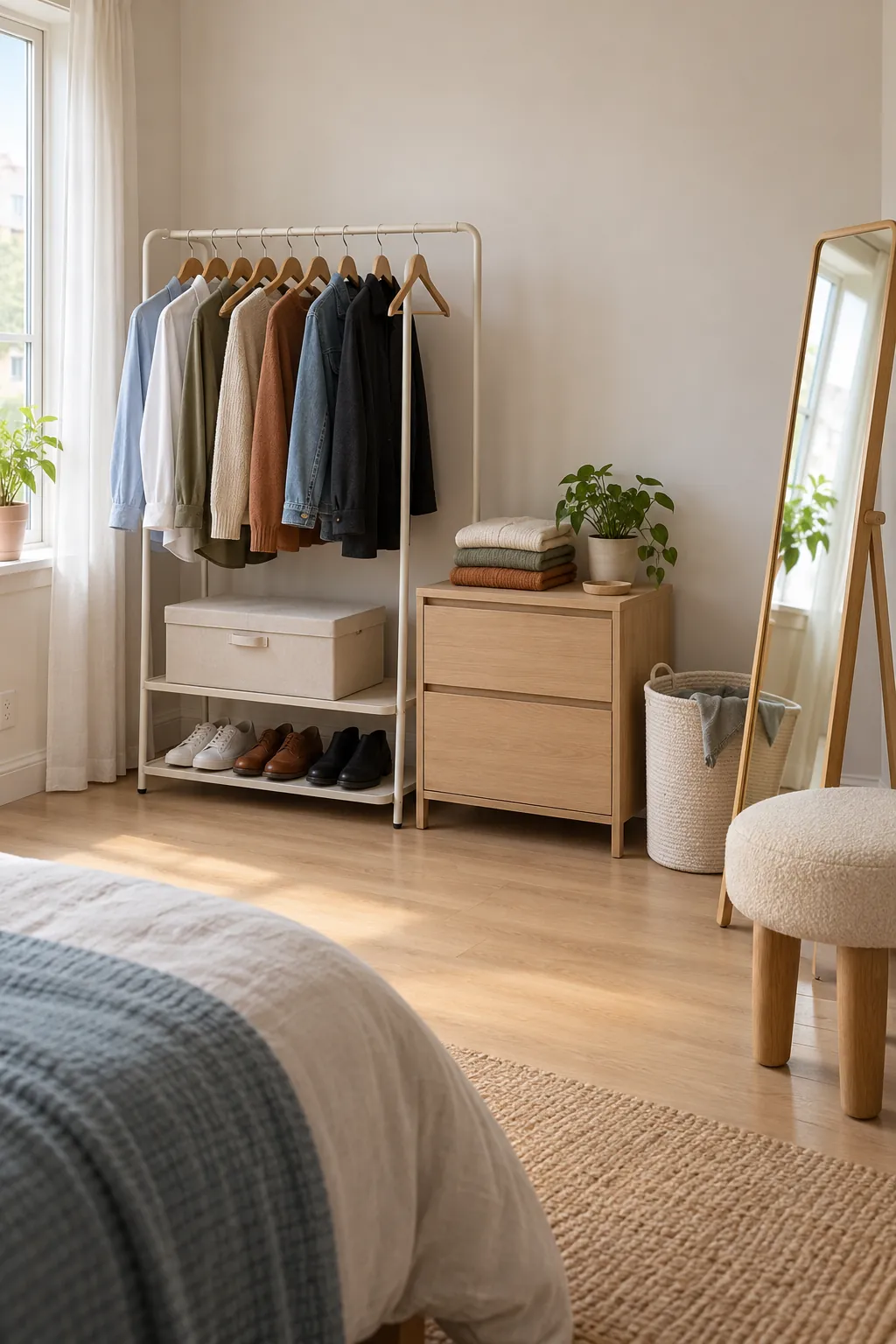
The best no drill wardrobe ideas do not recreate a full built in closet at any cost. They give each clothing category a reachable home, protect clear walking space, and move with you. When the system stops accepting clothes comfortably, edit the wardrobe before adding another rack.