
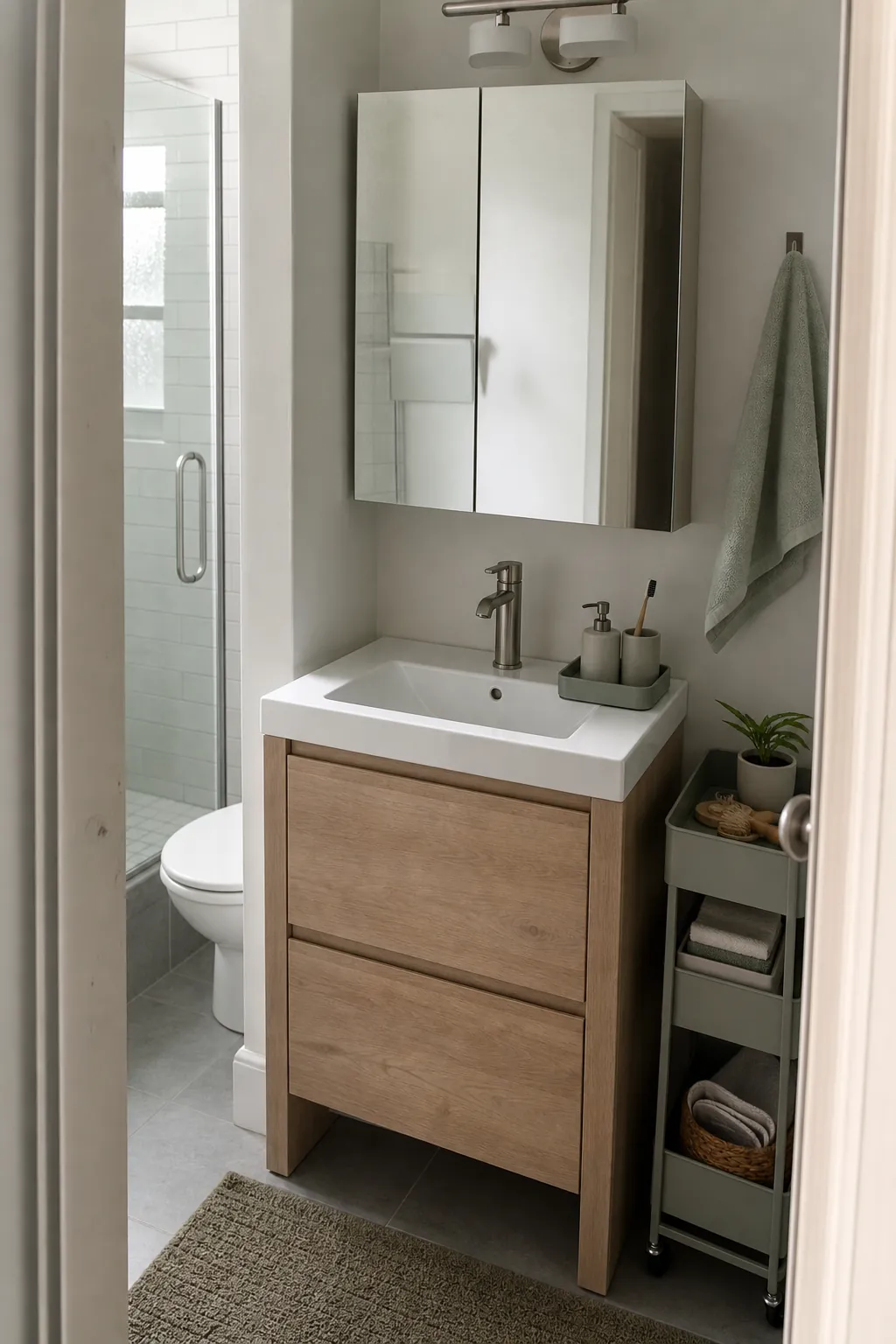
A small bathroom counter can disappear beneath products that are individually useful. Toothpaste, sunscreen, hair tools, skincare, medicine, spare soap, and half-used samples all feel too important to remove—yet together they leave nowhere to wash your hands or wipe the sink.
The answer is not forcing every bottle into a decorative organizer. Good bathroom decluttering separates today’s routine from backups and occasional products, then stores each routine so it can be pulled out and put away as one unit. That reduces visual clutter and makes cleaning dramatically faster.
Build one portable kit for each routine
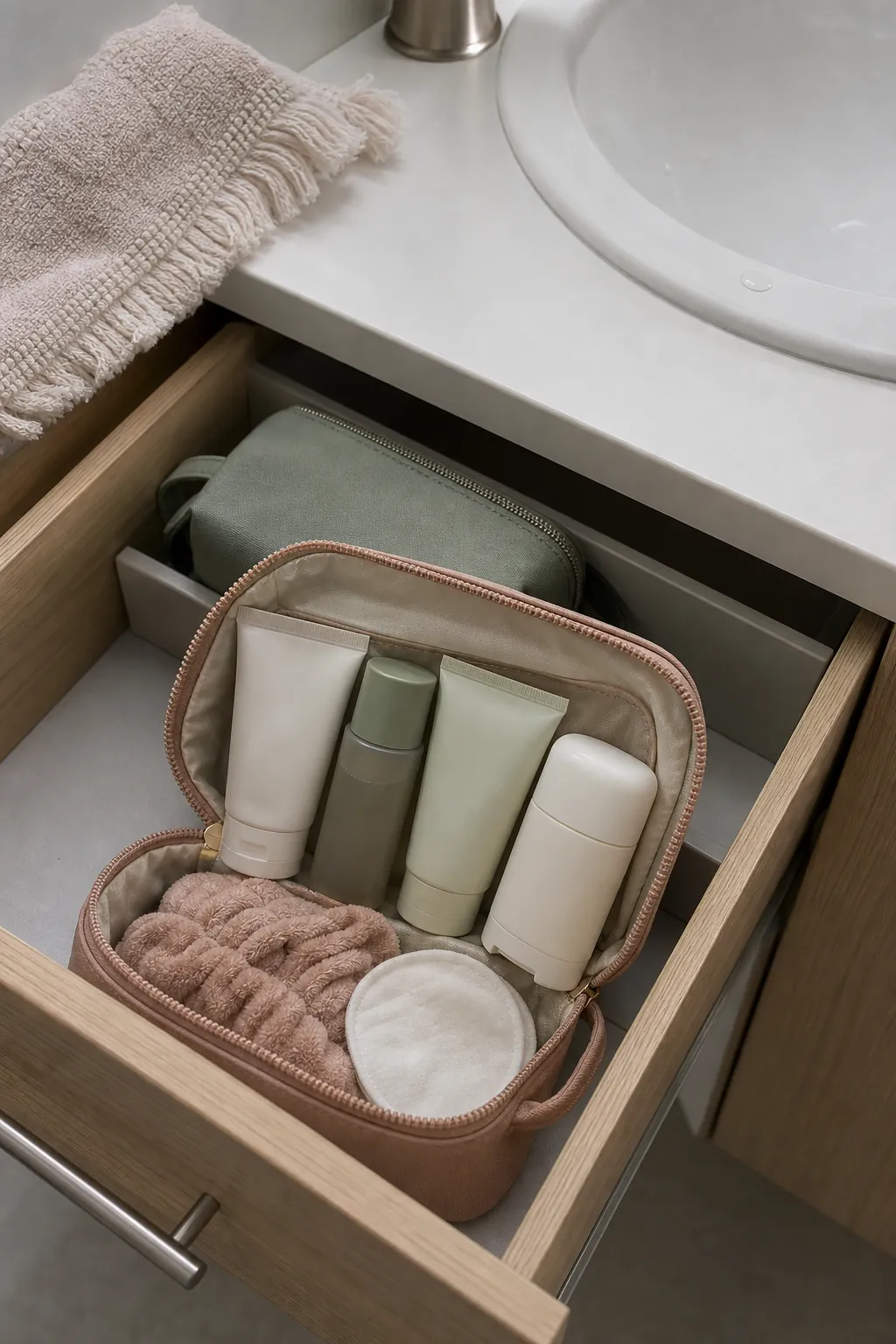
Group daily products by the moment you use them, not by what a store calls them. A morning skincare kit might hold cleanser, treatment, moisturizer, and sunscreen. A hair kit might contain leave-in product, brush, clips, and styling tool attachments. A shaving or grooming kit can work the same way.
Use a washable caddy, zip bag, shallow bin, or case you already own. Pull out one kit, complete the routine, then return the entire group. This prevents five small bottles from becoming five separate putting-away decisions and gives people who need visible reminders a defined, movable form of visibility.
Keep only the current product in prime reach
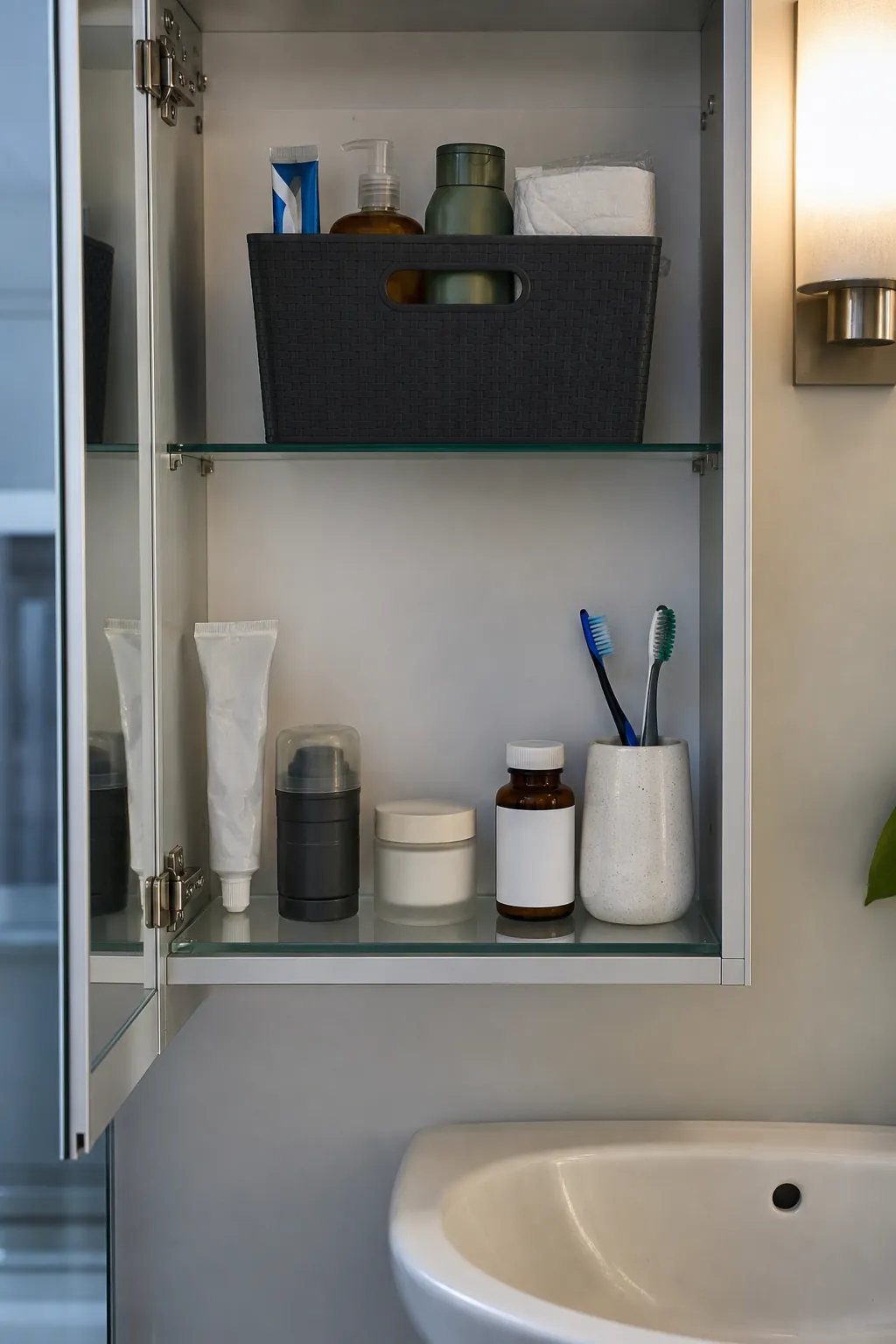
Prime storage is the easiest shelf, drawer, or cabinet space beside the sink. Reserve it for products you are currently using. One open toothpaste, one deodorant, one shampoo, and one moisturizer are easier to see and finish than several competing versions.
Move unopened backups to a separate inventory bin outside prime reach. This stops accidental duplicates and makes it obvious when you truly need to shop. If your bathroom has humidity or temperature swings, follow product storage directions and move medicines or sensitive items to a more suitable location.
Declutter by condition before making hard decisions
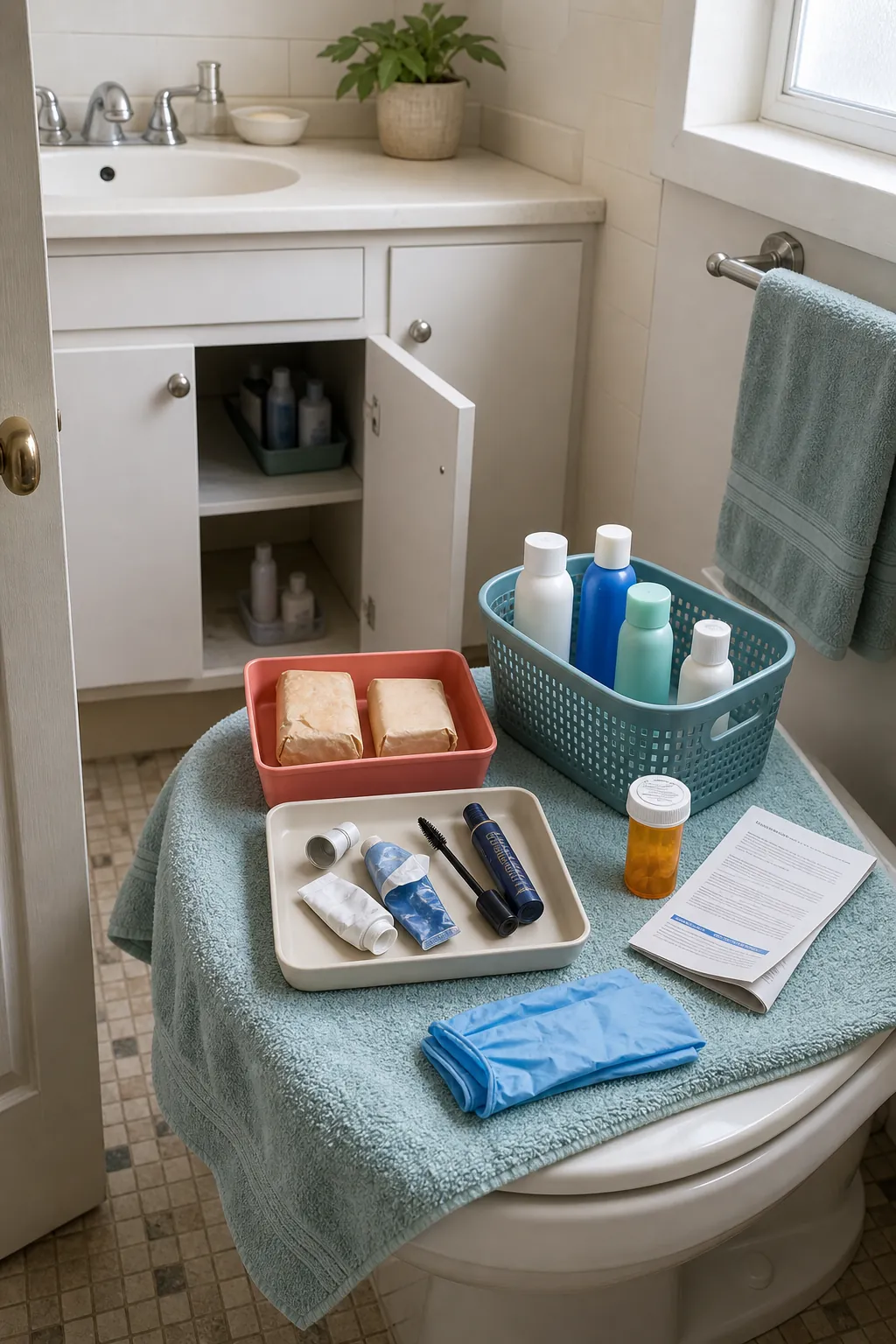
Begin with the easy exits: empty containers, dried products, broken tools, items that smell or look different, and anything past a reliable use period. Check labels for disposal guidance, especially for medicines and local take-back programs. Do not pour unknown products together.
Next, gather duplicates so you can see the full quantity. Choose the favorite or most suitable current product, place one backup behind it, and decide whether the remainder can be safely used, donated unopened where accepted, or discarded. Money already spent is not recovered by storing something you dislike for three more years.
Divide deep cabinets by retrieval, not tiny categories
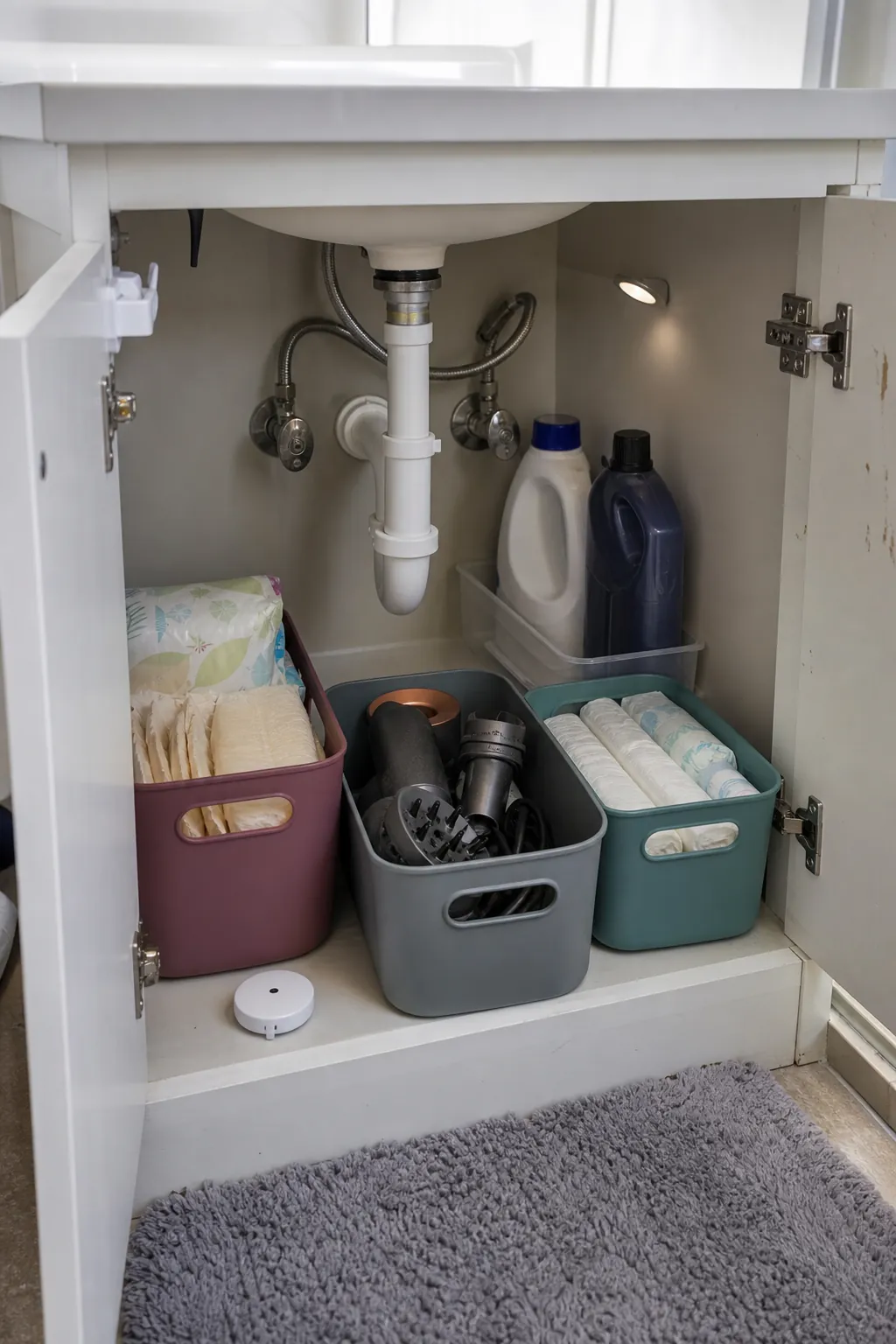
Under-sink cabinets become chaotic because pipes create awkward dead space and small products vanish behind one another. Use a few handled bins that can be removed completely: daily refills, hair tools, period care, cleaning supplies, or first aid. Keep categories broad enough that returning an item is obvious.
Place tall bottles beside plumbing rather than in front of it, protect products from leaks, and keep household chemicals away from children and pets. Do not stack so high that you must unload the cabinet to reach the back. Bathroom storage works when retrieval and return take one motion.
Use renter-friendly vertical space carefully
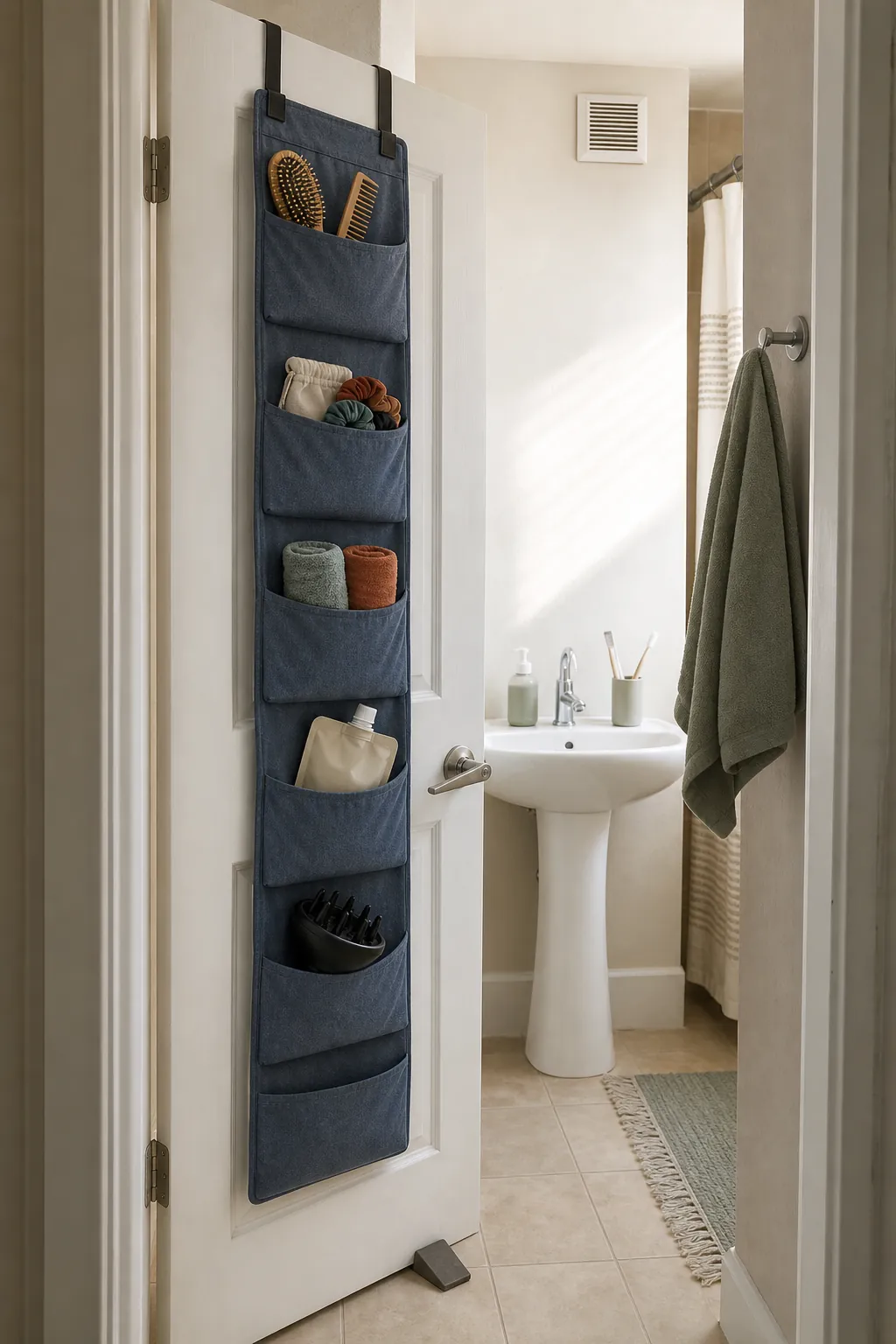
When the bathroom has a pedestal sink or almost no cabinetry, use the back of the door, a narrow freestanding cart, or removable wall storage rated for the surface and weight. Door pockets work well for brushes, hair accessories, unopened light products, and rolled washcloths.
Avoid storing heavy or breakable items where they can fall, especially above the toilet. Keep ventilation clear and confirm that the door still opens safely. Vertical storage should remove objects from working surfaces, not create a wall of visual noise, so use only as many pockets or shelves as the routines require.
Protect a genuinely usable counter zone
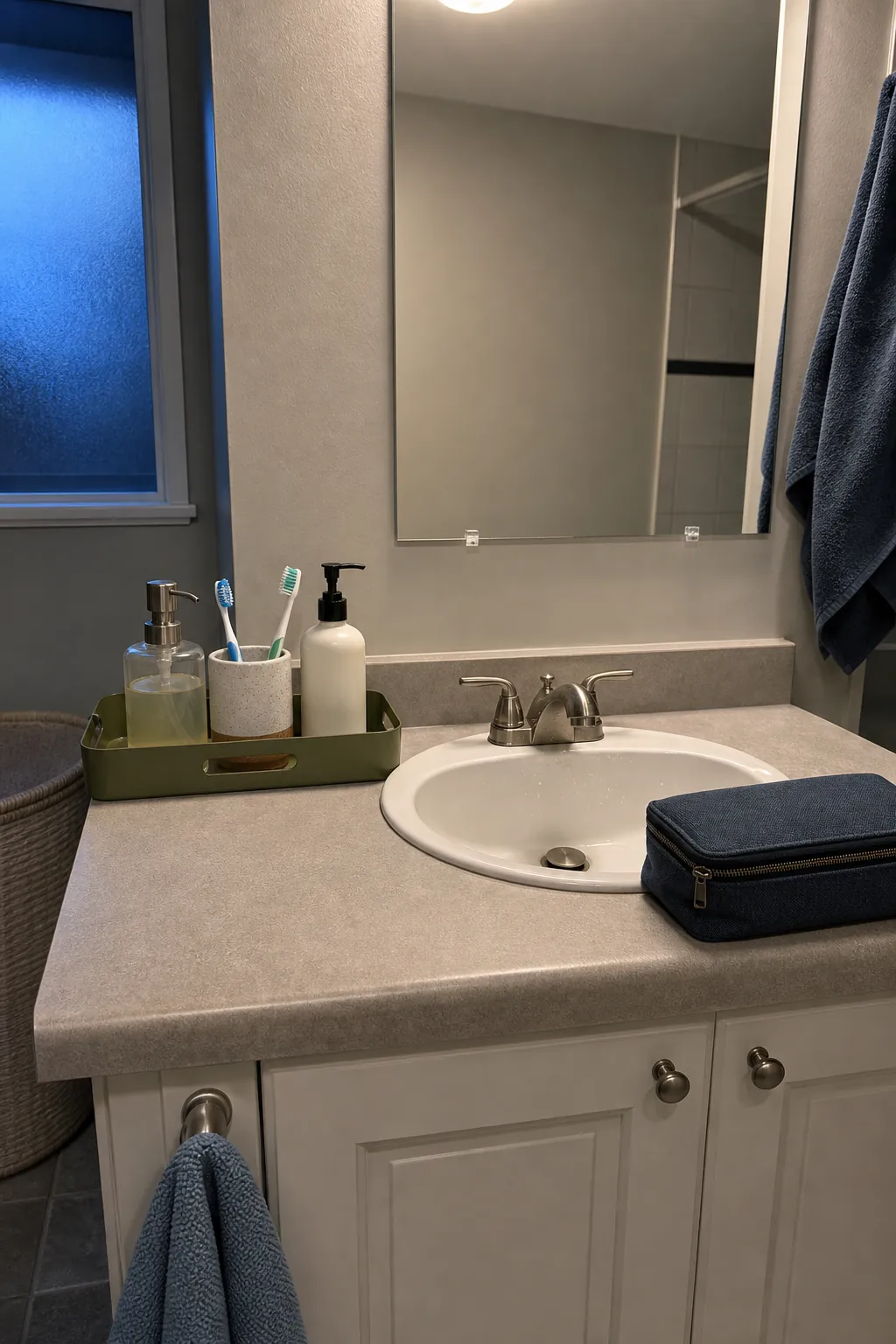
Decide what may remain out all day. For many households, that is hand soap plus a toothbrush holder or one small tray of shared essentials. Everything on the counter should lift in a single motion so you can wipe beneath it; if it takes several trips, the setup is too fragmented.
Leave enough bare surface to set down a routine kit and use the sink without knocking things over. This is especially important in a tiny bathroom, where clutter can interfere with handwashing and collect dust, hair, and splashes. A clear counter is not merely visual—it shortens the cleaning routine.
Finish with a two-minute bathroom reset
After the last routine of the evening, return each kit, place laundry in the hamper, hang towels open, remove trash, and wipe toothpaste, hair, or water from the basin. Keep a dedicated washable cloth within reach and follow safe cleaning-product directions.
If a product repeatedly stays out, ask why. Its home may be too far away, the container may be full, or you may use it often enough to add it to the shared essentials tray. A bathroom reset should reveal friction rather than punish you for it.
Control what comes back in
Use samples promptly, decline products that do not fit your routine, and finish one item before opening its replacement. Keep a short list of backups you already own. For tempting categories, try a one-in, one-out rule or a use-it-up period before buying anything new.
Small bathroom organization becomes sustainable when it reflects daily behavior: one routine at a time, one current product in easy reach, backups together, and a counter that can be cleaned in seconds. The result is not an empty bathroom. It is a bathroom where every product earns the space and effort it takes to keep.