
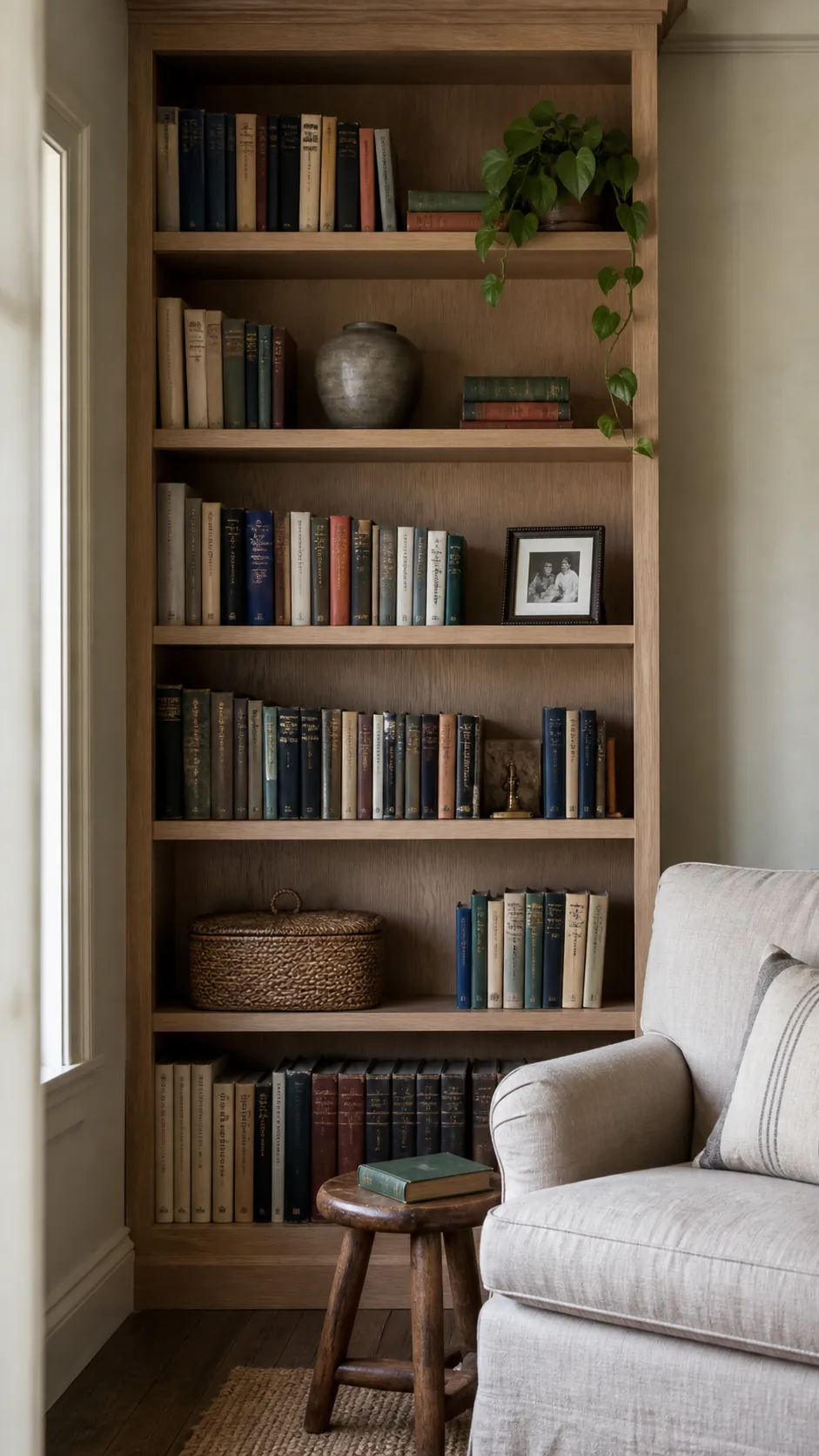
A bookshelf can be perfectly tidy and still make the whole room feel restless. The problem is often not the number of belongings but the way every object competes for attention. Real homeowners asking for help with bookcase styling repeatedly describe the same frustration: they remove everything, put it back more neatly, and the shelves still look busy. The useful fix is to stop treating each cubby as a separate decorating project and start composing the bookcase as one large shape.
Good bookshelf decor creates rhythm, hierarchy, and places for the eye to rest. It also respects what the furniture is meant to do: hold books, hide practical clutter, and display a small number of meaningful things. These are the styling mistakes that most often get in the way.
Giving Every Shelf the Same Visual Weight
When every shelf holds three medium-size objects spaced at equal intervals, the bookcase turns into a grid of separate signals. Nothing is technically wrong, but nothing leads the eye either. A calmer arrangement alternates dense book runs, one larger statement object, a compact group, and some genuinely open space. Variation is what makes shelf styling feel intentional.
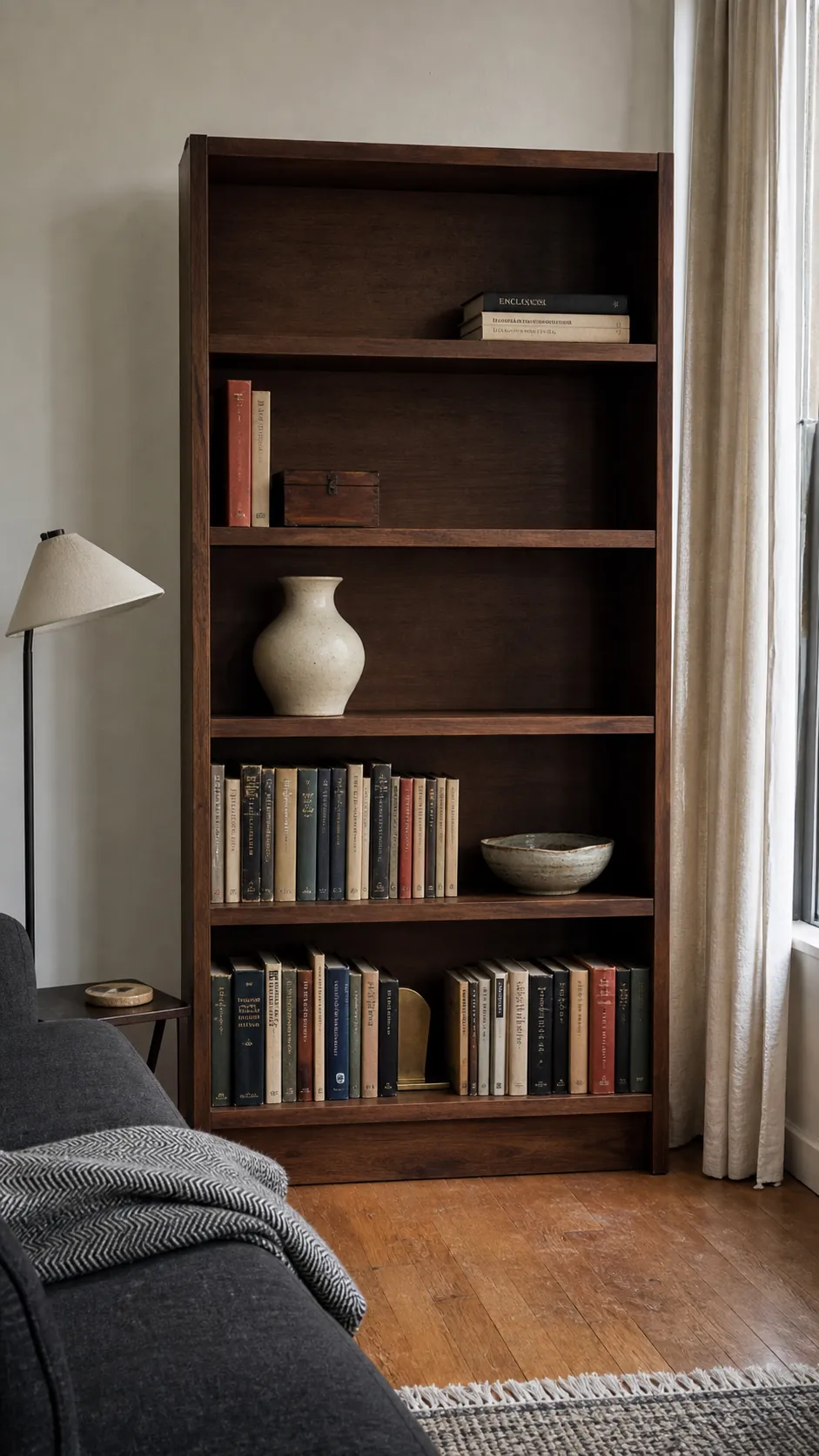
Step back far enough to see the entire unit, not individual shelves. If the silhouette looks like many evenly scattered dots, consolidate. A horizontal block of books reads as one shape; three tiny ornaments read as three. Grouping small items closely can therefore create less visual noise than distributing them across the full width.
Using Too Many Small Filler Objects
Decor bought only to fill a gap is usually the first thing that makes a shelf feel generic and crowded. Small vases, candles, figurines, and thrifted bowls can all be lovely, but a bookcase full of similarly scaled accents starts to resemble shop inventory. Keep objects that carry a memory, support the room’s function, or have enough form and texture to earn their space.
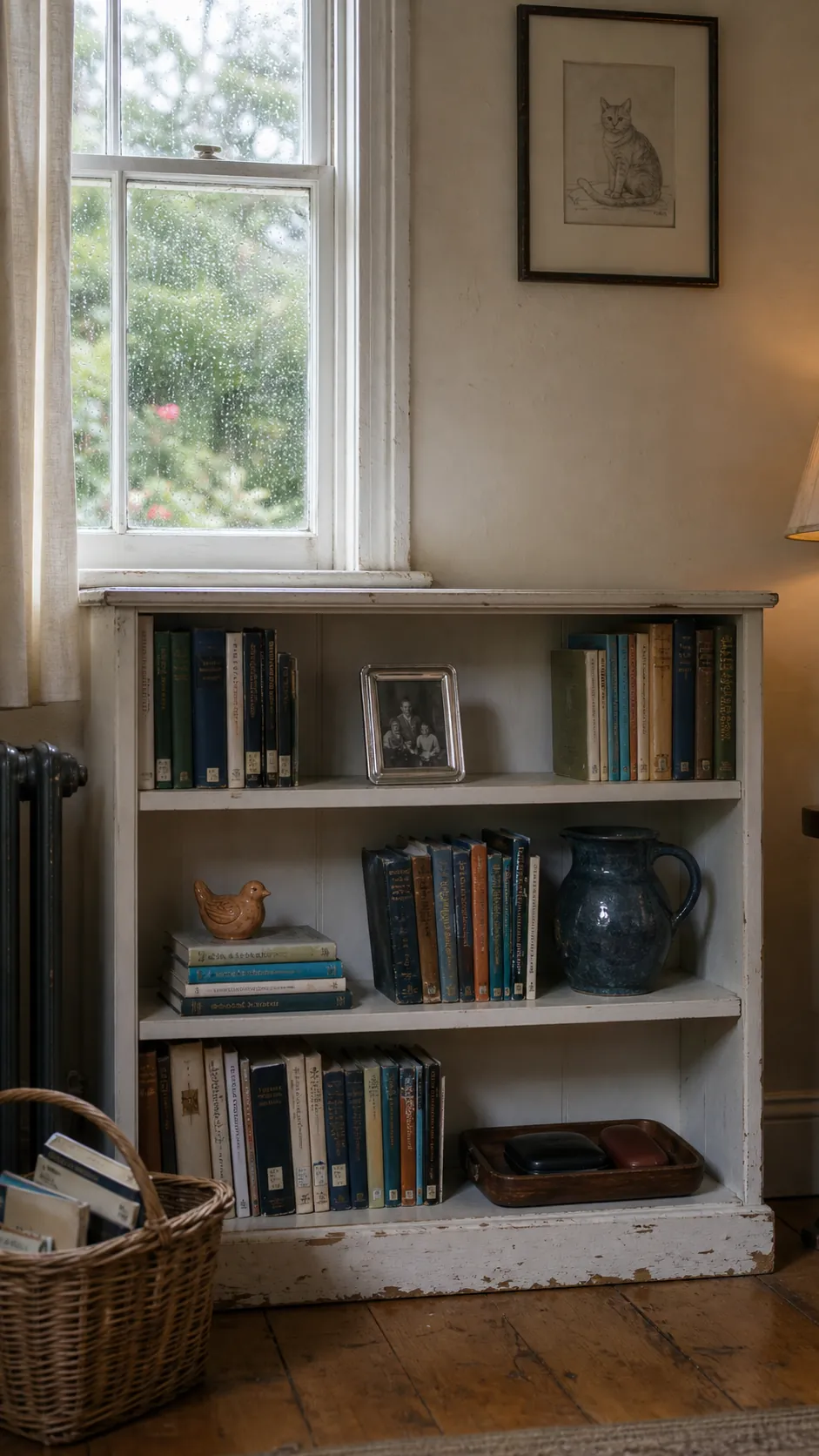
Try removing every accessory that was purchased as a placeholder. Live with the edited version for several days before buying anything new. Often the “missing” element is not another small object but a larger basket, a substantial vessel, or simply breathing room. The result feels more personal because the remaining pieces say something about the people who live there.
Breaking Books Into Too Many Tiny Stacks
A bookcase with two books here, three books there, and an ornament between every stack can look busier than a much fuller home library. Books become visually quiet when they form larger blocks. Group enough spines together to create a clear horizontal mass, then use occasional horizontal stacks only where they solve a height or proportion problem.
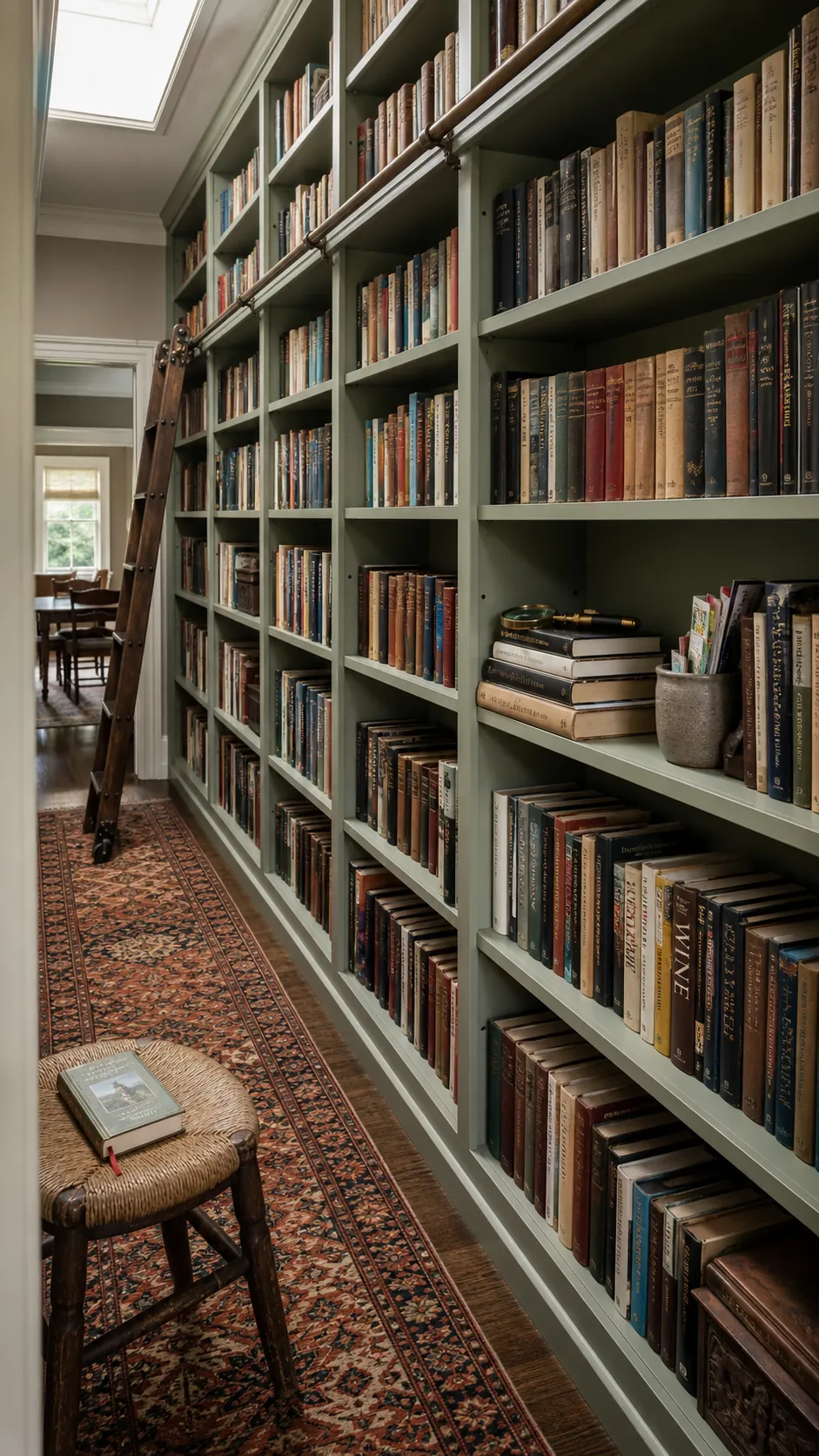
You do not need to arrange every spine by color or wrap books in matching paper. That can erase the character people want from a cozy home. Instead, keep categories useful, align uneven paperbacks with bookends, and limit abrupt color changes within one run when possible. Order should make the collection easier to use, not turn reading material into stage props.
Ignoring Empty Space
An empty patch is not unfinished. It is the contrast that lets a favorite ceramic piece, framed photograph, or beautiful book spine register. If every shelf is filled edge to edge with unrelated items, viewers cannot tell what matters. Leave one larger object alone on an occasional shelf, or preserve a generous gap beside a compact group.
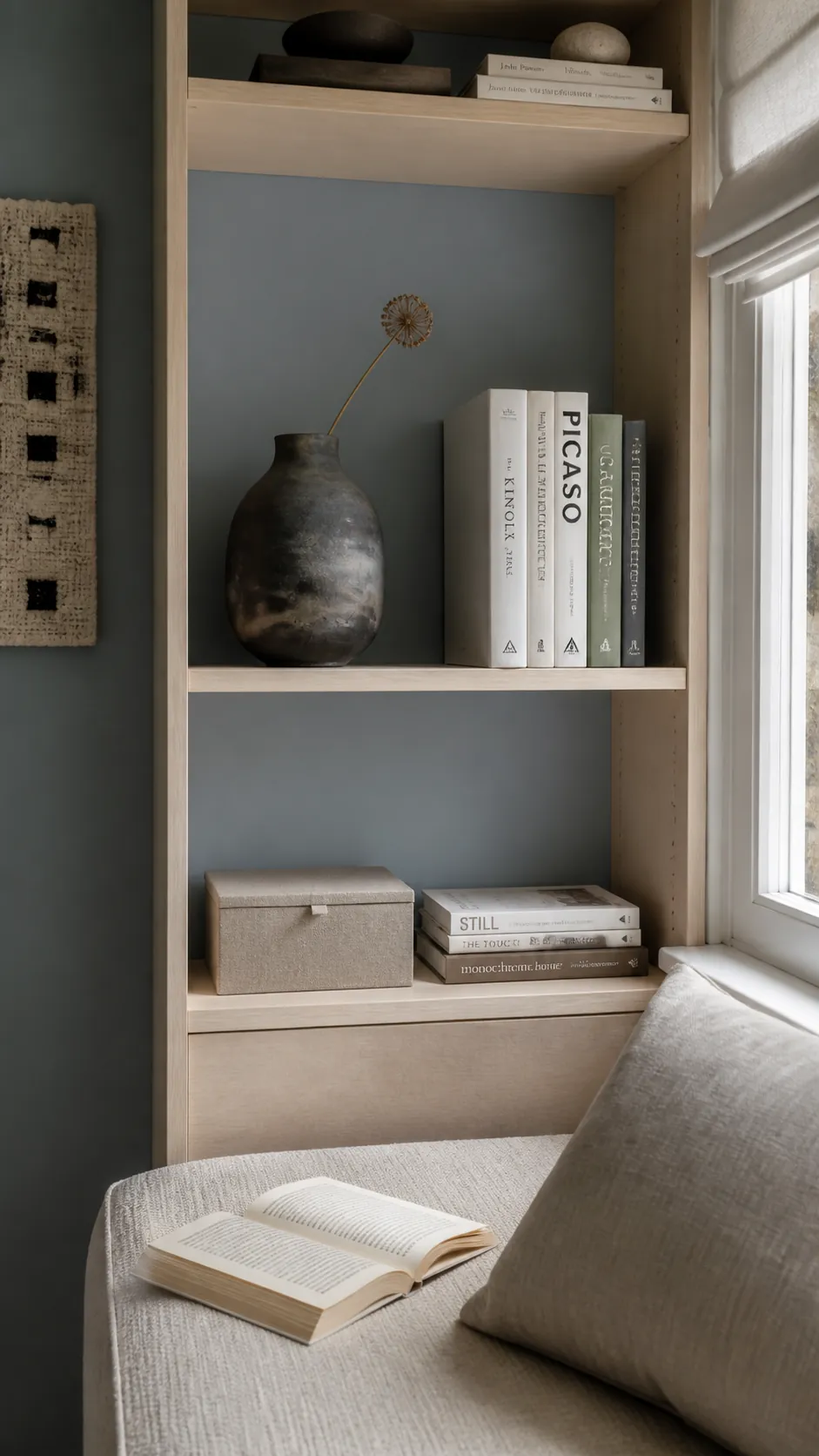
Do not force the same amount of open space into every bay. That only creates another repetitive pattern. Place quieter moments where the surrounding room is already active—near a gallery wall, patterned chair, or busy reading nook—and allow denser book storage in calmer zones. Negative space works best when it responds to the whole room.
Making the Bookcase Top-Heavy
Trailing plants, leaning frames, baskets, and keepsakes piled across the top create a visual lid that presses down on everything below. Hanging vines are especially energetic because they cross shelf lines and overlap other objects. Keep the top mostly clear, or use one strong off-center plant with a controlled silhouette rather than a row of competing greenery.
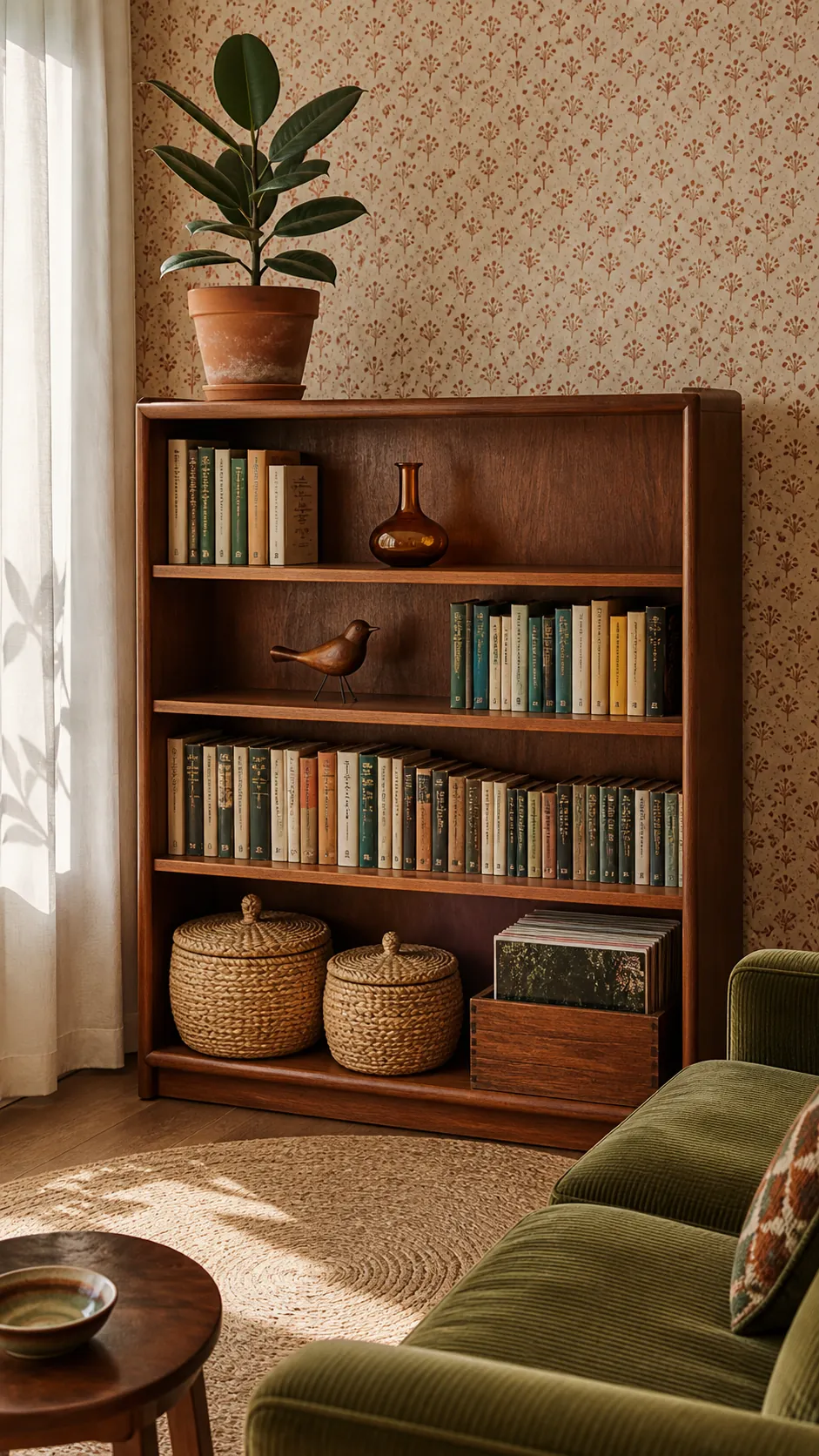
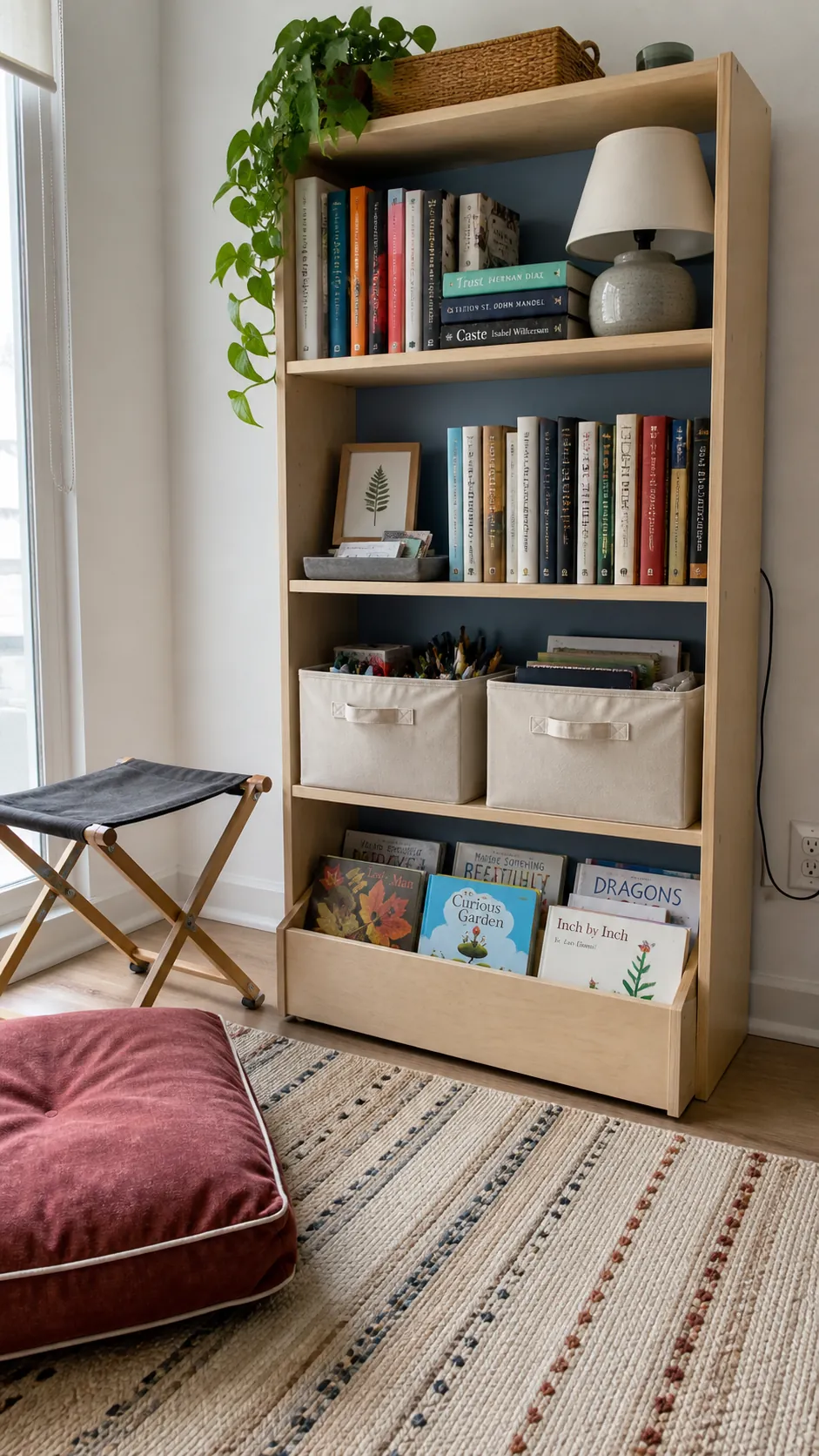
Weight the lower shelves with full book runs, lidded boxes, or sturdy baskets. Besides looking grounded, this is practical in a family home because fragile display pieces stay above reach while frequently used storage remains accessible. A visually stable base also gives you more freedom to be playful higher up.
Letting Practical Clutter Stay Visible
Chargers, loose papers, remote controls, game accessories, and dangling cords interrupt even thoughtful bookshelf decor. Open shelving magnifies these everyday necessities because each item creates a new outline. Route cables down a rear edge, corral paperwork in a magazine file, and use opaque containers for supplies that cannot be made visually coherent.
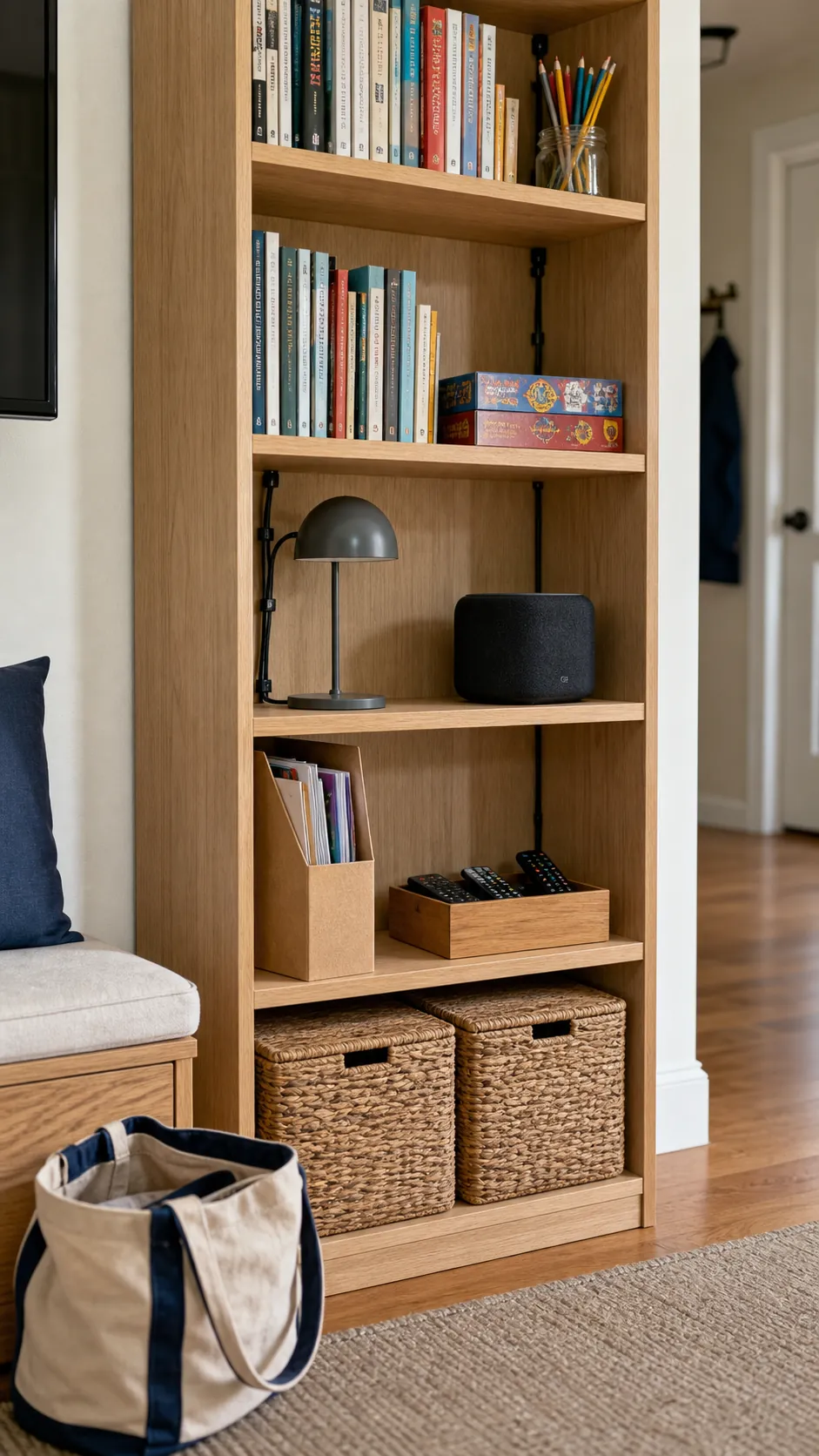
Closed storage does not need to dominate. Two matching boxes or baskets repeated near the bottom can unify a bookcase without making it look like an office. Choose containers sized to the shelf so they do not bulge, scrape, or leave awkward slivers of unused space. Label the hidden contents discreetly if several people share the room.
Styling Each Shelf Without Considering the Room
A bookcase does not exist in isolation. If it stands beside a patterned rug, colorful sofa, and gallery wall, it needs more restraint than the same shelves in a quiet room. Repeat two or three colors or materials already present nearby—a dark wood tone, aged brass, woven fiber, or soft green—so the unit feels connected rather than added later.
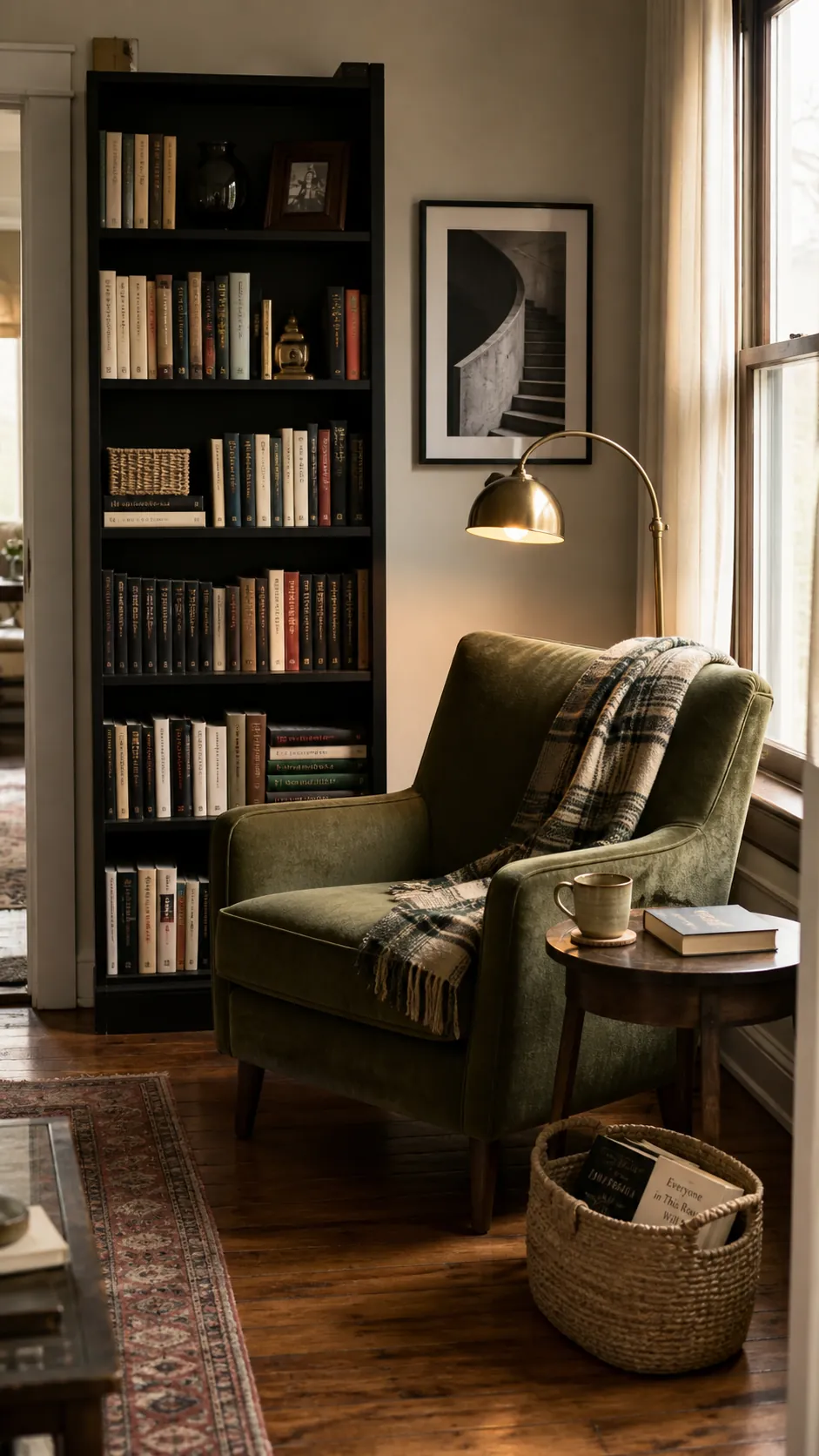
Also check scale from the main doorway and seating position. A tiny object that looks charming at arm’s length may disappear from across the room, leaving only a sense of scattered clutter. Larger shapes, repeated materials, and a few purposeful gaps read more clearly at normal viewing distance.
Copying a Styled Shelf That Does Not Match Your Life
Photographs of monochromatic shelves can be useful for studying balance, but copying them literally may leave you with a home library that no longer serves you. If you read daily, books deserve most of the space. If the shelves sit in a family room, durable storage and easy reset routines matter. If you rent, removable backing panels can reduce a busy contrast without altering the furniture.
The goal is not to make your belongings anonymous. It is to make their relationships legible. A successful bookshelf shows what you love, hides what is merely practical, and gives both enough room to function. That is why the best decluttering move is often not getting rid of the bookcase—it is deciding what role each part of it should play.