
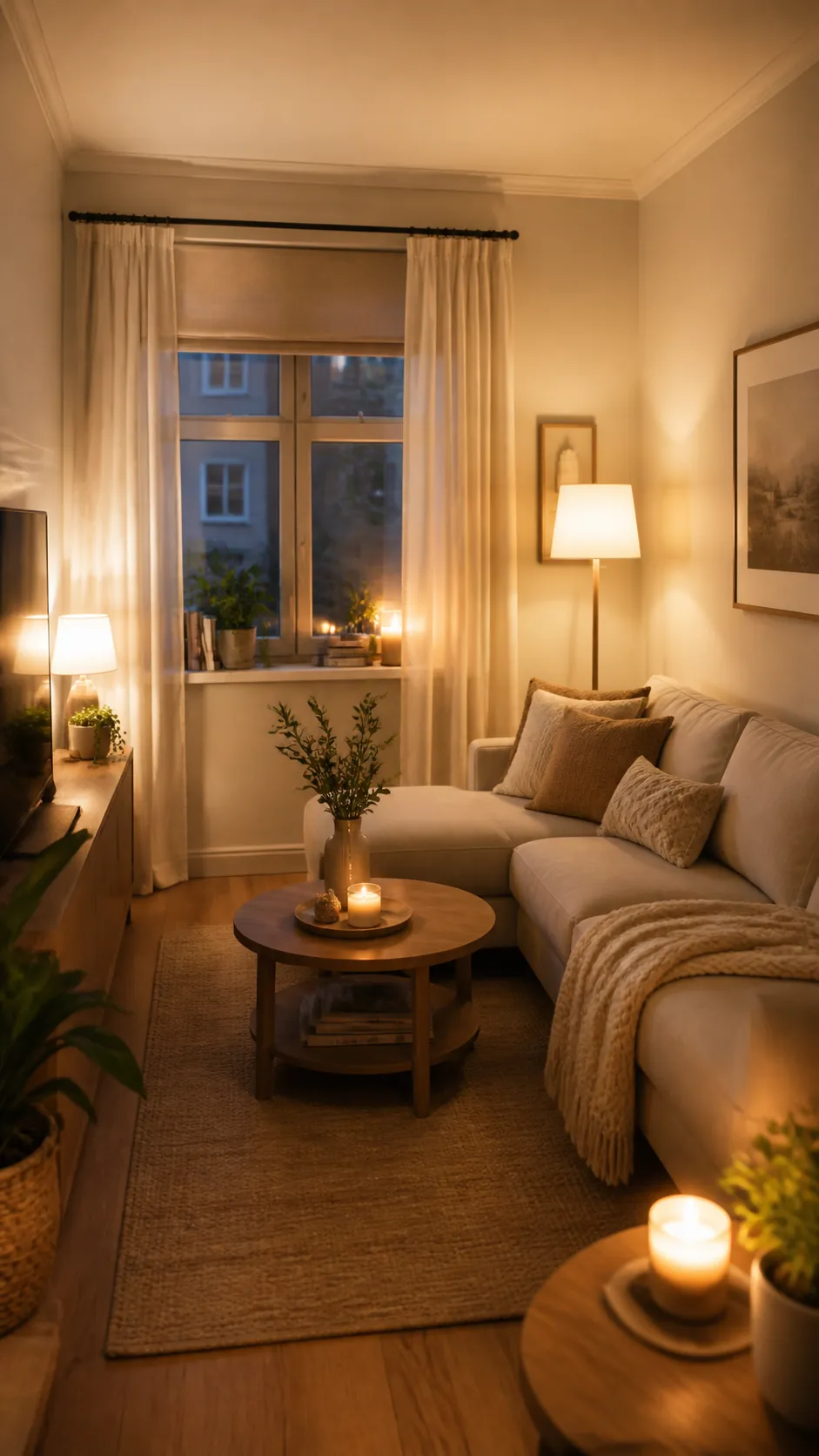
A small room rarely feels cozy because it is simply darker. It feels cozy when the light gives your eyes a few comfortable places to land: a warm pool beside the sofa, a soft glow on a textured wall, and enough focused light to read or work without flooding every corner. The most useful shift is to stop asking one ceiling fixture to do everything. Several modest light sources at different heights create more comfort, depth, and control than one bright “big light.”
That distinction matters in a compact home. A powerful overhead bulb can flatten the room, expose every edge at once, and produce glare. A handful of tiny decorative lamps can create atmosphere but leave you squinting. The goal is a layered plan that supports daily life first and then makes the room feel inviting after dark.
Start With the Activities, Not the Fixtures
Before buying a lamp, list what actually happens in the room. You may read in one chair, answer emails at a narrow desk, fold laundry on the bed, and watch television from the sofa. Each activity needs light in a particular place; lighting the entire room more brightly is often an inefficient substitute. Mark those activity zones and identify where an outlet, shelf, table edge, or renter-safe wall hook can support a source.
This simple audit prevents two common mistakes: putting all the lamps on one side and choosing fixtures that look attractive but shine in your eyes. A task lamp should illuminate the page, keyboard, or craft surface from beside or slightly behind your shoulder. Ambient light should make movement comfortable. Accent light can then emphasize a plant, curtain, textured finish, or favorite object. Function gives every light a job, which keeps a small room from looking crowded with random fixtures.
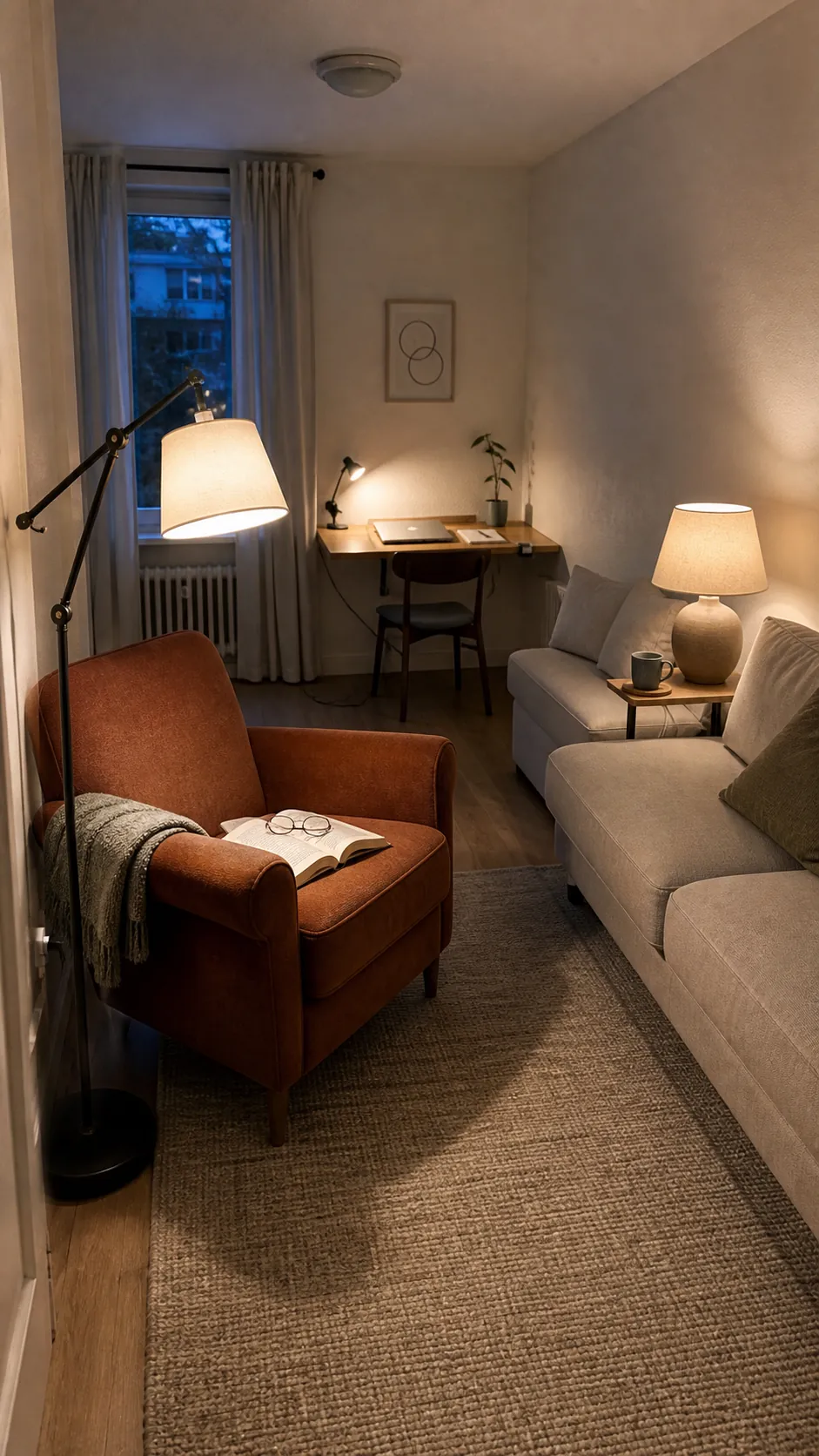
Build Three Layers of Light
A useful small-room lighting plan combines ambient, task, and accent light. Ambient light provides enough general illumination to move around safely. Task light serves concentrated work such as reading or food preparation. Accent light creates contrast and depth by washing a surface or drawing attention to a detail. This is not a rule that requires three expensive fixtures; one shaded floor lamp can provide soft ambient light while a clamp lamp handles a desk and a tiny rechargeable lamp brightens a shelf.
The layers should overlap without duplicating one another. If a floor lamp already casts light across the ceiling, the next addition might be a low table lamp rather than another tall source. If the room includes a work area, spend more brightness there and keep the relaxing zone softer. The contrast between useful brightness and gentle background glow is what gives a compact room dimension. Independent switches also let you change the mix without moving furniture.
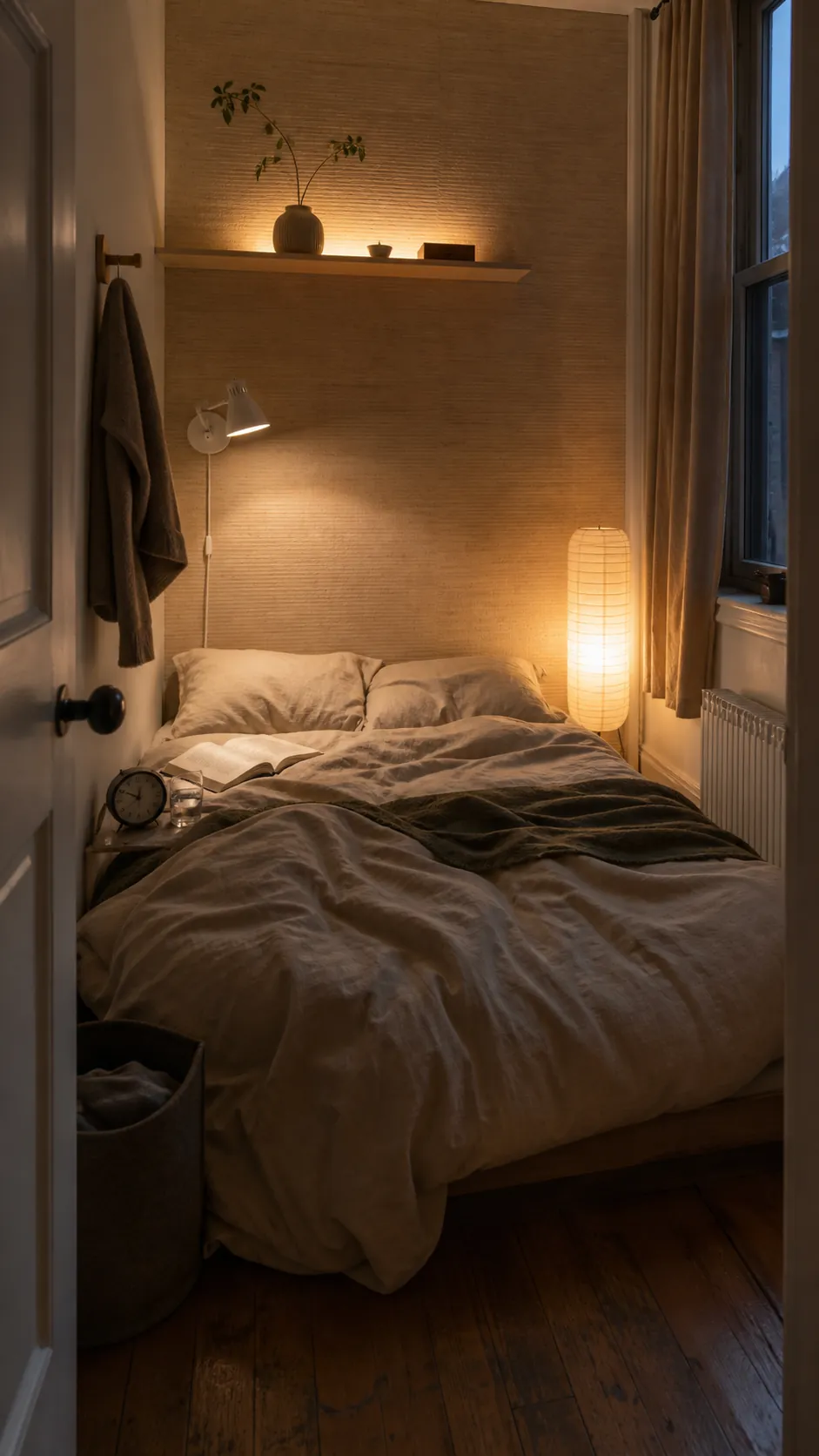
Choose Warm Bulbs Without Turning Everything Orange
Color temperature describes whether white light appears warmer or cooler. ENERGY STAR describes lower values around 2700–3000K as warm, while 4000K and above appear cooler. For a cozy living or sleeping area, 2700K is a dependable starting point. A clean 3000K can work well where you want warmth with slightly crisper visibility, especially at a desk or in a combined kitchen-living space.
Keep nearby sources reasonably consistent. A 2700K table lamp beside a blue-white 5000K ceiling fixture can make the room feel visually divided rather than layered. Also look at lumens instead of shopping by old wattage habits: lumens tell you how much light the bulb produces. If a shade is dense, it may need a brighter bulb to deliver the same usable glow. Warm does not have to mean dim, and bright does not have to mean cold. Choose enough output, then control it with a compatible dimmer or a lower setting.
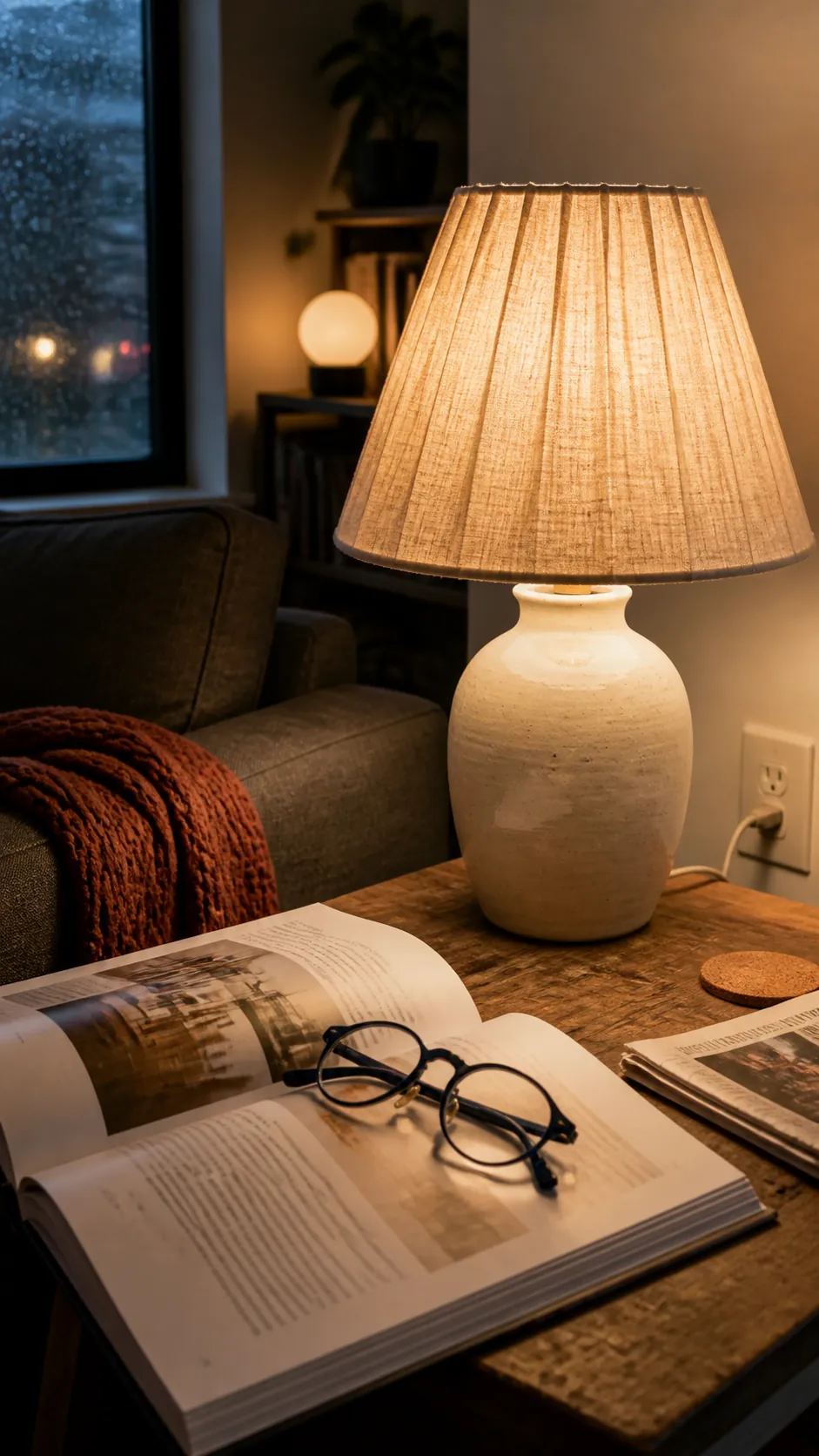
Spread Light Around the Perimeter
When all illumination comes from the center, the boundaries of a small room can feel stark. Move some light toward the perimeter instead. A lamp tucked beside a sofa can graze a curtain; a torchiere can bounce light off the ceiling; a plug-in or rechargeable wall light can brighten a narrow corner without occupying floor space. Reflected light is especially valuable because a wall or ceiling becomes a broad, softer source.
Do not aim every lamp straight into the room. Turn one toward a pale wall, place another behind the edge of a plant, or let a shade direct most of its light down and a little upward. These pools of brightness reveal the room in stages rather than all at once. Keep hot bulbs and fixtures away from fabric, follow the manufacturer’s clearance guidance, and avoid running cords across walking paths. A cozy perimeter should feel calm, not improvised or unsafe.
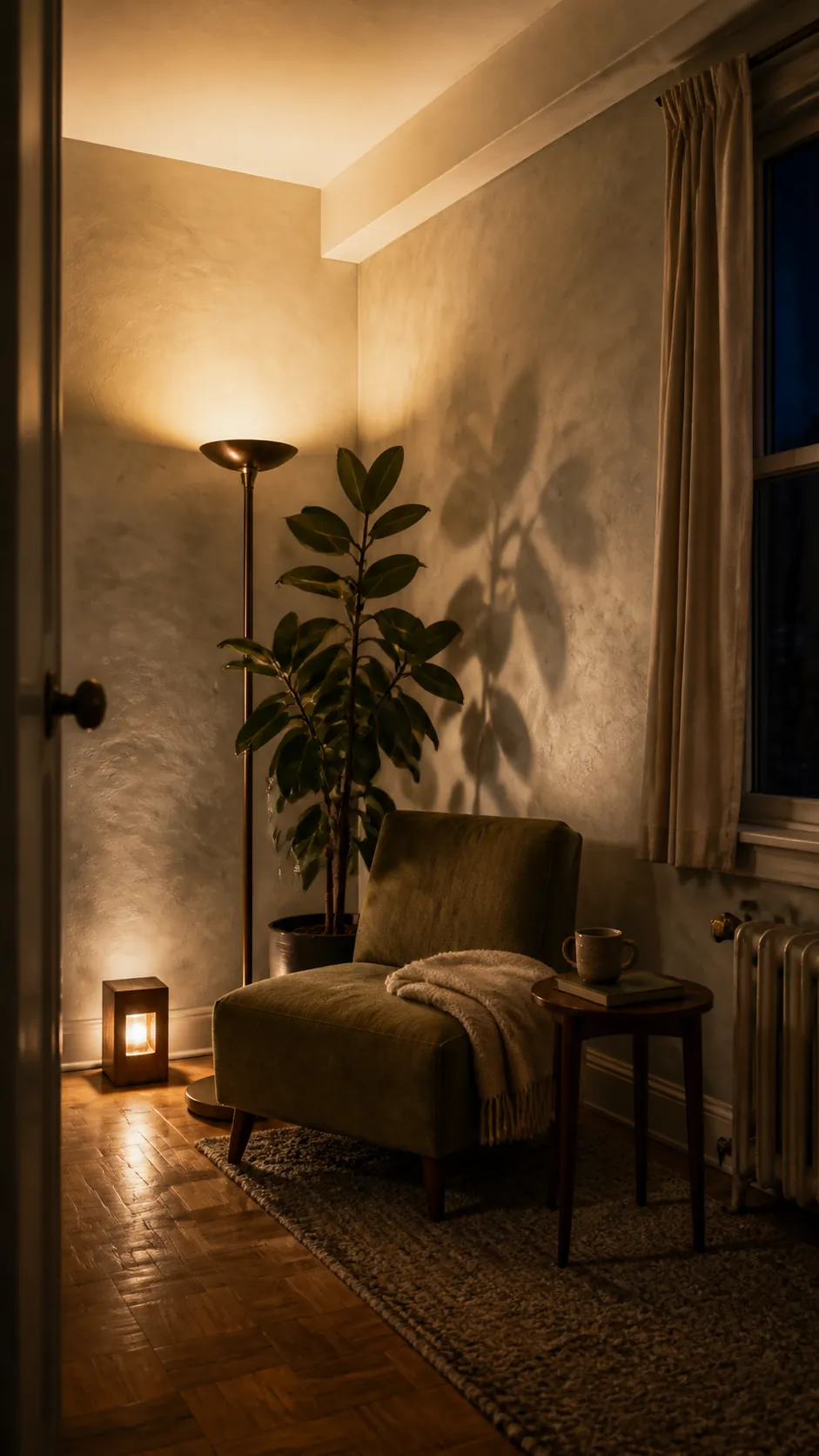
Use Shades and Surfaces to Soften Glare
A bare bulb can be unpleasant even when it is warm and not especially bright. The issue is the concentrated source entering your field of view. Choose an opaque, linen, paper, frosted-glass, or pleated shade that hides the bulb from normal seated and standing positions. A shade that is open at the top can contribute ceiling glow, while a downward opening gives a reading or tabletop zone stronger light.
Nearby materials change the result. Light-colored walls and ceilings reflect more illumination, whereas dark matte surfaces absorb it. Glossy furniture and mirrors can throw sharp highlights if a bare source points toward them. Test a lamp at night before fixing its final position: sit in every usual seat, look toward the television, and check the view from bed. If you can see a painfully bright bulb or its hard reflection, change the angle, height, shade, or diffusion.
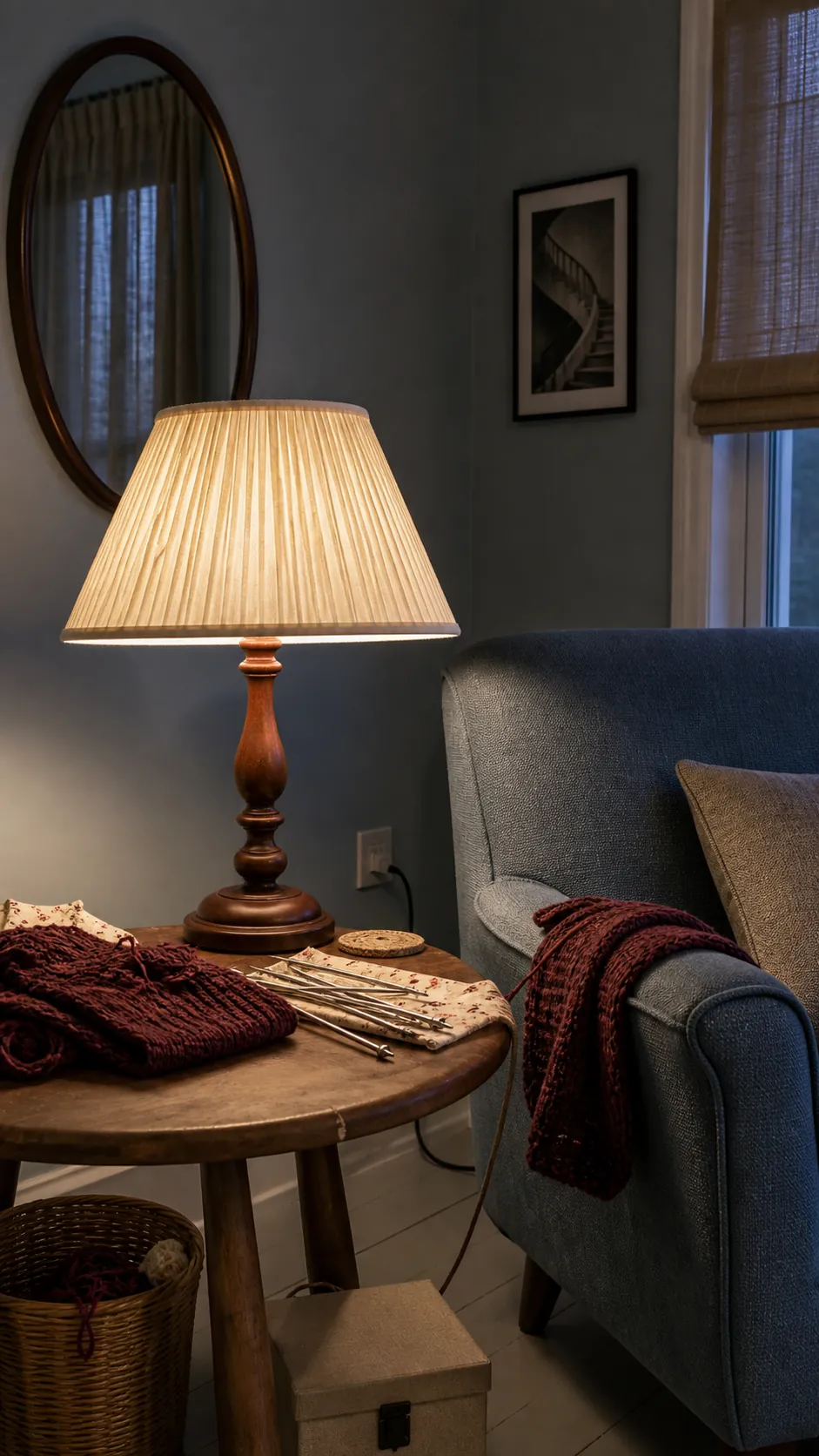
Save Space With Wall, Shelf, and Portable Lights
A small room does not need a forest of floor lamps. Plug-in sconces free a nightstand or end table, and many can be mounted with minimal holes if the lease permits. Clip lights can attach to a headboard or shelf. A compact lamp on a bookcase adds a low glow without claiming a new surface. Rechargeable lamps are useful on dining tables and window ledges where a visible cable would be awkward, though they still need a practical charging routine.
Scale matters more than novelty. A slim floor lamp can disappear beside a chair, while an oversized shade can crowd the sightline even when its base is narrow. Measure the footprint, shade diameter, switch access, and cord route before ordering. For renter-friendly wall lights, confirm the fixture’s weight and use only mounting products rated for the wall material. The best space-saving light is one you can turn on easily and live with every day.
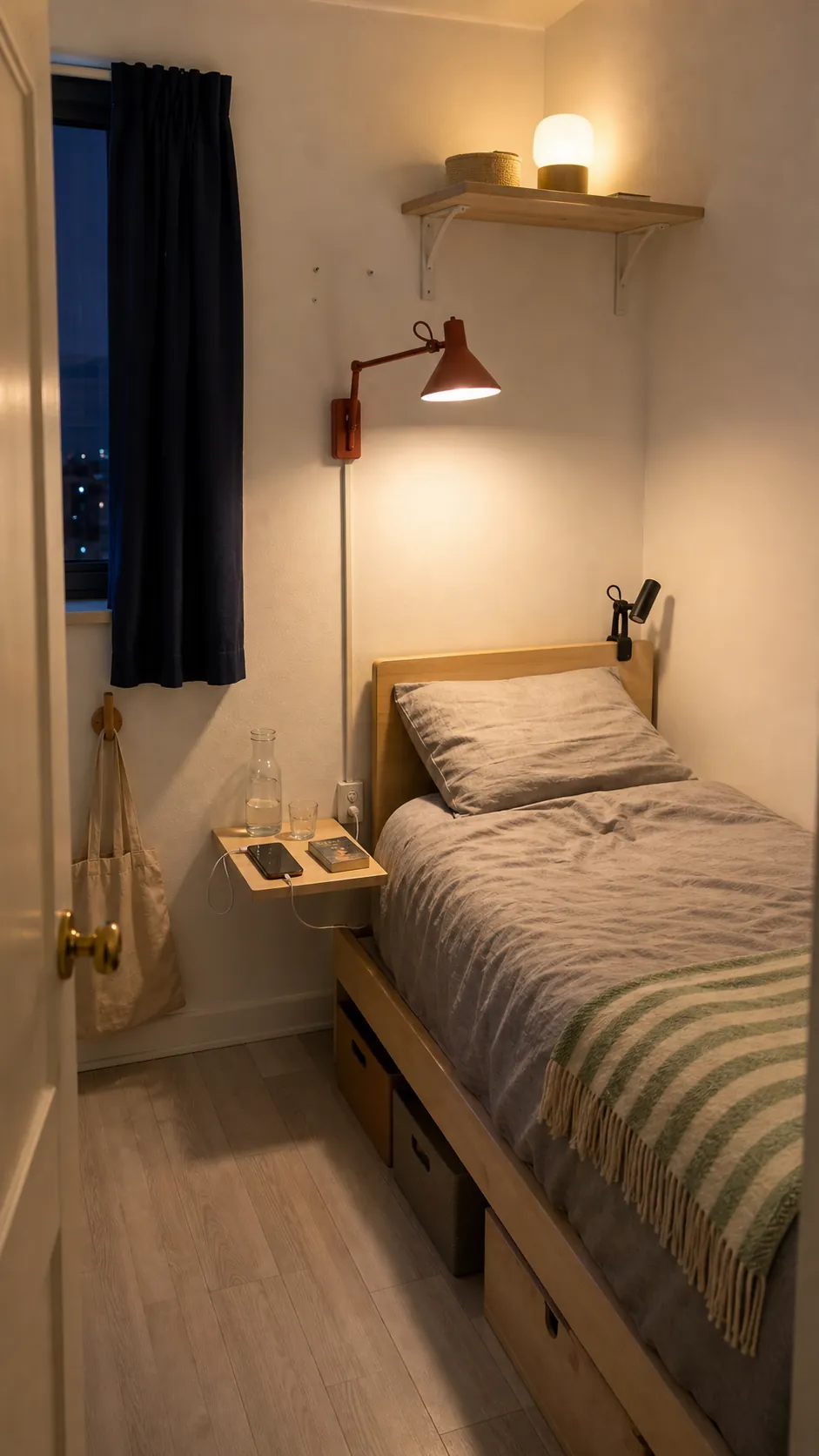
Create an Evening Lighting Routine
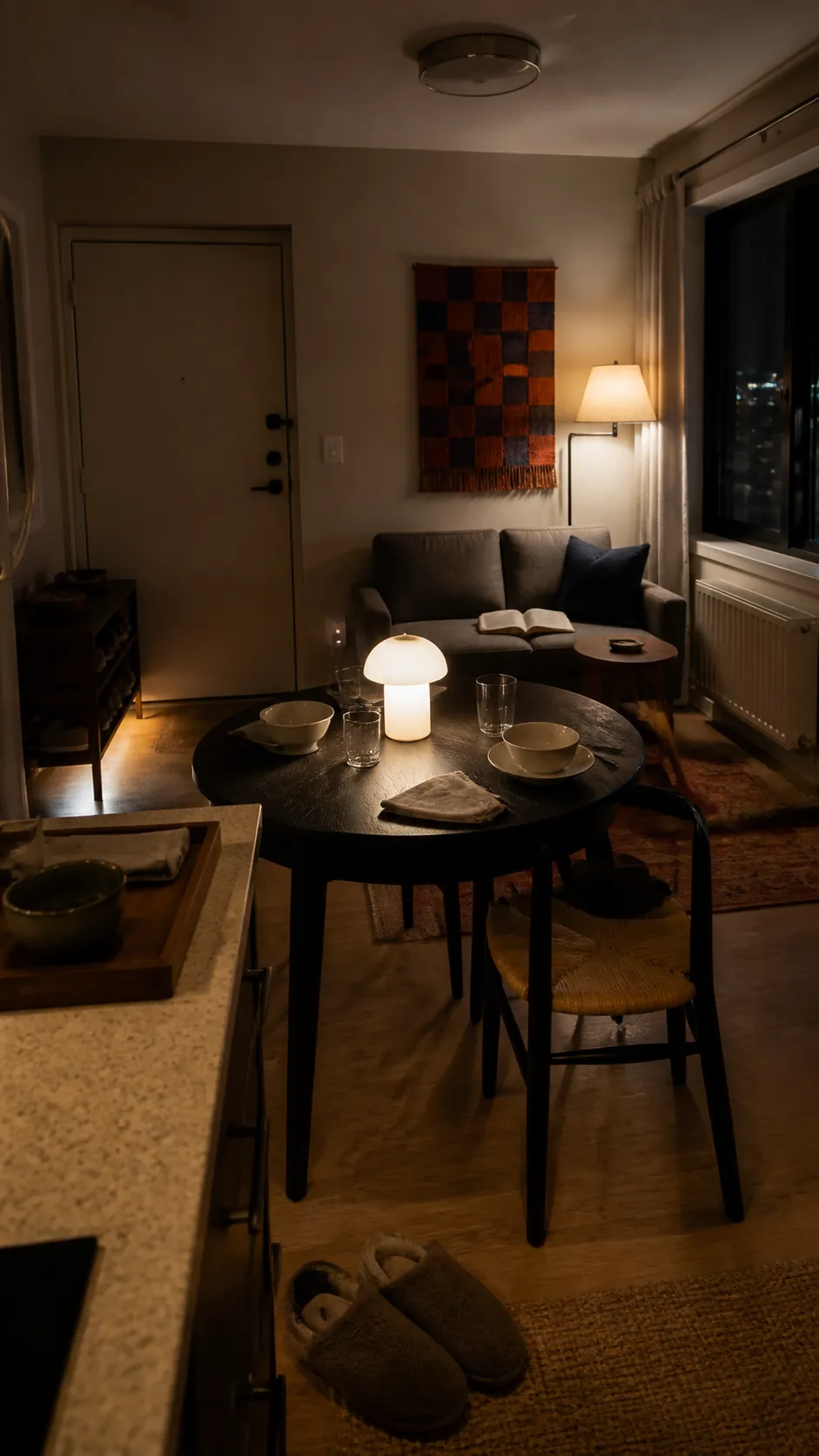
The final ingredient is control. During cleaning or a detailed task, use the brighter general light. As evening settles in, switch to the floor lamp, reading light, and one low accent source. Dimmers, smart plugs, or simple switched power strips can make the transition easy, but ordinary switches work just as well when they are accessible. Use dimmable bulbs only with compatible controls, and never assume that every LED will behave correctly on an older dimmer.
Adjust one source at a time over several nights. If the room feels cave-like, increase ambient output or add reflected light near a dark boundary. If it feels flat, lower the central source and create more separation between zones. If reading is tiring, strengthen the task light rather than brightening the entire room. Cozy lighting is not a fixed shopping list; it is a repeatable scene that fits the way you use the space. When every source has a purpose and no single lamp dominates, even a very small room can feel calm, warm, and complete.